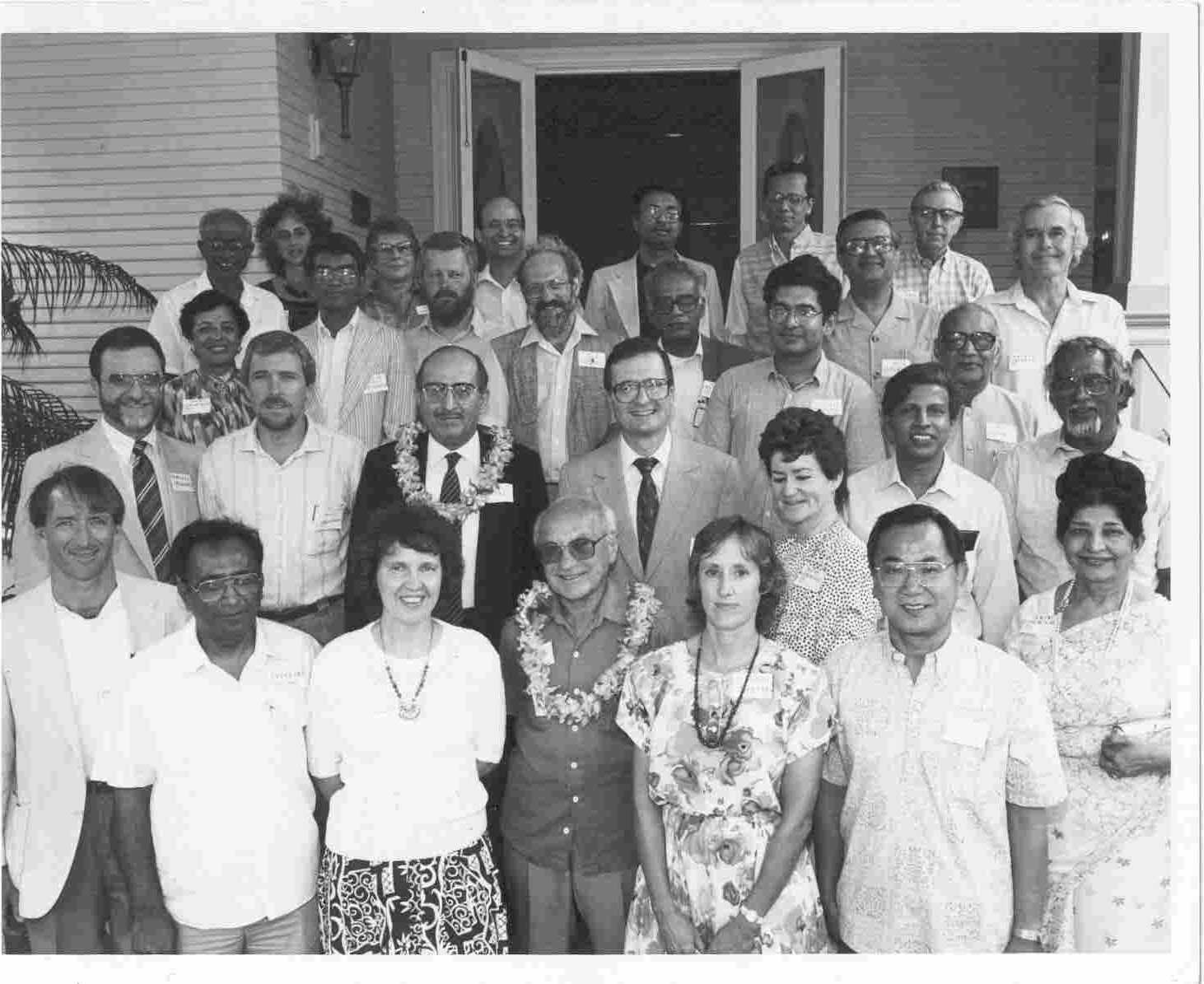
Delhi can never be improved — until the rest of India improves!
February 13, 2015 — drsubrotoroyThe fascist solution that was, as I recall, suggested momentarily by a former Congress CM of Delhi, would be to forcibly prevent people from coming in from the outside. Apparently the PRC as a totalitarian regime has some kind of system of internal passports which restricts citizens from travelling into metros on their own free will. That cannot work in free India, where the Constitution would
“Haksar, Manmohan and Sonia” (2014)
August 7, 2014 — drsubrotoroyMy article “Haksar, Manmohan and Sonia” appeared today as an op-ed with the New Indian Express http://t.co/bRnQI1hrwy

In the summer of 1973, my father, then with India’s embassy in Paris, brought home two visiting colleagues separately, to advise me before I headed to undergraduate studies at the LSE. One was G Parthasarathi, India’s envoy in Karachi during the 1965 war [CORRECTION Nov 2015: Parthasarathi had left shortly before the war; Kewal Singh arrived as the war started] when my father had been acting head in Dhaka; G P was marvelous, strictly advising I do the hardest things I could find at LSE, namely mathematical economics. The other visitor was Manmohan Singh.
Manmohan, then in his early 40s, asked to meet me alone, and we plunged quickly into a heated debate about the demerits (as I saw them) and merits (as he saw them) of the USSR and its “planning”. He was taken aback by the lad, and at the end of his 40-minute visit said he would write to his friend Amartya Sen at LSE about me. An ambiguous, hardly laudatory letter of introduction to Amartya arrived, which I duly but reluctantly carried; I wish I had kept a copy but xeroxing was not yet a word back then.
When I told my father about the debate, he to my surprise said Manmohan was extremely highly thought of in government circles, had degrees from both Cambridge and Oxford, and was expected to become prime minister of India some day!
That prediction, more than 30 years before Manmohan did become India’s PM, was almost certainly a reflection of the opinion of P N Haksar, still at the height of his power as Indira Gandhi’s right-hand man. In a 2005 interview with Mark Tully, Manmohan acknowledged Haksar being his mentor in politics who brought him into government in early 1971. My father himself was sent by Haksar to the Paris embassy in anticipation of Indira’s November 1971 visit on her diplomatic tour before the Bangladesh War.
Fast forward to the afternoon of March 22, 1991, at Delhi’s Andhra Bhavan. I had met Rajiv Gandhi through S S Ray on September 18, 1990, and given him results of a perestroika-for-India project I had led at the University of Hawaii since 1986.On September 25, 1990, Rajiv formed a group consisting of Gen K V Krishna Rao, M K Rasgotra, V Krishnamurthy, S Pitroda and myself to write a modern agenda and manifesto for elections Rajiv said he expected by April 1991. Krishnamurthy later brought in A M Khusro to the group, and all these persons were present at the March 22 meeting—when I was unexpectedly challenged by Rasgotra demanding to know what Manmohan Singh would say about all this liberalisation and efficiency (and public goods, etc.) I had proposed.
That was the first mention of Manmohan in post-Indira politics. I replied I did not know what he would say but knew he had been on a project for Julius Nyerere, that the main thing was to get the world to see the Congress at least knew its economics and wanted to improve India’s woeful credit-standing.
The next day, on the lawns of 10 Jan Path, Rajiv launched Krishna Rao’s book titled Prepare or Perish. Rajiv was introduced on the occasion by none other than P N Haksar. I talked to Haksar briefly, mentioning his sending my father to Paris in 1971 and my father’s old friends the Kaul brothers, the elder being Haksar’s brother-in-law and the younger being Manmohan’s first boss in government. Haksar seemed unwell but was clearly delighted to have returned to favour after falling out with Indira during Sanjay’s regime.
The March 22, 1991, meeting was also one of several occasions when I, a complete layman on security issues and new to Delhi and in my 30s, warned as vehemently as I could that Rajiv seemed to my layman’s eyes extremely vulnerable to assassination. Absolutely nothing was done in response by anyone, other than saying I should probably speak to “Madame”!
One man’s response, in 2007 and 2014 publications, has been to deny he knew me at all and claim the group came to exist without me—when in fact it was created by Rajiv as a sounding board one week after I gave him the academic project results I had led since 1986. This same man had excitedly revealed to me on September 25, 1990, that his claim to a doctoral degree originated in the USSR in the 1970s; he has always concealed his experiences in that country. After Rajiv’s assassination, he rose to much background influence with Sonia, and one of his protégés is now apparently influential with Mr Modi too.
Sonia Gandhi I met only once to convey my condolences in December 1991, and give her a copy of a tape of conversations between Rajiv and myself during the Gulf war in January that year. She seemed a taciturn figure in deep grief, and apparently continued with the seven-year period of mourning traditional in her culture of origin.
Natwar Singh and Sanjaya Baru, in their recent publications, may have allowed basic misinterpretations of events to distract from what may be informative in their experience.
Natwar has said Haksar was central in May 1991 in the move (purportedly on behalf of Rajiv’s newly bereaved widow) to first ask S D Sharma to take the PM’s job, which Sharma declined. If so, this was a failed attempt by the “Haksar axis” of unelected non-politicians to maintain control of events. Natwar claims it was only then Sonia chose P V N Rao. In reality, P V N R was a highly respected leader who, though due to retire, was the acknowledged senior member in a group of regional leaders including S S Ray, Sharad Pawar and others. The Haksar axis failed to stop P V N R’s rise to the top job, though it managed to get Haksar’s protégé to become finance minister. Sonia was hardly involved.
As for Manmohan becoming Sonia’s PM, a senior Lok Sabha Congress leader with PM ambitions himself told me of his own accord in December 2001 that it was certain she would not take the top job herself and it was generally presumed Manmohan would get one term—the denouement of the Haksarian prediction my father made to me in 1973 in Paris. Contrary to Baru’s claim or even Manmohan’s own self-knowledge, it was never any “accident” that he became PM of India.
Finally on the issue of files being shown, the man named as the conduit is someone I became related to in law back in 1981. He and Manmohan, too, would have been sticklers for the rules. The real issue is this: given the 1970s brand of Soviet influence on the Congress, would anyone have said it was Kosygin as PM who did or could ever wield more power than Brezhnev the party boss? Of course not. The same with Manmohan and Sonia in India.
One of the men Rajiv introduced me to on 25-9-1990 at 10 JanPath (No, Rajiv did not realize who he was…) 2023
July 3, 2014 — drsubrotoroyMuch as I might love Russia, England, France, America, I despise their spies & local agents affecting poor India’s policies: Memo to PM Modi, Mr Jaitley, Mr Doval & the new Govt. of India: Beware of Delhi’s sleeper agents, lobbyists & other dalals (2014)
1 July 2014
Dear Bibek,
The very elderly man I refer to as “Sonia’s Lying Courtier” herein
https://independentindian.com/2007/11/25/sonias-lying-courtier/
is someone who has known you, leading up to your appointment as Director at Sonia’s “Rajiv Gandhi Institute” and later. He has now published a purported memoir whose main aim is to conceal his Soviet connections during the Brezhnev era 1960s-1970s, besides trying to rub my name out from my role with Rajiv in 1990-1991. The woman journalist in Delhi who is named as having ghost-written his new book is someone you know quite well too.
The man was someone whom I worked with and who was introduced to me by Rajiv Gandhi on 25/9/1990, a Soviet trained “technocrat” who had inveigled himself into Rajiv’s circle as he had been a favoured one of Indira (presumably via PN Haksar) when he returned from the USSR. He was also the link explaining, again via PN Haksar, how Manmohan first became FM in 1991 after Rajiv’s assassination, then how Manmohan came to Sonia’s notice and attention, and was later crucial in the so-called Rajiv Gandhi Foundation and in the formation of Sonia’s so-called National Advisory Council.
His mandate was to keep INC policies predictable and agreeable in the areas of Soviet/Russian interest, in which he seems to have succeeded during the Sonia-Manmohan regime.
He found me an unknown force, and worked to edge me out, despite the fact the 25/9/90 group was formed by Rajiv as a sounding-board for the perestroika-for-India project I led in America since 1986 and which I brought to Rajiv the week before on 18/9/90…
I send this to you as a word of caution as you are clearly close to Mr Modi and Mr Doval, yet none of you may know the man’s background and intent, even in his dotage. Certainly the purported memoir written by the woman journalist is something whose main aim is to conceal the man’s Soviet/Russian background. Had it been an honest intent, he would have had no need to conceal any of this but would have addressed his own Russian experience openly and squarely. He may have had his impact already with the new Government, I do not know.
For myself, I have been openly rather pro-Russia on the merits of the current Ukraine issue, but, as you will appreciate, I despise any kind of deep foreign agent seeking to control Indian policy in long-term concealment.
Cordially
Suby Roy
Sonia’s Lying Courtier with Postscript 25 Nov 2007, & Addendum 30 June 2014
30th June 2014
“Sonia’s Lying Courtier” (see below) has now lied again! In a ghost-written 2014 book published by a prominent publisher in Delhi!
He has so skilfully lied about himself the ghost writer was probably left in the dark too about the truth.
**The largest concealment has to do with his Soviet connection: he is fluent in Russian, lived as a privileged guest of the state there, and before returning to the Indian public sector was awarded in the early 1970s a Soviet degree, supposedly an earned doctorate in Soviet style management!**
How do I know? He told me so personally! His Soviet degree is what allowed himself to pass off as a “Dr” in Delhi power-circles for decades, as did many others who were planted in that era. He has also lied about himself and Rajiv Gandhi in 1990-1991, and hence he has lied about me indirectly.
In 2007 I was gentle in my exposure of his mendacity because of his advanced age. Now it is more and more clear to me that exposing this directly may be the one way for Sonia and her son to realise how they, and hence the Congress party, were themselves influenced without knowing it for years…
25 November 2007
Two Sundays ago in an English-language Indian newspaper, an elderly man in his 80s, advertised as being “the Gandhi family’s favourite technocrat” published some deliberate falsehoods about events in Delhi 17 years ago surrounding Rajiv Gandhi’s last months. I wrote at once to the man, let me call him Mr C, asking him to correct the falsehoods since, after all, it was possible he had stated them inadvertently or thoughtlessly or through faulty memory. He did not do so. I then wrote to a friend of his, a Congress Party MP from his State, who should be expected to know the truth, and I suggested to him that he intercede with his friend to make the corrections, since I did not wish, if at all possible, to be compelled to call an elderly man a liar in public.
That did not happen either and hence I am, with sadness and regret, compelled to call Mr C a liar.
The newspaper article reported that Mr C’s “relationship with Rajiv (Gandhi) would become closer when (Rajiv) was out of power” and that Mr C “was part of a group that brainstormed with Rajiv every day on a different subject”. Mr C has reportedly said Rajiv’s “learning period came after he left his job” as PM, and “the others (in the group)” were Mr A, Mr B, Mr D, Mr E “and Manmohan Singh” (italics added).
In reality, Mr C was a retired pro-USSR bureaucrat aged in his late 60s in September 1990 when Rajiv Gandhi was Leader of the Opposition and Congress President. Manmohan Singh was an about-to-retire bureaucrat who in September 1990 was not physically present in India, having been working for Julius Nyerere of Tanzania for several years.
On 18 September 1990, upon recommendation of Siddhartha Shankar Ray, Rajiv Gandhi met me at 10 Janpath, where I handed him a copy of the unpublished results of an academic “perestroika-for-India” project I had led at the University of Hawaii since 1986. The story of that encounter has been told first on July 31-August 2 1991 in The Statesman, then in the October 2001 issue of Freedom First, then in January 6-8 2006, September 23-24 2007 in The Statesman, and most recently in The Statesman Festival Volume 2007. The last of these speaks most fully yet of my warnings against Rajiv’s vulnerability to assassination; this document in unpublished form was sent by me to Rajiv’s friend, Mr Suman Dubey in July 2005, who forwarded it with my permission to the family of Rajiv Gandhi.
It was at the 18 September 1990 meeting that I suggested to Rajiv that he should plan to have a modern election manifesto written. The next day, 19 September, I was asked by Rajiv’s assistant V George to stay in Delhi for a few days as Mr Gandhi wished me to meet some people. I was not told whom I was to meet but that there would be a meeting on Monday, 24th September. On Saturday, the Monday meeting was postponed to Tuesday 25th September because one of the persons had not been able to get a flight into Delhi. I pressed to know what was going on, and was told I would meet Mr A, Mr B, Mr C and Mr D. It turned out later Mr A was the person who could not fly in from Hyderabad.
The group (excluding Mr B who failed to turn up because his servant had failed to give him the right message) met Rajiv at 10 Janpath in the afternoon of 25th September. We were asked by Rajiv to draft technical aspects of a modern manifesto for an election that was to be expected in April 1991. The documents I had given Rajiv a week earlier were distributed to the group. The full story of what transpired has been told in my previous publications.
Mr C was ingratiating towards me after that first meeting with Rajiv and insisted on giving me a ride in his car which he told me was the very first Maruti ever manufactured. He flattered me needlessly by saying that my PhD (in economics from Cambridge University) was real whereas his own doctoral degree had been from a dubious management institute of the USSR. (Handling out such doctoral degrees was apparently a standard Soviet way of gaining influence.) Mr C has not stated in public how his claim to the title of “Dr” arises.
Following that 25 September 1990 meeting, Mr C did absolutely nothing for several months towards the purpose Rajiv had set us, stating he was very busy with private business in his home-state where he flew to immediately. Mr D went abroad and was later hit by severe illness. Mr B, Mr A and I met for luncheon at New Delhi’s Andhra Bhavan where the former explained how he had missed the initial meeting. Then Mr B said he was very busy with his house-construction, and Mr A said he was very busy with finishing a book for his publishers on Indian defence, and both begged off, like Mr C and Mr D, from any of the work that Rajiv had explicitly set our group. My work and meeting with Rajiv in October 1990 has been reported previously.
Mr C has not merely suppressed my name from the group in what he has published in the newspaper article two Sundays ago, he has stated he met Rajiv as part of such a group “every day on a different subject”, another falsehood. The next meeting of the group with Rajiv was in fact only in December 1990, when the Chandrashekhar Government was discussed. I was called by telephone in the USA by Rajiv’s assistant V George but I was unable to attend, and was briefed later about it by Mr A.
When new elections were finally announced in March 1991, Mr C brought in Mr E into the group in my absence (so he told me), perhaps in the hope I would remain absent. But I returned to Delhi and between March 18 1991 and March 22 1991, our group, including Mr E (who did have a genuine PhD), produced an agreed-upon document. That document was handed over by us together in a group to Rajiv Gandhi at 10 Janpath the next day, and also went to the official political manifesto committee of Narasimha Rao, Pranab Mukherjee and M. Solanki.
Our group, as appointed by Rajiv on 25 September 1990, came to an end with the submission of the desired document to Rajiv on 23 March 1991.
As for Manmohan Singh, contrary to Mr C’s falsehood, Manmohan Singh has himself truthfully said he was with the Nyerere project until November 1990, then joined Chandrashekhar’s PMO in December 1990 which he left in March 1991, that he had no meeting with Rajiv Gandhi prior to Rajiv’s assassination but rather did not in fact enter Indian politics at all until invited by Narasimha Rao several weeks later to be Finance Minister. In other words, Manmohan Singh himself is on record stating facts that demonstrate Mr C’s falsehood.
The economic policy sections of the document submitted to Rajiv on 23 March 1991 had been drafted largely by myself with support of Mr E and Mr D and Mr C as well. It was done over the objections of Mr B, who had challenged me by asking what Manmohan Singh would think of it. I had replied I had no idea what Manmohan Singh would think of it, saying I knew he had been out of the country on the Nyerere project for some years.
Mr C has deliberately excluded my name from the group and deliberately added Manmohan Singh’s instead. What explains this attempted falsification of facts – reminiscent of totalitarian practices in communist countries? Manmohan Singh was not involved by his own admission, and as Finance Minister told me so directly when he and I were introduced in Washington DC in September 1993 by Siddhartha Shankar Ray, then Indian Ambassador to the USA.
A possible explanation for Mr C’s mendacity is as follows: I have been recently publishing the fact that I repeatedly pleaded warnings that I (even as a layman on security issues) perceived Rajiv Gandhi to have been insecure and vulnerable to assassination. Mr C, Mr B and Mr A were among the main recipients of my warnings and my advice as to what we as a group, appointed by Rajiv, should have done towards protecting Rajiv better. They did nothing — though each of them was a senior man then aged in his late 60s at the time and fully familiar with Delhi’s workings while I was a 35 year old newcomer. After Rajiv was assassinated, I was disgusted with what I had seen of the Congress Party and Delhi, and did not return except to meet Rajiv’s widow once in December 1991 to give her a copy of a tape in which her late husband’s voice was recorded in conversations with me during the Gulf War.
Mr C has inveigled himself into Sonia Gandhi’s coterie – while Manmohan Singh went from being mentioned in our group by Mr B to becoming Narasimha Rao’s Finance Minister and Sonia Gandhi’s Prime Minister. If Rajiv had not been assassinated, Sonia Gandhi would have been merely a happy grandmother today and not India’s purported ruler. India would also have likely not have been the macroeconomic and political mess that the mendacious people around Sonia Gandhi like Mr C have now led it towards.
POSTSCRIPT: The Congress MP was kind enough to write in shortly afterwards; he confirmed he “recognize(d) that Rajivji did indeed consult you in 1990-1991 about the future direction of economic policy.” A truth is told and, furthermore, the set of genuine Rajivists in the present Congress Party is identified as non-null.
Some of My Works, Interviews etc on India’s Money, Public Finance, Banking, Trade, BoP, Land, etc (an incomplete list)
November 23, 2013 — drsubrotoroy

My “Critique of Monetary Ideas of Manmohan & Modi: the Roy Model explaining to Bimal Jalan, Nirmala Sitharaman, RBI etc what it is they are doing” of 2019 is here.
Foundations of India’s Political Economy: Towards an Agenda for the 1990s edited by Subroto Roy & William E James, 1986-1992… pdf copy uploaded 2021
Pricing, Planning & Politics: A Study of Economic Distortions in India 1984, uploaded as pdf 2021
My Sep 2019 recommendation PM address each State Legislature, get all India Govt Accounting & Public Decision Making to have integrity; 16 May 2014 Advice scrap “Planning Commission”,integrate its assets with the Treasury, get the nationalised banks & RBI out of the Treasury
My critical assessment dated 23 August 2013 of Professors Jagdish Bhagwati & Amartya Sen and Dr Manmohan Singh is here…
My critique of PM Modi’s 8 November 2016 statement began on Twitter immediately, and is summarized here “Modi & Monetary Theory: Economic Consequences of the Prime Minister of India”
My critical assessment dated 19 August 2013 of Professor Raghuram Rajan is here and here.
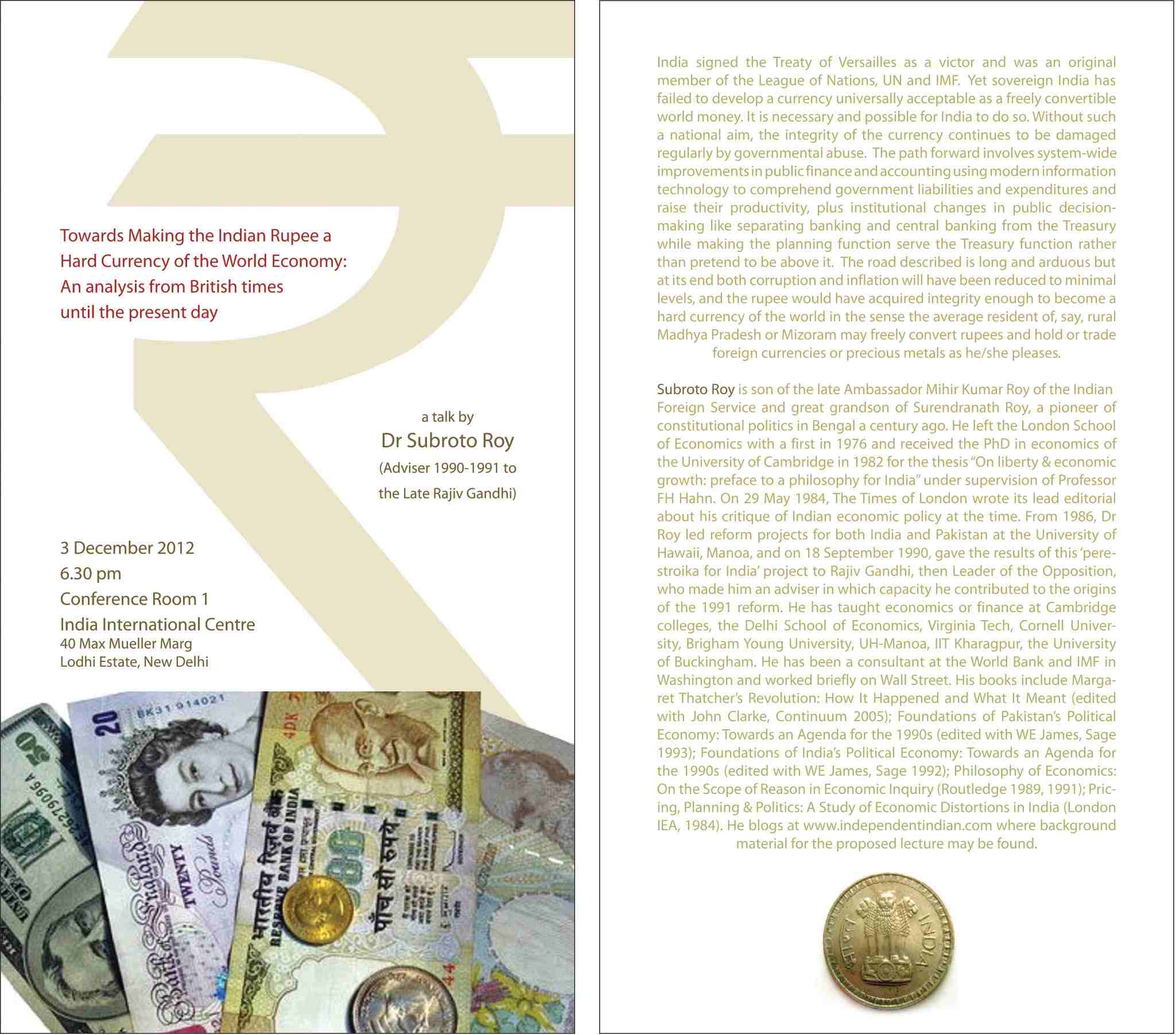
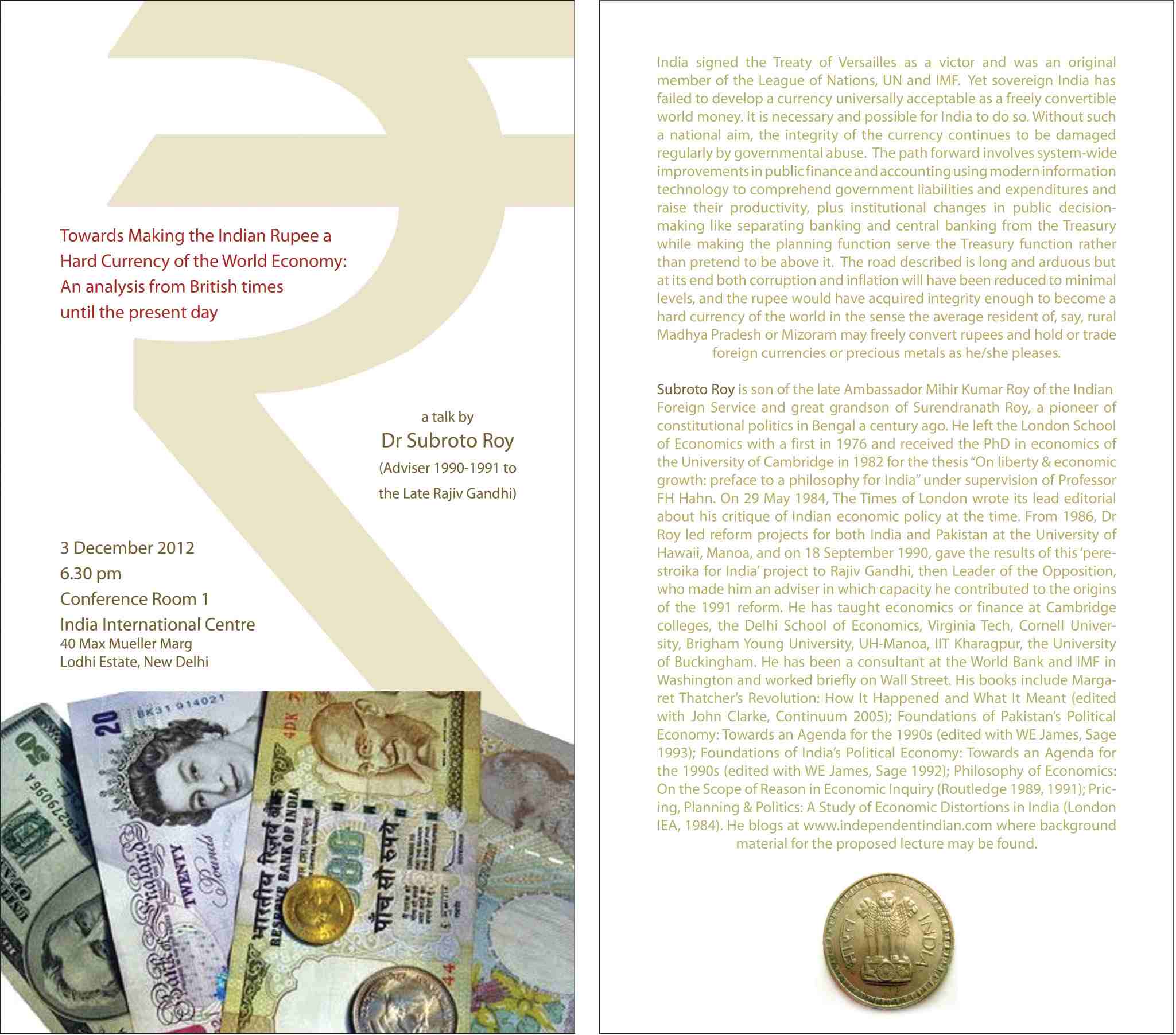
My 3 Dec 2012 Delhi talk on India’s Money is now available at You-Tube in an audio version here.
My July 2012 article “India’s Money” in the Caymans Financial Review is here and here https://independentindian.com/2012/07/21/my-article-indias-money-in-the-cayman-financial-review-july-2012/
My 5 December 2012 interview by Mr Paranjoy Guha Thakurta, on Lok Sabha TV, the channel of India’s Lower House of Parliament, broadcast for the first time on 9 December 2012 on Lok Sabha TV, is here and here in two parts.
My interview by GDI Impuls banking quarterly of Zürich published on 6 Dec 2012 is here.
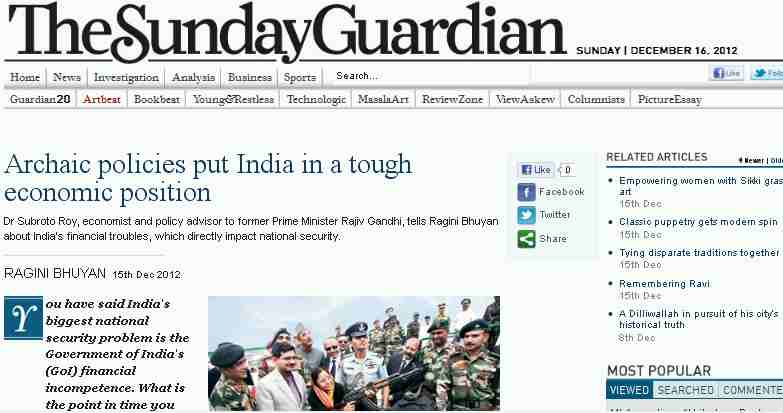
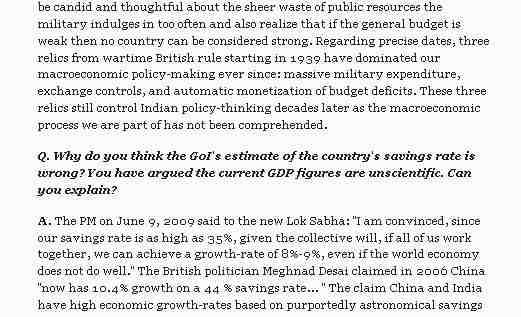
My interview by Ragini Bhuyan of Delhi’s Sunday Guardian published on 16 Dec 2012 is here.
“Monetary Integrity and the Rupee” (2008)
https://independentindian.com/2008/09/28/monetary-integrity-and-the-rupee/
“India’s Macroeconomics” (2007)
“Fiscal Instability” (2007)
“Fallacious Finance” (2007)
https://independentindian.com/2007/03/05/fallacious-finance-the-congress-bjp-cpi-m-et-al-may-be-leading-india-to-hyperinflation/
https://independentindian.com/2021/12/01/on-the-simplest-smallest-most-universal-direct-flattax-of-500-rupees-per-annum-for-india-accruing-to-the-states-with-a-bpl-exemption-too/
Budgets & Financial Positions of Three of India’s Most Populous States (combined population c.300 million)…Brought to you especially by Dr Subroto Roy… Feel free to use (with acknowledgment)…
“Growth and Government Delusion” (2008)
https://independentindian.com/2008/02/22/growth-government-delusion/
“Distribution of Govt of India Expenditure (Net of Operational Income) 1995”
https://independentindian.com/2008/07/27/distribution-of-govt-of-india-expenditure-net-of-operational-income-1995/
“India in World Trade & Payments” (2007)
https://independentindian.com/2007/02/12/india-in-world-trade-payments/
“Path of the Indian Rupee 1947-1993″ (1993)
https://independentindian.com/1993/06/01/path-of-the-indian-rupee-1947-1993/
“Our Policy Process” (2007)
https://independentindian.com/2007/02/20/our-policy-process-self-styled-planners-have-controlled-indias-paper-money-for-decades/
“Indian Money and Credit” (2006)
https://independentindian.com/2006/08/06/indian-money-and-credit/
“Indian Money and Banking” (2006)
https://independentindian.com/2006/04/23/indian-money-and-banking/
“Indian Inflation” (2008)
https://independentindian.com/2008/04/16/indian-inflation-upside-down-economics-from-new-delhis-establishment/
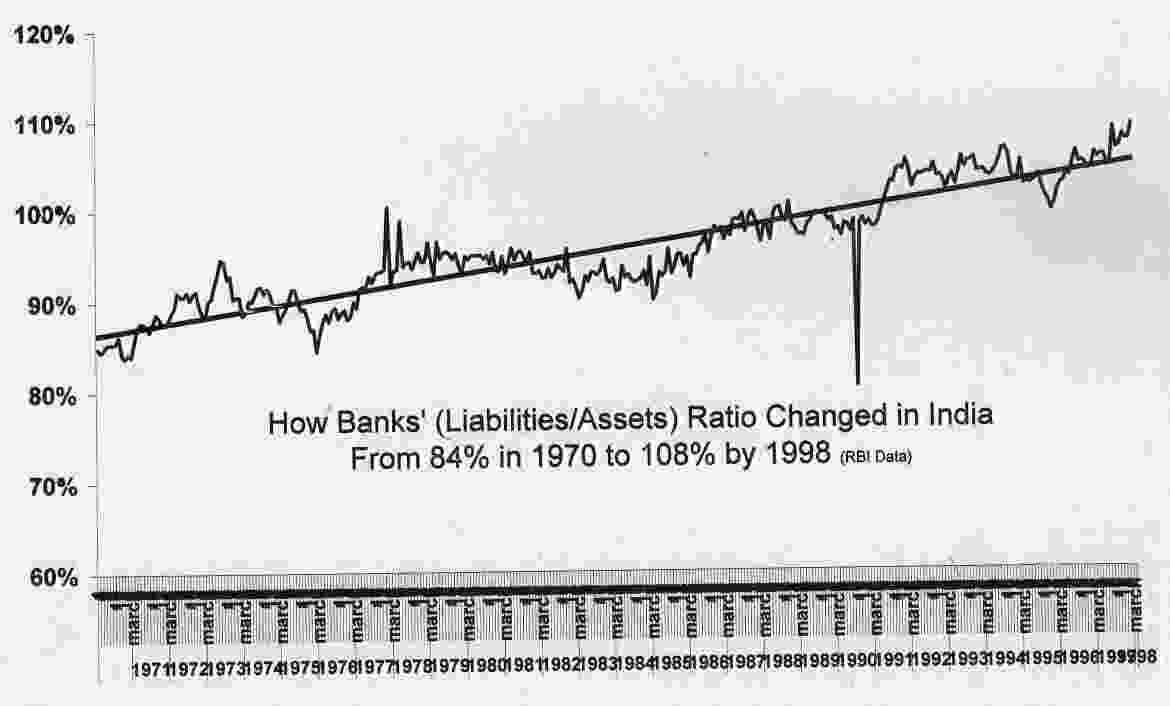
How the Liabilities/Assets Ratio of Indian Banks Changed from 84% in 1970 to 108% in 1998 https://independentindian.com/2008/10/20/how-the-liabilitiesassets-ratio-of-indian-banks-changed-from-84-in-1970-to-108-in-1998/
“Growth of Real Income, Money & Prices in India 1869-2004” (2005)
https://independentindian.com/2008/07/28/growth-of-real-income-money-prices-in-india-1869-2004/
“How to Budget” (2008)
https://independentindian.com/2008/02/26/how-to-budget-thrift-not-theft-should-guide-our-public-finances/
“Waffle but No Models of Monetary Policy: The RBI and Financial Repression (2005)”
https://independentindian.com/2005/10/27/waffle-but-no-models-of-monetary-policy-the-rbi-and-financial-repression/
“The Dream Team: A Critique” (2006)
https://independentindian.com/2006/01/08/the-dream-team-a-critique/
“Against Quackery” (2007)
https://independentindian.com/2007/09/24/against-quackery/
“Mistaken Macroeconomics” (2009)
https://independentindian.com/2009/06/12/mistaken-macroeconomics-an-open-letter-to-prime-minister-dr-manmohan-singh/
Towards a Highly Transparent Fiscal & Monetary Framework for India’s Union & State Governments (RBI lecture 29 April 2000)
https://independentindian.com/2000/04/29/towards-a-highly-transparent-fiscal-monetary-framework-for-india%E2%80%99s-union-state-governments/
“The Indian Revolution (2008)”
https://independentindian.com/2008/12/08/the-indian-revolution/
Can India Become an Economic Superpower or Will There Be a Monetary Meltdown? (2005)
https://independentindian.com/2005/05/05/can-india-become-an-economic-superpower-or-will-there-be-a-monetary-meltdown-2005/
Memo to Kaushik Basu, 2010
Land, Liberty, & Value, 2006
https://independentindian.com/2006/12/31/land-liberty-value/
On Land-Grabbing, 2007
https://independentindian.com/2007/01/14/on-land-grabbing/
No Marxist MBAs? An amicus curiae brief for the Honourable High Court
https://independentindian.com/2007/08/29/no-marxist-mbasan-amicus-curae-brief-for-the-honourable-high-court/
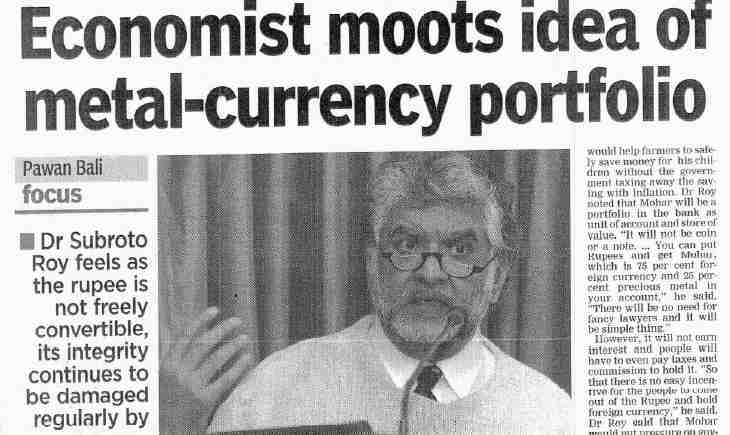
Coverage in The *Asian Age*/*Deccan Herald* of 4 Dec 2012.

.



Twenty Years Ago Today: March 23 1991 (An Excerpt) (2011)
May 21, 2011 — drsubrotoroy
From Facebook May 21, 2011
Rajiv Gandhi, assassinated this day 20 years ago, May 21 1991, an irreparable loss for India.
“On March 23, our group was to meet Rajiv at noon. There was to be an event in the inner lawns of Rajiv’s residence in the morning, where he would launch Krishna Rao’s book on India’s security. Krishna Rao had expressly asked me to come but I had to wait outside the building patiently, not knowing if it was a mistake or if it was deliberate. This was politics after all, and I had ruffled feathers during my short time there. While I waited, Rajiv was speaking to a farmers’ rally being held at grounds adjoining his residence, and there appeared to be thousands of country folk who had gathered to hear him. When it was over, Rajiv, smiling nervously and looking extremely uncomfortable, was hoisted atop people’s shoulders and carried back to the residence by his audience. As I watched, my spine ran cold at the thought that any killer could have assassinated him with ease in that boisterous crowd, right there in the middle of Delhi outside his own residence. It was as if plans for his security had been drawn up without any strategic thinking underlying them.
Krishna Rao arrived and graciously took me inside for his book launch. The event was attended by the Congress’s top brass, including Narasimha Rao whom I met for the first time, as well as foreign military attaches and officers of the Indian armed forces. The attaché of one great power went about shaking hands and handing out his business card to everyone. I stood aside and watched. Delhi felt to me that day like a sieve, as if little could be done without knowledge of the embassies. One side wanted to sell arms, aircraft or ships, while the other wanted trips abroad or jobs or green cards or whatever for their children. And I thought Islamabad would be worse — could India and Pakistan make peace in this fetid ether?
Proceedings began when Rajiv arrived. This elite audience mobbed him just as the farmers had mobbed him earlier. He saw me and beamed a smile in recognition, and I smiled back but made no attempt to draw near him in the crush. He gave a short very apt speech on the role the United Nations might have in the new post-Gulf War world. Then he launched the book, and left for an investiture at Rashtrapati Bhavan.
We waited for our meeting with him, which finally happened in the afternoon. Rajiv was plainly at the point of exhaustion and still hard-pressed for time. He seemed pleased to see me and apologized for not talking in the morning. Regarding the March 22 draft, he said he had not read it but that he would be doing so. He said he expected the central focus of the manifesto to be on economic reform, and an economic point of view in foreign policy, and in addition an emphasis on justice and the law courts. I remembered our September 18 conversation and had tried to put in justice and the courts into our draft but had been over-ruled by others. I now said the social returns of investment in the judiciary were high but was drowned out again. Rajiv was clearly agitated that day by the BJP and blurted out he did not really feel he understood what on earth they were on about. He said about his own family, “We’re not religious or anything like that, we don’t pray every day.” I felt again what I had felt before, that here was a tragic hero of India who had not really wished to be more than a happy family man until he reluctantly was made into a national leader against his will. We were with him for an hour or so. As we were leaving, he said quickly at the end of the meeting he wished to see me on my own and would be arranging a meeting. One of our group was staying back to ask him a favour. Just before we left, I managed to say to him what I felt was imperative: “The Iraq situation isn’t as it seems, it’s a lot deeper than it’s been made out to be.” He looked at me with a serious look and said “Yes I know, I know.” It was decided Pitroda would be in touch with each of us in the next 24 hours. During this time Narasimha Rao’s manifesto committee would read the draft and any questions they had would be sent to us. We were supposed to be on call for 24 hours. The call never came. Given the near total lack of system and organization I had seen over the months, I was not surprised. Krishna Rao and I waited another 48 hours, and then each of us left Delhi. Before going I dropped by to see Krishnamurty, and we talked at length. He talked especially about the lack of the idea of teamwork in India. Krishnamurty said he had read everything I had written for the group and learned a lot. I said that managing the economic reform would be a critical job and the difference between success and failure was thin.
I got the afternoon train to Calcutta and before long left for America to bring my son home for his summer holidays with me. In Singapore, the news suddenly said Rajiv Gandhi had been killed. All India wept. What killed him was not merely a singular act of criminal terrorism, but the system of humbug, incompetence and sycophancy that surrounds politics in India and elsewhere. I was numbed by rage and sorrow, and did not return to Delhi. Eleven years later, on 25 May 2002, press reports said “P. V. Narasimha Rao and Manmohan Singh lost their place in Congress history as architects of economic reforms as the Congress High command sponsored an amendment to a resolution that had laid credit at the duo’s door. The motion was moved by…. Digvijay Singh asserting that the reforms were a brainchild of the late Rajiv Gandhi and that the Rao-Singh combine had simply nudged the process forward.” Rajiv’s years in Government, like those of Indira Gandhi, were in fact marked by profligacy and the resource cost of poor macroeconomic policy since bank-nationalisation may be as high as Rs. 125 trillion measured in 1994 rupees. Certainly though it was Rajiv Gandhi as Leader of the Opposition in his last months who was the principal architect of the economic reform that came to begin after his passing….”
An Excerpt from
Rajiv Gandhi and the Origins of India’s 1991 Economic Reform | Independent Indian: Work & Life of Professor Subroto Roy
Twenty Years Ago in New Delhi March 18-23 1991: Excerpt from “Rajiv Gandhi & the Origins of India’s 1991 Economic Reform” (2011)
March 21, 2011 — drsubrotoroyTwenty Years Ago in New Delhi March 18-23 1991: Excerpt from https://independentindian.com/thoughts-words-deeds-my-work-1973-2010/rajiv-gandhi-and-the-origins-of-indias-1991-economic-reform/
“I returned to Delhi on Monday, March 18, 1991 as new elections had been announced. Rasgotra said I should be in touch with Krishna Rao, and the next day March 19 Krishna Rao met me for several hours. I told him what I thought were the roots and results of the Gulf war. He in turn generously told me what had happened while I had been away. He said the group had met Rajiv in December with the proposal that Rajiv better organize his time by having an “office manager” of larger political stature than George. The name of a UP Congressman of integrity had been put forward, but nothing had come of it. Rajiv had been advised to keep Chandrashekhar in power through the autumn of 1991, as Chandrashekhar was doing Rajiv’s work for him of sidelining V. P. Singh. The idea was to cooperate with Chandrashekhar until he could be pushed up to the Presidency when that fell vacant. Rajiv had been advised not to work in a Chandrashekhar cabinet, though in my opinion, had we been like the Scandinavians, it was not impossible for a former prime minister to enter another cabinet on the right terms in the national interest of providing stable government, which was imperative at the time. Things seem to have slipped out of control when Chandrashekhar resigned. At that point, Rajiv called the group together and instructed them to write a draft of the manifesto for the impending elections. I had advised readiness back in September but the lack of organization had prevented much tangible progress at the time. Our group was to now report to a political manifesto-committee of three senior party leaders who would report to Rajiv. They were Narasimha Rao, Pranab Mukherjee and Madhavsingh Solanki. Krishna Rao liased with Narasimha Rao, Krishnamurty with Mukherjee, Pitroda with Solanki. While Rajiv would obviously lead a new Congress Government, Mukherjee was the presumptive Finance Minister, while Narasimha Rao and Solanki would have major portfolios though Narasimha Rao was expected to retire before too long.
Krishna Rao said I should be in touch with Krishnamurty who was preparing the economic chapters of the draft of the manifesto. Krishnamurty told me he had brought in A. M. Khusro to the group, and there would be a 5 p.m. meeting at Khusro’s office at the Aga Khan Foundation. I arrived early and was delighted to meet Khusro, and he seemed pleased to meet me. Khusro seemed excited by my view that India and Pakistan were spending excessively on defence against each other, which resonated with his own ideas, and he remarked the fiscal disarray in India and Pakistan could start to be set right by mutually agreed cuts in military spending. (Khusro was eventually to accompany Prime Minister Vajpayee to Lahore in 1999).
Krishnamurty had prepared a draft dated March 18 of several pages of the economic aspects of the manifesto. After our discussions, Krishnamurty was hospitable enough to open the draft to improvement. That evening, the 19th, I worked through the night and the next morning to get by noon copies of a revised version with all the members of the group. At 4 p.m. on the 20th there was a meeting at Andhra Bhavan of the whole group except Pitroda, which went on until the night. The next day the 21st , Krishnamurty, Khusro and I met again at Andhra Bhavan for a few hours on the economic aspects of the draft. Then in mid-afternoon I went to Rasgotra’s home to work with him and Krishna Rao. They wanted me to produce the economic draft which they could then integrate as they wished into the material they were dictating to a typist. I offered instead to absorb their material directly on to my laptop computer where the economic draft was. Rasgotra was reluctant to let go control, and eventually I gave in and said I would get them a hard copy of the economic draft, which they then planned to re-draft via a stenographer on a typewriter. At this, Rasgotra gave in and agreed to my solution. So the work began and the three of us continued until late.
That night Krishna Rao dropped me at Tughlak Road where I used to stay with friends. In the car I told him, as he was a military man with heavy security cover for himself as a former Governor of J&K, that it seemed to me Rajiv’s security was being unprofessionally handled, that he was vulnerable to a professional assassin. Krishna Rao asked me if I had seen anything specific by way of vulnerability. With John Kennedy and De Gaulle in mind, I said I feared Rajiv was open to a long-distance sniper, especially when he was on his campaign trips around the country.
This was one of several attempts I made since October 1990 to convey my clear impression to whomever I thought might have an effect that Rajiv seemed to me extremely vulnerable. Rajiv had been on sadhbhavana journeys, back and forth into and out of Delhi. I had heard he was fed up with his security apparatus, and I was not surprised given it seemed at the time rather bureaucratized. It would not have been appropriate for me to tell him directly that he seemed to me to be vulnerable, since I was a newcomer and a complete amateur about security issues, and besides if he agreed he might seem to himself to be cowardly or have to get even closer to his security apparatus. Instead I pressed the subject relentlessly with whomever I could. I suggested specifically two things: (a) that the system in place at Rajiv’s residence and on his itineraries be tested, preferably by some internationally recognized specialists in counter-terrorism; (b) that Rajiv be encouraged to announce a shadow-cabinet. The first would increase the cost of terrorism, the second would reduce the potential political benefit expected by terrorists out to kill him. On the former, it was pleaded that security was a matter being run by the V. P. Singh and then Chandrashekhar Governments at the time. On the latter, it was said that appointing a shadow cabinet might give the appointees the wrong idea, and lead to a challenge to Rajiv’s leadership. This seemed to me wrong, as there was nothing to fear from healthy internal contests for power so long as they were conducted in a structured democratic framework. I pressed to know how public Rajiv’s itinerary was when he travelled. I was told it was known to everyone and that was the only way it could be since Rajiv wanted to be close to the people waiting to see him and had been criticized for being too aloof. This seemed to me totally wrong and I suggested that if Rajiv wanted to be seen as meeting the crowds waiting for him then that should be done by planning to make random stops on the road that his entourage would take. This would at least add some confusion to the planning of potential terrorists out to kill him. When I pressed relentlessly, it was said I should probably speak to “Madame”, i.e. to Mrs. Rajiv Gandhi. That seemed to me highly inappropriate, as I could not be said to be known to her and I should not want to unduly concern her in the event it was I who was completely wrong in my assessment of the danger. The response that it was not in Congress’s hands, that it was the responsibility of the V. P. Singh and later the Chandrashekhar Governments, seemed to me completely irrelevant since Congress in its own interests had a grave responsibility to protect Rajiv Gandhi irrespective of what the Government’s security people were doing or not doing. Rajiv was at the apex of the power structure of the party, and a key symbol of secularism and progress for the entire country. Losing him would be quite irreparable to the party and the country. It shocked me that the assumption was not being made that there were almost certainly professional killers actively out to kill Rajiv Gandhi — this loving family man and hapless pilot of India’s ship of state who did not seem to have wished to make enemies among India’s terrorists but whom the fates had conspired to make a target. The most bizarre and frustrating response I got from several respondents was that I should not mention the matter at all as otherwise the threat would become enlarged and the prospect made more likely! This I later realized was a primitive superstitious response of the same sort as wearing amulets and believing in Ptolemaic astrological charts that assume the Sun goes around the Earth — centuries after Kepler and Copernicus. Perhaps the entry of scientific causality and rationality is where we must begin in the reform of India’s governance and economy. What was especially repugnant after Rajiv’s assassination was to hear it said by his enemies that it marked an end to “dynastic” politics in India. This struck me as being devoid of all sense because the unanswerable reason for protecting Rajiv Gandhi was that we in India, if we are to have any pretensions at all to being a civilized and open democratic society, cannot tolerate terrorism and assassination as means of political change. Either we are constitutional democrats willing to fight for the privileges of a liberal social order, or ours is truly a primitive and savage anarchy concealed beneath a veneer of fake Westernization.
The next day, Friday March 22, I worked from dawn to get the penultimate draft to Krishna Rao before noon as planned the night before. Rasgotra arrived shortly, and the three of us worked until evening to finish the job. I left for an hour to print out copies for a meeting of the entire group, where the draft we were going to submit would come to be decided. When I got back I found Rasgotra had launched an extended and quite unexpected attack on what had been written on economic policy. Would someone like Manmohan Singh, Rasgotra wanted to know, agree with all this talk we were putting in about liberalization and industrial efficiency? I replied I did not know what Manmohan Singh’s response would be but I knew he had been in Africa heading something called the South-South Commission for Julius Nyrere of Tanzania. I said what was needed was a clear forceful statement designed to restore India’s credit-worthiness, and the confidence of international markets. I said that the sort of thing we should aim for was to make clear, e.g. to the IMF’s man in Delhi when that person read the manifesto, that the Congress Party at least knew its economics and was planning to make bold new steps in the direction of progress. I had argued the night before with Rasgotra that on foreign policy we should “go bilateral” with good strong ties with individual countries, and drop all the multilateral hogwash. But I did not wish to enter into a fight on foreign policy which he was writing, so long as the economic policy was left the way we said. Krishnamurty, Khusro and Pitroda came to my defence saying the draft we had done greatly improved on the March 18 draft. For a bare half hour or so with all of us present, the draft was agreed upon. Later that night at Andhra Bhavan, I gave Krishna Rao the final copy of the draft manifesto which he was going to give Narasimha Rao the next day, and sent a copy to Krishnamurty who was liaising with Pranab Mukherjee. Pitroda got a copy on a floppy disc the next day for Solanki.
In its constructive aspects, the March 22 1991 draft of the Congress manifesto went as follows with regard to economic policy: “CHAPTER V AGENDA FOR ECONOMIC ACTION 1. Control of Inflation …. The Congress believes the inflation and price-rise of essential commodities… is a grave macroeconomic problem facing the country today. It has hit worst the poorest and weakest sections of our people and those with fixed incomes like pensioners. The Congress will give highest priority to maintaining the prices of essential commodities, increasing their production and supply using all appropriate economic instruments. 2. Macroeconomic Policy Framework To control inflation of the general price-level, the Congress will provide a predictable long-term policy framework. The average Indian household and business will not have their lives and plans disrupted by sudden changes in economic policy. Coherent monetary policy measures will be defined as called for by the Report of Experts of the Reserve Bank of India in 1985. The Long-Term Fiscal Policy introduced by the Congress Government of 1984-1989 will be revived. Medium and long-term export-import policies will be defined. The basis for a strong India must be a strong economy. The Congress believes a high rate of real growth is essential for securing a strong national defence, social justice and equity, and a civilized standard of living for all. As the party of self-reliance, Congress believes resources for growth must be generated from within our own economy. This means all wasteful and unproductive Government spending has to be cut, and resources transferred from areas of low priority to areas of high national priority. Subsidies have to be rationalized and reduced, and productivity of investments already made has to be improved. The widening gap between revenue receipts and revenue expenditure must be corrected through fiscal discipline, and the growing national debt brought under control as a matter of high priority. These policies in a consistent framework will create the environment for the freeing of the rupee in due course, making it a hard currency of the world of which our nation can be proud. Public resources are not unlimited. These have to be allocated to high priority areas like essential public services, poverty-reduction, strategic sectors, and protection of the interests of the weaker sections of society. Government has to leave to the initiative and enterprise of the people what can be best done by themselves. Government can now progressively vacate some areas of activity to the private, cooperative and non-government sectors. Black money in the parallel economy has become the plague of our economic and political system. This endangers the social and moral fabric of our nation. Artificial price controls, excessive licensing, capacity restrictions, outmoded laws on rent control and urban ceiling, and many other outdated rules and regulations have contributed to pushing many honest citizens into dishonest practices. The Congress will tackle the problem of black money at its roots by attacking all outmoded and retrograde controls, and simplifying procedures in all economic spheres. At the same time, the tax-base of the economy must be increased via simplification and rationalization of tax-rates and coverage, user-fees for public goods, and reduction of taxes wherever possible to improve incentives and stimulate growth. 3. Panchayati Raj India’s farmers and khet mazdoors are the backbone of our economy. Economic development is meaningless until their villages provide them a wholesome rural life. The Congress will revitalize Panchayat Raj institutions to decentralize decision-making, so development can truly benefit local people most effectively. 4. Rural Development Basic economic infrastructure like roads, communications, fresh drinking water, and primary health and education for our children must reach all our villages. The Congress believes such a policy will also relieve pressures from migration on our towns and cities…… Through the Green Revolution which the Congress pioneered over 25 years, our farmers have prospered. Now our larger farmers must volunteer to contribute more to the national endeavour, and hence to greater equity and overall economic development. Equity demands land revenue should be mildly graduated so that small farmers holding less than one acre pay less land revenue per acre…. 9. Education and Health The long-run prosperity of our nation depends on the general state of education, health and well-being of our people. Small families give themselves more choice and control over their own lives. Improving female literacy, promoting the welfare of nursing mothers and reducing infant mortality will have a direct bearing on reducing the birth-rate and improving the health and quality of all our people. Primary and secondary education has high social returns and is the best way in the long-run for achievement of real equality. Efforts will be made to reduce the cost of education for the needy through concessional supply of books and other study materials, scholarships and assistance for transportation and residential facilities. The Congress Party pledges to dedicate itself to promoting education, especially in rural areas and especially for girls and the weaker sections of society. The next Congress Government will prepare and launch a 10-year programme for introduction of free and compulsory primary education for all children of school age. It will continue to emphasize vocational bias in education, integrating it closely with employment opportunities…. 11. Industrial Efficiency Our industrial base in the private and public sectors are the core of our economy. What we have achieved until today has been creditable, and we are self-reliant in many areas. Now the time has come for industry to provide more efficiency and better service and product-quality for the Indian consumer. The public sector has helped the Indian economy since Independence and many national goals have been achieved. Now it has become imperative that the management of public sector units is made effective, and their productivity increased. Major steps must be taken for greater accountability and market-orientation. Failure to do this will make our country lose more and more in the international economy. Budgetary support will be given only for public sector units in the core and infrastructure sectors. Emphasis will be on improving performance and productivity of existing investments, not on creating added organizations or over manning. Units not in the core sector will be privatised gradually. Even in core sectors like Telecommunications, Power, Steel and Coal, incremental needs can be taken care of by the private sector. The Government-Enterprise interface must be properly defined in a White Paper. The Congress believes privatisation must distribute the profits equitably among the people of India. In order to make our public enterprises truly public, it is essential that the shares of many such enterprises are widely held by the members of the general public and workers. Congress pledges to allot a proportion of such shares to the rural Panchayats and Nagarpalikas. This will enhance their asset-base and yield income for their development activities, as well as improve income-distribution. 12. Investment and Trade Indian industry, Government and professional managers are now experienced enough to deal with foreign companies on an equal footing, and channel direct foreign investment in desired directions. Foreign companies often bring access to advanced technological know-how, without which the nation cannot advance. The Congress Government will formulate a pragmatic policy channelling foreign investment into areas important to the national interest. Every effort must be made also to encourage Indians who are outside India to invest in the industry, trade and real estate of their homeland. Because of the protected and inflationary domestic market, Indian industry has become complacent and the incentive for industrial exports has been weakened. When all production is comfortably absorbed at home, Indian industry makes the effort to venture into exports only as a last resort. This must change. A Congress Government will liberalize and deregulate industry to make it competitive and export-oriented, keeping in mind always the interests of the Indian consumer in commercial policy. Export-oriented and predictable commercial policies will be encouraged. Existing procedural constraints and bottlenecks will be removed. Quotas and tariffs will be rationalized. Thrust areas for export-development will be identified and monitored. Efforts will be made to develop a South Asian Community. Trade and economic cooperation among South Asian countries must be increased and simplified.”
This March 22 1991 draft of the Congress’s intended economic policies got circulated and discussed, and from it rumours and opinions appeared that Congress was planning to launch a major economic reform in India. Economic Times said the manifesto “is especially notable for its economic agenda” and Business Standard said “if party manifestos decide election battles” Congress must be “considered home and dry”. A senior IMF official told me three years later the manifesto had indeed seemed a radical and bold move in the direction of progress, which had been exactly our intended effect.
When I met Manmohan Singh at the residence of S. S. Ray in September 1993 in Washington, Ray told him and his senior aides the Congress manifesto had been written on my computer. Manmohan Singh smiled and said that when Arjun Singh and other senior members of the Congress had challenged him in the cabinet, he had pointed to the manifesto. Yet, oddly enough, while the March 22 draft got discussed and circulated, and the Indian economic reform since July 1991 corresponded in fundamental ways to its contents as reproduced above, the actual published Congress manifesto in April 1991 was as tepid and rhetorical as usual, as if some party hack had before publication put in the usual nonsense about e.g. bringing down inflation via price-controls. Certainly the published manifesto was wholly undistinguished in its economic aspects, and had nothing in it to correspond to the bold change of attitude towards economic policy that actually came to be signalled by the 1991 Government.
On March 23, our group was to meet Rajiv at noon. There was to be an event in the inner lawns of Rajiv’s residence in the morning, where he would launch Krishna Rao’s book on India’s security. Krishna Rao had expressly asked me to come but I had to wait outside the building patiently, not knowing if it was a mistake or if it was deliberate. This was politics after all, and I had ruffled feathers during my short time there. While I waited, Rajiv was speaking to a farmers’ rally being held at grounds adjoining his residence, and there appeared to be thousands of country folk who had gathered to hear him. When it was over, Rajiv, smiling nervously and looking extremely uncomfortable, was hoisted atop people’s shoulders and carried back to the residence by his audience. As I watched, my spine ran cold at the thought that any killer could have assassinated him with ease in that boisterous crowd, right there in the middle of Delhi outside his own residence. It was as if plans for his security had been drawn up without any strategic thinking underlying them.
Krishna Rao arrived and graciously took me inside for his book launch. The event was attended by the Congress’s top brass, including Narasimha Rao whom I met for the first time, as well as foreign military attaches and officers of the Indian armed forces. The attaché of one great power went about shaking hands and handing out his business card to everyone. I stood aside and watched. Delhi felt to me that day like a sieve, as if little could be done without knowledge of the embassies. One side wanted to sell arms, aircraft or ships, while the other wanted trips abroad or jobs or green cards or whatever for their children. And I thought Islamabad would be worse — could India and Pakistan make peace in this fetid ether?
Proceedings began when Rajiv arrived. This elite audience mobbed him just as the farmers had mobbed him earlier. He saw me and beamed a smile in recognition, and I smiled back but made no attempt to draw near him in the crush. He gave a short very apt speech on the role the United Nations might have in the new post-Gulf War world. Then he launched the book, and left for an investiture at Rashtrapati Bhavan.
We waited for our meeting with him, which finally happened in the afternoon. Rajiv was plainly at the point of exhaustion and still hard-pressed for time. He seemed pleased to see me and apologized for not talking in the morning. Regarding the March 22 draft, he said he had not read it but that he would be doing so. He said he expected the central focus of the manifesto to be on economic reform, and an economic point of view in foreign policy, and in addition an emphasis on justice and the law courts. I remembered our September 18 conversation and had tried to put in justice and the courts into our draft but had been over-ruled by others. I now said the social returns of investment in the judiciary were high but was drowned out again. Rajiv was clearly agitated that day by the BJP and blurted out he did not really feel he understood what on earth they were on about. He said about his own family, “We’re not religious or anything like that, we don’t pray every day.” I felt again what I had felt before, that here was a tragic hero of India who had not really wished to be more than a happy family man until he reluctantly was made into a national leader against his will. We were with him for an hour or so. As we were leaving, he said quickly at the end of the meeting he wished to see me on my own and would be arranging a meeting. One of our group was staying back to ask him a favour. Just before we left, I managed to say to him what I felt was imperative: “The Iraq situation isn’t as it seems, it’s a lot deeper than it’s been made out to be.” He looked at me with a serious look and said “Yes I know, I know.” It was decided Pitroda would be in touch with each of us in the next 24 hours. During this time Narasimha Rao’s manifesto committee would read the draft and any questions they had would be sent to us. We were supposed to be on call for 24 hours. The call never came. Given the near total lack of system and organization I had seen over the months, I was not surprised. Krishna Rao and I waited another 48 hours, and then each of us left Delhi. Before going I dropped by to see Krishnamurty, and we talked at length. He talked especially about the lack of the idea of teamwork in India. Krishnamurty said he had read everything I had written for the group and learned a lot. I said that managing the economic reform would be a critical job and the difference between success and failure was thin.
I got the afternoon train to Calcutta and before long left for America to bring my son home for his summer holidays with me. In Singapore, the news suddenly said Rajiv Gandhi had been killed. All India wept. What killed him was not merely a singular act of criminal terrorism, but the system of humbug, incompetence and sycophancy that surrounds politics in India and elsewhere. I was numbed by rage and sorrow, and did not return to Delhi. Eleven years later, on 25 May 2002, press reports said “P. V. Narasimha Rao and Manmohan Singh lost their place in Congress history as architects of economic reforms as the Congress High command sponsored an amendment to a resolution that had laid credit at the duo’s door. The motion was moved by…. Digvijay Singh asserting that the reforms were a brainchild of the late Rajiv Gandhi and that the Rao-Singh combine had simply nudged the process forward.” Rajiv’s years in Government, like those of Indira Gandhi, were in fact marked by profligacy and the resource cost of poor macroeconomic policy since bank-nationalisation may be as high as Rs. 125 trillion measured in 1994 rupees. Certainly though it was Rajiv Gandhi as Leader of the Opposition in his last months who was the principal architect of the economic reform that came to begin after his passing.”
Rajiv Gandhi 20 August 1944- 21 May 1991
Rajiv-Gandhi-and-the-origins-of-indias-1991-economic-reform/
. See also https://independentindian.com/2013/08/23/did-jagdish-bhagwati-originate-pioneer-intellectually-father-indias-1991-economic-reform-did-manmohan-singh-or-did-i-through-my-encounter-with-rajiv-gandhi-just-as-siddhartha-shan/also
https://independentindian.com/2011/05/21/twenty-years-ago-today-march-23-1991-an-excerpt/
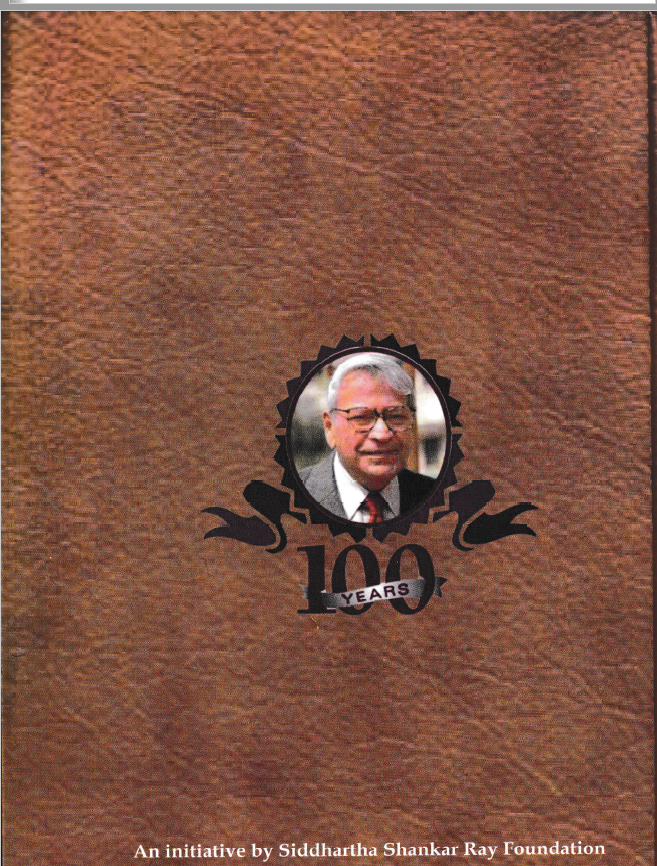
“I’m on my way out”: Siddhartha Shankar Ray (1920-2010)…
November 7, 2010 — drsubrotoroy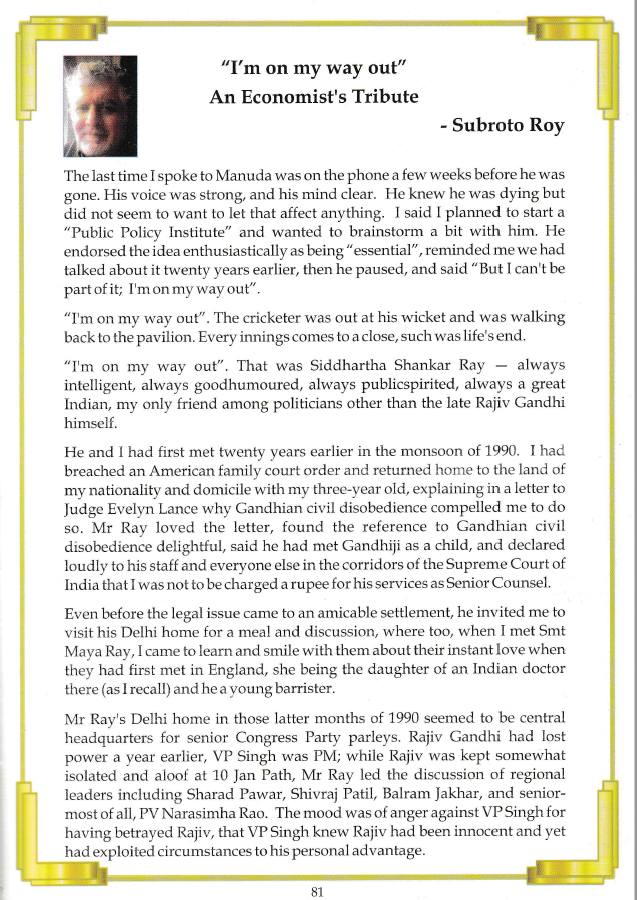

November 7, 2010
I am grieved to hear of the death of Siddhartha Shankar Ray last night.
I was introduced to him by an uncle who had been his college-buddy, and he took up a grave personal matter of mine in the Supreme Court of India in 1990 with great kindness, charging me not a penny, being impressed by a little explicit “civil disobedience” I had had to show at the time towards Judge Evelyn Lance.
He also told me he and his wife had been in London on May 29 1984 and had seen *The Times*’s leader that day about my critique of Indian economic policy. He invited me to his Delhi home where I told him about the perestroika-for-India project I had led at the University of Hawaii since 1986, at which he, of his own accord, declared
“You must meet Rajiv Gandhi. I will arrange a meeting”.
That led to my meeting with Rajiv Gandhi, then Congress President & Leader of the Opposition, on September 18 1990, which contributed to the origins of India’s 1991 economic reform as has been told elsewhere. https://independentindian.com/thoughts-words-deeds-my-work-1973-2010/rajiv-gandhi-and-the-origins-of-indias-1991-economic-reform/
Rajiv’s assistant George told me Rajiv had said he had not heard more fulsome praise.
In Bengal, he took me as a guest to visit the Legislative Assembly in session when he was Leader of the Opposition; it was the legislature of which my great grandfather, Surendranath Roy, had been a founder, being the first Deputy President and acting President too; Surendranath had been friends with his maternal grandfather, CR Das, leader of the Congress Party before MK Gandhi, and he said to me in the car heading to the legislature about that relationship in Bengal’s politics some seven decades earlier “They were friends”.
He introduced me to all the main leaders of the Bengal Congress at the time (except Mamata Banerjee who could not come) and I was tasked by him to write the manifesto for the State elections that year, which I did (in English, translated into Bangla by Professor Manjula Bose); the Communists won handily again but one of their leaders (Sailen Dasgupta) declared there had never been a State Congress manifesto of the sort before, being as it was an Orwell-like critique of Bengal’s Stalinism.
In a later conversation, I said to him I wished he be appointed envoy to Britain, he instead came to be appointed envoy to the USA.
In Washington in September 1993, he said “You must meet Manmohan Singh”, and invited me to a luncheon at the Ambassador’s Residence where, to Manmohan Singh and all his aides, he declared pointing at me
“The Congress manifesto (of 1991) was written on his (laptop) computer”.
In later years I kept him informed of developments and gave him my publications. We last met in July last year where I gave him a copy, much to his delight, of *Margaret Thatcher’s Revolution: How it Happened and What it Meant*.
I said to him Bengal’s public finances were in abysmal condition, calling for emergency measures financially, and that Mamata Banerjee seemed to me to be someone who knew how to and would dislodge the Communists from their entrenched misgovernance of decades but not quite aware that dislodging a bad government politically was not the same thing as knowing how to govern properly oneself.
He, again of his own accord, said immediately,
“I will call her and her main people to a meeting here so you can meet them and tell them that directly”.
It never transpired.
He and I were supposed to meet a few months ago but could not due to his poor health; on the phone in our last conversation I mentioned to him my plans of creating a Public Policy Institute — an idea he immediately and fully endorsed as being essential though adding
“I can’t be part of it, I’m on my way out”.
“I’m on my way out”. 🙂
That was Siddhartha Shankar Ray — always intelligent, always good-humoured, always public-spirited, always a great Indian.
I shall miss a good friend, indeed my only friend among politicians other than the late Rajiv Gandhi himself.
Will the Telangana flare-up awaken New Delhi from its dream-world and into India’s political reality?
December 13, 2009 — drsubrotoroySubroto Roy thinks the flare-up of the Telangana issue has one and only one positive consequence: it brings home to New Delhi’s ruling elite that there are real political questions in India, and not everything can be left to spin-doctors and lobbyists to handle.
Is Dr Manmohan Singh the “aam admi” that the Congress Party means?
November 14, 2009 — drsubrotoroyDr Manmohan Singh has in a televised meeting with children said about himself:
“I am an aam admi“.
I am afraid this caused me to say at Facebook today:
Subroto Roy finds disconcerting Prime Minister Manmohan Singh’s claim of being himself “a common man”.
In “Rajiv Gandhi and the Origins of India’s 1991 Economic Reform”, I wrote about my encounter with Rajiv:
“I said the public sector’s wastefulness had drained scarce resources that should have gone instead to provide public goods. Since the public sector was owned by the public, it could be privatised by giving away its shares to the public, preferably to panchayats of the poorest villages. The shares would become tradable, drawing out black money, and inducing a historic redistribution of wealth while at the same time achieving greater efficiency by transferring the public sector to private hands. Rajiv seemed to like that idea too, and said he tried to follow a maxim of Indira Gandhi’s that every policy should be seen in terms of how it affected the common man. I wryly said the common man often spent away his money on alcohol, to which he said at once it might be better to think of the common woman instead. (This remark of Rajiv’s may have influenced the “aam admi” slogan of the 2004 election, as all Congress Lok Sabha MPs of the previous Parliament came to receive a previous version of the present narrative.)”
I am afraid I do not think Dr Singh was whom Rajiv or Indira had in mind in speaking of the common man.
Subroto Roy
Kolkata
Schoolboys exchanging fisticuffs in a school playground or elderly men battling over power and policy? Why did Manmohan Singh and LK Advani apologize to one another? Is Indian politics essentially collusive, not competitive, aiming only to preserve and promote the post-1947 Dilli Raj at the expense of the whole of India? We seem to have no Churchillian repartee (except perhaps from Bihar occasionally)
June 18, 2009 — drsubrotoroyYesterday the PM is reported to have been asked by someone travelling on his aeroplane from Moscow “whether he had forgiven Advani for calling him a ‘weak Prime Minister’”.
The question was absurd, almost ridiculous, typical of our docile ingratiating rather juvenile English-language press and media, as if any issue of forgiveness arises at all about what one politician says during an election campaign about another politician’s performance in office.
Dr Manmohan Singh’s answer was surprising too: “I was compelled to reply to what Advani said…On May 16 when (Advani) telephoned me, he told me that he was hurt by some of my statements. He said he was hurt and regretted his statements… I apologised to him if I have hurt him. I am looking forward to a close relationship with the Leader of the Opposition.”
So LK Advani appears to have apologised to Manmohan Singh and Manmohan Singh to LK Advani for what they said about each other during the recent general election campaign! What is going on? Were they schoolboys exchanging fisticuffs in a school playground or elderly men battling over power and policy in modern Indian politics?
What would we have done if there was a Churchill in Indian politics today – hurling sarcastic insults at domestic opponents and foreign leaders while guiding a nation on its right course during turbulent times?
Churchill once famously said his parents had not shown him “The Boneless Wonder” in PT Barnum’s circus because it was too horrible a sight but now he had finally seen such a “Boneless Wonder” in his opponent on the Treasury Benches, namely, Ramsay MacDonald. Of the same opponent he said later “He has the gift of compressing the largest number of words into the smallest amount of thought”.
When accused of being drunk by a woman MP he replied “And you are very ugly, but tomorrow I’ll be sober”. Today’s politically correct world would scream at far less. Field Marshall Montgomery told Churchill, “I neither drink nor smoke and am 100% fit,” to which Churchill replied, “I drink and smoke and I am 200% fit”. That too would be politically incorrect today.
Churchill described Prime Minister Clement Attlee as “a modest man with much to be modest about”; also about Attlee: “If any grub is fed on Royal Jelly it turns into a Queen Bee”. Yet Attlee had enough dignity and self-knowledge and self-confidence to brush it all off and instead respect and praise him. In the 1954 volume Winston Spencer Churchill Servant of Crown and Commonwealth Attlee added his own tribute to his great opponent: “I recall…the period when he was at odds with his own party and took a seat on the Bench below the Gangway on the Government side. Here he was well placed to fire on both parties. I remember describing him as a heavily armed tank cruising in No Man’s Land. Very impressive were the speeches he delivered as the international horizon grew darker. He became very unpopular with the predominant group in his own party, but he never minded fighting a lone battle.”
Stanley Baldwin, who as PM first appointed Churchill as Chancellor of the Exchequer, once said “There comes Winston with his hundred horsepower mind”. Yet Churchill was to later say harshly “I wish Stanley Baldwin no ill, but it would have been much better had he never lived.”
Of Lenin, Churchill said, he was “transported in a sealed truck like a plague bacillus from Switzerland into Russia”. Of Molotov: “I have never seen a human being who more perfectly represented the modern concept of a robot.” Of Hitler, “If [he] invaded hell I would at least make a favourable reference to the devil in the House of Commons”. Of De Gaulle, “He was a man without a country yet he acted as if he was head of state”.” Of John Foster Dulles, “[He] is the only bull who carries his china shop with him”. Of Stafford Cripps, British Ambassador to the USSR, “…a lunatic in a country of lunatics”; and also “There but for the Grace of God, goes God”.
Decades later, that great neo-Churchillian Margaret Thatcher was on the receiving end of a vast amount of sarcasm. “President Mitterrand once famously remarked that Thatcher had ‘the eyes of Caligula and the lips of Marilyn Monroe’. Rather less flatteringly, Dennis Healey described her as Attila the Hen. She probably took both descriptions as compliments.” (Malcolm Rifkind in Margaret Thatcher’s Revolution: How it Happened and What it Meant edited by Subroto Roy and John Clarke, 2005).
Politics is, and should be, grown up stuff because it deals with human lives and national destinies, and really, if you can’t take the heat please do not enter the kitchen. The slight Churchillian sarcasm that does arise within modern Indian politics comes very occasionally from Bihar but nowhere else, e.g. about the inevitability of aloo in samosas and of bhaloos in the jungle but no longer of Laloo being in the seat of power. In general, everyone seems frightfully sombre and self-important though may be in fact short of self-knowledge and hence self-confidence.
What had Manmohan Singh said about LK Advani that he felt he had to apologise for? That Advani had no substantial political achievement to his credit and did not deserve to be India’s PM. Manmohan was not alone in making the charge – Sonia Gandhi, Rahul Gandhi and numerous other spokesmen and representatives of their party said the same. Has Manmohan’s apology to Advani been one on behalf of the whole Congress Party itself?
Was Advani’s apology to Manmohan one on behalf of the whole BJP too?
What had the BJP charged Manmohan with that Advani felt he had to apologise for? Being a “weak PM”.
Hmmm. Frankly, thinking about it, it is hard to count who has not been weak as a PM in India’s modern history.
Certainly Vallabhai Patel as a kind of co-PM was decisive and far from weak back in 1947-48.
Lal Bahadur Shastri was not weak when he told Pakistan that a Pakistani attack on Kashmir would result in an Indian attack on Pakistan.
Indira Gandhi was not weak when she resisted the Yahya Khan-Tikka Khan tyranny against Bangladesh.
Had he not been assassinated, Rajiv Gandhi in a second term would have been decisive and not weak in facing up to and tackling the powerful lobbies and special interest groups that have crippled our domestic economic policy for decades.
But the number of such examples may be counted by hand. Perhaps VP Singh might count, riding in an open jeep to Amritsar, as might AB Vajpayee’s Pokhran II and travelling on a bus to Lahore. In general, the BJP’s charge that Manmohan was “weak” may have constructively led to serious discussion in the country about the whole nature of the Prime Ministership in modern India, which means raising a whole gamut of issues about Indian governance – about India being the softest of “soft states”, with the softest of “soft government budget constraints” (i.e., endless deficit finance and paper money creation) etc.
Instead, what we have had thus far is apologies being exchanged for no real political reason between the leaderships of the Government and the Opposition. If two or three sellers come to implicitly carve up a market between themselves they are said by economic theory to be colluding rather than being in competition. Indian politics may be revealing such implicit collusive behaviour. The goal of this political oligopoly would seem to be to preserve and promote the status quo of the post-1947 Dilli Raj with its special hereditary nomenclatura, at the expense of anonymous diffused teeming India.
Subroto Roy
Postscript July 15 2009: Churchill’s mature opinion of Baldwin was one of the fullest praise at the 20 May 1950 unveiling of a memorial to him. See his In the Balance, edited by Randolph S Churchill, 1951, p. 281
Parliament is supposed to control the Government, not be bullied or intimidated by it: Will Rahul Gandhi be able to lead the Backbenches in the 15th Lok Sabha?
June 1, 2009 — drsubrotoroyAny Lok Sabha MP who neither sits with the Opposition nor is a sworn-in member of the Government is a Backbench MP of the Government party or its coalition.
Shrimati Sonia Gandhi is the most prominent of such Backbench MPs in the 15th Lok Sabha, just as she was of the 14th Lok Sabha, and has chosen to be in a most peculiar position from the point of view of parliamentary law. As the leader of the largest parliamentary party, she could have been not merely a member of the Government but its Prime Minister. She has in fact had a decisive role in determining the composition of the Manmohan Government as well as its policies. She in fact sits on the Frontbenches in the Lok Sabha along with the Manmohan Government. But she is not a member of the Government and is, formally speaking, a Backbench MP who is choosing to sit in the Frontbenches.
(Dr Manmohan Singh himself, not being a member of the Lok Sabha, may, formally speaking, sit or speak from among the Frontbenches of his own Government only by invitation of the Lok Sabha Speaker as a courtesy – such would have been the cardinal reason why Alec Douglas-Home resigned from being Lord Home and instead stood for a House of Commons seat when he was appointed British Prime Minister.)
Sonia Gandhi’s son, Mr Rahul Gandhi, is also a Backbench MP. From all accounts, including that of Dr Singh himself, he could have been a member of Dr Singh’s Government but has specifically chosen not to be. He has appeared to have had some much lesser role than Sonia Gandhi in determining the composition of the Government and its policies but he is not a member of it. He is, formally speaking, a Backbench MP, indeed the most prominent to actually sit in the Backbenches, as he had done in the 14th Lok Sabha, which, it is to be hoped, he does in the 15th Lok Sabha too.
Now Rahul Gandhi, Sonia Gandhi and their 541 other fellow 15th Lok Sabha MPs were declared winners by May 16 2009 having won the Indian people’s vote.
(Incidentally, I predicted the outcome here two hours before polls closed on May 13 – how I did so is simply by having done the necessary work of determining that some 103 million people had voted for Congress in 2004 against some 86 million for the BJP; in my assessment Congress had done more than enough by way of political rhetoric and political reality to maintain if not extend that difference in 2009, i.e., the BJP had not done nearly enough to even begin to get enough of a net drift in its favour. I expect when the data are out it shall be seen that the margin of the raw vote between them has been much enlarged from 2004.)
As I have pointed out here over the last fortnight, there was no legal or logical reason why the whole 15th Lok Sabha could not have been sworn in latest by May 18 2009.
Instead, Dr Manmohan Singh on May 18 held a purported “Cabinet” meeting of the defunct 14th Lok Sabha – an institution that had been automatically dissolved when Elections had been first announced! The Government then went about forming itself over two weeks despite the 15th Lok Sabha, on whose confidence it depended for its political legitimacy, not having been allowed to meet. Everyone – the Congress Party’s Supreme Court advocates, the Lok Sabha Secretariat, the Election Commission, Rashtrapati Bhavan too – seems to have gotten it awfully wrong by placing the cart before the horse.
In our system it is Parliament that is sovereign, not the Executive Government. In fact the Executive is accountable to Parliament, specifically the Lok Sabha, and is supposed to be guided by it as well as hold its confidence at all times.
What has happened instead this time is that Government ministers have been busy taking oaths and entering their offices and making policy-decisons days before they have taken their oaths and their seats as Lok Sabha MPs! The Government has thus started off by diminishing Parliament’s sovereignty and this should not be allowed to happen again.
(Of course why it took place is because of the peculiarity of the victory relative to our experience in recent decades – nobody could remember parliamentary traditions from Nehru’s time in the 1950s. Even so, someone, e.g. the former Speaker, should have known and insisted upon explaining the relevant aspect of parliamentary law and hence avoided this breach.)
A central question now is whether a Government which has such a large majority, and which is led by someone in and has numerous ministers from the Rajya Sabha, is going to be adequately controlled and feel itself accountable to the Lok Sabha.
Neither of the Lok Sabha’s most prominent Backbenchers, Sonia Gandhi and Rahul Gandhi, have thus far distinguished themselves as Parliamentarians on the floor of the Lok Sabha. In the 14th Lok Sabha, Sonia Gandhi, sitting in the Frontbenches, exercised the enormous control that she did over the Government not on the floor of the House itself but from outside it.
It would be best of all if she chose in the 15th Lok Sabha to actually physically sit in the Congress’s Backbenches because that would ensure best that the Government Party’s ministers in the Frontbenches will keep having to seek to be accountable to the Backbenches!
But this seems unlikely to happen in view of the fact she herself seems to have personally influenced the choice of a Speaker for the 15th Lok Sabha and it may be instead expected that she continues to sit on the Frontbenches with the Government without being a member of it.
That leaves Rahul Gandhi. If he too comes to be persuaded by the sycophants to sit on the Frontbenches with the Government, that will not be a healthy sign.
On the other hand, if he continues to sit on the Backbenches, he may be able to have a salubrious influence on the 15th Lok Sabha fulfilling its responsibility of seeking to seriously control and hold accountable the Executive Government, and not be bullied or intimidated by it. His paternal grandfather, Feroze Gandhi, after all, may have been India’s most eminent and effective Backbench MP yet.
Subroto Roy, Kolkata
Note to Posterity: 79 Ministers in office but no 15th Lok Sabha until June 1 2009!
May 29, 2009 — drsubrotoroyThe Government of India’s 79 Ministers have taken to their offices like bees to honey yet the 15th Lok Sabha that the people of India elected a fortnight ago is still three days from being convened.
In other words, people have been taking oaths and entering offices as Ministers even before they have taken their oaths or their seats in the 15th Lok Sabha which accords the Government its political legitimacy by its confidence!
Let posterity recall that the 15th Lok Sabha was made to needlessly wait from May 16 2009 until June 1 2009 and despite this the Government formed itself and entered office during that time. It cannot be something that helps the psychology or morale of our elected representatives nor be something conducive to the smooth working of the House.
It is all a terrible constitutional muddle which I doubt the PM or his party or Government, or even the Opposition, will admit to or want to clear up on their own but shall probably have to await a Constitutional Bench of the Supreme Court of India telling them what parliamentary law is in due course.
Subroto Roy
How to Design a Better Cabinet for the Government of India
May 29, 2009 — drsubrotoroyCabinet Government has become far too unwieldy and impractical in India, and the new Cabinet chosen by Sonia Gandhi and Manmohan Singh over almost a fortnight — of some 79 Ministers, almost certainly the largest number in the world — may be destined to be so as well. If there is going to be “fiscal prudence” as the PM and Finance Minister have declared, it really needs to start at the top with the Union Government itself. Remember we also have more than two dozen State Governments plus Union Territories and myriad local governments too.
Here then is an example of a better-designed Cabinet for the Government of India with Cabinet Ministers in bold-face, others not so:
Prime Minister
– Parliamentary Affairs
– Intra-Government Liaison
Defence War/Forces (Raksha, Yudh/Fauj)
– Army
– Navy & Coast Guard
– Air Force & Strategic Forces
– Ordnance
Finance
– Money & Banking
– Accountant General
– Planning
Home Affairs
– Law & Justice
– Internal Security
– Disaster Management & Civil Defence
– Archaeology, Art & Culture
Foreign
– Commerce & Tourism
– Overseas Indians
– International Organisations
Transport
– Railways
– Roads & Highways
– Shipping & Waterways
– Civil Aviation
– Urban Development
Agriculture & Food
– Rural Development
– Water, Flood Control & Irrigation
– Environment
– Forestry & Tribal Affairs
Industry
– Competition and Monopoly-Control
– Steel
– Textiles
– Power
– Petroleum and Energy
– Chemicals & Fertilizers
– Coal and Mines
– Communications and IT
Education
– Schools
– Higher Education
– Vocational Education
– Sports
– Science and Technology
Labour & Employment
Health and Human Services
– Housing
– Women and Child Development
– Social Security
There are just eleven Cabinet Ministers (in bold-face above) including the PM, so, along with the Cabinet Secretary, they could sit with ease around a normal table which should help the process of deliberation.
This document has arisen out of one during my work as an adviser to Rajiv Gandhi in his last months in 1990-1991 though the latter never reached him; I had intended to talk to him about its contents but it was not to be.
It may be profitably read alongside my “Distribution of Government Expenditure in India”, which is part of my ongoing research and was released in the public interest last year.
Subroto Roy, Kolkata
Why does India not have a Parliament ten days after the 15th Lok Sabha was elected? Nehru and Rajiv would both have been appalled (2009)
May 27, 2009 — drsubrotoroysee too
Why has the Sonia Congress done something that the Congress under Nehru-Indira-Rajiv would not have done, namely, exaggerate the power of the Rajya Sabha and diminish the power of the Lok Sabha?
There are at least three Supreme Court lawyers, all highly voluble, among the higher echelons of Congress Party politicians; it is surprising that not one of them has been able to get the top Party leadership of Sonia Gandhi and Manmohan Singh to see the apparent breach of normal constitutional law in Parliament not having met more than 10 days after it was elected.
A Government has been formed, Ministers have entered their offices and have been holding press-conferences and taking executive decisions, wannabe-Ministers continue to be wrangling night-and-day for the plums of office — BUT THERE IS NO PARLIAMENT!
Today is the death-anniversary of Jawaharlal Nehru and last week was the death anniversary of Rajiv Gandhi.
Nehru, whatever his faults and infirmities, was an outstanding parliamentarian and a believer in the Westminster model in particular. He was intimately familiar with its unpoken customs and unwritten laws. He would have been completely appalled by the situation today where luminaries of the party that goes by the same name as the one he had led are paying obeisance to his memory 45 years after his death but have failed to see the absurdity in having a Government in office with no new Parliament ten days after a month-long General Election was over! (Incidentally, had he not left explicit instructions against any hero-worship taking place of himself too?)
Rajiv knew his grandfather and had acquired a sense of noblesse oblige from him. He too would have been appalled that the procedural business of government had been simply procrastinated over like this.
It surprises me that Dr Manmohan Singh, having been a post-graduate of Cambridge, having earned a doctorate from Oxford, and more recently having been awarded honorary doctorates from both Ancient Universities, should seem so unaware of the elements of the Westminster model of constitutional jurisprudence which guides our polity too.
It is too late now and the mistakes have been made. I hope his new Government will come to realise at some point and then keep in mind that our Executive receives political legitimacy from Parliament, not vice versa. An Executive can hardly be legitimately in office until the Parliament that is supposed to elect it has been sworn in.
As for our putative Opposition in the Parliament-yet-to-meet, it seems to have drawn a blank too, and eo ipso revealed its own constitutional backwardness and lethargy.
Subroto Roy
Parliament’s sovereignty has been diminished by the Executive: A record for future generations to know (2009)
May 25, 2009 — drsubrotoroySad to say, Parliament’s sovereignty has been diminished, indeed usurped, by the new Executive Government.
Here is a brief record for future generations to know.
India’s people completed their voting in the 15th General Elections on Wednesday May 13 2009.
The results of how they had spoken, what was their will, were known and declared by Saturday May 16 2009.
There was no legal or logical reason why the 543 members of the 15th Lok Sabha could not have been sworn in as new MPs by the close-of-business on Monday May 18 at the latest.
On Tuesday May 19 the 15th Lok Sabha could have and should have met to elect itself a pro tem or even a permanent Speaker.
The Speaker would have divided the new House into its Government Party and its Opposition.
There would have been a vote of confidence on the floor of the House, which in the circumstances would have been in favour of the Government Party.
Observing this to have taken place, the Hon’ble President of India as the Head of State would have sent for the leader of the Government Party and invited her to form the new Government.
In this particular case, the leader of the largest political party, namely Sonia Gandhi, would have been accompanied perhaps by the Leader of the Lok Sabha, Pranab Mukherjee, as well as her personal nominee for the position of PM, namely, Manmohan Singh.
Sonia Gandhi would have respectfully declined the invitation of the President to be the new Prime Minister, and she would have also explained that she wanted Manmohan Singh to have the position instead.
The President would have said “Very well, Dr Singh, can you please form the Government?”
He would have said, “Yes Madame President it shall be a privilege and an honour to do so”.
The President would have added, “Thank you, and I notice you are not a member of the Lok Sabha at the moment but I am sure you are taking steps towards becoming one.”
End of visit.
Manmohan Singh would have been sworn in as PM and would have gone about adding Ministers at a measured pace. Later, he would have resigned his Rajya Sabha seat and sought election to the Lok Sabha on the parliamentary precedent set by Alec Douglas-Home.
What has happened instead?
On May 18 2009, instead of 543 members of the 15th Lok Sabha taking their oaths as required by parliamentary law and custom, Dr Singh held a purported “Cabinet” meeting of the 14th Lok Sabha — a long-since dead institution!
Some of the persons attending this meeting as purported “Cabinet ministers” had even lost their seats in the elections decided a few days earlier and so had absolutely zero democratically legitimate status left. All these persons then submitted their purported resignations which Dr Singh carried to the President, stating his Government had resigned. The President then appointed him a caretaker PM and he, along with Sonia Gandhi, then went about “staking claim” to form the next Government — turning up at the President’s again with “letters of support” signed by some 322 persons who were MP-elects but were yet to become MPs formally by not having been sworn in.
The President appeared satisfied the party Sonia Gandhi and Manmohan Singh belonged to would command a majority in prospect in the Lok Sabha and invited him to be PM. Some major public wrangling then took place with at least one of his allies about cabinet berths — and that is the situation as of the present moment except that Dr Singh and several others have been sworn in as the Council of Ministers even though the new 15th Lok Sabha of 543 members has still not convened! It has been all rather sloppy and hardly uplifting.
Parliament is supposed to be sovereign in India.
Not the Executive Government or the largest political party or its leader.
The sovereignty of Parliament required Sonia Gandhi and Dr Singh to have realised
first, that the 14th Lok Sabha stood automatically dissolved when elections were announced;
secondly, that the 15th Lok Sabha could have and should have been sworn in by Monday May 18;
thirdly, that there should have been a vote of confidence in the Lok Sabha immediately which would have gone in favour of the Government Party;
fourthly, that only then should the Executive Government have been sought to be formed;
and of course fifthly, that if that Executive Government was to be led by someone who happened to be a member of the Rajya Sabha and not the Lok Sabha, parliamenary law and custom required him to follow the Douglas-Home precedent of resigning from the former and seeking election to the latter at the earliest opportunity.
Let future generations know that as of today, May 25, the 543 persons whom the people of India voted to constitute the 15th Lok Sabha still remain in limbo without having been sworn in though we already have an Executive Government appointed!
The sovereignty of Parliament, specifically that of the Lok Sabha, has come to be diminished, indeed usurped, by the Executive. It is the Executive that receives its political legitimacy from Parliament, not vice versa. Nehru and his generation knew all this intimately well and would have been appalled at where we in the present have been taking it.
Subroto Roy
Inviting a new Prime Minister of India to form a Government: Procedure Right and Wrong (updated 2019 since 2009)
May 18, 2009 — drsubrotoroy2019
Better Procedure:
So @LokSabhaSectt @rashtrapatibhvn please follow my timetable for #17thLokSabha: Th 23/5 Results declared Fri 24/5 EC certifies results Sat Sun 25 26/5 Members sworn in Mon 27/5 Speaker pro tem divides House; Prez invites new @PMOIndia to form a Gov’t Tue 28/5 Cabinet appointed
Better Procedure for #17thLokSabha.. Respected @rashtrapatibhvn @VPSecretariat @LokSabhaSectt @PMOIndia 16LS no longer exists as soon as results are certified by @ECISVEEP… Let 543 members of new #17thLokSabha be sworn in immediately one by one; let them elect a Speaker pro tem.
Let the Speaker pro tem divide the House between a putative Government & Opposition… Let @rashtrapatibhvn then invite the leader of the former side to visit him for a chat… @VPSecretariat @LokSabhaSectt @PMOIndia #17thLokSabha better then before please
Gen Chohan: Utopia not possible Prof. We can only dream IMO.
It’s the correct parliamentary logic tho.. Not hard to do… @ECISVEEP @SpokespersonECI informs @LokSabhaSectt of winning candidates; LS informs 543 new members of #17thLokSabha to turn up pronto and be sworn in; elect a Speaker pro tem, divide the House; @rashtrapatibhvn invites
Worse Procedure:
Halla gulla … lists… parades of signatories… you know… Dilliwalla histrionics…
2009:
Better Procedure
The Hon’ble President of India invites the leader of the single largest political party in the 15th Lok Sabha to visit Rashtrapati Bhavan.
The leader does so, bringing with her, her own nominee for the Prime Ministership of India as she herself wishes to decline the invitation to be PM.
The President meets the leader alone and extends the invitation.
The invitation is respectfully declined with the recommendation that the Hon’ble President may perhaps consider instead the name of the person nominated by the leader.
The President agrees and extends the invitation to the latter in the presence of the leader. The latter accepts with thanks.
The President observes that since the PM-elect in this case happens not to be a member of the Lok Sabha, she hopes that he shall soon become one.
The meeting ends.
Worse Procedure
The leader of the single largest political party in the 15th Lok Sabha publicly announces her nominee for the position of Prime Minister.
The Hon’ble President of India comes to learn of this from the newspapers or television and extends an invitation to the latter.
The latter visits Rashtrapati Bhavan, receives and accepts the President’s invitation to form a Government.
Of related interest:
Parliament’s sovereignty has been diminished by the Executive
Memo to the Hon’ble President of India: It is Sonia Gandhi, not Manmohan Singh, who should be invited to our equivalent of the “Kissing Hands” Ceremony
Starting with Procedural Error: Why has the “Cabinet” of the 14th Lok Sabha been meeting today AFTER the results of the Elections to the 15th Lok Sabha have been declared?!
India’s 2009 General Elections: Provisional Results from the EC as of 1400 hours Indian Standard Time May 16 2009
May 16, 2009 — drsubrotoroyConst. PC NAME Leading/Winning Candidate Leading Party Trailing Candidate Name Trailing Party Margin of Votes Result Declared
1 AP ADILABAD Rathod Ramesh Telugu Desam Kotnak Ramesh Indian National Congress 115752 NO
2 AP PEDDAPALLE Dr.G.Vivekanand Indian National Congress Gomasa Srinivas Telangana Rashtra Samithi 48503 NO
3 AP KARIMNAGAR Ponnam Prabhakar Indian National Congress Vinod Kumar Boinapally Telangana Rashtra Samithi 50179 NO
4 AP NIZAMABAD Madhu Yaskhi Goud Indian National Congress Bigala Ganesh Gupta Telangana Rashtra Samithi 59007 NO
5 AP ZAHIRABAD Syed Yousuf Ali Telangana Rashtra Samithi Suresh Kumar Shetkar Indian National Congress 12423 NO
6 AP MEDAK Vijaya Shanthi .M Telangana Rashtra Samithi Narendranath .C Indian National Congress 7513 NO
7 AP MALKAJGIRI Sarvey Sathyanarayana Indian National Congress Bheemsen.T Telugu Desam 45684 NO
8 AP SECUNDRABAD Anjan Kumar Yadav M Indian National Congress Bandaru Dattatreya Bharatiya Janata Party 143695 NO
9 AP HYDERABAD Asaduddin Owaisi All India Majlis-E-Ittehadul Muslimeen Zahid Ali Khan Telugu Desam 74507 NO
10 AP CHELVELLA Jaipal Reddy Sudini Indian National Congress A.P.Jithender Reddy Telugu Desam 18032 NO
11 AP MAHBUBNAGAR Devarakonda Vittal Rao Indian National Congress K. Chandrasekhar Rao Telangana Rashtra Samithi 4782 NO
12 AP NAGARKURNOOL Dr. Manda Jagannath Indian National Congress Guvvala Balaraju Telangana Rashtra Samithi 31833 NO
13 AP NALGONDA Gutha Sukender Reddy Indian National Congress Suravaram Sudhakar Reddy Communist Party of India 68461 NO
14 AP BHONGIR Komatireddy Raj Gopal Reddy Indian National Congress Nomula Narsimhaiah Communist Party of India (Marxist) 75636 NO
15 AP WARANGAL Rajaiah Siricilla Indian National Congress Ramagalla Parameshwar Telangana Rashtra Samithi 97708 NO
16 AP MAHABUBABAD P. Balram Indian National Congress Kunja Srinivasa Rao Communist Party of India 67553 NO
17 AP KHAMMAM Nama Nageswara Rao Telugu Desam Renuka Chowdhury Indian National Congress 102505 NO
18 AP ARUKU Kishore Chandra Suryanarayana Deo Vyricherla Indian National Congress Midiyam Babu Rao Communist Party of India (Marxist) 90318 NO
19 AP SRIKAKULAM Killi Krupa Rani Indian National Congress Yerrnnaidu Kinjarapu Telugu Desam 49013 NO
20 AP VIZIANAGARAM Jhansi Lakshmi Botcha Indian National Congress Appalanaidu Kondapalli Telugu Desam 41954 NO
21 AP VISAKHAPATNAM Daggubati Purandeswari Indian National Congress Palla Srinivasa Rao Praja Rajyam Party 21581 NO
22 AP ANAKAPALLI Sabbam Hari Indian National Congress Allu Aravind Praja Rajyam Party 30239 NO
23 AP KAKINADA M.M.Pallamraju Indian National Congress Chalamalasetty Sunil Praja Rajyam Party 32934 NO
24 AP AMALAPURAM G.V.Harsha Kumar Indian National Congress Pothula Prameela Devi Praja Rajyam Party 30060 NO
25 AP RAJAHMUNDRY Aruna Kumar Vundavalli Indian National Congress M. Murali Mohan Telugu Desam 15135 NO
26 AP NARSAPURAM Bapiraju Kanumuru Indian National Congress Gubbala Tammaiah Praja Rajyam Party 71888 NO
27 AP ELURU Kavuri Sambasiva Rao Indian National Congress Maganti Venkateswara Rao(Babu) Telugu Desam 36019 NO
28 AP MACHILIPATNAM Konakalla Narayana Rao Telugu Desam Badiga Ramakrishna Indian National Congress 1866 NO
29 AP VIJAYAWADA Lagadapati Raja Gopal Indian National Congress Vamsi Mohan Vallabhaneni Telugu Desam 30685 NO
30 AP GUNTUR Rayapati Sambasiva Rao Indian National Congress Madala Rajendra Telugu Desam 18978 NO
31 AP NARASARAOPET Balashowry Vallabhaneni Indian National Congress Modugula Venugopala Reddy Telugu Desam 3988 NO
32 AP BAPATLA Panabaka Lakshmi Indian National Congress Malyadri Sriram Telugu Desam 43089 NO
33 AP ONGOLE Magunta Srinivasulu Reddy Indian National Congress Madduluri Malakondaiah Yadav Telugu Desam 38947 NO
34 AP NANDYAL S.P.Y.Reddy Indian National Congress Nasyam Mohammed Farook Telugu Desam 16735 NO
35 AP KURNOOL Kotla Jaya Surya Prakash Reddy Indian National Congress B.T.Naidu Telugu Desam 61274 NO
36 AP ANANTAPUR Anantha Venkata Rami Reddy Indian National Congress Kalava Srinivasulu Telugu Desam 59410 NO
37 AP HINDUPUR Kristappa Nimmala Telugu Desam P Khasim Khan Indian National Congress 13186 NO
38 AP KADAPA Y.S. Jagan Mohan Reddy Indian National Congress Palem Srikanth Reddy Telugu Desam 156168 NO
39 AP NELLORE Mekapati Rajamohan Reddy Indian National Congress Vanteru Venu Gopala Reddy Telugu Desam 42407 NO
40 AP TIRUPATI Chinta Mohan Indian National Congress Varla Ramaiah Telugu Desam 17462 NO
41 AP RAJAMPET Annayyagari Sai Prathap Indian National Congress Ramesh Kumar Reddy Reddappagari Telugu Desam 62762 NO
42 AP CHITTOOR Naramalli Sivaprasad Telugu Desam Thippeswamy M Indian National Congress 8806 NO
1 AR ARUNACHAL WEST Takam Sanjoy Indian National Congress Kiren Rijiju Bharatiya Janata Party 20798 NO
2 AR ARUNACHAL EAST Ninong Ering Indian National Congress Lowangcha Wanglat Arunachal Congress 57975 NO
1 AS KARIMGANJ Rajesh Mallah Assam United Democratic Front Lalit Mohan Suklabaidya Indian National Congress 37542 NO
2 AS SILCHAR Kabindra Purkayastha Bharatiya Janata Party Badruddin Ajmal Assam United Democratic Front 15243 NO
3 AS AUTONOMOUS DISTRICT Biren Singh Engti Indian National Congress Elwin Teron Autonomous State Demand Committee 71819 NO
4 AS DHUBRI Badruddin Ajmal Assam United Democratic Front Anwar Hussain Indian National Congress 161394 NO
5 AS KOKRAJHAR Sansuma Khunggur Bwiswmuthiary Bodaland Peoples Front Urkhao Gwra Brahma Independent 165034 NO
6 AS BARPETA Ismail Hussain Indian National Congress Bhupen Ray Asom Gana Parishad 2974 NO
7 AS GAUHATI Bijoya Chakravarty Bharatiya Janata Party Capt. Robin Bordoloi Indian National Congress 2092 NO
8 AS MANGALDOI Ramen Deka Bharatiya Janata Party Madhab Rajbangshi Indian National Congress 40759 NO
9 AS TEZPUR Joseph Toppo Asom Gana Parishad Moni Kumar Subba Indian National Congress 22778 NO
10 AS NOWGONG Rajen Gohain Bharatiya Janata Party Anil Raja Indian National Congress 54992 NO
11 AS KALIABOR Dip Gogoi Indian National Congress Gunin Hazarika Asom Gana Parishad 115587 NO
12 AS JORHAT Bijoy Krishna Handique Indian National Congress Kamakhya Tasa Bharatiya Janata Party 63749 NO
13 AS DIBRUGARH Sima Ghosh Independent Lakhi Charan Swansi Independent 13171 NO
14 AS LAKHIMPUR Ranee Narah Indian National Congress Dr. Arun Kr. Sarma Asom Gana Parishad 22689 NO
1 BR VALMIKI NAGAR Baidyanath Prasad Mahto Janata Dal (United) Fakhruddin Independent 92894 NO
2 BR PASCHIM CHAMPARAN Dr. Sanjay Jaiswal Bharatiya Janata Party Prakash Jha Lok Jan Shakti Party 27380 NO
3 BR PURVI CHAMPARAN Radha Mohan Singh Bharatiya Janata Party Akhilesh Prasad Singh Rashtriya Janata Dal 16852 NO
4 BR SHEOHAR Rama Devi Bharatiya Janata Party Sitaram Singh Rashtriya Janata Dal 20138 NO
5 BR SITAMARHI Arjun Roy Janata Dal (United) Samir Kumar Mahaseth Indian National Congress 58330 NO
6 BR MADHUBANI Hukmadeo Narayan Yadav Bharatiya Janata Party Abdulbari Siddiki Rashtriya Janata Dal 14813 NO
7 BR JHANJHARPUR Mangani Lal Mandal Janata Dal (United) Devendra Prasad Yadav Rashtriya Janata Dal 15645 NO
8 BR SUPAUL Vishwa Mohan Kumar Janata Dal (United) Ranjeet Ranjan Indian National Congress 156716 NO
9 BR ARARIA Pradeep Kumar Singh Bharatiya Janata Party Zakir Hussain Khan Lok Jan Shakti Party 990 NO
10 BR KISHANGANJ Mohammad Asrarul Haque Indian National Congress Syed Mahmood Ashraf Janata Dal (United) 23819 NO
11 BR KATIHAR Nikhil Kumar Choudhary Bharatiya Janata Party Shah Tariq Anwar Nationalist Congress Party 25043 NO
12 BR PURNIA Uday Singh Alias Pappu Singh Bharatiya Janata Party Shanti Priya Independent 45055 NO
13 BR MADHEPURA Sharad Yadav Janata Dal (United) Prof. Ravindra Charan Yadav Rashtriya Janata Dal 63004 NO
14 BR DARBHANGA Kirti Azad Bharatiya Janata Party Md. Ali Ashraf Fatmi Rashtriya Janata Dal 10506 NO
15 BR MUZAFFARPUR Captain Jai Narayan Prasad Nishad Janata Dal (United) Bhagwanlal Sahni Lok Jan Shakti Party 22358 NO
16 BR VAISHALI Raghuvansh Prasad Singh Rashtriya Janata Dal Vijay Kumar Shukla Janata Dal (United) 16884 NO
17 BR GOPALGANJ Purnmasi Ram Janata Dal (United) Anil Kumar Rashtriya Janata Dal 14206 NO
18 BR SIWAN Om Prakash Yadav Independent Hena Shahab Rashtriya Janata Dal 46540 NO
19 BR MAHARAJGANJ Prabhu Nath Singh Janata Dal (United) Uma Shanaker Singh Rashtriya Janata Dal 3826 NO
20 BR SARAN Lalu Prasad Rashtriya Janata Dal Rajiv Pratap Rudy Bharatiya Janata Party 12043 NO
21 BR HAJIPUR Ram Sundar Das Janata Dal (United) Ram Vilas Paswan Lok Jan Shakti Party 25499 NO
22 BR UJIARPUR Aswamedh Devi Janata Dal (United) Alok Kumar Mehta Rashtriya Janata Dal 3919 NO
23 BR SAMASTIPUR Maheshwar Hazari Janata Dal (United) Ram Chandra Paswan Lok Jan Shakti Party 16617 NO
24 BR BEGUSARAI Dr. Monazir Hassan Janata Dal (United) Shatrughna Prasad Singh Communist Party of India 7134 NO
25 BR KHAGARIA Dinesh Chandra Yadav Janata Dal (United) Ravindar Kr. Rana Rashtriya Janata Dal 111954 NO
26 BR BHAGALPUR Syed Shahnawaz Hussain Bharatiya Janata Party Shakuni Choudhary Rashtriya Janata Dal 51019 NO
27 BR BANKA Digvijay Singh Independent Jai Prakesh Narain Yadav Rashtriya Janata Dal 1717 NO
28 BR MUNGER Rajiv Ranjan Singh Alias Lalan Singh Janata Dal (United) Ram Badan Roy Rashtriya Janata Dal 93963 NO
29 BR NALANDA Kaushalendra Kumar Janata Dal (United) Satish Kumar Lok Jan Shakti Party 57221 NO
30 BR PATNA SAHIB Shatrughan Sinha Bharatiya Janata Party Vijay Kumar Rashtriya Janata Dal 149553 NO
31 BR PATALIPUTRA Ranjan Prasad Yadav Janata Dal (United) Lalu Prasad Rashtriya Janata Dal 18071 NO
32 BR ARRAH Meena Singh Janata Dal (United) Rama Kishore Singh Lok Jan Shakti Party 32291 NO
33 BR BUXAR Lal Muni Choubey Bharatiya Janata Party Jagada Nand Singh Rashtriya Janata Dal 5884 NO
34 BR SASARAM Meira Kumar Indian National Congress Muni Lal Bharatiya Janata Party 7236 NO
35 BR KARAKAT Mahabali Singh Janata Dal (United) Kanti Singh Rashtriya Janata Dal 15062 NO
36 BR JAHANABAD Jagdish Sharma Janata Dal (United) Surendra Prasad Yadav Rashtriya Janata Dal 9210 NO
37 BR AURANGABAD Sushil Kumar Singh Janata Dal (United) Shakil Ahmad Khan Rashtriya Janata Dal 27551 NO
38 BR GAYA Hari Manjhi Bharatiya Janata Party Ramji Manjhi Rashtriya Janata Dal 58906 NO
39 BR NAWADA Bhola Singh Bharatiya Janata Party Veena Devi Lok Jan Shakti Party 4582 NO
40 BR JAMUI Bhudeo Choudhary Janata Dal (United) Shyam Rajak Rashtriya Janata Dal 19419 NO
1 GA NORTH GOA Shripad Yesso Naik Bharatiya Janata Party Jitendra Raghuraj Deshprabhu Nationalist Congress Party 6353 NO
2 GA SOUTH GOA Cosme Francisco Caitano Sardinha Indian National Congress Adv. Narendra Keshav Sawaikar Bharatiya Janata Party 12516 YES
1 GJ KACHCHH Jat Poonamben Veljibhai Bharatiya Janata Party Danicha Valjibhai Punamchandra Indian National Congress 69187 NO
2 GJ BANASKANTHA Gadhvi Mukeshkumar Bheiravdanji Indian National Congress Chaudhary Haribhai Parathibhai Bharatiya Janata Party 10317 NO
3 GJ PATAN Jagdish Thakor Indian National Congress Rathod Bhavsinhbhai Dahyabhai Bharatiya Janata Party 27015 NO
4 GJ MAHESANA Patel Jayshreeben Kanubhai Bharatiya Janata Party Patel Jivabhai Ambalal Indian National Congress 22003 YES
5 GJ SABARKANTHA Chauhan Mahendrasinh Bharatiya Janata Party Mistry Madhusudan Indian National Congress 17160 NO
6 GJ GANDHINAGAR L.K.Advani Bharatiya Janata Party Patel Sureshkumar Chaturdas (Suresh Patel) Indian National Congress 134558 NO
7 GJ AHMEDABAD EAST Harin Pathak Bharatiya Janata Party Babaria Dipakbhai Ratilal Indian National Congress 89547 NO
8 GJ AHMEDABAD WEST Dr. Solanki Kiritbhai Premajibhai Bharatiya Janata Party Parmar Shailesh Manharlal Indian National Congress 91127 NO
9 GJ SURENDRANAGAR Mer Laljibhai Chaturbhai Bharatiya Janata Party Koli Patel Somabhai Gandalal Indian National Congress 1273 NO
10 GJ RAJKOT Kuvarjibhai Mohanbhai Bavalia Indian National Congress Kirankumar Valjibhai Bhalodia (Patel) Bharatiya Janata Party 13362 NO
11 GJ PORBANDAR Radadiya Vitthalbhai Hansrajbhai Indian National Congress Khachariya Mansukhbhai Shamjibhai Bharatiya Janata Party 38342 NO
12 GJ JAMNAGAR Ahir Vikrambhai Arjanbhai Madam Indian National Congress Mungra Rameshbhai Devrajbhai Bharatiya Janata Party 2463 NO
13 GJ JUNAGADH Solanki Dinubhai Boghabhai Bharatiya Janata Party Barad Jashubhai Dhanabhai Indian National Congress 13759 NO
14 GJ AMRELI Kachhadia Naranbhai Bharatiya Janata Party Nilaben Virjibhai Thummar Indian National Congress 37317 NO
15 GJ BHAVNAGAR Rajendrasinh Ghanshyamsinh Rana (Rajubhai Rana) Bharatiya Janata Party Gohilmahavirsinhbhagirathsinh Indian National Congress 13964 NO
16 GJ ANAND Solanki Bharatbhai Madhavsinh Indian National Congress Patel Dipakbhai Chimanbhai Bharatiya Janata Party 67318 NO
17 GJ KHEDA Chauhan Devusinh Jesingbhai Bharatiya Janata Party Dinsha Patel Indian National Congress 4973 NO
18 GJ PANCHMAHAL Chauhan Prabhatsinh Pratapsinh Bharatiya Janata Party Vaghela Shankarsinh Laxmansinh Indian National Congress 2081 NO
19 GJ DAHOD Dr. Prabha Kishor Taviad Indian National Congress Damor Somjibhai Punjabhai Bharatiya Janata Party 58536 NO
20 GJ VADODARA Balkrishna Khanderao Shukla (Balu Shukla) Bharatiya Janata Party Gaekwad Satyajitsinh Dulipsinh Indian National Congress 136028 YES
21 GJ CHHOTA UDAIPUR Rathwa Ramsingbhai Patalbhai Bharatiya Janata Party Rathwa Naranbhai Jemlabhai Indian National Congress 13493 NO
22 GJ BHARUCH Mansukhbhai Dhanjibhai Vasava Bharatiya Janata Party Umerji Ahmed Ugharatdar (Aziz Tankarvi) Indian National Congress 31846 NO
23 GJ BARDOLI Chaudhari Tusharbhai Amrasinhbhai Indian National Congress Vasava Riteshkumar Amarsinh Bharatiya Janata Party 59463 NO
24 GJ SURAT Shrimati Darshana Vikram Jardosh Bharatiya Janata Party Gajera Dhirubhai Haribhai Indian National Congress 74798 NO
25 GJ NAVSARI C. R. Patil Bharatiya Janata Party Dhansukha Rajput Indian National Congress 118558 NO
26 GJ VALSAD Kishanbhai Vestabhai Patel Indian National Congress Patel Dhirubhai Chhaganbhai (Dr. D.C.Patel) Bharatiya Janata Party 7169 NO
1 HR AMBALA Selja Indian National Congress Rattan Lal Kataria Bharatiya Janata Party 14925 NO
2 HR KURUKSHETRA Naveen Jindal Indian National Congress Ashok Kumar Arora Indian National Lok Dal 118729 NO
3 HR SIRSA Ashok Tanwar Indian National Congress Dr. Sita Ram Indian National Lok Dal 35877 NO
4 HR HISAR Bhajan Lal S/O Kheraj Haryana Janhit Congress (BL) Sampat Singh Indian National Lok Dal 24443 NO
5 HR KARNAL Arvind Kumar Sharma Indian National Congress Maratha Virender Verma Bahujan Samaj Party 62190 NO
6 HR SONIPAT Jitender Singh Indian National Congress Kishan Singh Sangwan Bharatiya Janata Party 148409 NO
7 HR ROHTAK Deepender Singh Indian National Congress Nafe Singh Rathee Indian National Lok Dal 445736 NO
8 HR BHIWANI-MAHENDRAGARH Shruti Choudhry Indian National Congress Ajay Singh Chautala Indian National Lok Dal 25647 NO
9 HR GURGAON Inderjit Singh Indian National Congress Zakir Hussain Bahujan Samaj Party 86438 NO
10 HR FARIDABAD Avtar Singh Bhadana Indian National Congress Ramchander Bainda Bharatiya Janata Party 49661 NO
1 HP KANGRA Dr. Rajan Sushant Bharatiya Janata Party Chander Kumar Indian National Congress 24368 NO
2 HP MANDI Virbhadra Singh Indian National Congress Maheshwar Singh Bharatiya Janata Party 13997 YES
3 HP HAMIRPUR Anurag Singh Thakur Bharatiya Janata Party Narinder Thakur Indian National Congress 72732 NO
4 HP SHIMLA Virender Kashyap Bharatiya Janata Party Dhani Ram Shandil Indian National Congress 29568 NO
1 JK BARAMULLA Sharief Ud Din Shariq Jammu & Kashmir National Conference Mohammad Dilawar Mir Jammu & Kashmir Peoples Democratic Party 46361 NO
2 JK SRINAGAR Farooq Abdullah Jammu & Kashmir National Conference Iftikhar Hussain Ansari Jammu & Kashmir Peoples Democratic Party 30242 NO
3 JK ANANTNAG Mirza Mehboob Beg Jammu & Kashmir National Conference Peer Mohd Hussain Jammu & Kashmir Peoples Democratic Party 373 NO
4 JK LADAKH Hassan Khan Independent Asgar Ali Karbalaie Independent 7513 NO
5 JK UDHAMPUR Ch. Lal Singh Indian National Congress Dr. Nirmal Singh Bharatiya Janata Party 13394 NO
6 JK JAMMU Madan Lal Sharma Indian National Congress Lila Karan Sharma Bharatiya Janata Party 118165 NO
1 KA CHIKKODI Katti Ramesh Vishwanath Bharatiya Janata Party Prakash Babanna Hukkeri Indian National Congress 55287 YES
2 KA BELGAUM Angadi Suresh Channabasappa Bharatiya Janata Party Amarsinh Vasantrao Patil Indian National Congress 118687 NO
3 KA BAGALKOT Gaddigoudar P.C. Bharatiya Janata Party J.T.Patil Indian National Congress 35446 NO
4 KA BIJAPUR Ramesh Chandappa Jigajinagi Bharatiya Janata Party Prakash Kubasing Rathod Indian National Congress 42404 YES
5 KA GULBARGA Mallikarjun Kharge Indian National Congress Revunaik Belamgi Bharatiya Janata Party 13404 NO
6 KA RAICHUR Pakkirappa.S. Bharatiya Janata Party Raja Venkatappa Naik Indian National Congress 30636 YES
7 KA BIDAR N.Dharam Singh Indian National Congress Gurupadappa Nagmarpalli Bharatiya Janata Party 19342 NO
8 KA KOPPAL Shivaramagouda Shivanagouda Bharatiya Janata Party Basavaraj Rayareddy Indian National Congress 81789 NO
9 KA BELLARY J. Shantha Bharatiya Janata Party N.Y. Hanumanthappa Indian National Congress 2243 YES
10 KA HAVERI Udasi Shivkumar Chanabasappa Bharatiya Janata Party Saleem Ahamed Indian National Congress 87920 NO
11 KA DHARWAD Pralhad Joshi Bharatiya Janata Party Kunnur Manjunath Channappa Indian National Congress 137376 NO
12 KA UTTARA KANNADA Anantkumar Hegde Bharatiya Janata Party Alva Margaret Indian National Congress 22769 YES
13 KA DAVANAGERE Mallikarjuna S.S. Indian National Congress Siddeswara G.M. Bharatiya Janata Party 6103 NO
14 KA SHIMOGA B.Y. Raghavendra Bharatiya Janata Party S. Bangarappa Indian National Congress 52694 NO
15 KA UDUPI CHIKMAGALUR D.V.Sadananda Gowda Bharatiya Janata Party K.Jayaprakash Hegde Indian National Congress 17154 NO
16 KA HASSAN H. D. Devegowda Janata Dal (Secular) K. H. Hanume Gowda Bharatiya Janata Party 191514 NO
17 KA DAKSHINA KANNADA Nalin Kumar Kateel Bharatiya Janata Party Janardhana Poojary Indian National Congress 40420 YES
18 KA CHITRADURGA Janardhana Swamy Bharatiya Janata Party Dr. B Thippeswamy Indian National Congress 107373 NO
19 KA TUMKUR G.S. Basavaraj Bharatiya Janata Party Muddahanumegowda S.P. Janata Dal (Secular) 59288 NO
20 KA MANDYA N Cheluvaraya Swamy @ Swamygowda Janata Dal (Secular) M H Ambareesh Indian National Congress 23437 NO
21 KA MYSORE Adagur H Vishwanath Indian National Congress C.H.Vijayashankar Bharatiya Janata Party 7691 YES
22 KA CHAMARAJANAGAR R.Dhruvanarayana Indian National Congress A.R.Krishnamurthy Bharatiya Janata Party 11470 NO
23 KA BANGALORE RURAL H.D.Kumaraswamy Janata Dal (Secular) C. P. Yogeeshwara Bharatiya Janata Party 130275 NO
24 KA BANGALORE NORTH D. B. Chandre Gowda Bharatiya Janata Party C. K. Jaffer Sharief Indian National Congress 49448 NO
25 KA BANGALORE CENTRAL P. C. Mohan Bharatiya Janata Party H.T.Sangliana Indian National Congress 24385 NO
26 KA BANGALORE SOUTH Ananth Kumar Bharatiya Janata Party Krishna Byre Gowda Indian National Congress 37612 NO
27 KA CHIKKBALLAPUR M.Veerappa Moily Indian National Congress C.Aswathanarayana Bharatiya Janata Party 17697 NO
28 KA KOLAR K.H.Muniyappa Indian National Congress D.S.Veeraiah Bharatiya Janata Party 23006 YES
1 KL KASARAGOD P Karunakaran Communist Party of India (Marxist) Shahida Kamal Indian National Congress 64427 NO
2 KL KANNUR K. Sudhakaran Indian National Congress K.K Ragesh Communist Party of India (Marxist) 43151 YES
3 KL VADAKARA Mullappally Ramachandran Indian National Congress Adv. P. Satheedevi Communist Party of India (Marxist) 56186 YES
4 KL WAYANAD M.I. Shanavas Indian National Congress Advocate. M. Rahmathulla Communist Party of India 153439 NO
5 KL KOZHIKODE M.K. Raghavan Indian National Congress Adv. P.A. Mohamed Riyas Communist Party of India (Marxist) 838 NO
6 KL MALAPPURAM E. Ahamed Muslim League Kerala State Committee T.K. Hamza Communist Party of India (Marxist) 115569 NO
7 KL PONNANI E.T. Muhammed Basheer Muslim League Kerala State Committee Dr. Hussain Randathani Independent 84478 NO
8 KL PALAKKAD M.B. Rajesh Communist Party of India (Marxist) Satheesan Pacheni Indian National Congress 1820 NO
9 KL ALATHUR P.K Biju Communist Party of India (Marxist) N.K Sudheer Indian National Congress 20960 NO
10 KL THRISSUR P C Chacko Indian National Congress C N Jayadevan Communist Party of India 25421 NO
11 KL CHALAKUDY K.P. Dhanapalan Indian National Congress Adv. U.P Joseph Communist Party of India (Marxist) 71679 NO
12 KL ERNAKULAM Prof. K V Thomas Indian National Congress Sindhu Joy Communist Party of India (Marxist) 11790 NO
13 KL IDUKKI Adv. P.T Thomas Indian National Congress Adv. K. Francis George Kerala Congress 74796 NO
14 KL KOTTAYAM Jose K.Mani (Karingozheckal) Kerala Congress (M) Adv. Suresh Kurup Communist Party of India (Marxist) 66170 NO
15 KL ALAPPUZHA K.C Venugopal Indian National Congress Dr. K.S Manoj Communist Party of India (Marxist) 57791 NO
16 KL MAVELIKKARA Kodikkunnil Suresh Indian National Congress R.S Anil Communist Party of India 48240 NO
17 KL PATHANAMTHITTA Anto Antony Punnathaniyil Indian National Congress Adv.K.Anantha Gopan Communist Party of India (Marxist) 111206 NO
18 KL KOLLAM N.Peethambarakurup Indian National Congress P.Rajendran Communist Party of India (Marxist) 17531 NO
19 KL ATTINGAL Adv. A Sampath Communist Party of India (Marxist) Prof.G Balachandran Indian National Congress 17660 NO
20 KL THIRUVANANTHAPURAM Shashi Tharoor Indian National Congress Adv. P Ramachandran Nair Communist Party of India 100045 NO
1 MP MORENA Narendra Singh Tomar Bharatiya Janata Party Ramniwas Rawat Indian National Congress 96255 NO
2 MP BHIND Ashok Argal Bharatiya Janata Party Dr. Bhagirath Prasad Indian National Congress 8086 NO
3 MP GWALIOR Yashodhara Raje Scindia Bharatiya Janata Party Ashok Singh Indian National Congress 21923 NO
4 MP GUNA Jyotiraditya Madhavrao Scindia Indian National Congress Dr.Narottam Mishra Bharatiya Janata Party 189578 NO
5 MP SAGAR Bhupendra Singh Bharatiya Janata Party Aslam Sher Khan Indian National Congress 131168 NO
6 MP TIKAMGARH Virendra Kumar Bharatiya Janata Party Ahirwar Vrindavan Indian National Congress 41862 NO
7 MP DAMOH Shivraj Bhaiya Bharatiya Janata Party Chandrabhan Bhaiya Indian National Congress 55747 NO
8 MP KHAJURAHO Jeetendra Singh Bundela Bharatiya Janata Party Raja Paterya Indian National Congress 28332 NO
9 MP SATNA Ganesh Singh Bharatiya Janata Party Sukhlal Kushwaha Bahujan Samaj Party 377 NO
10 MP REWA Deoraj Singh Patel Bahujan Samaj Party Sunder Lal Tiwari Indian National Congress 3644 NO
11 MP SIDHI Govind Prasad Mishra Bharatiya Janata Party Indrajeet Kumar Indian National Congress 44915 NO
12 MP SHAHDOL Rajesh Nandini Singh Indian National Congress Narendra Singh Maravi Bharatiya Janata Party 13415 NO
13 MP JABALPUR Rakesh Singh Bharatiya Janata Party Advocate Rameshwar Neekhra Indian National Congress 106003 YES
14 MP MANDLA Basori Singh Masram Indian National Congress Faggan Singh Kulaste Bharatiya Janata Party 62726 NO
15 MP BALAGHAT K. D. Deshmukh Bharatiya Janata Party Vishveshwar Bhagat Indian National Congress 40898 NO
16 MP CHHINDWARA Kamal Nath Indian National Congress Marot Rao Khavase Bharatiya Janata Party 74134 NO
17 MP HOSHANGABAD Uday Pratap Singh Indian National Congress Rampal Singh Bharatiya Janata Party 17542 NO
18 MP VIDISHA Sushma Swaraj Bharatiya Janata Party Choudhary Munabbar Salim Samajwadi Party 375074 NO
19 MP BHOPAL Kailash Joshi Bharatiya Janata Party Surendra Singh Thakur Indian National Congress 30764 NO
20 MP RAJGARH Narayansingh Amlabe Indian National Congress Lakshman Singh Bharatiya Janata Party 24856 NO
21 MP DEWAS Sajjan Singh Verma Indian National Congress Thavarchand Gehlot Bharatiya Janata Party 16084 NO
22 MP UJJAIN Guddu Premchand Indian National Congress Dr. Satyanarayan Jatiya Bharatiya Janata Party 15841 NO
23 MP MANDSOUR Meenakshi Natrajan Indian National Congress Dr. Laxminarayan Pandey Bharatiya Janata Party 26817 NO
24 MP RATLAM Kantilal Bhuria Indian National Congress Dileepsingh Bhuria Bharatiya Janata Party 57668 NO
25 MP DHAR Gajendra Singh Rajukhedi Indian National Congress Mukam Singh Kirade Bharatiya Janata Party 2012 NO
26 MP INDORE Sumitra Mahajan (Tai) Bharatiya Janata Party Satynarayan Patel Indian National Congress 11365 NO
27 MP KHARGONE Makansingh Solanki (Babuji) Bharatiya Janata Party Balaram Bachchan Indian National Congress 34175 NO
28 MP KHANDWA Arun Subhashchandra Yadav Indian National Congress Nandkumar Sing Chauhan Nandu Bhaiya Bharatiya Janata Party 49081 NO
29 MP BETUL Jyoti Dhurve Bharatiya Janata Party Ojharam Evane Indian National Congress 97317 NO
1 MH NANDURBAR Gavit Manikrao Hodlya Indian National Congress Gavit Sharad Krushnrao Samajwadi Party 13952 NO
2 MH DHULE Amarishbhai Rasiklal Patel Indian National Congress Sonawane Pratap Narayanrao Bharatiya Janata Party 4220 NO
3 MH JALGAON A.T. Nana Patil Bharatiya Janata Party Adv. Vasantrao Jivanrao More Nationalist Congress Party 96020 NO
4 MH RAVER Haribhau Madhav Jawale Bharatiya Janata Party Adv. Ravindra Pralhadrao Patil Nationalist Congress Party 28692 NO
5 MH BULDHANA Jadhav Prataprao Ganpatrao Shivsena Shingane Dr.Rajendra Bhaskarrao Nationalist Congress Party 30565 NO
6 MH AKOLA Dhotre Sanjay Shamrao Bharatiya Janata Party Ambedkar Prakash Yashwant Bharipa Bahujan Mahasangha 59331 NO
7 MH AMRAVATI Adsul Anandrao Vithoba Shivsena Gawai Rajendra Ramkrushna Republican Party of India 33563 NO
8 MH WARDHA Datta Meghe Indian National Congress Suresh Ganpatrao Waghmare Bharatiya Janata Party 121938 NO
9 MH RAMTEK Wasnik Mukul Balkrishna Indian National Congress Tumane Krupal Balaji Shivsena 16465 NO
10 MH NAGPUR Muttemwar Vilasrao Baburaoji Indian National Congress Purohit Banwarilal Bhagwandas Bharatiya Janata Party 7078 NO
11 MH BHANDARA – GONDIYA Patel Praful Manoharbhai Nationalist Congress Party Nanabhau Falgunrao Patole Independent 119604 NO
12 MH GADCHIROLI-CHIMUR Kowase Marotrao Sainuji Indian National Congress Ashok Mahadeorao Nete Bharatiya Janata Party 4795 NO
13 MH CHANDRAPUR Ahir Hansaraj Gangaram Bharatiya Janata Party Pugalia Naresh Indian National Congress 7044 NO
14 MH YAVATMAL-WASHIM Bhavana Gawali (Patil) Shivsena Harising Rathod Indian National Congress 114 NO
15 MH HINGOLI Subhash Bapurao Wankhede Shivsena Suryakanta Jaiwantrao Patil Nationalist Congress Party 73569 NO
16 MH NANDED Khatgaonkar Patil Bhaskarrao Bapurao Indian National Congress Sambhaji Pawar Bharatiya Janata Party 74975 NO
17 MH PARBHANI Adv. Dudhgaonkar Ganeshrao Nagorao Shivsena Warpudkar Suresh Ambadasrao Nationalist Congress Party 30356 NO
18 MH JALNA Danve Raosaheb Dadarao Bharatiya Janata Party Dr. Kale Kalyan Vaijinathrao Indian National Congress 9143 NO
19 MH AURANGABAD Chandrakant Khaire Shivsena Uttamsingh Rajdharsingh Pawar Indian National Congress 18142 NO
20 MH DINDORI Chavan Harishchandra Deoram Bharatiya Janata Party Zirwal Narhari Sitaram Nationalist Congress Party 37347 YES
21 MH NASHIK Sameer Bhujbal Nationalist Congress Party Godse Hemant Tukaram Maharashtra Navnirman sena 22032 NO
22 MH PALGHAR Jadhav Baliram Sukur Bahujan Vikas Aaghadi Adv. Chintaman Vanga Bharatiya Janata Party 12360 NO
23 MH BHIWANDI Taware Suresh Kashinath Indian National Congress Patil Jagannath Shivram Bharatiya Janata Party 41364 YES
24 MH KALYAN Anand Prakash Paranjape Shivsena Davkhare Vasant Shankarrao Nationalist Congress Party 21049 NO
25 MH THANE Dr.Sanjeev Ganesh Naik Nationalist Congress Party Chaugule Vijay Laxman Shivsena 49020 NO
26 MH MUMBAI NORTH Sanjay Brijkishorlal Nirupam Indian National Congress Ram Naik Bharatiya Janata Party 10054 NO
27 MH MUMBAI NORTH WEST Ad.Kamat Gurudas Vasant Indian National Congress Gajanan Kirtikar Shivsena 33261 NO
28 MH MUMBAI NORTH EAST Sanjay Dina Patil Nationalist Congress Party Kirit Somaiya Bharatiya Janata Party 2415 NO
29 MH MUMBAI NORTH CENTRAL Dutt Priya Sunil Indian National Congress Mahesh Ram Jethmalani Bharatiya Janata Party 157401 NO
30 MH MUMBAI SOUTH CENTRAL Eknath M. Gaikwad Indian National Congress Suresh Anant Gambhir Shivsena 69714 NO
31 MH MUMBAI SOUTH Deora Milind Murli Indian National Congress Bala Nandgaonkar Maharashtra Navnirman sena 54220 NO
32 MH RAIGAD Anant Geete Shivsena Barrister A.R. Antulay Indian National Congress 115119 NO
33 MH MAVAL Babar Gajanan Dharmshi Shivsena Pansare Azam Fakeerbhai Nationalist Congress Party 60796 NO
34 MH PUNE Kalmadi Suresh Indian National Congress Anil Shirole Bharatiya Janata Party 20225 NO
35 MH BARAMATI Supriya Sule Nationalist Congress Party Kanta Jaysing Nalawade Bharatiya Janata Party 188399 NO
36 MH SHIRUR Adhalrao Shivaji Dattatray Shivsena Vilas Vithoba Lande Nationalist Congress Party 140719 NO
37 MH AHMADNAGAR Gandhi Dilipkumar Mansukhlal Bharatiya Janata Party Kardile Shivaji Bhanudas Nationalist Congress Party 42474 NO
38 MH SHIRDI Wakchaure Bhausaheb Rajaram Shivsena Athawale Ramdas Bandu Republican Party of India (A) 132640 NO
39 MH BEED Munde Gopinathrao Pandurang Bharatiya Janata Party Kokate Ramesh Baburao (Adaskar) Nationalist Congress Party 70369 NO
40 MH OSMANABAD Patil Padamsinha Bajirao Nationalist Congress Party Gaikwad Ravindra Vishwanath Shivsena 17017 NO
41 MH LATUR Awale Jaywant Gangaram Indian National Congress Gaikwad Sunil Baliram Bharatiya Janata Party 241 NO
42 MH SOLAPUR Shinde Sushilkumar Sambhajirao Indian National Congress Adv. Bansode Sharad Maruti Bharatiya Janata Party 99585 NO
43 MH MADHA Pawar Sharadchandra Govindrao Nationalist Congress Party Deshmukh Subhash Sureshchandra Bharatiya Janata Party 243142 NO
44 MH SANGLI Pratik Prakashbapu Patil Indian National Congress Ajitrao Shankarrao Ghorpade Independent 43746 NO
45 MH SATARA Bhonsle Shrimant Chh. Udyanraje Pratapsinhmaharaj Nationalist Congress Party Purushottam Bajirao Jadhav Shivsena 297515 NO
46 MH RATNAGIRI – SINDHUDURG Dr.Nilesh Narayan Rane Indian National Congress Suresh Prabhakar Prabhu Shivsena 46750 NO
47 MH KOLHAPUR Sadashivrao Dadoba Mandlik Independent Chhatrapati Sambhajiraje Shahu Nationalist Congress Party 36524 NO
48 MH HATKANANGLE Shetti Raju Alias Devappa Anna Swabhimani Paksha Mane Nivedita Sambhajirao Nationalist Congress Party 63028 NO
1 MN INNER MANIPUR Dr. Thokchom Meinya Indian National Congress Moirangthem Nara Communist Party of India 33321 NO
2 MN OUTER MANIPUR Thangso Baite Indian National Congress Mani Charenamei Peoples Democratic Alliance 10586 NO
1 ML SHILLONG Vincent H Pala Indian National Congress John Filmore Kharshiing United Democratic Party 107832 NO
2 ML TURA Agatha K. Sangma Nationalist Congress Party Debora C. Marak Indian National Congress 17945 NO
1 MZ MIZORAM C.L.Ruala Indian National Congress Dr. H. Lallungmuana Independent 96238 NO
1 NL NAGALAND C.M. Chang Nagaland Peoples Front K. Asungba Sangtam Indian National Congress 422134 NO
1 OR BARGARH Sanjay Bhoi Indian National Congress Dr. Hamid Hussain Biju Janata Dal 39632 NO
2 OR SUNDARGARH Jual Oram Bharatiya Janata Party Hemanand Biswal Indian National Congress 6161 NO
3 OR SAMBALPUR Amarnath Pradhan Indian National Congress Rohit Pujari Biju Janata Dal 26282 NO
4 OR KEONJHAR Yashbant Narayan Singh Laguri Biju Janata Dal Dhanurjaya Sidu Indian National Congress 49221 NO
5 OR MAYURBHANJ Laxman Tudu Biju Janata Dal Sudam Marndi Jharkhand Mukti Morcha 17259 NO
6 OR BALASORE Srikant Kumar Jena Indian National Congress Arun Dey Nationalist Congress Party 10300 NO
7 OR BHADRAK Arjun Charan Sethi Biju Janata Dal Ananta Prasad Sethi Indian National Congress 24187 NO
8 OR JAJPUR Mohan Jena Biju Janata Dal Amiya Kanta Mallik Indian National Congress 36000 NO
9 OR DHENKANAL Tathagata Satpathy Biju Janata Dal Chandra Sekhar Tripathi Indian National Congress 87929 NO
10 OR BOLANGIR Kalikesh Narayan Singh Deo Biju Janata Dal Narasingha Mishra Indian National Congress 24022 NO
11 OR KALAHANDI Bhakta Charan Das Indian National Congress Subash Chandra Nayak Biju Janata Dal 59795 NO
12 OR NABARANGPUR Pradeep Kumar Majhi Indian National Congress Domburu Majhi Biju Janata Dal 25904 NO
13 OR KANDHAMAL Rudramadhab Ray Biju Janata Dal Ashok Sahu Bharatiya Janata Party 57091 NO
14 OR CUTTACK Bhartruhari Mahtab Biju Janata Dal Bibhuti Bhusan Mishra Indian National Congress 94756 NO
15 OR KENDRAPARA Baijayant Panda Biju Janata Dal Ranjib Biswal Indian National Congress 27810 NO
16 OR JAGATSINGHPUR Bibhu Prasad Tarai Communist Party of India Rabindra Kumar Sethy Indian National Congress 30229 NO
17 OR PURI Pinaki Misra Biju Janata Dal Braja Kishore Tripathy Bharatiya Janata Party 81737 NO
18 OR BHUBANESWAR Prasanna Kumar Patasani Biju Janata Dal Santosh Mohanty Indian National Congress 96043 NO
19 OR ASKA Nityananda Pradhan Biju Janata Dal Ramachandra Rath Indian National Congress 94869 NO
20 OR BERHAMPUR Sidhant Mohapatra Biju Janata Dal Chandra Sekhar Sahu Indian National Congress 23753 NO
21 OR KORAPUT Jayaram Pangi Biju Janata Dal Giridhar Gamang Indian National Congress 42161 NO
1 PB GURDASPUR Partap Singh Bajwa Indian National Congress Vinod Khanna Bharatiya Janata Party 1998 NO
2 PB AMRITSAR Navjot Singh Sidhu Bharatiya Janata Party Om Parkash Soni Indian National Congress 9057 NO
3 PB KHADOOR SAHIB Dr. Rattan Singh Ajnala Shiromani Akali Dal Rana Gurjeet Singh Indian National Congress 28869 NO
4 PB JALANDHAR Mohinder Singh Kaypee Indian National Congress Hans Raj Hans Shiromani Akali Dal 36445 NO
5 PB HOSHIARPUR Santosh Chowdhary Indian National Congress Som Parkash Bharatiya Janata Party 643 NO
6 PB ANANDPUR SAHIB Ravneet Singh Indian National Congress Dr. Daljit Singh Cheema Shiromani Akali Dal 50363 NO
7 PB LUDHIANA Manish Tewari Indian National Congress Gurcharan Singh Galib Shiromani Akali Dal 89676 NO
8 PB FATEHGARH SAHIB Sukhdev Singh Indian National Congress Charanjit Singh Atwal Shiromani Akali Dal 34299 NO
9 PB FARIDKOT Paramjit Kaur Gulshan Shiromani Akali Dal Sukhwinder Singh Danny Indian National Congress 68461 NO
10 PB FEROZPUR Sher Singh Ghubaya Shiromani Akali Dal Jagmeet Singh Brar Indian National Congress 30853 NO
11 PB BATHINDA Harsimrat Kaur Badal Shiromani Akali Dal Raninder Singh Indian National Congress 99521 NO
12 PB SANGRUR Vijay Inder Singla Indian National Congress Sukhdev Singh Dhindsa Shiromani Akali Dal 42789 NO
13 PB PATIALA Preneet Kaur Indian National Congress Prem Singh Chandumajra Shiromani Akali Dal 95502 NO
1 RJ GANGANAGAR Bharat Ram Meghwal Indian National Congress Nihal Chand Bharatiya Janata Party 140668 NO
2 RJ BIKANER Arjun Ram Meghwal Bharatiya Janata Party Rewat Ram Panwar Indian National Congress 19575 NO
3 RJ CHURU Ram Singh Kaswan Bharatiya Janata Party Rafique Mandelia Indian National Congress 9525 NO
4 RJ JHUNJHUNU Sheesh Ram Ola Indian National Congress Dr Dasrath Singh Shekhawat Bharatiya Janata Party 65321 NO
5 RJ SIKAR Mahadev Singh Indian National Congress Subhash Maharia Bharatiya Janata Party 33819 NO
6 RJ JAIPUR RURAL Lal Chand Kataria Indian National Congress Rao Rajendra Singh Bharatiya Janata Party 45487 NO
7 RJ JAIPUR Mahesh Joshi Indian National Congress Ghanshyam Tiwari Bharatiya Janata Party 3628 NO
8 RJ ALWAR Jitendra Singh Indian National Congress Dr.Kiran Yadav Bharatiya Janata Party 149251 NO
9 RJ BHARATPUR Ratan Singh Indian National Congress Khemchand Bharatiya Janata Party 80625 NO
10 RJ KARAULI-DHOLPUR Khiladi Lal Bairwa Indian National Congress Dr Manoj Rajoria Bharatiya Janata Party 27752 NO
11 RJ DAUSA Kirodi Lal Independent Qummer Rubbani Independent 23539 NO
12 RJ TONK-SAWAI MADHOPUR Namo Narain Indian National Congress Kirori Singh Bainsla Bharatiya Janata Party 472 NO
13 RJ AJMER Sachin Pilot Indian National Congress Kiran Maheshwari Bharatiya Janata Party 76135 YES
14 RJ NAGAUR Dr. Jyoti Mirdha Indian National Congress Bindu Chaudhary Bharatiya Janata Party 155185 NO
15 RJ PALI Badri Ram Jakhar Indian National Congress Pusp Jain Bharatiya Janata Party 171757 NO
16 RJ JODHPUR Chandresh Kumari Indian National Congress Jaswant Singh Bisnoi Bharatiya Janata Party 98259 YES
17 RJ BARMER Harish Choudhary Indian National Congress Manvendra Singh Bharatiya Janata Party 119106 NO
18 RJ JALORE Devji Patel Bharatiya Janata Party Buta Singh Independent 29177 NO
19 RJ UDAIPUR Raghuvir Singh Meena Indian National Congress Mahaveer Bhagora Bharatiya Janata Party 165021 NO
20 RJ BANSWARA Tarachand Bhagora Indian National Congress Hakaru Maida Bharatiya Janata Party 199418 YES
21 RJ CHITTORGARH (Dr.)girija Vyas Indian National Congress Shrichand Kriplani Bharatiya Janata Party 65731 NO
22 RJ RAJSAMAND Gopal Singh Indian National Congress Rasa Singh Rawat Bharatiya Janata Party 38178 NO
23 RJ BHILWARA Dr. C. P. Joshi Indian National Congress Vijayendra Pal Singh Bharatiya Janata Party 135368 NO
24 RJ KOTA Ijyaraj Singh Indian National Congress Shyam Sharma Bharatiya Janata Party 68106 NO
25 RJ JHALAWAR-BARAN Dushyant Singh Bharatiya Janata Party Urmila Jain “bhaya” Indian National Congress 25503 NO
1 SK SIKKIM Prem Das Rai Sikkim Democratic Front Kharananda Upreti Indian National Congress 48955 NO
1 TN THIRUVALLUR Venugopal.P All India Anna Dravida Munnetra Kazhagam Gayathri.S Dravida Munnetra Kazhagam 27607 NO
2 TN CHENNAI NORTH Elangovan T.K.S Dravida Munnetra Kazhagam Pandian. D Communist Party of India 28385 NO
3 TN CHENNAI SOUTH Rajendran C All India Anna Dravida Munnetra Kazhagam Bharathy R.S. Dravida Munnetra Kazhagam 12962 NO
4 TN CHENNAI CENTRAL Dayanidhi Maran Dravida Munnetra Kazhagam Mogamed Ali Jinnah S.M.K. All India Anna Dravida Munnetra Kazhagam 24352 NO
5 TN SRIPERUMBUDUR Baalu T R Dravida Munnetra Kazhagam Moorthy A K Pattali Makkal Katchi 8222 NO
6 TN KANCHEEPURAM Viswanathan.P Indian National Congress Ramakrishnan.Dr.E All India Anna Dravida Munnetra Kazhagam 7297 NO
7 TN ARAKKONAM Jagathrakshakan Dravida Munnetra Kazhagam Velu R Pattali Makkal Katchi 103407 NO
8 TN VELLORE Abdulrahman Dravida Munnetra Kazhagam Vasu L K M B All India Anna Dravida Munnetra Kazhagam 107393 NO
9 TN KRISHNAGIRI Sugavanam. E.G. Dravida Munnetra Kazhagam Nanjegowdu. K. All India Anna Dravida Munnetra Kazhagam 45858 NO
10 TN DHARMAPURI Thamaraiselvan. R Dravida Munnetra Kazhagam Senthil. R. Dr. Pattali Makkal Katchi 107130 NO
11 TN TIRUVANNAMALAI Venugopal.D Dravida Munnetra Kazhagam Guru (A) Gurunathan. J Pattali Makkal Katchi 110998 NO
12 TN ARANI Krishnasamy M Indian National Congress Subramaniyan N All India Anna Dravida Munnetra Kazhagam 78457 NO
13 TN VILUPPURAM Anandan M All India Anna Dravida Munnetra Kazhagam Swamidurai K Viduthalai Chiruthaigal Katch 9108 NO
14 TN KALLAKURICHI Sankar Adhi Dravida Munnetra Kazhagam Dhanaraju K Pattali Makkal Katchi 105958 NO
15 TN SALEM Semmalai S All India Anna Dravida Munnetra Kazhagam Thangkabalu K V Indian National Congress 41509 NO
16 TN NAMAKKAL Gandhiselvan.S Dravida Munnetra Kazhagam Vairam Tamilarasi.V All India Anna Dravida Munnetra Kazhagam 87495 NO
17 TN ERODE Ganeshamurthi.A. Marumalarchi Dravida Munnetra Kazhagam Elangovan.E.V.K.S. Indian National Congress 45254 NO
18 TN TIRUPPUR Sivasami C All India Anna Dravida Munnetra Kazhagam Kharventhan S K Indian National Congress 85966 NO
19 TN NILGIRIS Raja A Dravida Munnetra Kazhagam Krishnan C Marumalarchi Dravida Munnetra Kazhagam 75810 NO
20 TN COIMBATORE Prabhu.R Indian National Congress Natarajan.P.R. Communist Party of India (Marxist) 41048 NO
21 TN POLLACHI Sugumar.K All India Anna Dravida Munnetra Kazhagam Shanmugasundaram.K Dravida Munnetra Kazhagam 45431 NO
22 TN DINDIGUL Chitthan N S V Indian National Congress Baalasubramani P All India Anna Dravida Munnetra Kazhagam 54347 YES
23 TN KARUR Tambidurai.M All India Anna Dravida Munnetra Kazhagam Pallanishamy. K.C. Dravida Munnetra Kazhagam 31070 NO
24 TN TIRUCHIRAPPALLI Kumar.P All India Anna Dravida Munnetra Kazhagam Sarubala.R.Thondaiman Indian National Congress 5681 NO
25 TN PERAMBALUR Napoleon,D. Dravida Munnetra Kazhagam Balasubramanian,K.K. All India Anna Dravida Munnetra Kazhagam 66551 NO
26 TN CUDDALORE Alagiri S Indian National Congress Sampath M C All India Anna Dravida Munnetra Kazhagam 23136 NO
27 TN CHIDAMBARAM Thirumaavalavan, Thol Viduthalai Chiruthaigal Katch Ponnuswamy,E Pattali Makkal Katchi 86277 NO
28 TN MAYILADUTHURAI Manian O.S All India Anna Dravida Munnetra Kazhagam Mani Shankar Aiyar Indian National Congress 36854 NO
29 TN NAGAPATTINAM Vijayan A K S Dravida Munnetra Kazhagam Selvaraj M Communist Party of India 30273 NO
30 TN THANJAVUR Palanimanickam.S.S Dravida Munnetra Kazhagam Durai.Balakrishnan Marumalarchi Dravida Munnetra Kazhagam 101124 NO
31 TN SIVAGANGA Raja Kannappan R.S. All India Anna Dravida Munnetra Kazhagam Chidambaram P Indian National Congress 490 NO
32 TN MADURAI Alagiri M.K Dravida Munnetra Kazhagam Mohan P Communist Party of India (Marxist) 140985 NO
33 TN THENI Aaron Rashid.J.M Indian National Congress Thanga Tamilselvan All India Anna Dravida Munnetra Kazhagam 5503 NO
34 TN VIRUDHUNAGAR Manicka Tagore Indian National Congress Vaiko Marumalarchi Dravida Munnetra Kazhagam 15764 NO
35 TN RAMANATHAPURAM Sivakumar @ J.K. Ritheesh. K Dravida Munnetra Kazhagam Sathiamoorthy. V All India Anna Dravida Munnetra Kazhagam 56352 NO
36 TN THOOTHUKKUDI Jeyadurai.S.R Dravida Munnetra Kazhagam Cynthia Pandian.Dr All India Anna Dravida Munnetra Kazhagam 76671 NO
37 TN TENKASI Lingam P Communist Party of India Vellaipandi G Indian National Congress 34677 NO
38 TN TIRUNELVELI Ramasubbu S Indian National Congress Annamalai K All India Anna Dravida Munnetra Kazhagam 20948 NO
39 TN KANNIYAKUMARI Helen Davidson J Dravida Munnetra Kazhagam Radhakrishnan P Bharatiya Janata Party 63826 NO
1 TR TRIPURA WEST Khagen Das Communist Party of India (Marxist) Sudip Roy Barman Indian National Congress 241235 NO
2 TR TRIPURA EAST Baju Ban Riyan Communist Party of India (Marxist) Diba Chandra Hrangkhawl Indian National Congress 291209 NO
1 UP SAHARANPUR Jagdish Singh Rana Bahujan Samaj Party Rasheed Masood Samajwadi Party 36681 NO
2 UP KAIRANA Tabassum Begum Bahujan Samaj Party Hukum Singh Bharatiya Janata Party 14047 NO
3 UP MUZAFFARNAGAR Kadir Rana Bahujan Samaj Party Anuradha Chaudhary Rashtriya Lok Dal 21002 NO
4 UP BIJNOR Sanjay Singh Chauhan Rashtriya Lok Dal Shahid Siddiqui Bahujan Samaj Party 10372 NO
5 UP NAGINA Yashvir Singh Samajwadi Party Ram Kishan Singh Bahujan Samaj Party 11920 NO
6 UP MORADABAD Mohammed Azharuddin Indian National Congress Kunwar Sarvesh Kumar Alias Rakesh Bharatiya Janata Party 24445 NO
7 UP RAMPUR Jaya Prada Nahata Samajwadi Party Begum Noor Bano Urf Mehtab Zamani Begum Indian National Congress 12093 NO
8 UP SAMBHAL Dr. Shafiqur Rahman Barq Bahujan Samaj Party Iqbal Mehmood Samajwadi Party 19762 NO
9 UP AMROHA Devendra Nagpal Rashtriya Lok Dal Mehboob Ali Samajwadi Party 39398 NO
10 UP MEERUT Rajendra Agarwal Bharatiya Janata Party Malook Nagar Bahujan Samaj Party 3674 NO
11 UP BAGHPAT Ajit Singh Rashtriya Lok Dal Mukesh Sharma Bahujan Samaj Party 63382 NO
12 UP GHAZIABAD Rajnath Singh Bharatiya Janata Party Surendra Prakash Goel Indian National Congress 43627 NO
13 UP GAUTAM BUDDH NAGAR Surendra Singh Nagar Bahujan Samaj Party Mahesh Kumar Sharma Bharatiya Janata Party 26730 NO
14 UP BULANDSHAHR Kamlesh Samajwadi Party Ashok Kumar Pradhan Bharatiya Janata Party 14776 NO
15 UP ALIGARH Zafar Alam Samajwadi Party Raj Kumari Chauhan Bahujan Samaj Party 12277 NO
16 UP HATHRAS Sarika Singh Rashtriya Lok Dal Rajendra Kumar Bahujan Samaj Party 20754 NO
17 UP MATHURA Jayant Chaudhary Rashtriya Lok Dal Shyam Sunder Sharma Bahujan Samaj Party 35239 NO
18 UP AGRA Kunwar Chand (Vakil) Bahujan Samaj Party Dr. Ramshankar Bharatiya Janata Party 3836 NO
19 UP FATEHPUR SIKRI Raj Babbar Indian National Congress Seema Upadhyay Bahujan Samaj Party 10025 NO
20 UP FIROZABAD Akhilesh Yadav Samajwadi Party Prof. S.P. Singh Baghel Bahujan Samaj Party 52555 NO
21 UP MAINPURI Mulayam Singh Yadav Samajwadi Party Vinay Shakya Bahujan Samaj Party 93137 NO
22 UP ETAH Kalyan Singh R O Madholi Independent Kunwar Devendra Singh Yadav Bahujan Samaj Party 102812 NO
23 UP BADAUN Dharmendra Yadav Samajwadi Party Dharam Yadav Urf D. P. Yadav Bahujan Samaj Party 12579 NO
24 UP AONLA Menka Gandhi Bharatiya Janata Party Dharmendra Kumar Samajwadi Party 1217 NO
25 UP BAREILLY Praveen Singh Aron Indian National Congress Santosh Gangwar Bharatiya Janata Party 9439 NO
26 UP PILIBHIT Feroze Varun Gandhi Bharatiya Janata Party V. M. Singh Indian National Congress 224196 NO
27 UP SHAHJAHANPUR Mithlesh Samajwadi Party Sunita Singh Bahujan Samaj Party 43831 NO
28 UP KHERI Zafar Ali Naqvi Indian National Congress Ajay Kumar Bharatiya Janata Party 16020 NO
29 UP DHAURAHRA Kunwar Jitin Prasad Indian National Congress Rajesh Kumar Singh Alias Rajesh Verma Bahujan Samaj Party 96823 NO
30 UP SITAPUR Kaisar Jahan Bahujan Samaj Party Mahendra Singh Verma Samajwadi Party 19638 NO
31 UP HARDOI Usha Verma Samajwadi Party Ram Kumar Kuril Bahujan Samaj Party 87402 NO
32 UP MISRIKH Ashok Kumar Rawat Bahujan Samaj Party Shyam Prakash Samajwadi Party 22999 NO
33 UP UNNAO Annutandon Indian National Congress Arunshankarshukla Bahujan Samaj Party 195269 NO
34 UP MOHANLALGANJ Sushila Saroj Samajwadi Party Jai Prakash Bahujan Samaj Party 66348 NO
35 UP LUCKNOW Lal Ji Tandon Bharatiya Janata Party Rita Bahuguna Joshi Indian National Congress 31090 NO
36 UP RAE BARELI Sonia Gandhi Indian National Congress R.S.Kushwaha Bahujan Samaj Party 276054 NO
37 UP AMETHI Rahul Gandhi Indian National Congress Asheesh Shukla Bahujan Samaj Party 157511 NO
38 UP SULTANPUR Dr.Sanjay Singh Indian National Congress Mohd.Tahir Bahujan Samaj Party 69185 NO
39 UP PRATAPGARH Rajkumari Ratna Singh Indian National Congress Prof. Shivakant Ojha Bahujan Samaj Party 6346 NO
40 UP FARRUKHABAD Naresh Chandra Agrawal Bahujan Samaj Party Salman Khursheed Indian National Congress 5472 NO
41 UP ETAWAH Premdas Samajwadi Party Gaurishanker Bahujan Samaj Party 43513 NO
42 UP KANNAUJ Akhilesh Yadav Samajwadi Party Dr. Mahesh Chandra Verma Bahujan Samaj Party 110828 NO
43 UP KANPUR Sri Prakash Jaiswal Indian National Congress Satish Mahana Bharatiya Janata Party 14161 NO
44 UP AKBARPUR Rajaram Pal Indian National Congress Anil Shukla Warsi Bahujan Samaj Party 30075 NO
45 UP JALAUN Ghansyam Anuragi Samajwadi Party Tilak Chandra Ahirwar Bahujan Samaj Party 7332 NO
46 UP JHANSI Pradeep Kumar Jain (Aditya) Indian National Congress Ramesh Kumar Sharma Bahujan Samaj Party 7228 NO
47 UP HAMIRPUR Vijay Bahadur Singh Bahujan Samaj Party Siddha Gopal Sahu Indian National Congress 13663 NO
48 UP BANDA R. K. Singh Patel Samajwadi Party Bhairon Prasad Mishra Bahujan Samaj Party 26245 NO
49 UP FATEHPUR Rakesh Sachan Samajwadi Party Mahendra Prasad Nishad Bahujan Samaj Party 22816 NO
50 UP KAUSHAMBI Shailendra Kumar Samajwadi Party Girish Chandra Pasi Bahujan Samaj Party 16569 NO
51 UP PHULPUR Kapil Muni Karwariya Bahujan Samaj Party Shyama Charan Gupta Samajwadi Party 13881 NO
52 UP ALLAHABAD Kunwar Rewati Raman Singh Alias Mani Ji Samajwadi Party Ashok Kumar Bajpai Bahujan Samaj Party 17435 NO
53 UP BARABANKI P.L.Punia Indian National Congress Kamala Prasad Rawat Bahujan Samaj Party 147335 NO
54 UP FAIZABAD Nirmal Khatri Indian National Congress Mitrasen Samajwadi Party 41691 NO
55 UP AMBEDKAR NAGAR Rakesh Pandey Bahujan Samaj Party Shankhlal Majhi Samajwadi Party 8227 NO
56 UP BAHRAICH Kamal Kishor Indian National Congress Lal Mani Prasad Bahujan Samaj Party 41205 NO
57 UP KAISERGANJ Brijbhushan Sharan Singh Samajwadi Party Dr Lalta Prasad Mishra Alias Dr L P Mishra Bharatiya Janata Party 27873 NO
58 UP SHRAWASTI Vinay Kumar Alias Vinnu Indian National Congress Rizvan Zaheer Bahujan Samaj Party 38796 NO
59 UP GONDA Beni Prasad Verma Indian National Congress Kirti Vardhan Singh (Raja Bhaiya) Bahujan Samaj Party 22898 NO
60 UP DOMARIYAGANJ Jagdambika Pal Indian National Congress Jai Pratap Singh Bharatiya Janata Party 21356 NO
61 UP BASTI Arvind Kumar Chaudhary Bahujan Samaj Party Raj Kishor Singh Samajwadi Party 77981 NO
62 UP SANT KABIR NAGAR Bhisma Shankar Alias Kushal Tiwari Bahujan Samaj Party Bhal Chandra Yadav Samajwadi Party 17218 NO
63 UP MAHARAJGANJ Harsh Vardhan Indian National Congress Ganesh Shanker Pandey Bahujan Samaj Party 52122 NO
64 UP GORAKHPUR Adityanath Bharatiya Janata Party Vinay Shankar Tiwari Bahujan Samaj Party 70171 NO
65 UP KUSHI NAGAR Ku. Ratanjeet Pratap Narayan Singh Indian National Congress Swami Prasad Maurya Bahujan Samaj Party 10593 NO
66 UP DEORIA Gorakh Prasad Jaiswal Bahujan Samaj Party Shri Prakash Mani Tripathi Bharatiya Janata Party 16718 NO
67 UP BANSGAON Kamlesh Paswan Bharatiya Janata Party Shree Nath Ji Bahujan Samaj Party 22382 NO
68 UP LALGANJ Dr. Baliram Bahujan Samaj Party Neelam Sonkar Bharatiya Janata Party 38531 NO
69 UP AZAMGARH Ramakant Yadav Bharatiya Janata Party Akbar Ahmad Dumpy Bahujan Samaj Party 36914 NO
70 UP GHOSI Dara Singh Chauhan Bahujan Samaj Party Arshad Jamal Ansari Samajwadi Party 17965 NO
71 UP SALEMPUR Ramashankar Rajbhar Bahujan Samaj Party Dr. Bhola Pandey Indian National Congress 4923 NO
72 UP BALLIA Neeraj Shekhar Samajwadi Party Sangram Singh Yadav Bahujan Samaj Party 41103 NO
73 UP JAUNPUR Dhananjay Singh Bahujan Samaj Party Paras Nath Yadava Samajwadi Party 53859 NO
74 UP MACHHLISHAHR Tufani Saroj Samajwadi Party Kamla Kant Gautam (K.K. Gautam) Bahujan Samaj Party 19050 NO
75 UP GHAZIPUR Radhey Mohan Singh Samajwadi Party Afzal Ansari Bahujan Samaj Party 50237 NO
76 UP CHANDAULI Ramkishun Samajwadi Party Kailash Nath Singh Yadav Bahujan Samaj Party 10919 NO
77 UP VARANASI Dr. Murli Manohar Joshi Bharatiya Janata Party Mukhtar Ansari Bahujan Samaj Party 5750 NO
78 UP BHADOHI Gorakhnath Bahujan Samaj Party Chhotelal Bind Samajwadi Party 12980 NO
79 UP MIRZAPUR Bal Kumar Patel Samajwadi Party Anil Kumar Maurya Bahujan Samaj Party 8519 NO
80 UP ROBERTSGANJ Pakauri Lal Samajwadi Party Ram Chandra Tyagi Bahujan Samaj Party 46930 NO
1 WB COOCH BEHAR Nripendra Nath Roy All India Forward Bloc Arghya Roy Pradhan All India Trinamool Congress 37085 NO
2 WB ALIPURDUARS Manohar Tirkey Revolutionary Socialist Party Paban Kumar Lakra All India Trinamool Congress 112516 NO
3 WB JALPAIGURI Mahendra Kumar Roy Communist Party of India (Marxist) Barma Sukhbilas Indian National Congress 67529 NO
4 WB DARJEELING Jaswant Singh Bharatiya Janata Party Jibesh Sarkar Communist Party of India (Marxist) 271267 NO
5 WB RAIGANJ Deepa Dasmunsi Indian National Congress Bireswar Lahiri Communist Party of India (Marxist) 68682 NO
6 WB BALURGHAT Prasanta Kumar Majumdar Revolutionary Socialist Party Biplab Mitra All India Trinamool Congress 1610 NO
7 WB MALDAHA UTTAR Mausam Noor Indian National Congress Sailen Sarkar Communist Party of India (Marxist) 18758 NO
8 WB MALDAHA DAKSHIN Abu Hasem Khan Choudhury Indian National Congress Abdur Razzaque Communist Party of India (Marxist) 126935 NO
9 WB JANGIPUR Pranab Mukherjee Indian National Congress Mriganka Sekhar Bhattacharya Communist Party of India (Marxist) 61761 NO
10 WB BAHARAMPUR Adhir Ranjan Chowdhury Indian National Congress Pramothes Mukherjee Revolutionary Socialist Party 68254 NO
11 WB MURSHIDABAD Abdul Mannan Hossain Indian National Congress Anisur Rahaman Sarkar Communist Party of India (Marxist) 11288 NO
12 WB KRISHNANAGAR Tapas Paul All India Trinamool Congress Jyotirmoyee Sikdar Communist Party of India (Marxist) 50892 NO
13 WB RANAGHAT Sucharu Ranjan Haldar All India Trinamool Congress Basudeb Barman Communist Party of India (Marxist) 48444 NO
14 WB BANGAON Gobinda Chandra Naskar All India Trinamool Congress Asim Bala Communist Party of India (Marxist) 15248 NO
15 WB BARRACKPORE Dinesh Trivedi All India Trinamool Congress Tarit Baran Topdar Communist Party of India (Marxist) 36729 NO
16 WB DUM DUM Saugata Ray All India Trinamool Congress Amitava Nandy Communist Party of India (Marxist) 3651 NO
17 WB BARASAT Kakali Ghosh Dastidar All India Trinamool Congress Sudin Chattopadhyay All India Forward Bloc 29999 NO
18 WB BASIRHAT Sk. Nurul Islam All India Trinamool Congress Ajay Chakraborty Communist Party of India 4259 NO
19 WB JOYNAGAR Dr. Tarun Mondal Independent Nimai Barman Revolutionary Socialist Party 41657 NO
20 WB MATHURAPUR Choudhury Mohan Jatua All India Trinamool Congress Animesh Naskar Communist Party of India (Marxist) 6717 NO
21 WB DIAMOND HARBOUR Somendra Nath Mitra All India Trinamool Congress Samik Lahiri Communist Party of India (Marxist) 69116 NO
22 WB JADAVPUR Kabir Suman All India Trinamool Congress Sujan Chakraborty Communist Party of India (Marxist) 24147 NO
23 WB KOLKATA DAKSHIN Mamata Banerjee All India Trinamool Congress Rabin Deb Communist Party of India (Marxist) 137046 NO
24 WB KOLKATA UTTAR Sudip Bandyopadhyay All India Trinamool Congress Md. Salim Communist Party of India (Marxist) 64971 NO
25 WB HOWRAH Ambica Banerjee All India Trinamool Congress Swadesh Chakrabortty Communist Party of India (Marxist) 10672 NO
26 WB ULUBERIA Sultan Ahmed All India Trinamool Congress Hannan Mollah Communist Party of India (Marxist) 53703 NO
27 WB SRERAMPUR Kalyan Banerjee All India Trinamool Congress Santasri Chatterjee Communist Party of India (Marxist) 92670 NO
28 WB HOOGHLY Dr. Ratna De(Nag) All India Trinamool Congress Rupchand Pal Communist Party of India (Marxist) 56711 NO
29 WB ARAMBAGH Malik Sakti Mohan Communist Party of India (Marxist) Sambhu Nath Malik Indian National Congress 144361 NO
30 WB TAMLUK Adhikari Suvendu All India Trinamool Congress Lakshman Chandra Seth Communist Party of India (Marxist) 16735 NO
31 WB KANTHI Adhikari Sisir Kumar All India Trinamool Congress Prasanta Pradhan Communist Party of India (Marxist) 36085 NO
32 WB GHATAL Gurudas Dasgupta Communist Party of India Nure Alam Chowdhury All India Trinamool Congress 62938 NO
33 WB JHARGRAM Pulin Bihari Baske Communist Party of India (Marxist) Amrit Hansda Indian National Congress 109497 NO
34 WB MEDINIPUR Prabodh Panda Communist Party of India Dipak Kumar Ghosh All India Trinamool Congress 32890 NO
35 WB PURULIA Narahari Mahato All India Forward Bloc Shantiram Mahato Indian National Congress 5978 NO
36 WB BANKURA Acharia Basudeb Communist Party of India (Marxist) Subrata Mukherjee Indian National Congress 44697 NO
37 WB BISHNUPUR Susmita Bauri Communist Party of India (Marxist) Seuli Saha All India Trinamool Congress 54371 NO
38 WB BARDHAMAN PURBA Anup Kumar Saha Communist Party of India (Marxist) Ashoke Biswas All India Trinamool Congress 52048 NO
39 WB BURDWAN – DURGAPUR Sk. Saidul Haque Communist Party of India (Marxist) Nargis Begam Indian National Congress 79822 NO
40 WB ASANSOL Bansa Gopal Chowdhury Communist Party of India (Marxist) Ghatak Moloy All India Trinamool Congress 46638 NO
41 WB BOLPUR Doctor Ram Chandra Dome Communist Party of India (Marxist) Asit Kumar Mal Indian National Congress 76596 NO
42 WB BIRBHUM Satabdi Roy All India Trinamool Congress Braja Mukherjee Communist Party of India (Marxist) 15936 NO
1 CG SARGUJA Murarilal Singh Bharatiya Janata Party Bhanu Pratap Singh Indian National Congress 113866 NO
2 CG RAIGARH Vishnu Deo Sai Bharatiya Janata Party Hridayaram Rathiya Indian National Congress 41920 NO
3 CG JANJGIR-CHAMPA Shrimati Kamla Devi Patle Bharatiya Janata Party Dr.Shivkumar Dahariya Indian National Congress 35284 NO
4 CG KORBA Charan Das Mahant Indian National Congress Karuna Shukla Bharatiya Janata Party 10348 NO
5 CG BILASPUR Dilip Singh Judev Bharatiya Janata Party Dr.Renu Jogi Indian National Congress 18186 NO
6 CG RAJNANDGAON Madhusudan Yadav Bharatiya Janata Party Devwrat Singh Indian National Congress 91638 NO
7 CG DURG Saroj Pandey Bharatiya Janata Party Pradeep Choubey Indian National Congress 3397 NO
8 CG RAIPUR Ramesh Bais Bharatiya Janata Party Bhupesh Baghel Indian National Congress 28680 NO
9 CG MAHASAMUND Chandulal Sahu (Chandu Bhaiya) Bharatiya Janata Party Motilal Sahu Indian National Congress 12100 NO
10 CG BASTAR Baliram Kashyap Bharatiya Janata Party Shankar Sodi Indian National Congress 63828 NO
11 CG KANKER Sohan Potai Bharatiya Janata Party Smt. Phoolo Devi Netam Indian National Congress 18247 NO
1 JH RAJMAHAL Devidhan Besra Bharatiya Janata Party Hemlal Murmu Jharkhand Mukti Morcha 3694 NO
2 JH DUMKA Shibu Soren Jharkhand Mukti Morcha Sunil Soren Bharatiya Janata Party 8319 NO
3 JH GODDA Nishikant Dubey Bharatiya Janata Party Furkan Ansari Indian National Congress 18747 NO
4 JH CHATRA Inder Singh Namdhari Independent Dhiraj Prasad Sahu Indian National Congress 16178 NO
5 JH KODARMA Babulal Marandi Jharkhand Vikas Morcha (Prajatantrik) Raj Kumar Yadav Communist Party of India (Marxist-Leninist) (Liberation) 38742 NO
6 JH GIRIDIH Ravindra Kumar Pandey Bharatiya Janata Party Saba Ahmad Jharkhand Vikas Morcha (Prajatantrik) 61580 NO
7 JH DHANBAD Chandrashekhar Dubey Indian National Congress Pashupati Nath Singh Bharatiya Janata Party 4456 NO
8 JH RANCHI Ram Tahal Choudhary Bharatiya Janata Party Subodh Kant Sahay Indian National Congress 9420 NO
9 JH JAMSHEDPUR Arjun Munda Bharatiya Janata Party Suman Mahato Jharkhand Mukti Morcha 57892 NO
10 JH SINGHBHUM Madhu Kora Independent Barkuwar Gagrai Bharatiya Janata Party 84088 NO
11 JH KHUNTI Karia Munda Bharatiya Janata Party Neil Tirkey Indian National Congress 29812 NO
12 JH LOHARDAGA Chamra Linda Independent Sudarshan Bhagat Bharatiya Janata Party 2916 NO
13 JH PALAMAU Kameshwar Baitha Jharkhand Mukti Morcha Ghuran Ram Rashtriya Janata Dal 4812 NO
14 JH HAZARIBAGH Yashwant Sinha Bharatiya Janata Party Saurabh Narain Singh Indian National Congress 9161 NO
1 UK TEHRI GARHWAL Vijay Bahuguna Indian National Congress Jaspal Rana Bharatiya Janata Party 45804 NO
2 UK GARHWAL Satpal Maharaj Indian National Congress Lt. Gen(Retd) Tejpal Singh Rawat P.V.S.M, V.S.M Bharatiya Janata Party 17257 NO
3 UK ALMORA Pradeep Tamta Indian National Congress Ajay Tamta Bharatiya Janata Party 6848 NO
4 UK NAINITAL-UDHAMSINGH NAGAR K.C. Singh Baba Indian National Congress Bachi Singh Rawat Bharatiya Janata Party 78365 NO
5 UK HARDWAR Harish Rawat Indian National Congress Swami Yatindranand Giri Bharatiya Janata Party 85040 NO
1 AN ANDAMAN & NICOBAR ISLANDS Shri. Bishnu Pada Ray Bharatiya Janata Party Shri. Kuldeep Rai Sharma Indian National Congress 3618 NO
1 CH CHANDIGARH Pawan Kumar Bansal Indian National Congress Satya Pal Jain Bharatiya Janata Party 58967 YES
1 DN DADAR & NAGAR HAVELI Patel Natubhai Gomanbhai Bharatiya Janata Party Delkar Mohanbhai Sanjibhai Indian National Congress 618 YES
1 DD DAMAN & DIU Lalubhai Patel Bharatiya Janata Party Dahyabhai Vallabhbhai Patel Indian National Congress 24838 YES
1 DL CHANDNI CHOWK Kapil Sibal Indian National Congress Vijender Gupta Bharatiya Janata Party 200710 YES
2 DL NORTH EAST DELHI Jai Prakash Agarwal Indian National Congress B.L.Sharma Prem Bharatiya Janata Party 138816 NO
3 DL EAST DELHI Sandeep Dikshit Indian National Congress Chetan Chauhan Bharatiya Janata Party 129779 NO
4 DL NEW DELHI Ajay Makan Indian National Congress Vijay Goel Bharatiya Janata Party 134979 NO
5 DL NORTH WEST DELHI Krishna Tirath Indian National Congress Meera Kanwaria Bharatiya Janata Party 176846 NO
6 DL WEST DELHI Mahabal Mishra Indian National Congress Prof. Jagdish Mukhi Bharatiya Janata Party 129010 NO
7 DL SOUTH DELHI Ramesh Kumar Indian National Congress Ramesh Bidhuri Bharatiya Janata Party 75232 NO
1 LD LAKSHADWEEP Muhammed Hamdulla Sayeed A.B Indian National Congress Dr. P. Pookunhikoya Nationalist Congress Party 2198 YES
1 PY PUDUCHERRY Narayanasamy Indian National Congress Ramadass. M Pattali Makkal Katchi 86301 NO
India’s 2009 General Elections: How drastically will the vote-share of political parties change from 2004?
May 2, 2009 — drsubrotoroyClose to 389 million valid votes were cast in India’s previous General Election in 2004 to the 14th Lok Sabha, according to the Election Commission’s volume STATISTICAL REPORT ON GENERAL ELECTIONS, 2004 TO THE 14th LOK SABHA VOLUME III (DETAILS FOR ASSEMBLY SEGMENTS OF PARLIAMENTARY CONSTITUENCIES).
Unfortunately, the Election Commission, like the Government of India in general, remains extremely uncomfortable with using Excel or any spreadsheets at all, and hence much of the information they provide remains unproductive — reflecting, I am afraid, rather obsolescent technology and organisation and management. From an Excel spreadsheet I have had to create for myself using EC data, my calculations give the following breakdown of the votes received in 2004 by most of the larger political parties:
2004 Lok Sabha Elections
ADMK AllIndiaAnnaDravidaMunnetraKazhagam 8,547,014
AGP AsomGanaParishad 2,069,600
AIFB AllIndiaForwardBloc 1,365,055
AITC AllIndiaTrinamoolCongress 7,863,220
BJD BijuJanataDal 5,082,849
BJP BharatiyaJanataParty 86,181,116
BSP BahujanSamajParty 21,037,968
CPI CommunistPartyofIndia 5,484,111
CPI(ML)(L) CommunistPartyofIndia(Marxist-Leninist)(Liberation) 1,280,240
CPM CommunistPartyofIndia(Marxist) 22,065,283
DMK DravidaMunnetraKazhagam 7,064,393
INC IndianNationalCongress 103,118,475
IND Independents 16,523,857
INLD IndianNationalLokDal 1,918,943
JD(S) JanataDal(Secular) 5,732,296
JD(U) JanataDal(United) 9,129,366
JMM JharkhandMuktiMorcha 1,846,843
MDMK MarumalarchiDravidaMunnetraKazhagam 1,679,870
PMK PattaliMakkalKatchi 2,169,020
NCP NationalistCongressParty 7,019,236
RJD RashtriyaJanataDal 9,384,147
RLD RashtriyaLokDal 2,463,603
RSP RevolutionarySocialistParty 1,689,794
SAD ShiromaniAkaliDal 3,506,681
SHS ShivSena 7,050,432
SP SamajwadiParty 16,822,902
TDP TeluguDesam 11,844,811
TRS TelanganaRashtraSamithi 2,441,405
That accounts for 372,382,530. The precise total of valid votes that I get by tabulating EC data using my spreadsheet is 388,920,557. The EC itself reports in the very same document a total of 388,672,504. The percentage difference is close enough to zero but it should be zero itself; I shall be delighted if my spreadsheet’s total is the incorrect one somehow, even though it uses the EC’s own data; but it does lead me to ask: “Who, if anyone, audits the Election Commission’s numerical calculations and vote tallies? Why is India’s ordinary public not informed about all this and other processes of the Election Commission perfectly transparently as a matter of routine? Is reform necessary of the processes and procedures of the Election Commission itself?”.
(Incidentally, the slight discrepancy in the totals could have arisen perhaps because my spreadsheet does, correctly, include the relatively small number of postal ballots, whereas the EC’s total possibly has not done.)
Raw votes like those described above do not of course translate directly into seats in Parliament but even so they indicate the state of popular political opinion in 2004. By how much will that popular opinion be found to have changed in 2009? How will demographic changes, and the delimitation exercise that has redrawn constituencies, affect the new outcomes? These are the kind of grown-up adult questions to ask yourself if you get bored with the endless pretentious waffle that emerges from our talking-heads on TV etc regarding the ongoing election.
Notice too the 16.5 million people of India who voted in 2004 for Independents! What on earth has made Dr Manmohan Singh recently initiate an absurd debate against them?
Here below as well is the full list of all parties that were in contention in 2004; if you want to know the vote-share any of them received according to my spreadsheet, send in a comment to this post and I shall try to respond. Better still, look up the EC volume mentioned and create your own spreadsheet from its data, and tell me how accurate mine is. (But beware, the spreadsheet will have some 60,000 rows to start with!)
Subroto Roy
List of parties in 2004
AB AkhandBharti
ABCD(A) AkhilBharatiyaCongressDal(Ambedkar)
ABDBM AkhilBharatiyaDeshBhaktMorcha
ABHM AkhilBharatHinduMahasabha
ABHS AkhilBharatiyaSena
ABJS AkhilBharatiyaJanSangh
ABLTASJM AkhilBharatiyaLokTantrikAlp-SankhyakJanMorcha
ABLTP AkhilBharatiyaLoktantraParty
ABRAHP AkhilBharatiyaRashtriyaAzadHindParty
ABRS AkhilBharatiyaRajaryaSabha
AC ArunachalCongress
AD ApnaDal
ADMK AllIndiaAnnaDravidaMunnetraKazhagam
AGP AsomGanaParishad
AIFB AllIndiaForwardBloc
AIMF AllIndiaMinoritiesFront
AIMIM AllIndiaMajlis-E-IttehadulMuslimeen
AITC AllIndiaTrinamoolCongress
AJSU AllJharkhandStudentsUnion
AKMDMP AllKeralaM.G.R.DravidaMunnetraParty
AMB AmraBangalee
ANC AmbedkarNationalCongress
AP AwamiParty
ARP AmbedkaristRepublicanParty
ASDC AutonomousStateDemandCommittee
ASP AmbedkarSamajParty
BBM BharipaBahujanMahasangha
BBP BharatiyaBackwardParty
BED BharatiyaEktaDal
BEP BharatiyaEklavyaParty
BGTD BharatiyaGaonTajDal
BJD BijuJanataDal
BJP BharatiyaJanataParty
BJVP BharatiyaJanvadiParty
BKD BahujanKisanDal
BKLJP BharatKiLokJimmedarParty
BKRP BharatKrantiRakshakParty
BLKD BharatiyaLokKalyanDal
BLP BharatiyaLabourParty
BMP(AI) BharatiyaMuhabbatParty(AllIndia)
BMSM BharatiyaMinoritiesSurakshaMahasangh
BMVP BharatiyaManavataVikasParty
BNP BharatiyaNavshaktiparty
BNRP BharatiyaNagrikParty
BPSGKD BharatiyaPrajatantrikShudhGandhiwadiKrishakDal
BPSP BiharPeople’sParty
BPTP BharatiyaPrajatantraParty
BRP BharatiyaRashtravadiPaksha
BRPP BharatiyaRepublicanPaksha
BSDP BhartiSarvadarshiParishad
BSJM BharatiyaSurajyaManch
BSK BharatiyaSarvkalayanKrantiDal
BSP BahujanSamajParty
BVP BahujanVikasParty
CPI CommunistPartyofIndia
CPI(ML)(L) CommunistPartyofIndia(Marxist-Leninist)(Liberation)
CPM CommunistPartyofIndia(Marxist)
CSP ChhattisgarhiSamajParty
DBP DeshBhaktParty
DBSP DemocraticBharatiyaSamajParty
DMK DravidaMunnetraKazhagam
EKD(UP) EktaKrantiDalU.P.
ES EktaShakti
EU EphraimUnion
FCI FederalCongressofIndia
FPM FederalPartyofManipur
GGP GondvanaGantantraParty
HEAP HinduEktaAndolanParty
HJP HindustanJantaParty
HM HindMorcha
HVP HaryanaVikasParty
IBSP IndianBahujanSamajwadiParty
IFDP IndianFederalDemocraticParty
IJP IndianJusticeParty
INC IndianNationalCongress
IND Independent
INL IndianNationalLeague
INLD IndianNationalLokDal
JCP JanChetnaParty
JD(S) JanataDal(Secular)
JD(U) JanataDal(United)
JDP JharkhandDisomParty
JHP JaiHindParty
JHSP JanhitSamajParty
JJ JebamaniJanata
JKAL JammuAndKashmirAwamiLeague
JKN Jammu&KashmirNationalConference
JKNPP Jammu&KashmirNationalPanthersParty
JKP JharkhandParty
JKP(N) JharkhandParty(Naren)
JKPDP Jammu&KashmirPeoplesDemocraticParty
JKPP JharkhandPeople’sParty
JMM JharkhandMuktiMorcha
JMP JanmangalPaksh
JP JanataParty
JSP JansattaParty
JUM JanaUnnayanMancha
JVP JanataVikasParty
KEC KeralaCongress
KEC(M) KeralaCongress(M)
KKJHS KrantiKariJaiHindSena
KMM KrantikariManuwadiMorcha
KNDP KannadaNaduParty
KSVP KrantikariSamyavadiParty
KVSP KosiVikasParty
LBP LokBhalaiParty
LCP LoktantrikChetnaParty
LJNSP LokJanShaktiParty
LP(S) LabourParty(Secular)
LPI(V) LabourPartyOfIndia(V.V.Prasad)
LPSP LokpriyaSamajParty
LRP LokRajyaParty
LSD LokSewaDal
LSWP LoktantrikSamajwadiParty
MAG MaharashtrawadiGomantak
MB(S)P MoolBharati(S)Party
MBT MajlisBachaoTahreek
MC MominConference
MCO MarxistCo-Ordination
MCPI(S) MarxistCommunistPartyofIndia(S.S.Srivastava)
MDMK MarumalarchiDravidaMunnetraKazhagam
MJM ManavJagritiManch
MNF MizoNationalFront
MNVP ManuvadiParty
MPP ManipurPeople’sParty
MRRC MaharashtraRajivCongress
MRS MudirajRashtriyaSamithi
MUL MuslimLeagueKeralaStateCommittee
NBNP NavbharatNirmanParty
NCP NationalistCongressParty
NLP NationalLoktantrikParty
NMNP NidayaMalik(N)Party
NPF NagalandPeoplesFront
NPF NagalandPeoplesFront
NSP NationalStudentsParty
NSSP NiswarthSewaParty
NSTP NaariShaktiParty
NTRTDP(LP) NTRTeluguDesamParty(LakshmiParvathi)
PBLP PhuleBhartiLokParty
PBRML PaschimBangaRajyaMuslimLeague
PDP PeoplesDemocraticParty
PDS PartyforDemocraticSocialism
PHSP PichhraSamajParty
PMK PattaliMakkalKatchi
PMP ParmarthParty
PMSP PragatisheelManavSamajParty
PP PrajaParty
PPOI PyramidPartyofIndia
PRBP PeoplesRepublicanParty
PRCP PrabuddhaRepublicanParty
PRP PanchayatRajParty
PSJP ParivartanSamajParty
PTSS ProutistSarvaSamajParty
PWPI PeasantsAndWorkersPartyofIndia
RCP RashtravadiCommunistParty
RCPI(R) RevolutionaryCommunistPartyofIndia(RasikBhatt)
RGD RashtriyaGaribDal
RHD RashtriyaHamaraDal
RJAP RashtriyaJanadhikarParty
RJD RashtriyaJanataDal
RJVP RajasthanVikasParty
RKSP RashtriyaKrantikariSamajwadiParty
RLD RashtriyaLokDal
RLD RashtriyaLokDal
RLSM RashtriyaLokSevaMorcha
RPD RashtriyaParivartanDal
RPI RepublicanPartyofIndia
RPI(A) RepublicanPartyofIndia(A)
RPI(D) RepublicanPartyOfIndia(Democratic)
RPI(KH) RepublicanPartyOfIndia(Khobragade)
RSBP RashtriyaSwabhimaanParty
RSD RashtriyaSawarnDal
RSGP RashtriyaGarimaParty
RSKP RashtriyaSakarParty
RSMD RashtriyaSamantaDal
RSNP RashtriyaSamajikNayakPaksha
RSP RevolutionarySocialistParty
RSP RevolutionarySocialistParty
RSPS RashtriyaSamajPaksha
RVNP RashtravadiJanataParty
RVP RashtriyaVikasParty
SAD ShiromaniAkaliDal
SAD(M) ShiromaniAkaliDal(SimranjitSinghMann)
SAP SamataParty
SBS ShikshitBerozgarSena
SBSP SuheldevBhartiyaSamajParty
SDF SikkimDemocraticFront
SDP SocialisticDemocraticParty
SHRP SikkimHimaliRajyaParishad
SHS Shivsena
SHS Shivsena
SHSP ShoshitSamajParty
SJP(R) SamajwadiJanataParty(Rashtriya)
SLAP SocialActionParty
SLP(L) SocialistParty(Lohia)
SMSP SamataSamajParty
SP SamajwadiParty
SP SamajwadiParty
SPI SecularPartyofIndia
SPVD SampurnaVikasDal
SSD ShoshitSamajDal
SSJP SanatanSamajParty
SSP SikkimSangramParishad
SVRP ShivrajyaParty
SVSP SavarnSamajParty
SWD SwarajDal
SWJP SamajwadiJanParishad
TDK TamilDesiyakKatchi
TDP TeluguDesam
TNGP TrinamoolGanaParishad
TRS TelanganaRashtraSamithi
UGDP UnitedGoansDemocraticParty
UKKD UttarakhandKrantiDal
UMFA UnitedMinoritiesFront,Assam
USYP UrsSamyukthaPaksha
VJC VidharbhaJanataCongress
VJP VijetaParty
VP VikasParty
VRP VidharbhaRajyaParty
YGP YuvaGantantraParty
YSP YouthandStudentsParty
India’s 2009 General Elections: the advice of the late “George Eliot” (Mary Ann Evans, 1819-1880) to India’s voting public
April 24, 2009 — drsubrotoroyIt is constantly the task of practical wisdom not to say
“This is good, and I will have it,”
but to say
“This is the less of two unavoidable evils, and I will bear it.”
——— “Address to Working-Men by Felix Holt”,
George Eliot, Blackwood’s Magazine 1868
Memo to the Election Commission of India April 14 2009, 9 AM
April 14, 2009 — drsubrotoroyThe Hon’ble Election Commission, Government of India
Dear Sirs,
I am glad to see the information your website has been providing to India’s public has improved slightly. But it remains woefully inadequate as a whole. Here is a list of the 382 constituencies for which you have, as of 0800 this morning, declared candidates. It is a list that merely required you to use Excel worksheets in an efficient manner. May we have a firm date by which all candidates for all 543 constituencies shall have been announced?
There are innumerable improvements to the working of our democracy that are possible to be discussed. For example, I see no logical reason why candidates for the 16th Lok Sabha may not seek to register themselves the day after the results of the 15th Lok Sabha come to be declared.
Once your staff have checked the processed data below against the raw data you provide, you are welcome to use my tables, preferably with acknowledgment. For convenience, a full list of all 543 constituencies follows the list of 382 constituencies you have announced as of this morning.
Sincerely
Subroto Roy
Constituency No Poll Date State/UT Constituency Name
S01 1 16-Apr-09 AP ADILABAD
S01 2 16-Apr-09 AP PEDDAPALLE
S01 3 16-Apr-09 AP KARIMNAGAR
S01 4 16-Apr-09 AP NIZAMABAD
S01 5 16-Apr-09 AP ZAHIRABAD
S01 6 16-Apr-09 AP MEDAK
S01 7 16-Apr-09 AP MALKAJGIRI
S01 8 16-Apr-09 AP SECUNDRABAD
S01 9 16-Apr-09 AP HYDERABAD
S01 10 16-Apr-09 AP CHELVELLA
S01 11 16-Apr-09 AP MAHBUBNAGAR
S01 12 16-Apr-09 AP NAGARKURNOOL
S01 13 16-Apr-09 AP NALGONDA
S01 14 16-Apr-09 AP BHONGIR
S01 15 16-Apr-09 AP WARANGAL
S01 16 16-Apr-09 AP MAHABUBABAD
S01 17 16-Apr-09 AP KHAMMAM
S01 18 16-Apr-09 AP ARUKU
S01 19 16-Apr-09 AP SRIKAKULAM
S01 20 16-Apr-09 AP VIZIANAGARAM
S01 21 16-Apr-09 AP VISAKHAPATNAM
S01 22 16-Apr-09 AP ANAKAPALLI
S01 23 23-Apr-09 AP KAKINADA
S01 24 23-Apr-09 AP AMALAPURAM
S01 25 23-Apr-09 AP RAJAHMUNDRY
S01 26 23-Apr-09 AP NARSAPURAM
S01 27 23-Apr-09 AP ELURU
S01 28 23-Apr-09 AP MACHILIPATNAM
S01 29 23-Apr-09 AP VIJAYAWADA
S01 30 23-Apr-09 AP GUNTUR
S01 31 23-Apr-09 AP NARASARAOPET
S01 32 23-Apr-09 AP BAPATLA
S01 33 23-Apr-09 AP ONGOLE
S01 34 23-Apr-09 AP NANDYAL
S01 35 23-Apr-09 AP KURNOOL
S01 36 23-Apr-09 AP ANANTAPUR
S01 37 23-Apr-09 AP HINDUPUR
S01 38 23-Apr-09 AP KADAPA
S01 39 23-Apr-09 AP NELLORE
S01 40 23-Apr-09 AP TIRUPATI
S01 41 23-Apr-09 AP RAJAMPET
S01 42 23-Apr-09 AP CHITTOOR
S02 1 16-Apr-09 AR ARUNACHAL WEST
S02 2 16-Apr-09 AR ARUNACHAL EAST
S03 1 16-Apr-09 AS KARIMGANJ
S03 2 16-Apr-09 AS SILCHAR
S03 3 16-Apr-09 AS AUTONOMOUS DISTRICT
S03 4 23-Apr-09 AS DHUBRI
S03 5 23-Apr-09 AS KOKRAJHAR
S03 6 23-Apr-09 AS BARPETA
S03 7 23-Apr-09 AS GAUHATI
S03 8 23-Apr-09 AS MANGALDOI
S03 9 23-Apr-09 AS TEZPUR
S03 10 23-Apr-09 AS NOWGONG
S03 11 23-Apr-09 AS KALIABOR
S03 12 23-Apr-09 AS JORHAT
S03 13 23-Apr-09 AS DIBRUGARH
S03 14 23-Apr-09 AS LAKHIMPUR
S04 1 23-Apr-09 BR VALMIKI NAGAR
S04 2 23-Apr-09 BR PASCHIM CHAMPARAN
S04 3 23-Apr-09 BR PURVI CHAMPARAN
S04 4 23-Apr-09 BR SHEOHAR
S04 5 23-Apr-09 BR SITAMARHI
S04 6 23-Apr-09 BR MADHUBANI
S04 7 23-Apr-09 BR JHANJHARPUR
S04 11 30-Apr-09 BR KATIHAR
S04 12 30-Apr-09 BR PURNIA
S04 13 30-Apr-09 BR MADHEPURA
S04 14 23-Apr-09 BR DARBHANGA
S04 15 23-Apr-09 BR MUZAFFARPUR
S04 16 23-Apr-09 BR VAISHALI
S04 17 16-Apr-09 BR GOPALGANJ
S04 18 16-Apr-09 BR SIWAN
S04 19 16-Apr-09 BR MAHARAJGANJ
S04 20 16-Apr-09 BR SARAN
S04 21 23-Apr-09 BR HAJIPUR
S04 22 23-Apr-09 BR UJIARPUR
S04 23 23-Apr-09 BR SAMASTIPUR
S04 25 30-Apr-09 BR KHAGARIA
S04 27 30-Apr-09 BR BANKA
S04 28 30-Apr-09 BR MUNGER
S04 32 16-Apr-09 BR ARRAH
S04 33 16-Apr-09 BR BUXAR
S04 34 16-Apr-09 BR SASARAM
S04 35 16-Apr-09 BR KARAKAT
S04 36 16-Apr-09 BR JAHANABAD
S04 37 16-Apr-09 BR AURANGABAD
S04 38 16-Apr-09 BR GAYA
S04 39 16-Apr-09 BR NAWADA
S04 40 16-Apr-09 BR JAMUI
S05 1 23-Apr-09 GA NORTH GOA
S05 2 23-Apr-09 GA SOUTH GOA
S06 1 30-Apr-09 GJ KACHCHH
S06 2 30-Apr-09 GJ BANASKANTHA
S06 3 30-Apr-09 GJ PATAN
S06 4 30-Apr-09 GJ MAHESANA
S06 5 30-Apr-09 GJ SABARKANTHA
S06 6 30-Apr-09 GJ GANDHINAGAR
S06 7 30-Apr-09 GJ AHMEDABAD EAST
S06 8 30-Apr-09 GJ AHMEDABAD WEST
S06 9 30-Apr-09 GJ SURENDRANAGAR
S06 10 30-Apr-09 GJ RAJKOT
S06 11 30-Apr-09 GJ PORBANDAR
S06 12 30-Apr-09 GJ JAMNAGAR
S06 13 30-Apr-09 GJ JUNAGADH
S06 14 30-Apr-09 GJ AMRELI
S06 15 30-Apr-09 GJ BHAVNAGAR
S06 16 30-Apr-09 GJ ANAND
S06 17 30-Apr-09 GJ KHEDA
S06 18 30-Apr-09 GJ PANCHMAHAL
S06 19 30-Apr-09 GJ DAHOD
S06 20 30-Apr-09 GJ VADODARA
S06 21 30-Apr-09 GJ CHHOTA UDAIPUR
S06 22 30-Apr-09 GJ BHARUCH
S06 23 30-Apr-09 GJ BARDOLI
S06 24 30-Apr-09 GJ SURAT
S06 25 30-Apr-09 GJ NAVSARI
S06 26 30-Apr-09 GJ VALSAD
S07 2 7-May-09 HR KURUKSHETRA
S07 6 7-May-09 HR SONIPAT
S07 9 7-May-09 HR GURGAON
S07 10 7-May-09 HR FARIDABAD
S09 5 23-Apr-09 JK UDHAMPUR
S09 6 16-Apr-09 JK JAMMU
S10 1 23-Apr-09 KA CHIKKODI
S10 2 23-Apr-09 KA BELGAUM
S10 3 30-Apr-09 KA BAGALKOT
S10 4 23-Apr-09 KA BIJAPUR
S10 5 23-Apr-09 KA GULBARGA
S10 6 23-Apr-09 KA RAICHUR
S10 7 23-Apr-09 KA BIDAR
S10 8 23-Apr-09 KA KOPPAL
S10 9 23-Apr-09 KA BELLARY
S10 10 30-Apr-09 KA HAVERI
S10 11 30-Apr-09 KA DHARWAD
S10 12 23-Apr-09 KA UTTARA KANNADA
S10 13 30-Apr-09 KA DAVANAGERE
S10 14 30-Apr-09 KA SHIMOGA
S10 15 30-Apr-09 KA UDUPI CHIKMAGALUR
S10 16 30-Apr-09 KA HASSAN
S10 18 23-Apr-09 KA CHITRADURGA
S10 19 23-Apr-09 KA TUMKUR
S10 20 30-Apr-09 KA MANDYA
S10 21 30-Apr-09 KA MYSORE
S10 22 30-Apr-09 KA CHAMARAJANAGAR
S10 23 23-Apr-09 KA BANGALORE RURAL
S10 24 23-Apr-09 KA BANGALORE NORTH
S10 25 23-Apr-09 KA BANGALORE CENTRAL
S10 26 23-Apr-09 KA BANGALORE SOUTH
S10 27 23-Apr-09 KA CHIKKBALLAPUR
S10 28 23-Apr-09 KA KOLAR
S11 1 16-Apr-09 KL KASARAGOD
S11 2 16-Apr-09 KL KANNUR
S11 3 16-Apr-09 KL VADAKARA
S11 4 16-Apr-09 KL WAYANAD
S11 5 16-Apr-09 KL KOZHIKODE
S11 6 16-Apr-09 KL MALAPPURAM
S11 7 16-Apr-09 KL PONNANI
S11 8 16-Apr-09 KL PALAKKAD
S11 9 16-Apr-09 KL ALATHUR
S11 10 16-Apr-09 KL THRISSUR
S11 11 16-Apr-09 KL CHALAKUDY
S11 12 16-Apr-09 KL ERNAKULAM
S11 13 16-Apr-09 KL IDUKKI
S11 14 16-Apr-09 KL KOTTAYAM
S11 15 16-Apr-09 KL ALAPPUZHA
S11 16 16-Apr-09 KL MAVELIKKARA
S11 17 16-Apr-09 KL PATHANAMTHITTA
S11 18 16-Apr-09 KL KOLLAM
S11 19 16-Apr-09 KL ATTINGAL
S11 20 16-Apr-09 KL THIRUVANANTHAPURAM
S12 1 30-Apr-09 MP MORENA
S12 2 30-Apr-09 MP BHIND
S12 3 30-Apr-09 MP GWALIOR
S12 4 30-Apr-09 MP GUNA
S12 7 30-Apr-09 MP DAMOH
S12 8 23-Apr-09 MP KHAJURAHO
S12 9 23-Apr-09 MP SATNA
S12 10 23-Apr-09 MP REWA
S12 11 23-Apr-09 MP SIDHI
S12 12 23-Apr-09 MP SHAHDOL
S12 13 23-Apr-09 MP JABALPUR
S12 14 23-Apr-09 MP MANDLA
S12 15 23-Apr-09 MP BALAGHAT
S12 16 23-Apr-09 MP CHHINDWARA
S12 17 23-Apr-09 MP HOSHANGABAD
S12 18 23-Apr-09 MP VIDISHA
S12 19 23-Apr-09 MP BHOPAL
S12 22 30-Apr-09 MP UJJAIN
S12 23 30-Apr-09 MP MANDSOUR
S12 25 30-Apr-09 MP DHAR
S12 27 30-Apr-09 MP KHARGONE
S12 29 23-Apr-09 MP BETUL
S13 1 23-Apr-09 MH NANDURBAR
S13 2 23-Apr-09 MH DHULE
S13 3 23-Apr-09 MH JALGAON
S13 4 23-Apr-09 MH RAVER
S13 5 16-Apr-09 MH BULDHANA
S13 6 16-Apr-09 MH AKOLA
S13 7 16-Apr-09 MH AMRAVATI
S13 8 16-Apr-09 MH WARDHA
S13 9 16-Apr-09 MH RAMTEK
S13 10 16-Apr-09 MH NAGPUR
S13 11 16-Apr-09 MH BHANDARA – GONDIYA
S13 12 16-Apr-09 MH GADCHIROLI-CHIMUR
S13 13 16-Apr-09 MH CHANDRAPUR
S13 14 16-Apr-09 MH YAVATMAL-WASHIM
S13 15 16-Apr-09 MH HINGOLI
S13 16 16-Apr-09 MH NANDED
S13 17 16-Apr-09 MH PARBHANI
S13 18 23-Apr-09 MH JALNA
S13 19 23-Apr-09 MH AURANGABAD
S13 20 23-Apr-09 MH DINDORI
S13 21 23-Apr-09 MH NASHIK
S13 22 30-Apr-09 MH PALGHAR
S13 23 30-Apr-09 MH BHIWANDI
S13 25 30-Apr-09 MH THANE
S13 27 30-Apr-09 MH MUMBAI NORTH WEST
S13 30 30-Apr-09 MH MUMBAI SOUTH CENTRAL
S13 31 30-Apr-09 MH MUMBAI SOUTH
S13 32 23-Apr-09 MH RAIGAD
S13 33 23-Apr-09 MH MAVAL
S13 34 23-Apr-09 MH PUNE
S13 35 23-Apr-09 MH BARAMATI
S13 36 23-Apr-09 MH SHIRUR
S13 37 23-Apr-09 MH AHMADNAGAR
S13 38 23-Apr-09 MH SHIRDI
S13 39 23-Apr-09 MH BEED
S13 40 23-Apr-09 MH OSMANABAD
S13 41 23-Apr-09 MH LATUR
S13 42 23-Apr-09 MH SOLAPUR
S13 43 23-Apr-09 MH MADHA
S13 44 23-Apr-09 MH SANGLI
S13 45 23-Apr-09 MH SATARA
S13 46 23-Apr-09 MH RATNAGIRI – SINDHUDURG
S13 47 23-Apr-09 MH KOLHAPUR
S13 48 23-Apr-09 MH HATKANANGLE
S14 1 22-Apr-09 MN INNER MANIPUR
S14 2 16-Apr-09 MN OUTER MANIPUR
S15 1 16-Apr-09 ML SHILLONG
S15 2 16-Apr-09 ML TURA
S16 1 16-Apr-09 MZ MIZORAM
S17 1 16-Apr-09 NL NAGALAND
S18 1 16-Apr-09 OR BARGARH
S18 2 16-Apr-09 OR SUNDARGARH
S18 3 16-Apr-09 OR SAMBALPUR
S18 4 23-Apr-09 OR KEONJHAR
S18 5 23-Apr-09 OR MAYURBHANJ
S18 6 23-Apr-09 OR BALASORE
S18 7 23-Apr-09 OR BHADRAK
S18 8 23-Apr-09 OR JAJPUR
S18 9 23-Apr-09 OR DHENKANAL
S18 10 16-Apr-09 OR BOLANGIR
S18 11 16-Apr-09 OR KALAHANDI
S18 12 16-Apr-09 OR NABARANGPUR
S18 13 16-Apr-09 OR KANDHAMAL
S18 14 23-Apr-09 OR CUTTACK
S18 15 23-Apr-09 OR KENDRAPARA
S18 16 23-Apr-09 OR JAGATSINGHPUR
S18 17 23-Apr-09 OR PURI
S18 18 23-Apr-09 OR BHUBANESWAR
S18 19 16-Apr-09 OR ASKA
S18 20 16-Apr-09 OR BERHAMPUR
S18 21 16-Apr-09 OR KORAPUT
S19 10 7-May-09 PB FEROZPUR
S19 11 7-May-09 PB BATHINDA
S19 12 7-May-09 PB SANGRUR
S20 3 7-May-09 RJ CHURU
S20 5 7-May-09 RJ SIKAR
S20 6 7-May-09 RJ JAIPUR RURAL
S20 7 7-May-09 RJ JAIPUR
S20 11 7-May-09 RJ DAUSA
S20 12 7-May-09 RJ TONK-SAWAI MADHOPUR
S20 15 7-May-09 RJ PALI
S20 18 7-May-09 RJ JALORE
S20 21 7-May-09 RJ CHITTORGARH
S20 23 7-May-09 RJ BHILWARA
S20 25 7-May-09 RJ JHALAWAR-BARAN
S23 1 23-Apr-09 TR TRIPURA WEST
S23 2 23-Apr-09 TR TRIPURA EAST
S24 2 7-May-09 UP KAIRANA
S24 3 7-May-09 UP MUZAFFARNAGAR
S24 15 7-May-09 UP ALIGARH
S24 17 7-May-09 UP MATHURA
S24 19 7-May-09 UP FATEHPUR SIKRI
S24 21 7-May-09 UP MAINPURI
S24 22 7-May-09 UP ETAH
S24 30 30-Apr-09 UP SITAPUR
S24 33 30-Apr-09 UP UNNAO
S24 34 30-Apr-09 UP MOHANLALGANJ
S24 35 30-Apr-09 UP LUCKNOW
S24 37 23-Apr-09 UP AMETHI
S24 38 23-Apr-09 UP SULTANPUR
S24 39 23-Apr-09 UP PRATAPGARH
S24 40 7-May-09 UP FARRUKHABAD
S24 42 7-May-09 UP KANNAUJ
S24 43 30-Apr-09 UP KANPUR
S24 44 30-Apr-09 UP AKBARPUR
S24 45 30-Apr-09 UP JALAUN
S24 47 30-Apr-09 UP HAMIRPUR
S24 48 23-Apr-09 UP BANDA
S24 49 30-Apr-09 UP FATEHPUR
S24 50 23-Apr-09 UP KAUSHAMBI
S24 51 23-Apr-09 UP PHULPUR
S24 52 23-Apr-09 UP ALLAHABAD
S24 53 30-Apr-09 UP BARABANKI
S24 54 23-Apr-09 UP FAIZABAD
S24 55 23-Apr-09 UP AMBEDKAR NAGAR
S24 57 23-Apr-09 UP KAISERGANJ
S24 58 23-Apr-09 UP SHRAWASTI
S24 59 23-Apr-09 UP GONDA
S24 60 23-Apr-09 UP DOMARIYAGANJ
S24 61 23-Apr-09 UP BASTI
S24 62 23-Apr-09 UP SANT KABIR NAGAR
S24 63 16-Apr-09 UP MAHARAJGANJ
S24 64 16-Apr-09 UP GORAKHPUR
S24 65 16-Apr-09 UP KUSHI NAGAR
S24 66 16-Apr-09 UP DEORIA
S24 67 16-Apr-09 UP BANSGAON
S24 68 16-Apr-09 UP LALGANJ
S24 69 16-Apr-09 UP AZAMGARH
S24 70 16-Apr-09 UP GHOSI
S24 71 16-Apr-09 UP SALEMPUR
S24 72 16-Apr-09 UP BALLIA
S24 73 23-Apr-09 UP JAUNPUR
S24 74 16-Apr-09 UP MACHHLISHAHR
S24 75 16-Apr-09 UP GHAZIPUR
S24 76 16-Apr-09 UP CHANDAULI
S24 77 16-Apr-09 UP VARANASI
S24 78 23-Apr-09 UP BHADOHI
S24 79 16-Apr-09 UP MIRZAPUR
S24 80 16-Apr-09 UP ROBERTSGANJ
S25 1 30-Apr-09 WB COOCH BEHAR
S25 2 30-Apr-09 WB ALIPURDUARS
S25 3 30-Apr-09 WB JALPAIGURI
S25 4 30-Apr-09 WB DARJEELING
S25 5 30-Apr-09 WB RAIGANJ
S25 6 30-Apr-09 WB BALURGHAT
S25 7 30-Apr-09 WB MALDAHA UTTAR
S25 8 30-Apr-09 WB MALDAHA DAKSHIN
S25 9 7-May-09 WB JANGIPUR
S25 10 7-May-09 WB BAHARAMPUR
S25 11 7-May-09 WB MURSHIDABAD
S25 13 7-May-09 WB RANAGHAT
S25 27 7-May-09 WB SRERAMPUR
S25 29 7-May-09 WB ARAMBAGH
S25 32 30-Apr-09 WB GHATAL
S25 33 30-Apr-09 WB JHARGRAM
S25 34 30-Apr-09 WB MEDINIPUR
S25 35 30-Apr-09 WB PURULIA
S25 36 30-Apr-09 WB BANKURA
S25 37 30-Apr-09 WB BISHNUPUR
S25 41 7-May-09 WB BOLPUR
S26 1 16-Apr-09 CG SARGUJA
S26 2 16-Apr-09 CG RAIGARH
S26 3 16-Apr-09 CG JANJGIR-CHAMPA
S26 4 16-Apr-09 CG KORBA
S26 5 16-Apr-09 CG BILASPUR
S26 6 16-Apr-09 CG RAJNANDGAON
S26 7 16-Apr-09 CG DURG
S26 8 16-Apr-09 CG RAIPUR
S26 9 16-Apr-09 CG MAHASAMUND
S26 10 16-Apr-09 CG BASTAR
S26 11 16-Apr-09 CG KANKER
S27 1 23-Apr-09 JH RAJMAHAL
S27 2 23-Apr-09 JH DUMKA
S27 3 23-Apr-09 JH GODDA
S27 4 16-Apr-09 JH CHATRA
S27 5 16-Apr-09 JH KODARMA
S27 6 23-Apr-09 JH GIRIDIH
S27 7 23-Apr-09 JH DHANBAD
S27 8 23-Apr-09 JH RANCHI
S27 9 23-Apr-09 JH JAMSHEDPUR
S27 10 23-Apr-09 JH SINGHBHUM
S27 11 16-Apr-09 JH KHUNTI
S27 12 16-Apr-09 JH LOHARDAGA
S27 13 16-Apr-09 JH PALAMAU
S27 14 16-Apr-09 JH HAZARIBAGH
U01 1 16-Apr-09 AN ANDAMAN & NICOBAR ISLANDS
U03 1 30-Apr-09 DN DADAR & NAGAR HAVELI
U04 1 30-Apr-09 DD DAMAN & DIU
U06 1 16-Apr-09 LD LAKSHADWEEP
Full list of all 543 Constituencies
S01 1 AP ADILABAD
S01 2 AP PEDDAPALLE
S01 3 AP KARIMNAGAR
S01 4 AP NIZAMABAD
S01 5 AP ZAHIRABAD
S01 6 AP MEDAK
S01 7 AP MALKAJGIRI
S01 8 AP SECUNDRABAD
S01 9 AP HYDERABAD
S01 10 AP CHELVELLA
S01 11 AP MAHBUBNAGAR
S01 12 AP NAGARKURNOOL
S01 13 AP NALGONDA
S01 14 AP BHONGIR
S01 15 AP WARANGAL
S01 16 AP MAHABUBABAD
S01 17 AP KHAMMAM
S01 18 AP ARUKU
S01 19 AP SRIKAKULAM
S01 20 AP VIZIANAGARAM
S01 21 AP VISAKHAPATNAM
S01 22 AP ANAKAPALLI
S01 23 AP KAKINADA
S01 24 AP AMALAPURAM
S01 25 AP RAJAHMUNDRY
S01 26 AP NARSAPURAM
S01 27 AP ELURU
S01 28 AP MACHILIPATNAM
S01 29 AP VIJAYAWADA
S01 30 AP GUNTUR
S01 31 AP NARASARAOPET
S01 32 AP BAPATLA
S01 33 AP ONGOLE
S01 34 AP NANDYAL
S01 35 AP KURNOOL
S01 36 AP ANANTAPUR
S01 37 AP HINDUPUR
S01 38 AP KADAPA
S01 39 AP NELLORE
S01 40 AP TIRUPATI
S01 41 AP RAJAMPET
S01 42 AP CHITTOOR
S02 1 AR ARUNACHAL WEST
S02 2 AR ARUNACHAL EAST
S03 1 AS KARIMGANJ
S03 2 AS SILCHAR
S03 3 AS AUTONOMOUS DISTRICT
S03 4 AS DHUBRI
S03 5 AS KOKRAJHAR
S03 6 AS BARPETA
S03 7 AS GAUHATI
S03 8 AS MANGALDOI
S03 9 AS TEZPUR
S03 10 AS NOWGONG
S03 11 AS KALIABOR
S03 12 AS JORHAT
S03 13 AS DIBRUGARH
S03 14 AS LAKHIMPUR
S04 1 BR VALMIKI NAGAR
S04 2 BR PASCHIM CHAMPARAN
S04 3 BR PURVI CHAMPARAN
S04 4 BR SHEOHAR
S04 5 BR SITAMARHI
S04 6 BR MADHUBANI
S04 7 BR JHANJHARPUR
S04 8 BR SUPAUL
S04 9 BR ARARIA
S04 10 BR KISHANGANJ
S04 11 BR KATIHAR
S04 12 BR PURNIA
S04 13 BR MADHEPURA
S04 14 BR DARBHANGA
S04 15 BR MUZAFFARPUR
S04 16 BR VAISHALI
S04 17 BR GOPALGANJ
S04 18 BR SIWAN
S04 19 BR MAHARAJGANJ
S04 20 BR SARAN
S04 21 BR HAJIPUR
S04 22 BR UJIARPUR
S04 23 BR SAMASTIPUR
S04 24 BR BEGUSARAI
S04 25 BR KHAGARIA
S04 26 BR BHAGALPUR
S04 27 BR BANKA
S04 28 BR MUNGER
S04 29 BR NALANDA
S04 30 BR PATNA SAHIB
S04 31 BR PATALIPUTRA
S04 32 BR ARRAH
S04 33 BR BUXAR
S04 34 BR SASARAM
S04 35 BR KARAKAT
S04 36 BR JAHANABAD
S04 37 BR AURANGABAD
S04 38 BR GAYA
S04 39 BR NAWADA
S04 40 BR JAMUI
S05 1 GA NORTH GOA
S05 2 GA SOUTH GOA
S06 1 GJ KACHCHH
S06 2 GJ BANASKANTHA
S06 3 GJ PATAN
S06 4 GJ MAHESANA
S06 5 GJ SABARKANTHA
S06 6 GJ GANDHINAGAR
S06 7 GJ AHMEDABAD EAST
S06 8 GJ AHMEDABAD WEST
S06 9 GJ SURENDRANAGAR
S06 10 GJ RAJKOT
S06 11 GJ PORBANDAR
S06 12 GJ JAMNAGAR
S06 13 GJ JUNAGADH
S06 14 GJ AMRELI
S06 15 GJ BHAVNAGAR
S06 16 GJ ANAND
S06 17 GJ KHEDA
S06 18 GJ PANCHMAHAL
S06 19 GJ DAHOD
S06 20 GJ VADODARA
S06 21 GJ CHHOTA UDAIPUR
S06 22 GJ BHARUCH
S06 23 GJ BARDOLI
S06 24 GJ SURAT
S06 25 GJ NAVSARI
S06 26 GJ VALSAD
S07 1 HR AMBALA
S07 2 HR KURUKSHETRA
S07 3 HR SIRSA
S07 4 HR HISAR
S07 5 HR KARNAL
S07 6 HR SONIPAT
S07 7 HR ROHTAK
S07 8 HR BHIWANI-MAHENDRAGARH
S07 9 HR GURGAON
S07 10 HR FARIDABAD
S08 1 HP KANGRA
S08 2 HP MANDI
S08 3 HP HAMIRPUR
S08 4 HP SHIMLA
S09 1 JK BARAMULLA
S09 2 JK SRINAGAR
S09 3 JK ANANTNAG
S09 4 JK LADAKH
S09 5 JK UDHAMPUR
S09 6 JK JAMMU
S10 1 KA CHIKKODI
S10 2 KA BELGAUM
S10 3 KA BAGALKOT
S10 4 KA BIJAPUR
S10 5 KA GULBARGA
S10 6 KA RAICHUR
S10 7 KA BIDAR
S10 8 KA KOPPAL
S10 9 KA BELLARY
S10 10 KA HAVERI
S10 11 KA DHARWAD
S10 12 KA UTTARA KANNADA
S10 13 KA DAVANAGERE
S10 14 KA SHIMOGA
S10 15 KA UDUPI CHIKMAGALUR
S10 16 KA HASSAN
S10 17 KA DAKSHINA KANNADA
S10 18 KA CHITRADURGA
S10 19 KA TUMKUR
S10 20 KA MANDYA
S10 21 KA MYSORE
S10 22 KA CHAMARAJANAGAR
S10 23 KA BANGALORE RURAL
S10 24 KA BANGALORE NORTH
S10 25 KA BANGALORE CENTRAL
S10 26 KA BANGALORE SOUTH
S10 27 KA CHIKKBALLAPUR
S10 28 KA KOLAR
S11 1 KL KASARAGOD
S11 2 KL KANNUR
S11 3 KL VADAKARA
S11 4 KL WAYANAD
S11 5 KL KOZHIKODE
S11 6 KL MALAPPURAM
S11 7 KL PONNANI
S11 8 KL PALAKKAD
S11 9 KL ALATHUR
S11 10 KL THRISSUR
S11 11 KL CHALAKUDY
S11 12 KL ERNAKULAM
S11 13 KL IDUKKI
S11 14 KL KOTTAYAM
S11 15 KL ALAPPUZHA
S11 16 KL MAVELIKKARA
S11 17 KL PATHANAMTHITTA
S11 18 KL KOLLAM
S11 19 KL ATTINGAL
S11 20 KL THIRUVANANTHAPURAM
S12 1 MP MORENA
S12 2 MP BHIND
S12 3 MP GWALIOR
S12 4 MP GUNA
S12 5 MP SAGAR
S12 6 MP TIKAMGARH
S12 7 MP DAMOH
S12 8 MP KHAJURAHO
S12 9 MP SATNA
S12 10 MP REWA
S12 11 MP SIDHI
S12 12 MP SHAHDOL
S12 13 MP JABALPUR
S12 14 MP MANDLA
S12 15 MP BALAGHAT
S12 16 MP CHHINDWARA
S12 17 MP HOSHANGABAD
S12 18 MP VIDISHA
S12 19 MP BHOPAL
S12 20 MP RAJGARH
S12 21 MP DEWAS
S12 22 MP UJJAIN
S12 23 MP MANDSOUR
S12 24 MP RATLAM
S12 25 MP DHAR
S12 26 MP INDORE
S12 27 MP KHARGONE
S12 28 MP KHANDWA
S12 29 MP BETUL
S13 1 MH NANDURBAR
S13 2 MH DHULE
S13 3 MH JALGAON
S13 4 MH RAVER
S13 5 MH BULDHANA
S13 6 MH AKOLA
S13 7 MH AMRAVATI
S13 8 MH WARDHA
S13 9 MH RAMTEK
S13 10 MH NAGPUR
S13 11 MH BHANDARA – GONDIYA
S13 12 MH GADCHIROLI-CHIMUR
S13 13 MH CHANDRAPUR
S13 14 MH YAVATMAL-WASHIM
S13 15 MH HINGOLI
S13 16 MH NANDED
S13 17 MH PARBHANI
S13 18 MH JALNA
S13 19 MH AURANGABAD
S13 20 MH DINDORI
S13 21 MH NASHIK
S13 22 MH PALGHAR
S13 23 MH BHIWANDI
S13 24 MH KALYAN
S13 25 MH THANE
S13 26 MH MUMBAI NORTH
S13 27 MH MUMBAI NORTH WEST
S13 28 MH MUMBAI NORTH EAST
S13 29 MH MUMBAI NORTH CENTRAL
S13 30 MH MUMBAI SOUTH CENTRAL
S13 31 MH MUMBAI SOUTH
S13 32 MH RAIGAD
S13 33 MH MAVAL
S13 34 MH PUNE
S13 35 MH BARAMATI
S13 36 MH SHIRUR
S13 37 MH AHMADNAGAR
S13 38 MH SHIRDI
S13 39 MH BEED
S13 40 MH OSMANABAD
S13 41 MH LATUR
S13 42 MH SOLAPUR
S13 43 MH MADHA
S13 44 MH SANGLI
S13 45 MH SATARA
S13 46 MH RATNAGIRI – SINDHUDURG
S13 47 MH KOLHAPUR
S13 48 MH HATKANANGLE
S14 1 MN INNER MANIPUR
S14 2 MN OUTER MANIPUR
S15 1 ML SHILLONG
S15 2 ML TURA
S16 1 MZ MIZORAM
S17 1 NL NAGALAND
S18 1 OR BARGARH
S18 2 OR SUNDARGARH
S18 3 OR SAMBALPUR
S18 4 OR KEONJHAR
S18 5 OR MAYURBHANJ
S18 6 OR BALASORE
S18 7 OR BHADRAK
S18 8 OR JAJPUR
S18 9 OR DHENKANAL
S18 10 OR BOLANGIR
S18 11 OR KALAHANDI
S18 12 OR NABARANGPUR
S18 13 OR KANDHAMAL
S18 14 OR CUTTACK
S18 15 OR KENDRAPARA
S18 16 OR JAGATSINGHPUR
S18 17 OR PURI
S18 18 OR BHUBANESWAR
S18 19 OR ASKA
S18 20 OR BERHAMPUR
S18 21 OR KORAPUT
S19 1 PB GURDASPUR
S19 2 PB AMRITSAR
S19 3 PB KHADOOR SAHIB
S19 4 PB JALANDHAR
S19 5 PB HOSHIARPUR
S19 6 PB ANANDPUR SAHIB
S19 7 PB LUDHIANA
S19 8 PB FATEHGARH SAHIB
S19 9 PB FARIDKOT
S19 10 PB FEROZPUR
S19 11 PB BATHINDA
S19 12 PB SANGRUR
S19 13 PB PATIALA
S20 1 RJ GANGANAGAR
S20 2 RJ BIKANER
S20 3 RJ CHURU
S20 4 RJ JHUNJHUNU
S20 5 RJ SIKAR
S20 6 RJ JAIPUR RURAL
S20 7 RJ JAIPUR
S20 8 RJ ALWAR
S20 9 RJ BHARATPUR
S20 10 RJ KARAULI-DHOLPUR
S20 11 RJ DAUSA
S20 12 RJ TONK-SAWAI MADHOPUR
S20 13 RJ AJMER
S20 14 RJ NAGAUR
S20 15 RJ PALI
S20 16 RJ JODHPUR
S20 17 RJ BARMER
S20 18 RJ JALORE
S20 19 RJ UDAIPUR
S20 20 RJ BANSWARA
S20 21 RJ CHITTORGARH
S20 22 RJ RAJSAMAND
S20 23 RJ BHILWARA
S20 24 RJ KOTA
S20 25 RJ JHALAWAR-BARAN
S21 1 SK SIKKIM
S22 1 TN THIRUVALLUR
S22 2 TN CHENNAI NORTH
S22 3 TN CHENNAI SOUTH
S22 4 TN CHENNAI CENTRAL
S22 5 TN SRIPERUMBUDUR
S22 6 TN KANCHEEPURAM
S22 7 TN ARAKKONAM
S22 8 TN VELLORE
S22 9 TN KRISHNAGIRI
S22 10 TN DHARMAPURI
S22 11 TN TIRUVANNAMALAI
S22 12 TN ARANI
S22 13 TN VILUPPURAM
S22 14 TN KALLAKURICHI
S22 15 TN SALEM
S22 16 TN NAMAKKAL
S22 17 TN ERODE
S22 18 TN TIRUPPUR
S22 19 TN NILGIRIS
S22 20 TN COIMBATORE
S22 21 TN POLLACHI
S22 22 TN DINDIGUL
S22 23 TN KARUR
S22 24 TN TIRUCHIRAPPALLI
S22 25 TN PERAMBALUR
S22 26 TN CUDDALORE
S22 27 TN CHIDAMBARAM
S22 28 TN MAYILADUTHURAI
S22 29 TN NAGAPATTINAM
S22 30 TN THANJAVUR
S22 31 TN SIVAGANGA
S22 32 TN MADURAI
S22 33 TN THENI
S22 34 TN VIRUDHUNAGAR
S22 35 TN RAMANATHAPURAM
S22 36 TN THOOTHUKKUDI
S22 37 TN TENKASI
S22 38 TN TIRUNELVELI
S22 39 TN KANNIYAKUMARI
S23 1 TR TRIPURA WEST
S23 2 TR TRIPURA EAST
S24 1 UP SAHARANPUR
S24 2 UP KAIRANA
S24 3 UP MUZAFFARNAGAR
S24 4 UP BIJNOR
S24 5 UP NAGINA
S24 6 UP MORADABAD
S24 7 UP RAMPUR
S24 8 UP SAMBHAL
S24 9 UP AMROHA
S24 10 UP MEERUT
S24 11 UP BAGHPAT
S24 12 UP GHAZIABAD
S24 13 UP GAUTAM BUDDH NAGAR
S24 14 UP BULANDSHAHR
S24 15 UP ALIGARH
S24 16 UP HATHRAS
S24 17 UP MATHURA
S24 18 UP AGRA
S24 19 UP FATEHPUR SIKRI
S24 20 UP FIROZABAD
S24 21 UP MAINPURI
S24 22 UP ETAH
S24 23 UP BADAUN
S24 24 UP AONLA
S24 25 UP BAREILLY
S24 26 UP PILIBHIT
S24 27 UP SHAHJAHANPUR
S24 28 UP KHERI
S24 29 UP DHAURAHRA
S24 30 UP SITAPUR
S24 31 UP HARDOI
S24 32 UP MISRIKH
S24 33 UP UNNAO
S24 34 UP MOHANLALGANJ
S24 35 UP LUCKNOW
S24 36 UP RAE BARELI
S24 37 UP AMETHI
S24 38 UP SULTANPUR
S24 39 UP PRATAPGARH
S24 40 UP FARRUKHABAD
S24 41 UP ETAWAH
S24 42 UP KANNAUJ
S24 43 UP KANPUR
S24 44 UP AKBARPUR
S24 45 UP JALAUN
S24 46 UP JHANSI
S24 47 UP HAMIRPUR
S24 48 UP BANDA
S24 49 UP FATEHPUR
S24 50 UP KAUSHAMBI
S24 51 UP PHULPUR
S24 52 UP ALLAHABAD
S24 53 UP BARABANKI
S24 54 UP FAIZABAD
S24 55 UP AMBEDKAR NAGAR
S24 56 UP BAHRAICH
S24 57 UP KAISERGANJ
S24 58 UP SHRAWASTI
S24 59 UP GONDA
S24 60 UP DOMARIYAGANJ
S24 61 UP BASTI
S24 62 UP SANT KABIR NAGAR
S24 63 UP MAHARAJGANJ
S24 64 UP GORAKHPUR
S24 65 UP KUSHI NAGAR
S24 66 UP DEORIA
S24 67 UP BANSGAON
S24 68 UP LALGANJ
S24 69 UP AZAMGARH
S24 70 UP GHOSI
S24 71 UP SALEMPUR
S24 72 UP BALLIA
S24 73 UP JAUNPUR
S24 74 UP MACHHLISHAHR
S24 75 UP GHAZIPUR
S24 76 UP CHANDAULI
S24 77 UP VARANASI
S24 78 UP BHADOHI
S24 79 UP MIRZAPUR
S24 80 UP ROBERTSGANJ
S25 1 WB COOCH BEHAR
S25 2 WB ALIPURDUARS
S25 3 WB JALPAIGURI
S25 4 WB DARJEELING
S25 5 WB RAIGANJ
S25 6 WB BALURGHAT
S25 7 WB MALDAHA UTTAR
S25 8 WB MALDAHA DAKSHIN
S25 9 WB JANGIPUR
S25 10 WB BAHARAMPUR
S25 11 WB MURSHIDABAD
S25 12 WB KRISHNANAGAR
S25 13 WB RANAGHAT
S25 14 WB BANGAON
S25 15 WB BARRACKPORE
S25 16 WB DUM DUM
S25 17 WB BARASAT
S25 18 WB BASIRHAT
S25 19 WB JOYNAGAR
S25 20 WB MATHURAPUR
S25 21 WB DIAMOND HARBOUR
S25 22 WB JADAVPUR
S25 23 WB KOLKATA DAKSHIN
S25 24 WB KOLKATA UTTAR
S25 25 WB HOWRAH
S25 26 WB ULUBERIA
S25 27 WB SRERAMPUR
S25 28 WB HOOGHLY
S25 29 WB ARAMBAGH
S25 30 WB TAMLUK
S25 31 WB KANTHI
S25 32 WB GHATAL
S25 33 WB JHARGRAM
S25 34 WB MEDINIPUR
S25 35 WB PURULIA
S25 36 WB BANKURA
S25 37 WB BISHNUPUR
S25 38 WB BARDHAMAN PURBA
S25 39 WB BURDWAN – DURGAPUR
S25 40 WB ASANSOL
S25 41 WB BOLPUR
S25 42 WB BIRBHUM
S26 1 CG SARGUJA
S26 2 CG RAIGARH
S26 3 CG JANJGIR-CHAMPA
S26 4 CG KORBA
S26 5 CG BILASPUR
S26 6 CG RAJNANDGAON
S26 7 CG DURG
S26 8 CG RAIPUR
S26 9 CG MAHASAMUND
S26 10 CG BASTAR
S26 11 CG KANKER
S27 1 JH RAJMAHAL
S27 2 JH DUMKA
S27 3 JH GODDA
S27 4 JH CHATRA
S27 5 JH KODARMA
S27 6 JH GIRIDIH
S27 7 JH DHANBAD
S27 8 JH RANCHI
S27 9 JH JAMSHEDPUR
S27 10 JH SINGHBHUM
S27 11 JH KHUNTI
S27 12 JH LOHARDAGA
S27 13 JH PALAMAU
S27 14 JH HAZARIBAGH
S28 1 UK TEHRI GARHWAL
S28 2 UK GARHWAL
S28 3 UK ALMORA
S28 4 UK NAINITAL-UDHAMSINGH NAGAR
S28 5 UK HARDWAR
U01 1 AN ANDAMAN & NICOBAR ISLANDS
U02 1 CH CHANDIGARH
U03 1 DN DADAR & NAGAR HAVELI
U04 1 DD DAMAN & DIU
U05 1 DL CHANDNI CHOWK
U05 2 DL NORTH EAST DELHI
U05 3 DL EAST DELHI
U05 4 DL NEW DELHI
U05 5 DL NORTH WEST DELHI
U05 6 DL WEST DELHI
U05 7 DL SOUTH DELHI
U06 1 LD LAKSHADWEEP
U07 1 PY PUDUCHERRY
Democracy Database for the Largest Electorate Ever Seen in World History
April 12, 2009 — drsubrotoroyIn four days, on April 16 2009, one thousand seven hundred and seven officially recognized candidates, representing 161 political parties and including 770 Independents, are contesting the polls in 124 constituencies (out of a total of 543 constituencies), across 15 States and two Union Territories in Phase 1 of the General Election to India’s 15th Lok Sabha. Between 16 April and 7 May in Phases 2, 3 and 4, that number of candidates contesting India’s General Elections rises to at least 4,637, average age 46.1, from 261 political parties, including 291 women and 2118 Independents across more than 150 further constituencies. By 13 May, Phase 5 will be over and all 543 constituencies shall have been covered. The size of the registered electorate of potential voters under adult franchise is 383,566,479, the largest in human history.
Did you know that? Of course not. None of our juvenile TV stations and only-slightly-less-juvenile newspapers would have been able to give you such numbers even if they had tried to; they would barely know where to begin. Besides, our Election Commission too has become a sclerotic bureaucracy like everything else to do with India’s governance; its website — now updated and improving slightly every day — provides a lot of irrelevancies along with providing the very least modicum of raw data logically necessary for the conduct of the election.
Ten years ago, just prior to the 13th Lok Sabha Elections, I, as part of my academic research as a “full professor” at an “Institution of National Importance”, created an Excel spreadsheet containing every single Lok Sabha constituency at the time. I later sent it on to the EC for its free use and distribution. (Some of my academic colleagues were surprised and suspicious as one of their principal goals in life was to obtain lucrative government “consulting” contracts wherever possible — doing things for free set a worrisome example despite the slogan of being supposedly “dedicated to the service of the nation”!). Nothing happened because the EC in particular and the Government of India in general did not then and have not now appeared keen to know how to use spreadsheets like Excel properly, despite our claims of India being an information-technology powerhouse!
I have now had to re-create that 1999 spreadsheet again for the 15th Lok Sabha Elections because there has been a major parliamentary exercise of what is called “redistricting” in some countries and “delimitation” here in India. Many constituencies have been merged or have disappeared while new ones have appeared. Plus numerous innovative techniques and formulae have had to be used by me with vital free help from Excel Forum users as well as providers of free add-ins around the world, to whom grateful acknowledgment is made.
The processed data below is based entirely on the raw data available from the EC as of April 11 2009. As the EC updates its raw data, so shall I seek to update this processed data. There are definite errors in the EC data (e.g. one Independent candidate has been listed 3 times, while 19 people have been listed as being99 years old; more significantly there seems to be at least one constituency in which there is only one candidate, etc etc.) Whatever errors exist in the raw data must be carried over to these data here, I am afraid. But I will as I have said update this as the EC updates its raw data. If there are errors in my processing, I do not know of them, so please check and recheck against the EC’s data if you wish to use these data operationally. [Update 1800 hours Sunday April 12: the EC has reduced the number of candidates from 4637 to 4631 which presumably means some obvious slight errors have been corrected; it is still far short of having announced all candidates for all 543 constituencies, so the overall number is destined to rise and drastically quite soon — I hope before the first polls open on Thursday!].
The first two indicators are the EC’s way of identifying a constituency; then there is the name of the State or Union Territory in a two-digit code followed by the name of the constituency in capitals, the date that polling is due to take place, and the list of the candidates and their parties. I have made every effort to see no error has been added by me in addition to any errors that might exist in the EC’s data. But please check and double check yourself, and I cannot take responsibility for the accuracy of the information, especially as it is being done in “real time”.
This is being provided as a free public service for India’s ordinary people, citizens, candidates, students, observers etc. Any broadcast or republication or academic use must acknowledge it appeared first at this site in my work: just link to this post or quote “Democracy Database for the Largest Electorate Ever Seen in World History by Dr Subroto Roy”, and use away.
Why do I think it is important for every candidate in every constituency in India’s 2009 General Elections to have his/her name known and to receive due respect and a small salute in HTML even for a brief moment?
Because that is what democracy in a free republic is supposed to be about. India is not a monarchy or a mansabdari of some sort, no matter what the many corrupt people inhabiting our Government and our capital cities might have made themselves believe.
Our juvenile, sensationalist, irresponsible Delhi-centred media might realize someday that there are thousands of real people all over this country that is India contesting these elections seriously and trying to thus participate in the political process as best they can. The Delhi-centred media remain focused on the few dozen fake celebrities that they flatter, cultivate and pander to. (We must wait to see what depths of journalistic depravity our TV stations reach in covering the so-called IPL in South Africa more seriously than they cover India’s 2009 General Elections! What would MK Gandhi, who, a century ago, was still in South Africa, have said about such a twist of India’s fate?)
Here instead are India’s names and India’s lives and India’s places and India’s peoples and India’s political parties for all of us to see and understand and hence see and understand ourselves better.
Here’s a cheer to all those party-political symbols for or against which India’s hundreds of millions of voters will make their decisions:
A lady farmer carrying paddy on her head,
Aeroplane,
Almirah
Arrow
Axe
Balloon
Banana
Basket
Bat
Batsman
Battery Torch
Bead Necklace
Bell
Bicycle
Black Board
Boat
Book
Bow & Arrow
Boy & Girl
Bread
Brick
Bridge
Brief Case
Brush
Bungalow
Bus
Cake
Camera
Candles
Car
Carrot
Cart
Ceiling Fan
Chair
Clock
Coat
Cock
Coconut
Comb
Conch
Cot
Cup & Saucer
Diesel Pump
Dolli
Drum
Ears of Corn And Sickle
Electric Pole
Elephant
Flag with Three Stars
Flowers and Grass
Fork
Frock
Frying Pan
Gas Cylinder
Gas Stove
Glass Tumbler
Haldhar Within Wheel (Chakra Haldhar)
Hammer, Sickle and Star
Hand
Hand Pump
Harmonium
Hat
Hurricane Lamp
Hut
Ice Cream
Ink Pot & Pen
Iron
Jug
Kettle
Kite
Ladder
Lady Purse
Letter Box
Lion
Lock and Key
Lotus
Maize
Nagara
Not Alloted
Pressure Cooker
Railway Engine
Ring
Rising Sun
Road Roller
Saw
Scissors
Sewing Machine
Shuttle
Slate
Spade & Stoker
Spoon
Stool
Table
Table Lamp
Television
Tent
Two Daos Intersecting
Two Leaves
Violin
Walking Stick
Whistle….
Here’s a cheer then to all the thousands of candidates, average age 46.1, including those Independents, and the hundreds of political parties who go to the contest beginning April 16:
Aadivasi Sena Party
A-Chik National Congress(Democratic)
Adarsh Lok Dal
Advait Ishwasyam Congress
Ajeya Bharat Party
AJSU Party
Akhand Bharti
Akhil Bharat Hindu Mahasabha
Akhil Bharatiya Ashok Sena
Akhil Bharatiya Congress Dal (Ambedkar)
Akhil Bharatiya Hind Kranti Party
Akhil Bharatiya Jan Sangh
Akhil Bharatiya Manav Seva Dal
Akhil Bhartiya Manavata Paksha
Akhil Bhartiya Sindhu Samajwadi Party
Akhila India Jananayaka Makkal Katchi (Dr. Issac)
All India Forward Bloc
All India Majlis-E-Ittehadul Muslimeen
All India Minorities Front
All India Trinamool Congress
All Jharkhand Students Union
Alpjan Samaj Party
Ambedkar National Congress
Ambedkar Samaj Party
Ambedkarist Republican Party
Amra Bangalee
Apna Dal
Arunachal Congress
Asom Gana Parishad
Assam United Democratic Front
Autonomous State Demand Committee
Awami Party
B. C. United Front
Backward Classes Democratic Party, J&K
Bahujan Republican Ekta Manch
Bahujan Samaj Party
Bahujan Samaj Party(Ambedkar-Phule)
Bahujan Sangharsh Party (Kanshiram)
Bahujan Shakty
Bahujan Uday Manch
Bajjikanchal Vikas Party
Bharat Punarnirman Dal
Bharat Vikas Morcha
Bharatheeya Sadharma Samsthapana Party
Bharatiya Bahujan Party
Bharatiya Eklavya Party
Bharatiya Grameen Dal
Bharatiya Jagaran Party
Bharatiya Jan Berojgar Chhatra Dal
Bharatiya Jan Shakti
Bharatiya Janata Party
Bharatiya Jantantrik Janta Dal
Bharatiya Lok Kalyan Dal
Bharatiya Loktantrik Party(Gandhi-Lohiawadi)
Bharatiya Minorities Suraksha Mahasangh
Bharatiya Momin Front
Bharatiya Natiional Janta Dal
Bharatiya Peoples Party
Bharatiya Pichhra Dal
Bharatiya Praja Paksha
Bharatiya Rashtriya Bahujan Samaj Vikas Party
Bharatiya Republican Paksha
Bharatiya Sadbhawna Samaj Party
Bharatiya Samaj Dal
Bharatiya Samta Samaj Party
Bharatiya Sarvodaya Kranti Party
Bharatiya Subhash Sena
Bharipa Bahujan Mahasangha
Biju Janata Dal
Bira Oriya Party
Bodaland Peoples Front
Buddhiviveki Vikas Party
Chandigarh Vikas Party
Chhattisgarh Vikas Party
Chhattisgarhi Samaj Party
Communist Party of India
Communist Party of India (Marxist)
Communist Party of India (Marxist-Leninist) (Liberation)
Democratic Party of India
Democratic Secular Party
Dharam Nirpeksh Dal
Duggar Pradesh Party
Eklavya Samaj Party
Gondvana Gantantra Party
Gondwana Mukti Sena
Great India Party
Hill State People’s Democratic Party
Hindustan Janta Party
Indian Christian Secular Party
Indian Justice Party
Indian National Congress
Indian Peace Party
Indian Peoples Forward Block
Indian Union Muslim League
Jaganmay Nari Sangathan
Jago Party
Jai Bharat Samanta Party
Jai Chhattisgarh Party
Jai Vijaya Bharathi Party
Jammu & Kashmir National Panthers Party
Jammu & Kashmir Peoples Democratic Party
Jan Samanta Party
Jan Surajya Shakti
Jana Hitkari Party
Janata Dal (Secular)
Janata Dal (United)
Janata Party
Janvadi Party(Socialist)
Jawan Kisan Morcha
Jharkhand Disom Party
Jharkhand Jan Morcha
Jharkhand Janadikhar Manch
Jharkhand Mukti Morcha
Jharkhand Party
Jharkhand Party (Naren)
Jharkhand PeopleÂ’S Party
Jharkhand Vikas Dal
Jharkhand Vikas Morcha (Prajatantrik)
Kalinga Sena
Kamtapur Progressive Party
Kannada Chalavali Vatal Paksha
Karnataka Rajya Ryota Sangha
Karnataka Thamizhar Munnetra Kazhagam
Kerala Congress
Kerala Congress (M)
Kosal Kranti Dal
Kosi Vikas Party
Kranti Kari Jai Hind Sena
Krantikari Samyavadi Party
Krantisena Maharashtra
Laghujan Samaj Vikas Party
Lal Morcha
Lok Bharati
Lok Dal
Lok Jan Shakti Party
Lok Jan Vikas Morcha
Lok Satta Party
Lok Vikas Party
Lokpriya Samaj Party
Loksangram
Loktanrik Sarkar Party
Loktantrik Samajwadi Party
Loktantrik Samata Dal
Mahagujarat Janta Party
Maharashtra Navnirman sena
Maharashtrawadi Gomantak
Mahila Adhikar Party
Mana Party
Manav Mukti Morcha
Manipur People’s Party
Marxist Communist Party of India (S.S. Srivastava)
Marxist Co-Ordination
Maulik Adhikar Party
Meghalaya Democratic Party
Moderate Party
Momin Conference
Muslim League Kerala State Committee
Muslim Majlis Uttar Pradesh
Nagaland Peoples Front
National Development Party
National Lokhind Party
National Loktantrik Party
National Secular Party
National Youth Party
Nationalist Congress Party
Navbharat Nirman Party
Nelopa(United)
Orissa Mukti Morcha
Party for Democratic Socialism
Paschim Banga Rajya Muslim League
Peace Party
Peoples Democratic Alliance
Peoples Democratic Forum
People’s Democratic Front
Peoples Guardian
People’s Party of Arunachal
Peoples Republican Party
Prabuddha Republican Party
Pragatisheel Manav Samaj Party
Praja Bharath Party
Praja Rajyam Party
Prajatantrik Samadhan Party
Proutist Sarva Samaj
Proutist Sarva Samaj Party
Purvanchal Rajya Banao Dal
Pyramid Party of India
Rajyadhikara Party
Rashtra Sewa Dal
Rashtravadi Aarthik Swatantrata Dal
Rashtravadi Communist Party
Rashtravadi Janata Party
Rashtrawadi Sena
Rashtriya Agraniye Dal
Rashtriya Bahujan Congress Party
Rashtriya Dehat Morcha Party
Rashtriya Gondvana Party
Rashtriya Janata Dal
Rashtriya Jan-Jagram Morcha
Rashtriya Jan-vadi Party (Krantikari)
Rashtriya Kranti Party
Rashtriya Krantikari Janata Party
Rashtriya Krantikari Samajwadi Party
Rashtriya Lok Dal
Rashtriya Lokhit Party
Rashtriya Lokwadi Party
Rashtriya Machhua Samaj Party
Rashtriya Mazdoor Ekta Party
Rashtriya Pragati Party
Rashtriya Praja Congress (Secular)
Rashtriya Raksha Dal
Rashtriya Samaj Paksha
Rashtriya Samajwadi Party (United)
Rashtriya Samanta Dal
Rashtriya Swabhimaan Party
Rayalaseema Rashtra Samithi
Republican Paksha (Khoripa)
Republican Party of India
Republican Party of India (A)
Republican Party of India (Democratic )
Republican Party of India (Khobragade)
Republican Presidium Party of India
Republician Party of India Ektawadi
Revolutionary Communist Party of India (Rasik Bhatt)
Revolutionary Socialist Party
Samajik Jantantrik Party
Samajtantric Party of India
Samajwadi Jan Parishad
Samajwadi Janata Party (Rashtriya)
Samajwadi Party
Samata Party
Samruddha Odisha
Sardar Vallabhbhai Patel Party
Sarvodaya Karnataka Paksha
Sarvodaya Party
Savarn Samaj Party
Save Goa Front
Shakti Sena (Bharat Desh)
Shivrajya Party
Shivsena
Shoshit Samaj Dal
Socialist Party (Lohia)
Suheldev Bhartiya Samaj Party
Sunder Samaj Party
Swabhimani Paksha
Swarajya Party Of India
Swatantra Bharat Paksha
Telangana Rashtra Samithi
Telugu Desam
The Humanist Party of India
Trilinga Praja Pragati Party
United Communist Party of India
United Democratic Party
United Goans Democratic Party
United Women Front
Uttar Pradesh Republican Party
Vanchit Jamat Party
Viduthalai Chiruthaigal Katch
Vikas Party
Vishva Hindustani Sangathan
Yuva Vikas Party … and many many more….
S01 1 AP ADILABAD 16-Apr-09 1 ADE TUKARAM M 55 Bharatiya Janata Party
2 KOTNAK RAMESH M 39 Indian National Congress
3 RATHOD RAMESH M 43 Telugu Desam
4 RATHOD SADASHIV NAIK M 50 Bahujan Samaj Party
5 MESRAM NAGO RAO M 59 Praja Rajyam Party
6 ATHRAM LAXMAN RAO M 47 Independent
7 GANTA PENTANNA M 36 Independent
8 NETHAVAT RAMDAS M 39 Independent
9 BANKA SAHADEVU M 55 Independent
S01 2 AP PEDDAPALLE 16-Apr-09 1 GAJJELA SWAMY M 49 Bahujan Samaj Party
2 GOMASA SRINIVAS M 41 Telangana Rashtra Samithi
3 MATHANGI NARSIAH M 64 Bharatiya Janata Party
4 DR.G.VIVEKANAND M 51 Indian National Congress
5 AREPELLI DAVID RAJU M 36 Praja Rajyam Party
6 KRISHNA SABBALI M 39 Marxist Communist Party of India (S.S. Srivastava)
7 AMBALA MAHENDAR M 38 Independent
8 A. KAMALAMMA F 36 Independent
9 GORRE RAMESH M 42 Independent
10 NALLALA KANUKAIAH M 39 Independent
11 B. MALLAIAH M 32 Independent
12 K. RAJASWARI F 38 Independent
13 D. RAMULU M 51 Independent
14 G.VINAY KUMAR M 51 Independent
15 S.LAXMAIAH M 33 Independent
S01 3 AP KARIMNAGAR 16-Apr-09 1 CHANDUPATLA JANGA REDDY M 75 Bharatiya Janata Party
2 PONNAM PRABHAKAR M 41 Indian National Congress
3 VINOD KUMAR BOINAPALLY M 49 Telangana Rashtra Samithi
4 VIRESHAM NALIMELA M 58 Bahujan Samaj Party
5 RAGULA RAMULU M 40 Republican Party of India (A)
6 LINGAMPALLI SRINIVAS REDDY M 39 Marxist Communist Party of India (S.S. Srivastava)
7 VELICHALA RAJENDER RAO M 46 Praja Rajyam Party
8 T. SRIMANNARAYANA M 68 Pyramid Party of India
9 K. PRABHAKAR M 43 Independent
10 KORIVI VENUGOPAL M 46 Independent
11 BARIGE GATTAIAH YADAV M 32 Independent
12 GADDAM RAJI REDDY M 48 Independent
13 PANAKANTI SATISH KUMAR M 46 Independent
14 PEDDI RAVINDER M 29 Independent
15 B. SURESH M 32 Independent
S01 4 AP NIZAMABAD 16-Apr-09 1 DR. BAPU REDDY M 59 Bharatiya Janata Party
2 BIGALA GANESH GUPTA M 39 Telangana Rashtra Samithi
3 MADHU YASKHI GOUD M 50 Indian National Congress
4 YEDLA RAMU M 53 Bahujan Samaj Party
5 DUDDEMPUDI SAMBASIVA RAO CHOUDARY M 62 Lok Satta Party
6 P.VINAY KUMAR M 51 Praja Rajyam Party
7 DR. V.SATHYANARAYANA MURTHY M 51 Pyramid Party of India
8 S. SUJATHA F 43 Trilinga Praja Pragati Party
9 AARIS MOHAMMED M 46 Independent
10 KANDEM PRABHAKAR M 44 Independent
11 GADDAM SRINIVAS M 47 Independent
12 RAPELLY SRINIVAS M 34 Independent
S01 5 AP ZAHIRABAD 16-Apr-09 1 CHENGAL BAGANNA M 66 Bharatiya Janata Party
2 M.VISHNU MUDIRAJ M 35 Bahujan Samaj Party
3 SYED YOUSUF ALI M 54 Telangana Rashtra Samithi
4 SURESH KUMAR SHETKAR M 46 Indian National Congress
5 BENJAMIN RAJU M 39 Indian Justice Party
6 MALKAPURAM SHIVA KUMAR M 43 Praja Rajyam Party
7 MALLESH RAVINDER REDDY M 39 Lok Satta Party
8 CHITTA RAJESHWAR RAO M 45 Independent
9 POWAR SINGH HATTI SINGH M 36 Independent
10 BASAVA RAJ PATIL M 39 Independent
S01 6 AP MEDAK 16-Apr-09 1 NARENDRANATH .C M 45 Indian National Congress
2 P. NIROOP REDDY M 50 Bharatiya Janata Party
3 VIJAYA SHANTHI .M F 43 Telangana Rashtra Samithi
4 Y. SHANKAR GOUD M 44 Bahujan Samaj Party
5 KOVURI PRABHAKAR M 51 Pyramid Party of India
6 KHAJA QUAYUM ANWAR M 43 Praja Rajyam Party
7 D. YADESHWAR M 46 Bahujan Samaj Party(Ambedkar-Phule)
8 K. SUDHEER REDDY M 37 Lok Satta Party
9 KUNDETI RAVI M 32 Independent
S01 7 AP MALKAJGIRI 16-Apr-09 1 NALLU INDRASENA REDDY M 56 Bharatiya Janata Party
2 M.BABU RAO PADMA SALE M 52 Bahujan Samaj Party
3 BHEEMSEN.T M 60 Telugu Desam
4 SARVEY SATYANARAYANA M 54 Indian National Congress
5 S.D.KRISHNA MURTHY M 51 Trilinga Praja Pragati Party
6 T.DEVENDER GOUD M 56 Praja Rajyam Party
7 NARENDER KUMBALA M 39 Bharat Punarnirman Dal
8 PRATHANI RAMAKRISHNA M 42 Rashtriya Krantikari Samajwadi Party
9 LION C FRANCIS MJF M 56 Samajwadi Party
10 N V RAMA REDDY M 54 Pyramid Party of India
11 DR.LAVU RATHAIAH M 56 Lok Satta Party
12 KANTE KANAKAIAH GANGAPUTHRA M 63 Independent
13 KOYAL KAR BHOJARAJ M 35 Independent
14 CHENURU VENKATA SUBBA RAO M 52 Independent
15 JAJULA BHASKAR M 34 Independent
16 LT.COL. (RETD). DUSERLA PAPARAIDU M 62 Independent
17 MD.MANSOORALI M 31 Independent
18 S.VICTOR M 40 Independent
19 K.SRINIVASA RAJU M 44 Independent
S01 8 AP SECUNDRABAD 16-Apr-09 1 ANJAN KUMAR YADAV M M 47 Indian National Congress
2 BANDARU DATTATREYA M 61 Bharatiya Janata Party
3 M. D. MAHMOOD ALI M 55 Telangana Rashtra Samithi
4 M. VENKATESH M 32 Bahujan Samaj Party
5 SRINIVASA SUDHISH RAMBHOTLA M 40 Telugu Desam
6 ABDUS SATTAR MUJAHED M 41 Muslim League Kerala State Committee
7 IMDAD JAH M 64 Ambedkar National Congress
8 P. DAMODER REDDY M 48 Pyramid Party of India
9 DR. DASOJU SRAVAN KUMAR M 41 Praja Rajyam Party
10 S. DEVAIAH M 59 Trilinga Praja Pragati Party
11 C.V.L. NARASIMHA RAO M 51 Lok Satta Party
12 DR .POLISHETTY RAM MOHAN M 57 Samata Party
13 MOHD. OSMAN QURESHEE M 35 Ajeya Bharat Party
14 SHIRAZ KHAN F 39 United Women Front
15 ASEERVADAM LELLAPALLI M 51 Independent
16 AMBATI KRISHNA MURTHY M 50 Independent
17 B. GOPALA KRISHNA M 42 Independent
18 DEVI DAS RAO GHODKE M 63 Independent
19 BABER ALI KHAN M 51 Independent
20 M. BHAGYA MATHA F 38 Independent
21 CH. MURAHARI M 49 Independent
22 G. RAJAIAH M 48 Independent
23 K. SRINIVASA CHARI M 49 Independent
S01 9 AP HYDERABAD 16-Apr-09 1 ZAHID ALI KHAN M 66 Telugu Desam
2 P. LAXMAN RAO GOUD M 55 Indian National Congress
3 SATISH AGARWAL M 38 Bharatiya Janata Party
4 SAMY MOHAMMED M 29 Bahujan Samaj Party
5 ASADUDDIN OWAISI M 41 All India Majlis-E-Ittehadul Muslimeen
6 S. GOPAL SINGH M 34 Akhil Bharatiya Jan Sangh
7 TAHER KAMAL KHUNDMIRI M 52 Janata Dal (Secular)
8 FATIMA .A F 41 Praja Rajyam Party
9 P. VENKATESWARA RAO M 58 Pyramid Party of India
10 D. SURENDER M 36 Trilinga Praja Pragati Party
11 AL-KASARY MOULLIM MOHSIN HUSSAIN M 33 Independent
12 ALTAF AHMED KHAN M 43 Independent
13 M.A. QUDDUS GHORI M 43 Independent
14 ZAHID ALI KHAN M 26 Independent
15 M.A. BASITH M 55 Independent
16 MD. OSMAN M 43 Independent
17 B. RAVI YADAV M 33 Independent
18 N.L. SRINIVAS M 31 Independent
19 M.A. SATTAR M 29 Independent
20 D. SADANAND M 45 Independent
21 SYED ABDUL GAFFTER M 51 Independent
22 SARDAR SINGH M 62 Independent
23 M.A. HABEEB M 31 Independent
S01 10 AP CHELVELLA 16-Apr-09 1 JAIPAL REDDY SUDINI M 67 Indian National Congress
2 A.P.JITHENDER REDDY M 54 Telugu Desam
3 BADDAM BAL REDDY M 64 Bharatiya Janata Party
4 C.SRINIVAS RAO M 39 Bahujan Samaj Party
5 KASANI GNANESHWAR M 54 Mana Party
6 KUMMARI GIRI M 28 Pyramid Party of India
7 DASARA SARALA DEVI F 39 Marxist Communist Party of India (S.S. Srivastava)
8 DR.B.RAGHUVEER REDDY M 42 Lok Satta Party
9 SAMA SRINIVASULU M 34 Great India Party
10 S.MALLA REDDY M 43 Independent
11 G.MALLESHAM GOUD M 32 Independent
12 RAMESHWARAM JANGAIAH M 58 Independent
13 LAXMINARAYANA M 27 Independent
14 VENKATRAM NAIK M 27 Independent
15 SAYAMOOLA NARSIMULU M 30 Independent
S01 11 AP MAHBUBNAGAR 16-Apr-09 1 KUCHAKULLA YADAGIRI REDDY M 51 Bharatiya Janata Party
2 K. CHANDRASEKHAR RAO M 55 Telangana Rashtra Samithi
3 DEVARAKONDA VITTAL RAO M 57 Indian National Congress
4 PALEM SUDARSHAN GOUD M 42 Bahujan Samaj Party
5 ABDUL KAREEM KHAJA MOHAMMAD M 50 Lok Satta Party
6 ASIRVADAM M 35 Great India Party
7 KOLLA VENKATESH MADIGA M 37 Trilinga Praja Pragati Party
8 GUNDALA VIJAYALAKSHMI F 61 Pyramid Party of India
9 B. BALRAJ GOUD M 44 Mana Party
10 MUNISWAMY.C.R M 32 Samajwadi Janata Party (Rashtriya)
11 USHAN SATHYAMMA F 32 Independent
12 USAIN RANGAMMA F 50 Independent
13 YETTI CHINNA YENKAIAH M 47 Independent
14 YETTI LINGAIAH M 52 Independent
15 KANDUR KURMAIAH M 56 Independent
16 KARRE JANGAIAH M 29 Independent
17 GANGAPURI RAVINDAR GOUD M 28 Independent
18 GAJJA NARSIMULU M 35 Independent
19 CHENNAMSETTY DASHARATHA RAMULU HOLEA DASARI M 31 Independent
20 M.A. JABBAR M 39 Independent
21 DEPALLY MAISAIAH M 27 Independent
22 DEPALLY SAYANNA M 47 Independent
23 K. NARSIMULU M 52 Independent
24 NAGENDER REDDY. K M 49 Independent
25 PANDU M 29 Independent
26 BUDIGA JANGAM LAXMAMMA F 30 Independent
27 MOHAMMAD GHOUSE MOINUDDIN M 76 Independent
28 MALA JANGILAMMA F 50 Independent
29 RAJESH NAIK M 29 Independent
30 RAIKANTI RAMADAS MADIGA M 40 Independent
31 V. VENKATESHWARLU M 32 Independent
32 B. SEENAIAH GOUD M 62 Independent
S01 12 AP NAGARKURNOOL 16-Apr-09 1 GUVVALA BALARAJU M 31 Telangana Rashtra Samithi
2 TANGIRALA PARAMJOTHI M 50 Bahujan Samaj Party
3 DR. MANDA JAGANNATH M 57 Indian National Congress
4 DR. T. RATNAKARA M 50 Bharatiya Janata Party
5 DEVANI SATYANARAYANA M 39 Praja Rajyam Party
6 S.P.FERRY ROY M 27 Pyramid Party of India
7 G. VIDYASAGAR M 60 Lok Satta Party
8 ANAPOSALA VENKATESH M 27 Independent
9 N. KURUMAIAH M 27 Independent
10 BUDDULA SRINIVAS M 35 Independent
11 A.V. SHIVA KUMAR M 42 Independent
12 SIRIGIRI MANNEM M 36 Independent
13 HANUMANTHU M 28 Independent
S01 13 AP NALGONDA 16-Apr-09 1 GUTHA SUKENDER REDDY M 55 Indian National Congress
2 NAZEERUDDIN M 55 Bahujan Samaj Party
3 VEDIRE SRIRAM REDDY M 39 Bharatiya Janata Party
4 SURAVARAM SUDHAKAR REDDY M 67 Communist Party of India
5 A. NAGESHWAR RAO M 59 Pyramid Party of India
6 PADURI KARUNA F 58 Praja Rajyam Party
7 DAIDA LINGAIAH M 51 Independent
8 MD. NAZEEMUDDIN M 40 Independent
9 BOLUSANI KRISHNAIAH M 45 Independent
10 BOLLA KARUNAKAR M 33 Independent
11 MARRY NEHEMIAH M 55 Independent
12 YALAGANDULA RAMU M 41 Independent
13 K.V.SRINIVASA CHARYULU M 30 Independent
14 SHAIK AHMED M 57 Independent
S01 14 AP BHONGIR 16-Apr-09 1 KOMATIREDDY RAJ GOPAL REDDY M 41 Indian National Congress
2 CHINTHA SAMBA MURTHY M 50 Bharatiya Janata Party
3 NOMULA NARSIMHAIAH M 49 Communist Party of India (Marxist)
4 SIDDHARTHA PHOOLEY M 39 Bahujan Samaj Party
5 CHANDRA MOULI GANDAM M 48 Praja Rajyam Party
6 PALLA PRABHAKAR REDDY M 64 Pyramid Party of India
7 RACHA SUBHADRA REDDY F 59 Lok Satta Party
8 GUMMI BAKKA REDDY M 75 Independent
9 POOSA BALA KISHAN BESTA M 35 Independent
10 PERUKA ANJAIAH M 46 Independent
11 MAMIDIGALLA JOHN BABU M 40 Independent
12 MEDI NARSIMHA M 31 Independent
13 RUPANI RAMESH VADDERA M 31 Independent
14 SANGU MALLAYYA M 66 Independent
15 SIRUPANGI RAMULU M 55 Independent
S01 15 AP WARANGAL 16-Apr-09 1 JAYAPAL. V M 63 Bharatiya Janata Party
2 DOMMATI SAMBAIAH M 45 Telugu Desam
3 RAJAIAH SIRICILLA M 55 Indian National Congress
4 RAMAGALLA PARAMESHWAR M 55 Telangana Rashtra Samithi
5 LALAIAH P M 65 Bahujan Samaj Party
6 ONTELA MONDAIAH M 58 Pyramid Party of India
7 DR. CHANDRAGIRI RAJAMOULY M 49 Praja Rajyam Party
8 BALLEPU VENKAT NARSINGA RAO M 37 Lok Satta Party
9 KANNAM VENKANNA M 32 Independent
10 KRISHNADHI SRILATHA F 33 Independent
11 SOMAIAH GANAPURAM M 39 Independent
12 DAMERA MOGILI M 34 Independent
13 DUBASI NARSING M 46 Independent
14 PAKALA DEVADANAM M 74 Independent
15 D. SREEDHAR RAO M 37 Independent
S01 16 AP MAHABUBABAD 16-Apr-09 1 KUNJA SRINIVASA RAO M 31 Communist Party of India
2 GUMMADI PULLAIAH M 58 Bahujan Samaj Party
3 B. DILIP M 35 Bharatiya Janata Party
4 P. BALRAM M 45 Indian National Congress
5 D.T. NAIK M 61 Praja Rajyam Party
6 PODEM SAMMAIAH M 31 Pyramid Party of India
7 BANOTH MOLCHAND M 60 Lok Satta Party
8 KALTHI VEERASWAMY M 52 Independent
9 KECHELA RANGA REDDY M 44 Independent
10 DATLA NAGESWAR RAO M 42 Independent
11 PADIGA YERRAIAH M 64 Independent
12 P. SATYANARAYANA M 32 Independent
S01 17 AP KHAMMAM 16-Apr-09 1 KAPILAVAI RAVINDER M 45 Bharatiya Janata Party
2 THONDAPU VENKATESWARA RAO M 30 Bahujan Samaj Party
3 NAMA NAGESWARA RAO M 50 Telugu Desam
4 RENUKA CHOWDHURY F 54 Indian National Congress
5 JALAGAM HEMAMALINI F 40 Praja Rajyam Party
6 JUPELLI SATYANARAYANA M 61 Lok Satta Party
7 MANUKONDA RAGHURAM PRASAD M 55 Pyramid Party of India
8 SHAIK MADAR SAHEB M 40 Trilinga Praja Pragati Party
9 AVULA VENKATESWARLU M 45 Independent
10 CHANDA LINGAIAH M 58 Independent
11 DANDA LINGAIAH M 59 Independent
12 BANOTH LAXMA NAIK M 52 Independent
13 MALLAVARAPU JEREMIAH M 63 Independent
S01 18 AP ARUKU 16-Apr-09 1 KISHORE CHANDRA SURYANARAYANA DEO VYRICHERLA M 62 Indian National Congress
2 KURUSA BOJJAIAH M 56 Bharatiya Janata Party
3 GADUGU BALLAYYA DORA M 38 Rashtriya Janata Dal
4 MIDIYAM BABU RAO M 58 Communist Party of India (Marxist)
5 LAKE RAJA RAO M 50 Bahujan Samaj Party
6 MEENAKA SIMHACHALAM M 43 Praja Rajyam Party
7 VADIGALA PENTAYYA M 56 Lok Satta Party
8 APPA RAO KINJEDI M 48 Independent
9 ARIKA GUMPA SWAMY M 60 Independent
10 ILLA RAMI REDDY M 54 Independent
11 JAYALAKSHMI SHAMBUDU F 39 Independent
S01 19 AP SRIKAKULAM 16-Apr-09 1 YERRNNAIDU KINJARAPU M 50 Telugu Desam
2 KILLI KRUPA RANI F 47 Indian National Congress
3 TANKALA SUDHAKARA RAO M 57 Bahujan Samaj Party
4 DUPPALA RAVINDARA BABU M 38 Bharatiya Janata Party
5 KALYANI VARUDU F 29 Praja Rajyam Party
6 NANDA PRASADA RAO M 37 Pyramid Party of India
S01 20 AP VIZIANAGARAM 16-Apr-09 1 APPALA NAIDU KONDAPALLI M 41 Telugu Desam
2 GOTTAPU CHINAMNAIDU M 56 Bahujan Samaj Party
3 JHANSI LAXMI BOTCHA F 45 Indian National Congress
4 SANYASI RAJU PAKALAPATI M 51 Bharatiya Janata Party
5 KIMIDI GANAPATHI RAO M 52 Praja Rajyam Party
6 LUNKARAN JAIN M 60 Pyramid Party of India
7 DATTLA SATYA APPALA SIVANANDA RAJU M 34 Lok Satta Party
8 VENKATA SATYA NARAYANA RAGHUMANDA M 28 Bharatiya Sadbhawna Samaj Party
9 MAHESWARA RAO VARRI M 35 Independent
S01 21 AP VISAKHAPATNAM 16-Apr-09 1 I.M.AHMED M 41 Bahujan Samaj Party
2 DAGGUBATI PURANDESWARI F 49 Indian National Congress
3 DR.M.V.V.S.MURTHI M 70 Telugu Desam
4 D.V.SUBBARAO M 76 Bharatiya Janata Party
5 PALLA SRINIVASA RAO M 40 Praja Rajyam Party
6 BETHALA KEGIYA RANI F 26 Bahujan Samaj Party(Ambedkar-Phule)
7 D.BHARATHI F 53 Pyramid Party of India
8 D.V.RAMANA (VASU MASTER) M 37 Trilinga Praja Pragati Party
9 RAMESH LANKA M 49 Bharatheeya Sadharma Samsthapana Party
10 M.T.VENKATESWARALU M 42 Lok Satta Party
11 APPARAO GOLAGANA M 46 Independent
12 BANDAM VENKATA RAO YADAV M 32 Independent
13 YADDANAPUDI RANGARAO M 78 Independent
14 YALAMANCHILI PRASAD M 54 Independent
15 RANGARAJU KALIDINDI M 46 Independent
S01 22 AP ANAKAPALLI 16-Apr-09 1 APPA RAO KIRLA M 57 Bharatiya Janata Party
2 NOOKARAPU SURYA PRAKASA RAO M 50 Telugu Desam
3 BHEEMISETTI NAGESWARARAO M 41 Rashtriya Janata Dal
4 VENKATA RAMANA BABU PILLA M 35 Bahujan Samaj Party
5 SABBAM HARI M 55 Indian National Congress
6 ALLU ARAVIND M 62 Praja Rajyam Party
7 PULAMARASETTI VENKATA RAMANA M 28 Pyramid Party of India
8 BOYINA NAGESWARA RAO M 52 Janata Dal (United)
9 NANDA GOPAL GANDHAM M 60 Independent
10 PATHALA SATYA RAO M 46 Independent
S02 1 AR ARUNACHAL WEST 16-Apr-09 1 KIREN RIJIJU M 37 Bharatiya Janata Party
2 TAKAM SANJOY M 42 Indian National Congress
3 TABA TAKU M 25 Lok Bharati
4 SUBU KECHI M 36 Independent
S02 2 AR ARUNACHAL EAST 16-Apr-09 1 LOWANGCHA WANGLAT M 66 Arunachal Congress
2 NINONG ERING M 50 Indian National Congress
3 TAPIR GAO M 48 Bharatiya Janata Party
4 DR. SAMSON BORANG M 33 People’s Party of Arunachal
S03 1 AS KARIMGANJ 16-Apr-09 1 RAJESH MALLAH M 43 Assam United Democratic Front
2 LALIT MOHAN SUKLABAIDYA M 68 Indian National Congress
3 SUDHANGSHU DAS M 41 Bharatiya Janata Party
4 UTTAM NOMOSUDRA M 34 Independent
5 JOY DAS M 37 Independent
6 DEBASISH DAS M 36 Independent
7 PROBHASH CH. SARKAR M 36 Independent
8 BIJON ROY M 35 Independent
9 BIJOY MALAKAR M 42 Independent
10 MALATI ROY F 42 Independent
11 MILON SINGHA M 42 Independent
12 RANJAN NAMASUDRA M 41 Independent
13 RAJESH CHANDRA ROY M 29 Independent
14 SITAL PRASAD DUSAD M 55 Independent
15 HIMANGSHU KUMAR DAS M 28 Independent
S03 2 AS SILCHAR 16-Apr-09 1 KABINDRA PURKAYASTHA M 74 Bharatiya Janata Party
2 DIPAK BHATTACHARJEE M 69 Communist Party of India (Marxist)
3 BADRUDDIN AJMAL M 54 Assam United Democratic Front
4 SONTOSH MOHAN DEV M 75 Indian National Congress
5 KANTIMOY DEB M 60 Independent
6 CHANDAN RABIDAS M 34 Independent
7 JAYANTA MALLICK M 36 Independent
8 JOY SUNDAR DAS M 38 Independent
9 NAGENDRA CHANDRA DAS M 28 Independent
10 NAZRUL HAQUE MAZARBHUIYAN M 36 Independent
11 NABADWIP DAS M 58 Independent
12 PIJUSH KANTI DAS M 38 Independent
13 MANISH BHATTACHARJEE M 62 Independent
14 YOGENDRA KUMAR SINGH M 40 Independent
15 SUBIR DEB M 41 Independent
16 SUMIT ROY M 33 Independent
S03 3 AS AUTONOMOUS DISTRICT 16-Apr-09 1 KULENDRA DAULAGUPU M 36 Bharatiya Janata Party
2 BIREN SINGH ENGTI M 64 Indian National Congress
3 HIDDHINATH RONGPI M 45 Nationalist Congress Party
4 ELWIN TERON M 48 Autonomous State Demand Committee
5 DR. JAYANTA RONGPI M 54 Communist Party of India (Marxist-Leninist) (Liberation)
6 KABON TIMUNGPI F 56 Independent
S04 17 BR GOPALGANJ 16-Apr-09 1 ANIL KUMAR M 41 Rashtriya Janata Dal
2 JANAK RAM M 37 Bahujan Samaj Party
3 PURNMASI RAM M 52 Janata Dal (United)
4 RAMAI RAM M 66 Indian National Congress
5 MADHU BHARTI F 39 Loktantrik Samata Dal
6 RAM KUMAR MANJHI M 30 Suheldev Bhartiya Samaj Party
7 RAMASHANKAR RAM M 43 Rashtriya Jan-Jagram Morcha
8 SATYADEO RAM M 39 Communist Party of India (Marxist-Leninist) (Liberation)
9 ASHA DEVI F 46 Independent
10 DINANATH MANJHI M 31 Independent
11 DHARMENDRA KUMAR HAZRA M 41 Independent
12 BANITHA BAITHA F 25 Independent
13 RAJESH KUMAR RAM M 28 Independent
14 RAM SURAT RAM M 42 Independent
15 SHAMBHU DOM M 41 Independent
16 SURENDRA PASWAN M 28 Independent
S04 18 BR SIWAN 16-Apr-09 1 PARASH NATH PATHAK M 60 Bahujan Samaj Party
2 BRISHIN PATEL M 60 Janata Dal (United)
3 VIJAY SHANKER DUBEY M 60 Indian National Congress
4 HENA SHAHAB F 36 Rashtriya Janata Dal
5 AMAR NATH YADAV M 44 Communist Party of India (Marxist-Leninist) (Liberation)
6 ASWANI KR. VERMA M 28 Indian Justice Party
7 MADHURI PANDAY F 35 Samajik Jantantrik Party
8 LAL BABU TIWARI M 55 Rashtriya Krantikari Samajwadi Party
9 UMESH TIWARY M 30 Independent
10 OM PRAKASH YADAV M 43 Independent
11 NIDHI KIRTI F 26 Independent
12 PRABHU NATH MALI M 26 Independent
13 DR. MUNESHWAR PRASAD M 68 Independent
14 RAJENDRA KUMAR M 36 Independent
15 SHAMBHU NATH PRASAD M 60 Independent
S04 19 BR MAHARAJGANJ 16-Apr-09 1 UMA SHANAKER SINGH M 61 Rashtriya Janata Dal
2 TARKESHWAR SINGH M 51 Indian National Congress
3 PRABHU NATH SINGH M 56 Janata Dal (United)
4 RAVINDRA NATH MISHRA M 54 Bahujan Samaj Party
5 RAMESH SINGH KUSHWAHA M 59 Loktantrik Samata Dal
6 SATYENDRA KR. SAHANI M 41 Communist Party of India (Marxist-Leninist) (Liberation)
7 GAUTAM PRASAD M 30 Independent
8 DHURENDRA RAM M 47 Independent
9 NAYAN PRASAD M 53 Independent
10 PRADEEP MANJHI M 32 Independent
11 BANKE BIHARI SINGH M 25 Independent
12 RAJESH KUMAR SINGH M 26 Independent
13 BREENDA PATHAK M 63 Independent
S04 20 BR SARAN 16-Apr-09 1 RAJIV PRATAP RUDY M 48 Bharatiya Janata Party
2 LALU PRASAD M 60 Rashtriya Janata Dal
3 SALIM PERWEZ M 47 Bahujan Samaj Party
4 SANTOSH PATEL M 39 Loktantrik Samata Dal
5 SOHEL AKHATAR M 33 Bharatiya Momin Front
6 KUMAR BALRAM SINGH M 56 Independent
7 DHUPENDRA SINGH M 33 Independent
8 RAJKUMAR RAI M 33 Independent
9 RAJAN HRISHIKESH CHANDRA M 25 Independent
10 RAJARAM SAHANI M 49 Independent
11 LAL BABU RAY M 46 Independent
12 SHEO DAS SINGH M 74 Independent
S04 32 BR ARRAH 16-Apr-09 1 MEENA SINGH F 44 Janata Dal (United)
2 RAMA KISHORE SINGH M 46 Lok Jan Shakti Party
3 REETA SINGH F 40 Bahujan Samaj Party
4 HARIDWAR PRASAD SINGH M 64 Indian National Congress
5 AJIT PRASAD MEHTA M 43 Jawan Kisan Morcha
6 ARUN SINGH M 48 Communist Party of India (Marxist-Leninist) (Liberation)
7 BHARAT BHUSAN PANDEY M 35 Akhil Bharatiya Jan Sangh
8 RAMADHAR SINGH M 48 Shivsena
9 SAMBHU PRASAD SHARMA M 57 All India Forward Bloc
10 SANTOSH KUMAR M 32 Rashtriya Dehat Morcha Party
11 SATYA NARAYAN YADAV M 67 Rashtra Sewa Dal
12 SAIYAD GANIUDDIN HAIDER M 42 Ambedkar National Congress
13 ASHOK KUMAR SINGH M 38 Independent
14 BHARAT SINGH SAHYOGI M 45 Independent
15 MAHESH RAM M 45 Independent
16 SOBH NATH SINGH M 39 Independent
S04 33 BR BUXAR 16-Apr-09 1 KAMLA KANT TIWARY M 67 Indian National Congress
2 JAGADA NAND SINGH M 65 Rashtriya Janata Dal
3 LAL MUNI CHOUBEY M 71 Bharatiya Janata Party
4 SHYAM LAL SINGH KUSHWAHA M 54 Bahujan Samaj Party
5 MOKARRAM HUSSAIN M 57 Suheldev Bhartiya Samaj Party
6 MOHAN SAH M 33 Bharatiya Jantantrik Janta Dal
7 RAJENDRA SINGH MAURYA M 32 Loktantrik Samata Dal
8 DR. VIJENDRA NATH UPADHYAY M 37 Shivsena
9 SHYAM BIHARI BIND M 46 Janvadi Party(Socialist)
10 SATYENDRA OJHA M 27 Apna Dal
11 SUDAMA PRASAD M 41 Communist Party of India (Marxist-Leninist) (Liberation)
12 SURESH WADEKAR M 38 Republican Party of India
13 KAMLESH CHOUDHARY M 35 Independent
14 JAI SINGH YADAV M 34 Independent
15 DADAN SINGH M 45 Independent
16 PRATIBHA DEVI F 40 Independent
17 PHULAN PANDIT M 44 Independent
18 RAJENDRA PASWAN M 33 Independent
19 LALLAN RUPNARAIN PATHAK M 65 Independent
20 SHIV CHARAN YADAV M 55 Independent
21 SUNIL KUMAR DUBEY M 32 Independent
22 SURENDRA KUMAR BHARTI M 38 Independent
S04 34 BR SASARAM 16-Apr-09 1 GANDHI AZAD M 62 Bahujan Samaj Party
2 MEIRA KUMAR F 63 Indian National Congress
3 MUNI LAL M 61 Bharatiya Janata Party
4 LALAN PASWAN M 45 Rashtriya Janata Dal
5 DUKHI RAM M 39 Communist Party of India (Marxist-Leninist) (Liberation)
6 BABBAN CHAUDHARY M 39 Loktantrik Samata Dal
7 BALIRAM RAM M 43 Pragatisheel Manav Samaj Party
8 BHOLA PRASAD M 38 Indian Justice Party
9 RADHA DEBI F 28 Apna Dal
10 RAM NAGINA RAM M 41 Rashtriya Krantikari Janata Party
11 RAM YADI RAM M 72 Republican Party of India
12 PRAMOD KUMAR M 26 Independent
13 BHARAT RAM M 33 Independent
14 MUNIYA DEBI F 41 Independent
15 RAM PRAVESH RAM M 47 Independent
16 SURENDRA RAM M 39 Independent
S04 35 BR KARAKAT 16-Apr-09 1 AWADHESH KUMAR SINGH M 53 Indian National Congress
2 UPENDRA KUMAR SHARMA M 47 Bahujan Samaj Party
3 KANTI SINGH F 54 Rashtriya Janata Dal
4 MAHABALI SINGH M 54 Janata Dal (United)
5 AJAY KUMAR M 32 Republican Party of India (A)
6 JYOTI RASHMI F 30 Rashtra Sewa Dal
7 MUDREEKA YADAV M 59 Apna Dal
8 RAJ KISHOR MISRA M 30 Alpjan Samaj Party
9 RAJA RAM SINGH M 53 Communist Party of India (Marxist-Leninist) (Liberation)
10 MD.SHAMIULLAH MANSOORI M 62 Shoshit Samaj Dal
11 ER.ABDUL SATAR M 62 Independent
12 AMAVAS RAM M 50 Independent
13 PRO. KAMTA PRASAD YADAV M 46 Independent
14 GIRISH NARAYAN SINGH M 48 Independent
15 SATISH PANDEY M 27 Independent
16 HARI PRASAD SINGH M 63 Independent
S04 36 BR JAHANABAD 16-Apr-09 1 DR. ARUN KUMAR M 49 Indian National Congress
2 JAGDISH SHARMA M 58 Janata Dal (United)
3 RAMADHAR SHARMA M 54 Bahujan Samaj Party
4 SURENDRA PRASAD YADAV M 51 Rashtriya Janata Dal
5 AYASHA KHATUN F 28 Loktantrik Samata Dal
6 PROF. JAI RAM PRASAD SINGH M 70 Shoshit Samaj Dal
7 TARA GUPTA F 62 Rashtriya Pragati Party
8 MAHANAND PRASAD M 41 Communist Party of India(Marxist-Leninist)(Liberation)
9 RAMASRAY PRASAD SINGH M 83 Rashtriya Lok Dal
10 MD. SAHABUDDIN JAHAN M 36 Bharatiya Sarvodaya Kranti Party
11 SHRAVAN KUMAR M 32 Lal Morcha
12 SADHU SINHA M 68 All India Forward Bloc
13 SYED AKBAR IMAM M 49 Akhil Bharatiya Ashok Sena
14 AJAY KUMAR VERMA M 41 Independent
15 ABHAY KUMAR ANIL M 41 Independent
16 DR. ARBIND KUMAR M 52 Independent
17 ARVIND PRASAD SINGH M 43 Independent
18 UPENDRA PRASAD M 31 Independent
19 JAGDISH YADAV M 40 Independent
20 PRIKSHIT SINGH M 36 Independent
21 PRABHAT KUMAR RANJAN M 32 Independent
22 RANJIT SHARMA M 28 Independent
23 RAKESHWAR KISHOR M 35 Independent
24 SIYA RAM PRASAD M 40 Independent
25 SUMIRAK SINGH M 50 Independent
S04 37 BR AURANGABAD 16-Apr-09 1 ARCHANA CHANDRA F 32 Bahujan Samaj Party
2 NIKHIL KUMAR M 67 Indian National Congress
3 SHAKIL AHMAD KHAN M 61 Rashtriya Janata Dal
4 SUSHIL KUMAR SINGH M 43 Janata Dal (United)
5 ANIL KUMAR SINGH M 36 Rashtra Sewa Dal
6 AMERIKA MAHTO M 48 Shoshit Samaj Dal
7 RAM KUMAR MEHTA M 37 Loktantrik Samata Dal
8 VIJAY PASWAN M 48 Bharatiya Sarvodaya Kranti Party
9 ASLAM ANSARI M 38 Independent
10 INDRA DEO RAM M 58 Independent
11 UDAY PASWAN M 41 Independent
12 PUNA DAS M 34 Independent
13 RANJEET KUMAR M 48 Independent
14 RAJENDRA YADAV M 42 Independent
15 RAMSWARUP PRASAD YADAV M 72 Independent
16 SANTOSH KUMAR M 40 Independent
S04 38 BR GAYA 16-Apr-09 1 KALAWATI DEVI F 27 Bahujan Samaj Party
2 RAMJI MANJHI M 49 Rashtriya Janata Dal
3 SANJIV PRASAD TONI M 52 Indian National Congress
4 HARI MANJHI M 47 Bharatiya Janata Party
5 DILIP PASWAN M 41 Navbharat Nirman Party
6 NIRANJAN KUMAR M 35 Communist Party of India (Marxist-Leninist) (Liberation)
7 RAJESH KUMAR M 27 Loktantrik Samata Dal
8 RAMDEV ARYA PAAN M 67 Akhil Bharatiya Jan Sangh
9 AMAR NATH PRASAD M 35 Independent
10 KRISHNA CHOUDHARY M 26 Independent
11 KAIL DAS M 66 Independent
12 DIPAK PASWAN M 27 Independent
13 RAM KISHORE PASWAN M 36 Independent
14 RAMU PASWAN M 29 Independent
15 SHIV SHANKAR KUMAR M 33 Independent
16 SHYAM LAL MANJHI M 50 Independent
S04 39 BR NAWADA 16-Apr-09 1 GANESH SHANKAR VIDYARTHI M 85 Communist Party of India (Marxist)
2 BHOLA SINGH M 70 Bharatiya Janata Party
3 MASIH UDDIN M 36 Bahujan Samaj Party
4 VEENA DEVI F 36 Lok Jan Shakti Party
5 SUNILA DEVI F 38 Indian National Congress
6 UMAKANT RAHI M 37 Shoshit Samaj Dal
7 KAILASH PAL M 48 Bharatiya Sarvodaya Kranti Party
8 VIDHYAPATI SINGH M 46 Loktantrik Samata Dal
9 SURENDRA KUMAR CHAUDHARY M 45 Suheldev Bhartiya Samaj Party
10 AKHILESH SINGH M 38 Independent
11 ANIL MEHTA M 36 Independent
12 KAUSHAL YADAV M 39 Independent
13 CHANCHALA DEVI F 33 Independent
14 DURGA PRASAD DHAR M 29 Independent
15 NAVIN KUMAR VERMA M 38 Independent
16 RAJ KISHOR RAJ M 43 Independent
17 RAJ BALLABH PRASAD M 46 Independent
18 RAJENDRA VISHAL M 44 Independent
19 RAJENDRA SINGH M 60 Independent
20 SHAMBHU PRASAD M 41 Independent
21 SUNIL KUMAR M 28 Independent
S04 40 BR JAMUI 16-Apr-09 1 ASHOK CHOUDHARY M 42 Indian National Congress
2 GAJADHAR RAJAK M 63 Communist Party of India
3 BHAGWAN DAS M 61 Bahujan Samaj Party
4 BHUDEO CHOUDHARY M 46 Janata Dal (United)
5 SHYAM RAJAK M 56 Rashtriya Janata Dal
6 ARJUN MANJHI M 45 Jago Party
7 UPENDRA RAVIDAS M 30 Samata Party
8 OM PRAKASH PASWAN M 62 Loktantrik Samata Dal
9 GULAB CHANDRA PASWAN M 58 Rashtriya Krantikari Janata Party
10 NUNDEO MANJHI M 54 Jharkhand Vikas Morcha (Prajatantrik)
11 PRASADI PASWAN M 37 Jharkhand Mukti Morcha
12 SUBHASH PASWAN M 36 Samajtantric Party of India
13 KAPILDEO DAS M 55 Independent
14 JAY SEKHAR MANJHI M 48 Independent
15 PAPPU RAJAK M 40 Independent
16 YOGENDRA PASWAN M 37 Independent
17 VIJAY PASWAN M 29 Independent
18 BILAKSHAN RAVIDAS M 51 Independent
19 SARYUG PASWAN M 65 Independent
S09 6 JK JAMMU 16-Apr-09 1 S.TARLOK SINGH M 59 Jammu & Kashmir Peoples Democratic Party
2 HUSSAIN ALI M 48 Bahujan Samaj Party
3 LILA KARAN SHARMA M 68 Bharatiya Janata Party
4 MADAN LAL SHARMA M 56 Indian National Congress
5 UDAY CHAND M 55 Duggar Pradesh Party
6 SURJIT SINGH ‘G’ SITARA M 58 Rashtriya Krantikari Samajwadi Party
7 SANT RAM M 73 Bharatiya Bahujan Party
8 SANJEEV KUMAR MANMOTRA M 42 Lok Jan Shakti Party
9 QARI ZAHIR ABBAS BHATTI M 39 All India Forward Bloc
10 ABDUL MAJEED MALIK M 37 Backward Classes Democratic Party, J&K
11 ASHOK KUMAR M 45 Independent
12 BALWAN SINGH M 35 Independent
13 PARAS RAM POONCHI M 56 Independent
14 RAMESH CHANDER SHARMA M 36 Independent
15 SATISH POONCHI M 60 Independent
16 SANJAY KUMAR M 39 Independent
17 SHAKEELA BANO F 32 Independent
18 LABHA RAM GANDHI M 46 Independent
19 CH. MUSHTAQ HUSSAIN CHOUHAN M 38 Independent
20 NARESH DOGRA M 40 Independent
21 HILAL AHMED BAIG M 29 Independent
S11 1 KL KASARAGOD 16-Apr-09 1 P KARUNAKARAN M 64 Communist Party of India (Marxist)
2 K.H.MADHAVI F 35 Bahujan Samaj Party
3 SHAHIDA KAMAL F 40 Indian National Congress
4 K. SURENDRAN M 37 Bharatiya Janata Party
5 ABBAS MUTHALAPPARA M 47 Independent
6 MOHAN NAYAK M 73 Independent
7 P.K. RAMAN M 48 Independent
S11 2 KL KANNUR 16-Apr-09 1 P.P KARUNAKARAN MASTER M 61 Bharatiya Janata Party
2 K.K BALAKRISHNAN NAMBIAR M 52 Bahujan Samaj Party
3 K.K RAGESH M 38 Communist Party of India (Marxist)
4 K. SUDHAKARAN M 60 Indian National Congress
5 P.I. CHANDRASEKHARAN M 53 The Humanist Party of India
6 JOHNSON ALIAS SUNNY AMBATT M 48 Independent
7 K. RAGESH S/O. JANARDHANAN M 33 Independent
8 PATTATHIL RAGHAVAN M 82 Independent
9 K. SUDHAKARAN KAVINTE ARIKATH M 39 Independent
S11 3 KL VADAKARA 16-Apr-09 1 ADV.K. NOORUDHEEN MUSALIAR M 56 Bahujan Samaj Party
2 MULLAPPALLY RAMACHANDRAN M 64 Indian National Congress
3 K.P SREESAN M 49 Bharatiya Janata Party
4 ADV. P. SATHEEDEVI F 52 Communist Party of India (Marxist)
5 T.P CHANDRASEKHARAN M 47 Independent
6 NAROTH RAMACHANDRAN M 58 Independent
7 P.SATHIDEVI PALLIKKAL F 36 Independent
8 SATHEEDEVI F 42 Independent
S11 4 KL WAYANAD 16-Apr-09 1 K. MURALEEDHARAN M 51 Nationalist Congress Party
2 RAJEEV JOSEPH M 40 Bahujan Samaj Party
3 C. VASUDEVAN MASTER M 65 Bharatiya Janata Party
4 M.I. SHANAVAS M 57 Indian National Congress
5 ADVOCATE. M. RAHMATHULLA M 48 Communist Party of India
6 KALLANGODAN ABDUL LATHEEF M 46 Independent
7 CLETUS M 52 Independent
8 DR. NALLA THAMPY THERA M 75 Independent
9 ADVOCATE. SHANAVAS MALAPPURAM M 36 Independent
10 SHANAVAS MANAKULANGARA PARAMBIL M 29 Independent
11 SUNNY PONNAMATTOM M 58 Independent
12 M.P. RAHMATH M 30 Independent
13 RAHMATHULLA POOLADAN M 36 Independent
S11 5 KL KOZHIKODE 16-Apr-09 1 A.K. ABDUL NASAR M 35 Bahujan Samaj Party
2 ADV. P.A. MOHAMED RIYAS M 33 Communist Party of India (Marxist)
3 V. MURALEEDHARAN M 49 Bharatiya Janata Party
4 M.K. RAGHAVAN M 57 Indian National Congress
5 ADV. P. KUMARANKUTTY M 64 Independent
6 K. MUHAMMED RIYAS M 27 Independent
7 P. MUHAMMED RIYAS M 28 Independent
8 P.A. MOHAMMED RIYAS M 37 Independent
9 MUDOOR MUHAMMED HAJI M 44 Independent
10 K. RAGHAVAN M 44 Independent
11 P. RAMACHANDRAN NAIR M 63 Independent
12 M. RAGHAVAN M 65 Independent
13 VINOD K. M 33 Independent
14 ADV. SABI JOSEPH M 60 Independent
15 DR. D.SURENDRANATH M 60 Independent
16 RIYAS M 31 Independent
S11 6 KL MALAPPURAM 16-Apr-09 1 ADV.E.A. ABOOBACKER M 52 Bahujan Samaj Party
2 ADV. N. ARAVINDAN M 43 Bharatiya Janata Party
3 E. AHAMED M 70 Muslim League Kerala State Committee
4 T.K. HAMSA M 71 Communist Party of India (Marxist)
S11 7 KL PONNANI 16-Apr-09 1 K. JANACHANDRAN MASTER M 57 Bharatiya Janata Party
2 P.K. MUHAMMED M 56 Bahujan Samaj Party
3 E.T. MUHAMMED BASHEER M 62 Muslim League Kerala State Committee
4 ABDUREHMAN M 32 Independent
5 DR. AZAD M 45 Independent
6 PULLANI GOVINDAN M 64 Independent
7 DR. HUSSAIN RANTATHANI M 51 Independent
8 HUSSAIN EDAYATH M 29 Independent
9 HUSSAIN KADAIKKAL M 37 Independent
10 HUSSAIN PERICHAYIL M 42 Independent
11 HUSSAIN M 29 Independent
12 DR. HUSSAIN M 40 Independent
13 K. SADANANDAN M 62 Independent
S11 8 KL PALAKKAD 16-Apr-09 1 ABDUL RAZAK MOULAVI M 47 Nationalist Congress Party
2 CHANDRAN. V M 63 Bahujan Samaj Party
3 C.K. PADMANABHAN M 60 Bharatiya Janata Party
4 M.B. RAJESH M 34 Communist Party of India (Marxist)
5 SATHEESAN PACHENI M 41 Indian National Congress
6 A. AROKIASAMY M 61 Independent
7 M.R. MURALI M 43 Independent
8 N.V. RAJESH M 35 Independent
9 VIJAYAN AMBALAKKAD M 42 Independent
10 SATHEESAN. E.V M 37 Independent
S11 9 KL ALATHUR 16-Apr-09 1 P.K BIJU M 34 Communist Party of India (Marxist)
2 M. BINDU TEACHER F 35 Bharatiya Janata Party
3 DR. G SUDEVAN M 61 Bahujan Samaj Party
4 N.K SUDHEER M 44 Indian National Congress
5 K. GOPALAKRISHNAN M 39 Communist Party of India (Marxist-Leninist) (Liberation)
6 BIJU K.K M 38 Independent
7 P.C BIJU M 36 Independent
8 C.K RAMAKRISHNAN M 43 Independent
9 K.K SUDHIR M 44 Independent
S11 10 KL THRISSUR 16-Apr-09 1 P C CHACKO M 62 Indian National Congress
2 C N JAYADEVAN M 58 Communist Party of India
3 ADV. JOSHY THARAKAN M 42 Bahujan Samaj Party
4 REMA REGUNANDAN F 48 Bharatiya Janata Party
5 AJAYAN KUTTIKAT M 36 Janata Dal (United)
6 K ARUN KUMAR M 39 Independent
7 KUNJAN PULAYAN M 52 Independent
8 E A JOSEPH M 49 Independent
9 N K RAVI M 46 Independent
10 P C SAJU M 35 Independent
11 ADV. N HARIHARAN NAIR M 63 Independent
S11 11 KL CHALAKUDY 16-Apr-09 1 ADV. U.P JOSEPH M 45 Communist Party of India (Marxist)
2 K.P. DHANAPALAN M 59 Indian National Congress
3 MUTTAM ABDULLA M 49 Bahujan Samaj Party
4 ADV.K.V. SABU M 47 Bharatiya Janata Party
5 HAMSA KALAPARAMBATH M 47 Lok Jan Shakti Party
6 JOHNNY K CHEEKU M 47 Independent
7 JOSE MAVELI M 58 Independent
8 U.P JOSE M 45 Independent
9 DR. P.S. BABU M 42 Independent
10 T.S NARAYANAN MASTER M 67 Independent
11 C.A. HASEENA F 36 Independent
S11 12 KL ERNAKULAM 16-Apr-09 1 PROF. K V THOMAS M 61 Indian National Congress
2 A.N. RADHAKRISHNAN M 49 Bharatiya Janata Party
3 SHERIF MOHAMMED M 56 Bahujan Samaj Party
4 SINDHU JOY F 32 Communist Party of India (Marxist)
5 SAJU THOMAS M 43 Lok Jan Shakti Party
6 MARY FRANCIS MOOLAMPILLY F 59 Independent
7 VISWAMBARAN M 59 Independent
8 SAJI THURUTHIKUNNEL M 37 Independent
9 SINDHU K.S F 36 Independent
10 SINDHU JAYAN F 38 Independent
S11 13 KL IDUKKI 16-Apr-09 1 ADV. P.T THOMAS M 59 Indian National Congress
2 ADV. K. FRANCIS GEORGE M 54 Kerala Congress
3 ADV. BIJU M JOHN M 40 Bahujan Samaj Party
4 SREENAGARI RAJAN M 49 Bharatiya Janata Party
5 VASUDEVAN M 39 Viduthalai Chiruthaigal Katch
6 ADV. CHITTOOR RAJAMANNAR M 50 Independent
7 JOSE KUTTIYANY M 69 Independent
8 KANCHIYAR PEETHAMBARAN M 45 Independent
9 BABY M 51 Independent
10 M A SOOSAI M 45 Independent
S11 14 KL KOTTAYAM 16-Apr-09 1 JOSE K.MANI M 44 Kerala Congress (M)
2 ADV. NARAYANAN NAMBOOTHIRI M 48 Bharatiya Janata Party
3 ADV. SURESH KURUP M 52 Communist Party of India (Marxist)
4 SPENCER MARKS M 39 Bahujan Samaj Party
5 ADV. JAIMON THANKACHAN M 39 Samajwadi Jan Parishad
6 ANTO P JOHN M 41 Independent
7 JUNO JOHN BABY M 34 Independent
8 JOSE M 45 Independent
9 JOSE MATHEW M 32 Independent
10 JOSE K. MANI M 32 Independent
11 BABU M 41 Independent
12 K.T MATHEW M 50 Independent
13 MINI K PHILIP F 41 Independent
14 M.S RAVEENDRAN M 49 Independent
15 K. RAJAPPAN M 57 Independent
16 SASIKUTTAN VAKATHANAM M 53 Independent
17 SURESH N.B KURUP M 26 Independent
18 SURESHKUMAR K M 33 Independent
19 SURESHKUMAR T.R M 36 Independent
20 SURESH KURUMBAN M 36 Independent
S11 15 KL ALAPPUZHA 16-Apr-09 1 DR. K.S MANOJ M 43 Communist Party of India (Marxist)
2 K.C VENUGOPAL M 46 Indian National Congress
3 K.S PRASAD M 54 Bahujan Samaj Party
4 P.J KURIAN M 63 Janata Dal (United)
5 S. SEETHILAL M 45 Independent
6 SONY J. KALYANKUMAR M 51 Independent
S11 16 KL MAVELIKKARA 16-Apr-09 1 R.S ANIL M 34 Communist Party of India
2 KODIKKUNNIL SURESH M 46 Indian National Congress
3 DR. N.D MOHAN M 56 Bahujan Samaj Party
4 P.M VELAYUDHAN M 52 Bharatiya Janata Party
5 ANIL KUMAR M 26 Independent
6 K.S SASIKALA F 40 Independent
7 SOORANAD SUKUMARAN M 60 Independent
S11 17 KL PATHANAMTHITTA 16-Apr-09 1 ANANTHA GOPAN M 61 Communist Party of India (Marxist)
2 ANTO ANTONY M 52 Indian National Congress
3 KARUNAKARAN NAIR M 78 Bahujan Samaj Party
4 MANI C.KAPPEN M 51 Nationalist Congress Party
5 RADHAKRISHNA MENON M 44 Bharatiya Janata Party
6 KUNJU PILLAI M 60 Communist Party of India (Marxist-Leninist) (Liberation)
7 ANTO M 33 Independent
8 JYOTHISH M.R M 37 Independent
9 THAMBI M 40 Independent
10 NIRANAM RAJAN M 47 Independent
11 PUSHPANGADAN M 40 Independent
12 MATHEW PAREY M 26 Independent
S11 18 KL KOLLAM 16-Apr-09 1 ADVT. K M JAYANANDAN M 52 Bahujan Samaj Party
2 N.PEETHAMBARAKURUP M 66 Indian National Congress
3 VAYAKKAL MADHU M 48 Bharatiya Janata Party
4 P.RAJENDRAN M 58 Communist Party of India (Marxist)
5 ADV.ANU SASI M 28 Independent
6 KRISHNAMMAL F 59 Independent
7 K A JOHN M 55 Independent
8 N.PEETHAMBARAKURUP M 61 Independent
9 S.PRADEEP KUMAR M 30 Independent
10 S.RADHAKRISHNAN M 47 Independent
11 R.ZAKIEER HUSSAIN M 37 Independent
S11 19 KL ATTINGAL 16-Apr-09 1 PROF.G BALACHANDRAN M 63 Indian National Congress
2 THOTTAKKADU SASI M 54 Bharatiya Janata Party
3 ADV. A SAMPATH M 46 Communist Party of India (Marxist)
4 J SUDHAKARAN M 60 Bahujan Samaj Party
5 SREENATH M 53 Shivsena
6 JAYAKUMAR M 56 Independent
7 BALACHANDRAN M 51 Independent
8 BALACHNDRAN C P M 59 Independent
9 MURALI KUMAR M 43 Independent
10 J VIJAYAKUMAR M 49 Independent
11 VIVEKANANDAN M 59 Independent
12 SHAMSUDEEN M 56 Independent
13 SAJIMON M 25 Independent
14 SAIFUDEEN M M 55 Independent
S11 20 KL THIRUVANANTHAPURAM 16-Apr-09 1 P K KRISHNA DAS M 45 Bharatiya Janata Party
2 M.P.GANGADHARAN M 74 Nationalist Congress Party
3 DR.A NEELALOHITHADASAN NADAR M 61 Bahujan Samaj Party
4 ADV. P RAMACHANDRAN NAIR M 57 Communist Party of India
5 SHASHI THAROOR M 53 Indian National Congress
6 AJITHKUMAR.K M 41 All India Trinamool Congress
7 JAIN WILSON M 41 Bahujan Shakty
8 G ASHOKAN M 47 Independent
9 T.GEORGE M 40 Independent
10 DILEEP M 28 Independent
11 U.NAHURMIRAN PEERU MOHAMMED M 49 Independent
12 PRATHAPAN M 54 Independent
13 MOHANAN JOSHWA M 49 Independent
14 SASI – JANAKI SADAN M 39 Independent
15 SASI – KALAPURAKKAL M 51 Independent
16 SHAJAR KHAN M 38 Independent
S13 5 MH BULDHANA 16-Apr-09 1 JADHAV PRATAPRAO GANPATRAO M 49 Shivsena
2 DANDGE VASANTRAO SUGDEO M 55 Bahujan Samaj Party
3 SHINGNE DR.RAJENDRA BHASKARRAO M 48 Nationalist Congress Party
4 AMARDEEP BALASAHEB DESHMUKH M 27 Krantisena Maharashtra
5 QURRASHI SK.SIKANDAR SK. SHAUKAT M 33 Democratic Secular Party
6 GAJANAN RAJARAM SIRSAT M 27 Rashtriya Samaj Paksha
7 DHOKNE RAVINDRA TULSHRAMJI M 44 Bharipa Bahujan Mahasangha
8 FERAN CHADRAHAS JAGDEO M 54 Akhil Bharat Hindu Mahasabha
9 GANESH ARJUN ZORE M 25 Independent
10 TAYDE VITTHAL PANDHARI M 56 Independent
11 DEVIDAS PIRAJI SARKATE M 35 Independent
12 SY. BILAL SY. USMAN M 38 Independent
13 BHARAT PUNJAJI SHINGANE M 40 Independent
14 RAJESH NIKANTHRAO TATHE M 52 Independent
15 RATHOD CHHAGAN BABULAL M 29 Independent
S13 6 MH AKOLA 16-Apr-09 1 DHOTRE SANJAY SHAMRAO M 50 Bharatiya Janata Party
2 BABASAHEB DHABEKAR M 78 Indian National Congress
3 ATIK AHAMAD GU. JILANI M 34 Democratic Secular Party
4 AMBEDKAR PRAKASH YASHWANT M 56 Bharipa Bahujan Mahasangha
5 GANESH TULSHIRAM TATHE M 49 Kranti Kari Jai Hind Sena
6 DIPAK SHRIRAM TIRAKE M 33 Rashtriya Samaj Paksha
7 AJABRAO UTTAMRAO BHONGADE M 36 Independent
8 THAKURDAS GOVIND CHOUDHARI M 39 Independent
9 MUJAHID KHAN CHAND KHAN M 42 Independent
10 RAUT DEVIDAS ANANDRAO M 45 Independent
11 WASUDEORAO KHADE GURUJI M 68 Independent
S13 7 MH AMRAVATI 16-Apr-09 1 ADSUL ANANDRAO VITHOBA M 61 Shivsena
2 GANGADHAR GADE M 62 Bahujan Samaj Party
3 UGLE SUNIL NAMDEV M 32 Peoples Republican Party
4 UBALE SHRIKRISHNA CHAMPATRAO M 62 Ambedkarist Republican Party
5 KESHAV DASHARATH WANKHADE M 38 Kranti Kari Jai Hind Sena
6 GAWAI RAJENDRA RAMKRUSHNA M 46 Republican Party of India
7 PRINCIPAL GOPICHAND SURYABHAN MESHRAM M 52 Republican Paksha (Khoripa)
8 BARSE MANOHAR DAULATRAO M 53 Indian Union Muslim League
9 SAU MAMATA VINAYAK KANDALKAR F 31 Assam United Democratic Front
10 DR. HEMANTKUMAR RAMBHAU MAHURE M 34 Bharipa Bahujan Mahasangha
11 AMOL DEVIDASRAO JADHAV M 25 Independent
12 UMAK SHRIKRUSHNA SHYAMRAO M 57 Independent
13 BANDU SAMPATRAO SANE (BANDYA L.S.) M 43 Independent
14 BHAURAO SHRIRAM CHHAPANE M 38 Independent
15 MITHUN HIRAMAN GAIKWAD M 51 Independent
16 PROF. MUKUND VITTHALRAO KHAIRE M 51 Independent
17 DR. RAJIV GULABRAO JAMTHE M 53 Independent
18 RAJU MAHADEVRAO SONONE M 38 Independent
19 VISHWANATH GOTUJI JAMNEKAR M 60 Independent
20 SUDHAKAR VYANKAT RAMTEKE (MAJI SAINIK) M 25 Independent
21 ADV. SUDHIR HIRAMAN TAYADE M 42 Independent
22 SUNIL PRABHU RAMTEKE M 37 Independent
S13 8 MH WARDHA 16-Apr-09 1 KANGALE BIPIN BABASAHEB M 32 Bahujan Samaj Party
2 DATTA MEGHE M 72 Indian National Congress
3 SURESH GANPATRAO WAGHMARE M 48 Bharatiya Janata Party
4 DIWATE RAMESH MADHAORAO M 46 Krantisena Maharashtra
5 NARAYANRAO RAMJI CHIDAM M 68 Gondvana Gantantra Party
6 DR. NITIN KESHORAO CHAVAN M 46 Peoples Republican Party
7 PYARE SAHAB SHEIKH KARIM M 41 Democratic Secular Party
8 BHOSE KAILAS VISHWASRAO M 36 Gondwana Mukti Sena
9 ADV. SURESH SHINDE M 42 Indian Justice Party
10 SANGITA SUNIL ALIAS SONU KAMBLE F 33 Ambedkarist Republican Party
11 ISHWARKUMAR SHANKARRAO GHARPURE M 50 Independent
12 GUNWANT TUKARAMJI DAWANDE M 70 Independent
13 JAGANNATH NILKANTHRAO RAUT M 54 Independent
14 TAGADE VISHWESHWAR AWADHUTRAO M 47 Independent
15 RAMTEKE PRAKASH BAKARAM M 60 Independent
16 SARANG PRAKASHRAO YAWALKAR M 31 Independent
S13 9 MH RAMTEK 16-Apr-09 1 TUMANE KRUPAL BALAJI M 43 Shivsena
2 PRAKASHBHAU KISHAN TEMBHURNE M 34 Bahujan Samaj Party
3 WASNIK MUKUL BALKRISHNA M 49 Indian National Congress
4 KUMBHARE SULEKHA NARAYAN F 49 Bahujan Republican Ekta Manch
5 DESHPANDE SANJAY SAOJI M 44 Hindustan Janta Party
6 NAGARKAR PRASHANT HANSRAJ M 34 Bharipa Bahujan Mahasangha
7 NANDKISHOR SADHUJI DONGRE M 34 Gondvana Gantantra Party
8 BAGDE SUJEET WASUDEORAO M 43 Janata Dal (Secular)
9 PROF. BORKAR PRADIP DARYAV M 48 Republican Paksha (Khoripa)
10 MAYATAI CHAWRE (UTWAL) F 37 Samajwadi Party
11 VISKAS RAJARAM DAMLE M 41 Republican Party of India (Khobragade)
12 SEEMA JEEVAN RAMTEKE F 36 Democratic Secular Party
13 SANDIP SHESHRAO GAJBHIYE M 36 Gondwana Mukti Sena
14 ASHISH ARUN NAGARARE M 28 Independent
15 KHUSHAL UDARAMJI TUMANE M 53 Independent
16 DHONE ANIL M 43 Independent
17 ADV. DUPARE ULHAS SHALIKRAM M 42 Independent
18 BARWE MADHUKAR DOMAJI M 43 Independent
19 ADV. YUVRAJ ANANDRAOJI BAGDE M 34 Independent
20 RURESH MANGALDAS BORKAR M 33 Independent
S13 10 MH NAGPUR 16-Apr-09 1 PUROHIT BANWARILAL BHAGWANDAS M 69 Bharatiya Janata Party
2 ENGINEER MANIKRAO VAIDYA M 56 Bahujan Samaj Party
3 MUTTEMWAR VILASRAO BABURAOJI M 60 Indian National Congress
4 ARUN SHAMRAO JOSHI M 58 Akhil Bharat Hindu Mahasabha
5 KUMBHARE SULEKHA NARAYAN F 49 Bahujan Republican Ekta Manch
6 ADV. GAJANAN SADASHIV KAWALE M 51 Republican Paksha (Khoripa)
7 DILIP MANGAL MADAVI M 44 Gondvana Gantantra Party
8 MEHMOOD KHAN RAHEEM KHAN M 27 Democratic Secular Party
9 DR. YASHWANT MANOHAR M 66 Bharipa Bahujan Mahasangha
10 RAUT RAMESHCHANDRA M 56 Prabuddha Republican Party
11 RAJESH SUKHDEV GAIKWAD M 32 Kranti Kari Jai Hind Sena
12 ADV. VASANTA UMRE M 50 Democratic Party of India
13 SOMKUWAR VIJAY SITARAM M 41 Ambedkarist Republican Party
14 AZIZUR REHMAN SHEIKH M 46 Independent
15 ASHISH ARUN NAGRARE M 28 Independent
16 ADV. UPASHA BANSI TAYWADE M 67 Independent
17 JAGDISH RAGHUNATH AMBADE M 44 Independent
18 PRATIBHA UDAY KHAPARDE F 35 Independent
19 PREMDAS RAMCHANDRA RAMTEKE M 48 Independent
20 BARPATRE CHANDRABHAN SOMAJI M 48 Independent
21 BLASAHEB ALIAS PRAMOD RAMAJI SHAMBHARKAR M 40 Independent
22 MOHAMAD HABIB REEZAVI M 50 Independent
23 RAJESHKUMAR MOHANLAL PUGALIA M 37 Independent
24 RAHUL MADHUKAR DESHMUKH M 34 Independent
25 VIJAY DEVRAO DHAKATE M 26 Independent
26 SUNIL GAYAPRASAD MISHRA M 41 Independent
27 PROF. DNYANESH WAKUDKAR M 52 Independent
S13 11 MH BHANDARA – GONDIYA 16-Apr-09 1 GANVIR SHIVKUMAR NAGARCHI M 56 Communist Party of India
2 JAISWAL VIRENDRAKUMAR KASTURCHAND M 53 Bahujan Samaj Party
3 PATLE SHISHUPAL NATTHUJI M 42 Bharatiya Janata Party
4 PATEL PRAFUL MANOHARBHAI M 52 Nationalist Congress Party
5 UNDIRWADE HEMANT JAGIVAN M 45 Prabuddha Republican Party
6 JAMAIWAR SUNIL PARASRAM M 38 Rashtriya Samaj Paksha
7 PATHAN MUSHTAK LATIF M 32 Democratic Secular Party
8 PRATIBHA VASANT PIMPALKAR F 38 Bharipa Bahujan Mahasangha
9 WASNIK SUNIL MANIRAM M 38 Republican Paksha (Khoripa)
10 UKEY CHINDHUJI LAKHAJI M 50 Independent
11 GAJBHIYE BRAMHASWARUP BABURAO M 33 Independent
12 GAJBHIYE RAJENDRA MAHADEO M 35 Independent
13 ADV. DHANANJAY SHAMLALJI RAJABHOJ M 50 Independent
14 NANABHAU FALGUNRAO PATOLE M 47 Independent
15 PATLE AKARSING SITARAM M 36 Independent
16 PROF. DR. BHASKARRAO MAHADEORAO JIBHAKATE M 63 Independent
17 MIRZA WAHIDBEG AHAMADBEG M 33 Independent
18 YELE GANESHRAM SUKHRAM M 54 Independent
19 RAHANGADALE MULCHAND OLGAN M 56 Independent
20 DR. RAMSAJIVAN KAWDU LILHARE M 60 Independent
21 SADANAND SHRAWANJI GANVIR M 40 Independent
S13 12 MH GADCHIROLI-CHIMUR 16-Apr-09 1 ASHOK MAHADEORAO NETE M 45 Bharatiya Janata Party
2 ATRAM RAJE SATYAWANRAO M 58 Bahujan Samaj Party
3 KOWASE MAROTRAO SAINUJI M 59 Indian National Congress
4 NAMDEO ANANDRAO KANNAKE M 50 Communist Party of India
5 PROFFESOR KHANDALE KAWDU TULSHIRAM M 69 Kranti Kari Jai Hind Sena
6 ADV. DADMAL PRABHAKAR MAHAGUJI M 54 Peoples Republican Party
7 PENDAM DIWAKAR GULAB M 38 Bharipa Bahujan Mahasangha
8 PENDAM PURUSHOTTAM ZITUJI M 35 Democratic Secular Party
9 VIJAY SURAJSING MADAVI M 39 Gondvana Gantantra Party
10 JAMBHULE NARAYAN DINABAJI M 54 Independent
11 DINESH TUKARAM MADAVI M 28 Independent
S13 13 MH CHANDRAPUR 16-Apr-09 1 AHIR HANSARAJ GANGARAM M 54 Bharatiya Janata Party
2 PUGALIA NARESH M 60 Indian National Congress
3 ADV. HAZARE DATTABHAU KRUSHNARAO M 52 Bahujan Samaj Party
4 KHARTAD LOMESH MAROTI M 55 Rashtrawadi Sena
5 KHOBRAGADE DESHAK GIRISHBABU M 38 Bharipa Bahujan Mahasangha
6 CHATAP WAMAN SADASHIVRAO M 58 Swatantra Bharat Paksha
7 JAWED ABDUL KURESHI ALIAS PROF. JAWED PASHA M 47 Jharkhand Mukti Morcha
8 JITENDRA ADAKU RAUT M 32 Akhil Bhartiya Manavata Paksha
9 DANGE NATTHU BHAURAO M 41 Ambedkarist Republican Party
10 PATHAN A. RAZZAK KHAN HAYAT KHAN M 44 Samajwadi Party
11 MASRAM NIRANJAN SHIVRAM M 42 Gondvana Gantantra Party
12 KALE DAMODHAR LAXMAN M 85 Independent
13 QURESHI IKHALAQ MOHD. YUSUF M 51 Independent
14 GODE NARAYAN SHAHUJI M 42 Independent
15 DEKATE BHASKAR PARASHRAM M 55 Independent
16 MADHUKAR VITTHALRAO NISTANE M 43 Independent
17 MESHRAM CHARANDAS JANGLUJI M 65 Independent
18 RAMESH RAGHOBAJI TAJNE M 45 Independent
19 VINOD DINANATH MESHRAM M 34 Independent
20 VIRENDRA TARACHANDJI PUGLIA M 53 Independent
21 SHATRUGHN VYANKATRAO SONPIMPLE M 37 Independent
22 SANJAY NILKANTH GAWANDE M 45 Independent
23 HIWARKAR SUDHIR MOTIRAMJI M 43 Independent
S13 14 MH YAVATMAL-WASHIM 16-Apr-09 1 YEDATKAR DILIP LAXMANRAO M 50 Bahujan Samaj Party
2 BHAVANA GAWALI (PATIL) F 36 Shivsena
3 HARISING RATHOD M 54 Indian National Congress
4 UTTAM BHAGAJI KAMBLE M 41 Prabuddha Republican Party
5 KURESHI SK. MEHBUB SK.FATTU M 44 Bharipa Bahujan Mahasangha
6 KWAJA NASIRODDINE KHAN M 29 Democratic Secular Party
7 GAJANAN KASHIRAM PATIL (HEMBADE) M 26 Krantisena Maharashtra
8 DHAGE VITTHAL MAHADEV M 45 Rashtriya Samaj Paksha
9 MANIYAR YUNUS MAHMOOD ZAHMI M 50 Assam United Democratic Front
10 MOHMMAD KHAN AZIZ KHAN M 43 Samajwadi Party
11 ATHAWALE SADANAND PRALHADRAO M 39 Independent
12 GAJANAN BURMAL DODWADE M 36 Independent
13 NETAJI SITARAMJI KINAKE M 58 Independent
14 NANDKISHOR NARAYANRAO THAKARE M 34 Independent
15 PAWAR RAMESH GORSING M 53 Independent
16 PURUSHOTTAM DOMAJI BHAJGAWRE M 48 Independent
17 MADHUKAR SHIVDASPPA GORATE M 67 Independent
18 MANOJ JANARDAN PATIL M 38 Independent
19 MUKHADE SAU. LALITARAI SUBHASHRAO F 32 Independent
20 MESHRAM BANDU GANPAT M 40 Independent
21 MOHD. INAMURRAHIM MOHD. MUSA M 51 Independent
22 RAVINDRA ALIAS RAVIPAL MADHUKARRAO GANDHE M 32 Independent
23 RAJKUMAR NARAYAN BHUJADALE M 35 Independent
24 RATHOD DEVISING RAMA M 56 Independent
25 SD. VHIDODDIN SD. KRIMODDIN M 44 Independent
26 VISHNU KASINATH TAWKAR M 47 Independent
27 SURESH BABAN PEDEKAR M 33 Independent
28 SURESH BHIVA TARAL M 29 Independent
S13 15 MH HINGOLI 16-Apr-09 1 DR. B.D. CHAVHAN M 45 Bahujan Samaj Party
2 SUBHASH BAPURAO WANDHEDE M 46 Shivsena
3 SURYAKANTA JAIWANTRAO PATIL F 63 Nationalist Congress Party
4 UTTAMRAO DAGADUJI BHAGAT M 65 Prabuddha Republican Party
5 AJAS NOORMINYA M 32 Democratic Secular Party
6 NAIK MADHAVRAO BAHENARAO M 65 Bharipa Bahujan Mahasangha
7 VINAYAK SHRIRAM BHISE M 27 Krantisena Maharashtra
8 GUNDEKAR SANJAY ADELU M 35 Independent
9 PATHAN SATTAR KASIMKHAN M 38 Independent
10 PACHPUTE RAMPRASAD KISHANRAO M 41 Independent
11 MD. A. MUJIM ANSARI A. M 33 Independent
S13 16 MH NANDED 16-Apr-09 1 KHATGAONK PATIL BHASKARRAO BAPURAO M 65 Indian National Congress
2 MD. MAKBUL SALIM HAJI MD. KHAJA M 60 Bahujan Samaj Party
3 SAMBHAJI PAWAR M 60 Bharatiya Janata Party
4 ALTAF AHMAD EAKBAL AHMAD M 43 Bharipa Bahujan Mahasangha
5 KHADE SANJAY WAMANRAO M 29 Prabuddha Republican Party
6 TIWARI RAMA BHAGIRAT F 40 Rashtriya Samaj Paksha
7 ADV. C.S. BAHETI M 56 Janata Party
8 MORE RAJESH EKNATHRAO M 34 Krantisena Maharashtra
9 A. RAEES A. JABBAR M 36 Ambedkar National Congress
10 SHINDE PREETI MADHUKAR F 27 Jan Surajya Shakti
11 SHUDHIR YASHWANT SURVE M 40 Kranti Kari Jai Hind Sena
12 COM. ASHOK NAGORAO GHAYALE M 40 Independent
13 ANAND JADHAV HOTALKAR M 42 Independent
14 KOREWAR BALAJI NARSING M 38 Independent
15 JADHAV VISHNU MAROTI M 35 Independent
16 NAVGHARE ANAND PANDURANG M 48 Independent
17 NARAYAN SURYAVANSHI DOANGONKAR M 63 Independent
18 PATHAN ZAFAR ALI KHAN MAHEMUD ALI KHAN M 63 Independent
19 ‘AIDS MAN’ PRAKASH TATERAO LANDGE M 40 Independent
20 BHARANDE RAMCHANDRA GANGARAM M 31 Independent
21 ADV. RAMRAO PANDURANG WAGHMARE M 52 Independent
22 HANMANTE VIJAY CHANDRAO M 35 Independent
S13 17 MH PARBHANI 16-Apr-09 1 ADV. DUDHGAONKAR GANESHRAO NAGORAO M 64 Shivsena
2 RAJSHRI BABASAHEB JAMAGE F 46 Bahujan Samaj Party
3 WARPUDKAR SURESH AMBADASRAO M 60 Nationalist Congress Party
4 AJIM AHMED KHAN AJIJ KHAN M 32 Democratic Secular Party
5 ASHOKRAO BABARAO AMBHORE M 46 Ambedkar National Congress
6 KACHOLE MANAVENDRA SAWALARAM M 65 Swatantra Bharat Paksha
7 KALE VYANKATRAO BHIMRAO M 31 Krantisena Maharashtra
8 NAMDEV LIMBAJI KACHAVE M 68 Kranti Kari Jai Hind Sena
9 BHAND GANGADHAR SAKHARAM M 70 Bharipa Bahujan Mahasangha
10 MULE BABAN DATTARAO M 41 Rashtriya Samaj Paksha
11 RUMALE TUKARAM DHONDIBA M 51 Prabuddha Republican Party
12 SAYYAD EKRAMODDIN SAYYAD MUNIRODDIN M 58 Lok Vikas Party
13 ASAD BIN ABDULLAHA BIN M 43 Independent
14 JAMEEL AHMED SK. AHMED M 44 Independent
15 DR. DESHMUKH KISHANRAO JANARDHANRAO (EX-SERVICEMAN) M 74 Independent
16 RATHOD RAMRAO DHANSING SIR M 58 Independent
17 SHINDE LAXMAN EKANATH M 36 Independent
18 SAMAR GORAKHNATH PAWAR M 41 Independent
19 SALVE SUDHAKAR UMAJI M 47 Independent
S14 2 MN OUTER MANIPUR 16-Apr-09 1 THANGSO BAITE M 56 Indian National Congress
2 D. LOLI ADANEE M 56 Bharatiya Janata Party
3 L.B. SONA M 58 Nationalist Congress Party
4 M. JAMKHONGAM @ M. YAMKHONGAM HAOKIP M 49 Rashtriya Janata Dal
5 THANGKHANGIN M 53 Lok Jan Shakti Party
6 MANI CHARENAMEI M 50 Peoples Democratic Alliance
7 VALLEY ROSE HUNGYO F 53 Independent
8 MANGSHI (ROSE MANGSHI HAOKIP) F 63 Independent
9 LAMLALMOI GANGTE M 33 Independent
S15 1 ML SHILLONG 16-Apr-09 1 DALINGTON DYMPEP M 78 Communist Party of India
2 JOHN FILMORE KHARSHIING M 46 United Democratic Party
3 VINCENT H PALA M 41 Indian National Congress
4 P. B. M. BASAIAWMOIT M 60 Hill State People’s Democratic Party
5 MARTLE N.MUKHIM M 59 Meghalaya Democratic Party
6 DENIS SIANGSHAI M 44 Independent
7 TIEROD PASSAH M 45 Independent
S15 2 ML TURA 16-Apr-09 1 AGATHA K. SANGMA F 28 Nationalist Congress Party
2 DEBORA C. MARAK F 43 Indian National Congress
3 BOSTON MARAK M 28 A-Chik National Congress(Democratic)
4 ARLENE N. SANGMA F 53 Independent
S16 1 MZ MIZORAM 16-Apr-09 1 LALAWMPUIA CHHANGTE M 42 Nationalist Congress Party
2 C.L.RUALA M 72 Indian National Congress
3 DR. H. LALLUNGMUANA M 65 Independent
4 RUALPAWLA M 54 Independent
S17 1 NL NAGALAND 16-Apr-09 1 K. ASUNGBA SANGTAM M 62 Indian National Congress
2 C.M. CHANG M 65 Nagaland Peoples Front
3 DR. RILANTHUNG ODYUO M 39 All India Trinamool Congress
S18 1 OR BARGARH 16-Apr-09 1 RADHARANI PANDA F 48 Bharatiya Janata Party
2 SANJAY BHOI M 35 Indian National Congress
3 SUNIL KUMAR AGRAWAL M 37 Bahujan Samaj Party
4 DR. HAMID HUSSAIN M 54 Biju Janata Dal
5 NILADRI BEHARI PANDA M 29 Kosal Kranti Dal
6 SURENDRA KUMAR AGRAWAL M 37 Independent
S18 2 OR SUNDARGARH 16-Apr-09 1 JUAL ORAM M 48 Bharatiya Janata Party
2 JEROM DUNGDUNG M 39 Bahujan Samaj Party
3 LIVNUS KINDO M 64 Jharkhand Mukti Morcha
4 SALOMI MINZ F 48 Communist Party of India (Marxist)
5 HEMANANDA BISWAL M 67 Indian National Congress
6 RAMA CHANDRA EKKA M 61 Jharkhand Disom Party
7 SAGAR SING MANKEE M 60 Kosal Kranti Dal
8 DALESWAR MAJHI M 58 Independent
9 MANSID EKKA M 63 Independent
S18 3 OR SAMBALPUR 16-Apr-09 1 AMARNATH PRADHAN M 51 Indian National Congress
2 GOBINDA RAM AGARWAL M 59 Bahujan Samaj Party
3 ROHIT PUJARI M 35 Biju Janata Dal
4 SURENDRA LATH M 59 Bharatiya Janata Party
5 ASHOK KUMAR NAIK M 53 Kosal Kranti Dal
6 BIJAYA KUMAR MAHANANDA M 35 Republican Party of India
7 MD. ALI HUSSAIN M 37 Independent
S18 10 OR BOLANGIR 16-Apr-09 1 KALIKESH NARAYAN SINGH DEO M 34 Biju Janata Dal
2 NARASINGHA MISHRA M 68 Indian National Congress
3 BALHAN SAGAR M 51 Bahujan Samaj Party
4 SANGITA KUMARI SINGH DEO F 47 Bharatiya Janata Party
5 DINGAR KUMBHAR M 41 Samruddha Odisha
S18 11 OR KALAHANDI 16-Apr-09 1 NAKULA MAJHI M 66 Bahujan Samaj Party
2 BIKRAM KESHARI DEO M 57 Bharatiya Janata Party
3 BHAKTA CHARAN DAS M 52 Indian National Congress
4 SUBASH CHANDRA NAYAK M 62 Biju Janata Dal
5 PARAMESWAR KAND M 47 Samajwadi Party
6 BALARAM HOTA M 33 Communist Party of India (Marxist-Leninist) (Liberation)
7 DAMBARUDHARA SUNANI M 34 Independent
8 MAHESWAR BHOI M 36 Independent
S18 12 OR NABARANGPUR 16-Apr-09 1 CHANDRADHWAJ MAJHI M 49 Bahujan Samaj Party
2 DOMBURU MAJHI M 68 Biju Janata Dal
3 PARSURAM MAJHI M 49 Bharatiya Janata Party
4 PRADEEP KUMAR MAJHI M 33 Indian National Congress
S18 13 OR KANDHAMAL 16-Apr-09 1 ASHOK SAHU M 57 Bharatiya Janata Party
2 PAULA BALIARSING M 52 Bahujan Samaj Party
3 RUDRAMADHAB RAY M 71 Biju Janata Dal
4 SUZIT KUMAR PADHI M 49 Indian National Congress
5 NAKUL NAYAK M 46 Samajwadi Party
6 AJIT KUMAR NAYAK M 26 Independent
7 KAMALA KANTA PANDEY M 64 Independent
8 GHORABANA BEHERA M 42 Independent
9 DEENABANDHU NAIK M 45 Independent
S18 19 OR ASKA 16-Apr-09 1 NITYANANDA PRADHAN M 65 Biju Janata Dal
2 RAMACHANDRA RATH M 63 Indian National Congress
3 SHANTI DEVI F 71 Bharatiya Janata Party
4 KRISHNA DALABEHERA M 43 Kalinga Sena
5 BIJAYA KUMAR MAHAPATRO M 56 Revolutionary Socialist Party
6 SURJYA NARAYAN SAHU M 37 Samruddha Odisha
7 KALICHARAN NAYAK M 53 Independent
8 DEBASIS MISRA M 48 Independent
9 K. SHYAM BABU SUBUDHI M 73 Independent
S18 20 OR BERHAMPUR 16-Apr-09 1 CHANDRA SEKHAR SAHU M 58 Indian National Congress
2 PABITRA GAMANGO M 35 Bahujan Samaj Party
3 BHARAT PAIK M 50 Bharatiya Janata Party
4 SIDHANT MAHAPATRA M 42 Biju Janata Dal
5 NIRAKAR BEHERA M 35 Kalinga Sena
6 ALI RAZA ZIADI M 30 Independent
7 KISHORE CHANDRA MAHARANA M 61 Independent
8 A. RAGHUNATH VARMA M 71 Independent
9 K. SHYAM BABU SUBUDHI M 73 Independent
S18 21 OR KORAPUT 16-Apr-09 1 UPENDRA MAJHI M 29 Bharatiya Janata Party
2 GIRIDHAR GAMANG M 56 Indian National Congress
3 JAYARAM PANGI M 53 Biju Janata Dal
4 PAPANNA MUTIKA M 65 Bahujan Samaj Party
5 KUMUDINI DISARI F 34 Samruddha Odisha
6 MEGHANADA SABAR M 40 Communist Party of India(Marxist-Leninist)(Liberation)
S24 63 UP MAHARAJGANJ 16-Apr-09 1 AJEET MANI M 41 Samajwadi Party
2 GANESH SHANKER PANDEY M 51 Bahujan Samaj Party
3 PANKAJ CHAUDHARY M 38 Bharatiya Janata Party
4 HARSH VARDHAN M 61 Indian National Congress
5 ABDWURRUF ANSARI M 45 National Lokhind Party
6 PAWAN KUMAR M 39 Republican Party of India (A)
7 RAM KISHUN NISHAD M 52 Suheldev Bhartiya Samaj Party
8 SATYA NARAYAN URF SATNARAYAN M 58 Bharatiya Eklavya Party
9 OMPRAKASH CHATURVEDI M 63 Independent
10 DILIP KUMAR M 28 Independent
11 RAM NIVAS M 37 Independent
12 LAL BIHARI M 42 Independent
13 CHAUDHARY SANJAY SINGH PATEL M 29 Independent
14 SHYAM SUNDER DAS CHAURASIA M 28 Independent
15 HANUMAN M 51 Independent
S24 64 UP GORAKHPUR 16-Apr-09 1 ADITYANATH M 36 Bharatiya Janata Party
2 MANOJ TIWARI MRIDUL M 39 Samajwadi Party
3 LALCHAND NISHAD M 67 Indian National Congress
4 VINAY SHANKAR TIWARI M 41 Bahujan Samaj Party
5 AMAN M 35 Ambedkar Samaj Party
6 JOKHAN PRASAD M 46 Eklavya Samaj Party
7 DAYASHANKAR NISHAD M 38 Apna Dal
8 RAJBAHADUR M 28 Indian Justice Party
9 RAJMANI M 46 Bharatiya Eklavya Party
10 RAJESH SAHANI M 44 Communist Party of India (Marxist-Leninist) (Liberation)
11 SRINATH M 29 Suheldev Bhartiya Samaj Party
12 AJAY KUMAR M 40 Independent
13 AWADHESH SINGH M 32 Independent
14 OMPRAKASH SINGH M 43 Independent
15 GOVIND M 43 Independent
16 CHHEDILAL M 59 Independent
17 NIRANJAN PRASAD M 35 Independent
18 NEERAJ YADAV M 31 Independent
19 DR. BRIJESH MANI TRIPATHI M 44 Independent
20 MANOJ TIWARI M 30 Independent
21 RAKESH KUMAR M 38 Independent
22 RAJAN YADAV M.B.A. M 31 Independent
23 RAMHIT NISHAD M 53 Independent
24 LAL BAHADUR M 68 Independent
25 VINOD SHUKLA M 29 Independent
26 HARISHCHANDRA M 42 Independent
S24 65 UP KUSHI NAGAR 16-Apr-09 1 BRAMHA SHANKER M 56 Samajwadi Party
2 KU. RATANJEET PRATAP NARAYAN SINGH M 45 Indian National Congress
3 VIJAY DUBEY M 41 Bharatiya Janata Party
4 SWAMI PRASAD MAURYA M 54 Bahujan Samaj Party
5 ANIL M 43 Republican Party of India (A)
6 KISHOR KUMAR M 40 Indian Peace Party
7 K KUMAR M 56 Purvanchal Rajya Banao Dal
8 JANGI M 55 Suheldev Bhartiya Samaj Party
9 DHEERAJ SHEKHAR SHRIWASTAWA M 49 Rashtriya Lokwadi Party
10 BABU LAL M 40 Bharatiya Republican Paksha
11 MATIULLAH M 43 National Lokhind Party
12 MADAN LAL M 46 Maulik Adhikar Party
13 AMEERUDDIN M 31 Independent
14 JAGDISH M 57 Independent
15 JAI GOVIND M 35 Independent
16 DAROGA M 37 Independent
17 RAMESH M 35 Independent
18 RAM BRIKSH M 54 Independent
S24 66 UP DEORIA 16-Apr-09 1 GORAKH PRASAD JAISWAL M 72 Bahujan Samaj Party
2 BALESHWAR YADAV M 55 Indian National Congress
3 MOHAN SINGH M 58 Samajwadi Party
4 SHRI PRAKASH MANI TRIPATHI M 64 Bharatiya Janata Party
5 GANGA PRASAD KUSHWAHA M 70 Purvanchal Rajya Banao Dal
6 JAGDISH KUMAR VERMA M 36 Lokpriya Samaj Party
7 DHARMENDRA KUMAR M 33 Suheldev Bhartiya Samaj Party
8 MOTI LAL KUSHWAHA SHASTRI M 59 Rashtriya Samanta Dal
9 SAFAYAT ALI M 51 Peace Party
10 SARITA F 27 Ambedkar Samaj Party
11 RAM KISHOR YADAV ALIAS VIDHAYAK M 51 Independent
12 VIJAY JUAATHA M 42 Independent
S24 67 UP BANSGAON 16-Apr-09 1 KAMLESH PASWAN M 33 Bharatiya Janata Party
2 MAHA BEER PRASAD M 66 Indian National Congress
3 SHARADA DEVI F 59 Samajwadi Party
4 SHREE NATH JI M 58 Bahujan Samaj Party
5 CHANDRIKA M 29 Rashtriya Jan-vadi Party (Krantikari)
6 RAMA SHANKER M 37 Peace Party
7 RAM PRAVESH PRASAD M 37 Eklavya Samaj Party
8 HARILAL M 32 Bahujan Uday Manch
9 KU. KUNJAWATI F 36 Independent
10 MANOJ KUMAR M 29 Independent
11 RADHEYSHYAM M 35 Independent
12 RAMKAWAL M 56 Independent
13 RAMSAKAL M 32 Independent
14 RAMA PASWAN M 33 Independent
15 VINAI KUMAR M 33 Independent
S24 68 UP LALGANJ 16-Apr-09 1 DAROGA PRASAD SAROJ M 60 Samajwadi Party
2 NEELAM SONKAR F 33 Bharatiya Janata Party
3 DR. BALIRAM M 56 Bahujan Samaj Party
4 HAREE PRASAD SONKER M 50 Communist Party of India
5 MANBHAWAN M 32 Bharatiya Republican Paksha
6 RAM DAYAL ALIAS MOHAN M 32 Suheldev Bhartiya Samaj Party
7 ACHCHHELAL M 42 Independent
8 URMILA DEVI F 27 Independent
9 CHANDRA RAM ALIAS CHANDU SAROJ M 36 Independent
10 DHARMRAJ M 55 Independent
11 SUKHNAYAN M 29 Independent
S24 69 UP AZAMGARH 16-Apr-09 1 AKBAR AHMAD DUMPY M 57 Bahujan Samaj Party
2 ARUN KUMAR SINGH M 63 Communist Party of India (Marxist)
3 DURGA PRASAD YADAV M 56 Samajwadi Party
4 RAMAKANT YADAV M 49 Bharatiya Janata Party
5 SANTOSH KUMAR SINGH M 49 Indian National Congress
6 JAI JAI RAM PRAJAPATI M 36 Lokpriya Samaj Party
7 RAM BHAROS M 34 Bahujan Uday Manch
8 VINOD M 33 Janvadi Party(Socialist)
9 USMANA FARUQEE F 27 Independent
10 KEDAR NATH GIRI M 49 Independent
11 KHAIRUL BASHAR M 56 Independent
12 DR. JAVED AKHTAR M 54 Independent
13 DAAN BAHADUR YADAV M 54 Independent
14 YADUNATH M 31 Independent
15 RAM UJAGIR M 45 Independent
16 RAM SINGH M 35 Independent
S24 70 UP GHOSI 16-Apr-09 1 ATUL KUMAR SINGH ANJAN M 55 Communist Party of India
2 ARSHAD JAMAL ANSARI M 43 Samajwadi Party
3 DARA SINGH CHAUHAN M 50 Bahujan Samaj Party
4 RAM IQBAL M 49 Bharatiya Janata Party
5 SUDHA RAI F 54 Indian National Congress
6 AKHILESH M 43 Janvadi Party(Socialist)
7 KAILASH YADAV M 46 Peace Party
8 RAMESH ALIAS RAJU SINGH M 41 Suheldev Bhartiya Samaj Party
9 RAM BADAN KAUL M 60 Bahujan Shakty
10 LALJI RAJBHAR M 44 Bharatiya Samaj Dal
11 HARISH CHANDRA M 62 Rashtriya Jan-vadi Party (Krantikari)
12 ASHOK KUMAR M 27 Independent
13 ZAKIR HUSSAIN M 45 Independent
14 PALAKDHARI M 41 Independent
15 RAKESH M 34 Independent
16 SUJIT KUMAR M 34 Independent
S24 71 UP SALEMPUR 16-Apr-09 1 DR. BHOLA PANDEY M 55 Indian National Congress
2 RAMASHANKAR RAJBHAR M 48 Bahujan Samaj Party
3 HARIKEWAL M 71 Samajwadi Party
4 IZHAR M 48 Peace Party
5 ZUBAIR M 39 Nelopa(United)
6 JANG BAHADUR M 50 Bharatiya Samaj Dal
7 FATE BAHADUR M 35 Suheldev Bhartiya Samaj Party
8 RAVISHANKAR SINGH “PAPPU” M 38 Janata Dal (United)
9 RAMCHARAN M 72 People’s Democratic Front
10 RAMDAYAL M 57 Janvadi Party(Socialist)
11 RAMNAWAMI YADAV M 37 Samajwadi Jan Parishad
12 RAMASHRAY CHAUHAN M 55 Moderate Party
13 SRIRAM M 50 Communist Party of India (Marxist-Leninist) (Liberation)
14 HARISHCHAND M 48 Eklavya Samaj Party
15 AMEER M 53 Independent
16 PARASURAM M 56 Independent
17 FULENDRA M 40 Independent
18 MAN JI M 50 Independent
19 MAHESH M 70 Independent
20 RAJENDRA ALIAS RAJAN M 33 Independent
21 VINDHACHAL M 44 Independent
22 SHAILENDRA M 36 Independent
23 SATISH M 37 Independent
24 SARVDAMAN M 26 Independent
25 SANJAY M 36 Independent
S24 72 UP BALLIA 16-Apr-09 1 NEERAJ SHEKHAR M 40 Samajwadi Party
2 MANOJ SINHA M 50 Bharatiya Janata Party
3 SANGRAM SINGH YADAV M 48 Bahujan Samaj Party
4 ARVIND KUMAR GOND M 30 Gondvana Gantantra Party
5 KANHAIYA PRAJAPATI M 44 Rashtriya Samanta Dal
6 NARAYAN RAJBHAR M 32 Bharatiya Samaj Dal
7 RAJESH M 40 Janvadi Party(Socialist)
8 RAMSAKAL M 48 Suheldev Bhartiya Samaj Party
9 ANANT M 36 Independent
10 GANGADYAL M 48 Independent
11 DIWAKAR M 38 Independent
12 RAMJI M 49 Independent
13 LALBABU M 36 Independent
14 SHESHNATH M 40 Independent
15 SHANKER RAM RAWAT M 43 Independent
16 HARIHAR M 73 Independent
S24 74 UP MACHHLISHAHR 16-Apr-09 1 KAMLA KANT GAUTAM (K.K. GAUTAM) M 66 Bahujan Samaj Party
2 TUFANI SAROJ M 48 Samajwadi Party
3 RAJ BAHADUR M 66 Indian National Congress
4 VIDYASAGAR SONKER M 48 Bharatiya Janata Party
5 KRISHNA SEWAK SONKER M 48 Janvadi Party(Socialist)
6 RAM CHARITRA M 41 Apna Dal
7 VIJAYEE RAM M 38 Ambedkar Samaj Party
8 SHEOMURAT RAM M 71 Gondvana Gantantra Party
9 SUKHRAJ DINKAR M 51 Rashtriya Swabhimaan Party
10 SUSHMA F 29 Rashtriya Agraniye Dal
11 DINESH KUMAR M 31 Independent
12 BALJIT M 59 Independent
13 RAM DAWAR GAUTAM M 41 Independent
14 VINOD KUMAR M 40 Independent
15 SHYAM BIHARI KANNAUJIYA M 39 Independent
16 SOHAN M 46 Independent
S24 75 UP GHAZIPUR 16-Apr-09 1 AFZAL ANSARI M 55 Bahujan Samaj Party
2 PRABHUNATH M 48 Bharatiya Janata Party
3 RADHEY MOHAN SINGH M 43 Samajwadi Party
4 SURAJ RAM BAGI M 52 Communist Party of India
5 ISHWARI PRASAD KUSHAWAHA M 48 Communist Party of India (Marxist-Leninist) (Liberation)
6 DINESH M 42 Rashtriya Samanta Dal
7 NANDLAL M 67 Ambedkar Samaj Party
8 SHYAM NARAYAN M 54 Rashtravadi Aarthik Swatantrata Dal
9 SATISH SHANKAR JAISAWAL M 28 National Lokhind Party
10 SARAJU M 67 Lok Dal
11 SURENDRA M 43 Janvadi Party(Socialist)
12 ANIL M 32 Independent
13 ASHOK (DR.ASHOK KUMAR SRIVASTAVA) M 54 Independent
14 BRAJENDRA NATH URF BIJENDRA M 66 Independent
15 RAJESH M 37 Independent
S24 76 UP CHANDAULI 16-Apr-09 1 KAILASH NATH SINGH YADAV M 46 Bahujan Samaj Party
2 JAWAHAR LAL JAISAWAL M 51 Bharatiya Janata Party
3 RAMKISHUN M 49 Samajwadi Party
4 SHAILENDRA KUMAR M 40 Indian National Congress
5 CHANDRASHEKHAR M 34 Republican Party of India
6 JAWAHIR M 48 Pragatisheel Manav Samaj Party
7 JOKHU M 45 Peoples Democratic Forum
8 TULASI M 42 Suheldev Bhartiya Samaj Party
9 RAJNATH M 35 Bharatiya Republican Paksha
10 RAJESH SINGH M 27 Kranti Kari Jai Hind Sena
11 RAMAWATAR SHARMA ADVOCATE M 38 Maulik Adhikar Party
12 RAMSEWAK YADAV M 46 Rashtriya Lokhit Party
13 LALLAN M 49 Indian Justice Party
14 SURENDRA PRATAP M 36 Jai Bharat Samanta Party
15 DEVAROO M 40 Independent
16 MUNNI LAL M 66 Independent
17 SURAFARAJ AHMAD M 29 Independent
18 HARI LAL M 52 Independent
S24 77 UP VARANASI 16-Apr-09 1 AJAY RAI M 36 Samajwadi Party
2 MUKHTAR ANSARI M 49 Bahujan Samaj Party
3 DR. MURLI MANOHAR JOSHI M 73 Bharatiya Janata Party
4 DR. RAJESH KUMAR MISHRA M 48 Indian National Congress
5 AWADHESH KUMAR KUSHWAHA M 43 Rashtriya Samanta Dal
6 USHA SINGH F 45 Rashtriya Agraniye Dal
7 KISHUN LAL M 59 Indian Justice Party
8 VIJAY PRAKASH JAISWAL M 43 Apna Dal
9 ER. SHYAM LAL VISHWAKARMA M 61 Maulik Adhikar Party
10 ANAND KUMAR AMBASTHA M 36 Independent
11 NARENDRA NATH DUBEY ADIG M 36 Independent
12 PARVEZ QUADIR KHAN M 38 Independent
13 PUSHP RAJ SAHU M 47 Independent
14 RAJESH BHARTI M 33 Independent
15 SATYA PRAKASH SRIVASTAVA M 37 Independent
S24 79 UP MIRZAPUR 16-Apr-09 1 ANIL KUMAR MAURYA M 37 Bahujan Samaj Party
2 ANURAG SINGH M 42 Bharatiya Janata Party
3 BAL KUMAR PATEL M 48 Samajwadi Party
4 RAMESH DUBEY M 66 Indian National Congress
5 AJAY SHANKER M 33 Gondwana Mukti Sena
6 KAILASH M 48 Bahujan Shakty
7 KHELADI M 58 Gondvana Gantantra Party
8 JAGDISH M 49 Apna Dal
9 PREM CHAND M 45 Pragatisheel Manav Samaj Party
10 RADHE SHYAM M 58 Bharatiya Republican Paksha
11 LALJI M 48 Rashtriya Agraniye Dal
12 LALTI DEVI F 54 Vikas Party
13 SHANKAR M 38 Communist Party of India(Marxist-Leninist)(Liberation)
14 SHYAM LAL M 41 Eklavya Samaj Party
15 MOHD. SAGIR M 41 National Loktantrik Party
16 TRILOK NATH VERMA M 61 Indian Justice Party
17 ANOOP KUMAR M 34 Independent
18 KRISHNA CHAND M 40 Independent
19 KRISHNA CHAND SHUKLA M 40 Independent
20 CHHABEELE M 41 Independent
21 DANGAR M 52 Independent
22 DULARI F 61 Independent
23 MANIK CHAND M 37 Independent
24 MUNNA LAL M 34 Independent
25 RAM GOPAL M 53 Independent
26 RAM RAJ M 37 Independent
27 HANS KUMAR M 37 Independent
S24 80 UP ROBERTSGANJ 16-Apr-09 1 PAKAURI LAL M 57 Samajwadi Party
2 RAM ADHAR JOSEPH M 43 Indian National Congress
3 RAM CHANDRA TYAGI M 54 Bahujan Samaj Party
4 RAM SHAKAL M 47 Bharatiya Janata Party
5 GULAB M 31 Peoples Democratic Forum
6 CHANDRA SHEKHAR M 34 Janvadi Party(Socialist)
7 MUNNI DEVI F 42 Rashtriya Samanta Dal
8 RAMESH KUMAR M 31 Apna Dal
9 SHRAWAN KUMAR M 41 Rashtrawadi Sena
10 RAMBRIKSHA M 39 Independent
S26 1 CG SARGUJA 16-Apr-09 1 DHAN SINGH DHURVE M 38 Bahujan Samaj Party
2 BAL SINGH M 38 Communist Party of India (Marxist)
3 BHANU PRATAP SINGH M 42 Indian National Congress
4 MURARILAL SINGH M 49 Bharatiya Janata Party
5 ANOOP MINJ M 28 Jharkhand Mukti Morcha
6 KUMAIT B.D.O. M 64 Janata Dal (United)
7 BHUPNATH SINGH MARAVI M 43 Gondvana Gantantra Party
8 RAMDEO LAKRA M 32 Chhattisgarh Vikas Party
9 RAMNATH CHERWA M 36 Shoshit Samaj Dal
10 SOMNATH BHAGAT M 46 Lok Jan Shakti Party
11 AMRIT SINGH MARAVI M 35 Independent
12 JUGESHWAR M 29 Independent
13 DHANESHWAR SINGH M 39 Independent
14 SARJU XESS ORANW M 43 Independent
15 SUNIL KUMAR SINGH KANHARE M 27 Independent
16 SURAJ DEO SINGH KHAIRWAR M 35 Independent
S26 2 CG RAIGARH 16-Apr-09 1 BAHADUR SINGH RATHIA M 57 Bahujan Samaj Party
2 VISHNU DEO SAI M 45 Bharatiya Janata Party
3 HRIDAYARAM RATHIYA M 43 Indian National Congress
4 DARSHAN SIDAR M 32 Gondvana Gantantra Party
5 MEERA DEVI SINGH TIRKEY F 39 Chhattisgarh Vikas Party
6 SHIRACHAND EKKA M 29 Jharkhand Mukti Morcha
7 AMRIT TIRKEY M 30 Independent
8 KAMRISH SINGH GOND M 59 Independent
9 SANJAY TIRKEY M 29 Independent
10 HALDHAR RAM SIDAR M 42 Independent
S26 3 CG JANJGIR-CHAMPA 16-Apr-09 1 SHRIMATI KAMLA DEVI PATLE F 43 Bharatiya Janata Party
2 DAURAM RATNAKAR M 51 Bahujan Samaj Party
3 DR.SHIVKUMAR DAHARIYA M 45 Indian National Congress
4 B.R. CHAUHAN M 59 Republican Party of India (A)
5 NEELKANTH WARE M 59 Chhattisgarhi Samaj Party
6 PREM SHANKAR MAHILANGE URF PREM INDIA M 39 Lok Jan Shakti Party
7 SANJEEV KUMAR KHARE M 26 Chhattisgarh Vikas Party
8 ANANDRAM GILHARE M 35 Independent
9 CHAITRAM SURYAVANSHI M 62 Independent
10 DR.CHHAVILAL RATRE M 55 Independent
11 MAYARAM NAT M 50 Independent
12 RAMCHARAN PRADHAN ADHIWAKTA M 51 Independent
S26 4 CG KORBA 16-Apr-09 1 KARUNA SHUKLA F 59 Bharatiya Janata Party
2 CHARANDAS MAHANT M 54 Indian National Congress
3 VIJAY LAXMI SHARMA F 41 Bahujan Samaj Party
4 KEDARNATH RAJWADE M 28 Jharkhand Mukti Morcha
5 CHAITI DEVI MAHANT F 49 Chhattisgarhi Samaj Party
6 BUDHWAR SINGH UIKEY M 34 Rashtriya Gondvana Party
7 DR. VIPIN SINHA M 40 Chhattisgarh Vikas Party
8 SANGEETA NIRMALKAR F 32 Bharatiya Pichhra Dal
9 HIRASINGH MARKAAM M 74 Gondvana Gantantra Party
10 GEND DAS MAHANT M 35 Independent
11 CHARAN DAS M 25 Independent
12 PAWAN KUMAR M 38 Independent
13 FULESHWAR PRASAD SURJAIHA M 75 Independent
14 RAMDAYAL ORAON M 49 Independent
15 RAMLAKHAN KASHI M 68 Independent
16 SHAMBHU PRASAD SHARMA ADHIWAKTA M 62 Independent
17 SATRUPA F 37 Independent
18 SANTOSH BANJARE M 25 Independent
S26 5 CG BILASPUR 16-Apr-09 1 DILIP SINGH JUDEV M 60 Bharatiya Janata Party
2 ADVOCATE T.R.NIRALA M 42 Bahujan Samaj Party
3 DR.RENU JOGI F 56 Indian National Congress
4 UTTAM PRASAD DANSENA M 27 Sunder Samaj Party
5 DR.GOJU PAUL M 40 Republican Party of India (A)
6 DR.BALMUKUND SINGH MARAVI M 41 Gondvana Gantantra Party
7 BALARAM SAHU M 46 Bharatiya Pichhra Dal
8 MUKESH KUMAR SAHU M 32 Jharkhand Mukti Morcha
9 SAPNA CHAKRABORTY F 37 Lok Jan Shakti Party
10 ARJUN SHRIVAS GANGUAA M 63 Independent
11 ANUJ DHRITLAHRE M 34 Independent
12 ABDUL HAMID SIDDIQUE M 43 Independent
13 ASHOK SHRIVASTAVA M 37 Independent
14 UMESH SINGH M 31 Independent
15 TUKLAL GARG M 40 Independent
16 DAYA DAS LAHRE M 65 Independent
17 DR.DAYA RAM DAYAL M 60 Independent
18 DILIP KUMAR M 30 Independent
19 DILIP GUPTA M 38 Independent
20 DILIP SINGH M 41 Independent
21 MANOJ KUMAR BIRKO M 34 Independent
22 RAMESH AHUJA M 43 Independent
23 RAMESH KUMAR LAHARE M 36 Independent
24 RAJENDRA SAHU M 29 Independent
25 RAJESH PRATAP M 32 Independent
26 RAMBILAS SHARMA M 52 Independent
27 B.P.VISWAKARMA M 57 Independent
28 SHYAM BIHARI TRIVEDI M 56 Independent
S26 6 CG RAJNANDGAON 16-Apr-09 1 DEVWRAT SINGH M 39 Indian National Congress
2 PRADHUMAN NETAM M 32 Bahujan Samaj Party
3 MADHUSUDAN YADAV M 38 Bharatiya Janata Party
4 GANGARAM NISHAD M 48 Eklavya Samaj Party
5 NARAD KHOTHALIYA M 48 Chhattisgarh Vikas Party
6 AJAY JAISWAL M 35 Independent
7 AJAY PALI M 32 Independent
8 JALAL MOHAMMAD QURESHI M 45 Independent
9 DERHARAM LODHI M 37 Independent
10 DILIP RATHOR SAMPADAK M 40 Independent
11 BHAG CHAND VAIDHYA M 48 Independent
12 MADAN YADAV M 34 Independent
13 MANGAL DAS BANGARE M 52 Independent
14 D.R.YADAV PRACHARYA M 66 Independent
S26 7 CG DURG 16-Apr-09 1 PRADEEP CHOUBEY M 55 Indian National Congress
2 RAGHUNANDAN SAHU M 34 Bahujan Samaj Party
3 SAROJ PANDEY F 40 Bharatiya Janata Party
4 DEVIDAS KURRE M 43 Chandigarh Vikas Party
5 DR. PANKAJ GOSOMI (PANDIT) M 37 Republican Party of India
6 ANAND GAUTAM M 35 Independent
7 TARACHAND SAHU M 30 Independent
8 TARACHAND SAHU M 66 Independent
9 TARACHAND SAHU M 62 Independent
10 MASOOD KHAN M 43 Independent
11 RATAN KUMAR KSHETRAPAL M 61 Independent
12 RAJENDRA KUMAR SAHU M 38 Independent
13 LAXMAN PRASAD M 31 Independent
14 GURU DADA LOKESH MAHARAJ M 56 Independent
15 SHITKARAN MHILWAR M 40 Independent
S26 8 CG RAIPUR 16-Apr-09 1 BHUPESH BAGHEL M 47 Indian National Congress
2 RAMESH BAIS M 61 Bharatiya Janata Party
3 VIDHYADEVI SAHU F 54 Bahujan Samaj Party
4 ER. ASHOK TAMRAKAR M 56 Jai Chhattisgarh Party
5 IMRRAN PASHA M 33 Loktantrik Samajwadi Party
6 P.R. KHUNTE M 54 Chhattisgarh Vikas Party
7 MADHUSUDAN MISHRA M 49 Akhil Bharat Hindu Mahasabha
8 SHAILENDRA BANJARE (SHAKTIPUTRA) M 34 Shakti Sena (Bharat Desh)
9 SHANKAR LAL VARANDANI M 45 Pyramid Party of India
10 HARGUN MEGHWANI M 56 Akhil Bhartiya Sindhu Samajwadi Party
11 ARUN HARPAL M 35 Independent
12 JAFAR HUSSAIN, BABABHAI (PURVA MUTVALLI) M 57 Independent
13 MOH. JILANI ALIAS TANI M 30 Independent
14 NAND KISHOR DEEP M 48 Independent
15 NARESH BHISHMDEV DHIDHI M 31 Independent
16 NAVIN GUPTA M 35 Independent
17 NARAD NISHAD M 33 Independent
18 PRAVEEN JAIN M 44 Independent
19 BHARAT BHUSHAN PANDEY M 45 Independent
20 MATHURA PRASAD TANDON M 42 Independent
21 YASHWANT SAHU M 35 Independent
22 RAJENDRA KUMAR SAHU M 38 Independent
23 RAJENDRA SINGH THAKUR (ADVOCATE) M 34 Independent
24 RAMKRISHNA VERMA M 49 Independent
25 RAMCHARAN YADAV M 33 Independent
26 SHOBHARAM GILHARE M 38 Independent
27 SIYARAM DHRITLAHARE M 34 Independent
28 SMT. SUSIL BAI BANJARE F 36 Independent
29 SYED RASHID ALI M 62 Independent
30 SANJAY BAGHEL M 29 Independent
31 HAIDAR BHATI M 38 Independent
32 SHRIKANT KASER M 41 Independent
S26 9 CG MAHASAMUND 16-Apr-09 1 CHANDULAL SAHU (CHANDU BHAIYA) M 49 Bharatiya Janata Party
2 MOTILAL M 44 Bahujan Samaj Party
3 MOTILAL SAHU M 44 Indian National Congress
4 DR. ANAND MATAWALE (GURUJI) M 38 Lok Bharati
5 KIRAN KUMAR DHRUW M 44 Jharkhand Mukti Morcha
6 BAUDDH KUMAR KAUSHIK M 37 Chhattisgarh Vikas Party
7 DR. LATA MARKAM F 26 Republican Party of India (A)
8 SHRIDHAR CHANDRAKAR (PATEL) M 40 Apna Dal
9 KHEDUBHARTI “SATYESH” M 33 Independent
10 CHAMPA LAL PATEL M 43 Independent
11 NARENDRA BHISHMDEV DHIDHI M 34 Independent
12 NARAYANDAS INQALAB GANDHI M 63 Independent
13 BHARAT DIWAN M 29 Independent
14 RAMPRASAD CHAUHAN M 46 Independent
15 SULTANSINGH SATNAM M 58 Independent
S26 10 CG BASTAR 16-Apr-09 1 AYTU RAM MANDAVI M 44 Bahujan Samaj Party
2 BALIRAM KASHYAP M 73 Bharatiya Janata Party
3 MANISH KUNJAM M 42 Communist Party of India
4 SHANKAR SODI M 44 Indian National Congress
5 CHANDRA SHEKHAR DHRUV (SHEKHAR) M 42 Independent
6 MAYARAM NETAM ALIAS (FULSING SILADAR) M 60 Independent
7 SUBHASH CHANDRA MOURYA M 35 Independent
S26 11 CG KANKER 16-Apr-09 1 SMT. PHOOLO DEVI NETAM F 35 Indian National Congress
2 MIRA SALAM F 32 Bahujan Samaj Party
3 SOHAN POTAI M 49 Bharatiya Janata Party
4 JALSINGH SHORI M 30 Chhattisgarhi Samaj Party
5 N. R. BHUARYA M 50 Gondwana Mukti Sena
6 BHOM LAL M 59 Apna Dal
7 MAYARAM NAGWANSHI M 48 Gondvana Gantantra Party
8 G. R. RANA M 62 Jharkhand Mukti Morcha
9 DEVCHAND MATLAM M 31 Independent
10 PRAFUL MANDAVI M 35 Independent
11 MAYARAM NETAM (FULSINGH SILEDAR) M 60 Independent
S27 4 JH CHATRA 16-Apr-09 1 ARUN KUMAR YADAV M 41 Janata Dal (United)
2 DHIRAJ PRASAD SAHU M 50 Indian National Congress
3 NAGMANI M 46 Rashtriya Janata Dal
4 SUGAN MAHTO M 56 Bahujan Samaj Party
5 KESHWAR YADAV M 47 Communist Party of India (Marxist-Leninist) (Liberation)
6 PARAS NATH MANJHI M 58 Akhil Bharatiya Manav Seva Dal
7 K.P. SHARMA M 62 Jharkhand Vikas Morcha (Prajatantrik)
8 SURENDRA YADAV M 36 Jharkhand Party
9 INDER SINGH NAMDHARI M 62 Independent
10 DHIRENDRA AGRAWAL M 53 Independent
11 RATNESH KUMAR GUPTA M 47 Independent
S27 5 JH KODARMA 16-Apr-09 1 TILAKDHARI PD. SINGH M 65 Indian National Congress
2 PRANAV KUMAR VERMA M 29 Rashtriya Janata Dal
3 LAXAMAN SAWARNKAR M 63 Bharatiya Janata Party
4 BISHNU PRASAD BHAIYA M 47 Jharkhand Mukti Morcha
5 SABHAPATI KUSHWAHA M 61 Bahujan Samaj Party
6 UMESH CHANDRA TRIVEDI M 41 Jharkhand Party
7 PRAMESHWAR YADAV M 49 Rashtriya Krantikari Samajwadi Party
8 BABULAL MARANDI M 51 Jharkhand Vikas Morcha (Prajatantrik)
9 RAJKISHOR PRASAD MODI M 54 Jharkhand Vikas Dal
10 RAJ KUMAR YADAV M 37 Communist Party of India (Marxist-Leninist) (Liberation)
11 HADTAL DAS M 43 Bahujan Shakty
12 ASHOK KUMAR SHARMA M 35 Independent
13 KAMAL DAS M 35 Independent
14 CHANDRA DHARI MAHTO M 28 Independent
15 MANJOOR ALAM ANSARI M 45 Independent
16 LAXAMAN DAS M 37 Independent
S27 11 JH KHUNTI 16-Apr-09 1 KARIYA MUNDA M 72 Bharatiya Janata Party
2 NEIL TIRKEY M 55 Indian National Congress
3 MARSHAL BARLA M 36 Bahujan Samaj Party
4 THEODORE KIRO M 58 Jharkhand Vikas Morcha (Prajatantrik)
5 NITIMA BODRA BARI F 41 Jharkhand Party (Naren)
6 NISHIKANT HORO M 55 Jharkhand Party
7 ANAND KUJUR M 27 Independent
8 UMBULAN TOPNO M 49 Independent
9 KARLUS BHENGRA M 41 Independent
S27 12 JH LOHARDAGA 16-Apr-09 1 JOKHAN BHAGAT M 43 Bahujan Samaj Party
2 RAMESHWAR ORAON M 63 Indian National Congress
3 SUDARSHAN BHAGAT M 40 Bharatiya Janata Party
4 DEOSHARAN BHAGAT M 45 All Jharkhand Students Union
5 BAHURA EKKA M 61 Jharkhand Vikas Morcha (Prajatantrik)
6 BHUNESHWAR LOHRA M 42 Lok Jan Vikas Morcha
7 RAMA KHALKHO F 38 Jharkhand Janadikhar Manch
8 ARJUN BHAGAT M 60 Independent
9 ETWA ORAON M 45 Independent
10 GOPAL ORAON M 56 Independent
11 CHAMRA LINDA M 39 Independent
12 JAI PRAKASH BHAGAT M 36 Independent
13 NAWAL KISHOR SINGH M 51 Independent
14 PADMA BARAIK F 25 Independent
15 SUKHDEO LOHRA M 69 Independent
S27 13 JH PALAMAU 16-Apr-09 1 KAMESHWAR BAITHA M 56 Jharkhand Mukti Morcha
2 GHURAN RAM M 42 Rashtriya Janata Dal
3 RADHA KRISHNA KISHORE M 52 Janata Dal (United)
4 HIRA RAM TUPHANI M 59 Bahujan Samaj Party
5 GANESH RAM M 56 Jharkhand Party
6 JAWAHAR PASWAN M 48 AJSU Party
7 NANDDEV RAM M 70 Jharkhand Party (Naren)
8 PARVATI DEVI F 34 Manav Mukti Morcha
9 PRABHAT KUMAR M 31 Jharkhand Vikas Morcha (Prajatantrik)
10 RAJU GUIDE MAJHI M 30 Akhil Bharatiya Manav Seva Dal
11 RAM NARESH RAM M 36 Rashtravadi Aarthik Swatantrata Dal
12 BIRBAL RAM M 28 Rashtriya Lok Dal
13 SATYENDRA KUMAR PASWAN M 30 Bharatiya Samta Samaj Party
14 SUSHMA MEHTA F 31 Communist Party of India(Marxist-Leninist)(Liberation)
15 JITENDRA RAM M 31 Independent
16 NARESH KUMAR PASWAN M 29 Independent
17 BRAJMOHAN RAM M 48 Independent
18 BHOLA RAM M 32 Independent
19 MUNESHWAR RAM M 58 Independent
20 RAM PRASAD RAM M 58 Independent
21 SUNESHWAR BAITHA M 54 Independent
S27 14 JH HAZARIBAGH 16-Apr-09 1 KISHOR KUMAR PANDEY M 35 Bahujan Samaj Party
2 BHUVNESHWAR PRASAD MEHTA M 64 Communist Party of India
3 YASHWANT SINHA M 71 Bharatiya Janata Party
4 SHIVLAL MAHTO M 34 Jharkhand Mukti Morcha
5 SAURABH NARAIN SINGH M 34 Indian National Congress
6 CHANDRA PRAKASH CHOUDHARY M 40 All Jharkhand Students Union
7 DIGAMBER KU. MEHTA M 42 Samajwadi Party
8 BRAJ KISHORE JAISWAL M 67 Jharkhand Vikas Morcha (Prajatantrik)
9 DEONATH MAHTO M 29 Independent
10 MAHENDRA KISHORE MEHTA M 38 Independent
11 MD. MOINUDDIN AHMED M 32 Independent
12 LALAN PRASAD M 34 Independent
13 SNEHLATA DEVI F 49 Independent
U01 1 AN ANDAMAN & NICOBAR ISLANDS 16-Apr-09 1 SMTI. R. S. UMA BHARATHY F 44 Nationalist Congress Party
2 SHRI. KULDEEP RAI SHARMA M 41 Indian National Congress
3 SHRI. P. R. GANESHAN M 71 Rashtriya Janata Dal
4 SHRI TAPAN KUMAR BEPARI M 51 Communist Party of India (Marxist)
5 SHRI. BISHNU PADA RAY M 59 Bharatiya Janata Party
6 SHRI. M. S. MOHAN M 50 Bahujan Samaj Party
7 SHRI. N. K. P. NAIR M 54 Communist Party of India (Marxist-Leninist) (Liberation)
8 SHRI. PRADEEP KUMAR EKKA M 37 Jharkhand Disom Party
9 SHRI. T. ALI M 37 Independent
10 DR. THANKACHAN M 50 Independent
11 SHRI. VAKIATH VALAPPIL KHALID M 40 Independent
U06 1 LD LAKSHADWEEP 16-Apr-09 1 MUHAMMED HAMDULLA SAYEED A.B M 26 Indian National Congress
2 DR. P. POOKUNHIKOYA M 60 Nationalist Congress Party
3 DR. K P MUTHUKOYA M 57 Bharatiya Janata Party
4 LUKMANUL HAKEEM M 32 Communist Party of India (Marxist)
S14 1 MN INNER MANIPUR 22-Apr-09 1 DR. THOKCHOM MEINYA M 58 Indian National Congress
2 THOUNAOJAM CHAOBA M 70 Manipur People’s Party
3 MOIRANGTHEM NARA M 58 Communist Party of India
4 WAHENGBAM NIPAMACHA SINGH M 78 Bharatiya Janata Party
5 L. KSHETRANI DEVI F 50 Rashtriya Bahujan Congress Party
6 ABDUL RAHMAN M 58 Independent
7 NONGMAITHEM HOMENDRO SINGH M 45 Independent
S01 23 AP KAKINADA 23-Apr-09 1 DOMMETI SUDHAKAR M 51 Bahujan Samaj Party
2 M.M.PALLAMRAJU M 46 Indian National Congress
3 BIKKINA VISWESWARA RAO M 34 Bharatiya Janata Party
4 VASAMSETTY SATYA M 44 Telugu Desam
5 ALURI VIJAYA LAKSHMI F 64 Lok Satta Party
6 UDAYA KUMAR KONDEPUDI M 36 Trilinga Praja Pragati Party
7 GALI SATYAVATHI F 40 Republican Party of India
8 GIDLA SIMHACHALAM M 50 Rashtriya Dehat Morcha Party
9 CHALAMALASETTY SUNIL M 39 Praja Rajyam Party
10 NAMALA SATYANARAYANA M 45 Rajyadhikara Party
11 N.PALLAMRAJU M 52 Ajeya Bharat Party
12 BUGATHA BANGARRAO M 48 Communist Party of India(Marxist-Leninist)(Liberation)
13 AKAY SURYANARAYANA M 50 Independent
14 CHAGANTI SURYA NARAYANA MURTHY M 44 Independent
15 DANAM LAZAR BABU M 42 Independent
16 BADAMPUDI BABURAO M 51 Independent
S01 24 AP AMALAPURAM 23-Apr-09 1 KOMMABATTULA UMA MAHESWARA RAO M 65 Bharatiya Janata Party
2 GEDDAM SAMPADA RAO M 39 Bahujan Samaj Party
3 DOCTOR GEDELA VARALAKSHMI F 55 Telugu Desam
4 G.V.HARSHA KUMAR M 50 Indian National Congress
5 AKUMARTHI SURYANARAYANA M 50 Trilinga Praja Pragati Party
6 KIRAN KUMAR BINEPE M 43 Praja Bharath Party
7 P.V.CHAKRAVARTHI M 54 Republican Party of India (Khobragade)
8 POTHULA PRAMEELA DEVI F 55 Praja Rajyam Party
9 BHEEMARAO RAMJI MUTHABATHULA M 39 Pyramid Party of India
10 MASA RAMADASU M 46 Rashtriya Dehat Morcha Party
11 YALANGI RAMESH M 45 Independent
S01 25 AP RAJAHMUNDRY 23-Apr-09 1 ARUNA KUMAR VUNDAVALLI M 54 Indian National Congress
2 M. MURALI MOHAN M 68 Telugu Desam
3 VAJRAPU KOTESWARA RAO M 43 Bahujan Samaj Party
4 SOMU VEERRAJU M 51 Bharatiya Janata Party
5 UPPALAPATI VENKATA KRISHNAM RAJU M 69 Praja Rajyam Party
6 DATLA RAYA JAGAPATHI RAJU M 50 Pyramid Party of India
7 DR. PALADUGU CHANDRA MOULI M 69 Lok Satta Party
8 MEDAPATI PAPIREDDY M 30 Trilinga Praja Pragati Party
9 MEDA SRINIVAS M 39 Rashtriya Praja Congress (Secular)
10 PARAMATA GANESWARA RAO M 46 Independent
11 MUSHINI RAMAKRISHNA RAO M 51 Independent
12 VASAMSETTY NAGESWARA RAO M 46 Independent
13 SANABOINA SUBHALAKSHMI F 44 Independent
S01 26 AP NARSAPURAM 23-Apr-09 1 KALIDINDI VISWANADHA RAJU M 39 Bahujan Samaj Party
2 THOTA SITA RAMA LAKSHMI F 59 Telugu Desam
3 BAPIRAJU KANUMURU M 61 Indian National Congress
4 BHUPATHIRAJU SRINIVASA VARMA M 41 Bharatiya Janata Party
5 ALLURI YUGANDHARA RAJU M 44 Pyramid Party of India
6 GUBBALA TAMMAIAH M 61 Praja Rajyam Party
7 NAVUNDRU RAJENDRA PRASAD M 44 Bharatheeya Sadharma Samsthapana Party
8 MANORAMA SANKU F 62 Lok Satta Party
9 M V R RAJU M 35 Rashtriya Dehat Morcha Party
10 KALIDINDI BHIMARAJU M 73 Independent
S01 27 AP ELURU 23-Apr-09 1 KAVURI SAMBASIVA RAO M 65 Indian National Congress
2 KODURI VENKATA SUBBA RAJU M 46 Bharatiya Janata Party
3 PILLELLLI SUNIL M 35 Bahujan Samaj Party
4 MAGANTI VENKATESWARA RAO(BABU) M 49 Telugu Desam
5 Y.V.S.V. PRASADA RAO (YERNENI PRASADA RAO) M 61 Pyramid Party of India
6 KOLUSU PEDA REDDAIAH YADAV M 67 Praja Rajyam Party
7 SAVANAPUDI NAGARAJU M 48 Marxist Communist Party of India (S.S. Srivastava)
8 SIRIKI SRINIVAS M 32 Rashtriya Dehat Morcha Party
9 KASI NAIDU KAMMILI M 39 Independent
10 TANUKU SEKHAR M 45 Independent
11 DODDA KAMESWARA RAO M 54 Independent
12 DOWLURI GOVARDHAN M 32 Independent
S01 28 AP MACHILIPATNAM 23-Apr-09 1 KONAKALLA NARAYANA RAO M 59 Telugu Desam
2 CHIGURUPATI RAMALINGESWARA RAO M 33 Bahujan Samaj Party
3 BADIGA RAMAKRISHNA M 66 Indian National Congress
4 BHOGADI RAMA DEVI F 56 Bharatiya Janata Party
5 KOPPULA VENKATESWARA RAO M 45 Lok Satta Party
6 CHENNAMSETTI RAMACHANDRAIAH M 60 Praja Rajyam Party
7 YARLAGADDA RAMAMOHANA RAO M 44 Bharatheeya Sadharma Samsthapana Party
8 VARA LAKSHMI KONERU F 59 Pyramid Party of India
9 G.V. NAGESWARA RAO M 25 Independent
10 YENDURI SUBRAMANYESWA RAO ( MANI ) M 50 Independent
S01 29 AP VIJAYAWADA 23-Apr-09 1 LAGADAPATI RAJA GOPAL M 45 Indian National Congress
2 LAKA VENGALA RAO M 38 Bharatiya Janata Party
3 VAMSI MOHAN VALLABHANENI M 38 Telugu Desam
4 SISTLA NARASIMHA MURTHY M 63 Bahujan Samaj Party
5 DEVINENI KISHORE KUMAR M 59 Lok Satta Party
6 RAGHAVA RAO JAKKA M 60 Pyramid Party of India
7 RAJIV CHANUMOLU M 43 Praja Rajyam Party
8 APPIKATLA JAWAHAR M 44 Independent
9 KRISHNA MURTHY SUNKARA M 46 Independent
10 JAKKA TARAKA MALLIKHARJUNA RAO M 42 Independent
11 DEVERASETTY RAVINDRA BABU M 35 Independent
12 DEVIREDDY RAVINDRANATHA REDDY M 36 Independent
13 PERUPOGU VENKATESWARA RAO M 41 Independent
14 BAIPUDI NAGESWARA RAO M 30 Independent
15 BOPPA VENKATESWARA RAO M 42 Independent
16 BOLISETTY HARIBABU M 46 Independent
17 VEERLA SANJEEVA RAO M 44 Independent
18 VENKATA RAO P. M 44 Independent
19 SENAPATHI CHIRANJEEVI M 36 Independent
20 SHAIK MASTAN M 28 Independent
S01 30 AP GUNTUR 23-Apr-09 1 MALLELA BABU RAO M 61 Bahujan Samaj Party
2 YADLAPATI SWARUPARANI F 51 Bharatiya Janata Party
4 RAJENDRA MADALA M 42 Telugu Desam
7 SAMBASIVA RAO RAYAPATI M 65 Indian National Congress
8 AMANULLA KHAN M 37 Lok Satta Party
9 KOMMANABOINA LAKSHMAIAH M 39 Rajyadhikara Party
11 THOTA CHANDRA SEKHAR M 47 Praja Rajyam Party
12 YARRAKULA TULASI RAM YADAV M 29 Samajwadi Party
13 VELAGAPUDI LAKSHMANA RAO M 59 Pyramid Party of India
14 SRINIVASA RAO THOTAKURA M 34 Ajeya Bharat Party
S01 31 AP NARASARAOPET 23-Apr-09 1 BALASHOWRY VALLABHANENI M 43 Indian National Congress
2 BEJJAM RATNAKARA RAO M 48 Bahujan Samaj Party
4 VALLEPU KRUPA RAO M 51 Bharatiya Janata Party
5 VENUGOPALA REDDY MODUGULA M 42 Telugu Desam
7 GANUGAPENTA UTTAMA REDDY M 30 Lok Satta Party
8 S.G. MASTAN VALI M 31 Pyramid Party of India
9 RAMADUGU VENKATA SUBBA RAO M 45 Samajwadi Party
11 SHAIK SYED SAHEB M 65 Praja Rajyam Party
13 SAI PRASAD EDARA M 42 Bharatheeya Sadharma Samsthapana Party
14 ATCHALA NARASIMHA RAO M 39 Independent
15 ANNAMRAJU VENUGOPALA MADHAVA RAO M 37 Independent
17 KATAMARAJU NALAGORLA M 61 Independent
19 YAMPATI VEERANJANEYA REDDY M 38 Independent
21 SRINIVASA REDDY KESARI M 40 Independent
S01 32 AP BAPATLA 23-Apr-09 1 DARA SAMBAIAH M 62 Bahujan Samaj Party
2 PANABAKA LAKSHMI F 50 Indian National Congress
3 BATTULA ROSAYYA M 52 Bharatiya Janata Party
4 MALYADRI SRIRAM M 55 Telugu Desam
5 GARIKAPATI SUDHAKAR M 37 Rashtriya Dehat Morcha Party
6 NUTHAKKI RAMA RAO M 61 Praja Rajyam Party
7 GUDIPALLI SATHYA BABUJI M 40 Independent
8 GORREMUCHU CHINNA RAO M 42 Independent
9 GOLLA BABU RAO M 34 Independent
10 DEVARAPALLI BUJJI BABU M 34 Independent
S01 33 AP ONGOLE 23-Apr-09 1 MANDAVA VASUDEVA M 56 Bharatiya Janata Party
2 MADDULURI MALAKONDAIAH YADAV M 47 Telugu Desam
3 MAGUNTA SRINIVASULU REDDY M 55 Indian National Congress
4 CHALUVADI SRINIVASARAO M 38 Pyramid Party of India
5 DR,NARAYANAM RADHA DEVI F 57 Lok Satta Party
6 PIDATHALA SAI KALPANA F 50 Praja Rajyam Party
7 SHAIK SHAJAHAN M 49 United Women Front
8 GARRE RAMAKRISHNA M 34 Independent
9 DAMA MOHANA RAO M 53 Independent
10 NALAMALAPU LAKSHMINARASAREDDY M 40 Independent
11 YATHAPU KONDAREDDY M 28 Independent
S01 34 AP NANDYAL 23-Apr-09 1 NASYAM MOHAMMED FAROOK M 57 Telugu Desam
2 S.MOHAMMED ISMAIL M 39 Bahujan Samaj Party
3 S.P.Y.REDDY M 59 Indian National Congress
4 ABDUL SATTAR . G M 26 B. C. United Front
5 PICHHIKE NARENDRA DEV M 39 Rashtriya Krantikari Samajwadi Party
6 BHUMA VENKATA NAGI REDDY M 45 Praja Rajyam Party
7 RAMA JAGANNADHA REDDY TAMIDELA M 34 Lok Satta Party
8 SADHU VEERA VENKATA RAMANAIAH M 35 Rashtriya Dehat Morcha Party
9 AMBATI RAMESWARA REDDY M 35 Independent
10 K.ARTHER PANCHARATNAM M 44 Independent
11 B.P.KAMBAGIRI SWAMY M 36 Independent
12 GALI RAMA SUBBA REDDY M 33 Independent
13 A.U.FAROOQ M 25 Independent
14 G.BALASWAMY M 37 Independent
15 T.MAHESH NAIDU M 28 Independent
16 B.V.RAMI REDDY M 47 Independent
17 B.R.L.REDDY M 40 Independent
18 VENNUPUSA VENKATESHWARA REDDY M 35 Independent
19 SINGAM VENKATESHWARA REDDY M 35 Independent
20 T.SRINUVASULU M 38 Independent
21 V.SESHI REDDY M 33 Independent
S01 35 AP KURNOOL 23-Apr-09 1 KOTLA JAYA SURYA PRAKASH REDDY M 57 Indian National Congress
2 GADDAM RAMAKRISHNA M 56 Bahujan Samaj Party
3 B.T.NAIDU M 36 Telugu Desam
4 RAVI SUBRAMANYAM K.A. M 39 Bharatiya Janata Party
5 JALLI VENKATESH M 38 Lok Satta Party
6 DR.DANDIYA KHAJA PEERA M 55 Praja Rajyam Party
7 B.NAGA JAYA CHANDRA REDDY M 35 Rashtriya Dehat Morcha Party
8 DR.P.R.PARAMESWAR REDDY M 36 Pyramid Party of India
9 DEVI RAMALINGAPPA M 44 Independent
10 V.V. RAMANA M 38 Independent
11 RAJU M 45 Independent
S01 36 AP ANANTAPUR 23-Apr-09 1 ANANTHA VENKATA RAMI REDDY M 52 Indian National Congress
2 AMBATI RAMA KRISHNA REDDY M 41 Bharatiya Janata Party
3 KALAVA SRINIVASULU M 44 Telugu Desam
4 GADDALA NAGABHUSHANAM M 45 Bahujan Samaj Party
5 AMARNATH M 32 Lok Satta Party
6 KRUSHNAPURAM GAYATHRI DEVI F 36 Communist Party of India(Marxist-Leninist)(Liberation)
7 MANSOOR M 56 Praja Rajyam Party
8 G HARI M 29 Pyramid Party of India
9 T CHANDRA SEKHAR M 30 Independent
10 DEVELLA MURALI M 44 Independent
11 K P NARAYANA SWAMY M 41 Independent
12 J C RAMANUJULA REDDY M 52 Independent
S01 37 AP HINDUPUR 23-Apr-09 1 KRISTAPPA NIMMALA M 52 Telugu Desam
2 P KHASIM KHAN M 53 Indian National Congress
3 NARESH CINE ACTOR M 45 Bharatiya Janata Party
4 B.S.P.SREERAMULU M 30 Bahujan Samaj Party
5 KADAPALA SREEKANTA REDDY M 56 Praja Rajyam Party
6 NIRANJAN BABU. K M 30 Lok Satta Party
7 S. MUSKIN VALI M 26 Pyramid Party of India
8 K. JAKEER M 40 Independent
9 B. NAGABHUSHANA RAO M 76 Independent
10 P. PRASAD (PEETLA PRASAD) M 32 Independent
S01 38 AP KADAPA 23-Apr-09 1 JAMBAPURAM MUNI REDDY M 31 Bahujan Samaj Party
2 Y.S. JAGAN MOHAN REDDY M 36 Indian National Congress
3 PALEM SRIKANTH REDDY M 45 Telugu Desam
4 VANGALA SHASHI BHUSHAN REDDY M 37 Bharatiya Janata Party
5 KASIBHATLA SAINATH SARMA M 38 Rajyadhikara Party
6 N. KISHORE KUMAR REDDY M 38 Janata Dal (Secular)
7 KUNCHAM VENKATA SUBBA REDDY M 42 Rayalaseema Rashtra Samithi
8 DR. KHALEEL BASHA M 60 Praja Rajyam Party
9 GAJJALA RAMA SUBBA REDDY M 57 Pyramid Party of India
10 GUDIPATI. PRASANNA KUMAR M 55 Lok Satta Party
11 C. GOPI NARASIMHA REDDY M 31 Janata Dal (United)
12 CHINNAPA REDDY KOMMA M 41 Bharatiya Jan Shakti
13 Y. SEKHARA REDDY M 47 Republican Party of India (A)
14 S. ALI SHER M 47 Independent
15 THIMMAPPAGARI VENKATA SIVA REDDY M 47 Independent
16 V. NARENDRA M 39 Independent
17 S. RAJA MADIGA M 46 Independent
18 YELLIPALAM RAMESH REDDY M 35 Independent
19 SIVANARAYANA REDDY CHADIPIRALLA M 39 Independent
20 J. SUBBARAYUDU M 51 Independent
S01 39 AP NELLORE 23-Apr-09 1 S. PADMA NAGESWARA RAO M 58 Bahujan Samaj Party
2 BATHINA NARASIMHA RAO M 65 Bharatiya Janata Party
3 MEKAPATI RAJAMOHAN REDDY M 64 Indian National Congress
4 VANTERU VENU GOPALA REDDY M 59 Telugu Desam
5 JANA RAMACHANDRAIAH M 56 Praja Rajyam Party
6 VEMURI BHASKARA RAO M 36 Lok Satta Party
7 SIDDIRAJU SATYANARAYANA M 43 Pyramid Party of India
8 KARIMULLA M 42 Independent
9 MUCHAKALA CHANDRA SEKHAR YADAV M 40 Independent
10 VENKATA BHASKAR REDDY DIRISALA M 37 Independent
11 SYED HAMZA HUSSAINY M 46 Independent
S01 40 AP TIRUPATI 23-Apr-09 1 CHINTA MOHAN M 54 Indian National Congress
2 VARLA RAMAIAH M 57 Telugu Desam
3 N.VENKATASWAMY M 77 Bharatiya Janata Party
4 JUVVIGUNTA VENKATESWARLU M 37 Lok Satta Party
5 DEGALA SURYANARAYANA M 34 Pyramid Party of India
6 DHANASEKHAR GUNDLURU M 41 Republican Party of India (A)
7 VARAPRASADA RAO. V M 55 Praja Rajyam Party
8 OREPALLI VENKATA KRISHNA PRASAD M 43 Independent
9 KATTAMANCHI PRABAKHAR M 40 Independent
10 YALAVADI MUNIKRISHNAIAH M 64 Independent
S01 41 AP RAJAMPET 23-Apr-09 1 ANNAYYAGARI SAI PRATHAP M 64 Indian National Congress
2 ALLAPUREDDY. HARINATHA REDDY M 69 Bharatiya Janata Party
3 RAMESH KUMAR REDDY REDDAPPAGARI M 44 Telugu Desam
4 SUNKARA SREENIVAS M 42 Bahujan Samaj Party
5 DR. ARAVA. VENKATA SUBBA REDDY M 38 Pyramid Party of India
6 ADI NARAYANA REDDY .V M 40 Bharatheeya Sadharma Samsthapana Party
7 NAGESWARA RAO EDAGOTTU M 38 Lok Satta Party
8 D.A. SRINIVAS M 36 Praja Rajyam Party
9 SHAIK AMEEN PEERAN M 39 Ambedkar National Congress
10 ASADI VENKATADRI M 41 Independent
11 INDRA PRAKASH M 32 Independent
12 KASTHURI OBAIAH NAIDU M 55 Independent
13 B. KRISHNAPPA M 32 Independent
14 PULA RAGHU M 44 Independent
15 HAJI MOHAMMAD AZAM M 82 Independent
S01 42 AP CHITTOOR 23-Apr-09 1 JAYARAM DUGGANI M 60 Bahujan Samaj Party
2 THIPPESWAMY M M 55 Indian National Congress
3 NARAMALLI SIVAPRASAD M 57 Telugu Desam
4 B.SIVAKUMAR M 40 Bharatiya Janata Party
5 A. AMARNADH M 37 Rashtriya Krantikari Samajwadi Party
6 TALARI MANOHAR M 54 Praja Rajyam Party
7 G. VENKATACHALAM M 29 Lok Satta Party
S03 4 AS DHUBRI 23-Apr-09 1 ANWAR HUSSAIN M 62 Indian National Congress
2 BADRUDDIN AJMAL M 54 Assam United Democratic Front
3 ARUN DAS M 39 Rashtrawadi Sena
4 ALOK SEN M 37 Samajwadi Party
5 SOLEMAN ALI M 45 Independent
6 SHAHJAHAN ALI M 39 Independent
7 SOLEMAN KHANDAKER M 53 Independent
8 TRIPTI KANA MAZUMDAR CHOUDHURY F 45 Independent
9 NUR MAHAMMAD M 61 Independent
10 MINHAR ALI MANDAL M 61 Independent
S03 5 AS KOKRAJHAR 23-Apr-09 1 SABDA RAM RABHA M 39 Asom Gana Parishad
2 SANSUMA KHUNGGUR BWISWMUTHIARY M 49 Bodaland Peoples Front
3 URKHAO GWRA BRAHMA M 45 Independent
S03 6 AS BARPETA 23-Apr-09 1 ABDUS SAMAD AHMED M 41 Assam United Democratic Front
2 MD. AMIR ALI M 42 Rashtriya Janata Dal
3 ISMAIL HUSSAIN M 55 Indian National Congress
4 DURGESWAR DEKA M 54 Communist Party of India (Marxist)
5 BHUPEN RAY M 49 Asom Gana Parishad
6 ABU CHAND MAHMMAD M 63 Republican Party of India (A)
7 ABDUL KADDUS M 35 Samajwadi Party
8 KANDARPA LAHKAR M 53 Rashtravadi Janata Party
9 MD. DILIR KHAN M 42 Muslim League Kerala State Committee
10 MUIJ UDDIN MAHMUD M 51 Lok Jan Shakti Party
11 ABDUL KADER M 41 Independent
12 GOLAP HUSSAIN MAZUMDER M 35 Independent
13 DEWAN JOYNAL ABEDIN M 65 Independent
14 BHADRESWAR DAS M 40 Independent
S03 7 AS GAUHATI 23-Apr-09 1 AKSHAY RAJKHOWA M 49 Nationalist Congress Party
2 BIJOYA CHAKRAVARTY F 70 Bharatiya Janata Party
3 CAPT. ROBIN BORDOLOI M 67 Indian National Congress
4 SONABOR ALI M 58 Assam United Democratic Front
5 AMBU BORA M 78 Revolutionary Communist Party of India (Rasik Bhatt)
6 DEEPAK KALITA M 34 Samajwadi Party
7 SHIMANTA BRAHMA M 48 Rashtrawadi Sena
8 AMIT BARUA M 42 Independent
9 KAZI NEKIB AHMED M 51 Independent
10 DEVA KANTA RAMCHIARY M 46 Independent
11 BRIJESH ROY M 30 Independent
12 RINA GAYARY DAS F 41 Independent
S03 8 AS MANGALDOI 23-Apr-09 1 BADIUJ ZAMAL M 33 Assam United Democratic Front
2 MADHAB RAJBANGSHI M 53 Indian National Congress
3 RAMEN DEKA M 55 Bharatiya Janata Party
4 DINA NATH DAS M 65 Bodaland Peoples Front
5 PARVEEN SULTANA F 42 All India Minorities Front
6 RABINDRA NATH HAZARIKA M 72 Jharkhand Mukti Morcha
7 RATUL KUMAR CHOUDHURY M 38 Samajwadi Party
8 LANKESWAR ACHARJYA M 45 Rashtriya Dehat Morcha Party
9 LUCYMAI BASUMATARI F 58 Rashtriya Samaj Paksha
10 AROON BAROOA M 53 Independent
11 PRODEEP KUMAR DAIMARY M 42 Independent
12 BHUPENDRA NATH KAKATI M 62 Independent
13 MANOJ KUMAR DEKA M 55 Independent
S03 9 AS TEZPUR 23-Apr-09 1 JITEN SUNDI M 64 Communist Party of India (Marxist)
2 DEBA ORANG M 54 Assam United Democratic Front
3 MONI KUMAR SUBBA M 51 Indian National Congress
4 JOSEPH TOPPO M 60 Asom Gana Parishad
5 ARUN KUMAR MURMOO M 33 Bharat Vikas Morcha
6 PARASHMONI SINHA M 33 Jharkhand Mukti Morcha
7 JUGANANDA HAZARIKA M 42 Samajwadi Party
8 RUBUL SARMA M 52 Communist Party of India (Marxist-Leninist) (Liberation)
9 REGINOLD V. JOHNSON M 45 Rashtriya Samaj Paksha
10 KALYAN KUMAR DEORI BHARALI M 69 Independent
11 DANIEL DAVID JESUDAS M 66 Independent
12 MD. NAZIR AHMED M 56 Independent
13 DR. PRANAB KR. DAS M 41 Independent
14 PRASANTA BORO M 32 Independent
15 RUDRA PARAJULI M 52 Independent
S03 10 AS NOWGONG 23-Apr-09 1 ANIL RAJA M 51 Indian National Congress
2 RAJEN GOHAIN M 57 Bharatiya Janata Party
3 SIRAJ UDDIN AJMAL M 52 Assam United Democratic Front
4 PHEIROIJAM IBOMCHA SINGH M 60 All India Forward Bloc
5 BIPIN SAIKIA M 55 Rashtriya Dehat Morcha Party
6 BIREN DAS M 48 Rashtrawadi Sena
7 BHUPEN CHANDRA MUDOI M 55 Republican Party of India (A)
8 LIAQAT HUSSAIN M 40 Lok Jan Shakti Party
9 ASHIT DUTTA M 47 Independent
10 NAZRUL HAQUE MAZARBHUIYAN M 55 Independent
11 PUSPA KANTA BORA M 49 Independent
12 BIMALA PRASAD TALUKDAR M 46 Independent
13 HERAMBA MOHAN PANDIT M 45 Independent
S03 11 AS KALIABOR 23-Apr-09 1 GUNIN HAZARIKA M 61 Asom Gana Parishad
2 DIP GOGOI M 57 Indian National Congress
3 SIRAJ UDDIN AJMAL M 52 Assam United Democratic Front
4 KAMAL HAZARIKA M 48 Independent
5 PAUL NAYAK M 40 Independent
6 PRADEEP DUTTA M 42 Independent
7 BINOD GOGOI M 38 Independent
8 MRIDUL BARUAH M 37 Independent
S03 12 AS JORHAT 23-Apr-09 1 KAMAKHYA TASA M 34 Bharatiya Janata Party
2 DRUPAD BORGOHAIN M 68 Communist Party of India
3 BIJOY KRISHNA HANDIQUE M 77 Indian National Congress
4 ABINASH KISHORE BORAH M 30 Rashtrawadi Sena
5 BIREN NANDA M 48 Jharkhand Mukti Morcha
6 NAVAPROKASH SONOWAL M 36 Independent
7 RAJ KUMAR DOWARAH M 43 Independent
8 SUJIT SAHU M 38 Independent
S03 13 AS DIBRUGARH 23-Apr-09 1 SRI PABAN SINGH GHATOWAR M 60 Indian National Congress
2 SRI ROMEN CH. BORTHAKUR M 48 Nationalist Congress Party
3 SRI RATUL GOGOI M 31 Communist Party of India
4 SRI SARBANANDA SONOWAL M 47 Asom Gana Parishad
5 SRI GONGARAM KAUL M 39 Communist Party of India (Marxist-Leninist) (Liberation)
6 NIHARIKA BORPATRA GOHAIN GOGOI F 30 Jharkhand Mukti Morcha
7 IMTIAZ HUSSAIN M 31 Independent
8 FRANCIS DHAN M 40 Independent
9 LAKHI CHARAN SWANSI M 34 Independent
10 SIMA GHOSH F 40 Independent
S03 14 AS LAKHIMPUR 23-Apr-09 1 DR. ARUN KR. SARMA M 52 Asom Gana Parishad
2 BHOGESWAR DUTTA M 63 Communist Party of India
3 RANEE NARAH F 45 Indian National Congress
4 GANGADHAR DUTTA M 39 Shivsena
5 DEBNATH MAJHI M 30 Communist Party of India(Marxist-Leninist)(Liberation)
6 PRAN JYOTI BORPATRA GOHAIN M 26 Rashtrawadi Sena
7 MINU BURAGOHAIN F 50 Samajwadi Party
8 RATNESWAR GOGOI M 63 All India Forward Bloc
9 LALIT MILI M 53 Rashtriya Dehat Morcha Party
10 SONAMONI DAS M 39 Lok Jan Shakti Party
11 ASAP SUNDIGURIA M 62 Independent
12 PRASHANTA GOGOI M 35 Independent
13 BHUMIDHAR HAZARIKA M 38 Independent
14 RANOJ PEGU M 45 Independent
15 RABIN DEKA M 54 Independent
S04 1 BR VALMIKI NAGAR 23-Apr-09 1 DILIP VERMA M 52 Nationalist Congress Party
2 BAIDYANATH PRASAD MAHTO M 51 Janata Dal (United)
3 MANAN MISHRA M 48 Bahujan Samaj Party
4 MOHAMMAD SHAMIM AKHTAR M 37 Indian National Congress
5 RAGHUNATH JHA M 63 Rashtriya Janata Dal
6 BIRENDRA PRASAD GUPTA M 40 Communist Party of India (Marxist-Leninist) (Liberation)
7 SHAILENDRA KUMAR GARHWAL M 38 Loktantrik Samata Dal
8 AMBIKA SINGH M 53 Independent
9 UMESH M 36 Independent
10 DEORAJ RAM M 31 Independent
11 FAKHRUDDIN M 37 Independent
12 MAGISTER YADAV M 42 Independent
13 MANOHAR MANOJ M 40 Independent
14 RAMASHANKAR PRASAD M 35 Independent
15 RAKESH KUMAR PANDEY M 51 Independent
16 SATYANARAIN YADAV M 28 Independent
S04 2 BR PASCHIM CHAMPARAN 23-Apr-09 1 ANIRUDH PRASAD ALIAS SADHU YADAV M 46 Indian National Congress
2 PRAKASH JHA M 55 Lok Jan Shakti Party
3 RAMASHRAY SINGH M 65 Communist Party of India (Marxist)
4 SHAMBHU PRASAD GUPTA M 50 Bahujan Samaj Party
5 DR. SANJAY JAISWAL M 44 Bharatiya Janata Party
6 FAIYAZUL AZAM M 71 Janata Dal (Secular)
7 MANOJ KUMAR M 44 Rashtriya Dehat Morcha Party
8 SYED SHAMIM AKHTAR M 48 Loktantrik Samata Dal
9 NAFIS AHAMAD M 35 Independent
10 SHRIMAN MISHRA M 41 Independent
11 SYED IRSHAD AKHTER M 32 Independent
S04 3 BR PURVI CHAMPARAN 23-Apr-09 1 AKHILESH PD. SINGH M 40 Rashtriya Janata Dal
2 ARVIND KR. GUPTA M 29 Indian National Congress
3 GAGANDEO YADAV M 59 Bahujan Samaj Party
4 RADHA MOHAN SINGH M 59 Bharatiya Janata Party
5 RAMCHANDRA PD. M 51 Communist Party of India
6 UMESH KR. SINGH M 43 Samajwadi Janata Party (Rashtriya)
7 NAGENDRA SAHANI M 33 Loktantrik Samata Dal
8 SURESH KR. RAJAK M 45 Indian Justice Party
9 SURESH KR. RAI M 41 Bajjikanchal Vikas Party
10 JHAGARU MAHATO M 48 Independent
11 PARASNATH PANDEY M 48 Independent
12 MD. MURTAZA ANSARI(DR. LAL) M 40 Independent
S04 4 BR SHEOHAR 23-Apr-09 1 MD. ANWARUL HAQUE M 58 Bahujan Samaj Party
2 MD. TANVEER ZAFER M 33 Communist Party of India
3 RAMA DEVI F 60 Bharatiya Janata Party
4 LOVELY ANAND M 35 Indian National Congress
5 SITARAM SINGH M 60 Rashtriya Janata Dal
6 ARUN SAH M 30 Bharatiya Loktantrik Party(Gandhi-Lohiawadi)
7 BASDEO SAH M 36 Indian Justice Party
8 SHATRUGHANA SAHU M 38 Bharatiya Jantantrik Janta Dal
9 AJAY KUMAR PANDEY M 36 Independent
10 CHANDRIKA PRASAD M 34 Independent
11 MOHAMMAD FIROZ AHAMAD M 28 Independent
12 MOHSIN M 29 Independent
13 YOGENDRA RAM M 38 Independent
14 RAM ASHISH, MAHTO M 64 Independent
15 SUNIL SINGH M 44 Independent
S04 5 BR SITAMARHI 23-Apr-09 1 ARJUN ROY M 37 Janata Dal (United)
2 MAYA SHANKAR SHARAN M 47 Bahujan Samaj Party
3 SAMIR KUMAR MAHASETH M 49 Indian National Congress
4 SITARAM YADAV M 61 Rashtriya Janata Dal
5 S. ABU DAUJANA M 41 Loktantrik Samata Dal
6 CHITARANJAN GIRI M 42 Rashtriya Pragati Party
7 MOHAMMAD AFZAL PAINTHER M 44 Ambedkar National Congress
8 SHANKAR SINHA M 51 Revolutionary Socialist Party
9 CHANDRIKA PRASAD M 34 Independent
10 ZAHID M 30 Independent
11 DINESH PRASAD M 40 Independent
12 PAPPU KUMAR MISHRA M 30 Independent
13 MUKESH KUMAR GUPTA M 39 Independent
14 RAVINDRA KUMAR M 36 Independent
15 RAM KISHORE PRASAD M 71 Independent
16 SONE LAL SAH M 61 Independent
S04 6 BR MADHUBANI 23-Apr-09 1 ABDULBARI SIDDIKI M 62 Rashtriya Janata Dal
2 LAXMANKANT MISHRA M 48 Bahujan Samaj Party
3 DR SHAKEEL AHAMAD M 52 Indian National Congress
4 HUKM DEO NARAYAN YADAV M 72 Bharatiya Janata Party
5 DR HEMCHANDRA JHA M 48 Communist Party of India
6 MINTU KUMAR SINGH M 30 Jago Party
7 MISHRI LAL YADAV M 39 Rashtriya Krantikari Janata Party
8 RAMCHANDRA YADAV M 65 Krantikari Samyavadi Party
9 RAM SAGAR SAHANI M 51 Indian Justice Party
10 MD ZINNUR M 47 Independent
11 RAVINDRA THAKUR M 40 Independent
12 RAJESHWAR YADAV M 37 Independent
13 SANJAY KUMAR MAHTO M 36 Independent
14 HARIBHUSHAN THAKUR “BACHOL” M 44 Independent
S04 7 BR JHANJHARPUR 23-Apr-09 1 KRIPANATH PATHAK M 65 Indian National Congress
2 GAURI SHANKAR YADAV M 36 Bahujan Samaj Party
3 DEVENDRA PRASAD YADAV M 53 Rashtriya Janata Dal
4 MANGANI LAL MANDAL M 60 Janata Dal (United)
5 DR KIRTAN PRASAD SINGH M 50 Loktantrik Samata Dal
6 YOGNATH MANDAL M 36 Communist Party of India (Marxist-Leninist) (Liberation)
7 OM PRAKASH M 27 Independent
8 NATHUNI YADAV M 57 Independent
9 FIROZ ALAM M 38 Independent
10 VIVEKA NAND JHA M 33 Independent
11 SHANKAR PRASAD M 26 Independent
S04 14 BR DARBHANGA 23-Apr-09 1 AJAY KUMAR JALAN M 49 Indian National Congress
2 MD. ALI ASHRAF FATMI M 53 Rashtriya Janata Dal
3 KIRTI AZAD M 48 Bharatiya Janata Party
4 YUGESHWAR SAHNI M 55 Bahujan Samaj Party
5 KUMARI SURESHWARI F 60 Rashtriya Mazdoor Ekta Party
6 MD. KHURSHID ALAM M 46 Apna Dal
7 DURGANAND MAHAVIR NAYAK M 37 Bharatiya Jantantrik Janta Dal
8 MD. NIZAMUDDIN M 36 Indian Justice Party
9 SATYANARAYAN MUKHIA M 41 Communist Party of India (Marxist-Leninist) (Liberation)
10 ABDUR RAHIM M 49 Independent
11 GOVIND ACHARAY M 27 Independent
12 BHARAT YADAV M 54 Independent
13 LALBAHADUR YADAV M 35 Independent
14 PROF. HARERAM ACHARAY M 49 Independent
S04 15 BR MUZAFFARPUR 23-Apr-09 1 CAPTAIN JAI NARAYAN PRASAD NISHAD M 78 Janata Dal (United)
2 BHAGWANLAL SAHNI M 57 Lok Jan Shakti Party
3 VINITA VIJAY F 41 Indian National Congress
4 SAMEER KUMAR M 41 Bahujan Samaj Party
5 JITENDRA YADAV M 35 Communist Party of India (Marxist-Leninist) (Liberation)
6 DINESH KUMAR KUSHWAHA M 32 Rashtriya Krantikari Samajwadi Party
7 DEVENDRA RAKESH M 49 Bajjikanchal Vikas Party
8 NEELU SINGH F 36 Proutist Sarva Samaj
9 MAHENDRA PRASAD M 63 Rashtriya Pragati Party
10 MITHILESH KUMAR M 40 Rashtra Sewa Dal
11 MOHAMMAD SHAMIM M 31 Rashtriya Dehat Morcha Party
12 MD. RAHAMTULLAHA M 37 Akhil Bharatiya Jan Sangh
13 RAM DAYAL RAM M 48 All India Forward Bloc
14 REYAJ AHMAD ATISH M 62 Jago Party
15 MD. SALEEM M 36 Rashtravadi Janata Party
16 ASHOK KUMAR LALAN M 37 Independent
17 AHMAD RAZA M 31 Independent
18 GEORGE FERNANDES M 78 Independent
19 TARKESHWAR PASWAN M 38 Independent
20 VIJENDRA CHAUDHARY M 42 Independent
21 VINOD PASWAN M 35 Independent
22 SHAMBHU SAHNI M 37 Independent
23 SADANAND KISHORE THAKUR M 38 Independent
24 SYED ALAMDAR HUSSAIN M 27 Independent
S04 16 BR VAISHALI 23-Apr-09 1 RAGHUVANSH PRASAD SINGH M 62 Rashtriya Janata Dal
2 VIJAY KUMAR SHUKLA M 38 Janata Dal (United)
3 SHANKAR MAHTO M 37 Bahujan Samaj Party
4 HIND KESRI YADAV M 58 Indian National Congress
5 PUNAMRI DEVI F 37 United Women Front
6 PRAMOD KUMAR SHARMA M 27 Bajjikanchal Vikas Party
7 BADRI PASWAN M 39 Rashtriya Krantikari Samajwadi Party
8 BALAK NATH SAHANI M 39 Indian Justice Party
9 LALJI KUMAR RAKESH M 35 Rashtra Sewa Dal
10 BINOD PANDIT M 29 Lokpriya Samaj Party
11 INDARDEO RAI M 46 Independent
12 JITENDRA PRASAD M 34 Independent
S04 21 BR HAJIPUR 23-Apr-09 1 DASAI CHOWDHARY M 52 Indian National Congress
2 MAHESHWAR DAS M 54 Bahujan Samaj Party
3 RAM VILAS PASWAN M 61 Lok Jan Shakti Party
4 RAM SUNDAR DAS M 88 Janata Dal (United)
5 DINESH CHANDRA BHUSHAN M 36 Loktantrik Samata Dal
6 NAND LAL PASWAN M 47 Independent
7 PRATIMA KUMARI F 33 Independent
8 RAJENDRA KUMAR PASWAN M 54 Independent
9 RAM TIRTH PASWAN M 59 Independent
10 VISHWA VIJAY KUMAR VIDHYARTHI M 30 Independent
11 SANJAY PASHWAN M 30 Independent
S04 22 BR UJIARPUR 23-Apr-09 1 ASWAMEDH DEVI F 40 Janata Dal (United)
2 ALOK KUMAR MEHTA M 40 Rashtriya Janata Dal
3 RAMDEO VERMA M 62 Communist Party of India (Marxist)
4 VIJAYWANT KUMAR CHOUDHARY M 60 Bahujan Samaj Party
5 SHEEL KUMAR ROY M 40 Indian National Congress
6 CHANDRA DEO ROY M 48 Socialist Party (Lohia)
7 JAI NARAYAN SAH M 53 Bajjikanchal Vikas Party
8 JITENDRA KUMAR ROY M 32 Shivsena
9 TOSHAN SAH M 62 Rashtriya Pragati Party
10 MD. TAUKIR M 40 Samata Party
11 MASSOD HASSAN M 29 Muslim League Kerala State Committee
12 RAMNATH SINGH M 36 Rashtra Sewa Dal
13 ARJUN SAHNI M 28 Independent
14 PRADEEP KUMAR M 41 Independent
15 BRAJESH KUMAR NIRALA M 51 Independent
16 MANSOOR M 42 Independent
17 MOHAN PAUL M 47 Independent
18 MOHAMMAD KURBAN M 43 Independent
19 RATAN SAHNI M 46 Independent
20 RAM SAGAR MAHTO M 45 Independent
21 SANJAY KUMAR JHA M 36 Independent
22 SUJIT KUMAR BHAGAT M 29 Independent
S04 23 BR SAMASTIPUR 23-Apr-09 1 DR. ASHOK KUMAR M 54 Indian National Congress
2 MAHESWER HAZARI M 38 Janata Dal (United)
3 RAM CHANDRA PASWAN M 47 Lok Jan Shakti Party
4 BINDESHWAR PASWAN M 59 Bahujan Samaj Party
5 UPENDRA PASWAN M 42 Loktantrik Samata Dal
6 JEEBACHH PASWAN M 41 Communist Party of India (Marxist-Leninist) (Liberation)
7 RANDHIR PASWAN M 27 Independent
8 RAJA RAM DAS M 56 Independent
9 REKHA KUMARI F 29 Independent
10 SHIVCHANDRA PASWAN M 31 Independent
11 SATISH MAHTO M 33 Independent
S05 1 GA NORTH GOA 23-Apr-09 1 CHRISTOPHER FONSECA M 55 Communist Party of India
2 JITENDRA RAGHURAJ DESHPRABHU M 53 Nationalist Congress Party
3 RAUT PANDURANG DATTARAM M 62 Maharashtrawadi Gomantak
4 SHRIPAD YESSO NAIK M 56 Bharatiya Janata Party
5 UPENDRA CHANDRU GAONKAR M 48 Shivsena
6 NARACINVA SURYA SALGAONKAR M 51 Independent
7 MARTHA D’ SOUZA F 55 Independent
S05 2 GA SOUTH GOA 23-Apr-09 1 COSME FRANCISCO CAITANO SARDINHA M 62 Indian National Congress
2 ADV. NARENDRA KESHAV SAWAIKAR M 42 Bharatiya Janata Party
3 ADV. RAJU MANGESHKAR ALIAS RAJENDRA NAIK M 52 Communist Party of India
4 ROHIDAS HARICHANDRA BORKAR M 63 Save Goa Front
5 MATANHY SALDANHA M 60 United Goans Democratic Party
6 DIAS JAWAHAR M 53 Independent
7 DERICK DIAS M 41 Independent
8 FRANCISCO ANTONIO JOAO DE PHILOMENO FERNANDES M 66 Independent
9 MULLA SALIM M 25 Independent
10 SALUNKE SMITA PRAVEEN F 38 Independent
11 HAMZA KHAN M 57 Independent
S09 5 JK UDHAMPUR 23-Apr-09 1 ADREES AHMAD TABBASUM M 45 Communist Party of India
2 BALBIR SINGH M 53 Jammu & Kashmir Peoples Democratic Party
3 PROF. BHIM SINGH M 69 Jammu & Kashmir National Panthers Party
4 RAKESH WAZIR M 29 Bahujan Samaj Party
5 CH. LAL SINGH M 50 Indian National Congress
6 DR. NIRMAL SINGH M 53 Bharatiya Janata Party
7 BODH RAJ M 42 Backward Classes Democratic Party, J&K
8 RAJESH MANCHANDA M 40 Rashtriya Krantikari Samajwadi Party
9 KANCHAN SHARMA F 40 Bharatiya Bahujan Party
10 MASTER WILLIAM GILL M 60 All India Forward Bloc
11 ATUL SHARMA M 30 Independent
12 DEV RAJ M 57 Independent
13 MOHD. YOUSUF M 46 Independent
14 NARESH DOGRA M 40 Independent
S10 1 KA CHIKKODI 23-Apr-09 1 KATTI RAMESH VISHWANATH M 44 Bharatiya Janata Party
2 PRAKASH BABANNA HUKKERI M 62 Indian National Congress
3 SHIVANAND WANTAMURI SIDDAMALLAPPA M 42 Bahujan Samaj Party
4 BANASHANKARI BHIMAPPA ITTAPPA M 32 Independent
5 MALLAPPA MARUTI KHATANVE M 60 Independent
6 YASHWANT MANOHAR SUTAR M 32 Independent
7 SHAILA SURESH KOLI F 37 Independent
S10 2 KA BELGAUM 23-Apr-09 1 AMARSINH VASANTRAO PATIL M 49 Indian National Congress
2 ANGADI SURESH CHANNABASAPPA M 55 Bharatiya Janata Party
3 A. B. PATIL M 56 Janata Dal (Secular)
4 RAMANAGOUDA SIDDANGOUDA PATIL M 66 Bahujan Samaj Party
5 ALLAPPA RAMAPPA PATIL M 31 Independent
6 KASTURI BASANAGOUDA BHAVI F 40 Independent
7 MOHAN. H. GADIWADDAR M 29 Independent
8 RAMCHANDRA MAREPPA TORGAL(CHALAWADI) M 66 Independent
9 VIJAYKUMAR JEENDATTA UPADHYE M 47 Independent
10 HANAJI ASHOK PANDU M 28 Independent
S10 4 KA BIJAPUR 23-Apr-09 1 ALMELKAR VILASABABU BASALINGAPPA M 46 Janata Dal (Secular)
2 KANAMADI SUDHAKAR MALLESH M 54 Bahujan Samaj Party
3 PRAKASH KUBASING RATHOD M 48 Indian National Congress
4 RAMESH CHANDAPPA JIGAJINAGI M 57 Bharatiya Janata Party
5 NARASAPPA TIPPANNA BANDIWADDAR M 48 Sarvodaya Karnataka Paksha
6 LAMANI CHANDRAKANT RUPASING M 38 Lok Jan Shakti Party
7 ARAKERI NIRMALA SRINIVAS F 35 Independent
8 CHALAWADI RAMANNA M 54 Independent
9 SEVALAL SOMASHEKAR PURAPPA M 46 Independent
10 HARIJAN AMBANNA TUKARAM M 33 Independent
S10 5 KA GULBARGA 23-Apr-09 1 BABU HONNA NAIK M 55 Janata Dal (Secular)
2 MALLIKARJUN KHARGE M 67 Indian National Congress
3 MAHADEV. B. DHANNI M 51 Bahujan Samaj Party
4 REVUNAIK BELAMGI M 70 Bharatiya Janata Party
5 DR. K. T. PALUSKAR M 53 Prabuddha Republican Party
6 RAVIKUMAR SHALIMANI SEDAM M 34 Ambedkar National Congress
7 SHANKER KODLA M 73 Janata Dal (United)
8 SHANKAR JADHAV M 48 Bharatiya Peoples Party
9 H.V. DIWAKAR M 46 Independent
10 SHIVAKUMAR . KOLLUR M 44 Independent
S10 6 KA RAICHUR 23-Apr-09 1 K.DEVANNA NAIK M 56 Janata Dal (Secular)
2 PAKKIRAPPA.S. M 51 Bharatiya Janata Party
3 RAJA VENKATAPPA NAIK M 52 Indian National Congress
4 SHIVAKUMAR M 42 Bahujan Samaj Party
5 COM II. V.H.MASTER M 73 Independent
6 COMRADE V.MUDUKAPPA NAYAK M 36 Independent
7 R.MUDUKAPPA NAYAK M 44 Independent
8 K.SOMASHEKHAR M 43 Independent
S10 7 KA BIDAR 23-Apr-09 1 GURUPADAPPA NAGMARPALLI M 25 Bharatiya Janata Party
2 JAGANNATH.R.JAMADAR M 25 Bahujan Samaj Party
3 N.DHARAM SINGH M 25 Indian National Congress
4 SUBHASH TIPPANNA NELGE M 25 Janata Dal (Secular)
5 ADVOCATE MOULVI ZAMEERUDDIN M 25 National Development Party
6 BHASKAR BABU PATERPALLI M 25 Indian Christian Secular Party
7 SHRAVAN SANGONDA BHANDE M 25 Rashtriya Samaj Paksha
8 SUBHASH CHANDRA G.KHAPATE M 25 Laghujan Samaj Vikas Party
9 AMRUTHAPPA.M.D M 25 Independent
10 MD ARSHAD AHMED ANSARI M 25 Independent
11 KHAJA SAMEEUDDIN KHAJA MOINUDDIN M 25 Independent
12 JADHAV VENKAT RAO GYANOBA RAO M 25 Independent
13 DONGAPURE SHANT KUMAR M 25 Independent
14 DEVENDRAPPA SANGRAMAPPA PATIL M 25 Independent
15 NARSAPPA MUTHANGI M 25 Independent
16 PARMESHWAR RAMCHANDRA M 25 Independent
17 PASHAMIYA ESMAIL SAB M 25 Independent
18 BASWARAJ PAILWAN OKALLI M 25 Independent
19 MANJILE MIYYA PEER SAB QURESH M 25 Independent
20 MD OSMAN ALI LAKHPATI M 25 Independent
21 MUFTI SHAIKH ABDUL GAFFAR QASMI M 25 Independent
22 YEVATE PATIL SHRIMANT M 25 Independent
23 YASHWANTH NARSING M 25 Independent
24 SHIVARAJ TIMMANNA BOKKE M 25 Independent
25 SAMEEUDDIN BANDELI M 25 Independent
26 SURESH SWAMY TALGHATKER M 25 Independent
27 SYED QUBUL ULLA HUSSIANI SAJID M 25 Independent
S10 8 KA KOPPAL 23-Apr-09 1 ANSARI IQBAL M 50 Janata Dal (Secular)
2 BASAVARAJ RAYAREDDY M 53 Indian National Congress
3 SHIVAPUTRAPPA GUMAGERA M 42 Bahujan Samaj Party
4 SHIVARAMAGOUDA SHIVANAGOUDA M 56 Bharatiya Janata Party
5 ZAKEER M 30 Lok Jan Shakti Party
6 BASAVARAJ KARADI WADDARAHATTI M 27 Janata Dal (United)
7 BHARADWAJ M 63 Communist Party of India(Marxist-Leninist)(Liberation)
8 ISHWARAPPA J M 52 Independent
9 UPPARA HANUMANTAPPA M 33 Independent
10 GOUSIA BEGUM F 31 Independent
11 CHAKRAVARTI NAYAK T M 70 Independent
12 CHANDRASHEKAR M 37 Independent
13 NAJEER HUSAIN M 41 Independent
14 PUJAR D.H M 42 Independent
15 MAREMMA YANKAPPA F 40 Independent
16 SHARABHAYYA HIREMATH M 27 Independent
17 SHIVAKUMAR NAVALI SIDDAPPA TONTAPUR M 44 Independent
18 HANDI RAFIQSAB M 53 Independent
S10 9 KA BELLARY 23-Apr-09 1 T. NAGENDRA M 44 Bahujan Samaj Party
2 J. SHANTHA F 35 Bharatiya Janata Party
3 N.Y. HANUMANTHAPPA M 69 Indian National Congress
4 CHOWDAPPA M 29 Communist Party of India(Marxist-Leninist)(Liberation)
5 D. GANGANNA M 59 Independent
6 B. RAMAIAH M 60 Independent
7 A. RAMANJANAPPA M 41 Independent
S10 12 KA UTTARA KANNADA 23-Apr-09 1 ANANTKUMAR HEGDE M 40 Bharatiya Janata Party
2 ALVA MARGARET F 67 Indian National Congress
3 HADAPAD BASAVARAJ DUNDAPPA M 28 Bahujan Samaj Party
4 V D HEGADE M 68 Janata Dal (Secular)
5 ELISH KOTIYAL M 44 Janata Dal (United)
6 D M GURAV M 49 Shivsena
7 ABDUL RASHEED SHAIKH M 44 Independent
8 UDAY BABU KHALVADEKAR M 57 Independent
9 KHAZI RAHMATULLA ABDUL WAHAB M 60 Independent
10 L P M NAIK M 39 Independent
11 YASHWANT TIMMANNA NIPPANIKAR M 58 Independent
S10 18 KA CHITRADURGA 23-Apr-09 1 JANARDHANA SWAMY M 41 Bharatiya Janata Party
2 M JAYANNA M 58 Bahujan Samaj Party
3 DR. B THIPPESWAMY M 37 Indian National Congress
4 M RATHNAKAR M 42 Janata Dal (Secular)
5 SHASHISHEKAR NAIK M 46 Rashtriya Janata Dal
6 M KUMBAIAH M 56 Independent
7 GANESHA M 48 Independent
8 K H DURGASIMHA M 61 Independent
9 RAMACHANDRA M 49 Independent
10 B SUJATHA F 33 Independent
11 HANUMANTHAPPA TEGNOOR M 59 Independent
S10 19 KA TUMKUR 23-Apr-09 1 ASHOK M 59 Bahujan Samaj Party
2 P. KODANDARAMAIAH M 69 Indian National Congress
3 G.S. BASAVARAJU M 67 Bharatiya Janata Party
4 S.P. MUDDAHANUMEGOWDA M 55 Janata Dal (Secular)
5 SREE GOWRISHANKARA SWAMIGALU M 63 Samajwadi Party
6 D.R. NAGARAJA M 53 Independent
7 G. NAGENDRA M 34 Independent
8 NIRANJANA C.S M 29 Independent
9 MOHAMED KHASIM M 47 Independent
10 SHASIBHUSHANA M 34 Independent
S10 23 KA BANGALORE RURAL 23-Apr-09 1 H.D.KUMARASWAMY M 49 Janata Dal (Secular)
2 TEJASVINI GOWDA F 42 Indian National Congress
3 MOHAMED HAFEEZ ULLAH M 54 Bahujan Samaj Party
4 C. P. YOGEESHWARA M 45 Bharatiya Janata Party
5 C.THOPAIAH M 56 Janata Dal (United)
6 I VENKATESWARA REDDY M 55 Pyramid Party of India
7 AGNISHREENIVAS M 30 Independent
8 D.KUMARASWAMY M 43 Independent
9 KUMARASWAMY C M 28 Independent
10 KRISHNAPPA M 46 Independent
11 Y.CHINNAPPA M 33 Independent
12 A CHOWRAPPA M 44 Independent
13 DR. K PADMARAJAN M 50 Independent
14 K.PUTTAMADEGOWDA M 40 Independent
15 T.M.MANCHEGOWDA M 62 Independent
S10 24 KA BANGALORE NORTH 23-Apr-09 1 D. B. CHANDRE GOWDA M 73 Bharatiya Janata Party
2 C. K. JAFFER SHARIEF M 75 Indian National Congress
3 PADMAA K. BHAT F 43 Bahujan Samaj Party
4 R. SURENDRA BABU M 48 Janata Dal (Secular)
5 M. TIPPUVARDHAN M 39 Bharatiya Praja Paksha
6 ANCHAN KHANNA M 34 Independent
7 KANYA KUMAR M 36 Independent
8 G S KUMAR M 68 Independent
9 C. KRISHNAMURTHY M 45 Independent
10 B K CHANDRA M 38 Independent
11 T. R. CHANDRAHASA M 45 Independent
12 ABDUL JALEEL M 39 Independent
13 ZAFER MOHIUDDIN M 48 Independent
14 JOSEPH SOLOMON M 39 Independent
15 L. NAGARAJ M 52 Independent
16 V. PRASANNA KUMAR M 38 Independent
17 H. PILLAIAH M 46 Independent
18 T. B. MADWARAJA M 33 Independent
19 MEER LAYAQ HUSSAIN M 42 Independent
20 K. A. MOHAN M 51 Independent
21 S. M. RAJU M 52 Independent
22 L. LAKSHMAIAH M 64 Independent
23 MU. VENKATESHAIAH M 50 Independent
24 VENKATESA SETTY M 63 Independent
25 H. A. SHIVAKUMAR M 30 Independent
26 K. SATHYANARAYANA M 57 Independent
27 SYED AKBAR BASHA M 50 Independent
28 N. HARISH GOWDA M 33 Independent
S10 25 KA BANGALORE CENTRAL 23-Apr-09 1 ZAMEER AHMED KHAN. B.Z M 43 Janata Dal (Secular)
2 P. C. MOHAN M 45 Bharatiya Janata Party
3 VIJAY RAJA SINGH M 37 Bahujan Samaj Party
4 H.T.SANGLIANA M 67 Indian National Congress
5 IFTHAQUAR ALI BHUTTO M 37 Ambedkar National Congress
6 J.D.ELANGOVAN M 64 Indian Justice Party
7 S M KRISHNA M 44 Bharatiya Praja Paksha
8 B KRISHNA PRASAD M 55 Proutist Sarva Samaj Party
9 A.S. PAUL M 60 Akhila India Jananayaka Makkal Katchi (Dr. Issac)
10 D.C. PRAKASH M 41 Karnataka Thamizhar Munnetra Kazhagam
11 K.PRABHAKARA REDDY M 61 Kannada Chalavali Vatal Paksha
12 T.K.PREMKUMAR M 45 Pyramid Party of India
13 ABHIMANI NARENDRA M 50 Independent
14 M.A. ASHWATHA NARAYANA SETTY M 64 Independent
15 K UMA F 46 Independent
16 UMASHANKAR M 42 Independent
17 K.S.S.IYENGAR M 77 Independent
18 B.M.KRISHNAREDDY M 64 Independent
19 S.KODANDARAM M 50 Independent
20 C.V.GIDDAPPA M 55 Independent
21 A.CHANDRASHEKAR M 45 Independent
22 JAYARAMA M 60 Independent
23 K.NARASIMHA M 38 Independent
24 B.K NARAYANA SWAMY M 52 Independent
25 P.PARTHIBAN M 34 Independent
26 MEER LAYAQ HUSSAIN M 42 Independent
27 B.MOHAN VELU M 39 Independent
28 R. RAJ M 49 Independent
29 E. RAMAKRISHNAIAH M 50 Independent
30 K.H.RAMALINGAREDDY M 41 Independent
31 VIJAYA BHASKAR N M 61 Independent
32 DR.D. R.VENKATESH GOWDA M 82 Independent
33 SHAFFI AHMED M 50 Independent
34 S.N. SHARMA M 67 Independent
35 SHASHIKUMAR A.R M 43 Independent
36 K.SHIVARAMANNA M 55 Independent
37 SHAIK BAHADUR M 54 Independent
S10 26 KA BANGALORE SOUTH 23-Apr-09 1 ANANTH KUMAR M 49 Bharatiya Janata Party
2 KRISHNA BYRE GOWDA M 36 Indian National Congress
3 NAHEEDA SALMA S F 47 Bahujan Samaj Party
4 PROF.RADHAKRISHNA M 63 Janata Dal (Secular)
5 B.M.GOVINDRAJ NAIK M 38 Akhil Bharat Hindu Mahasabha
6 P.JOHNBASCO M 37 Akhila India Jananayaka Makkal Katchi (Dr. Issac)
7 VATAL NAGARAJ M 60 Kannada Chalavali Vatal Paksha
8 B.SHIVARAMAPPA M 62 Pyramid Party of India
9 ABHIMAANI NARENDRA M 50 Independent
10 KHADER ALI KHAN M 39 Independent
11 GANESH HANUMANTARAO MOKHASHI M 58 Independent
12 CAPT. G.R. GOPINATH M 57 Independent
13 K.C.JANARDHAN M 46 Independent
14 DR.JAYALAKSHMI.H.G. F 48 Independent
15 K.M.NARAYANA M 54 Independent
16 MADESH.C M 40 Independent
17 MURALIDHARA.D.J. M 44 Independent
18 RAVI KUMARA.T. M 26 Independent
19 SUGANDHARAJE URS M 59 Independent
20 SANTHOSH MIN.B M 33 Independent
S10 27 KA CHIKKBALLAPUR 23-Apr-09 1 C.ASWATHANARAYANA M 59 Bharatiya Janata Party
2 C.R.MANOHAR M 29 Janata Dal (Secular)
3 M.VEERAPPA MOILY M 69 Indian National Congress
4 HENNURU LAKSHMINARAYANA M 49 Bahujan Samaj Party
5 M.RAMAKRISHNAIAH M 40 Pyramid Party of India
6 M.VENKATESH M 55 Bharatiya Praja Paksha
7 H.R.SHIVAKUMAR M 39 Lok Jan Shakti Party
8 KRISHNAMURTHY .T M 70 Independent
9 K.S.CHANDRASHEKARA RAO (AZAD) M 54 Independent
10 L.NAGARAJ M 52 Independent
11 G.NARAYANAPPA M 62 Independent
12 A.N.BACHEGOWDA M 50 Independent
13 G.B.MUTHUKUMAR M 62 Independent
14 M.MUNIVENKATAIAH M 64 Independent
15 M.RAMESH M 30 Independent
16 RAVI GOKRE M 32 Independent
17 G.N. RAVI M 45 Independent
18 K.VENKATAREDDY M 36 Independent
19 B.SHIVARAJA M 40 Independent
20 Y.A.SIDDALINGEGOWDA M 42 Independent
S10 28 KA KOLAR 23-Apr-09 1 G.CHANDRANNA M 56 Janata Dal (Secular)
2 K.H.MUNIYAPPA M 61 Indian National Congress
3 N.MUNISWAMY M 57 Bahujan Samaj Party
4 LAKSHMI SHANMUGAM F 56 Nationalist Congress Party
5 D.S.VEERAIAH M 60 Bharatiya Janata Party
6 K.R.DEVARAJA M 51 Rashtriya Dehat Morcha Party
7 B.M.KRISHNAPPA M 59 Independent
8 M.R.GANTAPPA M 46 Independent
9 P.V.CHANGALARAYAPPA M 38 Independent
10 P.CHANDRAPPA M 42 Independent
11 V.JAYARAMA M 59 Independent
12 JAYARAMAPPA M 45 Independent
13 NAGARATHNA M. F 47 Independent
14 M.NAGARAJA M 35 Independent
15 NARAYANASWAMY M 49 Independent
16 K.NARAYANASWAMY M 37 Independent
17 C.K.MUNIYAPPA M 43 Independent
18 M.RAVI KUMAR M 36 Independent
19 M.VENKATASWAMY M 55 Independent
20 K.VENKATESH M 40 Independent
21 SRINIVASA T.O. M 37 Independent
22 SRINIVASA P. M 42 Independent
S12 8 MP KHAJURAHO 23-Apr-09 1 JAYAWANT SINGH M 49 Samajwadi Party
2 JEETENDRA SINGH M 50 Bharatiya Janata Party
3 RAJA PATERYA M 49 Indian National Congress
4 SEWA LAL PATEL M 49 Bahujan Samaj Party
5 M. SHAKIL M 38 Gondwana Mukti Sena
6 SAROJ BACHCHAN NAYAK F 56 Janata Dal (United)
7 SURYA BHAN SINGH ‘YADAV GURUJI’ M 75 All India Forward Bloc
8 AKEEL KHAN M 43 Independent
9 AKANCHHA JAIN F 34 Independent
10 KRISHNA SHARAN SINGH (RAJA BHAIYA) M 36 Independent
11 NARENDRA KUMAR M 54 Independent
12 RAJENDRA AHIRWAR M 43 Independent
13 RAM NATH LODHI M 41 Independent
14 SHABNAM (MAUSI) F 48 Independent
15 SHUKL SITARAM M 48 Independent
S12 9 MP SATNA 23-Apr-09 1 GANESH SINGH M 46 Bharatiya Janata Party
2 PT. RAJARAM TRIPATHI M 56 Samajwadi Party
3 SUKHLAL KUSHWAHA M 46 Bahujan Samaj Party
4 SUDHIR SINGH TOMAR M 41 Indian National Congress
5 ONKAR SINGH M 56 Akhil Bharatiya Hind Kranti Party
6 GIRJA SINGH PATEL M 49 Apna Dal
7 CHHOTELAL SINGH GOND M 65 Gondwana Mukti Sena
8 PRAMILA F 43 Republican Party of India (A)
9 B BALLABH CHARYA M 38 Advait Ishwasyam Congress
10 RAJESH SINGH BAGHEL M 41 Gondvana Gantantra Party
11 SHOBHNATH SEN M 29 Lok Jan Shakti Party
12 SUNDERLAL CHAUDHARI M 64 Indian Justice Party
13 ASHOK KUMAR KUSHWAHA M 33 Independent
14 ASHOK KUSHWAHA M 28 Independent
15 CHHOTELAL M 59 Independent
16 BHAIYALAL URMALIYA M 62 Independent
17 MANISH KUMAR JAIN M 31 Independent
18 MUNNI KRANTI F 44 Independent
19 RAMVISHWAS BASORE M 38 Independent
20 RAM SAJIVAN M 46 Independent
21 RAMAYAN CHAUDHARI M 39 Independent
S12 10 MP REWA 23-Apr-09 1 CHANDRA MANI TRIPATHI M 62 Bharatiya Janata Party
2 DEORAJ SINGH PATEL M 36 Bahujan Samaj Party
3 PUSHPRAJ SINGH M 48 Samajwadi Party
4 SUNDER LAL TIWARI M 51 Indian National Congress
5 BADRI PRASAD KUSHWAHA M 47 Apna Dal
6 RAMKISHAN NIRAT (SAKET) M 32 Republican Party of India (A)
7 RAMAYAN PRASAD PATEL M 42 Yuva Vikas Party
8 VIMALA SONDHIA F 53 Lok Jan Shakti Party
9 SALMA F 33 All India Forward Bloc
10 MD. AKEEL KHAN (BACHCHA BHAI) M 34 Independent
11 JAIKARAN SAKET M 48 Independent
12 BRAHMDUTTMISHRA ALIAS CHHOTE MURAITHA M 46 Independent
13 SUKHENDRA PRATAP M 44 Independent
14 SUNDAR LAL M 37 Independent
15 HIRALAL VISHWAKARMA M 56 Independent
S12 11 MP SIDHI 23-Apr-09 1 ASHOK KUMAR SHAH M 34 Bahujan Samaj Party
2 INDRAJEET KUMAR M 61 Indian National Congress
3 GOVIND PRASAD MISHRA M 60 Bharatiya Janata Party
4 MANIK SINGH M 43 Samajwadi Party
5 LOLAR SINGH URETI M 29 Gondwana Mukti Sena
6 VEENA SINGH NETI F 34 Gondvana Gantantra Party
7 BABOOLAL JAISWAL M 39 Independent
8 MADAN MOHAN JAISWAL (ADVOCATE) M 36 Independent
9 MAHENDRA BHAIYA (DIKSHIT) M 42 Independent
10 RAMAKANT PANDEY MALAIHNA M 63 Independent
11 VEENA SINGH (VEENA DIDI) F 56 Independent
S12 12 MP SHAHDOL 23-Apr-09 1 CHANDRA PRATAP SINGH (BABA SAHAB) M 51 Samajwadi Party
2 NARENDRA SINGH MARAVI M 29 Bharatiya Janata Party
3 MANOHAR SINGH MARAVI M 46 Bahujan Samaj Party
4 RAJESH NANDINI SINGH F 52 Indian National Congress
5 SADAN SINGH BHARIA M 39 Communist Party of India
6 KRISHN PAL SINGH PAVEL M 29 Lok Jan Shakti Party
7 GANPAT GOND M 38 Gondwana Mukti Sena
8 RAM RATAN SINGH PAVLE M 28 Gondvana Gantantra Party
S12 13 MP JABALPUR 23-Apr-09 1 AZIZ QURESHI M 64 Bahujan Samaj Party
2 ASHOK KUMAR SHARMA M 40 Samajwadi Party
3 RAKESH SINGH M 48 Bharatiya Janata Party
4 ADVOCATE RAMESHWAR NEEKHRA M 61 Indian National Congress
5 MEERCHAND PATEL (KACHHVAHA) M 63 Republican Party of India
6 RAVI MAHOBIA (KUNDAM) M 29 Gondvana Gantantra Party
7 RAJKUMARI SINGH F 40 Lok Jan Shakti Party
8 HARI SINGH MARAVI M 36 Gondwana Mukti Sena
9 DR. MUKESH MEHROTRA M 57 Independent
10 RAKESH SONKAR (PRAMUKH DHAI AKSHAR) M 39 Independent
11 SUNIL PATEL M 38 Independent
S12 14 MP MANDLA 23-Apr-09 1 JALSO DHURWEY F 25 Bahujan Samaj Party
2 FAGGAN SINGH KULASTE M 49 Bharatiya Janata Party
3 BASORI SINGH MASRAM M 59 Indian National Congress
4 UDAL SINGH DHURWEY M 35 Loktanrik Sarkar Party
5 JHANK SINGH KUSHRE M 37 Gondvana Gantantra Party
6 PREM SINGH MARAVI M 35 Gondwana Mukti Sena
7 BHAGAT SINGH VARKEDE M 45 Lok Jan Shakti Party
8 MANESHWARI NAIK F 65 Republican Party of India (A)
9 SUNITA NETI F 33 Rashtriya Dehat Morcha Party
10 CHANDRA SHEKHAR DHURWEY M 46 Independent
11 CHAMBAL SING MARAWEE M 62 Independent
12 DEV SINGH BHALAVI M 25 Independent
13 SHIVCHARAN UIKEY M 26 Independent
14 SAHDEO PRASAD MARAVI M 43 Independent
S12 15 MP BALAGHAT 23-Apr-09 1 AJAB LAL M 35 Bahujan Samaj Party
2 KISHOR SAMRITE M 42 Samajwadi Party
3 KANKAR MUNJARE M 52 Rashtriya Janata Dal
4 K. D. DESHMUKH M 60 Bharatiya Janata Party
5 VISHVESHWAR BHAGAT M 57 Indian National Congress
6 KALPANA GOPAL WASNIK F 38 Republican Party of India (A)
7 DARBU SINGH UIKEY M 37 Gondwana Mukti Sena
8 BHAIYA BALKRISHNA M 53 Gondvana Gantantra Party
9 ADVOCATE AZHAR UL ALIM M 58 Independent
10 ANJU ASHOK UIKEY F 34 Independent
11 GOVARDHAN PATLE URF HITLAR M 75 Independent
12 JITENDRA MESHRAM M 37 Independent
13 DHANESHWAR LILHARE M 40 Independent
14 NYAZMIR KHAN M 32 Independent
15 POORANLAL LODHI M 37 Independent
16 MANSINGH BISEN M 59 Independent
17 SANDEEP SANTRAM M 31 Independent
18 SHRIRAM THAKUR M 58 Independent
S12 16 MP CHHINDWARA 23-Apr-09 1 KAMAL NATH M 62 Indian National Congress
2 MAROT RAO KHAVASE M 59 Bharatiya Janata Party
3 RAO SAHEB SHINDE M 46 Bahujan Samaj Party
4 JOGILAL IRPACHI M 48 Jharkhand Mukti Morcha
5 PARDHESHI HARTAPSAH TIRKAM M 40 Gondwana Mukti Sena
6 BALVEER SINGH YADAV M 30 Rashtriya Krantikari Samajwadi Party
7 RAMKISHAN PAL M 62 Republican Party of India (A)
8 SATAP SHA UIKEY M 35 Gondvana Gantantra Party
9 ABDUL SHAMAD KHAN M 45 Independent
10 AMRITLAL PATHAK RAGHUVAR M 70 Independent
11 ASHARAM DEHARIYA M 33 Independent
12 KAMALNATH (MAYAWADI-PARASIA) M 31 Independent
13 GANARAM UIKEY M 53 Independent
14 AZAD CHANDRASHEKHER PANDOLE SAMAJ SEVAK M 42 Independent
15 JAGDISH BAIS M 35 Independent
16 TULSIRAM SURYAWANSHI M 62 Independent
17 DUARAM UIKEY M 40 Independent
18 DHANPAL BHALAVI M 35 Independent
19 DHANRAJ JAMBHATKAR M 37 Independent
20 NARESH KUMAR YUVNATI M 33 Independent
21 NIKHILESH DHURVEY M 30 Independent
22 PITRAM UIKEY M 48 Independent
23 PRAVINDRA NAURATI M 37 Independent
24 MANMOHAN SHAH BATTI M 46 Independent
25 R.K. MARKAM M 28 Independent
26 SHOAIB KHAN M 44 Independent
27 SUKMAN INVATI M 42 Independent
28 SUBHASH SHUKLA M 40 Independent
S12 17 MP HOSHANGABAD 23-Apr-09 1 UDAY PRATAP SINGH M 44 Indian National Congress
2 ADV.B.M.KAUSHIK M 35 Bahujan Samaj Party
3 HAJAEE SYID MUEEN UDDIN M 47 Samajwadi Party
4 RAMPAL SINGH M 53 Bharatiya Janata Party
5 DINESH KUMAR AHIRWAR M 42 Independent
6 BHARAT KUMAR CHOUREY M 29 Independent
7 MOHAMMD ABDULLA M 54 Independent
8 RAKHI GUPTA F 31 Independent
9 RAMPAL M 62 Independent
10 SUDAMA PRASAD M 55 Independent
S12 18 MP VIDISHA 23-Apr-09 1 DR.PREMSHANKAR SHARMA M 44 Bahujan Samaj Party
2 CHOUDHARY MUNABBAR SALIM M 50 Samajwadi Party
3 SUSHMA SWARAJ F 57 Bharatiya Janata Party
4 BHAI MUNSHILAL SILAWAT M 25 Republican Party of India (A)
5 RAMGOPAL MALVIYA M 35 Rashtriya Dehat Morcha Party
6 HARBHAJAN JANGRE M 33 Lok Jan Shakti Party
7 GANESHRAM LODHI M 44 Independent
8 RAJESHWAR SINGH YADAV (RAO) M 39 Independent
S12 19 MP BHOPAL 23-Apr-09 1 ER. ASHOK NARAYAN SINGH M 53 Bahujan Samaj Party
2 KAILASH JOSHI M 79 Bharatiya Janata Party
3 MHOD. MUNAWAR KHAN KAUSAR M 44 Samajwadi Party
4 SURENDRA SINGH THAKUR M 55 Indian National Congress
5 ASHOK PAWAR M 47 Prajatantrik Samadhan Party
6 AHIRWAR LAKHANLAL PURVI M 42 Republican Party of India (A)
7 KARAN KUMAR KAROSIA URF KARAN JEEJA M 41 Gondvana Gantantra Party
8 RADHESHYAM KULASTE M 38 Gondwana Mukti Sena
9 RAMDAS GHOSLE M 54 Republican Party of India (Democratic )
10 SANJEEV SINGHAL M 42 Savarn Samaj Party
11 ANIL SINGH M 30 Independent
12 AMAR SINGH M 72 Independent
13 KAPIL DUBEY M 37 Independent
14 D. C. GUJARKAR M 52 Independent
15 DARSHAN SINGH RATHORE M 53 Independent
16 BRAJENDRA CHATURVEDI URF GAPPU CHATURVEDI M 35 Independent
17 DR. MAHESH YADAV ‘AMAN GANDHI’ M 40 Independent
18 MUKESH SEN M 32 Independent
19 MEHDI SIR M 30 Independent
20 RAJESH KUMAR YADAV M 42 Independent
21 RAM SAHAY YATRI (SHRIVASTAVA) URF RASHTRAVADI YATRI M 79 Independent
22 SHAHNAWAZ M 59 Independent
23 SHIV NARAYAN SINGH BAGWARE M 60 Independent
S12 29 MP BETUL 23-Apr-09 1 OJHARAM EVANE M 54 Indian National Congress
2 JYOTI DHURVE F 43 Bharatiya Janata Party
3 RAMA KAKODIA M 50 Bahujan Samaj Party
4 DR. SUKHDEV SINGH CHOUHAN M 42 Samajwadi Party
5 KALLUSINGH UIKEY M 59 Gondwana Mukti Sena
6 KADMU SINGH KUMARE (K.S.KUMARE) M 59 Gondvana Gantantra Party
7 GULABRAV M 53 Rashtriya Dehat Morcha Party
8 MANGAL SINGH LOKHANDE M 51 Samajwadi Jan Parishad
9 SUSHILKUMAR ALIS BALUBHAIYYA M 39 Republican Party of India (A)
10 IMRATLAL MARKAM M 58 Independent
11 KAMAL SING M 45 Independent
12 KADAKSHING VADIVA M 27 Independent
13 KRISHNA GOPAL PARTE M 35 Independent
14 MOTIRAM MAVASE M 48 Independent
15 ADHIVAKTA SHANKAR PENDAM M 66 Independent
16 SUNIL KUMAR KAWADE M 27 Independent
S13 1 MH NANDURBAR 23-Apr-09 1 GAVIT MANIKRAO HODLYA M 75 Indian National Congress
2 NATAWADKAR SUHAS JYANT M 48 Bharatiya Janata Party
3 PADVI BABITA KARMSINGH F 36 Bahujan Samaj Party
4 KOKANI MANJULABAI SAKHARAM F 59 Bharipa Bahujan Mahasangha
5 GAVIT SHARAD KRUSHNRAO M 46 Samajwadi Party
6 ABHIJIT AATYA VASAVE M 30 Independent
7 KOLI RAJU RAMDAS M 34 Independent
S13 2 MH DHULE 23-Apr-09 1 AMARISHBHAI RASIKLAL PATEL M 56 Indian National Congress
2 RIZWAN MO.AKBAR M 34 Bahujan Samaj Party
3 SONAWANE PRATAP NARAYANRAO M 60 Bharatiya Janata Party
4 ANIL ANNA GOTE M 61 Loksangram
5 ANSARI MOHD. ISMAIL MOHD. IBRAHIM M 37 Bharatiya Minorities Suraksha Mahasangh
6 ARIF AHMED SHAIKH JAFHAR M 99 Navbharat Nirman Party
7 KAVAYATRI-SONKANYA THAKUR RAJANI BAGWAN F 49 Bharipa Bahujan Mahasangha
8 NIHAL AHMED MOLVI. MOHAMMED USMAN M 81 Janata Dal (Secular)
9 MD. ISMAIL JUMMAN M 49 Independent
10 KISHOR PITAMBAR AHIRE M 28 Independent
11 GAZI ATEZAD AHMED MUBEEN AHMED KHAN M 57 Independent
12 GAIKWAD PATIL BHUSHAN BAJIRAO M 28 Independent
13 DADASO. PANDITRAO PATIL KOKALEKAR M 55 Independent
14 SHEVALE PATIL SANDEEP JIBHAU M 31 Independent
15 SONAWANE PANDIT UTTAMRAO M 42 Independent
S13 3 MH JALGAON 23-Apr-09 1 A.T. NANA PATIL M 47 Bharatiya Janata Party
2 ADV. MATIN AHMED M 38 Bahujan Samaj Party
3 ADV. VASANTRAO JIVANRAO MORE M 63 Nationalist Congress Party
4 ATMARAM SURSING JADHAV (ENGG.) M 33 Kranti Kari Jai Hind Sena
5 JADHAV NATTHU SHANKAR M 56 Bharipa Bahujan Mahasangha
6 JANGALU DEVRAM SHIRSATH M 65 Hindustan Janta Party
7 NANNAWARE CHAITANYA PANDIT M 33 Prabuddha Republican Party
8 LAXMAN SHIVAJI SHIRSATH (PATIL) M 42 Krantisena Maharashtra
9 ANIL PITAMBAR WAGH (SIR) M 38 Independent
10 KANTILAL CHHAGAN NAIK (BANJARA) M 39 Independent
11 WAGH SUDHAKAR ATMARAM M 26 Independent
12 SHALIGRAM SHIVRAM MAHAJAN (DEORE) M 49 Independent
13 SALIMODDIN ISAMODDIN SHE.(MISTARI) M 56 Independent
S13 4 MH RAVER 23-Apr-09 1 PATIL SURESH CHINDHU M 48 Bahujan Samaj Party
2 ADV. RAVINDRA PRALHADRAO PATIL M 54 Nationalist Congress Party
3 HARIBHAU MADHAV JAWALE M 55 Bharatiya Janata Party
4 TELI SHAIKH ISMAIL HAJI HASAN M 57 Bharipa Bahujan Mahasangha
5 BAPU SAHEBRAO SONAWANE M 45 Prabuddha Republican Party
6 MARATHE BHIMRAO PARBAT M 51 Krantisena Maharashtra
7 SHIVAVEER DNYANESHWAR VITTHAL AMALE URPH AMALE SARKAR M 26 Shivrajya Party
8 IQBAL ALAUDDIN TADVI M 41 Independent
9 UTTAM KASHIRAM INGALE M 36 Independent
10 KOLI SANTOSH GOKUL M 25 Independent
11 FIRKE SURESH KACHARU EX ACP (CRPF) M 58 Independent
12 MAKBUL FARID SK. M 36 Independent
13 MOHD. MUNAWWAR MOHD. HANIF M 45 Independent
14 MORE HIRAMAN BHONAJI M 41 Independent
15 D.D. WANI (PHOTOGRAPHER) (DYNESHWAR DIWAKAR WANI) M 43 Independent
16 VIVEK SHARAD PATIL M 41 Independent
17 SHAIKH RAMJAN SHAIKH KARIM M 40 Independent
18 SUJATA IBRAHIM TADAVI F 45 Independent
19 SANJAY PRALADH KANDELKAR M 34 Independent
S13 18 MH JALNA 23-Apr-09 1 DR. KALE KALYAN VAIJINATHRAO M 46 Indian National Congress
2 DANVE RAOSAHEB DADARAO M 56 Bharatiya Janata Party
3 RATHOD RAJPALSINH GABRUSINH M 35 Bahujan Samaj Party
4 AAPPASAHEB RADHAKISAN KUDHEKAR M 29 Krantisena Maharashtra
5 KISAN BALVANTA BORDE M 61 Prabuddha Republican Party
6 KHARAT ASHOK RAMRAO M 51 Bharipa Bahujan Mahasangha
7 TAWAR KAILAS BHAUSAHEB M 45 Swatantra Bharat Paksha
8 DR. DILAWAR MIRZA BAIG M 29 Indian Union Muslim League
9 BHOJNE BABASAHEB SANGAM M 37 Rashtriya Samaj Paksha
10 MISAL TUKARAM BABURAOJI M 48 Samajwadi Party
11 RATNAPARKHE ARCHANA SUDHAKAR F 31 Republician Party of India Ektawadi
12 SUBHASH FAKIRA SALVE M 43 Ambedkar National Congress
13 SAYYAD MAKSUD NOOR M 42 Lok Jan Shakti Party
14 KOLTE MANOJ NEMINATH M 26 Independent
15 KHANDU HARISHCHANDRA LAGHANE M 30 Independent
16 NADE DNYANESHWAR DAGDU M 41 Independent
17 BABASAHEB PATIL SHINDE M 53 Independent
18 SONWANE ASHOK VITTHAL M 45 Independent
19 S. HUSAIN AHEMAD M 37 Independent
S13 19 MH AURANGABAD 23-Apr-09 1 UTTAMSINGH RAJDHARSINGH PAWAR M 58 Indian National Congress
2 CHANDRAKANT KHAIRE M 57 Shivsena
3 SAYYED SALIM SAYYED YUSUF M 56 Bahujan Samaj Party
4 JAHAGIRDAR MOHMAD AYUB GULAM M 55 Samajwadi Party
5 JYOTI RAMCHANDRA UPADHAYAY F 35 Bharipa Bahujan Mahasangha
6 PANDURANG WAMANRAO NARWADE M 39 Prabuddha Republican Party
7 BHIMSEN RAMBHAU KAMBLE M 44 Republician Party of India Ektawadi
8 MANIK RAMU SHINDE M 34 Krantisena Maharashtra
9 SHAIKH HARUN MALIK SAHEB M 50 Rashtriya Samaj Paksha
10 UTTAM MANIK KIRTIKAR M 30 Independent
11 EJAZ KHAN BISMILLAH KHAN M 33 Independent
12 KAZI MUSHIRODDIN TAJODDIN M 63 Independent
13 KRISHNA DEVIDAS JADHAV M 25 Independent
14 JADHAV TOTARAM GANPAT M 51 Independent
15 JADHAV VISHNU SURYABHAN M 50 Independent
16 JADHAV SUBHASH RUPCHAND M 33 Independent
17 BANKAR MILIND RANUJI M 38 Independent
18 SHANTIGIRIJI MOUNGIRIJI MAHARAJ M 50 Independent
19 SHAIKH RAFIQ SHAIKH RAZZAK M 30 Independent
20 SHAIKH SALIM PATEL WAHEGAONKAR M 38 Independent
21 SAYYED RAUF SAYYED ZAMIR M 54 Independent
22 SUBHASH KISANRAO PATIL (JADHAV) M 47 Independent
S13 20 MH DINDORI 23-Apr-09 1 GAVIT JEEVA PANDU M 60 Communist Party of India (Marxist)
2 GANGURDE DIPAK SHANKAR M 36 Bahujan Samaj Party
3 CHAVAN HARISHCHANDRA DEORAM M 57 Bharatiya Janata Party
4 ZIRWAL NARHARI SITARAM M 50 Nationalist Congress Party
5 PAWAR SAMPAT WAMAN M 30 Bharipa Bahujan Mahasangha
6 GANGURDE BALU KISAN M 37 Independent
7 BHIKA HARISING BARDE M 75 Independent
8 VIJAY NAMDEO PAWAR M 45 Independent
9 SHANKAR DEORAM GANGUDE M 51 Independent
S13 21 MH NASHIK 23-Apr-09 1 GAIKWAD DATTA NAMDEO M 47 Shivsena
2 SAMEER BHUJBAL M 35 Nationalist Congress Party
3 SHRIMAHANT SUDHIRDAS MAHARAJ M 43 Bahujan Samaj Party
4 KAILAS MADHUKAR CHAVAN M 28 Indian Justice Party
5 GODSE HEMANT TUKARAM M 38 Maharashtra Navnirman sena
6 JADHAV NAMDEO BHIKAJI M 57 Bharipa Bahujan Mahasangha
7 RAYATE VIJAY SAKHARAM ( RAYATE SIR) M 52 Hindustan Janta Party
8 AD. GULVE RAMNATH SANTUJI M 42 Independent
9 DATTU GONYA GAIKWAD M 50 Independent
10 PRAVINCHANDRA DATTARAM DETHE M 42 Independent
11 BHARAT HIRMAN PARDESHI M 37 Independent
12 RAJENDRA SAMPATRAO KADU M 35 Independent
S13 32 MH RAIGAD 23-Apr-09 1 ANANT GEETE M 58 Shivsena
2 BARRISTER A.R. ANTULAY M 80 Indian National Congress
3 MOHITE KIRAN BABURAO M 34 Bahujan Samaj Party
4 EKANATH ARJUN PATIL M 48 Rashtriya Samaj Paksha
5 ADV. PRAVIN MADHUKAR THAKUR M 39 Independent
6 DR. SIDDHARTH PATIL M 54 Independent
7 SUNIL BHASKAR NAIK M 51 Independent
S13 33 MH MAVAL 23-Apr-09 1 PANSARE AZAM FAKEERBHAI M 48 Nationalist Congress Party
2 BABAR GAJANAN DHARMSHI M 66 Shivsena
3 MISHRA UMAKANT RAMESHWAR M 36 Bahujan Samaj Party
4 AYU. DEEPALI NIVRUTTI CHAVAN F 35 Prabuddha Republican Party
5 PRADIP PANDURANG KOCHAREKAR M 49 Rashtriya Samaj Paksha
6 ADV.SHIVSHANKAR DATTATRAY SHINDE M 31 Krantisena Maharashtra
7 ISHWAR DATTATRAY JADHAV M 46 Independent
8 JAGANNATH PANDURANG KHARGE M 38 Independent
9 DOLE BHIMRAJ NIVRUTTI M 38 Independent
10 ADVOCATE TUKARAM WAMANRAO BANSODE M 64 Independent
11 TANTARPALE GOPAL YASHWANTRAO M 43 Independent
12 ADVOCATE PRAMOD MAHADEV GORE M 56 Independent
13 BHAPKAR MARUTI SAHEBRAO M 38 Independent
14 MAHENDRA PRABHAKAR TIWARI M 41 Independent
15 BRO. MANUAL DESOZA M 45 Independent
16 YASHWANT NARAYAN DESAI M 42 Independent
17 SHAKEEL RAJBHAI SHAIKH M 38 Independent
18 HARIBHAU DADAJI SHINDE M 70 Independent
S13 34 MH PUNE 23-Apr-09 1 ANIL SHIROLE M 59 Bharatiya Janata Party
2 KALMADI SURESH M 64 Indian National Congress
3 D S K ALIAS D.S.KULKARNI M 58 Bahujan Samaj Party
4 ARUN BHATIA M 66 Peoples Guardian
5 GULAB TATYA WAGHMODE M 47 Bharipa Bahujan Mahasangha
6 BAGBAN JAVED KASIM M 26 Indian Union Muslim League
7 VIKRAMADITYA OMPRAKASH DHIMAN M 40 Rashtriya Samaj Paksha
8 VINOD ANAND SINH M 55 Proutist Sarva Samaj Party
9 SHIROLE RANJEET SHRIKANT M 32 Maharashtra Navnirman sena
10 SAVITA HAJARE F 46 Pyramid Party of India
11 SANGHARSH ARUN APTE M 28 Prabuddha Republican Party
12 AJAY VASANT PAITHANKAR M 49 Independent
13 ADAGALE BHAUSAHEB RAMCHANDRA M 48 Independent
14 ASHOK GANPAT PALKHE ALIAS SUTAR M 45 Independent
15 KAMTAM ISWAR SAMBHAYYA M 67 Independent
16 KULKARNI KAUSTUBH SHASHIKANT M 26 Independent
17 KHAN AMANULLA MOHMOD AL M 55 Independent
18 KHAN NISSAR TAJ AHMAD M 44 Independent
19 P. K. CHAVAN M 80 Independent
20 CHOUDHARI SUNIL GULABRAO M 41 Independent
21 CHOURE VILAS CHINTAMAN M 45 Independent
22 TATYA ALIAS NARAYAN SHANKAR WAMBHIRE M 51 Independent
23 TAMBOLI SHABBIR SAJJANBHAI M 52 Independent
24 DATTATRAYA GANESH TALGERI M 61 Independent
25 BAGADE SACHIN MARUTI M 29 Independent
26 BALU ALIAS ANIL SHIROLE M 28 Independent
27 BHARAT MANOHAR GAVALI M 65 Independent
28 BHAGWAT RAGHUNATH KAMBLE M 35 Independent
29 RAJENDRA BHAGAT ALIAS JITU BHAI M 29 Independent
30 VIKRAM NARENDRA BOKE M 53 Independent
31 SHINDE RAJENDRA BABURAO M 44 Independent
32 SHAIKH ALTAF KARIM M 48 Independent
33 SHRIKANT MADHUSUDAN JAGTAP M 33 Independent
34 SARDESAI KISHORKUMAR RAGHUNATH M 42 Independent
35 ADV.SUBHASH NARHAR GODSE M 59 Independent
36 SANTOSH ALIAS SOMNATH KALU PAWAR M 38 Independent
S13 35 MH BARAMATI 23-Apr-09 1 KUDALEPATIL VIVEK ANANT M 40 Bahujan Samaj Party
2 KANTA JAYSING NALAWADE F 56 Bharatiya Janata Party
3 SUPRIYA SULE F 39 Nationalist Congress Party
4 MAYAWATI AMAR CHITRE F 31 Bharatiya Minorities Suraksha Mahasangh
5 SHELAR SANGEETA PANDURANG F 33 Krantisena Maharashtra
6 SACHIN VITTHAL AHIRE M 29 Prabuddha Republican Party
7 SAMPAT MARUTI TAKALE M 54 Rashtriya Samaj Paksha
8 GHORPADE SAVEETA ASHOK F 29 Independent
9 TATYA ALIAS NARAYAN SHANKAR WAMBHIRE M 51 Independent
10 TANTARPALE GOPAL YESHWANTRAO M 43 Independent
11 DEEPAK SHANKAR BHAPKAR M 26 Independent
12 BHIMA ANNA KADALE M 31 Independent
13 MRUNALEENI JAYRAJ KAKADE F 34 Independent
14 YOGESH SONABA RANDHEER M 39 Independent
15 SHIVAJI JAYSING KOKARE M 58 Independent
16 SURESH BABURAO VEER M 62 Independent
17 SANGITA SHRIMAN BHUMKAR F 30 Independent
S13 36 MH SHIRUR 23-Apr-09 1 ADHALRAO SHIVAJI DATTATRAY M 52 Shivsena
2 ZAGADE YASHWANT SITARAM M 35 Bahujan Samaj Party
3 VILAS VITHOBA LANDE M 47 Nationalist Congress Party
4 PALLAVI MOHAN HARSHE F 27 Prabuddha Republican Party
5 SHELAR DNYANOBA SHRIPATI M 57 Republican Presidium Party of India
6 SURESH MULCHAND KANKARIA (MAMA) M 57 Rashtriya Samaj Paksha
7 ABHANG KONDIBHAU BHIMAJI M 48 Independent
8 KARANDE CHANGDEO NAMDEO M 43 Independent
9 KALURAM RAGHUNATH TAPKIR M 52 Independent
10 RAM DHARMA DAMBALE M 37 Independent
11 LANDE VILAS MHATARBA M 37 Independent
S13 37 MH AHMADNAGAR 23-Apr-09 1 KARDILE SHIVAJI BHANUDAS M 50 Nationalist Congress Party
2 KARBHARI WAMAN SHIRSAT ALIAS K.V. SHIRSAT M 65 Communist Party of India
3 GADAKH TUKARAM GANGADHAR M 55 Bahujan Samaj Party
4 GANDHI DILIPKUMAR MANSUKHLAL M 59 Bharatiya Janata Party
5 KAZI SAJID MUJIR M 41 Republician Party of India Ektawadi
6 HAKE BHANUDAS KISAN M 55 Rashtriya Samaj Paksha
7 HOLE BHANUDAS NAMDEO M 48 Bharipa Bahujan Mahasangha
8 ARUN KAHAR M 45 Independent
9 AVINASH MALHARRAO GHODAKE M 40 Independent
10 KHAIRE ARJUN DEORAO M 39 Independent
11 GAIKWAD BALASAHEB RAMCHANDRA M 35 Independent
12 NAUSHAD ANSAR SHAIKH F 39 Independent
13 PROF. MAHENDRA DADA SHINDE M 29 Independent
14 RAUT EKNATH BABASAHEB M 56 Independent
15 RAJIV APPASAHEB RAJALE M 39 Independent
S13 38 MH SHIRDI 23-Apr-09 1 KACHARU NAGU WAGHMARE M 60 Bahujan Samaj Party
2 WAKCHOURE BHAUSAHEB RAJARAM M 59 Shivsena
3 ATHAWALE RAMDAS BANDU M 52 Republican Party of India
4 DHOTRE SUCHIT CHINTAMANI M 25 Krantisena Maharashtra
5 SATISH BALASAHEB PALGHADMAL M 26 Prabuddha Republican Party
6 ADHAGALE RAJENDRA NAMDEV M 39 Independent
7 KAMBALE RAMESH ANKUSH M 32 Independent
8 GAIKWAD APPASAHEB GANGADHAR M 64 Independent
9 BAGUL BALU DASHARATH M 34 Independent
10 MEDHE PRAFULLAKUMAR MURLIDHAR M 46 Independent
11 RAKSHE ANNASAHEB EKNATH M 43 Independent
12 RUPWATE PREMANAND DAMODHAR M 65 Independent
13 LODHE SHARAD LAXAMAN M 42 Independent
14 WAGH GANGADHAR RADHAJI M 60 Independent
15 VAIRAGHAR SUDHIR NATHA M 38 Independent
16 SABALE ANIL DAMODHAR M 40 Independent
17 SANDIP BHASKAR GOLAP M 29 Independent
S13 39 MH BEED 23-Apr-09 1 KOKATE RAMESH BABURAO (ADASKAR) M 42 Nationalist Congress Party
2 MASKE MACHHINDRA BABURAO M 54 Bahujan Samaj Party
3 MUNDE GOPINATHRAO PANDURANG M 59 Bharatiya Janata Party
4 KHALGE KACHRU SANTRAMJI M 48 Bharipa Bahujan Mahasangha
5 GURAV KALYAN BHANUDAS M 62 Rashtriya Krantikari Samajwadi Party
6 TATE ASHOK SANTRAM M 50 Ambedkarist Republican Party
7 NIKALJE SHEELATAI MAHENDRA F 34 Prabuddha Republican Party
8 PRAMOD ALIAS PARMESHWAR SAKHARAM MOTE M 32 Krantisena Maharashtra
9 BABURAO NARAYANRAO KAGADE M 63 Ambedkar National Congress
10 DR. SHIVAJIRAO KISANRAO SHENDGE M 39 Rashtriya Samaj Paksha
11 KAMAL KONDIRAM NIMBALKAR F 39 Independent
12 KAMBLE DEEPAK DYANOBA M 32 Independent
13 KHAN SIKANDAR KHAN HUSSAIN KHAN M 58 Independent
14 GUJAR KHAN MIRZA KHAN M 28 Independent
15 ADV.NATKAR RAMRAO SHESHRAO M 61 Independent
16 PATHAN GAFARKHAN JABBARKHAN M 42 Independent
17 MAHAMMAD AKARAM MAHAMMAD SALIMUDDIN BAGWAN M 34 Independent
18 RAMESH VISHVANATH KOKATE M 32 Independent
19 SAYYED MINHAJ ALI WAJED ALI (PENDKHJUR WALE) M 34 Independent
20 SAYYED SALIM FATTU M 47 Independent
21 SARDAR KHAN SULTANABABA M 26 Independent
S13 40 MH OSMANABAD 23-Apr-09 1 GAIKWAD RAVINDRA VISHWANATH M 49 Shivsena
2 DIVAKAR YASHWANT NAKADE M 35 Bahujan Samaj Party
3 PATIL PADAMSINHA BAJIRAO M 68 Nationalist Congress Party
4 JAGTAP BHAGWAN DADARAO M 70 Bharipa Bahujan Mahasangha
5 TARKASE DHANANJAY MURLIDHAR M 34 Akhil Bharat Hindu Mahasabha
6 TAWADE PRAKASH TANAJIRAO M 28 Krantisena Maharashtra
7 BANSODE GUNDERAO SHIVRAM M 73 Rashtriya Samaj Paksha
8 BABA FAIJODDIN SHAIKH M 28 Nelopa(United)
9 BHOSLE REVAN VISHWANATH M 45 Janata Dal (Secular)
10 MUJAWAR SHAHABUDDIN NABIRASUL M 37 Prabuddha Republican Party
11 RAJENDRA RANDITRAO HIPPERGEKAR M 38 Kranti Kari Jai Hind Sena
12 ANGARSHA SALIM BABULAL M 62 Independent
13 GAIKWAD UMAJI PANDURANG M 39 Independent
14 CHAVAN BABU VITHOBA M 40 Independent
15 CHANDANE PINTU PANDURANG M 35 Independent
16 DADASAHEB SHANKARRAO JETITHOR M 50 Independent
17 NITURE ARUN BHAURAO M 38 Independent
18 PATEL HASHAM ISMAIL M 55 Independent
19 PAWAR HARIDAS MANIKRAO M 35 Independent
20 PATIL MAHADEO DNYANDEO M 50 Independent
21 BALAJI BAPURAO TUPSUNDARE M 37 Independent
22 ADV. BHAUSAHEB ANIL BELURE (BEMBLIKAR) M 29 Independent
23 MUNDHE PATRIL PADAMSINHA VIJAYSINHA M 29 Independent
24 YEVATE-PATIL SHRIMANT M 55 Independent
25 SANDIPAN RAMA ZOMBADE M 41 Independent
S13 41 MH LATUR 23-Apr-09 1 AAWALE JAYWANT GANGARAM M 99 Indian National Congress
2 GAIKWAD SUNIL BALIRAM M 99 Bharatiya Janata Party
3 ADV. BABASAHEB SADSHIVRAO GAIKWAD M 99 Bahujan Samaj Party
4 ARAK ASHOK VIKRAM M 99 Krantisena Maharashtra
5 V.K. ACHARYA M 99 Prabuddha Republican Party
6 T.M. KAMBLE M 99 Republican Party of India (Democratic )
7 GANNE TUKARAM RAMBHAU M 99 Jan Surajya Shakti
8 BANSODE RAGHUNATH WAGHOJI M 99 Peoples Republican Party
9 BABURAO SATYAWAN POTHHARE M 99 Bharipa Bahujan Mahasangha
10 RAMKUMAR RAIWADIKAR M 99 Samajwadi Jan Parishad
11 SHRIKANT RAMRAO JEDHE M 99 Rashtriya Samaj Paksha
12 SUSANE ATUL GANGARAM M 99 Ambedkarist Republican Party
13 SAHEBRAO HARIBHAU WAGHMARE M 99 Kranti Kari Jai Hind Sena
14 AAWCHARE VIJAYKUMAR BABRUWAN M 99 Independent
15 KAMBLE BANSILAL RAMCHANDRA M 99 Independent
16 NILANGAEKAR AVINASH MADHUKARRAO M 99 Independent
17 MANE GAJANAN PANDURANG M 99 Independent
18 SANJAY KABIRDAS GAIKWAD M 99 Independent
S13 42 MH SOLAPUR 23-Apr-09 1 GAIKWAD PRAMOD RAMCHANDRA M 48 Bahujan Samaj Party
2 ADV. BANSODE SHARAD MARUTI M 41 Bharatiya Janata Party
3 SHINDE SUSHILKUMAR SAMBHAJIRAO M 67 Indian National Congress
4 ADV. KASABEKAR SHRIDHAR LIMBAJI M 59 Rashtriya Samaj Paksha
5 RAJGURU NARAYAN YEDU M 60 Bharipa Bahujan Mahasangha
6 LAXMIKANT CHANDRAKANT GAIKWAD M 37 Kranti Kari Jai Hind Sena
7 NARAYANKAR RAJENDRA BABURAO M 44 Independent
8 NITINKUMAR RAMCHANDRA KAMBLE ALIAS NITIN BANPURKAR M 37 Independent
9 BANSODE UTTAM BHIMSHA M 50 Independent
10 BANSODE RAHUL DATTU M 33 Independent
11 MILIND MAREPPA MULE M 49 Independent
12 VIKRAM UTTAM KASABE M 33 Independent
13 VIJAYKUMAR BHAGWANRAO UGHADE M 38 Independent
S13 43 MH MADHA 23-Apr-09 1 DESHMUKH SUBHASH SURESHCHANDRA M 50 Bharatiya Janata Party
2 PAWAR SHARADCHANDRA GOVINDRAO M 68 Nationalist Congress Party
3 RAHUL VITTHAL SARWADE M 49 Bahujan Samaj Party
4 AYU GAIKWAD SATISH SUGRAV M 28 Prabuddha Republican Party
5 CHAVAN SUBHASH VITTHAL M 34 Bharipa Bahujan Mahasangha
6 MAHADEO JAGANNATH JANKAR M 40 Rashtriya Samaj Paksha
7 RAMCHANDRA NARAYAN KACCHAVE M 40 Kranti Kari Jai Hind Sena
8 SASTE KAKASAHEB MAHADEO M 48 Krantisena Maharashtra
9 SOU. NAGMANI KISAN JAKKAN F 45 Independent
10 DR.M. D. PATIL M 50 Independent
11 BANSODE BALVEER DAGADU M 42 Independent
12 BHANUDAS BHAGAWAN DEVAKATE M 70 Independent
13 DR. MAHADEO ABAJI POL M 56 Independent
14 SURESH SHAMRAO GHADGE M 36 Independent
15 DNYANESHWAR VITTHAL AMALE M 26 Independent
S13 44 MH SANGLI 23-Apr-09 1 PATEL M.JAVED M. YUSUF M 38 Bahujan Samaj Party
2 PRATIK PRAKASHBAPU PATIL M 35 Indian National Congress
3 ASHOK DNYANU MANE(BHAU) M 37 Swatantra Bharat Paksha
4 MANOHAR BALKRISHNA KHEDKAR M 58 Bharipa Bahujan Mahasangha
5 MAHADEV ANNA WAGHAMARE M 65 Rashtriya Samaj Paksha
6 AJITRAO SHANKARRAO GHORPADE M 56 Independent
7 ANSARI SHABBIR AHEMED M 61 Independent
8 GANPATI TUKARAM KAMBLE ALIAS G.T. KAMBLE M 70 Independent
9 PANDHARE DATTATRAYA PANDURANG M 51 Independent
10 KAVTHEKAR PRAVIN BHAGWAN KAVTHEKAR ALIAS JIVA MAHALE M 47 Independent
11 MULANI BALEKHAN USMAN M 46 Independent
12 VAGARE MARUTI MURA M 34 Independent
13 SHAMRAO PIRAJI KADAM M 64 Independent
14 SIDDESHWAR SHIVAPPA BHOSALE M 36 Independent
S13 45 MH SATARA 23-Apr-09 1 CHAVAN PRASHANT VASANT M 34 Bahujan Samaj Party
2 PURUSHOTTAM BAJIRAO JADHAV M 45 Shivsena
3 BHONSLE SHRIMANT CHH. UDYANRAJE PRATAPSINH M 43 Nationalist Congress Party
4 BHAUSAHEB GANGARAM WAGH M 51 Rashtriya Samaj Paksha
5 ALNKRITA ABHIJIT AWADE-BICHUKALE F 29 Independent
S13 46 MH RATNAGIRI – SINDHUDURG 23-Apr-09 1 DR.NILESH NARAYAN RANE M 28 Indian National Congress
2 PARULEKAR JAYENDRA SHRIPAD M 43 Bahujan Samaj Party
3 SURESH PRABHAKAR PRABHU M 55 Shivsena
4 AJAY ALIAS AABA DADA JADHAV M 28 Kranti Kari Jai Hind Sena
5 RAJESH PUSUSHOTTAM SURVE M 41 Rashtriya Samaj Paksha
6 VILASRAO KHANVILKAR M 54 Akhil Bharat Hindu Mahasabha
7 SIRAJ ABDULLA KAUCHALI M 60 Bharipa Bahujan Mahasangha
8 KHALAPE AKBAR MAHAMMAD M 55 Independent
9 SURENDRA BORKAR M 62 Independent
S13 47 MH KOLHAPUR 23-Apr-09 1 KAMBLE SUHAS NIVRUTI M 41 Bahujan Samaj Party
2 CHHATRPATI SAMBHAJIRAJE SHAHU M 38 Nationalist Congress Party
3 DEVANE VIJAY SHAMRAO M 50 Shivsena
4 KAMBLE MARUTI RAVELU M 34 Bharipa Bahujan Mahasangha
5 CHOUGULE BHAI P.T. M 64 Independent
6 DR. NEELAMBARI RAMESH MANDAPE F 49 Independent
7 S.R. TATYA PATIL M 70 Independent
8 BAJRANG KRISHNA PATIL M 39 Independent
9 MAHAMMADGOUS GULAB NADAF M 57 Independent
10 SADASHIVRAO MANDLIK DADOBA M 74 Independent
S13 48 MH HATKANANGLE 23-Apr-09 1 KANADE ANILKUMAR MAHADEV M 37 Bahujan Samaj Party
2 MANE NIVEDITA SAMBHAJIRAO F 45 Nationalist Congress Party
3 RAGHUNATH RAMCHANDRA PATIL M 58 Shivsena
4 PATIL UDAY PANDHARINATH M 39 Krantisena Maharashtra
5 BABURAO OMANNA KAMBLE M 61 Rashtriya Samaj Paksha
6 MANE ARVIND BHIVA M 43 Bharipa Bahujan Mahasangha
7 SHETTI RAJU ALIAS DEVAPPA ANNA M 41 Swabhimani Paksha
8 ARUN ALIAS SHAM BAJARNAG BUCHADE M 28 Independent
9 THORAT ANANDRAO TUKARAM M 46 Independent
10 SURNIKE ANANDRAO VASANTRAO (FOUJI BAPU) M 48 Independent
S18 4 OR KEONJHAR 23-Apr-09 1 ANANTA NAYAK M 39 Bharatiya Janata Party
2 DHANURJAYA SIDU M 43 Indian National Congress
3 YASHBANT NARAYAN SINGH LAGURI M 38 Biju Janata Dal
4 LACHHAMAN MAJHI M 42 Jharkhand Mukti Morcha
5 DR SUDARSHAN LOHAR M 59 Bahujan Samaj Party
6 CHITTA RANJAN MUNDA M 37 Independent
7 DR. FAKIR MOHAN NAIK M 34 Independent
S18 5 OR MAYURBHANJ 23-Apr-09 1 GAMHA SINGH M 57 Bahujan Samaj Party
2 DROUPADI MURMU F 50 Bharatiya Janata Party
3 LAXMAN TUDU M 47 Biju Janata Dal
4 LAXMAN MAJHI M 62 Indian National Congress
5 SUDAM MARNDI M 43 Jharkhand Mukti Morcha
6 LAXMISWAR TAMUDIA M 68 Samajwadi Party
7 SUNDAR MOHAN MAJHI M 65 Jharkhand Disom Party
8 DEVI PRASANNA BESRA M 61 Independent
9 NARENDRA HANSDA M 26 Independent
10 RAMESWAR MAJHI M 29 Independent
S18 6 OR BALASORE 23-Apr-09 1 ARUN JENA M 47 Jharkhand Mukti Morcha
2 ARUN DEY M 63 Nationalist Congress Party
3 MAHAMEGHA BAHAN AIRA KHARABELA SWAIN M 55 Bharatiya Janata Party
4 SHRADHANJALI PRADHAN F 40 Bahujan Samaj Party
5 SRIKANTA KUMAR JENA M 58 Indian National Congress
6 DEBASISH RANJAN DASH M 37 Samruddha Odisha
7 RAKESH RANJAN PATRA M 27 Jana Hitkari Party
8 GHASIRAM MOHANTA M 66 Independent
9 LAXIMIKANTA BEHERA M 51 Independent
S18 7 OR BHADRAK 23-Apr-09 1 ANANTA PRASAD SETHI M 58 Indian National Congress
2 ARJUN CHARAN SETHI M 68 Biju Janata Dal
3 NITYANANDA JENA M 29 Bahujan Samaj Party
4 RATH DAS M 54 Bharatiya Janata Party
5 GOLAK PRASAD MALLIK M 60 Independent
6 SUSANTA KUMAR JENA M 31 Independent
S18 8 OR JAJPUR 23-Apr-09 1 AMIYA KANTA MALLIK M 50 Indian National Congress
2 PARAMESWAR SETHI M 40 Bharatiya Janata Party
3 MOHAN JENA M 52 Biju Janata Dal
4 AJIT KUMAR JENA M 42 Samruddha Odisha
5 BABULI MALLIK M 36 Orissa Mukti Morcha
6 BHIMSEN BEHERA M 44 Jana Hitkari Party
7 UDAYA NATH JENA M 29 Independent
8 KALANDI MALLIK M 28 Independent
S18 9 OR DHENKANAL 23-Apr-09 1 KRISHNA CHANDRA SAHOO M 48 Bahujan Samaj Party
2 CHANDRA SEKHAR TRIPATHY M 60 Indian National Congress
3 TATHAGATA SATPATHY M 53 Biju Janata Dal
4 RUDRANARAYAN PANY M 49 Bharatiya Janata Party
5 PRIYABRATA GARNAIK M 28 Kalinga Sena
S18 14 OR CUTTACK 23-Apr-09 1 ANADI SAHU M 68 Bharatiya Janata Party
2 GOPAL CHANDRA KAR M 63 Bahujan Samaj Party
3 BIBHUTI BHUSAN MISHRA M 57 Indian National Congress
4 BHARTRUHARI MAHTAB M 51 Biju Janata Dal
5 KAPILA CHARAN MALL M 72 Bira Oriya Party
6 PRADIP ROUTRAY M 40 Kalinga Sena
7 DEBANANDA SINGH M 33 Independent
S18 15 OR KENDRAPARA 23-Apr-09 1 JNANDEV BEURA M 44 Bharatiya Janata Party
2 RANJIB BISWAL M 38 Indian National Congress
3 LENIN LENKA M 46 Bahujan Samaj Party
4 BAIJAYANT PANDA M 45 Biju Janata Dal
5 PRATAP CHANDRA JENA M 60 Samruddha Odisha
6 PRAVAKAR NAYAK M 48 Kalinga Sena
7 RAMA KRUSHNA DASH M 44 Communist Party of India(Marxist-Leninist)(Liberation)
8 SARAT CHANDRA SWAIN M 49 Independent
S18 16 OR JAGATSINGHPUR 23-Apr-09 1 BAIDHAR MALLICK M 46 Bharatiya Janata Party
2 BIBHU PRASAD TARAI M 42 Communist Party of India
3 BIBHUTI BHUSAN MAJHI M 37 Bahujan Samaj Party
4 RABINDRA KUMAR SETHY M 54 Indian National Congress
5 AKSHAYA KUMAR SETHI M 25 Samruddha Odisha
S18 17 OR PURI 23-Apr-09 1 JITENDRA KUMAR SAHOO M 35 Bahujan Samaj Party
2 DEBENDRA NATH MANSINGH M 59 Indian National Congress
3 PINAKI MISRA M 49 Biju Janata Dal
4 BRAJA KISHORE TRIPATHY M 62 Bharatiya Janata Party
5 KSHITISH BISWAL M 80 Communist Party of India (Marxist-Leninist) (Liberation)
6 SABYASACHI MOHAPATRA M 35 Kalinga Sena
7 PRABHAT KUMAR BADAPANDA M 42 Independent
S18 18 OR BHUBANESWAR 23-Apr-09 1 AKSHAYA KUMAR MOHANTY M 46 Bahujan Samaj Party
2 ARCHANA NAYAK F 43 Bharatiya Janata Party
3 PRASANNA KUMAR PATASANI M 66 Biju Janata Dal
4 SANTOSH MOHANTY M 58 Indian National Congress
5 UMA CHARANA MISHRA M 60 Jana Hitkari Party
6 NABAGHAN PARIDA M 66 Bira Oriya Party
7 PRAFUL KUMAR SAHOO M 38 Republican Party of India (A)
8 BASANTA KUMAR BEHERA M 47 Kalinga Sena
9 BIJAYANANDA MISHRA M 51 Lok Jan Shakti Party
10 JAGANNATH PRASAD LENKA M 75 Independent
11 DHIRENDRA SATAPATHY M 67 Independent
12 PRAMILA BEHERA F 33 Independent
13 SASTHI PRASAD SETHI M 47 Independent
S23 1 TR TRIPURA WEST 23-Apr-09 1 NILMANI DEB M 55 Bharatiya Janata Party
2 KHAGEN DAS M 71 Communist Party of India (Marxist)
3 SUDIP ROY BARMAN M 45 Indian National Congress
4 SANJIB DEY M 32 Nationalist Congress Party
5 ARUN CHANDRA BHOWMIK M 63 All India Trinamool Congress
6 RAKHAL RAJ DATTA M 60 Amra Bangalee
7 PARTHA KARMAKAR M 40 Communist Party of India(Marxist-Leninist)(Liberation)
8 TITU SAHA M 32 Rashtriya Dehat Morcha Party
9 BINOY DEB BARMA M 49 Independent
10 SUBRATA BHOWMIK M 58 Independent
S23 2 TR TRIPURA EAST 23-Apr-09 1 PULIN BEHARI DEWAN M 69 Bharatiya Janata Party
2 BAJU BAN RIYAN M 67 Communist Party of India (Marxist)
3 DIBA CHANDRA HRANGKHWAL M 52 Indian National Congress
4 RITA RANI DEBBARMA F 51 All India Trinamool Congress
5 KARNA DHAN CHAKMA M 37 Amra Bangalee
6 FALGUNI TRIPURA M 42 Communist Party of India(Marxist-Leninist)(Liberation)
7 RAJESH DEB BARMA M 34 Independent
8 BINOY REANG M 34 Independent
9 MEVAR KUMAR JAMATIA M 40 Independent
S24 37 UP AMETHI 23-Apr-09 1 ASHEESH SHUKLA M 48 Bahujan Samaj Party
2 PRADEEP KUMAR SINGH M 39 Bharatiya Janata Party
3 RAHUL GANDHI M 38 Indian National Congress
4 BHUWAL M 56 Janvadi Party(Socialist)
5 MOHD.HASAN LAHARI M 35 Bharatiya Republican Paksha
6 SUNITA F 26 Mahila Adhikar Party
7 SURYABHAN MAURYA M 45 Rashtravadi Aarthik Swatantrata Dal
8 AAVID HUSSAIN M 31 Independent
9 OMKAR M 46 Independent
10 KAPIL DEO M 30 Independent
11 DILIP M 36 Independent
12 MIHILAL M 52 Independent
13 MEET SINGH M 65 Independent
14 RAMESH CHANDRA M 30 Independent
15 RAM SHANKER M 43 Independent
16 SWAMI NATH M 25 Independent
S24 38 UP SULTANPUR 23-Apr-09 1 ASHOK PANDEY M 58 Samajwadi Party
2 MOHD.TAHIR M 33 Bahujan Samaj Party
3 SURYA BHAN SINGH M 54 Bharatiya Janata Party
4 DR.SANJAY SINGH M 55 Indian National Congress
5 ANIL M 35 Republican Party of India (A)
6 CHOTELAL MAURYA M 40 Apna Dal
7 MOHD.UMAR M 42 Peace Party
8 RAKESH M 25 National Youth Party
9 RAJKUMAR PANDEY M 36 Rashtriya Dehat Morcha Party
10 TRIVENI PRASAD BHEEM M 52 Bharatiya Republican Paksha
11 ARVIND KUMAR M 46 Independent
12 AWADHESH KUMAR M 30 Independent
13 KRISHNA NARAYAN M 33 Independent
14 JHINKURAM VISHWAKARMA M 33 Independent
15 PRAKASH CHANDRA M 35 Independent
16 HARI NARAYAN M 70 Independent
S24 39 UP PRATAPGARH 23-Apr-09 1 KUNWAR AKSHAYA PRATAP SINGH ‘GOPAL JI’ M 41 Samajwadi Party
2 RAJKUMARI RATNA SINGH F 49 Indian National Congress
3 LAKSHMI NARAIN PANDEY ‘GURU JI’ M 57 Bharatiya Janata Party
4 PROF. SHIVAKANT OJHA M 57 Bahujan Samaj Party
5 ATIQ AHAMAD M 46 Apna Dal
6 ARUN KUMAR M 48 Samajwadi Janata Party (Rashtriya)
7 A. RASHID ANSARI M 54 Momin Conference
8 RAJESH M 36 Kranti Kari Jai Hind Sena
9 ATUL DWIVEDI M 29 Independent
10 UDHAV RAM M 53 Independent
11 CHHANGALAL M 56 Independent
12 JITENDRA PRATAP SINGH M 40 Independent
13 DINESH PANDEY ALIAS D.K. PANDEY M 34 Independent
14 BADRI PRASAD M 48 Independent
15 MUNEESHWAR SINGH M 65 Independent
16 RAMESH KUMAR M 31 Independent
17 RAVINDRA SINGH M 33 Independent
18 RANI PAL F 58 Independent
19 RAMMURTI MISHRA M 36 Independent
20 RAM SAMUJH M 60 Independent
21 VINOD M 29 Independent
22 SHIVRAM M 51 Independent
23 SATRAM M 42 Independent
S24 48 UP BANDA 23-Apr-09 1 AMITA BAJPAI F 39 Bharatiya Janata Party
2 BHAGAWAN DEEN GARG M 47 Indian National Congress
3 BHAIRON PRASAD MISHRA M 55 Bahujan Samaj Party
4 SANTOSH KUMAR M 54 Communist Party of India
5 R. K. SINGH PATEL M 49 Samajwadi Party
6 ASHOK KUMAR M 40 Indian Justice Party
7 ANAND YADAV M 45 United Communist Party of India
8 PARASHU RAM NISHAD M 45 Apna Dal
9 LALIT KUMAR M 37 Ambedkar Samaj Party
10 ANSH DHARI M 29 Independent
11 JAGAN NATH SINGH M 62 Independent
12 PRAKASH NARAYAN M 32 Independent
13 BALENDRA NATH M 38 Independent
14 MANOJ KUMAR M 30 Independent
15 SHIV KUMAR M 43 Independent
S24 50 UP KAUSHAMBI 23-Apr-09 1 GIRISH CHANDRA PASI M 39 Bahujan Samaj Party
2 GAUTAM CHAUDHARY M 44 Bharatiya Janata Party
3 RAM NIHOR RAKESH M 64 Indian National Congress
4 SHAILENDRA KUMAR M 51 Samajwadi Party
5 UMESH CHANDRA PASI M 40 Apna Dal
6 GULAB SONKAR M 45 Indian Justice Party
7 GULAB CHANDRA M 39 Independent
8 JAGDEO M 53 Independent
9 MAN SINGH M 28 Independent
10 RAM SARAN M 56 Independent
S24 51 UP PHULPUR 23-Apr-09 1 KAPIL MUNI KARWARIYA M 42 Bahujan Samaj Party
2 KARAN SINGH PATEL M 50 Bharatiya Janata Party
3 DHARMARAJ SINGH PATEL M 50 Indian National Congress
4 SHYAMA CHARAN GUPTA M 63 Samajwadi Party
5 CHANDRAJEET M 28 Lok Dal
6 DEVENDRA PRATAP SINGH M 38 Rashtriya Dehat Morcha Party
7 PRADEEP KUMAR SRIVASTAVA M 49 Apna Dal
8 LALLAN SINGH M 35 Rashtriya Swabhimaan Party
9 VIJAY KUMAR M 56 Gondwana Mukti Sena
10 SATISH YADAV M 34 Indian Justice Party
11 SANJEEV KUMAR MISHRA M 30 Yuva Vikas Party
12 KRISHNA KUMAR M 33 Independent
13 DR. NEERAJ M 43 Independent
14 BHARAT LAL M 52 Independent
15 DR. MILAN MUKHERJEE M 67 Independent
16 MUNISHWAR SINGH MAURYA M 65 Independent
17 RADHIKA PAL F 34 Independent
18 RADHESHYAM SINGH YADAV M 72 Independent
19 RAM JANM YADAV M 31 Independent
20 RAMSHANKAR M 47 Independent
21 VIRENDRA PAL SINGH M 66 Independent
22 SHAILENDRA KUMAR PRAJAPATI M 40 Independent
23 SAMAR BAHADUR SHARMA M 40 Independent
24 DR. SONE LAL PATEL M 59 Independent
S24 52 UP ALLAHABAD 23-Apr-09 1 ASHOK KUMAR BAJPAI M 58 Bahujan Samaj Party
2 YOGESH SHUKLA M 39 Bharatiya Janata Party
3 KUNWAR REWATI RAMAN SINGH ALIAS MANI JI M 65 Samajwadi Party
4 SHYAM KRISHNA PANDEY M 65 Indian National Congress
5 OM PRAKASH M 41 Rashtriya Machhua Samaj Party
6 GULAB GRAMEEN M 47 Lok Dal
7 BIHARI LAL SHARMA M 54 Apna Dal
8 BAIJAL KUMAR M 48 Bahujan Sangharsh Party (Kanshiram)
9 RAMA KANT M 47 Indian Justice Party
10 RAJESH PASI M 32 Rashtriya Swabhimaan Party
11 RAM PARIKHAN SINGH M 59 Janvadi Party(Socialist)
12 VIJAY SHANKAR M 45 Bahujan Shakty
13 SARFUDDIN M 32 Nelopa(United)
14 AKBAL MOHAMMD M 34 Independent
15 AJUG NARAIN M 33 Independent
16 ABHAY SRIVASTAVA M 31 Independent
17 KM. KUSUM KUMARI AD F 45 Independent
18 GOPAL SWROOP JOSHI M 62 Independent
19 NARENDRA KUMAR TEWARI M 47 Independent
20 BAJRANG DUTT M 36 Independent
21 MUNNU PRASAD M 44 Independent
22 RAVI PRAKASH M 41 Independent
23 RAKESH KUMAR M 47 Independent
24 RAJ BALI M 51 Independent
25 RAM GOVIND M 46 Independent
26 RAM JEET M 38 Independent
27 RAM LAL M 46 Independent
28 KM. SHASHI PANDEY F 45 Independent
29 DR. MOHD. SALMAN RASHIDI M 57 Independent
30 SADHNA AGARWAL F 47 Independent
31 HIRA LAL M 54 Independent
S24 54 UP FAIZABAD 23-Apr-09 1 NIRMAL KHATRI M 58 Indian National Congress
2 BIMLENDRA MOHAN PRATAP MISRA “PAPPU BHAIYA” M 48 Bahujan Samaj Party
3 MITRASEN M 76 Samajwadi Party
4 LALLU SINGH M 54 Bharatiya Janata Party
5 AJAY KUMAR M 25 Kranti Kari Jai Hind Sena
6 ATUL KUMAR PANDEY M 39 The Humanist Party of India
7 AMAR NATH JAISWAL M 44 Rashtriya Kranti Party
8 GIRISH CHANDRA VERMA M 32 Apna Dal
9 GULAM SABIR M 42 Navbharat Nirman Party
10 CHANDRASHEKHAR SINGH M 36 Bharat Punarnirman Dal
11 NUSRAT QUDDUSI ALIAS BABLOO M 41 Peace Party
12 MANISH KUMAR PANDEY M 35 Akhil Bharat Hindu Mahasabha
13 SAIYYAD MUSHEER AHMED M 55 Awami Party
14 RAMESH KUMAR RAWAT M 42 Maulik Adhikar Party
15 SUSHIL KUMAR M 45 Bharatiya Lok Kalyan Dal
16 ATAURR RAHMAN ANSARI M 52 Independent
17 AMARNATH VERMA M 36 Independent
18 DINA NATH PANDEY M 35 Independent
19 NASREEN BANO F 38 Independent
20 BALAK RAM ALIAS SHIV BALAK PASI M 34 Independent
21 RAM DHIRAJ M 46 Independent
22 SWAMI NATH M 29 Independent
23 SIYARAM KORI M 50 Independent
S24 55 UP AMBEDKAR NAGAR 23-Apr-09 1 RAKESH PANDEY M 55 Bahujan Samaj Party
2 VINAY KATIYAR M 49 Bharatiya Janata Party
3 SHANKHLAL MAJHI M 54 Samajwadi Party
4 DINESH KUMAR RAJBHAR M 33 Suheldev Bhartiya Samaj Party
5 BASANT LAL M 53 Peace Party
6 BAL MUKUND DHURIYA M 31 Communist Party of India(Marxist-Leninist)(Liberation)
7 BHARTHARI M 44 Bharatiya Republican Paksha
8 MANSHARAM M 40 Maulik Adhikar Party
9 LALMAN M 34 Janvadi Party(Socialist)
10 VIJAY KUMAR MAURYA M 38 Rashtravadi Aarthik Swatantrata Dal
11 SANTOSH KUMAR M 50 Akhil Bharat Hindu Mahasabha
12 IFTEKHAR AHMAD M 37 Independent
13 KAILASH KUMAR SHUKLA M 60 Independent
14 GAYADEEN M 43 Independent
15 CHANDRA BHUSHAN M 61 Independent
16 DEO PRASAD MISHRA M 42 Independent
17 NABAB ALI M 55 Independent
18 PARASHU RAM M 49 Independent
19 PATANJALI JAITALI M 58 Independent
20 RAM SUKH SAHOO M 50 Independent
21 DR. LAL BAHADUR M 42 Independent
22 SRIRAM AMBESH M 61 Independent
S24 57 UP KAISERGANJ 23-Apr-09 1 MOHD ALEEM M 46 Indian National Congress
2 BRIJBHUSHAN SARAN SINGH M 52 Samajwadi Party
3 DR LALTA PRASAD MISHRA ALIS DR L P MISHRA M 59 Bharatiya Janata Party
4 SURENDRA NATH AWASTHI M 53 Bahujan Samaj Party
5 ZAMEER AHAMAD M 53 Ambedkar National Congress
6 DAYA RAM M 41 Peoples Democratic Forum
7 MANOJ KUMAR M 33 Lok Dal
8 RAM PRAKSH M 39 Republican Party of India (A)
9 RAMENDER DEV PATHAK M 60 Peace Party
10 HAFEEZ M 47 Apna Dal
11 ANOKHI LAL M 49 Independent
12 OM PRAKASH M 35 Independent
13 UDAI RAJ M 52 Independent
14 CHANDRA BHAN M 42 Independent
15 JAGDISH M 40 Independent
16 JAGDISH PRASAD M 38 Independent
17 JITENDRA BAHADUR M 57 Independent
18 PARAMHANS SINGH M 33 Independent
19 RAJ KISHORE SINGH M 38 Independent
20 RADHEYSHYAM BOAT M 62 Independent
21 RAMFEER ALIS CHUNTI M 59 Independent
22 VINESH KUMAR M 32 Independent
23 VIMAL VERMA M 30 Independent
S24 58 UP SHRAWASTI 23-Apr-09 1 RIZVAN ZAHEER M 46 Bahujan Samaj Party
2 RUBAB SAIDA F 58 Samajwadi Party
3 VINAY KUMAR ALIAS VINNU M 45 Indian National Congress
4 SATYA DEO SINGH M 63 Bharatiya Janata Party
5 ARUN KUMAR M 33 Ambedkar National Congress
6 KULDEEP M 44 Suheldev Bhartiya Samaj Party
7 RAJESHWAR MISHRA M 28 Peace Party
8 RAM ADHAR M 62 Republican Party of India (A)
9 TEJ BAHADUR M 32 Independent
10 RAM SUDHI M 38 Independent
11 VINOD KUMAR PANDEY M 27 Independent
S24 59 UP GONDA 23-Apr-09 1 DR ACHUTANANDDUBE M 64 Nationalist Congress Party
2 KIRTI VARDHAN SINGH RAJA BAIYA M 43 Bahujan Samaj Party
3 BENI PRASAD VERMA M 68 Indian National Congress
4 RAM PRATAP SINGH M 58 Bharatiya Janata Party
5 VINOD KUMAR SINGH ALIAS PANDIT SINGH M 42 Samajwadi Party
6 ASHIQ ALI M 46 Peace Party
7 OM PRAKASH SINGH M 54 Janvadi Party(Socialist)
8 PREM KUMAR M 26 Suheldev Bhartiya Samaj Party
9 RAJENDRA PRASAD1 M 55 Ambedkar National Congress
10 RAM KEWAL M 41 Vanchit Jamat Party
11 RAM LOCHAN M 46 Akhil Bharat Hindu Mahasabha
12 VIDYA SAGAR M 36 Apna Dal
13 HARSH VARDHAN PANDEY M 33 Lok Dal
14 AKILENDRA KUMAR PATHAK M 34 Independent
15 ANURADHA PATEL F 42 Independent
16 OM PRAKASH M 47 Independent
17 GAGNGA DHAR SHUKLA M 38 Independent
18 DEEPAK M 31 Independent
19 NARENDRA SINGH M 34 Independent
20 BAIJNATH M 30 Independent
21 RAJENDRA PRASAD M 28 Independent
22 RADHEY SHYAM M 59 Independent
23 RAM PRASAD M 61 Independent
24 RAM LAKHAN M 54 Independent
25 SATYA PRAKASH M 39 Independent
S24 60 UP DOMARIYAGANJ 23-Apr-09 1 JAGDAMBIKA PAL M 59 Indian National Congress
2 JAI PRATAP SINGH M 55 Bharatiya Janata Party
3 MATA PRASAD PANDEY M 72 Samajwadi Party
4 MOHD. MUQUEEM M 59 Bahujan Samaj Party
5 INAMULLAH CHAUDHARY M 66 Peace Party
6 JITENDRA PRATAP SINGH M 46 Rashtriya Dehat Morcha Party
7 PINGAL PRASAD M 41 Republican Party of India
8 BALKRISHNA M 39 Bahujan Sangharsh Party (Kanshiram)
9 MUKHDEV M 41 Suheldev Bhartiya Samaj Party
10 RAJDEV M 35 Bharatiya Eklavya Party
11 RAM SAMUJH M 41 Bharatiya Jan Berojgar Chhatra Dal
12 RAHUL SANGH PRIYA BHARTI M 36 Indian Justice Party
13 HARISHANKAR M 45 Lok Jan Shakti Party
14 MOTILAL VIDHYARTHI M 59 Independent
15 RAM KRIPAL M 58 Independent
16 SIRAJ AHAMAD M 26 Independent
S24 61 UP BASTI 23-Apr-09 1 ARVIND KUMAR CHAUDHARY M 43 Bahujan Samaj Party
2 BASANT CHAUDHARY M 43 Indian National Congress
3 RAJ KISHOR SINGH M 38 Samajwadi Party
4 DR. Y. D. SINGH M 64 Bharatiya Janata Party
5 OM PRAKASH M 40 Vanchit Jamat Party
6 DAYASHANKAR PATWA M 57 Peace Party
7 DALBAG SINGH M 50 Bahujan Sangharsh Party (Kanshiram)
8 RAM NAYAN PATEL M 49 Apna Dal
9 VINOD KUMAR RAJBHAR M 33 Suheldev Bhartiya Samaj Party
10 SHIVDAS M 50 Shoshit Samaj Dal
11 SANJEEV KUMAR NISHAD M 27 Bahujan Uday Manch
12 SITARAM NISHAD M 63 Janvadi Party(Socialist)
13 RAM LALAN YADAV M 36 Independent
14 SHIV POOJAN ARYA M 52 Independent
15 SATYADEV OJHA M 70 Independent
16 SATISH CHANDRA SHARMA M 40 Independent
S24 62 UP SANT KABIR NAGAR 23-Apr-09 1 KAMLA KANT CHAUDHARY M 41 Communist Party of India
2 FAZLEY MAHAMOOD M 41 Indian National Congress
3 BHAL CHANDRA YADAV M 42 Samajwadi Party
4 BHISMA SHANKAR ALIAS KUSHAL TIWARI M 44 Bahujan Samaj Party
5 SHARAD TRIPATHI M 35 Bharatiya Janata Party
6 INDRA KUMAR M 37 Bahujan Uday Manch
7 KRISHNA NAND MISHRA M 38 All India Minorities Front
8 KHELADI M 35 Bharatiya Republican Paksha
9 JANTRI LAL M 37 Janvadi Party(Socialist)
10 PANCHOO BELDAR M 48 Ambedkar Samaj Party
11 RAJESH SINGH M 37 Peace Party
12 RAM ACHAL M 34 Maulik Adhikar Party
13 RAM AVADH NISHAD M 62 Suheldev Bhartiya Samaj Party
14 LOTAN ALIAS LAUTAN PRASAD M 47 Shoshit Samaj Dal
15 VINOD RAI M 38 National Lokhind Party
16 ANJU F 28 Independent
17 JOOGESH YADAV M 35 Independent
18 NITYANAND MANI TRIPATHI M 35 Independent
19 PHOOLDEO M 49 Independent
20 RAMESH M 26 Independent
21 VINAY PANDEY M 31 Independent
22 SHRI BABA RAM CHANDRA M 52 Independent
23 SUSHILA JIGYASU F 29 Independent
24 HARISH CHANDRA M 32 Independent
S24 73 UP JAUNPUR 23-Apr-09 1 DHANANJAY SINGH M 33 Bahujan Samaj Party
2 PARAS NATH YADAVA M 54 Samajwadi Party
3 SEEMA F 37 Bharatiya Janata Party
4 ACHHEYLAL NISHAD M 61 Nelopa(United)
5 GIRAJA SHANKAR YADAVA M 49 Gondvana Gantantra Party
6 GEETA SINGH F 46 Rashtriya Dehat Morcha Party
7 BAHADUR SONKAR M 48 Indian Justice Party
8 RAVI SHANKAR M 38 Lok Jan Shakti Party
9 RAJKISHUN M 26 Rashtriya Swabhimaan Party
10 RAJESH S/O RAMESHCHANDRA M 30 Apna Dal
11 RAJESH S/O RAMYAGYA M 32 Eklavya Samaj Party
12 RAMCHANDAR M 52 Rashtravadi Aarthik Swatantrata Dal
13 SHEETALA PRASAD M 51 Revolutionary Socialist Party
14 AJAY KASYAP – GUDDU M 26 Independent
15 JAGDISH CHANDRA ASTHANA M 62 Independent
16 TASLEEM AHMED REHMANI M 45 Independent
S24 78 UP BHADOHI 23-Apr-09 1 DR. AKHILESH KUMAR DWIVEDI M 41 Nationalist Congress Party
2 GORAKHNATH M 56 Bahujan Samaj Party
3 CHHOTELAL BIND M 53 Samajwadi Party
4 DR. MAHENDRA NATH PANDEY M 52 Bharatiya Janata Party
5 SURYMANI TIWARI M 60 Indian National Congress
6 JAJ LAL M 47 Rashtriya Krantikari Samajwadi Party
7 NANDLAL M 56 Vikas Party
8 RAMRATEE BIND M 74 Apna Dal
9 THAKUR SANTOSH KUMAR M 27 Rashtriya Dehat Morcha Party
10 SHAHID M 42 Pragatisheel Manav Samaj Party
11 GAURISHANKAR M 38 Independent
12 JEETENDRA M 30 Independent
13 TEJ BAHADUR YADAV ADVOCATE M 56 Independent
S27 1 JH RAJMAHAL 23-Apr-09 1 CHANDRA SHEKHAR AZAD M 38 Bahujan Samaj Party
2 JYOTIN SOREN M 59 Communist Party of India (Marxist)
3 THOMAS HASDA M 58 Rashtriya Janata Dal
4 DEVIDHAN BESRA M 69 Bharatiya Janata Party
5 HEMLAL MURMU M 54 Jharkhand Mukti Morcha
6 AAMELIYA HANSDA F 29 Revolutionary Socialist Party
7 CHARAN MURMU M 33 Shivsena
8 DAUD MARANDI M 25 Samajwadi Party
9 SUKHWA URAON M 33 Rashtriya Krantikari Samajwadi Party
10 SUNDAR TUDU M 45 Bharatiya Jagaran Party
11 SOM MARANDI M 44 Jharkhand Vikas Morcha (Prajatantrik)
12 STIPHEN MARANDI M 55 Jharkhand Jan Morcha
S27 2 JH DUMKA 23-Apr-09 1 CHURKA TUDU M 44 Bahujan Samaj Party
2 PASHUPATI KOL M 29 Communist Party of India
3 RAMESH TUDU M 34 Rashtriya Janata Dal
4 SHIBU SOREN M 64 Jharkhand Mukti Morcha
5 SUNIL SOREN M 30 Bharatiya Janata Party
6 ARJUN PUJHAR M 33 Samajwadi Party
7 NIRMALA MURMU F 33 Revolutionary Socialist Party
8 PHATIK CHANDRA HEMBRAM M 64 All Jharkhand Students Union
9 BITIYA MANJHI F 53 Communist Party of India (Marxist-Leninist) (Liberation)
10 RAMESH HEMBROM M 39 Jharkhand Vikas Morcha (Prajatantrik)
11 RAMJIVAN DEHRI M 35 Samata Party
12 KALESHWAR SOREN M 38 Independent
13 CHARLES MURMU M 27 Independent
14 NANDLAL SOREN M 55 Independent
15 PULICE HEMRAM M 31 Independent
16 BIVISAN PUJHAR M 50 Independent
17 CYRIL HANSDA M 63 Independent
18 SONA MURMU F 56 Independent
19 HOPNA BASKI M 57 Independent
S27 3 JH GODDA 23-Apr-09 1 IQBAL DURRANI M 50 Bahujan Samaj Party
2 DURGA SOREN M 39 Jharkhand Mukti Morcha
3 NISHIKANT DUBEY M 37 Bharatiya Janata Party
4 FURKAN ANSARI M 61 Indian National Congress
5 ASHOK SHARMA M 39 Jharkhand Party
6 GEETA MANDAL F 39 Communist Party of India (Marxist-Leninist) (Liberation)
7 GOVIND LAL MARANDI M 39 Revolutionary Socialist Party
8 JAWAHAR LAL YADAV M 31 Lok Jan Shakti Party
9 NANDLAL YADAV M 39 Samajwadi Party
10 NIRANJAN PRASAD YADAV M 33 Rashtrawadi Sena
11 PRADEEP YADAV M 42 Jharkhand Vikas Morcha (Prajatantrik)
12 PRADEEP YADAV M 25 Samata Party
13 BINOD MEHARIA M 56 Bahujan Shakty
14 RAJ NARAYAN KHAWADE M 42 AJSU Party
15 SANTOSH KUMAR RAY M 26 All India Trinamool Congress
16 SURAJ MANDAL M 61 Jharkhand Vikas Dal
17 JAYSWAL MANJHI M 38 Independent
18 JAHIR MUSTAKIM M 35 Independent
19 MANOJ KUMAR MANDAL M 35 Independent
20 MITHILESH PASWAN M 38 Independent
21 MD. MOAJJAM ALI CHANCHAL M 38 Independent
22 SHANKAR PRASAD KESHARI M 39 Independent
23 SANJEEV KUMAR M 27 Independent
S27 6 JH GIRIDIH 23-Apr-09 1 AKLU RAM MAHTO M 65 Communist Party of India
2 TEKLAL MAHTO M 57 Jharkhand Mukti Morcha
3 BIJAY SINGH M 48 Bahujan Samaj Party
4 RAVINDRA KUMAR PANDEY M 50 Bharatiya Janata Party
5 MD. HIMAYUN ANSARI M 72 Rashtriya Janata Dal
6 MRINAL KANTI DEV M 61 Socialist Party (Lohia)
7 RAVINDER MAHTO M 43 Jharkhand Party (Naren)
8 SHIVA MAHTO M 75 Marxist Co-Ordination
9 SABA AHMAD M 62 Jharkhand Vikas Morcha (Prajatantrik)
10 INDRA DEV MAHTO M 45 Independent
11 UMESH RISHI M 43 Independent
12 NAND KISHOR PRASAD M 64 Independent
13 BUDDHI NATH TIWARY M 41 Independent
14 MAHAVIR PRASAD M 36 Independent
15 MASOOM RAJA ANSARI M 27 Independent
16 LALOO KEWAT M 46 Independent
17 SHANKAR RAJAK M 38 Independent
S27 7 JH DHANBAD 23-Apr-09 1 CHANDRASHEKHAR DUBEY M 66 Indian National Congress
2 PASHUPATI NATH SINGH M 60 Bharatiya Janata Party
3 SAMARESH SINGH M 68 Bahujan Samaj Party
4 INDU SINGH F 32 Samata Party
5 JANARDAN PANDEY M 56 All India Forward Bloc
6 DIN BANDHU SINGH M 56 Socialist Party (Lohia)
7 PAWAN KUMAR JHA M 28 Janata Dal (Secular)
8 PHUL CHAND MANDAL M 66 Jharkhand Vikas Morcha (Prajatantrik)
9 M.K.MANDAL M 62 Amra Bangalee
10 A.K. ROY M 72 Marxist Co-Ordination
11 VIDESHI MAHATO M 54 Jharkhand Vikas Dal
12 VIRENDRA PRADHAN M 44 Lok Jan Shakti Party
13 SUNIL KUMAR M 38 Indian Justice Party
14 MD. SULTAN M 57 Jharkhand Party
15 HAFFIZUDDIN ANSARI M 51 Samajwadi Party
16 ABDUL MUSTAFA M 32 Independent
17 KARTIK MAHATO M 44 Independent
18 JAI PRAKASH SINGH M 39 Independent
19 JAIRAM SINGH M 31 Independent
20 JITENDRA KUMAR SINGH M 36 Independent
21 PHUL CHAND MAHATO M 40 Independent
22 BAMA PADA BAURI M 35 Independent
23 MADHUSUDAN RAJHANS M 44 Independent
24 MANILAL MAHATO M 27 Independent
25 MANOJ GANDHI M 29 Independent
26 MANOJ PANDEY M 29 Independent
27 MUNSI HEMBRAM M 56 Independent
28 RAVI RANJAN SINHA M 34 Independent
29 SHANKAR RAWANI M 42 Independent
30 SALIM KHAN M 42 Independent
31 SADHUSHARAN GOPE M 46 Independent
32 SUSHIL KUMAR SINGH M 57 Independent
S27 8 JH RANCHI 23-Apr-09 1 RAJENDRA SINGH MUNDA M 74 Communist Party of India (Marxist)
2 RAM TAHAL CHAUDHARY M 66 Bharatiya Janata Party
3 MD. SARFUDDIN M 46 Bahujan Samaj Party
4 SUBODH KANT SAHAY M 57 Indian National Congress
5 AKHTAR ANSARI M 53 Jharkhand Vikas Morcha (Prajatantrik)
6 AFSAR EMAM M 48 Jharkhand PeopleÂ’S Party
7 MD. AJAD ANSARI M 47 National Lokhind Party
8 JIPALAL SINGH MUNDA M 45 Jharkhand Party (Naren)
9 DAYANAND GUPTA M 39 Jharkhand Vikas Dal
10 SURENDRA KUMAR SUMAN M 36 Samata Party
11 ANJANI PANDEY M 51 Independent
12 AGAM LAL MAHTO M 34 Independent
13 AFTAB ALAM M 42 Independent
14 ARTI BEHRA F 32 Independent
15 UPENDRA PD. SRIVASTAVA M 65 Independent
16 KESHAV NARAYAN BHAGAT M 49 Independent
17 KAILASH PAHAN M 40 Independent
18 JANARDAN TIWARI M 42 Independent
19 JITENDRA MAHTO M 27 Independent
20 DEVENDRA THAKUR M 48 Independent
21 BIRSA HEMBRAM M 31 Independent
22 RANJEET MAHTO M 49 Independent
23 RAMPODO MAHTO M 37 Independent
24 ROSHAN LAL MAHTO M 28 Independent
25 ROSAN PRASAD M 25 Independent
26 LAL BABA MASANI M 65 Independent
S27 9 JH JAMSHEDPUR 23-Apr-09 1 AJEET KUMAR M 39 Bahujan Samaj Party
2 ARJUN MUNDA M 41 Bharatiya Janata Party
3 SUMAN MAHTO F 44 Jharkhand Mukti Morcha
4 ARVIND KUMAR SINGH M 47 Jharkhand Vikas Morcha (Prajatantrik)
5 ASHOK TRIPATHI M 44 Samajwadi Party
6 KINKAR GOUR M 41 Rashtravadi Aarthik Swatantrata Dal
7 KRISHN MURARI MISHRA M 47 Akhil Bharat Hindu Mahasabha
8 PARIKSHIT MAHATO M 43 Lok Jan Shakti Party
9 MUBIN KHAN M 50 Bahujan Shakty
10 RAJ KAPOOR MAHATO M 35 Jharkhand Vikas Dal
11 SHARAT MAHATO M 36 Jharkhand Party (Naren)
12 SHAILENDRA MAHTO M 55 All Jharkhand Students Union
13 SHYAM NARAYAN SINGH M 50 All India Trinamool Congress
14 SANDIP PAUL M 43 Jharkhand Party
15 DR. SUNARAM HANSDA M 41 Jharkhand Disom Party
16 HEMANT SINGH M 37 Amra Bangalee
17 KRISHNA PRASAD M 40 Independent
18 JOSAI MARDI M 31 Independent
19 DILIP KALINDI M 44 Independent
20 DILIP TUDU M 41 Independent
21 PARAS NATH PRASAD M 56 Independent
22 RAKESH KUMAR M 30 Independent
23 RAJIV CHANDRA MAHATO M 27 Independent
24 RAM CHANDRA PRASAD GUPTA M 49 Independent
25 VICTOR A. LAZARUS M 60 Independent
26 SITARAM TUDU M 61 Independent
S27 10 JH SINGHBHUM 23-Apr-09 1 BARKUWAR GAGRAI M 41 Bharatiya Janata Party
2 BAGUN SUMBRUI M 82 Indian National Congress
3 HIKIM CHANDRA TUDU M 39 Bahujan Samaj Party
4 PREM SINGH MUNDRI M 40 Communist Party of India (Marxist-Leninist) (Liberation)
5 MANGAL SINGH BOBONGA M 42 Jharkhand Vikas Morcha (Prajatantrik)
6 SUKH RAM JONKO M 62 Jharkhand Disom Party
7 ASHOK KUMAR TIU M 47 Independent
8 MADHU KORA M 38 Independent
9 HIKIM SOREN M 46 Independent
S04 11 BR KATIHAR 30-Apr-09 1 NIKHIL KUMAR CHOUDHARY M 63 Bharatiya Janata Party
2 MUNNI DEVI F 35 Independent
3 SHAH TARIQ ANWAR M 58 Nationalist Congress Party
4 MADAN MOHAN NISHAD M 62 Bahujan Samaj Party
5 MANOJ PARASAR M 44 Jan Samanta Party
6 PHOOLO DEVI F 40 Independent
7 AHMAD ASHFAQUE KARIM M 53 Lok Jan Shakti Party
8 SUNIL KUMAR CHOUDHARY M 39 Independent
9 MOHAMMAD HAMID MUBARAK M 33 Independent
10 SHOBHA DEVI F 40 Independent
11 MAHBOOB ALAM M 52 Communist Party of India (Marxist-Leninist) (Liberation)
12 HIMRAJ SINGH M 49 Independent
13 RAJESH GURNANI M 38 Loktantrik Samata Dal
14 RAJGIRI SINGH M 53 Independent
15 OM PRAKASH PODDAR M 38 Bharatiya Jantantrik Janta Dal
16 MANENDRA KUMAR M 38 Independent
17 BHOLA NATH KEWAT M 60 Jharkhand Mukti Morcha
18 CHANDU MURMU M 43 Jharkhand Disom Party
19 SHIV PUJAN PASWAN M 31 Buddhiviveki Vikas Party
20 SHAMBHU ROY M 38 Independent
21 NITESH KUMAR CHOUDHARY M 31 Independent
22 BABU LAL MARANDI M 33 Independent
23 KISHAN LAL AGRAWAL M 32 Independent
S04 13 BR MADHEPURA 30-Apr-09 1 VINOD KUMAR JHA M 42 Bahujan Samaj Party
2 OM PRAKASH NARAYAN M 44 Communist Party of India
3 TARA NAND SADA M 52 Indian National Congress
4 PROF RAVINDRA CHARAN YADAV M 49 Rashtriya Janata Dal
5 SHARAD YADAV M 61 Janata Dal (United)
6 RAJO SAH M 30 Loktantrik Samata Dal
7 DHANOJ KUMAR M 26 Rashtravadi Janata Party
8 RAVINDRA KUMAR M 33 Rashtra Sewa Dal
9 NIRMAL KUMAR SINGH M 66 Samata Party
10 SAKAR SURESH YADAV M 32 Independent
11 KISHOR KUMAR M 33 Independent
12 BALWANT GADHWAL M 29 Independent
13 TIRO SHARMA M 59 Independent
14 KARPOORI RISHIDEO M 29 Independent
15 AMIT ACHARYA M 26 Independent
16 PRASANNA KUMAR M 54 Independent
17 DHRUWA KUMAR M 43 Independent
18 MAHADEV YADAV M 55 Independent
19 PARMESHWARI PRASAD NIRALA M 68 Independent
S04 25 BR KHAGARIA 30-Apr-09 1 SATYA NARAYAN SINGH M 66 Communist Party of India
2 PRADUMAN KUMAR M 31 Independent
3 DINESHCHANDRA YADAV M 50 Janata Dal (United)
4 HARI NANDAN SINGH M 61 Samajwadi Janata Party (Rashtriya)
5 GULABRAJ M 31 Independent
6 ASARFI PRASAD MEHTA M 63 Bahujan Samaj Party
7 SIKANDAR PRASAD SHARMA M 56 Independent
8 SANGRAM KUMAR M 27 Independent
9 SURESH PODDAR M 47 Bharatiya Jantantrik Janta Dal
10 SANJAY YADAV M 41 Independent
11 NEHA CHAUHAN F 27 Independent
12 MANJU KUMARI F 31 Rashtra Sewa Dal
13 CHAUDHRY MEHBOOB ALI KAISER M 42 Indian National Congress
14 BHARAT KUMAR YADAV M 52 Kosi Vikas Party
15 RAM NANDAN YADAV M 45 Independent
16 NAYEEMUDDIN4 M 42 Independent
17 LAL BAHADUR HIMALAYA M 38 Independent
18 BABULU PASWAN M 35 Navbharat Nirman Party
19 PAWAN KUMAR “SUMAN” M 33 Independent
20 RAVINDRA KU. RANA M 62 Rashtriya Janata Dal
S04 27 BR BANKA 30-Apr-09 1 GRIDHARI YADAV M 44 Indian National Congress
2 JAI PRAKASH NARAYAN YADAV M 55 Rashtriya Janata Dal
3 DAMODAR RAWAT M 47 Janata Dal (United)
4 MUKESH KUMAR SINGH M 45 Bahujan Samaj Party
5 SANJAY KUMAR M 45 Communist Party of India
6 ANIL KUMAR ALIAS ANIL GUPTA M 40 Jharkhand Vikas Morcha (Prajatantrik)
7 AMRESHWAR KUMAR M 29 Jago Party
8 ARBIND KUMAR SAH M 42 Rashtriya Pragati Party
9 KEDAR PRASAD SINGH M 61 Samajwadi Janata Party (Rashtriya)
10 MAHABUB ALAM ANSARI M 50 Bharatiya Momin Front
11 RAJENDRA PANDIT NETAJI M 57 Jharkhand Mukti Morcha (Ulgulan)
S06 1 GJ KACHCHH 30-Apr-09 1 JAT POONAMBEN VELJIBHAI F 37 Bharatiya Janata Party
2 DANICHA VALJIBHAI PUNAMCHANDRA M 54 Indian National Congress
3 NAMORI MOHANBHAI LADHABHAI M 50 Bahujan Samaj Party
4 CHAUHAN MOTILAL DEVJIBHA M 49 Lokpriya Samaj Party
5 DR. TINA MAGANBHAI PARMAR F 26 Bharatiya Natiional Janta Dal
6 DUNGARIYA BHARMALBHAI NARANBHAI M 45 Samajwadi Party
7 PARMAR MUKESHBHAI MANDANBHAI M 44 Indian Justice Party
8 BADIYA RAMESH GANGJI M 44 Rashtriya Krantikari Samajwadi Party
9 KANJI ABHABHAI MAHESHWARI M 55 Independent
10 GARVA ASMAL THAKARSHI M 44 Independent
11 GOVIND JIVABHAI DAFADA M 50 Independent
12 BADIA GANGJI FAKIRA M 55 Independent
13 MAHESHWARI GANGJI DAYABHAI M 55 Independent
14 MAHESHWARI DHANJIBHAI KARSHANBHAI M 51 Independent
15 MUNSHI BHURALAL KHIMJIBHAI M 40 Independent
16 MANGALIYA LILBAI JIVANBHAI F 42 Independent
17 VANZARA HIRABEN DALPATBHAI F 35 Independent
18 SARESA NANJI BHANJIBHAI M 42 Independent
S06 2 GJ BANASKANTHA 30-Apr-09 1 GADHVI MUKESHKUMAR BHERAVDANJI M 47 Indian National Congress
2 CHETANBHAI KALABHAI SOLANKI M 28 Bahujan Samaj Party
3 CHAUDHARI HARIBHAI PARTHIBHAI M 54 Bharatiya Janata Party
4 AMRUTBHAI LAKHUBHAI PATEL(FOSI) M 49 Mahagujarat Janta Party
5 KATARIYA HASMUKHBHAI RAVJIBHAI M 34 Akhand Bharti
6 NAGORI JHUBERKHAN LIYAKATKHAN M 33 Adarsh Lok Dal
7 LODHA ISHVARBHAI MAHADEVBHAI M 57 Akhil Bharatiya Jan Sangh
8 SAVJIBHAI PATHUBHAI RAJGOR M 34 Vishva Hindustani Sangathan
9 KARNAVAT YOGESHKUMAR BHIKHABHAI M 31 Independent
10 PATEL NAGJIBHAI PRAGJIBHAI M 43 Independent
11 PARSANI MAHMAD SIKANDAR JALALBHAI M 30 Independent
12 PUROHIT ASHOKBHAI CHHAGANBHAI M 32 Independent
13 PANSAL KALABHAI PUNMABHAI M 49 Independent
14 MAJIRANA BHOPAJI AASHAJI M 68 Independent
15 MALI JAGDISHKUMAR HASTAJI M 30 Independent
16 ROOTHAR LEBUJI PARBATJI M 32 Independent
17 SHARDABEN BHIKHABHAI PARMAR F 45 Independent
18 SIPAI AAIYUBBHAI IBRAHIMBHAI M 35 Independent
19 SHRIMALI ASHOKBHAI BALCHANDBHAI M 40 Independent
S06 3 GJ PATAN 30-Apr-09 1 KHOKHAR MAHEBOOBKHAN RAHEMATKHAN M 50 Bahujan Samaj Party
2 JAGDISH THAKOR M 51 Indian National Congress
3 BAROT SANJAYBHAI MAGANBHAI M 50 Nationalist Congress Party
4 RATHOD BHAVSINHBHAI DAHYABHAI M 68 Bharatiya Janata Party
5 PATAVAT MAHAMMADBHAI SHARIFBHAI M 50 Independent
6 PATEL NARANBHAI PRAGDASBHAI M 55 Mahagujarat Janta Party
7 KANUBHAI BHURABHAI MAHESHVARI M 60 Independent
8 CHAUDHARY KIRTIKUMAR JESANGBHAI M 30 Independent
9 CHAUDHARY MANSINHBHAI MANABHAI M 32 Independent
10 JUDAL GANESHBHAI MEGHRAJBHAI M 35 Independent
11 THAKOR NATUJI HALAJI M 48 Independent
12 THAKOR BHUPATSINH KANTIJI M 29 Independent
13 DIVAN YASIN AHMAD MAHAMADSHAH M 47 Independent
14 PATEL KALPESHBHAI SHANKARLAL M 27 Independent
15 PATEL KIRITKUMAR CHIMANLAL M 38 Independent
16 PATEL DILIPKUMAR LILACHAND M 31 Independent
17 PATEL MANORBHAI VIRAMDAS M 68 Independent
18 PATEL RAMESHBHAI GOVINDBHAI M 45 Independent
19 BRAHMKSHATRIYA NIRUPABEN NATVARLAL F 35 Independent
20 BRAHMKSHATRIYA BHAGVATIBEN KHETSINH F 55 Independent
21 RABARI BABUBHAI LALLUBHAI M 56 Independent
22 RAJPUT JAGATSINH SAMANTSANG M 29 Independent
23 RAVAL BHURABHAI MOTIBHAI M 45 Independent
24 VAGHELA SHIVUBHA RAMSING M 53 Independent
25 SUNSARA AAMINBHAI USMANBHAI M 35 Independent
S06 9 GJ SURENDRANAGAR 30-Apr-09 1 BHATIYA NARANBHAI KEHARBHAI M 45 Independent
2 VAGHELA SATUBHA KANUBHA M 75 Akhil Bharatiya Jan Sangh
3 BHARATBHAI RAMNIKLAL MAKWANA M 43 Independent
4 KOLI PATEL SOMABHAI M 68 Indian National Congress
5 DEVJIBHAI GOVINDBHAI FATEPARA M 51 Indian National Congress
6 MER LALJIBHAI CHATURBHAI M 53 Bharatiya Janata Party
7 SONI PRAKASHBHAI GOVINDBHAI M 51 Bharatiya Janata Party
8 KORDIA ALTAFBHAI VALIBHAI M 25 Independent
9 PATEL MOHANBHAI DAHYABHAI M 56 Bahujan Samaj Party
10 TUNDIYA PREMJIBHAI VIRJIBHAI M 53 Independent
11 NAYAKPRA HITSH BHAGVANGIBHAI M 40 Independent
12 DABHI MOHANBHAI TULSHIBHAI M 63 Independent
13 DERVALIA MEDHABHAI KALABHAI M 51 Independent
14 PATEL KHEMABHAI ISHVARBHAI M 43 Independent
15 RABA HARSURBHAI RAMBHAI M 63 Independent
16 JADAV BHAGWANBHAI MATHURBHAI M 56 Independent
17 UKABHAI AMARABHAI MAKWANA M 40 Independent
18 JAGRUTIBEN BABULAL GADA (SHAH) F 39 Mahagujarat Janta Party
19 PATADIYA KHIMJIBHAI HARAJIVANBHAI M 52 Kranti Kari Jai Hind Sena
20 SOLANKI KARSHANBHAI JIVABHAI M 38 Independent
21 PATEL ASHOKKUMAR CHIMANLAL M 54 Independent
22 DHAVANIYA BACHUBHAI CHHAGANBHAI M 58 Lokpriya Samaj Party
23 CHAVDA ASHOKBHAI KARSHANBHAI M 33 Bahujan Samaj Party
24 SAVUKIYA LALJIBHAI MOHANLAL M 50 Independent
25 MER MAVJIBHAI KUKABHAI M 63 Independent
S06 10 GJ RAJKOT 30-Apr-09 1 MULTANI SUBHANBHAI POPATBHAI M 52 Independent
2 GOKALBHAI KHODABHAI PARMAR M 53 Lokpriya Samaj Party
3 KIRANKUMAR VALJIBHAI BHALODIA M 56 Bharatiya Janata Party
4 DHANSUKHBHAI CHUNIBHAI BHANDERI M 46 Bharatiya Janata Party
5 DR. ZAKIRHUSEN MATHAKIYA M 38 Samajwadi Party
6 ARVINDBHAI JADAVJIBHAI RATHOD M 42 Independent
7 KUBAVAT BABUDAS CHHAGANDAS M 63 Akhil Bharatiya Jan Sangh
8 PRAVINBHAI MEGHJIBHAI DENGADA M 46 Independent
9 KUVARJIBHAI MOHANBHAI BAVALIA M 54 Indian National Congress
10 JOSHI SUDHIRBHAI REVASHANKAR M 67 Communist Party of India (Marxist)
11 JADEJA SATUBHA AMARSANG M 41 National Secular Party
12 JADEJA NATUBHA AMARSANG M 39 National Secular Party
13 DHEDHI DALEECHANDBHAI LIRABHAI M 54 Bahujan Samaj Party
14 KHIMSURIYA BHANUBHAI RAMJIBHAI M 47 Bahujan Samaj Party
15 NARENDRASINH TAPUBHA JADEJA M 35 Rashtriya Krantikari Samajwadi Party
16 HIRABHAI GORDHANBHAI CHANGELA M 58 Independent
17 HARSODA MAHESH HIRABHAI M 25 Independent
18 BHIKHABHAI KURJIBHAI SADADIYA M 57 Bahujan Samaj Party
19 GAR PRAKASH KHIMJIBHAI M 40 Independent
20 DUDHATRA MUKUNDBHAI GOVINDBHAI M 41 Independent
21 SAROLA GEETABEN MANJIBHAI F 32 Independent
22 RABARI MOMAIYABHAI ALABHAI M 60 Independent
23 AJITSINH HARISINH JADEJA M 55 Independent
24 DR.RAJESHKUMAR SHANTIBHIA MANKADIA M 35 Independent
25 RAJGURU INDRANIL SANJAYBHAI M 43 Indian National Congress
26 NAYANBHI HASHMUKHBHAI UPADHYAY M 42 Independent
27 KESHUBHAI DHANJIBHAI VEKARIYA M 30 Independent
28 MATHAKIA USMAN HASAN M 56 Independent
29 BABUBHAI DEVJIBHAI GHAVA M 42 Lok Jan Shakti Party
30 PATADIA VINODBHAI KHODABHAI M 45 Independent
31 CHAVDA LAKHMANBHAI DEVJIBHAI M 49 Republican Party of India
32 VEKARIYA PRAGJIBHAI NATHUBHAI M 60 Independent
33 BHIKHABHAI KURJIBHAI SADADIA M 57 Independent
34 VEKARIA ALPESHBHAI KESHUBHAI M 32 Mahagujarat Janta Party
35 JASVANTBHAI RANCHHODBHAI SABHAYA M 38 Samajwadi Party
36 PIPALIA BHARATBHAI SAVJIBHAI M 52 Mahagujarat Janta Party
37 GORI BHARTIBEN MAHENDRABHAI F 26 Independent
S06 13 GJ JUNAGADH 30-Apr-09 1 BARAD JASHUBHAI DHANABHAI M 54 Indian National Congress
2 BHUVA KAMLESHBHAI LALJIBHAI M 48 Bahujan Samaj Party
3 SOLANKI DINUBHAI BOGHABHAI M 51 Bharatiya Janata Party
4 AKHED MAHESHBHAI VALLABHBHAI M 48 Indian Justice Party
5 KUNJADIYA VALLABHBHAI RAMBHAI M 46 Akhil Bharatiya Manav Seva Dal
6 CHANDULAL BHANUBHAI DHADUK M 42 Mahagujarat Janta Party
7 DANGAR BRIJESH RAMBHAI M 31 Rashtrawadi Sena
S06 15 GJ BHAVNAGAR 30-Apr-09 1 GOHILMAHAVIRSINHBHAGIRATHSINH M 52 Indian National Congress
2 VAGHANI PRAKSHBHAI ARJANBHAI M 38 Indian National Congress
3 RANA RAJENDRASINH GHANSHYAMSINH M 53 Bharatiya Janata Party
4 MANDAVIA MANSUKHBHAI LAXMANBHAI M 42 Bharatiya Janata Party
5 BORICHA VALJIBHAI BAGHABHAI M 51 Bahujan Samaj Party
6 REVAR MANSUKHBHAI KHODIDASBHAI M 40 Bahujan Samaj Party
7 ZADAFIA GORDHANBHAI PRAGJIBHAI M 54 Mahagujarat Janta Party
8 ZADAFIA GORDHANBHAI PRAGJIBHAI M 54 Mahagujarat Janta Party
9 ZADAFIA GORDHANBHAI PRAGJIBHAI M 54 Mahagujarat Janta Party
10 YADAV TULSHIBHAI RAMJIBHAI M 67 Samajwadi Party
11 YADAV TULSHIBHAI RAMJIBHAI M 67 Samajwadi Party
12 YADAV TULSHIBHAI RAMJIBHAI M 67 Samajwadi Party
13 SAPARIA DINESHBHAI NANUBHAI M 45 Lokpriya Samaj Party
14 SAPARIA DINESHBHAI NANUBHAI M 45 Lokpriya Samaj Party
15 SAPARIA DINESHBHAI NANUBHAI M 45 Lokpriya Samaj Party
16 PANDYA ATULBHAI HARSHADRAI M 46 Bharatiya Natiional Janta Dal
17 PANDYA ATULBHAI HARSHADRAI M 46 Bharatiya Natiional Janta Dal
18 PANDYA ATULBHAI HARSHADRAI M 46 Bharatiya Natiional Janta Dal
19 GOHIL NANAJIBHAI MADHABHAI M 38 Republican Party of India (A)
20 GOHIL NANAJIBHAI MADHABHAI M 38 Republican Party of India (A)
21 CHAUHAN PREMJIBHAI SHAMJIBHAI M 42 Akhil Bharatiya Congress Dal (Ambedkar)
22 MAKWANA HARINBHAI RAMNIKLAL M 37 Independent
23 MAKWANA HARINBHAI RAMNIKLAL M 37 Independent
24 MAKWANA HARINBHAI RAMNIKLAL M 37 Independent
25 GOHIL KISHORSINH BALAVANTSINH M 54 Independent
26 GOHIL KISHORSINH BALAVANTSINH M 54 Independent
27 GOHIL KISHORSINH BALAVANTSINH M 54 Independent
28 KATARIA ZINABHAI NAGAJIBHAI M 49 Independent
29 KATARIA ZINABHAI NAGAJIBHAI M 49 Independent
30 KATARIA ZINABHAI NAGAJIBHAI M 49 Independent
31 PUNANI MUKESHBHI MAGANBHAI M 43 Independent
32 PUNANI MUKESHBHI MAGANBHAI M 43 Independent
33 PUNANI MUKESHBHI MAGANBHAI M 43 Independent
34 CHAUHAN DHIRUBHAI KARSHANBHAI M 39 Independent
35 CHAUHAN DHIRUBHAI KARSHANBHAI M 39 Independent
36 CHAUHAN DHIRUBHAI KARSHANBHAI M 39 Independent
37 SONANI NARESHBHAI NANAJIBHAI M 36 Independent
38 SONANI NARESHBHAI NANAJIBHAI M 36 Independent
39 SONANI NARESHBHAI NANAJIBHAI M 36 Independent
40 CHUDASAMA MEPABHAI MAVJIBHAI M 42 Independent
41 CHUDASAMA MEPABHAI MAVJIBHAI M 42 Independent
42 CHUDASAMA MEPABHAI MAVJIBHAI M 42 Independent
43 SOLANKI MAHAMADRAFIKBHAI IBRAHIMBHAI M 50 Independent
44 SOLANKI MAHAMADRAFIKBHAI IBRAHIMBHAI M 50 Independent
45 SOLANKI MAHAMADRAFIKBHAI IBRAHIMBHAI M 50 Independent
46 DABHI DEVJIBHAI MEGHABHAI M 29 Independent
47 DABHI DEVJIBHAI MEGHABHAI M 29 Independent
48 DABHI DEVJIBHAI MEGHABHAI M 29 Independent
49 PATEL KALPESHBHAI ASHOKBHAI M 30 Independent
50 PATEL KALPESHBHAI ASHOKBHAI M 30 Independent
51 PATEL KALPESHBHAI ASHOKBHAI M 30 Independent
S06 18 GJ PANCHMAHAL 30-Apr-09 1 MANSURI MUKHTYAR MOHAMAD M 49 Akhil Bharatiya Manav Seva Dal
2 VAGHELA SHANKERSINH LAXMANSINH M 68 Indian National Congress
3 PATEL PROSOTTAMBHAI MANGALBHAI M 53 Indian National Congress
4 BAROT PRAKASHKUMAR MANEKLAL M 53 Bahujan Samaj Party
5 CHAUHAN PRABHATSINH PRATAPSINH M 67 Bharatiya Janata Party
6 MALIVAD KALUBHAI HIRABHAI M 58 Bharatiya Janata Party
7 SHAIKH KALIM A.LATIF M 42 Lok Jan Shakti Party
8 SHUKLA ARVINDKUMAR JYANTILAL M 66 Bahujan Samaj Party
9 BHABHOR RASILABEN SAMSUBHAI F 26 Indian Justice Party
S06 19 GJ DAHOD 30-Apr-09 1 KATARA SINGJIBHAI JALJIBHAI M 62 Communist Party of India (Marxist)
2 KALARA RAMSINGBHAI NANJIBHAI M 37 Bahujan Samaj Party
3 DAMOR SOMJIBHAI PUNJABHAI M 70 Bharatiya Janata Party
4 TAVIYAD DR. PRABHABEN KISHORSINH F 54 Indian National Congress
5 MEDA KALSINGBHAI TAJSINHBHAI M 57 Nationalist Congress Party
6 PARMAR DINESHBHAI NAGJIBHAI M 28 Indian Justice Party
7 BARIYA NAVALSINGBHAI MADIABHAI M 39 Mahagujarat Janta Party
8 MUNIA KAMALSINH CHHAGANBHAI M 61 Samajwadi Party
S06 20 GJ VADODARA 30-Apr-09 1 GAEKWAD SATYAJITSINH DULIPSINH M 46 Indian National Congress
2 PUROHIT VINAYKUMAR RAMANBHAI M 36 Bahujan Samaj Party
3 BALKRISHNA KHANDERAO SHUKLA M 45 Bharatiya Janata Party
4 GIRISHBHAI MADHAVLAL BHAVSAR M 42 Independent
5 THAVARDAS AMULRAI CHOITHANI M 63 Independent
6 DASGUPTA TAPANBHAI SHANTIMAY M 45 Independent
7 PARMAR BHARTIBEN KISHORCHANDRA F 36 Independent
8 MALEK MAHEBUBBHAI RAHIMBHAI M 42 Independent
9 VASAVA HARILAL SHANABHAI M 46 Independent
S06 21 GJ CHHOTA UDAIPUR 30-Apr-09 1 RATHWA RAMSINGBHAI PATALBHAI M 57 Bharatiya Janata Party
2 RATHWA NARANBHAI JEMLABHAI M 55 Indian National Congress
3 BHIL PRAKASHBHAI SOMABHAI M 36 Bahujan Samaj Party
4 RATHWA SATISHBHAI RAMANBHAI M 32 Janata Dal (United)
5 VASAVA(BHIL) VITTHALBHAI VENIBHAI M 63 Independent
S06 22 GJ BHARUCH 30-Apr-09 1 PATEL MEHRUNNISHA VALLIBHAI F 40 Lok Jan Shakti Party
2 PATHAN JAHANGIRKHA AHEMADKHA M 69 Indian National Congress
3 PATHAN JAHANGIRKHA AHEMADKHA M 69 Indian National Congress
4 MANSUKHBHAI DHANJIBHAI VASAVA M 52 Bharatiya Janata Party
5 UGHARATDAR UMARJI AHMED M 64 Indian National Congress
6 UGHARATDAR UMARJI AHMED M 64 Indian National Congress
7 UGHARATDAR UMARJI AHMED M 64 Indian National Congress
8 UGHARATDAR UMARJI AHMED M 64 Indian National Congress
9 MANSUKHBHAI DHANJIBHAI VASAVA M 52 Bharatiya Janata Party
10 MANSUKHBHAI DHANJIBHAI VASAVA M 52 Bharatiya Janata Party
11 MORI CHHATRASINH PUJABHAI M 53 Bharatiya Janata Party
12 MORI CHHATRASINH PUJABHAI M 53 Bharatiya Janata Party
13 MORI CHHATRASINH PUJABHAI M 53 Bharatiya Janata Party
14 VASAVA SURESHBHAI GORDHANBHAI M 40 Akhil Bharatiya Jan Sangh
15 VASAVA DILIPKUMAR GULSINGBHAI M 32 Independent
16 PANDEY SANATKUMAR RAJARAMBHAI M 32 Bahujan Samaj Party
17 BASHIRBHAI MAHAMEDBHAI FOJDAR M 44 Independent
18 VASAVA CHHOTUBHAI AMARSINHBHAI M 62 Janata Dal (United)
19 BHAGAT ANILKUMAR CHHITUBHAI M 44 Janata Dal (United)
20 LAD MAHIPATBHAI MAGANBHAI M 52 Independent
21 PATEL THAKORBHAI CHANDULAL M 58 Independent
22 HEMANTKUMAR JERAMBHAI GOHIL M 31 Independent
23 MANGROLA KANAKSINH MOHANSINH M 58 Samajwadi Party
24 MANGROLA VIKRAMSINH KANAKSINH M 28 Samajwadi Party
25 PATEL NARESHKUMAR BHAGVANBHAI M 48 Mahagujarat Janta Party
26 PATEL NARESHKUMAR BHAGVANBHAI M 48 Mahagujarat Janta Party
27 NARENDRASINH RANDHIRSINH VASHI M 37 Loktantrik Samajwadi Party
28 PARMAR BALVANTSINH VIJAYSINH M 53 Nationalist Congress Party
29 PATHAN NISHARKHAN ZAHIRKHAN M 38 Independent
30 LAKDAWALA SHAKIL AHMED M 43 Independent
31 PATEL USMANBHAI GULAMBHAI M 26 Independent
S06 25 GJ NAVSARI 30-Apr-09 1 NAIK YOGESHKUMAR THAKORBHAI M 54 Nationalist Congress Party
2 C. R. PATIL M 54 Bharatiya Janata Party
3 RAJPUT DHANSUKHABHAI BHAGVATIPRASAD M 51 Indian National Congress
4 SHAILESHBHAI BISHESWAR SHRIVASTAV M 37 Bahujan Samaj Party
5 AMULKUMAR DHIRUBHAI DESAI M 46 Akhil Bharatiya Jan Sangh
6 AAZADKUMAR CHATURBHAI PATEL M 33 Sardar Vallabhbhai Patel Party
7 YADAV GANGAPRASAD LALANBHAI M 55 Mahagujarat Janta Party
8 KANUBHAI DEVJIBHAI SUKHADIA M 47 Independent
9 JASHAVANTBHAI DALPATBHAI PANCHAL M 48 Independent
10 TARUNBHAI CHAMPAKBHAI PATEL M 39 Independent
11 PATEL PRAVINCHANDRA MANILAL M 52 Independent
12 PRAKASH MANHAR SHAH M 45 Independent
13 PRAVINBHAI RANGILDAS KAPASIYAWALA M 71 Independent
14 YADAV RAJENDRAKUMAR RAMRAJ M 35 Independent
15 RATHOD GOVINDBHAI LAXMANBHAI M 52 Independent
16 VARANKAR KAMALBEN KASHIRAM F 50 Independent
17 SHATRUDHANDAS OMKARDAS SUGAT (BAIRAGI) M 78 Independent
18 SATYAJIT JAYANTILAL SHETH M 41 Independent
S06 26 GJ VALSAD 30-Apr-09 1 DHIRUBHAI CHHAGANBHAI PATEL M 53 Bharatiya Janata Party
2 NARESHBHAI MAGANBHAI PATEL M 41 Bharatiya Janata Party
3 LAXMANBHAI CHHAGANBHAI VARLI M 51 Independent
4 BHOYE NAYNESHBHAI MADHUBHAI M 31 Samajwadi Party
5 GAVLI CHHAGANBHAI PILUBHAI M 43 Bahujan Samaj Party
6 PATEL PANKAJKUMAR PRABHUBHAI M 40 Aadivasi Sena Party
7 KISHANBHAI VESTABHAI PATEL M 46 Indian National Congress
8 JEETUBHAI HARJIBHAI CHAUDHARI M 45 Indian National Congress
9 RAMBHAI KOYABHAI PATEL M 59 Independent
S10 3 KA BAGALKOT 30-Apr-09 1 SHANKAR TELI M 33 Independent
2 MANOHAR H.AYYANNAVAR M 51 Independent
3 MALAKAJAPPANAVAR BASAYYA M 49 Janata Dal (Secular)
4 KALLAPPA REVANASIDDAPPA KADECHUR M 43 Independent
5 JAGADISH TIMMANAGOUDA PATIL M 59 Indian National Congress
6 BASAVARAJ KALAKAPPA PUJAR M 42 Nationalist Congress Party
7 HULLANAGOUDA CHANDANAGOUDA PATIL M 70 Independent
8 GADDIGOUDAR PARVATGOUDA M 56 Bharatiya Janata Party
9 PATIL JAGADISH M 59 Indian National Congress
10 DANAPPA MALLAPPA ASANGI M 38 Independent
11 CHINCHOLI SANTOSHKUMAR SAHEBGOUDA M 25 Independent
12 GADADANNAVAR RAMANNA BHIMAPPA M 47 Karnataka Rajya Ryota Sangha
13 CHANDRASHEKHAR HANAMANT BANDIWADDAR M 29 Akhil Bharatiya Manav Seva Dal
14 PARASHURAM JALAGAR M 48 Pyramid Party of India
15 PARASHURAM JALAGAR M 48 Janata Dal (Secular)
16 KRISHNAGOUDA RANGANAGOUDA PATIL M 56 Independent
17 R. RAMESH BABU M 38 Janata Dal (Secular)
18 R.RAMESH BABU M 38 Janata Dal (Secular)
19 BADASHA RAJESAB MUJAWAR M 40 Independent
20 KRISHNAGOUDA RANGANAGOUDA PATIL M 56 Independent
21 PATIL VIJAYKUMAR M 46 Janata Dal (Secular)
22 PANDIT BODALI M 33 Independent
23 GADADANNAVAR RAMANNA BHIMAPPA M 47 Independent
24 GADADANNAVAR RAMANNA BHIMAPPA M 47 Independent
25 R.RAMESH BABU M 38 Independent
26 R.RAMESH BABU M 38 Independent
27 RENUKARADHYA HIREMATH M 29 Independent
28 SANNAGOUDAR GURURAJ SATYAPPAGOUDA M 27 Independent
29 PAKALI FAROOQ M 33 Bahujan Samaj Party
30 SINDHUR GURUBASAVARYA M 48 Janata Dal (Secular)
31 NAZIR DUNDASI M 31 Independent
32 SANGMESH .G. BHAVIKATTI M 29 Independent
S10 10 KA HAVERI 30-Apr-09 1 RAMACHANDRAPPA GUDDAPPA BILLAL M 59 Independent
2 CHANDRAGOUDA HANUMANTA GOUDA PATIL M 29 Independent
3 FAKKIRESH SHAMBHU BIJAPUR M 39 Independent
4 SHIVAKUMAR CHANNABASAPPA UDASI M 42 Bharatiya Janata Party
5 BASAVARAJ SHANKRAPPA DESAI M 38 Independent
6 JAGADEESH YANKAPPA DODDAMANI M 35 Independent
7 RAJESAB RAHAMANSAB SIDNEKOPPA M 65 Independent
8 PRABHU K PATIL M 31 Janata Dal (United)
9 JAVALI ASHOKAPPA MALLAPPA M 43 Nationalist Congress Party
10 RAMACHANDRASA SAHASRARJUNSA HABIB M 26 Independent
11 IGAL DILLPPA KARIYAPPA M 52 Bahujan Samaj Party
12 KRISHNAJI RAGHAVENDRARAO OMKAR M 32 Akhil Bharat Hindu Mahasabha
13 MULLANAVAR ABDULRAJAK MODINSAB M 49 Bahujan Samaj Party
14 MEHABUB KUTUBSAB NADAF M 47 Independent
15 SALEEM AHAMAD M 45 Indian National Congress
16 PATIL SHIVAKUMARGOUDA M 42 Janata Dal (Secular)
17 MANJUNATH KALAVEERAPPA PANCHANAN M 38 Independent
18 DESAI MALLIKARJUN BASAPPA M 61 Independent
19 SALEEM AKBAR NAIK M 30 Independent
20 DAYANAND RAMACHANDRA RATHOD M 35 Independent
21 ALLABAX TIMMAPUR M 34 Independent
22 BADIGER KOTESHWAR M 28 Independent
23 VASTRAD VEERBHADRAYYA KALAKAYYA M 47 Bharatiya Janata Party
S10 11 KA DHARWAD 30-Apr-09 1 PRALHAD JOSHI M 46 Bharatiya Janata Party
2 CHANNABASAPPA.S.KUSUGAL M 48 Independent
3 RAJANNA.P.KADDLYANAVARAMATH M 36 Independent
4 KUNNUR MANJUNATH CHANNAPPA M 55 Indian National Congress
5 BAGWAN NASIR PAPULSAB M 51 Janata Dal (Secular)
6 RAMACHANDRA KALINGAPPA MAHAR M 59 Independent
7 TALAKALLAMATH MAHESH GURUPADAYYA M 52 Nationalist Congress Party
8 ASHOK BADDI M 38 Independent
9 KURUBAR BEERAPPA M 38 Independent
10 BABUSAB KASHEEMNAVAR M 61 Janata Dal (Secular)
11 PATIL GURUPADAGOUDA M 62 Independent
12 JANUMALA BASKAR M 39 Independent
13 BASANGOUDA HANSI M 63 Independent
14 PANCH MAHALDAR M 38 Independent
15 NIRJAN HANMANTSA M 40 Janata Dal (United)
16 SHANKRAPPA YADAVANNAVAR M 50 Independent
17 SONDUR RAGHAVENDRA SRINIVAS M 46 Janata Dal (Secular)
18 ALLISAB SANDIMANI M 30 Independent
19 KILLADAR ALLABAKSH M 52 Nationalist Congress Party
20 TAKAPPA KALAL M 59 Independent
21 MULLA KASHIMASAB M 57 Bahujan Samaj Party
22 PREMANATH KASHAPPA CHIKKTUMBAL M 31 Bahujan Samaj Party
23 MARUTI RAMAPPA HANASI M 40 Independent
24 DADAPEER KOPPAL M 50 Ambedkar National Congress
25 KALLIMANI IBRAHIM M 32 Independent
26 IMAMHUSEN KUNDAGOL M 46 Independent
27 GADAGKAR MOHAMMAD YOOSUF M 56 Muslim League Kerala State Committee
28 SHANKRAPPA JINNAKAR M 63 Independent
29 HULLI MOHAMMEDALI M 67 Independent
30 JAMIRAHMEDKHAN M 27 Independent
31 MOHAMMED ISMAIL BHADRAPUR M 28 Independent
32 BIJAPUR JALALSAHEB M 78 Independent
33 BALANNAVAR BASAVARAJ M 30 Independent
34 KASHEEMNAVAR BABUSAB M 61 Independent
35 PATIL GURUPADAGOUDA M 62 Janata Dal (Secular)
S10 13 KA DAVANAGERE 30-Apr-09 1 RAMESH HULI M 35 Independent
2 MUJEEB PATEL M.H.K. M 25 Independent
3 DR. SRIDHARA UDUPA M 56 Independent
4 SUBHAN KHAN M 45 Independent
5 SIDDESWARA G.M. M 56 Bharatiya Janata Party
6 DR.RAJU C. M 44 Independent
7 MALLIKARJUN S.S. M 42 Indian National Congress
8 IDLI RAMAPPA M 46 Communist Party of India (Marxist-Leninist) (Liberation)
9 NAGARAJA M 30 Independent
10 H K KENCHVEERAPPA M 65 Independent
11 L.H. PATIL M 41 Independent
12 RAJASHEKHARAYYA B. M 62 Independent
13 DR. HIDAYATHUR RAHMAN KHAN M 36 Bahujan Samaj Party
14 NINGAPPA A. M 77 Independent
15 MALLIKARJUN L.S. M 39 Independent
16 AMANULLA KHAN J. M 35 Independent
17 JAYANNA ITAGI M 38 Independent
18 ALUR M.G. SWAMY M 62 Independent
19 SATHISH B.M M 45 Independent
20 INAYAT ALI KHAN M 31 Independent
21 YOGESHWARA RAO SINDHE M 42 Independent
22 RAJASHEKAR M 44 Independent
23 HANUMANTHAPPA M 32 Independent
24 MANJUNATH K. M 43 Independent
25 MAHESH Y. M 40 Independent
26 EHSANULLA PATEL H.M. M 53 Independent
27 SUDESH G.M. M 31 Akhila India Jananayaka Makkal Katchi (Dr. Issac)
28 CHANDRASHEKARAPPA S. M 59 Independent
29 VEERESH T. M 35 Independent
30 SIDDESHI G. M 42 Independent
31 MARUTHI H. M 51 Independent
32 GNANA PRAKASH B. M 30 Independent
33 ESWARAPPA H. M 30 Independent
34 NAGARAJAPPA M 46 Independent
35 KALLERUDRESHAPPA K.B. M 49 Janata Dal (Secular)
S10 14 KA SHIMOGA 30-Apr-09 1 UMESHKUMAR S M 38 Janata Dal (United)
2 N DINESH KUMAR M 40 Independent
3 M.P. SRIDHAR. BYNDOOR M 44 Independent
4 AKHIL AHMED M 45 Independent
5 H.S. SHEKARAPPA M 47 Independent
6 J. JAYAPPA M 40 Bahujan Samaj Party
7 S. BANGARAPPA M 76 Indian National Congress
8 D.S. ESHWARAPPA M 41 Independent
9 T. CHAKRAVARTI NAYAKA M 70 Rashtriya Krantikari Samajwadi Party
10 MAINUDDIN.M.S M 35 Independent
11 C. MURUGAN M 29 Akhila India Jananayaka Makkal Katchi (Dr. Issac)
12 B,Y. RAGHAVENDRA M 36 Bharatiya Janata Party
13 Y.H. NAGARAJA M 51 Independent
14 MANJAPPA. S. M 58 Independent
15 RANGANATHA T.L. M 50 Akhil Bharat Hindu Mahasabha
16 H.G. LOKESHA M 47 Independent
17 V. SHAIK MEHABOOB M 43 Independent
S10 15 KA UDUPI CHIKMAGALUR 30-Apr-09 1 GANAPATHI SHETTIGARA M 58 Independent
2 SRINIVASA M 51 Independent
3 DENIAL FEDRIK RANGER M 35 Independent
4 JAYAPRAKASH HEGDE M 57 Indian National Congress
5 JAYAPRAKASH HEGDE M 57 Indian National Congress
6 JAYAPRAKASH HEGDE M 57 Indian National Congress
7 JAYAPRAKASH HEGDE M 57 Indian National Congress
8 SMT. RADHA F 49 Communist Party of India
9 SMT. RADHA F 49 Communist Party of India
10 SMT. RADHA F 49 Communist Party of India
11 DR. SRIDHAR UDUPA M 56 Independent
12 UMESH KUMARA M 38 Independent
13 B.VINAYAK MALLYA M 26 Independent
14 STEVEN JOHN MENEZES M 43 Bahujan Samaj Party
15 STEVEN JOHN MENEZES M 43 Bahujan Samaj Party
16 ABDUL RASHEED M 40 Independent
17 ABDUL RASHEED M 40 Independent
18 VENKATRAMANA HEGADE.B M 39 Jai Vijaya Bharathi Party
19 D.V.SADANANDA GOWDA M 56 Bharatiya Janata Party
20 D.V.SADANANDA GOWDA M 56 Bharatiya Janata Party
21 D.V.SADANANDA GOWDA M 56 Bharatiya Janata Party
22 D.V.SADANANDA GOWDA M 56 Bharatiya Janata Party
S10 16 KA HASSAN 30-Apr-09 1 KOVI BABANNA M 47 Rashtriya Krantikari Samajwadi Party
2 B. C. VIJAYAKUMAR M 43 Independent
3 A. P. AHAMED M 66 Bahujan Samaj Party
4 B. SHIVRAMU M 58 Indian National Congress
5 K. H. HANUME GOWDA M 78 Bharatiya Janata Party
6 S. HARISH(S. C. S) M 37 Independent
7 AIJAZ AHAMED FAROOQI M 52 Republican Party of India (A)
8 H. D. DEVEGOWDA M 76 Janata Dal (Secular)
9 KODIHALLI CHANDRASHEKAR M 51 Sarvodaya Karnataka Paksha
10 M. MAHESH URF HARSHA M 38 Independent
11 K. SHANMUKHA M 42 Independent
12 RAJANI NARAYANAGOWDA M 34 Independent
13 K. REVANNA M 34 Independent
14 G. P. SANTHOSH GUPTHA M 28 Independent
15 B. LOHITHGOWDA KUNDURU M 30 Bharatiya Janata Party
16 BOMMEGOWDA M 62 Independent
17 T. R. VIJAYA KUMAR M 33 Independent
18 DEVARAJ. P. B M 26 Independent
19 DYAVEGOWDA M 53 Independent
S10 17 KA DAKSHINA KANNADA 30-Apr-09 1 SUPREETHA KUMAR POOJARY M 31 Independent
2 JANARDHANA POOJARY M 71 Indian National Congress
3 VASUDEVA M P M 49 Independent
4 DR.THIRUMALA RAYA HALEMANE M 55 Independent
5 G.MOHAMMED M 48 Independent
6 K RAMA BHAT URIMAJALU M 78 Independent
7 ABDUL RAZAK M 50 Independent
8 MADHAVA B M 71 Communist Party of India (Marxist)
9 MOHAMMED SALI M 40 Independent
10 GIRISH A RAI M 47 Bahujan Samaj Party
11 NALIN KUMAR KATEEL M 42 Bharatiya Janata Party
12 K MONAPPA BHANDARY M 57 Bharatiya Janata Party
13 C AHAMMAD JAMAL M 54 Muslim League Kerala State Committee
14 ANANDA GATTY M 59 Independent
15 SUBRAHMANYA KUMAR KUNTIKANA MATA M 36 Independent
16 DR.U.P.SHIVANANDA M 59 Independent
S10 20 KA MANDYA 30-Apr-09 1 SHAMBHULINGEGOWDA M 48 Independent
2 KOWDLEY CHANNAPPA M 60 Janata Dal (United)
3 K S NANJAPPA M 56 Independent
4 K S PUTTANNAIAH M 60 Sarvodaya Party
5 N NANJUNDAIAH M 57 Independent
6 S B SHIVALINGEGOWDA M 62 Indian National Congress
7 SUMANTH M 60 Independent
8 M KRISHNAMURTHY M 35 Bahujan Samaj Party
9 VENKTESH R M 37 Independent
10 T S ASHRAF M 33 Independent
11 SHIVARAMU M 41 Independent
12 L R SHIVARAMEGOWDA M 53 Bharatiya Janata Party
13 SHAKUNTHALA F 29 Independent
14 H S RAMANNA M 45 Independent
15 H R CHANDRASHEKHARAIAH M 43 Independent
16 BALASUBRAMANIAN M 38 Independent
17 CHELUVARAYA SWAMY M 49 Janata Dal (Secular)
18 M H AMARANATH @ AMBAREESH M 57 Indian National Congress
19 CHANDRASHEKHARAIAH M 46 Independent
20 N J RAJESH M 35 Independent
21 KEMPEGOWDA M 36 Independent
22 BOREGOWDA M 57 Independent
23 M P MUNAVAR SHARIF M 50 Independent
24 H V MADEGOWDA M 47 Independent
25 K SHIVANAND M 45 Independent
26 K KEMPEGOWDA M 47 Independent
27 JHONSON CHINNAPPAN M 32 Independent
S10 21 KA MYSORE 30-Apr-09 1 C.H.VIJAYASHANKAR M 53 Bharatiya Janata Party
2 SRINATH-PATHRIKE M 39 Independent
3 M.BASAVANNA M 30 Independent
4 S.P.MAHADEVAPPA M 59 Independent
5 SYED NIZAM ALI M 51 Bahujan Samaj Party
6 P.KARIGOWDA M 63 Independent
7 P.PARASHIVAMURTHY M 41 Rashtriya Krantikari Samajwadi Party
8 ADAGURU H VISHWANATH M 59 Indian National Congress
9 M.ANWARJI M 62 Independent
10 ARHSADULLA SHARIFF M 40 Bharatiya Praja Paksha
11 M.V.SANTHOSHKUMAR M 27 Independent
12 M.S.BALAJI M 51 Ambedkar National Congress
13 SANTHOSH KUMAR.P M 35 Akhila India Jananayaka Makkal Katchi (Dr. Issac)
14 S.P.GEETHA F 36 United Women Front
15 RAJU M 54 Independent
16 B.A.JIVIJAYA F 71 Janata Dal (Secular)
17 M.LEELAVATHI F 51 Independent
18 RAFEEQ M 27 Independent
19 E.RAJU M 42 Independent
20 M.NAGENDRA M 42 Independent
21 DR.E.KESHAMMA F 32 Rashtriya Dehat Morcha Party
22 K.P.CHIDANANDA M 48 Janata Dal (United)
23 B.D.LINGAPPARAI M 52 Akhil Bharat Hindu Mahasabha
S24 33 UP UNNAO 30-Apr-09 1 SHIVSHANKERKUSHWAHA M 46 Akhil Bharatiya Ashok Sena
2 RAMESHKUMARSINGH M 60 Bharatiya Janata Party
3 ANNUTANDON F 51 Indian National Congress
4 DEEPAKKUMAR M 40 Samajwadi Party
5 SUNILKUMAR M 35 Independent
6 RASHIDQAMAR M 28 Muslim League Kerala State Committee
7 BASUDEVVISHARAD M 65 Vikas Party
8 ABHICHHEDILALYADAV M 47 Rashtriya Samajwadi Party (United)
9 RAMASHREY M 36 Independent
10 RAJKISHORESINGH M 36 Rashtravadi Communist Party
11 LALA M 40 Independent
12 UMESHCHANDRA M 25 Apna Dal
13 RAJUKASHYAP M 40 Vanchit Jamat Party
14 RAMAOTAR M 63 Buddhiviveki Vikas Party
15 KRISHNAPALSINGHVAIS M 62 Independent
16 CHANDRASHEKHARTIWARI M 43 Independent
17 ARUNSHANKARSHUKLA M 52 Bahujan Samaj Party
18 ASHOKKUMAR M 39 Independent
19 CHHEDILAL M 42 Republican Party of India (A)
20 RAMSEVAK M 44 Ambedkar Samaj Party
21 UDAISHANKERTIWARI M 64 Independent
22 JAVEDRAZA M 39 Janata Dal (United)
23 KAILASHNATHMISHRA M 66 Independent
24 DRCOLPRATAPSHANKARTIWARI M 65 Rashtriya Raksha Dal
S24 34 UP MOHANLALGANJ 30-Apr-09 1 R.K.CHAUDHARY M 50 Rashtriya Swabhimaan Party
2 ASHA DEVI F 38 Bharatiya Grameen Dal
3 JAI PRAKASH M 50 Bahujan Samaj Party
4 SUSHILA SAROJ F 58 Samajwadi Party
5 JAIPAL PATHIK M 50 Rashtravadi Communist Party
6 NARENDRA KUMAR M 38 Indian National Congress
7 DINESH KUMAR M 38 Independent
8 SATTIDEEN M 53 Uttar Pradesh Republican Party
9 RANJAN M 38 Bharatiya Janata Party
10 RAM DHAN M 42 Independent
11 RAJU SONKAR M 46 Independent
12 AMRESH KUMAR M 27 Rashtravadi Communist Party
13 SATISH SONKAR M 40 Dharam Nirpeksh Dal
14 BINDU DEVI F 33 Rashtriya Dehat Morcha Party
15 SARJU M 52 Independent
S24 35 UP LUCKNOW 30-Apr-09 1 RAVI SHANKAR M 28 Bharat Punarnirman Dal
2 SUKHVEER SINGH M 41 Independent
3 DR. AKHILESHWAR SAHAI M 39 Independent
4 RAVI M 32 Vikas Party
5 AMIT PANDEY M 33 Independent
6 RAJESH KUMAR M 25 Independent
7 PADAM CHANDRA GUPTA M 35 Independent
8 DR. AKHILESH DAS GUPTA M 48 Bahujan Samaj Party
9 SEHNAAZ SIDRAT F 48 Independent
10 NAND KUMAR M 44 Bharatiya Grameen Dal
11 DASHARATH M 36 Rashtriya Mazdoor Ekta Party
12 MOHD. IRSHAD M 40 Navbharat Nirman Party
13 A. HAROON ALI M 48 Independent
14 LAL JI TANDON M 73 Bharatiya Janata Party
15 ANUPAM MISHRA M 37 Swarajya Party Of India
16 ZUBAIR AHMAD M 32 Independent
17 PRAVEEN KUMAR MISHRA M 32 Eklavya Samaj Party
18 RISAV KUMAR SHARMA M 28 Maulik Adhikar Party
19 BAL MUKUND TIWARI M 26 Independent
20 S.MD.AHAMAD M 59 Independent
21 HARJEET SINGH M 48 Independent
22 CHANDRA BHUSHAN PANDEY M 60 Independent
23 S.R.DARAPURI M 65 Independent
24 RADHEYSHYAM M 37 Independent
25 NAFISA ALI SODHI F 52 Samajwadi Party
26 DR.KHAN MOHMAD ATIF M 64 Muslim Majlis Uttar Pradesh
27 AMBIKA PRASAD M 49 Independent
28 MANOJ SINGH M 37 Independent
29 VINAY PRAKASH M 36 Independent
30 RAJESH KUMAR PANDEY M 40 All India Trinamool Congress
31 RAJESH KUMAR NAITHANI M 35 Independent
32 CHATURI PRASAD M 56 Independent
33 MURLI PRASAD M 56 Rashtriya Kranti Party
34 ASHOK KUMAR PAL M 31 Rashtriya Swabhimaan Party
35 SITARAM M 38 Uttar Pradesh Republican Party
36 NITIN DWIWEDI M 25 Independent
37 MUSTAQ KHAN M 38 Indian Justice Party
38 RAM KUMAR SHUKLA M 62 Independent
39 SMT. JUGUNU RANJAN F 47 Jaganmay Nari Sangathan
40 LT.COL.(RETD.) KUSH PRASAD MATHUR M 55 Rashtriya Raksha Dal
41 RITA BAHUGUNA JOSHI F 59 Indian National Congress
42 RAJIV RANJAN TIWARI M 29 Independent
43 SUMAN LATA DIXIT F 53 Independent
44 DHEERAJ M 37 Independent
45 AMRESH MISHRA M 43 Independent
46 DEVENDRA M 25 Rashtriya Dehat Morcha Party
47 KEDAR MAL AGRAWAL M 55 Independent
48 AMAR SINGH YADAV M 53 Independent
49 SAYED MOH. LADEL M 45 Independent
50 KAMAL CHANDRA M 39 Gondvana Gantantra Party
51 SHARAD KUMAR CHAUDHARY M 35 Bharatiya Rashtriya Bahujan Samaj Vikas Party
52 GIRISH CHANDRA M 62 Independent
53 C.A. RAJESH RASTOGI M 52 Independent
54 K.C. KARDAM M 65 Independent
55 CHAMAN BIHARI TANDON M 66 Independent
56 LADDAN M 49 Independent
S24 53 UP BARABANKI 30-Apr-09 1 KAMALA PRASAD RAWAT M 47 Bahujan Samaj Party
2 P.L.PUNIA M 64 Indian National Congress
3 RAM NARESH RAWAT M 44 Bharatiya Janata Party
4 RAM SAGAR M 62 Samajwadi Party
5 VED PRAKASH RAWAT M 29 Bahujan Samaj Party
6 JEEVAN M 26 Janvadi Party(Socialist)
7 DESHRAJ M 49 Bharatiya Subhash Sena
8 BABADEEN M 49 Bharatiya Republican Paksha
9 BHAGAUTI M 54 Apna Dal
10 SANTRAM M 40 Navbharat Nirman Party
11 KAMLESH KUMAR M 38 Independent
12 GAYA PRASAD M 50 Independent
13 DEPENDRA KUMAR RAWAT M 25 Independent
14 PREM CHANDRA ARYA M 33 Independent
15 RAM AUTAR M 39 Independent
16 LAJJAWATI KANCHAN F 43 Independent
17 VISHRAM DAS M 67 Independent
S25 1 WB COOCH BEHAR 30-Apr-09 1 ARGHYA ROY PRODHAN M 37 All India Trinamool Congress
2 KRISHNA KANTA BARMAN M 29 Party for Democratic Socialism
3 NIRANJAN BARMAN M 42 Bahujan Samaj Party
4 NRIPENDRA NATH ROY M 49 All India Forward Bloc
5 HITENDRA DAS M 54 Independent
6 HAREKRISHNA SARKAR M 37 Republican Party of India
7 BANGSHI BADAN BARMAN M 41 Independent
8 BHABENDRA NATH BARMAN M 61 Bharatiya Janata Party
9 DALENDRA ROY M 50 Amra Bangalee
10 NUBASH BARMAN M 46 Independent
S25 2 WB ALIPURDUARS 30-Apr-09 1 MANOHAR TIRKEY M 54 Revolutionary Socialist Party
2 ELIAS NARJINARY M 56 Bahujan Samaj Party
3 BILKAN BARA M 62 Samajwadi Jan Parishad
4 JOUCHIM BAXLA M 55 Independent
5 DWIPEN ORAON M 30 Kamtapur Progressive Party
6 KAMAL LAMA M 49 Independent
7 THADDEVS LAKRA M 60 Independent
8 PABAN KUMAR LAKRA M 56 All India Trinamool Congress
9 MANOJ TIGGA M 36 Bharatiya Janata Party
10 PAUL DEXION KHARIYA M 55 Independent
S25 3 WB JALPAIGURI 30-Apr-09 1 MAHENDRA KUMAR ROY M 54 Communist Party of India (Marxist)
2 PRITHWIRAJ ROY M 36 Independent
3 SHANTI KUMAR SARKAR M 50 Bahujan Samaj Party
4 HARIBHAKTA SARDAR M 54 Independent
5 SATYEN PRASAD ROY M 46 Independent
6 SUKHBILAS BARMA M 64 Indian National Congress
7 PABITRA MOITRA M 58 Amra Bangalee
8 DR. DHIRENDRA NATH DAS M 47 Nationalist Congress Party
9 SRI CHINMAY SARKAR M 30 Independent
10 SRI MUNDRIKA RAM M 51 Rashtriya Dehat Morcha Party
11 SRI DWIPENDRA NATH PRAMANIK M 37 Bharatiya Janata Party
S25 4 WB DARJEELING 30-Apr-09 1 JASWANT SINGH M 70 Bharatiya Janata Party
2 JIBESH SARKAR M 55 Communist Party of India (Marxist)
3 DAWA NARBULA M 73 Indian National Congress
4 SHANTA KUMAR SINGHA M 40 Nationalist Congress Party
5 HARIDAS THAKUR M 62 Bahujan Samaj Party
6 ABHIJIT MAJUMDAR M 48 Communist Party of India (Marxist-Leninist) (Liberation)
7 TRILOK KUMAR DEWAN M 63 Independent
8 NIRANJAN SAHA M 50 Amra Bangalee
9 BAIDYANATH ROY M 55 Indian Peoples Forward Block
10 ARUN KUMAR AGARWAL M 48 Independent
11 NITU JAI M 35 Independent
12 RAM GANESH BARAIK M 44 Independent
13 HELARIUS EKKA M 50 Independent
S25 5 WB RAIGANJ 30-Apr-09 1 ANIL BISWAS M 49 Independent
2 GOPESH CH. SARKAR M 66 Bharatiya Janata Party
3 SULEMAN HAFIJI M 51 Communist Party of India(Marxist-Leninist)(Liberation)
4 MANAS JANA M 36 Independent
5 UPENDRA NATH DAS M 47 Independent
6 AKHIL RANJAN MONDAL M 62 Bahujan Samaj Party
7 BIRESWAR LAHIRI M 61 Communist Party of India (Marxist)
8 NACHHIR ALI PRAMANIK M 64 Independent
9 ABDUL KARIM CHOUDHURY M 62 Independent
10 DEEPA DASMUNSHI F 48 Indian National Congress
11 MATIUR RAHMAN M 49 Janata Dal (United)
12 FAIZ RAHAMAN M 45 Rashtriya Dehat Morcha Party
S25 6 WB BALURGHAT 30-Apr-09 1 BIPLAB MITRA M 57 All India Trinamool Congress
2 SAMU SOREN M 48 Independent
3 PRASANTA KUMAR MAJUMDAR M 68 Revolutionary Socialist Party
4 GOBINDA HANSDA M 47 Bahujan Samaj Party
5 PRAHALLAD BARMAN M 32 Independent
6 MRIDUL GHOSH. M 30 Assam United Democratic Front
7 SUBHASH CH. BARMAN M 50 Bharatiya Janata Party
8 CHAMRU ORAM M 52 Jharkhand Mukti Morcha
S25 7 WB MALDAHA UTTAR 30-Apr-09 1 AMLAN BHADURI M 35 Bharatiya Janata Party
2 BIKASH BISWAS M 54 Bahujan Samaj Party
3 MAUSAM NOOR M 27 Indian National Congress
4 SAILEN SARKAR M 68 Communist Party of India (Marxist)
5 ATUL CHANDRA MANDAL M 39 Independent
6 MALLIKA SARKAR (NANDY) F 50 Independent
7 MONOWARA BEGAM F 39 Rashtriya Dehat Morcha Party
8 ASIM KUMAR CHOWDHURY M 47 Independent
9 AMINA KHATUN F 29 Independent
S25 8 WB MALDAHA DAKSHIN 30-Apr-09 1 ABDUR RAZZAQUE M 60 Communist Party of India (Marxist)
2 ABU HASEM KHAN CHOUDHURY M 65 Indian National Congress
3 BHARAT CHANDRA MANDAL M 52 Bahujan Samaj Party
4 DIPAK KUMAR CHOWDHURY M 47 Bharatiya Janata Party
5 MOHAMMAD EJARUDDIN M 74 Muslim League Kerala State Committee
6 MD. KAMAL BASIRUJJAMAN M 32 Independent
7 RUSTAM ALI M 39 Independent
8 MANIRUDDIN SAIKH M 64 Paschim Banga Rajya Muslim League
9 MANJUR ALAHI MUNSHI M 42 Independent
10 SHYAMAL DAS M 38 Independent
S25 32 WB GHATAL 30-Apr-09 1 MATILAL KHATUA M 55 Bharatiya Janata Party
2 NARAYAN CHANDRA SAMAT M 60 Bahujan Samaj Party
3 GURUDAS DASGUPTA M 73 Communist Party of India
4 NURE ALAM CHOWDHURY M 66 All India Trinamool Congress
5 LIYAKAT KHAN M 31 Indian Justice Party
6 ARUN KUMAR DAS M 40 Jharkhand Mukti Morcha
7 AHITOSH MAITY M 53 Rashtriya Dehat Morcha Party
S25 33 WB JHARGRAM 30-Apr-09 1 AMRIT HASNDA M 63 Indian National Congress
2 NABENDU MAHALI M 34 Bharatiya Janata Party
3 ADITYA KISKU M 46 Independent
4 PULIN BIHARI BASKE M 40 Communist Party of India (Marxist)
5 SUSIL MANDI M 28 Independent
6 CHUNIBALA HANSDA M 44 Jharkhand Party
7 PANCHANAN HANSDA M 70 Bahujan Samaj Party
8 SUNIL MURMU M 30 Independent
9 DARKU MURMU M 56 Independent
S25 34 WB MEDINIPUR 30-Apr-09 1 DIPAK KUMAR GHOSH M 72 All India Trinamool Congress
2 SANJAY MISHRA M 49 Independent
3 PRADIP PATNAIK M 51 Bharatiya Janata Party
4 PARTHA ADDHYA M 32 Independent
5 SRI AMIT MAITRA M 63 Independent
6 PRABODH PANDA M 63 Communist Party of India
7 ASOK KUMAR GOLDER M 64 Bahujan Samaj Party
9 SUKUMAR DE M 54 Independent
10 JOYNAL ABEDIN SEKH M 52 Independent
11 MUKUL KUMAR MAITY M 33 Rashtriya Dehat Morcha Party
12 NEPAL CHANDRA DAS M 60 Jharkhand Mukti Morcha
S25 35 WB PURULIA 30-Apr-09 1 ASIT BARAN MAHATO M 38 Bahujan Samaj Party
2 NILKAMAL MAHATO M 69 Bharatiya Janata Party
3 RENUKA SINGH DEV F 60 Indian National Congress
4 SHANTIRAM MAHATO M 56 Indian National Congress
5 SAYANTAN BASU M 32 Bharatiya Janata Party
6 NARAHARI MAHATO M 54 All India Forward Bloc
7 AJIT PRASAD MAHATO M 56 Jharkhand Mukti Morcha
8 ABINASH SAREN M 39 Independent
9 ABHIRAM BESRA M 41 Jharkhand Disom Party
10 AMULYA RATAN MAHATO M 68 Independent
11 UMACHARAN MAHATO M 69 Independent
12 DHIREN CHANDRA MAHATO M 48 Independent
13 DHIREN RAJAK M 44 Jharkhand Party (Naren)
14 BISAMBAR MURA M 42 Independent
15 MUKHES SAHU M 36 All Jharkhand Students Union
16 MRITYUNJAY MAHATO M 46 Independent
S25 36 WB BANKURA 30-Apr-09 1 BASUDEB ACHARIA M 67 Communist Party of India (Marxist)
2 LAKSHMI SARKAR F 54 Independent
3 SUBRATA MUKHERJEE M 63 Indian National Congress
4 BYASDEB CHAKRABORTTY M 37 Janata Dal (United)
5 PARESH MARANDI M 54 Independent
6 PRABIR BANERJEE M 36 Independent
7 SUDHIR KUMAR MURMU M 40 Communist Party of India (Marxist-Leninist) (Liberation)
8 GANESH ROY M 34 Bahujan Samaj Party
9 RAHUL (BISWAJIT) SINHA M 45 Bharatiya Janata Party
10 ASWINI DULEY M 51 Jharkhand Party (Naren)
11 TAPAN KUMAR PATHAK M 27 Rashtriya Dehat Morcha Party
S25 37 WB BISHNUPUR 30-Apr-09 1 SUSMITA BAURI F 34 Communist Party of India (Marxist)
2 UMA KANTA BHAKAT M 62 Samajwadi Janata Party (Rashtriya)
3 TAPAS DAS M 31 Jharkhand Mukti Morcha
4 UTTAM BOURI M 30 Independent
5 SEULI SAHA F 39 All India Trinamool Congress
6 JAYANTA MONDAL M 53 Bharatiya Janata Party
7 MANIK BAURI M 43 Bahujan Samaj Party
U03 1 DN DADAR & NAGAR HAVELI 30-Apr-09 1 DELKAR MOHANBHAI SANJIBHAI M 46 Indian National Congress
2 PATEL SUMANBHAI THAKORBHAI M 37 Indian National Congress
3 PATEL NATUBHAI GOMANBHAI M 36 Bharatiya Janata Party
4 MADHA JATARIYABHAI BUDHIYABHAI M 33 Bharatiya Janata Party
5 BIJ YOHANBHAI BHADIYABHAI M 36 Bahujan Samaj Party
6 RAJESH PRABHUBHAI PATEL M 38 Independent
7 MISHAL LAXMANBHAI NAVSUBHAI M 39 Independent
8 GAVIT BARAKBHAI JAURBHAI M 38 Independent
9 KHULAT BHIKALYABHAI VANSYABHAI M 40 Independent
S07 2 HR KURUKSHETRA 7-May-09 1 VISHNU BHAGWAN M 61 Independent
S07 6 HR SONIPAT 7-May-09 1 SHIV NARAYAN M 45 Independent
2 JITENDER SINGH M 40 Indian National Congress
3 JITENDER SINGH M 40 Indian National Congress
S19 10 PB FEROZPUR 7-May-09 1 MATHRA DASS M 73 Proutist Sarva Samaj
S19 11 PB BATHINDA 7-May-09 1 HARDEV SINGH ARSHI M 59 Communist Party of India
2 HARDEV SINGH ARSHI M 59 Communist Party of India
S19 12 PB SANGRUR 7-May-09 1 TARSEM JODHAN M 59 Communist Party of India (Marxist-Leninist) (Liberation)
S20 3 RJ CHURU 7-May-09 1 SALIM GUJAR M 39 Independent
2 RAM SINGH KASWAN M 63 Bharatiya Janata Party
3 KAMALA KASWAN F 63 Bharatiya Janata Party
4 YUSUF KHAN M 46 Independent
S20 15 RJ PALI 7-May-09 1 PUSP JAIN M 52 Bharatiya Janata Party
S20 18 RJ JALORE 7-May-09 1 SUKHRAJ M 66 Independent
2 SHANTI PARMAR F 48 Independent
S20 23 RJ BHILWARA 7-May-09 1 VIJAYENDRA PAL SINGH M 61 Bharatiya Janata Party
S24 15 UP ALIGARH 7-May-09 1 RAJ KUMARI CHAUHAN F 46 Bahujan Samaj Party
S24 17 UP MATHURA 7-May-09 1 UDYAN SHARMA M 42 Samajwadi Party
2 PHAKKAD BABA M 64 Independent
S24 40 UP FARRUKHABAD 7-May-09 1 SWAMI SACHIDANAND HARI SAKSHI M 53 Rashtriya Kranti Party
S24 42 UP KANNAUJ 7-May-09 1 MAHESH CHANDRA M 53 Bahujan Samaj Party
2 AKHILESH YADAV M 35 Samajwadi Party
S25 27 WB SRERAMPUR 7-May-09 1 KALYAN BANERJEE M 52 All India Trinamool Congress
A toast to each and all of you in your endeavours in these hot summer months and Jai Hind.
Subroto Roy, Kolkata
Postscript: I shall be grateful if any inadvertent errors or ommissions are kindly brought to notice by sending in a comment on the post. Thanks in advance.
India is not a monarchy! We urgently need to universalize the French concept of “citoyen”! (2009)
March 28, 2009 — drsubrotoroyEach of the two sons of Feroze and Indira Gandhi died tragically in his prime, years ago, and it is unbecoming to see their family successors squabble today. Everyone may need to be constantly reminded that this handful of persons are in fact ordinary citizens in our democratic polity, deserving India’s attention principally in such a capacity.
What did, indeed, Feroze Gandhi, Jawaharlal Nehru, Sanjay Gandhi, Indira Gandhi and Rajiv Gandhi “live and die for”? It was not any one identifiable thing or any set of common things, that seems certain.
Feroze Gandhi from all accounts stood for integrity in Indian politics and journalism; it is not impossible his premature death was related to his wife’s negligence because she had returned to her father’s side instead. Jawaharlal Nehru did not do well as a father to promote his daughter so blatantly as his assistant either before 1947

or after.
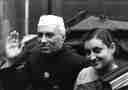
Nehru did not achieve political power until well into middle age; his catastrophic misjudgment of communist ideology and intentions, especially Chinese communist ideology and intentions, contributed to an Indian defeat at war, and led soon thereafter to his health collapsing and his death. He and Indira somewhat nonchalantly made a visit to Ceylon even as the Chinese attack was commencing; a high point of my own childhood was saying namaste on October 13 1962 at Colombo airport when they arrived.
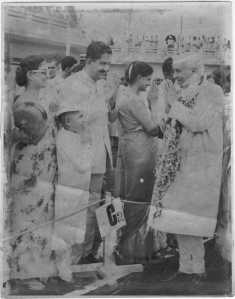
Feroze and Indira’s younger son evidently came to die in a self-inflicted aeronautical mishap of some sort. What did Sanjay Gandhi “live for”? The book Foundations of India’s Political Economy: Towards an Agenda for the 1990s created twenty years ago in America
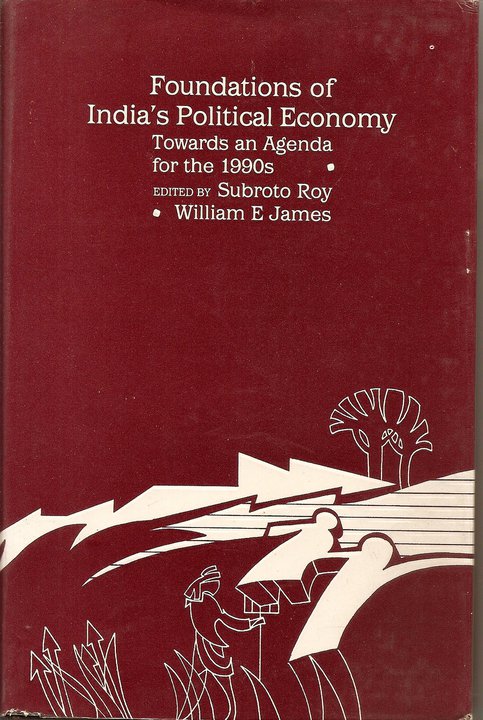
has a chapter titled “The State of Governance” by the political scientist James Manor which says:
“After 1973 or so, personal loyalty tended increasingly to become the main criterion for advancement in the Congress Party. People who appeared to be loyal often replaced skilled political managers who seemed too independent. Many of these new arrivals did not worry, as an earlier generation of Congress officials had done, that excessive private profiteering might earn the wrath of party leaders. In 1975, Sanjay Gandhi suddenly became the second most powerful figure in Indian politics. He saw that the parties of the left and right had strong organizations that could put large numbers of militants into the streets for demonstrations while Congress had no such capacity. In the belief that Congress should also have this kind of muscle, he began recruiting elements from urban centres including the criminal underworld. The problem of corruption was exacerbated by demands that State-level Congress leaders place large sums of money at the disposal not of the national party but of the persons who presided over it. Congress chief ministers realized that a fulsome response to these demands went a long way toward insulating them from interference from New Delhi, and a monumental system of fund-raising sprang up. When so many people were being drawn into semi-institutionalized malfeasance, which seemed to be condoned by higher authorities, it was inevitable many would skim off portions of the funds raised for personal benefit. Corruption soared. The problem was compounded by the tendency for people to be dismissed from public and party offices abruptly, leading many Congress politicians to fear that their time in power might be quite short.”
I do not have reason to disagree with this opinion contained in the book that I and WE James created at the University of Hawaii twenty years ago. If anything, Sanjay’s political model may have spread itself across other Indian political parties in one way or another.
What does strike me as odd in light of current political controversy is that several of Sanjay’s friends and colleagues are now part-and-parcel of the Sonia Congress – one must ask, were they such fair-weather friends that they never lent a hand or a shoulder to his young widow and her infant son especially against the cruelties Sanjay’s mother bestowed upon them? Did they offer help or guidance to Sanjay’s son, have they tried to guide him away from becoming the bigoted young politician he seems to wish to be today?
Indira’s major faults included playing favourites among her bahus and her grandchildren with as much gusto as any mother-in-law portrayed on the tackiest TV-serial today.
What were her good deeds? There was one, and it was an enormously large one, of paramount significance for the country and our subcontinent as a whole: her statesmanship before, during and to some extent after the war that created Bangladesh. My father has preserved a classic photograph over the years of Indira’s finest period as an international stateswoman, when she visited Paris and other foreign capitals including Washington in the autumn of 1971.
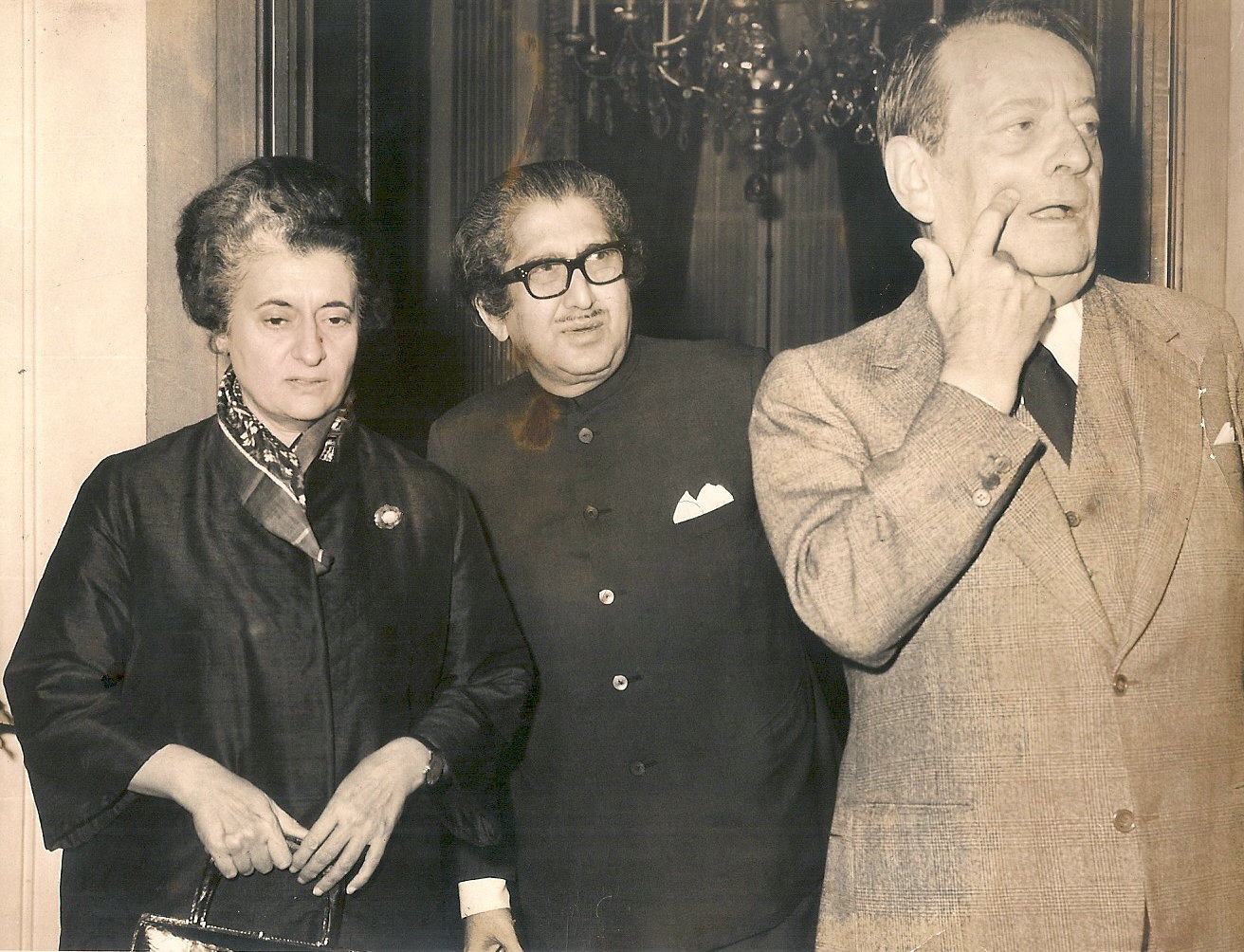
She tried to prevent the Yahya Khan/Tikka Khan genocide in Bangladesh when many Bangladeshis came to be sacrificed at the altar of the Nixon-Kissinger visits to Mao and Zhou. She made a major diplomatic effort in world capitals to avert war with West Pakistan over its atrocities in East Pakistan. But war could not be averted, and within a few weeks, in December 1971, Bangladesh was born.
“Indira Gandhi’s one and paramount good deed as India’s leader and indeed as a world leader of her time was to have fought a war that was so rare in international law for having been unambiguously just. And she fought it flawlessly. The cause had been thrust upon her by an evil enemy’s behaviour against his own people, an enemy supported by the world’s strongest military power with pretensions to global leadership. Victims of the enemy’s wickedness were scores of millions of utterly defenceless, penniless human beings. Indira Gandhi did everything right. She practised patient but firm diplomacy on the world’s stage to avert war if it was at all possible to do. She chose her military generals well and took their professional judgment seriously as to when to go to war and how to win it. Finally, in victory she was magnanimous to the enemy that had been defeated. Children’s history-books in India should remember her as the stateswoman who freed a fraternal nation from tyranny, at great expense to our own people. As a war-leader, Indira Gandhi displayed extraordinary bravery, courage and good sense.” (From my review article of Inder Malhotra’s Indira Gandhi, first published in The Statesman May 7 2006.)
“She had indeed fought that rarest of things in international law: the just war. Supported by the world’s strongest military, an evil enemy had made victims of his own people. Indira tried patiently on the international stage to avert war, but also chose her military generals well and took their professional judgment seriously as to when to fight if it was inevitable and how to win. Finally she was magnanimous (to a fault) towards the enemy ~ who was not some stranger to us but our own estranged brother and cousin. It seemed to be her and independent India’s finest hour. A fevered nation was thus ready to forgive and forget her catastrophic misdeeds until that time….” (From “Unhealthy Delhi” first published in The Statesman June 11 2007).
What did Indira die for? I have said it was “blowback” from domestic and/or international politics, similar to what happened to Rajiv Gandhi and Benazir Bhutto in later years.
“Indira Gandhi died in “blowback” from the unrest she and her younger son and others in their party had opportunistically fomented among Sikh fundamentalists and sectarians since the late 1970s. Rajiv Gandhi died in “blowback” from an erroneous imperialistic foreign policy that he, as Prime Minister, had been induced to make by jingoistic Indian diplomats, a move that got India’s military needlessly involved in the then-nascent Sri Lankan civil war. Benazir Bhutto similarly may be seen to have died in “blowback” from her own political activity as prime minister and opposition leader since the late 1980s, including her own encouragement of Muslim fundamentalist forces. Certainly in all three cases, as in all assassinations, there were lapses of security too and imprudent political judgments made that contributed to the tragic outcomes.” From “An Indian Reply to President Zardari”.
And then there was Rajiv. He did not know me except in his last eight months. It has now emerged that Dr Manmohan Singh’s first bypass operation was in 1990-1991, coinciding precisely with the time I gave Rajiv the results of the perestroika-for-India project that I had led at the University of Hawaii since 1986, an encounter that sparked the 1991 economic reform as has been told elsewhere. Dr Singh was simply not in that loop, nor has he himself ever claimed to have been in it — regardless of what innumerable flatterers, sycophants and other straightforwardly mendacious characters in Delhi’s high power circles have been making out over the years since. Facts are rather stubborn things.
As a 35-year old newcomer to Delhi and a complete layman on security issues, I did what little I knew how to try to reduce the vulnerability that I felt Rajiv faced from unknown lists of assassins.
“That night KR dropped me at Tughlak Road where I used to stay with friends. In the car I told him, as he was a military man with heavy security cover for himself as a former Governor of J&K, that it seemed to me Rajiv’s security was being unprofessionally handled, that he was vulnerable to a professional assassin. KR asked me if I had seen anything specific by way of vulnerability. With John Kennedy and De Gaulle in mind, I said I feared Rajiv was open to a long-distance sniper, especially when he was on his campaign trips around the country. This was one of several attempts I made since October 1990 to convey my clear impression to whomever I thought might have an effect that Rajiv seemed to me extremely vulnerable. Rajiv had been on sadhbhavana journeys, back and forth into and out of Delhi. I had heard he was fed up with his security apparatus, and I was not surprised given it seemed at the time rather bureaucratized. It would not have been appropriate for me to tell him directly that he seemed to me to be vulnerable, since I was a newcomer and a complete amateur about security issues, and besides if he agreed he might seem to himself to be cowardly or have to get even closer to his security apparatus. Instead I pressed the subject relentlessly with whomever I could. I suggested specifically two things: (a) that the system in place at Rajiv’s residence and on his itineraries be tested, preferably by some internationally recognized specialists in counter-terrorism; (b) that Rajiv be encouraged to announce a shadow-cabinet. The first would increase the cost of terrorism, the second would reduce the potential political benefit expected by terrorists out to kill him. On the former, it was pleaded that security was a matter being run by the V. P. Singh and then Chandrashekhar Governments at the time. On the latter, it was said that appointing a shadow cabinet might give the appointees the wrong idea, and lead to a challenge to Rajiv’s leadership. This seemed to me wrong, as there was nothing to fear from healthy internal contests for power so long as they were conducted in a structured democratic framework. I pressed to know how public Rajiv’s itinerary was when he travelled. I was told it was known to everyone and that was the only way it could be since Rajiv wanted to be close to the people waiting to see him and had been criticized for being too aloof. This seemed to me totally wrong and I suggested that if Rajiv wanted to be seen as meeting the crowds waiting for him then that should be done by planning to make random stops on the road that his entourage would take. This would at least add some confusion to the planning of potential terrorists out to kill him. When I pressed relentlessly, it was said I should probably speak to “Madame”, i.e. to Mrs. Rajiv Gandhi. That seemed to me highly inappropriate, as I could not be said to be known to her and I should not want to unduly concern her in the event it was I who was completely wrong in my assessment of the danger. The response that it was not in Congress’s hands, that it was the responsibility of the V. P. Singh and later the Chandrashekhar Governments, seemed to me completely irrelevant since Congress in its own interests had a grave responsibility to protect Rajiv Gandhi irrespective of what the Government’s security people were doing or not doing. Rajiv was at the apex of the power structure of the party, and a key symbol of secularism and progress for the entire country. Losing him would be quite irreparable to the party and the country. It shocked me that the assumption was not being made that there were almost certainly professional killers actively out to kill Rajiv Gandhi — this loving family man and hapless pilot of India’s ship of state who did not seem to have wished to make enemies among India’s terrorists but whom the fates had conspired to make a target. The most bizarre and frustrating response I got from several respondents was that I should not mention the matter at all as otherwise the threat would become enlarged and the prospect made more likely! This I later realized was a primitive superstitious response of the same sort as wearing amulets and believing in Ptolemaic astrological charts that assume the Sun goes around the Earth — centuries after Kepler and Copernicus. Perhaps the entry of scientific causality and rationality is where we must begin in the reform of India’s governance and economy. What was especially repugnant after Rajiv’s assassination was to hear it said by his enemies that it marked an end to “dynastic” politics in India. This struck me as being devoid of all sense because the unanswerable reason for protecting Rajiv Gandhi was that we in India, if we are to have any pretensions at all to being a civilized and open democratic society, cannot tolerate terrorism and assassination as means of political change. Either we are constitutional democrats willing to fight for the privileges of a liberal social order, or ours is truly a primitive and savage anarchy concealed beneath a veneer of fake Westernization….. the news suddenly said Rajiv Gandhi had been killed. All India wept. What killed him was not merely a singular act of criminal terrorism, but the system of humbug, incompetence and sycophancy that surrounds politics in India and elsewhere. I was numbed by rage and sorrow, and did not return to Delhi. Eleven years later, on 25 May 2002, press reports said “P. V. Narasimha Rao and Manmohan Singh lost their place in Congress history as architects of economic reforms as the Congress High command sponsored an amendment to a resolution that had laid credit at the duo’s door. The motion was moved by…. Digvijay Singh asserting that the reforms were a brainchild of the late Rajiv Gandhi and that the Rao-Singh combine had simply nudged the process forward.” Rajiv’s years in Government, like those of Indira Gandhi, were in fact marked by profligacy and the resource cost of poor macroeconomic policy since bank-nationalisation may be as high as Rs. 125 trillion measured in 1994 rupees. Certainly though it was Rajiv Gandhi as Leader of the Opposition in his last months who was the principal architect of the economic reform that came to begin after his passing.”
(I have had to say that I do not think the policies pursued by Dr Singh thus far have been consistent with the direction I believe Rajiv, in a second term as PM, would have wished to take. See, for example, “India’s Macroeconomics”, “Fallacious Finance”, “Against Quackery”, “Mistaken Macroeconomics”, and other articles listed and linked at “Memo to Dr Kaushik Basu”. See also https://independentindian.com/2006/05/21/the-politics-of-dr-singh/ https://independentindian.com/2008/04/25/assessing-manmohan-the-doctor-of-deficit-finance-should-realise-the-currency-is-at-stake/ https://independentindian.com/2013/08/23/did-jagdish-bhagwati-originate-pioneer-intellectually-father-indias-1991-economic-reform-did-manmohan-singh-or-did-i-through-my-encounter-with-rajiv-gandhi-just-as-siddhartha-shan/)
The treatment of Indira or Rajiv or Sanjay or their family successors as royalty of any kind whatsoever in India was, is, and remains absurd, reflecting stunted growth of Indian democracy. I remember well the obsequiousness I witnessed on the part of old men in the presence of Rajiv Gandhi.
Tribal and mansabdari political cultures still dominate Northern and Western regions of the Indian subcontinent (descending from the Sikhs, Muslims, Rajputs, Mahrattas etc).
Nehru in his younger days was an exemplary democrat, and he had an outstanding democratically-minded young friend in Sheikh Mohammad Abdullah.

But Nehru and Abdullah as Westernized political liberals were exceptions in the autocratic/monarchical political cultures of north India (and Pakistan) which continue today and stunt the growth of any democratic mindset.
What we may urgently need is some French Liberté, égalité, fraternité ! to create a simple ordinary citoyen universally in the country and the subcontinent as a whole! May we please import a Marquis de Lafayette?
Bengal and parts of Dravidian India have long lost fondness for monarchy and autocracy — Western political liberalism began to reach Kolkata almost two centuries ago after all (see e.g. Tapan Raychaudhuri’s fine study Europe Reconsidered). Both Nepal and Pakistan have been undergoing radical transformation towards democracy in recent months, as Bengali Pakistanis had done 40 years earlier under Sheikh Mujib. I said last year and say again that there may be a dangerous intellectual vacuum around the throne of Delhi.
Subroto Roy
An Academic Database of Doctoral & Other Postgraduate Research Done at UK Universities on India, Pakistan, Sri Lanka, Bangladesh and Other Asian Countries Over 100 Years
March 13, 2009 — drsubrotoroyBritish universities have in the last one hundred years produced a vast and unsurpassable body of doctoral and other postgraduate research relating to India, Pakistan, Sri Lanka, Bangladesh, Burma, Afghanistan, Malaysia and other Asian countries.
The first table below contains almost 3,300 entries, each beginning with the date of award and the degree, followed by the University (and College), followed by the title of the thesis, followed by the AUTHOR in capital letters, followed by the name of the thesis supervisor where provided.
NB: There is a second table that follows containing a further 78 77 entries — these latter are, however, incomplete in that either the year or the degree appears not to be available.
If you are an author or thesis-supervisor or other academic representative and you are able to correct any inadvertent error or omission, please feel free to write to me promptly by email and I shall seek to account for it. For omissions, please also identify yourself clearly and send a comment to the post along with the necessary data that you believe should be accounted for. Numerous typos existed in the original transcription, several of which have been corrected though many might remain. In several cases, it is not impossible the original transcription has mis-spelt a name but authentication could require the original thesis to be checked.
This database has been created from public data and is published below with the aim of encouraging further research and reflection. It may be of special interest to notice the choice and quality of subjects in the context of particular times.
Subroto Roy
Postscript: More than one grateful reader has called this document someone’s “labour of love”. I agree though I have to say it was not mine — my contribution has been merely to transform a confused spreadsheet into HTML, editing it very slightly, removing some but not all typos yet, and publishing it. The spreadsheet was one of a million files on my computer, which must mean I downloaded it from some public source at some time though I am afraid I have no record where, most probably in British academia.
Degree University & College Title AUTHOR Supervisor
1909 MA Liverpool The interaction of England and India during the early years of George III Dorothy DUDLEY
1917 BLitt Oxford The history of the occupation and rural administration of Bengal by the English Company from the time of Clive to the permanent settlement under Cornwallis W K FIRMINGER
1917 MA Liverpool The constitutional relations of the Marquess Wellesley with the home authorities Beatrice L FRAZER
1917 BLitt Oxford Agricultural cooperation in British India J MATTHAI
1921 BA Cambridge Relations between the Bombay government and the Marathi powers up to the year 1774 W S DESI
1921 MA Manchester The movement of opinion in England as regards Indian affairs, 1757-1773 E EMMETT Prof Muir
1921 MA Manchester The relations of the Mahrattas with the British power I Kathleen WALKER Prof Muir
1922 BLitt Oxford The history of Burma to 1824 G E HARVEY
1922 PhD London Commercial relations between India and England, 1600-1757 B KRISHNA
1922 MSc London Agricultural problems and conditions in the Bombay Presidency, 1870-1914 M A TATA
1922 BLitt Oxford The Indian calico trade and its influence on English history P J THOMAS
1922 MSc London The cotton industry in India to 1757 J N VARMA Prof Sargeant
1922 PhD Manchester The administration of Bengal under Warren Hastings Sophia WEITZMAN Prof Muir
1923 MA Manchester The administrative and judicial reforms of Lord Cornwallis in Bengal (excluding the permanent settlement) A ASPINALL Mr Higham
1923 MA Manchester The Residency of Oudh during the administration of Warren Hastings C C BRACEWELL Prof Davis
1923 MLitt Cambridge Industrial evolution of India in recent times D R GADGIL
1923 PhD London The Punjab as a sovereign state, 1799-1839 GULSHAM LALL Prof Dodwell
1924 BLitt Oxford Development of the cotton industry in Indian from the early 19th century S DESOUANDE
1925 MA Liverpool Henry Dundas and the government of India, 1784-1800 Dorothy THORNTON Prof Veitch
1926 PhD Cambridge The North West Frontier of India, 1890-1909, with a survey of policy since 1849 C C DAVIES
1927 PhD Leeds A study of the development of agriculture in the Punjab and its economic effects K S BAJWA
1927 BLitt Oxford The military system of the Mahrattas: its origin and development from the time of the Shivaji to the fall of the Mahratta empire S SEN
1928 MA Birmingham The East India Company crisis, 1770-1773 R BEARD
1928 PhD Edinburgh A comparative study of the woollen industry in Scotland and the Punjab J W SIRAJUDDIN Dr Rankin
1929 PhD London The relations of the Governor-General and council with the Governor and council of Madras under the Regulating Act of 1773 A Das GUPTA Prof Dodwell
1929 PhD London, LSE The evolution of Indian income tax, 1860-1922: a historical, critical and comparative study J P NIYOGI
1929 PhD London Development of Indian ralways, 1842-1928 N SANYAL Prof Foxwell; Dr Slater
1930 PhD London Financial history of Mysore, 1799-1831 M H GOPAL Dr Slater; Prof Dodwell
1930 BLitt Oxford, St Cath’s Soc The development of political institutions in the state of Travancore, 1885-1924 V M ITTYERAH
1930 BLitt Oxford Sir Charles Crosthwaite and the consolidation of Burma Mys J MAY-OUNG
1930 PhD London, SOAS Revenue administration of the Sirkars under the East India Company down to 1802 Lanka SUNDERAM
1930 PhD London, LSE Hastings’ experiments in the judicial administration N J M YUSUF
1931 PhD London State policy and economic development in Mysore State since 1881 UDAYAM ABHAYAMBAL Miss Anstey
1931 PhD London The origin and early history of public debt in India P DATTA Prof Coatman
1931 MA London Lord Macaulay and the Indian Legislative Council C D DHARKAR Prof Dodwell
1931 MA London The bilingual problem in Ceylon T D JAYASURIYA
1931 PhD London; LSE Study of agricultural cooperation in India based upon foreign experience H L PASRICHA Prof Gregory
1931 PhD London, UC The administration of Mysore under Sir Mark Cubbon. 1834-1861 K N V SASTRI Prof Dodwell
1931 PhD London, SOAS Administrative beginnings in British Burma, 1826-1843 Barbara J STEWART
1931/32 PhD Cambridge, St Cath’s English social life in India in the 18th century T G P SPEAR
1932 PhD London The growth and development of the Indian tea industry and trade S M AKHTAR Dr Anstey
1932 PhD London Anglo-Sikh relations, 1839-1849 K C KHANNA Prof Dodwell
1932 PhD London, LSE Indian commodity market speculation L N MISRA Prof Coatman
1932 PhD London, LSE Indian foreign trade, 1870-1930 Parimal RAY Prof Sargent
1932 PhD London, King’s Ceylon under the British occupation: its political and economic development, 1795-1833 C R de SILVA Prof Newton
1932 PhD London Post-war labour legislation in India – a comparison with Japan Sasadhar SINHA Dr Anstey
1932 PhD London Local finance in India G C VARMA Prof Coatman
1933 PhD Leeds Historical survey of the financial policy of the government of India from 1857 to 1900 and of its economic and other consequences H S BHAI
1933 PhD London The relations between the Board of Commissioners for the affairs of India and the Court of Directors, 1784-1816 P CHANDRA Prof Coatman
1934 PhD London The influence of the home government on land revenue and judicial administration in the Presidency of Fort William in Bengal from 1807-1822 B S BALIGA Prof Dodwell
1934 MSc Leeds A survey of the resources of tanning materials and the leather industry of Bhopal State, India G W DOUGLAS
1934 PhD Edinburgh Human geography of Bengal Arthur GEDDES
1934 BLitt Oxford, Somerville A study of the legal and administrative records of Dacca as illustrating the policy of Warren Hastings in East Bengal F M SACHSE
1934 BLitt Oxford Biography of Maharaja DalipSingh K S THAPER
1935 DPhil Oxford The development of the Indian administrative and financial system, 1858-1905, with special reference to the relations F J THOMAS
1936 MSc London British Indian administration: a historical study K R Ramaswami AIYANGAR
1936 MA London Lord Ellenborough’s ideas on Indian policy Kathleen I GARRETT Dr Morrell
1936 MA London British public opinion regarding Indian policy at the time of the mutiny Jessie HOLMES Dr Morrell
1936 PhD London, SOAS The rise and fall of the Rohilla power in Hindustan, 1707-1774 AD A F M K RAHMAN
1936/37 PhD Edinburgh Indian foreign trade, 1900-1931, and its economic background: a study W B RAGHAVIAH
1937 PhD Cambridge, Gonville The national income of British India, 1931-1932 V K R V RAO
1937 PhD London, LSE Culture change in South-Western India A AIYAPPAN
1937 PhD London, UC Banks and industrial finance in India R BAGCHI
1937 PhD London Development of social and political ideas in Bengal, 1858-1884 B C BHATTACHARYA Prof Dodwell
1937 MSc Leeds An interpretation of the distribution of the population within the United Provinces of Agra and Oudh Nora Y BOYDELL
1937 PhD London, LSE Rise and growth of Indian liberalism M A BUCH
1937 PhD London, LSE Industrial finance and management in India N DAS
1937 MSc London, LSE The effect of the breakdown of the international gold standard on India R DORAISWAMY
1937 PhD London, LSE The problem of rural indebtedness in Indian economic life B G GHATE
1937 MSc London, LSE Indian coal trade J GUHATHAKURTA
1937 PhD London SOAS Reorganisation of the Punjab government (1847-1857) R C LAI
1937 PhD London, External An economic and regional geography of the United Provinces of Agra and Oudh S M T RIZVI
1937 PhD Wales Purposes and methods of recording and accounting as applied to agriculture, with special reference to provision and use of economic data relating to agriculture in India Arjan SINGH
1938 PhD London, SOAS The relations between Oudh and the East India Company from 1785-1801 P BASU
1938 PhD London, SOAS East India Company’s relations with Assam, 1771-1826 S K BHUYAN
1938 PhD London, LSE Discretionary powers in the Indian Government with special reference to district administration B CHAND
1938 MA London, SOAS The British conquest of Sind K A CHISHTI
1938 PhD Cambridge, Christ’s The working of the Bengal legislative council under the Government of India Act, 1919 J G DRUMMOND
1938 MA London British relations with the Sikhs and Afghans, July 1823 to March 1840 E R KAPADIA
1938 PhD London, SOAS The East India interest and the British government, 1784-1833 C H PHILIPS
1938 PhD London, LSE The position of the Viceroy and Governor General of India A RUDRA
1938 MA London British relations with the Sikhs and Afghans, July 1823 to March 1840 Charles WADE
1938/39 PhD Edinburgh Agricultural geography of the United Provinces B N MUKERJI
1939 PhD London, LSE Industrial development of Mysore R BALAKRISHNA
1939 MA London, LSE A general geographical account of the North West Frontier Province of India M A K DURRANI
1939 PhD Wales The international production and exchange of rice with special reference to the production, market demand and consumption of rice in India and Burma Ahmas KHAN
1939 BLitt Oxford, St Cath’s Soc The Governor-Generalship of Sir John Shore, 1793-1798 A W MAHMOOD
1939 PhD London, LSE Indian provincial finance (1919-1937) with special reference to the United Provinces B R MISRA
1940 PhD London, LSE Recent economic depression in India with reference to agriculture and rural life R K BHAN
1940 PhD Wales The future of agricultural cooperation in the United Provinces (with an examination of the cooperative experience)with special reference to the problems of agricultural cooperation in the United Provinces, India H R CHATURVEDI
1940 PhD London, LSE An administrative study of the development of the civil service in India during the Company’s regime A K GHOSAL
1940 PhD Wales The production, marketing and consumption of the chief oilseeds in India and the supply and use of oilseeds in the United Kingdom A S KHAN
1940 PhD Wales Principles of agricultural planning with reference to relationships of natural resources, populations and dietaries in India and with further reference to rural development in certain provinces of India Jaswant SINGH
1941 PhD London, LSE Financing of local authorities in British India A N BANERJI
1941 PhD London The political and cultural history of the Punjab including the North West Frontier Province in its earliest period L CHANDRA Prof Barnett
1941 PhD London, LSE Capital development of India, 1860-1913 A KRISHNASAWMI
1941 PhD London, LSE Influence of European political doctrines upon the evolution of the Indian governmental institutions and practice, 1858-1938 G PRASAD
1942 MLitt Cambridge, Fitzwilliam Economic and political relations of India with Iran and Afghanistan since 1900 T BASU
1942 PhD Edinburgh A study of missionary policy and methods in Bengal from 1793 to 1905 W B S DAVIS Prof Watt; Prof Buleigh
1943 PhD London, LSE Development of large scale industries in India and their localisation N S SASTRI
1944 BLitt Oxford, St Cath’s Communal representation and Indian self-government I J BAHADOORSINGH
1944 MA London, External The physiographic evolution of Ceylon K KULARATNAM
1946 MA London, SOAS The origins and development to 1892 of the Indian National Congress Iris M JONES
1947 PhD London, LSE The agricultural geography of Bihar P DAYAL
1947 PhD Cambridge, King’s Consumer expenditure in India, 1931/32 to 1940/41 R L DESAI
1947 MA London, LSE Power resources and utilisation in the United Provinces P K DUTT
1947 PhD London, LSE Cultural change with special reference to the hill tribes of Burma and Assam Edmund Ronald LEACH
1947 PhD London, SOAS The judicial administration of the East India Company in Bengal, 1765-1982 B B MISRA
1947 PhD London, LSE The monetary policy of the Reserve Bank of India with special reference to the structural and institutional factors in the economy K N RAJ
1948 PhD Wales The principles and practice of health insurance as applied to India J AGRAWALA
1948 MSc London, LSE International monetary policy since 1919 with special reference to India D C GHOSE
1948 DPhil Oxford, Balliol British policy on the North East Frontier of India, 1826-1886 S GUPTA
1948 DPhil Oxford, St Cath’s Local self-government in the Madras Presidency, 1850-1919 K K PILLAY
1948 PhD London, LSE The problem of the standards of the Indian currency A SADEQUE
1948 DPhil Oxford, Exeter The social function of religion in a south India community Mysore Narasimhashar SRINIVAS
1948 BLitt Oxford, St Cath’s Society Some aspects of agricultural marketing in India with reference to developments in western marketing systems R S SRIVASTAVA
1948 PhD London,. SOAS Muslims in India: a political analysis (from 1885-906) Rafiq ZAKARIA
1949 PhD London, LSE Settlements in the United Provinces of Agra and Oudh E AHMAD
1949 PhD London, SOAS The growth of self-government in Assam, 1984-1919 A K BARKAKOTY
1949 PhD London, SOAS British administration in Assam (1825-1845)with special reference to the hill tribes on the frontier H BARPUJARI
1949 MA London An enquiry into the development of training of teachers in the Punjab during the British period Aquila B BERLAS
1949 PhD London, LSE The problem of federation in India with special reference to economic relations J N BHAN
1949 PhD London, LSE A study of methods of national income measurements with special reference to the problems of India V K CHOPRA
1949 PhD London, LSE An analysis of the Indian price structure from 1861 A K GHOSH
1949 DPhil Oxford, Keble The achievement of Christian missionaries in India, 1794-1833 Kenneth INGHAM
1949 PhD Wales The organization and methods of agricultural cooperation in the British Isles and the possibility of their application in the Central Province of India N Y KHER
1949 PhD London, LSE Industrial geography of Bihar S A MAJID
1949 PhD London, LSE Development of Indian public finance during the war, April 1939-March 1946 S MISRA
1949 PhD London, LSE A study of the methods of state regulation of wages with special reference to their possible applications in India S B L NIGAM
1949 PhD London, SOAS The development of marriage in ancient India B C PAUL
1949 PhD St Andrews The social and administrative reforms of Lord William Bentinck G SEED
1950 PhD London, LSE Jails and borstals with special reference to West Bengal B BHATTACHARYYA Dr Mannheim
1950 PhD London The growth of local self-government in Assam, 1874-1919 A K BORKAKOTY Prof C R Philips; Prof Hall
1950 DPhil Oxford, Lady Margaret Hall The problem of the Indian immigrant in British colonial policy after 1834 I Mary CUMPSTON
1950 PhD London, LSE Underemployment and industrialisation: a study of the basic problems with special reference to India B DATTA
1950 PhD London, UC The agriculture of Mysore G K GHORI
1950 PhD London, SOAS The influence of western, particularly English, political ideas on Indian political thought, with special reference to the political ideas of the Indian National Congress, 1885-1919 Sailesh C GHOSH
1950 PhD London, LSE Principles of unemployment insurance and assistance with special reference to their application to India D GUPTA
1950 PhD Newcastle Anglo-Afghan relations, 1798-1878, with particular reference to British policy in Central Asia and on the North West Frontier of India M KHAN
1950 PhD London, LSE The social consequences of imperialism with special reference to Ceylon P R PIERIS
1950 PhD London, LSE An experiment in the estimation of national income and the in the construction of social accounts of India, 1945-1946 D N SAXENA Mr Booker
1950 PhD London, SOAS The relations between the home and Indian governments, 1858-1870 Zahinuddin Husain ZOBERI
1951 PhD London, External Memoir of the geology and mineral resources of the neighbourhood of Bentong, Pahang and adjoining portions of Selangor and Negri Sembilan, incorporating an account of the prospecting and mining activities of the Bentong District J B ALEXANDER
1951 BLitt Oxford, Exeter The political organization of the plains Indians Frederick George BAILEY
1951 BLitt Oxford, Corpus Southern India under Wellesley, 1798-1805 A S BENNELL Mr C C Davies
1951 PhD London, LSE Problems of the Indian foreign exchanges since 1927 D GHOSH
1951 DPhil Oxford, Balliol The Viceroyalty of Lord Ripon, 1880-1884 S GOPAL Mr R C Davies
1951 MA Wales The problem of the Straits, 1896-1936 E W GRIFFITHS
1951 PhD London, LSE Sources of Indian official statistics relating to production O P GUPTA Dr Rhodes
1951 MA Manchester The administration and financial control of municipalities and district boards in the UP N K KATHIA
1951 PhD Glasgow The legal and constitutional implications of the evolution of Indian independence R KEMAL
1951 PhD Cambridge, Jesus An analysis of the Hindu caste system in its interactions with the total social structure in certain parts of the Malabar coast E J MILLER Prof Hutton
1951 PhD Cambridge, Girton Changes in matrilineal kinship on th Malabar coast E K MILLER Prof Hutton
1951 PhD Bristol Agriculture and horticulture in India – sundry papers K C NAIK
1951 MA Manchester An economic survey of West Pakistan A SHARIF
1951 PhD Cambridge The interpretation of legislative powers under the Government of India Act, 1935 S D SHARMA
1951 BLitt Oxford, St Cath’s Society Religion and society among some of the tribes of Chota Nagpur H N C STEVENSON
1951 London, SOAS The political development of Burma during the period 1918-1935 OHN TIN
1951 PhD London, LSE The working of the Donoughmore constitution of Ceylon, 1931-1947: a study of a colonial central government by executive committees Irripitwebadalge don Samaradasa WEERAWARDANA Mr W H Morris-Jones
1952 PhD London SOAS The career of Mir Jafar Khan, 1757-1765 AD Raya ATULA-CHANDRA Prof C H Philips
1952 PhD London, LSE The development of Calcutta: a study in urban geography M GUHA Prof L D Stamp; Prof O H K Spate
1952 PhD London, LSE The East India Company’s land policy and management in Bengal from 1698 to 1784 Mazharul HUQ Dr Anstey
1952 MA Leeds The social accounts relating to Ceylon E L P JAYTILAKA
1952 MSc London, LSE Rural industries in India: a study in rural economic development with special reference to Madras C K KAUSUKUTTY Dr Anstey
1952 MSc London, LSE India’s balance of international payments with special reference to her food and agricultural conditions G B KULKARNI Dr Anstey; Dr Raeburn
1952 PhD Cambridge Utilitarian influence and the formation of Indian policy, 1820-1840 E T STOKES
1952 PhD London, SOAS Local government in India and Burma, 1908-1937: a comparative study of the evolution and working of local authorities in Bombay, the United Provinces and Burma Hugh R TINKER Prof Hall
1953 PhD London, LSE Economic geography of East Pakistan N AHMAD Prof Stamp
1953 MSc London, UC the changing pattern of India’s foreign trade, with special reference to the impact of large scale industrial development since 1919 A ALAGAPPAN
1953 PhD London, SOAS The East India Company and the economy of Bengal from 1704 to 1740 Sukumar BHATTACHARYYA Prof C H Philips
1953 MA Wales National income of Pakistan for the year 1948-49 Z ul H CHAUDRI
1953 MLitt Cambridge, Fitzwilliam The influence of Western thought on social, educational, political and cultural development of India, 1818-1840 V DATTA Dr T G P Spear
1953 MSc Belfast The growth of trade unions in India S DAYAL
1953 PhD London The establishment of Dutch power in Ceylon, 1638-1658 K W GOONEWARDENA Prof Hall
1953 PhD London, LSE The submontane region of North West Pakistan: a geographical study of its economic development Maryam KARAM-ELAHI Prof Buchanan; Prof Stamp
1953 PhD London, LSE A study of rhe measurement of national product and its distribution, with special reference to Pakistan A H KHANDKER
1953 PhD Edinburgh A regional study of survival, mortality and disease in British India in relation to the geographic factors, 1921-1940 A T A LEARMONTH
1953 PhD London, SOAS Development of the Muslims of Bengal and Bihar, 1819-1856, with special reference to their education A R MAALICK Prof Philips
1953 DPhil Oxford, Jesus The study of the economy of self-subsisting rural communities: the methods of investigation, economic conditions and economic relations, with specific reference to India P K MUKHOPADHYAY
1953 PhD London, LSE The relationship of land tenure to the economic modernization of Uttar Pradesh W C NEALE
1953 PhD London, Bedford Social status of women during the past fifty years (1900=1950) T N PATEL Mrs B Wootton
1953 PhD London, LSE The state in relation to trade unions and trade disputes in India Anand PRAKASH Mr W H Morris-Jones; Mr Roberts
1953 MA London, SOAS The tribal village in Bihar SACHCHIDANANDA Prof C Haimendorf
1953 PhD London, UC Delegated legislation in India V N SHULKA Prof Keeton
1953 PhD London, SOAS The internal policy of the Indian government, 1885-1898 H L SINGH Prof C H Philips
1953 PhD London, SOAS The internal policy of Lord Auckland in British India, 1836-1842, with special reference to education D P SINHA Prof C H Philips
1953/54 MA Leeds Demand for certain exports of Ceylon K THARMARATNAM
1954 MA London The administration of Sir Henry Ward,Governor of Ceylon, 1855-1860 S V BALASINGHAM Prof Graham
1954 PhD London, SOAS Social policy and social change in Western India, 1817-1830 Kenneth A BALLHATCHET Prof C H Philips
1954 Dphil Oxford, St Hilda’s Lord William Bentinck in Bengal, 1828-1835 C E BARRETT Dr C C Davies
1954 MA London A historical survey of the training of teachers in Bengal in the 19th and 20th centuries S BHATTACHARYA
1954 MA London, SOAS Evolution of representative government in India, 1884-1909 Sasadhar CHAKRAVARTY Prof C H Philips
1954 PhD London, LSE Consumption levels in India T P CHAUDHURI
1954 PhD London, LSE The forests of Assam: a study in economic geography H DAS
1954 MSc Leeds A study of price fixing for agricultural products with special reference to milk in Great Britain and Bombay N K DESAI
1954 BLitt St Andrews Eldred Pottinger and the North West Frontier, 1838-1842 D W F GOURLAY Sir C Ogilvie
1954 PhD London, LSE The Korean crisis and the Indian Union K GUPTA
1954 MA Manchester Some aspects of the development of Pakistan’s financial structure M HOSSAIN
1954 MSc London, LSE Financing economic development in Ceylon A T JAYAKODDY Prof Paish; Dr Anstey
1954 PhD London, LSE Measurement of profits: a study of methods with special reference to India R K NIGAM
1954 DPhil Oxford, St Antony’s A study of communal representation in constitutional systems of the British Commonwealth with specific reference to Ceylon, Kenya and Fiji Carl Gustav ROSBERG Mr K E Robinson
1954 PhD London, LSE Land utilization in Eastern Uttar Pradesh (comprising the districts of Jaunpur, Banares, Guezipur, Azamgarh and Baldea) M SHAFI Prof Stamp; Mr R R Rawson
1954 PhD London, LSE Representation and representative government in the Indian Republic Irene C TINKER Mr W H Morris-Jones
1954 PhD London, SOAS Trade and finance in the Bengal Presidency, 1793-1833 Amales TRIPATHY Prof C H Phillips
1954 PhD London, LSE Some aspects of the history of the coffee industry in Ceylon with specific reference to 1823-1885 I H VAN DEN DRIESEN Mr Fisher
1954 PhD London, LSE The Manning constitution of Ceylon, 1924-1931 Alfred Jeyaretnam WILSON Mr R Bassett; Mr W H Morris-Jones
1955 MSC London, LSE Some aspects of the history of British investments in the private sector of the Indian economy, 1876-1914 N Z AHMED Dr Ashworth; F J Fisher
1955 PhD Manchester The social organisation of a village on the Hindu frontier of Orissa Frederick George BAILEY
1955 LLM London, LSE Recognition and enforcement of foreign judgements in India: a comparative study B N BANERJEE
1955 PhD London The administration of criminal justice in Bengal from 1773 to 1861 T K BANERJEE S A de Smith; Prof A Gledhill
1955 MA London The East India Company in Madras, 1707-1744 R N BANERJI
1955 PhD London The factory of the English East India Company at bantam, 1602-1682 D K BASSETT Prof D G E Hall
1955 PhD London, LSSE Pressure of population on land in India: a regional approach B S BHIR
1955 MA London, SOAS The economic policy of the Government of India, 1898-1905 Edna BONNER Prof C R Philips
1955 DPhil Oxford, St Antony’s The educational policy of the East India Company, 1781-1854 J G BOWEN Mr C C Davies
1955 BLitt Oxford, Magdalen Indian labour migration to Malaya, 1867-1910 D A CALMAN Dr A F Madden
1955 PhD London, LSE Consumption levels in India T P CHOUDHURY
1955 PhD London, LSE The Malay family in Singapore J DJAMOUR
1955 PhD Edinburgh The abolition of the East India Company’s monopoly, 1833 D EYLES Prof Pares
1955 MLitt Cambridge. Fitzwilliam House The mongoloids and their contributions to the growth of Assamese culture M C GOSWAMI Dr J E Lindgren
1955 PhD London, SOAS The administration of the Delhi Territory, 1803-1832 Jessie HOLMES Prof C H Philips
1955 MSc (Econ) London, LSE Taxation and saving in India D JHA
1955 MSc London, LSE A comparison of the federal aspects of the Government of India Act, 1935, and the constitution of 1950 S KHAN
1955 MA London, SOAS Some aspects of the social history of Bengal with special reference to the Muslims, 1854-1884 L KHATOON Prof Philips
1955 PhD Aberdeen Ports of the Indian ocean: an historical geography W KIRK A C O’Dell
1955 PhD Cambridge, Peterhouse British investment in Indian guaranteed railways, 1845-1875 W J MACPHERSON Mr K E Berrill
1955 PhD London, UC Fundamental freedoms, with particular reference to the Indian constitution J C MEHDI Prof G W Keeton
1955 PhD Birmingham The educational ideas of Mahatma Gandhi N P PILLAI
1955 MA Manchester Cottage industries in Bihar S B SAXENA
1955 PhD London, LSE The Indian jute industry: a study of agricultural geography P SENGUPTA
1955 PhD London, LSE The political philosophy of Mahatma Gandhi in relation to the English liberal tradition Bishan Sarup SHARMA
1955 LLM London, SOAS Distribution of legislative power under the India constitution R P SHARMA
1955 PhD London , SOAS The Council of India, 1858-1919 S SINGH Prof C H Philips
1955 PhD London LSE The origin and development of left wing movements and ideas in India, 1919-1947 Lalan Prasad SINHA R Mikband; W H Morris-Jones
1955 PhD London; SOAS British interest in trans-Burma trade routes to China, 1826-1876 Ma THAUNG
1955 MA London The training of teachers in the Bombay Presidency during the British period: a historical survey N L VAIDYA
1955 PhD Edinburgh Save there, eat here: a cultural study of labour migration from a Pakhtun village Francis Philip WATKINS
1955 PhD London, LSE The southeast quadrant of Ceylon: a study of the geographical aspects of land use W A R WIKKRAMATILEKE
1956 PhD London, SOAS The Dutch power in Ceylon, 1658-1687 S ARASARATNAM Prof D Hall
1956 PhD London, LSE Land use and soil erosion problems of Bist Jullundur Doab, Punjab, India O P BHARDWAJA
1956 PhD London, SOAS British rule in Assam, 1845-1858 B CHAUDHURI Prof C R Philips
1956 PhD London, SOAS Sir Josiah Child and the East India Company at the end of the 17th century A L CROWE Prof C Philips
1956 MSc London, LSE Scope and method of agricultural economic surveys in India N Y Z FARUQI Dr Raeburn
1956 PhD London, LSE A study of capital taxation and its scope in India I S GULATI
1956 PhD London, LSE An analysis of the monetary experience of Ceylon H A de S GUNASEKERA Prof Sayers; Mr Wilson
1956 PhD London, LSE Federal finance and economic development with special reference to Pakistan M HOSSAIN
1956 PhD London, LSE The demand for Indian exports and imports: an econometric study of selected commodities A K MUKERJI Prof Allen; Dr Norton
1956 PhD London, LSE Capital development in India with special reference to recent trends in investments Dinanath Kashinath RANGNEKAR Prof Paish; Dr Anstey
1956 PhD Cambridge, St John’s A study of India’s balance of payments, 1901-1913 and 1924-1936 B S RAO Prof E A G Robinson
1956 MA London, SOAS The relations between the Indian central and provincial governments with special reference to the Presidencies of Madras and Bombay, 1858-1882 D N SINGH Prof C H Philips
1957 MA Birmingham An examination in disposal and treatment of juvenile delinquents in Bombay State in relation to practice in England A D ATTAR
1957 MA London The development and reconstruction of university education in Pakistan since 1854 S M A AZIZ
1957 PhD Cambridge, Trinity Social organisation of the Jaffna Tamils of North Ceylon with special reference to kinship, marriage and inheritance M Y BANKS Mr E R Leach
1957 PhD London, LSE West Midnapore: a study of land use S C CHAKRABORTI
1957 BLitt Oxford, St Cath’s The place of agricultural development in India’s first two Five-Year Plans A CORREIA-AFONSO
1957 PhD London, SOAS Studies in the economic and social development of Inida, 1848-1856 M N DAS Prof C Philips
1957 MA London, LSE The population of Chota Nagpur H P DEVI Prof L D Stamp
1957 MSc London, LSE Small scale and cottage industries as a means of providing better opportunities for labour in India Q H FAROOQUEE Prof A Plant; Mr Foldes
1957 PhD London, LSE Fiscal policy and inflation in post-war India, 1945-1954 K V G GOWDA
1957 DPhil Oxford Anglo Sikh relations, 1799-1849 B J HASRAT C C Davies
1957 MLitt Cambridge, Girton Indian constitutional development, 1927-1935 M B HASSEN Dr T G P Spear
1957 PhD London, LSE The commitee system in British and Indian local authorities C JHA Prof W A Robbins
1957 DPhil Oxford, St Cath’s The development of money and banking in Ceylon J B KELEGAMA
1957 PhD London, LSE The civil service in independent India: the All India and Union Civil Services B S KHANNA Prof W A Robson
1957 PhD London, LSE Urbanization in West Pakistan K KURESHY
1957 PhD London, LSE Hinduism and economic growth: a study of the nature of the impact of Hinduism on India’s economic growth with special emphasis on theperiod since the mid 18th century B B MISHRA Dr Anstey
1957 PhD London, External Large scale sampling surveys in agriculture in the Punjab (Pakistan) D M QURESHI
1957 PhD London, SOAS British land policy in Oudh j RAJ Prof C H Philips
1957 DPhil Oxford The Dutch in Coromandel, 1605-1690 Tapan RAYCHAUDHURI
1957 PhD London, LSE Geomorphological evolution of the highaland of Chota Nagpur and the adjoining districts of Bihar R P SINGH
1957 PhD London, LSE Credit problems of small farmers in Ceylon Wijetunga Mudianselagadera TILAKARATNA Mr A D Knox
1957 PhD London The urban geography of Agra A R TIWARI Prof A E Smailes
1957/58 PhD London, SOAS The life and career of Jonathan Duncan, 1756-1795 V NARAIN
1957/58 PhD Manchester A comparative study of informal relationships in a Chinese village in Malaya and north India W H NEWELL
1957/58 PhD Manchester The history of the Arghuns and Tarkhans of Sind M H SIDDIQI
1957/58 PhD Manchester An analysis of the demand for, and the supply of, food in India R P SINHA
1958 MA London, Inst Ed The missionary activities of the CMS and CZEMS in Kashmir during the second half of the 19th century S Z AHMED SAH Prof J A Lauwerys
1958 PhD Cambridge, King’s The political organisation of the Swat Pathans T F W BARTH Mr E R Leach
1958 MA London, Inst Ed A historical survey of the languages problem in Bengal from the Muslim period to the end of the British period K BHATTACHARYYA
1958 MSc Cambridge, Fitzwilliam The financing of planned economic development in India S R DATTA GUPTA Dr A R Prest
1958 MA London, LSE Sociology of marriage rituals in India: a study of Sanskritisation and de-Sanskritisation B DATTAGUPTA
1958 MSc Londond, LSE Some aspects of Indo-British trade during the 20th century with special reference to capital goods V P DHITAL
1958 MA London, SOAS The political system of the Rajputs Sylvia J DUTRA Dr Bauley; Prof C von Furer-Haimendorf
1958 MSc London, LSE The economics of the tea industry in Ceylon J M F G FERNANDO Dr V Anstey
1958 PhD London The development of the Indian National Congress, 1892-1909 Pansy C GHOSH Dr K Balhatchet
1958 PhD London, LSE Inflation in India, 1939-1952: a study of inflation in an underdeveloped economy S K GHOSH Dr Anstey; Mr Day
1958 PhD London,SOAS The internal administration of Lord Lytton, with special reference to social and economic policy, 1876-1880 L M GUJRAL
1958 MLitt Cambridge, King’s Sir Richard Jenkins and the Residency at Nagpur, 1807-1818 F A HAGAR Dr T G P Spear
1958 PhD London, LSE Agrarian problems in Bihar based, primarily, on surveys in five villages F Tomasson JANNUZI Dr V Anstey
1958 BLitt Oxford, Campion Hall An economic and historical study of food grain controls in India during the second world war and after S C JOSEPH
1958 MSc London, LSE Union-state administrative cooperation in India (1937-1952) M KAMAL Prof W A Robson
1958 MSc London, LSE Problems of the agricultural labourers in India R P KAMAT
1958 MSc Cambridge, Newnham The employment problem in Ceylon I KANNANGARA Mrs J V Robinson
1958 PhD Cambridge, Trinity The commercial and diplomatic relations between India and Tibet in the nineteenth century H A LAMB Dr V W W S Purcell
1958 PhD Cambridge, St Catharine’s The Dutch East India Company and Mysore, 1762-1790 J van LOHUIZEN Dr T G P Spear
1958 MA London, LSE Social and economic geography of the Mathura District (western Uttar Pradash) S D MISRA Mr R R Rawson
1958 PhD London, LSE Economics of nutritional problems in India R N MITRA Dr Raeburn
1958 PhD Cambridge, Peterhouse The analysis of Kandyan marriage: landlords, labourers and aristocrats OSMAN YALMAN NUR
1958 PhD London, SOAS Sir Elijah Impey in India, 1774-1783 Bishwa Nath PANDEY Prof C H Philips
1958 MA London, LSE A geography of the Peshawar region M Z SAHIBZADA
1958 PhD London, LSE Indian monetary policy and debt management since 1939 J C D SETHI Dr V Anstey; Mr R Turvey
1958 PhD London, LSE Strategic aspects of India’s foreign policy V B L SHARMA
1958 BLitt Oxford, St Antony’s The rise and growth of the Praja Socialist Party of India (1934-1935) H K SINGH Mr F G Carnell
1958 PhD London, LSE Allahabad: a study in urban geography Ujaqir SINGH Prof D L Stamp
1958 PhD London, SOAS Asoka and the Decline of the Mauryas Romila THAPAR Prof A.L.Basham [viz., note from Prof Thapar dated 4 March 2016]
1958 MA London, SOAS History of the development of Rangoon TUN THET Prof Hall
1958 PhD London, LSE India’s membership of the sterling area Jai Dev VARMA
1958 PhD Cambridge The present situation and the probably future of cotton in West Pakistan’s economy S B WHITEHILL
1958 PhD Edinburgh The economic geography of Madhya Pradesh (formerly Central Provinces and Behar) R H ZAIDI
1959 MSc(Econ) London, LSE The industrial worker in East Pakistan: a study in the adaptation of an industrial labour force A K AHMADULLAH Prof Phelps
1959 MA Manchester The recruitment of Indians into the covenanted civil service, 1853-1892 M R ANWAR
1959 PhD Manchester Britain and Muslim India: a study of British public opinion vis-a-vis the development of Muslim nationalism in India, 1905-1947 K K AZIZ
1959 MSc London, LSE Problems in corporation taxation with special reference to India M P BHATT Mr Turvey
1959 PhD London, LSE Applications of linear programming to the development plans of India B BHATTACHARYYA
1959 MA London Trincocmalee and the East Indies Squadron, 1746-1844 H A COLGATE Prof Graham
1959 PhD London, LSE Economic development of Assam with special reference to the 20th century P GOSWAMI Dr Anstey
1959 PhD London The nationalist movement in Ceylon betweem 1910 and 1931, with special reference to communal and elective problems D K GREENSTREET Dr Miliband
1959 BLitt Oxford, St Cath’s Land tenure in the Kandyan provinces of Ceylon U A GUNASEKERA Dr D F Pocock
1959 BLitt Oxford, St Anne’s The analysis of external trade and economic structure of Ceylon, 1900-1955 O E B GUNEWARDENA Miss P H Ady
1959 PhD London, LSE Some problems of the organisation and administration of public enterprise with special reference to India L N GUPTA Prof Robson; Dr Anstey
1959 PhD Edinburgh The collection of agricultural statistics and the use of data in the United Kingdom and Pakistan: an objective study to explore possibilities of improvement in Pakistan Muhammed Altaf HUSSAIN
1959 MA London, SOAS Social and administrative policy of the Government of Bengal, 1877-1890 Rokeya KABEER Prof Basham
1959 PhD London, External Industrial relations in India C B KUMAR
1959 PhD London, LSE Some aspects of the problem of implementing agricultural planning in India Gouri NAG Mr Knox; Mr Lancaster
1959 PhD Edinburgh Early English travellers in India. A study in the travel literature of the Elizabethan and Jacobean periods with particular reference to India R C PRASAD Prof W L Renwick; Mr G A Shepperson
1959 PhD London, LSE Judicial review in India: a study in constitutional theory and judicial practice V R RAVIKANTI Mr S de Smith
1959 MA London, LSE The position of women in Hinayana Buddhist countries (Burma, Ceylon, Thailand) S SEIN Mr F Freedman
1959 PhD London , LSE British opinion and Indian neutralism: an analysis of India’s foreign policy in the light of British public reactions, 1947-1957 Shri Ram SHARMA Prof Manning
1959/60 PhD Cambridge, Fitzwilliam The cottage industries of India: an enquiry into their economics with special reference to developmental planning Kedarnath PRASAD
1959/60 PhD Cambridge, Queen’s The role of transport and foreign trade in the economic development of Burma under British rule, 1885-1914 Maung SHEIN
1959/60 PhD London, External North east Baluchistan, Quetta Division: a critical evaluation of the land and its resources A H SIDDIQI
1959/60 MA Manchester An analysis of the principal factors affecting India’s policy toward her Himalayan border J TOOMRE
1960 PhD London, SOAS Some aspects of the history of the Muslim community in Bengal, 1884-1912 Sufia AHMED Prof C H Philips
1960 MA London Aspects of the economic development of the Assam valley, 1858-1884 A C BARUA Dr K Ballhatchet
1960 PhD Cambridge Thomas Munro and the development of administrative policy in Madras, 1791-1818: the origins of “the Munro system” T H BEAGLEHOLE Dr K Ballhatchet
1960 PhD London, LSE Measurements of production and productivity in Indian industry with special reference to methodological aspects G C BERI
1960 PhD London, SOAS The state and the cooperative movement in the Bombay Presidency, 1880-1930 I J CATANACH Dr K Ballhatchet
1960 PhD London, LSE The centrally recruited services in Pakistan M A CHAUDHURI Prof P Robson
1960 DPhil Oxford, Lincoln Portuguese society in India in the sixteenth and seveteenth centuries K J CROWTHER
1960 PhD Cambridge, St Cath’s Cottage industries of Ceylon H D DIAS Mr B H Farmer
1960 MSc (Econ) London Someproblems of agriculture in the Vale of Peshawar (West Pakistan) Lloyd Suttor EDMONDS
1960 PhD Cambridge, Fitzwilliam Malabar in Asian trade, 1740-1800 Asin Ranjan Das GUPTA
1960 MA Wales, Swansea Indian international transactions 1948 to 1958 C GURUPRASAD
1960 PhD London, SOAS British policy on the North West Frontier Province of India, 1889-1901 L HARRIS Prof K Ballhatchet
1960 PhD London, External Agricultural geography of East Pakistan B L C JOHNSON
1960 DPhil Oxford, St Antony’s The Indian National Congress, 1918-1923 G KKRISHNA Dr G F Hudson
1960 PhD London The growth of the idea of Commonwealth in India. 1900-1929 S R MEHROTRA Prof Philips
1960 PhD London The Burma-China boundary since 1886 Khin Maung NYUNT
1960 PhD London, Birkbeck Colombo: a study in urban geography D B L PANDITARATNA Prof A L Basham
1960 PhD London, LSE The law and the banker in Ceylon M J L RAJANAYAGAM Prof Gower
1960 PhD London, LSE Land reforms and some allied agrarian problems in Madras State since independence Arungiri RAMASWAMI
1960 PhD London LSE Economic aspects of the sugar industry in India Saraswathi RAU Dr Raeburn
1960 PhD London, LSE Industrial injuries schemes in India and Britain: a comparative study B RAYCHAUDHURI
1960 MSc London, LSE Wage boards in British and the application of their proceedings in India C J N SAXENA Prof Phelps Brown
1960 PhD London, LSE Recent changes in land use in the Upper Damodar Basin, India A SHARAN Mr Rawson
1960 PhD London, SOAS English relations with Haidar Ali, 1760-1782 B SHEIK ALI
1960 MA London, Inst Ed A comparative study of the language problem at the university level in India R K YADAVA
1960 PhD London, SOAS Anglo-Chinese diplomacy regarding Burma, 1885-1897 Nancy Iu YAN-KIT
1960/61 PhD Cambridge, King’s Surplus manpower in agriculture and economic development with special reference to India P S SANGHVI Dr M R Fisher
1960/61 PhD Cambridge, Newnham A critique of surplus labour doctrine as applied to the Pakistan in 1947-1957 Rehana TANWIR
1961 PhD London Constitutional and political aspects of the public corporation in Britain and India R S ARORA
1961 BLitt Oxford, Exeter Some aspects of change in the structure of the Muslim family in the Punjab under British rule T ASAD Dr D F Pocock
1961 PhD London, SOAS The structure and organisatioin of the Bengal Native Infantry with special reference to the problems of discipline (1796-1852) Amiya BARAT Dr K Ballhatchet
1961 PhD London, LSE Howrah: an urban study A CHATTOPADHYAY Dr E Jones
1961 PhD Leeds India, Britain and Russia: a study of British opinion V K CHAVDA Prof Briggs
1961 DPhil Oxford, Magdalen Muslim politics in the Indo-Pakistan sub-continent, 1858-1916 M CHUGHTAI Dr C C Davies
1961 DPhil Oxford, Nuffield Henry Dundas and the government of India, 1773-1801 B DE Mr Davies
1961 PhD London, SOAS Some aspects of the development of social policy in Ceylon, 1840-1955 with special reference to the influence of missionary organisations K M DE SILVA Dr K Ballhatchet
1961 MSc London The economics, organisation and administration of the Indian paper industry B N DHAR
1961 PhD London The administration of Guntur District with special reference to local influences on revenue policy, 1837-1848 Robert Eric FRYKENBERG Dr K Ballhatchet
1961 PhD Cambridge Sir Richard Temple and the government of India 1868-1880: some trends in Indian administrative policy G R G HAMBLY
1961 PhD London, SOAS Tribal unrest on the south-west frontier of the Bengal Presidency, 1831-1833 J C JHA
1961 MA London, SOAS Changing values in the Naga Hills and Manipur State M KALABOVA Prof C Von Furer Haimerdorf
1961 PhD London, External Financial administration in Ceylon since independence V KANESALINGHAM
1961 MSc London, LSE Government of India policy towards Portuguese possessions in India from 1947 to 1957 R A KHAN
1961 PhD London, SOAS The development of nationalist ideas and tactics and the policies of the government of India J R McLANE
1961 PhD London, SOAS The Kurumas of Malabar Richard Lionel ROOKSBY
1961 PhD Cambridge, Trinity Hall The Ceylon economy, 1920-1938: a national accounts study M R P SALGADO Dr B B Das Gupta
1961 MA London, SOAS The social and political organisation of the Kandyan Kingdom (Ceylon) S B W WICKREMASEKERA
1961/62 PhD Cambridge, Newnham The growth of agricultural labour in the Madras Presidency in the nineteenth century Dharma KUMAR Mr J Gallagher
1962 MA London, LSE Population changes in West Bengal, 1872-1951 A BHATTACHARYYA Prof Jones
1962 MA London, Inst Ed Policies regarding higher education in Ceylon during the 19th and 20th centuries with special reference to the establishment of the University of Ceylon P CHANDRASEGARAM Mr B Holmes
1962 PhD London The development of the English East India Company with special reference to its trade and organization, 1600-1640 K N CHAUDHURI
1962 PhD Edinburgh The control of public expenditure in less-developed countries with special reference to India usha DAR
1962 PhD London, LSE Investment and economic growth in Ceylon S B D DE SILVA Prof Paish
1962 PhD Londond, Birkbeck The North West frontier of West Pakistan: a study in regional geography D DICHTER Prof East
1962 PhD London Social institutions in Ceylon 5th century BC to 4th century AD H ELLAWALLA Prof Basham; Dr de Casparia
1962 MLitt Durham The political ideas of Sir Alfred Comyn Lyall P HASSAN Prof W H Morris Jones
1962 DPhil Oxford, St Antony’s Some aspects of the social and political thought of Mahatma Gandhi Raghavan Narasimhan IYER Mr J P Plamenatz
1962 PhD London, SOAS Murshid Quli Khan and his times Abdul KARIM Mr Harrison
1962 PhD London Indo-Ceylon relations since independence Shelton Upatissa KODIKARA
1962 PhD London The fiscal policy of the central government of India since independence and its economic effects J MADHAB
1962 DPhil Oxford, Wadham The impeachment of Warren Hastings Peter James MARSHALL Principal of Lady Margeret Hall
1962 PhD London, External Social geography of Himachal Pradesh S D MISRA
1962 PhD London, LSE Public administration aspects of community development in India (with special reference to Rajasthan) D C POTTER
1962 PhD London, LSE The development of the Indian capital market with special reference to the managing agent system B PRASAD Dr Paish; Dr Anstey
1962 PhD London, LSE A study of productivity problems in the cotton textile industries of the UK (Lancashire) and India (Bombay and Ahmedabad) since the Second World War S P S PRUTHI Mr Roberts
1962 PhD London The political and constitutional evolution of Burma from 1923-1936 Asha RAM
1962 PhD London, Inst Ed Education in colonial Ceylon, being a research study on the history of education in Ceylon for the period 1796 to 1834 T R A RUBERU
1962 PhD Edinburgh Scottish experience in the impact of farm mechanisation on the employment and use of man labour with observatioins on possible Indian problems in this field Kalyan Kumar SARKAR
1962 PhD Cambridge, Trinity Hall The emergence of Indian nationalism, 1885-1915 A SEAL Mr J Gallagher
1962 PhD Manchester A comparative study of the central administrative organisation in India and in some other Commonwealth countries S C SETH
1962 DPhil Oxford, Nuffield India’s export performance, 1951-1960, export prospects and policy implications M V SINGH Dr I M D Little
1962 PhD Manchester Some aspects of the administration of community projects in India T N SRIVASTAVA
1962 PhD London, QMC Aspects of the urban geography of new Delhi M P THAKORE Prof Smailes
1962 PhD London Family planning in India: a field study of attitudes and behaviour in a population of Delhi compared with results of existing research in India and elsewhere S THAPER
1962 PhD London, SOAS Lord Minto and the Indian nationalist movement with special reference to the political activities of the Indian Muslims, 1905-1910 S R WASTI
1962 DPhil Oxford, New The formation of policy in the India Office, 1858-1866, with special reference to the Political, Judicial, Revenue and Public Works Departments D WILLIAMS Mr C C Davies
1962/63 MA London, Inst Ed Education in the Roman Catholic missions in Ceylon in the second half of the 19th century (1842-1905) C N V FERNANDO Dr Weitzman
1962/63 PhD London, External Sterling tea and rubber companies in Ceylon, 1889-1958 N RAMACHANDRAN
1963 DPhil Oxford, St Cath’s Land systems in the Punjab (including North West Frontier Province)as affected by British rule between 1849 and 1901 R AHMAD Mrs U K Hicks
1963 PhD London, SOAS The Bengali reaction to Christian missionary activities, 1833-1957 M M ALI
1963 PhD Manchester Economic ideas and Indian economic policies in the nineteenth century S AMBIRAJAN
1963 PhD London, UC The development of the constitution of Jammu and Kashmir A S ANAND Mr Holland
1963 PhD Cambridge, Trinity Private investment and partial planning in India Amiya Kumar BAGCHI
1963 PhD London The law of parliamentary elections in India and the United Kingdom R K BAHL
1963 PhD London, SOAS British policy towards the Panjab, 1844-1849 S S BAL Dr K Ballhatchet
1963 PhD London Estimates of the current and capital accounts of the balance of payments of India, 1921/22 to 1938/39, incorporating also the estimates of the government of India A K BANERJI
1963 MS London The governorship of Sir William Gregory in Ceylon B E St J BASTIAMPILLAI Prof G S Graham
1963 PhD Manchester The industrial growth and technological pluralism in India with special reference to the cotton textile industry AS BHALLA
1963 PhD London, LSE Financial administration of nationalised industries in UK and India G S BHALLA
1963 MA London, Inst Ed A cross-cultural study of interests and attitudes of British and Indian university students J K BHATNAGAR
1963 MSc London, LSE American attitudes towards foreign aid with special reference to the Indian sub continent E I BRODKIN Mr Chambers
1963 PhD London, SOAS Lord Curzon and the Indian states. 1899-1905 I A BUTT Dr K A Ballhatchet
1963 MsC London, UC A comparative study of the nature and effectiveness of selective credit controls in the UK, India and Australia since 1951 J G CHAPATWALA Dr Cramp
1963 PhD London, SOAS Slavery in the Bengal Presidency under East India Company rule, 1772-1843 A K CHATTOPADHYAY Major Harrison
1963 PhD London, SOAS The rice industry of Burma, 1852-1940 Siok-hwa CHENG Prof C D Cowan
1963 MA London, Inst Ed The effects of diarchy upon educational developments in Bengal, 1919-1953 S K DUTTA GUPTA
1963 PhD London, LSE Colonisation of the dry zone of Ceylon H N C FONSECA
1963 PhD London British relations with Kashmir, 1885-1893 D K GHOSE Dr K Ballhatchet
1963 PhD Sheffield The Marquis of Dalhousie and education in India, 1848-1956 Kamala GHOSH
1963 PhD Manchester The British Conservative Party and Indian problems. 1927-1935 S C GHOSH
1963 PhD London, SOAS British historical writing from Alexander Dow to Mountstuart Elphinstone on Muslim India J S GREWAL Dr Hardy
1963 PhD London, SOAS Indian politics and the British right, 1914-1922 M R HASSAN Dr K Ballhatchet
1963 PhD London, LSE Ritual pollution and social structure in Hindu Assam T T S HAYLEY
1963 MSc London, LSE English, German, Spanish relations in the Sulu question, 1987-1877 S C HUNTER
1963 PhD London, LSE Rainfall, rice fields and irrigation needs in West Bengal P HUR Mr Rawson
1963 MSc London, LSE Ideological influences in the foreign policy of Pakistan A HUSSAIN Dr Manning
1963 MA Sheffield The industrial geography of Madras State Iyer Balasubramanyan HYMA
1963 PhD Cambridge, King’s The supply of Sinhalese labour to Ceylon plantations, 1830-1930: a study of imperial policy in a peasant society L R U JAYAWARDENA Mr K E Berrill
1963 PhD London, External Caste and class in pre-Muslim Bengal: studies in social history of Bengal N KUNDU
1963 DPhil Oxford, Jesus The role and limits of state authority in northern India in the early historical period: an empirical examination of the administration of government Ian W MABBETT Prof T Borrow
1963 DPhil Oxford, Lady Margaret Lord Minto’s administration in India (1807-1813)with special reference to his foreign policy Amita MAJUMDAR Mr C C Davies
1963 DPhil Oxford, St Hugh’s Imperial policy in India, 1905-1910 V MAZUMDAR Dr C C Davies
1963 PhD London, LSE The origin, development and problems of village (“community”) projects in India Vindhyeshwari Prasad PANDE
1963 PhD London, LSE Constitutional protection of property in India: a critical and comparative study P P PANDIT
1963 DPhil Oxford, Regent’s Park British Baptist missions and missionaries in India, 1793-1837 E D POTTS Mr C C Davis
1963 DPhil Oxford, Somerville Land revenue administration in the ceded and conquered provinces and its economic background, 1819-1833 Asiya SIDDIQI Mr C C Davis
1963 MA London, SOAS British administration in Upper Burma, 1885-1897 Jagjit Singh SIDHU
1963 BLitt Oxford, St Cath’s The Jats: an ethnographic survey Gunter TIEMANN Dr D F Pocock
1963 DPhil Oxford, Balliol The development and significance of transport in India (1834-1882) K E VERGHESE Mr C C Davies
1963 PhD London, SOAS Some aspects of Indian society as depicted in the Pali Canon N K WAGLE
1963 MA London, LSE Magic in Malaya W D WILDER
1963 PhD London, UC Basic democracies in Pakistan M S K YOUSUFZAI Prof Holland
1964 LlM London, UC The origin and nature of presidential powers in Pakistan M ARIF Mr Holland
1964 PhD London, SOAS The ideological differences between moderates and extremists in the Indian national movement with special reference to Surendranath Banerjea and Lajpat Rai, 1882-1919 D ATGOV Prof H Tinker
1964 DPhil Oxford, St Antony’s The Indian Constituent Assembly and the framing of the Indian constitution G S AUSTIN Mr F G Carnell
1964 PhD London, SOAS The role of Shaikh Ahmad of Sarhind in Islam in India M Q BAIG Prof Basham
1964 PhD London, SOAS David Scott on the North East Frontier of India and in Assam N K BAROOAH Mr Harrison
1964 BLitt Oxford, Somerville An examination of marriage ritual among selected groups in South India B E F BECK
1964 PhD London, LSE The mobilisation of savings and the role of financial institutions with special reference to India M Q M S DALVI Dr Anstey
1964 PhD London, LSE Producers’ rationality and technical changes in agriculture with special reference to India S DASGUPTA Dr Anstey; Mr Joy
1964 PhD London, SOAS British policy towards the Pathans and Pindaris in central India, 1805-1818 B GHOSH Dr K Ballhatchet
1964 PhD Cambridge. Newnham Service centres in Southern Ceylon K A GUNAWARDENA Mr B H Farmer
1964 PhD London, UCL, A Comparative Study of Pakistani Bilingual and Monoglot School Children’s Performance in Verbal and Non Verbal Tests Rafia HASAN Dr Charlotte Banks (added thanks to information of Naveed Hasan Henderson, PhD London 1995, in a comment below, and confirmed by the University of London Library)
1964 PhD London, External An appraisal of public investment policy in India, 1951-1961 J M HEALEY
1964 PhD London The formation of British land revenue policy in the ceded and conquered provinces of northern India. 1801-1833 M I HUSAIN Dr K A Ballhatchet
1964 PhD London, LSE Soviet Russia’s policy towards India and its effect on Anglo-Soviet relations, 1917-1928 Z IMAM Mr Schapiro
1964 PhD London, Wye Efficiency in agricultural production; its meaning, measurement and improvement in peasant agriculture with special reference to Pakistan M S ISLAM
1964 PhD London, LSE The urban labour movement in Ceylon with reference to political factors, 1893-1947 V K JAYAWARDENA Prof Roberts
1964 PhD London, External A study of the current trends in the industrial development of Ceylon V KANAPATHY
1964 PhD London, LSE The modern Muslim political elite in Bengal Abdul Khair Nazmul KARIM
1964 PhD London, LSE Iron and steel prices in India since independence S S MENSINKAI
1964 PhD London, SOAS Sir Charles Wood’s Indian policy, 1953-1866 R J MOORE Prof Basham
1964 PhD London, SOAS Lord Northwood’s Indian administration, 1872-1876 E C MOULTON Dr K Ballhatchet
1964 PhD London, LSE Some aspects of agrarian reorganizationin India with special reference to size of holding B MUKHERJEE D Anstey
1964 PhD Cambridge, Newnham British commercial interests and the expansion of the Bombay Presidency, 1784-1806 P NIGHTINGALE Dr T G P Spear
1964 PhD London, SOAS The rise of the Muslim middle class as a political factor in India and Pakistan A H M NOORUZZAMAN Prof H Tinker
1964 PhD London, SOAS The rev. James Long and Protestant missionary policy in Bengal, 1840-1872 G A ODDIE Prof K Ballhatchet
1964 PhD London, Inst Ed Some issues between the church and state in Ceylon in the education of the people from 1870 to 1901 A RAJAINDRAN Dr Holmes
1964 PhD London, LSE Rural development in India with special reference to agriculture, education and administration K RAJARATNAM Dr Anstey
1964 PhD Durham The central legislature in British India, 1921-1947 Md RASHIDUZZAMAN Prof W H Morris-Jones
1964 PhD London, LSE Land tenure as related to agricultural efficiency and rural welfare in India Paramahansa RAY Dr Anstey; Mr Joy
1964 PhD London The revenue administration of Chittagong from 1761 to1784 Alamgir Muhammad SERAJUDDIN Mr Harrison
1964 BLitt Oxford, St Hilda’s A study of representation in multi-lateral communities with special reference to Ceylon and Trinidad from 1946-1961 A SPACKMAN Dr A F Madden
1964 MSc London, LSE Trends in the pattern of distribution of consumer goods in India B K VADEHRA
1964 PhD London, SOAS British administration in the maritime provinces of Ceylon, 1796-1802 U C WICKREMERATNE Prof K A Ballhatchet
1964 MA Nottingham British policy and the defence of Asia, 1903-1905: with special reference to China and India B WILLCOCK Dr J A S Grenville
1964/65 PhD Manchester Revolution and counter-revolution: a study of British colonial policy as a factor in the growth and disintegration of national liberation movements in Burma and Malaya F NEMENZO
1964/65 PhD Nottingham Impact of the size of the organization on the personnel management function: a comparative study of personnel departments in some British and Indian industrial firms B P SINGH
1965 DPhil Oxford, New College Life and conditions of the people of Bengal (1765-1785) Z AHMA Mr C C Davies
1965 PhD London, External The commercial progress and administrative development of the East India company on the Coromandel coast during the first half of the 18th century R N BANERJI
1965 PhD London, SOAS The minorities of Southern Asia and public policy with special reference to India (mainly since 1919) J H BEAGLEHOLE Prof H Tinker
1965 PhD Manchester Urban unemployment in India RC BHARDWAJ
1965 DPhl Oxford, Balliol The governor-generalship of the Marquess of Hastings, 1813-1823, with special reference to the Supreme Council and Secretariat…Palmer Company Richard J BINGLE Mr C C Davies
1965 MSc London, SOAS Ministerial government under the dyarchical reforms with special reference to Bengal and Madras K A CHOWDHURY
1965 PhD London, SOAS The idea of freedom in the political thought of Vivekananda, Aurobindo, Gandhi and Tagore D G DALTON
1965 MA London, LSE Irrigation and winter crops in East Pakistan O HUQ Mr Rawson
1965 PhD London, SOAS Conditions of employment and industrial disputes in Pakistan A HUSAIN Prof A Gledhill
1965 PhD London, LSE Democratic decentralization and planning in rural India A C S ILCHMAN Dr Anstey; Prof Self
1965 MSc London, King’s A social geography of Chitral State ISRAR-UD-DIN Prof Jones
1965 MSc (Econ) London, LSE Economic problems and organisation of public enterprise in Ceylon, 1931-1963 A S JAYAWARDENE Mr Foldes
1965 PhD London, SOAS The rights and liabilities of the Bengal raiyats under tenancy legislation from 1885 to 1947 L KABIR
1965 MA Manchester The failure of parliamentary system of government in Pakistan M A KHAN
1965 PhD London, SOAS Curzon, Kitchener and the problem of India army administration, 1899-1909 J E LYDGATE Prof Robinson
1965 PhD London, SOAS A study of urban centres and industries in the central provinces of the Mughal Empire between 1556 and 1803 H K NAQVI Mr Harrison
1965 PhD London, SOAS Sir Charles Metcalfe’s administration and administrative ideas in India, 1806-1835 D N PANIGRAHI Prof C H Philips
1965 PhD Birmingham Peasant farming past and present in the wet zone of Ceylon P D A PERERA Prof H Thorpe; Dr W B Morgan
1965 DPhil Oxford, Merton Some aspects of British economic and social policy in Ceylon, 1840-1871 M W ROBERTS Prof J A Gallagher
1965 PhD London The rise of business corporations in India and their development during 1851-1900 R S RUNGTA Prof Paish; Dr V Ansty
1965 PhF London, SOAS The Sultanate of Jaunpur Mian Muhhammad SAEED Prof Basham
1965 BLitt Oxford, Lady Margaret Agricultural policy and economic development in India K N V SASTRI Mr G R Allen
1965 PhD London, SOAS A comparative study of the traditional political organisation of Kerala and Punjab S J SHAHANI Dr Mayer
1965 PhD London, SOAS The joint Hindiu family: its evolution as a legal institution Gunther-Dietz SONTHEIMER Dr Derrett
1965 PhD London, SOAS Nullity of marriage in modern Hindu law S K TEWARI Dr J D M Derrett
1965 MA London, Inst Ed The social and political significance of Anglo-Indian schools in India Rosalind TIWARI Dr King
1965 MA Manchester Federalism in south-East Asia with special reference to Burma Margaret YIYI
1965 PhD London, SOAS The partition of Bengal and its annulment: a survey of the schemes of territorial redistribution of Bengal, 1902-1911 S Z H ZAIDI Prof Basham
1965/66 PhD Cambridge, St John’s Economic geography of rubber production in Ceylon G H PEIRIS Mr B H Farmer
1965/66 PhD Leeds Impact of money supply on the Indian economy, 1950/51 – 1963/64 K PRASAD
1965/66 PhD Cambridge, Newnham The structure and working of the commercial banking system in Ceylon, 1945-1963 A J A N SILVA Miss P M Deane
1965/66 PhD Durham Aspects of hte administration of the Punjab, judicial, revenue and political, 1849-1858 S K SONI
1965/66 PhD Cambridge, Trinity House The public finances of Ceylon, 1948-1961 G USWATTE-ARATCHI Dr A R Prest
1966 PhD Manchester University Ramgopal AGARWALA An econometric model of India, 1948-49 to 1960-61 Mr R.J. Ball
1966 PhD London, LSE Expenditure classification and investment planning with special reference to Pakistan K U AHMAD Dr Anstey
1966 PhD London, LSE The methodology of studying fertility differentials with reference to East Pakistan M AHMAD Prof Glass; Mr Carrier
1966 PhD Bristol The role of a higher civil service in Pakistan A AHMED
1966 PhD London, SOAS Conditions of employment and industrial disputed in Pakistan H AHMED
1966 MScEcon London, SOAS Political parties and the Labour Movement in India in the 1920s N BEGAM
1966 MLitt Edinburgh Patronage and education in the East India Company civil service, 1800-1857 J T BEYER
1966 PhD Cambridge, Churchill Regional cooperation for development in South Asia with special reference to India and Pakistan S R BOSE Mr W B Reddaway
1966 PhD London The constitutional history of Malaya with special reference toe Malay states of Perak, Selangor, Negri Sembilan and Pahong, 1874-1914 P L BURNS Prof C D Cowan
1966 PhD Cambridge, Girton The impact of planning upon federalism in India, 1951-1964 A CHATTERJI Prof Sir Ivor Jennings
1966 PhD London, UC Industrial conciliation and arbitration in India R L CHAUDHARY
1966 PhD London, UC Lahore: a geographical study M M CHAUDHURY
1966 PhD Manchester The approach to planning in Pakistan M K CHOWDHURY
1966 PhD London, LSE Jamshedpur – the growth of the city and its region M DUTT Prof Jones
1966 DPhil Oxford, Campion Hall The Tana Bhagats:a study in social change P EKKA Mr K O L Burridge
1966 PhD London, LSE The scope for wage policy as an instrument of planning in early stages of national economic development: a comparative study of the USSR, India and the UAR M A ELLEISI Prof Phelps Brown; Dr Ozga
1966 PhD London, SOAS The social condition of the British community in Bengal, 1757-1800 S C GHOSH Prof A L Basham
1966 PhD Cambridge, Girton The transfer of power to Pakistan and its consequences (1946-1951) M HASAN Prof N Mansergh
1966 PhD London, UC The Indian Supreme Court and the constitution M IMAM Dr D C Holland
1966 PhD London, LSE Cotton futures markets in India: some economic studies T ISLAM Prof Yamey
1966 PhD London, LSE The extensions of the franchise in Ceylon with some consideration of the their political and social consequences K H JAYASINGHE Mr Pickles
1966 MA London, External The control of education in Ceylon: the last fifty years of British rule and after (1900-1962) C S V JAYAWAWEERA
1966 PhD London, External A comparative study of British and American colonial educational policy in Ceylon and the Philippines from 1900 to 1948] S JAYAWEERA
1966 PhD Manchester Import substitution in relations to industrial growth and balance of payments iof Pakistan, 1965-1970 A H KADRI
1966 PhD London, SOAS Origins of Indian foreign policy: a study of Indian nationalist attitudes to foreign affairs, 1927-1939 T A KEENLEYSIDE Prof H Tinker
1966 PhD London, SOAS The transition in Bengal, 1756-1775: a study of Muhammad Reza Khan Abdul Majed KHAN Mr Harrison
1966 PhD London, SOAS The British administration of Sind between 1843 and 1865: a study in social and economic development Hamida KHUHRO Mr Harrison
1966 PhD London, SOAS The internal administration of Lord Elgin in India, 1984-1898 P L MALHOTRA Mr Harrison
1966 PhD London, SOAS A study of Murshidabad Distrrict, 1765-1793 K M MOHSIN Mr Harrison
1966 PhD London, SOAS The new province of Eastern Bengal and Assam, 1905-1911 M K U MOLLA Dr Hardy; Dr Pandey
1966 PhD London, SOAS The early history of the East Indian Railways, 1845-1879 Hena MUKHERJEE Dr Chaudhuri
1966 PhD London, King’s British military policy and the defence of India: a study of British military policy, plans and preparations during the Russian crisis, 1876-1880 A W PRESTON Prof M E Howard
1966 PhD London, LSE Changes in caste in rural Kumaon R D SANWAL Dr Freedman
1966 PhD London, SOAS The Christian missionaries in Bengal. 1793-1833 K SENGUPTA Prof Basham
1966 PhD London, LSE Central control and supervision of capital expenditure in the public sector in the UK and India Ram Parkash SETH Prof Greaves; Prof Self
1966 PhD London, King’s Surveying and charting the Indian Ocean W A SPRAY Prof G S Graham
1966 PhD London, SOAS Politics and change in the Madras Presidency, 1884-1894: a regional study of Indian nationalism R SUNTHARALINGAM Prof H R Tinker
1966 PhD London, External The law relating to directors and managing agents of companies limited by shares in Pakistan Muhammad ZAHIR Prof Gledhill
1966/67 PhD Cambridge, Trinity Planning and regional development: the application of a multi-sectoral programming model to inter-regional planning in Pakistan A R KHAN Dr J A Mirrlees
1966/67 MPhil London, Inst Ed The impact of the creation of Pakistan on Muslim education in Pakistan G NABI
1966/67 PhD Manchester A study of fiscal policy in Pakistan, 1950-51, with special reference to its contribution to economic development M NAYIMUDDIN
1966/67 PhD Edinburgh The fisheries of Pakistan: their present position and potentialities R NIAZI
1966/67 PhD Leeds An evaluation of the human impact on the nature and distribution of wild plant communities in the Ceylon Highlands N P PERERA
1966/67 PhD Reading Intra-party relationships and federalism: a comparative study of the Indian Congress Party and the Australian political parties Y A RAFEEK
1966/67 PhD Cambridge, St Cath’s The share of labour in value added during the inflation in the modern sector in under-developed economies: a comparative study of the experience of India, Peru and Turkey between 1939 and 1958 W M WARREN Mr J A C Bowen
1967 LLM Queen’s, Belfast A comparative study of the provisions for emergency powers in the constitutions of the Indian, Australian, Nigerian and Malaysian federations with special emphasis on the Malaysian constitution A ABIDIN
1967 PhD Edinburgh The peasant family and social status in East Pakistan Nizam Uddin AHMED
1967 BLitt Glasgow Foreign trade policy of India N M AMIN
1967 PhD London, SOAS English educated Ceylonese in the official life of Ceylon from 1865 to 1883 W M D D ANDRADI Mr J B Harrison
1967 PhD London, SOAS Some aspects of the relationship of political and constitutional theories to the constitutional evolution of India and Pakistan with special reference to the period 1919-1956 B P BARUA Prof H Tinker
1967 PhD Cambridge, Newnham Indian education and politics,1898-1920 A BASU Prof J A Gallagher
1967 MA Sussex Choice of technique: an activity analysis approach with special reference to the Indian cotton textiles industry C L BELL
1967 PhD Cambridge, Selwyn Anglo-Afghan relations, 1870-1880 S CHAKRAVARTY Dr T G Spear
1967 PhD Cambridge, Clare The relations of the Court of Directors, the India Board, the India Office and the Government of India, 1853-1865 P K CHATTARJI Dr T G Spear
1967 MA Sussex The regulation of communal disturbances in West Bengal and East Pakistan in 1950 M CHAUDHURY
1967 MSc London, SOAS Political parties in the Bombay Presidency, 1920-1929 D S CHAVDA Prof H Tinker
1967 PhD London, SOAS Oil prices and the Indian market, 1886-1964 Biplab Kumar DASGUPTA Prof Penrose
1967 MPhil London, LSE Some aspects of stratificatioin in Indian rural communities K S DASGUPTA Prof Glass
1967 DPhil Oxford, Lady Margaret The growth of urban leadership n Western India with special reference to Bombay City, 1845-1885 C E DOBBIN Prof J A Gallagher
1967 DPhil Oxford, Balliol Judicial control of administrative action in India and Pakistan A FAZAL Prof H W R Wade
1967 DPhil Oxford, Linacre House Patterns of investment, political stability and rates of growth: an analysis of central government expenditure of Ceylon, 1930-1963 S T G FERNANDO Lady Hicks
1967 MA Sussex Development administration and Calcutta metropolitan government R FOGEL
1967 PhD London, QMC Peasant production of tea in Sri Lanka R S GUNAWARDENA Dr Hodder; Prof Smailes
1967 PhD London, SOAS The policy of Sir James Fergusson as Governor of Bombay Presidency, 1880-1885 A GUPTA Prof K Ballhatchet
1967 PhD Cambridge, Sidney The effect of a change in the terms of trade on the economic growth of Pakistan: a study of the third five year plan I U HAQUE Mr W B Reddaway
1967 PhD London, LSE Agricultural taxation in a newly developing country: the case of Pakistan A HASHEM Prof Peston
1967 PhD London, SOAS A price stabilisation model for Pakistan: jute A K M S HUQ Prof Penrose
1967 DPhil Oxford, St Antony’s The failure of parliamenary politics in Pakistan, 1953-1958 I HUSAIN Prof M Beloff
1967 PhD Cambridge, Trinity The development of Indian politics, 1888-1909 G JOHNSON Dr A Seal
1967 MA Sussex Language as an issue in Indian politics J KABANGO
1967 MA London, LSE The changing distribution of cash crops in East Pakistan, 1945-1962 A K M KALIMULLAH Dr Board
1967 PhD Aberdeen The development of transport in East Pakistan Abul Fazal Muhammed KAMALUDDIN
1967 MPhil London, SOAS The advent of the British in Ceylon, 1762-1803 V L B MENDIS Dr Bastin
1967 MPhil Leeds The linguistic world of Anglo-India K MUSA
1967 MPhil London, SOAS Some aspects of the Hindu-Muslim relationship in India, 1876-1892 Shamsun NAHAR Dr B N Pandey
1967 PhD Edinburgh The contribution of Scottish missions to the rise and growth of responsible churches in India James McMichael ORR Dr H Watt; Prof A C Cheyne
1967 PhD London, LSE The impact of industrialisation on urban growth: a case study of Chotanagpur P PANDEYA Prof Jones
1967 DPhil Oxford, Jesus British relations with Pakistan, 1947-1962: a study of British policy towards Pakistan M A QURESHI Mr G Wint
1967 PhD London The evolution for civil procedure in Bengal from 1772 to 1806 Z RAHMAN
1967 PhD London, SOAS Local government services in India: a case study of Punjab, 1860-1960 D R SACHDEVA Prof H Tinker
1967 PhD London, UC Judicial interpretation of the Government of India Act, 1935 H SAHARAY
1967 MA London, SOAS Political conflict in selected villages of India, Pakistan and Ceylon M J SHEPPERSDSON Prof Mayer
1967 PhD Leicester Some early tertiary ostracods from West Pakistan Qadeer Ahmad SIDDIQUI
1967 PhD London, SOAS Evolution of the structure of civil judiciary in Bengal, 1800-1831 C SINHA Dr Pandey
1967 PhD London, External The social structure of an Indian-Jewish community S STRIZOWER
1967 MPhil London, Inst Ed Education and international understanding between the East and the West with special reference to the UK and Pakistan Q J SURI Prof Lauwery; Mr Goodings
1967 MPhil London, Inst Ed Education in Kerala and the missionary contribtion to it during the first half of the nineteenth century Joseph THAIKOODAN
1967 PhD London, SOAS Customs and institutions connected with the domestic life of the Sinhalese in the Kandyan period: Miniwan P TILLAKARATNE
1967 PhD London, SOAS Trends in and prospectsof Pakistan’s exports to the UK and the European Economic Community, 1951-1970 Z A VAINCE Prof Penrose
1967 DPhil Oxford, Merton The policies of the government of Ceylon concerning education and religion, 1865-1885 L A WICKREMERATNE Mr K A Ballhatchet
1967 BLitt Oxford, Somerville The sociological implications of educational policies in Ceylon since 1947 C K WICKREMESINGHE Dr D F Pocock
1967 BLitt Oxford, St Hilda’s Henry Russell’s activities in Hyderabad, 1811-1820 Z YAZDANI Mr K A Ballhatchet
1967/68 PhD Cambridge, Corpus The causes and consequence of trade fluctuations in Ceylon, 1948-1960 M A FERNANDO Mr H H Leisner
1967/68 PhD London, External British relations with Tanjore (1748-1799) C S RAMANUJAM
1967/68 PhD Edinburgh The agricultural geography of Hissar District Jasbur SINGH
1967-68 PhD Cambridge, Christ’s Anglo-Mughal relations in western India and the development of Bombay, 1662-1690 G Z REFAI
1968 MA Durham The influence of religion on politics in Pakistan, 1947-1956 S R AHMAD
1968 PhD London, SOAS The administration of the North West Frontier,1901-1919 L BAHA Dr Hardy
1968 MSc Cambridge, Christ’s Industrial expansion and regional cooperation in South Asia: a study of selected industries Peter Douglas BALACS
1968 MLitt Cambridge, Trinity Hall The working of the supreme government of India and its constitutional relations with the home authorities, 1833-1853 A G BANERJEE Dr T G P Spear
1968 PhD Cambridge, Newnham On price relationships in Indian agriculture K BARDHAN P M Deane
1968 DPhil Oxford, Somerville Social and conceptual order in Kongu: a region of South India B E F BECK Dr R K Jain
1968 PhD London The urban geography of Lyallpur M H BOKHARI Prof A E Smailes
1968 PhD Cambridge Rohilkhand from conquest to revolt, 1774-1858: a study in the origins of the Indian Mutiny uprising E I BRODKIN Dr E T Stokes
1968 PhD Cam,bridge, Girton Gandhi in India, 1915-1920: his emergence as a leader and the transformation of politics J M BROWN Dr A Seal
1968 MPhil London The development of education in India under Lord Curzon, 1899-1905 Hamida I BUTT
1968 DPhil Oxford, St Antony’s Bengali political unrest (1905-1918)with special reference to terrorism H CHAKRABARTI Prof K Ballhatchet
1968 MPhil London, King’s The development of mountain warfare in India in the 19th century S CHANDRA Prof M E Howard
1968 DPhil Oxford, St Cath’s American policy towards India, 1941-1947, with emphasis on the Phillips mission to India, 1943 F L CHASE Prof J A Gallagher
1968 DPHil Oxford, Linacre The agrarian economy and agrarian relations in Bengal, 1859-1885 B B CHAUDHURI Dr K A Ballhatchet
1968 BLitt Oxford, Linacre Some aspects of English Protestant missionary activities in Bengal, 1857-1885 T CHAUDHURI Dr S Gopal
1968 DPhil Oxford, University British government and society in the residency of Bengal, 1858-1880: an examination of certain aspects of British policy in relation to the changing nature of society J M COMPTON Mr K A Ballhatchet
1968 DPhil Oxford, Magdalen British reform policy and Indian politics on the eve of the rise of Gandhi R J DANZIG Dr S Gopal
1968 PhD Cambridge, Magdalen Optimum investment decisions with special reference to the Indian fertilizer industry A K DAS GUPTA Dr J A Mirrlees
1968 DPhil Oxford, Somerville Public opinion and Indian policy, 1872-1880 U DAS GUPTA Dr S Gopal
1968 MPhil London, Inst Ed The contribution of the Wesleyan missionaries to southern India P W DE SILVA
1968 PhD York The verbal piece in spoken Hindi: a morpho-syntactic study Hans DUA
1968 MPhil London, Inst Ed An enquiry into the purpose and development of Catholic education in Madras. 1850-1950 M A DUNNE Prof Lauwerys
1968 PhD London, LSE Some political aspects of foreign aid in India, 1947-1966 P J ELDRIDGE Prof Goodwin
1968 DPhil Oxford, Linacre House The development of a new elite in Ceylon with special reference to educational and occupational background, 1910-1931 P T M FERNANDO Dr A H Halsey
1968 BLitt Oxford, Exeter An historical survey and assessment of the ecclesiastical and missionary policy of the East India Company I J GASH Mr C C Davies
1968 MLitt Bristol The civil servant and contemporary government in India B GIRI
1968 PhD Birmingham Consumption patterns in India: a regional analysis D B GUPTA
1968 DPhil Oxford, St Edmund Hall The debts of the Nawab of Arcot, 1763-1776 J D GURNEY Dame L Sutherland
1968 PhD London, LSE Econometrics of import planning in India (1947-1965): a case study of selected commodities M L HANDA Prof Sargan; De Desai
1968 DPhil Oxford, Nuffield Moral and religious changes in an urban village of Bangalore, South India M N HOLSTROM Dr D P Pocock
1968 MPhil London SOAS Lord Mayo’s Viceroyalty (1869-1872) with special reference to problems of external security and internal stability M A HOSSAIN Dr Zaidi
1968 PhD London, LSE British policy towards Persia and the defence of British India, 1798-1807 R INGRAM ELLIS Miss H Lee
1968 PhD London, LSE Karachi: a pre-industrial city in transition M Z KHAN Prof Jones
1968 PhD London, SOAS The Dutch in Ceylon, 1743-1766 D A KOTELAWEL Dr Bastin
1968 PhD London, SOAS The contribution of Christian missionaries to education in Bengal, 1793-1837 M A LAIRD Prof K Ballhatchet
1968 PhD London, LSE Socio-economic determinants of infant and child mortality in Sri Lanka: an analysis of post-war experience S A MEEGAMA Prof Glass
1968 MPhil London, UC Higher judiciary in Pakistan M Y MIRZA Mr Holland
1968 BLitt Oxford, St Cath’s Funeral ritual in South India M M MOFFATT Dr R K Jain
1968 MPhil London, LSE Land use and nutrition in Lucknow District I MOHIUDDIN Mr R Rawson
1968 PhD London, SOAS Political relations between India and Nepal, 1877-1923 K MOJUMDAR Prof K Ballhatchet
1968 MPhil London, Bedford The cities of Hyderabad-Secunderabad with special reference to their industrial development K B MUSTAFA Mr Mountjoy
1968 MPhil London, LSE Concepts of purity and pollution in Indian religion Judith Ann OSTROW
1968 PhD Lancaster The evolution and history of the Buddhist monastic order with special reference to the Sangha in Ceylon Gunaratne PANABOKKE
1968 PhD London, SOAS The invasion of Nepal: John Company at war, 1814-1816 J C PEMBLE Dr Moore
1968 PhD London, SOAS The All-India Muslim League in Indian politics, 1906-1912 M RAHMAN Dr Moore
1968 MPhil London, SOAS The reform of local self-government in India under Lord Ripon, 1880-1884: a study in the formation of policy Q RAHMAN
1968 PhD Wales, Bangor An economic appraisal of agricultural marketing in Pakistan Abdur RASHID
1968 PhD Edinburgh A geographical analysis of the historical development of towns in Ceylon L K RATNAYAKE Prof J W Watson; Dr R Jones
1968 MA Sussex Constitutional change and the depressed classes: the representations from the depressed classes in the United Provinces to the Indian Statutory Commission, 1928, and their outcome L SEN-GUPTA
1968 PhD London, External The role of railway transport in Ceylon: present problems and future prospects K SUNDERALINGAM
1968 PhD London, Inst Ed A critical study of the history and development of university education in modern India, with special reference to problems and patterns of growth since 1847 C TICKOO
1968 DPhil Oxford, St Cath’s Kinship and marriage among the Jat of Haryana in northern India Gunter TIEMANN Dr R K Jain
1968 PhD Edinburgh The strategy of Christian missions to the Muslims: Anglican and reformed contributions in India and the Near East from Henry Martyn to Samuel Zwemmer, 1800-1938 Lyle L VANDER WERFF Prof M Watt; Prof AC Cheyne
1968 DPhil Oxford, St Antony’s Indian historical writing in English, 1870-1920, with special reference to the influence of nationalism Johannes H VOIGT Mr K A Ballhatchet
1968 MPhil London, LSE The hierarchy of towns in Vidarbha, India, and its significance for regional planning Sudhir Vyankatesh WANMALI. Prof MJ Wise
1968 MA Manchester The relevance of land reform to economic progress in Pakistan M A ZAMAN
1968/69 PhD Glasgow Planning for economic development: a comparative case study of Indian and Egyptian experience, 1946-1966, with special reference to planning strategy and effectiveness A El- H H EL-GHAZALI
1968/69 PhD Cambridge, Girton Muslim politics and government policy: studies in the development of Muslim organisation and its social background in North India and Bengal, 1885-1917 Janetr Mary RIZVI
1969 PhD Durham The working of district administration in Pakistan, 1947-1964 N ABEDIN Prof W H Morris-Jones
1969 PhD Cambridge, Fitzwilliam The formation of the Government of India Act, 1935 W AHMAD Dr T G P Sper
1969 MPhil London, SOAS Ideological factors in selected fields of policy making in India Zoe F ALLEN
1969 PhD London, SOAS British famine and agricultural policies in India with special reference to the administration of Lord George Hamilton S K BANDYOPADHYAY Dr R J Moore
1969 PhD London, SOAS The political and economic conditions of Indians in Burma, 1900-1941 N R CHAKRAVARTI
1969 PhD London, SOAS The amending process in the Indian constitution H CHAND
1969 PhD London Trade and commercial organisation in Bengal with special reference to the English East India Company, 1650-1720 S CHAUDHURY Dr K N Chaudhuri
1969 DPhil Oxford, Balliol The Bombay political service, 1863-1924 I F S COPLAND Prof J A Gallagher
1969 PhD London, Birkbeck The Colonial Office and political problems in Ceylon and Mauritius, 1907-1921 L B L CROOK Dr I M Cumpston
1969 DPhil Oxford, Nuffield British defence policy in the Indian Ocean region between the Indian Independence Act, 1947, and the British defence review, 1966 P G C DARBY Prof N H Gibbs
1969 DPhil Oxford An evaluation of the Eastern bloc assistance to India (1956-57 to 1965-66) DATARHA
1969 PhD London, LSE The effect of international labour migration on trade and real income: a case study of Ceylon, 1920 to 1938 A DUTTA Prof Johnson
1969 PhD London, Bedford The development of the sugar industry in Nizamabad, Andhra Pradesh A H FAROOQI
1969 PhD London Lord William Bentinck in Madras, 1803-1807 M GUPTA Dr B M Pandey
1969 PhD London, External A study of the planning techniques in India: India’s five year plans S GUPTA
1969 PhD Manchester A typical support structure of leadership in Punjab – the faction J J M HAUDHRI
1969 PhD Manchester A structural study of Pakistan’s monetary sector K A IMAN
1969 PhD London, LSE Regional development in Pakistan with special reference to the effects of import licensing and exchange control A I A ISLAM
1969 PhD London Social aspects of the historical geography of East Pakistan, 1608-1857 Bilquis JAHAN Miss E M J Campbell
1969 PhD London, External The sources and development of the customary laws of the Sinhalese up to 1835 M L S JAYASEKERA
1969 MSocSc Birmingham Industrial development and organization in Ceylon – a case study of the Ceylon cement industry G W JAYSURIYA
1969 PhD London Dutch rule in maritime Ceylon, 1766-1796 V KAMAPATHYPILLAI Dr J S Bastin
1969 PhD London, LSE Domestic instability as a factor in Pakistan’s foreign policy, 1952-1958 M KAMLIN Dr Lyon
1969 PhD London, LSE A study of import control, with special reference to India H KUSARI
1969 PhD London, LSE Britain and the termination of the India-China opium trade, 1905-1913 Margaret J B-C LIM Prof Medlicott; Mr Dilks
1969 BLitt Oxford, Linacre Financing agricultural development with special reference to the place of agricultural credit in West Pakistan after 1947 A M MALIK Mr R G Opie
1969 PhD London, SOAS Election laws in Pakistan M D MALIK
1969 PhD London, SOAS The development of the jurisdiction and powers of the superior courts in Pakistan M A MANNAN Prof Gledhill
1969 MA Sussex Th Krishak Praja Party and the Bengal provincial elections, 1937 H MOMEN
1969 BPhil St Andrews Muslim politics in India, 1858-1918 S NAZ D G Seed
1969 PhD London, SOAS Jury and police reform during the Indian Vice-Royalty of Lord Lansdowne, 1888-1894 R RAHMAN Dr P Hardy
1969 PhD London, LSE Frontier problems in Pakistan’s foreign policy S M M RAZVI Dr P H Lyon
1969 DPhil Oxford, Merton The Commission of Eastern Inquiry in Ceylon, 1829-1837: a study of a Royal Commission of Colonial Inquiry V K SAMARAWEERA Dr A F Madden
1969 PhD London, SOAS Hinduism in a Kangra village U M SHARMA Pror Mayer
1969 PhD London, SOAS The reorganization of the Indian armies, 1858-1879 A H SHIBLEY Dr Moore
1969 PhD London, SOAS Land resumption in Bengal, 1819-1846 A M WAHEEDUZZAMA Dr Zaidi
1969 PhD London, External Methodism in north Ceylon: its history and influences, 1814-1890 D K WILSON
1969/70 PhD Bristol On the construction and implementation of a planning model for Ceylon S NARAPALASINGAM
1969/70 PhD Durham Some aspects of central banking in Pakistan, 1948-1966 A K NIAZI
1969/70 PhD Edinburgh Settlement geography of the Indian desert (Rajasthan area) Ram C SHARMA
1969/70 PhD Bristol The relations between central and provincial governments in Pakistan M A TAYYEB Prof Bromhead
1969/70 PhD London, SOAS Some legal aspects of agrarian reform in India Namgi Lal UPADHYAYA
1970 MPhil London, LSE Production and trade in the raw cotton and cotton textile industries of Pakistan,1948-1966 Q K AHMAD Prof H Myint
1970 PhD Edinburgh Regionalism and political integration in Pakistan: a case study in political geography Masood ALI
1970 MPhil London, SOAS The urban geography of Kanpur S A ALI
1970 MPhil London, LSE Peasant agriculture in Ceylon, 1933-1893 A C L AMEER ALI Prof F J Fisher
1970 PhD Edinburgh Possible developments in building technology in relations to low cost housing in Pakistan Mohammed M BAJWA
1970 DPhil Oxford, St Anthony’s The growth of political organization inthe Allahabad locality, 1880-1925 C A BAYLY Prof J A Gallgher
1970 PhD Cambridge, Gonville Spatial organizationof some villages in Northern India P M BLAIKIE Mr B H Farmer
1970 PhD Cambridge British impact on the Indian cotton textile industry, 1757-1865 J G BORPUJARI Dr W J Macpherson
1970 MPhil London, UC Some problems of physical planning in Ceylon S W P BULANKULAME
1970 PhD London, LSE The behaviour of prices in India, 1952-1966: an empirical study S K CHAKRABARTI Prof Walters
1970 MSc Bristol The long-term outlook for the consumption of tea in India – a quantitative analysis B M CHAMBERS
1970 MA Manchester Social change in Indian towns M K CHATERJEE
1970 PhD Cambridge, St Cath’s Sir Alfred Comyn Lyall: a study of the Anglo-Indian official mind E C T CHEW Dr E T Stokes
1970 PhD London, SOAS British policy on the North East frontier of India, 1865-1914 D P CHOUDHURY Prof K Ballhatchet
1970 MA Kent Recent trends in Indian federalism S DAS
1970 MPhil London, Inst Ed Development of adult education in India since independence with special reference to rural reconstruction B DUTTA
1970 BLitt Oxford, Keble Identity amongst Muslims in West Bengal, India, and its relationship with political, social and economic change P J K EADE Dr R K Jain
1970 BLitt Oxford, St Edmund Hall Aspects of history of the Indian National Congress with special reference to the Swarajya Party, 1919-1927 R A GORDON Prof J A Gallagher
1970 PhD Wales, Swansea A study of the social and economic geography of the coastal fishing industry of Ceylon Suniti Danissari GUNASEKERA
1970 PhD London, SOAS British policy and Baluchistan, 1854-1876 T A HEATHCOTE Dr M E Yapp
1970 MPhil London, King’s Selected aspects of agricultural development in West Pakistan J HUSSAIN
1970 PhD London, SOAS Social and political change in Ceylon, 1900-1919 with special reference to the disturbances of 1915 p v i JAYASEKERA Prof K A Ballhatchet
1970 MSc Edinburgh Language and politics in modern India P KARAT
1970 PhD London, SOAS Protection of minority interests under the Indian constitution G T LUIS Prof Derrett
1970 DPhil Oxford, Wadham Sociological aspects of revival and change in Buddhism in nineteenth century Ceylon Kitsiri MALALGODA Mr B R Wilson
1970 PhD London, SOAS The administration of British Burma, 1852-1885 J A MILLS Prof C D Cowan
1970 DPhil Oxford, St John’s Renewable natural resources planning for regional development with special reference to Kashmir Maharaj K MUTHOO Mr J J Macgregor
1970 DPhil Sussex Labour organisation in the Bombay textile industry, 1918-1929 R NEWMAN Dr Reeves
1970 PhD London, QMC Land development in the Sinharaja foothill of Ceylon M P PERERA Mr B W Hodder
1970 PhD London, SOAS Shareholders’ control of public companies in Pakistan A K RANJHA
1970 PhD Cambridge, Trinity The politics of U.P. Muslims Francis Christopher Rowland ROBINSON Dr Seal
1970 MPhil London, Inst Ed Urbanisation – its educational implications in India P SAJNANI
1970 PhD York Predicate complement constructions in Hindi and English Anil SINHA
1970 PhD London, LSE Water supply and irrigation in the dry zone of Ceylon K U SIRINANDA Mr P Rawson; Dr Chandler
1970 PhD Cambridge, Jesus Ceylon’s export trends and prospects M P S SURIAARACHCHI Mr H Leisner
1970 MA London, Inst Ed The t rainingof teachers in Bombay Province (including Gujerat) since 1947 M N UPADHYAYA
1970 MSc Wales Britain’s forgotten war: the British role in the confrontation of Malaysia by Indonesia Michael R WAGSTAFF
1970 MPhil London, SOAS A structural analysis of myths from the North east frontier of India James Mackie WILSON
1970 PhD Leeds The role of the Ceylon civil service before and after independence Watareke Aratchchige WISWA WARNAPALA
1970/71 PhD St Andrews The theory, practice and administration of Waqf with special reference to the Malayan state of Kadah M Z B H OTHMAN Dr J Burton
1970/71 PhD Cambridge, Trinity The politics of U P muslims M A ROWLANDS
1970/71 PhD London, LSHTM Dynamics of malaria in Ceylon C SIVAGNANASUNDRAM
1971 MPhil London, SOAS A comparative study of social heirarchies in selected areas of India and Pakistan Makhdum Tasadduq AHMAD Dr Mayer
1971 PhD Lancaster Technical change and economic development of agriculture: the case of Bangladesh M ALAMGIR
1971 MPhil London, UC A select bibliography of periodical literature published in English, German, French, Sanskrit, Hindi, Pali and Bengali during 1951-1966 on some aspects of Indian culture (philosophy, religion, linguistics, literature)from the post-Vedic to the pre-Kalidasa era P BISWAS
1971 MPhil London, SOAS Symbolic and material aspects of institutions in political process: analysis of two North Indian villages Bengt-Erik Per Gustaf BORGSTROM
1971 MLitt Cambridge, Firtzwilliam Metropolitan dominance in South India R W BRADNOCK Mr B H Farmer
1971 PhD London, SOAS Social change of marriage patterns in the North Western Himalayas (Churah, Pangi and Ladakh) Bharpur Singh BRAR
1971 PhD Cambridge, King’s Political alliances in rural Western Maharashtra Anthony Thomas CARTER
1971 PhD London, External Culture conflicts and education in Ceylon after independence Ida W DESILVA
1971 PhD London, SOAS The internal politics of the Kandyan kingdom, 1707-1760 Lorna S DEWARAJA
1971 PhD Durham Patterns of population structure and growth in East Pakistan K Maudood ELAHI
1971 PhD London, LSE An econometric growth model for Pakistan A FAROOQUI Mr J M Desai
1971 DPhil Sussex Municipal politics in Calcutta: elite groups and the Calcutta corporation, 1875-1900 C P M FUREDY Prof A Low
1971 BLitt Oxford, St John’s Statutory provisions for the settlement of collective industrial disputes in England and Australia and India S T GOH
1971 MA Exeter A study of the authority structure of an industrial organisation in a transitional setting: case study of a Ceylon industrial plant S GOONATILAKE
1971 MSc Hull The impact of foreign aid on India’s international trade, 1951-1965 C P HALLWOOD
1971 PhD Nottingham Pakistan’s external relations A K M A HAQUE Prof Pear
1971 PhD Durham The working of parliamentary government in Pakistan, 1947-1958 S C HARUN
1971 MLitt Glasgow Government expenditure: a study with reference to economic development in Pakistan M HUQ
1971 PhD London, King’s Freedom of interstate trade in India C K M JARIWALA
1971 DPhil Oxford, St Hilda’s Government policy and economic and social change in western India,1850-1875 J F M JHIRAD Prof K A Ballhatchet
1971 MSc Strathclyde Administrative aspects of social security programmes for factory labourers in East Pakistan M KABIR
1971 DPhil Oxford, Balliol Nationalism n Bengal, 1903-1911: a study of Bengali reactions to the partition of the province with special reference to the social groups involved A P KANNANGARA Prof K A Ballhatchet
1971 PhD London, SOAS Some aspects of society and politics in Bengal, 1927 to 1936 B R KHAN Mr J B Harrison
1971 MPhil London, SOAS The tripartite countries [Iran, Pakistan and Turkey]of the regional cooperation for development: a geographical study of a regional grouping Durray S KURESHI
1971 DPhil Sussex Administrative structures, economic change and problems of rural development in Aligarh District, Uttar Pradesh, India Bismarck U MWANSASU
1971 PhD London, King’s A comparative study of the executive in Australia and India J D OJO
1971 PhD London, SOAS Some aspects of the Indian Viceroyalty of Lord Elgin, 1862-1863 J A RAHMAN Dr Harrison
1971 PhD London, SOAS Legal aspects of the “doctrine of pleasure” in relation to public servants in India U R RAI
1971 MPhil London, LSE A comparative study of manpower in selected industries with similar technologies in India and the UK S F RICHARDS Prof Wise
1971 MPhil Leeds The military in politics in India and Pakistan since 1947 A H RIZVI Prof Hanson; Dr O A Hartley
1971 PhD London, SOAS The government of India under Lord Chelmsford, 1916-1921, with special reference to the policies adopted towards constitutional change and political agitation in British India P G ROBB Prof K A Ballhatchet
1971 PhD York A generative semantic treatment of some aspects of English and Hindigrammar Prajapati SAH
1971 PhD London, LSE The problem of economic holdings in the peasant agriculture of the dry zone of Ceylon Somasundaram SELVANAYAGAM
1971 PhD London, SOAS Status, power and resources: the study of a Sinhalese village S P F SENATATNE
1971 MPhil London. LSE British opinion and Indian independence: a study of some British pressure groups which advanced the cause of Indian independence Kumar Indra VIJAY
1971 MLitt Edinburgh David Livingstone and India rOSINA g VISRAM Prof G A Shepperson
1971 PhD Cambridge, Newnham Employment incomes in Ceylon: an inquiry into the structure and determination of wage and salary earnings in Ceylon, 1949-1969 Pabawathie C WICKREMASINGHE
1971 MPhil London, Inst Ed A critical analysis of the problems of higher education in Pakistan since independence (1947) with special reference to student unrest U S ZAMAN
1971/72 PhD Liverpool British opinion and Indian reform, 1858-1876 Nilima SAHA Mr P J N Tuck
1972 DPhil Oxford, Christ Church Economic aspects of some peasant colonizations in Ceylon G M ABAYARATNA Miss M R Haswell
1972 PhD Leeds Economic, political and administrative aspects of planning for development in a divided country: a study of relationships between East Bengal and West Pakistan, 1947-1971 Shaikh Magsood ALI
1972 MSc Bristol Capital finance in a developing economy – Ceylon Bernard V ANTHONISZ
1972 PhD Cambridge, Clare Hall Communal conflict in Ceylon politics and the advance towards self-government Rupasinghe A ARIYARATNE
1972 MPhil London, Inst Ed A comparative study of language policies and problems in Ceylon and India since independence V ARUMUGAM
1972 MPhil London, SOAS Judicial control of the machinery of government in Pakistan Chaudhary M Y ASIM
1972 PhD Cambridge, Queens Politics in South India. 1917-1947 Christopher J BAKER
1972 PhD Durham The hierarchy of central places in Northern Ceylon P BALASUNDARAMPILLAI
1972 PhD London, LSE Some aspects of the strains and stresses in Indo-British relations, 1947-1965: an analysis of the causes and course of gradual decline in Britain’s importance to India A R BANERJI Mr J B L Mayall
1972 PhD London, QMC Fiscal policy in India (with reference to taxation)over three five year plans S BHADURI Prof M H Peston
1972 DPhil Sussex Political change in Rohilkhand, 1932-1952: a study of the rleationships between provincial and district level politicans L BRENNAN
1972 PhD London, SOAS An examination of the development and structure of the legal profession at Allahabad, 1866-1935 Gilliam F BUCKEE
1972 MPhil Sussex Educational administration in Bombay Presidency, 1913-1937 J L BUTLER
1972 PhD London, SOAS Extra-constitutional actions in Pakistan Z I CHOUDHURY
1972 PhD London, SOAS The politics and functioning of the East Bengal legislature, 1947-1958 Najma CHOWDHURY
1972 MEd Manchester The social and educational changes brought about in some South Indian villages by the Saruodaya movement A G CLARK
1972 DPhil Oxford Decentralisation and political change in the United Provinces, 1880-1921 W F CRAWLEY
1972 PhD Aberdeen The development and influence of British missionary movements toward India, 1786-1830 Allan K DAVIDSON Mr A F Walls
1972 PhD Cambridge, Emmanuel The official mind and the problem of agrarian indebtedness in India, 1870-1910 Clive J DEWEY
1972 PhD London, SOAS Juristic techniques in the Supreme Court of India (195-1971)in some selected areas of public and personal law Rajeev DHAVAN
1972 MA Hull Resource allocation in the public sector in Malaysia with special reference to the Muda River irrigation scheme CHEW CHAI DOAN
1972 PhD Hull Some aspects of private foreign enterprise in Ceylon L E N FERNANDO
1972 PhD London, SOAS Rural money markets in India Subrata GHATAK
1972 MA Manchester Traditional India and the meaning of caste Beth GOLDBLATT
1972 DPhil Sussex Optimum location of paddy improvement schemes in Ceylon J M GUNADESA
1972 MA Exeter Industrialization and protective tariffs in Pakistan A M A HAKIM
1972 PhD Cambridge,St John’s The place of India in the strategic and political consideration of the Axis powers, 1939-1942 Milan HAUNER Prof F H Hinsley
1972 MA Exeter Foreign capital and economic development: the case of Pakistan M E HOSSAIN
1972 PhD London, LSE Rural society and leadership in Malaya with special reference to three selected communities Syed HUSIN ALI
1972 BLitt Oxford, Lady Margaret Some aspects of religion and culture in Bengal H K ION
1972 PhD London, SOAS Agricultural development of Bengal: a quantitative study, 1920-1946 M M ISLAM Dr Chaudhuri
1972 PhD London, SOAS Bengali Moslem public opinion as reflected in the vernacular press between 1901 and 1930 Mustafa N ISLAM
1972 PhD London, SOAS The permanent settlement and the landed interests in Bengal from 1793 to 1819 M S ISLAM Mr G B Harrison
1972 BLitt Oxford, Somerville A social anthropological study of Jainism in Northern India S JAIN Dr R G Leinhardt
1972 DPhil Sussex Techno-economic survey of industrial potential in Sri Lanka N D KARUNARATNE
1972 PhD London, SOAS Constitutional protection of the freedom of association in Pakistan Hamiduddin KHAN
1972 PhD London, UC Kowloon: a factorial study of urban land use and retail structure Chi-sen LIANG Prof P Wood
1972 PhD London, SOAS The rajas and nawabs of Bengal, 1911-1919 Pronoy Chand MEHTAB
1972 PhD Cambridge, Fitzwilliam Income distribution and savings in Pakistan: an appraisal of development strategy T E NULTY Prof W B Reddaway
1972 DPhil Oxford The organisational basis of Indian agriculture with special reference to the development of capitalistic farming (ie based on wage-labour and following economic criteria for investment) in selected regions in recent years U PATNAIK
1972 PhD York A systematic treatment of certain aspects of Telugu phonology Vennelakanti PRAKASAM
1972 PhD Cambridge, Trinity Regional disparities in the growth of incomes and population in India, 1951-1965 Siripurapu Kesava RAO Dr A K Bagchi
1972 PhD Exeter The impact of devaluation on prices and production in Pakistan M M SHAIKH
1972 PhD London, SOAS The study of inflation in Pakistan, 1955-1968 Qamarul H SIDDIQI Prof E Penrose
1972 PhD London, UC Functions of international conflict: a case study of Pakistan K SIDDIQUI Dr J W Burton
1972 PhD London The home government of India, 1834-1853 Robert F S TATE Mr Harrison
1972 PhD London, SOAS Indian politics and the elections of 1937 D D TAYLOR Prof H Tinker
1972 PhD Wales, Aberystwyth Economic integration and development with special reference to four Asian countries [India, Ceylon, Burma and Malaysia] Ransit Corneille WANIGATUNGA Prof G L Rees
1972 PhD Cambridge, Newnham The development and function of the transport system in Ceylon: a network analysis Poonanulkarange C H WEERASURIYA Dr B T Robson
1972 MPhil London, SOAS Tribal identity among the Santals, 1770-1857 Michael Piers YORKE
1972/73 PhD Cambridge, Trinity Social conflict and political unrest in Bengal, 1875-1908 Rajat K RAY
1972/73 PhD Reading The applicability of linear programming to resource allocation in an irrigated agriculture with special reference to the Punjab of Pakistan T U REHMAN
1973 BLitt Oxford, Balliol A study of Bengal peasants, 1765-1812 S U AHMED Dr C C Davies
1973 PhD London The role of the Zamindars in Bengal, 1707-1772 Shirin AKHTAR J B Harrison
1973 DPhil Sussex Political structure and economic development in rural West Pakistan H ALAVI
1973 MPhil London, Inst Ed The impact of British educational thought onthe concept of university education in Sri Lanka Chandra Lilian AMARASEKERA
1973 PhD London, Wye A study of economic resource use and production possibilities on settlement schemes in Sri Lanka (with special reference to the Minipe Colonisation Scheme) Nihal St Michael Aloysius AMERASINGHE
1973 DPhil Sussex Nationalism and the regional politics: Tamiland, India, 1920-1937 D J ARNOLD Prof D A Low
1973 PhD London, QMC Functions and status of urban settlement in West Bengal Mira DAS
1973 DPhil Sussex Peasant movements in India,c.1920-1950 D N DHANAGARE
1973 PhD London, LSE The development of the port of Colombo, 1860-1939 K DHARMASENA Prof F J Fisher
1973 MPhil York Male nurses in Ceylon: a study of the career problems of male nurses in the Ceylon health service, 1972 Malsiri K DIAS
1973 BLitt Oxford, Campion Hall Some aspects of agricultural policy in Ceylon since independence with special reference to youth resettlement schemes B W DISSANAYAKE Miss M R Haswell
1973 PhD Exeter Orgnisational forms in post traditional society with special reference to South Asia P D S GOONATILAKE
1973 PhD London, SOAS A study of the revenue administration of Sylhet District in Bengal, 1765-1792 Kusha HARAKSINGH Prof K A Ballhatchet
1973 DPhil Sussex Revolutionary networks in Northern Indian politics, 1907-1935: a case study of the terrorist movement in Delhi, the Punjab, the United Provinces and adjacent princely states M HARCOURT
1973 PhD London, LSE Indian population policy and the family planning programme Edward C HARRIMAN
1973 BLitt Oxford, Jesus The role of law in the politics of Pakistan from 1947 to 1956 S F A HASSAN Prof H W R Wade
1973 DPhil Oxford, St Catharine’s Foreign aid in the economic development of Ceylon W HETTIARACHI Miss P H Ady
1973 MSc Lancaster Monetary management, commercial bank credit expansion and economic development in Pakistan Rafiqul ISLAM
1973 PhD London, External Economic development in Ceylon Halwalage N S KARUNATILAKE
1973 MSocSc Birmingham Distribution of rate of suicide according to age and sex on the basis on caste in Gujerat State H KAZI
1973 PhD Hull Some economic aspects of the oil palm industry of West Malaysia Hacharan Singh KHERA
1973 DPhil Oxford Terms of trade, public policy and economic development of Ceylon, 1948-1958 W D LAKSHMAN
1973 PhD Wales An economic analysis of recent developments in the production and marketing of jute with particular reference to their implications for the economy of Pakistan Saidur R LASKER
1973 PhD London, LSE Local government and administration in Ceylon Genevieve R LEITAN
1973 PhD York Some aspects of Bhartrhari’s linguistic theory as represented in the Vakyapadiya Kaluwachchimule MAHANAMA
1973 PhD London, SOAS The changing position and functions of the Rajahs and Nawabs of Bengal, 1911-1919 P C MAHTAB Prof K Ballhatchet
1973 DPhil Oxford, Nuffield Private corporate industrial investment in India, 1947/1967: factors affecting its size, fluctuations and sectoral distribution P PATNAIK Mr P P Streeten
1973 PhD London, King’s The legal framework for the settlement of industrial disputes in Ceylon Stanislaus Edward PULLE Mr A Hughes
1973 London, SOAS The minorities of Ceylon,, 1926-1931 with special reference to the Donoughmore Commission G QUINTUS
1973 PhD London, SOAS The covenanted civil servant and the government of India, 1858-1883: a study of his part in the decision-making and decision implementing process in India Muhammad A RAHIM Mr J B Harrison
1973 MPhil London, QMC The markets of Calcutta: an analysis of the evolution of indigenous marketing systems and shopping facilities Mondira Sinha RAY
1973 DPhil Sussex Poverty and policy: the impact of rural public works in the Kosi area of Bihar, India Gerry RODGERS L Joy
1973 PhD Cambridge, Lucy Polarization on Colombo in the economic geography of Ceylon Liyanage Kundali Vidyamali SAMARASINGHE Mr B H Farmer
1973 PhD Birmingham A quantitative analysis of the patterns of export: a case study of India M L SETH
1973 MA Sussex A multisectoral model of production for Sri Lanka Paran SIRISENA
1973 MSc Cambridge, Girton Underutilized industrial capacity in India Nancy SLOCUM
1973 MPhil London, QMC External aspects of Pakistan’s political geography A H SYED
1973 PhD London, SOAS Extradition in the light of the Indian constitution Madan M TEWARI
1973 DPhil Oxford, Balliol The Vice-royalty of Lord Irwin in 1926/31 with special reference to political and constitutional developments James Frederick Caleb WATTS Dr A F Madden
1973 PhD Cambridge, Clare Hall Some aspects of prodcution and market surplus in the rice sector of Ceylon Piyasiri WICKRAMASEKARA
1973 PhD Exeter A theory of multiple exchange rates and exchange rate management in Ceylon G W P WICKRAMASINGHE
1973/74 PhD London, Wye The marketing of tea with special reference to India’s share of thew world market N C NANDA
1973/74 PhD East Anglia Constraints on optimum resource use in an irrigated land settlement scheme in Ceylon D H R J PERERA
1973/74 PhD Cambridge, Newnham Locational analysis and government sponsored large-scale industries in Ceylon Y RASANAYAGAM
1973/74 DPhil Sussex A multisectoral model of production for Sri Lanka N L SIRISENA
1973/74 PhD Cambridge, King’s The kinship and social organization of a Roman Catholic fishing village in Ceylon Roderick Lennox STIRRAT
1974 PhD Brunel Defence expenditure and economic growth with reference to India V AGARWAL
1974 MSc London, LSHTM Current patterns of food administration in the West and their application to Pakistan A AHMED
1974 DTPH London, LSHTM Some problems in family planning in rural Sri Lanka E R AMARASEKERA
1974 PhD London, Inst Comm Trotskyism in Ceylon: a study of the development, ideology and political role of Lanka Sama Samaja Party, 1935-1964 Y R AMARASINGHE Prof W H Morris-Jones
1974 PhD London, SOAS Changes in patterns and practices of wheat farming since the introduction of the new high yielding varieties. A study of six villages in the Bulandshahr District, Uttar Pradesh, Northern India Kathleen May BAKER
1974 PhD London Urban society in Bengal, 1850-1872,with special reference to Calcutta Ranu BASU Prof K Ballhatchet
1974 MPhil London, Wye Some economic aspects of rubber production in Sri Lanka Gamlath Rallage CHADRASIRI
1974 PhD Cambridge, Pembroke Agrarian society and British administration in Western India, 1847-1920 Neil Rex Foster CHARLESWORTH
1974 DPhil Sussex Innovation, inequality and rural planning: the economics of Tubewell irrigation in the Kosi region, Bihar, India Edward J CLAY
1974 PhD Kent Money and monetary policy in a lerss developed economy: the case of Ceylon (Sri Lanka)1950-1970 E CONTOGIANNIS
1974 DPhil Sussex A study of wages of the coal miners in India (with special reference ot the Raniganj and Jharia coalfields) A DASGUPTA
1974 MSc Wales, Aberystwyth The factor shares of Indian international trade, 1947-1948 to 1967-1968 Mazumdar D DATT
1974 MPhil Nottingham A Marxist analysis of the economic development of India Brian DAVEY Prof Parkinson
1974 PhD London The intrigues of the German government and the Ghadr Party against British rule in India, 1914-1918 T G FRASER Mr D N Dilks
1974 DTPH London, LSHTM Some public health problems of the labour force in Sri Lanka A N HANIFFA
1974 MPhil London, SOAS The role of “reasonable restrictions” under the Indian constitution Tirukattupali Kalyana Krishnamurthy IYER
1974 PhD London Buddhist-Christian relationships in British Ceylon, 1797-1948 C W KARUNARATNA E G S Parrinder
1974 MSc London, LSHTM Growth study of the preschool children of Pakistan M M R KHAN
1974 MPhil Edinburgh Implementation of development plans in Pakistan S J KHAWAJA
1974 DPhil Oxford, St Hugh’s The movement towards constitutional reform in Ceylon, 1880-1910 N N LABROOY
1974 DPhil Oxford Social and political attitudes of British expatriates in India, 1880-1920 Margaret O MACMILLAN Prof Gallagher
1974 PhD Queen’s, Belfast Allahabad: a study in social structure and urban morphology L MALVIYA
1974 DPhil Oxford The Donoughmore Commission in Ceylon, 1927-1931 Tilaka Piyaseeli METHTHANANDA
1974 DPhil Oxford, Balliol India’s exports and export policies in the sixties D NAYYAR Mr P P Streeten
1974 DPhil Oxford Prelude to partition: all-India moslem politics, 1920-1932 D J H PAGE
1974 PhD London, King’s The social background, motivation and training of missionaries to India, 1789-1858 Frederic S PIGGIN
1974 PhD York Some aspects of the Vanni dialect of Sinhalese as contrasted with the dialect of the western region of Sri Lanka Pushpakumara PREMARATNE
1974 PhD Manchester The commercial pressure on the British government policy towards Indian nationalist movement, 1919-1935 M R PREST
1974 PhD Cambridge, Clare Hall Change in Bengal agrarian society c.1760-1850: a study of selected districts Ratnalekha RAY Prof E G Stokes
1974 PhD London, SOAS Education and society in the Bombay Presidency, 1840-1858 A J ROBERTS Prof K S Ballhatchet
1974 PhD Bradford Pakistani villages in a British city: the world of the Mirpuri villager in Bradford and in his village of origin Verity J SAIFULLAH-KHAN
1974 DPhil Oxford Labour and industrial organization in the Indian coal-mining industry, 1900-1939 Colin P SIMMONS Prof P Mathias
1974 PhD Cambridge, Trinity Nationalism and Indian politics: the Indian National Congress, 1934-1942 B R TOMLINSON Dr A Seal
1974 PhD Hull The European plantation rubber industry in South East Asia, 1876-1921 Phin Keong VOON
1974 PhD London, SOAS British scholarship and Muslim rule in India: the work of William Erskine, Sir Henry Elliot, John Dowson, Edwards Thomas, J Talboys Wheeler and Henry J Keene Tripta WAHI Dr P Hardy
1974 PhD Cambridge, Tinity The society and politics of the Madras Presidency, 1880-1920 D A WASHBROOK Dr A Seal
1974 PhD Hull The Saribas Malays of Sarawak: their social and economic organisation and system of values BIN kLING ZAINAL
1974/75 PhD Cambridge, Darwin Landlords, planters and colonial rule: a study of tensions in Bengal rural society, c. 1830-1860 Chittabrata PALIT Prof E T Stokes
1974/75 PhD London, SOAS The Khilafat movement in India, 1919-1924 M Naeem QURESHI SDr Moore
1974/75 PhD Birmingham A multisectoral model for manpower and educational planning in Sri Lanka T W Y RANAWEERA
1974/75 MSc Cambridge Trinity The extraction and use of surplus in India and China, 1950-1960 Chiranjivi Shumshere THAPA
1975 MSc Strathclyde Foreign indebtedness and debt servicing capacity of Pakistan, 1955-1970 M K ACHIGZAI
1975 MSc London, LSHTM Mortality and fertility trends in Orissa, 1951-1972 V AHMAD
1975 PhD Edinburgh Industrialisation and the problems of access to finance of small and medium sized forms in Ceylon C A BALASURIYA
1975 MA Ulster Bangladesh: a divided Pakistan N J BEST
1975 PhD Manchester Science and politics in India: accountability of scientific research policy structures, 1952-1970 B BHANEJA
1975 MSc Salford Factionalism and party building in India with special reference to the State of Rajasthan R BHARGAVA
1975 MSc Wales, Swansea Population planning in Bangladesh A R BHUIYAN Mr J Whetton
1975 PhD Lancaster As assessment of the economic effects of a customs union among the South Asian countries of India, Pakistan, Bangladesh and Sri Lanka M A R BHUYAN
1975 PhD London The East India Company and its army, 1600-1778 G J BRYANT Dr P J Marshall
1975 DPhil sussex The effects of external assistance on economic development: the case of Sri Lanka A CHANDRA-RANDENI
1975 PhD Leeds The marketing of cotton in Pakistan I U CHAUDHRY
1975 MSc Wales, Swansea Social welfare services in Pakistan: the integration of state and welfare activity A CHOUDRY Jim Whetton
1975 PhD Londond, Wye Factors influencing India’s exports since 1950 Kashmir Singh DHINDSA
1975 DPhil Oxford The journals and memoirs of British travellers and residents in India in the late 18th century and the 19th century prior to the Mutiny Ketaki K DYSON Dr C M Ing
1975 PhD London, SOAS The structure of politics in South India, 1918-1939: conflict and adjustment in Madras City J A ELLIS
1975 MA Sussex The Vidhan Sabha election, Uttar Pradash, India, of February 1974 J GOODMAN
1975 MPhil London, UC Problems of port development in Sri Lanka, with special reference to Colombo Daya Somalatha GUNATILLAKE
1975 DPhil Sussex Peasant agitations in Kheder District, Gujerat, 1917-1934 D R HARDIMAN Mr P K Chaudhuri
1975 MSc Wales, Swansea Organisation and staffing needs in four state social services departments in Malaysia Kamariah Mohd ISMAIL Mr C Gore
1975 MScEcon Wales Economic development and the problem of unemployment with special reference to Bangladesh Halim JAHANGIR
1975 PhD Edinburgh Public sector investment in the direct development of urban housing in Sri Lanka (Ceylon) M E JOACHIM
1975 DPhil Sussex The relation between land settlement and party politics in Uttar Pradesh, India, 1950-69, with special reference to the formulation of the Bharatiya Kranti Dal M H JOHNSON
1975 PhD London, SOAS Business, labour and opposition movements in the politics of Ahmedabad City, 1960-1972 Bharti KANSARA Prof W H Morris-Jones
1975 MLitt Aberdeen South Asian international relations since rthe emergence of Bangladesh A KHAN
1975 MA Sussex The Congress split of 1969: a study in factional and ideological conflicts H KINASE-LEGGETT
1975 PhD London Legal aspects of stage carriage licensing in India P LEELAKRISHNAN
1975 PhD London, SOAS Economics of higher yielding varieties of rice with special reference to a south Indian district…West Godavari (Andhra Pradesh) S MADHAVAN Mr T J Byres
1975 DPhil Sussex Political change in an Indian state: Mysore, 1910-1952 James G MANOR Prof A Low; Dr Reeves
1975 PhD Leeds Financial institutions and private investment in Pakistan, 1955/56 to 1969/70 A M M MASIH Finance
1975 MPhil London, UC Self-help in Hyderabad’s urban development Catherine Anne MEDE
1975 PhD London, LSE An analysis of the economy and social organisation of the the Malapantara – a south Indian hunting and gathering people Brian MORRIS
1975 DPhil Oxford, Wolfson The Indian National Congress and political mobilization in the United Provinces, 1926-1934 G PANDEY
Mr D K Fieldhouse
1975 PhD Edinburgh A prototype system for the control of land use and settlements in the planned development of Bangladesh A M A QUAZI
1975 PhD London, Inst Comm The emergence of Bangladesh as a sovereign state Mizanur RAHMAN
1975 DPhil Oxfird, Linacre House Some aspects of the Indian government’s policy of state railways, 1869-1884 V SHANMUGASUNDARAM Prof K Ballhatchet
1975 PhD Edinburgh Changing patterns of cropland use in Bist Doab, Punjab, 1951-1968 Gurjeet SINGH
1975 PhD London, LSE A demographic analysis of the sterilization programme in the Indian states, 1957-1973 Veena SONI Prof D Glass
1975 MLitt St Andrews Tax revenue forecasting in a developing economy with special reference to India D K SRIVASTAVA
1975 DPhil Sussex The British in Malabar, 1792-1806 B S W SWAI Prof D A Low; Dr P Reeves
1975 PhD London, SOAS The cotton trade and the commercial development of Bombay, 1855-1875 Antonia M VICZIANY Dr K N Chaudhuri
1975 PhD London, SOAS The Moplah rebellion of 1921-1922 and its genesis Conrad WOOD
1975/76 PhD Birmingham Significance of size in Indian public limited companies N P NAYAR
1975/76 DPhil Oxford, Trinity British policy and the political impasse in India during the viceroyalty of Lord Linlithgow Gowher RIZVI
1976 MPhil London, UC Development of printing in Urdu, 1743-1857 Nazir AHMAD Mr R Staveley
1976 PhD London, SOAS The beginnings of British rule in Upper Burma: the study of British policy and Burmese reaction, 1885-1890 Muhammad S ALI Prof C D Cowan
1976 MLitt Glasgow Jute in the agrarian history of Bengal, 1870-1914: a study in primary production M W ALI Prof S Checkland; Mr J F Munro
1976 PhD Cambridge, Queen’s Private industrial investment in Pakistan Rashid AMJAD Mr M A King
1976 PhD London, SOAS The Tamil renaissance and Dravidian nationalism, 1905-1944, with special reference to the works of Maraimalai Atikal K Nambi AROORAN Prof K Ballhatchet
1976 PhD Lancaster Regional dualism: a case study of Pakistan, 1947/48 to 1969/70 M AZHAR-UD-DIN
1976 PhD London, SOAS Patterns of rural development in Tamil Nadu Robert Wilfred BRADNOCK
1976 DPhil Sussex Patterns of tractorization in the major rice growing areas of Sri Lanka M N CARR
1976 DPhil Oxford, St John’s Aspects of the registration and legal control of trade unions in India with some comparative observations B K CHANDRASHEKAR
1976 MSc Heriot-Watt The development of tourism in Sri Lanka(Ceylon)with special reference to Nuwara Elyia E G DHARMASIRIWARANDE
1976 MPhil Edinburgh Some guidelines for a spatial framework for regional planning in Sri Lnaka N D DICKSON
1976 PhD London, UC Some problems relating to constitutional amendments in India Bhubaneswar DUTTA
1976 MA Sheffield An examination of the letters and papers of a Wesleyan missionary (the Rev. James John Ellis of India, 1883-1962 J ELLIS Prof J Atkinson; Dr J C G Binfield
1976 DPhil Sussex Caste and Christianity: a study of the development and influence of attitudes and policies concerning caste held by Protetsant Anglo-Saxon missions in India D B FORRESTER
1976 DPhil Sussex Sri Lanka and the powers: an investigation into Sri Lanka’s relations with Britain, India, US, Soviet Union and China, 1948-1974 Birty GAJAMERAGEDARA Coral Bell
1976 PhD Cambridge, Selwyn Bombay city businessmen and politics, 1918-1933: the politics of indigenous colonial businessmen in relation to rising nationalism and a modernising economy A D D GORDON Prof J A Gallagher
1976 MSc Wales, UWIST The impact of the Central Freight Bureau of Sri Lanka on liner conferences and trade patterns M H GUNARATNE
1976 PhD Wales, Aberystwyth Programming for a balanced development of modern industries in Bangladesh A K Md HABIBULLAH Prof P N Mathur
1976 MPhil East Anglia Techniques and management of annual planning with reference to Bangladesh Shamsul HAQUE
1976 MSc Wales, Swansea Employment planning in Sri Lanka Nimal HETTIARATCHY
1976 PhD Cambridge, Christ’s Agrarian structure and land productivity in Bangladesh: an analysis of farm level data Mahabub HOSSAIN Mrs S Paine
1976 PhD Glasgow Factor price distortions in Bangladesh M M HUQ
1976 PhD London, SOAS A quantitative study of price movements in Bengal during the 18th and 19th centuries A S M A HUSSAIN Dr K N Chaudhuri
1976 MPhil London A study of 19th century historical work on Muslim rule in Bengal: Charles Stewart to Henry Beveridge Muhammad D HUSSAIN Dr P Hardy
1976 MSc Wales Construction and use of new system of national accounts for Sri Lanka Siripala IPALAWATTE Prof P N Mathur
1976 PhD London, LSE Factor intensity and labour absorption in manufacturing industries: the case of Bangladesh R ISLAM Prof A Sen; Dr Dasgupta
1976 PhD Wales, Aberystwyth An investigation into the effect of farm structure on resource productivitiy in selected areas of Bangladesh Md Abdul JABBAR
1976 PhD London, Inst Comm India in the British Commonwealth: the problem of diplomatic representation 1917-1947 James L KEMBER Dr T Reese
1976 PhD Aberdeen International relations in the South Asian sub-continent since the emergence of Bangladesh: conflict or co-operation ? Ataur Rahman KHAN
1976 MSc Strathclyde Indian decision making and the Sino-Indian boundary conflict R LOUDIS
1976 PhD Glasgow Regional disparities and structural change in an underdeveloped economy: a case study of India M MAJMUDAR
1976 DPhil Oxford, St Antony’s Radical nationalism in India, 1930-1942: the role of the All India Congress Socialist Party Z M MASANI
1976 PhD London, SOAS Political leadership among the Hindu community in Calcutta, 1857-1885 John G McGUIRE Prof K A Ballhatchet
1976 MPhil Leeds Public enterprise and the economic development of Pakistan: a study of the relationship between industrial finance corporations and the development of the private sector I MEHDI
1976 PhD Manchester Marketing of social products: family planning in Bangladesh M A MIYAN
1976 PhD London, UC History of printing in Bengali characters up to 1866 Hussain Khan MOFAKHKHAR
1976 PhD Cambridge, Christ’s An Indian rural society: aspects of the structure of rural society in the United Provinces, 1860-1920 P J MUSGRAVE Prof E T Stokes
1976 PhD Cambridge, St John’s The British in India, 1740-1763: a study in imperial expansion into Bengal J B NICHOL Prof E T Stokes
1976 PhD London, LSE Education and educated manpower in Bangladesh: a study of development after the 1947 partition M NURUZZAMAN Dr C M Phillips
1976 PhD Manchester The sensitivity of the demand for Indian exports to world prices: a study of particular commodities N G PEERA
1976 PhD Glasgow Some methodological aspects of the cost benefit analysis of irrigation projcts: a case study of the Telegana region of India Gautam PINGLE Mr E RAdo; Dr R P Sinha
1976 DPhil Oxford, St John’s The role of India in imperial defence beyond its frontiers and home waters, 1919-1939 J O RAWSON Prof N H Gibbs
1976 PhD London, LSE Towards a spatial strategy for Indian development L R SATIN
1976 PhD London, SOAS Municipal markets of Calcutta: three case studies Mondira SINHA RAY
1976 PhD London, SOAS Munda religion and social structure Hilary STANDING
1976 PhD London, SOAS Pakistan: a geopolitical analysis, 1947-1974 Arif Hassan SYED
1976 MSc Wales, Swansea Child welfare planning in India Kalyani Sarojini THADI
1976 PhD Aston Techno-economic aspects of the competitive position of natural rubber with special reference to the natural rubber industry in Sri Lanka G VARATHUNGARAJAN
1976 PhD Cambridge, Sidney The impact of tariff protection on Indian industrial growth, 1918-1939, with special reference to the steel, cotton mill and sugar industries D M WAGLE Dr W J Macpherson
1976 DPhil Sussex The use of project appraisal techniques in the Indian public sector: a case study of the fertiliser industry John WEISS
1976 PhD London, SOAS Decisions and analogy: political structure and discourse among the Ho tribes of India Michael Piers YORKE
1976/77 PhD Cambridge, Darwin Living saints and their devotees: a study of guru cults in urban Orissa Deborah Anne SWALLOW Prof E R Leach
1977 PhD London, LSE The jute manufacturing industry of Bangladesh, 1947-1974 Q K AHMAD
1977 DPhil Oxford The Bengal Muslims, circa 1871-1906: the re-definition of identity R AHMED
1977 PhD Hull The Boria: a study of a Malay theatre in its socio-cultural context RAHMAN AZMAN
1977 PhD London,SOAS Guardianship in South Asia with special reference to alienation and limitation M BADARUDDIN
1977 PhD Lancaster The image of Gandhi in the Indo-Anglican nove D CHATTERJEE
1977 PhD Cambridge, Selwyn Lancashire cotton trade and British policy in India, 1919-1939 Basudev CHATTERJI
1977 PhD Aberdeen Doctrinal and exegetical issues in the Hindu-Christian debate during the nineteenth century Bengal renaissance with special reference to St Paul’s teaching on the religions of the nations Chee Pang CHOONG
1977 PhD Glasgow Technological change in agriculture: the development experience of Tamil Nadu M D’SA
1977 PhD Cambridge, Selwyn Indigo plantations and agrarian society in North Bihar in the 19th and early 20th centuries C M FISHER Prof E Stokes
1977 PhD Edinburgh Some aspects of the colonial administration in Ceylon, 1855-1865 Alison C FORBES Dr T J Barron
1977 PhD Manchester A model of manpower planning for India R D GAIHA
1977 PhD East Anglia Paddy and rice marketing in Northern Tamil Nadu, India Barbara HARRISS
1977 PhD East Anglia Technological change in agriculture and agrarian social structure in Northern Tamil Nadu John Charles HARRISS
1977 PhD Cambridge, Trinity Indian National congress and the Indian Muslims (1916-1928) M HASAN Dr A Seal
1977 MEd Wales, Aberystwyth Television strategies for health education in Pakistan Muhammad Anwar HASSAN
1977 PhD London, UC The tax burden on Bangladeshi agriculture – a welfare economics approach M HUQ
1977 PhD Durham Differentiation, polarisation and confrontation in rural Bangladesh B K JAHANGIR
1977 DPhil Oxford, St Hugh’s Gangaguru: the public and private life of a Brahmin community of North India A S JAMESON
1977 PhD Edinburgh A Bangladeshi town’s elite: a sociological study F KHAN
1977 MPhil London, King’s South Asia Muslims and the ocncept of equality with reference to the 20th century M LAHLOU Dr P Hardy
1977 PhD London, SOAS Evaluation of integrated rural development project in Pakistan W E LOVETT
1977 PhD London Depression kills more than a self: concepts of mental distress among Pakistanis R MALIK
1977 PhD London, SOAS The origins and early years of the British Committee of the Indian National Congress, 1885-1907 Margot I MORROW Prof K A Ballhatchet
1977 MPhil London, SOAS Caste, rituals and strategies Rina NAYAR
1977 PhD Edinburgh The directors of the East India Company, 1754-1790 J G PARKER Dr J N M Maclean; Prof V G Kiernan
1977 PhD Hull Anglo-Burmese relations, 1795-1826 Gandadharan Padmanabhan RAMACHANDRA
1977 PhD Leicester The development of local transport in Bangladesh Abu REZA
1977 DPhil Sussex An analysis of the export performance and policies of Bangladesh since 1950 with special reference to the income and employment implications of trade in manufactures S A L REZA
1977 DPhil Sussex A study of political elites in Bangladesh, 1947-1970 Rangalal SEN Prof T B Bottomore
1977 PhD Leeds Organisation and leadership of industrial labour in Karachi, Pakistan Z A SHAHEED
1977 PhD Kent A monetary macro-economic model for India, 1951/52-1965/66 M A SHAHI
1977 MLitt Cambridge, Girton The Congress ministry in Bombay, 1937-1939 Rani SHANKAREDASS Prof J Gallagher
1977 mpHIL Edinburgh A comparative study of development policies in Pakistan, 1955-1970 S H SYED
1977 MPhil London, Birkbeck Differences between the UK and Indian management attitudes to organization development (OD) and manpower planning: a comparative study M N THAKUR
1977 PhD London, LSE Anglo-Indian economic relations, 1913-1928: with special reference to the cotton trade James David TOMLINSON Mr M E Falkus; Mr D E Baines
1977/78 PhD Cambridge, Selwyn Thje unemployment problem and development planning in Pakistan Ghazy bin Subh-o MUHJAHID Mr D A S Jackson
1977/78 PhD London, LSE Economic inequality and group welfare: theory and application in Bangladesh S R OSMANI Prof A Sen
1977/78 PhD Cambridge, King’s The interrelation of agriculture and industry in a developing country: the case of Bangladesh A H WAHIDUDDIN MAHMUD Dr R M Goodwin
1978 PhD London, SOAS The economic and social organization of selected Mohmand Pukhtun settlements Akbar S AHMED
1978 MPhil Leeds Disguised unemployment in the rural sector in Bangladesh A H W M ALAM
1978 PhD London, SOAS British policy towards the Indian states, 1905-1939 S R ASHTON Dr B N Pandey
1978 DPhil Oxford, St Antony’s Lord Willington and India, 19192-1936 George W BERGSTROM Dr A F Madden
1978 DPhl Sussex Inequality, demand, structures and employment: the case of India R BERRY
1978 PhD Edinburgh The Kui people: changes in belief and practice Barbara Mather BOAL
1978 MPhil Sussex Islam in India since the partition of the sub-continent: issues in self-definition J A BOND
1978 PhD Leicester The civil and military patronage of the East India Company, 1784-1840 John Michael BOURNE
1978 PhD London, SOAS The history of Janakpurdham: a study of asceticism and the Hindu polity Richard BURGHART
1978 PhD London, SOAS The Hindu family firm and its future in the light of Indian tax law S C CHAKRABORTY
1978 PhD Exeter The production and trade of rice and cotton in Pakistan with special reference to exports to the European Community M A CHOUDHRY
1978 DPhil Oxford The colonial police and anti-terrorism: Bengal 1930-1936, Palestine 1837-1947 and Cyprus 1955-1959 D J CLARK Prof M E Howard
1978 DPhil Oxford, Hertford International trade and payments and economic policy in Ceylon during 1938/1953: a case study in the economics of independence D C DOLAWATTA Mr R W Bacon
1978 MPhil Leicester An econometric model of consumer behaviour in India, 1950/51-1972/73 A GHATAK
1978 PhD Durham Kinship and ritual in a South Indian micro-region Anthony GOOD
1978 PhD Cambridge, Wolfson Pineapples from Sri Lanka: the export potential of fresh fruit in relation to some aspects of post-harvest deterioration S J GOONERATNE Dr P H Lowings
1978 PhD London The law of homicide in Pakistan M HANIF
1978 PhD Cranfield Inter-urban bus operation in Bangladesh: a comparative study of the efficiency of the public and private bus sectors M ISLAM
1978 PhD Lancaster Religion and moderenisation: a case study of interactions between Christianity, Hinduism and modernisation in Northern Orissa, 1947-197 A KANJAMALA
1978 PhD Manchester Analysis of industrial efficiency in Pakistan, 1959/60 to 1969/70 A R KEMAL
1978 PhD Cambridge Indian business and nationalist politics, 1931-1939: the political attitude of the indigenous capitalist class in relation to the crisis of the colonial economy Claude MARKOVITS Dr A Seal
1978 PhD Lancaster Herman Merivale and the British Empire. 1806-1874, with special reference to British North America, Southern Africa and India D T McNAB Dr J M MacKenzie
1978 DPhil Oxford. The era of civillisation: British policy for the Indians of the Canadas, 1830-1860 John Sheridan MILLOY Dr F Madden
1978 PhD Exeter An analysis of the world jute economy and its implications for Bangladesh M G MOSTAFA
1978 PhD Surrey Causes of educated unemployment in less developed countries: the case of Sri Lanka T PERERA
1978 PhD Leeds Public expenditure growth and its role in developing countries: the case of Bangladesh A H PRAMANIK
1978 DPhil Sussex Capacity utilisation and labour employment in large scale manufacturing plant in Bangladesh Alimur RAHMAN B Dasgupta
1978 MPhil Liverpool A study in some aspects of demand and supply of food in a rapidly expanding population: the case of Bangladesh F RAHMAN
1978 PhD Essex Tenancy and production behaviour in agriculture: a study of Bangladesh agriculture K M RAHMAN
1978 MPhil Leeds The political economy of inflation: a case study of Bangladesh, 1959-1975 Syed Z SADEQUE
1978 PhD Wales, InstSciTech Spatial impact of growth poles in the context of regional development planning: a case study in the Ranchi Region (Bihar), India Suranjit Kumar SAHA
1978 PhD Cambridge, Trinity Agrarian structure, technology and marketed surplus in the Indian economy A SAITH
1978 MPhil London, LSE The Cominterm and the Communist Party of India, 1920-1929 Dushka Hyder SAIYID Prof J Joll
1978 PhD London, SOAS Relations between Roman Catholics and Hindus in Jaffna, Ceylon, 1900-1926: a study of religious encounter N M SAVERIMUTTU Prof K A Ballhatchet
1978 PhD London, SOAS Legal aspects of public enterprise in India and Tanzania: a comparative study A SEN
1978 PhD London, SOAS The life and writings of Sir John William Kaye, 1814-1876 Nihar Nandan Prasad SING
1978 PhD London, SOAS Some aspects of education and educational administration in the Madras Presidency between 1870 and 1898: a study of British educational policy in India S SRIVASTAVA Mr J Harrison
1978 PhD London, SOAS Public expenditure and state accumulation in India, 1960-1970 John F J TOTE Mr T J Byres
1978 PhD London, SOAS Law and order in Oudh, 1856-1877 D B TRIVEDI Prof K A Ballhatchet
1978 PhD Cambridge, St John’s Periodic markets in south Bihar, India Sudhir Vyankatesh WANMALI Dr GP Chapman Mr BH Farmer
1978 PhD Brunel Job satisfaction and labour turnover among women workers in Sri Lanka W T WEERAKOON
1978 PhD London, SOAS Gandhists and socialists: the struggle for control of the Indian National Congress, 1931-1939 James Carroll WILSON
1978 MPhil London, Insti Comm Political conflict and regionalism: Orissa, 1938-1948 T W WOLF Prof W H Morris-Jones
1979 MPhil Edinburgh National parks planning in Malaysia A K bin ABANG MORSHIDI
1979 PhD Cambridge Labour market and labour utilisation in Bangladesh agriculture: an analysis of farm level data Iqbal AHMED
1979 PhD London, SOAS The history of the city of Dacca, 1840-1884 S U AHMED Mr Harrison
1979 DPhil Oxford, Balliol Sugar cane cultivation in Gorakhpur, Uttar Pradesh c.1890-1940: a study in the interrelations between capitalistic enterprise and a dependent peasantry S AMIN Dr Raychaudhuri
1979 PhD London, UC Occupational and spatial mobility among shanty dwellers in Poona: a study of selected settlements and implications for housing policy M M BAPAT
1979 MLitt Oxford, St Antony’s The Punjab and recruitment to the Indian Army (1846-1918) D BRIEF
1979 PhD Keele UN India Pakistan Observation Mission (UNIPOM), 1965-1966 S CHAUHDRY
1979 PhD Wales Local government finance in Bangladesh Amirul Islam CHOWDHURY Mr J Eaton
1979 PhD Warwick Interrelationships between income redistribution and economic growth with special reference to Sri Lanka H M A CODIPPILY
1979 MPhil London, SOAS The constitutional history of Sri Lanka with special reference to the judiciary M J A COORAY
1979 PhD London, SOAS Local politics in Bengal, Midnapur District Swapan DAS GUPTA
1979 PhD Edinburgh Government and princes: India 1918-1939 G J DOUDS
1979 PhD Manchester The establishment of nuclear industry in less developed countries: the cases of Argentine, Brazil and India M DUAYER DE SOUZA
1979 DPhil Sussex Levels, the communication of programmes and sectional strategies in Indian politics with reference to the Bharatiya Kranti Dal and the Republican Party of India in Uttar Pradesh State and Aligarh District (UP) R I DUNCAN
1979 DPhil Oxford, Keble An anthropological analysis of the identity of the educated Bengali Muslim middle class of Calcutta, India P J K EADE Prof M Freeman
1979 DPhil Oxford, Balliol Bombay peasants and Indian nationalism: a study of economic change and political activity in the Bombay countryside, 1919-1939 Simon J M EPSTEIN
1979 DPhil Sussex Bilateral trade and payments agreements as an instrument of trade policy in Ceylon, 1952-1971 L S FERNANDO D Wall
1979 DPhil Oxford Military aid as a factor in Indo-Soviet relations, 1961-1971 P C GERHARDT
1979 PhD Manchester Image makers of Kumartuli: the transformation of a caste-based industry in a slum quarter of Calcutta Beth GOLDBLATT
1979 PhD Lancaster Achieving national development in the Third World: a systems study [Sri Lanka and Venezuela] P W GUNAWARDENA
1979 PhD London, SOAS Industrial development of Bengal, 1902-1939 A Z M IFTIKHAR-UL-AWWAL
1979 PhD Cambridge Afghanistan in British imperial strategy and diplomacy, 1919-1941 Lesley Margaret JACKMAN
1979 DPhil Sussex Changing production relations and population in Uttar Pradesh Vinod K JAIRATH S Epstein
1979 DPhil Oxford, Merton Religion and politics among the Sikhs in the Punjab, 1873-1925 R A KAPUR Prof R E Robinson
1979 PhD Aberdeen Nationalism in Bangladesh Ataur R KHAN
1979 MLitt Oxford, Wolfson Communities in Ceylon: an ethnic perspective on Sinhalese-Tamil relations P LANGTON Dr Schuyler-Jones
1979 PhD London, Wye An economic analyses of resource use with respect of farm size and tenure in an area of Bangladesh Md Abdur Sattar MANDAL
1979 DPhil Oxford Hindu pilgrimage with particular reference to West Bengal, India E Alan MORINIS
1979 MPhil York Sociolinguistics of language planning: a historical study of language planning in Sri Lanka Abul Monsur Md Abu MUSA Dr M W S De Silva
1979 PhD London, SOAS Chittagong Port: a study of its fortunes, 1892-1912 S H OSMANY Mr J B Harrison
1979 PhD Cambridge, St Cath’s Punjab peasants and politics: a study of the Lower Chenab Canal, 1890-1020 B J POFF Prof E Stokes
1979 PhD Cambridge, Clare Agrarian structure and capital formation: a study of Bangladesh agriculture with farm level data Atiqur RAHMAN
1979 PhD London, SOAS The non-official British in India, 1883-1920 R K RENFORD
1979 PhD Aberdeen The soils of the central Sarawak lowlands, Malaysia I M SCOTT
1979 PhD Durham The socio-cultural determinants of fertility and the population policy in India M SEKHRI
1979 PhD St Andrews Macroeconmic forecasting in developing countries with special reference to fiscal policy: a case study of India Dinesh K SRIVASTAVA Dr GK Shaw
1979 PhD London, SOAS Emergency powers in the Indian constitution Jahnavi K P SRIVASTAVA
1979 PhD London, LSE Democratic considerations and population policies in development planning: a survey of third world countries with case studies of Bangladesh and Pakistan B F M STAMFORD Prof D V Glass
1979 PhD Edinburgh The development of British Indology K B SWANSON
1979 PhD London, Royal Holloway Anglo-French diplomacy overseas, 1935-1845, with special reference to West Africa and the Indian Ocean Rosalind M WALLER Prof G N Sanderson
1979/80 PhD Cambridge, St John’s Some aspects of the monetary and financial experience of a mixed economy: the case of Ceylon, 1950-1970 S W R D SARMARASINGHE Mr M G Kuczynski
1980 MPhil/PhD London, LSHTM Sex differential mortality: a study of the status of women in Pakistan A AHMAD
1980 DPhil Sussex Overseas aid and the transfer of technology – agricultural mechanisation in Sri Lanka D F BURCH E Brett
1980 PhD Aberdeen Aspects of population changes in British colonial Malacca: a study in social geography Kok Eng CHAN
1980 PhD London, SOAS Rural power and debt in Sind in late 19th century, 1865-1901 David CHEESMAN Dr Zaidi
1980 PhD London, UC Optimal development and various public policies: a case study of Bangladesh Omar H CHOWDHURY Mr Lal
1980 PhD Cambridge The agrarian economy of northern India, 1800-1880: aspects of growth and stagnation in the Doab S J COMMANDER Prof Stokes
1980 PhD Leeds Methodism and Sinhalese Buddhism: the Wesleyan-Methodist missionary encounter with Buddhism in Ceylon, 1814-1868, with special reference to the work of Robert Spencer Hardy Barbara A R COPLANS Dr E M Pye; Dr R C Towler
1980 PhD London, King’s British and Indian strategy and policy in Mesopotamia, November 1914-May 1916 P K DAVIS Dr M L Dockrill
1980 MPhil Edinburgh Use of technology: rural industrialization in Sri Lanka A DE WILDE
1980 PhD Cambridge, Trinity The Indian Civil Service. 1919-1947 H A EWING Dr A Seal
1980 PhD Edinburgh Devotional music in Mysore Gordon GEEKIE
1980 MPhil CNAA An approach to the assessment and control by developing countries of the economic costs and benefits of their national fleets, with particular reference to Sri Lanka M D H GUNATILLAKE
1980 DPhil Sussex Development of capitalism in agriculture in Pakistan with special reference to the Punjab Province S A HUSSAIN
1980 PhD Cambridge Popular Christianity, caste and Hindu society in south India, 1800-1915: a study of Travancore and Tirunelveli Susan Banks KAUFMANN
1980 PhD Edinburgh The cost and effictiveness of export incentive schemes in Pakistan, 1950-1970 Mohammad KHAYRAT
1980 PhD London, SOAS The city of Lucknow before 1856 and its buildings Rosaleen M LLEWELLYN-JONES Dr Chaudhuri
1980 PhD Manchester Domestic worship and the festival cycle in the south Indian city of Madurai Penelope LOGAN
1980 PhD Leeds The policy of the government of India towards Afghanistan, 1919-1947 C MAPRAYIL Prof D Dilks
1980 PhD Strathclyde Appropriate products, employment and income distribution in Bangladesh and Ghana: a case study of the soap industry A K A MUBIN
1980 PhD Manchester Choice and transfer of technology: the case of modernization of dairying in India S K MUKERJI
1980 DPhil Oxford The rebellion in Awadh, 1857-1858: a study in popular resistance R MUKHERJEE
1980 DPhil Sussex The Muriya and Tallot Mutte: a study of the concept of the earth among the Muriya Gonds of Bastar District, India Terrell POPOFF
1980 DPhil Oxford Saving in Pakistan, 1950-1977: estimation and analysis M Z M QURESHI
1980 PhD Durham A study of the status of women in Islamic law and society with special reference to Pakistan S F SAIFI
1980 PhD London, SOAS The political economy of rural poverty in Bangladesh K U SIDDIQUI Mr T J Byres
1980 DPhil Sussex Export led industrial development: the case of Sri Lanka Upanda VIDANAPATHIRANA Mr Godfrey
1980 PhD London Foreign investment law and policy of India: the control of private direct foreign investment S L WATKINS
1980 PhD Kent The little businessman of Bukit Timah: a study of the economic, social and political organisation of traders in a market complex in Singapore C W WONG
1981 PhD London, External An analysis of academic libraries in the Punjab (Pakistan)and proposals for their future development Nazir AHMAD
1981 DPhil Sussex Institutional structure, income distribution and economic development: a case study of Pakistan S E AHMAD R Jolly; P Chaudhuri
1981 DPhil Oxford, Wolfson Productivity, prices and distribution in Pakistan’s manufacturing sector, 1955-1970 Meekal A AHMED Mr Z A Silberston
1981 PhD Birmingham Pakistani entrepreneurs, their development, characteristics and attitudes Zafar ALTAF
1981 MPhil Reading Approaches to the optimisation of calving interval in large dairy herds in Sri Lanka V ARIYAKUMAR
1981 DPhil Sussex Adoption of high-yielding varieties of paddy: a case study of Bangladesh agriculture M ASADUZZAMAN
1981 MPhil Oxford Alternative approaches to the analysis of Indian agriculture: an evaluation P BALAKRISHNAN
1981 MLitt Oxford, Balliol The Indian state and the state of emergency Ashis BANERJEE Mr N Maxwell
1981 DPhil Oxford, St Cath’s Migration theory with special reference to Delhi B BANERJEE Prof I M D Little
1981 PhD London, SOAS Evaluation of changes brought about by resettlement scheme in Sri Lanka G S BETTS
1981 PhD Newcastle Genetic variation and structure in selected populations of India S M S CHAHAL
1981 PhD London, LSE Commercial policy and industrialization with special reference to India since independence S CHATTERJEE Prof T Scitovsky
1981 PhD Edinburgh The politics and technology ofsharing the Ganges B CROW
1981 PhD Hull Karst water studies and environment in West Malaysia J CROWTHER
1981 DPhil Sussex Land and politics in West Bengal: a sociological study of a multicaste village A S DASGUPTA
1981 DPhil Sussex Population trends and changes in village organisation – Rampur revisited M DASGUPTA S Epstein; R Cassen
1981 MPhil London, King’s A study of female offenders in Sri Lanka and England S S H DE SILVA
1981 MPhil Oxford Educated unemployment in India D J DONALDSON
1981 DPhil Sussex Rules and transactions: some aspects of marriage among the Dhund Abbasi of North East Pakistan H DONNAN
1981 PhD London India’s relations with developing countries: a study of the political economy of Indian investment, aid, overseas banking and insurance S K DUTT
1981 DPhil Oxford, Wolfson Geomorphology and environmental change in South India and Sri Lanka Rita A M GARDNER Dr A S Goudie
1981 PhD Aberdeen A study of Bangladesh tea soils with particular reference to the efficiency of phosphatic fertilizers A K M GOLAM KIBRIA
1981 MPhil Oxford Some early British socialists in India N GOPAL
1981 PhD Cambridge, Churchill The agrarian economy of the Bombay Deccan, 1818-1941 Sumit GUHA
1981 PhD Cambridge, Trinity Planning for growth and structural change in an under-nourished economy: the case of India U R GUNJAL Dr D M Nuti
1981 PhD Manchester Buddism, magic and society in a southern Sri Lankan town M C HODGE
1981 PhD Cambridge, Churchill An investigation of the impact of British rule in India, c 1820-1860 in the context of political, social and economic continuity and change D J HOWLETT Dr G Johnson
1981 DPhil Oxford, St Antony’s The origins of the partition of India, 1936-1947 Anita INDER SINGH
1981 PhD Cambridge Jinnah, the Muslim League and the demand for Pakistan A JALAL
1981 PhD London, Imperial Supervisory style and work group satisfaction: an empirical study in the textile industry in Sri Lanka N W N JAYASIRI
1981 MPhil Sussex The effect of proximity to urban influence on rural leadership in Sri Lanka s JAYATILAKE R Dore
1981 MPhil London, LSHTM Relations between estimation biases and response errors in the analysis of a retrospective demographic survey of Bangladesh Mokbul Ahmed KHAN Prof W Brass
1981 MTh Aberdeen Salvation in a Malaysian context Boo Wah KHOO
1981 MPhil Edinburgh British and Indian post-war new towns: a comparative analysis D KUMER
1981 PhD London, LSE Bhutto, the People’s Pakistan Party and political development in Pakistan,1867-1977 M LODHI
1981 PhD Bradford The economics of railway traction with particular reference to India J MAJUMDAR
1981 PhD London, SOAS Law and development in Sri Lanka: an historical perspective, 1796-1989 M L MARASINGHE
1981 PhD Glasgow The techno-economic development of the Indian machine tool industry, with special emphasis on aspects affecting efficiency Ronald G MATTHEWS
1981 PhD Durham Spatial patterns of population growth and agricultural change in the Punjab, Pakistan, 1901-1972 M A MIAN
1981 PhD Cambridge Patterns of long-run agrarian change in Bombay and Punjab, 1881-1972 S C MISHRA
1981 PhD Edinburgh An empirical analysis of export promotion in Pakistan, 1959-1977 K MOHAMMAD
1981 DPhil Sussex The state and peasantry in Sri Lanka M P MOORE
1981 PhD Warwick Rural factor markets in Pakistan I NABI Prof Stern
1981 PhD Wales, UCNW Basic needs fulfillment and the evaluation of land use alternatives with special reference to forestry in Kerala State, India C T S NAIR
1981 MPhil Oxford The structure of Indian society: a study of some aspects of the work of Louis Dumont S S RANDERIA
1981 DPhil Sussex The historical problems of agricultural productivity with special reference to the use of modern technology inputs: a case study of Meerut district in western Uttar Pradesh Sumit ROY B Dasgupta
1981 PhD London, SOAS The thakur and the goldsmith: aspects of legitimation in an Indian village Christopher Thomas SELWYN
1981 PhD Cambridge, Trinity Hall The agrarian constraint to economic development: the case of India Abhijit SEN Mr J A Rowthorn
1981 MPhil London, LSE Control and regulation of cotton marketing in India, 1950-1975 J SENGUPTA Prof B S Yamey
1981 MPhil Kent Patani nationalism O bin SHEIKH AHMAD
1981 PhD Cambridge, St Edmund’s Canal irrigation and agrarian change under colonial rule: a study of the UP Doab, India, 1830-1930 Ian Edward STONE
1981 PhD London The growth of the Muslim League in the Punjab, 1937-1946 I A TALBOT
1981 MPhil Brunel A study of financing of small industries in UK and India J P TEWARI
1981 DPhil Sussex Population, growth and labour utilisation in a rural/urban context: a Sri Lanka case study W TILAKARATNE
1981 PhD London, SOAS Determinants of change in population resource relationships at village level: a study of two south Indian villages Christopher Louis WILDE
1981 PhD Bath Class formation, state intervention and rural development in South Asia G D WOOD
1981 PhD London, LSE The identification of developing Soviet strategy interests in the Indian Ocean, 1968-1974 Rashna Minoo WRITER Mr P Windsor
1981 PhD London, SOAS The impact of canal irrigation on the rural structuresof the Punjab: the canal colony districts, 1880 to 1940 Fareeha ZAFAR
1982 DPhil Sussex Capital accumulation, land productivity and agrarian structure in Bangladesh agriculture M ALAM
1982 PhD Warwick Effects of taxation on business in less developed countries with special reference to Sri Lanka P BENNETT
1982 DPhil Sussex Agrarian structure, economic change and poverty: the experience of central Gujerat BHANWARSINGH
1982 PhD London, Imperial Development of the labour process in the Indian electrical industry B BHUSHAN
1982 PhD Edinburgh Energy flows in subsistence agriculture: a study of a dry zone village in Sri Lanka Jan Roderic BIALY
1982 PhD Cambridge Conjugal units and single persons: an analysis of the social system of the Naiken of the Nilgirirs (South India) Nirut BIRD
1982 PhD Aberdeen A sociological study of the development of social classes and social structure of Bangladesh B M CHODWHURY
1982 PhD Salford Foreign aid and economic development: a case study of Pakistan with special reference to poverty and income distribution M K CHOUDHARY
1982 PhD Cabridge A study of cotton-weaving in Bangladesh: the relative advantages and disadvantages of handloom weaving and factory production Nuimuddin CHOWDHURY
1982 DPhil Sussex Technological innovation in agriculture in India: an analysis of economic policy and political pressures F C CLIFT
1982 DPhil Sussex Open unemployment and poverty in the rural sector in Sri Lanka I COOMARASWAMY
1982 DPhil Oxford, Balliol The jute economy of Bengal, 1900-1947: unequal interaction between the industrial, trading and agricultural sectors O GOSWAMI Dr Raychaudhuri
1982 DPhil Sussex Changing socio-economic relations in a Kandyan countryside P N GUNASINGHE S Epstein
1982 MPhil Leeds Recovery of gemstones from river gravels in Sri Lanka S M HERATH BANDA
1982 DPhil Oxford, St Antony’s The changing structure of cotton textile production in Bengal under the impact of the East India Company, 1750-1813, and the textile producers of Bengal Hameeda HOSSAIN Dr T Raychaudhuri
1982 MPhil Sussex The difference between ideological planning and service performance and the problems of differential access to agricultural credit in Bangladesh: the case of the integrated rural development programme Sajjad HUSSAIN
1982 PhD London, LSE Boundary problems in South Asia K H KAIKOBAD Prof I Brownlie
1982 DPhil Sussex Spring Valley: a social, anthropological and historical enquiry into the impact of the tea estates upon a Sinhalese village in the Uva Highlands of Sri Lanka C P KEMP
1982 DPhil Oxford, Trinity Pakistan’s relations with the USA, the USSR, China and India from the Sino-Indian war of 1962 to the Simla Pact Mohamed Jameelur Rehman KHAN Dr S Rose
1982 PhD London Aspects of the urban history, social, administrative and insttitutional of Dacca City, 1921-1947 Nazia KHANUM Mr J B Harrison
1982 MPhil Cambridge, Magdalene The British policy of withdrawal from India: in particular with reference to its impact on the subsequent political development of India S W KIM Mr C Barnett
1982 DPhil Oxford, New The Indian coal industry after nationalisation Rajiv KUMAR Mr S Lall
1982 PhD Lonon, SOAS Industrial location and regional policy in south India James William MACKIE Dr Bradnock
1982 PhD Cambridge Women’s work and economic power in the family: a study of two villages in West Bengal Linda Catherine MAYOUX
1982 PhD Wales, Aberystwyth Construction of capital and labour coefficient matrices for the India economy and their use in framing a development plan Deba Kumar Datt MAZUMDAR Prof F N Mathur
1982 PhD Edinburgh Relativization in Bengali A K M MORSHED
1982 PhD London, LSE India and the EEC, 1962-1973 Bishakha MUKHERJEE
1982 PhD Keele Social aspects of production and reproduction in Bonda society Bikram N NANDA
1982 MPhil Reading The evaluation and control of constraints on the development of dairying in the Jaffna District of Sri Lanka A NAVARATNARAJAH
1982 DPhil Sussex Social change and class relations in rural Sri Lanka U L PERERA R Dore
1982 PhD Manchester An evaluationof the problems of measuring the profit performance of multinational enterprise in less developed countries: a case study of Bangladesh M Z RAHMAN
1982 DPhil Sussex Villagers education aspirations and their relationship to rural development: a south Indian case study Sudha V RAO S Epstein
1982 PhD Cambridge, Corpus On liberty and economic growth: preface to a philosophy for India Subroto ROY Prof F Hahn
1982 PhD London, LSHTM Education and fertility in Pakistan Zeba A SATHAR
1982 PhD London, LSE Maintaining non-alignment: India’s political relations with the superpowers in the 1970s Muhammad Azher Zafar SHAH Mr C J Hill
1982 DPhil Sussex The process of rural change and its impact on income distribution in Gujerat Bhanwar SINGH R Cassen
1982 PhD Leeds Analytical techniques in agricultural development planning: a critical appraisal of a project for the modernization of an irrigation scheme in Sri Lanka Nelson VITHANAGE Mr I G Simpson
1982 PhD Reading A biological study of the benefits of intercropping in England and India N VORASOOT
1982/83 PhD Birmingham Pakistan: the energy sector: a study in sector planning Tariq RIAZ
1982/83 PhD Cambridge A study of the development of the sugar industry in Ahmednagar Diustrict, Maharashtra, (with particular reference to the harvesting and carting labourers employed in the industry Joy RICHARDSON
1982/83 PhD London, SOAS Politics and the state in Pakistan, 1947-1975 Mohammad WASEEM
1983 PhD London, LSHTM Dimensions of intra-household food and nutrient allocation: a study of a Bangaldeshi village M ABDULLAH Ms Wheeler
1983 PhD Aberdeen Inter-religious controversy in India: the interpretation of Jesus in the works of Rammohun Roy and Sayyid Ahmad Khan Muda Ismail bin AB-RAHMAN
1983 DPhil Oxford Emerson and India S ACHARYA
1983 DPhil Oxford, Wolfson The contribution of Elphinstone College to higher education and political leadership in the Bombay Presidency. 1840-1940 Naheed AHMAD Prof R E Robinson
1983 PhD London, Inst Comm The Mujib regime in Bangladesh, 1972-75: an analysis of its problems and performance A U AHMED
1983 PhD London, King’s Chromite deposits of the Sakhakot-Qila ultramafic complex, Pakistan Zulfiqar AHMED
1983 PhD Cambridge, St Cath’s Rural society and politics in Bengal, 1900-1950 Sugata BOSE Prof T E Stokes
1983 PhD City Conflict and communication in the Third World: a study of class and ethnic bases of conflict and relationships between these and the mass media in Pakistan and Nigeria C M BRYNIN
1983 PhD London, SOAS Contemporary problems in Hindu religious endowments Nihar Ranjan CHAKRABARTI
1983 PhD Cambridge Labour and society in Bombay, 1918-1940: workplace, neighbourhood and social organization R S CHANDAVARKAR Dr A Seal
1983 MLitt Oxford, Trinity The Congress ministers and the Raj, 1937-1939: a style of British policy and Indian politics Sunil CHANDER Dr T Raychaudhuri
1983 PhD London, King’s Transforming a traditional agriculture: the change from subsistence to commercial cropping in a part of Hazara District, Pakistan K L COOK
1983 PhD London, SOAS Family and business in a small town of Rajasthan C COTTAM Dr L Caplan
1983 MPhil Edinburgh Towards a national human settlements strategy for Pakistan M CRAGLIA
1983 PhD London, SOAS The urban demography of industrialization and its economic implications, with particular reference to a region of India from 1951 to 1971 Nigel Royden CROOK
1983 PhD Newcastle Agricultural export diversification and earnings instability of Sri Lanka Maxwell Peter DE SILVA
1983 PhD London, SOAS British firms and the economy of Burma, with special reference to the rice and teak industries Maria Serena Icaziano DIOKNO
1983 MPhil London, UC Jammu and Kashmir: a selected and annotated bibliography of manuscripts, books and articles together with a survey of its history, languages and literature from Rajatarangini, 1977/8 Ramesh Chander DOGRA
1983 PhD London, SOAS Trade unionism in Bengal before 1922: historical origins, development and characteristics Stephen N GOURLAY Dr K chaudhuri
1983 PhD Exeter Forms of Chhou: an investigation of an Indian theatre tradition S J HAWKES
1983 PhD London, Wye Food production and food entitlement in rural Bangladesh: five year outlook for a small community in an irrigated area Walza Md Hossaine JAIM Mr G Allanson
1983 PhD Cambridge The economic and social bases of political allegiance in Sri Lanka, 1947-1982 D J JAYANNATHA Mr G P Hawthonr
1983 PhD London, SOAS Domestic terms of trade and agricultural taxation policy in Pakistan, 1970-1977 Shahnaz KAZI Mr T Byres
1983 PhD Wales Production technology and industrial development: India’s planning period Edward Lawrence LYNK
1983 PhD London, SOAS Transport systems and urban growth in Punjab, Pakistan M K MALIK Dr R W Bradnock
1983 PhD Cambridge, Churchill Peasant society and agricultural development: a case study from coastal Orissa S MITRA Prof J A Barnes
1983 PhD London A general information programme for Pakistan: some problems and prospects with special reference to the promotion of cultures in the libraries and other information centres Rafia MOHADADALLY
1983 PhD London, UC A general information programme for Pakistan: some problems and prospects with special reference to the promotion of culture in the libraries and other information centres Rafia MOHAMMADALLY
1983 PhD Cranfield Smallholder mechanization in Pakistan A Q A MUGHAL
1983 DPhil Oxford Madrasahs, scholars and saints: Muslim response to the British presence in Delhi and the Upper Doab, 1803-1857 Farhan Ahmed NIZAMI Dr T Raychaudhuri
1983 MPhil Edinburgh Social consequences of rural economic change in South Asia O NOTE
1983 PhD London, SOAS A study of low caste consciousness and social protest in Western India in the later 19th century Rosalind O’HANLON Prof K Ballhatchet
1983 PhD Bradford Gandhi as a political organiser; an analysis of local and national campaigns in Inda B OVERY
1983 PhD London, SOAS Contact and controversy between Islam and Christianity in northern India, 1833-1857: the relations between Muslim and Protestant missionaries in the north-western provinces and Oudh Avril Ann POWELL Prof K Ballhatchet
1983 DPhil Sussex Technological capacity and production performance in the fertilizer and the paper industries in Bangladesh H A QUAZI
1983 PhD London, SOAS Differrentiation of the peasantry in Bangladesh: an empirical study with micro-level data A RAHMAN Mr T J Byres
1983 MPhil Edinburgh Planning for rural development with particular reference to Bangladesh A H S RAHMAN Mr J B Leonard; Prof P Johnson-Marshall
1983 PhD Birmingham A study of small indigenous church movements in Andra Pradesh S RAJ
1983 PhD London, InstiComm Problems of organisation, policies and mobilisation in the development of the Bengal Provincial Muslim League, 1936-1947 Mohammed Harun-Or RASHID Prof W H Morris-Jones
1983 PhD London, UC Commodity taxes and employment policy in developing countries (with special reference to India) B RAYCHAUDHURI
1983 PhD Edinburgh Responsiveness and rules: parent-child interaction in Scotland and India V REDDY
1983 MPhil Sueery Alignment in Pakistan’s foreign policy, 1954-1977 Arif H SYED Prof C Pick
1983 MLitt Aberdeen The 1853 Government of India Act Jane THOMAS Miss R M RTyzack; Dr E C Bridges
1983 PhD Cambridge, Corpus Labour migration and economic development in an Indian hillarea W WHITTAKER Mr B H Farmer
1983 PhD Warwick Some experiments with a multisectoral intertemporal optimization model for Sri Lanka D E WIJESINGHE
1984 PhD Bristol The socio-economic aspects of the population age structure of Uttar Pradesh, India Mhammed ABUZAR Dr Morgan
1984 PhD Cambridge, Churchill Peasant production and capitalist development: a model with reference to Bangladesh Abu M S ADNAN
1984 PhD London, LSE Squatter settlements of Karachi: a comparative perspective of the culture of activism M O L AZAM
1984 PhD Cambridge, Sidney Regional dependence and rural development in Central India, 1820-1930 C N BATES Dr D A Washbrook
1984 DPhil Oxford Agricultural growth in Bangladesh and West Bengal J K BOYCE
1984 PhD Edinburgh The Vellore Mutiny, 1806 Alan D CAMERON Prof G Shepperson
1984 PhD Cambridge, Jesus Opening up the interior: the impact of railways on the north Indian economy and society, 1860-1914 Ian David DERBYSHIRE
1984 PhD Reading Technology, growth and distribution in Sri Lanka’s paddy sub-sector J FARRINGTON
1984 PhD Cambridge, Churchill Non capitalist land rent: theories and the case of North India J GHOSH Mr T Byres
1984 PhD Ulster The 1st Marquess of Dufferin and Ava: Whig Ulster landlord and imperial statesman A T HARRISON Dr T G Fraser
1984 PhD Edinburgh The cultural determinants of fertility in a region of South India Heather M JACKSON
1984 PhD London, SOAS Human rights – the Sri Lanka experience N JAYAWICKRAMA
1984 PhD London, Bedford Urban transport problems: the case of Bombay P JOSHI Dr D Hilling
1984 PhD London, LSE Caste and temple service in a Sinhalese highland village Andrew John KENDRICK Dr J P Perry
1984 PhD London, SOAS Tribal settlement and socio-economic integration: a case study of the Bannu lowlands, Pakistan Gul Mohammad KHAN Dr R Bradnock
1984 MPhil Sussex The effects of the changing patterns of leadership on succession problems and the use of ideology: a comparative study of India (1962-1969)and Japan (1929-1936) H KINASE-LEGGETT B D Graham
1984 PhD London, SOAS The British administaration of the Kandyan provinces of Sri Lanka, 1815-1833 K M P KULASEKERA Prof K A Ballhatchet
1984 PhD Cambridge, Clare Studies in the development of India’s non-traditional manufactured exports, 1957-1980 A KUMAR Prof W B Reddaway
1984 DPhil Sussex Implications of international mobility of labour for trade and development with particular reference to Bangladesh Raisul MAHMOOD Mr Godfrey
1984 MLitt Oxford, St Antony’s The Communist Movement in West Bengal. 1962-1980 Ross MALLICK Dr T Raychaudhuri
1984 PhD London, SOAS Role and ritual in Hindu marriage Werner F MENSKI Prof J D M Derrott
1984 DPhil Oxford, Magdalen Political mobilisation and the nationalism movement in India – a study of eastern Uttar Pradesh and Bihar, 1936-1942 Chandan S MITRA Dr T Raychaudhuri
1984 PhD Cambridge, Christ’s Instability in food grain production: causes, adjustments, policies: a case study of Bangladesh K A S MURSHID Prof A Robinson
1984 DPhil Sussex Poverty and inequality in rural India: a state-wide analysis of trends since 1950 R NAYYAR P Chaudhuri
1984 PhD Edinburgh Productivity and innovation in traditional agriculture: a comparative study of agricultural development in the Forth Valley, 1760-1841 and the Bengal Presidency, 1870-1914 Alastair William ORR
1984 DPhil Oxford, St Antony’s Alliance and elopement: economy, social order and sexual antagonism the Kalasha (Kalash Kafirs) of Chitral Peter S C PARKES Dr Schuyler-Jones
1984 PhD Leicester The structure, petrology and geochemistry of the Kohistan batholith, Gilgit, Kashmir, North Pakistan Michael George PETTERSON
1984 PhD Cambridgew Respecting power: temples, resources and authority in southern Tamilnadu, India Gordon Darge PRAIN
1984 PhD Cambridge, Churchill The evolution of the agrarian economy of western India, 1860-1940: a case study of selected Gujerat and Deccan districts S PRAKASH Dr G Johnson
1984 PhD London, LSE Rural protest and politics: a study of peasant movements in Western Maharashtra, 1875-1947 Livi Nancy Mary RODRIGUES
1984 PhD London, SOAS Crime and society in the Sinhala speaking areas of Sri Lanka, 1865-1905 John D ROGERS Prof K Ballhatchet
1984 MPhil Nottingham The right to property under the Indian independence constitution J S SANGHIA Prof Pear
1984 PhD Cambridge Rural organizations in Sri Lanka: official policy and institutional reform in the peasant agricultural sub-sector, 1948-1977 S SATHANANDAN
1984 PhD London, SOAS Muslim society and politics in the Punjab P SCRAGG Dr Zaidi
1984 MPhil London, LSE Bengal economic development, 1790-1830 P SEN Mr M E Falkus
1984 PhD Reading Tropical forest monitoring using digital Landsat data in northeastern India Ashbindu SINGH
1984 PhD Cambridge Temple “prostitution” and community reform: an examination of the ethnographic, historical and textual context of the devadasi of Tamil Nadu, south India A SRINAVASAN
1984 PhD Edinburgh Technology transfer in the Indian and Indonesian pharmaceutical industries A J STOKER
1984 PhD London, SOAS, British Attitudes to Indian Nationalism, 1922-1935. Pillarisetti SUDHIR. Professor Kenneth A. Ballhatchet.
1984 PhD London, SOAS Ritual status in the life cycles of women in a village of central India catherine S THOMPSON Prof A Mayer
1984 DPhil Sussex Gender as a variable in the political process: a case study of women’s participation in state-level electoral politics, Andhra Pradesh, India C WOLKOWITZ
1985 PhD Strathclyde The development of small-scale enterprises: a study of the agriculture-related engineering industry in Pakistan Punjab K AFTAB
1985 PhD London, Royal Holloway The emergence of Muslim socialists in North India, 1917-1947 Khizar H ANSARI Dr F C R Robinson
1985 PhD Salford The impact of farm mechanization on productivity and employment: a case study of Punjab, Pakistan M ASHRAF
1985 PhD Durham Blue-green algal nitrogen fixation associated with deepwater rice in Bangladesh A AZIZ
1985 PhD London, SOAS Indian opium and Sino-Indian trade relations F BAKHALA Prof K N Chaudhuri
1985 PhD Cambridge On the Srawacs or Jains: processes of division and cohesion among two Jain communities in India and England M J BANKS
1985 PhD London, SOAS Martial law in Bangladesh, 1975-`979: a legal analysis M E BARI
1985 PhD London, SOAS Thomas Munro: the decision making process in Madras, 1795-1830 H BREITMEYER Prof K A Ballhatchet
1985 PhD London, LSE Political radicalism and middle class ideology in Bengal: a study of the politics of Subhas Chandra Bose, 1928-1940 B CHAKRABARTY
1985 PhD Cambridge, Girton The behaviour of industrial prices in India, 1947-1977 Ruchira CHATTERJI Dr G Meeks
1985 PhD Edinburgh Lateritic soils and their managment in parts of West Bengal Sandip K CHAUDHURI
1985 PhD London, SOAS Social change and the development of “modern” politics in Travancore from the late 19th century to 1938 James L CHIRIYANKANDATH Dr P G Robb
1985 PhD Manchester The role of exchange rate policies in the balance of payments and adjustment process in a small open developing economy: a case study of Sri Lanka S S COLOMBAGE
1985 DPhil Sussex Sharecropping and sharecroppers’ struggles in Bengal, 1930-1950 Adrienne J COOPER Mr R Guha
1985 MSc Stirling The mechanism of distribution of marketed surplus in the models of dual economies through the Soviet, Chinese and Indian practice towards economic development Z COTTI
1985 PhD Sheffield Vegetation and land use studies in the Udawalawe Basin, Sri Lanka D S EPITAWATTA
1985 PhD Newcastle Analysis of the lactation curve of Pakistani dairy buffaloes K Z GONDAL
1985 DPhil Oxford, St Edmund Hall The relations between Britian, India and Burma in the formulaton of imperial policy, 1890-1905 G P GUYER
1985 PhD Lancaster The continuity of Madhyamaka and Yogacara in Indian Mahayana Buddhism I C HARRIS
1985 PhD London, LSE Women in the urban labour force in Pakistan: the case of Lahore Emma HOOPER
1985 PhD Strathclyde The choice of technique in cotton textiles and its impact on employment in Bangladesh M R ISLAM
1985 DPhil Sussex The impact of male outmigration on intra-village social relationships: a case study of Meharabad, a Punjabi village in Pakistan Naveed-I-Rahat JAAFRI
1985 PhD Edinburgh Health and the state in India Roger JEFFERY
1985 PhD Oxford Limites and renewals: transformations of belief in Kipling’s fiction S KEMP
1985 PhD Queen’s, Belfast The traditional tabla drumming of Lucknow in its social and cultural context J R KIPPEN
1985 MPhil CNAA, Kingston Poly The rubber industry in India: a vital industry in the planned economy P A MARS
1985 PhD Cambridge Economic relations between a centrally planned and a developing market economy: Indo-Soviet trade (1970-1982)and technology transfer (post 1955) Santosh Kumar MEHROTRA Dr P Nolan
1985 DPhil Oxford The Bengal Muslim intelligentsia, 1937-1977: the tension between the religious and the seccular Tazeen Mahnaz MURSHID
1985 PhD Kent The impact of colonial rule in Johore: a case of social and political adjustment M S H MUSTAJAB
1985 PhD London, LSE The sacred city of Anuradhapura: aspect of Sinhalese Buddhism and nationhood Elizabeth NISSAN Dr C J Fuller; Dr J P Parry
1985 MPhil Manchester Land ownership and irrigation development in the Sind region of Pakistan: institutional constraints on technical change Meherunissa M K PANWHAR
1985 PhD Cambridge, Darwin Social and political implications of changing land and labour relations in rural Bangladesh: a village level study Tanyal RAHMAN VIROOMAL
1985 DPhil Oxford, Lincoln The Naxalites and their ideology: a study in the sociology of knowledge Rabindra RAY Dr F Parkin
1985 PhD Cambridge Honour, nurture and festivity: aspects of female religiosity amongst Jain women in Jaipur J REYNELL
1985 PhD Queen’s, Belfast An analysis of the structure, conduct and performance of the date marketing system in Sind-Pakistan Muneer Ali Shah RIZVI
1985 PhD Brunel The influence of the state in the industrial relations systems of third world countries with special reference to Bangladesh S A SIDDIQ
1985 MPhil London, LSHTM Refugees, health and development: a case study of Tibetan refugees in India Staphanie Pietre Pardoe SIMMONDS
1985 PhD Durham Ritual tradition of Berava caste of southern Sri Lanka Robert SIMPSON Mr D Brooks
1985 DPhil Oxford, Christ Church Some aspects of implementing appropriate technology with special reference to cotton textiles in India Harsha Vardhana SINGH Mrs F J Stewart
1985 PhD Aston Nations and organisations: a comparative study of English and Indian work-related values and attitudes in matched manufacturing firms M H TAYEB
1985 PhD London, SOAS Planned language and Penang Hokkien: the socioeconomic effects of language planning on an urban Chinese community in West Malaysia Diane Arnauld de TERRA
1985 PhD London, Inst Ed Education and rural development in India since independence in 1947: with special reference to Kerala Joseph THAIKOODAN Prof B holmes
1985 PhD London, Queen Elizabeth Class, nutrition education and growth: a class analysis of the impact on infant nutritional status of maternal education concerning early supplementation in Bangladesh Katharine J WILSON Dr C Greissler
1985 PhD Edinburgh Upholding the veil: Hindu women’s perceptions of gender and caste identity in rural Pakistan Caroline Sara Lindsay YOUNG
1986 PhD Bradford Higher education in developing countries M A ADEEB
1986 DPhil Oxford, St Cath’s Information, uncertainty and rural credit markets in Pakistan Irfan ALEEM Prof J A Mirrlees
1986 MPhil Edinburgh Housing and the state in Lahore, Pakistan I U BAJWA
1986 MPhil Edinburgh Visual patterns and the landscape of wet zone Sri Lanka S I BALASURIYA
1986 MPhil Ulster Russio-Afghan boundary demarcation. 1884-1895 Anila BALI Dr T G Fraser
1986 PhD London, SOAS The devolution of government in Sri Lanka: legal aspects of the relationship between central and local government: an historical and comparative study S A BANDARANAYAKE
1986 PhD Keele Migrant employment in the urban formal sector: the jute industry in Dacca, Bangladesh Salma BANU Prof D Dwyer
1986 PhD Sheffield The economic impact of a regional economy: the case of Bhilai Steel Plant (India) S BHATARA Mr W D Watts
1986 PhD Open Implementation across national boundaries: implementing the Government of India Act, 1935 V BOROOAH
1986 PhD Wales, Aberystwyth British politics and the East India Company, 1767-1773 H V BOWEN Prof P D H Thomas
1986 PhD London, LSHTM Evaluation of a community based oral rehydration programme in rural Bangladesh Ahmed M R CHOWDHURY
1986 PhD Exeter Household, kin and community in a Bangladesh village M A M CHOWDHURY
1986 PhD Cranfield Rice by-product production, disposal and utilisation in Sri Lanka S ELIAS
1986 PhD London Trade, kinship and Islamisation: a comparative study of the social and economic organisation of Muslim and Hindu traders in Tirunelveli District, South India Frank Sylvester FANSELOW
1986 PhD Aberdeen Inter-religious conflict in India – the dynamics of Hindu-Muslim relations in North Malabar, 1498-1947 Theodore Paul Christian GABRIEL Prof A Walls
1986 DPhil Sussex Rice in Bangladesh: post harvest losses, technology and employment M T GREELEY
1986 MSc Cambridge The impact of Sri Lankan land reform measures, 1972-1975, on the tea sub-sector S A P JAYATILAKA
1986 MLitt Oxford, Trinity The nature of Indian state: an investigation into the interrelationship between economic and political crisis (1965-75) A K JHA
1986 PhD London, LSE The functions of children in the household economy and levels of fertility: a case study of a village in Bangladesh N KABEER Mr C M Langford
1986 MPhil Edinburgh The role of incentives for paddy cultivation in developing countries with reference to Bangladesh and Sri Lanka G A M KARUNARATNE
1986 PhD Reading Obstacles to the adoption of modern rice cultivation practices by small farmers in Bangaldesh Md Abul KASHEM
1986 PhD Glasgow Handling of industrial disputes in the public sector industries in Bangladesh M A A KHAN
1986 DPhil York The state, village society and political economy of agricultural development in Bangladesh. 1960-1985 S A KHAN
1986 DPhil Oxford, Corpus Instability of jute prices and supplies: the impact on and implications for jute fibre production in Bangladesh Reza KIBRIA Mr M F G Scott
1986 MPhil Essex Selected aspects of India’s foreign trade in the 1970s S LAKRA
1986 MTh Wales, Aberystwyth The life of the people of north Mizoram prior to and subsequent to the advent of Christianity, up the the year of the Mizo Church’s jubilee in 1944 J M LLOYD
1986 PhD Bradford The modelling and analysis of national development strategies for India P MANDAL
1986 PhD Cambridge, Emmanuel Financial and manpower aspects of the Dominions and India’s contribution to Britain’s war effort, 1914-1919 G W MARTIN Dr Z S Steiner
1986 PhD Leicester Fulfilment theology: the Aryan race theory and the work of British Protestant missionariesin Victorian India Martin MAW
1986 PhD London, LSHTM Patterns of adult energy nutrition in a south Indian village G McNEILL
1986 PhD Dundee Estimates of gross domestic product by provinces in Pakistan A M MIRZA
1986 DPhil Oxford, New Caste, Christianity and Hinduism: a study of social organisation and religion in rural Ramnad C MOSSE Dr N J Allen
1986 MPhil East Anglia Go plough and eat: the impact of Gandhian intervention in a Bihar village between 1954 and 1974 Ivan Charles NUTBROWN
1986 PhD Londonb, SOAS A history of the London Missionary Scoiety in the Straits Settlements, 1815-1847 Ronnie Leona O’SULLIVAN Prof K Ballhatchet
1986 PhD Aston Investigation of relationship betrween product design and production departments in manufacturing companies (India) K PAWAR
1986 PhD Manchester Landed property and dynamic of instability: Bengal: the property-power nexus: state formation under colonialism and its contemporary siginificance H Z RAHMAN
1986 PhD Cranfield Appropriateness of incentives for small scale enterprise location in less developed areas: the experience of the UK, Japan and India K RAMACHANDRAN
1986 DPhil London, St Antony’s Exchange rate and commercial policy in a controlled trade regime: a case study of India Narhari RAO
1986 PhD City The social and economic conditions of export orientated industrialisation as a strategy of development [Sri Lanka] K RUPESINGHE
1986 PhD City British press coverage and the role of the Pakistan press from independence to the emergence of Bangladesh M SHAMSUDDIN
1986 PhD London SOAS Vallabhbhal Patel: his role and style in Indian politics, 1928-1947 R D SHANKARDASS
1986 PhD Sheffield Transport and regional development in Bangladesh: a geographical study A H M Raihan SHARIF
1986 PhD London, SOAS Sri Lanka: an examination of economic and social development associated with recolonisation on an irrigation scheme Richard Paul SLATER Dr A Turton
1986 PhD Leeds Pakistan’s relations with Britain, 1947-1951: with particular reference to some problems of partition M SOHAIL
1986 DPhil Oxford, Linacre Tenna: peasant, state and nation in the making of a Sinhalese rural community Jonathan R SPENCER
1986 PhD Salford Rural-urban population mobility in Bangladesh: its implications for rural areas with particular reference to two villages R M TALUKDAR
1986 PhD London, LSE Sacrifice and divine power: Hindu temple rituals and village festivals in a fishing village, Sri Lanka Masakazu TANAKA
1986 DPhil Oxford, St Peter’s India: colonialism, nationalism and perception sof develeopment Kevin WATKINS
1986 PhD Manchester Agrarian change in India: a case study of Bundwan District, West Bengal Neil Anthony WEBSTER
1986 MLitt Oxford, Wolfson A critical examination of Aurobindo’s contribution to the tradition of Vedanta Yvonne WILLIAMS Prof B K Matilal
1986 PhD East Anglia Cyclone vulnerability and housing policy in the Krishna Delta, South India, 1977-83 Peter WINCHESTER Dr P M Blaikie
1986 MPhil East Anglia Urban unemployment in peninsular Malaysia S R YAHYA Dr J T Thoburn
1986 PhD Edinburgh The realities of life from a Hindu Sindi perspective John Nicol YOUNG
1986 PhD London, LSE Sacrifice and the sacred in a Hindu “t-irtha”: the case of Pushkar, India Sushila Jane ZEITLYN Dr J R Parry
1986/87 PhD Cambridge, Wolfson Surplus appropriation and accumulation by rural households in India: a case study based on fieldwork in Uttar Pradesh Ravi Shankar SRIVASTAVA
1987 PhD London Royal Holloway All India Muslim League, 1906-1919 M S AHMAD
1987 PhD Sheffield Formulation of design criteria for industrial architecture in Bangladesh in light of the developments made in the United Kingdom and other developed countries N AHMED
1987 MPhil CNAA Sheffield Poly The effects of climate on the design and location of windows for buildings in Bangladesh Z N AHMED
1987 PhD Nwecastle Housing for the lower income people of Dhaka,Bangladesh: a peri-urban development approach S AMEEN
1987 MPhil City Personality, leadership and subordinate satisfaction: an empirical study in the civil service of Singapore C T ANG
1987 PhD London, RHBNC The Pirs of Sind and their relationship with the British, 1843-1947 Sarah Frances Deborah ANSARI Dr F R C Robinson
1987 MPhil Strathclyde The development of sugar manufacturing in Pakistan M AURANGZEB
1987 PhD Keele The growth and development of trade unionism in Bangladesh, 1947-1986 M Z BADIUZZAMAN
1987 PhD Loughborough A strategy for the integrated development of squatter settlements: a Karachi case study Q A BAKHTEARI
1987 PhD Edinburgh State and indigenous medicine in nineteenth and twentieth-century Bengal, 1800-1947 Poonam BALA
1987 PhD Cambridge Sectoral price determination and the inflationary process in the Indian economy, 1950-1980 P BALAKRISHNAN
1987 PhD East Anglia Draught animal power in Bangladesh D BARTON Dr D P Gibbon
1987 MPhil Manchester The role and contribution of the Alilgarh Muslim University in modern Indian Islam, 1877-1947 G N BUDDHANI
1987 PhD Cambridge, Magdalene From a pre-colonial order to a princely state: Hyderabad in tranition, c.1748-1865 S CHANDER
1987 PhD Dundee Financial development and agricultural development in Pakistan, 1952-1982 Mohammad Jamil CHAUDHARY
1987 PhD Leicester Conflict and change among the Khyber Afridis: a study of British policy and tribal society on the North-West Frontier, 1839-1947 R O CHRISTENSEN
1987 PhD Cambridge, Sidney State, tribe and region: policy and politics in Indiaa’s Jharkhand, 1900-1980 S E CORBRIDGE Mr B H Farmer
1987 DPhil Oxford, St Antony’s Communal riots in Bengal, 1905-1947 Suranjan DAS Dr T Raychoudhuri
1987 PhD Cambridge Money and finance in an underdeveloped economy: some themes from Indian economic history, 1914-1917 T DATTA Mr M G Kuczynki
1987 PhD London, SOAS Images and metaphor: an analysis of Iban collective representations J DAVISON
1987 PhD Keele The United Nations Military Observer Group in India and Pakistan (UNMOGIP), 1948-1965, with postscript on the impact of UNMOGIP on the Indo-Pakistan war of 1971 Pauline DAWSON Prof A M James
1987 PhD London, SOAS The changing role of women in Bengal, c.1890-c.1930, with special reference to British and Bengali discourse on gender Dagmar ENGELS Prof K Ballhatchet
1987 PhD London, SOAS Psychiatry and colonialism: the treatment of European lunatics in British India, 1800-1858 Waltraud ERNST Prof K A Ballhatchet
1987 PhD Manchester The origins of inflation in Pakistan, 1959-1982: an evaluation of alternative hypotheses Faiz B FIROZE
1987 PhD Cambridge The brick trade in India: energy use, tradition and development S GANDHI
1987 DPhil Oxford Money and the real economy: a study of India, 1960-1984 S E GHANI
1987 PhD Cranfield Computer simulation of runoff and soil erosion from small agricultural catchments in Sri Lanka E GUNAWARDENA
1987 PhD Exeter Tariqah-i-Muhammadiyah movement and its contribution to creating a separatist political consciousness among the Muslims of India, 1818-1872 Ghulam Muhammad JAFFAR
1987 PhD Salford Agricultural marketing and agrarian relations in Pakistan: a case study of the Nawahshak districrt, Sind M A KAMDAR Dr C P Simmons
1987 MLitt Cambridge, Trinity Hall Communal politics in the United Provinces, 1935-1947 Mukul KESAVAN Dr C A Bayley
1987 DPhil Oxford, Balliol Poverty and public policy: government intervention and levels of living in Kerala, India Bhaskar Gopalakrishna KUMAR Prof A K Sen
1987 DPhil Oxford, Hertford The rise and fall of the Indian cotton mill industry, 1900-1985: the Swadeshi movement and its political legacy Simon Robert Bough LEADBEATER Mr G P Williams
1987 DPhil Oxford, Oriel British architecture in Victorian Bombay Christopher W LONDON Dr R A Beddard
1987 PhD Cambridge West Bengal government policy, 1977–1985 Ross MALLICK
1987 PhD London, LSE Muslims, work and status in Aligargh Elizabeth Ashley MANN
1987 PhD London, SOAS Migration and the international Goan community Stella V MASCARENHAS-KEYES
1987 MPhil Edinburgh Women and the housing process: observations in a Katchi Abadi in Pakistan F McCLUNEY
1987 PhD Leicester The mineralogy and geochemistry of the carbonatites, syenites and fenites of North West Frontier Province, Pakistan Ihsanullah MIAN
1987 MPhil Sussex Linguistic nationalism in Pakistan (with special reference to the role and history of Urdu in the Punjab) Yameema MITHA Dr R I Duncan
1987 PhD Stirling Food retailing in Malaysia: a study of supermarket use in peninsular Malaysia K B OTHMAN
1987 DPhil Oxford British rule and the Konds of Orissa: a study of tribal administration and its legitimating discourse Felix J PADEL
1987 PhD Reading Extension needs of a plantation industry with special reference to the tea industry in Sri Lnaka W A PADMASIRI WANIGASUNDARA
1987 PhD Wales, UWIST The role of government in the administration and management of major ports in developing countries with special reference to India Jose PAUL
1987 PhD London, LSE Time, work and the gods: temporal strategies and industrislisation in central India Christopher PINNEY
1987 DPhil York The political dynamics of Indo-Soviet relations, 1930-1977 S S RAI
1987 PhD London, SOAS Islamization of laws in Pakistan with particular reference to the status of women Abdur RASHID
1987 PhD Aberdeen Availability and retention of zinc, especially in relation to the soils of Bangladesh H M RASHID
1987 DPhil York Indo-Soviet relations during the period 1955-1974 S S ROY
1987 PhD Liverpool The role of small towns in rural development: a case study of Bangaldesh Toufiq Mohammad SERAJ
1987 PhD Liverpool An analysis of squatter settlements in Dhaka, Bangladesh M T SHAKUR
1987 PhD London, LSE Communism in Punjab up to 1867 Gurharpal SINGH
1987 PhD Edinburgh The implementation of systematic nursing in selected hospsitals in India: a chronicle of the change process Esther SIRRA
1987 DPhil Sussex Sri Lankan traders: a case study of credit relations and coconut marketing in a rural economy sARAH lLEWELLYN SOUTHWOLD
1987 PhD Leeds The life and influence of Shapurji Saklatvala Michael John SQUIRES
1987 PhD Leicester Evolution of the southern part of the Aravalli-Delhi orogen western India Tim J SUGDEN
1987 MSc Aberdeen Supply response analysis of palm oil in Malaysia, 1961-1985 B A TALIB
1987 PhD Leicester Communication and development in South India Pradip Ninan THOMAS
1987 PhD Southampton Developing a critical success factor approach to a holistic institutional evaluation for polytechnics in the states of Gujerat and Madhya Pradesh, 1977-1984 V N TRAFFORD
1987 PhD Cranfield The social relevance of postgraduate management education: a case study of India S VYAKARNAM
1988 PhD London Breast feeding, weaning and infant growth in rural Chandpur, Bangladesh S AHMED
1988 PhD London, External Islam in contemporary Bangladesh Umne Asman Begum Razia AKEER BANU Dr D Taylor
1988 PhD Bradford The impact of public policy on the poor in Sri Lnaka, 1970-1982 Pat ALAILIMA C Dennis; S Curry
1988 PhD Manchester Makran and Baluchistan from the early Islamic times to the Mongol invasion S S M AL-HUMAIDI Prof Bosworth
1988 PhD Birmingham The British iron and steel industry and India, 1919-1939 H J ANDERSEN
1988 PhD Edinburgh Some aspects of the political and commercial history of the Muslims of Sri Lanka with special referenmce to the British period Mahmudu Naina Marikar Kamil ASAD
1988 MPhil Kent The image of women in selected Malaysian novels Rosnah BAHARUDIN
1988 PhD Wales, UCNW Ecology, management and conservation of Pinus roxburghii forests in Kumaun Himalaya, India Bhagat Singh BURFAL
1988 PhD Wales, Aberystwyth The nineteenth-century book trade in Sind Allah Rakhio BUTT
1988 PhD London, King’s Soldiers of Christ: evangelicals and India, 1784-1833 Penelope S E CARSON
1988 DPhil Oxford, Exeter Punjab politics, 1909-1923 Amrita CHEEMA Dr T Raychaudhuri
1988 MSc Wales Economic appraisal of irrigated plantations of the Punjab, Pakistan: Changa Manga case study Faqir Ahmad CHOUDHRY
1988 PhD Reading State sponsrship of investment credit to promote rural development in India J G COPESTAKE
1988 PhD Leicester Leucogranites of the North West Himalaya: crust-mantle interaction beneath the Karakoram and the magmatic evolution of collisional belts Mark B CRAWFORD
1988 MPhil Brunel Aspects of the development of manufacturing industries of India Parviz DABIR-ALAI
1988 MLitt Oxford, Keble An ecumneical episcopate: Edwin James Palmer, seventh Bishop of Bombay and the reunion of the churches, with special reference to the church of South India R W DAVIS
1988 PhD Cambridge The irrigation and water supply systems of the city of Vijayanagara D J DAVISON-JENKINS
1988 PhD Kent Law, nation and cosmology in Sri Lanka: deconstructioni and the failure of closure Rochan DE SILVA Prof F Fitzpatrick
1988 DPhil Oxford, St Antony’s Application of social accounting matrix framework to agricultural policy analysis in Pakistan Shafique DHANANI Mr G H Peters
1988 DPhil Sussex Rural commerce in Sri Lanka: commercialisation and farm credit in the Uva highlands E DUE
1988 PhD Nottingham Environmental upgrading and intra-urban migration in Calcutta Margaret Sylvia FOSTER Prof J C Moughton; Dr T Oc
1988 PhD Southampton Catholic education in Sri Lanka during its first century as a British colony, 1796-1901 J B GNANAPRAGASAM
1988 PhD East Anglia Inter- and intra-household analysis in North Bihar village: implications for agricultural research Ruth GROSVENOR-ALSOP Dr S D Biggs
1988 PhD Cambridge Conservation and colonial expansion: a study of the evolution of environmental attitudes and conservation policies on St Helena, Mauritius and in India, 1660-1860 R H GROVE
1988 DPhil Oxford, St Antony’s Art, artists and aesthetics in Bengal, c.1850-1920: westernising trends and nationalist concerns in the making of new “Indian” art Tapati GUHA-THAKURTA Dr T. Raychaudhuri
1988 MSc Manchester Science and technology policy in developing countries of South Asia and South East Asia K R GUPTA
1988 PhD Queen’s, Belfast The sitar music of Calcutta: a study of two gharanas J S HAMILTON
1988 PhD London, UC Inbreeding and fertility in a South Indian village population Katherine Louise HANN Dr J Landers
1988 PhD London, Inst Ed Education and political instability in Pakistan, 1937-1971 M HAQUE
1988 PhD Strathclyde Tubewell irrigation and green revolution: impact on productivity and income distribution A IKRAMULLAH
1988 MPhil Edinburgh Marketing problems of farmers in Punjab, Pakistan: a case study Qamar-ul ISLAM
1988 PhD Edinburgh The reawakening of Islamic consciousness in Malaysia, 1970-1987 Fadzillah bin Mohd JAMIL
1988 PhD Cambridge, King’s Clientelism, corruption and capitalist development: an analysis of state intervention with special reference to Bangladesh Mushtaq Husain KHAN
1988 DPhil Oxford, St Antony’s External developments and policy choices facing the non-oil developing countries in the post 1973 period Faizullah KHILJI Mrs F J Stewart
1988 DPhil Sussex Political and economic organisation in a Sri Lanka market town Colin KIRK
1988 PhD Leicester Media education, communications and public policy: an Indian perspective K J KUMAR
1988 PhD Leeds R K Narayan and V S Naipaul: a comparative study of some Hindu aspects of their work P LANGRAN
1988 DPhil Oxford Orientalism, utilitarianism and British India: James Mill’s “The history of British India” and the romantic orient Javed MAJEED Dr N G Shrimpton
1988 MPhil Edinburgh Policy issues for conservation: the case of Lahore walled city M I MIAN
1988 PhD Sheffield Development of small and medium sized towns in Bangladesh: a regional planning approach Mohammed A MOHIT
1988 DPhil Oxford, St Antony’s The question of nuclear weapons proliferation in the Indian sub-continent Ziba MOSHAVER Mr E A Roberts
1988 PhD London, UC The theoretical modelling and empirical measurement of the shadow economy with application to India U MUKHERJEE
1988 MPhil Reading Farming systems and information needs of tea smallholders in Sri Lanka D K NAWARATNA
1988 PhD London, SOAS A social history of a colonial steroetype: the “criminal tribes and castes” of Uttar Pradesh S B L NIGAM
1988 PhD London, LSE Policy making in the Indian offshore oil industry with reference to the period 1974-1986 M L NORONHA Prof D C Watt
1988 PhD London, LSE The Asiatic mode of production, historical materialism and Indian historiography Denis Brendan O’LEARY
1988 PhD Leicester Terraces, uplift and climate, Karakoram Mountains, Northern Pakistan Lewis Andrew OWEN
1988 MPhil London, LSE The tea plantation labour movement in the “Dooars” region of north Bengal, 1900-1951 Nayantara PALCHOUDHURI
1988 PhD Oxford, St Antony’s Decline of the Bengal zamindars: Mindapore, 1870-1920 C PANDA Dr T Raychaudhuri
1988 PhD London, King’s Between Mars and Mammon: the military and the political economy of British India at the time of the first Burma war, 1824-1826 Douglas M PEERS
1988 PhD Cambridge, Corpus British intelligence and Indian subversion: the surveillance of Indian revolutionaries in India and abroad R J POPPLEWELL
1988 PhD London, SOAS Socio-economic change in Bihar (India) in the later 19th and early 20th century Bihdeshwar RAM Dr P Robb
1988 PhD Kent Figuring Naipaul: the subject of the post-colonial world Dulluri Venkat RAO
1988 PhD Cambridge, Newnham Aspects of the ethnoarchaeology of Adilabad (Andhra-Pradesh), India Nandini Rameshwar RAO
1988 DPhil Oxford, Wolfson The determinants of India’s manufactured export performance: industry-level and firm-level evidence Amit Shovon RAY
1988 DPhil Sussex Religion, class and function: the politics of communalism in twentieth century Punjab Mark ROBINSON Dr R I Duncan
1988 PhD London, SOAS The evolution of the printed Bengali character from 1778 -1978 Fiona Georgina Elizabeth ROSS
1988 PhD Keele Marginality, identity and the politicisation of the Bhangi community, Delhi Rama SHARMA
1988 PhD Kent Class, kinship and ritual: Islam and the politics of change in Pakistan S R SHERANI
1988 PhD De Montfort Temple architecture of the Marathas in Maharashtra A SOHONI
1988 PhD London, SOAS Nalanda Mahayihara, 1812-1939: some aspects of the study of its art and archaeology M L STEWART
1988 PhD Wales, Cardiff White-collar crime: a study of the nature, extent and control of income tax evasion in Pakistan Muhammad Shoaib SUDDLE
1988 PhD CNAA, Westminster A critical and comparative study of the practice and theology of Christian social witness in Indonesia and India between 1974 and 1983 with special reference to the work of Wayan Mastra in the Protestant Christian Church of Bali and of Vinay Samual in the Church of South India C M N SUGDEN
1988 PhD Leeds Some aspects of Muslim politics in the Pubab, 1921-1947 Qalb-i-Abid SYED Prof D N Dilks
1988 PhD Wales, UCNW Utility-based social shadow pricing and its comparison with other evaluation techniques: a cost-benefit study of fuelwood plantations in Bihar, India Satyendra Nath TRIVEDI
1988 PhD Glasgow Characteristics of public enterprise management in Bangladesh Syed J UDDIN Dr D Buchanan
1988 PhD Cambridge, Trinity Hall The economic and political context of Indian independence R P WANCHOO Dr C A Dayly
1988 PhD Bath In the teeth of the crocodile: class and gender in rural Bangladesh Sarah C WHITE
1988 PhD Nottingham Presenting the Raj: the politics of representation in recent fiction on the British empire R J F WILLIAMS
1988 PhD East Anglia Sources of growth and its beneficiaries in Pakistan’s large-scale manufacturing sector, 1955-1981 S WIZARAT
1988/89 PhD Cambridge, Darwin Household energy in rural Pakistan: a technical, environmental and socio-economic assessment A N QAZI
1988/89 PhD Cambridge, King’s Administration, classification and knowledge:land revenue settlements in the Panjab at the start of British rule R W SAUMAREZ-SMITH
1989 PhD Cambridge Sedimentology and structure of the Southern Kohat, Trans Indus Ranged, Pakistan Iftikhar AHMED
1989 PhD York Pakistan since independence: the political role of the Ulama Safir AKHTAR Dr T V Sathyamurthy
1989 PhD Strathclyde Growth of tubewell irrigation and agricultural development in the North West Frontier Province of Pakistan M AKRAM
1989 PhD London, Wye A quantitative analysis of marketable surplus of paddy and food policy in Bangladesh S AKTER
1989 MA Leeds Communication influences on the political socialisation of Bangladeshi adolescents A M ALI Prof J G Blumer; Dr T J Nossiter
1989 MPhil London, LSE The India League and the Indian reconciliation group as factors in Indo-British relations, 1930-1949 Keshava Chand ARORA Prof I H Nish
1989 PhD London, King’s Pakistan crisis 1971: its political and strategic causes F J AZIZ
1989 PhD London, SOAS Indian monetary policy and the international liquidity crisis during rthe inter-war years (1919-1939) Gopalan BALACHANDRAN
1989 PhD London, LSE Communism in Tripura up to 1965 Harihar BHATTACHARYYA Dr T J Nossiter
1989 DPhil Oxford The evolution of classical Indian dance literature: a study of the Sanskritic tradition M BOSE
1989 PhD Kent An ethnographic account of the religious practice in a Tibetan Buddhist refugee monastery in Northern India Catherine Mary CANTWELL Dr J Endes
1989 MPhil Reading Cropping systems research in North West Frontier Province, Pakistan E W CHARLES
1989 PhD Glasgow The inter-war depression in British India: aspects of its economic and social impact, 1929-36 P S COLLINS
1989 DPhil Sussex Paliamentary representation in Sri Lanka, 1931-1986 R COOMARASWAMY Prof Lloyd
1989 PhD London, LSE Ideology and urban planning: the case of Hong Kong A R CUTHBERT Dr D R Diamond
1989 PhD Cambridge, Sidney Unfulfilled promises, popular protest, the Congress and the national movement in Bihar V DAMODARAN
1989 PhD London, LSE Embodying spirits: village oracles and possession rituals in Ladakh, North India Sophia Elizabeth DAY Dr J P Parry
1989 PhD London, SOAS Discourses of ethnicity: the adivasis of Jharkhand S B C DEVALLE
1989 MPhil Wales, Cardiff Rice leaffolders: natural enemies and management ractices in Sri Lanka Malgaha Gamage DHANAPALA
1989 PhD London, SOAS The growth of Buddhist monastic institutions in Sri Lanka as depicted in the Brahmi inscriptions K D M DIAS
1989 PhD Cambridge The socio-economic impact of a minor flood control project in rural Bangladesh B J DODSON
1989 PhD Bath Water to the swamp ? Irrigation and patterns of accumulation and agrarian change in Bangladesh M GLASER
1989 MPhil Cranfield Vocational training and self employment in developing countries: aspects of the design and approach of sucessful programmes John Patrick GRIERSON Prof M H Harper
1989 MPhil CNAA, Poly NLondon British women and the British empire in India, 1915-1947 Florence HAMILTON Mr E Wilson; Dr D Judd
1989 MPhil London, LSE The problem of federalism and regional autonomy in Pakistan Fayyaz Ahmad HUSSAIN P Dawson
1989 PhD Bradford The monetary transmission mechanism in Sri Lanka, 1977-1985 Ranee JAYAMAHA P Wilson; J Weiss
1989 DPhil Sussex The impact of international labour migration on the rural “Barani” areas of Northern Pakistan A F KHAN
1989 PhD Sheffield The implementation of rural poor programmes in Bangladesh T A KHAN
1989 PhD Manchester Perception and response to floods in Bangladesh M S KHONDAKER
1989 PhD Wales, Bangor, Cost benefit analysis and sustained yield forestry in India Periyapattanam Jayapal Dilip KUMAR
1989 DPhil Oxford, Wolfson Medical knowledge in rural Rajasthan: popular constructions of illness and therapeutic practice Helen Susanna LAMBERT Dr N J Allen
1989 MPhil London The expansion of the Indian Army during the Great War I D LEASK Prof M E Yapp
1989 Bath Technologies and transactions: a study of the interaction between new technology and agrarian structure in Bangladesh D J LEWIS
1989 PhD Edinburgh One or two sons: class, gender and fertility in north India Andrew LYON
1989 DPhil Sussex Capital accumulation in agriculture in the Punjab (Pakistan) Moazam MAHMOOD Prof M Lipton
1989 DPhil Oxford The performance of selected public sector industries in Bangladesh, 1972-1985 Syed A MAHMOOD
1989 PhD Cambridge, Trinity Hall Missionary of the Indian Road: a study of the thought and work of E Stanley Jones between 1915 and 1948 in the light of certain issues raised by M K Gandhi for Anglo-Saxon Protestant missionaries during the period P A J MARTIN Dr J J Lipner
1989 PhD Glasgow Exchange rate regimes of less developed countries: the cxase of India M J MELAZHAKAM
1989 PhD London, UC Appropriate evaluation techniques for urban planning in Sri Lanka N S P MNEDIS
1989 PhD Cambridge, Magdalene The Harappan civilisation: a study in variation and regionalisssssssation in Haryana, India V MOHAN Dr F R Allchin
1989 PhD Lancaster Three Hindu philosophers: comparative philosophy and philosophy in modern India Paul Martin MORRIS Prof N Smart; Dr D Smith
1989 PhD Manchester The role of financial information in collective bargaining in a developing country: the case of Bangladesh A J M H MURSHED
1989 PhD East Anglia Agrarian structure and rural poverty in Western India Thomas PALAKUDIYIL Dr J C Harriss
1989 PhD Wales, Cardiff The role of accounting in the economic development of Bangladesh Michael John PARRY
1989 PhD London, LSE Household organisation and marriage in Ladakh Indian Himalaya Maria Christina PHYLACTOU Dr C J Fuller
1989 PhD London, LSE Social representations of birth control and family welfare: an Indian study Ragini PRAKASH Prof R Farr
1989 PhD London, LSHTM Household food insecurity and its implications on health, nutrition and work – a study of a dry land farming community in Sri Lanka M K RATNAYAKE
1989 DPhil Oxford, St Antony’s Colonial policy, ethnic politics and the minorities in Ceylon Nira Konjit SAMARASINGHE Dr T Raychaudhuri
1989 PhD Cambridge Administration, classification and knowledge: land revenue settlements in the Panjab at the start of British rule R S SMITH
1989 DPhil Oxford, Somerville Inequality and economic mobility: an analysis of panel data from a south Indian village Madhura SWAMINATHAN Dr S Anand
1989 DPhil Oxford Art, artists and aesthetics in Bengal, c. 1850-1920: westernising trends and nationalist concerns in the making of a new “Indian” art Tapati G THAKURTA
1989 PhD Middlesex Polytechnic The impact of flood control on agricultural development in India: a case study in north Bihar P M THOMPSON Prof E Penning-Rowsell
1989 MPhil East Anglia The state and the determinants of the fiscal process in India: an application of James O’Connor’s Theory of the Fiscal Crisis of the State Sarah VARKKI
1989 PhD Aberdeen Some aspects of the chemistry and mineralogy of soil potassium in Sri Lanka acid tea soils and Scottish soils under a range of crops G WIMALADASA
1989 PhD Strathclyde Marketing implications of intermediate technology in the textile industry in Pakistan M ZAFARULLAH
1989 PhD Edinburgh Strategic planning: an exploratory study of its practice by agro-based public enterprises in Malaysia M ZAINAL ABIDIN
1990 PhD Cambridge, Wolfson The politics of pollution control: the Ganges at Varanasi Sara AHMED Prof T O’Riordan
1990 PhD London, LSE The budgetary process in uncertain contexts: a study of public sector corporations in Bangladesh Mansurai ALAM
1990 PhD Aberdeen Petroleum geochemistry of the tertiary sediments and oil samples from the Bengal Basin, Bangladesh M ALAM
1990 PhD Glasgow Size and management characteristics in the public sector: a case of Pakistan International Airlines A H M H H AL-ESHAIKER
1990 PhD CNAA Birmingham Poly The low-income housing production process in Lakore, Pakistan M I A ALVI
1990 PhD Aberdeen Theological education in relation to the identificaton of the task of mission and the development of ministries in India: 1947 to 1987 with special reference to the Church of South India Siga ARLES
1990 MPhil London, QMW A study of some influences on the development of Ruth Jhabvala’s Indian fiction Jayanti BAILUR
1990 PhD London, LSE Pakistan and the birth of the regional pacts in Asia, 1947-1955 Farooq Naseem BAJWA Prof I H Nish
1990 PhD Cam,bridge, King’s Procedural rationality in public expenditure decision making with specific reference to India A BASU
1990 PhD Cambridge Inter-urban and rural-urban linkages in terms of migration and remittances J R CHAUDHURI
1990 MPhil Bradford Kashmir and the partition of India: the politicians and the personalities involved in the partition of India, particularly in relation to the position of Kashmir at the moment of independence on 15th August, 1947 S CHOUDHRY Dr M J LeLohe
1990 PhD Aberdeen An Indian perspective on the church in the context of poverty and religious pluralism, with special reference to the works of M M Thomas Ashish J CHRISPAL Prof. Terrance
1990 PhD London, LSE Petty-trading in Calcutta: a socio-political analysis of a third world city Nandini DASGUPTA
1990 PhD London, King’s Rural Bengal: social structure and agrarian economy in the late eighteenth century Rajat DATTA Prof P Marshall
1990 PhD London, SOAS Development of Sinhala drama: a socio-cultural analysis (from Nadagama to modern theatre, up to 1922) T R G DELA BANDARA
1990 DPhil Oxford, Wolfson Indian death rituals: the enactment of ambivalence Gillian A EVISON Prof R F Gombrich
1990 PhD Bradford Financial reforms in Sri Lanka, 1977-1987 D J G FERNANDO
1990 PhD London, SOAS Discussions of polygamy and divorce by Muslim modernists in South Asia, with special reference to their treatment in Qur’an and Sunna Rehana FIRDOUS
1990 PhD Kent The six-nation initiative C FRANGONIKOLOPOULOS Prof A J R Groom
1990 PhD Sheffield Man mosquito interaction: the social context of Malaria transmisson in Sri Lanka Jayaratne Pinnikamaha GAMAGE Ms J M M Hoogvelt; Dr R A Dixon
1990 PhD London, LSE Paddy fields and jumbo jets: overseas migration and village life in Sylhet district, |Bangladesh Katherine Jane GARDNER
1990 PhD York The politics of British aid policy formation: the case of Bangladesh, 1972-1986 M GUHATHAKURTA
1990 DPhil Oxford Exports and exchange rate policy: the case of India B D GUPTA
1990 PhD London, SOAS The short story in Pakistan Panjab, 1947-1980 Salim Ullah HAIDRANI
1990 PhD London, External The phenomenonology of religious change in Bangladesh in relation to the theology and practice of conversion Ian McLaurin HAWLEY
1990 PhD London, UC The single dominant party system and political development: case studies of India and Japan Takako HIROSE
1990 MPhil London, External The economy and development of education in Bangladesh with particular reference to cost and some aspects of efficiency and effectiveness of higher education for the period 1972-1985 Mohammad Tazammul HUSSAIN
1990 PhD London Variations in mountain front geometry across the Potwar Plateau and Hazara/Kalachitta Hill ranges, North Pakistan C N IZATT
1990 PhD Open Charnockite formation in Southern India D H JACKSON
1990 PhD Leeds The effects of agrarian development on class formation and production relations in Pakistan Muhammad Siddique JAVED Mr J V Hillard
1990 MPhil Manchester Poly Ethnic identity and contemporary female costumes of Sri Lanka V R JAYASURIYA
1990 PhD London, UC Transfer of private external capital to LDCs with special reference to India in comparison to Brazil Veena JHA
1990 PhD Salford The impact of decentralisation on development, with special reference to the experience of Bangladesh since 1982 A K M A KALAM Prof M B Gleave; Dr B Ingham
1990 PhD Exeter Some statistical aspects of child health and growth modelling in Pakistan S KAMAL
1990 MSc Wales, Cardiff Analysis of the provision of sites and services schemes as a solution to low income housing in Colombo, Sri Lanka Somas Kandarajah KANDIAH
1990 PhD London, LSE Gender, caste and class in rural South India Karin KAPADIA
1990 DPhil Oxford, St Cath’s The consequence of economic liberalisation in Sri Lanka Saman B KELEGAMA Dr S Anand
1990 PhD London, SOAS Revenue, agriculture and warfare in North India: technical knowledge and the post-Mughal elites from the mid-18th century to the early 19th century Iqbal Ghani KHAN
1990 PhD Kent Bengali elites’ perceptions of Pakistan – the road to disillusionment: uneven development or ethnicity Alqama KHAWAJA Prof A J R Groom
1990 PhD Bath Impact of irrigation upon the rural political economy in Bangladesh David LEWIS Dr G D Wood
1990 DPhil Oxford, Magdalen United States-Indian relations, 1961-1989: the pursuit and limits of accommodation Satu P LIMAYE Dr G Rizvi
1990 PhD London, UC Hydrogeology of part of South-Eastern Bangladesh S M MAHABUB-UL-ALAM
1990 PhD Lancaster The atavara myth in the in the Harivamsa, the Visnupurana and the Bhagavatapurana Freda MATCHETT Prof N Smart; Dr D Smith
1990 PhD Open East India patronage and the political management of Scotland, 1720-1774 G K McGILVARY Dr A L R Calder; Mr J Riddy
1990 PhD London, UC Epidemiology of coronary heart disease in Asians in Britain Paul Matthew McKEIGUE
1990 PhD Hull The fiction of Ruth Prawer Jhabvala: irony within a dual philosophical framework F F MERICAN
1990 PhD Leicester A thermotectonic evolution for the main central thrust and higher Himalaya, Western Garhwal, India Richard Paul METCALFE
1990 PhD Leeds A history of Nandyal Diocese in Andhra Pradesh, 1947-1990 Constance Mary MILLINGTON Prof A Hastings
1990 PhD Newcastle Becoming bilingual: a sociolinguistic study of the communication of young mother tongue Panjabi-speaking children S MOFFAT
1990 PhD Wales, BBangor Ecology and silviculture of Malamus manan in peninsular Malaysia A B MOHAMAD
1990 DPhil Oxford, St Antony’s The politics of Oriya nationalism, 1903-1936 Bishnu Narayan MOHAPATRA Dr G Rizvi
1990 PhD London, UC Rural development and the problem of access: the case of the integrated rural development programme in Bangladesh Salim MOMTAZ Prof R J C Munton
1990 PhD CNAA, Oxford Poly Geology and geochemistry of the Closepet granite, Karnataka, South India K A OAK
1990 PhD London, SOAS Indian Muslims and the Ottomans (1877-1914): a study of Indo Muslim attitudes to Pan-Islamism and Turkey Azmi OZCAN
1990 PhD London, Inst Ed The cooperative movement in the Jaffa district of Sri Lanka from 1911 to 1970 Kanthappoo PARAMOTHAYAN
1990 PhD Sheffield Man-mosquito interaction: the social context of malaria transmission in Sri Lanka J PINIKAHANAN GAMAGE
1990 PhD London, SOAS The mercantile community of Penang and the changing pattern of trade, 1890-1941 Chuleeporn PONGONGSUPATH Dr I Brown
1990 PhD Salford Gandhi and deep ecology: experiencing the nonhuman environment S A POWER
1990 PhD London, External Socio-economic and environmental aspects of under nutrition and ill health in an urban slum in Bangladesh Jane Allison PRYER
1990 PhD London, External Impact of zinc supplementation on Bangladeshi children suffering from acute and persistent diarrhoea Swapan Kumar ROY
1990 PhD London, Wye Persistent poverty among rice farmers in the major irrigated colonization scheme of Sri Lanka Madar SAMAD I Carruthers
1990 PhD London, Wye Persistent poverty among rice farmers in the major irrigated colonization schemes of Sri Lanka Madar SAMAD
1990 PhD St Andrews Political violence in the Third World: a case study of Sri Lanka, 1971-1987 Gemini SAMARANAYAKE Prof P Wilkinson
1990 PhD London, QMW The use of Hindu mythology in some novels of R K Narayan and Raja Rao Chitra SANKARAN
1990 PhD Liverpool State intervention in rural development: a case study of Bangladesh A E SARKER
1990 PhD London, SOAS The emergence of a Muslim “middle class” in Bengal: attitudes and rhetoric of communalism, 1880-194 Mohammad SHAH Dr P G Robb
1990 PhD Edinburgh Socioeconomic planning in social forestry with particular reference to Orissa State, India Ran Avtar SHARMA
1990 PhD Cambridge A “despotism of law”: a British criminal justice and public authority in north India, 1772-1837 Radhika SINGHA Dr C A Bayley
1990 PhD Wales, Swansea Indian merchant communities in 19th century western India Sheila M SMITH Dr R K Newman
1990 PhD London, LSHTM The estimation of fertility from incomplete birth registration records, with application to India Govind Singh SOMAWAT B Brass
1990 PhD Cranfield The role of industrial extension for the local production of agricultural machinery in developing countries with particular reference to Sri Lanka K-H STEINMANN I Crawford; F Inns
1990 PhD North London Poly The Viceroyalty of Lord Reading, 1921-1926, with particular reference to Indian political constitutional problems and progress Christine TURNBULL Dr D Judd
1990 PhD Cambridge Constructing difference: social categories and Girahya women: social kinship and resources in south Rajasthan Maya UNNITHAN Dr C Humphrey
1990 MPhil Essex An analysis of the effects of salinity on the growth of Sri Lankan rice cultivars S C WANIGASURIYA
1990 PhD London, Imperial The structure and metamorphism of the northern margin of Indian Plate, North Pakistan Mathew Philipps WILLIAMS
1991 MPhil Trinity College, Bristol Identity, Islam and Christianity in rural Bangladesh D W ABECASSSIS
1991 MPhil London, LSHTM Fertility trends in Pakistan: a birth order analysis Mohamed AFZAL J Blacker
1991 PhD Sheffield Intraurban residential mobility in the city of Karachi N AHMAD
1991 PhD Wales, Swansea Decentralisation and the local state under peripheral capitalism: a study in the political economy of local government in Pakistan Tofail AHMAD
1991 PhD Newcastle upon Tyne The effects of price and non-price factors on the production of major crops in Bangladesh S ALAM
1991 PhD Cambridge, St Cath’s North Indian military culture in transition, 1770-1830 S ALAVE Dr C A Bayly
1991 PhD Cambridge, Trinity Inheriting then earth: Pakistan People’s Party: popular mobilisation and political conflict in Pakistan, 1967-1971 R F ALI Mr P G Hawthorn
1991 PhD London, LSHTM Anti-microbial chemotherapy of leprosy: a quantitiave theoretical basis for trial regimens with particular reference to India J E ALMEIDA
1991 PhD London, King’s The international arms trade: case studies of India and Pakistan, 1947-86 I ANTHONY
1991 PhD Manchester The role of the housing market in the development of Jaffna City and its fringe Krishnapillai ARUMUHAM Prof B Robson
1991 PhD London, SOAS Agricultural production in six selected Qasbas in eastern Rajasthan (c. 1700-1780) Madhavi BAJAKAL
1991 PhD LondonSOAS Agricultural production in six selected qasbas of eastern Rajastan (c.1700-1780) Madhavi BAJEKAL Prof K N Chaudhuri
1991 PhD Salford Some environmental implications of agricultural and agro-industrial developments in rural India S K BARAT
1991 PhD Newcastle upon Tyne Swami Vivekananda’s practical vedanta Vivienne BAUMFIELD Dr D H Killingley
1991 PhD Wales, Swansea The significqance of “Ostindien” in the evolution of German colonial thought, 1840-1885 Theodore Robert Maria BOSKE Prof M E Chamberlain
1991 PhD Cambridge, Trinity Communal politics and the partition of Bengal, 1932-1947 Joya CHATTERJI Dr A Seal
1991 PhD Cambridge A study of subsistance and settlement patterns during the late prehistory of northcentral India U C CHATTOPADHYAYA
1991 PhD London, King’s Indian nuclear strategy Mohammad Zafar Iqbal CHEEMA Prof L D Freedman
1991 MPhil Bradford Kashmir and the partition of India S CHOUDRY
1991 PhD London, UC The social implications of thalassaemia major among Muslims of Pakistani origin: family experience and service delivery Aamra Rashid DARR
1991 MPhil CNAA, Architectural Assoc The roots of power and root power: an enquiry into negotiations for the consolidation of illegal settlements in New Delhi, India S DASAPPA
1991 PhD London, SOAS Strategy and structure: a case study in imperial policy and tribal society in British Baluchistan Simanti DUTTA
1991 PhD Loughborough The Revd A G Fraser: his ecclesiastical, educational and political activity in Ceylon, 1904-1924 Brian EATHARD Dr Avril Powell
1991 PhD Cambridge, Churchill The political culture of the urban poor: the United Provinces between the two World Wars N GOOPTU Dr R S Chandavarkar
1991 DPhil Oxford, Balliol Azariah and Indian Christianity in the late years of the Raj S Bharper HARPER, s b
1991 DPhil Oxford, Green College Public health and medical research in India, c. 1860-1914 Mark HARRISON Miss M H Pelling; Dr P J Weindling
1991 PhD London, King’s College Rhizolith occurrence and formation within the quartnary coastal deposits of Tamil Nadu State, South East India Derek Albert HENDRY Dr R Garner
1991 PhD London, Wye Economic analysis of production opportunities, constraints and improvement policies in coconut-based farming systems in Sri Lanka Mudiyanselage Anura Lokubandara HERATH
1991 MPhil Wales Performance, problems and potential of irrigated land settlements in Sri Lanka: an analysis of past policies Thosapala HEWAGE
1991 PhD Cambridge Tax reform, public pricing and trade protection in Bangladesh S M HOSSAIN
1991 PhD London, SOAS The production and use of ritual terracottas in India Stephen Porter HUYLER
1991 DPhil Oxford, St Antony’s Defence production in a third world country: the case of the Indian aircraft industry 1940-1980 Shireen Karim Alimohamed JANMOHAMED Prof E A Roberts
1991 PhD London, LSE Rice, work and community among the Kelabit of Sarawak, East Malaysia Monica Rachel Hughes JANOWSKI
1991 PhD Stirling Fishery, population dynamics and breeding biology of Panulirus homarus (L.)on the south coast of Sri Lanka D S JAYAKODY
1991 PhD Stirling The utilisation of acid sulphate on soils for shrimp (Oenaeus monodon)culture on the west coast of Sri Lanka J JAYASINGHE
1991 PhD Durham Perception of, and adjustment to. drought hazard by farmers in southern Sri Lanka N L A KARUNARATNE
1991 DPhil Oxford, Trinity Competing through technology and manufacturing: a study of the Indian commerical vehicles industry Sanjay KATHURIA Dr J L Enos
1991 PhD Leicester Primary geochemistry and secondary dispersion from gold prospects in the Karkoram and Hindu Kush, northern Pakistan Abdul KHALIQ
1991 PhD London, RHBNC The contribution of the All India Muslim Educational Conference to the educational and cultural development of Indian Muslims, 1886-1947 Abdul Rashid KHAN Dr F C Robinson
1991 PhD Sheffield Low income settlement in city fringes: a case study of eastern fringe Dhaka R A KHAN Dr C Choguill
1991 PhD Edinburgh Women’s work and rural transformation in India: a study from Gujerat Uma KOTHARI
1991 DPhil Sussex The role of women in household survival strategies: a case study from an urban low-income settlement in Colombo, Sri Lanka Chandrika KOTTEGODA Dr K Young
1991 PhD Warwick Critical reflections on law and public enterprises in Bangladesh A K MASUDAL HAQUE
1991 PhD Sheffield Urban services in the national cities of India: organisation, financing, planning and delivery B MATHUR
1991 DPhil Oxford The ecological interaction between habitat composition, habitat quality and abundance of some wild ungulates in India V B MATHUR
1991 PhD Bath Poverty and patronage: a study of credit, development and change in rural Bangladesh James Allister McGREGOR Dr D G Wood
1991 PhD Cambridge, Trinity Caste, nationalism and communism in Malabar, 1900-1948 D M MENON Dr R S Chandravarkar
1991 PhD Southampton Municipal finance and local self government: the Indian experience Rajalakshmi MISHRA Dr D M Hill
1991 PhD Durham Industrial water pollution in a surface water system in Colombo, Sri Lanka S K MOHAMMED-ALI Prof I G Simmons
1991 PhD Warwick The migration and racialisation of doctors fromthe Indian subcontinent P J MOSS
1991 PhD London, LSE India and the Middle East: constancy of policy in the context of changing perspectives, 1947-1986 Prithvi Ram MUDIAM Dr G Sen
1991 PhD Surrey The impact of industrialisation and urbanisation on Patidar women in the Khada District of Gujerat P R NATTRESS
1991 PhD Cambridge, Clare Hall People and trees: gender relations and participation in social forestry in West Bengal, India C A NESMITH Dr T P Bayliss-Smith
1991 PhD Nottingham Urban lower-middle class and middle income housing: an investigation into affordability and options, Dhaka, Bangladesh Mohammed Mahbubur RAHMAN Prof J C Moughton; Mr S Jalloh
1991 PhD Exeter Location-allocation modelling for primary health provision in Bangladesh S-U RAHMAN
1991 MSc Kent On the systematics and ecology of some freshwater turtles of Bangladesh S M A RASHID
1991 PhD London, SOAS Structure and performance: a case study of Pakistan’s large scale manufacturing sector (1950-1987) Shahnaz RAUF
1991 PhD Cambridge, Newnham Inter-urban and rural-urban linkages in terms of migration and remittances: case study – Durgapur (West Bengal) J RAY CHAUDHURI Prof G P Chapman
1991 PhD London, King’s A comparison of the diet and health of pre-menopausal Indian and Caucasian vegetarian women Sheela REDDY
1991 Cranfield, Silsoe A case study on training and development of cooperative managers in implementing “Irrigation management programme” of Bangladesh Rural Development Board in Hossainpur Upazila, Bangladesh M A SADEQUE
1991 PhD Warwick Towards a definition of Indian literary feminism: an analysis of the novels of K Markandaya, N Sahgal and A Desai Minola K SALGADO Ms P Dunbar
1991 DPhil Oxford, St Antony’s South Asian Muslim politics, 1937-1958 Ahmad Y SAMAD Dr T Raychaudhuri
1991 PhD London, SOAS Poverty, growth and stagnation in north Indian agriculture: a comparative study in the political economy of poverty generation in western and eastern Uttar Pradash in the early 1970s Jean Diana SARGENT
1991 PhD CNAA, Leicester Poly Speech in Sri Lankan cleft palate subjects with delayed palatoplasty D A SELL
1991 DPhil Oxford, Wadham The biology of vitex (verbenaceae)in Sri Lanka Balangeda M P SINGHAKUMARA Dr C Huxley-Lambrick
1991 PhD London, King’s Nabob, historian and orientalist: the life and writing of Robert Orme (1728-1801) Asora SW TAMMITA-DELGODA Prof P J Marshall
1991 PhD London, LSE Donors, development and dependence: some lessons from Bangladesh, 1971-1986 Peter Graeme Rugge THOMSON Prof M Desai
1991 PhD East Anglia Errant males and the divided woman: melodrana and sexual difference in the Hindi social film of the 1950s Ravi VASUDEVAN
1991 DPhil Oxford, Wolfson The uplift history of the Western Ghats in India Mike WIDDOWSON Dr K G Cox; Prof A S Goudie
1991 PhD Salford The causes and processes of rural-urban migration in 19th and early 20th century India: the case of Ratnagiri district G M YAMIN
1992 PhD East Anglia Models of household behaviour in subsistence agriculture: a case study of NWFP in Pakistan Farman ALI Prof A Parikh
1992 PhD London, King’s Nation-building and the nature of conflict in South Asia: a search for patterns in the use of force as a political instrument within and between the states of the region Syed Mahmud ALI
1992 PhD Aberdeen Aspects of Islamic revival and consciousness in Bangladesh, 1905 AC and 1975 AC A N M AMIN
1992 PhD Cambridge, Trinity Colonialism and the transformation of matriliny in Malabar, 1850-1940 G ARUNIMA Dr R S Chandavarkar
1992 LLD Edinburgh Dravidian studies Ronald ASHER
1992 PhD Kent The political implications of migration: a study of the British Sikh community S BALI Mr K Webb
1992 PhD Manchester A study of aspects of Indian theatre and its role: consideration and strategies for developing theatre in education in India S N BARHANPURKAR Dr Jackson
1992 PhD London^hUC The temples of the interface: a study of the relation between Buddhism and Hinduism at the Munnervaram temples, Sri Lanka Rohan Neil BASTIN
1992 PhD London, SOAS Poverty and power: survival strategies of the poorest in three villages of West Bengal, India Anthony BECK Dr R W Bradnock
1992 DPhil Oxford, St Anne’s The English East India Company and Hindu laws of property in Bengal, 1765-1801: appropriation and invention of tradition Nandini BHATTACHARYYA-PANDA Dr T Raychaudhuri
1992 MLitt Oxford, Magdalen South Asian women, midwives and the maternity system: the role of cultural differences in the creation of inequality Isobel M W BOWLER Dr R W Dingwall
1992 PhD London, LSE Agricultural pricing in developing countries: Pakistan 1960-1988 David Patrick COADY Prof N H Stern
1992 PhD St Andrews Alexander Dalrymple (1737-1808), hydrographer to the East India Company and to the Admiralty, as publisher: a catalogue of books and charts. Andrew COOK Dr B P Lenman
1992 PhD Cambridge, Selwyn Cross cultural conflict analysis: the “reality” of British victory in the second Anglo-Maratha War, 1803-1805 Randolf G S COOPER Dr G Johnson
1992 DPhil Sussex The determinants of private consumption and the impact of fiscal policy: a study of Sri Lanka Ginige A C DE SILVA Prof M T Sumner
1992 DPhil Oxford, St Antony’s Aspects of community participation among the slum dwellers in achieving housing in Bombay Vandana DESAI Dr M J Banks; Dr G C K Peach
1992 DPhil Sussex Biomass entitlements and rural poverty in India: a village study of crop residues in south Gujerat Priyamwada DESHINGKAR Dr M Greeley
1992 PhD Cambridge, Girton Indian thought, myth and folklore in the fiction of Rudyard Kipling and E M Forster C R DEVADAWSON Prof J B Beer
1992 PhD London, UC Residential location of low-income households in Hyderabad, India Pothuia Jonathan DHARMARAJ
1992 PhD London, UC Residential location of low-income households in Hyderabad, India J P DHARMARAT
1992 PhD Cambridge, Churchill Religion, identity and authority among the Satnamis in colonial central India S DUBE Dr R O’Hanlon
1992 DPhil Oxford, Wolfson College Continuity and recreation in the performing arts of India: a study of two artistic traditions Anne-Marie GASTON Mr B R Wilson
1992 PhD Cambridge, Wolfson The institutional politics of gender in development policy for rural development in Bangladesh A M M GOETZ Mr G P Hawthorn
1992 PhD CNAA, Central England The “Karnata Dravida” tradition: development of Indian temple architecture in Karnataka 7th to 13th centuries C A HARDY
1992 PhD Open State policy, liberalisation and the development of the Indian software industry Richard Brendan HEEKS
1992 DPhil Oxford Entreprenurial decline and the end of Empire: British business in India, 1919-1949 A-M HISRA
1992 PhD Cambridge, King’s Music of Northern Pakistan C E HUEHNS Dr R F Davis
1992 PhD London, SOAS Female migrants’ adaptation in Dhaka: a case study of the processes of urban socio-economic change Shahnaz HUQ-HUSSAIN Dr R W Bradnock
1992 PhD Bristol Hindu Muslim inter group relations in Bangladesh: a cognitive inter group analysis Mir R ISLAM Prof M R C Hewstone
1992 MLitt Cambridge, Christ’s Medical choice in an urban village: a study of Zamrudpur, Delhi R JALOTA
1992 MPhil London, Wye The economics of tea investments: an assessment of factors influencing the profitability of management and rehabilitation of tea establishments in Sri Lanka Jayakodi Arachchige Maikanthi JAYAKODY
1992 MPhil Liverpool The response of democratic governments to armed resistance: India, Argentina, Peru, Colombia and Northern Ireland J KARUMBIAH
1992 PhD Leicester Plume-lithosphere interaction: petrology of Rajmahal continental flood basalts and associated lamproites, Northeast India Raymond William KENT
1992 PhD Nottingham Housing and landslides: a case study in Murree, Pakistan Amir Nawaz KHAN Prof J C Moughtin; Mr S Jalloh
1992 MPhil Bradford Investment in human capital in Pakistan M N KHAN
1992 PhD Strathclyde Foreign aid, domestic saving and economic growth in retrospect: the case of Pakistan (1960-1988) Naheed Zia KHAN Dr E Rahim
1992 PhD Strathclyde Settlement processes and strategy in metropolitan areas: policy options for improvements of slums in Pakistan Dost-Ali KHOWAJA A Ramsey
1992 PhD London, Wye Irrigation systems management under diversified cropping in Sri Lanka: a multiple objective economic assessment on performance of main-water management Hemesiri Bandara KOTAGAMA
1992 DPhil Oxford, St Cath’s A description of the trade in readers for children by Longmans to British India and by Thomas Nelson to the British West Indies (1900-1939)and an examination of the structure of motifs in the readers’ texts Wayne Barry KUBLALSINGH Dr T F Eagleton
1992 PhD Cambridge, Churchill College State power and the erosion of colonial authority in Uttar Pradesh, India, 1930-42 G KUDAISYA Prof D A Low
1992 PhD Cambridge The public career of G D Birla, 1911-1947 M Mlf G S KUDAISYA Prof D A Low
1992 PhD London, LSE An anthropological account of Islamic holy men in Bangladesh Samual Peter LANDELL-MILLS Dr A A F Gell
1992 PhD London, LSE Inequality, poverty and mobility: the experience of a north Indian village Peter Frederik LANJOUW Prof N Stern
1992 PhD Wales, Cardiff Planning education in small dispersed island states with particular reference to the Maldives Mohamed LATHEEF
1992 PhD London, LSE The demography of Indian famines: a historical perspective A MAHARATNA
1992 MPhil London, King’s The British in Bihar, 1757-81 Paramita MAHARATNA Prof P J Marshall
1992 MPhil London, King’s The establishment of British rule in Bihar, 1757-1981 Paraamita MAHARATNA Prof P J Marshall
1992 MPhil East Anglia Rural development in Pakistan: role and some effects of public sector Abrar Ahmad MALIK
1992 DPhil Sussex A study of rural poverty in Pakistan with special reference to agricultural price policy Shahnawaz MALIK Mr P Chaudhuri
1992 PhD Liverpool Prevalence and genetics of resistance of antimicrobial agents in faecal enterobacteriaceae from children in Bangladesh K Z MAMUM
1992 PhD Bradford Foreign joint ventures in Bangladesh: an empirical investigation of joint ventures in a less developed country between foreign multinational countries and local enterpirses: the case of Bangladesh G S MAOLA Prof P J Buckley
1992 DPhil Oxford, St Hilda’s Entreprenurial decline and the end of the Empire: British business in India, 1919-1949 Anna-Maria MISRA Dr T Raychaudhuri; Dr D R Tomlinson
1992 PhD London, Birkbeck Languages as identity symbols: an investigation into language attitudes and behaviour amongst second-generation South Asian schoolchildren in Britain including the special case of Hindi and Urdu M C MOBBS
1992 PhD Cambridge, Gonville From cattle to cane: the economic and social transformation of a Tarai village, North India R H MONTGOMERY Dr C Humphrey
1992 MPhil Leicester British newspaper coverage of Pakistan Ahmad MUKHTAR P Golding
1992 DPhil Oxford, Balliol Food Engel curves and equivalence scales in Sri Lanka M MURTHI
1992 PhD Glasgow The institution of cooperation, credit and the process of of development in the Indian and Pakistan Punjabs K MUSTAFA
1992 PhD CNAA, Huddersfield Hindu students in a further education college: an ethnographic enquiry P OLIVER
1992 DPhil Oxford , Hertford College Distress sales and exchange relations in a rural area of Rayalaseema Andhra Pradesh Wendy K OLSEN Mrs J U Heyer
1992 PhD Newcastle Vulnerability, seasonality and the public distribution system in western India: a micro-level study E A OUGHTON
1992 PhD Warwick Education and community in colonial Jallandhar, 1880-1935 Rajvinder S PAL Dr D A Washbrook
1992 PhD London, LSE Electricity demand and pricing in India, 1947-1986 Kirtida Vimai PARIKH Dr M S Morgan
1992 PhD London, Wye Micropropogation of the Sri Lankan anthurium cultivar “Crinkled Red” (Anthurium andreanum Lind) Sriyani Edussuriya PEIRIS
1992 MPhil CNAA, St John’s College, Nottingham The extended family in spouse selection: a critical study and theological evaluation of the patterns of Christian family life in India (especially in the churches of South India) P S C POTHAN
1992 PhD Sheffield A study of rainfall fluctuations in the homogeneous rainfall regimes in Sri Lanka M PUVANESWARAN
1992 PhD Stirling Studies of filter feeding carps of commerical importance in Bangladesh with particular emphasis on the use of automated counting methods S RAHMATULLAH
1992 PhD Strathclyde Solar radiation assessment in Pakistan I A RAJA
1992 DPhil Oxford, Nuffield Forest policy in the Central Provinces, 1860-1914 Mahesh RANGARAJAN Dr T Raychaudhuri
1992 DPhil Oxford, Linacre College Ecophysiology of natural regeneration of “Abies pindrow” in the moist temperate forest of Pakistan RAZA-UL-HAQ Mr F B Thompson; Dr P S Savill
1992 PhD London, External Recent Christian-Hindu dialogue with reference to Christology Robert Arthur ROBINSON
1992 MPhil Newcastle upon Tyne Changing the attitudes of staff in a residential setting in India – a case study N ROTTON
1992 PhD Cambridge, Fitzwilliam The effect of regular deworming on the growth, health and nutritional status of pre-school children in Bangladesh Emily Kate ROUSHAM Dr C G Mascie-Taylor
1992 PhD South Bank Effects of psycho-cultural factors on the socialization of British born Indian and indigenous British children living in England D SACHDEV
1992 PhD Birmingham An ecumenical ecclesiology: an historical and systemaic theological enquiry into the Church of North India D K SAHU
1992 PhD Reading A systems approach to the study of potential production of boro rice in the Haor region of Bangladesh M U SALAM
1992 PhD Aberdeen Farm level approaches to tree growing in agroforestry in Haryana, India P K SARDANA
1992 DPhil Oxford, Green Adoption and rejection of eucalyptus on farms in North-West India Naresh C SAXENA Dr B Harriss; Mr J E M Arnold
1992 PhD Cambridge, Trinity Women workers in the Bengal jute industry, 1890-1940: migration, motherhood and militancy S SEN Dr R S Chandabarkar
1992 PhD Cambridge^hTrinity Literary representation of national identity and the rhetoric of nationalism in Raja Rao’s Kanthapura R SETHI Mr T J L Cribb
1992 DPhil Sussex The determinants of private consumption and the impact of fiscal policy: a study of Sri Lanka G A C de SILVIA
1992 PhD Cambridge, Gonville A forest policy for Western India: the Dangs, 1800s-1920s A SKARIA Prof C A Bayly
1992 MPhil Birmingham The encounter between Christianity and Buddhism in Sri Lanka from the perspective of the Lausanne Movement S F SKUCE
1992 MPhil Birmingham The development of Gandhi’s moral and religious philosophy from 1888-1921 G E SMITH
1992 PhD Leicester The geology of the roof-zone of the Kohistan Batholith, Northwestern Pakistan Michael A SULLIVAN
1992 PhD Cambridge, Churchill The military and the state in colonial Punjab, 1900–1939 T Yong TAN Prof D A Low
1992 PhD London, SOAS Competing identities: the problem of what to wear in late colonial and contemporary India Emma Josephine TARLO
1992 DPhil Oxford, St John’s College Studies in English and European writing on India, 1600-1800 Kate ( Katherine S) TELTSCHER Prof J Carey; Mr J B Katz
1992 PhD London, LSE Health attitudes and personal health care decisions in Bombay, India Bayjool THAKKER Dr J E Stockdale
1992 PhD London, LSE Personal health care decisions in Bombay, India B THAKKER
1992 PhD East Anglia NGOs and rural development process in India: case studies from Rayalaseema V UMA
1992 PhD London, SOAS The personal pronouns and their related clitics in six Khasi dialects: a grammatical and sociolinguistic study B WAR
1992 PhD CNAA, North London Sir Walter Lawrence and India, 1879-1918 Catherine Mary WILSON Prof D Judd; Dr P Mercer
1993 PhD Open Women’s home-based income generation as a strategy towards poverty survival: dynamics of the “Khannawalli” (mealmaking)activity of Bombay D ABBOTT Mr A Thoms
1993 PhD Wales, Cardiff The role of communication in the rise of the Islamic movements in the Muslim world with special reference to Egypt, Kuwait, Afghanistan, Pakistan and Turkey K ABU-ALKHAIR
1993 PhD Cambridge, Girton The People’s Party, the National Awami League and the political dynamics of federalism in Pakistan S J AHMED Mr G P Hawthorn
1993 PhD Dundee E M Forster at home and abroad: British and non-British elements in his fiction A AL-HOUT
1993 PhD Reading Farmer-extension worker interaction and upstream information transfer in the T V extension system in Bangladesh Md. Mozahar ALI Prof M J Rolls
1993 PhD London, Ext (LSHTM) Cultural influences on contraceptive behaviour in rural Bangaldesh A AL-SABIR J Simons
1993 PhD Bradford Agricultural credit for small farmers in Northern Pakistan: an analysis of access and productivity impact Shehla Nasreen AMJAD Dr Allan Low; Dr Behrooz Morvaridi
1993 PhD East Anglia Women’s experiences of a survival strategy: commoditisation of folk embroidery in Gujarat, India J B ANDHARIA
1993 PhD Liverpool Seaweed resources in Sri Lanka: culture of Gracilaria and intertidal surveys P ANNESTY JAYASURIYA
1993 PhD Sheffield A study of significant historic buildings in Lahore, leading towards the formulation of a national conservation policy for Pakistan M Y AWAN A Craven
1993 DPhil York The management of ethnic secessionist conflict with special reference to devolution of government: the external dimension and the big neighbour syndrome Abersinghe BANDARA Prof A Dunsire; Dr A Leftwich
1993 DPhil Oxford, Somerville A study of the Khudai Khidmatgar movement 1930-1947, North West Frontier Province, British India Mukulika BANERJEE Prof J Davis
1993 MPhil Eales, Cardiff A survey of the Pakistani Muslim community in Cardiff P G BATEMAN
1993 PhD Cambridge, Churchill Agrarian reforms and the politics of the Left in West Bengal D BHATTACHARYYA Mr G P Hawthorn
1993 PhD Leeds Salisbury at the India Office, 1866-67 and 1874-78 Paul R BRUMPTON Dr E D Steele
1993 PhD London, SOAS Contesting the resource: the politics of forest management in colonial Burma Raymond Leslie BRYANT
1993 PhD London, UC The incompatability between the the needs of low-income households and the perceptions and attitudes of architects and planners: a case study of Lahore, Pakistan Arif Qayyum BUTT
1993 PhD Kent Confidence building measures in South Asia Navnita CHADHA Prof A J R Groom
1993 DPhil Oxford The changing nature of the Indian hill station A CHATERJI
1993 MLitt Oxford, St Hilda’s The changing nature of the Indian Hill Station Aditi CHATTERJI Dr D I Scargill
1993 PhD Keele Paul Scott’s “Raj Quartet”: historical approaches and Bakhtinian readings P CHILDS
1993 MPhil Sheffield Applicability of the CDS-ISIS package in the automation of University libraries with partciular reference to India S CHOWDHURY
1993 PhD London, SOAS Colonialism and cultural identity: the making of a Hindu discourse, Bengal, 1867-1905 Indira CHOWDHURY-SENGUPTA Prof D J Arnold
1993 MPhil London, SOAS The rhythmic organisation of North Indian classical music: tal, lay and laykari Martin Richard Lawson CLAYTON
1993 PhD London, SOAS From Bhakti to Buddhism: early Dalit literature and ideology Philip John CONSTABLE Prof D J Arnold
1993 PhD London The relevance and feasibility of community-based production of leaf concentrate as a supplement for pre-school children in Sri Lanka David Nicholas COX
1993 PhD Edinburgh Size isn’t everything: an anthropologist’s view of the cook, the potter, her engineer and his donor in appropriate technology development in Sri Lanka, Kenya and UK Emma CREWE Dr A Good; Dr M Noble
1993 PhD Essex An empirical study of technical and allocative efficiency of wheat farmers in the Indian village of Palanpur A CROPPENSTEDT
1993 DPhil Oxford, St Antony’s Privilege and policy: the indigenous elite and the colonial education system in Ceylon, 1869-1948 Lakshmi K DANIEL Dr T Raychaudhuri
1993 PhD REading Weed ecology studies in Sri Lanka: competition studies with maize, barley and oilseed rape N P DISSANAYAKER
1993 M.Phil Edinburgh A study of the indigenous contribution to Tamil Saiva bhakti C J EDEN
1993 PhD Lancaster Epic naratives inthe Hoysala temples: the Ramayana, Mahabharata and Bhagavata Purana in Halebid, Belur and Amrtapura Kirsti Kaarina EVANS Dr David Smith
1993 PhD CNAA, Brighton Poly Sport and South Asian male youth S FLEMING
1993 PhD Manchester Intermarriage of Zoroastrian women in bombay H K FRASER
1993 PhD Brunel TV talk in a London Punjabi peer culture M GILLESPIE
1993 PhD Keele Occasions of grace: interpretations of truth in Paul Scott’s “The Raj Quartet” P A GLOVER
1993 PhD London, LSE The multiplicity of agencies promoting the health of refugees, with a case study of the Afghans in Pakistan, 1978-1989 Nancy GODFREY Prof B Abel-Smith
1993 PhD Open The Gujeratis of Bolton: the leaders and the led K G HAHLO
1993 PhD Loughborough Acquiring foreign language materials for Pakistani libraries: a study Syed Jalaluddin HAIDER Prof J P Feather
1993 Phil East Anglia The implications of tourism for the environment: a Maldives case study H HAMEED
1993 PhD London, SOAS Eurasians in British India, 1773-1833: the making of a reluctant community Christopher John HAWES Prof D J Arnold
1993 PhD Aberdeen Some aspects of the chemistry and mineralogy of soil magnesium in relation to Camellia growth on Sri Lankan acid tea soils L HETTIARACHCHI
1993 PhD Manchester Management control in public sector enterprises: a case study of budgeting in the jute industry of Bangladesh A K M Z HOQUE Prof T Hopper
1993 PhD Salford Rural accessibility and agricultural development in Bangladesh N A HUQ Dr R D Knowles
1993 PhD London, LSE Decentralized resource allocation in primary health care: formal methods and their application in Britain and Pakistan M ISHFAQ
1993 PhD Manchester Transnational corporations and economic development: a study of the Malaysian electronics industry M N ISMAIL
1993 PhD Edinburgh Rice marketing in Pakistan: the case for liberalisation ? Amanat Ali JALBANI
1993 DPhil York Language maintenance and bilingualism in Darbhanga Shailjanand JHA Dr C Verma
1993 PhD Cambridge Industrial concentration and performance: an empirical study of the structure, conduct and performance of Indian industry (1970-1985) U S KAMBHAMPATI
1993 PhD London A genetic analysis of diabetes mellitus in subjects of Indian origin Parminder Kaur KAMBO
1993 MPhil Strathclyde Famine and poliocy in the Central Provinces of India: the crises of 1896/97 and 1899/1900 Nicalas W KEYS Dr P S Collins
1993 PhD Kent Regional conflict in South Asia: the route to intractability in the Kashmir conflict, 1947-1990 A Robert KHAN Prof A J R Groom
1993 MPhil Wales, Bangor Wood production through agroforestry in Charsadda district, North West Frontier Province, Pakistan F S KHAN
1993 DPhil Oxford, St Hilda’s Indian Muslim perceptions of the West during the 18th century Gulfishan KHAN Dr I Malik
1993 PhD Wales, Bangor Ex-post cost benefit analysis of village woodlots of Gujarat, India J A KHAN
1993 PhD London, External The history of printing and publishing in Ceylon, with special reference to Sinhalese books, 1737-1912 Egodahettiarachchige Don Tilakapala KULARATNE
1993 MLitt Cambridge The security of new states, Pakistan and Singapore: a study in contrast and compulsion A UL I LATIF
1993 MLitt Glasgow The imperial eye: perceptions in British photography (1850-1870)of India and the Near East Alison J LINDSAY Dr C A Wilson
1993 DPhil Oxford, Somerville The role of culture in India’s international relations V MANI
1993 PhD London, SOAS Caring women: power and ritual in Gujerati households in East London Merryle Ann McDONALD Dr N Lindisfarne
1993 PhD Cambridge Governance and resistance in north Indian towns, c.1860-1900 Patrick M McGINN Prof C A Bayly
1993 PhD City Gamaka and Alamkara: concepts of vocal ornamentation with reference to Bara Khayal S M McINTOCH
1993 PhD Aston Management role in employee participation: a comparative study of multination enterprisei n India and the UK Santrupt MISRA Dr R Lumley
1993 PhD Aston Management role in employee participation: a comparative study of multinational enterprises in India and the UK Santrupt MISRA Dr R Lumley
1993 PhD London, LSE Inside and outside: conceptual continuities from household to region in Kumaon, North India Joanne MOLLER Dr C Fuller
1993 MPhil Loughborough Performance of concrete buried pipe distribution systems of surface irrigation under farm manager’s management in Tangail, Bangladesh Mohammed Abdul Karim MRIDHA Mr I K Smout
1993 PhD London, Wye The economic evaluation of agricultural research in Sri Lanka Jeyaluxmy NADARAJAH
1993 PhD Cambridge, St Edmund’s Co-option and control: the role of the colonial army in India, 1918-47 Namrata NARAIN Dr R S Chandavarkar
1993 PhD London, LSE Kinship, marriage and womanhood among the Nakarattars of South India Yuko NISHIMURA Dr C Fuller
1993 PhD Guildhall The determinants of direct overseas investment from Singapore Samual Bassey OKPOSEN M Cowen
1993 PhD Hull British policy and Chinese policy in Malaya, 1942-1955 HAK CHING OONG C J Christie
1993 PhD London, LSE Making hierarchy natural: the cultural construction of gender and maturity in Kerala, India Caroline OSELLA Dr C Fuller; Dr J P Parry
1993 PhD London, LSE Caste, class, power and social mobility in Kerala, India Filippo OSELLA Dr C Fuller; Dr J P Parry
1993 DPhil Oxford, Christ Church The confusions of an imperialist inheritance: the Labour Party and the Indian problem, 1940-1947 Nicholas J OWEN Dr J G Darwin
1993 DPhil York Imperialism, insularity and identity: the novels of Paul Scott G Martin PATERSON Mr Landig White
1993 PhD London, UC Effects of land use policies on land prices in middle income housing, Hyderabad, India Padmavathi PERVAR
1993 PhD London, UC Sir Leonard Rogers F.R.S. (1868-1962): tropical medicine in the Indian Medical Service Helen Joy POWER Prof WF Bynum
1993 DPhil Oxford, Campion Hall Satnamis: the changing status of a scheduled caste in Chhattisgarh, Madhya Pradash Gnana PRAKASAM Dr N J Allen
1993 MPhil Wales, Aberystwyth The career of Robert, first baron Clive (1725-1764) with special reference to his administrative and political career David Livett PRIOR Prof P D G Thomas
1993 PhD London, QMW Belonging and not belonging: understanding India in novels by Paul Scott, Ruth Prawer Jhabvala and V S Naipaul Janet Mariana PUGH
1993 PhD Newcastle upon Tyne Coping strategies of domestic workers: a study of three settlements in Delhi metropolitan region, India P RAGHURAM Dr J D Jones
1993 MPhil Leicester Conceptions of health and health care among two generations of Gujerati-speaking Hindu women in Leicester V RAJA
1993 PhD London, LSE The political economy of agrarian policies in Kerala: a study of state intervention in agricultural commodity markets with particular reference to dairy pmarkets Velayudhan RAJAGOPALAN Prof T J Nossiter
1993 PhD Hull Religion, politics and the secular state in India after independence C S RANGANATHAN
1993 PhD London, LSE Construction of female gender in rural north India Deborah Edith RUTTER Dr J P Parry
1993 MPhil Newcastle-upon-Tyne Modelling growth of rainfed and irrigated sugarcane in the dryzone of Sri Lanka K SANMUGANATHAN
1993 PhD Hull Tribes, politics and social change in India: a case study iof the Mullukurumbas of the Nilgiri Hills S SATHIANATHAN
1993 PhD Keele The sources and supply of basic foods in Dhaka City Sayeed SAYEED
1993 PhD London, SOAS Pollution theory and Harijan strategies among south Indian Tamils Yasumasa SEKINE
1993 PhD London, Inst Comm The linkages between Pakistan’s domestic policies and its foreign policy, 1971-1991 Mehtab-Ali SHAH Dr P H Lyon
1993 PhD UEA Various approaches to the measurement of inefficiency in Pakistani agriculture: an empirical investigation M K SHAR
1993 PhD London, SOAS Consumer protection law in India: a socio-legal study Gurjeet SINGH
1993 PhD Cambridge, Darwin Quarternary alluvial sedimentology in Bihar, India Rajeev SINHA Dr P F Friend
1993 PhD Cambridge, King’s On religion and renunciation: the case of the Raikas of western Rajahastan Vinay Kumar SRIVASTAVA Dr C Humphrey
1993 PhD Leicester The empire aggrandized, a study in commemorative portrait statuary exported from Britain to her colonies in South Asia, 1800-1939 M A STEGGIES
1993 MPhil Warwick South Asians and employment in Great Britain with particular reference to agriculture R H G SUGGETT
1993 OhD London, SOAS Peasant agriculture and tenancy in Orissa (India): a study of three villages at different levels of development, with special reference to share tenancy M SWAIN
1993 PhD Warwick The politics of homeland: a study of ethnic linkages and political mobilisation amongst Sikhs in Britain and North America D S TALLA
1993 PhD Edinburgh Lakshmi in the market place: traders and farmers in a north Indian market M S TOMAR Dr P M Jeffrey; Dr R Jeffrey
1993 PhD Hull Nagas in the museum: an anthropological study of the material cculture of the Hill People of the Assam-Burnma border Andrew OChristopher WEST Mr L G Hill
1993 PhD London, SOAS The politics of moderation: Britain and the Indian Liberal Party, 1917-1923 Philip Graham WOODS Prof D J Arnold
1993 PhD Leeds Afghanistan in the defence of India, 1903-1915 Christopher Mark WYATT Dr K M Wilson
1993 PhD Exeter The correlates of contraceptive and fertility behaviour withon the framework of sociocultural ideology: a case study of two urban centres of Pakistan M I ZAFAR
1994 PhD Glasgow The non-compliant behaviour of the small states of South Asia: Nepal and Bangladesh in relation to India S AFROZE
1994 MPhil Lancaster The status of women and fertility: a case study of Pakistani women in Rochdale Salma AHMAD Dr Suzette Heald; Dr Sarah Franklin
1994 PhD London, UC The hydrogeology of the Dupi Tila sands acquifer of the Barind tract, NA Bangladesh Kazi Matin Uddin AHMED Dr W G Burgess
1994 PhD Cambridge, Wolfson Behavioural ecology of the Hoolock gibbon (Hylobates Hoolock)in Bangladesh M F AHSAN Dr D J Chivers
1994 PhD Cambridge, King’s Violence and the state in the partition of Punjab, 1947-48 Swarna AIYAR Prof D A Low
1994 PhD Manchester Taxation and economic development in Bangladesh with special reference to indirect taxation Sofia H J ALI Ms W Olsen
1994 PhD Salford Environmental assessment for wetlands management in Sri Lanka M D AMARASINGHE
1994 PhD Cambridge, Fitzwilliam Residential land price changes in selected peripheral colonies of Lucknow City, India, 1970-1990 F AMITABH Dr S E Corbridge
1994 PhD Cranfield, Silsoe Mechanisation of grain harvesting in Pakistan Nadeem AMJAD
1994 PhD London, SOAS Women’s consciousness and assertion in colonial India: gender, social reform and politics in Maharashtra, c.1870-c.1920 P ANAGOL-McGINN
1994 PhD London, SOAS Women’s consciousness and assertion in colonial India: gender, social reform and politics in Maharashtra, c.1870-1920 Padma ANAGOL-McGINNnagol Prof D J Arnold
1994 PhD Strathclyde Tourism in developing countries: a case study of Pakistan M I ANWAR
1994 PhD Bradford The understanding of truth and the human person in Gandhi’s thought C ARBER
1994 PhD Leicester Mineralogy, geochemistry and stable isotope studies of the ultramafic rocks from the Swat Valley ophiolite, North Western Pakistan: implications for the genesis of emerald and nickeliferous opaque phases Mohammad ARIF
1994 PhD Edinburgh The understanding of pastoral care and counselling in the Church of South India, with special reference to the work of the Christian Counselling Centre, Velore Nalini ARLES Prof A F Walls; Dr D Lyall
1994 PhD Birmingham Bangladeshi community organisations in East London: a case study analysis M A ASGHAR
1994 PhD London, SOAS Naqshbandi Sufis in a western setting A T ATAY
1994 PhD London, LSHTM Cost effectiveness of anti-malaria activities in Sri Lanka A M G G N K ATTANAYAKE
1994 PhD Cambridge, Trinity Is education beneficial ? A microeconomic analysis of the impact of education on the economic welfare of a developing country, Sri Lanka D H C ATURUPANE Dr P B Seabright
1994 PhD Leicester The Koga feldspathoidal syenite, North Western Pakistan: mineralogy and industrial applications Iftikar Hussain BALOCH
1994 PhD Cambridge, Darwin Workers’ politics in Bengal, 1890-1929: mill-towns, strikes and nationalist agitations Subho BASU Dr R S Chandavarkar
1994 BLitt Oxford, Lady Margaret The famine of 1899-1900 and the government of India M BHABA
1994 PhD Essex A comparative sociolinguistic study of urban and rural Sindhi M Q BUGHIO
1994 PhD Southampton India, Sri Lanka and the Tamil crisis, 1976-1990 A J BULLION
1994 PhD Cambridge, Darwin Fluvial landforms and sediments in the North-Central Gangetic plain, India S CHANDRA Dr K S Richards
1994 PhD London, LSE Legislators in India: a comparison of MLAs in five states Virender Kumar CHOPRA Prof T J Nossiter
1994 PhD London, King’s The development of Singapore land law as influenced by English and Australian law Panicker Alice CHRISTUDASON
1994 PhD Cambridge, King’s Urban texts: an interpretation of the architectural, textual and artefactual records of a Sri Lankan early historic city R A E CONINGHAM Dr F R Allchin
1994 PhD Kent Indias of the mind: the construction of post-colonial identity in Salman Rushdie’s fiction C P CUNDY
1994 MLitt Bristol British Baptist missionary activity in Orissa, 1822-1914 P K DAS
1994 PhD Cambridge, St Cath’s The making of a Jat identity in the Southeast Punjab circa 1880-1936 Monica DATTA Prof C A Bayly
1994 MPhil Wales, Cardiff An evaluation of the attractiveness to Apia cerana F. of the honeybee flora growing in the Dhaka region of Bangladesh and the socio-economic value of these plants to the local community R J DAY
1994 DPhil Oxford, New Indian industry 1950-1990: growth, demand and productivity Ranu DAYAL
1994 DPhil Oxford, Wolfson Technical change and efficiency in Sri Lanka’s manufacturing sector Sonali D P DERANIYAGALA Mrs F J Stewart
1994 PhD Edinburgh Energy resources and the role of mini and micro hydro power in Northern India Alison DOIG
1994 PhD London, Wye Reaching the poor ? The identification and assessment of rural poverty by a non-governmental organisation (NGO)in Gujerat, India Talib Baahadurail Karmali ESMAIL
1994 PhD London, LSE Defence industrialization in the NICs: case studies from Brazil and India Carol Vervain EVANS
1994 PhD London Dying: death and bereavement in a British Hindu community Shirley Jean FIRTH
1994 MPhil Bristol Pakistan: a power in central Asia N GHUFRAN Dr V Hewitt
1994 PhD Hull Construction of the European Union: implications for the developing countries: case study of India D K GIRI
1994 PhD London Sufism and its development inthe Panjab Shuja Ul HAQ
1994 PhD Aberdeen Export performance and marketing strategy for Malaysian palm oil A HASHIM
1994 PhD Bradford Microenterprises in Pakistan: an efficiency and performance analysis of manufacturing microenterprises in North West Frontier Province, Pakistan Syed Amjad Farid HASNU Mr Michael Yaffey
1994 PhD Birmingham The quest of Ajneya: a theological appraisal of the search for meaning in his three Hindi novels R H HOOKER
1994 PhD Newcastle Mechanisation of wheat production in Bangladesh based on a growth modelling approach A H M S HOSSAIN
1994 PhD Newcastle Some factors affecting the performance of draught buffaloes in wetland rice cultivation in Sri Lanka S M HULANGAMUWA
1994 PhD Edinburgh The scented garden in Deccani Muslim literature S A A HUSAIN
1994 PhD Durham Rural-urban integration in Bangladesh: a study of linkages between villages and small urban centres M N ISLAM Dr P J Atkins
1994 PhD Nottingham Standards of safety in the underground coal mining industry of Pakistan K G JADOON
1994 PhD Bradford Trade liberalization and performance: the impact of trade reform on manufacturing sector performance: Sri Lanka, 1977-89 Kangesu JAYANTHAKUMARAN Prof C Kirkpatrick; Mr Michael Yaffey
1994 PhD Reading Changing patterns ofinformal and formal finance in a Rajasthan village J Howard M JONES Mr A Harrison
1994 PhD London, SOAS Polygamy and purdah in the royal households of Rajastan – 13th-19th centuries Varsha JOSHI Prof D J Arnold
1994 MPhil Oxford, St Cath’s Sustainability of public debt: an application to India Alka KACKER Dr E V K Fitzgerald
1994 PhD Reading Comparison of extension provision for the smallholder and estate tea sectors in Sri Lanka H R K K KARUNADASA Dr C J Garforth
1994 PhD Glasgow Factor price distortions, underutilisation of capacity and employment in the large-scale manufacturing sector of Pakistan R KAUSER
1994 PhD London, SOAS Missionaries: the Hindu state and British paramountcy in Travancore and Cochin, 1858-1936 Koji KAWASHIMA Prof D J Arnold
1994 MPhil Strathclyde Famine and famine policy in the central provinces of India: the crises of 1896-7 and 1899-1900 N W KEYS
1994 PhD Wales, Lampeter Indian Muslims in the political process O KHALIDI
1994 PhD Strathclyde Poverty, uneven development, urbanisation and economic planning policies in Pakistan: a case study of Peshawar, North West Frontier Province Assmatullah KHAN Prof U Wannop
1994 PhD Strathclyde Interlinkages between land-lease and credit markets: impact on the introduction of modern technology in the North West Frontier Province (Pakistan) H KHAN
1994 PhD Lancaster Saiva priests of Tamil Nadu G LAZAR
1994 PhD London Fertility transition in Malaysia: an analysis by state and ethnic group R LEETE
1994 PhD London, Inst Ed A comparative study of educational disadvantage in India within the Anglo-Indian community: a historical and contemporary analysis Antoinette Iris Grace LOBO Mr C Jones
1994 PhD London, SOAS The transformation of colonial perceptions into legal norms: legislating for crime and punishment in Bengal, 1790s to 1820s Shahdeen MALIK
1994 PhD Central England Housing finance in developing countries: a case study of Lahore, Pakistan T H MALIK
1994 PhD Open Thermal comfort for urban housing in Bangladesh F H MALLICK
1994 PhD London, Bedford Consciousness and the actors: a re-assessment of Western and Indian approaches to the actor’s emotional involvement from the perspective of Vedic psychology Daniel MEYER-DINKGRAFE
1994 DPhil Sussex The comprehensive crop insurance scheme in India, 1985-1991: a study of its working with special reference to Gujerat Pramod K MISHRA Prof M Lipton
1994 PhD London, SOAS From patriarchy to gender equity: family law and its impact on women in Bangladesh Taslima MONSOOR
1994 DPhil Sussex Re-reading the Raj: narrative and power in British fictions of India P G MOREY
1994 PhD Reading An effective communication model for the acceptance of new agricultural technology by farmers in the Punjab, Pakistan Sher MUHAMMAD Dr C J Garforth
1994 DPhil Sussex Brother, there are only two Jatis – men and women: the construction of gender identity, women, the state and personal laws in India M MUKHOPADHYAY
1994 PhD London, LSHTM Visceral leishmaniasis vectors in Pakistan Mohammad Arif MUNIR
1994 PhD Leeds Ramayana and Mahabharata: contemporary theatrical experiments in English with Indic oral traditions of storytelling V NAIDU
1994 PhD Durham Rural-urban interaction in Bangladesh: a study of linkages between villagers and small urban centres M N I NAZERN
1994 PhD Queen’s, Belfast Rukmini Devi and the Bharata Natyam – the revival of classical dance in India K OHTANI
1994 PhD London, SOAS Bauls of West Bengal: with special reference to Raj Khyapa and his followers Jeanne OPENSHAW Dr A Cantlie
1994 DPhil Sussex Agrarian structure, new technology and labour absorption in Indian agriculture: an empirical investigation of Gujerat Kirankumar Manubhai PANDYA
1994 PhD London Gender, discipleship and charismatic authority in the Rajneesh movement Marie Elizabeth PUTTICK
1994 PhD Durham Social change and fertility transition in Sri Lanka P PUVANARAJAN Prof J I Clarke; Mr A R Townsend
1994 PhD London, LSHTM Epidemiology of visceral leishmaniasis in northern areas of Pakistan with particular reference to the reservoir(s) Mohammed Abdur RAB
1994 PhD Brunel Management education and development strategies in Bangladesh A S M M RAHMAN
1994 PhD Wales, Swansea Decentralisation and rural society in Bangladesh: a study of bureaucratic restraints on access in the UPAZILA structure Mohammed Halibur RAHMAN Dr C Gerry
1994 DPhil Oxford, Worcester India and the north-south politics of global environmental issues: the case of ozone depletion, climate change and loss of biodiversity Mukund G RAJAN Dr A J Hurrell
1994 PhD Kent Causal factors and transmission mechanisms of inflationary impulses in Sri Lanka, 1970-1989 Purnima RAJAPAKSE Prof Thirlwall
1994 MPhil London, SOAS Remembering Burma: Tamil migrants and memories Audrey Beatrice Stephanie RAMAMURTHY Dr N Lindisfarne
1994 PhD Reading The analysis of farmer information systems for feeding dairy cattle in two villages of Kerala State, India S N RAMKUMAR
1994 PhD City Perception-production in relation to fronting of velars in Hindi and Marati speaking children M E RAO
1994 PhD London, UC Socio-economic status, channels of recruitment and the rural to urban migration of labour: a case study of the squatter settlements of Delhi, India Himmat Singh RATNOO
1994 PhD London, UC Haemoglobin disorders among the tribal population of Madhya Pradesh, India P H REDDY
1994 PhD Cambridge, Sidney Mohajir subnationalism and the Mohajir Qaumi Movement in Sindh Province, Pakistan J J RICHARDS Dr S Corbridge
1994 PhD Cambridge, Trinity Conversion and catholicism in Southern Goa, India R T ROBINSON Dr C Humphrey
1994 DPhil Oxford, St Antony’s Rural labour arrangements in West Bengal, India Benjamin N ROGALY Dr B Harriss
1994 PhD Cambridge, St John’s The politics of fiscal policy: some reflections on fiscal policy and state intervention in developing economies with special reference to India R ROY
1994 PhD Reading The taxonomy and ecology of the genus Licuala (Palmae)in Malaya L G SAW
1994 PhD Cambridge, Clare Hall Politics in Orissa, 1900-1956: regional identity and popular movements Jayanta SENGUPTA Dr R S Chandavarkar
1994 MPhil Newcastle Public participation in the Malaysian structure plan system practice, response and impact studies K SHAMSUDIN
1994 PhD Aberdeen Attitudes of tribal people towards social forestry with reference to Madhya Pradesh, India A SHUKLA
1994 PhD Manchester Decentralisation, participation and rural development in Bangladesh: an analysis pf the Upazila system N A SIDDIQUEE Dr D Hulme
1994 PhD Bradford The political economy of agricultural change in India Kalim U SIDDIQUI Dr Carolyn Dennis; Dr Behrooz Morvaridi
1994 PhD Leicester Electoral campaigns and the media: the coverage of India’s 1991 general election in the Indian and the British press Balwinder SINGH Ms O Linne
1994 DPhil York Case and agreement in Hindi: a GB approach Joga SINGH Mr M K Verma
1994 PhD Manchester Historical relations: representing collective identities. Small group portraiture in eighteenth-century England, British India and America K S STANWORTH
1994 PhD London, SOAS The symbolic construction of the Sri Lankan Hindu Tamil community in Britain D A TAYLOR
1994 PhD Leeds The development of the Bangladesh jute industry since 1971 F TERKELSEN
1994 PhD Reading Exploring media non-professionals’ participation in access television: towards a participatory production model for development broadcasting in India Korula VARGHESE Dr P Norrish
1994 PhD London, Goldsmiths’ What the neighbours say: gender and power in two low-income settlemets in Madras Penny VERA-SANSO Prof P Caplan
1994 PhD Queen’s, Belfast Creation in Santal tribal religion and Christian faith: a study in comparative religion W WALKER
1994 PhD Manchester Growth and adjustment after trade liberalisation: Sri Lanka, 1977-1992 D N WEERAKOON
1994 PhD London, UC The management of official records in Sri Lanka and its impact on public administration Sarath Sisira Kumara WICKRAMANAYAKA
1994 PhD REading The solubility of rice straw silica and its use as a silicon source in paddy cultivation D E WICKRAMASINGHE
1994 PhD London Effect of climatic factors on the growth of tea (“Camellia sinensis”)in the low country wet zone of Sri Lanka Madawala Arachchillage WIJERATNE
1994 PhD Leeds Young British Hindu women’s interpretation of the images of womenhood in Hinduism S M WILKINSON
1994 PhD Bradford Interlocking directorates in Hong Kong business organizations: a longitudinal study of their changing patterns G Y-Y WONG
1994 PhD London, SOAS Mission-conversion-dialogue: the process of Christianization of the Richi in south-West Bangladesh Cosimo ZENE Dr A Cantlie
1995 PhD London, King’s The implications of the Falklands War for the defence of India’s island territories Biju ABRAHAM Prof G Till
1995 PhD Exeter An investigation into programme factors and providers and providers’ perceptions of family welfare centres in Faisalabad district of Pakistan A AHMAD
1995 PhD Exeter An initiative into programme factors and providers’ perceptions at family welfare centres in Faisalbad district of Pakistan Ashfaq AHMED
1995 PhD Wales, Cardiff Aspects of influence over accounting and accounting for currency devaluation in Bangladesh J AHMED
1995 PhD Birmingham Social relations and migration: a study of post-war migration with particular reference to migration from Bangladesh to Britain F ALAM
1995 PhD Hull Keralites in Abu Dhabi: a study of skilled and unskilled Keralite migrant workers in the city of Abu Dhabi S A S ALKOBAISI
1995 PhD Reading The effect of a prolonged release formulation of bovine somatotropin (sometribove)on milk production of Bos Taurus and dairy crossbred cows in Malaysia A AZIZAN
1995 PhD Stirling Scholarly publishing in Malaysia: a study of marketing environment and influences on readership behaviour Firdaus Ahmad AZZAM
1995 PhD Strathclyde The role of the private sector in the provision of sites and services schemes for low income groups: a case study of Lahore, Pakistan Ihsan-Ullah BAJWA P Green
1995 PhD Open Crustal evolution and metamorphism in the high-grade terrain of South India J M BARTLETT
1995 PhD Lancaster A study of continuity within the Ramakrishna Math and Mission with reference to the practice of seva, service to humanity G T BECKERLEGGE
1995 MPhil Wales Population planning and its effect upon the development of agricultural policies in India since 1947 Austin BICKERS
1995 PhD London, SOAS An Indian cloth painting and its art worlds: perceptions of Orissan “patta” paintings Helle BUNDGAARD Dr C Pinney
1995 PhD London, LSE Gender, exchange and person in a fishing community in Kerala, South India Cecilia Jane BUSBY Dr Henrietta Moore
1995 PhD Cambridge, Clare Hall Britain, India and the genesis of the Colombo Plan, 1945-51 Philip J CHARRIER Prof D A Low
1995 MPhil Warwick Such a long journey: the Anglo-Indian literary tradition: a study in duality Mithu CHATTOPADHYAY
1995 DPhil Oxford, Somerville Orientalist themes and English verse in nineteenth century India Rosinka CHAUDHURI Dr R Young
1995 MPhil London, King’s College So peculiarly formed a corps: the beginnings of Gorkha service with the British A P (Jim) COLEMAN Prof B J Bond
1995 PhD London The elites of the Maldives: sociopolitical organisation and change Elizabeth Overton COLTON
1995 PhD Cambridge, Gonville Origins, development and organisation of national Antarctic programmes with special reference to the United Kingdom and India A DEY-NUTTALL
1995 PhD London The control of Callosobruchus maculatus (Fab.)in cowpeas in Sri Lanka: effect of varietal resistance, conventional insecticides and locally available bontanicals C M D DHARMASENA
1995 PhD London, SOAS The Gujerati lyrics of Kavi Dayarambhai R M J DWYER
1995 PhD Edinburgh Community health care the NGO way: an anthropological study of a maternal-child health and family planning programme in rural Bangladesh R V EBDON Dr A Good; Dr M C Jedrej
1995 DPhil Oxford, Balliol Co-option and exclusion: a study of Indian MPs Paul C R FLATHER Dr A F Heath
1995 PhD Strathclyde Solar based technology for crop drying in rural Pakistan Mohammad GHAFFAR Dr G Zawdie
1995 PhD Cambridge, St Edmund’s The enforcement of the zini ordinance by the Federal Shariat Court in the period 1980-1990 and its impact on women E GIUNCHI Dr B F Musallam
1995 PhD London, SOAS Popular resistance to Zamindari oppression in the Eastern Uttar Pradesh, Northern India, 1920-1960 Kusum GOPAL Prof D J Arnold
1995 PhD London, SOAS Geology in India, 1770-1851: a study in the methods and motivations of a colonial science Andrew GROUT Dr P G Robb
1995 PhD London Carbon dioxide abatement in an empirical model of the Indian economy: an integration of micro and macro analysis S GUPTA
1995 DPhil Oxford The Kishangarh school of painting, c 1680-1850 N N HAIDAR
1995 PhD Cambridge, King’s The implications of resettlement on Vasava identity: a study of a community displaced by the Sardar Sarovar (Narmada)Dam project R P HAKIM Mr G P Hawthorn
1995 PhD Keele Dimensions and types of Malay family interaction in Malaysia: a humanistic approach L M H HARUN
1995 PhD London, LSE Management practices and business development in Pakistan, 1950-1988 Naveed HASAN Dr G M Austin
1995 PhD London, Wye Factors influencing post-harvest longevity of embul bananas K S HEWAGE
1995 PhD Durham Singapore’s experience in ASEAN: the nature of trade and inward investment M A HILEY Dr R J A Wilson
1995 PhD East London Women’s right to divorce in rural Bangladesh Naima HUQ Mr J Roche; Dr J Cooper; Dr J Eade
1995 MPhil Wales, Lampeter Resistance, reformation and rejection: modernity and tradition in ninteenth century Hinduism S B JACOBS
1995 PhD London, LSHTM Gynaecological and mental health of low-income urban women in India Surinda Kaur Parmar JASWAL
1995 PhD Edinburgh Estate Tamil: a morphosyntactic study Nagita KADRURGAMUWE
1995 PhD Leeds Provision of corporate financial information in Bangladesh A K M Waresul KARIM Prof P Moizer; Ms H Short
1995 PhD East London Changing responses to child labour: the case of female children in the Bangladesh garment industry Sumaiya KHAIR Dr H Lim; Prof M Freeman
1995 PhD London, Imperial Inclincations towards enterprise – a typology of poor, enterprising and non-enterprising women in India U E KRAUS-HARPER
1995 PhD London, SOAS Metropolitan encounters: a study of Indian students in Britain, 1880-1930 Shompa LAHIRI Dr P G Robb
1995 PhD Exeter How to measure default risk: an empirical study on India’s operations in the loan and bond markets Geeta LAKSHMI Mr J Matatko; B Pearson
1995 DPhil Oxford, Nuffield Financial development, economic growth and the effect of financial innovation on the demand for money in an open economy: an econometric analysis for Singapore Lamin LEIGH Dr J Muellbauer; Prof D F Hendry
1995 PhD Kent Structured dependency: lone mothers and social security in Hong Kong L C LEUNG
1995 PhD London, RHBNC Sufism, sufi leadership and modernisation in South Asia since c.1800 Claudia LIEBESKIND Prof F R C Robinson
1995 PhD Wales, Swansea Planning for the participation of vulnerable groups in communal management of forest resources: the case of the Western Ghats forestry projects Catherine LOCKE Prof Alan Rew
1995 PhD Wales, Cardiff Aspects of urban design with special reference to image and identity in built form – case study of Kuala Lumpur B S MAHBOB
1995 DPhil Oxford, St Antony’s Pakistan’s foreign policy, 1971-1981: the search for security Niloufer Q MAHDI Dr G Rizvi
1995 DPhil Oxford, St Peter’s Impact of highland-lowland interaction on agriculture in the Hunza Valley: the socio-economic transformation of mountain societies Arif MAHMUD Prof G C K Peach
1995 DPhil Oxford, Oriel Contractual arrangements in Pakistani agriculture : a study of share tenancy in Sindh Nomaan MAJID Dr B Harriss
1995 MD Manchester Maternal and environmental factors and the development of Pakistani children (6-18 months) S MAQBOOL
1995 PhD Nottingham Resource partitioning and productivity of perennial pigeonpea/groundnut agroforestry systems in India F M MARSHALL
1995 PhD Essex Social factors shaping fertility behaviour in Pakistan Rukhsana MASOOD Dr Joan Busfield; Mr? Sullivan
1995 PhD Kent Toward an integral ecotheology relevant for India MATHEW
1995 PhD Edinburgh Alexander Duff and the theological and philosophical background to the General Assembly’s mission in Calcutta to 1840 Ian Douglas MAXWELL Prof A F Walls; Dr A C Ross
1995 PhD London, SOAS Tibet and the British Raj, 1904-47: the influence of the Indian political department officers Alexander Colin McKAY Dr P G Robb
1995 PhD Cambridge, New Hall The politics of nationalism: the cast of the Chittagong Hill Tracts, Bangladesh A A MOHSIN Mr G P Hawthorn
1995 PhD Leicester Media, state and political violence: the press construction of terrorism in the Indian Pubjab Vipul MUDGAL Anders Hansen
1995 PhD Leicester Media, state and political violence: the press construction of terrorism in the Indian Punjab Vipul MUDGAL
1995 PhD Manchester An analysis of factors affecting farmers’ participation in two rice irrigation schemes in Sri Lanka S H MUDIYANSELAGE
1995 PhD Edinburgh Evolution of the early Himalayan Foreland Basin in North West India and its relationship to orogenesis Y M R NAJMAN
1995 PhD Lancaster The Mills and Boon memsahibs: women’s romantic Indian fiction, 1877-1947 Dominic OMISSI Prof J M MacKenzie
1995 PhD Surrey Consumption, fiscal policy and endogenous growth: the case of India I PATNAIK
1995 PhD Durham A theological reappraisal of the mission of the Christian church in Tamilnadu in the light of the challenge presented by the Dravida Kazhagam Movement (a secular humanistic)movement R PAULRAJ
1995 PhD Bradford A cointegration analysis of money demand in a developing country: a case study of Pakistan A QAYYUM
1995 PhD Edinburgh A comparative study of native and Pakistani geology research articles Mujib RAHMAN
1995 PhD Newcastle Eco-engineering prtactices in Malaysia N RAHMAN
1995 PhD Edinburgh Activating vs. resetting functional categories in second language acquisition: the acquisition of AGR and TNS in English by Sinhalese first language speakers Hemamala Vajira RATWATTE
1995 PhD Edinburgh George Orwell, the BBC and India: a critical study Abha S RODRIGUES Mr G D Carnell; Dr R C Craig
1995 PhD London, LSE Socio-cultural changes in an Indian peasant society Arild Engelsen RUUD Dr J Harries
1995 PhD London, UC Public transport in Kuala Lumpur: a model based approach A F SADULLAH
1995 MPhil Loughborough The macroeconomic impact of foreign capital inflows: a case study of Pakistan T SAEED
1995 PhD Strathclyde The lessons from privatization experience for privatization in Pakistan: from public sector enterprises to monopolistic utilities Mushtaq A SAJID
1995 PhD Leicester Mineralogy, geochemistry and possible industrial applications of illite-smectite rich clays from Karak, Northwestern Pakistan Akhtar Ali SALEEMI
1995 PhD Stirling Small enterprise development in Bangladesh: a study of the nature and effectiveness of support services J H SARDER
1995 PhD Cambridge Histological techniques for estimating age at death from human bone:an Indian case study A SAXENA
1995 MPhil Newcastle An analysis of prices and marketing margins for potatoes and onions in Pakistan S SHAH
1995 MPhil Leeds The development of an environmentally sensitive information system in the water industry in Bangladesh Mohammad Taslim Uddin SHARIF Prof T Moizer
1995 PhD Open A comparative study of Milton Keynes (UK)and Islamabad (Pakistan) M I H SIDDIQI Mr R Thomas; Mr J B Harison
1995 PhD Newcastle The reproductive biology and histology of three species of sceractinian corals from the Republic of Maldives, India Ocean C J SIER
1995 PhD Wales, Bangor Economic evaluation of agroforestry, forestry and agriculture projects in Orissa, India: with particular reference to financial profitability and basic needs fulfilment Jitendra Prasad SINGH Mr T H Thomas
1995 DPhil Oxford, Linacre The impact of migration, environment and economic conditions on the biological growth and physique of Sikhs Lakhwinder P SINGH Prof G A Harrison
1995 PhD London, Inst Ed Design and standardisation of a developmental test for Indian children: the Indian picture puzzle test R SINGHANIA
1995 DPhil Oxford, Wolfson The stylistic development of the sculpture of Kashmir John E C SIUDMAK Mr G J S Sanderson
1995 MPhil London, LSE Auctioning the dreams: economy, community and philanthropy in a North Indian city Roger Graham SMEDLEY Dr C Fuller; Dr J P Parry
1995 DPhil Oxford, Wolfson The stylistic development of the sculpture of Kashmir J E C SUIDMAK
1995 PhD Lancaster I see all the gods in your body: a study of religious doctrine in the Mahabharata N SUTTON
1995 PhD Sussex Utilisation of industrial R & D findings in Malaysia: a case study of selected public research institutions, universities and industry K THIRUCHELVAM
1995 PhD Middlesex A regional power : United States policy in the Indian Ocean and the definition of national security, 1978-1980 Paul TODD T Putnam; Prof F Halliday
1995 PhD London, LSE Sacred grove (kaavu): ancestral land of “landless agricultural labourers” in Kerala, India Yasushi UCHIYAMADA Dr C Fuller
1995 PhD East Anglia Employment and the small enterprise economy in India: an inquiry into its growth and significance for development Nalini VITTAL
1995 PhD Edinburgh Social control and deviance in Edinburgh’s Pakistani community Abdul Ali WARDAK
1995 MLitt Aberdeen From Banff to Bengal and beyond: the list, travel and writings of a remarkable north-east loon: Robert Wilson, M D. (1787-1871) Thelma G WATT Prof R Bridges
1995 phD Edinburgh Environmental effects on the growth of broad-leaved trees introduced under pine stands in Sri Lanka N D R WEERAWARDANE
1995 DPhil Oxford, Magdalen Manufactured exports, outward-orientation, and the acquisition of technological capabilities in Sri Lanka, 1997-1989 Ganeshan WIGNARAJA Dr S Lall
1995 PhD Birmingham A study of recent conversion to and from Christianity in the Tamil area of South India A D C WINGATE
1995 PhD Bradford The economic impact of temporary migrant workers remittances on the Pakistan economy: estimates from a macro economic model K U ZAMAN
1996 MLitt Oxford, Exeter The women’s movement in Pakistan in the 1980s and 1990s Nilofer AFRIDI-QAZI Dr M W Lau
1996 PhD Leicester Paleoenvironments, diagenesis and geochemical studies of the Dungan formation (Palaocene)eastern Sulaiman Range, Pakistan Nazir AHMAD
1996 PhD Sheffield A study of changes occurring in valuable aspects ofthe built environment of the core areas of historic settlements in Pakistan T AHMAD A Craven
1996 PhD Open Approaches to bioclimatic urban design for the tropics with special reference to Dhaka, Bangladesh K S AHMED
1996 DPhil Oxford, Linacre Oral traditions in Ladakh Monisha AHMED Dr R Barnes Dr N J Allen
1996 PhD London, RHBNC The emergence of Muslim feminism in South Asia, 1920-1960 Azra Asghar ALI Prof F R C Robinson
1996 MPhil Liverpool Molecular epidemiology of human and environmental enterobacteriaceae in rural Bangladesh K S ANWAR
1996 DPhil Sussex The spread of technology and the level of development: a comparative study of steel mills using electric arc furnace technology in India and Britain S S ATHREYE
1996 PhD Londond, SOAS A garland of razors: the life of a traditional musician in contemporary Pakistan Khalid Manzoor BASRA
1996 PhD Cambridge, St John’s Bharat versus India: peasant politics and rural-urban relations in North West India M J R BENTALL Dr S E Corbridge
1996 DPhil Oxford, Wolfson Four essays on the labour market in India Sonia R BHALOTRA Prof S J Nickell
1996 MPhil York Women writing India: a study of prose fiction by Ruth Prawer Jhabvala, Nayantara Sahgal and Sashi Deshpanda Shivani BHARGAVA Dr Joe Bristow
1996 PhD London, SOAS A necessary weapon of war: state policies towards propaganda and information in Eastern India, 1939-1945 Sanjoy BHATTACHARYA Dr P G Robb
1996 PhD Birmingham Rich pickings ? the political economy of solid waste management in Calcutta, India A BOSE I C Blore
1996 PhD Glasgow Cultural strategies of young women of south Asian origin in Glasgow, with special reference to health H BRADBY
1996 PhD Cambridge, Corpus European authority and caste disputes in South India, 1650-1850 N BRIMNES Prof C A Bayly
1996 PhD London, SOAS Contemporary uses of Vastu Vidya, the traditional Indian knowledge of architecture Vibhuti CHAKRABARTI Dr Giles Tillotson
1996 PhD Strathclyde Waterlogging and salinity in the Sukkur region of Sindh: causes and remedies Mohammed Nawaz CHAND Prof A I Clunies Ross
1996 PhD London, SOAS Slavery and the household in Bengal, 1770-1880 Indrani CHATTERJEE Prof D J Arnold
1996 PhD Wales, Aberystwyth A comparative analysis of centre-local relations in government with special reference to Pakistan and Britain Ishtiaq Ahmed CHOUDHRY
1996 PhD Dundee Audit expectations gap in the public sector of Bangladesh R R CHOWDHURY
1996 PhD Cambridge, Churchill Gujjars in Garhwal – parallel lives: situational identity and exchange B DALAL Dr C Humphrey
1996 PhD Cambridge, Churchill The Europeans of Calcutta, 1858-1883 Damayanti DATTA Prof C A Bayley
1996 MPhil Reading The effectiveness of different radio programme formats for the dissemination of information on safe use of insecticides in paddy cultivation in Mahaweli system C in Sri Lanka N DE SILVA
1996 PhD Cranfield Estimating groundwater recharge with limited resources with special emphasis on spatial variability: a study in the dry zone of Sri Lanka Roshan Priyantha DE SILVA R C Carter
1996 PhD London, LSE Religion and nationalism in India: the case of Punjab, 1960-1990 Harnick DEOL Prof A Smith
1996 MPhil London, SOAS Love and mysticism in the Punjabi Qissas of the seventeenth and eighteenth centuries Jeevan Singh DEOL Prof C Shackle
1996 PhD Lancaster The development of Bhuddist monastic education in Sri Lanka with special reference to the modern period Naimbala DHAMMADASSI Prof G Samuel; Dr H Kawanami
1996 PhD Strathclyde Solar-based technology for crop drying in Pakistan M G DOUGGAR
1996 PhD Lancaster Touring the Taj: tourist practices and narratives at the Taj Mahal and in Agra T EDENSOR
1996 PhD London Indian music and the west: a critical history GJ FARRELL
1996 PhD Hull Standarisation versus adaptation of marketing strategies: British multinationals in Pakistan G GHOUS
1996 PhD Hull The religious and political thought of Swami Vivekananda A HARILELA
1996 PhD Leicester Cross cultural interpretatioins of television: a phenomenonological hermeneutic enquiry [India] Ramaswami HARINDRANATH Mr R Dickinson
1996 PhD Cambridge, Corpus Pre-cursors to post-colonialism : Leonard Woolf, E. J. Thompson, and E. M. Forster and the rhetoric of English India R B P HARRISON Prof J B Beer
1996 PhD Wales, Bangor Farmers’ knowledge and the development of complex agroforestry practices in Sri Lanka H HITINAYAKE
1996 PhD Aberdeen Effects of periodic drought on Acacia magum Willd. and Acacia auriculiformis A.Cunn.ex Benth growing on sand tailings in Malaysia A L HOE
1996 DPhil Sussex Replacing market with government: the Indian experience in credit control R KOHLI
1996 DPhil Oxford, Wadham Indian civil servants, 1892-1937: an age of transition Takehiko HONDA Prof J M Brown; Dr M C Curthoys
1996 PhD London, SOAS Rokeya Sakhawat Hossain, 1880-1932: the status of Muslim women in Bengal H Y HOSSAIN
1996 PhD East London Born to be wed: Bangladeshi women and the Muslim marriage contract Shahnaz HUDA Dr K Green; Ms A Stewart
1996 PhD Manchester Social, psychological and economic factors in the growth of a small firm: a study of the small scale furniture and footwear firms in Pakistan S A HUSSAIN
1996 PhD Cambridge, Jesus Fluvial sedimentology of the Kamial Formation (Miocene)Himalayan Foreland, Pakistan J A HUTT Dr P F Friend
1996 DPhil York Development through conservation: a sustainable development strategy with special reference to a heritage zone in Madras R V ISIAH
1996 PhD Reading Improvement of Erythrina variegata L.: a multipurpose fast growing tree species in Bangladesh S ISLAM
1996 PhD East Anglia Constraints to the adoption of modern rice varieties during the Aman season in Bangladesh Md Abdul JABBER Dr Richard Palmer-Jones
1996 PhD London, UC Modern agricultural production and the environment: the case of wheat production in the Indian Punjab, 1971-1988 Amballur Jospeh JAMES
1996 PhD Cambridge, Newnham Agro-ecological knowledges and forest managment in the Jharkhand, India: tribal development or populist impasse ? S L JEWITT Dr T P Bayliss-Smit
1996 PhD Glasgow A study of human rights organizations and issues in India M JHA
1996 PhD London, UC Early iron and steel in Sri Lanka: a study of the Samanalawewa area G JULEFF
1996 PhD London, LSHTM Areal variations in use of modern contraceptives in rural Bangladesh Nashid KAMAL A Sloggett
1996 PhD Cambridge, Churchill A longitudinal anthropometric study of mother-infants pairs in Dhaka, Bangladesh E KARIM
1996 PhD Southampton Development of dietary assessment methods for use in the South Asian community N A KARIM
1996 DPhil Oxford, St Edmund Hall Capital market liberalization in Pakistan: 1980-1992 Bashir A KHAN Mr C J Cowton
1996 PhD Bradford Public sector accounting and financial reporting oractices in Bangladesh M A S KHAN
1996 PhD Leicester Genesis of stratabound scheelite and stratiform Pb-Zn mineralisation, Chitral, Northern Pakistan, and its comparison with South West England tin-tungsten deposits Mohammad Zahid KHAN
1996 PhD Wales, Swansea A political economy of forest resource use: case studies of social forestry in Bangladesh Niaz Ahmed KHAN Prof A Rew
1996 PhD Loughborough An analysis of risk sharing in Islamic finance with reference to Pakistan T KHAN
1996 PhD Leeds Central-local government relations in Pakistan since 1979 T KHAN Dr Owen Hartley
1996 PhD London, UC Economic values of resource depreciation and environmental degradation in Bangladesh Fahmida Akter KHATUN
1996 PhD Warwick Analysis of tariff and tax policies in Bangladesh: a computable general equilibrium approach B H KHONDKER
1996 PhD London, UC Subsistence and petty-capitalist landlords: an enquiry into the petty commodity production of rental housing in low-income settlements in Madras, India S KUMAR
1996 PhD London, LSE Civil-military relationships in British and independent India, 1918-1962, and coup prediction theory Apurba KUNDU Prof T J Nossiter
1996 PhD London, King’s Marketing and economic development: a case study of maize marketing in Mardan District, North West Frontier Province, Pakistan Teshome LEMMA R Black; M Byron; M E Frost
1996 PhD London, Imperial The effects of ozone and nitrogen dioxide on Pakistan wheat (“Triticum aestivum”l.)and rice (“Oryza sativa”L) cultivars R MAGGS
1996 PhD Keele The European Community and South Asia: development, economic cooperation and trade policies with India, Bangladesh and Bhutan, 1973-1993 M MARWAHA Christopher Brewin
1996 PhD Hull Corporate management styles of Malaysian parent companies in managing their local subsidiaries in the manufacturing sector N A MAZELAN
1996 PhD Cambridge Fertility and frailty: demographic change and the health and status of Indian women K McNAY
1996 MPhil Leicester Constraints to professionalism in Sri Lankan newspaper journalism Mahim MENDIS Anders Hansen
1996 PhD Wales, Bangor The ecology and management of traditional home gardens in Bangladesh M MILLAT-E-MUSTAFA
1996 PhD East London Land reform and landlessness in Bangaldesh M A MOMEN
1996 PhD London, King’s Passing it on: the army in India and the development of frontier warfare, 1849-1947 Timothy Robert MOREMAN Prof B J Bond
1996 MPhil London, SOAS Legal and penal institutions within a middle class perspective in colonial Bengal, 1854-1910 Anindita MUKHOPADHYAY Prof D J Arnold
1996 DPhil Oxford Space, class and rhetoric in Lahore R McG MURPHY
1996 PhD Cambridge, Trinity The crisis of the Burmese State and the foundations of British colonial rule in Upper Burma (1853-1900) T MYINT-U Prof C A Bayly
1996 PhD Nottingham Open distance learning aspects of adult basic educastion in the UK and their implications for Kerala (India) Chandrasekharan NAIR-MADHAVEN W J Morgan
1996 PhD Cambridge, Churchill Chidambaram – city and people in the Tamil tradition V NANDA Dr F R Allchin
1996 PhD Cambridge, Churchill Chidambaram: temple and city in the Tamil tradition Vivek NANDA Dr F R Allchin
1996 PhD London, Inst Ed Manpower planning in Pakistan: a study of its assumptions concerning the education-occupation relationship H K NIAZI
1996 PhD Southampton Exploring a bottom up approach to networking for open learning in India Asad Mohd NIZAM Dr A P Hart
1996 MPhil East Anglia Contradictions of organisation: a case study of a rural development NGO in Rajasthan, India Jane Elizabeth OLIVER
1996 PhD Reading Studies of black pepper (Piper nigrum L)virus disease in Sri Lanka D PADMINI DE SILVA
1996 PhD Sheffield The role of small towns and intermediate cities in regional development in India A PANNEERSELVAM C L Chogull
1996 PhD Birmingham The word of God is not bound: the necounter of Sikhs and Christians in India and the United Kingdom J M PARRY
1996 DPhil Oxford, Green College Regeneration and sucession following shifting cultivation of dry tropical deciduous forests of Sri Lanka Gamaralalage A D PERERA Dr N D Brown; Dr P S Savill
1996 PhD London Bureaucrats, development and decentralisation in India: the bureau-shaping model applied to Panchayati in Karnataka, 1987-1991 H J PERRY
1996 PhD London, LSHTM Linear growth retardation (stunting)in Sri Lankan children and the role of dietary calcium Ambegoda Geekiyanage Damayanthi PIYADASA
1996 DPhil Sussex English studies and the articulation of the nation in India P K PODDAR
1996 MPhil REading Village organisations and extension: a case study of Balochistan rural support programme A R QAZI
1996 PhD Cambridge Lactational amenorrhoea, infant feeding patterns and behaviours in Bangladeshi women M RAHMAN
1996 PhD Cambridge Relation between energetics, body composition and length of post-partum amenorrhoea in Bangladeshi women M RASHID
1996 MPhil Leicester Thermobarometry of the garnet bearing rocks of the Jijal complex (western Himalayas, northern Pakistan) Lucie RINGUETTE
1996 PhD London, SOAS The devotional poetry of Svami Haridasa Ludmila Lupu ROSENSTEIN Dr R Snell
1996 PhD London, SOAS Local perceptions of environmental change in a tropical coastal wetland: the case of Koggala Lagoon, Galle, Sri Lnaka V N SAMARASEKARA
1996 PhD Newcastle The production of seed potato (Solanum tuberosum L)tubers from stem cuttings in Sri Lanka P W S M SAMARASINGHE
1996 PhD London, SOAS Mangrove ecology in Sri Lanka V SAMARESKARA Prof P Stott
1996 PhD London, King’s Agrarian impacts on manufacturing expansion in the Indian Punjab Jagpal Kaur SANGHA Dr L Hoggart
1996 DPhil York A sociolinguistic study of Panjabi Hindus in Southall: language maintenance and shift Mukul SAXENA C Wallace
1996 PhD Cambridge, Darwin Political alignments, the state and industrial policy in Pakistan: a comparison of performance in the 1960s and 1980s A U SAYEED Dr M H Khan
1996 PhD Manchester The role of agriculture in the Indian economy: an analysis using a general equilibrium model based on a social accounting matrix Sabyasachi SEN Prof D Colman; Dr A Ozanne
1996 PhD London, SOAS Famine, state and society in North India, c.1800-1840 Sanjay Kumar SHARMA Dr P G Robb
1996 PhD Wales, Bangor Project appraisal under risk, threat and uncertainty: a case study of the afforestation project of Bihar, India Devendra Kumar SHUKLA Dr C Price
1996 PhD London Pakistan’s arms procurement decision-making A SIDDIQA
1996 PhD London, SOAS Political prisoners in India, 1920-1977 Ujjwal Kumar SINGH Dr Taylor
1996 PhD Liverpool Molecular and seroepidemiological studies of rotavirus from children in Bangladesh S TABASSUM
1996 PhD Beradford Environmental education and distance teaching: a case study from Pakistan F TAHIR
1996 MPhil Liverpool John Moores The demand for money in Pakistan: simple-sum versis Divisia S M TARIQ
1996 PhD Cambridge, Corpus Property rights and the issue of power: the case of inland fisheries in Bangladesh Kazi Ali TOUFIQUE Dr M H Khan
1996 MPhil Open Gender issues and social change: evaluating programme impact in rural Bangladesh A M VAN SWINDEREN Mr A Thomas
1996 PhD Cranfield The performance in public enterprises in a developing country: Sri Lanka’s experience in perspective Tillaka S WEERAKOON Prof Chris Brewster
1996 PhD Reading Evaluation of the effectiveness of radio and television in changing the knowledge and attitudes of cinnamon growers in Sri Lanka J WEERASINGHE
1996 PhD Manchester Rationales of accounting controls in a developing context: a mode of production theory anaysis of two Sri Lankan case studies D P WICKRAMASINGHE Prof T Hopper
1996 PhD Cambridge, St Cath’s Socialist development ? Economic and political change in rural West Bengal under the Left Front G O WILLIAMS Dr S Corbridge
1996 PhD Bristol The politics of caste in India with special reference to the Dalit Christian campaign for scheduled caste reservations Andrew K J WYATT Dr D Turner; Dr V Hewitt
1997 PhD Stirling Strategic planning and strategic awareness in small enterprise: a study of small engineering firms in Bangladesh A F M ABDUL MOYEEN
1997 PhD Loughborough A strategy for managing brickwork in Sri Lanka W V K M ABEYSEKERA Dr A Thorpe
1997 PhD East Anglia Sex ratio imbalances in India: a disaggregated analysis S B AGNIHOTRI
1997 PhD Lancaster Gender roles and fertility: a comparative analysis of women from Britain and Pakistan S AHMAD
1997 PhD Nottingham Modelling the impact of agricultural policy at the farm level in the Punjab, Pakistan Z AHMAD
1997 PhD London, Imperial Particulate air pollution and respiratory morbidity in New Delhi, India S AKBAR
1997 PhD East London Keeping a wife at the end of a stick: law and wife abuse in Bangladesh Nusrat AMEEN Dr Kate Green; Ms N Lacey
1997 PhD Birmingham The generation of a tool for screening the early grammatical development of Bangla-speaking children and the potential useof this instrument in classes of hearing-impaired children N ANAM
1997 PhD Durham A mission for India: Dr Ellen Farrer and India, 1891-1933 Imogen S ANDERSON A J Heesom
1997 DPhil Sussex Changes in poverty and inequality in Pakistan during the period of structural adjustment (1987-88 to 1990-91) T ANWAR
1997 PhD Cranfield Sustainable farming systems and the role of change agents: Moneragala District, Sri Lanka J P ATAPATTU
1997 PhD Edinburgh Common property resource management in Haryana State, India: analysis of the impact of participation in the management of common property resources and the relative effectiveness of common property regimes Pasumarthy Venkata Subhash Chandra BABU
1997 MPhil Oxford, Nuffield Recognising minorities: a study of some aspects of the Indian Constituent Assembly debates, 1946-1949 Rochana BAJPAI Dr N Gooptu; Prof M S Freeden
1997 PhD London, SOAS The transformation of domesticity as an ideology: Calcutta, 1880-1947 Sudeshna BANERJEE Prof D J Arnold
1997 PhD Cambridge, Darwin Decentralising forest management in India: the case of Van Panchayats in Kumaun P C BAUMANN Mr G P Hawthorn
1997 PhD London, LSE Households, livelihoods and the urban environmental social development perspectives on solid waste management in Faisalabad, Pakistan J D BEALL
1997 PhD London, SOAS Tribe and state in Waziristan, 1849-83 Hugh BEATTIE Prof M E Yapp
1997 DPhil Sussex A study of small-scale community tank irrigation systems in the dry zone of Sri Lanka Saleha BEGUM Dr M Moore
1997 PhD Aberdeen The “empire of the raj:” conflict and cooperation with Britain over the shape and function of the Indian sphere in Eastern Africa and the Middle East, 1850s-1930s Robert J BLYTH Prof R C Bridges; Ms Rosemary M Tyzack
1997 PhD Manchester Comparative human resource managment: a cross national study of India and Britain P S BUDHWAR
1997 PhD Wales, Lampeter Decision making and idjtihad in Islamic environments: a comparative study of Pakistan, Malaysia, Singapore and the United Kingdom G L R BUNT
1997 DPhil Oxford, St Hilda’s A history of the trade to South Asia of Macmillan Co and Oxford University Press, 1875-1900 Rimi B CHATTERJEE Mr M Turner; Mr L W St Clair
1997 PhD East Anglia Innovation paths in developing country agriculture: true potato seed in India, Egypt and Indonesia a CHILVER
1997 PhD Cambridge, Clare Hall From nabob to sahib: the construction of the British body in India, c.1800-1914 Elizabeth M COLLINGHAM Prof C A Bayley
1997 PhD London, UC Of moths and candle flames: the aesthetics of fertility and childbearing in the Northern areas of Pakistan Teresa Mary Helen COLLINS Dr N Redclift; Dr Murray Last
1997 PhD London, UC Environmental aspects of industrial location policy in India Mala DAMODARAN
1997 PhD Cambridge, Pembroke A comparative analysis of sharecropping and mudaraba business in Pakistan: a study of PLS in the context of the new theory of the firm M H A DAR Dr A M M McFarquhar
1997 PhD Open Multiple realities, multiple meanings: a reception analysis of television and nationhood in India S DAS
1997 PhD Portsmouth Control of mycotoxins in major food commodities in Bangladesh M DAWLATANA
1997 PhD Liverpool Evidence based decision making and managerial chaos in population displacement emergencies: a case study of Rohingya refugees in Bangladesh, 1992-93 P M DISKETT
1997 PhD Hull An investigation into effective management structure for tuna resources in the West Indian Ocean EDALY
1997 PhD London, External Parasitical clinical and sero-epidemiological studies of visceral leishmaniasis in Bangladesh Md A EL-MASUM
1997 PhD Manchester Production, consumption and labour supply linkages of farm households in the rice-wheat zone of Punjab, Pakistan U FAROOQ
1997 PhD Aberdeen An economic analysis of factors affecting the adoption of coconut-based intercropping systems in Sri Lanka M T N FERNANDO
1997 PhD Edinburgh Varieties of pilgrimage experience: religious journeying in central Kerala Alexander David Hanson GATH
1997 PhD Warwick Against purity, identity, Western feminism and Indian complications I GEDALOF
1997 PhD Oxford Brookes Spatial setting for household income generation: The case of intermediate sized cities, Bangladesh Shayer GHAFUR
1997 PhD Cambridge, Clare Literature, language and print in Bengal, c.1780-1900 Anindita GHOSH Dr R O’Hanlon
1997 PhD Cambridge, Darwin Conservation ecology of primates and human impact in North East India A K GUPTA Dr D J Chivers
1997 DPhil Oxford, New College The monetary system of Mughal India Syed N HAIDER Dr D A Washbrook
1997 PhD London Diet, exercise and CHD risk: a comparison of children in the UK and Pakistan Rubina HAKEEM
1997 PhD London, LSE India’s information technology industry: adapting to globalisation and policy change in the 1990s Gopalakrishnan HARINDRANATH
1997 PhD Cambridge, Girton State and local power relations in the towns of Gujerat, Surat and Cambray, c.1572-1740 F HASAN Dr G Johnson
1997 PhD Exeter The organisation, development and management of the population training programmes: a case study in Bangladesh Md Akhter HOSSAIN Dr A Ankomah; C Allison
1997 PhD Reading Involving women in the process of rural development: a project case study from Balochistan, Pakistan U HUBNERR
1997 MPhil London, Goldsmith’s Significant other: Anglo Indian female authors, 1880-1914 Karyn Marie HUENEMANN Dr B Moore-Gilbert
1997 PhD Cambridge, Queens’ Public housing in Hong Kong E C M HUI Dr B J Pearce
1997 PhD East London Law as a site of resistance: recourse to the law by “garments women” in Bangladesh Farmin ISLAM Dr Hilary Lim; Prof J Cooper
1997 PhD Middlesex The impact of flooding and methods of assessment in urban areas of Bangladesh K N ISLAM
1997 DPhil Sussex Democratic adjustment: explaining the political sustainability of economic reform in India Robert S JENKINS Prof J Manor
1997 PhD Cambridge, Newnham Labour and nationalism in Sholapur: conflict, confrontation and control in a Deccan city, Western India, 1918-39 M N KAMAT Dr R S Chandavakar
1997 PhD London, LSE Political communication in India Kavita KARAN Prof T J Nossiter
1997 PhD Cambridge, Churchill The social history of the Rajput clans in colonial North India circa 1800-1900 Malavika KASTURI Prof C A Bayley
1997 PhD Aberdeen Sustainability of small-holder sugar cane based production systems in Sri Lanka Adhikari P KEERTHIPALA
1997 PhD Manchester The market for local capital for small firms in Bangladesh: loan evaluation, monitoring and contracting practices Mohammed Hassanul Abedin KHAN P Taylor
1997 PhD Reading Improving precision of agricultural field experiments in Pakistan M I KHAN
1997 PhD London, Wye The mango production and marketing system in Sindh Pakistan: constraints and opprtunities A M KHUSHK
1997 PhD Aberdeen Factors influencing adoption of farm level tree planting in social forestry in Orissa, India A K MAHAPATRA
1997 PhD Bradford The quality of higher education in Pakistan: an exploration into the quality of curriculum taught in the universities M J MALIK
1997 PhD Surrey Management consultancies in developing countries: strategies for a competetive era – the case of Pakistan S H MALLICK
1997 PhD Cambridge, St John’s Non-seccessionist regionalism in India: the demand for a separate state of Uttarakhand E E MAWDSLEY Dr S E Corbridge
1997 PhD Cambridge Sadhana and salvation: soteriology in Ramanuja and John Wesley P R MEADOWS
1997 PhD Wales, Cardiff The unit head nurse in Pakistani hospitals: current and desired levels of practice G P MILLER
1997 PhD Edinburgh The lunatic asylum in British India, 1857-1880: colonialism, medicine and power James Henry MILLS Dr C N Bates; Dr P J Bailey
1997 PhD London, SOAS The making of a cultural identity: language, literature and gender in Orissa in the late nineteenth and early twentieth centuries Pragati MOHAPATRA Dr P G Robb
1997 PhD Leicester Conceptualising post-colonial policing: an analysis and application of policing public order S C MUKHOPADHYAY
1997 DPhil Sussex Small firm industrial districts in Pakistan Khalid M NADVI Dr H Schmitz
1997 DPhil Oxford, St Antony’s British and American Army counterinsurgency learning during the Malaysian emergency and the Vietnam War J A M NAGL
1997 PhD London, External Constitutional breakdown and the judiciary in Pakistan M F NASEEM
1997 PhD Sheffield The external environment of housing in the third world: sustainability and user satisfaction in planned and unplanned low-income housing in Lahore, Pakistan N NAZ
1997 PhD London, UC Dynamics of urban spatial and formal changes of old Dhaka: a developmental influence on a historical city of the Third World Farida NILUFAR Alan Penn
1997 PhD London, SOAS The Hindi public sphere, 1920-1940 Francesca ORSINI Dr A S Kalsi
1997 PhD London, InstChild Health Iodine deficiency in the Northern Pujab of Pakistan M POULTON
1997 PhD REading Studies on weed management during early establishment of tea in low-country of Sri Lanka K G PREMATILAKA
1997 PhD Reading The effect of defoliation of vetch, barley and their mixtures on forage yield, quality and residual effects on succeeding crops in the rainfed areas of Pakistan I A QAMAR
1997 PhD Cambridge, Lucy Shifting culture in the global terrain: cultural identity constructions amongst British Hindu Punjabis D S RAJ Dr S N Bensen
1997 PhD Manchester The rural poor and technological change: an enquiry into agricultural extention in Sri Lanka T T RANASINGHE Dr J Mullen
1997 PhD Bradford Environmental education and agricultural education in Pakistan G RASUL
1997 PhD London, SOAS Social history of North Bengal, c.1870-1949 Rubhajyoti RAY Dr P G Robb
1997 PhD Cambridge, St Cath’s Indian elites, urban space and the restructuring of Ahmedabad city, 1890-1947 Siddhartha RAYCHAUDHURI Prof C A Bayly
1997 PhD City Military rule and the media: a study of Bangladesh REZWAN-UL-ALAM
1997 PhD London, LSE The Kalbelias of Rajasthan: Jogi Nath snake charmers, an ethnography Miriam ROBERTSON Dr J Parry; Dr J Woodburn
1997 MPhil Open The role of caste in prostitution: culture and violence in the life histories of prostitutes in India M R ROZARIO
1997 PhD Hull A socio-economic assessment of collective choices in the coastal trawl fishery of Malaysia K H SALIM
1997 PhD London, LSHTM Contraception following birth in Bangladesh S M SALWAY Prof J Cleland
1997 PhD Nottingham People’s participation in community development and community work activities: a case study in a planned village settlement in Malaysia Asnarulkhadi Abu SAMAH
1997 PhD Bristol A basket of resources: women’s resistence to domestic violence in Calcutta P SEN
1997 MPhil Reading Evaluation of adoption levels of innovations in coffee in relation to technology transfer process in the Central Province of Sri Lanka M A P K SENEVIRATNE
1997 PhD Kent Choice and collection of agricultural survey data in Punjab and its use in planning improved food supply Javid SHABBIR Mr G M Clarke
1997 DPhil Sussex Participatory village resource management: case study of Aga Khan Rural Support Programme (AKRSP), India Parmesh SHAH Dr M T Howes
1997 PhD London, SOAS The formation of the Indo-European telegraph line: Britain, the Ottoman Empire and Persia, 1855-1865 Sulieman SHAHVAR R M Burrell
1997 PhD Cambridge, Emmanuel The development of an Indian nuclear doctrine since 1980 W P S SIDHU Dr I Clark
1997 PhD Leeds Gender and nation in selected contemporary writing from Sri Lanka, India and Pakistan N M S SILVA
1997 PhD York Changing attitudes to design with nature: the urban Indian context P SINGH
1997 PhD Cambridge, Emmanuel Pollution and environmental policy in the Ganga Basin: a case study of heavy metal pollution by tanneries near Kanpur, India S SINHA Dr K S Richards
1997 PhD East Anglia Framing the nation: languages of “modernity” in India Ajanta SIRCAR
1997 PhD London, UC Islamic anthropology and religious practice among Muslims in a southern Sri Lankan town Llyn Frances SMITH Prof B Kapferer
1997 PhD Sussex The formal and informal sector of solid waste management in Hyderabad, India Marielle SNEL Dr T Binns
1997 PhD London, UC Urban development and the information technology industry: a study of Bangalore, India Sampath SRINIVAS Ms Julie Davila
1997 PhD London Land policies in Delhi: their contribution to unauthorised land development K SRIRANGAN
1997 PhD Southampton Coronary heart disease, diabetes, serum lipid concentrations and lung function in relation to fetal growth in South India C E STEIN
1997 PhD Open The involvement of the Church of Pakistan in development P SULTAN
1997 PhD Salford Off-farm activities in India: a case stury of rural househlds in Rurka Kalan Development Block, Punjab, c. 1961-1993 S S SUPRI
1997 PhD Cambridge, Robinson Gandhara art in the Swat Valley, Pakistan: a study based on the Peshawar University collection M F SWATI Dr J R Knox
1997 PhD Reading The compound verb in Assamese J TAMULI
1997 MPhil Newcastle Socio-economic problems of second genertion settelrs in Mahaweli irigation settlement in Sri Lanka T M P B TENNAKOON
1997 PhD London, SOAS The political economy of Burma TIN MAUNG MAUNG THAN Prof R Taylor
1997 PhD Warwick Reconstructing the history of women’s participation in the nationalist movement in India, 1905-1945: a study of women activitists inUttar Prqdesh Suruchi THAPAR-BJORKERT Dr C Wolkowitz; Ms Joanna Liddle
1997 PhD London, LSE Spiritual communities in India Dimitrios THEODOSSOPOULOS Dr P Loizos
1997 DPhil Oxford, New Rajput painting in Mewar A S TOPSFIELD
1997 PhD Manchester The role of management control systems in privatisation: a labour process analysis of a Bangladeshi case study S N UDDIN
1997 PhD Cambridge, Clare Hall Distribution improving development policies for Bangladesh: applying the equilibrium framework W J A VAN DER GEEST Prof D M G Newbery
1997 MPhil City Women, gender and news values: a case study of Bangladesh F R VEENA
1997 PhD Kingston Miocene-aged extension within the main mantle thrust zone, Pakistan Himalaya K J VINCE Dr P Treloar; Dr J Grocott
1997 PhD London, SOAS The development of Siraiki language in Pakistan M A WAGHA
1997 PhD Cambridge, King’s Worth its weight: gold, women and value in North West India H WARD Dr C Humphrey
1997 PhD London, Birkbeck Colonialism and culture in nineteenth century British India Caroline L WEAVER
1997 PhD Cambridge Hedgerow intercropping for soil improvement in Sri Lanka S M WEERASINGHE
1997 PhD London, LSHTM Control of anopheline vectors in a gem mining area in Sri Lanka A M G M YAPABANDARA
1998 PhD Liverpool Malaria and malarial control in Jeli Peninsular Malaysia M R ABDULLAH
1998 PhD Reading The management practices and organisational culture of large Malaysian construction contractors R ABU BAKER
1998 MPhil Aberdeen The determination of sheep and goat prices in the markets of Balochistan – Pakistan M AFZAL
1998 PhD London, SOAS Litigating in the name of the people: stresses and strains of the development of public interest litigation in Bangladesh Naim AHMED
1998 PhD London, UC An approach for the prevention of thalassaemia in Pakistan S AHMED
1998 PhD Leeds Foreign direct investment in Pakistan M AKHTAR Hugo Radice
1998 PhD Durham Water rationality: mediating the Indus Waters Treaty U Z ALAM Dr J D Rigg
1998 PhD Bath Fish consumption behaviour in Bangladesh Zulfiqar ALI Prof Chris Heady; Dr J A McGregor
1998 DPhil Oxford Operationalizing Amartya Sen’s capability approach to human development: a framework for identifying valuable capabilities Sabina ALKIRE
1998 PhD Reading The impact of Anand Pattern Cooperative Societies on the status of women in dairying households in Kerala, India S S ANIL
1998 PhD London, SOAS The politics of time: “primitives” and the writing of history in colonial Bengal Prathama BANERJEE Prof D J Arnold
1998 PhD Bristol Scripture as empowerment for liberation and justice: the experience of Christian and Muslim women in Bangaldesh Mukti BARTON Prof U King
1998 PhD Nottingham The protection of human rights in Islamic Republic of Pakistan with special reference to Islamic Shari’ah under 1973 Constitution A H BOKHARI
1998 PhD Wales, Cardiff A comparison of vocational schools and industrial training institutes in Malaysia A BRAHIM
1998 PhD London, SOAS The Nayak temple complex: architecture and ritual in southern Tamilnadu, 1550-1700 Crispin Peter C BRANFOOT Dr G Tillotson
1998 PhD Bristol Studies in early Indian Madhyamaka epistemology David F BURTON Dr P Williams; Dr R Gethin
1998 PhD Cambridge Agency, animacy and personification in “A passage to India” R BUZZA
1998 MPhil Birmingham Identifying the requirements of a parent education programme for the primary prevention of child physical abuse in the Indian State of Maharashtra M CAESAR
1998 PhD Birmingham Recent structural reforms in India: the role of the government S CHATTERJEE
1998 PhD Manchester Gender implications of industrial reforms and adjustment in the manufacturing sector of Bangladesh Salma CHAUDHURI ZOHIR Ms D Elson
1998 PhD Wales, Swansea Order and diversity: representing and assisting organisational learning in non government aid organisations [Bangladesh] Richard J DAVIES Prof A Rew
1998 PhD Kent Law, nation and cosmology in Sri Lanka: deconstruction and the failure of closure B R DE SILVE WIJEYERATNE
1998 PhD Cambridge, Darwin Muslim women in colonial North India, c.1920-1947: politics, law and community identity Karin A DEUTSCH Dr R O’Hanlon
1998 PhD Bath Factors influencing the growth of sustainable people’s organisations at grassroots level: the case of Caritas DEEDS and Sangathan in Bangladesh Benedict D’ROZARIO
1998 PhD Aberdeen South Asia: a case study of a subordinate internaltional system approach with a speicla reference fo India’s security policy during the Cold War B DUSADEEISARIYAWONG
1998 PhD London Childhood cataract in South India: aetiology, management and outcome M B ECKSTEIN
1998 PhD Leeds Neighbourhood perceptiopns of health and the value placed on health care deliverers in the slums of Mumbai Nick EMMEL Dr Ray Bush; J Soussan
1998 PhD Strathclyde Patrick Geddes, education and society in colonial India Michael EYRE Prof B R Tomlinson
1998 PhD London, LSE Migrants to citizens: changing orientations among Bangladeshis of Tower Hamlets, London K S GAVRON
1998 PhD Bradford Evaluating the performance of public infrastructure: the case of electric power and telecommications in Pakistan A G GHAFOOR
1998 PhD Bradford Budget deficits and the economy: the macro-economic effects of budget deficits in Sri Lanka, 1978-1996 Nandana Wijesiri GOONEWARDENA Prof C Kirkpatrick; Mr Roland Clarke
1998 MPhil Bradford An assessment of the survival of dairy residues associated with archaeological and ethnographic ceramics: GC and GC/MS analysis of lipid residues extracted from archaeological (Bronze Age Harappa)and ethnographic (modern Pakistan and India)ceramic vessels S M GRAYSON
1998 PhD Southampton Household structure, health and mortality in three Indian states Paula L GRIFFITHS Dr P Hinde
1998 PhD London, Goldsmiths Local politics in the Suru Valley of northern India Nicola GRIST Dr Sophie Day
1998 PhD London, LSHTM The impact of peer counsellers on breast feeding practices in Dhaka, Bangladesh Rukhsana HAIDER
1998 PhD Oxford Brookes Spatial setting of manufacturing activities in the metropolitan cities of developing countries: the example of Dhaka, Bangladesh Mahmudul HASAN
1998 DPhil Oxford, Jesus The Hindu Kush of Pakistan: mountain range evolution from an active margin to continent-continent collision P R HILDEBRAND Prof J F Dewe; Dr M P Searle
1998 PhD London, Institute of Child Health Iodine nutrition, cognition and school achievement of Bangladeshi schoolchildren S N HUDA
1998 PhD Open Education as a missionary tool: a study in Christian missionary education by English Protestant missionaries in India with special reference to cultural change J C INGLEBY
1998 PhD London, SOAS Urban planning in new Bombay: physical and socio-economic growth and development of a counter-magnet in India Alain JAQUEMIN
1998 PhD Open A critical and comparative study of the relationship between missionary strategy, Dalit consciousness and socio-economic transformation in the missionary work by SPG among the Nadar and Paraiya communities of Tirunelveli District between 1830 and 1930 S JAYAKUMAR
1998 PhD Birmingham Portfolio behaviour ofIslamic banks: case studies for Pakistan, 1974-1994, and Iran, 1984-1994 K A A KAGIGI
1998 PhD London, SOAS Performative politics: artworks, festival praxis and nationalism with reference to Ganipatil Utsav in western India Raminder Kaur KAHLON Dr C Pinney
1998 PhD London, SOAS The Vishnu Hindu Parishad in the rise of Hindu militancy in India Manjari KATJA Dr Taylor
1998 PhD Bradford Foreign aid as a determinant of health expenditure, life expectancy at birth and infant mortality rate in Pakistan, 1971-1990 S G H KAZMI
1998 PhD Reading Farmers’ objectives and the choice of new crops in the irrigated farming systems of Pakistan’s Punjab M A KHAN
1998 PhD Reading Improving the potential for adoption of agricultural technology through enhanced use of the mass media and the religious community in disadvantaged environments in Pakistan N KHAN
1998 MPhil Salford Pakistan’s and international textile and clothing trade regime S M KHAN
1998 MPhil Manchester Women’s access to credit and gender relations in Bangladesh Mubina KHONDKAR Dr D Hulme; Dr U Kothari
1998 PhD London, SOAS Politics of mass literacy in India; a case study of two North Indian villaages under the “Total Literacy” campaign (198-1995) Ajay KUMAR Dr S Kaviraj
1998 PhD London, SOAS Contesting seclusion: the political emergence of Muslim women in Bhopal, 1901-1930 Siobhan LAMBERT-HURLEY Dr A A Powell
1998 PhD Cambridge, Clare Prosodic prominence in Singapore English E L LOW Dr F J D Nolan
1998 PhD London, SOAS Pativratas and Kupattis: gender, caste and identity in Punjab, 1870-1920 Anshu MALHOTRA Dr A A Powell
1998 PhD Warwick Modelling macroeconomic adjustment with growth in developing economies: the case of India Sushanta Kumar MALLICK
1998 PhD London, UC Religion, ritual and the pantheon amongst the Sinhalese Buddhist traders of Kandy City, Sri Lanka Desmond MALLIKARACHCHI Prof Bruce Kapferer; Dr Danny Miller
1998 DPhil Sussex Rapid credit deepening and the joint liability of credit contract: a study of Grameen Bank borrowers in Madhupur Imran MATIN
1998 PhD Leeds Spatial and temporal change in the caste system: the Punjab to Bradford D J MEDWAY
1998 DPhil Sussex Contexts of scarcity: the political economy of water in Kutch, India Lyla MEHTA Dr M Greeley
1998 DPhil Oxford, Balliol Popular princes: kingship and social change in Travancore and Cochin, 1870-1930 Vikram MENON Prof J M Brown; Dr D A Washbrook
1998 PhD Manchester Perception of adolescent problems by form four malay students in Sarawak, Malaysia Z MERAWI
1998 DPhil Sussex The peculiar mission of Christian womanhood: the selection and preparation of women missionaries of the Church of England Zenana Missionary Society, 1880-1920 Jennifer MORAWIECKI C A Dyhouse; Prof P M Thane
1998 PhD Dundee Approaches to the integrated management of potato cyst nematode in Pakistan A MUNIR
1998 PhD Wales A study of the relation between Christianity and Khasi-Jaintia culture, 1899-1969, with particular reference to the theology and practice of the Khasi-Jaintia Presbyterian Church L MYLLIEMNGAP
1998 PhD London, Wye The pineapple industry in Sri Lanka: constraints and opportunities for its future development Arumugam NAGENDRAM
1998 PhD Southampton Study of rice blast fungus Magnaporthe grisea (Herbert)of Bangladesh N S NAHAR
1998 PhD London, LSHTM A study of policy process and implementation of the national tuberculosis programme India Thelma NARAYAN
1998 PhD London, SOAS English in the colonial university and the politics of language: the emergence of a public sphere in western India, 1830-1880 Veena NAREGAL Dr S Kaviraj
1998 PhD Southampton Women in Bangladesh: a study of the effects of garment factory work on control over income and autonomy M H NEWBY
1998 MPhil Oxford, Hertford Homeward bound ? the influence of the national norm on voluntary repatriation on the construction of Indian refugee policy with reference to the Bangladeshi Jumma refugees and the Sri Lanka Tamil refugees Pia A OBEROI
1998 PhD Southampton Theorising nuclear weapons proliferation: understanding the nuclear policies of India, South Africa, North Korea and Ukraine T OGILVIE-WHITE
1998 PhD Queen’s, Belfast Credit and women’s relative well-being: a case study of the Grameen Bank, Bangladesh L N K OSMANI
1998 PhD Warwick Pakistani children in Oslo: Islamic nurture in a secular context Sissel OSTBERG
1998 PhD London, UC Control of childhood epilepsy in rural India D K PAL
1998 PhD London, SOAS The politics of development and identity in the Jharkhand Region of Bihar (India), 1951-1991 Amit PRAKASH
1998 PhD Bristol The Assam Movement and the construction of Assamese identity G PRICE
1998 PhD Lancaster Social access to housing: a study of low-income settlements around the walled city of Amritsar, Punjab, India N K PUREWAL
1998 PhD Aberdeen An analysis of beef and bovine marketing systems in Pothwar Plateau of Punjab, Pakistan A H QURESHI
1998 PhD Aberdeen An analysis of beef and bovine marketing systems in Pothwar Plateau of Punjab, Pakistan A H QURISHI
1998 PhD Reading The role of the migrant moneylenders in North East India: the Kabuliwallahs of Assam S RAFIQUE
1998 MPhil Newcastle Integrated crop growth modelling system for Barind in Bangladesh M S RAHMAN
1998 PhD Kent Socio legal status of Bengali women in Bangladesh: implications for development S RAHMAN
1998 PhD Wales, Bangor Risk, store of wealth and land use choice: a socio-economic analysis of farmer adoption of woodlots in Karnataka, India D RAVINDRAN
1998 PhD London, SOAS Idealizing motherhood: the brahmanical discourse on women in ancient India (c500 BCE-300CE) Ujjayini RAY Dr I J Leslie
1998 DPhil Oxford, Somerville British women writers on India between the mid-eighteenth century and 1857 Rosemary A RAZA Prof J M Brown; Mr J M Prest
1998 PhD London, LSE Organisational identification of managers in multinational corporations: a quantitative case study in India and Pakistan C E W READE
1998 PhD London, RHBNC Intense weathering regimes of Deccan basalts Jennifer Lesley REEVES Dr J N Walsh
1998 PhD Leeds Sedimentology and dynamics of mega-dunes, Jamuna River, Bangladesh Julie Elizabeth RODEN Prof P Ashworth
1998 PhD Newcastle Owner-occupiers’ transformation of public low-cost housing in Peninsular Malaysia Azizah SALIM Dr A G Tipple
1998 PhD Strathclyde A study in inter-sectoral relations of linkages, trade and technology: the case of Bangladesh (an application of input-output analysis) Mohammed SALIMULLAH Prof I McNicoll
1998 PhD Wales, Swansea Contraband trade between Sri Lanka and India M SARVATHAN Mr J Whetton
1998 PhD London, SOAS The transitional state: Congress and government in Uttar Pradesh, India, 1947-1955 Suhit Kumar SEN Dr P G Robb
1998 PhD Manchester Gender implications of economic reforms in the education sector in India-care of Haryana abd Madhya Pradesh Manju SENAPATY Ms D Elson
1998 PhD Cambridge, St Cath’s The creation of religious identities in the Punjab, c,1850-1920 Anil SETHI Prof C A Bayly
1998 PhD Reading Relative efficiency of crop production n the cotton-wheat cropping system of Pakistan’s Punjab M SHAFIQ
1998 PhD Nottingham Educational management: an exploratory study of management roles and possibilities of management development at college level in AJK, Pakistan Saeeda Jahan Ara SHAH Dr M Parker-Jenkins; Dr M Griffiths
1998 DPhil Oxford, Worcester Muslim politics in the North West Frontier Province, 1937-1947 Sayed W A SHAH Prof J M Brown
1998 PhD Reading Economic and non-economic factors that influence the adoption of no-tillage technologies at farm level in rice-wheat and cotton-wheat areas of Pakistana’s Punjab A D SHEIKH
1998 PhD Bradford Project performance and the impact of official development assistance: aid to agricultural development in Pakistan M K SHEIKH
1998 MLitt Aberdeen Selective evaluation of the cycle of women’s status through religious and social practices with special reference to Bengal S K SIRKAR
1998 DPhil Oxford, Balliol Transplanting liberal education: higher education in 19th century Bombay Presidency, India Anne H E SLIWKA Prof J M Brown
1998 MPhil Newcastle The Permatent emergency shelter cum roofing unit for Bangladesh David SORRILL Dr A G Tipple
1998 PhD Cambridge, Queens’ Colonialism and linguistic knowledge: John Gilchrist and the representation of Urdu in the late eighteenth and early nineteenth centuries R D STEADMAN-JONES Dr V A Law
1998 PhD London, LSHTM Child work and school attendance in urban India H TAYLOR Prof I Timaeus; N Crook (SOAS)
1998 PhD Edinburgh Building Christianity on Indian foundations: the theological legacy of Brahmabandav Upadhyay (1861-1907) Timothy Craig TENNENT
1998 PhD Leeds Homelands and the representation of cultural and political identity in selected South Asian texts, 1857 to the present g f h TICKELL
1998 DPhil Oxford, Balliol Between two civilisations: history and self representation of Bangladeshi Buddhism Paola G TINTI Prof R F Gombrich
1998 PhD Kent Readings in the works of Michael Ondaatje (1963-1982) Monica TURCI Prof C L Innes
1998 PhD Queens, Belfast Formal and de facto states of emergency: the Indian experience, 1947-1997 K S VENKATESWARAN
1998 PhD Wales, Cardiff Studies on the biology and control of Tropilaelaps clareae: Asian parasitic brood mite in Apis mellifera colonies in Islamabad, Pakistan Camphour E S WAGHCHOURE
1998 PhD Wales, Cardiff Studies on the biology and control or Tropilaelaps clareae: Asian parasitic brood mites in Apis mellifera colonies in Islamabad, Pakistan Elizabeth S WAGHCHOURE-CAMPHOR
1998 PhD London, SOAS India’s small scale industry policy: an evaluation and a case study Trevor L WILLIAMS
1998 PhD Aberdeen Studies on weed populations in sugar cane in Sri Lanka W R G WITHARAMA
1998 PhD Strathclyde Industrialization and economic growth: a case study of Bangladesh A K M ZASHEEM UDDIN AHMED Dr M M Huq
1998 PhD Bristol Sangathan: the pursuit of a Hindu ideal in colonial India: the idea of organisation in the emergence of Hindu nationalism, 1870-1930 John ZAVOS Prof U King
1998 PhD Ulster Groundwater pollution and its environmental impact in Karachi Region (Pakistan) A ZUBAIR
1999 PhD London. LSE Banking and debt recovery: a comparative study of the law and practice in India, Sri Lanka and Malaysia Sonil G ABEYRATNE
1999 PhD Oxford Brookes A micro-level view of low-income rural housing in Bangaldesh K I AHMED
1999 PhD Cambridge A political economy of industrial policy and development: a comparative study of Pakistan and Malaysia A AKHLAQUE Industrial productivity
1999 MPhil Newcastle An appraisal of processes of soil degradation in the Barind Tract, Bangladesh S M M ALAM
1999 PhD Leeds Urban women in households and in the labour market under structural adjustment policy and programmes: a case study of Pakistani working women K ALI
1999 DPhil Oxford, Magdalen Operationalising Amartya Sen’s capability approach: a framework for identifying valuable capabilities S M ALKIRE Prof F J Stewart; Prof J M Finnis
1999 PhD Manchester Economic reform in India since 1991 with particular reference to direct foreign investment and privatisation Thanhkom ARUN Prof F Nixson
1999 PhD Hull Opium and heroin production in Pakistan A Z ASAD
1999 DPhil York Biodiversity and community ecology of mangrove plants, molluscs and crustaceans in two mangrove forests in Peninsular Malaysia in relation to local management practices E C ASHTON
1999 PhD Southampton A multilevel model of the impact of health services on child mortality in Bangladesh Michael Dennis ASHTON Dr J McDdonald
1999 PhD Southampton Genetic diversity of jackfruit in Bangladesh and development of propagation methods A K AZAD
1999 PhD London, King’s Nuclear weapons in the Indo-Pakistan conflict Sanjay BADRI-MAHARAJ
1999 PhD Leicester The growth of farm firms through production,investment and capital formation in the rice-wheat zone of the Punjab Province of Pakistan K A BAJWA
1999 PhD Aberdeen An economic analysis of farm household pluriactivity in Sri Lanka G BALASURIYA
1999 DPhil Oxford, St Cross This work on Oriya literature and the Jagannath cult, 1866-1936: quest for identity Subhakanta BEHERA Dr F A Nizami
1999 PhD London, UC Structure of the DP in Bangla Tanmoy BHATTACHARYA
1999 DPhil Oxford, Wolfson The politics of religious identity in South Asia in the late nineteenth century Torkel BREKKE Prof R F Gombrich
1999 MSc Stirling Investigations to the biology and ecology of an unidentified isopod affecting the CARE CAGES aquaculture programme, Bangladesh P BULCOCK
1999 DPhil Sussex The global and the local in the post-colonial: popular music in Calcutta (1992-1997) R CHAKRAVARTY
1999 PhD London, SOAS Change and continuity in Naqshbandi Sufism: Mujaddidi branch and its Hindu environment T W P DAHNHARDT Prof C Shackle
1999 PhD Ulster Traveller acts: a critical ethngraphy of backpacker India K J DAVIDSON
1999 PhD London , LSE Tamil warps and wefts: an anthropological study of urban weavers in South India Geert Raymond DE NEVE Prof C Fuller; Prof J Parry
1999 PhD London, Wye Amelioration of the physical conditions of sandy soils with organic amendments under tropical conditions S H S A DE SILVA
1999 PhD Cambridge, Jesus Youth, gender and community change: a case study of Bangladeshi students in an inner city Eva DEBNATH Dr M M Arnot
1999 PhD Bath One foot in each boat: the macro politics and micro sociology of NGOs in Bangladesh Joseph DEVINE Dr G D Wood; Dr A McGregor
1999 PhD London, RHUL The image of the prophet in Bengali Muslim piety, 1850-1950 Amit DEY Prof F C R Robinson
1999 PhD London, RHBNC Images of the Prophet in Bengali Muslim piety, 1850-1950 Amit DEY Prof F R C Robinson
1999 PhD London, LSE Women and gold: gender and urbanisation in comtemporary Bengal Fentje Henrike DONNER Dr J F Parry; Dr C Fuller
1999 DPhil Oxford, Linacre A study of the origin, evolution and role in society of a group of chiselled steel Hindu arms and armour from Southern India, c.1400-1800 A D Robert F W ELGOOD Dr Schuyler Jones
1999 PhD Cambridge, Churchill Caste, ethnicity and nation in the politics of the Muslims of Tamil Nadu, 1930-1967 S M A K FAKHRI Dr R S Chandravarkar
1999 PhD Cambridge, Selwyn The ecology and behaviour of the pig-tailed macaque (Macaca Nemestrina Leonina)in Bangladesh M M FEEROZ
1999 PhD Wales At the feet of the goddess: a comparative study of local goddess worship in Khurdapur, a village settlement in Orisssa and Cholavandan, a small town in Tamil Nadu L F FOULSTON
1999 PhD Leeds Socio-economic changes in the peri-urban villages in Penang, Malaysia Suriati GHAZALI Dr D Preston
1999 PhD London, SOAS The dynamics of scientific culture under a colonial state: Western India, 1823-1880 Vaswati Bidhan Chandra GHOSH Prof P G Robb
1999 PhD Southampton A passage from India: British women travelling home, 1915-1947 Georgina GOWANS
1999 PhD London, External Solid waste management: a case study of Delhi V I GROVER
1999 PhD Aberdeen A study of factors influencing participation in joint forest management in the northwest Himalayas, India H K GUPTA
1999 PhD Southampton British relations with the Marathas under the Wellesley regime William A C HALLIWELL Dr C M Woolgar
1999 PhD Leeds A corpus-based study of apposition in written Malay H A HAROON
1999 PhD London, UC The vulnerability of the Dupi Tila Aquifer, Daka, Bangladesh Muhammed Kamrul HASAN Dr W G Burgess; Dr J Dottridge
1999 PhD London, LSHTM The prevalence of reproductive tract infections in rural Bangladesh Sarah Jane HAWKES
1999 PhD Warwick The colonial city and the challenge of modernity: urban hegemonies and civic contestations in Bombay City, 1905-1925 H HAZAREESINGH
1999 PhD Warwick Gandhi and the Muslim question Sandip HAZARIESINGH Dr D A Washbrook
1999 PhD London Malaria in Afghan refugee communities in North-Western Pakistan: appropriate strategies for vector control and personal protection S E HEWITT
1999 PhD London, SOAS Kings, things and courtly ideal in pre-colonial south India, 1500-1800 Jennifer Anne HOWES Dr Giles Tillitson
1999 PhD Cambridge, Clare The Gujerati literati and the construction of a regional identity in the late 19th century Riho ISAKA Dr R S Chandavarkar
1999 DPhil Sussex The Grameen Bank: rhetoric and reality Sanae ITO Dr M T Greeley
1999 PhD Stirling Gender and management: factors affecting career advancement of women in the federal civil service of Pakistan N JABEEN
1999 PhD Wales, Aberystwyth Hindu identity, nationalism and globalization S R JACOBS
1999 PhD Reading Residual effect of phosphate fertiliser measured using the Olsen method in Pakistani soils Shahid JAVID
1999 PhD Edinburgh When horizons darken: the process and experience of religious conversion among Sri Lankan Tamil refugees in London A W JEBANESAN
1999 DPhil Oxford, Nuffield Press and Empire: the London press, government news management and India, c.1900-1922 Chandrika KAUL Dr J G Darwin
1999 PhD Edinburgh Informal Islamic leadership in a Bangladeshi village Jeffrey William John KEMP
1999 PhD Wales, Aberystwyth The economics of milk production and marketing in the development of Pakistan with special reference to Peshawar District M KHAN
1999 PhD Essex Narratives of rise and fall: family, memory and mobility in Jaipur City Ajay K KHANDELWAL Prof P Thompson
1999 PhD Durham The provision of infrastructure services in Rohtak and Bhiwani Districts, Haryana, India, 1981-1998: a geographical analysis N KUMAR
1999 PhD Edinburgh From people’s theatre to people’s Eucharist: resources from popular theatre for Eucharist reform in the Church of South India, Kerala State. George KURUVILLA
1999 PhD Nottingham Spectrohistory: new historicism and beyond in Salman Rushdie’s novels C-H LAI
1999 PhD London, SOAS Institutional and social change among the Muslims of Malabar, with special refernce to Calicut, 1870-1947 Lakshminarayayanapuram R S LAKSHMI Dr Avril A Powell
1999 PhD London, LSE India’s relationship with the non-resident Indians, 1947-1996: a missed opportunity ? Marie-Carine LALL
1999 PhD London, SOAS The Islamic marble carving and architecture of Cambay in Gujerat between 1200 and 1350: a collection of merits from difference sources E A LAMBOURN
1999 DPhil Oxford, St Antony’s Science and related consciousness: a study of the response to modern science in colonial Bengal. c 1870-1930 John Bosco LOURDUSAMY Dr D A Washbrook
1999 PhD Manchester Runoff modelling from large glacierised basins in the Karakoram Himalayas using remote sensing of the transient snowline A LOWE
1999 MPhil Edinburgh The influence of light availability on attack by the mahogany shoot-borer (Hypsipyla rubusta Moore)in Sri Lanka M R MAHROOF
1999 PhD Kent The interpretation of Islam and nationalism by the elite through the English language media in Pakistan A L MAJOR
1999 PhD Hull Ethnicity and politics in the Kashmir Valley I S MALIK
1999 PhD London, LSHTM Undernutrition and impaired functional ability amongst elderly slum dwellers in Mumbai, India Mary C MANANDHAR
1999 PhD East Anglia Cotton leaf curl disease in Pakistan: molecular characterisation, diagnostics and genetically engineered virus resistance S MANSOOR
1999 PhD Birmingham Some historical responses to disability in South Asia and reflections on service provision, with focus on mental retardation in India, Pakistan and Bangladesh, and some consideration of blindness M MILES
1999 PhD Kent Sacred anthropology: a study of nondual conceptions of man in Hinduism and Christianity J R MILNE
1999 PhD Hull Perception of Islam in Indian nationalist thought A MISRA
1999 PhD London, Inst Comm The politics of privatisation in Bangladesh Mobasser MONEM Prof J Manor
1999 PhD Cambridge, King’s The Kisan world abd human rights: a displaced people of eastern India Ranjit NAYAK Dr K J Hart
1999 PhD Salford An analysius of information systems development across time and space: the case of outsourcing to Infia Brian NICHOLSON
1999 MLitt Oxford, St Anne’s Shaikh Mohammad Abdulllah and the movement for Muslim female education in North India (1890-1945) Farah NIZAMI Prof J M Brown; Prof F Robinson
1999 DPhil Oxford, Lincoln India, parliament and the press under George III: a study of British attitudes towards the East India Company amd empire in the later 18th and early 19th centuries Jeremy R OSBORN Dr D A Washbrook
1999 DPhil Oxford, Brasenose Identity and institutions in ethnic conflict:the Muslims of Sri Lanka Meghan L O’SULLIVAN Dr N Gooptu
1999 PhD Warwick Labour and land rights of women in rural India with particular reference to Western Orissa Reena PATEL
1999 PhD Edinburgh Legislating forests in colonial India, 1800-1880 Akhileshwar PATHAK
1999 DPhil York An environmental Leibenstein framework: population pressure, agricultural land use and and environmental change in Orissa (India) Lopamudra PATNAIK Prof C Perrings
1999 PhD Edinburgh Social and cultural processes of healing and rehabilitation in Sri Lanka Abigail PENNY Dr J Spencer
1999 PhD City Development and international business: an application to India M RAMAN
1999 PhD Liverpool Fertility in Kerala: the impacts of social development policies and gender relations Linda REICHENFELD Prof R I Woods; Mr W T S Gould
1999 PhD London Paleoclimate of South Asia over the last 80 ka: luminescent ages of sediments from former glaciations in Nepal and Pakistan B W M RICHARDS
1999 PhD Nottingham Fiscal response to foreign aid: applications to Pakistan and Costa Rica S E RODRIGUEZ
2000 PhD Cambridge, Newnham Religion and the economics of fertility in South India S IYER
2000 MPhil London, Inst Ed Privatisation and equity: the case of Pakistan urban secondary schools B R JAMIL
2000 PhD Exeter The Penjdeh crisis and its impact on the Great Game and the defence of India, 1885-1897 Robert A JOHNSON Prof J Black
2000 PhD Cambridge, Darwin The state and the political economy of industrial development in India: the automobile industry circa 1980-1996 Indraneel KARLEKAR Dr S E Corbridge
2000 DPhil Oxford, St Antony’s Gender, identity and development among the Wakhi of northern Pakistan Sabrina KASSAM-JAN Dr D Parkes; Dr N J Allen
2000 PhD Exeter Drug addiction syndrome among university students in Pakistan W KAUSAR
2000 PhD Bath Struggle for survival: networks and relationships in a Bangladesh slum M Iqbal Alam KHAN Prof G Wood; Dr J A McGregor
2000 PhD Cambridge, Queens’ An empirical study of human resource management in a developing country – the case of the banking industry of Pakistan Shaista Ensan KHILJI Mr C G Gill
2000 PhD Cambridge. Queens Human resource management in a developing country: the case of banking industry in Pakistan S E KHILJI Mr C G Gill
2000 PhD Cambridge, Fitzwilliam A study of debates on Christian conversion in India, 1947-1999 from the perspective of Christian mission Sebastian Chang-Hwan KIM Dr B Stanley
2000 DPhil Oxford, St Edmund Hall The “domestic” world of the Mughals in the reigns of Babar, Humayan and Akbar (1500-1605) Ruby LAL Dr D A Washbrook; Dr J D Gurney
2000 PhD East Anglia Perceiving disability and practising community-based rehabilitiation: a critical examination with case studies from south India R P LANG
2000 PhD Keele The internationalisation of Malaysian business and its relevance to Malay entrepreneurs A J MAHAJAR
2000 PhD Birmingham The administration of waqf, pious endowment in Islam: a critical study of the State Islamic Religious Councils as the sole trustees of awqaf assets and the implementation of istibdal in Malaysia with special reference to the Federal Territory of Kuala Lumpur S M MAHAMOOD
2000 PhD Strathclyde Price competetitiveness and performance of manufactured exports: the case of Pakistan Seema K MAKHDOOMI Dr M Huq; Prof J Love
2000 MPhil Nottingham Levels of flat ownership by middle-income households in Dhaka, Bangladesh Nasima MATIN Mr S Jalloh; Prof J C Moughtin
2000 MPhil London, LSE European images of India before the rise of orientalism in the late eighteenth century Kyoko MATSUKAWA Dr G Wilson
2000 PhD East London Thermal comfort in havelis of Jaisalmer Jane MATTHEWS
2000 DPhil Sussex Distress diversification or growth linkages ? Explaining rural non-farm employment variations in Andhra Pradesh, India Prasado R MECHARIA D M Hunt
2000 PhD Bradford Social policy in Malaysia: a study of social support for the elderly in a rural area N MOHAMED
2000 PhD Oxford Brookes Seismic interpretation and sequence stratigraphy of the offshore Indus basin of Pakistan S MOHAMMAD
2000 PhD London Nationalism, literature and ideology in colonial India and occupied Egypt A A MONDAL
2000 MPhil Manchester Burma and British Cold War policy, 1946-1951 Benjamin John MORRIS Dr P C Lowe
2000 PhD Cambridge, Trinity Gender, work and familial ideology: women workers in the unorganised garment export industry, New Delhi, India T MUKHOPADHYAY Prof G P Hawthorn
2000 PhD Newcastle Supply reponse of major agricultural commodities in Pakistan K MUSHTAQ
2000 MPhil London, SOAS Political economic dimensions of East Asian development: South Korea, India Rajiv Chitazhi NARAYAN Dr R H Taylor
2000 DPhil Oxford, Christ Church Conservation management of the tiger, Panthera Tigris Tigris, in Bandhavgarh National Park, India Latika NATH Dr D W MacDonald
2000 PhD LSHTM Epidemiological immunochemistry of Helicobacter pylori in Jessore, BBHangladesh J NESSA
2000 PhD Wales, Aberystwyth An operational evaluation test of MEDLINE on CD-ROM in Malaysia with special reference to investigating practicable relevance-based perfoormance measures Roslina OTHMAN
2000 PhD Hull Changing dimensions of single European Market: implications for the non-member countries – a case study on India’s textile and clothing exports S Gnanasekara PANDIAN
2000 PhD Cambridge, St John’s Technology and environmental leapfrogging: three case studies from India R M PERKINS Dr B Vira
2000 PhD London, LSE Legal systems as a determinant of foreign direct investment: the case of Sri Lanka Amanda Joan PERRY Mr P Muchlinski
2000 PhD Lancaster A critical ethnography on the production of the Indian MBA discourse E PRIYADHARSHINI
2000 PhD Nottingham Trent Douglarisation and the politics of Indian/African relations in Trinidad writing Sheila RAMPERSAD
2000 PhD Edinburgh Another member of our family: aspects of television culture and social change in Varanasi, North India Simon William ROBERTS Dr A Good; Dr J Spencer
2000 PhD Cambridge, Trinity Communal conflict in Bengal, 1930-1947: political parties, the Muslim intelligentsia and the Pakistan Movement Sulagna ROY Dr R S Chandavarkar
2000 PhD Cambridge Matrilineal comunities, patriarchial realities: female headship in eastern Sri Lanka – a feminist economic reading K N RUWANPURA Mrs S Fennell
2000 MPhil Newcastle Modelling privatised minor irrigation systems in Bangladesh: an economic analysis F I M G W SARKER
2000 PhD Durham The influence of British political thought in China and India: the cases of Sun Yat-Sen, Mahatma Gandhi and Jawaharlal Nehru N A SCOTT
2000 PhD Wales, Bangor The influence of farmer knowledge, shade and planting density on smallholder rubber/banana intercropping in Sri Lanka A M W K SENEVIRATHNA
2000 DPhil Sussex Mother/child health and health care in Pakistan Shafqat SHEHZAD Mr P Chaudhuri; Dr A Wagstaff
2000 PhD Southampton Constitutional rights relating to criminal justice in South Asia: a comparison with the European Convention on Human Rights Kabiniyage Buddhappriya Asola SILVA
2000 PhD Warwick Gendered labour process and flexibility: a study of jewellery production in India U SONI-SINHA
2000 PhD London, SOAS The impact of Islamization on the Christian community of Pakistan P SOOKHDEO
2000 PhD Southampton The impact of rural-urban migration on child survival in India Robert STEPHENSON Dr J McDdonald
2000 PhD Open Coproducing universal primary education in a context of social exclusion: households, community organisations and state administration in a district of Karnataka, India R SUBRAHMANIAN
2000 PhD Edinburgh Development of a range management decision support system (RAMDSS)for forest planning in the Banavasi Range of the Western Ghats, India Ramanathan SUGUMARAN
2000 PhD Cambridge, Trinity Women’s political strategies to combat poverty: a study of a squatter settlement in Dhaka S M SULTAN Dr R S Chandavarkar
2000 PhD Cambridge, Wolfson Mapping hinduism: “Hinduism” and the study of Indian religions, 1630-1776 Barry W H SWEETMAN Dr J Lipner
2000 PhD Essex The perception of social support and the experience of depression in Pakistani women E TAREEN
2000 PhD Southampton Rural poverty and the role of the non-farm sector in economic development: the Indian experience M TIWARI
2000 PhD Portsmouth Illiteracy in India: a multi-level analysis S VENKATASUBRAMANIAN
2000 PhD Warwick The influence of culture and politics on accounting change in India from 1947 to 1998 Shradda VERMA
2000 PhD Cambridge, Corpus Cranial diversity and the evolutionary history of South Asians Samanti Dineshkumari WARUSAWITHANA KULATILAKE
2000 MPhil Wales, Aberystwyth Britain and the Muslims: imperial perceptions of Indian Muslims, 1914-1922 R A J WHITE
2000 MPhil Oxford, St Cross Released on both sides ? The origin and position of formless meditation in early Indian Buddhism Alexander WYNNE Prof R F Gombrich
2000 PhD Edinburgh The forest cooks and the people eat: nature and society in Mayurbhanj, Orissa Hannele Kirsi Aija YLO’NEN
2000 PhD Bradford Agriculture and pastorarlism in the late Bronze Age, North West Frontier, Pakistan R L YOUNG
2001 MPhil Glasgow Colonisation and Hijab: a case study of Egypt and India N AHMAD
2001 PhD Stirling Socio-economic aspects of freshwater prawn culture development in Bangladesh N AHMED
2001 PhD Leeds Thalassaemia carrier testing in pregnant Pakistani women: perceptions of “information ” and “consent” Shenaz AHMED
2001 PhD London, SOAS Early Indian moulded terracotta: the emergence of an iconography and variations in style, circa second century BC to first century AD Naman Parmeshwar AHUJA
2001 PhD Essex Pakistan’s export performance, 1972-1998 M AKBAR
2001 PhD Durham Slaves of water: indigenous knowledge of fisheries on the floodplain of Bangladesh M ALAM
2001 PhD Aberdeen Evaluation of environmental sustainability of forest land use policies of Bangladesh Mohammad ALI
2001 PhD Aberdeen The effects of low temperature and seed quality on the germination of fifteen rice (Oryza sative L)cultivars from Bangladesh M G ALI
2001 PhD Portsmouth The rise of a service class culture in India: the software industry in Bangalore Elaine ASSAR
2001 PhD Portsmouth The emergence of a new culture class: the software industry in Bangalore, India Elain Risa ASSER Dr P Churmer-Smit
2001 PhD Brunel The development of India’s crafts and their implication upon Indo-European furniture N W BAMFORTH
2001 PhD Strathclyde A critique of tourism development planning: a case of Sri Lanka H M BANDARA
2001 PhD Wales, Bangor Developing fodder resources on the forest grassland of tribal areas in western India Peter George BEZKOROWAJNYI
2001 PhD Bristol Conceptions: an exploration of infertility and assisted conception in India A BHARADWAJ
2001 PhD Oxford, St Antony’s The emergence of the Bombay film industry, 1913-1937 Kaushik BHAUMIK Dr D A Washbrook
2001 PhD Strathclyde Consumer preferences and public policy: a case study of water supply and waste management in Madras (Chennai), India A P BHAYAN KARAM
2001 PhD Strathclyde Contingent variation in a developing metropolis: an exploration of water and waste management in Madres Anand Prathivadi BHAYANKARAM Mr R Perman
2001 PhD Kingston The initiation and magmatic evolution of a juvenile island arc: the Kohistan arc, Pakistan Himalaya S M BIGNOLD
2001 PhD London, LSHTM The rational use of blood in India: intervention to promote good transfusion practice Timothy John BRAY
2001 PhD Aberdeen Chipko and crofter: land movements in northern India and the Highlands of Scotland Nandini B CHADHA Mr W T C Brotherstone; Dr J Forster
2001 PhD Strathclyde The impact of trade policy on growth in India Ramesh CHANDRA Prof J Love
2001 PhD Cambridge, Girton Colonial power and agrarian politics in Kheda District (Gujarat), c.1890-1930 Vinayak CHATURVEDI Prof C A Bayly
2001 PhD Leeds Appropriate disposal of sewage in urban and suburban Sri Lanka E J H COREA
2001 PhD London, RHUL Faith, unity, discipline: the making of a socio-political formation in urban India, Lahore,1935-1953 Markus DAECHSEL Prof F C R Robinson
2001 PhD Cambridge, Sidney Whither urban governance ? Self-help civil society, political conflicts and environmental services in Chennai, India S L DAHIYA Dr B J Devereux
2001 PhD Glasgow The Bengal Army and the outbreak of the Indian Mutiny, 1856-1857 Julian Saul Markham DAVID Prof H F A Strachen
2001 PhD London Air pollution and agricultural insect pests in urban and peri-urban areas of India C DAVIES
2001 PhD Essex No time to play: social, economic and legal dimensions of child labour practices in India Rie DEBABRATA
2001 PhD Cambridge, St John’s Sikh discourses of community and sovereignty in the seventeenth and eighteenth centuries Jeevan S DEOL Prof C A Bayley
2001 PhD Exeter The effects of marital dissolution, fertility and contraceptive behaviour among men and woimen in Addu Atoll, Maldives Aminath Mohamed DIDI Dr N Ford; Dr A Ankomah
2001 PhD Cambridge, Queens’ The scars of piety: Islam and the dynamics of religious dispute on Androth Island, South India Brian John DIDIER Dr J A Laidlaw
2001 PhD London, RHUL Traditional rule and western conventions: the Maharajas of Bikaner and their partnership with the Raj, 1887-1947 Paolo DURISOTTO Prof F C R Robinson
2001 PhD Loughborough Venture capital financing in India: a study of venture capitalist’s valuation, structuring and monitoring practices Mansoor DURRANI
2001 PhD Cambridge, Clare Hall Commerce and diaspora: locating the business practices of Hindu Sindhis Mark Anthony FALZON Dr J A Laidlaw
2001 PhD London, SOAS Buddhist narratives in Burmese murals Alexandra Raissa GREEN Dr E H Moore; Dr G H R Tillitson
2001 PhD Lancaster A critical review of ecological impact assessment in Sri Lanka: with particular reference to the shrimp aquaculture industry Miriya Prasanni GUNAWARDENA
2001 DrPH London, LSHTM Regulation of the private health care sector in Pakistan Ajmal HAMID
2001 PhD South Bank Social exclusion and women’s health in Lahore, Pakistan N A HAMID
2001 PhD Liverpool Identity, conflict and nationalism: the Naga and Kuki peoples of northeast India and northwest Burma Seilen HAOKIP
2001 MPhil London, LSE Humanitarian assistance: the relationship between NGOs and the government of Sri Lanka Marit HAUG Prof C Fuller; Prof M Light
2001 PhD Durham The engineering behaviour of the tropical clay soils of Dhaka, Bangladesh A S HOSSAIN
2001 PhD London, Imperial The nitrogen economy of rice-based cropping systems in Bangladesh F HOSSAIN
2001 PhD Southampton Assessment of family planning outreach workers’ contact and contraceptive use dynamics in rural Bangladesh using multilevel modelling M B HOSSAIN
2001 DPhil Oxford, St Antony’s Essays on consumption and asset mobility in rural Pakistan: a microeconomic approach Taimur HYAT Prof B Harriss-White
2001 PhD Leeds Internet implementation and strategic subsidiary context of Malaysias subsidiaries located in the UK Azizi Ali IBRAHIM
2001 PhD Edinburgh The scent of jasmine: experiencing knowledge and emotion in cross cultural contextrs of South Indian classical dance Joanna Rose JACOBSON
2001 PhD Stirling Fishery biology and population dynamics of shrimps (Penaeua indicus)and Metapenaeus dobsoni)in the lagoon and coastal area of Negombo, Sri Lanka P A A T JAYAWARDANE
2001 PhD Birmingham A cluster randomised controlled trial of reorganising maternal health services in Sindh, Pakistan A H JOKHIO
2001 DPhil Oxford, St Edmund Hall Christian and non-Christian Angami Nagas with special reference to traditional healing practices Vibha JOSHI Dr N J Allen
2001 PhD London, SOAS The making of colonial psychiatry, Bombay Presidentcy, 1849-1940 Shruti KAPILA Prof D J Arnold
2001 PhD London, Inst Comm. Security, development and political accommodation in Bangladesh Shahnaz KARIM Prof J Manor; Prof R F Holland
2001 PhD Southampton Maternal health care utilisation among the urban poor of Maharashtra, India F KAUSAR
2001 DPhil Oxford Echo words in Tamil Elinor KEANE
2001 PhD Newcastle Enhancement of nutritional quality of straw-based diets in Pakistan by urea treatment or suppementation with protein or energy Muhammad Aslam KHAN
2001 PhD Nottingham Environmental hazards, risk perception and general environmental beliefs: a cross cultural study between UK and Pakistan N R KHAN
2001 DPhil Oxford, Wadham Poverty in Pakistan: a study on health, nutrition, income and consumption Salman H KHAN Dr C Muller
2001 DPhil Oxford, Wadham State, society and labour in colonial Bombay, 1893-1918 Prashant K KIDAMBI Dr D A Washbrook
2001 PhD Birminghm Mission pneumatology with special reference to the Indian theologies of the holy spirit of Stanley Samartha, Vandana and Samuel Rayan K KIM
2001 PhD Reading Sociolinguistic variation in urban India: a study of Marathi-speaking adolescents in Pune Sonal KULKARNI
2001 PhD Birmingham British South Asian identities and the popular cultures of British Bhangra music, Bollywod films and Zee TV in Birmringham r KUMAR DUDRAH
2001 PhD London, External Sarangi style in North Indian art music Nicolas Fairchild MAGRIEL Dr R Widdess
2001 PhD Lancaster Economic reforms in India: impact on savings and productivity of the manufacturing sector Vidya MAHAMBARE Prof V N Balasubramanyam
2001 PhD Stirling Small scale multispecies demersal fishery off Negombo, Sri Lanka R R P MALDENIYA
2001 PhD Oxford, St Antony’s A reluctant warrior: Hong Kong in Anglo-American interactions, 1949-1957 Chi Kwan MARK Dr R J Foot
2001 PhD Brunel Rushdie’s legacy: the emergence of a radical British Muslim identity G A McROY
2001 PhD Cambridge, Trinity African NGOs: turning knowledge and experience into power Sarah G MICHAEL Dr C Elliott
2001 PhD London, SOAS Painting awareness: a study in the use of exotic cultural traditions by the artists of the Emperor Akbar’s Khamsa of Nizami Gregory B MINISSALE
2001 PhD Leeds Weak market efficiency and the determinants of share returns: a study of the listed companies on the Dhaka Stock Exchange Asma MOBAREK Prof K Keasey; Dr H Short
2001 PhD Cambridge, Trinity Love and marriage in Delhi Perveez MODY SPENCER Dr J A Laidlaw
2001 PhD Wales, Aberystwyth Dispute settlement mechanism in the ASEAN free trade area (AFTA} Rahmat MOHAMAD
2001 PhD Leeds Dividend policy and behaviour and security price reaction to the announcement of dividends in an emergency market: a study of companies listed on the Dhaka Stock Exchange A Sabur MOLLAH Prof K Keasey
2001 PhD Cambridge, St John’s Writing crime, writing empire: representing the colony in nineteenth century fiction fo crime Upamanyu Pablo MUKHERJEE Prof C I Donaldson
2001 PhD Kent On the strength of a likeness: Kipling and the analogical connections between India and Ireland Kaori NAGAI
2001 PhD Leeds Perceptions of empowerment and reproductive health decisions amongst rural India women Ann Marie NICHOLS Dr Ray Bush; Dr Z Aydin
2001 PhD London, LSE The Singapore entrepreneurial state in China: a sociological study of the Suzhou industrial park, 1992-1999 Alexius A PEREIRA Dr A Power
2001 PhD Hull Population biology and management of hilsa shad (Tenualosa ilisha)in Bangladesh Md Jalilur RAHMAN
2001 PhD London, LSHTM Utilisation of primary health care services in rural Bangladesh: the population and provider perspectives S A RAHMAN
2001 PhD Manchester Modelling demand and supply in Bangladesh agriculture: a computable general equilibrium approach to public policy and economic welfare S M Osman RAHMAN Dr N Russell
2001 PhD City The evolving devi: education, employment and British Hindu Gujerati women’s identity Hasmita RAMJI
2001 DPhil Oxford, Christ Church Constrictions of identity and cultural translation in relation to origin and destination: a generational comparison of South Asian expatriate and immigrant writers in Britain (1937-present) Ruvani RANASINHA Dr J A Mee
2001 PhD London, QMW Public interest environmental legislation in India, Pakistan and Bangladesh J RAZZAQUE
2001 PhD Manchester Participation and protected area conservation in India: ecodevelopment theory and practice Trevor Pritchard REES Prof D Hulme
2001 PhD Cambridge, Clare Hall The making of ethnoHinduism: communalism, reservations and the Ahmedabad riot of 1985 Ornit SHANI Dr R S Chandravarkar
2001 PhD London, LSE Merchants, “saints” and sailors: the social production of islamic reform in a port town of western India Edward Lawrence SIMPSON
2001 PhD Wales, Swansea Gender participation and community forestry: the case of joint forest management in Madhya Pradesh, India R SINGH
2001 PhD Reading International experience of plant variety protection: lessons for India Chittur SSRINIVASAN Prof C G Thirtle
2001 PhD Cambridge, Sidney Sussex Ecological institutions: joint forest management in Bihar (Jharkhand)and West Bengal, India M TIWARY Dr S E Corbridge
2001 PhD Cambridge, Gonville Contested notions of sovereignty in Bengal under British rule, 1765-1785 Thomas R TRAVERS Prof C A Bayly
2001 MPhil Open The legacy of the controversies: the continuing impact on interfaith encounters in Sri Lanka of nineteenth century controversies between Buddhists and Christians M S VASANTHAKUMAR
2001 PhD Cambridge, Newnham The appeal of a modern god-person in contemporary India: the case of Mata Amritanandamayi and her mission M WARRIER Dr S B Bayley
2001 PhD Hertfordshire Identifying potential barriers to business process and information systems reengineering in Sri Lanka V WEERAKKODY
2001 PhD Southampton Short birth intervals and infant health in India Alison K WHITWORTH
2001 DPhil Oxford, St Hughes Governing property, making law: British conceptions of agrarian society and the administration of rural Bengal, c.1785-1835 Jon E WILSON Dr D A Washbrook
2001 DPhil Oxford, St Cross Process analysis of a total literacy campaign in India: a case study of Udaiput District Rie YAGI Dr C Brock
2001 PhD Loughborough The globalisation of Western advertising: a case study of the impact of imported advertising on cultural values Azizul Halim YAHYA
2001 PhD London, SOAS The intertextuality of women in Urdu litterature: a study of Fahmida Riaz and Kishwar Naheed Amina YAQIN
2002 PhD Wales, Bangor Basic needs analysis of social forestry participants in northwest Bangladesh S AKHTER Prof C Price
2002 PhD Cambridge, Trinity Child labour in the Bombay Presidency, 1850-1920 Emma Catherine ALEXANDER Dr R S Chandavarkar
2002 PhD London, Imperial Biological variation and chemical control of Rhizoctonia solani causing rice sheath blight disease in Bangladesh Md Ansar ALI
2002 PhD LSHTM An analysis of private hospital markets in Bangladesh M A AMIN
2002 PhD Stirling A question of “Chineseness”: the Chinese diaspora in Singapore, 1819-1950s Lynn Ling-Yin ANG Dr S Mishra
2002 MPhil Newcastle Trophy hunting and conservation: Himalayan Ibrex Capra Ibex sibirica in northern Pakistan Masood ARSHAD
2002 PhD London The political economy of policy reform: labour market regulation in India Roli ASTHANA
2002 PhD Sheffield Children’s drawings as research tool: establishing children’s environmental concepts and preferences with reference to urban openspace planning design in Johore Bahru, Malaysia M S A BAKAR
2002 PhD London, SOAS Buddhism and shamanism in village Sikkim A BALIKCI
2002 DPhil Oxford, Somerville The other side of the Raj: representation of colonial India in the writings of Edward John Thompson Nilanjana BANERJI Prof R J C Young
2002 PhD London, SOAS An investigation into the 56 Vinayakas in Banares and their origins Isabelle O T BERMIJN
2002 DPhil Oxford, Linacre Biodiversity and conservation of a cultural landscape in the Western ghats of India Shonil A BHAGWAT Dr N D Brown; Dr P S Savill
2002 DPhil Oxford, St Anne’s Stylistic features of Sanskrit in the Upanisads and Pali in early Buddhist texts with special reference to prose word order Pathompong BODHIPRASIDDHINAND Prof R F Gombrich
2002 PhD Cambridge, Wolfson Archaeological science as anthropology: time, space and matreriality in rural India and the ancient past Nicole Lise BOIVIN Dr C A French
2002 MPhil London, Birkbeck Religion and the experiences of Indo-Pakistani women in the fiction of Bharati Mukherjee, Bapsi Sidhwa, Hanif Kureishi and Salmon Rushdie N H BOWEN
2002 PhD London, SOAS Baloch nationalism: its origin and development up to 1980 Taj Mohammad BRESEEG
2002 PhD London Asakta Karman in the Bhagavadgita Simon Pearse BRODBECK
2002 PhD London, SOAS Indian religions Simon Pearse BRODBECK
2002 PhD Newcastle The integration of poverty-focused aquaculture in large-scale irrigation systems in South Asia Cecile D BRUGERE
2002 PhD London Local governance in Calcutta: bureaucratic performance and health care delivery Indranil CHAKRABARTI
2002 MLitt Oxford, St Antony’s Ashraf identity in early Urdu fiction Shardul Kumar CHATURVEDI Dr D A Washbrook; Dr N Gooptu
2002 PhD Bristol Towards the socialisation of children’s learning: pupils, parents and primary education in an Indian district – an ethnographic survey Rita CHAWLA-DUGGAN
2002 PhD London, UC The influence of ethnicity and beliefs on the course and outcome of schizophrenia in Singapore J L CHUA
2002 PhD London, LSE Social mobility in a Chamar community in eastern Uttar Pradesh, northern Indian Manuela CIOTTI
2002 DPhil Sussex Rural poverty in Bangaldesh: a comparative study of determinants of economic well-being and inequality Maria Jose A CORTIJO
2002 PhD Open Environmental impact of Deccan Trap flood basalt volcanism: assessment of regional floral responses to late Cretaceous-early Tertiary activity Jennifer Ann CRIPPS
2002 PhD De Montfort Maharashtra and the cross-fertilisation of style of Brahmanical caves in India Deepanjana DANDA
2002 PhD London, LSHTM The long term effect of child bearing on adult mortality in Matlab, Bangladesh Lisa Sioned DAVIES
2002 DPhil Oxford, Wolfson British policy in Bengal: 1939-1954 Bikramjit DE Prof J M Brown; Prof T Raychaudhuri
2002 PhD London, SOAS Institutionalizing education: colonial government, missionary and household education in British colonial Punjab Jeffrey Mark DIAMOND Dr A A Powell
2002 PhD Oxford Brookes The molecular basis of thalassaemia in Sri Lanka Christopher A FISHER
2002 PhD Cambridge, St John’s Globalization and religious revival in the imperial cities of the Indian Ocean rim, 1870-1820 Mark Ravinder FROST Dr T N Harper
2002 PhD Durham Indigenous knowledge, livelihood and decision -making strategies on floodplain farmers in Bangladesh G P GHOSH
2002 PhD Bath Competing interests and institutional ambiguities: problems of sustainable forest management in the northern areas of Pakistan A GOHAR
2002 PhD Edinburgh Untouchable citizens: an analysis of the Liberation Panthers and democratistion in Tamil Nadu Hugh GORRINGE
2002 PhD London, SOAS The Sufi saints of Awrangabad: narratives, contexts and identities Nile S GREEN
2002 PhD Cambridge. St John’s Mantle plumes and depositional sequences: onshore/offshore India A R W HALKETT Dr N J White
2002 DPhil Oxford, St Antony’s Famine process and famine policy: a case study of Ahmednagar District, Bombay Presidency, 1870-84 David N J HALL-MATTHEWS Dr D A Washbrook; Dr B Harriss
2002 PhD Leeds Computer misuse within the organisation: an evaluation of computer misuse legislation in Britain and Malaysia Zaiton HAMIN
2002 PhD London, Imperial Characterisation of Bacillus cereus strains in Bangladeshi rice Md Anwarul HAQUE
2002 PhD Edinburgh Growing gods: bidayuh processes of religious change in Sarawak, Malaysia F M A HARRIS
2002 DPhil Sussex British collecting of Indian art and artifacts in the 18th and 19th centuies Lucian G HARRIS
2002 PhD Reading Understanding farmers’ attitudes and behaviours towards the use of pesticides on cotton crop in Pakisdtan’s Punjab Tariq HASSAN
2002 PhD London The curriculum for health education in schools: issues of definition, choice and implementation: an illuminative study based on Uganda, Zambia and India Hubert William Richmond HAWES
2002 PhD Strathclyde The significance of ethnic ties and entreprenurial networks in the internationalisation of the firm: case study: the internationalisation of UK Indian enterprises Jaswinder Singh HAYER
2002 PhD Leeds The expression of syntax in Sri Lankan English: speech and writing S M F HERAT
2002 PhD Hull US – Pakistan partnership in response to the Soviet invasion of Afghanistan, 1979-1988: causes, dynamics and consequences A Z A HILALI
2002 PhD Strathclyde An integrated performance measurement system of health care services: an empirical study of public and private hospitals in Malaysia Abdul Razak IBRAHIM
2002 PhD Cambridge, Churchill Alternative methods and sources for measuring vaccination coverage in rural Bangladesh MdD Shafiqul ISLAM Dr C G N Mascie-Taylor
2002 DPhil Sussex Voice, responsiveness and collaboration: democratic decentralization and service delivery in two Indian cities Jennifer JALAL J P Gaventa
2002 PhD Wales, Bangor Drivers of land use change and policy analysis: the case of Bangladesh Mohammed JASHIMUDDIN Prof G Edwards-Jones
2002 PhD Open An investigation of teaching and learning biology at a distance: with special reference to Sri Lanka B G JAYATILLEKE
2002 DPhil York Cultural construction of the “Sinhala woman” and women’s lives in post-independence Sri Lanka J D JAYAWARDENA Dr J de Groot
2002 DPhil Oxford, St Antony’s Greeks, Saracens and Indians: imperial builders in south India, 1800-1880 Ioma Shanti JAYEWARDENE-PILLAI Dr D A Washbrook
2002 PhD London, RHUL Being Sri Lankan: three cultural geographies Tariq JAZEEL Dr C Nash; Prof D Gower
2002 PhD Southampton The rhetoric and reality of gender issues in the domestic water sector: a case study from India Deepa JOSHI
2002 PhD Cambridge, Selwyn Behavioural ecology of sympatric langures in Bangladesh Md Mofizul KABIR Dr D J Chivers
2002 MD Leeds Genetic and environmental determinants of cardiovascular risk factors in South Asian patients with cerebrovascular disease and their first degree relatives K KAIN
2002 PhD Nottingham The categories of Hindu nationalism: a neo-structuralist analysis of the discourse of Hindutva Christian KARNER
2002 PhD Manchester Metropolitan Public participation in environmental impact assessment in the developing and developed worlds: Pakistan and UK perspectives Amjad Ali KHAN
2002 PhD Kent Memory, dis-location, violence and women in the partition literature of Pakistan and India Furrukh Abbas KHAN Dr A S Gurnah
2002 MPhil London, UC Vitamin A deficiency in children in the North West Frontier Province (NWFP)of Pakistan M A KHAN
2002 PhD Manchester An evaluation of the performance of small and medium enterprises in Bangladesh with special reference to finance Md Saiful Amin KHAN Prof F Nixson
2002 PhD Durham Women’s voices: the presentation of women in the fiction of South Asian women Lisa Ee Jia LAU Dr M A Crang; Dr E E Mawdsley
2002 PhD London The role of Islam in the legal system of Pakistan Martin Wilhelm LAU
2002 PhD Kent Power and patronage in Pakistan Stephen M LYON Mr R S Edmond
2002 PhD Reading The role of English in higher education in Pakistan S MANSOOR
2002 PhD Bristol The global regulation of marine fisheries and its impact on two developing states: Namaibia and Kerala Leonarda Enrica Camilla MARAZZI
2002 DClinPsy Leicester Illness representations, coping and locus of control in breast cancer: a comparative study amongst South Asian Indian women and white indigenous women R MARTYN
2002 PhD Durham Sowing new ideas; an investigation of anthropology’s contribution to rural development in south east Sri Lanka M MARZANO
2002 DPhil Oxford, St Antony’s The sepoy army and colonial Madras, c1806-57 Carina Anne MONTGOMERY Dr D A Washbrook
2002 PhD London, SOAS A lot of history: sexual violence, public memory and the Bangladesh Liberation War of 1971 Nayanika MOOKHERJEE Dr C Pinney; Dr C Osella
2002 PhD London, SOAS Hindi film songs: and the cinema Anna Frances MORCOM Dr R Widdess
2002 PhD Bristol A study of the late Madhyamaka doxography Jundo NAGASHIMA
2002 PhD East Anglia Between work and school: children in rural Andhra Pradesh Masako OTA Prof J D Seddon; Dr R Palmer-Jones
2002 DPhil Oxford, Wolfson The fragile web of order: conflict avoidance and dispute resolution in Ladakh Fernanda PIRIE Dr M J Banks; Prof D Parkin
2002 PhD Glasgow Morphological and molecular systematic studies of Asian caecilians (Amphibia: Gymnophiona) Bronwen PRESSWELL
2002 PhD London, LSE US foreign policy to Pakistan, 1947-1960: reconstructing strategy Saqib Iqbal QUERESHI Dr C Coker
2002 PhD Essex India in the making of liberal identities: the case of Mary Carpenter and Harrier Martineau Brenda A QUINN Prof C M Hall
2002 PhD Wales, Bangor Muslims and crime: a comparative criminological study of South Asian Muslims in Britain and Pakistan Muzammil QURAISHI Dr J Wardhaugh
2002 PhD London, LSE US foreign policy to Pakistan, 1947-1960: re-constructing strategy Saqib Iqbal QURESHI Dr C Coker
2002 PhD Aberdeen Seasonal availability and utilisation of feed resources and their impact on the nutrition of livestock in an agro pastoral system of the Hindu Kush Karakoram Himalayan region of Pakistan Abdur RAHMAN
2002 PhD East Anglia Standing one’s ground: gender, land and livelihoods in the Santal Parganas, Jharkhans, India Nitya RAO Prof C Jackson; Dr B Rogaly
2002 PhD Bradford Opening up spaces: engendering protracted social conflict and conflict transformation: an analysis with special reference to Sri Lanka C REIMANN
2002 PhD London, LSHTM Sustaining menstrual regulation policy: a case study of the policy process in Bangladesh Gabrielle Catherine ROSS
2002 PhD Aberdeen The economic viability of shrimp farming in the coastal areas of Pakistan Nizam SABIR
2002 PhD Wales, Cardiff Raj Bhakta Marg: the path of devotion to Srimad Rajcandra: a Jain community in the twenty first century E K SALTER Dr Johnson
2002 PhD Edinburgh Negotiations and contradictions: local perceptions of tourism on Langkawi Island, Malaysia Nor Hafizah SELAMAT
2002 PhD London, UC A study to determine the effects of the status of women on child growth undertaken in the Mysore region of Karnataka, India K SETHURAMAN
2002 PhD Wales, Aberystwyth The resolution of environmental disputes in India D SHANNUGANATHAN
2002 PhD Newcastle Application of information technology to improve the design process in the construction sector in Pakistan: a case of the specification management process B K SHAR
2002 PhD London, SOAS Communism in India Shalini SHARMA Dr S Kaviraj
2002 PhD Cambridge, Darwin The sacred geography of Sanchi Hill: the archaeological setting of Buddhist monasteries in central India J SHAW Dr D K Chakrabarti
2002 PhD Wales, Cardiff Metaphysical psychology: an analysis of Sri Aurobindo Ghose’s theory of psychological consciousness development with special reference to his concepts of integral Brahman and the psychic entity Girija SHETTAR Dr Johnson
2002 MPhil/PhD Reading Credit constraints on the growth of rural non-farm sector in India Anchita SHUKLA (TRIPATHI) Dr S L Wiggins
2002 PhD Bath Escape and “struggle”: routes to women’s liberation in Bihar Indu B SINHA Dr G Wood; Dr J A McGregor
2002 PhD Wales, Cardiff Representative agent modes and macroeconomic poliocy: an application to the UK Naveen SRINIVASAN
2002 DPhil Oxford, Trinity Bhuvanekabahu VII and the Portuguese: temporal and spiritual encounters in Sri Lanka, 1521-1551 Alan Leiper STRATHERN Dr P B R Carey; Prof T F Earle
2002 PhD Cranfield, Silsoe An evaluation of public and private groundwater irrigation systems in Bangladesh and Pakistan David SUTHERLAND Dr R Carter
2002 DPhil Oxford Clothing culture: sex, gender and transvestism with reference to UK transvestites and the hijras of India Charlotte SUTHRELL Prof M Banks
2002 DPhil Oxford, Wolfson A study of consecration ritual in Indian Buddhist tantrism: a critical and annotated transslation of selected sections of the Kriyasagrahapanjika of Kuladatta Ryugen TANEMURA Prof A G J Sanderson
2002 PhD Wales, Bangor Influence of crop profitability, market, labour and land on smallholder cropping systems in rubber-growing areas of Sri Lanka Sunethra Pushpa Kumri Thennakoon THENNAKOON-MUDIYANSELAGE Dr F Sinclair
2002 DPhil Oxford, Hertford Negotiating the boundaries of gender and empire: Lady Mary Curzon, Vicereine of India Nicola J THOMAS Dr P Coones; Dr J R Ryan
2002 PhD Cambridge, Fitzwilliam The institutional responses to the water needs of peri-urban communities in Delhi, India Kathryn Signe TOVEY Dr B Vira
2002 PhD Cambridge, Christ’s Crafting discourse: mat weaving in Pattamadai, South India S VENKATESAN Dr D A Swallow
2002 PhD East Anglia Foreign aid, power and elementary education reform in Pakistan from 1992 to 1999 Michael WARD Dr R McBride
2002 PhD Nottingham Salman Rushdie: imagining the other name foe Islam Y YACOUBI
2002 PhD London, SOAS The Vinaya in India and China: spirit and transformation Jing YIN Dr T Skorupski
2002 PhD Reading An application of theory of planned behaviour and logistic regression models to understand farm level tree planting and its determinants in the district of Dera Ismail of Pakistan’s North West Frontier Province Muhammad ZUBAIR
2003 PhD Birmingham Women empowerment and intrahousehold resource allocation through micro-finance: a comparative study of two micro-finance institutions in Bangladesh Shahnaz Tarannum ABDULLAH
2003 PhD Glasgow An ethnographic study of violence experienced by Dalit Christian women in Kerala State, India, and the implications of this for feminist theology S ABRAHAM
2003 PhD London, LSE Federal formation and consociational stabilisation: the politics of national identity, articulation and ethnic conflict regulation in India and Pakistan Katharine ADENEY Prof B O’Leary
2003 PhD Stirling An empirical study of employee share ownership in Malaysia Mohmad ADNAN B ALIAS
2003 PhD Exeter Linking India with Britain: the Persian Gulf cable, 1864-1906 Farajollah AHMADI Prof J Black; Dr L P Morris
2003 PhD London, UC Ethnicity and environment in the Chittagong Hill Tracts. Bangladesh Farid AHMED Dr M Banerjee
2003 DPhil Sussex The construction of childhood in Monipur: negotiating boundaries through activities Iftikhar AHMED
2003 PhD Manchester Sri Lankan export-orientated clothing manufacturing industry: a comparison of management development practices across foreign, joint venture and local companies Vathsala AKURATIYAGAMAGE B Cooke; A Mamman
2003 PhD Queen’s, Belfast We are fighting for the women’s liberation also: a comparative study of female combatants in the national conflicts in Sri Lanka and Northern Ireland M ALISON
2003 PhD London, SOAS Dominant texts, subaltern performances: two tellings of the Ramayan in central India S ANITHA
2003 PhD Cambridge, Wolfson A political biography of Don Stephen Senanyake, (1931-1952): the former prime minister of Sri Lanka Drene Terana APONSO Dr G Johnson
2003 DPhil Oxford, St Cross Education reform in developing countries:decentralisation with reference to India and Pakistan Linda F C ARTHUR Dr C Brock
2003 PhD London, UC Childhood epilepsy in Bangladesh: clinical profile, predictors of outcome and randomised controlled trial of efficacy and side effects of treatment S H BANU
2003 MPhil Birmingham A comparative examination of critical, religious and interreligious ingredients contributing to intercommunal harmony and disharmony in Sri Lanka: Sri Lankan Tamil Hindu dynamism, British Christian evangelism and the rise of 20th century Sinhalese Buddhist militancy A R BECKETT
2003 PhD Manchester Perceptions of user education in the university libraries of Pakistan Rubina BHATTI T Christie; G Price
2003 PhD Oxford Brookes Revolution, military personnel and the war of liberation in Banglaldesh O A BIR BIKRAM
2003 MPhil London, SOAS Hindustani music in the reign of Aurangzeb Katherine Ruth BROWN Dr R Widdess
2003 PhD London, SOAS We Nelpalis: language, lliterature and the formation of a Nepali public sphere in India, 1914-1940 Rhoderick Alasdair MacDonald CHALMERS Dr M Hutt
2003 PhD Leeds The relationship between knowledge and power in the work of Amitav Ghosh C G CHAMBERS
2003 PhD Cambridge, Trinity Hall Mysore: the making and unmaking of a model state, c. 1799-1834 Nigel Hugh Mosman CHANCELLOR Prof C A Bayly
2003 PhD Edinburgh Rishtas: transational Pakistani marriages Katharine CHARSLEY
2003 PhD Sheffield Birth for some women in Pakistan: defining and defiling M CHESNEY
2003 PhD Edinburgh Admitted truths in Muslim-Christian dialogue: a study of William Muir, Sayyid Ahmad Khan and William Goldsack in 19th century India David Otis COFFEY
2003 DPhil Oxford, Queen’s Marxism and middle class intelligentsia: political ideology and culture in Bengal, 1920-1950 Rajarshi DASGUPTA Dr N Gooptu
2003 DPhil Oxford, St Hugh’s Bridging educational and social divides ? private school outreach for out-of-school children in India Laura L DAY Dr C Brock
2003 PhD London, SOAS Local brokers: knowledge and trust and organisation in the practice of agricultural extension for small and marginal farmers in Rajasthan, India Bina DESAI Dr D Mosse
2003 PhD Newcastle The regulation of private schools for low-income families in Andrha Pradesh,India: an Austrian economic approach P DIXON
2003 PhD Cambridge, Girton Orientalism, Sanskrit scholarship and education in colonial north India, ca 1775-1875 Michael Sinclair DODSON Prof C A Bayley
2003 PhD Wales, Cardiff Sri Ramakrishna, Swami Vivekananda and the Ramakrishna movement: the question of continuity Paul W EATON Dr Johnson
2003 PhD London, SOAS Jews and Judaism in modern Indian discourse Yulia EGOROVA Prof C Shackle
2003 PhD Cambridge, Clare Hall Behind the scenes at the magic house: an ethnoggraphy of the Indian Museum, Calcutta M J ELLIOTT Dr D A Swallow
2003 PhD Cambridge, Jesus A study of agricultural production at the level of household, community and region: long term trends in India and China Shailaja FENNELL Dr P H Nolan
2003 PhD London, SOAS Sinhala Buddhist nationalism from revivalism to militant political ideology: the struggle to shape public culture in Sri Lanka Yolanda FOSTER Dr DTaylor
2003 PhD Gloucestershire Exiled from glory: Anglo-Indian settlement in nineteenth century Britain with special reference to Cheltenham S FRASER Dr C R V More; Dr J M Bourne
2003 PhD Gloucestershire Exiled from glory: Anglo-Indian settlement in nineteenth century Britain with special reference to Cheltenham Stuart J FRASER Dr C R V More; Dr J M Bourne
2003 PhD London, LSE From local tensions to ethnic conflict: the emergence of Hindu nationalism in a Christian/Hindu “tribal” community in Chhattisgargh, northern India Peggy FROERER Dr L Sklar
2003 PhD Cambridge, Churchill An economic perspective on resettlement of populations displaced by large dams: the case of the Sardar Sarovar Project displaced, India Supriya GARIKIPATI
2003 PhD London, SOAS The origins and early development of anthropomorphic Indian iconography Madhuvanti GHOSE Dr G H R Tillotson
2003 DPhil Oxford, St Edmund Hall Subduction-related metamorphism, structure and tectonic evolution of the Kohistan arc and main mantle thrust zone, Pakistanm Himalayas Simon J GOUGH Dr D J Waters; Dr M P Searle
2003 PhD Birmingham Islamic activism in South Asia: the reasons for the electoral under-achievement of the Jama’at Islami Party of Pakistan, 1947-1977 F HAMEED
2003 PhD Derby A critical analysis of policy initiatives involving small and medium enterprises in Malaysia A B A HAMID
2003 PhD Sunderland Identity and the Bengal Muslims: mapping changing perspectives (1905-1971) F HASHEM
2003 PhD London, External Patterns and dynamics of loan use: a study of BRAC borrowers in Bangladesh F HASIN
2003 PhD Durham Arsenic toxicity in Bangladesh: health and social hazards Md Manzarul HASSAN
2003 DPhil Sussex Elite public discourses of poverty and the poor in Bangladesh Naomi T HOSSAIN M P Moore
2003 PhD Southampton Quality of care in maternity services: childbirth among the urban poor of Mumbai, India Louise A HULTON
2003 PhD Cambridge, Churchill Effect of weekly iron supplementation and antihelminthic treatment on the physical growth and development of Bangladeshi children Mohammad Mushtuq HUSAIN
2003 PhD Essex Factors limiting productivity and adoption of rubber tea intercropping in the low country wet zone of Sri Lanka S M M IQBAL
2003 MPhil Birmingham A call to Christian discipleship in a situation of conflict: a study of Christian mission in the socio-ethnic conflict of Sri Lanka, with special reference to the life witness and theoleogy of Dietrich Bonhoefer M B JEYAKUMAR
2003 PhD Cambridge, Queens’ Novels of the South Asian diaspora in East Africa Stephanie Jillian JONES Mr T L J Cribb
2003 PhD London, LSE Governing morals: state, marriage and householfd among the Gaddis of north India Kriti KAPILA
2003 MPhil London, SOAS The power behind the throne: relations between the British and Indian states, 1870-1909 Caroline J KEEN Dr A A Powell
2003 PhD Cambridge, Corpus Representing children: power, policy and the discourse on child labour in the football manufacturing industry of Sialkot Ali KHAN Dr D Sneath
2003 PhD Manchester The impact of privatisation in Pakistan Iram Anjum KHAN Dr P Cook
2003 PhD Cambridge, Hughes Hall A social and political history of the telegraph in the Indian empire, circa 1850-1920 Deep Kanta LAHIRI CHOUDHURY Prof C A Bayley
2003 PhD Cambridge,Fitzwillliam Colonial governmentality: spaces of inperialism and nationalism in India’s new capital, New Delh S I LEGG Dr J S Duncan
2003 PhD London, SOAS Women, equality, autonomy: study of women’s rights in India Sumi MADHOK Dr S Kaviraj
2003 PhD Aberdeen The performance of agricultural institutions in disseminating new technologies: a case study of modern rice variety BR 32 in Bangladesh’ B MAJUMDER
2003 PhD Reading Vegetation mapping in the north west of Pakistan R N MALIK
2003 DPhil Sussex Gendered places, transnational lives: Sikh women in Tanzania, Britain and Indian Pubjab K P K MAND
2003 PhD Stirling Policy transfer and policy translation: day care for people with dementia in Kerala, India L F M McCABE
2003 PhD Southampton Barriers and opportunities in effective contraceptive management in Bangladesh Juliet McEACHRAN
2003 PhD Wales, Aberystwyth Federalism in Malaysia: a constitutional study of the federal institutions established by the Federal Constitution of Malaysia and their relationships with the traditional institutions in the constitution (with special reference to the Islamic religious power and bureaucracy in the states) K A MOKHTAR
2003 PhD Leeds The levels of integration of people with spinal cord lesion in Bangladesh Abdul Khair Mohammed MOMIN
2003 PhD Loughborough Modelling a flow of funds and policy simulation experiments in the financial sector in India Tomoe MOORE
2003 PhD London, LSE Tradition and modernity: a sociological comparison between Sri Lankan women in Colombo and in London in the late 1990s Fathima Fatheena MUBARAK
2003 PhD London, Goldsmiths Doing development: voluntary agencies in the Sundarbans of West Bengal Amites MUKHOPADHYAY Prof P Caplan
2003 PhD London, LSHTM Gender and reproductive health in Pakistan: a need for reconceptualisation Z MUMTAZ
2003 PhD London, SOAS Romance and pleasure in a restrictive society: understanding the sexual conduct of unmarried middle class young people in Bangladesh Lazeena MUNA Prof J Cleland (LSHTM)
2003 PhD London, LSE Marxism and beyond in Indian politicval thought: J P Narayan and M N Roy’s theory of radical democrary Eva-Maria NAG Dr Chun Lin
2003 PhD London, SOAS The museum in colonial India (1770-1936): a history of collecting, exhibiting and disciplining of knowledge Savithri Preetha NAIR De G H R Tillotson
2003 PhD Wales, Aberystwyth Second World War Japanese atrocities and British minor war crimes trials: the issue of fair trial in four selected British war crimes trials in Malaysia and Singapore in 1946-1947 Arujanan NARAYANAN
2003 PhD London, UC The life cycle of clothing: recycling and the efficacy of materiality in contemporary urban India Katherine Lucy NORRIS Dr S Kuechler-Fogden
2003 DPhil Oxford, St Antony’s Refugees on the Indian sub-continent, 1947-1998: state policy and practice Pia A OBEROI Dr G S Goodwin-Gill
2003 PhD Aberdeen The classification and efficiency of use of forage resources under semi-arid conditions in the Hindukush, Karakoram and Himalayan region of Pakistan R M OMER
2003 PhD Birmingham The echoes of a faded memory: a contribution to a history of the Tamil Coolie Mission P J T PEIRIS
2003 PhD London, SOAS The formation of a divided public: print, language and literatuire in colonial Goa R PINTO
2003 PhD Greenwich A tapestry of resistance: Afghan educated refugee women in Pakistan: “Agency” identity and resistance in war and displacement N POURZAND
2003 PhD Dundee Quality assurance in undergraduate medical education: a multiple case study in Bangladesh, Thailand and Indonesia Titi Savitri PRIHATININGSIH
2003 PhD Reading International joint ventures in developing economies: an analysis of Indo-British ventures in India Raji RAJAN Prof M Utton; Dr U Kambhampati
2003 PhD London, SOAS Law and social change in India Gopalan RAMAN
2003 PhD London, LSHTM The consequences of health insurance for the informal sector: two non-governmental, non-profit schemes in Gujerat Michael Kent RANSON
2003 PhD Durham A study of land transformation in Savar Upazila, Bangladesh, 1915-2001: an integrated approach using remore sensing Md Shahedur RASHID Dr P J Atkins
2003 PhD Cambridge, Sidney Sussex Auditing “development”: an anthropological study of “audit culture” within a “participatory rural development” project in eastern India M J REW
2003 MPhil Newcastle Development and land relations in tribal India: a study of Chotanagpur Richard ROBERTS P W Kellett
2003 PhD Edinburgh William Roxburgh (1751-1815)the founding father of Indian botany Timothy Francis ROBINSON
2003 DPhil Sussex Representing rebellion: visual aspects of counter-insurgency in colonial India Daniel J RYCROFT
2003 PhD Wawick Malaysian pre-school children with attention deficit hyperactivity disorder (ADHD) in inclusive settings S SAAD
2003 PhD Bristol Voices from an island: a reading of four Sri Lankan novelists in English D SAIKIA
2003 PhD Bradford A social constructionist account of children’s rights under the conditions of globalisation: the issue of child labour in India G SANGHERA
2003 PhD Warwick The knowledge and perspectives about Educational Management Information System (EIS/SMPP) of decision makers in the Malaysian Ministry of Education (MMOE): an enquiry into the implementation of an EMIS M W SARWANI
2003 PhD Manchester Institutions and poverty reduction: a case study of rural Bangladesh Md Golam SARWAR Dr J Mullen
2003 PhD London, SOAS Woman and communal violence in India Atreyee SEN Dr D Mosse
2003 PhD Manchester Information technology and the construction industry in Pakistan Ali SHAR Prof S Guy
2003 PhD Cambridge, St Cath’s The making of modern Assam, 1826-1935 Jayeeta SHARMA Prof C A Bayley
2003 PhD Wales, Cardiff Arsenic mobility in sediments and contamination of he Bengal Basin Darren SHAW
2003 PhD Bradford Microfinance and social change: a case study of household finance, development and change in gender relations in rural Bangladesh M N I SHEKH
2003 DPhil Sussex Resisting stigma and interventions: situating trafficked Nepali women’s struggles for self-respect, safety and security in Mumbai and Nepal M M SHIVADAS
2003 PhD Leicester Violence as non communication: the news differential of Kashmir and north east conflicts in the Indian national press Prasun SONWALKAR Prof A Sreberny
2003 PhD Aberdeen Factors affecting tree growing in traditional agriforestry systems in Werstern Himalaya, India K K SOOD
2003 PhD Brunel Moral continuity: Gujerati kinship, women, children and rituals Alison SPIRO, Mary
2003 PhD London, SOAS Social exclusion and cohesion: the case of leprosy in South India James STAPLES Dr D Mosse
2003 PhD London, LSE Bringing the Empire back in: patterns of growth in the British imperial state, 1890-1960 (with special reference to Indian and Africa) Gita SUBRAHMANYAM
2003 PhD Birmingham Imagining Hinduism: a post colonial perspective S SUGIRTHARAJAH
2003 PhD Manchester A feminist analysis of “white-ness” in an Indian research context Maria SUMMERSON Prof L Stanley
2003 PhD London, SOAS Prostitution and the law in Pakistan: a case study of Lahore’s Hira Mandi R TAK
2003 PhD Open South Asian women and the construction of political identity S TAKHAR
2003 PhD Warwick Foreign music: linguistic estrangement and its textual effects in Joyce, Beckett, Nabokov and Rushdie J TAYLOR
2003 DPhil Oxford, Wadham Monetary remedy for breach of constitutional rights in the United States, India, New Zealand and the United Kingdom Lisa Anne TORTELL Prof P P Craig
2003 PhD London, SOAS Literature and the politics of identity in Orissa Lopamudra TRIPATHY Dr S Kaviraj
2003 DPhil Oxford, Nuffield Growth empirics within a low income country: evidence from states in India,1960-1992 Kamakshya D TRIVEDI Dr G M F Cameron
2003 PhD London, LSE Rebels and devotees of Jharkhand: social, religious and political transformation among the Adivasis of northern India Barbara VERARDO
2003 PhD Cambridge, St John’s Institutional change and natural resource management: the case of forest policy reform in India Bhaskar VIRA Prof P H Nolan
2003 PhD East Anglia Embodied working lives: manual labouring in Maharashtra, India Louise WAITE Dr C Jackson; Dr R Palmer-Jones
2003 PhD Warwick Pakistan’s teaching hospitals: present measures quality and proposed quality improvement programmes G WAJID
2003 DPhil Oxford, St Cross Bangladeshi pupils: experiences, identity and achievement Sue WALTERS Dr C W R Davies; Prof S Tomlinson
2003 PhD East Anglia The growth of the Indian software industry: a social history Meera WARRIER Dr K Sen
2003 PhD Edinburgh Stereotyped Scots: representations and realities of Scottish missionary and military experience in colonial and post-independence Pakistan Jeremy WESTON
2003 PhD Wales Pandita Ramabai (1858-1922): a re-evaluation of her life and work Keith J WHITE
2004 PhD Cambridge, Lucy The world is established through the work of existence: the performance of Gham-Khadi among Pukhtun Bibiane in northern Pakistan: Amineh A AHMED Dr S B Bayly
2004 PhD Hull Political regime change and local government in Bangladesh Tariq AHMED L Summers
2004 MPhil Bradford Community level conflict transformation for sustainable peace: a Barefoot University for peace education in Sri Lanka Monica ALFRED
2004 MPhil De Montfort Arsenic speciation in foodstuffs from Bangladesh and a method for arsenic removal from water Shaban W AL-RMAILLY
2004 PhD Wales, Cardiff The portfolio behaviour of the GCC islamic and conventional banks Abdulaziz Mohammad N AL-SAEED
2004 DPhil Oxford, Linacre Just a pile of stones ! The politicization of identity , indigenous knowledge and sacred landscapes among the Lepcha and the Bhutia tribes in contemporary Sikkim, India Vibha ARORA Prof D Parkin; Prof M J Banks
2004 DPhil Oxford, Campion Hall From outcaste to caste: the use of symbols and myths in the construction of identity: a study of conflict between the Paraiyars and the Vanniyars in Tamil Nadu, South India Chockalingam Joe ARUN Dr M J Banks
2004 PhD Durham Economic and structural reforms and bank efficiency: a comparative analysis of India and Pakistan, 1990-1998 A ATAULLAH
2004 PhD Bradford Quality assurance in the basic nurse education programme in Pakistan: a case study aimed at improving the quality assurance practices in the basic nurse education in Pakistan A AZIZ
2004 PhD Greenwich A sustainable competitiveness model for strategic alliances: a study of rural entrepreneurs and commercial organisations in Malaysia with special emphasis on Malaysian farmer’s organisations S A BAHARUM
2004 DPhil Oxford, Nuffield The legisimating vocabulary of group rights in contemporary India Rochana BAJPAI Prof M S Freedom; Dr N Gooptu
2004 PhD Reading Farmers’ risk and uncertainty perceptions and their influence on farm level decision-making in the cotton-wheat zone of Pakistan’s Punjab K A BAJWA Dr T Rehman
2004 PhD London, InstEd An evaluation of the impact of school-based resource management and formula funding of schools and on the efficiency and equity of resource allocation in Sri Lanka Balasooriya Mudiyanselage Jayantha BALASOORIYA Prof A Little; Prof R Levacic
2004 PhD Cambridge, Downing Skill upgrading within informal training: lessons from the Indian auto mechanic J C BARBER Dr L Caley
2004 DBA Strathclyde The competitive advantage of Pakistan: empirical analysis of the textile/apparel industry K M BARI
2004 PhD London, Goldsmiths In service in India: the ethics of rule and conduct of British administrators and army officers in late nineteenth and early twentieth century India Jatinder BARN N Rose
2004 MPhil SOAS The dispensary movement in Bombay Presidency: ideology and practice, 1800-1876 Jennifer BLAKE Prof D Arnold
2004 PhD Middlesex The “divine heirarchy”: the social and institutional elements of vulnerability in South India B BOSHER
2004 PhD London, SOAS Challenging development: western discourses and Rajasthan women Tamsin Jane BRADLEY
2004 PhD Cambridge, Queens Tectono-metamorphic evolution of the central and western Himalayas M CADDICK Dr T J B Holland
2004 PhD Coventry Empire and authority: Curzon, collisions, character and the Raj, 1899-1906 M CARRINGTON
2004 DPhil Sussex Bringing citizens back in: public sector reform, service delivery performance and and accountability in an Indian state Jonathan CASELEY Dr A Joshi
2004 PhD Sheffield Site-formation studies and paleolithic investigations in the Siwalik Hill of northern India: reconsidering the Soanian history P R CHAUHAN
2004 PhD London, SOAS Buddhist nuns in Sri Lanka and Taiwan W-Y CHENG
2004 PhD Warwick Uncovering injustice: towards a Dalit feminist politics in Bangladesh Shraddha CHIGATERI C Wright
2004 PhD London, SOAS The Da’sanami-Samnyasis: the integration of ascetic lineages into an order Matthew James CLARK
2004 PhD Manchester We are the kings: the children of Dhaka’s streets Alessandro CONTICINI D Hulme
2004 PhD Anglia Adaptation and change in a traditional society: sustainable development in the context of a Ladakhi village Robert COOK
2004 PhD Cambridge, Darwin The Irish expatriate community in British India, c1750-1900 Barry James Conleth CROSBIE Prof C A Bayley
2004 DPhil Oxford, Balliol Much ado about religion: a critical and annotated translation of the Agamadambara, a satirical play by the 9th century Kashmirian philosopher Bhatta Jayanta Csaba DEZSO Prof J A Sanderson
2004 PhD Manchester Marginal Indian Punjabi Sikh men; a psychotherapeutic perspective Kamaldeep Singh DHILLON Dr C Bates
2004 PhD Nottingham Inherited factors in pre-eclampsia: molecular genetic and epidemiological studies in a Sri Lankan population V H W DISSANAYAKE
2004 PhD Bristol Gender and human rights: a discursive study of “violence against women” in Mexico and Pakistan Silvie DRESSELHAUS Dr J Weldes; Dr V Hewitt
2004 PhD Portsmouth The growth and applicationof Shari’ah in India: a legislative and judicial interpretation since 1947 E EHSANULLAH
2004 PhD London, SOAS Portugal and Portuguese India, 1870-1961 Bernard Dale ETHELL Prof P G Robb
2004 PhD Bradford Ceramic specialisation and standardisation in early historic South Asia: an interdisciplinary investigation of rouletted ware, grey ware and Arikamedu Type 10 L A FORD
2004 PhD Hull Identity, war and the state in India: the case of the Nagas Mr T FRANKS
2004 PhD London, King’s Improving the quality management systems for pharmaceutical services in developing countries: a case study in Sri Lanka Piyadasa Galalla GAMAGE
2004 PhD Oxford, Blackfriars The Vedantic cosmology of Ramanuja and its western parallels Robindra GANERI Prof J S K Ward
2004 PhD Nottingham Slavery in ancient Greek poleis and ancient Sri Lanka: a comparison W M W GEDARA
2004 PhD Cambridge, Queens’ Of poverty and markets: the political economy of informal waste recovery and plastic recycling in Delhi K GILL Dr B Vira
2004 PhD St Hugh’s Caitanya Vaisnava Vedanta: acintyabhedabheda of Jiva Gosvani’s Catusutri Tika Ravi Mohar GUPTA Dr S Gupta-Gombrich; Prof J S K Ward
2004 PhD London, SOAS Samaj and unity: the in Bengali literati’s discourse on nationhood, 1867-1905 Swarupa GUPTA Prof P G Robb
2004 PhD London, SOAS The politics of language and nation-building: the Nehruvian legacy and representations of cultural diversity in Sahgal, Rushdie and Seth A M GUTTMAN
2004 PhD East Anglia Understanding gender and intra-household relations: a case study of Shaviyani Atoll, Maldives Hala HAMEED Prof C Jackson
2004 DPhil Oxford, St Antony’s The dynamics of low-caste conversion movements: rural Punjab c 1880-1935 Christopher Gerard Michael HARDING Prof J M Brown
2004 PhD London, SOAS Religious mobilisation and the construction of political space in the Indian North West Frontier tribal areas in the early twentieth century Sana HAROON
2004 MPhil Leicester Lord Lake of Laswaree and Delhi, 1744-1808 Roger HARRIS Dr H V Bowen
2004 PhD Durham Detection, monitoring and management of small water bodies: a case study of Shahjadpur Thana, Bangladesh Khondaker Mohammod Shariful HUDA Dr P J Atkins; Dr D Donaghue
2004 PhD Warwick Problem of national identity of the middle class in Bangladesh and state-satellite television Zeenat HUDA Dr P Mukta
2004 PhD Essex Initial public offerings in Pakistan T IMTIAZ
2004 PhD South Bank Parental involvement, attitudes and responsibilities in educaton: a case study of parents in Britain and Pakistan N INAYAT
2004 PhD Cranfield Technology catch-up actions for manufacturing companies in Pakistan N IQBAL
2004 PhD London, SOAS Protestant translations of the Bible (1714-1995) and defining a Protestant Tamil identity Hephziba ISRAEL
2004 PhD London, LSE People and tigers: an anthropological study of the Sundarbans of West Belgal, India A JALAIS
2004 PhD Cambridge, Queens’ The agency of normal food: performing normality in contemporary urban Bengal Manpreet Kaur JANEJA Prof C Humphrey
2004 DPhil Oxford, Nuffield Bridging the digital divide: regulating universal access in India Akash K KAPUR Ms B Morgan
2004 PhD Reading Constraints and opportunities for sustainable livelihoods and forest management in the mountains of North West Frontier Province, Pakistan Jahangir KHAN Dr H M Jones
2004 PhD Cambridge, Selwyn Ecology and conservation of the Bengal tiger in the Sundarbans mangrove forest of Bangadesh M M H KHAN Dr D J Chivers
2004 PhD De Montfort Temple architecture of Bengal 9th to 16th centuries A KHARE
2004 PhD Keele Reconstructing rights: an analysis of the role of rights in reconstructing gender relations in the earthquake affected area, Maharashtra, India Jane KRISHNADAS
2004 PhD London, SOAS Resolution and rupture: the paradox of violence in witch accusations in Chhatisgarh, India Helen M MACDONALD Dr D Mosse
2004 PhD London, SOAS Resolution and rupture: the paradox of violence in witch accusations in Chhattisgarh, India Helen M MacDONALD
2004 PhD Edinburgh Pious flames: changing Western interpretations of widow burning in India to 1860 Andrea MAJOR Dr C Bates; Dr I Duffield
2004 PhD Oxford, St John’s Cricket in colonial India, 1850-1947 Boria MAJUMDAR Dr D A Washbrook
2004 PhD Nottingham Land tax administration and compliance attitudes in Malaysia N A A MANAF
2004 PhD London, King’s Countering hegemony: the geopolitics of agrobiotechnology and the regulatory role of the Indian state Martin MANSKI M Mulligan
2004 PhD Birmingham The interdependency and the relationship between the government and private sector and their changing role in the development of micro island tourism in the Maldives Abdulla MAUSOOM
2004 PhD Durham Travelling knowledges: urban poverty and slum/shack dwellers international Colin McFARLANE Dr G Macleod
2004 PhD Wales, Aberystwyth The establishment and growth of selected pioneer tree species from disturbed tropical rainforest sites in Malaysia H MD NOOR
2004 PhD London, King’s Reterritorialising transnational corporate hegemony: the geopolitics of agribiotechnology and the regulatory role of the state in India Martin MENSKI
2004 PhD London, SOAS Zorastrian music Raiomond MIRZA Prof O Wright; Dr R Widdess
2004 PhD London, SOAS Space, borders and histories: identity in colonial Goalpura (India) Sanghamitra MISRA Prof P G Robb
2004 PhD Cambridge, St John’s Crystal structure of north east India and southern Tibet and a comparison with thelithosphere of the stable Indian shield S MITRA Dr K F Priestley
2004 DPhil Oxford, St Antony’s The British in India and their domiciled brethern: race and class in the colonial context, 1858-1930 Satoshi MIZUTANI Dr D A Washbrook
2004 MPhil Leeds Enabling and disabling factors of community cohesion among Pakistani Muslims in Bradford Dominic J MOGHAL Dr K Knott
2004 PhD London , UC Reworking modernity: the impact of resettlement in the Narmada valley, India Kuheli MOOKERJEE Dr C Dwyer; Dr A Varley
2004 PhD London, InstArch An examination of the spatial and temporal variation of lithic technology throughout the early Bronze Age of Pakistan Justin Collard MORRIS K Thomas
2004 PhD London, UC Lithic technology and cultural change during the late prehistoric period of northwest South Asia J C MORRIS
2004 PhD Cambridge, Lucy Markets, transport and the state of Bengal economy, c.1750-1800 T MUKHERJEE Prof C A Bayley
2004 PhD London, SOAS The perception of the “medieval” in Indian popular films, 1920s -1960s Urvi MUKHOPADHYAY Dr D Ali; Dr R Dwyer
2004 PhD Cambridge Impact of food supplementation on pregnancy weight gain and birth weight in rural Bangladesh Shamsun NAHAR
2004 PhD Cambridge. Sidney Caught in the digital divide: transforming meanings of space, gender and identity for high tech professionals in Bangalore city, India Roopa NAIR Prof S E Corbridge
2004 PhD Reading The motivation of masons in the Sri Lankan construction industry Leyon NANAYAKKARA
2004 PhD Wales, Aberystwyth Second World War Japanese atrocities and British minor war crimes trials: the issue of fair trial in the four selected British minor war crimes trials in Malaya and Singapore A NARAYAN
2004 PhD London, SOAS The Gandavyuha-sutra: a study of wealth, gender and power in an Indian Buddhist narrative Douglas Edward OSTO
2004 PhD London, SOAS Archaic knowledge, tradition and authenticity in colonial north India Rakesh PANDEY Dr D Ali
2004 PhD West of England Performance measurement and evaluation of supply chain: the Indian automobile industry B PATEL
2004 PhD Aberdeen Emergency obstetric care: needs of poor women in Bangladesh E PITCHFORTH
2004 PhD London, LSE Multinationals, local firms and economic reforms in Indian industry Tushar PODDAR
2004 PhD Birmingham Mineral chemistry and metal extraction of Sri Lanka beach sands W A P PREMARATNE
2004 PhD London, LSE A micro-econometric analysis of alcohol prohibition in India L RAHMAN
2004 PhD London, Wye Measurement of productivity and efficiency of rice farmers in Bangladesh: an empirical study Mohamed Mizanur RAHMAN
2004 PhD Cambridge, Wolfson Seismic characteristics of the southern Indian and the adjacent pan-African high grade terranes of Gondwanaland Abhishek Kumar RAI Dr K F Priestley
2004 PhD Leeds Nation, celebration and selected works of Michel Ondaatje and Carol Shields Gillian Marie ROBERTS
2004 PhD Cambridge, Gonville HLA-DBQ1 – reproduction and health in consanguinous and non consanguinous families in Bangladesh S ROY CHOUDHURY Dr L A Knapp
2004 PhD Leeds The Sixteenth Landers, 1822-1846: the experience of regimental soldiering in India J H RUMSBY
2004 PhD Newcastle Trade reforms: total factor productivity and profitability of manufacturing sectors in Pakistan Naveeda SALAM
2004 PhD Open Psychedelic whiteness: rave tourism and the materiality of race in Goa Joseph Johannes Arun SALDANHA Dr J D Robinson; Prof D B Massey
2004 PhD Manchester The effect of globalisation on the grassroots women in Bangladesh Nasreen SATTAR Ms S Rowbotham
2004 PhD London, LSE Understanding the state: an anthropological study of rural Jharkhand, India A SHAH
2004 PhD London, SOAS The Balochi verb: an etymological study Azim SHAHBAKHSH
2004 DPhil Oxford, Wolfson State and society in: Gujerat, c.1200-1500: the making of a region Samira SHEIKH Dr D A Washbrook
2004 PhD Edinburgh Living with HIV/AIDS: turning points, transitions and transformations in the lives of women in Bombay and Edinburgh Dina Pervez SIDHVA
2004 PhD Cambridge Exploring inclusive education in an Indian context N SINGAL
2004 PhD Birmingham The question of method in Dalit theology: in search of a systematic approach of an Indian liberation theology Charles SINGARAM
2004 MPhil Wales, Swansea Policy and practice of forest management through local institutions in Himachal Pradesh, India M P SOOD
2004 PhD South Bank Health beliefs and health practices of South Asian and British white adults with and without myocardial infarction Dooroowadave SOOKHOO
2004 DPhil Oxford, Linacre Secularism in Salman Rushdie’s “Midnight’s children” and Vikram Seth’s “A suitable boy”: history, nation, language Neelam F R SRIVASTAVA Dr J A Mee
2004 PhD Cardiff Crossing boundaries: an ethnography of occupational socialization of post-diploma baccalaureate nursing students in Pakistan Grace D STANLEY
2004 PhD Cardiff Crossing boundaries: an ethnography of occupational socialization of post-diploma baccalaureate student nurses in Pakistan Grace Dianne STANLEY M Neary; G A Donald
2004 PhD Cambridge, Downing From “Palestine” [poem] to India: Bishop Heber’s poetic pilgrimage I TAKAHASHI Dr N J Leask
2004 PhD London, SOAS Towards a definitive grammar of Bengali: a study and critique of research on selected grammatical structures Hanne-Ruth THOMPSON Dr W Radice
2004 PhD Birmingham Support and supervision of secondary school teachers in Bangladesh H THORNTON
2004 DPhil Oxford, Worcester Tectonic, metamorphic and magmatic evolution of the central Karakoram crust, northern Pakistan aNDREW THOW Dr D J Waters; Prof R R Parrish; Dr M P Searle
2004 DPhil Oxford, St Cross The grammar and poetics of Murti-Seva: Caitanya Vaisnava image worship as discourse, ritual and narrative Kenneth R VALPEY Dr S Gupta-Gombrich; Prof J S K Ward
2004 PhD Birmingham Differences in school performance between Tamil Brahmin and Malabar Muslim children in Kerala, India: a socio-cutural approach V P VAZHALANICKAL
2004 PhD Open Science, technology and agency in the development of drought prone areas: a cognitive history of drought and scarcity Linden Faith VINCENT Prof D V Wield
2004 PhD Coventry Partition and locality: case studies of the impact of partition and its aftermath in the Punjab region, 1947-1961 Pritpal VIRDEE Prof I A Talbot
2004 PhD Cambridge, St Edmund’s Eating and identity in the novels of V S Naipaul, Anita Desai, Timothy Mo and Salman Rushdie Paul Matthew John VLITOS Dr A D B Poole
2004 PhD Cambridge, Churchill Thuggee and the “construction” of crime in early nineteenth century India Kim Ati WAGNER Prof C A Bayley
2004 PhD Cambridge, Emmanuel Between bureaucrats and beneficiaries: the implementation of eco-development:in Pench tiger reserves, India Jo L WOODMAN Dr B Vira
2004 PhD Glasgow The analysis of human mitochondrial DNA in peninsular Malaysia Z ZAINUDDIN
2004 PhD London, King’s Remote sensing and GIS based assessment of El-Nino related fire activity on Borneo, 1982-1998 Athanossios ZOUMAS
2005 PhD Loughborough Alternative arrangements for water supply in urban areas: case studies in Karachi, Pakistan Noman AHMED
2005 PhD London, UC Through “spirits”: cosmology and landscape ecology among the Nyishi tribe of upland Arunachal Pradesh, northeast India Alexander AISHER Dr C Pinney; Dr M Banerjee
2005 PhD Keele The cultural politics of production: ethnicity, gender and the labour process in Sri Lanka tea plantations Chandana G ALAWATTAGE
2005 PhD London, King’s Studies on slected Malaysian plants as antidiabetic agent H M ALI
2005 DPhil Oxford, St Antony’s Equality of educational opportunity and public policy in Bangladesh Mohammad Niaz ASADULLAH Dr R Kingdon; Dr S Dercon
2005 PhD London, LSE Structural changes in East Asia: factor accumulation, technological progress and economic geography Shuvojit BANERJEE
2005 PhD Manchester The politics of market space in Calcutta, India: past and present Martin BEATTIE Prof S Guy
2005 DPhil Oxford, St Antony’s Missionary education knowledge and and north Indian society, c 1880- 1915 Hayden John-Andrew BELLENOIT Dr D A Washbrook
2005 PhD London, King’s The changing goddess: the religious lives of Hindu women in West Bengal Cynthia BRADLEY Prof F Hardy
2005 PhD London, UC Mental illness, medical pluralism and Islamism in Sylhet, Bangladesh Alyson Fleur CALLAN Prof R Littlewood
2005 PhD London, SOAS Muzaffar Ahmad, Calcutta and socialist politics, 1913-1929 Suchetana CHATTOPADYHYAY Prof P G Robb
2005 PhD East Anglia Surface tension: water and agrarian change in a rainfed village, West Bengal, India Daniel COPPARD Dr B Lankford
2005 PhD Edinburgh Sri Pada: diversity and exclusion in a sacred site in Sri Lanka Delkandura Arachchige Premakumara DE SILVA
2005 PhD London, LSHTM Social capital and maternal mental health: a cross cultural comparison of four developing countries [Peru, India, Ethiopia, Vietnam] Mary Joan DE SILVA Ms S Huttly; Prof T Harpham
2005 PhD Cambridge. Trinity Hall Second language acquisition of articles and plural markings by Bengali learners of Engish Hildegunn DIRDAL Dr T Parodi
2005 MPhil London, UC The servant/employer relationship in19th century England and India Fae Ceridwen DUSSART Prof C M Hall
2005 PhD London, Royal Holloway Analysing the impact of labour and education laws on child labour in Pakistan during the 1990s T FASIH
2005 PhD London, Inst Ed Ways forward to achieve school effectiveness and school improvement: a case study of school leadership and teacher professional development in Sri Lanka B N A B FERNANDO
2005 PhD London, SOAS Surrendering to the earth: a feminine interpretation of Dharma worship in Bengal with special reference to ‘Sunya Purana Fabrizio FERRARI
2005 PhD Edinburgh Twentieth century South Asian Christian theological engagement with religious pluralism: its challenges for pentecostalism in India Geomon Kizhakkemalayil GEORGE
2005 MPhil Birmingham Sikhism and violence P GILL
2005 PhD Cambridge, Gonville Inverted metamorphism in the Sikkim-Darjeeling Himalay: structural, metamorphic and numerical studies S GOSWAMI Prof M J Bickle
2005 MPhil West of England A study of “enabling conditions” in primary schools in Negombo Education Zone in Sri Lanka with special reference to effective leadership and physical and material resources Egodawatte Arachchige Don GUNAWARDENA
2005 DPhil Oxford, St Cross Discourses of religion and development: agency, empowerment and choices or Muslim women in Gujerat, India Laila N HALANI Dr M J Banks
2005 PhD Reading Farmers’ decision-making in rice pest management: implications for farmer field school approaches in Bangladesh Mohammad Abdul HAMID Dr D D Shepherd
2005 PhD Manchester A fire of tongues: narrative patterning in the Sanskrit Mahabharata James Marcel HEGARTY
2005 PhD London, Queen Mary Intellectual property law and e-commerce in Sri Lanka: towards a jurisprudence based on consitution, Roman-Dutch law and Buddhist principles T S K HEMARATNE
2005 PhD Edinburgh Rights based development: formal and process approaches in Pakistan Shiona Mary HOOD
2005 PhD Cambridge, Fitzwilliam Ecology, economy and society in the eastern Bengal delta, c.1840-1943 Khondker Iftekhar IQBAL Prof C A Bayley
2005 PhD Plymouth International freight transport multimodal development in developing countries: the case of Bangladesh Dewan Mohammad Zahurul ISLAM Dr R Gray
2005 DPhil Sussex Women, employment and the family: poor informal sector women workers in Dhaka city Farzana ISLAM Dr H Standing
2005 PhD London, LSE Assessing the impact of Gujerat’s resettlement and rehabilitation policy on the livelihoods of women and their empowerment post-displacement Anupma JAIN
2005 PhD Open Volcanic architecture of the Deccan Traps, western Maharashtra, India: an integrated chemostratigraphic and paleomagnetic study Anne E JAY
2005 PhD Cambridge, Darwin Cross cultural perspectives in contemporary Sri Lankan writing in English Sharanya JAYAWICKRAMA Dr P Gopal
2005 DPhil Oxford, St Antony’s India divided: state and society in the aftermath of partitition: the case of Uttar Pradesh, 1946-1952 Yasmin KHAN Prof J M Brown; Prof I A Talbot
2005 PhD London, LSE Soldiers’ experience of war, Burma 1942-1945 Tatjana Genoveva Ursula KRALJIC Prof M Knox
2005 MPhil West of England An investigation of primary teachers’ professional attitudes in Sri Lanka with special reference to Negombo Educational Zone Nihil Tissa Kumara LOKULIYANA
2005 DPhil Oxford Implications of displacement and resettlement for the Gonds of central India Preeti MANN Dr D Chatty; Dr M J Banks
2005 PhD Queen’s, Belfast Women’s human rights in Islam and international human rights regime: the case of Pakistan N MIAN
2005 PhD London, SOAS Merchants, markets and the monopoly of the East India Company: the salt trade in Bengal under colonial control c. 1790-1836 Sayako MIKI Prof P G Robb
2005 PhD London, SOAS The transmission and performance for khyai composition in the Gwalior gharana of India vocal music A D MORRIS
2005 PhD Essex A case of interest maximisation? Military-civil bureaucratic behaviour and political outcomes in Bangladesh (1975-1990) Khairuzzaman MOZUMDER
2005 EdD Birmingham Exploring the potential for educational change through participatory and democratic approaches in Pakistan N MUHAMMAD
2005 PhD Nottingham United Nations charter and treaty-based international human rights monitoring in relation to the prohibition of torture and other cruel, inhuman and degrading treatment or punishment: a study of two states, the United Kingdom and the Republic of India A MUKHERJEE
2005 DPhil Sussex Knowledge, identity, place and (cyber)space: growing up male and middle class in Bangalore N C NISBETT
2005 PhD Edinburgh Case study of a health-oriented NGO in Pakistan Madeline PATTERSON
2005 PhD Edinburgh From medical relief to community health care: a case study of non-governmental organisation (Frontier Primary Health Care) in North Western Province, Pakistan Margaret Madeline PATTERSON
2005 dpHIL Oxford, Balliol Through district eyes: local raj and the myth of the Punjab tradition in British India, 1858-1907 Dara Milnes PRICE Dr D A Washbrook
2005 PhD London, SOAS The sant traditioin and community formation in the works of Guru Nanak and Dadu Dayal Susan Elizabeth PRILL Dr C Shackle
2005 PhD King’s, London Gender disadvantage as a risk factor for common mental disorder in women residing in Rawalpindi/Islamabad F QADIR
2005 EdD Durham Nurse education, foreign aid and development: a case study from Bangladesh Patricia ROBSON
2005 DPhil Sussex Tamil youth: the performance of hierarchical masculinities: an anthropological study of youth groups in Chennai, Tamil Nadu, India M C ROGERS
2005 PhD London, Insti Comm Socio-economic rights as constitutional human rights: Canada, South Africa and India compared Desa ROSEN Dr M Craven (SOAS); Dr P Gready
2005 PhD London, SOAS Early photography in India, 1850s-1870s Stephanie S ROY
2005 PhD Cambridge, Trinity Sentimental imperialism: British literature and India, 1770-1830 Andrew John RUDD Dr N J Leask
2005 PhD Edinburgh Conversion and communication: Christian communication and indigenous agency in conversion among the Kui people of Orissa, India, 1835-1970 Jagat Ranjan SANTRA
2005 PhD London, SOAS The formation of Islamic community identity in medieval north India Nilanjan SARKAR Dr D Ali
2005 PhD London, SOAS The political identity of the Delhi Sultanate, 1200-1400: a study of Zia ud-din Barani’s Fatawa-i-Jahandari Nilanjan SARKAR Dr D Ali
2005 PhD London, SOAS Globalization and identity: Sikh nationalism, diaspora and international relations Giorgiandrea SHANI
2005 PhD Sheffield Structure and composition of India’s exports with speial reference to India’s post- liberalisation period Abhijit SHARMA
2005 PhD De Montfort Colonial intervention and urban transformation: a case studyof Shahjahanabad, Old Delhi J P SHARMA
2005 PhD London, SOAS A study of the Amaravati stupa: the chronology and social contexts of an early historic Buddhist site in the Lower Krishna Valley Akira SHIMADA Dr D Ali
2005 DPhil Oxford, Green The business of schooling:the school choice processes, markets and institutions governing low-fee provate schooling for disadvantaged groups in India Prachi SRIVASTAVA Dr M Birbili; Prof G Walford
2005 DPhil Oxford The experience of four famines in NWP & O (1837-1838, 1860- 1861; 1868-1869; 1896-1897): the gainers and the losers Seema SRIVASTAVA
2005 MPhil Nottingham The effects of Asean on trade flows and assessing trade flows of the candidate country (case study: India) Puttachat SUWANKIRI
2005 PhD Edinburgh Prime time and prayer time: television, religion and the practices of everyday life of Marthoma Christians in Kerala, India Sham Padinjattethil THOMAS
2005 PhD Strathclyde Car dependency and traffic congestion: a case of a Malaysian city in Borneo L TSESED KONG
2005 MPhil Dundee Motivation and incentives in government organisations: a study of the Income Tax Department in India Mohanish VERMA
2005 PhD Cambridge, Jesus Seeking cultural safety: NGO responses to HIV/AIDS among South Asians in Delhi and London Hannah Jill WESTON Dr G Kearns
2005 MPhil London, King’s Sri Lankan perceptions of health and illness: quantitative and qualitative approaches Yapa Mudiyanselage Charitha Gothami WIJERATNE
2005 PhD Sunderland Women’s ordination in Theravada Buddhism:ancient evidence and modern debates L WILLIAMS
2005 PhD London, SOAS Literate networks and the production of Sgaw and Pwo Karen writing in Burma, c.1830-1930 William Burgess WOMACK Dr M Charney Professor Ian Brown
2005 PhD Nottingham Predictors of language learning success in Bangladeshi secondary education institutions Feroza YASMIN Prof Z Dornyel
2006 PhD London, LSHTM Quality of care for reproductive tract morbidities by rural private practitioners in north India Meenakshi GAUTHAM
2006 DPhil Sussex Poor women’s experiences of marriage and love in the city of New Delhi: every day stories of Sukh and Dukh Shalini GROVER
2006 PhD Newcastle Valuation techniques of protected areas: a case study of Gir, Gujarat, India Mohan Lal SHARMA
2006 PhD London, Imperial Contaminated irrigaton water and food safety in India Kerry Vivienne SWANTON
Table 2: List of theses with incomplete data, listed alphabetically by the University and College followed by the AUTHOR (in capital letters) followed by the Supervisor(s) where available and the thesis Title. The Year and/or Degree were not available in the public database. If you are an author or supervisor or other academic representative, please write in with these details if possible.
Aberdeen Sultan Ali ADIL An economic analysis of energy use in irrigated agriculture of Punjab PhD
Birmingham 0.365217391 S A KARUNANAYAKE An evaluation of the present system of local government in Ceylon in the light of national needs for unity and economic and social development and proposals for appropriate changes PhD
Birmingham 0.369264706 M G KANBUR Spatial equilibrium analysis of trhe rice economy of South India 2000
BradfordCambridge, Trinity Z KHAN The development of overt nuclear weapon states in South Asia PhD
Cambridge Katherine Helen PRIOR The British administration of Hinduism in India, 1780-1900 PhD
Cambridge G CHAKRAVARTY Imagining resistance: British historiography and popular fiction on the Indian Rebellion of 1857-1859 PhD
Cambridge 0.327375 Ajit Kumar GHOSE Production organisation, markets and resource use in Indian agriculture PhD
Cambridge 0.361285714 M J EGAN A structural analysis of a Sinhalese healing ritual PhD
Cambridge, King’s 0.301 J A LAIDLAW The religion of Svetambar Jain merchants in Jaipur PhD
Cambridge, Pembroke H T FRY Prof E E Rich Alexander Dalrymple, cosmographer and servant of the East India Company PhD
Cambridge, Trinity Magnus Murray MARSDEN Dr S B Bayly Islamization and globalization in Chitral, Northern Pakistan
Cambridge, Trinity Hall C J JEFFREY Dr S E Corbridge Reproducing difference: the accumulation strategies of richer Jat farmers in Western Uttar Pradesh, India 2002
Cambridge, Wolfson Gethin REES DrD K Chakrabarti Buddhism and trade: rock cut caves of the Western Ghats PhD
Cranfield, Silsoe Ariyaratne DISSANAYAKE J Morris Research and development and extension for agricultural mechanisation in Sri Lanka
De Montfort S JAIN The havelis of Rajasthan: form and identity PhD
Durham 0.401311475 M F A KHAN The arid zone of West Pakistan PhD
East Anglia John HARISS Technological change in agricultural and agrarian social structure in Northen Tamil Nadu, India PhD
Edinburgh N THIN High spirits and heteroglossia: forest festivals of the Nilgiri Irulas PhD
Edinburgh AKSHAY KHANNA Sexuality as a political object in civil society: active formations in India 2003
Edinburgh Rebecca WALKER Concepts of peace in conflict situations in Sri Lanka PhD
Glasgow Sana KHOKHAR Dr F Noorbakhsh; Dr A Paloni An evaluation of the structural adjustment and economic reform programme: a case study of Pakistan MPhil
Lancaster J A BURR Cultural stereotypes and the diagnosis of depression: women from South Asian communities and their experience of mental distress 1980
Leeds E K TARIN Health sector reforms: factors influencing the policy process for government initiatives in the Punjab (Pakistan) health sector, 1993-2000 PhD
Leeds 0.35375 A P A FERNANDO Agricultural development of Ceylon since independence (1948-1968)- an investigation into some aspects of agricultural development in Ceylon and an evaluation of major agricultural policies adopted in the peasant sector PhD
Leeds 0.35375 M S KHAN Policies and planning for agricultural development with a high population density: a case study of East Pakistan PhD
London F R M HASAN Ecology and rural class relations in Bangladesh: a study with special reference to three villages PhD
London B GHOSH Dr Anstey The Indian salt industry, trade and taxation PhD
London R L HATFIELD Management reform in a centralised environment: primary education administration in Balochistan, Pakistan, 1992-1997 MSc
London GAYAS-UD-DIN Medical library and information system for India PhD
London Sarmistha PAL Choice of casual and regular labour contracts in Indian agriculture: a theoretical and empirical analysis 2000
London, SOAS Pillarisetti SUDHIR Mr Chaudhuri British attitudes to Indian nationalism, 1922-1935 2001 (Apropos the author’s correction in the Comments section, this entry has been moved to the main list.)
London, External 0.357464789 A A KHATRI Marriage and family relationships in Gujerati fiction PhD
London, Imperial Sinniah JEYALINGAWATHANI Thr utilisation of indigenous and imported Bos indicus breeds in the dry zone of Sri Lanka 2002
London, LSE A KUNDU Prof Allen; Mr Booker Statistical measures of five year plans in India 2003
London, LSE Flora Elizabeth CORNISH Dr C Campbell Constructing an actionable environment: colelctive action for HIV prevention among Kolkata sex workers MPhil
London, LSE 0.423157895 B P DUTIA Economic aspects of production and marketing of cotton in India PhD
London, LSHTM Margaret J LEPPARD Obstetric care in a Bangladeshi hospital: an organisational ethnography PhD
London, LSHTM Steven RUSSELL Can households afford to be ill ? the role of the health system, maternal resources and social networks in Sri Lanka PhD
London, LSHTM Syed Mohd Akramuz ZAMAN Cohort study of the effect of measles on childhood morbidity in urban Bangladesh PhD
London, LSHTM Mrigesh Roopchandra BHATIA Economic evaluation od malaria control in Surat, India: bednets versus residual insecticide apray PhD
London, SOAS A B M MAHMOOD Mr Harrison The land revenue history of the Rajshahi zamindari, 1765-1793 PhD
London, SOAS Oliver David SPRINGATE-BAGINSKY Dr S I Jewitt Sustainable development through particpatory forest management: an analysis of the long term role of the cooperative forest societies of Kangra District, Himachal Pradesh, India PhD
London, SOAS Isabella NARDI Dr G Tillotson The Citrasutras: the Indian theory of painting 1929? MA
London, SOAS Angela ATKINS Dr R Snell The Indian novel in English and Hindi PhD
London, SOAS Angela C EYRE Land, language and literary identity: a thematic comparison of Indian novels in Hindi and English MA
London, SOAS Rajit Kumar MAZUMDER Prof P G Robb The making of Punjab: colonial power, the Indian army and recruited peasants, 1849-1939 MA
London, SOAS Lalita Nath PANIGRAHI Prof a l Basham The practice of female infanticide in India and its suppression in the North Western Provinces PhD
London, SOAS 0.318795181 Terumichi KAWAI Freedom of religion in comparative constitutional law with special reference to the UK, US, India and Japan MPhil
London, SOAS 0.3432 W P KINNEY Dr M Caldwell; P C Ayre Aspects of economic development in Malaya MA
London, SOAS 0.35375 K D GAUR Economic crimes relating to income tax in India: a critical analysis of tax evasion and tax avoidance PhD
London, SOAS 0.35375 A GHAFFAR Protection of personal liberty under the Pakistan constitution BLitt
London, SOAS 0.35375 K P MISHRA Dr J B Harrison The administration and economy of the Banaras region, 1738-1795 BLitt
London, SOAS 0.382153846 K M KARIM The provinces of Bihar and Bengal under Shabjahan 2003
Manchester A BERADLEY Prof Muir Settlement of the Madras Presidency, 1765-1827 MA
Manchester W A G HARRINGTON The theory and practice of non-formal education in developing countries with case studies from India PhD
Manchester Jane HAGGIS Professional ladies and working wives: female missionaries in the London Missionary Society and its South Travancoe District, South India, 1850-1900 MPhil
Manchester 0.401311475 S T G FERNANDO A historical and analytical account of export taxation in Ceylon, 1802-1958 PhD
Manchester 0.411864407 R L KUMAR India’s post-war balance of payments sincce 1945-1955 DPhil
Manchester 0.417413793 T S EPSTEIN A comparative study of economic change and differentiation in two South Indian villages PhD
Manchester Metropolitan S PAREKH Relationships between children with cerebral palsy and their siblings: an ethnography in Kolkata, India
Newcastle Alice MALPASS Dr P Phillimore Hibred kala: the hybrid age of choice, dissent and imagination: contract faming and genetically modified cotton in Karnataka, South India MSC
Newcastle 0.373432836 K K KHOSLA Conditions of labour and labour legislation of industrial workers in India since 1947 2001
North London Jasmin ARA Ms R Glanville Primary health care facilities in Bangladesh: a method of planning and design taking account of limited resources, local technology, future growth and change 2000
Oxford W M KHAN An economic evaluation of the alternative uses of land under state forests in Baluchistan 1999
Oxford, Campion Hall P EKKE Dr D F Brook An ethnogaphic survey of the Oraons and the Mundas of Chota-Nagpur 1991
Oxford, Nuffield Alistair McMILLAN Dr N Gooptu; Prof A F Heath Scheduled castes, scheduled tribes and party competition in India 1991
Oxford, St Hilda’s H Vinita TSENG Prof R F Gombrich The Nidanavagga of the Saratthappakasini: the first two vaggas 1993
Oxford, Wolfson Somadeva VASUDEVA Prof A G J S Sanderson The yoga of the Malinivijayottaratantra 1994
Reading 0.38671875 M A KAMAL Balances and unbalanced growth as exemplified by a decade of planning experience in India 1994
Salford S CHOWDHURY Mr E K Grime Housing in Bangladesh 1998
Sheffield RITA SAIKIA Prof M F Lynch The utility of object-oriented domain specification in the context of a large organisation in India 1998
Southampton 0.369264706 Mohammad A MONDAL A suggested approach to the solution of the profit measurement and asset valuation with reference to the developing economies of India and Pakisttan 1999
Strathclyde 0.37358209 T G GEHANI A critical review of the work of Scottish Presbyterian missions in India, 1878-1914 1999
Sussex R G HESELTINE The development and impact of jute cultivation in Bengal, 1870-1930 2000
Wales Animesh HALDER Potential diversification in India’s export pattern 2000
Wales, Swansea S S MUKHERJEE Urban process in Calcutta: some planning implications 2004
Wales, Swansea Julia CLEEVES Gender and reproductive health: issues in hormonal contraception in India 2004
Wales, University College of Swansea 0.346621622 E A KUMARASINGHE Information for health planning in Sri Lanka 1965
India’s “pork-barrel politics” needs a nice (vegetarian) Hindi name! “Teli/oily politics” perhaps? (And are we next going to see a Bill of Rights for Lobbyists?)
January 3, 2009 — drsubrotoroy“Pork barrel politics” has been known as a concept in America and other Western countries for more than a century. India is clearly playing catch-up here but advancing quickly. The so-called “second fiscal stimulus” announced yesterday by Dr Manmohan Singh’s chief economic policy aide no longer makes any pretence of any engagement with serious public finance economics at all and is instead a plain bill of rights for lobbyists, especially organised business (and with it, organised labour).
In fact New Delhi’s way seems to be for organised lobbies to deal directly with the higher bureaucracy with executive political approval or acquiescence; pork arising from legislative politics may be secondary.
Now “pork” is too ugly a term for our Indian sensibilities and not many people eat any in the country (though, believe it or not, pork-production literally speaking is still the recipient of a government subsidy!). So we do need a nice preferably vegetarian name for “pork-barrel politics” Indian-style. “Tel” or “oil” may provide some ideas, and as a rough approximation I would suggest “Teli politics” or “Oily politics” but suggestions are welcome.
There are groups in America known as “Porkbusters” :

Any similar resistance in India responding to our version of pork-barrel politics might have to be called “Tel busters” or “Oil busters” or just “Detergents”.
And finally, since there has been a complete takeover of the economic policy process (and the mainstream media) by organised business lobbies, are we going to be perhaps seeing next a formal Bill of Rights for Lobbyists?
Subroto Roy, Kolkata
The Indian Revolution
December 8, 2008 — drsubrotoroyThe Indian Revolution
by
Subroto Roy
Prefatory Note Dec 2008: This outlines what might have happened if (a) Rajiv Gandhi had not been assassinated; (b) I had known at age 36 all that I now know at age 53. Both are counterfactuals and hence this is a work of fiction. It was written long before the Mumbai massacres; the text has been left unchanged.
“India’s revolution, when it came, was indeed bloodless and non-violent but it was firm and clear-headed and inevitably upset a lot of hitherto powerful people.
The first thing the Revolutionary Government declared when it took over in Delhi was that the rupee would become a genuine hard currency of the world economy within 18 months. This did not seem a very revolutionary thing to say and the people at first did not understand what was meant. The Revolutionaries explained: “Paper money and the banks have been abused by all previous regimes ruling in Delhi since 1947 who learnt their tricks from British war-time techniques. We will give you for the first time in free India a rupee as good as gold, an Indian currency as respectable as any other in the world, dollar, pound, yen, whatever. What you earn with your hard work and resources will be measured by a sound standard of value, not continuously devalued in secret by government misuse”.
The people were intrigued but not enlightened much. Nor did they grasp things to come when the Revolutionary Government abolished the old Planning Commission, sending its former head as envoy to New Zealand (with a long reading-list); attached the Planning Commission as a new R&D wing to the Finance Ministry; detached the RBI from the Finance Ministry; instructed the RBI Governor to bring proper work-culture and discipline to his 75,000 staff and instructed the Monetary Policy Deputy Governor to prepare plans for becoming a constitutionally independent authority, besides a possible monetary decentralization towards the States. India’s people did not understand all this, but there began to be a sense that something was up in Lutyens’ Delhi faraway.
The Revolutionary Government started to seem a little revolutionary when it called in police-chiefs of all States — the PM himself then signed an order routed via the Home Ministry that they were to state in writing, within a fortnight, how they intended to improve discipline and work-culture in the forces they commanded. Each was also asked to name three reliable deputies, and left in no doubt what that meant. State Chief Ministers murmured objections but rumours swirled about more to come and they shut up quickly. The Revolutionary Government sent a terse note to all CMs asking their assistance in implementation of this and any further orders. It also set up a “Prison Reform and Reconstruction Panel” with instructions to (a) survey all prisons in the country with a view to immediately reduce injustices within the prison-system; (b) enlarge capacity in the event fresh enforcement of the Rule of Law came to demand this.
The Revolutionary Government then asked all senior members of the judiciary to a meeting in Trivandrum. There they declared the judiciary must remain impartial and objective, not show favoritism even to members of the Revolutionary Party itself who might be in court before them for whatever reason. The judges were assured of carte blanche by way of resources to improve quality of all public services under them; at the same time, a new “Internal Affairs Department” was formed that would assure the public that the Bench and the Bar never forgot their noble calling. When a former judge and a former senior counsel came to be placed in two cells of the new prison-system, the public finally felt something serious was afoot. Late night comics on TV led the public’s mirth — “Thieves have authority when judges steal themselves”, waxed one eloquently.
The Revolutionary Government’s next step reached into all nooks and crannies of the country. A large room in the new Finance Ministry was assigned to each State – a few days later, the Revolutionary Government announced it had taken over control under the Constitution’s financial emergency provision of all State budgets for a period of six months at the outset.
Now there was an irrepressible outcry from State Chief Ministers, loud enough for the Revolutionary Government to ask them to a national meeting, this time in Agartala. When the Delhi CM sweetly complained she did not know how to get there, she got back two words “Get there”; and she did.
There the PM told the CMs they would get their budgets back some day but only after the Revolutionary Government had overseen their cleaning and restoration to financial health from their current rotten state. “But Prime Minister, the States have had no physical assets”, one bright young CM found courage to blurt out.
“That is the first good question I have heard since our Revolution began,” answered the PM. “We are going to give you the Railways to start with — Indian Railways will keep control of a few national trains and tracks but will be instructed to devolve control and ownership of all other assets to you, the States. See that you use your new assets properly”. There was a collective whoop of excitement. “During the time your budgets remain with us, get your police, transport, education and hospital systems to work for the benefit of common people, confer with your oppositions about how you can get your legislatures to work at all. Keep in mind we are committed to making the rupee a hard currency of the world and we will not stand for any waste, fraud or abuse of public moneys. We really don’t want to be tested on what we mean by that. We are doing the same with the Union Government and the whole public sector”. The Chief Ministers went home nervous and excited.
Finally, the Revolutionary Government turned to Lutyens’ Delhi itself. Foreign ambassadors were called in one by one and politely informed a scale-back had been ordered in Indian diplomatic missions in their countries, and hence by due protocol, a scale-back in their New Delhi embassies was called for. “We are pulling our staff, incidentally, from almost all international and UN agencies too because we need such high-quality administrators more at home than abroad”, the Revolutionary Foreign Minister told the startled ambassadors.
Palpable tension rose in the national capital when the Revolutionary Government announced that Members of Parliament would receive public housing of high quality but only in their home constituencies! The MPs would have to vacate their Delhi bungalows and apartments! “But we are Delhi! We must have facilities in Delhi!”, MPs cried. “Yes, rooms in nationalized hotels suffice for your legislative needs; kindly vacate the bungalows as required; we will be building national memorials, libraries and museums there”, replied the radicals in power. Tension in the capital did not subside for weeks because the old political parties all had thrived on Delhi’s social circuit, whose epicenter swirled around a handful of such bungalows. Now those old power-equations were all lost. A few MPs decided to boycott Delhi and only work in their constituencies.
When the Pakistan envoy was called with a letter for her PM, outlining a process of détente on the USSR-USA pattern of mutual verification of demilitarization, both bloated militaries were upset to see their jobs and perks being cut but steps had been taken to ensure there was never any serious danger of a coup. The Indian Revolution was in full swing and continued for a few years until coherence and integrity had been forced upon the public finances and currency of a thousand million people….”
see also
India’s Muslim Voices (Or, Let us be clear the Pakistan-India or Kashmir conflicts have not been Muslim-Hindu conflicts so much as intra-Muslim conflicts about Muslim identity and self-knowledge on the Indian subcontinent)
December 4, 2008 — drsubrotoroyIndia’s Muslim Voices
(Or, Let us be clear the Pakistan-India or Kashmir conflicts have not been Muslim-Hindu conflicts so much as intra-Muslim conflicts about Muslim identity and self-knowledge on the Indian subcontinent)
by
Subroto Roy
Ill-informed Western observers, especially at purported “think tanks” and news-portals, frequently proclaim the Pakistan-India confrontation and Jammu & Kashmir conflict to represent some kind of savage irreconcilable division between Islamic and Hindu cultures.
For example, the BBC, among its many prevarications on the matter (like lopping off J&K entirely from its recently broadcasted maps of India, perhaps under influence of its Pakistani staffers), frequently speaks of “Hindu-majority India” and “Indian-administered Kashmir” being confronted by Muslim Pakistan.
And two days ago from California’s Bay Area arose into the Internet Cloud the following profundity: “What we’re dealing with now, in the Pakistani-Indian rivalry, is a true war of civilizations, pitting Muslims against Hindus…. the unfathomable depths of the Muslim-Hindu divide….”.
Even President-elect Obama’s top Pakistan-specialists have fallen for the line of Washington’s extremely strong Pakistan lobby: “Pakistan… sees itself as the political home for the subcontinent’s Muslim population and believes India’s continued control over the Muslim-majority Kashmir valley and denial of a plebiscite for its inhabitants represent a lingering desire on India’s part to undo the legacy of partition, which divided the British Indian Empire into India and Pakistan.”
The truth on record is completely different and really rather simple: for more than a century and a half, Muslims qua Muslims on the Indian subcontinent have struggled with the question of their most appropriate cultural and political identity.
The starkest contrast may be found in their trying to come to terms with their partly Arabic and partly Hindu or Indian parentage (the words Hindu, Sindhu, Indus, Indian, Sindhi, Hindi etc all clearly have the same Hellenistic root).
For example, there was Wali Allah (1703-1762) declaring “We are an Arab people whose fathers have fallen in exile in the country of Hindustan, and Arabic genealogy and Arabic language are our pride”.
But here has been Mohammad Iqbal (1877-1938), in his 1930 Allahabad speech to the Muslim League, conceiving today’s Pakistan as a wish to become free of precisely that Arab influence: “I would like to see the Punjab, NWFP, Sind and Baluchistan amalgamated into a single state… The life of Islam as a cultural force in this living country very largely depends on its centralisation in a specified territory… For India it means security and peace resulting from an internal balance of power, for Islam an opportunity to rid itself of the stamp that Arabian Imperialism was forced to give it, to mobilise its law, its education, its culture, and to bring them into closer contact with its own original spirit and the spirit of modern times.”
In an article “Saving Pakistan” published last year in The Statesman and available elsewhere here, it was suggested Iqbal’s “spirit of modern times” may be represented most prominently today by the physicist/political philosopher Pervez Hoodbhoy: in a December 2006 speech Hoodbhoy suggested a new alternative to MA Jinnah’s “Faith, Unity, Discipline” slogan: “First, I wish for minds that can deal with the complex nature of truth…. My second wish is for many more Pakistanis who accept diversity as a virtue… My third, and last, wish is that Pakistanis learn to value and nurture creativity.” He has spoken too of bringing “economic justice to Pakistan”, of the “fight to give Pakistan’s women the freedom which is their birthright”, and of people to “wake up” and engage politically. But Pakistan’s Iqbalian liberals like Hoodbhoy still have to square off with those of their compatriots who sent the youthful squad into Mumbai last week with assault rifles, grenades and heroic Arabic code-names, as well as orders to attack civilians with the ferocity of the original Muslims attacking caravans and settlements in ancient Arabia.
What the extremely strong Pakistan lobbies within the British and American political systems have suppressed in order to paint a picture of eternal Muslim-Hindu conflict is the voice of India’s nationalist Muslims, who historically have had no wish to have any truck with any idea of a “Pakistan” at all.
Most eminent among them was undoubtedly Jinnah’s fiercest critic: Maulana Abul Kalam Azad whose classic 1946 statement on Pakistan is available in his India Wins Freedom, the final version published only in 1988.
“I have considered from every possible point of view the scheme of Pakistan as formulated by the Muslim League. As an Indian, I have examined its implications for the future of India as a whole. As a Muslim, I have examined its likely effects upon the fortunes of Muslims of India. Considering the scheme in all its aspects, I have come to the conclusion that it is harmful not only for India as a whole but for Muslims in particular. And in fact it creates more problems than it solves. I must confess that the very term Pakistan goes against my grain. It suggests that some portions of the world are pure while others are impure. Such a division of territories into pure and impure is un-Islamic and is more in keeping with orthodox Brahmanism which divides men and countries into holy and unholy — a division which is a repudiation of the very spirit of Islam. Islam recognizes no such division and the prophet says “God made the whole world a mosque for me”.
Further, it seems that the scheme of Pakistan is a symbol of defeatism, and has been built on the analogy of the Jewish demand for a national home. It is a confession that Indian Muslims cannot hold their own in India as a whole, and would be content to withdraw to a corner specially reserved for them.
One can sympathise with the aspiration of the Jews for such a national home, as they are scattered all over the world and cannot in any region have any effective voice in the administration.. The conditions of Indian Muslims is quite otherwise. Over 90 million in number, they are in quantity and quality a sufficiently important element in Indian life to influence decisively all questions of administration and policy. Nature has further helped them by concentrating them in certain areas.
In such a context, the demand for Pakistan loses all force. As a Muslim, I for one am not prepared for a moment to give up my right to treat the whole of India as my domain and to shape in the shaping of its political and economic life. To me it seems a sure sign of cowardice to give up what is my patrimony and content myself with a mere fragment of it.
As is well known, Mr. Jinnah’s Pakistan scheme is based on his two nation theory. His thesis is that India contains many nationalities based on religious differences, Of them the two major nations, the Hindus and Muslims, must as separate nations have separate States, When Dr Edward Thompson once pointed out to Mr. Jinnah that Hindus and Muslims live side by side in thousands of Indian towns, villages and hamlets, Mr. Jinnah replied that this is no way affected their separate nationality. Two nations, according to M Jinnah, confront one another in every hamlet, village and town, and he, therefore, desires that they should be separated into two States.
I am prepared to overlook all other aspects of the problem and judge it from the point of view of Muslim interest alone. I shall go still further and say that if it can be shown that the scheme of Pakistan can in any way benefit Muslims I would be prepared to accept it myself and also to work for its acceptance by others. But the truth is that even if I examine the scheme from the point of view of the communal interests of the Muslims themselves, I am forced to the conclusion that it can in no way benefit them or allay their legitimate fears.
Let us consider dispassionately the consequences which will follow if we give effect to the Pakistan scheme. India will be divided into two States, one with a majority of Muslims and the other of Hindus. In the Hindustan State there will remain 35 million Muslims scattered in small minorities all over the land. With 17 per cent in UP, 12 percent in Bihar and 9 percent in Madras, they will be weaker than they are today in the Hindu majority provinces. They have had their homelands in these regions for almost a thousand years and built up well known centres of Muslim culture and civilization there.
They will awaken overnight and discover that they have become alien and foreigners. Backward industrially, educationally and economically, they will be left to the mercies to what would become an unadulterated Hindu raj.
On the other hand, their position within the Pakistan State will be vulnerable and weak. Nowhere in Pakistan will their majority be comparable to the Hindu majority in the Hindustan States. ( NB Azad could hardly imagine even at this point the actual British Partition of Punjab and Bengal, let aside the later separation of Bangladesh from West Pakistan, SR. )
In fact, their majority will be so slight that will be offset by the economical, educational and political lead enjoyed by non-Muslims in these areas. Even if this were not so and Pakistan were overwhelmingly Muslim in population, it still could hardly solve the problem of Muslims in Hindustan. Two States confronting one another, offer no solution of the problem of one another’s minorities, but only lead to retribution and reprisals by introducing a system of mutual hostages. The scheme of Pakistan therefore solves no problems for the Muslims. It cannot safeguard their rights where they are in minority nor as citizens of Pakistan secure them a position in Indian or world affairs which they would enjoy as citizens of a major State like the Indian Union.
It may be argued that if Pakistan is so much against the interest if the Muslims themselves, then why should such a large section of Muslims be swept away by its lure? The answer is to be found in the attitude of certain communal extremists among the Hindus. When the Muslim League began to speak of Pakistan, they read into the scheme a sinister pan-Islamic conspiracy and began to oppose it out of fear that it foreshadowed a combination of Indian Muslim and trans-Indian Muslim States. The opposition acted as an incentive to the adherents of the League. With simple though untenable logic they argued that if Hindus were so opposed to Pakistan, surely it must be of benefit to Muslims. An atmosphere of emotional frenzy was created which made reasonable appraisement impossible and swept away especially the younger and more impressionable among the Muslims. I have, however, no doubt that when the present frenzy has died down and the question can be considered dispassionately, those who now support Pakistan will themselves repudiate it as harmful for Muslim interests.
The formula which I have succeeded in making the Congress accept secures whatever merits the Pakistan scheme contains while all its defects and drawbacks are avoided. The basis of Pakistan is the fear of interference by the Centre in Muslim majority areas as the Hindus will be in a majority in the Centre. The Congress meets this fear by granting full autonomy to the provincial units and vesting all residuary power in the provinces. It also has provided for two lists of Central subjects, one compulsory and one optional, so that if any provincial unit so wants, it can administer all subjects itself except a minimum delegated to the Centre. The Congress scheme threescore ensures that Muslim majority provinces are internally free to develop as they will, but can at the same time influence the Centre on all issues which affect India as a whole.
The situation in India is such that all attempts to establish a centralized and unitary government are bound to fail. Equally, doomed to failure is the attempt to divide India into two States. After considering all aspects of the question, I have come to the conclusion that the only solution can be on the lines embodied in the Congress formula which allows room for development both to the provinces and to India as a whole. The Congress formula meets the fear of the Muslim majority areas to allay which the scheme of Pakistan was formed. On the other hand, it avoids the defects of the Pakistan scheme which would bring the Muslims where they are in a minority under a purely Hindu government.
I am one of those who considers the present chapter of communal bitterness and differences as a transient phase in Indian life. I firmly hold that they will disappear when India assumes the responsibility of her own destiny. I am reminded of a saying of Mr. Gladstone that the best cure for a man’s fear of the water was to throw him into it. Similarly, India must assume responsibilities and administer her own affairs before fears and suspicious can be fully allayed.
When India attains her destiny, she will forget the chapter of communal suspicion and conflict and face the problems of modern life from a modern point of view. Differences will no doubt persist, but they will be economic, not communal. Opposition among political parties will continue, but it will based, not on religion, but on economic and political issues. Class and not community will be the basis oaf future alignments, and policies will be shaped accordingly. If it be argued that this is only a faith which events may not justify, I would say that in any case the 90 million Muslims constitute a factor which nobody can ignore and whatever the circumstances, they are strong enough to safeguard their own destiny.”
Next must be Sheikh Mohammad Abdullah’s classic February 1948 Speech to the UN Security Council, four months into the initial Pakistani attack on Kashmir:
“Aggression, not accession, is the issue: I have heard with patience, attention and respect the statements made by the representative of Pakistan and members of the Security Council, as well as the statements made on various occasions by the members of my own delegation. The Security Council will concede that I am probably the one man most concerned in the dispute because I happen to come from that land which has become the bone of contention between the two Dominions of India and Pakistan.
I have been quoted profusely on either side, and rightly so, because I have had the fortune-or, should I say, misfortune of leading my countrymen to freedom from 1931 onwards. In this task, I have suffered a great deal. I have been imprisoned not once or twice, but seven times, and the last imprisonment carried with it an aggregate sentence of nine years.
There are many troubles in Kashmir. I have heard patiently the debate in the Security Council, but I feel that I am rather confused. After all, what is the point in dispute? The point in dispute is not that the sovereignty of the Prince is in question, as the representative of Pakistan stated yesterday. After all, I have suffered the punishment of being sentenced to nine years imprisonment for saying what the representative of Pakistan said with regard to the Treaty of Amritsar of 1846. I am glad that he said in the Security Council, where he is immune from any punishment. Therefore, I am not disputing that point and that it is not the subject of the dispute before the Security Council.
The subject of the dispute before the Security Council is not the mal-administration of the Princely State of Kashmir. In order to set right that mal-administration, I think I have suffered the most, and today, when for the first time, I heard the representative of Pakistan supporting my case, it gave me great pleasure.
After all, what is the dispute between India and Pakistan? From what I have learned from the complaint brought before the Security Council by my own delegation, the dispute revolves around the fact that Kashmir acceded legally and constitutionally to the Dominion of India. There was some trouble about the demarcation of the Kashmir administration within the State, and the tribesmen from across the border have poured into my country. They have been helped and are being helped by the Pakistan Government, with the result that there is the possibility of a greater conflagration between India and Pakistan. India sought the help of Security Council so that Pakistan might be requested to desist from helping the tribesmen, and to desist from supporting the inside revolt, should I say, against the lawful authority.
I should have understood the position of the representative of Pakistan if he had come boldly before the Security Council and maintained: “Yes, we do support the tribesmen; we do support the rebels inside the State because we feel that Kashmir belongs to Pakistan and not to India, and because we feel that the accession of Kashmir to India was fraudulent.” Then we might have discussed the validity of the accession of the State of Kashmir to India. But that was not the position taken by the representative of Pakistan. He completely denied that any support was being given by the Government of Pakistan to either the tribesmen or those who are in revolt within the State against the constituted authority.
How am I to convince the Security Council that the denial is absolutely untrue? I am sitting before the Security Council at a distance of thousands of miles from my country. I have fought many battles, along with my own men, on the borders of Jammu and Kashmir. I have seen with my own eyes the support given by the Pakistan Government, not only in supplying buses but in providing arms, ammunition, direction and control of the tribesmen and I have even seen the Pakistan Army forces from across the border.
The denial has come so flatly that it becomes very difficult for me to disprove it here before the Security Council, unless the Security Council accedes to our request to send a commission to the spot and to find out first whether the allegations brought before the Security Council with regard to the aid given by the Government of Pakistan are correct or incorrect. If they are incorrect, the case falls; if they are correct, then the Security Council should take the necessary steps to advise the Government of Pakistan to desist from such support.
But then, this simple issue has been confused. On the one hand, the Pakistan Government says, “We are not a party to the trouble within the State. The trouble within the State exists because the people are fighting against the mal-administration of the Jammu and Kashmir Government.” Yes, we are fighting, we have been fighting against the mal-administration of that State since 1931. We have been demanding democratisation of the Government there. But how is it that today Pakistan has become the champion of our liberty? I know very well that in 1946, when I raised the cry “Quit Kashmir,” the leader of the Pakistan Government, who is the Governor-General now, Mr.Mohammed Ali Jinnah, opposed my Government, declaring that this movement was a movement of a few renegades and that Muslims as such had nothing to do with the movement.
The Muslim Conference, which has been talked about so much, opposed my movement and declared its loyalty to the Prince. The representative of Pakistan now says that Sheikh Abdullah, once the supporter of “Quit Kashmir”, has joined hands with the Maharaja of Kashmir, and that in one of my public speeches I declared that I wanted the Maharaja to be the Maharaja of Jammu and Kashmir-not the Maharaja of Jammu only, but the Maharaja of entire State.
I should like to correct the misreporting of my speech. I did deliver that speech in Jammu, which is the winter capital of our country, but it was in a different context. As the members of the Security Council have already heard from the head of my delegation, some massacres did occur in the Jammu Province. After the Kashmir Province was raided by the tribesmen, and after thousands of Hindus and Sikhs were uprooted from the villages and towns in the Kashmir Province and found their way into the Jammu Province, there was some very bad retaliation. I could not go to Jammu Province to control that situation because I was busy with the raiders in Kashmir Province. However, as soon as I had some time, I flew down to Jammu Province, addressed a gathering of 60,000 Hindus and Sikhs in Jammu city, and gave them some plain advice.
I told them clearly that this policy of retaliation would bring no good to them as Hindus and Sikhs and would bring no good to their leader, because while they could retaliate in one or two districts where they formed the majority, and could even wipe out the Muslim population in these one or two districts, the State happens to have a population which is 80 per cent Muslim, and it would be impossible for them to wipe out the entire Muslim population. The result would be that the Prince, whom they wanted to support, would remain the Prince of only two districts, and not of the entire State of Jammu and Kashmir. I told them that if they wanted him to be the Prince of Jammu and Kashmir, they would have to change their behaviour. That was the speech I delivered, and that was the context in which it was made.
However, I have already stated how this trouble started. It is probable that the representative of Pakistan would admit that when India was divided into two parts, my colleagues and I were all behind prison bars. The result of this division of India was to start massacre on either side. Where Muslims in the West Punjab formed the majority, the killing of Hindus and Sikhs started and this was retaliated in East Punjab. All along our border, massacres of Hindus and Sikhs, on the one hand, and Muslims on the other hand were a daily occurrence. But the State of Jammu and Kashmir, and its people, kept calm. The result was that thousands of refugees, both Muslims and Hindus, sought refuge in our State and we rendered every possible help to all of them.
Why was that so? It was because I and my organisation never believed in the formula that Muslims and Hindus form separate nations. We do not believe in the two-nation theory, nor in communal hatred or communalism itself. We believed that religion had no place in politics. Therefore, when we launched our movement of “Quit Kashmir”, it was not only Muslims who suffered, but our Hindu and Sikh comrades as well. That created a strong bond of unity between all the communities, and the result was that while Hindus, Sikhs and Muslims were fighting each other all along the border, the people of Jammu and Kashmir State — Muslims, Hindus and Sikhs alike-remained calm.
The situation was worsening day by day and the minority in our State was feeling very nervous. As a result, tremendous pressure was brought to bear upon the State administration to release me and my colleagues. The situation outside demanded the release of workers of the National Conference, along with its leader, and we were accordingly set free.
Immediately we were liberated from prison we were faced with the important question of whether Kashmir should accede to Pakistan, accede to India, or remain independent, because under the partition scheme these three choices were open us as, indeed, they were open to every Indian State. The problem was a very difficult one, but I advised the people of my country that although the question was very important to us, it was a secondary consideration. The all important matter for us was our own liberation from the autocratic rule of the Prince for which we were fighting and had been fighting for the past seventeen years. We had not achieved that goal, and therefore I told my people that we must do so first. Then, as free men we should have to decide where our interest lay. Being a frontier State, Kashmir has borders with both Pakistan and India, and there are advantages and disadvantages for the people of Kashmir attached to each of the three alternatives to which I have referred.
Naturally, as I have indicated, we could not decide this all important issue before achieving our own liberation, and our slogan became “Freedom before accession”. Some friends from Pakistan met mein Srinagar. I had a heart- to- heart discussion with them and explained my point of view. I told them in plain words that, whatever had been the attitude of Pakistan towards our freedom movement in the past, it would not influence us in our judgement. Neither the friendship of Pandit Jawahar Lal Nehru and of Congress, nor their support of our freedom movement, would have any influence upon our decision if we felt that the interests of four million Kashmiris lay in our accession to Pakistan.
I requested them not to precipitate this decision upon us but to allow us time, supporting our movement for the while. I added that once we were free they should allow us an interval to consider this all important issue. I pointed out that India had accepted this point of view and was not forcing us to decide. We had, in fact, entered into a standstill agreement with both Pakistan and India, but the leader of the Indian delegation has already explained to the Security Council what Pakistan did to us.
While I was engaged in these conversations and negotiations with friends from Pakistan, I sent one of my colleagues to Lahore, where he met the Prime Minister of Pakistan, Mr. Liaqat Ali Khan, and other high dignitaries of the West Punjab Government. He placed the same point of view before them and requested that they should allow us time to consider this vital question, first helping us to achieve our liberation instead of forcing us to declare our decision one way or the other. Then, one fine morning while these negotiations were proceeding, I received news that a full-fledged attack had been carried out by the raiders on Muzaffarabad, frontier town in the Kashmir Province.
The representative of Pakistan has stated that immediately upon my release I went down to Delhi to negotiate the accession of Kashmir to India. That is not a fact. He probably does not know that while in jail I was elected President of the All India States People’s Conference, and that immediately upon my release I had to take up my duties. Accordingly, I had called a meeting of the executive of that Conference in Delhi, a fact which I had conveyed to the Prime Minister of Pakistan. Indeed, I had told the Prime Minister of Pakistan that immediately upon my return from Delhi I should take the opportunity of meeting him personally to discuss my point of view with him. I did not go to Delhi to conclude any agreement on behalf of Kashmir because, although released, I was still considered a rebel.
I might inform the representative of Pakistan that although I am beyond doubt the head of the Administration of Kashmir State, I am not the Prime Minister. I am head of the Emergency Administration, and that not because the Maharaja of Kashmir wished it. In fact, I do not know whether the Maharaja wishes it even now. I hold the position because the people of my country wish me to be at the helm of affairs in Jammu and Kashmir State.
When the raiders came to our land, massacred thousands of people—mostly Hindus and Sikhs, but Muslims, too—abducted thousands of girls, Hindus, Sikhs and Muslims alike, looted our property and almost reached the gates of our summer capital, Srinagar, the result was that the civil, military and police administrations failed. The Maharaja, in the dead of night, left the capital along with his courtiers, and the result was absolute panic. There was no one to take over control. In that hour of crisis, the National Conference came forward with its 10,000 volunteers and took over the administration of the country. They started guarding the banks, the offices and houses of every person in the capital. This is the manner in which the administration changed hands. We were de facto in charge of the administration. The Maharaja, later on, gave it a legal form.
It is said that Sheikh Abdullah is a friend of Pandit Jawahar Lal Nehru. Yes, I admit that. I feel honoured that such a great man claims me as his friend. And he happens to belong to my own country;he is also a Kashmiri, and blood is thicker than water. If JawaharLal Nehru gives me that honour, I cannot help it. He is my friend. But that does not mean that, because of his friendship, I am going to betray the millions of my people who have suffered along with me for the last seventeen years and sacrifice the interests of my country. I am not a man of that calibre.
I was explaining how the dispute arose—how Pakistan wanted to force this position of slavery upon us. Pakistan had no interest in our liberation or it would not also have opposed our freedom movement. Pakistan would have supported us when thousands of my countrymen were behind bars and hundreds were shot to death. The Pakistani leaders and Pakistani papers were heaping abuse upon the people of Kashmir who were suffering these tortures.
Then suddenly, Pakistan comes before the bar of the world as the champion of the liberty of the people of Jammu and Kashmir. The world may believe this, but it is very difficult for me to believe. When we refused the coercive tactics of Pakistan, it started full fledged aggression and encouraged the tribesmen in this activity. It is absolutely impossible for the tribesmen to enter our territory without encouragement from Pakistan, because it is necessary to pass through Pakistan territory to reach Jammu and Kashmir. Hundreds of trucks, thousands of gallons of petrol, thousands of rifles, ammunition, and all forms of help that an army requires, were supplied to them. We know this. After all, we belong to that country. What Pakistan could not achieve by the use of economic blockade it wanted to achieve by full-fledged aggression.
What do we request? We request nothing more than that the Security Council should send some members to this area to see for themselves what is happening there. If Pakistan comes forward and says, “We question the legality of accession”, I am prepared to discuss whether or not the accession of Jammu and Kashmir to India was legal. However, now they say, “We want a plebiscite, we want to obtain the free and unfettered opinion of the people of Kashmir. There should be no pressure exerted on the people and they should make the free choice as to the State to which they wish to accede.”
Not only this the offer that was made by the people of Kashmir to Pakistan long, long ago, but it is the offer made by the Prime Minister of India at a time, I think, he had not the slightest need for making it, as Kashmir was in distress.
We realised that Pakistan would not allow us any time, that we had either to suffer the fate of our kith and kin of Muzaffarabad, Baramulla, Srinagar and other towns and villages, or to seek help from some outside authority.
Under these circumstances, both the Maharaja and the people of Kashmir requested the Government of India to accept our accession. The Government of India could have easily accepted the accession and could have said, “All right we accept your accession and we shall render this help.” There was no necessity for the Prime Minister of India to add the proviso, when accepting the accession, that India does not want to take advantage of the difficult situation in Kashmir. We will accept this accession, without Kashmir’s acceding to the Indian Dominion, we are not in a position to render any military help. But once the country is free from the raiders, marauders and looters, this accession will be subject to ratification by the people. That was the offer made by the Prime Minister of India.
That was the same offer which was made by the people of Kashmir to the Government of Pakistan, but it was refused because at that time Pakistan felt that it could, within a week, conquer the entire Jammu and Kashmir State and then place the fait accompli before the world, just as happened some time ago in Europe. The same tactics were used.
But having failed in these tactics, Pakistan now comes before the bar of the world, pleading, “We want nothing, we only want our people to be given a free hand in deciding their own fate. And in deciding their own fate, they must have a plebiscite.”
They then continue and say, “No, a plebiscite cannot be fair and impartial unless and until there is a neutral administration in the State of Jammu and Kashmir.” I have failed to understand this terminology with reference to a “neutral administration”. After all what does “neutral administration” mean?
The representative of Pakistan has stated that Sheikh Abdullah, because he is a friend of Jawahar Lal Nehru, because he has had sympathy for the Indian National Congress, because he has declared his point of view in favour of accession to India, and because he is head of the Emergency Administration, cannot remain impartial. Therefore, Sheikh Abdullah must depart.
Let us suppose that Sheikh Abdullah goes, who is to replace Sheikh Abdullah ? It will be someone amongst the 4 million people of the State of Jammu and Kashmir. But can we find anyone among these 4 million people whom we can call impartial? After all, we are not logs of wood, we are not dolls. We must have an opinion one way or the other. The people of Kashmir are either in favour of Pakistan or in favour of India.
Therefore, Pakistan’s position comes down to this that the 4 million people of that State should have no hand in running the administration of their own country. Someone else must come in for that purpose. Is that fair ? Is that just ? Do the members of the Security Council wish to oust the people of Kashmir from running their own administration and their own country ? Then, for argument’s sake, let us suppose that the 4 million people of the State of Jammu and Kashmir agree to have nothing to do with the administration of their country; some one else must be brought into the country for this purpose. From where do the members of the Security Council propose that such a neutral individual may be secured? From India? No, from Pakistan? No, from anywhere in the world? No, frankly speaking, even if the Security Council were to request Almighty God to administer the State of Jammu and Kashmir during this interim period, I do not feel that He could act impartially. After all, one must have sympathy either for this side or that side.
If elections were to be held in the United Kingdom sometime after tomorrow with the Labour Government in power, would anyone say to Mr Attlee: “The elections are now going on. Because you happen to belong to Labour Party, your sympathies will be in favour of the Labour vote. Therefore, you had better clear out. We must have a neutral man as Prime Minister until our elections are finished?
However, we have been told that Sheikh Abdullah must walk out because he has declared his point of view in favour of India. Therefore, he cannot be impartial. We must have some impartial man we must have some neutral man.
As I have submitted to the members of the Security Council, Sheikh Abdullah happens to be there because the people wish it. As long as the people wish it, I shall be there. There is no power on earth which can displace me from the position which I have there. As long as the people are behind me, I will remain there.
We have declared once for all, that there shall be freedom of voting and for that purpose we have said, “Let anyone come in, we have no objection. Let the Commission of the Security Council on India come into our State and advise us how we should take a vote, how we should organize it, and how it can be completely impartial. We have no objection.” My Government is ready to satisfy, to the last comma, the impartiality of the vote.
But to have an impartial vote is one thing; to have a say in the administration of the State is a different thing entirely. After all, with what are we concerned? We are concerned only with the fact that no influence shall be exercised over the voters, either in one way or in another. The people shall be free to vote according to their own interests. We are ready to accede to that.
It is then said: “You cannot have freedom of voting as long as the Indian Army remains in the State of Jammu and Kashmir.” It is probably very difficult for me to draw a full picture of what is going on in that country. There is absolute chaos in certain parts of the country, fighting is going on and thousands of tribesmen are there ready to take advantage of any weakness on the part of the State of Jammu and Kashmir.
Once we ask the Indian Army, which is the only protective force in Kashmir against these marauders, to clear out, we leave the country open to chaos. After all, one who has suffered for the last seventeen years, in attempting to secure the freedom and liberation of his own country, would not like an outside army to come in and to remain in the country.
However, what is the present situation? If I ask the Indian Army to clear out, how am I going to protect the people from the looting, arson, murder and abduction with which they have been faced all these long months? What is the alternative? here need be no fear since the Indian Army is there, that this army will interfere in the exercise of a free vote. After all, a Commission of the Security Council will be there in order to watch. The Indian Army does not have to go into every village. It will be stationed at certain strategic points, so that in the event of danger from any border, the Army will be there to protect that border. The army is there to curb disorders anywhere in the State; that is all. The army will not be in each and every village in order to watch each and every vote.
It is then said: “Can we not have a joint control ? Can we not have the armies of Pakistan and India inside the State in order to control the situation ?” This is an unusual idea. What Pakistan could not achieve through ordinary means, Pakistan wishes to achieve by entering through the back door, so that it may have its armies inside the State and then start the fight. That is not possible. After all, we have been discussing the situation in Kashmir. I should say that we have been playing the drama of Hamlet without the Prince of Denmark. The people of Kashmir are vitally interested in this question. Four million people in Kashmir are keenly interested in this entire affair. I have sympathies with the people of Poonch and Mirpur. The representative of Pakistan will probably concede that I have suffered greatly for the people of Poonch as well as for the people of Mirpur. There is no difference on this part of international democratisation of the administration between me, my party and the people of Poonch. We are one, we want our own liberty, we want our own freedom, we do not want autocratic rule. We desire that the 4 million people in Jammu and Kashmir—Hindus, Sikhs and Muslims— shall have the right to change their destiny, to control their country, and to administer it as best as they can. On that point there is absolutely no difference.
However, it is not a question of internal liberation. The Security Council should not confine the issue. The question is not that we want internal freedom, the question is not how the Maharaja got his State, or whether or not he is sovereign. These points are not before the Security Council. Whether Kashmir has lawfully acceded to India—complaints on that score have been brought before the Security Council on behalf of Pakistan—is not the point at issue. If that were the point at issue, then we should discuss that subject. We should prove before the Security Council that Kashmir and the people of Kashmir have lawfully and constitutionally acceded to the Dominion of India and Pakistan has no right to question that accession. However, that is not the discussion before the Security Council.
Indian and Kashmiri forces are ready to deal with tribesmen, to come to an understanding with the people of Kashmir and to establish ademocratic form of government inside the State. We shall do all that. We do not want Pakistan to lend us support to suppress an internal revolt or to drive out the tribesmen. We do not seek any support from Pakistan in that connection. Since Pakistan is a neighbouring country, we desire to remain on the friendliest possible terms with this sister Dominion. But we do ask that Pakistan shall have no hand, directly or indirectly, in this turmoil in Kashmir. The Government of Pakistan has said: “We have no hand in this turmoil.” The only course left to the Security Council is to send out the commission and to see whether or not Pakistan has any hand in this turmoil. If Pakistan has had any hand in this turmoil, then the Government of Pakistan should be asked to desist from such activity. If Pakistan has had no hand in this turmoil, then that can be proved.
This issue has been clouded by very many other issues and interests. I suggested at informal talks that according to my understanding there are two points at issue, first, how to have this neutral impartial administration; second, whether or not the Indian Army shall remain. It is not at all disputed that we must have a plebiscite and that the accession must be ratified by the people of Kashmir, freely and without any pressure on this or that side. That much is conceded, there is no dispute about that. The dispute arises when it is suggested that in order to have the free vote, the administration must be changed. To that suggestion we say, “No.”
I do not know what course future events will take. However, I may assure the Security Council that, if I am asked to conduct the administration of this State, it will be my duty to make the administration absolutely impartial. It will be my duty to request my brothers, who are in a different camp at this time, to come to lend me support. After all, they are my own kith and kin. We suffered together, we have no quarrel with them. I shall tell them: “Come on; it is my country; it is your country. I have been asked to administer the State. Are you prepared to lend me support? It is for me to make the administration successful; it is for me to make the administration look impartial.” It is not for Pakistan to say “No, we must have an impartial administration.” I refuse to accept Pakistan as a party in the affairs of the Jammu and Kashmir State. I refuse this point blank. Pakistan has no right to say that we must do this and we must do that. We have seen enough of Pakistan. The people of Kashmir have seen enough. Muzaffarabad and Baramulla and hundred of villages in Jammu and Kashmir depict the story of Pakistan to the people of Jammu and Kashmir. We want to have no more of this.
In concluding, I again request that in order to settle this issue of Kashmir, the Security Council should not confuse the point in dispute. The Security Council should not allow various other extraneous matters to be introduced. Very many extraneous matters have been introduced. The representative of Pakistan gave us the history of the Jammu and Kashmir State. He read to us some letters from Viceroys of India, asking the Maharaja of Jammu and Kashmir to behave, giving the Maharaja good advice, et cetera. However, we cannot forget that these States are the creation of British imperialism in India who has supported these states and this misrule for these 150 years? It is not going to convince me or the world for the representative of Pakistan to say: “These events have happened and these letters were written.” We know how the Princes have acted, how the states were brought into existence, and how the Princes were supported. This was all a game in the British imperialist policy. But this legacy has now fallen upon us. We are not here to discuss whether or not the Maharaja lawfully became the ruler of the State, whether or not there is moral administration in this State, whether or not the Maharaja is sovereign and whether or not Kashmir has legally acceded to India. These issues are not before the Security Council. The only issue before the Security Council is that Pakistan must observe its international obligations and must not support any outside raiders.
Pakistan should not encourage inside revolt. Pakistan has denied that it has in order to verify the statements made by the representatives of India and Pakistan, the Security Council must send a commission to the spot to see whether the complaint brought before the Security Council is valid or invalid. If the Security Council finds that the complaint brought before it by India is valid, then Pakistan should be asked to desist or India should be permitted to use its means to carry out the decision of the Security Council.
As far as I can speak on behalf of India, India does not want the help of the armies of Pakistan. What it wants from Pakistan is that Pakistan should not supply bases to the raiders on Pakistan territory across the border from Jammu and Kashmir State. All along the border on Pakistan territory, there are huge concentrations of these tribesmen who are Pakistani nationals. We request Pakistan not to allow its territory to be used by these raiders.
Pakistan should not provide ammunition, arms, direction and control to these tribesmen. It should stop the passage of these tribesmen through its territory. Pakistan should not supply arms and ammunition to the people who are fighting within the State because all these matters fall under an international obligation. Therefore, Pakistan should desist from that practice. That is all. We do not want any armed help from Pakistan. If Pakistan does what we have requested, the Indian Army, I am quite sure, will be capable of driving out the raiders and tribesmen. If Pakistan does not meddle in our affairs, we will be capable of solving all our own internal disputes with the Maharaja of Kashmir. However, as long as this unofficial war continues, it is very difficult for us to do any thing. Our hands are tied.
What is happening? The raiders are concentrated just across the border. They enter our State in large number—four or five thousand strong. They raid four or five villages, burn them, abduct women and loot property. When our army tries to capture them, they go across the border, and can not fire a single shot across the border, because if it does, there is the immediate danger of a greater conflagration. So our hands are tied.
We do not want to create this difficult situation without informing the Security Council and we felt honour-bound to inform it of the actual position. The Indian Army could easily have followed the raiders across the border and could have attacked the bases, which were all in Pakistan territory, but it desisted. We thought it would be better to inform the Security Council of the situation.
However, I did not have the slightest idea that when the case came before the Security Council, the representative of Pakistan would so boldly deny that Pakistan supplied all this help. Everybody knows that Pakistan is aiding these raiders and tribesmen and the people who are fighting with the State. However, Pakistan chose boldly to deny all these charges.
What is left for me to do? After all, I do not have any magic lamp so that I might bring the entire picture of Jammu and Kashmir State, along with the borders of Pakistan, before the eyes of the members of the Security Council so that they might see who is fighting and who is not fighting. Therefore, somebody must go to the spot. Then at that time it would be for us to prove that the charges we have brought before the Security Council are correct to the last word. That is the only help we want and no other help.”
Thirdly, though by no means lastly, may be placed the 14 August 1951 Memorandum of prominent Muslims led by Dr Zakir Hussain to the UN Representative Dr. Frank P. Graham:
“It is a remarkable fact that, while the Security Council and its various agencies have devoted so much time to the study of the Kashmir dispute and made various suggestions for its resolution, none of them has tried to ascertain the views of the Indian Muslims nor the possible effect of any hasty step in Kashmir, however well-intentioned, on the interests and well- being of the Indian Muslims. We are convinced that no lasting solution for the problem can be found unless the position of Muslims in Indian society is clearly understood.
Supporters of the idea of Pakistan, before this subcontinent was partitioned, discouraged any attempt to define Pakistan clearly and did little to anticipate the conflicting problems which were bound to arise as a result of the advocacy of the two-nation theory. The concept of Pakistan, therefore, became an emotional slogan with little rational content. It never occurred to the Muslim League or its leaders that if a minority was not prepared to live with a majority on the sub- continent, how could the majority be expected t o tolerate the minority.
It is, therefore, small wonder that the result of partition has been disastrous to Muslims. In undivided India, their strength lay about 100 million. Partition split up the Muslim people, confining them to the three isolated regions. Thus, Muslims number 25 million in Western Pakistan, 35 million to 40 million in India, and the rest in Eastern Pakistan. A single undivided community has been broken into three fragments, each faced with its own problems.
Pakistan was not created on a religious basis. If it had been, our fate as well as the fate of other minorities would have been settled at that time. Nor would the division of the sub- continent for reasons of religion have left large minorities in India or Pakistan.
This merely illustrates what we have said above, that the concept of Pakistan was vague, obscure, and never clearly defined, nor its likely consequences foreseen by the Muslim League, even when some of these should have been obvious.
When the partition took place, Muslims in India were left in the lurch by the Muslim League and its leaders. Most of them departed to Pakistan and a few who stayed behind stayed long enough to wind up their affairs and dispose of their property. Those who went over to Pakistan left a large number of relations and friends behind.
Having brought about a division of the country, Pakistan leaders proclaimed that they would convert Pakistan into a land where people would live a life according to the tenets of Islam. This created nervousness and alarm among the minorities living in Pakistan. Not satisfied with this, Pakistan went further and announced again and again their determination to protect and safeguard the interests of Muslims in India. This naturally aroused suspicion amongst the Hindus against us and our loyalty to India was questioned.
Pakistan had made our position weaker by driving out Hindus from Western Pakistan in utter disregard of the consequences of such a policy to us and our welfare. A similar process is in question in Eastern Pakistan from which Hindus are coming over to India in a large and large number.
If the Hindus are not welcome in Pakistan, how can we, in all fairness, expect Muslims to be welcomed in India ? Such a policy must inevitably, as the past has already shown, result in the uprooting of Muslims in this country and their migration to Pakistan where, as it became clear last year, they are no longer welcome, lest their influx should destroy Pakistan’s economy. Neither some of the Muslims who did migrate to Pakistan after partition, and following the widespread bloodshed and conflict on both sides of the Indo-Pakistan border in the north- west, have been able to find a happy asylum in what they had been told would be their homeland. Consequently some of them have had to return to India, e.g. Meos who are now being rehabilitated in their former areas.
If we are living honourably in India today, it is certainly not due to Pakistan which, if anything, has by her policy and action weakened our position. The credit goes to the broadminded leadership of India, to Mahatma Gandhi and Pandit Jawaharlal Nehru, to the traditions of tolerance in this country and to the Constitution which ensures equal rights to all citizens of India, irrespective of their religion caste, creed, colour or sex.
We, therefore, feel that, tragically as Muslims were misled by the Muslim League and subsequently by Pakistan and the unnecessary suffering which we and our Hindu brethren have to go through in Pakistan and in India since partition, we must be given an opportunity to settle down to a life of tolerance and understanding to the mutual benefit of Hindus and Muslims in our country – if only Pakistan would let us do it. To us it is a matter of no small consequence.
Despite continuous provocations, first from the Muslim League and since then from Pakistan, the Hindu majority in India has not thrown us or members of other minorities out of Civil Services, Armed Forces, the judiciary, trade, commerce, business and industry. There are Muslim Ministers in the Union and State cabinets, Muslim Governors, Muslim Ambassadors, representing India in foreign countries, fully enjoying the confidence of the Indian nation, Muslim members in Parliament and state legislatures, Muslim judges serving on the Supreme Court and High Courts, high-ranking officers in the Armed Forces and the Civil services, including the police.
Muslims have large landed estates, run big business and commercial houses in various parts of the country, notably in Bombay and Calcutta, have their shares in industrial production and enterprise in export and import trade. Our famous sacred shrines and places of cultural interest are mostly in India.
Not that our lot is certainly happy. We wish some of the state Governments showed a little greater sympathy to us in the field of education and employment. Nevertheless, we feel we have an honourable place in India. Under the law of the land, our religious and cultural life is protected and we shall share in the opportunities open to all citizens to ensure progress for the people of this country.
It is, therefore, clear that our interest and welfare do not coincide with Pakistan’s conception of the welfare and interests of Muslims in Pakistan.
This is clear from Pakistan’s attitude towards Kashmir. Pakistan claims Kashmir, first, on the ground of the majority of the State’s people being Muslims and, secondly, on the ground, of the state being essential to its economy and defence. To achieve its objective it has been threatening to launch “Jihad” against Kashmir in India. It is a strange commentary on political beliefs that the same Muslims of Pakistan who like the Muslims of Kashmir to join them invaded the state, in October 1947, killing and plundering Muslims in the state and dishonouring Muslim women, all in the interest of what they described as the liberation of Muslims of the State. In its oft-proclaimed anxiety to rescue the 3 million Muslims from what it describes as the tyranny of a handful of Hindus in the State, Pakistan evidently is prepared to sacrifice the interests of 40 million Muslims in India – a strange exhibition of concern for the welfare of fellow- Muslims. Our misguided brothers in Pakistan do not realise that if Muslims in Pakistan can wage a war against Hindus in Kashmir why should not Hindus, sooner or later, retaliate against Muslims in India.
Does Pakistan seriously think that it could give us any help if such an emergency arose or that we would deserve any help thanks to its own follies ? It is incapable of providing room and livelihood to the 40 million Muslims of India, should they migrate to Pakistan. Yet its policy and action, if not changed soon, may well produce the result which it dreads.
We are convinced that India will never attack our interests. First of all, it would be contrary to the spirit animating the political movement in this country. Secondly, it would be opposed to the Constitution and to the sincere leadership of the Prime Minister. Thirdly, India by committing such a folly would be playing straight into the hands of Pakistan.
We wish we were equally convinced of the soundness of Pakistan’s policy. So completely oblivious is it of our present problems and of our future that it is willing to sell us into slavery – if only it can secure Kashmir.
It ignores the fact that Muslims in Kashmir may also have a point of view of their own, that there is a democratic movement with a democratic leadership in the State, both inspired by the progress of a broad minded, secular, democratic movement in India and both naturally being in sympathy with India. Otherwise, the Muslim raiders should have been welcomed with open arms by the Muslims of the State when the invasion took place in 1947.
Persistent propaganda about “Jihad” is intended, among other things, to inflame religious passions in this country. For it would, of course, be in Pakistan’s interests to promote communal rioting in India to show to Kashmiri Muslims how they can find security only in Pakistan. Such a policy, however, can only bring untold misery and suffering to India and Pakistan generally and to Indian Muslims particularly. Pakistan never tires of asserting that it is determined to protect the interests of Muslims in Kashmir and India. Why does not Pakistan express the same concern for Pathans who are fighting for Pakhtoonistan, an independent homeland of their own ? The freedom-loving Pathans under the leadership of Khan Abdul Gaffar Khan and Dr. Khan Sahib, both nurtured in the traditions of democratic tolerance of the Indian National Congress, are being subjected to political repression of the worst possible kind by their Muslim brethren in power in Pakistan and in the NWFP. Contradictory as Pakistan’s policy generally is, it is no surprise to us that while it insists on a fair and impartial plebiscite in Kashmir, it denies a fair and impartial plebiscite to Pathans.
Pakistan’s policy in general and her attitude towards Kashmir is particular thus tend to create conditions in this country which in the long run can only bring to us Muslims widespread suffering and destruction. Its policy prevents us from settling down, from being honourable citizens of a State, free from suspicion of our fellow-countrymen and adapting ourselves to changing conditions to promote the interests and welfare of India. Its sabre-rattling interferes with its own economy and ours. It expects us to be loyal to it despite its impotence to give us any protection, believing at the same time that we can still claim all the rights of citizenship in a secular democracy.
In the event of a war, it is extremely doubtful whether it will be able to protect the Muslims of East Bengal who are completely cut off from Western Pakistan. Are the Muslims of India and Eastern Pakistan to sacrifice themselves completely to enable the 25 million Muslims in Western Pakistan to embark upon mad, self-destructive adventures?
We should, therefore, like to impress upon you with all the emphasis at our command that Pakistan’s policy towards Kashmir is fraught with the gravest peril to the 40 million Muslims of India. If the Security Council is really interested in peace, human brotherhood and international understanding, it should heed this warning while there is still time.
Dr. Zakir Hussain (Vice Chancellor Aligarh University); Sir Sultan Ahmed (Former Member of Governor General’s Executive Council); Sir Mohd. Ahmed Syed Khan(Nawab of Chhatari, former acting Governor of United Provinces and Prime Minister of Hyderabad); Sir Mohd. Usman (Former member of Governor General’s Executive council and acting Governor of Madras); Sir Iqbal Ahmed (Former Chief Justice of Allahabad High Court); Sir Fazal Rahimtoola (Former Sheriff of Bombay); Maulana Hafz-ur-Rehman M.P.; Col. B.H. Zaidi M.P.; Nawab Zain Yar Jung (Minister Gcvernment of Hyderabad); A.K. Kawaja (Former President of Muslim Majlis); T.M. Zarif (General Secretary West Bengal Bohra Community)”.
Such have been the most eminent voices of India’s Muslims in times past. Sadly, they have no equivalent today when India’s Muslims need them with greater urgency. (Bollywood or cricketing celebrities hardly substitute!) This fault in the intellectual history of the modern subcontinent has been a principal factor causing the misapprehensions and distortions of Pakistan’s and J&K’s political reality to continue worldwide.
Origins of India’s Constitutional Politics: Bengal 1913
October 12, 2008 — drsubrotoroy
This is a 1913 photograph of the Indian members of the first Bengal Legislative Council elected (in 1912) after the 1909 Morley-Minto reforms; the members apparently were being greeted by gentlemen of the sub-urban areas south of Calcutta. The Englishman sitting at the centre seems to be Sir Henry Cotton (1845-1915), the 1904 President of the Indian National Congress and a great political friend of India. To his right sits Surendranath Roy, who may have been the Council’s first President.
Academic studies include notably those by JH Broomfield, “The Vote and the Transfer of Power: A Study of the Bengal Election 1912-1913” Journal of Asian Studies, Feb 1962, his book Elite Conflict in a Plural Society: 20th Century Bengal (Berkeley 1968); and Rajat Kanta Ray, Social Conflict and Political Unrest in Bengal 1875-1927 (Oxford 1984). Professor Ray writes about the 1912 election: “Only a few candidates of the “Popular Party” — Surendranath Banerjea, Abul Kasim, Byomkesh Chakravarti and Surendranath Ray — scraped through…. (A) sympathetic moderate wrote in 1919: ‘The Popular Party is a bundle of disjoined units which cannot resist the slightest pressure from without.’ This charge was eventually disproved by the stand taken by (the Popular Party) in the Bengal Legislative Council. It showed no sign of wilting under the pressure exerted by the European group…”
Other studies of the period include John R McLane, Indian Nationalism and the Early Congress (Princeton 1977), Anil Seal, The Emergence of Indian Nationalism (Cambridge 1971), Gordon Johnson, Provincial Politics and Indian Nationalism (Cambridge 1973) etc.
By way of incidental reference, the young Jawaharlal Nehru had returned from his studies in England in 1912; MK Gandhi was still in South Africa and would not be returning until 1915. The Tilak-Gokhale clash though had been in full swing since 1907.
Subroto Roy
Nota Bene: The text and photograph in this post may be considered in the public domain and may be freely used for purposes of a Wikipedia article or any other publication in the common interest.
Milton Friedman’s defence of my work
September 15, 2008 — drsubrotoroyTwenty years have passed since the acceptance of my book Philosophy of Economics for publication — which coincided with the attack on me arising out of the very success of the India-perestroika and Pakistan-perestroika projects I had been leading (an attack from within the University that had sponsored the projects since 1986). I was graced with the support of two of the 20th Century’s great economists, TW Schultz (1902-1998) and Milton Friedman (1912-2006). Professor Schultz’s defence of my work has been published already. Here is that of Professor Friedman. Both Professor Friedman and Professor Schultz were later expert witnesses on my behalf in a federal trial (a trial that unfortunately came to be marred by demonstrable bribery and perjury, yet to be rectified).
Addendum 23 Dec 2016: the jury trial demanded 14 Feb 1990 has never happened; a bench trial with an admittedly compromised judge happened in 1992, marred by demonstrated bribery and perjury https://independentindian.com/thoughts-words-deeds-my-work-1973-2010/my-american-years-1980-96-battling-for-the-freedom-of-my-books/become-a-us-supreme-court-justice-explorations-in-the-rule-of-law-in-america/

My books in the Library of Congress and British Library
September 12, 2008 — drsubrotoroySix volumes are listed in the United States Library of Congress in Washington DC under my name <http://www.loc.gov>. For convenience, these are given with their call numbers below.
Four are now in pdf here.
Philosophy of Economics: On the Scope of Reason in Economic Inquiry
© 1989, 1991, 2007 Subroto Roy
https://independentindian.com/thoughts-words-deeds-my-work-1973-2010/pricing-planning-politics-a-study-of-economic-distortions-in-india-1984/
[ 1 ] Roy, Subroto
Foundations of India’s political economy : towards an agenda for the 1990s / editors, Subroto Roy, William E. James. 1992
ACCESS: Jefferson or Adams Bldg General or Area Studies Reading Rms
CALL NUMBER: HC435.2 .F68 1992
[ 2 ] Roy, Subroto
Foundations of Pakistan’s political economy : towards an agenda for the 1990s / editors, William E. James, Subroto Roy. 1992
ACCESS: Jefferson or Adams Bldg General or Area Studies Reading Rms
CALL NUMBER: HC440.5 .F59 1992
[ 3 ] Roy, Subroto
Margaret Thatcher’s revolution : how it happened and what it meant /edited by Subroto Roy and John Clarke. 2005
[ 4 ] Roy, Subroto
Roy, Subroto. Philosophy of economics : on the scope of reason in economic inquiry / Subroto Roy. 1991
[ 5 ] Roy, Subroto
Roy, Subroto. Philosophy of economics : on the scope of reason in economic inquiry / Subroto Roy. 1989
ACCESS: Jefferson or Adams Bldg General or Area Studies Reading Rms
CALL NUMBER: HB72 .R69 1989
[ 6 ] Roy, Subroto
Roy, Subroto. Pricing, planning, and politics : a study of economic distortions in India / Subroto Roy. 1984
ACCESS: Jefferson or Adams Bldg General or Area Studies Reading Rms
CALL NUMBER: HC435.2 .R66 1984
The British Library in London http://catalogue.bl.uk, has the same titles under 9 listings as below:
1 Foundations of India’s political economy : 1992. 96/06669 DSC ORW.1993.a.1142
2 Foundations of Pakistan’s political economy : 1992. YC.1993.a.2144 ORW.1994.a.1019
3 Foundations of Pakistan’s political economy : 1992. 93/06010 DSC
4 Margaret Thatcher’s revolution : 2005. SPIS.320.941
5. Roy, Subroto. Philosophy of economics : 1989. 8458.S.1/92
6 Roy, Subroto. The philosophy of economics : 1989. 89/23299 DSC
7 Roy, Subroto. Philosophy of economics : 1989 YK.1991.a.5102
8 Roy, Subroto. Pricing, planning and politics : 1984. X.0519/26
9 Roy, Subroto. Pricing, planning and politics : 1984. 6217.450000 No.69 DSC
(The difference may have been caused by different editions or reprints being listed, for example the volume on Pakistan was published in Karachi too.)
University of Hawaii Project on India’s Political Economy 1986-1992
June 13, 2008 — drsubrotoroy
University of Hawaii Project on India’s Political Economy 1986-1992
This is dated May 21 1989 and located at the University of Hawaii President’s House. Prof. Milton Friedman and the Indian Ambassador to the USA are wearing Hawaiian leis. The academic result of this project was the work Foundations of India’s Political Economy: Towards an Agenda for the 1990s edited by myself & WE James and published by Sage. The practical and political result was the origin of the 1991 Indian economic reform when the project manuscript in unpublished form reached Rajiv Gandhi through my hand on September 18 1990 at 10 Janpath New Delhi; the story of my encounter with Mr Gandhi has been told elsewhere here.
see https://independentindian.com/1990/09/18/rajiv-gandhi-and-the-origins-of-indias-1991-economic-reform/
https://independentindian.com/2013/08/23/did-jagdish-bhagwati-originate-pioneer-intellectually-father-indias-1991-economic-reform-did-manmohan-singh-or-did-i-through-my-encounter-with-rajiv-gandhi-just-as-siddhartha-shan/
Leadership vacuum
June 7, 2008 — drsubrotoroyFirst published in The Statesman, Editorial Page Special Article, June 7 2008, http://www.thestatesman.net
Leadership vacuum
Time & Tide Wait For No One In Politics: India Trails Pakistan & Nepal!
Subroto Roy
The Karnataka legislative elections, as well as to lesser extent the Bengal panchayat polls, have revealed the vacuum that exists across the leadership of India’s national-level politics today.
To start with the BJP: had India been a normal democratic country on the Western pattern, Mr Arun Jaitley would have rocketed to the top of his party’s leadership by now. Besides being articulate in both Hindi and English and in his fifties (the age-group of most leaders in democratic countries), Mr Jaitley’s political acumen and organisational skills have been acknowledged even by his Congress adversaries after the Karnataka result. He himself has been frank and expansive about his formula for winning in Karnataka, which was simply to focus on real issues, especially state-specific ones, as well as to project a single credible leader. Had the BJP been a normal political party in a normal country, Mr Jaitley would have been given the task of leading it to victory in the next General Election and, assuming he won a Lok Sabha seat, to become its prime ministerial candidate.
Dadagiri
Instead, the BJP chooses to remain backward, backward, backward in the majority of its thought-processes and behaviour-patterns ~ from its kneejerk anti-Muslim psychology via its hyperinflationary macroeconomics and protectionist trade to its embrace of astrology and bovine exclusiveness. The idea of uniting behind someone relatively modern-minded in his politics like Mr Jaitley would be simply unacceptable not merely to people in the party within his own age-cohort (including the present party president) but even more so to those in age-cohorts decades older (including the party’s present prime ministerial candidate).
The opposition of the first group would arise from, in a word, jealousy. The opposition of the second group would arise from, in a word, dadagiri, i.e. the gerontocratic idea that merely because one is older, one is owed respect, authority and the plums of office in precedence over someone who is younger. Jealousy is a universal emotion not something specific to Indian politics, but dadagiri and the lack of meritocracy in our political culture is one reason India remains an abnormal polity in the modern democratic world.
LK Advani, driven by his unfulfilled personal ambition, will likely lead the BJP in the next election and do so with Mr Jaitley’s explicit support; Mr Advani may lead it into defeat or even to a victory in which he, given his age, is not as successful a PM as a Jaitley might have been. Yet our sclerotic political culture is such that neither Mr Advani nor Mr Rajnath Singh will simply stand aside now and hand over the reins to a newer, more competent and progressive leadership.
The same idea of dadagiri pervades what passes for the official “Left” in India as exemplified by the CPI-M. Mr Jyoti Basu has in a recent letter to Harkishen Singh Surjeet reminisced of their times together, and in doing so remarked that he remained the Chief Minister of West Bengal for as many years as he did because the Party had instructed him to do so, and when he handed over power to Buddhadeb Bhattacharjee, he did so with the Party’s agreement.
Those who believe in India’s parliamentary democracy might have thought that what our system requires is for a Chief Minister to hold the confidence of the legislative assembly from the bottom up but clearly that is not so because what a CM or PM seems to need are Party instructions from the top down. When Mr Bhattacharjee was anointed the new CM, the present author had remarked to the then Editor of The Statesman that the transition seemed to take place even without a formal vote of confidence in the Assembly. Does anyone in fact recall the last confidence vote debated and passed in the West Bengal Assembly? Democratic legislatures the world over routinely begin their new sessions with a debate and vote of no confidence being brought by the Opposition against the Government-of-the-day.
Does that happen with us, purportedly the world’s largest democracy? Let aside State legislatures, even our Parliament sees only the rare vote of confidence, and LK Advani specifically as Leader of the Opposition seems to have introduced none. Oppositions that do not wish to properly oppose are of course complicit in a government’s misdeeds.
It is the dadagiri culture shared by the official Communists that has caused the generational handover of power from Mr Basu and Mr Surjeet to the JNU coterie of the Karats and Mr Sitaram Yechuri. The “Left” like the “Right” and everyone else in Indian politics, can only handle cherubic “known” faces at the top ~ genuine grassroots activists like Binayak Sen or Medha Patkar must languish in jail or starve on hunger-strike in seeking to represent the politically and economically powerless in India while the entrenched dadas of Indian politics continue with their dissimulation.
Puppet-masters
In case of the Congress, it is an even deeper aspect of the Indian joint family system than dadagiri that has dominated its political culture, namely, the question who is the karta of the family and, if the karta is or seems too young or naïve or inexperienced, who will act as Regent on the karta’s behalf? Indira Gandhi was successfully guided in international politics for several years by a coterie led by PN Haksar. Rajiv Gandhi was attempted to be guided by several different competing coteries of senior party dadas ~ one of whom first brought up the name of Manmohan Singh in Indian politics on 22 March 1991 in a challenge addressed to the present author on liberalisation plans that Rajiv had authorised.
It is almost true to say that Sonia Gandhi and Rahul Gandhi have been in recent years played by puppet-masters of whose personal interests and intrigues they remain clueless. As has been said before by this author, the most salubrious thing Sonia Gandhi could have done for the Congress Party was to remain steadfast in her decision to stay out of Indian politics, and to have organised a fair, tough intra-party contest among its putative senior leaders based on differences of political and economic ideology.
Instead there is now paralysis in decision-making induced by Sonia Gandhi and Manmohan Singh each mistakenly relying upon the other’s purported economic wisdom and political acumen. This confusion came to be most clearly illustrated in the choice of Head of State last year though that was something politically costless ~ the failures of which Karnataka is the current example may lead the Congress to lose what it, like other Indian parties, loves most of all, namely political power in Lutyens’ Delhi.
Indians should make no mistake: our good neighbours in Pakistan and Nepal (Muslim in Pakistan, Hindu and Buddhist and communist in Nepal) have been through healthy cathartic political experiences in recent months and years of a kind we have not. There continues to remain a dangerous intellectual vacuum around the throne of Delhi.
Assessing Manmohan: The Doctor of Deficit Finance should realise the currency is at stake
April 25, 2008 — drsubrotoroyAssessing Manmohan:
The Doctor of Deficit Finance should realise the currency is at stake
by Subroto Roy
First published in The Statesman, Editorial Page Special Article, April 25 2008,
The best thing that may be said of the Manmohan Singh premiership is that when it began in May 2004, it seemed, for a short while, refreshing in comparison to the dysfunctional arrogance and brutality displayed by its predecessor. By the last months of the Vajpayee-Advani Government, there were party appointees who had ended all pretence of purportedly Hindu values and were raking it in shamelessly. The Golden Rule of Democracy is “Throw the rascals out”, which is what Indian democracy upheld as it has done time and again. By 2009, India’s electorate will have the chance to decide whether the incumbent government deserves the same fate.
Lok Sabha
Manmohan Singh was seriously discussed as the Congress’s putative nominee for PM as early as 2001. The idea brewing at the time with the party’s next generation of wannabe leaders (in their 50s and 60s, where Manmohan was near 70) was that they needed to maintain good relations with the Great White Queen and wait out one term of an inevitable Singh premiership before having a shot at the top job themselves.
What is surprising is Dr Singh appeared never to feel it necessary to educate himself privately on how to retool himself for the necessary transformation from being the archetypal bureaucrat he had been in his working career to becoming the national statesman he wished to be after retirement. It is doubtful, for example, if he ever stood in front of a mirror and practised an extempore political speech in Hindi in preparation for the highest executive post in the country, let aside writing a clear-headed, original vision or mission statement of substance as to where he wished to lead it. As Narasimha Rao’s Finance Minister, he could meekly take orders from his PM; it seemed he wished to continue in the same mode even when PM himself.
Jawaharlal Nehru is supposed to have been a hero of Dr Singh’s ~ but Nehru was a thorough parliamentarian, among the finest anywhere, and someone who always respected the Lok Sabha immensely. Dr Singh, after he lost to VK Malhotra for the South Delhi seat in 1999, made not the slightest effort to enter the Lok Sabha again, even when the Akalis indicated they might not oppose him in a Punjab contest. When asked specifically at a large press conference about not entering the Lok Sabha, Dr Singh murmured words to the effect he had better uses of his time ~ a display, if anything, of the misplaced arrogance of many New Delhi academics and intellectuals. Dr Singh may be the first PM in any parliamentary democracy never to have won a seat in the lower house nor felt a need to do so.
Dr Singh’s bureaucratic expertise assisted him well in the first national crisis that came his way, which was the Tsunami of 26 December 2004. There appeared to be an air of efficiency about the Government’s response and he seemed in his element as commander of bureaucratic forces while working with Pranab Mukherjee in enlisting the military. George W. Bush (not a great geographer or historian) was apparently impressed to see on a map that India had naval forces deployed as far as the Andamans.
By 2005 though, Dr Singh’s bureaucratic mindset had its negative impact. Montek Ahluwalia had been his Finance Secretary when he was Finance Minister. Mr Ahluwalia’s spouse had been a main supporter of Dr Singh’s unsuccessful Lok Sabha attempt. During the Vajpayee Government, Mr Ahluwalia remained a Planning Commission Member for several years before moving to Washington. With Dr Singh as PM, Mr Ahluwalia returned from the USA in mid 2004 to become Deputy Chair at the Planning Commission. Simultaneously with his return, the idea that the American nuclear industry would like to sell “six to eight lightwater reactors” to India arose.
That is as much as is presently known in public. Dr Singh and Mr Ahluwalia may in the national interest want to frankly and precisely explain to the Indian people the full story of the sudden origins of this idea. Certainly, none of the lessons of the Dabhol fiasco a decade earlier seemed to have been learnt, and the Maharasthtra Government (and hence the Government of India) ended up paying some $300 million to General Electric and Bechtel Corporation for Dabhol before any nuclear talks with the USA could begin. Nor had any serious cost-benefit analysis been done or discussion taken place comparing nuclear energy with coal, hydro and other sources in the Indian case.
Indian foreign policy became frozen in its focus on nuclear negotiations with the USA, swirling around Dr Singh’s fife-and-drum welcome at the White House and President Bush’s return visit to India. At the same time arose the issue of Paul Volcker’s UN committee mentioning the name of India’s foreign minister. As The Statesman put it, regardless of the latter’s involvement, “the damage to India’s diplomatic reputation in the world” was done and it was inevitable a new foreign minister would be necessary. After dilly-dallying and much 10 Janpath to-and-fro, Dr Singh followed Nehru’s mistake of becoming his own foreign minister. The idea was that this would be temporary but it became almost a year.
Instead of transforming himself towards Indian political statesmanship, Dr Singh advanced other retired bureaucrats’ ambitions on similar career-paths. Foreign policy went out of the MEA’s control and seemingly into the control of the new “National Security Adviser”. Dr Singh, sometimes with MK Narayanan beside him, travelled a large number of countries from Brazil to Finland and Uzbekistan to South Africa and Japan. Dr Singh also found time and willingness to accept honorary degrees from British and Russian universities during these short months.
While Dr Singh seemed thus preoccupied, two of India’s main neighbours underwent massive democratic revolutions (leave aside magnificent Bhutan). Nepal’s people practically stormed their Bastille while Dr Singh and Mr Narayanan visited Germany to discuss BMWs. Pakistan’s democratic forces could hardly believe the cold indifference shown to them by a New Delhi merely following Bush’s support for Pervez Musharraf. While Pakistan and Nepal, and to lesser extent Bangladesh, saw movements towards better governance, Sri Lanka descended towards civil war ~ India’s PM remained obsessed with the magic wand that the nuclear deal was supposed to be.
Inflation
Then suddenly the magic vanished ~ Dr Singh seemed to finally come to a silent private recognition that the economics of the nuclear deal simply did not add up if it meant India importing “six to eight lightwater reactors” on a turnkey basis from the USA or anywhere else. Dr Singh seemed to come out of his self-imposed trance and return a little better to reality. By the time he visited China, although he was as deferential to Hu Jintao in his body language as he had been to Bush and Musharraf and even accepted an indoor guard of honour, he also seemed willing to stand up for India. The Arunachal visit was a reality-check.
Now there is inflation ~ and one year left in the UPA’s term. What the country needs is tough sensible macroeconomics and clean public finance. A pandering profligate budget in February was not a healthy sign. Instructing Mr Ahluwalia to close down the Planning Commission and make it a minor R&D wing of the Finance Ministry would be instead a good step. Instructing the RBI to clean up its bureaucratic wastefulness and prepare itself for institutional independence from the Finance Ministry would be even better. Getting proper financial control over every Union and State government entity spending public money and resources would be most important of all. Such major institutional changes in the policy-making process are what an economist might expect of an economist prime minister who wishes to lead India in the 21st Century. India’s currency is at stake.
(See also: “The Politics of Dr Singh”, May 2006; “Mistaken Macroeconomics”, June 2009, etc.)
China’s India Example: Tibet, Xinjiang May Not Be Assimilated Like Inner Mongolia, Manchuria (2008)
March 25, 2008 — drsubrotoroyNote: My articles on related subjects recently published in The Statesman include “Understanding China”, “China’s India Aggression”, “China’s Commonwealth”, “Nixon & Mao vs India”, “Lessons from the 1962 War”, “China’s force & diplomacy” etc https://independentindian.com/2009/09/19/my-ten-articles-on-china-tibet-xinjiang-taiwan-in-relation-to-india/
China’s India Example: Tibet, Xinjiang May Not Be Assimilated Like Inner Mongolia And Manchuria
by
Subroto Roy
First published in The Statesman, Editorial Page Special Article March 25, 2008

Zhang Qingli, Tibet’s current Communist Party boss, reportedly said last year, “The Communist Party is like the parent (father and mother) of the Tibetans. The Party is the real boddhisatva of the Tibetans.” Before communism, China’s people followed three non-theistic religious cultures, Buddhism, Confucianism and Taoism, choosing whichever aspects of each they wished to see in their daily lives. Animosity towards the theism of Muslims and Christians predates the 1911 revolution. Count Witte, Russia’s top diplomatist in Czarist times, reported the wild contempt towards Islam and wholly unprovoked insult of the Emir of Bokhara by Li Hung Chang, Imperial China’s eminent Ambassador to Moscow, normally the epitome of civility and wisdom. In 1900 the slogan of the Boxer Revolts was “Protect the country, destroy the foreigner” and catholic churches and European settlers and priests were specifically targeted. The Communists have not discriminated in repression of religious belief and practice ~ monasteries, mosques, churches have all experienced desecration; monks, ulema, clergymen all expected to subserve the Party and the State.
Chinese nationalism
For Chinese officials to speak of “life and death” struggle against the Dalai Lama sitting in Dharamsala is astounding; if they are serious, it signals a deep long-term insecurity felt in Beijing. How can enormous, wealthy, strong China feel any existential threat at all from unarmed poor Tibetans riding on ponies? Is an Israeli tank-commander intimidated by stone-throwing Palestinian boys? How is it China (even a China where the Party assumes it always knows best), is psychologically defensive and unsure of itself at every turn?
The Chinese in their long history have not been a violent martial people ~ disorganized and apolitical traders and agriculturists and highly civilised artisans and scholars more than fierce warriors fighting from horseback. Like Hindus, they were far more numerous than their more aggressive warlike invading rulers. Before the 20th Century, China was dominated by Manchu Tartars and Mongol Tartars from the Northeast and Northwest ~ the Manchus forcing humiliation upon Chinese men by compelling shaved heads with pigtails. Similar Tartar hordes ruled Russia for centuries and Stalin himself, according to his biographer, might have felt Russia buffered Europe from the Tartars.
Chinese nationalism arose only in the 20th Century, first under the Christian influence of Sun Yatsen and his brother-in-law Chiang Kaishek, later under the atheism of Mao Zedong and his admiring friends, most recently Deng Xiaoping and successors. “Socialism with Chinese characteristics” is the slogan of the present Communist Party but a more realistic slogan of what Mao and friends came to represent in their last decades may be “Chinese nationalism with socialist characteristics”. Taiwan and to lesser extent Singapore and Hong Kong represent “Chinese nationalism with capitalist characteristics”. Western observers, keen always to know the safety of their Chinese investments, have focused on China’s economics, whether the regime is capitalist or socialist and to what extent ~ Indians and other Asians may be keener to identify, and indeed help the Chinese themselves to identify better, the evolving nature of Chinese nationalism and the healthy or unhealthy courses this may now take.
Just as Czarist and Soviet Russia attempted Russification in Finland, the Baltics, Poland, Ukraine etc., Imperial and Maoist China attempted “Sinification” in Manchuria and Inner Mongolia as well as Tibet and Xinjiang (Sinkiang, East Turkestan). Russification succeeded partially but backfired in general. Similarly, Sinification succeeded naturally in Manchuria and without much difficulty in Inner Mongolia. But it has backfired and backfired very badly in Tibet and Xinjiang, and may be expected to do so always.
In India, our soft state and indolent corrupt apparatus of political parties constitute nothing like the organized aggressive war-machine that China has tried to make of its state apparatus, and we have much more freedom of all sorts. India does not prohibit or control peasant farmers or agricultural labourers from migrating to or visiting large metropolitan cities; villagers are as free as anyone else to clog up all city life in India with the occasional political rally ~ in fact India probably may not even know how to ban, suppress or repress most of the things Communist China does.
Hindu traditions were such that as long as you did not preach sedition against the king, you could believe anything ~ including saying, like the Carvaka, that hedonism and materialism were good, spiritualism was bunkum and the priestly class were a bunch of crooks and idiots. Muslim and British rulers in India were not too different ~ yes the Muslims did convert millions by offering the old choice of death or conversion to vanquished people, and there were evil rulers among them but also great and tolerant ones like Zainulabidin of Kashmir and Akbar who followed his example.
India’s basic political ethos has remained that unless you preach sedition, you can basically say or believe anything (no matter how irrational) and also pretty much do whatever you please without being bothered too much by government officials. Pakistan’s attempts to impose Urdu on Bengali-speakers led to civil war and secession; North India’s attempts to impose Hindi on the South led to some language riots and then the three-language formula ~ Hindi spreading across India through Bollywood movies instead.
China proudly says it is not as if there are no declared non-Communists living freely in Beijing, Shanghai etc, pointing out distinguished individual academics and other professionals including government ministers who are liberals, social democrats or even Kuomintang Nationalists. There are tiny state-approved non-Communist political parties in China, some of whose members even may be in positions of influence. It is just that such (token) parties must accept the monopoly and dictatorship of the Communists and are not entitled to take state power. The only religion you are freely allowed to indulge in is the ideology of the State, as that comes to be defined or mis-defined at any time by the Communist Party’s rather sclerotic leadership processes.
Chinese passports
During China’s Civil War, the Communists apparently had promised Tibet and Xinjiang a federation of republics ~ Mao later reneged on this and introduced his notion of “autonomous” regions, provinces and districts. The current crisis in Tibet reveals that the notion of autonomy has been a complete farce. Instead of condemning the Dalai Lama and repressing his followers, a modern self-confident China can so easily resolve matters by allowing a Dalai Lama political party to function freely and responsibly, first perhaps just for Lhasa’s municipal elections and gradually in all of Tibet. Such a party and the Tibet Communist Party would be adequate for a two-party system to arise. The Dalai Lama and other Tibetan exiles also have a natural right to be issued Chinese passports enabling them to return to Tibet~ and their right to return is surely as strong as that of any Han or Hui who have been induced to migrate to Tibet from Mainland China. Such could be the very simple model of genuine autonomy for Tibet and Xinjiang whose native people clearly do not wish to be assimilated in the same way as Inner Mongolia and Manchuria. India’s federal examples, including the three-language formula, may be helpful. Once Mainland China successfully allows genuine autonomy and free societies to arise in Tibet and Xinjiang, the road to reconciliation with Taiwan would also have been opened.
Anarchy in Bengal
February 10, 2008 — drsubrotoroyAnarchy in Bengal
Intra-Left bandh marks the final unravelling of “Brand Buddha”
First published in The Sunday Statesman, 10 February 2008, Editorial Page Special Article http://www.thestatesman.net
by
SUBROTO ROY
Once upon a time, not very long ago, there was something called “Brand Buddha”. The basic idea was that the CPI-M had quietly reformed itself, passing the baton from old unreconstructed communists like Jyoti Basu and Harkishan Surjeet to a new generation of pragmatists and modernists represented by Prakash Karat’s JNU coterie at the national level and the smartly dressed bhadralok persona of Buddhadeb Bhattacharjee in Kolkata itself.
Big businessmen and their foreign collaborators were no longer the “comprador bourgeoisie” but rather were allies to whom government subsidies and concessions, especially land, would be and should be granted. The “investment climate” and “work culture” under a CPI-M government would be among the best in India. High employment levels would be the hoped-for result, especially employment for those associated positively with the CPI-M and its friends. The usual set of academics, journalists, film and TV actors, dancers, sportsmen, singers, NRIs etc who were directly or indirectly recipients of the largesse of the West Bengal Government helped to contribute to the idea that a viable political brand had been identified and it represented the unique way forward for the State. “You are either with us or against us” has always been the brief philosophy of communist and fascist parties around the world ~ joining up with Brand Buddha meant you were part of the bandwagon of progress, if you did not join up you would be left behind. (No one thought Brand Buddha could be or would come to be actively opposed.)
At the national level, the old Indira Gandhi-Communist alliance was restored by way of a new one led by Sonia Gandhi. Jyoti Basu had frankly described Sonia as “a housewife” but now that the housewife was running the country and needed the Communists’ help in doing so, the opportunity was not to be missed to extract whatever price was possible. The main broker between 10 Janpath and West Bengal’s Communists was Pranab Mukherjee who was most familiar with the old Indira-style of opportunistic Indian politics, and who was given the mandate of appeasing the Communists with whatever they needed while also being the pointman to make a phone call to his friend Buddhadeb to see to it, e.g., that the CPI-M like everyone else enjoyed the American and Indian air force show at Kalaikunda.
The “enemy” (for, after all, every unholy alliance must have an identifiable enemy) was the wicked old BJP. Everyone from Sonia Gandhi via Pranab Mukherjee to Jyoti Basu would voice the fear that if they did not join hands in socialist secularist unity, the BJP Boogeyman was destined to return to power. And of course the BJP did nothing and had little positive in its record to dissipate those fears. It was indeed filled with old men and it had indeed behaved wickedly while in power. From negligence in the Graham Staines murder in Orissa to the pogrom in Gujarat, there was little to suggest the BJP’s leadership had any clear ideas or principles about right and wrong governance. In office from 1998-2004, its macroeconomic record was woeful, mainly because it knew no better than maintain the same economic bureaucrats as its predecessors, and allow its finance and other economic ministers to be wholly manipulated by big business lobbies. Now when those bureaucrats and big business lobbies created, endorsed and marketed Brand Buddha itself, the BJP found it had been successfully finessed and could hardly speak a word in opposition. If the BJP thinks it can win in 2009 by its discredited leaders merely recycling anti-Muslim or anti-Christian formulae as before, it may be in for a surprise and a disappointment.
Brand Buddha reached its pinnacle when Sonia Gandhi’s Prime Minister endorsed it personally at a big business meeting in Kolkata on 12 January 2005. But the contradiction involved in Sonia Gandhi then giving merely a perfunctory speech on behalf of the West Bengal Congress in the 2006 election campaign could not be covered up and did not escape the notice of her local partymen.
Brand Buddha started to unravel when Mamata Banerjee realized that all the CPI-M really had was a brand being marketed, not something based on any new and fresh political and economic reality. Mamata has never accepted Sonia’s right to lead the Congress which is what had led to the Trinamul breaking away ~ at the same time, even when she was allied to the BJP, no one could accuse her of being anti-Muslim or anything but secular in her political identity. Her three-week long fast over Singur blocked Metro Channel and riveted the country’s political attention while TV broadcasts of the police-behaviour at Singur acted as a signal to the people of Nandigram to prepare for the same or worse.
The fact the Nandigram peasants who feared losing their land were mostly Muslim caused the central Sonia-Pranab-Buddhadeb myth to explode that only they stood to protect Muslims from the BJP. Once that myth had exploded, the fact the emperor was naked came to be seen by all. There never had been a viable political or economic product behind the brand that was being so heavily advertised and endorsed. If Buddhadeb and his party had been genuinely confident of possessing a constructive new economic policy for West Bengal, they should have transparently and honestly discussed it in detail and gone to the people to ask for a mandate on it before the 2006 elections.
Or when the issue boiled over and Mamata went on her fast at the end of 2006, Buddhadeb could have dissolved the Assembly and gone for fresh elections asking for a specific mandate from Bengal’s voters. Instead, the Chief Minister or his senior ministers not once found the need or courage to address all of West Bengal’s people on television even though the State came to be rocked by violence, mayhem and tragedy – hardly a climate for investment and new employment.
2007 saw the CPI-M and its New Delhi Congress friends being revealed to be bunglers, who could not cope with things as small as Rizwanur’s love-marriage or Taslima’s writings except with heavy-handed repression. The CPI-M’s own unions had crippled their own Government and the State before with bandhs, but not until the Cooch Behar firings has the anarchy become complete. The Forward Bloc protesters were, after all, merely asking for implementation of Sonia Gandhi’s favourite scheme of rural employment guarantees! Anarchy is the absence of government and when a government is so divided that its members cannot decide if they are the government or the opposition, it has to be said there is an absence of government.
Recovery requires candour which in turn requires honesty and introspection, all of which may be qualities too difficult to find. What Brand Buddha could have and should have been about is this: the CPI-M cutting waste, fraud and abuse of publicly owned resources from all the organs, departments and projects of the West Bengal Government that they have controlled for decades, and drastically improving the productivity of all those receiving State government wages or contracts. Real governance does not require any phony advertising because success advertises itself.
Against Quackery (2007)
September 24, 2007 — drsubrotoroyAgainst Quackery
First published in two parts in The Sunday Statesman, September 23 2007, The Statesman September 24 2007
by
Subroto Roy
Manmohan and Sonia have violated Rajiv Gandhi’s intended reforms; the Communists have been appeased or bought; the BJP is incompetent
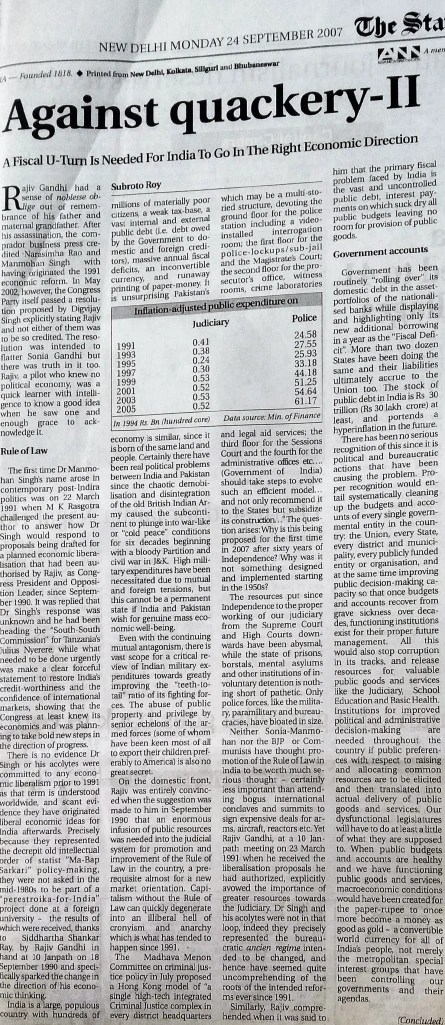
WASTE, fraud and abuse are inevitable in the use and allocation of public property and resources in India as elsewhere, but Government is supposed to fight and resist such tendencies. The Sonia-Manmohan Government have done the opposite, aiding and abetting a wasteful anti-economics ~ i.e., an economic quackery. Vajpayee-Advani and other Governments, including Narasimha-Manmohan in 1991-1996, were just as complicit in the perverse policy-making. So have been State Governments of all regional parties like the CPI-M in West Bengal, DMK/ AIADMK in Tamil Nadu, Congress/NCP/ BJP/Sena in Maharashtra, TDP /Congress in Andhra Pradesh, SP/BJP/BSP in Uttar Pradesh etc. Our dismal politics merely has the pot calling the kettle black while national self-delusion and superstition reign in the absence of reason.
The general pattern is one of well-informed, moneyed, mostly city-based special interest groups (especially including organised capital and organised labour) dominating government agendas at the cost of ill-informed, diffused anonymous individual citizens ~ peasants, small businessmen, non-unionized workers, old people, housewives, medical students etc. The extremely expensive “nuclear deal” with the USA is merely one example of such interest group politics.
Nuclear power is and shall always remain of tiny significance as a source of India’s electricity (compared to e.g. coal and hydro); hence the deal has practically nothing to do with the purported (and mendacious) aim of improving the country’s “energy security” in the long run. It has mostly to do with big business lobbies and senior bureaucrats and politicians making a grab, as they always have done, for India’s public purse, especially access to foreign currency assets. Some $300 million of India’s public money had to be paid to GE and Bechtel Corporation before any nuclear talks could begin in 2004-2005 ~ the reason was the Dabhol fiasco of the 1990s, a sheer waste for India’s ordinary people. Who was responsible for that loss? Pawar-Mahajan-Munde-Thackeray certainly but also India’s Finance Minister at the time, Manmohan Singh, and his top Finance Ministry bureaucrat, Montek Ahluwalia ~ who should never have let the fiasco get off the ground but instead actively promoted and approved it.
Cost-benefit analysis prior to any public project is textbook operating procedure for economists, and any half-competent economist would have accounted for the scenario of possible currency-depreciation which made Dabhol instantly unviable. Dr Singh and Mr Ahluwalia failed that test badly and it cost India dearly. The purchase of foreign nuclear reactors on a turnkey basis upon their recommendation now reflects similar financial dangers for the country on a vastly larger scale over decades.
Our Government seems to function most expeditiously in purchasing foreign arms, aircraft etc ~ not in improving the courts, prisons, police, public utilities, public debt. When the purchase of 43 Airbus aircraft surfaced, accusations of impropriety were made by Boeing ~ until the local Airbus representative said on TV that Boeing need not complain because they were going to be rewarded too and soon 68 aircraft were ordered from Boeing!
India imports all passenger and most military aircraft, besides spare parts and high-octane jet fuel. Domestic aviation generates near zero forex revenues and incurs large forex costs ~ a debit in India’s balance of payments. Domestic airline passengers act as importers subsidised by our meagre exporters of textiles, leather, handicrafts, tea, etc. What a managerially-minded PM and Aviation Minister needed to do before yielding to temptations of buying new aircraft was to get tough with the pampered managements and unions of the nationalized airlines and stand up on behalf of ordinary citizens and taxpayers, who, after all, are mostly rail or road-travellers not jet-setters.
The same pattern of negligent policy-behaviour led Finance Minister P. Chidambaram in an unprecedented step to mention in his 2007 Union Budget Speech the private American companies Blackstone and GE ~ endorsing the Ahluwalia/Deepak Parekh idea that India’s forex reserves may be made available to be lent out to favoured private businesses for purported “infrastructure” development. We may now see chunks of India’s foreign exchange reserves being “borrowed” and never returned ~ a monumental scam in front of the CBI’s noses.
The Reserve Bank’s highest echelons may have become complicit in all this, permitting and encouraging a large capital flight to take place among the few million Indians who read the English newspapers and have family-members abroad. Resident Indians have been officially permitted to open bank accounts of US $100,000 abroad, as well as transfer gifts of $50,000 per annum to their adult children already exported abroad ~ converting their largely untaxed paper rupees at an artificially favourable exchange-rate.
In particular, Mr Ratan Tata (under a misapprehension he may do whatever Lakshmi Mittal does) has been allowed to convert Indian rupees into some US$13,000,000,000 to make a cash purchase of a European steel company. The same has been allowed of the Birlas, Wipro, Dr Reddy’s and numerous other Indian corporations in the organised sector ~ three hundred million dollars here, five hundred million dollars there, etc. Western businessmen now know all they have to do is flatter the egos of Indian boxwallahs enough and they might have found a buyer for their otherwise bankrupt or sick local enterprise. Many newcomers to New York City have been sold the Brooklyn Bridge before. “There’s a sucker born every minute” is the classic saying of American capitalism.
The Sonia-Manmohan Government, instead of hobnobbing with business chambers, needed to get Indian corporations to improve their accounting, audit and governance, and reduce managerial pilfering and embezzlement, which is possible only if Government first set an example.
Why have Indian foreign currency reserves zoomed up in recent years? Not mainly because we are exporting more textiles, tea, software engineers, call centre services or new products to the world, but because Indian corporations have been allowed to borrow abroad, converting their hoards of paper rupees into foreign debt. Forex reserves are a residual in a country’s international balance of payments and are not like tax-resources available to be spent by Government; India’s reserves largely constitute foreign liabilities of Indian residents. This may bear endless repetition as the PM and his key acolytes seem impervious to normal postgraduate-level economics textbooks.
Other official fallacies include thinking India’s savings rate is near 32 per cent and that clever bureaucratic use of it can cause high growth. In fact, real growth arises not because of what politicians and bureaucrats do but because of spontaneous technological progress, improved productivity and learning-by-doing of the general population ~ mostly despite not because of an exploitative parasitic State. What has been mismeasured as high savings is actually expansion of bank-deposits in a fractional reserve banking system caused by runaway government deficit-spending.
Another fallacy has been that agriculture retards growth, leading to nationwide politically-backed attempts at land-grabbing by wily city industrialists and real estate developers. In a hyperinflation-prone economy with wild deficit-spending and runaway money-printing, cheating poor unorganised peasants of their land, when that land is an asset that is due to appreciate in value, has seemed like child’s play.
What of the Opposition? The BJP/RSS have no economists who are not quacks though opportunists were happy to say what pleased them to hear when they were in power; they also have much implicit support among organised business lobbies and the anti-Muslim senior bureaucracy. The official Communists have been appeased or bought, sometimes so cheaply as with a few airline tickets here and there. The nonsensical “Rural Employment Guarantee” is descending into the wasteland of corruption it was always going to be. The “Domestic Violence Act” as expected has started to destroy India’s families the way Western families have been destroyed. The Arjun-DMK OBC quota corrodes higher education further from its already dismal state. All these were schemes that Congress and Communist cabals created or wholeheartedly backed, and which the BJP were too scared or ignorant to resist.
And then came Singur and Nandigram ~ where the sheer greed driving the alliance between the Sonia-Manmohan-Pranab Congress and the CPI-M mask that is Buddhadeb, came to be exposed by a handful of brave women like Mamata and Medha.
A Fiscal U-Turn is Needed For India to Go in The Right Economic Direction
Rajiv Gandhi had a sense of noblesse oblige out of remembrance of his father and maternal grandfather. After his assassination, the comprador business press credited Narasimha Rao and Manmohan Singh with having originated the 1991 economic reform. In May 2002, however, the Congress Party itself passed a resolution proposed by Digvijay Singh explicitly stating Rajiv and not either of them was to be so credited. The resolution was intended to flatter Sonia Gandhi but there was truth in it too. Rajiv, a pilot who knew no political economy, was a quick learner with intelligence to know a good idea when he saw one and enough grace to acknowledge it.
Rule of Law
The first time Dr Manmohan Singh’s name arose in contemporary post-Indira politics was on 22 March 1991 when M K Rasgotra challenged the present author to answer how Dr Singh would respond to proposals being drafted for a planned economic liberalisation that had been authorised by Rajiv, as Congress President and Opposition Leader, since September 1990. It was replied that Dr Singh’s response was unknown and he had been heading the “South-South Commission” for Tanzania’s Julius Nyerere, while what needed to be done urgently was make a clear forceful statement to restore India’s credit-worthiness and the confidence of international markets, showing that the Congress at least knew its economics and was planning to take bold new steps in the direction of progress.
There is no evidence Dr Singh or his acolytes were committed to any economic liberalism prior to 1991 as that term is understood worldwide, and scant evidence they have originated liberal economic ideas for India afterwards. Precisely because they represented the decrepit old intellectual order of statist ”Ma-Bap Sarkari” policy-making, they were not asked in the mid-1980s to be part of a “perestroika-for-India” project done at a foreign university ~ the results of which were received, thanks to Siddhartha Shankar Ray, by Rajiv Gandhi in hand at 10 Janpath on 18 September 1990 and specifically sparked the change in the direction of his economic thinking.
India is a large, populous country with hundreds of millions of materially poor citizens, a weak tax-base, a vast internal and external public debt (i.e. debt owed by the Government to domestic and foreign creditors), massive annual fiscal deficits, an inconvertible currency, and runaway printing of paper-money. It is unsurprising Pakistan’s economy is similar, since it is born of the same land and people. Certainly there have been real political problems between India and Pakistan since the chaotic demobilisation and disintegration of the old British Indian Army caused the subcontinent to plunge into war-like or “cold peace” conditions for six decades beginning with a bloody Partition and civil war in J&K. High military expenditures have been necessitated due to mutual and foreign tensions, but this cannot be a permanent state if India and Pakistan wish for genuine mass economic well-being.
Even with the continuing mutual antagonism, there is vast scope for a critical review of Indian military expenditures towards greatly improving the “teeth-to-tail” ratio of its fighting forces. The abuse of public property and privilege by senior echelons of the armed forces (some of whom have been keen most of all to export their children preferably to America) is also no great secret.
On the domestic front, Rajiv was entirely convinced when the suggestion was made to him in September 1990 that an enormous infusion of public resources was needed into the judicial system for promotion and improvement of the Rule of Law in the country, a pre-requisite almost for a new market orientation. Capitalism without the Rule of Law can quickly degenerate into an illiberal hell of cronyism and anarchy which is what has tended to happen since 1991.
The Madhava Menon Committee on criminal justice policy in July proposed a Hong Kong model of “a single high-tech integrated Criminal Justice complex in every district headquarters which may be a multi-storied structure, devoting the ground floor for the police station including a video-installed interrogation room; the first floor for the police-lockups/sub-jail and the Magistrate’s Court; the second floor for the prosecutor’s office, witness rooms, crime laboratories and legal aid services; the third floor for the Sessions Court and the fourth for the administrative offices etc…. (Government of India) should take steps to evolve such an efficient model… and not only recommend it to the States but subsidize its construction…” The question arises: Why is this being proposed for the first time in 2007 after sixty years of Independence? Why was it not something designed and implemented starting in the 1950s?
The resources put since Independence to the proper working of our judiciary from the Supreme Court and High Courts downwards have been abysmal, while the state of prisons, borstals, mental asylums and other institutions of involuntary detention is nothing short of pathetic. Only police forces, like the military, paramilitary and bureaucracies, have bloated in size.
Neither Sonia-Manmohan nor the BJP or Communists have thought promotion of the Rule of Law in India to be worth much serious thought ~ certainly less important than attending bogus international conclaves and summits to sign expensive deals for arms, aircraft, reactors etc. Yet Rajiv Gandhi, at a 10 Janpath meeting on 23 March 1991 when he received the liberalisation proposals he had authorized, explicitly avowed the importance of greater resources towards the Judiciary. Dr Singh and his acolytes were not in that loop, indeed they precisely represented the bureaucratic ancien regime intended to be changed, and hence have seemed quite uncomprehending of the roots of the intended reforms ever since 1991.
Similarly, Rajiv comprehended when it was said to him that the primary fiscal problem faced by India is the vast and uncontrolled public debt, interest payments on which suck dry all public budgets leaving no room for provision of public goods.
Government accounts
Government has been routinely “rolling over” its domestic debt in the asset-portfolios of the nationalised banks while displaying and highlighting only its new additional borrowing in a year as the “Fiscal Deficit”. More than two dozen States have been doing the same and their liabilities ultimately accrue to the Union too. The stock of public debt in India is Rs 30 trillion (Rs 30 lakh crore) at least, and portends a hyperinflation in the future.
There has been no serious recognition of this since it is political and bureaucratic actions that have been causing the problem. Proper recognition would entail systematically cleaning up the budgets and accounts of every single governmental entity in the country: the Union, every State, every district and municipality, every publicly funded entity or organisation, and at the same time improving public decision-making capacity so that once budgets and accounts recover from grave sickness over decades, functioning institutions exist for their proper future management. All this would also stop corruption in its tracks, and release resources for valuable public goods and services like the Judiciary, School Education and Basic Health. Institutions for improved political and administrative decision-making are needed throughout the country if public preferences with respect to raising and allocating common resources are to be elicited and then translated into actual delivery of public goods and services. Our dysfunctional legislatures will have to do at least a little of what they are supposed to. When public budgets and accounts are healthy and we have functioning public goods and services, macroeconomic conditions would have been created for the paper-rupee to once more become a money as good as gold ~ a convertible world currency for all of India’s people, not merely the metropolitan special interest groups that have been controlling our governments and their agendas.


An Open Letter to Professor Amartya Sen about Singur etc (2007)
July 31, 2007 — drsubrotoroy
A letter to Prof. Sen (2007)
First published in The Statesman 31 July 2007, Editorial Page Special Article
Professor Amartya Sen, Harvard University
Dear Professor Sen,
Everyone will be delighted that someone of your worldwide stature has joined the debate on Singur and Nandigram; The Telegraph deserves congratulations for having made it possible on July 23.
I was sorry to find though that you may have missed the wood for the trees and also some of the trees themselves. Perhaps you have relied on Government statements for the facts. But the Government party in West Bengal represents official Indian communism and has been in power for 30 years at a stretch. It may be unwise to take at face-value what they say about their own deeds on this very grave issue! Power corrupts and absolute power corrupts absolutely, and there are many candid communists who privately recognise this dismal truth about themselves. To say this is not to be praising those whom you call the “Opposition” ~ after all, Bengal’s politics has seen emasculation of the Congress as an opposition because the Congress and communists are allies in Delhi. It is the Government party that must reform itself from within sua sponte for the good of everyone in the State.
The comparisons and mentions of history you have made seem to me surprising. Bengal’s economy now or in the past has little or nothing similar to the economy of Northern England or the whole of England or Britain itself, and certainly Indian agriculture has little to do with agriculture in the new lands of Australia or North America. British economic history was marked by rapid technological innovations in manufacturing and rapid development of social and political institutions in context of being a major naval, maritime and mercantile power for centuries. Britain’s geography and history hardly ever permitted it to be an agricultural country of any importance whereas Bengal, to the contrary, has been among the most agriculturally fertile and hence densely populated regions of the world for millennia.
Om Prakash’s brilliant pioneering book The Dutch East India Company and the Economy of Bengal 1630-1720 (Princeton 1985) records all this clearly. He reports the French traveller François Bernier saying in the 1660s “Bengal abounds with every necessary of life”, and a century before him the Italian traveller Verthema saying Bengal “abounds more in grain, flesh of every kind, in great quantity of sugar, also of ginger, and of great abundance of cotton, than any country in the world”. Om Prakash says “The premier industry in the region was the textile industry comprising manufacture from cotton, silk and mixed yarns”. Bengal’s major exports were foodstuffs, textiles, raw silk, opium, sugar and saltpetre; imports notably included metals (as Montesquieu had said would always be the case).
Bengal did, as you say, have industries at the time the Europeans came but you have failed to mention these were mostly “agro-based” and, if anything, a clear indicator of our agricultural fecundity and comparative advantage. If “deindustrialization” occurred in 19th Century India, that had nothing to do with the “deindustrialization” in West Bengal from the 1960s onwards due to the influence of official communism.
You remind us Fa Hiaen left from Tamralipta which is modern day Tamluk, though he went not to China but to Ceylon. You suggest that because he did so Tamluk effectively “was greater Calcutta”. I cannot see how this can be said of the 5th Century AD when no notion of Calcutta existed. Besides, modern Tamluk at 22º18’N, 87º56’E is more than 50 miles inland from the ancient port due to land-making that has occurred at the mouth of the Hooghly. I am afraid the relevance of the mention of Fa Hiaen to today’s Singur and Nandigram has thus escaped me.
You say “In countries like Australia, the US or Canada where agriculture has prospered, only a very tiny population is involved in agriculture. Most people move out to industry. Industry has to be convenient, has to be absorbing”. Last January, a national daily published a similar view: “For India to become a developed country, the area under agriculture has to shrink, urban and industrial land development has to take place, and about 100 million workers have to move out from agriculture into industry and services. This is the only way forward for bringing prosperity to the rural population”.
Rice is indeed grown in Arkansas or Texas as it is in Bengal but there is a world of difference between the technological and geographical situation here and that in the vast, sparsely populated New World areas with mechanized farming! Like shoe-making or a hundred other crafts, agriculture can be capital-intensive or labour-intensive ~ ours is relatively labour-intensive, theirs is relatively capital-intensive. Our economy is relatively labour-abundant and capital-scarce; their economies are relatively labour-scarce and capital-abundant (and also land-abundant). Indeed, if anything, the apt comparison is with China, and you doubtless know of the horror stories and civil war conditions erupting across China in recent years as the Communist Party and their businessman friends forcibly take over the land of peasants and agricultural workers, e.g. in Dongzhou.
All plans of long-distance social engineering to “move out” 40 per cent of India’s population (at 4 persons per “worker”) from the rural hinterlands must also face FA Hayek’s fundamental question in The Road to Serfdom: “Who plans whom, who directs whom, who assigns to other people their station in life, and who is to have his due allotted by others?”
Your late Harvard colleague, Robert Nozick, opened his brilliant 1974 book Anarchy, State and Utopia saying: “Individuals have rights, and there are things no person or group may do to them (without violating their rights)”. You have rightly deplored the violence seen at Singur and Nandigram. But you will agree it is a gross error to equate violence perpetrated by the Government which is supposed to be protecting all people regardless of political affiliation, and the self-defence of poor unorganised peasants seeking to protect their meagre lands and livelihoods from state-sponsored pogroms. Kitchen utensils, pitchforks or rural implements and flintlock guns can hardly match the organised firepower controlled by a modern Government.
Fortunately, India is not China and the press, media and civil institutions are not totally in the hands of the ruling party alone. In China, no amount of hue and cry among the peasants could save them from the power of organised big business and the Communist Party. In India, a handful of brave women have managed to single-handedly organise mass movements of protest which the press and media have then broadcast that has shocked the whole nation to its senses.
You rightly say the land pricing process has been faulty. Irrelevant historical prices have been averaged when the sum of discounted expected future values in an inflationary economy should have been used. Matters are even worse. “The fear of famine can itself cause famine. The people of Bengal are afraid of a famine. It was repeatedly charged that the famine (of 1943) was man-made.” That is what T. W. Schultz said in 1946 in the India Famine Emergency Committee led by Pearl Buck, concerned that the 1943 Bengal famine should not be repeated following dislocations after World War II. Of course since that time our agriculture has undergone a Green Revolution, at least in wheat if not in rice, and a White Revolution in milk and many other agricultural products. But catastrophic collapses in agricultural incentives may still occur as functioning farmland comes to be taken by government and industry from India’s peasantry using force, fraud or even means nominally sanctioned by law. If new famines come to be provoked because farmers’ incentives collapse, let future historians know where responsibility lay.
West Bengal’s real economic problems have to do with its dismal macroeconomic and fiscal position which is what Government economists should be addressing candidly. As for land, the Government’s first task remains improving grossly inadequate systems of land-description and definition, as well as the implementation and recording of property rights.
With my most respectful personal regards, I remain
Yours ever
Suby
America’s Pakistan-India Policy (2007)
July 27, 2007 — drsubrotoroyUS Pak-India Policy
Delhi & Islamabad Still Look West In Defining Their Relationship
First published in The Statesman, Editorial Page Special Article,
July 27, 2007
by
Subroto Roy
“Balance of power” between other nations while pursuing one’s own commercial and political self-interest, was the leitmotif of British foreign policy throughout the 19th Century and up until World War I. This came to be broadly absorbed and imitated by US foreign policy-makers afterwards. It remains the clear leitmotif of US policy between and towards Pakistan and India in recent years, especially since the 9/11 attacks on New York and Washington. Pakistan’s armed forces have been induced through the usual incentives of modern weapons like F-16s, comfortable officer-visits to US military academies, and hard cash to behave cooperatively with perceived American objectives.
Osama bin Laden
For some bizarre and unknown reason (though it might be as simple as ignorance and thoughtlessness), the USA has made itself believe that arch-enemy Osama bin Laden has remained in the Pashtun areas ever since the American attack took place on the-then Taliban Government in late 2001. The Taliban’s leader Mullah Omar certainly remained there or in Balochistan, but anyone who recalls the reported last conversation between Omar and Osama at the time may well have surmised that Osama was planning a long and permanent trip away from Afghanistan and Pakistan. The present author’s own speculation has been that Osama bin Laden probably moved westwards and has been in a safe and comfortable hideout somewhere in the deserts of North Africa ~ while everyone continues to frantically and ridiculously look for him very far away from where he is.
American policy towards Pakistan has been determined by the parameters of the new policy towards Afghanistan ~ which has been to prop up the Hamid Karzai Government in the hope a pro-American “moderate” “modern” Pashtun like Mr Karzai might one day become a constructive role model for all other Pashtuns, while NATO extends itself “pacifying” any new Pashtun insurgency and attacking poppy-crops on the pattern of the anti-narcotics war in Colombia, and US “Special Forces” continue to look for Osama and friends. Pakistan’s Musharraf has been expected to play along with this, and, in order for him to release and transfer some 80,000 soldiers towards that end, India has been requested not to give him a reason not to want to do so.
General Musharraf was one of the major beneficiaries of the officer-exchange programmes between the US and Pakistan militaries in the past. Like Benazir Bhutto, he is a “known” quantity, well-understood and hence rendered predictable by the American military and diplomatic establishment. Both are also explained and advocated for by their go-betweens, the extremely influential Pakistani bureaucrats within the Washington Beltway and their K-Street lobbyists. Musharraf’s departure to a nice retirement/exile in the USA helped by royalties from his book etc as well as his already-exported son, presumably constitutes a well-planned exit strategy for him personally.
The American problem is that Musharraf may be among the last if not the last of such pliable old-style Pakistani generals ~ the officer-exchange programmes came to slow down or end after the USA pulled out following the defeat of the USSR in Afghanistan, and at the same time Zia ul-Haq had initiated an overt Islamisation of younger officers of the Pakistan military. With such a level of uncertainty as to where the post-Musharraf Pakistan military can or would take itself (along with the country and its nuclear weapons), the only strategy has been to buy them out.
In the current Foreign Affairs, Daniel Markey of the US State Department and Council on Foreign Relations says as much (amid the usual little rhetoric about supporting Pakistani democracy): “Washington must win the trust and confidence of Pakistan’s army. This goal can only be achieved through closer working relationships and tangible investments that lock the United States into a long-term commitment to the region” (italics added).
If American policy towards Pakistan has been to pay to pacify Pakistan’s unpredictable nuclear-armed military, the policy towards India has been one of business, business, and more business. The “US-India Business Council” is merely an official Washington lobbyist protecting American business interests in India such as getting the Governments of India and Maharashtra to pay several hundred million dollars over the Dabhol-Enron fiasco. Yet that is where senior Indian politicians, like the Finance and Commerce Ministers, feel the need to routinely visit on pilgrimage if only to be made to feel important while in the USA. Even Dr Manmohan Singh felt the need to send a personal emissary to gift Condoleeza Rice a basket of Indian mangoes not at her office in the US State Department but when she was addressing a closed-door meeting of that business-lobbyist.
Certainly in case of the so-called “nuclear deal”, there is a political motivation on the American side that India must be prevented from conducting future nuclear explosions, although this may be something mostly symbolic as US intelligence agencies had notoriously failed to predict Pokhran I and Pokhran II. And there is doubtless some reliance that the Indian side to the negotiations has not really properly understood the intricacies of the American political and administrative system, e.g. the insignificance of a Presidential “signing statement”. Hence, if the deal goes through as seems likely now, it will certainly indicate the American side is more than comfortable that if a future Indian Government does not do what the US-side has intended in the nuclear deal (whether or not the Indian negotiators have understood that now), a future US Congress and President will be able to reverse the deal without too much difficulty.
What has mainly driven the deal on the American side is the prospect of very large nuclear business ~ specifically, that India will import six to eight American lightwater reactors. As I have said before in these pages, India’s national energy outlook will barely improve through the nuclear deal (given the miniscule size of the nuclear sector compared to coal and hydro), though a few favoured metros, and Delhi for sure, may see improvement after a decade or two when and if these expensive nuclear reactors become operational.
Short-sightedness
The short-sightedness and indeed sheer imbecility of Indian and Pakistani foreign policy is made clear by the fact we are unable to properly communicate with one another about our common interests as neighbouring countries with the same history and geography except through Washington. The elites of both countries have either fled already or would like to flee or at least travel to the USA to visit their exported adult children as often as possible. It is not dissimilar to our imperial relationship with Britain, where Indians had to travel to London to have their Round Table Conference, England being of course a place of national pilgrimage as the USA has now become. The result is not merely that the militaries and polities of Pakistan and India have wasted vast immeasurable resources in struggles against one another and continue to do so, but also and as importantly, have failed to define robust national identities after six decades.
Political Stonewalling
July 20, 2007 — drsubrotoroyPolitical Stonewalling
Only Transparency Can Improve Institutions
Subroto Roy
First published in The Statesman, July 20 2007
Editorial Page Special Article
“Stonewalling” has come to mean being continually evasive and misleading in politics by, for example, parroting a party line against fair public inquiry or criticism. “I want you to stonewall it”, was Richard Nixon’s infamous instruction during Watergate. (The original meaning was not ignoble: General T. J. “Stonewall” Jackson, during the US Civil War stayed on his horse under constant fire, taking all the bullets “like a stonewall” until he was killed.)
Stonewalling is what we are likely ever to receive from Pratibha Patil and the present day Congress Party. It is not as if India and the world will not survive if she becomes our President. Rashtrapati Bhavan has had undistinguished occupants before, even ones with clouds of disreputable or nefarious public deeds hanging over their heads. All that will happen is that our political institutions shall retrogress for five years; a pity but not something catastrophic in view of our long history ~ Nadir Shah’s brief stay set the standard for catastrophic behaviour in Delhi.
“Individuals may form communities, but it is institutions alone that can create a nation”, said Disraeli. Nation-building would become that much harder, our pessimism and disillusionment about whether we will ever succeed would become that much greater.
Corrosion
The corrosion of our political, financial, academic and other public institutions over decades has been something in which all our official political parties and religious formations are hand-in-glove complicit. In the case of Pratibha Patil, it is the PM and UPA Chair who are directly responsible for the institutional corrosion taking place in full view of all with respect to the highest office of the land.
But then Dr Manmohan Singh, despite his sojourns as a young social scientist in Britain, has not cared a hoot that the Prime Minister in a parliamentary democracy must seek to be an elected member of the House of the People. Also, ever since 1991, he has permitted the flattering fiction to develop that he or any of his acolytes had something to do with the origins of the economic reform. As for Sonia Gandhi, her list of naïve misjudgements only grows longer ~ cardinal among them being her having apparently retained as trusted advisers around her persons who had been warned about the vulnerability of her husband to assassination. Had Rajiv not been assassinated, Sonia would have been today merely a happy grandmother and not India’s purported ruler.
Stonewalling has become standard government practice in 21st century India across party-lines. The BJP stonewalled after the post-Godhra pogrom in 2002 and held none of its own responsible; the CPI-M has done precisely the same after the Nandigram pogrom a few months ago.
In October 2005, the Supreme Court ~ proving yet again that there are or can be institutions which do work in India ~ found the Union Government had behaved unconstitutionally. Lesson 101 of Constitutional Politics says: If you are uncertain whether a head of government commands confidence, ask him/her to prove his majority on the floor of the house. Instead the Sonia-Manmohan Government had launched a pre-emptive putsch against an aspirant for a democratic majority in a State assembly. What Sonia-Manmohan should have done in response to the Supreme Court’s finding was to recall or transfer the apparent culprit, and express regret to Parliament and the Court. That would have ended the matter and also engendered some moral growth in the polity. What they did instead was stonewall. Worse stonewalling was to follow from the whole of Parliament itself in the “office-for-profit” scandal.
Aristotle said politics was the supreme good because the ends of all other activities are subsumed in politics. This means that if the politics of a national society gets corroded, so does everything else. It is because India’s politics have become rotten, that our financial, academic and other institutions have followed.
The private American “equity group” Blackstone recently purchased Hilton Hotels for 26 thousand million American dollars cash. Why is that significant to Indians? Because India’s Finance Minister, P. Chidambaram, took the unprecedented step of naming Blackstone along with one private Indian citizen, Deepak Parekh in his February 2007 Budget Speech. He referred to a Government of India financial scheme by which favoured private businesses can “borrow” India’s foreign exchange reserves to pay for purchases of foreign assets. The same Reserve Bank of India which cracked down on Pratibha Patil’s dubious bank-dealings has now been bullied into allowing India’s foreign exchange reserves to be “borrowed” ~ and quite possibly never to be returned. Furthermore, foreign exchange reserves are not like tax-revenues but largely constitute already borrowed funds!
In academia, Mr Arjun Singh tyrannises defenceless medical students but presides (like his predecessor Dr Murli Manohar Joshi) over appointments at national institutes of full professors without postgraduate degrees or any experience of teaching or research. The Union Finance and Education Ministers report in the Government and their party to the PM and the UPA Chair. But neither Dr Singh nor Mrs Gandhi can have any effective control over the rot in India’s macroeconomic, financial, academic or other institutions when they are presiding over political rot themselves.
Shameless behaviour
Stonewalling is the political behavour of the shameless. Shame used to be a cultural means of political self-control in traditional societies. Modern politics makes a distinction between private and public domains, and says that transmuting valuable public property of any kind into private wealth or advantage constitutes nefarious corruption. It is possible our subcontinent has not wished to or has not yet entered the world of modern politics. Instead we remain feudal in our political behaviour ~ where large rival clans perpetually battle over what is the ill-defined common property of the realm. In Pakistan and Bangladesh, the militaries predominate and participate in this feuding. In India the feuds take place within a framework which outwardly seems democratic with institutions of a free society like a free press and official civilian control of the military. Our feuds are between three large rival clans: the Indira-Sonia Patriarchal Matriarchs, the Hindu Patriarchs, and the Communist Matriarchal Patriarchs. The Congress, BJP and Communists are yet to become modern parties, and unless and until they do, our politics shall remain in retrogression.
Lal Masjid ≠ Golden Temple (2007)
July 15, 2007 — drsubrotoroyLal Masjid ≠ Golden Temple
Wide differences are revealed between contemporary Pakistan and India by these two superficially similar military assaults on armed religious civilians
By SUBROTO ROY
First published in The Sunday Statesman, July 15 2007, ww.thestatesman.net, Editorial Page Special Article
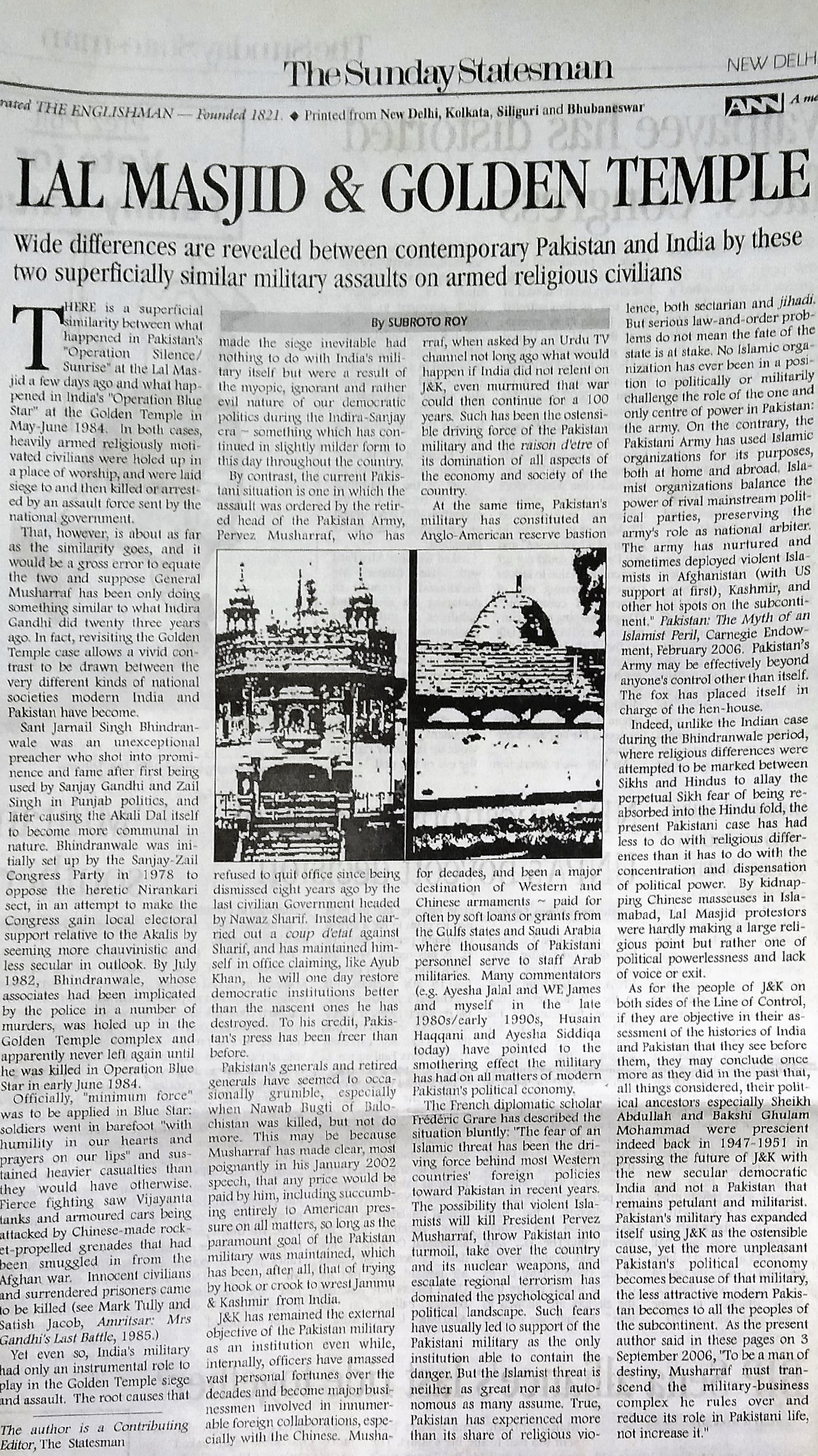
There is a superficial similarity between what happened in Pakistan’s “Operation Silence/ Sunrise” at the Lal Masjid a few days ago and what happened in India’s “Operation Blue Star” at the Golden Temple in May-June 1984. In both cases, heavily armed religiously motivated civilians were holed up in a place of worship, and were laid siege to and then killed or arrested by an assault force sent by the national government.
That, however, is about as far as the similarity goes, and it would be a gross error to equate the two and suppose General Musharraf has been only doing something similar to what Indira Gandhi did twenty three years ago. In fact, revisiting the Golden Temple case allows a vivid contrast to be drawn between the very different kinds of national societies modern India and Pakistan have become.
Sant Jarnail Singh Bhindranwale was an unexceptional preacher who shot into prominence and fame after first being used by Sanjay Gandhi and Zail Singh in Punjab politics, and later causing the Akali Dal itself to become more communal in nature. Bhindranwale was initially set up by the Sanjay-Zail Congress Party in 1978 to oppose the heretic Nirankari sect, in an attempt to make the Congress gain local electoral support relative to the Akalis by seeming more chauvinistic and less secular in outlook. By July 1982, Bhindranwale, whose associates had been implicated by the police in a number of murders, was holed up in the Golden Temple complex and apparently never left again until he was killed in Operation Blue Star in early June 1984.
Officially, “minimum force” was to be applied in Blue Star: soldiers went in barefoot “with humility in our hearts and prayers on our lips” and sustained heavier casualties than they would have otherwise. Fierce fighting saw Vijayanta tanks and armoured cars being attacked by Chinese-made rocket-propelled grenades that had been smuggled in from the Afghan war. Innocent civilians and surrendered prisoners came to be killed (see Mark Tully and Satish Jacob, Amritsar: Mrs Gandhi’s Last Battle, 1985.)
Yet even so, India’s military had only an instrumental role to play in the Golden Temple siege and assault. The root causes that made the siege inevitable had nothing to do with India’s military itself but were a result of the myopic, ignorant and rather evil nature of our democratic politics during the Indira-Sanjay era ~ something which has continued in slightly milder form to this day throughout the country.
By contrast, the current Pakistani situation is one in which the assault was ordered by the retired head of the Pakistan Army, Pervez Musharraf, who has refused to quit office since being dismissed eight years ago by the last civilian Government headed by Nawaz Sharif. Instead he carried out a coup d’etat against Sharif, and has maintained himself in office claiming, like Ayub Khan, he will one day restore democratic institutions better than the nascent ones he has destroyed. To his credit, Pakistan’s press has been freer than before.
Pakistan’s generals and retired generals have seemed to occasionally grumble, especially when Nawab Bugti of Balochistan was killed, but not do more. This may be because Musharraf has made clear, most poignantly in his January 2002 speech, that any price would be paid by him, including succumbing entirely to American pressure on all matters, so long as the paramount goal of the Pakistan military was maintained, which has been, after all, that of trying by hook or crook to wrest Jammu & Kashmir from India.
J&K has remained the external objective of the Pakistan military as an institution even while, internally, officers have amassed vast personal fortunes over the decades and become major businessmen involved in innumerable foreign collaborations, especially with the Chinese. Musharraf, when asked by an Urdu TV channel not long ago what would happen if India did not relent on J&K, even murmured that war could then continue for a 100 years. Such has been the ostensible driving force of the Pakistan military and the raison d’etre of its domination of all aspects of the economy and society of the country.
At the same time, Pakistan’s military has constituted an Anglo-American reserve bastion for decades, and been a major destination of Western and Chinese armaments ~ paid for often by soft loans or grants from the Gulfs states and Saudi Arabia where thousands of Pakistani personnel serve to staff Arab militaries. Many commentators (e.g. Ayesha Jalal and WE James and myself in the late 1980s/early 1990s, Husain Haqqani and Ayesha Siddiqa today) have pointed to the smothering effect the military has had on all matters of modern Pakistan’s political economy.
The French diplomatic scholar Frédéric Grare has described the situation bluntly: “The fear of an Islamic threat has been the driving force behind most Western countries’ foreign policies toward Pakistan in recent years. The possibility that violent Islamists will kill President Pervez Musharraf, throw Pakistan into turmoil, take over the country and its nuclear weapons, and escalate regional terrorism has dominated the psychological and political landscape. Such fears have usually led to support of the Pakistani military as the only institution able to contain the danger. But the Islamist threat is neither as great nor as autonomous as many assume. True, Pakistan has experienced more than its share of religious violence, both sectarian and jihadi. But serious law-and-order problems do not mean the fate of the state is at stake. No Islamic organization has ever been in a position to politically or militarily challenge the role of the one and only centre of power in Pakistan: the army. On the contrary, the Pakistani Army has used Islamic organizations for its purposes, both at home and abroad. Islamist organizations balance the power of rival mainstream political parties, preserving the army’s role as national arbiter. The army has nurtured and sometimes deployed violent Islamists in Afghanistan (with US support at first), Kashmir, and other hot spots on the subcontinent.” Pakistan: The Myth of an Islamist Peril, Carnegie Endowment, February 2006. Pakistan’s Army may be effectively beyond anyone’s control other than itself. The fox has placed itself in charge of the hen-house.
Indeed, unlike the Indian case during the Bhindranwale period, where religious differences were attempted to be marked between Sikhs and Hindus to allay the perpetual Sikh fear of being reabsorbed into the Hindu fold, the present Pakistani case has had less to do with religious differences than it has to do with the concentration and dispensation of political power. By kidnapping Chinese masseuses in Islamabad, Lal Masjid protestors were hardly making a large religious point but rather one of political powerlessness and lack of voice or exit.
As for the people of J&K on both sides of the Line of Control, if they are objective in their assessment of the histories of India and Pakistan that they see before them, they may conclude once more as they did in the past that, all things considered, their political ancestors especially Sheikh Abdullah and Bakshi Ghulam Mohammad were prescient indeed back in 1947-1951 in pressing the future of J&K with the new secular democratic India and not a Pakistan that remains petulant and militarist. Pakistan’s military has expanded itself using J&K as the ostensible cause, yet the more unpleasant Pakistan’s political economy becomes because of that military, the less attractive modern Pakistan becomes to all the peoples of the subcontinent. As the present author said in these pages on 3 September 2006, “To be a man of destiny, Musharraf must transcend the military-business complex he rules over and reduce its role in Pakistani life, not increase it.”
Political Paralysis (2007)
June 24, 2007 — drsubrotoroyPOLITICAL PARALYSIS
India has yet to develop normal conservative, liberal and socialist parties. The Nice-Housing-Effect and a little game-theory may explain the current stagnation
By SUBROTO ROY
First published in The Sunday Statesman, Editorial Page Special Article,
June 24 2007

THE theatrics surrounding the choice of presidential candidates refer to the highest and most dignified office of the land. Otherwise, India’s public would have been justified to think we were watching an absurd farce. Even so, lessons may be learnt about the nature of our polity, especially our purported Government and its purported Opposition.
Consider first how the name of the Congress’s candidate apparently arose. “Why don’t you think of Pratibha Patil?” was the rhetorical suggestion apparently made by Manmohan Singh to Sonia Gandhi at a joint meeting of the UPA and Left where no other person could be agreed upon. What could have been the emotional state of the Prime Minister of India in addressing such a question to its specific addressee? It had to be the same unconscious perplexity and mental contradiction he has experienced throughout the UPA Government, saying to himself: “I am the Prime Minister but I am not the Prime Minister, I am the Head of India’s Government but I am not the Head of India’s Government”.
Instead of leading the country as he was chosen to do in the belief he possessed some superior wisdom and capability for the job, Dr Singh has constantly deferred to and followed the person who chose him to lead. The Head of Government in our system recommends an appropriate Head of State. If Dr Singh truly felt himself India’s leader, not merely someone permitted for some time to enjoy the office and perquisites of India’s Prime Minister and being nominally referred to as such, he could have said: “I think we should consider Pratibha Patil, what say all of you?”
Such words would have displayed too much assertiveness in the presence of Sonia Gandhi, too much leadership from someone flatteringly described as mild and gentle but unflatteringly described as obsequious in the face of power. It is the same excess of deference displayed when he allows himself to be bullied or insulted by the DMK or receive the open contempt of his own Cabinet ministers. Dr Singh has just returned from the so-called “G-8 summit” where he was an invitee. In a group photo standing above and behind the American President, Dr Singh was seen gently touching George Bush on the shoulder as if Bush was a rich younger brother who needed a lift in spirits. Afterwards Dr Singh reportedly said the summit was useless ~ from his long bureaucratic experience he should have known that long beforehand, and declined to waste India’s time there. But then Europe is nice this time of year when Delhi is so hot. China is next on his itinerary, and he will surely not want to miss the Great Wall despite China’s continuing insults.
What the Pratibha episode reveals about Sonia Gandhi is her continuing bewilderment and confusion about the parameters of her life since her husband’s assassination sixteen years ago. There is a very simple candid explanation why, after her years in mourning, she entered politics following the Sitaram Kesri period: she and her children could not financially sustain a lifestyle to which they had become accustomed at 10 Janpath except as part of India’s politics via the Congress Party. Running the Rajiv Gandhi Foundation was not enough, and Rahul Gandhi’s income in a normal private sector career would have been unexceptional. Hence the lure of power has remained strong and cannot be walked away from even if walking away would be the right thing to do for sake of the political health of the Congress Party ~ which would finally have to grow up, find some political principles, and develop some normal processes of internal competition.
When Pratibha Patil’s name was mentioned for the first time in this manner, the rational course of action for the UPA Chair would have been to say, wait, if we are now thinking about a woman definitely, may we please have two or three such names to consider for a few days? But it was Dr Singh mentioning the name, and his supposed wisdom is what Sonia Gandhi believes, in her bewilderment, she should defer to, so she agreed at once in a parallel state of mental confusion as his: “I am India’s Leader but I am not India’s Leader”. Hence Pratibha Patil becomes the nominee. A little “game-theory” may help to explain the outcome (see table).
The paralysis and/or sclerosis of the Congress’s thinking processes is matched by the BJP and Communists. If Sonia Gandhi could bring herself to walk away from Indian politics, a genuine leadership contest in the Congress would have to occur for the first time in decades. Similarly, if Atal Behari Vajpayee and Lal Krishna Advani could bring themselves to honestly walk away from BJP politics, there would have to be a genuine leadership contest and some new principles emerging in their party. There is an excellent and very simple political reason for Vajpayee and Advani to go, which is not that they are too old (which they are) but that they led their party to electoral defeat. Had they walked away in May 2004, there might have been by now some viable conservative political philosophy in India and some recognisable new alternative leadership for 2009. Instead there is none and the BJP has not only failed very badly at being a responsible Opposition, it will go into the 2009 General Election looking exceptionally decrepit and incompetent.
Indeed, Vajpayee and Advani may not have walked away for the same reason as Sonia Gandhi, namely, the “10 Janpath Effect” or what may be generalised to the “Nice-New Delhi-Government-Housing-Effect”. Besides, like our ageing cricketers, cinema stars, playback singers and tons of ageing bureaucrats and corporate executives, where would they go, what would they do, how would they live, what do they know how to do if they were not doing what they have been doing for so long? Golf and grandchildren is the usual American formula.
In case of the Communists, it is not electoral but ideological defeat, indeed ideological annihilation, that their leaders have led them into. When was the last time we heard our Communist leaders extolling Marx, Engels, Lenin, Stalin, Mao, Zhou or even Fidel Castro? Not for a long time. The bankruptcy of official communism is obvious even to them, at least in their candid moments in front of the mirror every morning. Even for the CPI and CPI(M) to merge into a genuine modern socialist party is too creative and productive an outcome to be handled since top and middle management retrenchments would be inevitable. Also, the Cannot-Leave-Nice-Housing-Effect applies here too, and so the most we find by way of communist transformation is a perverse alliance with organised big business in trying to cheat very poor and unorganised peasants of their land in an economy where runaway paper money printing threatens a hyperinflation.
Nobody in power wants to address the rotten state of our public finances, since all of them have contributed to causing the stench. Our Finance Minister finds time to attend posh parties and publish books while presiding over an RBI-supported capital flight of India’s super-rich: “ultrahigh networth individuals are looking forward to buy overseas equities and real estate” Business Standard (25 April 2007) blithely said. The Finance Minister should have been instead burning the midnight candle getting public budgets and government accounting cleaned and healthy nationwide.
We in India have had more than enough time and democratic experience to have developed by now a set of normal conservative, liberal democrat, social democrat and socialist parties. That we have nothing of the kind speaks to the rot in the political culture we are witnessing in our capital and other major cities. Politically, we may be in for an especially ugly, unpleasant and incoherent few years starting with the presidential election currently underway.
Unhealthy Delhi
June 11, 2007 — drsubrotoroyUnhealthy Delhi
When will normal political philosophy replace personality cults?
by Subroto Roy
First published in The Statesman, Editorial Page Special Article, June 11 2007,
A decade after Solzhenitsyn’s classic 1962 memoir One day in the life of Ivan Denisovitch, an ambitious young Delhi photographer published a hagiography called A life in the day of Indira Gandhi. Indira was shown gambolling with her little grandchildren, guiding her dutiful daughter-in-law, weeping for her father, greeting her loyal subjects from around India, reprimanding her ingratiating sycophants, imperiously silent during political meetings, smiling and scolding alternately at press conferences, and of course standing in victory at Shimla beside the defeated Bhutto. “Indira is India” the sycophantic slogan went, and the cult of her personality was one of showing her as omniscient and omnipotent in all earthly matters of Indian politics.
She had indeed fought that rarest of things in international law: the just war. Supported by the world’s strongest military, an evil enemy had made victims of his own people. Indira tried patiently on the international stage to avert war, but also chose her military generals well and took their professional judgement seriously as to when to fight if it was inevitable and how to win. Finally she was magnanimous (to a fault) towards the enemy ~ who was not some stranger to us but our own estranged brother and cousin.
It seemed to be her and independent India’s finest hour. A fevered nation was thus ready to forgive and forget her catastrophic misdeeds until that time, like bank-nationalization and the start of endless deficit-finance and unlimited money-printing, a possible cause of monetary collapse today four decades later under Manmohan Singh whose career as an economic bureaucrat began at that time.
Hitler, Stalin, Mao
Modern personality cults usually have had some basis in national heroism. In Indira’s case it was the 1971 war. Hitler, Stalin and Mao were seen or portrayed as war heroes too. Because there has been leadership in time of war or national crisis, nervous anxious masses extend their hopes and delusions to believe such a leader has answers to everything. The propaganda machinery available as part of modern state apparatus then takes over, and when it is met on behalf of the citizenry with no more than a compliant docile ingratiating mass media, the public image comes to be formed of a parental god-like figure who will protect and guide the community to its destiny.
Beneath this public image, the cunning play of self-interest by anonymous underlings in the allocation of public resources continues unabated, and so it is possible some truth attaches to the idea that an individual leader is not as responsible for evil misdeeds or depredations done by “the party” in his/her name.
In the Indian case, hero-worship and ancestor-worship are part of the culture of all our major religions. Hence we have parades of parliamentarians garlanding or throwing flowers and paying obeisance at this or that statue or oil-painting or photograph regularly ~ though as a people we have yet to produce rigorous intellectual biographies of any major figures of our own modern history, comparable to, say, Judith Brown’s work on Gandhi or Ayesha Jalal’s on Jinnah.
Indira continued to dominate our political culture until her assassination more than a decade later, but there was hardly a shred of political or economic good in what she left the country. Her elder son (leaving aside his blunders in Sri Lanka, J&K etc.) did have the sense to initiate fundamental change in his party’s economic thinking when he found a chance to do so in the months before his own assassination.
Rajiv was the son of Feroze Gandhi too and a happy family man; he seemed not to have psychological need for as much of the kind of personality cult his mother clearly loved to indulge in. It is not clear if his widow is today trying to follow his example or his mother’s ~ certainly, the party that goes by the name of Indian National Congress would like to relive for a second time the worst of the Indira personality cult around Sonia Gandhi. And Rahul Gandhi, instead of seeking to develop or display any talent as befits a young man, has shown disconcerting signs of longing for the days of his grandmother’s personality cult to return. He may have been more effective pursuing a normal career in the private sector.
The Congress’s perpetual tendency towards personality cults has extended by imitation to other political parties in New Delhi and the States. Atal Behari Vajpayee at his peak as PM did not find it at all uncomfortable to be portrayed by his sycophants as a wise, heroic and loving father-figure of the nation ~ an image shattered when, immediately after perfunctorily commiserating the Godhra and post-Godhra horrors, he was pictured fashionably on a Singapore golf-cart sporting designer sunglasses.
India’s organised communists make a great show of collective decision-making since they most intimately followed the details of Kruschev’s denunciation of Stalin’s personality cult. It has not stopped them routinely genuflecting to China’s communists. There also has been a communist tendency to deny individual merit and creativity at junior levels and instead appropriate all good things for the party bosses. New brilliant faces will never arise in the Left and we may be condemned to see the usual characters in perpetuity. If personality cults around Jyoti Basu or Buddhadeb Bhattacharya have failed to thrive it has not been through lack of trying on part of the publicly paid communist intelligentsia and their docile artists, but rather because of resistance from Bengal’s newspapers and a few clear-headed journalists and well known opposition politicians.
Tamil Nadu has seen grotesque rivalry between Karunanidhi and Jayalalitha as to whose personality cult can alternately outdo the other, supplanting all normal political economy or attempts at discovery of the public interest. In Andhra Pradesh, Maharashtra, J&K, Bihar and Uttar Pradesh (but not Gujarat or Rajasthan lately), two-party democratic politics has succeeded in limiting tendencies for personality cults to develop. The North Eastern States have had inadequate coverage by modern media, which, fortuitously, along with tribal traditions, may have restrained personality cults from developing.
Facts explode cults
Facts are the most reliable means by which to explode personality cults. It is not a coincidence that facts are also the source by which to develop modern political philosophies, whether conservative, classical liberal/ libertarian, or socialist. Facts have to be discovered, ferreted out, analysed, studied and reflected upon by those civil institutions that are supposed to be doing so, namely university social science, economics and related departments, as well as responsible newspapers, radio and other mass media. Julian Benda once titled a book The Treason of the Intellectuals. India will begin to have a normal political philosophy when the treason of its modern intellectual classes begins to be corrected.
It is not a treason in which the state has been betrayed to an enemy. Rather it is one in which the very purposes of public conversation, such as the discovery of the public interest, have been betrayed in the interests of immediate private gain. This may help to explain why there is so little coherent public discussion in India today, and certainly almost nothing on television, or in the business papers or what passes for academia.
On Indian Nationhood (2007)
May 25, 2007 — drsubrotoroyOn Indian Nationhood
From Tamils To Kashmiris And Assamese And Mizos To Sikhs And Goans
First published in The Statesman, Editorial Page
May 25 2007
By Subroto Roy

In the decades before 1947, imperialist critics of Indian nationalism accused the movement of being less about creating Indian nationhood than about supplanting British rule with local Indian oligarchies. Sydenham, for example, in the upper house of Britain’s Parliament in August 1918, gleefully quoted from the “Madras Dravidian Hindu Association” (forerunners of today’s DMK etc): “We shall fight to the last drop of our blood any attempt to transfer the seat of authority in this country from British hands to so-called high-caste Hindus, who have ill-treated us in the past and will do so again but for the protection of British laws.” Also quoted were “Namasudras of Bengal”, allegedly numbering “ten million men”, protesting “gross misrepresentation” by “so-called high-caste leaders” of the desirability of “Home Rule or self-government”. Besides caste and class there was always religion too by which India’s inhabitants could be classified and divided, and it must have delighted Sydenham to quote the “South Indian Islamic League” saying “Nothing should be done which will weaken British authority in any manner whatsoever, and hand over the destinies of the Moslem community to a class which has no regard for their interests and no respect for their sentiments”.
Home Rule League
Sydenham was attacking the Montagu-Chelmsford Report which had stated that India had “a core of earnest men who believe sincerely and strive for political progress; around them a ring of less educated people to whom a phrase or a sentiment appeals; and an outside fringe of those who have been described as attracted by curiosity to this new thing, or who find diversions in attacking a big and very solemn Government as urchins might take a perilous joy at casting toy darts at an elephant.”
Annie Besant, herself an Englishwoman, was, along with BG Tilak and MA Jinnah, a pioneer of Indian nationalism at the time and headed the new Indian Home Rule League on the Irish pattern. The League stated its membership at 52,000. Sydenham multiplied that by five and asked if a quarter million could purport to rule 244 millions in an Indian democracy. Where, he demanded, was the “voice that cannot yet be heard, the voice of the peoples of India”? The imperialist jibe was that the British Raj would be replaced at best by a “Vakil Raj” of “high-caste” Hindus and at worst by anarchy and bloodshed.
Thirty years later India’s was partitioned and independent under Attlee’s Labour Party. Churchill took over the imperialist mantle and found solace in the new India agreeing to remain in Britain’s “Commonwealth”, saying that India doing so as a Republic did not impair “the majesty of the Crown or the personal dignity of the King”.
The ghosts of Churchill and Sydenham today would heartily cheer our Republic’s current President APJ Abdul Kalam agreeing to receive the “King Charles II Medal” from the Royal Society, and our current PM Manmohan Singh accepting honorary British degrees also while in office. Britain’s Crown Prince has proposed a cricket match between India and Pakistan to mark the 60th anniversary of 1947, and what, after all, could be less inappropriate to mark the event in British eyes? All that Indian nationalism would have been firmly put in its place.
Now Pakistan mostly goes unmentioned in the history of Indian nationalism because the new Pakistanis as of 14 August 1947 hardly felt or even wished to be independent of the British. Instead they longed only to acquire control over any kind of Muslim-majority Government that they could, and as much of the resources and joint military assets of the old India they could get their hands on.
The Kashmir dispute and India-Pakistan conflict have not been ones between Hindus and Muslims, regardless of what the BBC, CNN etc make themselves believe. As much as for any other reason, Kashmir escalated out of control because of British irresponsibility during the process of disintegration of the old Indian Army between the two new Dominions. Newly demobilised Mirpuri soldiers who had formed loyal British battalions were drawn into the cycle of Partition-related communal violence and reprisals in Punjab, which inevitably spilt over into Jammu and culminated in the attack on J&K State that commenced from Pakistan’s NWFP in October 1947 ~ plunging J&K into civil war with Sheikh Abdullah and Bakshi Ghulam Mohammad’s National Conference allied to the new secular India and Sardar Ibrahim’s Muslim Conference allied to the new and soon to be Islamic Pakistan. Field Marshal Auchinlek, the Supreme Commander of both Indian and Pakistani Armed Forces, had the decency to resign and abolish the so-called “Supreme Command” as soon as he realised his own forces were at war with one another.
It would not be too inaccurate to say Pakistan and Britain continued in a neo-colonial relationship throughout the 1950s and 1960s ~ all the way until Ayub Khan (who had been warmly entertained at Chequers during the Christine Keeler-Profumo matter), overplayed his hand by attacking India in 1965. That war followed by the East Pakistan cyclone in 1969 brought to a head the inherent political contradictions of the Pakistani state accumulated until that time, and soon led to Bangladesh’s creation in 1971. Britain has had no real interest in Bangladesh but as Pakistan had allowed dual nationality with Britain, Britain found itself with a lot of Bangladeshi immigrants whose “Indian” restaurants give modern Britons today something to look forward to every weekend.
Britain and its American ally continued to have deep interests in Pakistan, mostly because of the geopolitical importance of Pakistani real estate and the generally obsequious and compliant nature of the Pakistani military and diplomatic elite. All that began to change fundamentally when the real declaration of Pakistani independence occurred in the world with the AQ Khan nuclear bombs exploding in 1998 followed by the September 11 2001 attacks upon the USA.
Nationalism today
As for ourselves in India, we have developed some coherent and recognisable design of a modern political economy with a Union Government and more than two dozen State Governments, and we have abolished the imperialist lackeys known as the “princes”. Our Governments at Union and State levels change peacefully by periodic elections under the 1950 Constitution. This in itself would be seen as an astonishing democratic achievement relative to where we were one hundred years ago at the time of the Morley-Minto policies. Thanks to Jawaharlal Nehru, we have had universal franchise since 1952 (at a time when the USA still had its Jim Crow laws against black citizens) ~ yet the imperialist jibe of an infinitesimally small elite purporting to represent hundreds of millions of India’s people remains to be addressed.
It would be interesting to know how many descendants of the 52,000 members of Annie Besant’s Home Rule League remain in India and how many have emigrated to the USA, Britain, Australia etc. The children of our top military, bureaucratic, business, professional and academic elite have cheerfully led an exodus out of the country. E.g. the son of a former commanding general of the Indian Army’s Artillery Regiment is now a British businessman and member of Tony Blair’s new House of Lords. Indian Nationhood in the 21st Century no longer has to include Bangladeshis and Pakistanis who have ended up seeking to develop their own nationalisms, but it remains hard enough to try to include everyone else ~ from Tamils to Kashmiris and from Assamese and Mizos to Sikhs and Goans. Cleaning up our government accounting and sorting out our public finances nationwide so as to establish a sound money for everyone to use for the first time in sixty or seventy years, is among the first steps in defining our common goals as an independent nation.
(Postscript: The original text stated Independence and Paritition came “forty years” after the only date mentioned until that point in the text, which is of the 1918 Montagu-Chelmsford period. Unconsciously, I was counting from the Morley-Minto period of 1906-1908 which was the constitutional precedent to Montagu-Chelmsford.)
Uttar Pradesh Polity and Finance
March 24, 2007 — drsubrotoroyUttar Pradesh Polity & Finance
A Responsible New Govt May Want To Declare A Financial Emergency
First published in The Statesman Editorial Page, March 24 2007
by
Subroto Roy

Uttar Pradesh goes to the polls beginning April 7. Nothing may succeed better in focusing the minds of its citizens and political candidates than some hard macroeconomic realities. Discussing UP’s public finances may be the first step to bringing cool rationality to the cauldron of its politics ~ consisting as it does of seemingly deep and irreconcilable divisions of religion, caste and personality.
UP shared initials of the old British “United Provinces of Agra and Oudh”, and in 1947 was mostly the same territory. It deserves better than to be known merely as our “Northern State”: UP has been India’s fulcrum, deeply affecting our history, culture and politics. There could have been today not merely a new Uttarakhand but also perhaps Agra, Bareilly (Rohilkhand), Jhansi (Bundelkhand), Meerut, Avadh (Ayodhya, Oudh), Kanauj, Varanasi etc.
History and politics
Each has had its history. Oudh was seen by the British before Dalhousie as a northern buffer for their Bengal possessions. Bareilly was “an important centre of disaffection” of Muslim soldiers against the British in 1857 and also where Hindus after Aurangzeb’s death in 1707 had “thrown off the imperial yoke” refusing to pay tribute to Delhi. The very idea of “Pakistan” was mostly a UP-invention. Long before Iqbal and Jinnah, Sayyid Ahmad Barelvi (1786-1831) initiated a mass migration of Muslims and created a theocratic principality in the NWFP (Tariqah-i-Muhammadiyah) which collapsed due to conflict between his Pashtun and North Indian followers. Pervez Musharraf’s family were frankly nostalgic during their India-visit, and indeed Pakistan’s Mohajirs long for fertile UP more than the arid country they in fact possess ~ even more than for J&K on which Pakistanis since Liaquat (UP’s most prominent Muslim legislator between 1926-1940) became fixated instead.
In the 1980s and 1990s, the “Ram Janambhoomi/Babri Masjid” dispute may have been mostly a gigantic, inchoate, incoherent national exercise in defining our identity: “Who are we?” or perhaps “Who are we not?” as modern Indians, questions that remain unanswered. Certainly, in 1908 the Imperial Gazetteer of India Vol XIX pp 279-280 reported: “After Babar had gained a footing in Hindustan by his victory at Panipat in 1526, and had advanced to Agra, the defeated Afghan house of Lodhi still occupied the Central Doab, Oudh, and the eastern districts of the present United Provinces. In 1527, Babar, on his return from Central India, defeated his opponents in Southern Oudh near Kanauj, and passed on through the Province as far as Ajodhya where he built a mosque in 1528, on the site renowned as the birthplace of Rama. The Afghans remained in opposition after the death of Babar in 1530, but were defeated near Lucknow in the following year.”
History books and doctoral theses should have been perhaps where all such old facts deserved to remain in a modern self-confident, self-aware India.
Today’s UP at more than 166 million people exceeds in population France and Germany combined. One in every six or seven Indians is from UP. The State has become notorious for its chaotic politics, its “history-sheeters”, its corruption, crimes, badlands, astrology and other superstition. Its popular power gets divided between Mulayam, Mayawati and the BJP: each the self-appointed spokesman of Muslims, “Bahujans” and Hindu upper castes respectively. Congress, once India’s grand old secular national party, has been side-lined in UP politics.
Yet UP’s pivotal role remains such that the healthiest development for Indian democracy today may be for the Lok Sabha Member from Rae Bareilly to close down 10 Janpath as a residence and office for herself, and live instead as an exemplary parliamentarian among the common people of her constituency, setting the example too for her son to do the same in Amethi. Their permanent departure from New Delhi, becoming prominent UP politicians instead, would be the desperately needed “tough love” required by the Congress Party ~ which finally, after many decades, would be compelled to grow up and elect a leadership for itself based on some real political principles and not mere sycophancy.
Focussing on UP’s Public Finances is the first constructive step towards a rational political economy arising in the interests of its many citizens. As with other States of our Union, it is not impossible to understand what is going on with UP’s finances, though it does take some serious effort. The State receives tax revenues, income from State operations (like bus fares etc), and grants transferred from the Union. Of these revenues, more than 70% arise from taxation. Of those taxes, about 45% is collected by the Union on behalf of the State according to the Finance Commission’s formulae; 55% is collected by the State itself, and about 50% of what the State collects is Sales Tax. On the expenditure side, some 43% has been going to repay the State’s debts plus interest owed on that debt. The remainder gets distributed as summarily shown in the table.
Audit and restructuring
As with the Union of India, as well as with other States like West Bengal, the wide difference between income and expenditure implies the Government must then issue new public debt, which typically has been a larger and larger sum every year, greater than the maturing debt being amortised or extinguished. The grave consequences of this will be obvious to any householder, and makes it imperative that calm, sober thought and objective analysis occur about UP’s financial condition and budget constraint. E.g., what is revealed at a higher level of detail is that in 2003-2004, Rs. 5.43 Bn (Rs 543 crores) were spent to collect Rs. 1.18 Bn (Rs. 118 crores) of land revenue! UP has also spent extraordinarily vast public resources (and World Bank loans) on electricity ~ yet its power supply remains dismal.
These kinds of facts may be enough for any responsible new Government of UP (perhaps even a “Unity Government”) to declare a financial emergency under Article 360 of the Constitution, followed by ordering the most stringent of audits of all government departments and projects using public resources as well as recognition of public assets, followed in turn by a restructuring of the public budget over a few years with the aim of cutting all waste, fraud and abuse, and directing public resources instead to areas of highest social usefulness.
The author is Contributing Editor, The Statesman
UP Government Finance 2003-2004
EXPENDITURE ACTIVITIES : Rs Billion (Hundred Crore)
government & local government
judiciary
police (including vigilance etc)
prisons
bureaucracy
collecting land revenue & taxes
government employee pensions
schools, colleges, universities, institutes
health, nutrition & family welfare
water supply & sanitation
roads, bridges, transport etc.
electricity
irrigation, flood cntrl., environ, ecology
agricultural subsidies, rural development
industrial subsidies
capital city development
social security, SC, ST, OBC, lab.welfare
tourism
arts, archaeology, libraries, museums
miscellaneous
debt amortization & debt servicing
total expenditure
30.33
3.17
25.81
1.13
11.63
8.41
29.00
62.79
18.97
6.04
16.13
200.22
29.98
16.07
8.19
1.08
18.36
0.20
0.37
0.53
373.60
3.52%
0.37%
2.99%
0.13%
1.35%
0.98%
3.36%
7.28%
2.20%
0.70%
1.87%
23.23%
3.48%
1.86%
0.95%
0.13%
2.13%
0.02%
0.04%
0.06%
43.34%
tax revenue
operational income
grants from Union
loans recovered
total income
268.74
22.82
24.82
124.98
Govt. Borrowing Requirement:
(total expenditure minus total income) 420.67
financd by:
new public debt issued
use of Trust Funds etc.
385.41
35.26
420.67
From the author’s research based on latest available data published by the C&AG of India
Bengal’s Finances
February 25, 2007 — drsubrotoroyBENGAL’S FINANCES
First published in The Sunday Statesman February 25 2007, Editorial Page Special Article, www.thestatesman.net
There is urgent need for calm, sober thought, not self-delusion. Foreign trade, world politics are not what State Governments are constitutionally permitted to do.
By SUBROTO ROY
Mr Buddhadeb Bhattacharjee is fond of saying his hoped for industrialization plans will lead to jobs for “thousands” of unemployed young men and women emerging from West Bengal’s many schools, colleges and universities.
Now ever since JM Keynes’s time, economists have understood the phenomenon of unemployment quite well. Some unemployment is voluntary: where someone declines to accept a job at the prevailing wage or chooses leisure instead, e.g. withdraws from the labour-force in order to go to college or care for children or family or be involved in search for a better job. Some unemployment is seasonal, as in agriculture ~ where there often is “overfull” employment at harvest-time. Some unemployment may be frictional or structural, depending on dynamic unpredictable industrial or technological changes. In none of these cases is any large role defined for government investment using public resources, though there can be smaller roles like providing job-information, advice and training.
Keynes himself was concerned with systematic “involuntary” unemployment, where masses of people are willing but unable to find work at the going wage because there has been a general collapse of the market economy, as arguably happened in the 1930s in the Western countries. There has been no such situation in independent India.
And it is important to remember our labour markets are mostly unrestricted by State boundaries: unlike totalitarian China, we do not have internal passports in the country, and Indians are mostly free to work anywhere they wish to. Talk from CPI-M, Congress, BJP or other politicians of alleged Keynesian “multiplier” effects arising from government expenditure is mostly talk. And as for Sonia Gandhi’s “National Rural Employment Guarantee”, to the extent it was argued for at all by Amartya Sen’s disciples like Jean Drèze, the argument was not on Keynesian grounds but of a purportedly more equitable distribution of government expenditure.
What then is the Bhattacharjee Government supposed to be doing?
Chandrababu Naidu started a trend among Chief Ministers flying off to exotic foreign vistas, addressing international conferences and signing memoranda with foreign businessmen. But world politics, international relations and foreign trade are not what Indian State Governments are permitted by our Constitution to be engaged in doing. Nelson Mandela is a great man of history but Jyoti Basu’s Government had no constitutional right or business to gift him five million American dollars of West Bengal public money after he was released from jail in South Africa in 1990 by De Klerk.
Our Constitution is crystal clear that the legitimate agenda of India’s State Governments is something very mundane and wholly unglamorous: State Governments are supposed to be managing Courts of Law; the Police, Civil Order, Prisons; Water, Sanitation, Health; State Debt Service; Intra-State Infrastructure & Communications; Local Government; Liquor & Other Public Sector Industry; Trade, Local Banking & Finance; Land, Agriculture, Animal Husbandry; Libraries, Museums, Monuments; State Civil Service & Administration. In addition, “concurrent” with the Union Government are Criminal, Civil & Family Law, Contracts & Torts; Forests & Environmental Protection; Unemployment & Refugee Relief; Electricity; Education. It is relative to that explicit agenda that State Government performances around the country must be evaluated.
The finances of the West Bengal Government and those of every other State of the Union appear in a condition of Byzantine confusion. Even so, it is not impossible for any citizen to understand them with a little serious effort. The State receives tax revenues, income from State operations (like bus fares, lottery tickets etc), and grants transferred from the Union. Of the State’s total revenues, more than 80% arise from taxation. Of those taxes, about 30% is collected by the Union on behalf of the State in accordance with the Finance Commission’s formulae; 70% is collected by the State itself, and about 60% of whhat the State collects is Sales Tax. On the expenditure side, more than 60% goes in repaying the State’s debts as well as interest owed on that debt. The remainder gets distributed as summarily shown in the table. (What would be revealed at a higher level of detail is that e.g. Rs. 2.63 Bn is spent in collecting Rs. 9.93 Bn of land revenue!) The wide difference between the State’s income from all sources and its expenditures implies the State must then issue new public debt. That typically has been a larger and larger sum every year, greater than the amount of maturing debt being amortised or extinguished. The potentially grave consequence of this will be obvious to any householder, and makes it imperative that calm, sober thought and objective analysis occur about the State’s financial condition and budget constraint. There is no room for self-delusion, especially on the part of the Bhattacharjee Government. We are still paying interest on the money we borrowed to make Nelson Mandela a gift seventeen years ago.
Govt. of W. Bengal’s Finances 2003-2004
Rs Billion (Hundred Crore)
EXPENDITURE ACTIVITIES:
government & local government 8.68 1.68%
judiciary 1.27 0.25%
police (including home guard etc.) 13.47 2.61%
prisons 0.62 0.12%
bureaucracy 5.69 1.10%
collecting land revenue & taxes 4.32 0.84%
government employee pensions 26.11 5.05%
schools, colleges, universities, institutes 45.06 8.72%
health, nutrition & family welfare 14.70 2.84%
water supply & sanitation 3.53 0.68%
roads, bridges, transport, etc. 8.29 1.60%
electricity (mostly loans to power sector) 31.18 6.03%
irrigation, flood control, environment, ecology 10.78 2.09%
agricultural subsidies, rural development, etc. 7.97 1.54%
industrial subsidies 2.56 0.50%
capital city development 7.29 1.41%
social security, SC, ST, OBC, labour welfare 9.87 1.91%
tourism 0.09 0.02%
arts, archaeology, libraries, museums 0.16 0.03%
miscellaneous 0.52 0.10%
debt amortization & debt servicing 314.77 60.89%
total expenditure 516.92
tax revenue 141.10
operational income 6.06
grants from Union 18.93
loans recovered 0.91
total income 167.00
INCOME SOURCES:
GOVT. BORROWING REQUIREMENT
(total expenditure
minus total income ) 349.93
financed by:
new public debt issued 339.48
use of Trust Funds etc 10.45
349.93
From the author’s research and based on latest available data published by the Comptroller & Auditor General of India
On Land-Grabbing
January 14, 2007 — drsubrotoroyON LAND-GRABBING
Dr Singh’s India, Buddhadeb’s Bengal, Modi’s Gujarat have notorious US, Soviet and Chinese examples to follow ~ distracting from the country’s real economic problems
By SUBROTO ROY
First published in The Sunday Statesman, Editorial Page Special Article, Jan 14 2007
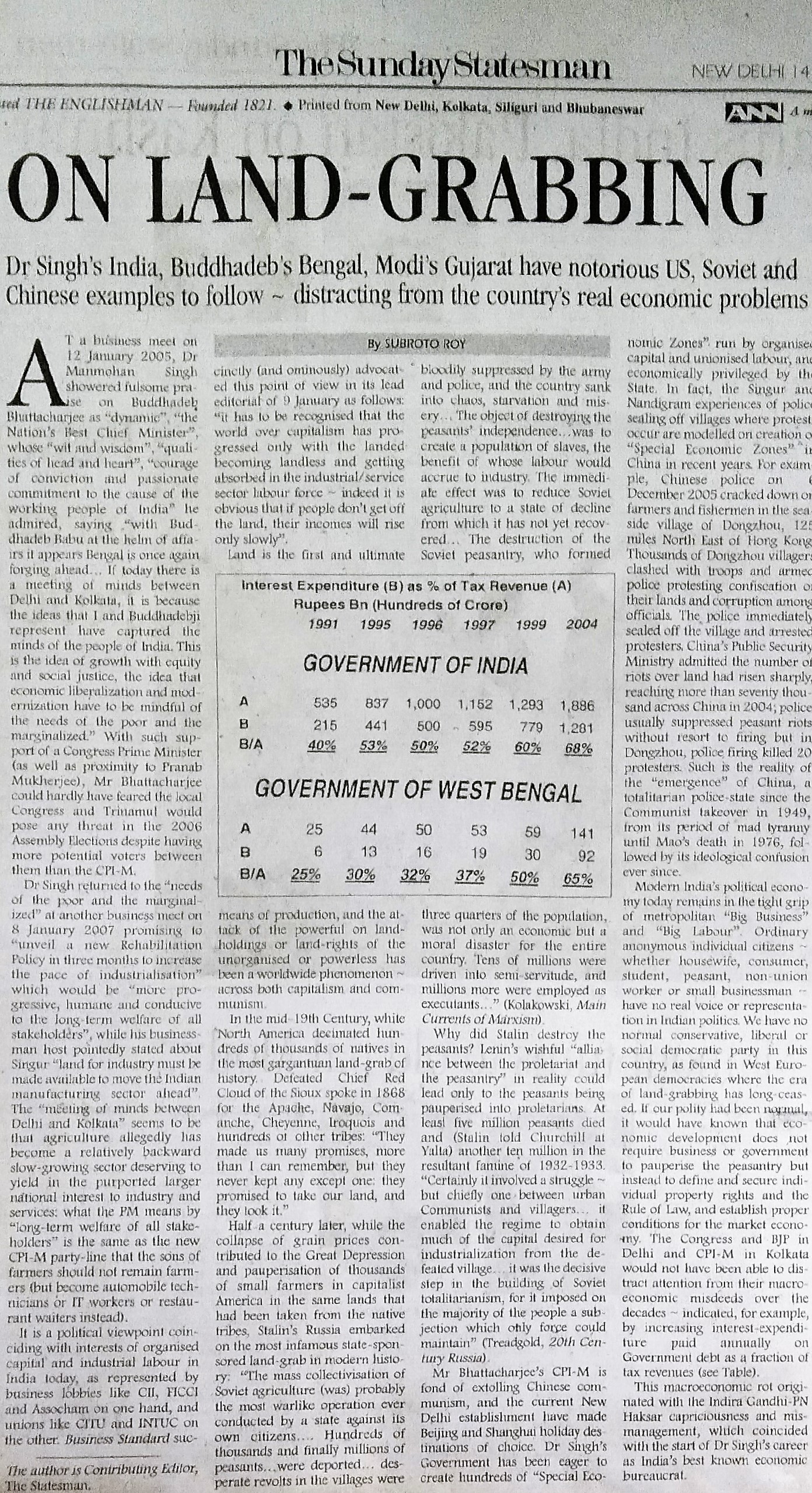
AT a business meet on 12 January 2005, Dr Manmohan Singh showered fulsome praise on Buddhadeb Bhattacharjee as “dynamic”, “the Nation’s Best Chief Minister”, whose “wit and wisdom”, “qualities of head and heart”, “courage of conviction and passionate commitment to the cause of the working people of India” he admired, saying “with Buddhadeb Babu at the helm of affairs it appears Bengal is once again forging ahead… If today there is a meeting of minds between Delhi and Kolkata, it is because the ideas that I and Buddhadebji represent have captured the minds of the people of India. This is the idea of growth with equity and social justice, the idea that economic liberalization and modernization have to be mindful of the needs of the poor and the marginalized.”
With such support of a Congress Prime Minister (as well as proximity to Pranab Mukherjee), Mr Bhattacharjee could hardly have feared the local Congress and Trinamul would pose any threat in the 2006 Assembly Elections despite having more potential voters between them than the CPI-M.
Dr Singh returned to the “needs of the poor and the marginalized” at another business meet on 8 January 2007 promising to “unveil a new Rehabilitation Policy in three months to increase the pace of industrialisation” which would be “more progressive, humane and conducive to the long-term welfare of all stakeholders”, while his businessman host pointedly stated about Singur “land for industry must be made available to move the Indian manufacturing sector ahead”.
The “meeting of minds between Delhi and Kolkata” seems to be that agriculture allegedly has become a relatively backward slow-growing sector deserving to yield in the purported larger national interest to industry and services: what the PM means by “long-term welfare of all stakeholders” is the same as the new CPI-M party-line that the sons of farmers should not remain farmers (but become automobile technicians or IT workers or restaurant waiters instead).
It is a political viewpoint coinciding with interests of organised capital and industrial labour in India today, as represented by business lobbies like CII, FICCI and Assocham on one hand, and unions like CITU and INTUC on the other. Business Standard succinctly (and ominously) advocated this point of view in its lead editorial of 9 January as follows: “it has to be recognised that the world over capitalism has progressed only with the landed becoming landless and getting absorbed in the industrial/service sector labour force ~ indeed it is obvious that if people don’t get off the land, their incomes will rise only slowly”.
Land is the first and ultimate means of production, and the attack of the powerful on land-holdings or land-rights of the unorganised or powerless has been a worldwide phenomenon ~ across both capitalism and communism.
In the mid-19th Century, white North America decimated hundreds of thousands of natives in the most gargantuan land-grab of history. Defeated, Chief Red Cloud of the Sioux spoke in 1868 for the Apache, Navajo, Comanche, Cheyenne, Iroquois and hundreds of other tribes: “They made us many promises, more than I can remember, but they never kept any except one: they promised to take our land, and they took it.”
Half a century later, while the collapse of grain prices contributed to the Great Depression and pauperisation of thousands of small farmers in capitalist America in the same lands that had been taken from the native tribes, Stalin’s Russia embarked on the most infamous state-sponsored land-grab in modern history: “The mass collectivisation of Soviet agriculture (was) probably the most warlike operation ever conducted by a state against its own citizens…. Hundreds of thousands and finally millions of peasants… were deported… desperate revolts in the villages were bloodily suppressed by the army and police, and the country sank into chaos, starvation and misery… The object of destroying the peasants’ independence…was to create a population of slaves, the benefit of whose labour would accrue to industry. The immediate effect was to reduce Soviet agriculture to a state of decline from which it has not yet recovered… The destruction of the Soviet peasantry, who formed three quarters of the population, was not only an economic but a moral disaster for the entire country. Tens of millions were driven into semi-servitude, and millions more were employed as executants…” (Kolakowski, Main Currents of Marxism).
Why did Stalin destroy the peasants? Lenin’s wishful “alliance between the proletariat and the peasantry” in reality could lead only to the peasants being pauperised into proletarians. At least five million peasants died and (Stalin told Churchill at Yalta) another ten million in the resultant famine of 1932-1933. “Certainly it involved a struggle ~ but chiefly one between urban Communists and villagers… it enabled the regime to obtain much of the capital desired for industrialization from the defeated village… it was the decisive step in the building of Soviet totalitarianism, for it imposed on the majority of the people a subjection which only force could maintain” (Treadgold, 20th Century Russia).
Mr Bhattacharjee’s CPI-M is fond of extolling Chinese communism, and the current New Delhi establishment have made Beijing and Shanghai holiday destinations of choice. Dr Singh’s Government has been eager to create hundreds of “Special Economic Zones” run by organised capital and unionised labour, and economically privileged by the State. In fact, the Singur and Nandigram experiences of police sealing off villages where protests occur are modelled on creation of “Special Economic Zones” in China in recent years.
For example, Chinese police on 6 December 2005 cracked down on farmers and fishermen in the seaside village of Dongzhou, 125 miles North East of Hong Kong. Thousands of Dongzhou villagers clashed with troops and armed police protesting confiscation of their lands and corruption among officials. The police immediately sealed off the village and arrested protesters. China’s Public Security Ministry admitted the number of riots over land had risen sharply, reaching more than seventy thousand across China in 2004; police usually suppressed peasant riots without resort to firing but in Dongzhou, police firing killed 20 protesters. Such is the reality of the “emergence” of China, a totalitarian police-state since the Communist takeover in 1949, from its period of mad tyranny until Mao’s death in 1976, followed by its ideological confusion ever since.
Modern India’s political economy today remains in the tight grip of metropolitan “Big Business” and “Big Labour”. Ordinary anonymous individual citizens ~ whether housewife, consumer, student, peasant, non-union worker or small businessman ~ have no real voice or representation in Indian politics. We have no normal conservative, liberal or social democratic party in this country, as found in West European democracies where the era of land-grabbing has long-ceased. If our polity had been normal, it would have known that economic development does not require business or government to pauperise the peasantry but instead to define and secure individual property rights and the Rule of Law, and establish proper conditions for the market economy. The Congress and BJP in Delhi and CPI-M in Kolkata would not have been able to distract attention from their macroeconomic misdeeds over the decades ~ indicated, for example, by increasing interest-expenditure paid annually on Government debt as a fraction of tax revenues (see Table). This macroeconomic rot originated with the Indira Gandhi-PN Haksar capriciousness and mismanagement, which coincided with the start of Dr Singh’s career as India’s best known economic bureaucrat.
Land, Liberty & Value
December 31, 2006 — drsubrotoroyLAND, LIBERTY & VALUE
Government must act in good faith treating all citizens equally ~ not favouring organised business lobbies and organised labour over an unorganised peasantry
By SUBROTO ROY
First published in The Sunday Statesman Editorial Page Special Article, December 31 2006
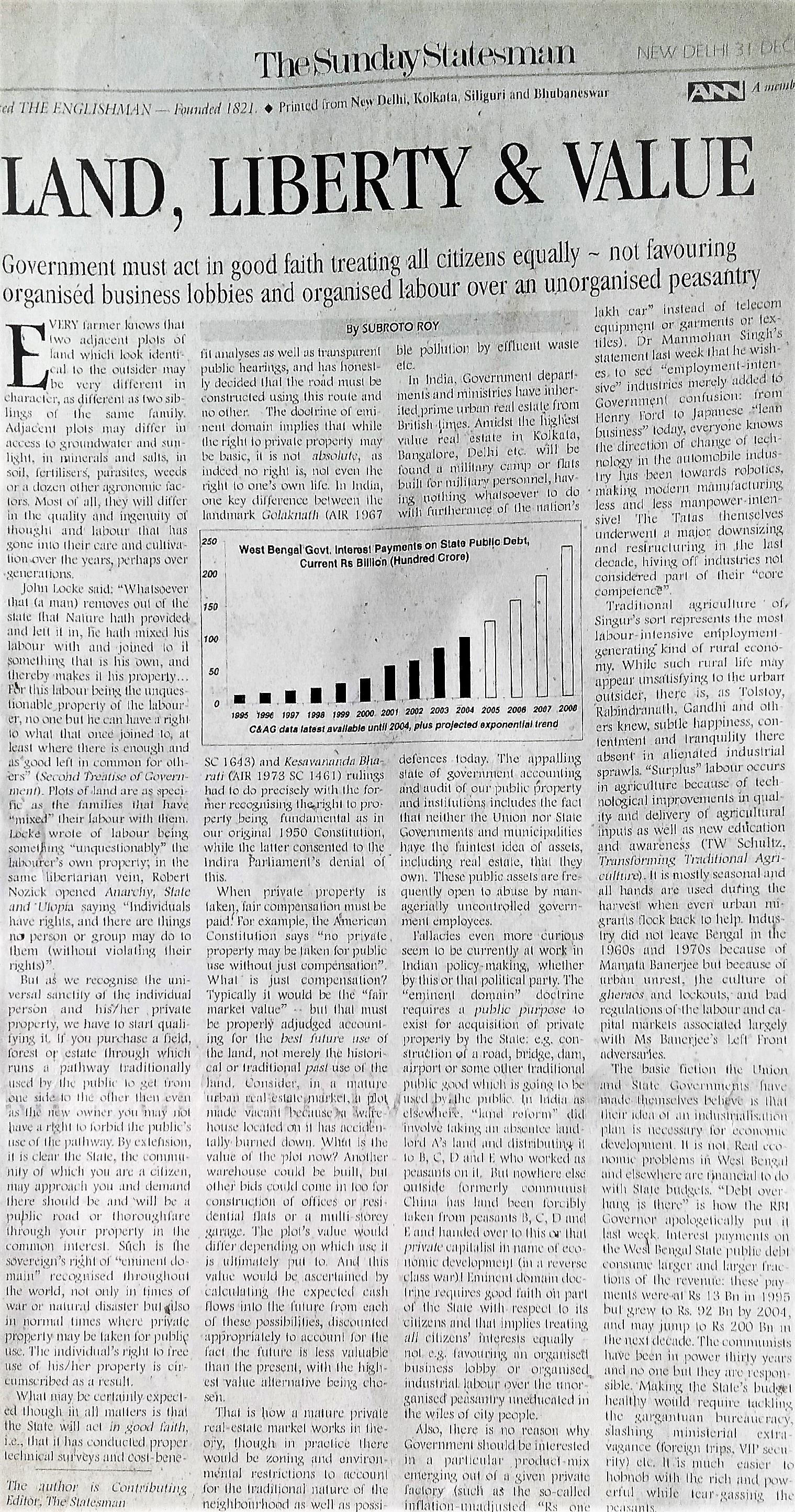
EVERY farmer knows that two adjacent plots of land which look identical to the outsider may be very different in character, as different as two siblings of the same family. Adjacent plots may differ in access to groundwater and sunlight, in minerals and salts, in soil, fertilisers, parasites, weeds or a dozen other agronomic factors. Most of all, they will differ in the quality and ingenuity of thought and labour that has gone into their care and cultivation over the years, perhaps over generations.
John Locke said: “Whatsoever that (a man) removes out of the state that Nature hath provided and left it in, he hath mixed his labour with and joined to it something that is his own, and thereby makes it his property… For this labour being the unquestionable property of the labourer, no one but he can have a right to what that once joined to, at least where there is enough and as good left in common for others” (Second Treatise of Government). Plots of land are as specific as the families that have “mixed” their labour with them. Locke wrote of labour being something “unquestionably” the labourer’s own property; in the same libertarian vein, Robert Nozick opened Anarchy, State and Utopia saying “Individuals have rights, and there are things no person or group may do to them (without violating their rights)”.
But as we recognise the universal sanctity of the individual person and his/her private property, we have to start qualifying it. If you purchase a field, forest or estate through which runs a pathway traditionally used by the public to get from one side to the other then even as the new owner you may not have a right to forbid the public’s use of the pathway. By extension, it is clear the State, the community of which you are a citizen, may approach you and demand there should be and will be a public road or thoroughfare through your property in the common interest. Such is the sovereign’s right of “eminent domain” recognised throughout the world, not only in times of war or natural disaster but also in normal times where private property may be taken for public use. The individual’s right to free use of his/her property is circumscribed as a result.
What may be certainly expected though in all matters is that the State will act in good faith, i.e., that it has conducted proper technical surveys and cost-benefit analyses as well as transparent public hearings, and has honestly decided that the road must be constructed using this route and no other. The doctrine of eminent domain implies that while the right to private property may be basic, it is not absolute, as indeed no right is, not even the right to one’s own life. In India, one key difference between the landmark Golaknath (AIR 1967 SC 1643) and Kesavananda Bharati (AIR 1973 SC 1461) rulings had to do precisely with the former recognising the right to property being fundamental as in our original 1950 Constitution, while the latter consented to the Indira Parliament’s denial of this.
When private property is taken, fair compensation must be paid. For example, the American Constitution says “no private property may be taken for public use without just compensation”. What is just compensation? Typically it would be the “fair market value” — but that must be properly adjudged accounting for the best future use of the land, not merely the historical or traditional past use of the land.
Consider, in a mature urban real-estate market, a plot made vacant because a warehouse located on it has accidentally burned down. What is the value of the plot now? Another warehouse could be built, but other bids could come in too for construction of offices or residential flats or a multi-storey garage. The plot’s value would differ depending on which use it is ultimately put to. And this value would be ascertained by calculating the expected cash flows into the future from each of these possibilities, discounted appropriately to account for the fact the future is less valuable than the present, with the highest value alternative being chosen. That is how a mature private real-estate market works in theory, though in practice there would be zoning and environmental restrictions to account for the traditional nature of the neighbourhood as well as possible pollution by effluent waste etc.
In India, Government departments and ministries have inherited prime urban real estate from British times. Amidst the highest value real estate in Kolkata, Bangalore, Delhi etc. will be found a military camp or flats built for military personnel, having nothing whatsoever to do with furtherance of the nation’s defences today. The appalling state of government accounting and audit of our public property and institutions includes the fact that neither the Union nor State Governments and municipalities have the faintest idea of assets, including real estate, that they own. These public assets are frequently open to abuse by managerially uncontrolled government employees.
Fallacies even more curious seem to be currently at work in Indian policy-making, whether by this or that political party. The “eminent domain” doctrine requires a public purpose to exist for acquisition of private property by the State: e.g. construction of a road, bridge, dam, airport or some other traditional public good which is going to be used by the public. In India as elsewhere, “land reform” did involve taking an absentee landlord A’s land and distributing it to B, C, D and E who worked as peasants on it. But nowhere else outside formerly communist China has land been forcibly taken from peasants B, C, D and E and handed over to this or that private capitalist in name of economic development (in a reverse class war)!
Eminent domain doctrine requires good faith on part of the State with respect to its citizens and that implies treating all citizens’ interests equally – not e.g. favouring an organised business lobby or organised industrial labour over the unorganised peasantry uneducated in the wiles of city people.
Also, there is no reason why Government should be interested in a particular product-mix emerging out of a given private factory (such as the so-called inflation-unadjusted “Rs one lakh car” instead of telecom equipment or garments or textiles). Dr Manmohan Singh’s statement last week that he wishes to see “employment-intensive” industries merely added to Government confusion: from Henry Ford to Japanese “lean business” today, everyone knows the direction of change of technology in the automobile industry has been towards robotics, making modern manufacturing less and less manpower-intensive! The Tatas themselves underwent a major downsizing and restructuring in the last decade, hiving off industries not considered part of their “core competence”.
Traditional agriculture of Singur’s sort represents the most labour-intensive employment-generating kind of rural economy. While such rural life may appear unsatisfying to the urban outsider, there is, as Tolstoy, Rabindranath, Gandhi and others knew, subtle happiness, contentment and tranquility there absent in alienated industrial sprawls. “Surplus” labour occurs in agriculture because of technological improvements in quality and delivery of agricultural inputs as well as new education and awareness (Theodore W. Schultz,Transforming Traditional Agriculture). It is mostly seasonal and all hands are used during the harvest when even urban migrants flock back to help. Industry did not leave Bengal in the 1960s and 1970s because of Mamata Banerjee but because of urban unrest, the culture of gheraos and lockouts, and bad regulations of the labour and capital markets associated largely with Ms Banerjee’s Left Front adversaries.
The basic fiction the Union and State Governments have made themselves believe is that their idea of an industrialisation plan is necessary for economic development. It is not. Real economic problems in West Bengal and elsewhere are financial to do with State budgets. “Debt overhang is there” is how the RBI Governor apologetically put it last week. Interest payments on the West Bengal State public debt consume larger and larger fractions of the revenue: these payments were at Rs 13 Bn in 1995 but grew to Rs. 92 Bn by 2004, and may jump to Rs 200 Bn in the next decade. The communists have been in power thirty years and no one but they are responsible. Making the State’s budget healthy would require tackling the gargantuan bureaucracy, slashing ministerial extravagance (foreign trips, VIP security) etc. It is much easier to hobnob with the rich and powerful while tear-gassing the peasants.
Towards an Energy Policy
April 2, 2006 — drsubrotoroyNote: This article may have initiated the public debate on the economics of the Indo-US nuclear deal. It was published as a Special Article on the Editorial Page of The Sunday Statesman of April 2 2006 but it failed to be uploaded at the website http://www.thestatesman.net because there had been a fire on March 31 2006. The politicians who led the parliamentary debate in 2006 subsequently made reference to it.
See also republished elsewhere here e.g. “India’s Energy Interests”, “India and Energy Security”, “Need for Clarity”/”From Confusion to Clarity”, “Against Quackery”, “Jimmy Carter and the Indo-US Nuclear Deal””, NuksaanFaida Analysis”.
“Towards an Energy Policy”
by Subroto Roy
First published in
The Sunday Statesman, Editorial Page Special Article 2 April 2006
When was the last time we heard a thorough, well informed debate in Parliament about India’s long-term energy needs and policy-alternatives? The answer is never. Just as Pakistan tends to be run by Islamabad’s generals, we tend to be run by New Delhi’s bureaucrats; both are a legacy of the Raj which was run by small numbers of pompous civil servants and soldiers. Bureaucrats keep as much decision-making information as they can to themselves, give it to Parliament only under duress and then too in garbled opaque form, and share it voluntarily with the public never at all. A bureaucrat of conscience who shares vital information transparently becomes a “whistleblower”, and may risk his/her life and career because assorted mafias invariably surround all government contracting, and, like vampire bats, cannot stand the light of day shed upon them.
The problem with the Manmohan/Montek deal-making with the USA on behalf of India’s people has less to do with rational assessments not having been made of the relative costs and benefits of e.g. nuclear/fossil fuel/renewable energy, as it has to do with the fact it reflects the same lack of transparency (and is accompanied by the same politically correct propaganda) as has existed in other policy-making – like the $12 billion worth of commercial aircraft from Boeing and Airbus bought for our bankrupt nationalized airlines, or spending untold billions of borrowed dollars on new weapons from France, Russia, Britain or whomever to fight unknown enemies in unimagined wars, or throwing newly printed paper-money at every government project that any fool or knave cares to mention.
To be fair, the UPA/Communist dispensation of the public’s largesse is no worse than that of the NDA/RSS. Both are part of New Delhi’s own “Inside-the-Beltway” syndrome, and turn up at the same celebrity wedding-receptions and iftehar parties. Neither minds too much when the other is in power so long as they can keep their government accommodation. Our fundamental political problem may be the absence of any serious party of Left or of Right which is secular, scientific, liberal, nationalist, clean, law-abiding, and fiscally prudent.
Since no national debate on energy-policy has been offered by New Delhi, ordinary citizens will have to create such a debate for themselves. What follows constitutes a few of the barest facts needed to start such an analysis of India’s alternative energy scenarios and their respective costs.
Hydroelectric power does not involve burning any fuels. Instead, the gravitational force of the movement of water from the mountains to the oceans is harnessed to generate electricity. But hydroelectric projects (like the Narmada Dam) can displace people, who must be then compensated and resettled. Burning of organic “fossil fuels” like coal, gas and oil, causes atmospheric oxygen to turn into carbon dioxide, which may affect climate in unknown ways. In 2004, the International Energy Agency’s estimated the new energy capacity worldwide required by rising economic growth in the year 2020 will derive 1400 GW from burning coal (half of it in China and India), 470 GW from burning oil, 430GW from hydro, and 400 GW from renewable sources (like solar or wind power). On the Agency’s assumptions, gas prices will remain low, making construction of new nuclear plants for electricity uneconomical. By 2030, new energy expected to be required worldwide is 4700GW, of which only 150GW is expected from new nuclear plants — which will be replacing existing nuclear plants due to be retired. (Such is the scenario before any new nuclear plants were going to be exported by e.g. USA to India).
Now the fission of an atom of uranium produces perhaps 10 million times the energy produced by combustion of an atom of carbon from coal. Gas and fossil fuels may be cheap and in plentiful supply worldwide for generations to come but the potential for cheap energy from nuclear sources seems practically infinite. Nuclear power can arise from fission of radioactive uranium, plutonium or thorium. India has perhaps 8 million tonnes of monazite deposits along the seacoast of which half may be mined, to yield 225,000 tonnes of thorium metal; we have one innovatively designed thorium reactor under construction. But almost all nuclear energy worldwide today arises from uranium, and there are practically unlimited reserves of that. There is so much uranium in sea water that mankind’s total electricity needs can be satisfied for 7 million years. There is more energy in the uranium impurity present in coal than can arise from actually burning the coal. There is plenty of uranium in granite. None of these sources will become profitable for centuries because there is so much cheap uranium possible to be extracted from conventional ores. In 2001, uranium cost about US$20 per kg or so, translating to US$0.0004 per kwh of electricity. The known reserves of uranium that can be profitably sold at $120 per kg are enough for at least a hundred years. Design improvements in reactors will also improve productivity; e.g. “fast breeder” reactors “breed” more fissile material than they use, and may get 100 times as much energy from a kilogram of uranium as existing reactors do. India has about 95,000 tonnes of uranium metal which may be mined to yield about 61,000 tonnes net for power generation.
Natural uranium is 99.3 percent of the U-238 isotope and 0.7 percent of the radioactive U-235 isotope. Nuclear power requires “enriched uranium” or “yellow cake” in which U-235 has been increased from 0.7 percent to 4 to 5 percent, and that “separation” process is expensive. (Nuclear bombs require highly enriched uranium with more than 90% of U-235). Yellow cake is broken into small pieces, put in metal rods placed in bundles, which are then bombarded by neutrons causing fission. In nuclear bombs, the fission occurs in a small space, and the blast that results kills all life for miles around it by sucking up all the atmospheric oxygen, besides causing firestorms, shock waves and radioactivity. In a civilian reactor, the energy released turns water into steam, which moves turbines powering the generation of electricity. However, while there is no carbon dioxide “waste” as in burning fossil fuels, the “spent” rods of nuclear fuel and other products constitute grave radioactive waste, which is hard if not impossible to dispose of. Many countries like the USA just bury their nuclear waste in remote thinly populated desert areas.
Rational choice between energy sources depends on costs determined by history and geography. France has 59 of the 441 or so civilian nuclear reactors in the world, and generates 78% of its electricity from them, 22% from hydroelectricity. Japan has 54 reactors and generates 34% of its electricity from them. The USA has 104 reactors but generates only 20% of its electricity from them, principally because it has vast alternative sources of energy. In India, installed power generating capacity as of 2003 was 107,533.3MW, of which 71% was from burning fossil fuels. Hydroelectric potential is 150,000MWe. In 2003, total installed hydro capacity with utilities was 26,910MWe (about 18% of the potential). More than 70% of India’s hydroelectric potential is in the North and NorthEast regions put together.
India’s 14 nuclear reactors produce less than 4% of the total electricity being consumed in the country. Even if all other sources of electricity remained constant, and our civilian nuclear capacity alone was made to grow by 100% under the Manmohan-Montek deal with the USA, that would mean less than 8% of total Indian electricity produced. So the first question India’s citizens must ask is why such a fuss has been created about the Manmohan-Montek deal with America. Clearly, the Government of India must come wholly clean with all the facts and analysis it has available on the whole problem of India’s energy future in all its complexity and detail. If and when it does so, we may simply find that the fault lies not in the stars but in ourselves. Whether the US-India nuclear deal stands or falls, it will have scant effect in satisfying the country’s energy needs.
Logic of Democracy (2006)
March 30, 2006 — drsubrotoroyLOGIC OF DEMOCRACY
by
SUBROTO ROY
First published in The Statesman,
Editorial Page Special Article, March 30 2006
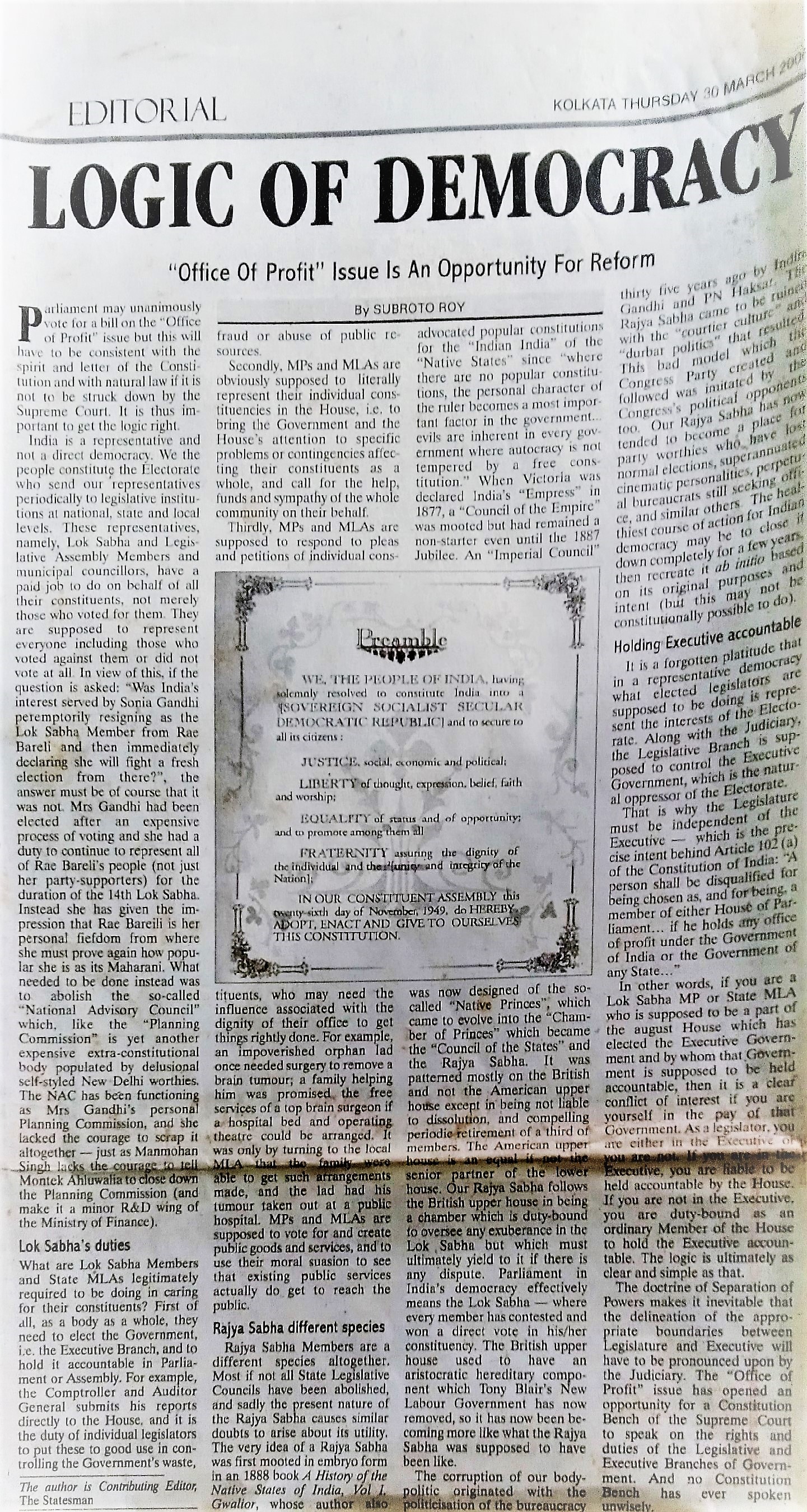
Parliament may unanimously vote for a bill on the “Office of Profit” issue but this will have to be consistent with the spirit and letter of the Constitution and with natural law if it is not to be struck down by the Supreme Court. It is thus important to get the logic right.
India is a representative and not a direct democracy. We the people constitute the Electorate who send our representatives periodically to legislative institutions at national, state and local levels. These representatives, namely, Lok Sabha and Legislative Assembly Members and municipal councilors, have a paid job to do on behalf of all their constituents, not merely those who voted for them. They are supposed to represent everyone including those who voted against them or did not vote at all.
In view of this, if the question is asked: “Was India’s interest served by Sonia Gandhi peremptorily resigning as the Lok Sabha Member from Rae Bareli and then immediately declaring she will fight a fresh election from there?”, the answer must be of course that it was not. Mrs Gandhi had been elected after an expensive process of voting and she had a duty to continue to represent all of Rae Bareli’s people (not just her party-supporters) for the duration of the 14th Lok Sabha. Instead she has given the impression that Rae Bareili is her personal fiefdom from where she must prove again how popular she is as its Maharani.
What needed to be done instead was to abolish the so-called “National Advisory Council” which, like the “Planning Commission” is yet another expensive extra-constitutional body populated by delusional self-styled New Delhi worthies. The NAC has been functioning as Mrs Gandhi’s personal Planning Commission, and she lacked the courage to scrap it altogether — just as Manmohan Singh lacks the courage to tell Montek Ahluwalia to close down the Planning Commission (and make it a minor R&D wing of the Ministry of Finance).
Lok Sabha’s duties
What are Lok Sabha Members and State MLAs legitimately required to be doing in caring for their constituents? First of all, as a body as a whole, they need to elect the Government, i.e. the Executive Branch, and to hold it accountable in Parliament or Assembly. For example, the Comptroller and Auditor General submits his reports directly to the House, and it is the duty of individual legislators to put these to good use in controlling the Government’s waste, fraud or abuse of public resources.
Secondly, MPs and MLAs are obviously supposed to literally represent their individual constituencies in the House, i.e. to bring the Government and the House’s attention to specific problems or contingencies affecting their constituents as a whole, and call for the help, funds and sympathy of the whole community on their behalf.
Thirdly, MPs and MLAs are supposed to respond to pleas and petitions of individual constituents, who may need the influence associated with the dignity of their office to get things rightly done. For example, an impoverished orphan lad once needed surgery to remove a brain tumour; a family helping him was promised the free services of a top brain surgeon if a hospital bed and operating theatre could be arranged. It was only by turning to the local MLA that the family were able to get such arrangements made, and the lad had his tumour taken out at a public hospital. MPs and MLAs are supposed to vote for and create public goods and services, and to use their moral suasion to see that existing public services actually do get to reach the public.
Rajya Sabha different species
Rajya Sabha Members are a different species altogether. Most if not all State Legislative Councils have been abolished, and sadly the present nature of the Rajya Sabha causes similar doubts to arise about its utility. The very idea of a Rajya Sabha was first mooted in embryo form in an 1888 book A History of the Native States of India, Vol I. Gwalior, whose author also advocated popular constitutions for the “Indian India” of the “Native States” since “where there are no popular constitutions, the personal character of the ruler becomes a most important factor in the government… evils are inherent in every government where autocracy is not tempered by a free constitution”.
When Victoria was declared India’s “Empress” in 1877, a “Council of the Empire” was mooted but had remained a non-starter even until the 1887 Jubilee. An “Imperial Council” was now designed of the so-called “Native Princes”, which came to evolve into the “Chamber of Princes” which became the “Council of the States” and the Rajya Sabha.
It was patterned mostly on the British and not the American upper house except in being not liable to dissolution, and compelling periodic retirement of a third of members. The American upper house is an equal if not the senior partner of the lower house. Our Rajya Sabha follows the British upper house in being a chamber which is duty-bound to oversee any exuberance in the Lok Sabha but which must ultimately yield to it if there is any dispute.
Parliament in India’s democracy effectively means the Lok Sabha — where every member has contested and won a direct vote in his/her constituency. The British upper house used to have an aristocratic hereditary component which Tony Blair’s New Labour Government has now removed, so it has now been becoming more like what the Rajya Sabha was supposed to have been like.
The corruption of our body-politic originated with the politicisation of the bureaucracy thirty five years ago by Indira Gandhi and PN Haksar. The Rajya Sabha came to be ruined with the “courtier culture” and “durbar politics” that resulted. This bad model which the Congress Party created and followed was imitated by the Congress’s political opponents too. Our Rajya Sabha has now tended to become a place for party worthies who have lost normal elections, superannuated cinematic personalities, perpetual bureaucrats still seeking office, and similar others. The healthiest course of action for Indian democracy may be to close it down completely for a few years, then recreate it ab initio based on its original purposes and intent (but this may not be constitutionally possible to do).
Holding Executive accountable
It is a forgotten platitude that in a representative democracy what elected legislators are supposed to be doing is represent the interests of the Electorate. Along with the Judiciary, the Legislative Branch is supposed to control the Executive Government, which is the natural oppressor of the Electorate. That is why the Legislature must be independent of the Executive — which is the precise intent behind Article 102 (a) of the Constitution of India: “A person shall be disqualified for being chosen as, and for being, a member of either House of Parliament… if he holds any office of profit under the Government of India or the Government of any State…”
In other words, if you are a Lok Sabha MP or State MLA who is supposed to be a part of the august House which has elected the Executive Government and by whom that Government is supposed to be held accountable, then it is a clear conflict of interest if you are yourself in the pay of that Government. As a legislator, you are either in the Executive or you are not. If you are in the Executive, you are liable to be held accountable by the House. If you are not in the Executive, you are duty-bound as an ordinary Member of the House to hold the Executive accountable. The logic is ultimately as clear and simple as that.
It is inevitable that the delineation of the appropriate boundaries between Legislature and Executive will have to be pronounced upon by the Judiciary. The “Office of Profit” issue has opened an opportunity for a Constitution Bench of the Supreme Court to speak on the rights and duties of the Legislative and Executive Branches of Government. And no Constitution Bench has ever spoken unwisely.
Separation of Powers: India, the USA, Pakistan
February 13, 2006 — drsubrotoroySEPARATION OF POWERS (2006)
Montesquieu’s Spirit of the Laws outlined a doctrine that applies to India, the USA and all constitutional democracies: there is no monopoly of political wisdom.
By SUBROTO ROY
First published in The Sunday Statesman, The Statesman Editorial Page,
Special Article Feb 12-13 2006
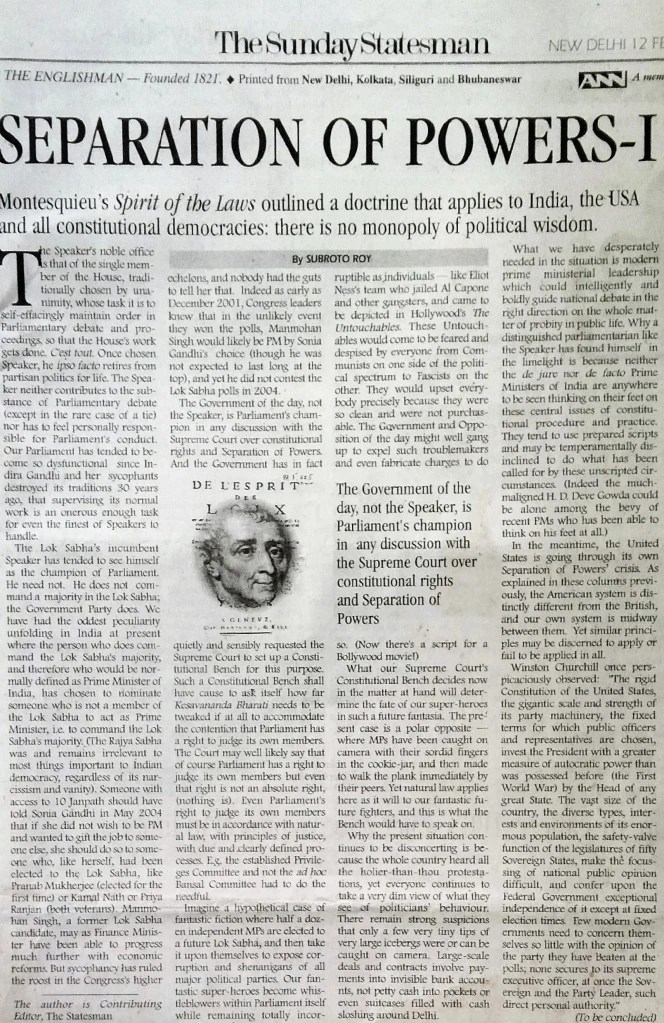

The Speaker’s noble office is that of the single member of the House, traditionally chosen by unanimity, whose task it is to self-effacingly maintain order in Parliamentary debate and proceedings, so that the House’s work gets done. C’est tout. Once chosen Speaker, he ipso facto retires from partisan politics for life. The Speaker neither contributes to the substance of Parliamentary debate (except in the rare case of a tie) nor has to feel personally responsible for Parliament’s conduct.
Our Parliament has tended to become so dysfunctional since Indira Gandhi and her sycophants destroyed its traditions 30 years ago, that supervising its normal work is an onerous enough task for even the finest of Speakers to handle.
The Lok Sabha’s incumbent Speaker has tended to see himself as the champion of Parliament. He need not. He does not command a majority in the Lok Sabha; the Government Party does. We have had the oddest peculiarity unfolding in India at present where the person who does command the Lok Sabha’s majority, and therefore who would be normally defined as Prime Minister of India, has chosen to nominate someone who is not a member of the Lok Sabha to act as Prime Minister, i.e. to command the Lok Sabha’s majority. (The Rajya Sabha was and remains irrelevant to most things important to Indian democracy, regardless of its narcissism and vanity). Someone with access to 10 Janpath should have told Sonia Gandhi in May 2004 that if she did not wish to be PM and wanted to gift the job to someone else, she should do so to someone who, like herself, had been elected to the Lok Sabha, like Pranab Mukherjee (elected for the first time) or Kamal Nath or Priya Ranjan (both veterans).
Manmohan Singh, a former Lok Sabha candidate, may as Finance Minister have been able to progress much further with economic reforms. But sycophancy has ruled the roost in the Congress’s higher echelons, and nobody had the guts to tell her that. Indeed as early as December 2001, Congress leaders knew that in the unlikely event they won the polls, Manmohan Singh would likely be PM by Sonia Gandhi’s choice (though he was not expected to last long at the top), and yet he did not contest the Lok Sabha polls in 2004.
The Government of the day, not the Speaker, is Parliament’s champion in any discussion with the Supreme Court over constitutional rights and Separation of Powers. And the Government has in fact quietly and sensibly requested the Supreme Court to set up a Constitutional Bench for this purpose. Such a Constitutional Bench shall have cause to ask itself how far Kesavananda Bharati needs to be tweaked if at all to accommodate the contention that Parliament has a right to judge its own members. The Court may well likely say that of course Parliament has a right to judge its own members but even that right is not an absolute right, (nothing is). Even Parliament’s right to judge its own members must be in accordance with natural law, with principles of justice, with due and clearly defined processes. E.g. the established Privileges Committee and not the ad hoc Bansal Committee had to do the needful.
Imagine a hypothetical case of fantastic fiction where half a dozen independent MPs are elected to a future Lok Sabha, and then take it upon themselves to expose corruption and shenanigans of all major political parties. Our fantastic super-heroes become whistleblowers within Parliament itself while remaining totally incorruptible as individuals — like Eliot Ness’s team who jailed Al Capone and other gangsters, and came to be depicted in Hollywood’s The Untouchables. These Untouchables would come to be feared and despised by everyone from Communists on one side of the political spectrum to Fascists on the other. They would upset everybody precisely because they were so clean and were not purchasable. The Government and Opposition of the day might wellgang up to expel such troublemakers and even fabricate charges to do so. (Now there’s a script for a Bollywood movie!)
What our Supreme Court’s Constitutional Bench decides now in the matter at hand will determine the fate of our super-heroes in such a future fantasia. The present case is a polar opposite — where MPs have been caught on camera with their sordid fingers in the cookie-jar, and then made to walk the plank immediately by their peers. Yet natural law applies here as it will to our fantastic future fighters, and this is what the Bench would have to speak on.
Why the present situation continues to be disconcerting is because the whole country heard all the holier-than-thou protestations, yet everyone continues to take a very dim view of what they see of politicians’ behaviour. There remain strong suspicions that only a few very tiny tips of very large icebergs were or can be caught on camera. Large-scale deals and contracts involve payments into invisible bank accounts, not petty cash into pockets or even suitcases filled with cash sloshing around Delhi.
What we have desperately needed in the situation is modern prime ministerial leadership which could intelligently and boldly guide national debate in the right direction on the whole matter of probity in public life. Why a distinguished parliamentarian like the Speaker has found himself in the limelight is because neither the de jure nor de facto Prime Ministers of India are anywhere to be seen thinking on their feet on these central issues of constitutional procedure and practice. They tend to use prepared scripts and may be temperamentally disinclined to do what has been called for by these unscripted circumstances. (Indeed the much-maligned H. D. Deve Gowda could be alone among the bevy of recent PMs who has been able to think on his feet at all.)
Collapse Before Executive Power
In the meantime, the United States is going through its own Separation of Powers’ crisis. As explained in these columns previously, the American system is distinctly different from the British, and our own system is midway between them. Yet similar principles may be discerned to apply or fail to be applied in all.
Winston Churchill once perspicaciously observed:
“The rigid Constitution of the United States, the gigantic scale and strength of its party machinery, the fixed terms for which public officers and representatives are chosen, invest the President with a greater measure of autocratic power than was possessed before (the First World War) by the Head of any great State. The vast size of the country, the diverse types, interests and environments of its enormous population, the safety-valve function of the legislatures of fifty Sovereign States, make the focussing of national public opinion difficult, and confer upon the Federal Government exceptional independence of it except at fixed election times. Few modern Governments need to concern themselves so little with the opinion of the party they have beaten at the polls; none secures to its supreme executive officer, at once the Sovereign and the Party Leader, such direct personal authority.”
America’s Legislative Branch has, on paper, strong powers of advice and consent to control errors, excesses or abuse of power by the Executive President. But (with rare and courageous exceptions like Sen. Robert C. Byrd of West Virginia) the Legislature cravenly collapsed before the father-son Bush presidencies in regard to the Middle East wars of recent years. America’s once-revered federal judiciary has also tended to lose its independence of mind with overt politicisation of judicial appointments in recent decades.
Bush the First went to war against Saddam Hussein (a former American ally against Islamic Iran) at least partly with an eye to winning re-election in 1992 (which he would have done as a result but for a random shock known as Ross Perot; Bill Clinton became the beneficiary). Bush the Second obsessively wished to follow up on the same, to the point of misjudging the real threat to America from Bin Laden and fabricating a false threat from an emasculated Saddam.
America’s Legislature palpably failed to control her Presidents. Now, late in the day, after all the horses have bolted, the Senate Judiciary Committee began tepid hearings on February 5 2006 into whether the President authorized laws to be broken with impunity in regard to wire-tapping some 5,000 citizens (doubtless mostly non-white and Muslim) without judicial warrants. Republican Senator Arlen Specter, the Committee’s Chairman, has said he believes the Foreign Intelligence Surveillance Act has been “flatly” violated, and “strained and unrealistic” justifications are now being offered. Bush’s men, from his Vice President and Attorney General to political intelligence operatives, have brazenly placed in the dustbin the traditional principle fiat justitia pereat mundus — let justice be done even if the world perishes — saying that the Sovereign can do just as he pleases to save the realm from external enemies as he might perceive and define them to be.
What this kind of collapse in current American practice reveals is a new aspect unknown at the time of Montesquieu’s Spirit of the Laws. In the modern world, Separation of Powers involves not merely constitutional institutions like Executive, Legislature and Judiciary but also the normal civil institutions of a free and open society, especially academic institutions and the press. In America, it has been not merely the Legislature and Judiciary which have tended to collapse before Executive Power in regard to the recent Middle East wars, but the media and academia as well.
“Embedded reporters” and Fox TV set the tone for America’s official thought processes about Iraq and the Muslim world — until it has become too late for America’s mainstream media or academics to recover their own credibility on the subject. On the other hand, unofficial public opinion has, in America’s best traditions, demonstrated using vast numbers of Internet websites and weblogs, a spirited Yankee Doodle individuality against the jingoism and war-mongering of the official polity.
Neither the press nor academia had collapsed the same way during America’s last major foreign wars in Vietnam and Cambodia forty years ago, and it may be fairly said that America’s self-knowledge was rather better then than it is now, except of course there were no Internet websites and weblogs.
Our Pakistani Cousins
Across the border from us, our Pakistani cousins are, from a political and constitutional point of view, cut from the same cloth as ourselves, namely the 1935 Government of India Act, and the Montague-Chelmsford and Morley-Minto reforms earlier. However, ever since Jinnah’s death, they have refused to admit this and instead embarked haplessly on what can only be called an injudicious path of trying to write a Constitution for a new Caliphate. The primary demand of the main scholars influencing this process was “That the sovereignty in Pakistan belongs to God Almighty alone and that the Government of Pakistan shall administer the country as His agent”. By such a view, in the words of Rashid Rida and Maulana Maududi, Islam becomes “the very antithesis of secular Western democracy. The philosophical foundation of Western democracy is the sovereignty of the people. Lawmaking is their prerogative and legislation must correspond to the mood and temper of their opinion… Islam… altogether repudiates the philosophy of popular sovereignty and rears its polity on the foundations of the sovereignty of God and the viceregency (Khilafat) of man.” (Rosenthal, Islam & the Modern National State, Cambridge 1965.) Pakistan’s few modern constitutionalists have been ever since battling impossibly to overcome the ontological error made here of assuming that any mundane government can be in communication with God Almighty. In the meantime, all normal branches of Pakistan’s polity, like the electorate, press, political parties, Legislature and Judiciary, have remained at best in ill-formed inchoate states of being — while the Pakistan Armed Forces stepped in with their own large economic and political interests and agendas to effectively take over the country and the society as a whole, on pretext of protecting Pakistan from India or of gaining J&K for it. Pakistan’s political problems have the ontological error at their root. Pakistan’s political parties, academics and press, have with rare exceptions remained timid in face of the militaristic State — directing their anger and frustration at an easier target instead, namely ourselves in India. The Pakistan Government’s way of silencing its few political, academic or press dissidents has been to send them into comfortable exile abroad.
Sheikh Abdullah Contrasted
Pakistan’s perpetual constitutional confusion deserves to be contrasted with the clarity of Sheikh Mohammad Abdullah’s thinking, e.g. his 5 November 1951 speech to the Constituent Assembly of J&K: “You are the sovereign authority in this State of Jammu & Kashmir; what you decide has the irrevocable force of law. The basic democratic principle of sovereignty of the nation, embodied ably in the American and French Constitutions, is once again given shape in our midst. I shall quote the famous words of Article 3 of the French Constitution of 1791:- ‘The source of all sovereignty resides fundamentally in the nation. Sovereignty is one and indivisible, inalienable and imprescriptable. It belongs to the nation.’ We should be clear about the responsibilities that this power invests us with. In front of us lie decisions of the highest national importance which we shall be called upon to take. Upon the correctness of our decisions depends not only the happiness of our land and people now, but the fate as well of generations to come.”
Contrasting the Pakistani views of constitution-making with those of Sheikh Abdullah may help to explain a great deal about where we are today on the delicate and profound subject of J&K. (See “Solving Kashmir”, The Statesman, December 1—3, 2005)
India’s current debate about Separation of Powers needs to keep at a distance the clear negative examples of our American friends, who have brought upon themselves in recent times a craven collapse of Legislature, Judiciary, press and academia to the Executive President (as Churchill had seemed to predict), as well as of our Pakistani cousins who have continued with general political and civil collapse for half a century. Because our universities are all owned by the State, India’s academics, from Communist to Fascist, have tended to be servile towards it. In respect of the press, the power of independent newspapers has been dwindling, while the new TV anchors have created their own models of obsequiousness and chummery towards New Delhi’s ruling cliques of the day. It thus becomes India’s Supreme Court which remains the ultimate guardian of our Constitution and the safest haven of our very fragile freedoms — besides of course our own minds and hearts.
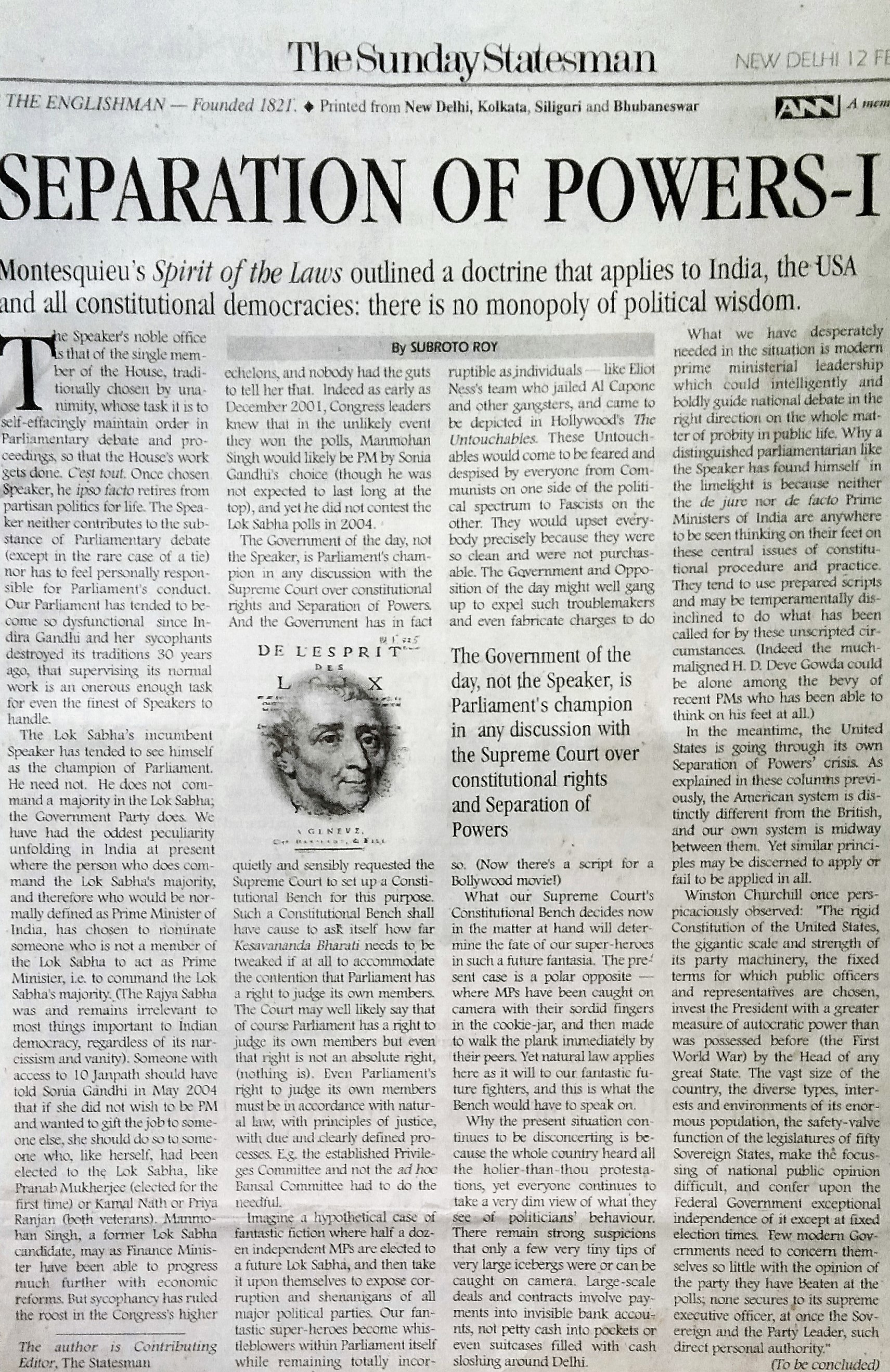

Unaccountable Delhi: India’s Separation of Powers’ Doctrine
January 13, 2006 — drsubrotoroyUNACCOUNTABLE DELHI
India’s Separation Of Powers’ Doctrine
First published in The Statesman Jan 13 2006 Editorial Page Special Article,
By Subroto Roy
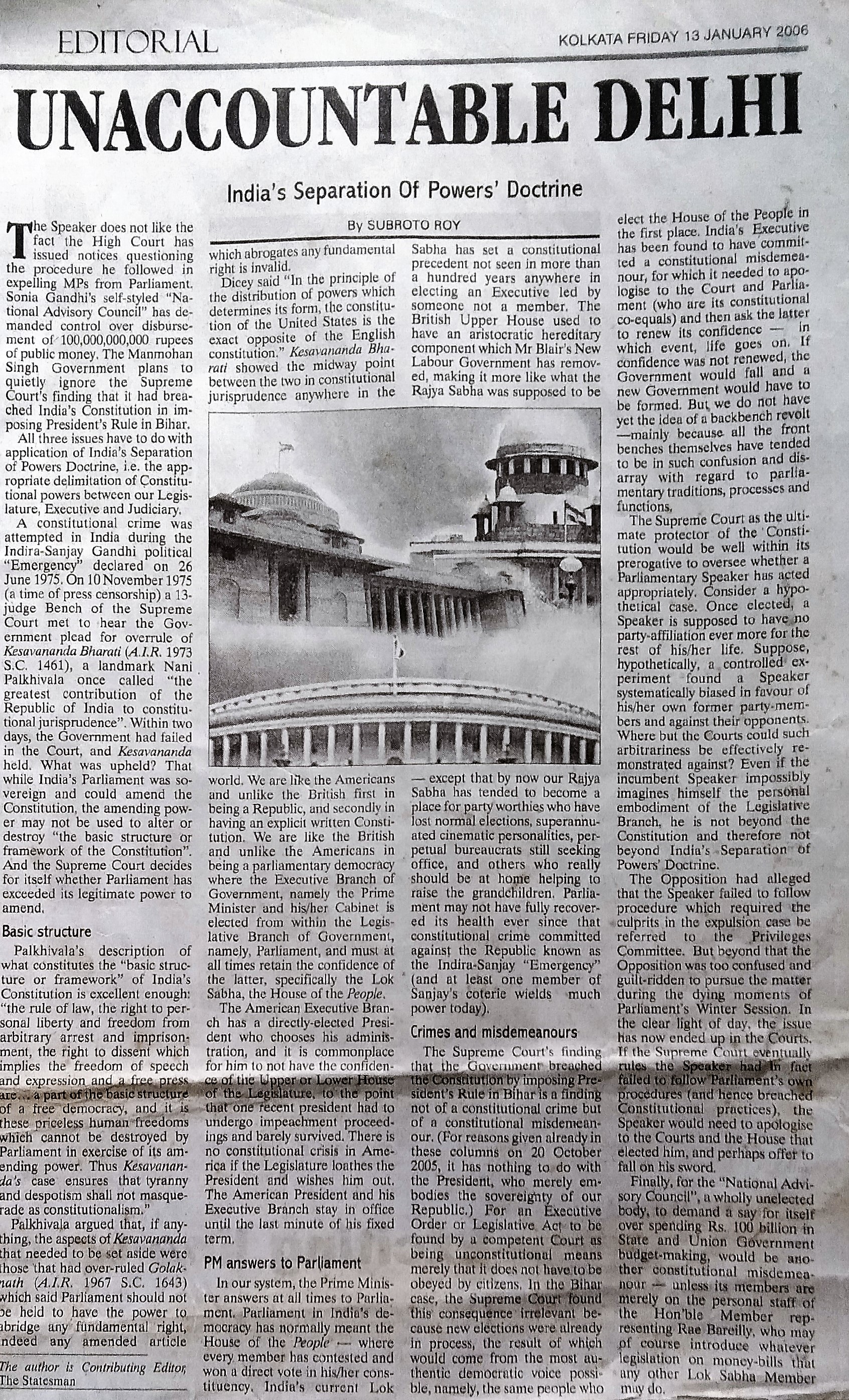
The Speaker does not like the fact the High Court has issued notices questioning the procedure he followed in expelling MPs from Parliament. Sonia Gandhi’s self-styled “National Advisory Council” has demanded control over disbursement of 100,000,000,000 rupees of public money. The Manmohan Singh Government plans to quietly ignore the Supreme Court’s finding that it had breached India’s Constitution in imposing President’s Rule in Bihar. All three issues have to do with application of India’s Separation of Powers Doctrine, i.e. the appropriate delimitation of Constitutional powers between our Legislature, Executive and Judiciary.
A constitutional crime was attempted in India during the Indira-Sanjay Gandhi political “Emergency” declared on 26 June 1975. On 10 November 1975 (a time of press censorship) a 13-judge Bench of the Supreme Court met to hear the Government plead for overrule of Kesavananda Bharati (A.I.R. 1973 S.C. 1461), a landmark Nani Palkhivala once called “the greatest contribution of the Republic of India to constitutional jurisprudence”. Within two days, the Government had failed in the Court, and Kesavananda held. What was upheld? That while India’s Parliament was sovereign and could amend the Constitution, the amending power may not be used to alter or destroy “the basic structure or framework of the Constitution”. And the Supreme Court decides for itself whether Parliament has exceeded its legitimate power to amend.
Basic structure
Palkhivala’s description of what constitutes the “basic structure or framework” of India’s Constitution is excellent enough: “the rule of law, the right to personal liberty and freedom from arbitrary arrest and imprisonment, the right to dissent which implies the freedom of speech and expression and a free press are… a part of the basic structure of a free democracy, and it is these priceless human freedoms which cannot be destroyed by Parliament in exercise of its amending power. Thus Kesavananda’s case ensures that tyranny and despotism shall not masquerade as constitutionalism.”
Palkhivala argued that, if anything, the aspects of Kesavananda that needed to be set aside were those that had over-ruled Golaknath (A.I.R. 1967 S.C. 1643) which said Parliament should not be held to have the power to abridge any fundamental right, indeed any amended article which abrogates any fundamental right is invalid.
Dicey said “In the principle of the distribution of powers which determines its form, the constitution of the United States is the exact opposite of the English constitution.” Kesavananda Bharati showed the midway point between the two in constitutional jurisprudence anywhere in the world. We are like the Americans and unlike the British first in being a Republic, and secondly in having an explicit written Constitution. We are like the British and unlike the Americans in being a parliamentary democracy where the Executive Branch of Government, namely the Prime Minister and his/her Cabinet is elected from within the Legislative Branch of Government, namely, Parliament, and must at all times retain the confidence of the latter, specifically the Lok Sabha, the House of the People.
The American Executive Branch has a directly-elected President who chooses his administration, and it is commonplace for him to not have the confidence of the Upper or Lower House of the Legislature, to the point that one recent president had to undergo impeachment proceedings and barely survived. There is no constitutional crisis in America if the Legislature loathes the President and wishes him out. The American President and his Executive Branch stay in office until the last minute of his fixed term.
PM answers to Parliament
In our system, the Prime Minister answers at all times to Parliament. Parliament in India’s democracy has normally meant the House of the People — where every member has contested and won a direct vote in his/her constituency. India’s current Lok Sabha has set a constitutional precedent not seen in more than a hundred years anywhere in electing an Executive led by someone not a member. The British Upper House used to have an aristocratic hereditary component which Mr Blair’s New Labour Government has removed, making it more like what the Rajya Sabha was supposed to be — except that by now our Rajya Sabha has tended to become a place for party worthies who have lost normal elections, superannuated cinematic personalities, perpetual bureaucrats still seeking office, and others who really should be at home helping to raise the grandchildren. Parliament may not have fully recovered its health ever since that constitutional crime committed against the Republic known as the Indira-Sanjay “Emergency” (and at least one member of Sanjay’s coterie wields much power today).
Crimes and misdemeanours
The Supreme Court’s finding that the Government breached the Constitution by imposing President’s Rule in Bihar is a finding not of a constitutional crime but of a constitutional misdemeanour. (For reasons given already in these columns on 20 October 2005, it has nothing to do with the President, who merely embodies the sovereignty of our Republic.) For an Executive Order or Legislative Act to be found by a competent Court as being unconstitutional means merely that it does not have to be obeyed by citizens. In the Bihar case, the Supreme Court found this consequence irrelevant because new elections were already in process, the result of which would come from the most authentic democratic voice possible, namely, the same people who elect the House of the People in the first place. India’s Executive has been found to have committed a constitutional misdemeanour, for which it needed to apologise to the Court and Parliament (who are its constitutional co-equals) and then ask the latter to renew its confidence — in which event, life goes on. If confidence was not renewed, the Government would fall and a new Government would have to be formed. But we do not have yet the idea of a backbench revolt —mainly because all the front benches themselves have tended to be in such confusion and disarray with regard to parliamentary traditions, processes and functions.
The Supreme Court as the ultimate protector of the Constitution would be well within its prerogative to oversee whether a Parliamentary Speaker has acted appropriately. Consider a hypothetical case. Once elected, a Speaker is supposed to have no party-affiliation ever more for the rest of his/her life. Suppose, hypothetically, a controlled experiment found a Speaker systematically biased in favour of his/her own former party-members and against their opponents. Where but the Courts could such arbitrariness be effectively remonstrated against? Even if the incumbent Speaker impossibly imagines himself the personal embodiment of the Legislative Branch, he is not beyond the Constitution and therefore not beyond India’s Separation of Powers’ Doctrine.
The Opposition had alleged that the Speaker failed to follow procedure which required the culprits in the expulsion case be referred to the Privileges Committee. But beyond that the Opposition was too confused and guilt-ridden to pursue the matter during the dying moments of Parliament’s Winter Session. In the clear light of day, the issue has now ended up in the Courts. If the Supreme Court eventually rules the Speaker had in fact failed to follow Parliament’s own procedures (and hence breached Constitutional practices), the Speaker would need to apologise to the Courts and the House that elected him, and perhaps offer to fall on his sword.
Finally, for the “National Advisory Council”, a wholly unelected body, to demand a say for itself over spending Rs. 100 billion in State and Union Government budget-making, would be another constitutional misdemeanour — unless its members are merely on the personal staff of the Hon’ble Member representing Rae Bareili, who may of course introduce whatever legislation on money-bills that any other Lok Sabha Member may do.
The Dream Team: A Critique (2006)
January 8, 2006 — drsubrotoroyThe Dream Team: A Critique
by Subroto Roy
First published in The Statesman and The Sunday Statesman, Editorial Page Special Article, January 6,7,8, 2006
(Author’s Note: Within a few weeks of this article appearing, the Dream Team’s leaders appointed the so-called Tarapore 2 committee to look into convertibility — which ended up recommending what I have since called the “false convertibility” the RBI is presently engaged in. This article may be most profitably read along with other work republished here: “Rajiv Gandhi and the Origins of India’s 1991 Economic Reform”, “Three Memoranda to Rajiv Gandhi”, “”Indian Money & Banking”, “Indian Money & Credit” , “India’s Macroeconomics”, “Fiscal Instability”, “Fallacious Finance”, “India’s Trade and Payments”, “Our Policy Process”, “Against Quackery”, “Indian Inflation”, etc)
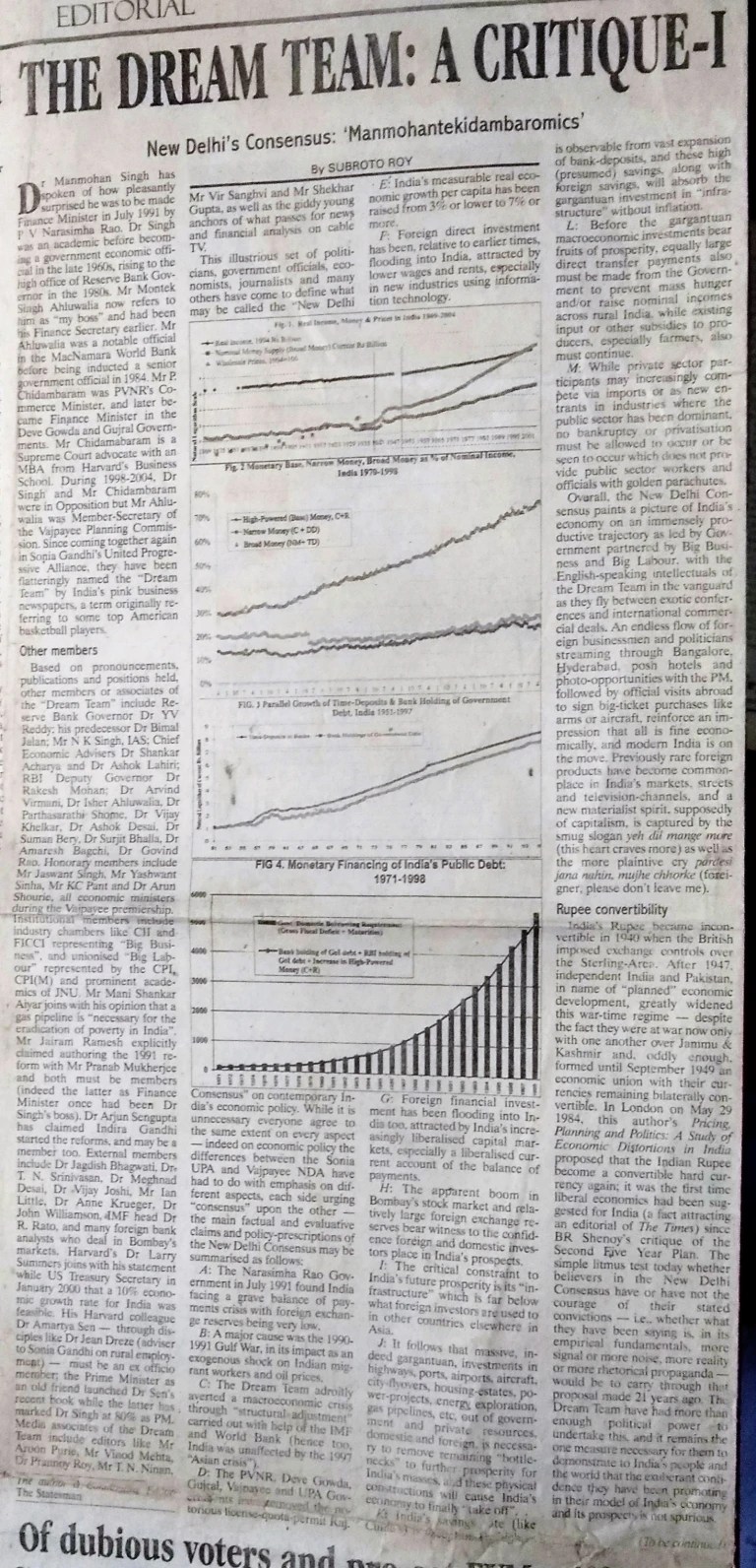

1. New Delhi’s Consensus: Manmohantekidambaromics
Dr Manmohan Singh has spoken of how pleasantly surprised he was to be made Finance Minister in July 1991 by PV Narasimha Rao. Dr Singh was an academic before becoming a government economic official in the late 1960s, rising to the high office of Reserve Bank Governor in the 1980s. Mr Montek Singh Ahluwalia now refers to him as “my boss” and had been his Finance Secretary earlier. Mr Ahluwalia was a notable official in the MacNamara World Bank before being inducted a senior government official in 1984. Mr P Chidambaram was PVNR’s Commerce Minister, and later became Finance Minister in the Deve Gowda and Gujral Governments. Mr Chidamabaram is a Supreme Court advocate with an MBA from Harvard’s Business School. During 1998-2004, Dr Singh and Mr Chidambaram were in Opposition but Mr Ahluwalia was Member-Secretary of the Vajpayee Planning Commission. Since coming together again in Sonia Gandhi’s United Progressive Alliance, they have been flatteringly named the “Dream Team” by India’s pink business newspapers, a term originally referring to some top American basketball players.
Based on pronouncements, publications and positions held, other members or associates of the “Dream Team” include Reserve Bank Governor Dr YV Reddy; his predecessor Dr Bimal Jalan; former PMO official Mr NK Singh, IAS; Chief Economic Advisers Dr Shankar Acharya and Dr Ashok Lahiri; RBI Deputy Governor Dr Rakesh Mohan; and others like Dr Arvind Virmani, Dr Isher Ahluwalia, Dr Parthasarathi Shome, Dr Vijay Khelkar, Dr Ashok Desai, Dr Suman Bery, Dr Surjit Bhalla, Dr Amaresh Bagchi, Dr Govind Rao. Honorary members include Mr Jaswant Singh, Mr Yashwant Sinha, Mr KC Pant and Dr Arun Shourie, all economic ministers during the Vajpayee premiership. Institutional members include industry chambers like CII and FICCI representing “Big Business”, and unionised “Big Labour” represented by the CPI, CPI(M) and prominent academics of JNU. Mr Mani Shankar Aiyar joins the Dream Team with his opinion that a gas pipeline is “necessary for the eradication of poverty in India”. Mr Jairam Ramesh explicitly claimed authoring the 1991 reform with Mr Pranab Mukherjee and both must be members (indeed the latter as Finance Minister once had been Dr Singh’s boss). Dr Arjun Sengupta has claimed Indira Gandhi started the reforms, and he may be a member too. External members include Dr Jagdish Bhagwati, Dr. TN Srinivasan, Dr Meghnad Desai, Dr Vijay Joshi, Mr Ian Little, Dr Anne O. Krueger, Dr John Williamson, IMF Head Dr R Rato, and many foreign bank analysts who deal in Bombay’s markets. Harvard’s Dr Larry Summers joins with his statement while US Treasury Secretary in January 2000 that a 10% economic growth rate for India was feasible. His Harvard colleague Dr Amartya Sen — through disciples like Dr Jean Dreze (adviser to Sonia Gandhi on rural employment) — must be an ex officio member; as an old friend, the Prime Minister launched Dr Sen’s recent book while the latter has marked Dr Singh at 80% as PM. Media associates of the Dream Team include editors like Mr Aroon Purie, Mr Vinod Mehta, Dr Prannoy Roy, Mr TN Ninan, Mr Vir Sanghvi and Mr Shekhar Gupta, as well as the giddy young anchors of what passes for news and financial analysis on cable TV.
This illustrious set of politicians, government officials, economists, journalists and many others have come to define what may be called the “New Delhi Consensus” on contemporary India’s economic policy. While it is unnecessary everyone agree to the same extent on every aspect — indeed on economic policy the differences between the Sonia UPA and Vajpayee NDA have had to do with emphasis on different aspects, each side urging “consensus” upon the other — the main factual and evaluative claims and policy-prescriptions of the New Delhi Consensus may be summarised as follows:
A: “The Narasimha Rao Government in July 1991 found India facing a grave balance of payments crisis with foreign exchange reserves being very low.”
B: “A major cause was the 1990-1991 Gulf War, in its impact as an exogenous shock on Indian migrant workers and oil prices.”
C: “The Dream Team averted a macroeconomic crisis through “structural adjustment” carried out with help of the IMF and World Bank; hence too, India was unaffected by the 1997 ‘Asian crisis'”.
D: “The PVNR, Deve Gowda, Gujral and Vajpayee Governments removed the notorious license-quota-permit Raj.”
E: “India’s measurable real economic growth per capita has been raised from 3% or lower to 7% or more.”
F: “Foreign direct investment has been, relative to earlier times, flooding into India, attracted by lower wages and rents, especially in new industries using information technology.”
G: “Foreign financial investment has been flooding into India too, attracted by India’s increasingly liberalised capital markets, especially a liberalised current account of the balance of payments.”
H: “The apparent boom in Bombay’s stock market and relatively large foreign exchange reserves bear witness to the confidence foreign and domestic investors place in India’s prospects.”
I: “The critical constraint to India’s future prosperity is its “infrastructure” which is far below what foreign investors are used to in other countries elsewhere in Asia.”
J: “It follows that massive, indeed gargantuan, investments in highways, ports, airports, aircraft, city-flyovers, housing-estates, power-projects, energy exploration, gas pipelines, etc, out of government and private resources, domestic and foreign, is necessary to remove remaining “bottlenecks” to further prosperity for India’s masses, and these physical constructions will cause India’s economy to finally ‘take off’.”
K: “India’s savings rate (like China’s) is exceptionally high as is observable from vast expansion of bank-deposits, and these high (presumed) savings, along with foreign savings, will absorb the gargantuan investment in “infrastructure” without inflation.”
L: “Before the gargantuan macroeconomic investments bear the fruits of prosperity, equally large direct transfer payments also must be made from the Government to prevent mass hunger and/or raise nominal incomes across rural India, while existing input or other subsidies to producers, especially farmers, also must continue.”
M: “While private sector participants may increasingly compete via imports or as new entrants in industries where the public sector has been dominant, no bankruptcy or privatisation must be allowed to occur or be seen to occur which does not provide public sector workers and officials with golden parachutes.”
Overall, the New Delhi Consensus paints a picture of India’s economy on an immensely productive trajectory as led by Government partnered by Big Business and Big Labour, with the English-speaking intellectuals of the Dream Team in the vanguard as they fly between exotic conferences and international commercial deals. An endless flow of foreign businessmen and politicians streaming through Bangalore, Hyderabad, five-star hotels or photo-opportunities with the PM, followed by official visits abroad to sign big-ticket purchases like arms or aircraft, reinforce an impression that all is fine economically, and modern India is on the move. Previously rare foreign products have become commonplace in India’s markets, streets and television-channels, and a new materialist spirit, supposedly of capitalism, is captured by the smug slogan yeh dil mange more (this heart craves more) as well as the more plaintive cry pardesi jana nahin, mujhe chhorke (foreigner, please don’t leave me).
2. Money, Convertibility, Inflationary Deficit Financing
India’s Rupee became inconvertible in 1942 when the British imposed exchange controls over the Sterling-Area. After 1947 independent India and Pakistan, in name of “planned” economic development, greatly widened this war-time regime – despite the fact they were at war now only with one another over Jammu & Kashmir and, oddly enough, formed an economic union until 1951 with their currencies remaining freely convertible with each other.
On May 29 1984, the present author’s Pricing, Planning and Politics: A Study of Economic Distortions in India proposed in London that the Indian Rupee become a convertible hard currency again — the first time liberal economics had been suggested for India since BR Shenoy’s critique of the Second Five Year Plan (a fact attracting an editorial of The Times). The simple litmus test whether believers in the New Delhi Consensus have or have not the courage of their stated convictions – i.e., whether what they have been saying is, in its empirical fundamentals, more signal or noise, more reality or rhetorical propaganda – would be to carry through that proposal made 21 years ago. The Dream Team have had more than enough political power to undertake this, and it remains the one measure necessary for them to demonstrate to India’s people and the world that the exuberant confidence they have been promoting in their model of India’s economy and its prospects is not spurious.
What does convertibility entail? For a decade now, India has had limited ease of availability of foreign exchange for traders, students and tourists. Indeed some senior Government monetary economists believe there is convertibility already except forex dealers are being allowed “one-way” and not “two-way” quotes! That is wrong. The Government since 1942 has requisitioned at the border all foreign exchange earned by exporters or received as loans or investment — allocating these first to pay interest and amortisation on the country’s foreign debt, then to make its own weapons and other purchases abroad, then to release by ration what remains to private traders, students, tourists et al. Current account liberalisation has meant the last of these categories has been relaxed, especially by removal of some import quotas. What a convertible Rupee would mean is far more profound. It would allow any citizen to hold and save an Indian money that was exchangeable freely (i.e. without Government hindrance) into moneys of other countries. Full convertibility would mean all the paper money, bank deposits and rupee-denominated nominal assets held by ordinary people in India becomes, overnight, exchangeable without hindrance into dollars, yens, pounds or euros held anywhere (although not of course at the “one-way” rates quoted today).
Now money is a most peculiar human institution. Paper money is intrinsically worthless but all of India’s 1,000 million people (from street children onwards) have need to hold it temporarily to expedite their individual transactions of buying and selling real goods and services. Money also acts as a repository of value over time and unit of account or measure of economic value. While demand to hold such intrinsically worthless paper is universal, its supply is a Government monopoly. Because Government accepts obligations owed to it in terms of the fiat money it has itself issued, the otherwise worthless paper comes to possess value in exchange. Because Government controls its supply, money also can be abused easily enough as a technique of invisible taxation via inflation.
With convertibility in India, the quantity of currency and other paper assets like public debt instruments representing fiscal decisions of India’s Union and State Governments, will have to start to compete with those produced by other governments. Just as India’s long-jumpers and tennis-players must compete with the world’s best if they are to establish and sustain their athletic reputations, so India’s fiscal and monetary decisions (i.e. about government spending and revenues, interest-rates and money supply growth) will have to start competing in the world’s financial markets with those of the EU, USA, Japan, Switzerland, ASEAN etc.
The average family in rural Madhya Pradesh who may wish, for whatever personal reason, to liquidate rupee-denominated assets and buy instead Canadian, Swiss or Japanese Government debt, or mutual fund shares in New York, Frankfurt or Singapore, would not be hindered by India’s Government from doing so. They would become as free as the swankiest NRI jet-setters have been for years (like many members of the New Delhi Consensus and their grown children abroad). Scores of millions of ordinary Indians unconnected with Big Business or Big Labour, neither among the 18 million people in government nor the 12 million in the organised private sector, would become free to hold any portfolio of assets they chose in global markets (small as any given individual portfolio may be in value). Like all those glamorous NRIs, every Indian would be able to hold dollar or Swiss Franc deposit accounts at the local neighbourhood bank. Hawala operators worldwide would become redundant. Ordinary citizens could choose to hold foreign shares, real-estate or travellers’ cheques as assets just as they now choose jewellery before a wedding. The Indian Rupee, after more than 65 years, would once again become as good as all the proverbial gold in Fort Knox.
When added up, the new demand of India’s anonymous masses to hold foreign rather than Rupee-denominated assets will certainly make the Rupee decline in price in world markets. But — if the implicit model of India’s economy promoted by the Dream Team is based on correctly ascertained empirical facts — foreign and domestic investor confidence should suffice for countervailing tendencies to keep India’s financial and banking system stable under convertibility. Not only would India’s people be able to use and save a currency of integrity, the allocation of real resources would also improve in efficiency as distortions would be reduced in the signalling function of domestic relative prices compared to world relative prices. An honest Rupee freely priced in world markets at, say, 90 per dollar, would cause very different real microeconomic decisions of Government and private producers and consumers (e.g., with respect to weapons’ purchases or domestic transportation, given petroleum and jet fuel imports) than a semi-artificial Rupee at 45 per dollar which forcibly an inconvertible asset in global markets. A fully convertible Rupee will cause economic and political decisions in the country more consistent with word realities.
Why the Rupee is not going to be made convertible in the foreseeable future – or why, in India’s present fiscal circumstances if it was, it would be imprudent to do so – is because, contrary to the immense optimism promoted by the Dream Team about their own deeds since 1991, they have in fact been causing India’s monetary economy to skate on the thinnest of thin ice. Put another way, a house of cards has been constructed whose cornerstone constitutes that most unscientific anti-economic of assumptions, the “free lunch”: that something can be had for nothing, that real growth in average consumption levels of the masses of ordinary households of rural and urban India can meaningfully come about by nominal paper-money creation accompanied by verbal exhortation, hocus-pocus or abracadabra from policy-makers and their friends in Big Business, Big Labour and the media. (Lest half-remembered inanities about “orthodox economics” come to be mouthed, Maynard Keynes’s 1936 book was about specific circumstances in Western economies during the Depression and it is unwise to extend its presumptions to unintended situations.)
3. Rajiv Gandhi and Perestroika Project
On 25 May 2002, India’s newspapers reported “PV Narasimha Rao and Manmohan Singh lost their place in Congress history as architects of economic reforms as the Congress High Command sponsored an amendment to a resolution that had laid credit at the duo’s door. The motion was moved by…. Digvijay Singh asserting that the reforms were a brainchild of the late Rajiv Gandhi and that the Rao-Singh combine had simply nudged the process forward.”
Now Rajiv Gandhi was an airline-pilot and knew no economics. But the origins of the 1991 reform did come about because of an encounter he had, as Opposition Leader and Congress President from September 1990 onwards, with a “perestroika” project for India’s political economy occurring at an American university since 1986 (viz., The Statesman Editorial Page July 31-August 2 1991, now republished here; Freedom First October 2001). In being less than candid in acknowledging the origins of the reform, the Dream Team may have failed to describe accurately the main symptoms of illness that afflicted India before 1991, and have consequently failed to diagnose and prescribe for it correctly ever since.
The Government of India, like many others, has been sorely tempted to finance its extravagant expenditures by abusing its monopoly over paper-money creation. The British taught us how to do this, and in 1941-43 caused the highest inflation rates ever seen in India as a result. Fig. 1 shows this, and also that real growth in India follows as expected the trend-rate of technological progress (having little to do with government policy). Independent India has continually financed budget- deficits by money creation in a process similar to what the British and Americans did in wartime. This became most conspicuous after Indira Gandhi’s bank and insurance nationalisations of 1969-1970. Indeed, among current policy-makers, Pranab Mukherjee, Manmohan Singh, Arjun Sengupta, Montek Singh Ahluwalia, Bimal Jalan, NK Singh, Amaresh Bagchi and Shankar Acharya, were among those governing such macroeconomic processes before 1991 — albeit in absence of the equations that illustrate their nature. Why the Rupee cannot be made an honest, internationally convertible, stable money held with confidence by all Indians today, is because the Dream Team have continued with the same macroeconomics ever since. The personal and political ambitions of the tiniest super-elite that the New Delhi Consensus represent (both personal and political) have depended precisely on gargantuan unending deficit-financing backed by unlimited printing of paper-money, and hence the continuing destruction of the integrity of India’s banking system. A convertible Rupee would allow India’s ordinary people to choose to hold other stores of value available in the world today, like gold or monies issued by foreign governments, and thus force an end to such processes.
Two recent articles in The Statesman (Perspective Page 30 October 2005, Front Page 29 November 2005) outlined India’s financial repression and negative real interest rates (which suffice to explain the present stock market boom the way athletes perform better on steroids), and also how deficits get financed by money creation accompanied by wishful projections of economic growth in an upside down imitation of how macroeconomic policy gets done in the West.
“Narrow Money” consists mostly of hand-to-hand currency. “Broad Money” consists of Narrow Money plus bank-deposits. Modern banking is built on “fractional reserves”, i.e. a system of trust where your bank does not literally hold onto deposits you place there but lends these out again – which causes further deposit expansion because no individual banker can tell whether a new deposit received by it is being caused by the depositor having himself borrowed. As a general rule, bank lending causes further deposit expansion. Why India’s (and China’s) bank deposits have been expanding is not because Indians (or Chinese) are superhuman savers of financial assets in banks but because the Government of India (and China) has for decades compelled (the mostly nationalised) banks to hold vast sums of Government debt on the asset side of their balance-sheets. Thus there has been humongous lending by the banking system to pay for Government expenditures. The Dream Team’s macroeconomics relies entirely on this kind of unending recourse to deficit finance and money creation, causing dry rot to set into banks’ balance sheets (Figs. 2,3, 4). If the Rupee became convertible, those vast holdings of Government debt by banks would become valued at world prices. The crucial question would be how heavily New York, London and Hong Kong financial markets discounted Indian sovereign debt. If upon convertibility, the asset sides of domestic Indian banks get discounted very heavily by world financial markets, their insolvency upon being valued at international prices could trigger catastrophic repercussions throughout India’s economy. Hence the Rupee cannot be made convertible — and all our present inefficiencies and inequities will continue for ever with New Delhi’s rhetorical propaganda alongside. The capital flight of 10 out of 1000 million Indians will continue, leaving everyone else with the internal and foreign public debts to pay.
4. A Different Strategy had Rajiv Not Been Assassinated
Had Rajiv Gandhi not been assassinated and the perestroika project allowed to take its course, a different strategy would have been chosen. Honest money first demands honest Government and political leadership. It would at the outset have been recognised by Government (and through Government by all India’s people) that the asset-liability, income-expenditure and cash-flow positions of every public entity in the country without exception — of the Union Government, every State and local Government, every public undertaking and project – is abysmal. Due to entanglement with government financial loans, labour regulations, subsidies, price controls, protection and favouritism, the same holds for the financial positions of vast numbers of firms in the organised private sector. Superimpose on this dismal scene, the bleak situation of the Rule of Law in the country today – where Courts of Justice from highest to lowest suffer terrible abuse receiving pitiable amounts of public resources despite constituting a third and independent branch of India’s Government (while police forces, despite massive expenditure, remain incompetent, high-handed and brutal). What India has needed ever since 1991 is the Rule of Law, total transparency of public information, and the fiercest enforcement of rigorous accounting and audit standards in every government entity and public institution. It is only when budgets and financial positions become sound that ambitious goals can be achieved.
The Dream Team have instead made a fetish of physical construction of “infrastructure”, in some grandiose make-believe dreamworld which says the people of India wish the country to be a superpower. The Dream Team have failed to properly redefine for India’s masses the appropriate fiscal and monetary relationship between State and citizen – i.e. to demarcate public from private domains, and so enhance citizens’ sense of individual responsibility for their own futures, as well as explain and define what government and public institutions can and cannot do to help people’s lives. Grotesque corruption and inefficiency have thus continued to corrode practically all organs, institutions and undertakings of government. Corruption is the transmutation of publicly owned things into private property, while its mirror image, pollution, is the disposal of private wastes into the public domain. Both become vastly more prevalent where property rights between private and public domains remain ill demarcated. What belongs to the individual citizen and what to sovereign India –their rights and obligations to one another – remains fuzzy. Hence corruption and pollution run amuck. The irrational obsession with “infrastructure” is based on bad economics, and has led to profoundly wrong political and financial directions. The Rupee cannot be made an honest stable money because India’s fiscal and monetary situation remains not merely out of control but beyond New Delhi’s proper comprehension and grasp. If and when the Dream Team choose to wake up to India’s macroeconomic realities, a great deal of serious work will need to be done.
Assessing Vajpayee: Hindutva True and False (2005)
November 14, 2005 — drsubrotoroyAssessing Vajpayee: Hindutva True and False
by
Subroto Roy
First published in The Sunday Statesman, Nov 13 2005 and The Statesman, Nov 14 2005, Editorial Page Special Article
Atal Behari Vajpayee, mentored by Shyama Prasad Mookerjee himself, became Prime Minister of India for less than a fortnight in 1996, then again in 1998 and again in 1999 and remained so until he was voted out in 2004.
He became PM holding the trust of India’s 120 million Muslims. He was supposed to be the genial, avuncular “good cop” who would keep at bay the harsh forces represented by the unpredictable “bad cop”, his Deputy PM and long-time colleague LK Advani. It was the first time RSS members had come to lead India’s government. How is the Vajpayee-Advani duumvirate to be candidly assessed? The question is important not only for the RSS and BJP engaged in their own introspection and petty politics but for the country as a whole. India needs both a competent Government and a competent Opposition in Parliament, and it is not clear we have ever had either.
Overall, Vajpayee-Advani, as the chief public symbols of the RSS-BJP, earned relatively high marks in office handling India’s strategic and security interests, including the nuclear issue and Pakistan. Equally, they failed badly in their treatment of India’s Muslims and religious minorities in general. This is a paradox that can be explained by the general failure of putative Hindutvadis to acquire an objective understanding of the processes that had led to Independence, Partition, and Pakistan’s creation.
Roughly, their comprehension of these processes has been one which sees all Muslims everywhere as cut from the same communal cloth, regardless of the beliefs or actions of individual Muslims. In such prejudiced eyes, there is no conceptual or ultimate difference between a Jinnah and an Azad, between a Salauddin who attacks India at Kargil and a Lt Hanifuddin who dies for India at Kargil. This is the product of a sloppy and erroneous philosophy of history, which in turn is an outcome of an attitude towards modern science and modes of rigorous reasoning that can only be called backward and retrograde.
It has been signalled most conspicuously by the extremely public adherence of many putative Hindutvadis (and millions of other Indians) to astrology — in apparent ignorance of the fact that all horoscopes assume the Sun rotates around Earth. Astrology, a European invention, came to decline in Europe after the discoveries of Copernicus and Galileo became widely understood there.
Like Indian Communists, Hindutvadi ideologues with rare exceptions played no role in the movement that led to Indian independence in 1947 and creation of the modern Indian Republic in 1950. They remained to their credit constantly suspicious of and hostile towards the foreign phenomena that were Bolshevism, Stalinism and Maoism. They remained to their discredit constantly suspicious of and hostile towards Indian Muslims, even at one point seeing virtuous lessons in Hitler’s attitude towards the Jews. They have in their own way subscribed to Ein Reich, Ein Volk but fortunately have always failed to find Ein Fuhrer (on a pattern e.g. of a modern “Netaji”).
Where Nazis saw communists and Jews in conspiracies everywhere, Hindutvadi ideologues have tended to see communists and Muslims, and also Christians and “Macaulayite” Hindus, in conspiracies everywhere. (An equal methodological admiration for Nazism occurred on the part of Muslims in the 1930s led by Rahmat Ali, the Pakistani ideologue — who saw “caste Hindus” as the root of all evil and in conspiracies everywhere.) The paradox of the RSS-BJP success in handling nuclear and security issues quite well and domestic issues of secular governance badly, is explained by this ideology of double hostility towards communism and Muslims.
On the positive side, Vajpayee-Advani advocated a tough clear-headed realpolitik on the issue of Indian’s security. “We should go nuclear and sign the Non-Proliferation Treaty as a nuclear weapons’ state. The whole world will recognise us by our power. We don’t want to be blackmailed and treated as oriental blackies. Nuclear weapons will give us prestige, power, standing. An Indian will talk straight and walk straight when we have the bomb”. That is what the BJP told the New York Times in 1993.
Three years later, the moment Vajpayee first entered office as PM in May 1996, the government’s scientists who had already secretly assembled the bomb for testing, were instructed to stand by for orders to go ahead. Vajpayee did not know if his Government would survive the vote of confidence required of them. When it was pointed out that if he tested the bomb and lost the vote, a successor Government would have to cope with the consequences, Vajpayee, to his credit and reflecting his political experience and maturity, cancelled the test. When he lost the vote, the public demonstration of Indian nuclear weapons capability was also postponed until May 1998, after he had returned as PM a second time. The bomb was a celebration of Hindu, or more generally, Indian independence in the world. India had nominally freed herself from the British but not from Western culture, according to the RSS. Where the Congress had been in the grip of world communism, the RSS-BJP led India to nuclear freedom – such was their propaganda.
In reality, a long line of prime ministers including Jawaharlal Nehru, Indira Gandhi, Rajiv Gandhi, VP Singh and IK Gujral had authorised India’s bomb, and a long line of scientists starting with Homi Bhabha had developed it over several decades.
Vajpayee’s decision finally flushed out Pakistan’s clandestine nuclear weapons developed with North Korea and China. Pakistan is an overtly Islamist state where liberal democracy shows no signs of starting even 65 years after the Lahore Resolution. Its nuclear bombs remain a far greater threat to the world than anyone else’s. Moreover, while India has renounced first use of such weapons, Pakistan has not only not done so, its Foreign Minister Gohar Ayub Khan boasted in 1998-1999 that the next war would be over in two hours with an Indian surrender.
Such glib talk about nuclear war is beyond contempt in its irresponsibility. A study by medical doctors estimated that a Hiroshima-sized bombing of Mumbai would cause 9 million deaths from blast, firestorms, radiation and fallout. An Indian retaliation would end Pakistan’s existence (though the Pakistani super-elite has long ago fled with its assets to Britain and America). An India-Pakistan nuclear exchange would leave a vast wasteland, finally ending all intellectual controversies about Partition and Jinnah’s theory. In reality, each is hardly able to cope with natural calamities like earthquakes, cyclones and floods, and also has very grave macroeconomic crises brewing because of unending deficit-finance and unlimited printing of paper money. For either to imagine itself a major power is a vain boast regardless of the polite flattery from visiting foreign businessmen. Of course, while each remains the principal enemy of the other, neither is a serious military force in the world.
After the exchange of nuclear tests in 1998, Vajpayee took the bus across the Wagah border to meet Nawaz Sharif in February 1999. He claimed it was a diplomatic and psychological breakthrough as indeed it was for a moment. But it had not been his original idea. AM Khusro, who accompanied him on the bus, had worked with Rajiv Gandhi in 1990-1991 when Rajiv was advised to make such a Sadat-like move. Furthermore, Vajpayee failed to see the significance of the Pakistani military chiefs led by Pervez Musharraf refusing to meet him formally, which would have entailed saluting him when he was their enemy.
Vajpayee also may not have known the Pakistani monument he visited was later “purified” with rose water by orthodox Muslim believers. So much for Indian diplomatic triumphs or Pakistan’s diplomatic niceties towards their kaffir guest. BJP foreign ministers later ingratiated themselves with Ariel Sharon because he was an enemy of Muslims — though again the BJP seemed unaware that “a single hair” shorn from idol-worshipping Hindu women at Tirupathi was enough for orthodox rabbis to declare as “impure” the wigs worn by Jewish women made from such hair. The evil of “untouchability” has not been a “caste Hindu” monopoly.
Kargil war
According to the Sharif-Musharraf plan secretly brewing during Vajpayee’s Pakistan visit, the Kargil infiltration followed. India’s Army and Air Force gamely fought back in the initial weeks suffering relatively severe losses, but the country seemed mesmerised by World Cup cricket and there was no significant political leadership from Vajpayee’s Government until the second week of June 1999. It was only after Brajesh Mishra was provoked by an analysis of how Pakistan might actually succeed (with the possibility of hidden Pakistani plans of a blitzkrieg and missile attacks), that Vajpayee’s Government seemed to wake up from its stupor, mobilised forces rapidly and threatened Pakistan with direst consequences, a threat made credible because it was conveyed by Mishra via the Americans. The Pakistanis backed down, which led soon to Musharraf’s coup détat against Sharif, and the world has had to deal with a Pakistani state synonymous with Musharraf ever since. The Vajpayee-Advani military triumph at Kargil was short-lived, as it was followed within months by an abject surrender to the Taliban’s terrorists at Kandahar airport.
In the meantime, on 23 January 1999, the Australian missionary Graham Staines and his two young sons were murdered by a savage anti-Christian mob as they slept in their car in rural Orissa. Vajpayee, the agreeable face of the RSS-BJP with allegedly impeccable secular credentials, responded without the moral strength that was necessary from a leader of all of India’s people. It was a model of weakness of political will and comprehension that would be followed in the larger catastrophe to occur in Gujarat.
On 27 February 2002, a train approaching Godhra station had a bunch of travelling rowdies bullying ticketed passengers, ticket-collectors and local tea-vendors. The vendors belonged to a lowly Muslim caste whose members were entrenched around Godhra and the nearby Signal Falia. During an extended stop at Godhra station, the altercations grew fiercer — the rowdies forcing people to shout slogans and roughing them up when they did not. False rumours flew that the rowdies had molested a Muslim woman and her two daughters who had been waiting on the platform. As the train left Godhra, a gang of rioters led by one tea-shop owner and other tea-vendors gathered before Signal Falia, stopped the train and assaulted it with stones and petrol-bombs.
One whole compartment was completely burnt, scores of passengers, including 26 women and 12 children, were incinerated, many of whom remain unidentified. (Some of those supposed to be in the compartment according to Railway lists were later found alive and well, as they had moved due to the rowdyism.) Throughout the day, Godhra District Collector Jayanthi Ravi stated on television and radio that a riot had occurred and appealed for calm. But after 7 pm, the State’s political executive called it a “pre-planned violent act of terrorism”, and an organised pogrom began against Muslims across the State. Over several weeks, thousands were killed and raped and turned into refugees inside their own country.
Political patronage
Gujarat’s chief political executive, a Vajpayee-Advani protégé, should have been immediately held accountable; instead he continued to receive their political patronage. Vajpayee, en route to a planned business trip abroad, made a perfunctory visit to the scene of the civil horror, then proceeded to Singapore, where he was shown moving around on a golf-cart wearing designer goggles. He had clearly failed to grasp the dimensions or the gravity of the nature of the office he held. Vajpayee thus came to lose the trust of India’s Muslims and minorities in general which he had earned by his moderation and maturity over many decades in the Opposition. The RSS-BJP had lost, perhaps permanently, the last opportunity to make their actions tally with their sweet words about a united Indian people living in bliss in a common sacred Motherland.
Vajpayee’s finance and economic planning ministers were as ignorant of the reality of India’s macroeconomics as the Stalinist New Delhi bureaucrats pampered by Congress and its Communist friends. These bureaucrats continued in power under Vajpayee. Plus the RSS’s pseudo-economists were enough to scare away all except a minor econometrician and a shallow economic historian. The latter led the BJP up the garden path in 2003-2004 with talk about India’s economy being on the point of “take off” (based on defunct American theory from the 1960s), which misled them into the “India Shining” campaign and electoral defeat. The BJP finance minister, thus misled, revealed his own ignorance of his job-requirements when he happily spoke on TV of how much he sympathised with businessmen who had told him CBI, CVC and CAG were the initials holding India back from this (bogus) “take off”. Equally innocent of economics, the BJP’s planning chief went about promising vast government subsidies to already-rich Indians abroad to become “venture capitalists” in India! Instead of reversing the woeful Stalinism of the Congress decades overall, Vajpayee’s Government super-imposed a crony capitalism upon it. Budgetary discipline was not even begun to be sought — another BJP finance minister revelling publicly in his ignorance of Maynard Keynes.
The signal of monetary crisis that was the UTI fiasco was papered over with more paper money printing. Privatisation was briefly made a fetish — despite there being sound conservative reasons not to privatise in India until the fiscal and monetary haemorrhaging is stopped. Liquidating real assets prior to a likely massive inflation of paper assets caused by deficit-financing, is not a public good.
RSS members and protégés appointed to government posts and placed in charge of government moneys revealed themselves as corrupt and nepotistic as anyone else. The overall failure of the management of India’s public institutions and organs of State continued under Vajpayee-Advani just as it had done for decades earlier. Vajpayee-Advani evinced no vision of a modern political economy as reformers of other major countries have done, such as Thatcher, Reagan, Gorbachev-Yeltsin, Adenauer-Erhardt, De Gaulle, even Deng Tsiaoping.
Irrational obsession
The overall explanation of the ideological and practical failure of the putative Hindutvadis must have to do with their irrational obsession over two decades with the masjid-mandir issue. Ramayana and Mahabharata are magnificent mythological epics yet they are incidental aspects of the faith and culture deriving from the Vedas and Upanishads. The motive force of a true Hindutva is already contained in the simple Upanishadic motto of the Indian Republic, Satyameva jayathe (let truth prevail) which is almost all the religion that anyone may need. The search for all truth necessarily requires individual freedom, and taking its first steps would require the RSS-BJP denouncing all their backward pseudo-science and anti-science. Who among them will liberate them from the clutches of astrology, and bring instead the fresh air and light of modern science since Copernicus and Galileo? Without rigorous modern reasoning, the RSS and BJP are condemned to their misunderstanding of themselves and of India, just as surely as their supposed enemies — literalist Muslim believers — are committed to a flat earth and an implacably stern heaven placed above it. Pakistan’s finest academic has reported how his colleagues pass off as physics the measurement of earth receding from heaven if Einstein and The Qúran could be amalgamated. The RSS and BJP need to free themselves from similar irrational backwardness in all fields, including politics and economics. It is plain Vajpayee, Advani or any of their existing political progeny cannot lead themselves, or Indians in general, to that promised land.
The Mitrokhin Archives II from an Indian Perspective: A Review Article
October 11, 2005 — drsubrotoroyThe Mitrokhin Archives II from an Indian Perspective: A Review Article
by Subroto Roy
First published in The Statesman, Oct. 11 2005, Perspective Page
Vasili Mitrokhin’s defection from the former Soviet Union to Britain in 1992 caused a treasure-trove to reach MI-6 and the CIA and FBI, because he exposed many dozens of Soviet agents and their plots and intrigues around the world. But this fact that his material greatly helped Anglo-American counter-intelligence does not per se make it a source of accurate evidence with which a historian’s history book can be created. Rather, what this monumental and extremely informative volume amounts to being is a vast documentation, from an Anglo-American perspective, of what MI-6 and its allies have agreed to make public about what they now know of Soviet foreign policy and KGB practices, and of how Russian diplomacy and the KGB’s successors might function in the future.
That this is not a detached and disinterested history of intelligence is revealed by the three chapters on the subcontinent which have been causing a stir in India for the wrong reasons.
Everyone in the 1970s and through the 1980s knew of the tight grip around New Delhi’s policy-making circles of top bureaucrats, academics, journalists etc who were blatantly and incorrigibly pro-Soviet, some being active communists or fellow- travellers. Some of those complaining today know fully well that a cardinal implicit reason the CPI(M) broke from its parent party had to do precisely with Moscow’s control of the CPI. Moreover, while it might have been newsworthy when the KGB honey-trapped a senior diplomat or a junior cipher clerk in the Indian Embassy now and then, there were also hundreds of public sector bureaucrats, military personnel, journalists, technology professors, writers, artists, dancers et al who were treated most hospitably by the Soviet state – getting freebies flying to Soviet cities, being greeted by singing Young Pioneers, touring L’Hermitage with Intourist, receiving dollar honoraria and splendid gifts, sitting in on “technical training”, even receiving bogus Soviet doctoral degrees to allow themselves to be called “Dr” etc. Purchasing influence in New Delhi or any other capital city has never been merely a crude matter of cash-filled suitcases sloshing around in the middle of the night. Much of what Mitrokhin’s material says about the KGB’s penetration of India should, candidly speaking, generate but a desultory yawn from us –although even this book seems not to know that Narasimha Rao’s infamous, catastrophically damaging remarks in August 1991, in favour of the abortive KGB coup led by Kryuchkov against Gorbachev and Yeltsin, had been prompted by a staunchly pro-Soviet retired Indian diplomat at his side long-associated with the CPI.
Yes there are many titbits in this book that may be of interest from an Indian perspective — such as that Sanjay Gandhi’s entourage contained both a Soviet and an American mole in it (where are they now?). But what may be far more interesting to us today is what can be deduced from what Mitrokhin is silent about. For example, India and the Soviets were close allies in 1971 when Kissinger had teamed up with Yahya Khan and Bhutto to send Nixon to China. It is well known our Army Chief, General Maneckshaw, had demanded and received from Indira Gandhi and Jagjivan Ram enough time to prepare to go to war, and when Maneckshaw finally did move to liberate Bangladesh in December, it surprised Yahya and the Americans. Were the Soviets also quite surprised? If so, it would mean that although the Indian establishment was as porous as a sieve with respect to arms’ deals etc, on a matter of paramount national interest, namely, the just war on our own against Yahya Khan and Tikka Khan’s brutality in East Pakistan condoned by Nixon and Kissinger, India had kept her secrets secure. If, as seems likely, Indira Gandhi and her overtly communistic advisers had kept India’s war plans from not leaking to the KGB between March and December 1971, we may not have been in fact too badly compromised despite the widespread “shallow” penetration that occurred through corruption all around in the bureaucracy, academic institutions, media, political parties, etc.
Mitrokhin’s material describes this kind of shallow corrupt penetration that everyone knew was (and still remains) part of the lobbying process in Delhi. But there is no evidence in the book that the KGB knew of General Maneckshaw’s military preparations or plan of action until the lights went out in a blackout in Delhi on the night of December 2 1971 — that at least is something of which Indians may be slightly proud today. The same goes for the Pokhran nuclear tests. It is well known the CIA was caught by surprise by Pokhran-II in 1998; was the KGB caught by surprise by Pokhran-I in 1974? Probably so. Equally, the book says the KGB had at one point cracked Pakistani codes; did the Soviets share this information with India? Almost certainly not. Our Government’s chummery with the Soviets during the Cold War probably stopped well short of complete incest.
Unfortunately, many questions of interest to India or other countries have simply not been asked in the book. The Soviets (and Harold Wilson) had seemed to broker the India-Pakistan ceasefire in 1965, and Lal Bahadur Shastri died the day after he signed the Tashkent Declaration. What is the inside KGB information on that?
We do not know from this book. What do Soviet archives say about communist influence through the 1940s in Jammu & Kashmir (upon some of the very names who became Indira Gandhi’s inner circle later in Delhi)? Or about the uncritical adoption in the 1950s of Sovietesque economic models by the Planning Commission (and the suppression of Milton Friedman’s November 1955 memorandum to the Government of India, as well as the tarnishing of BR Shenoy as a CIA agent)? The answers are not present in this book because these and analogous questions of interest to India or many other countries simply have not been asked. Mitrokhin’s material has been mined only from an Anglo-American point of view, and until it is thrown open completely to everyone, a detached and disinterested history of permanent and universal interest on the important matters it touches upon is not available.
Several factual and methodological problems result as a consequence, and these need to be identified for purposes of future progress in understanding. For example, the book speaks many times of the KGB having forged or fabricated documents around the world as a technique of spreading disinformation.
Doubtless this was standard operating procedure for intelligence agencies but it is left completely impossible for the average reader to come to any assessment whether a given document mentioned was genuine or forged.
Consider a case in Iran. The book states that in February 1958, the KGB “forged a letter from the American Secretary of State, John Foster Dulles, to his ambassador in Tehran belittling the Shah’s ability and implying that the United States was plotting his overthrow. The Teheran residency circulated copies of the letter to influential Iranian parliamentarians and editors in the confident expectation that one would come to the attention of the Shah – which it duly did. According to the KGB files on the operation, the Shah was completely taken in by the fabricated Dulles letter and personally instructed that a copy be sent to the US embassy with a demand for an explanation. Though the embassy dismissed it as a forgery, the Teheran residency reported that its denials were disbelieved. Dulles’s supposedly slighting references to the Shah were said to be a frequent topic of whispered conversation among the Iranian elite.” (p. 171)
It is impossible for anyone who has not seen this document or other supporting evidence to come to any assessment of what actually happened here. Matters are made worse by a note that says the KGB “claimed improbably that the Americans blamed the forgery not on the KGB but the British, who were said to be jealous of the strength of US influence in Iran”.
Was the document genuine or was it forged and if so by whom? If forged, must we believe the KGB was so astute in 1958 in its knowledge of American idiom that it could achieve the tremendous deception of mimicking the greatest of Cold Warriors writing to his own ambassador, enough to fool the Shah of Iran who had been placed in power by the very same Americans? No one can really tell unless the documents are opened up completely.
Another example is of more topical interest, and also reveals that this book must be seen as a contribution to a continuing (if friendly and academic) battle between rival intelligence agencies. Yevgeny Primakov, the former KGB chief and reformist Prime Minister (and Soviet Ambassador to India) is quoted as saying about the American help to the Pakistan-based guerrillas against the Soviets in Afghanistan: “the idea of deploying the Stingers (shoulder-held ground-to- air-missiles) was supplied by Osama bin Laden, who had been cooperating closely with the CIA at the time.” (Russian Crossroads, Yale University Press, 2004.)
Professor Andrew denies this flatly: “There is no support in the Mitrokhin material (or any other reliable source) for the claim that the CIA funded bin Laden or any of the other Arab volunteers who came to support the mujahideen. Most were funded through charities and mosques in the Middle East, especially Saudi Arabia and the Gulf states, and were frequently viewed with suspicion by the Afghan mujahideen.” (p. 579)
It is obvious why this question is important: if Primakov is right and Andrew is wrong the Americans must be acutely embarrassed in having been allies or supporters or financiers not long ago of the very same Bin Laden who has now become their most bitter enemy. The United States Government’s “9/11 Commission” in 2004 made a much weaker statement than Professor Andrew: “Saudi Arabia and the United States supplied billions of dollars worth of secret assistance to rebel groups in Afghanistan fighting the Soviet occupation. This assistance was funnelled through Pakistan: the Pakistani military intelligence (ISID) helped train the rebels and distribute the arms. But Bin Laden and his associates had their own sources of support and training and they received little or no assistance from the United States…. In his memoirs, (Bin Laden’s deputy) Ayman al Zawahiri contemptuously rejects the claim that the Arab mujahideen were financed (even `one penny’) or trained by the United States… CIA officials involved in aiding the Afghan resistance regarded Bin Laden and his `Arab Afghans’ as having been militarily insignificant in the war and recall having little to do with him.”
Bin Laden was a callow youth when he got to Afghanistan shortly after the Soviet invasion in December 1979. Yet his contributions of funds, military effort and religious zealotry made him emerge age 33-34 as the “Emir” of Al Qaeda by the time the Soviets were compelled to withdraw in 1989, having suffered 14,500 dead. The Americans then began to lose interest in the region and in their Pakistani clients, and it was in that atmosphere that Pakistan decided to declare its independence in the world with its clandestine nuclear programme (never having felt part of the nationalist movement which led to Indian independence in 1947). It was in the same period that Bin Laden and Al Qaeda grew to become implacable and formidable enemies of the West, which culminated in the 9/11 mass murders in 2001. The claim that while the CIA certainly supported “Afghan” jihadists, it did not support Arab or African ones like Bin Laden and his friends is highly implausible. The New Yorker and Washington Post reported in 1986 the CIA supplying and training Hekmatyar’s “Hizbe-Islami” in the use of Stinger missiles to bring down Soviet aircraft. It is impossible to imagine the admittedly myopic American policy at the time included checking passports of these trainee- beneficiaries, saying “OK, you’re an Afghan resistance fighter you get a Stinger, you’re an Arab/African terrorist-of-the-future-who-may-attack-New York, you don’t”. Professor Andrew quotes positively the work on Bhutto of Raza Anwar, the Pakistani socialist, but he may have been unaware of Anwar’s The Tragedy of Afghanistan (Verso, 1988) where the precise nature of the American, Chinese and Arab support for the thousands of guerrillas in the dozens of camps in Zia’s Pakistan is quite fully and objectively documented. Foreign jihadists in Jammu & Kashmir came to be known as “Afghans” because they were veterans of the Afghan conflicts, not because they were Afghan nationals. Unlike Britain’s MI-6, the United States Government’s 9/11 Commission has made no bones about the connection between Bin Laden and the Pakistani ISI whose intent has been to attack India: “Pakistan’s rulers found these multitudes of ardent young `Afghans’ a source of potential trouble at home but potentially useful abroad. Those who joined the Taliban movement, espousing a ruthless version of Islamic law, perhaps could bring order in chaotic Afghanistan and make it a cooperative ally. They thus might give Pakistan greater security on one of the several borders where Pakistani military officers hoped for what they called `strategic depth’ (…. Pakistan’s need for a friendly, pliable neighbour on the west due to its hostile relationship with India on the east.)… It is unlikely that Bin Laden could have returned to Afghanistan (in 1996) had Pakistan disapproved. The Pakistani military intelligence service probably had advance knowledge of his coming, and its officers may have facilitated his travel. During his entire time in Sudan, he had maintained guesthouses and training camps in Pakistan and Afghanistan. These were part of a larger network used by diverse organisations for recruiting and training fighters for Islamic insurgencies in such places as Tajikistan, Kashmir and Chechnya. Pakistani intelligence officers reportedly introduced Bin Laden to Taliban leaders in Kandahar, their main base of power, to aid his reassertion of control over camps near Khowst, out of an apparent hope that he would now expand the camps and make them available for training of Kashmiri militants.”
Regardless of the fondness of the very strong lobby of British apologists (led by a former British High Commissioner to Pakistan) for the ISI and Pakistani Army, no detached history of modern intelligence in our part of the world can be written which whitewashes the misdeeds of Pakistan’s generals over several decades. Aside from what The Mitrokihn Archive II signifies about our region, there is a great amount of invaluable material on other parts of the world too, from Chile and Peru to Cuba and Nicaragua, to South Africa and Egypt and Israel, to China and Korea and Japan.
Indeed the keenest pages have to do with the internecine tensions between communists, like Castro and Gorbachev, or Khrushchev and Mao Zedong, in which no Anglo-American interests were involved. We in India have had our share of academic apologists and fellow travellers for totalitarian communist China, but the roots of the Sino-Soviet split have never come to be aired in Indian discussion. Professor Andrew is a leading member of the vitally important Cold War International History Project at the Woodrow Wilson Center in Washington DC, whose website displays new and vitally important data from formerly communist countries (like Mongolia, Russia and East Germany) about how Chinese communists saw and felt about India, Pakistan, Tibet etc, which needs urgent attention from serious Indian observers. The Mitrokhin Archive II gives us a privileged glimpse of some of what happened: “The Sino-Soviet split in the early 1960s brought to an acrimonious end the deference from the PRC which Stalin had taken for granted. The first public attack on Moscow was made by Mao’s veteran security chief, Kang Sheng, whose ferocious purges during Mao’s Great Leap Forward were largely modelled on techniques he had learned in Moscow during the Great Terror. On the Soviet side, the ideological dispute with China was compounded by personal loathing for Mao – the `Great Helmsman’ – and a more general dislike of the Chinese population as a whole, Khrushchev `repeatedly’ told a Romanian delegation shortly before his overthrow in 1964 that `Mao Zedong is sick, crazy, that he should be taken to an asylum, etc.” An assessment of Chinese national character circulated to KGB residencies by the Centre twelve years later claimed that the Chinese were `noted for their spitefulness’. What most outraged both the Kremlin and the Centre was Beijing’s impudence in setting itself up as a rival capital of world Communism, attempting to seduce other Communist parties from their rightful allegiance to the Soviet Union. Moscow blamed the horrors of Pol Pot’s regime… on the takeover of the Cambodian Communist Party by `an anti-popular, pro-Beijing clique’.
If nothing else, The Mitrokhin Archives II provides an honest opportunity for India’s Left to come clean with their frank and non-ideological opinions about Soviet, Chinese and other communist histories, and hence to candidly gain self-knowledge. Will they take it? Are there any George Orwells out there?
Kolkata, October 5 2005
My March 25 1991 memo to Rajiv (which never reached him) is something the present Government (2009) seems to have followed: all for the best of course!
March 25, 1991 — drsubrotoroyThe first time I met Rajiv Gandhi was on September 18 1990 and the last was on March 23 1991. The full story of that encounter has been told here and in print. I had been asked to stay on in Delhi for a few days for a possible follow-up meeting in case questions needed to be addressed but in the rather confused circumstances at the time during an election campaign, that never happened.
Before leaving Delhi, I gave the fellow-advisers in my group the following document authored by myself dated March 25 1991. The group’s last meeting with Rajiv was on March 23 1991 as has been told elsewhere. It had first met on September 25 1990 following my September 18 1990 meeting with Rajiv — so, in a sense, I was its first member.
Yet, unfortunately, in November 2007, one member of the group, who today apparently remains close to political power in New Delhi, chose to be publicly mendacious about all this — alleging Manmohan Singh (who himself has never made such a a claim) was part of the group while erasing, in the best traditions of Stalinist totalitarianism, my name and work in an ultimately unsuccessful attempt to write a false history. I was compelled to expose this mendacity, an exposure that can be found elsewhere here.
Even so, I am glad to see the Congress Party still may have learnt from what I said because there are identifiable similarities between what they have done at the start of the second Sonia-Manmohan Government a few weeks ago, and what I had said in the March 25 1991 memo which, though it did not reach Rajiv, may have remained in some recipient’s files. Of course, if so, it is possible the mendacious have been taking undue political credit for its content: Aristotle said the virtues tend to be found together, and so too the vices — those who are mendacious are also likely to be, to make the point euphemistically, disrespectful of the property rights of others in favour of themselves (or, to put it bluntly, thieving).
As I have said elsewhere, Rajiv himself had said at our last March 23 meeting he wished to meet me alone and would be arranging it but that was not to be. Nor, to repeat, did he get to see this document, which I have today found again in my files and is published below unaltered.
Subroto Roy July 12 2009
“ON THE ART OF GOVERNMENT: EXPERTS, PARTY, CABINET & BUREAUCRACY
There are today (March 25 1991) less than 60 days to what we should assume will be a Congress victory. When Congress is returned to power, it should be ready from Day One to start implementing the policies in its manifesto. The initial momentum of victory should not be allowed to diminish into complacency at any point during the entire life of the Government. The strategic mistake of the 1984-89 Government must be avoided. This was to get euphoric, think that everything could be done quickly, lose momentum when realities catch up, then becoming vulnerable to an attack like Bofors which brings everything else down. We have to keep continuous control of the public agenda, and not let it slip into the hands of the Press or the Opposition for any significant amount of time.
Cycle of Political Action
Policy-making and implementation should be a continuous cyclical process institutionalized throughout the life of the Government: – the Party leadership should elicit political and expert advice and make recommendations to the Council of Ministers; – the Council of Ministers should instruct the Bureaucracy to prepare legislation accordingly for Parliament; – the Council of Ministers should monitor implementation of successful legislation via correct data and intelligence, and report back to the Party leadership; – the Party leadership should assess the political impact of the legislation, and re-advise the Council of Ministers accordingly. The ultimate goal is to enable the Party leadership to call and win the next Lok Sabha election within the next 60 months. That is the sole practical criterion of success. All short-term and medium-term plans and actions of the Party and Ministers have to dovetail one into the other from Day One for the achievement of this ultimate goal.
Preparing Ministers for the Job
Precious time can be lost preparing names of the Council of Ministers over days or weeks of speculation in the press and rivalry in the Party. A general pool from which the Council of Ministers is likely to be selected must be ready well before the victory at the polls is announced. The Council of Ministers should be named definitively within 24-48 hours of the Congress being asked to form the next Government. This will be the first signal to the world of the restoration of a strong, clear-headed Government of India. This will be celebration enough of the Congress’s victory. There is too much work to be done for there to be any tamasha. The Party leadership should formulate from now an initial 90-day plan to be put into action from Day One. This plan should be ready a week before Day One at the latest. The goal should be that when each Minister turns up at his/her Ministry for the first time, he/she must already know or have been advised or instructed by the Party leadership (a) what the specific job is in that Ministry in the next 90 days (b) where the Party leadership want that Minister to take that Ministry; (c) the specific steps the Minister must take within the first few days; (d) the general reforms which the Party leadership expects to see from that Ministry within 90 days. The Minister must be prepared to take charge from Day One of the superb, senior bureaucrats waiting to welcome him/her at the Ministry. If a Minister is not capable of taking charge of his/her bureaucrats then the latter will be forced to take charge of him/her. The Minister will never regain the momentum. Expert advice will reach such a Minister, if at all, only through bureaucrats rather than through the political process. The Party can almost write off the policies entrusted to such a Minister, there will be weak political monitoring of success, and alienation and disaffection in the Party as it feels sidelined by the Bureaucracy. The democratic mandate would have been stymied by lack of proper ministerial leadership. India’s senior bureaucracy is the best in the world without exception. The Congress Party, for all its faults, is one of the great political parties of the world. One of the arts of Indian Government today is to find the way to use all the talents of the bureaucracy and to win the political elections by maintaining Party morale, involvement and feedback.
Prime Minister and his Council of Ministers
It may be assumed as a fact that Rajiv Gandhi will face no challenge to his leadership from within his own Council of Ministers. Therefore, he can be confident in his leadership by both encouraging individual ministerial competence and monitoring their individual performance. He would be well-advised to explain at the outset to the Council of Ministers their common goals over the entire period of the expected life of the Government, and the planned method of achieving these goals. As basic rules of thumb, he would be well-advised to indicate boldly to his Council at the outset – that no Minister would face sudden dismissal or demotion during the life of the Government; – that such-and-such are the standards of ministerial performance he expects; – that the Prime Minister feels himself primus inter pares or first among equals, and chooses to lead them only so long as he has their collective confidence; – that every Minister has free access to him whenever the purpose is to enable Government to implement its mandate; – that he encourages free and open discussion within the Council; – that teamwork demands total confidentiality of these discussions, and total loyalty to the mandate of the Government for the entire life of the Government; – that he would accept without penalty the resignation of any Minister unable to abide by such principles or the decisions of the Council. These principles would set out some of the rules of the game of cabinet government in a clear fashion. One of the arts of Indian Government today is to find the way to let individual ministers grow and develop at their jobs without either feeling so intimidated by the Prime Minister as to be paralysed by fear, or feeling so ambitious that they want the Prime Minister’s job for themselves. If a Minister wants the Prime Minister’s job, he/she can ask for it in a proper Party forum at an appropriate time — not while they are part of this Prime Minister’s Council of Ministers. The responsible procedure for the Minister who is in total disagreement with his/her Prime Minister is to resign quietly without fanfare or publicity. If he/she wants to criticise the Government he/she should have the opportunity to do so at a closed Party forum — not in the Press or to benefit the Opposition. The Prime Minister can even state such a policy to his Council of the manner in which he expects disagreement with him can be responsibly expressed. The spectre of extreme irresponsible Cabinet behaviour of V. P. Singh and friends in the 1987-1989 period should always be before our mind. If such a model of cabinet government is considered the right one for the Centre then guidelines of this sort should go from the Party Working Committee to all appropriate Congress Committees in the States.
The Party, the Bureaucracy and Expert Advice
As a general rule, recommendations for political action should come to the Prime Minister and Council of Ministers from the Party not from the Bureaucracy. Our bureaucracy unlike others in the world is of very high quality. But like others it is inherently conservative, slow and status-quo-preserving. The Party on the other hand is or should be made to be inherently radical, fast-moving and status-quo reforming. Expert advice should generally enter the process at two different stages. First the Party should, in view of its political interests, solicit good quality expert advice from a wide spectrum of scholars, journalists, observers, public figures and the man on the street. On this basis it should make its recommendations for reform of the status-quo as radically as possible to the Government. The Government should then solicit a second round of expert advice via the Bureaucracy. This will be expected to be conservative and resisting change, partly due to normal aversion to risk and partly due to protect vested interests. In general, conservatives in this context are those whose interests are negatively affected by a change in a positive direction for the country as a whole, while radicals in this context are those desiring to bring about such change. If a radical proposal is accepted prematurely without proper preparation of expectations or formulation of a feasible deal, then it will fail due to conservative opposition and momentum will be lost. If conservative opposition stymies every proposal, there will be no change and the objective of winning the next election will fail to be achieved. One of the arts of Indian Government today is to find the right middle ground between radical proposals of change and expected conservative resistance. In this connection, part of the Party’s plan of action for Day One should be to prepare its opinions from now about the names and availability of possible expert personnel on various subjects, and the sources of correct intelligence and key data indicators for purposes of monitoring implementation.
New Delhi March 25 1991″.
Pricing, Planning & Politics: A Study of Economic Distortions in India (1984)
May 29, 1984 — drsubrotoroyPricing, Planning & Politics: A Study of Economic Distortions in India Subroto Roy
First published on May 29 1984 as Occasional Paper No. 69 of the Institute of Economic Affairs, London
Preface March 2007
A quarter century has passed since my 1982 doctoral thesis at Cambridge University under Frank Hahn, examined by Christopher Bliss and Terence Hutchison, and titled “On liberty and economic growth: preface to a philosophy for India.” I wrote what follows shortly afterwards in Blacksburg, Virginia, and Ithaca, New York, and it was published on May 29 1984 in London by the Institute of Economic Affairs as Occasional Paper No. 69, ISBN: 0-255 36169-6. The day it was published it turned out to be the subject of the main editorial of The Times, then London’s leading newspaper. (I learnt later this had been due to Peter Bauer, and also that 700 copies sold in the first month, a record for the publisher.) The Times editorial though laudatory was misleading, and I had to clarify the contents of the monograph in a letter published on June 16 1984; both documents are available elsewhere at this site.
This work was the first explicit critique of post-Mahalanobis Indian economic thought from a classical liberal perspective since B. R. Shenoy’s initial criticism decades previously. I was 29 when it was published, I am 52 now. I do not agree with everything I wrote back then and find the tone a little puffed up as young men tend to be; it was five years before publication of my main “theoretical” work Philosophy of Economics: On the Scope of Reason in Economic Inquiry (Routledge: London & New York, 1989, also now republished here). My experience of life in the years since has also made me far less sanguine both about human nature and about America than I was then. But I am glad to find I am not embarrassed by what I said as a young man, indeed I am pleased I said what I did in favour of classical liberalism and against statism and totalitarianism well before it became popular to do so after the Berlin Wall fell. (In India as elsewhere, former communist apparatchiks and fellow-travellers became pseudo-liberals overnight.)
The famous November 1955 Milton Friedman memorandum is referred to herein for the first time as “unpublished” in note 1; I was to meet Milton and Rose Friedman at the Mont Pelerin Society meetings held at Cambridge later that year, where I gave them a copy of this monograph; when Milton returned to Stanford he sent to me in Blacksburg his original 1955-56 documents on Indian planning. I published the 1955 document for the first time in May 1989 during the University of Hawaii perestroika-for-India project that I was then leading, it appeared later in the 1992 volume Foundations of India’s Political Economy: Towards an Agenda for the 1990s, edited by myself and WE James. The results of the Hawaii project reached Rajiv Gandhi through my hand in September 1990, as told elsewhere in “Rajiv Gandhi and the Origins of India’s 1991 Economic Reform”. The 1956 document was published in November 2006 on the front page of The Statesman, on the same day my obituary of Milton appeared in the inside pages (both are republished here too).
It is apparent from this monograph that I knew almost nothing then about Pakistan or Islam; that has changed as may be seen especially from the other book I created with WE James at the University of Hawaii, Foundations of Pakistan’s Political Economy: Towards an Agenda for the 1990s, as well as my more recent work on Pakistan and Islam. It is of course impossible to understand India without understanding Pakistan and vice versa.
In general, this monograph had to do with India’s microeconomics and theory of value and resource allocation while my latest work – “India’s Macroeconomics”, “Fiscal Instability”, “India’s Trade and Payments”, “Our Policy Process”, “Fallacious Finance”, “The Dream Team: A Critique” . “Against Quackery”, “Growth & Government Delusion” etc – has to do with India’s macroeconomics and monetary and fiscal theory and policy. Part of the criticism of “distorted incentives” prevailing in Indira Gandhi’s India may still be relevant to India today, while the discussion of ethnic problems, agriculture, the “public choice” factors that stymie Indian progress, misgovernance etc will almost certainly be found so.
Pricing, Planning and Politics:
A Study of Economic Distortions in India
First published on May 29 1984 as Occasional Paper No. 69 of the Institute of Economic Affairs, London
“The economic laws which operate in India are the same as in other countries of the world; the causes which lead to wealth among other nations lead to prosperity in India; the causes which impoverish other nations impoverish the people of India. Therefore, the line of enquiry which the economist will pursue in respect of India is the same which he adopts in inquiring into the wealth or poverty of other nations.” Romesh Chunder Dutt, 1906, The Economic History of India
“Satyameva Jayathe” (“Let truth be victorious”), Motto of the Indian Republic
I. INTRODUCTION
IN THE last 15 years, considerable evidence has accumulated to suggest that the most important policies pursued by successive governments of independent India have not been conducive to economic development, and have indeed gone against some of the most basic lessons that political economy has to offer. Forewarnings of the present predicament of India had come from a few economists in the late 1950s and early 1960s, but their arguments were either ignored or maligned as dogmatic and motivated by`ideology’.[1] My thesis in this Occasional Paper will be that, if the basic and commonsensical lessons of political economy had been acknowledged early on in the history of the Indian Republic, we might have found today a much more prosperous economy and a much healthier body politic than is the case.
To argue this, it is first necessary to describe an economy where the pursuit of the individual good by rational agents is conducted within some set of orderly political institutions which is conducive to both civil peace and sustained mass prosperity. Accordingly, Part I of this short Paper begins by describing the broad and familiar features of what may be called a neo-classical or liberal model, and then proceeds briefly to contrast it with a model in which individual incentives and public institutions have been distorted from their efficient characterizations.
The practical question that arises is: Where in practice have independent India’s policies led most conspicuously to distorted incentives and institutions? This will be the subject of Part III. Part II places the discussion in context by briefly describing a few relevant aspects of the political history of the Indian Republic.
I have argued elsewhere that every normative proposal for action is, in principle, open to question and criticism on the logical and factual grounds upon which it is founded. Whenever two people disagree about what ought to be done, it will be found either that at least one of them has made a mistake of logic or that they are also in disagreement about the facts of the case.[2] In Part IV, a tentative manifesto for political and economic reform in India is proposed, and I hope these proposals too will be subjected to critical scrutiny on the positive grounds upon which I shall seek to establish them.
Part I: Theory
2. EFFICIENT INCENTIVES AND INSTITUTIONS
A `FACT’ may be understood as the opposite of that which could have been the case but is not. A basic fact of the study of men and society – one which was acknowledged first by Aristotle and then, very importantly, by Adam Smith, and which has been emphasized in modern times by Friedrich Hayek – is that, while we are able to study and speak of the nature of human decision and action in general terms, we do not and cannot have a knowledge of how particular actions are moved by particular causes and circumstances.[3]
We might certainly know, for instance, that every household in an economy views some horizons, wants to fulfill some aspirations, and faces some constraints. But if we were asked to specify what all these characteristics happened to be as a matter of fact at any one moment, we would certainly not be able to do so. Men are concerned almost wholly with (and are experts at) living their own lives as best they can – foraging for food, shelter and work, celebrating weddings and births, rearing children, and mourning deaths. For the most part, they are neither interested in, nor competent at judging, what others happen to be doing in their private lives. Neither benevolence nor envy extends much beyond a man’s immediate vicinity, and, certainly, neither can extend to people he does not know or come to know of in the course of a lifetime.
This fact is also acknowledged in modern microeconomics, when it is said that, for the individual agent to be able to make decisions and act upon them, it is sufficient for him to know (besides his own desires, abilities and constraints) only of the relative prices prevailing locally of the goods and skills he wishes to trade.`Efficient incentive’ defined We might then provisionally define an `efficient incentive’ as a set of relative prices and wages such that, when economic agents act upon them, three conditions are fulfilled:(i) the difference between the total demand for and the total supply of every good and skill is zero; (ii) every consumer succeeds in trading the amounts of different goods that he desires, and so obtains the highest utility he can within the constraint of his budget; (iii) every private enterprise maximizes the difference between its total revenues and total costs, that is, its profits. [4]
Rational action, however, occurs within a particular institutional context. Which action is rational and which is not will depend on what institutions there are and how well or poorly they function. As both classical liberals and Marxists argue, the neo-Walrasian tradition in modern economics – as exemplified by the Arrow-Debreu model – is practically devoid of any explicit institutional description, and so may best be regarded as a useful but grossly incomplete metaphor in the economist’s inquiry.
The institutions most relevant to economic activity are those of government. We might therefore add a fourth condition to characterize an efficient economy, namely, that government institutions work in such a way as to allocate tax revenues towards providing public goods in the amounts desired by citizens. This must be an institutional assumption implicit in the general equilibrium construction, without which it would be impossible to see the sense of that model.
The question that follows is how we are to ascertain the composition of the set of public goods to be provided. As is commonly known, this seems to confront the economist with numerous conceptual and practical problems. I propose here to circumvent all the typical difficulties of how to discover and combine individual preferences for public goods, or how to prevent free-riders, and to take a somewhat different route.
Functions of civil government: protection, public goods, education
To answer the question `What should be public goods first and foremost? I suggest we look for the kind of answer Adam Smith or Jeremy Bentham or J. S. Mill might have given to a related but different question : `What should be the functions of government in a large civil society, regardless of whether or not it is constituted democratically?’ This was the relevant question before the modern era of mass democracy. And it is still interesting because, first, it probably remains the appropriate question for the many countries today which either do not have democratic governments or do not have long histories of democracy, and, secondly, because the kinds of answer given by classical authors were very similar to those we might expect from individual citizens in modern democracies as well.
The most important practical functions of civil government include defence against external aggression, the dispensing of civil and criminal justice, the protection of life, property and trade – broadly, the Rule of Law – and the pursuit of a judicious foreign policy. All are different aspects of the same broad objective of ensuring the survival of the community and the security of individual life.
Yet no pretext has been more common than that an imminent danger to the security of the community requires the government to take despotic measures. The guarantee by a civil government of the freedom of inquiry, discourse, criticism, and historical research should take precedence, therefore, even over ensuring security and survival, for it is probably the only final check there can be on whether what a government says is or is not in fact the case. Where this freedom is forcibly denied, or where it exists but people are too apathetic, ignorant or busy with their daily lives to exercise it, public life soon becomes self deceptive and absurd, with propaganda taking the place of discourse, and pretensions and appearances diverging more and more from attainments and reality. Wherever the questions `What is true?’ or `What is the case?’ are not asked frequently enough, there will be fewer and fewer correct answers as to what the case happens to be.[5]
After collective and individual security, the functions of government include the building of dams, embankments, bridges and canals, the provision of roads and fresh water, and so on – activities which, as Adam Smith put it, “. . . though they may be in the highest degree advantageous to a great society, are, however, of such a nature that the profit could never repay the expence to any individual or small number of individuals, and which it, therefore, cannot be expected that any individual or small number of individuals should erect or maintain.” [6]
Each may be more or less a “pure” public good in the modern sense :“that each individual’s consumption of such a good leads to no subtraction from any other individual’s consumption of that good”.[7]
Such a list could be extended to include activities as diverse as: the prevention of soil erosion; the public finance of school education, and’ of measures of basic public health such as vaccinations against contagious diseases; the issuing of currency; sewage disposal; population censuses; the standardization of weights and measures; and so on. It is unnecessary to be more specific here since some people will find even this list controversial. Dogmatists will deny the need for free inquiry; pacifists will dispute that defence is a public good; communists will protest against the public protection of private property; `anarcho-capitalists’ will contest the public dispensation of justice; and so on. To these critics, I would offer merely the following short and incomplete reply.
First, a sound argument can be made that what functions civil government should have can be ascertained, without prejudice, by reasonable citizens, though which particular functions these are may well vary according to circumstances. Secondly, if we could spend time in thoughtful and leisured conversation with every citizen of a large community, it might be predicted – as a matter of cold, empirical fact – that practically everyone would agree with the suggestion that the first destinations of tax revenues should indeed be activities like defence, civil protection and the Rule of Law, the provision of roads, and so on. If such a prediction is correct, my thesis is plainly much more democratic than it might appear to modern economists, though I shall later claim that an objective defence of democratic institutions can be made on quite different grounds as well.
If there is a clear family resemblance between classical liberal authors – from Smith and Mill through to Hayek, Robbins, Friedman, Buchanan, Bauer and many others – it has to do, not so much with the denunciation of government activity in the market-place, as with the recognition of the existence of certain duties of government outside it, the fulfillment of which are indispensable to civil life, let alone the pursuit of economic prosperity. Their protest is at the high opportunity cost of the alternatives foregone.
This raises the question of how we might tell whether government is working well or badly in a particular country at a particular time, or, generally, how we might tell whether different public goods are provided in too small or large amounts. For present purposes it will again be sufficient to suggest a very rough and common sense way of proceeding: let us look first, and think second.
For example, the Iran-Iraq war has clearly been a perfect public bad as far as the ordinary citizenry in either country are concerned. Similarly, if there happen to be millions of cases queuing outside the courts waiting to be heard, or if crime is rampant and police protection ineffective, that may constitute prima facie evidence that too few public resources have been devoted to civil order and justice. Or, if heavy rainfall annually causes landslides in the hills and floods in the plains, devastating crops and leaving innumerable citizens destitute, that also might prompt us to ask whether sufficient public resources have gone towards precautions against such havoc. And so on.[8]
Which goods happen to be public goods depends on the circumstances and the level of government being discussed. For similar circumstances and levels, similar goods will most likely be public goods in different countries. The state ordinarily consists not only of the national government but also of several provincial governments and a myriad of local governments. In particular, a premise of the liberal state would be that public goods should in fact be provided by various levels of government, financed through taxes paid respectively at those levels. The citizen is a taxpayer at a variety of levels, and accordingly public goods are due to be provided at a variety of levels. Just as the national government may not usurp the power to tax for, or spend money on, a public good which is best provided by a provincial government to the citizens of a province, so a provincial government may not tax for, or spend on, a public good best provided by a local government to the citizens of a locality.
The broad principle involved has two aspects: first, a recognition that knowledge of particular circumstances – and hence the ability to act – is infinitesimally dispersed within a population; and, secondly, as direct and visible a matching as possible of the benefits a citizen receives from a particular public good with the taxes he pays towards it, thereby perhaps reducing his incentive to be a free rider on the contributions of others.8Uncertainty and ignoranceProvisionally, therefore, efficient incentives may be thought to consist of a set of market-clearing relative prices and wages, occurring within an institutional context in which the basic and indispensable functions of government have been adequately performed at a variety of appropriate levels.
Such a definition would still be seriously incomplete in one major respect. For we must now recognise: (i) that history is unique and irretrievable, that the present consists only of the fleeting moment, and that the future, by its very nature, cannot be fully known; (ii) that such a thing as human freedom exists; and (iii) that, as a consequence, uncertainty and ignorance are ubiquitous.
Some of the uncertainty derives from the unfolding of natural events (like the rains) over which man has little or no control. The rest derives from the fact that the individual is a free agent who is affected by the actions of others but who cannot predict those actions completely because they too are free agents like himself. Game theory would have had no appeal for the economist if the existence of human freedom had not been a fact. It is this which makes it impossible to read everything in another person’s mind and thus makes it impossible to predict everything he might do. The lasting contribution of Keynesian economics could be its emphasis that such uncertainty and ignorance are important to the economist’s inquiry.
Mathematical economists have been saying for several years that what is required if we are to be realistic are models which reflect the sequential character of actual decision-making and account for the past being immutable and the future uncertain.[9] However, they have proceeded to write even more complex mathematics than we already have – disregarding Aristotle’s advice not to seek more precision from the subject of an inquiry than it may be capable of yielding.[10] My question is the more mundane one of what becomes of the classical liberals’ concept of efficient incentives and institutions in a dynamic world. I shall answer it too in a pedestrian way.
The single overwhelming reason why uncertainty and ignorance are relevant to the economist’s descriptions is that they make real the possibility of mistakes by economic agents. To extend the previous discussion to a dynamic context, what we can do is to ask which institutions are most likely to reduce or mitigate the social consequences of mistaken decisions, whether made by private agents or by those in public office. And it is here that the classical liberals advocate two important institutional features: competition and the decentralisation of decision-making.
The major value of democratic institutions over authoritarian ones is that they encourage these two principles to be put into effect. Because, in a large economy, particular knowledge is infinitesimally dispersed, it may be better for adjustments to a multitude of variables to be made continuously in response to changing circumstances by a vast number of small economic agents, rather than for adjustments to a few variables to be made at political intervals by a small group of very powerful agents. The concentration of power to make major decisions among a few fallible men is a much more ominous prospect than the distribution of power in small amounts among a large number of fallible men. It is much more dangerous for a monopoly of ideas to be claimed about where the political good of a country lies than for there to be free and open competition among such ideas at the bar of reason.
D. H. Robertson put it well when he warned “that all the eggs should not be in the same basket – that in this highly uncertain world the fortunes of a whole trade, or a whole area, should not depend on the foresight and judgement of a single centre of decision”.[11] The presumption in favour of democratic institutions is that they reduce the potential damage from wrong political decisions damage which can be rationally expected in an uncertain world.[12] Elections, in the liberal understanding, are then not so much the means to promote the interests of one’s confederates as to remove from office without bloodshed rulers who fail to do what they are entrusted with, and to replace them by those from whom better is expected. Economic efficiency in an uncertain worldThe economic notion of efficient incentives is also modified by uncertainty and ignorance. In the theory, a set of prices is market clearing only relative to unchanging preferences, resources and technologies. In a dynamic world, however, demand and supply functions are themselves changing and the notion of efficient incentives must accordingly be adapted to one in which relative prices move in the direction of the excess demand: that is, if the parameters change so that the total demand for a good or skill comes to exceed the total supply, we should want to see its relative price rising (and, conversely, if total supply exceeds total demand, we should want to see its relative price falling). During such a process of adjustment, many people may suffer very considerable hardship – something which reasonable Keynesians do well to emphasise.
If changing preferences, resources or technologies cause the demand for a product to diminish, we should want to see the firms which manufacture it either entering different markets, or improving its quality by technological innovation, or lowering prices. Similarly, we should want to see workers in these firms whether blue- or white-collar – who have skills specific to a product whose price is falling either increasing their productivity or retraining themselves in different skills more specific to the manufacture of goods whose prices are rising. Numerous enterprises can go bankrupt, and numerous workers can find themselves unable to sell the skills they possess, if they fail to adapt quickly enough to changing market conditions. The more specialised the product and the more specific the skill, the more hardship there may be. There could well be orthodox Keynesian consequences whereby laid-off workers reduce their consumption expenditures and firms on the verge of bankruptcy reduce their investment expenditures, leading to lower incomes for others, and thus to lower expenditures by them too, and so on. An anti-Keynesian who denied the existence of such hardship would be closed to the facts. He might also not be doing his own theory justice: for it is not unreasonable to argue that, while adjustments are inevitable in an uncertain world, the classical response of prices moving in the direction of excess demand probably minimises the hardship in the transition from one equilibrium to the next.
In a dynamic world, therefore, in which supply and demand functions are shifting continually and unpredictably (though probably incrementally, and not drastically), efficient incentives are better thought of as relative prices which are not stagnant but which are moving – and moving quickly – in the direction of excess demand. It should, in general, be continually profitable at the margin for firms and workers to be innovating technologically and improving productivity. As everyone knows from experience, the principle goad to such activity is fair and free competition. If a job or contract is sought badly enough, and if better quality or lower price are known to be the only criteria of selection, the expected outcome is a differentiation and improvement by competitors of the individual quality or price of what is sold.
In broad summary, the liberal understanding of how material well-being can be improved rests on the assumption that the basic functions of civil government are performed satisfactorily. Government provides the backdrop of civil order and protection necessary for private citizens freely and fairly to conduct their own lives and their transactions with one another. It is a theory which acknowledges a fundamental fact in the study of society, namely, that the individual household : (a) most commonly defines its own horizons; (b) knows the particular opportunities available to it to produce, trade and consume; (c) recognises the particular constraints which prevent it from doing all that it may desire; and(d) perceives how these opportunities and constraints may be changing. Where, as in the liberal picture, there are large numbers of producers and consumers, sellers and buyers – each family acting more or less independently – the efforts of one family do not directly make for other than its own success, while at the same time the repercussions of its mistakes are felt by itself and do not reverberate throughout the whole community. Such has been, as I see it, the American secret to mass prosperity.
3. DISTORTED INCENTIVES AND INSTITUTIONS
DISTORTED INCENTIVES are the logical opposites of efficient ones. Relative prices and wages send distorted signals to individual economic agents when they do not move in the direction of excess demand, so that there is no general tendency for markets to clear. A long-run or endemic excess demand for a good reveals itself in rationing, queueing and black markets. The price at which trade nominally takes place is too low and shows no tendency to move upwards.
Conversely, in a product market, a long-run or endemic excess supply reveals itself in surpluses and spoilages. In a labour market, it reveals itself, on the one hand, in armies of tenured employees who have no incentive to improve productivity, and, on the other hand, in lines of involuntarily or disguised unemployed who cannot sell all the skill they possess and have to settle for selling their less-specialised ones. The price at which trade nominally takes place is too high and shows no tendency to move downwards. In practical terms, firms do not find it profitable to be continually entering new markets or improving quality or enhancing technology or reducing price in order to attract and retain customers. Farmers in particular may face output and input prices which make technological improvements unprofitable.
In politics, distorted incentives are ones which make it profitable for politicians and government officials to be corruptible and taxpayers to be evasive. Because corruption is not penalised and honesty not rewarded, the pursuit of private interest may make it rational to be corrupt and irrational to be honest.
Individualism and statism
A neo-classical economic model like the one outlined above presupposes among citizens a political attitude of individualism. This may be defined as a condition in which citizens have the idea (a) that it is the individual household itself which is principally responsible for improvements in its own well-being, and (b) that government merely “is, or ought to be, instituted for the common benefit, protection and security of the people …”, and that government officials are merely the citizens’ “trustees and servants, and at all times amenable to them.” [13]
Its logical opposite may be called an attitude of statism – defined as prevailing when various classes of citizens have the idea that it is government which is and should be principally responsible for improvements in individual and public well-being. A good sense in which `power’ can be defined in political and economic contexts is as “the capacity to restrict the choices open to other men”.[14] An attitude of statism entails a willingness, or at least an acquiescence, on the part of citizens to relinquish to those in government, with little or no questioning, the power to make decisions which may affect their lives intimately. At the same time, responsibility for relapses or lack of progress in individual well-being is also thought to be the consequence of governmental and not private decision-making. Whereas individualism is a self-assertive attitude, statism is a self abnegating one. For those in government to have a statist mentality is the same as saying they are paternalistic, that is, making the presumption that the citizen is often incapable of judging for himself what is for his own good.
The suggestion that government should have the principal responsibility for improvements in individual and collective economic well-being – in the sense that the collectivity can and should satisfy the material aspirations of every individual – appears straightaway to be self contradictory. An individual can have enough difficulty trying to articulate his own horizons, aspirations and constraints, let alone trying to do the same for others. For a politician (or economist) to claim (or imply) not only that he knows(or can know) the relevant characteristics of everyone at once, but also that he knows how to ameliorate the condition of humanity at a stroke, as if by magic, would have been considered ridiculous in more candid times than ours. If we understand `collective effort’ to mean the sum of individual labours engaged in a common pursuit or endeavour, then for the collectivity to try materially to satisfy every individual would amount to imposing a duty on everyone to try materially to satisfy everyone else – an absurd state of affairs, flying in the face of the fact that most people most of the time do not wish to, or cannot, cope with much else except their private lives.
Exhorting government directly to improve the material wellbeing of `the people’ cannot mean what it seems to because it cannot refer to literally all the people but only to some of them perhaps only a majority, or only the well-organised. That the state is endogenous to the polity implies that no government has resources of its own out of which to disburse the amounts a politician may promise or an economist recommend. To fulfil new promises, given an initial condition of budgetary equilibrium, a government is only able either to print more fiat money or to tax the resources of individual citizens more heavily. Leaving aside the first alternative, fulfillment of the exhortation amounts to using public institutions to transfer resources from some people in order to keep promises made to others.
When the attitude spreads that, in politics, one man’s gain is another man’s loss, and where political control is to be had by winning majorities in elections, the citizen comes to face a perverse incentive to try to coalesce with more and more others in the hope of capturing the public revenues in his favour – instead of thinking critically about the nature of the political good as the institutions of democracy require him to. Political power becomes less dispersed, and the size of the polity diminishes in the sense that it comes to have fewer and fewer constituent agents, each of which is a larger and larger coalition of like-minded confederates intent on acquiring control for its own benefit.
Perhaps the worst consequence of a general attitude of statism, however, is that the basic, commonsensical functions of government are obscured, ignored, and neglected. Instead of requiring politicians and government officials to fulfill these functions, a citizenry allows its public agents to become brokers and entrepreneurs – trading not only in the products of government controlled industries but also in an array of positions of power and privilege, all in the name of directing a common endeavour to help the poor. The state places itself at every profitable opportunity between private citizens who might otherwise have conducted their transactions themselves perfectly well. The result is that governments do, or try to do, what either does not need to be done or ought not to be done by government, while they neglect that which only governments can do and which therefore they ought to be doing.
Part II: History
4. INDIVIDUALISM AND STATISM IN INDIA
AN ATTITUDE of statism has probably been present in India since Mughal times at least. If anything, it spread during the British period since the raison d’être of British rule in India would have vanished without paternalism (as in the course of time it did) and the existence of British rule was the raison d’être of the nationalist movement. Paternalism towards India was espoused even by those Englishmen known for their liberal views at home. Thomas Macaulay, for instance, declared to the House of Commons in 1833: “It may be that the public mind of India may expand under our system till it has outgrown that system; that by good government we may educate our subjects into a capacity for better government; that having become instructed in European knowledge, they may, in some future stage, demand European institutions. Whether such a day will ever come I know not. But never will I attempt to avert or retard it. Whenever it comes, it will be the proudest day in English history.”[15]
Less than a hundred years later, in 1930-31, the Indian National Congress – to the considerable chagrin of the British Government – resolved to bring about an independent India in which every citizen would have the right to free speech, to profess and practise his faith freely, and to move and practise his profession anywhere in the country. There would be universal adult suffrage and no-one would be unjustly deprived of his liberty or have his property entered, sequestered or confiscated. In particular, all citizens in the future republic would be `equal before the law, irrespective of religion, caste, creed or sex’, and no disability would attach`to any citizen by reason of his or her religion, caste, creed or sex, in regard to public employment, office of power or honour, and in the exercise of any trade or calling’.[16]
These resolutions were made in the thick of the battle for independence, and underscored the fundamental argument of the nationalists that, in spite of the infinitely diverse characteristics of the inhabitants of the sub-continent, a free and secular India was possible in which all would be ruled by a common law. That argument had been in contradistinction to the frequent taunt from British Conservatives that an
India without Britain would disintegrate in internecine bloodshed, and also to the later `two nations’ theory of the Muslim League which led eventually to the creation of
Pakistan. With the departure of the British and the Pakistanis, in 1950 the Constitution of the first Indian Republic was finally able to bring into force the idea of secularity which had inspired the nationalist cause. Thus, among the Fundamental Rights established by the Constitution, Article 14 provided that the state `shall not deny to any person equality before the law or the equal protection of the laws within the territory of
India’. Articles 15.1, 15.2, 16.1, 16.2 and 29.2 went on to prohibit discrimination on the arbitrary grounds of religion, race, caste, sex or place of birth in matters of public employment or access to publicly-funded education.
The century between Macaulay and the resolutions for independence was by far the most important to the country’s intellectual history since earliest antiquity. While it took its turbulent course, long severed since the time of the early Greeks – came to be re-established. The common interest and the common contribution became one of admiring and learning from Europe and from India’s own past what there was to be admired and learnt, whilst forsaking and resisting what was self contradictory or base. The maxim for a century might have been : learn the good and let the evil be buried in history. As Tagore wrote :`The lamp of Europe is still burning; we must rekindle our old and extinguished lamp at that flame and start again on the road of time. We must fulfill the purpose of our connection with the English. This is the task we face in the building up of a great India.’[17]
The ideal aspired to was swaraj, or `self rule’. It literally meant not only a government of India by Indians accountable to Indians, but also the governance of the individual by himself. Not only was the country to be sovereign vis-à-vis other states; its individual citizens were to be free vis-à-vis each other and equal before its laws. Swaraj meant, in other words, a condition of political autonomy where the citizen constrained his own free actions so as not to harm others, and where the Rule of Law would protect him when he acted autonomously and resist him when he did not. Given a backdrop of civil order, the infinite number of ways to individual happiness and prosperity in an infinitely diverse sub-continent could then be pursued. Statism all pervading
An attitude of statism, however, has pervaded all public discourse in independent India, and has been reinforced by the social and economic policies pursued by successive governments.
In the first place, a ghost from earlier controversies with the British was to remain in the 1950 Constitution. Immediately after the provisions establishing equality before the law and equality of opportunity in public employment and publicly funded education, the following caveats appeared. Article 15.3 said that the state could make “any special provision for women and children”; and then, of more significance, Article 15.4 allowed the state to make “any special provisions for the advancement of any socially and educationally backward classes of citizens or for the Scheduled Castes and the Scheduled Tribes”.
Article 16.4 allowed it to make “any provision for the reservation of appointments or posts in favour of any backward class of citizens which, in the opinion of the State, is not adequately represented in the services under the State.” Lastly, Article 335 said that “the claims of the members of the Scheduled Castes and the Scheduled Tribes shall be taken into consideration, consistently with the maintenance of efficiency of administration, in the making of appointments to services and posts [under the State] . . .” Who was to decide who was `backward’ and who was not, or which group was to be `scheduled’ and which not? Article 341.1 said that `The President may . . . by public notification specify the castes, races or tribes which shall for the purposes of this Constitution be deemed to be Scheduled Castes’, and Article 341.2 added that `Parliament may by law include in or exclude from the list of Scheduled Castes specified under 341.1 any caste, race or tribe or part of or any group within any caste, race or tribe . . .’ Articles 342.1 and 342.2 said the same for the Scheduled Tribes.
Subsequently, two Presidential Orders named no fewer than 1,181 different groups in the country as `Scheduled Castes’ and more than 583 other groups as `Scheduled Tribes’. Roughly a sixth of the population thus came to be termed `backward’ by executive decree and were segregated by statute from the rest of the citizenry.
The direct precursor of these provisions was the `Communal Award’ by the British Government in 1932, who had taken it to be their duty “to safeguard what we believe to be the right of Depressed Classes to a fair proportion in Legislatures ”.[18] (`Depressed Classes’ was the official name for those misleadingly called `untouchables’ outside the Hindu fold.)
The complex customs of the Hindus call for endogamy and commensality among members of the same caste, thus making anyone outside a caste somewhat `untouchable’ for its members. In marriage and dining habits, many orthodox Hindus would hold foreigners, Muslims, and even Hindus of other castes at the same distance as those formally classified as `Depressed Classes’. Indeed, non-Hindus in India -including the British often maintained social protocols that were equally as strict.
No serious Indian historian would doubt that members of the `Depressed Classes’ had been oppressed and had suffered countless indignities throughout Indian history at the hands of so-called`caste Hindus’. At various times, persecution had led to mass conversions to the more secular faiths. But the ancient wrongs of the Hindu practices had to do not so much with the lack of physical contact in personal life which the word `untouchability’ connotes for Indian society has always consisted of a myriad of voluntarily segregated groups – but rather with open and obvious inequities such as the denial of equal access to temples, public wells, baths and schools.
Gandhi, who by his personal example probably did more for the cause of the `Depressed Classes’ than anyone else, protested against the Communal Award with one of his most famous fasts. Privately, he suspected that `…the communal question [was] being brought deliberately to the forefront and magnified by the government because they did not intend to part with power’.[19] Publicly, he argued that the pernicious consequence would be a further exacerbation of the apartheid under which the `Depressed Classes’ had suffered for so long, when the important thing was for their right to be within the Hindu fold to be acknowledged by `caste’ Hindus.[20]
The Fundamental Rights in the 1950 Constitution establishing the equality of all citizens before the law evidently had the 1930-31 resolutions as their precursors; while Article17 – which specifically declared `untouchability’ to be `abolished’ and its practice `forbidden’ – was part of Gandhi’s legacy, placing those who had for centuries been denigrated and persecuted on exactly the same footing in the eyes of the laws of the Republic as their denigrators and persecutors. The subsequent clauses authorizing the state to discriminate in favour of `Scheduled Castes’, and allowing it to define by executive decree who was to be so called, were evidently the remnants of the Communal Award of 1932. Discrimination by the state was initially to last for a period of 10 years only. It has, however, been extended three times -for another 10 years on each occasion – and so continues to the present day. We shall examine a few of the consequences in Part III.‘A socialistic pattern of society’As for economic policy, while the original 1950 Constitution had ambiguously stated certain ends – such as that government was `to strive to promote the welfare of the people’ – it made no mention at all of any specific economic institutions, statist or liberal, which the new Republic was to nurture as means towards those ends. In spite of this omission, successive governments have explicitly avowed their espousal of` socialism’ as the means to the good and prosperous society.
For instance, a “socialistic pattern of society where the principal means of production are under social ownership or control” was declared to be a national objective at the ruling Congress Party’s convention in 1955; and, in 1976, the notorious 42nd Amendment purported to change the very description of the country in the preamble to the original Constitution from the sober `Sovereign, Democratic Republic’ to the awkward `Sovereign, Secular, Socialist Democratic Republic’. It is an open and important issue of constitutional practice whether a temporary majoritarian government can change the legal description of a republic so fundamentally that it necessarily begs every question now and in the future about the efficacy of socialism as the route to mass prosperity.[21]
Even so, `socialism’ is a vague and equivocal word, meaning different things to different people. Briefly, what happened in the Indian context seems to have been that the Nationalist Government explicitly took upon itself the responsibility of becoming the prime mover of the economic growth of the country. This was in addition to its other fundamental and urgent political responsibilities at the time, namely, to establish peace and civil order in the aftermath of a bloody partition, re-settle several million destitute refugees, integrate into the Republic the numerous principalities and fiefdoms run by the princes and potentates, re-draw provincial boundaries on a sensible linguistic criterion, and generally educate people about their rights and responsibilities as individual citizens in a new and democratic republic.
In a poor country which had just ended a long period of alien rule, it was understandable, if in advisable, that a nationalist government led by cultured, educated men among unlettered masses should take upon itself the responsibility for economic growth. Part of the nationalists’ critique of British rule had been precisely that it had worked to the considerable detriment of the Indian economy. And, certainly, whatever the exact calculation of the benefits and costs of the British presence in India, while there had been obvious benefits, there had also been obvious costs such as iniquitous taxes and overt racial discrimination in employment. [22]Thus, when the nationalists practically swore themselves to provide better government for the economy, it was certainly a very praiseworthy aim; 1947 would indeed be the year of India’s `tryst with destiny’.
Better government not necessarily more government
What the Nehru Government came to believe, however, was that better government for the economy necessarily meant more government activity in the economy. A similar nationalist government led by cultured, educated men among an unlettered public had chosen differently in 1776 at Philadelphia, but the times and circumstances were very different. The Indian nationalists, and most especially Prime Minister Nehru, had just witnessed what they took to be, on the one hand, the collapse of the market economy in the Great Depression and, on the other, the rapid growth to greatness of Bolshevik Russia. In his presidential address to the Congress in 1936, for instance, Nehru spoke of the immediate past in these terms: `Everywhere conflicts grew, and a great depression overwhelmed the world and there was a progressive deterioration, everywhere except in the wide flung Soviet territories of the USSR, where, in marked contrast with the rest of the world, astonishing progress was made in every direction . . .’ Thus, it seemed to him, there was`. . . no way of ending the poverty, the vast unemployment, the degradation, and the subjection of the Indian people except through Socialism”. Socialism meant, inter alia, ` the ending of private property, except in a restricted sense, and ttte repla emenr of the ,private profit system by a higher ideal of co-operative service. It means ultimately a change in our instincts and habits and desires. In short, it means a new civilisation, radically different from the present capitalist order. Some glimpse we can have of this new civilisation in the territories of the USSR. Much has happened there which has pained me greatly and with which I disagree, but I look upon that great and fascinating unfolding of anew order and a new civilisation as the most promising feature of our dismal age. If the future is full of hope it is largely because of Soviet Russia and what it has done, and I am convinced that, if some world catastrophe does not intervene, this new civilisation will spread to other lands and put an end to the wars and conflicts on which capitalism feeds’.[23]
Equally as certain and deep as his admiration for the liberal values of the West was Nehru’s evident misunderstanding of the causes and consequences of Stalin’s Russia. The political and economic history of India in the past 30 years cannot be understood without regard to her most powerful leader’s ambivalence about the nature of the political and economic good.
By the mid-1950s, many of India’s other prominent statesmen had died or retired from public life, and there was hardly a public figure of’ stature left (with the exception of Rajagopalachari) to challenge Nehru’s socialist vision of the country’s future. Moreover, men who were ostensibly `expert economists’, but whose writings revealed no knowledge of prices or markets or the concept of feasibility, were encouraged to endorse and embellish this vision, which they did without hesitation in the secure knowledge that they were shielded from critics by the intellectual patronage of a charismatic and elected leader.[24]
The choice between alternative models of mass economic prosperity must have seemed quite clear at the time. The cold fact did not, however, vanish that one of the oldest objective lessons of political economy has been that more government is not necessarily better government. It is to the consequences of ignoring this lesson that we now turn.
Part III: Practice
ECONOMIC POLICIES IN INDEPENDENT INDIA
INDIA TODAY is a bizarre maze of distorted incentives, which I (and no doubt others) have found very difficult to untangle and understand. I shall, however, list and discuss the most significant of them as methodically as I can.
(i) Industry
The Indian Government has declared a large `public sector’ in commerce and industry to be a national objective. Towards this end, it has therefore progressively acquired numerous enterprises, large and small, so that it now has either a full monopoly in an industry or is one of a few oligopolists. These industries range from banking, insurance, railways, airlines, cement, steel, chemicals, fertilisers and ship-building to making beer, soft drinks, telephones and wrist-watches. There are no explicit penalties for indefinite loss-making; indeed, bankrupt private enterprises have often been nationalised to serve politicians’ ends. And, certainly, there has been no general rule of marginal-cost pricing. In public utilities, like electricity generation and distribution or city buses and trams, prices appear to be well below marginal cost, leading to severe rationing and queueing. Sudden stoppages of electricity for hours at a time and monumental congestion on buses and trams have become endemic facts of life for millions of urban Indians.
At the same time, private industry in India has been made to face labyrinthine controls. The government has continually exhorted private firms to work in the `national interest’ – which means accepting the constraints of centralised planning. It has left no doubt that, while there is a `role’ for the min the growth of the economy, they exist at the sufferance of government and had better realise it, otherwise the dark forces of revolution which have so far been kept at bay will inevitably sweep them away altogether, as happened in Russia and China.
The constraints imposed on the operation of a private business are legion, and would make a businessman from the West or Far East reach for a psychiatrist or a pistol. An entrepreneur may not enter numerous industries without government approval of the `technical’ viability of his project; once it is approved, he cannot find credit except from a government bank; and he cannot buy raw materials and machinery of the highest quality at the lowest price since, if they are produced in India, he will be denied a licence to import better and/or cheaper foreign substitutes. The onus is on him to satisfy the government that no production occurs within India of the input he requires; only then will an import licence conceivably be granted, subject to periodic review by the government. He may be compelled to export a specified proportion of his output as a condition for the renewal of his import licence, which therefore places him at a disadvantage with foreign buyers who, of course, are aware of this restraint. He may be unable to compete internationally because the rupee is priced above its likely equilibrium and some of the inputs he uses are high-cost, low-quality domestic substitutes. As a result, he may be compelled practically to dump his output abroad at whatever price it will fetch.
The entrepreneur’s factory may be subject to random cuts in electricity for hours at a time. He may require government approval before he can increase his fixed capacity, modernise his plant, change a product-line, or even change the number of labour shifts. He may face minimum-wage and stringent unfair dismissal laws on the one hand, and price controls on the other. If he fails to meet credit obligations to the nationalised banks, he may be penalised by the appointment of one or more government directors to his board – a form of `creeping’ nationalisation. Further, he may be subjected to a constant threat of full nationalisation as and when the government decides that his industry should be in the public sector in the interests of national planning.[25]
The consequence of all these controls has been a monumental distortion of incentives away from encouraging private firms to try to attract customers by improving technology and quality or reducing prices towards encouraging them to concentrate on `rent-seeking’, in the term made familiar by Professors Gordon Tullock and James Buchanan.[26]
As Anne Krueger says in her excellent study of the automobile ancillary industry, the very notion of entrepreneurial efficiency changes in such circumstances: `Under conditions in India, the most important problem confronting entrepreneurs is that of assuring that production will continue. The combined effects of import licensing and investment licensing give virtually every firm a monopoly or quasi-monopoly position. The entrepreneur who is most successful in getting licences of greater value and/or in getting licences more quickly than his fellow producers will have higher profits. `The producer who does not compete successfully for licences cannot produce at all, no matter how skilled he is in achieving engineering efficiency, unless he enters the “open market” and pays a premium to the successful licence applicant for some materials . . . Successful entrepreneurs are therefore those who are best at obtaining the greatest number of licences most expeditiously . . .’ [27]
Moreover, firms which are low-cost and efficient (in the free market sense) and which are successful at rent-seeking as high-cost, inefficient firms may still not be able to compete the latter out of business because government will not usually allow a particular firm to expand – regardless of its efficiency – if there is excess capacity in the industry of which it is a part. High-cost firms can thereby rationally count on staying in business simply by maintaining significant excess capacity.
(ii) Foreign trade
The Government of India has always claimed that foreign exchange is a `scarce’ resource which must be rationed by fiat in the national interest. The total foreign-exchange revenue (at an exchange rate which was fixed until 1971 and has since been on a managed `peg’) has been allocated in the following order of priorities: first, to meet foreign debt repayments and government expenditures in the conduct of foreign policy, such as the maintenance of embassies (G1); secondly, to pay for imports of defence equipment, food, fertilisers and petroleum (G2); thirdly, to meet ear-marked payments for the imported inputs of public sector industries so that they may achieve projected production targets (G3); fourthly, to pay for the imported inputs of private sector firms which are
successful in obtaining import licences (P1); and, lastly, to satisfy the demands of the public at large for purposes such as travel abroad (P2).
Foreign exchange is `scarce’ in India, or elsewhere, in precisely the same sense that rice or petrol or cloth is scarce. Just as there exists some positive price for rice, petrol or cloth which, at any moment, will match total supplies with total demands, so there exists some positive price for rupees relative to dollars which, at any moment, will match the transaction and asset demands of Indians for dollars with the transaction and asset demands of foreigners for rupees. Underlying that market-clearing price would be (a) the demands of Indians for foreign goods whose f.o.b. prices were lower than those of domestic substitutes, and, similarly, the demands of foreigners for goods in which India has had a comparative advantage; and (b) the expectations of Indians and foreigners about the future purchasing power of the rupee relative to the dollar, using as a proxy, say, the difference between interest rates in India and abroad.
A free market in foreign exchange would first have encouraged India’s traditional exports, like jute manufactures and textiles, and then (if the positive theory of international trade is broadly correct)progressively encouraged the export of other non traditional goods which used India’s relatively inexpensive labour relatively intensively and thereby enabled Indian entrepreneurs to compete successfully in foreign markets. At the same time, capital flows into and out of India would have given the monetary authorities an incentive to keep domestic interest rates in line with the real opportunity cost of forgoing consumption in favour of savings.
Thus, the case against a free market in foreign exchange has always been, to say the least, far from obvious.[28] But even if, for the sake of argument, we accept the presumed superiority of rationing, the elementary theory of optimisation which underlies the so-called theory of `planning’ dictates that the government should allocate dollars between alternative uses such that the marginal dollar yields the same increase in social utility in any use. The Indian Government, however, appears to have allocated foreign exchange simply on the basis of giving a higher priority to its own foreign expenditures (categories Gl, G2 and G3) than to private foreign expenditures (categories Pl and P2). That is to say, regardless of how much social utility might have been derived from a particular increase in private-sector imports, it would not be considered until after the government had met all its own expenditures abroad.[29]
Jagdish Bhagwati and T. N. Srinivasan put it as follows : `The allocation of foreign exchange among alternative claimants and users in a direct control system . . .would presumably be with reference to a well-defined set of principles and criteria based on a system of priorities. In point of fact, however, there seem to have been few such criteria, if any, followed in practice.’[30]
With respect to imported inputs for private- and public-sector industries, a rule of `essentiality’ (that is, the input must be technically `essential’ to the production process) and a rule of `indigenous availability’(that is, there must be absolutely no domestically-produced physical substitutes, regardless of cost and quality)seem to have been followed. But, as Bhagwati and Srinivasan report, `. . . the sheer weight of numbers made any meaningful listing of priorities extremely difficult. The problem was Orwellian: all industries had priority and how was each sponsoring authority to argue that some industries had more priority than others? It is not surprising, therefore, that the agencies involved in determining allocations by industry fell back on vague notions of “fairness”, implying pro rata allocations with reference to capacity installed or employment, or shares defined by past import allocations or similar rules of thumb’. [31]
Clearly, in abjuring the free market and claiming a monopoly over foreign-exchange transactions, government planners have accepted certain premises as unquestionable: (a) that government sponsored industrialisation is the best means to mass prosperity; (b) that a policy of indefinite import-substitution is the best means to industrialisation; and (c) that such a policy requires all foreign expenditures by government to take precedence over all private foreign expenditures. The trade and foreign-exchange policies pursued cannot be understood except by reference to domestic economic policies and, in particular, to the view held about the proper functions of government in and out of the market-place.
In addition to a plethora of controls, tariffs and outright bans on imports, there have been erratic policies, subsidising the export of `new’, non-traditional manufactures like engineering goods, and taxing- and even banning – the export of goods in which India has traditionally enjoyed a comparative advantage.[32]
Moreover, the rupee has been continuously over-valued. From 1949 to 1959, the official exchange rate of Rs. 4.76 to the US dollar was, on average, 12..3 percent above the black-market rate, a figure which rose to 61 per cent between 1960 and 1965. From 1966 to 1970, the devalued official rate of Rs. 7.50 to the dollar was above the black-market rate by an average of 47.6 per cent, while from 1971 onwards the managed-peg rate has been above the black-market rate by an average of 24.3 per cent.[33]
Simple economics suggests that a free-market equilibrium rate would be somewhere between the black-market and official rates. An official exchange rate for the rupee fixed above that warranted by underlying relative demands for Indian and foreign goods, as well as by relative degrees of confidence in the rupee and the dollar, subsidises imports at the expense of exports. By discriminating in favour of its own foreign expenditures and against those of the private sector, the government has been the principal beneficiary of an over-valued rupee. If capital-intensive goods are the main imports and labour-intensive ones the main exports, an over-valued rupee further distorts incentives so as to favour the use of capital-intensive production processes over labour intensive ones – in a country with a demonstrable abundance of relatively inexpensive labour!
With an eye to India, Krueger has argued the general issue in these terms:`Subsidies can make any industry an export industry, even one that would not produce at all in an efficient allocation. Similarly, taxes can be levied on an industry that has comparative advantage which will penalize it enough to render domestic production entirely unprofitable. When taxes and subsidies are used, therefore, it is possible not only to distort the structure of production, but to distort it so much that the “wrong” commodities are exported.”[34]
The Indian Government’s planners have had the idea of forcibly effecting a reversal in the comparative advantage of the country, as if by magic overnight. The hope might have been that a forced pace of industrialisation would somehow allow economies of scale to be reaped and thus soon make Indian industrial goods competitive enough in international markets to be the country’s principal source of foreign exchange, displacing traditional manufactures like jute and textiles. In practice, however, as the evidence given by Bela Balassa
and other economists demonstrates, such a policy has not succeeded to date and is most unlikely ever to do so.
India’s import bill has risen continuously, most drastically after the 1973-74 quadrupling of petroleum prices; non-traditional manufactures have hardly been able to compete successfully in foreign markets; and the traditional exports of jute and textiles have suffered very severe setbacks. Balassa contrasts the consequences of the freer, outward-looking trade policies of South Korea, Singapore and Taiwan with those of the inward-looking, controlled regime of India as part of a study of 11 countries(including Argentina, Brazil, Colombia, Mexico, Chile, Israel and Yugoslavia) which, along with Hong Kong, account for most of the manufactured exports of developing countries. India’s share of the total manufactured exports of these countries has fallen steadily from 65.4 per cent in 1953 to 50.7 per cent in1960, to 31.2 per
cent in 1966 and to a mere 10.3 per cent in 1973. The proportion exported of India’s total manufactured output fell from 9.7 per cent in 1960 to 9.4 per cent in 1966 and to 8.6 per cent in1973. In contrast, during the same two periods, the proportion of manufactured output exported rose from1 to 14 to 41 per cent in South Korea, from 11 to 20 to 43 per cent in Singapore, and from 9 to 19 to 50 per cent in Taiwan.[35]
Balassa cogently argues that the adverse effects of a sudden change in external factors, such as the quadrupling of petroleum prices in 1973-74 or the 1974-75 Western recession, were absorbed much more easily by developing countries with large foreign-trade sectors than by those like India with relatively small ones: `Outward orientation is associated with high export and import shares that permit reduction in non-essential imports without serious adverse effects on the functioning of the economy. By contrast, continued inward orientation involves limiting imports to an unavoidable minimum, so that any further reduction will impose a considerable cost in terms of growth. Furthermore, the greater flexibility of the national economies of countries pursuing an outward-oriented strategy, under which firms learn to live with foreign competition, makes it possible to change the product composition of exports in response to changes in world market conditions, whereas inward orientation entails establishing a more rigid economic structure.’[36]
In other words, if imports are both high in total value and diverse in composition, a rise in the relative price of a particular import for which home demand is relatively inelastic (like petroleum and its products) can be accommodated by a substitution of expenditure towards it and away from inessential imports for which demand is relatively elastic. A similar argument had typically been advanced by advocates of import-substitution when they maintained that the exports of a small country should be diverse and not concentrated on only a few goods since a decline in world prices would otherwise lead to serious falls in export revenues. This suggests that both critics and advocates of import substitution might agree that, for a country which is a price-taker in world markets, the encouragement of a large foreign-trade sector is a way of diversifying the risk of adverse effects from changes in world prices. The question remains as to whether the positive theory of trade is correct in saying that the encouragement of comparative advantage is superior to import-substitution as a means of achieving a large foreign sector. From the contrasting experiences of, say, South Korea on the one hand and India on the other, the answer seems overwhelmingly to be that it is.
(iii) Agriculture
The Indian Government has instituted a multiple-pricing system for the major food-grains, especially rice and wheat. Farmers are compelled to sell a specified fraction of their output to the government, at a price fixed by the government which is significantly lower than that warranted by underlying supply and demand conditions. Farmers may sell the remainder of their output freely. The quantities the government acquires in this way, plus any it imports (imports being subsidised by the over-valuation of the exchange rate), are sold by ration at lower than free-market prices in the so-called `fair-price’ shops – which happen to be mainly in urban areas. Urban consumers may purchase part of their requirements from such shops and the remainder on the open market at higher prices. Astute middle-class urban housewives know that rationed grain is often of poorer quality than that sold on the open market. Accordingly, the former often constitutes part of the wages of the domestic servants of the urban household, while the family consumes the latter. Insofar as this is true, it suggests that farmers distinguish quality much better than do government officials, and that they use this advantage somewhat to partition their output into low- and high-quality, selling the first under compulsion to the government and the second on the open market.
While such is the general food policy of India, the compulsory procurement of grains and their distribution to the ration-shops is implemented by individual State governments and not by the Union Government. There have usually been numerous restrictions on inter-State movements of grain, so the States do not form a full customs union; instead, the Union Government tries to be a central clearing-house, matching the desired imports of one State with the desired exports of another.[37]
Economic effects of ban on futures contracts
Furthermore, futures contracts in grains have been banned by law, in the belief that futures trading is conducive to speculation and that speculation is undesirable. A futures contract in grain consists simply of a promise by a seller to deliver an amount of grain to a buyer at some specified date in the future in return for payment at a price agreed today. The seller’s incentive to enter into the contract is the guarantee of a certain sale, and the availability of funds now; the buyer’s incentive is the guarantee of a certain price for future deliveries. The contract may be entered into because buyer and seller have different expectations about what the spot price will be in the future. The buyer minimises his expected costs and the seller maximises his expected revenues; both are able to balance their budgets inter-temporally. Even if they have the same expectations about future spot prices, buyer and seller may still find it mutually profitable to enter into a futures contract as a way of insuring against risk. Forbidding such contracts by decree thus forces more risk onto both buyer and seller than they would normally be prepared to carry, and also induces them to balance their accounts in each period rather than it inter-temporally. Alternative kinds of credit markets become it relatively more lucrative, with the potential seller and buyer of futures wheat respectively borrowing and lending more than they would otherwise have done.[38]
The government has also expressed its determination to keep prices in ration-shops low. It has accordingly stockpiled large inventories of grain, apparently regardless of the costs of storage and spoilage or the alternative of holding larger foreign-exchange reserves to permit increased imports when necessary.
The ostensible, declared objective of all such policies has been to ensure that the poor do not suffer severe adverse income effects from sudden rises in the price of food resulting (it has been thought) from the contingencies of rainfall and the actions of speculative traders. It is, however, an open secret that the policies have really been a means of (a) taxing farmers, who pay a smaller percentage of their income in direct and indirect taxes than do urban dwellers, and (b) subsidising urban consumers, who broadly comprise the industrial working class and the middle in classes.
At the same time, however, the government and its advisers — after the considerable hesitation recorded by David Hopper [39]- have also accepted that the best long-run prospects for increasing agricultural productivity lie in modernising traditional farming techniques. Given the outstanding results of the Green Revolution in wheat, they could hardly have arrived at any other conclusion. The problem from the government’s point of view has been, as a sympathetic economist puts it “…how to procure a sufficient quantity of food grains at reasonable prices without jeopardising the farmers’ incentives to produce more”.[40]
Thus, while taxing farmers de facto on their output, on the one hand, the government has tried, on the other, to promote the use of modern inputs by subsidizing them both directly and through low-interest loans from the banks for such investment.
Distortions of incentives in agriculture
The distortions of efficient incentives caused by such policies are not difficult to see. First, the low output prices of wheat and rice have, in effect, been discriminatory taxes on wheat. As Edward Schuh remarks, these discourage the production of `. . . the very crops that policy-makers believe the vulnerable groups should have greater access to . . .’[41]
Vasant Sukhatme and Theodore Schultz have argued that, even between wheat and rice, there has been severe discrimination in favour of the former. At the official over-valued exchange rate, the price of domestic wheat has been significantly higher than imported, while at open-market rates for the rupee, the domestic price approximated the import price. For rice, however, the domestic price has been consistently below the import price. Sukhatme estimated that the dead weight loss in welfare from the under pricing of rice amounted to 8.5 per cent of total agricultural income in 1967-68 and to 2.2 per cent in 1970-71. He also calculated effective rates of protection, which were strongly negative for rice whether at official or open-market exchange rates and positive for wheat at the official exchange rate. Both he and Schultz conclude that the discrimination against rice has been a major factor in explaining the absence of a Green Revolution in rice on the scale of that in wheat.[42]
Secondly, the main beneficiaries of government subsidies for modern inputs have evidently been not the many small farmers but the fewer relatively large ones. As Gilbert Brown reports :`Large-scale farmers buy most subsidised inputs. Poorer farmers usually lack the money to buy adequate amounts of fertiliser and pesticides, and are commonly unable to get credit except at near-prohibitive rates of often 60% to 100% per year. Even in countries with subsidised bank credit for agriculture, rich farmers get most of the credit because of legal or administrative restrictions and/ or through open or disguised bribery. Credit and subsidy programmes for tractors, tube wells and other fixed investments also go mostly to the largest and richest farmers . . .Water is also a subsidised input . . . The farmers who receive this subsidised water generally have substantially higher incomes (because of the water) than farmers without access to public irrigation. Thus, claims that water should be subsidised to help small farmers misses the point that most farmers with irrigation have higher incomes than those who do not.’[43]
Brown argues that subsidies for inputs have been made necessary only to offset the forced depression of output prices. Moreover, the social benefit from subsidising inputs is limited to when the input is first introduced: ‘Once the benefits and technique of using the input are widely known, however, the continuation of such subsidies serves largely to increase the benefit-cost ratio of using the input . . .’.
Whether it is better to continue with artificially low input and output prices or to adjust towards a free market in both must take into account that the subsidies have encouraged more capital-intensity in production, and also that the `. . . low prices of certain inputs, particularly water, are often associated with widespread waste and inefficient use of the resource’.[44]
Thirdly, the farmer who is too small to find investment in storage facilities profitable may also consider it not worth his while to hold any of his output for sale on the open market. He will then sell it all to the government – at a below-market price.
A general conclusion would seem to be that, if the combined effect of input subsidies and forced grain sales to government has been a net subsidy to agriculture, then it has been a progressive subsidy; whereas if the combined effect has been a net tax on agriculture, then it has been a regressive tax. The Marxists may be quite right to protest that what gains there have been in agriculture have accrued to the relatively larger farmers, while smaller peasants and farmers are becoming landless labourers in growing numbers as a result of bankruptcy (that is, there has been increasing `rural proletarianisation’, to use the Marxists’ picturesque phrase). But if this is true, the cause can be traced unambiguously to the Indian Government’s belief – vociferously shared by the Marxists – that the way towards the declared objective of helping the poor is by extensive interference in the price system. Besides, the industrial working class demonstrably benefits from low food prices, so the honest Marxist must face up to being torn by divided loyalties between the rural and the urban proletariats.
Srinivasan put it as follows in a 1974 survey article :`The public distribution system with respect to foodgrains . . . operated to the benefit of all those living in metropolitan cities and other large urban concentrations while all others, including rich and poor in relatively small urban and almost all rural areas, did not benefit at all. When one recalls that the rural population includes the most abject among the poor, namely landless workers, the inequity of the system becomes glaring. And in urban areas, the existence of the system and the fact that the ration is often inadequate provides incentives for a household to falsify the data on its size and age composition given to the rationing authorities, as well as to create bogus or ghost ration-cards, not to speak of the corruption of the personnel manning the rationing administration.’[45]
The history of the extensive control of agriculture – which has included a partial government monopsony, forcibly-depressed output prices, inter-State restrictions on grain movements, and urban ration-shops – can be traced to the last years of British rule, as an attempt to bolster the popularity of the imperial regime. [46] The continuation and reinforcement of statism in agriculture in independent India has evidently rested on certain premises, namely, that the private market would be grossly inefficient and would be dominated by a few traders continually reaping large speculative profits, with both the small farmer and the ordinary consumer suffering in consequence.
Uma Lele’s fine study of the private grain trade, however, shows the real picture to be quite different. She found that the trade was highly competitive, that individual traders were rational agents (given the constraints of technology and government policy), that location price differences closely reflected transport costs, and that temporal price differences closely reflected storage costs. She argued that, while there was considerable scope for government activity, it should be in the form, not of interfering in the competitive market, but rather of encouraging the market to work – by, for example, disseminating relevant information such as crop forecasts, standardising weights and measures, constructing or improving roads and encouraging efficiency in the market for the transport of grain, etc.[47]
The evident neglect of such findings as these, and the continued application of policies inimical to competition and the free market, suggest that successive governments of independent India have been hardly more concerned for the rural poor – whether as farmer or consumer – and hardly less concerned with bolstering their popularity in the urban areas than were the British.
(iv) Employment
An obvious consequence of the economic policies described above has been the distortion of the individual citizen’s calculation of the expected benefits and costs of living and working in urban areas compared with the rural countryside. The forced depression of output prices in agriculture and the plethora of foreign-trade policies which discriminate against agriculture certainly seem to have artificially depressed the expected incomes of farmers. At the same time, a large `public sector’ in industry, plus the array of foreign-trade policies which have protected private industry, plus the indirect subsidisation of food sold in urban ration-shops certainly seem to have artificially raised expected urban incomes. Predictably, the reaction has been a vast and continuing net migration from the villages to the towns and cities, even after adjusting for the seasonal nature of agriculture. This drift has been the subject of much inquiry and discussion by development economists.[48] I propose to set it aside and examine instead a different aspect of employment policy which has not received nearly as much attention, namely, the consequences of putting into effect the clauses in the 1950 Indian Constitution mentioned above which authorised discrimination in employment and public education in favour of the `Scheduled’ castes and tribes, as well as other policies which discriminate on grounds of ethnic origin.
The consequences have been similar in several respects to those in America of `affirmative action’ towards so-called `racial minorities’, and it will be useful to draw out the analogy a little. As Thomas Sowell has cogently argued in recent years, the racial composition of contemporary American society is a complex mosaic, and no-one can say with certainty how it has come to be what it is today. In such circumstances, for the government to try to isolate a single contingent characteristic like `race’, partition society on the basis of census data according to this characteristic, and then construct public policies accordingly, is to introduce an enormous arbitrariness into economic life. By merely defining a group by reference to a single contingent characteristic, which all its members seem to possess, the intrinsic complexity of the individual person is lost or overlooked. Two members of the same race may be very different from each other in every relevant characteristic (income, education, political preference, and so on), and indeed resemble members of other races more closely in them. A policy which introduces a citizen’s race as a relevant factor in the assignment of jobs or college places partitions the citizenry into vague groups : members of groups who are very different from members of other groups in characteristics other than race rarely competing with each other anyway, while the burden and beneficence of the state’s policies fall on members of groups who are not very different from members of other groups in characteristics other than race: `. . . costs are borne disproportionately by those members of the general population who meet those standards with the least margin and are therefore most likely to be the ones displaced to make room for minority applicants. Those who meet the standards by the widest margin are not directly affected – that is, pay no costs. They are hired, admitted or promoted as if blacks did not exist. People from families with the most general ability to pay also have the most ability to pay for the kind of education and training that makes such performance possible. The costs of special standards are paid by those who do not. Among the black population, those most likely to benefit from the lower standards are those closest to meeting the normal standards. It is essentially an implicit transfer of wealth among people least different in non-racial characteristics. For the white population it is a regressively graduated tax in kind, imposed on those who are rising but not on those already on top.’[49]
At the same time, there is, in effect, a progressively graduated subsidy for members of the `minority’ group in favour of those who are already closest to meeting the general standards. Those in the mainstream of each group are largely unaffected; it is at the margins of competition that the bitterness caused by such policies will be felt and will manifest itself. It would seem that the situation in India – where the racial mosaic is if anything more complex than in America – is somewhat analogous. In recent years there has been civil tension and violence in the streets as poor Muslims, `caste’ Hindus, Sikhs and others have protested at being edged out of jobs and promotions by equally poor, or wealthier, members of the `Scheduled Castes’. In March-April 1981, for instance, there was widespread civil tension and violence in Gujarat over the reservation of places in the State’s medical colleges. A quarter of these places were statutorily reserved for members of the `Scheduled Castes’, with any not taken up by qualified candidates from these groups accruing to them in the future, thereby rapidly excluding from general competition as many as half the total number of places.[50]
The cruel paradox is that, while the position of many members (perhaps the vast majority) of the `Scheduled Castes’ vis-à-vis `caste’ Hindus remains one of degradation and persecution – quite regardless of the constitutional guarantees of equality in the eyes of the law – the relatively few who have succeeded in taking advantage of the discriminatory statutes have aroused the indignation of those who have not -causing even more animosity towards the `Scheduled Castes’ in general. One commentator observes the emergence of a `new elite’ among the `Scheduled Castes’ which `ceases to identify with its caste brethren’; while, at the same time, the law on equality `is so widely flouted precisely because the Scheduled Castes have not the means or courage to seek its protection . . .’ He concludes :`Contrived gestures such as are now popular will either not benefit [the Scheduled Castes] . . . or will do so only by further lowering already deplorable academic and administrative standards’. [51]
Moreover, when all government posts are advertised with a caveat that 10 or 15 per cent of themare reserved for members of the `Scheduled Castes’ and `Scheduled Tribes’, there is a considerable incentive for people to persuade Parliament to declare them as being such. And that also has happened. Discrimination in employment on the ground of caste has not been the only kind of discrimination practised by the Indian state. In what may be the most thorough study currently available on the origins, consequences and legal history of official discrimination in India, Weiner, Katzenstein and Rao have described the plethora of policies pursued by the central and state governments which have used not caste but ethnic origin as a criterion for public employment (with the private sector also often being `encouraged’ to follow suit) :`Preferences are given to those who belong to the “local” community, with “local” understood as referring to the numerically dominant linguistic group in the locality.’ [52] The authors conclude that what is emerging in India is`. . . a government-regulated labour market in which various ethnic groups are given a reserved share of that market. Competition for employment is thus not among all Indians, but within specified linguistic, caste, and tribal groups.`. . . various ethnic groups, therefore, fight politically for a share of that labour market. The major political struggles are often over who should get reservations, how the boundaries of the ethnic groups should be defined, and how large their share should be. There are also political struggles over whether there should be reservations in both education and employment, in private as well as in public employment, and in promotions as well as hiring. The preferential policies themselves have thus stimulated various ethnic groups to assert their “rights” to reservations.’[53]
It is not difficult to understand the general economic argument against discrimination on grounds such as caste or ethnic origin. If a private employer indulges a personal preference to hire only people of an kind A when there are more able or better qualified candidates of other ethnic kinds B, C, D, . . . ,available, and if the product of his firm is subject to competition in the market from other enterprises which do not discriminate on criteria which are irrelevant to economic efficiency, we may confidently expect the discriminating employer’s product to become uncompetitive and his profits to fall. The best and most obvious example of this would be in the professional sports industry in the USA : a `whites-only’ basketball or football team would be immediately vanquished on the games-field into bankruptcy. If government pursues employment policies which discriminate according to economically irrational criteria such as caste or ethnic origin, or if it forces all private firms to do likewise, there will certainly be inefficiency resulting in a loss of real aggregate output in the economy. In the terms of modern economics, a vector of total outputs which would be feasible given the parameters of the economy, and which would leave everyone either better off or at least no worse off, would not be achieved. In sum, the consequence of direct and widespread government interference in the labour market in India appears to have been, not only a disregard for the principle of equality before the law for every citizen (in a nascent republic of immensely diverse peoples), but also a loss of real output and an enormous `politicisation’ of economic life whereby individual success becomes increasingly tied to political power and increasingly removed from personal merit, enterprise and effort. In addition, the composition of occupations in the economy has been indirectly distorted by the set of industrial, agricultural and foreign-trade policies pursued by successive governments.
6. THE MALFUNCTIONING OF GOVERNMENT
IT MIGHT be thought that a large and flabby `public sector’ in industry and commerce, labyrinthine controls on private industry, a government monopoly of foreign-exchange dealings, the overvaluation of the currency, indefinite import-substitution, forcibly depressed output and input prices in agriculture, enormous politicization of the labour market, disregard for equality before the law, and distortion of the composition of occupations would constitute a sufficient catalogue of symptoms of grave illness in the political economy of a nation. Sadly, however, there are in modern India other symptoms too which I can mention only briefly here.
An opinion frequently encountered among urban Indians (as well as among the majority of Western development economists) is that government control over the size of the population is a necessary condition for economic development, and indeed that it is the failure of government to do this that has dissipated the economic growth that would otherwise have resulted from the economic policies pursued. The urban Indian witnesses the hovels and shanty-towns inhabited by migrant families from the countryside attracted by the policies discussed previously, and he experiences the resulting congestion. So does the Western development economist when he ventures out of his hotel into the city streets. Very often, that is his only personal experience of the legendary `poor masses’ of India. It is understandable that such princely discomfiture should lead him to the opinion that the poor are mindless in their breeding habits and that they must be persuaded, bullied or compelled to change. If this opinion were true, it would seem to point to a neat and simple solution to many of the woes of poor countries, and India in particular. But if the opinion is false and yet widely believed, it would cause governments to be, as it were, barking up the wrong tree.
It is, however, far from established, and certainly not at all obvious, that demographic control is either necessary or desirable in India or elsewhere. In the first place, when the rate of infant mortality is known and experienced by rural people to be high, there will be mare births than there would have been otherwise. Secondly, it is perfectly clear that children are an investment good in traditional societies such as those of rural India. Even young children are a source of family income, either directly by working outside the home or indirectly by working at domestic chores and thereby releasing adult members of the family for outside work. For a child to be absent from primary school or to drop out within a few years is not necessarily truancy; it may be the outcome of a rational economic calculation about where his time may be better spent towards increasing the household’s income. Furthermore, in traditional societies adult children are the principal source of support for elderly and retired parents.
To know of the existence of artificial measures of contraception certainly enlarges the alternatives open to a couple. Assuming that such knowledge is not in itself a cause of unhappiness (as it can be if there are conflicting religious commitments), a couple may certainly be better off with that knowledge because of their ability to control the number and timing of their children. The couple might also have fewer children – though there is no necessary or causal connection between a knowledge of contraception and the number of children born to a couple. Rational calculation may produce the same number of children as the caprice of nature, the implication being that in general there is no causal connection between the availability of contraceptives and the rate of growth of the population. The value of a public policy which encourages the use of artificial contraception is not so much that it reduces the number of births as that it may allow couples more control over their own lives. Whether or not artificial contraception should be publicly subsidised is quite another question.
The Indian Government has expended considerable resources in propagating and subsidizing artificial birth control. The results appear to have been, at best, indifferent (coupled as birth control has been with indirect incentives for large families and, at worst, cruel – as when frenetic zeal spilled over into demands for, and the implementation of, compulsory sterilisation. For this author, however, the important consideration would seem to be not so much the exact costs and benefits of the demographic policies pursued as the critical acknowledgement that they have little or nothing to do with the fundamental causes of mass economic development.[54]
It remains a stark paradox that, with a general literacy rate of perhaps 30 per cent [NB: In 2007, this has grown to 73% for males and 48% for females] India still produces the third largest absolute number of science and engineering graduates in the world. This reflects the lopsidedness of the educational system, continued from British times, in which higher education is enormously subsidised relative to primary education. In addition, entry into the civil services requires a college or university education, which in turn requires a good private secondary school education, which in turn requires a good preparatory school education. Strenuously competing to enter prep. school, with the help of outside tutoring, is the unhappy fate of many a five- or six-year-old in the towns and cities, followed by strenuous competition in secondary school, college and university, and finally at the doorstep of government (or a foreign university).
A job in government – any job in government – has carried prestige since Mughal times. In addition to the prestige and the obvious benefits of tenure where ether `decent’ jobs are scarce, there has been in recent times the inner satisfaction from a belief that a person can truly do his best for his country only by being in government. Tens of thousands of youths spend significant personal resources (such as whole years in cramming schools) to compete for a few annual openings in government. It is only to be expected that the competent, ambitious, patriotic youth who succeeds will mature into a respected mandarin with an unshakeable conviction in the good his government has done for the masses, and in the further good yet in prospect.
Failure to anticipate monsoon damage and disarray of the judicial system
The most serious examples of the malfunctioning of civil government in India are probably the failure to take feasible public precautions against the monsoons and the disarray of the judicial system. Official estimates, for instance, of the damage caused by flooding to homes, crops and public utilities in a few weeks of July-August 1981 alone amounted to over Rs 1 billion, with 10.8 million people `affected’, 35,000 head of cattle lost, and 195,000 homes damaged. The full magnitude of the devastation which annually visits vast areas can be understood perhaps only by those in rural India, although the towns and cities also regularly suffer considerable chaos. [55] [NB 2007: Monsoon prediction appears far better today than it was when these words were written.]
As for the disarray of the judicial system, The Statesman lamented in July 1980:`The simplest matter takes an inordinate amount of time, remedies seldom being available to those without means or influence. Of the more than 16,000 cases pending in the Supreme Court, about 5,000 were introduced more than five years ago; while nearly 16,000 of the backlog of more than 600,000 cases in our high courts have been hanging fire for over a decade. Allahabad is the worst offender but there are about 75,000 uncleared cases in the Calcutta High Court in addition to well over a million in West Bengal’s lower courts.”[56] Such a state of affairs has been caused not only by lazy and corrupt policemen, court clerks and lawyers, but also by the paucity of judges and magistrates. In addition, however,`. . . a vast volume of laws provokes endless litigation as much because of poor drafting which leads to disputes over interpretation as because they appear to violate particular rights and privileges. Land legislation offers an example of radical zeal running away with legal good sense, giving rise to thousands of suits against the Government . . .’ [57] When governments determinedly do what they need not or should not do, it may be expected that they will fail to do what civil government positively should be doing. In a sentence, that has been the tragedy of modern India.
Part IV : Reform
A LIBERAL AGENDA
IT WILL by now have become evident to the reader from the descriptions and arguments given above that, in the judgement of the present author, only a set of radical changes in policy can put the Indian economy on a path to higher mass prosperity within a free and healthy body politic. I shall therefore put forward a tentative manifesto for reform, adding some predictions about which classes of citizens would be most likely to support or oppose a particular proposal. The scope and intention of such a manifesto should be made clear at the outset. As Aristotle taught, a set of actions which are the means towards certain ends may themselves be the ends towards which other prior means have to be taken.[58]
The ultimate ends of economic advice in India are to seek to bring about mass prosperity under conditions of individual freedom. The proposals I which follow are to be construed as means towards those ultimate ends. But they also constitute a set of intermediate ends, and their implementation would require further judgement about the best means towards achieving them. In economic policy, for instance, a firm but gradual phasing-in over a period of three or four years may be the best way to minimise the hardships entailed by the adjustment. For reasons which will become clear, however, I shall not here try to answer the question as to how the proposals might best be implemented.
(a) Effects of foreign policy on the domestic economy
It will be useful to begin with a short and very incomplete consideration of foreign policy insofar as it may bear upon domestic economic policies. It is a settled fact of international politics that, while there is no obvious connection between a nation’s economic and political institutions and the choice of strategic allies it faces, people’s subjective perceptions and opinions of the social arrangements in a foreign country can be deeply influenced by whether that country is seen as a potential ally or adversary. A related and equally settled fact is that war, or the fear of war, can make for the most incongruous of bed-fellows. In contemporary India, it is quite evident that the antipathy and pessimism towards market institutions found among the urban public, and the sympathy and optimism to be found for collectivist or statist ones, has been caused to a very significant extent by the perception that the United States is relatively hostile towards India while the Soviet Union is relatively friendly. This was not always so. The official affection between the United States and India in the early years of the Republic was grounded in sincerity and goodwill. The roots of its demise are probably to be found in the split between the Soviet Union and China in the late 1950s which, in a short period of time, made the latter a valuable strategically for the United States against the former. By the early 1970s, the spectre of a joint military threat to India from a totalitarian China and a militarist Pakistan – and especially a threat which it was perceived democratic America would do little or nothing to thwart – made it prudent for democratic India to become the virtual ally of totalitarian Russia.
Such a configuration on the international chess-board need not have been detrimental to India’s economic development. It is possible to imagine a liberal state allied to a totalitarian one for strategic reasons, yet maintaining liberal economic policies domestically and internationally. In practice[58], however, the extent of `economic collaboration’, bilateral trading arrangements, `joint ventures’, barter agreements, `cultural exchanges’, and the like into which the Indian Government has entered with the Soviet bloc, appears significantly to exceed what it has achieved with the Western powers. In particular, Soviet arms have in recent years been purchased more often and then manufactured under licence. This too need not have been economically detrimental if the Soviet products had in practice been competitive on international markets in terms of price and quality. As is common knowledge, however, this is often not so. It therefore appears that part of the price India has had to pay for the strategic support of the Soviet Union has been the foisting on her of low-quality, high-priced Soviet goods, whether arms or steel mills or technical know-how. At the same time, for reasons which are partly historical and partly related to these considerations, direct foreign investment by private Western firms has been treated with, at best, coolness and, at worst, open hostility.
A change in India’s foreign policy
If the economic liberalisation that will be proposed here for India is to be effective, a truly independent yet prudent foreign policy may be required to accompany it. A change in the present strategic configuration – in which the United States is perceived in India to be virtually the ally of both China and Pakistan, while India is perceived in the United States to be virtually the ally of the Soviet Union – is unlikely until and unless the United States finds it in her best interests in the region to distance herself from China and Pakistan, which is unlikely to happen without a rapprochement between the Soviet Union and China. A drastic alternative way for India to reduce her dependence upon the Soviet Union would be the kind of divorce Egypt effected some years ago, followed by an alliance with the Western powers. This might, however, undermine once more the independence of foreign policy and be perceived in India as a move from the devil to the deep sea. The prudent remaining alternative would appear to be an earnest and vigorous pursuit of serious no-war pacts with Pakistan and China, combined with an appropriately small independent nuclear deterrent. It seems to the author that the reasons which commend this course are closely analogous to those offered by the present American and British governments for pursuing serious no-war negotiations with the Soviet bloc whilst simultaneously improving the Western nuclear deterrent.
(b) Liberalisation of foreign trade
Not only would the truly independent foreign policy proposed in the preceding paragraph allow India to distance herself from the Soviet Union; it would probably also prompt the Western powers to end the intergovernmental transfers which go by the name of `foreign aid’. For reasons that Peter Bauer has emphasised over many years, an end to such transfers might be a boon in disguise for India.[59] In particular, it would require the government to seek to balance the foreign-exchange accounts without becoming obligated to the Western powers, and this in turn would require a major economic transformation from a closed and protectionist economy to an open one which harnessed India’s comparative advantages.
An initial liberalisation of foreign trade, involving a transition from quotas to tariffs, would probably be supported by private industry as a whole. It would, however, be opposed by incumbent politicians and government officials since it would dissipate the rents they receive under the closed regime. A subsequent reduction in tariffs, a withdrawal of export subsidies, and the free floating of the rupee would be opposed by those private firms (and their labour unions) which would be uncompetitive internationally – probably those in `non-traditional’ industries. The measures would, however, be supported by ordinary consumers, by private firms in traditional industries like jute manufactures and textiles, and particularly by farmers.
Once private industry became subject to the strict discipline of international competition again, there would be no reason whatsoever for government-imposed internal controls which were not conducive to free and fair competition among firms for the consumer’s rupee. The repeal of the plethora of licensing policies would dissipate the large rents attached to the controls under the present regime. Since these rents are paid by private industry and received, directly or indirectly, by incumbent politicians and government officials, the former could be expected to welcome repeal and the latter to oppose it vigorously.
(c) Privatisation of `public-sector’ industries
At the same time, for the so-called `public-sector’ industries to face international competition, when they are currently monopolists or oligopolists, would demand such an improvement in economic discipline as probably to require the shares of most of them to be sold on the open market, with marginal-cost pricing imposed on the remainder. There is no economic reason why the Government of India shouldbe engaged in commercial or merchant banking and insurance, or in industries from steel, machine-tools, ship-building and fertilisers to wrist-watches, hotels and beer. Nor is there any cogent reason why it should be a major producer, let alone a monopolist, in the road, rail, air and sea transport industries. Large-scale privatisation would be supported by private citizens in general, and would also draw out the reputedly vast private funds which circulate in the untaxable underground economy. But such measures would probably be opposed vigorously by the government officials who currently manage these industries, aswell as by the public-sector labour unions.
(d) Free-market pricing in agriculture
With the repudiation of the mistaken premise that government sponsored industrialisation is the best means to mass economic development, the free-market pricing of agricultural outputs and the removal of all controls that are not conducive to free competition among farmers should follow. This would be welcomed by all farmers and perhaps by the rural population in general. It could also be expected to provide much encouragement to the technological transformation of traditional agriculture. The abolition of ration-shops in urban areas would be opposed by the industrial working class, by the urban middle classes in general, and by government officials and employees engaged in the present regime of public distribution. Further, farmers, especially relatively large ones, might be expected to oppose the concomitant free-market pricing of agricultural inputs, including credit and fertilisers, as would those government employees presently charged with distributing these inputs.
The ending of the distortions in agricultural output and input prices would establish a conclusive case for uniform systems of taxation in the economy, and especially for income from agriculture to be treated on a par with income from other occupations. These systems could locally include direct subsidies to those (whether in rural or urban areas) who are unable to provide any income for themselves, such as the insane and the severely disabled – all of whom are currently cared for, if at all, by private charity, and none of whom, strangely enough, appears to enter the moral calculations of socialist and Marxist economists.
(e) Tax revenues for public goods
The first and most important destination of tax revenues, whether raised centrally, provincially or locally, must be the provision of public goods – central, provincial and local. In an earlier section, we have seen what kinds of goods these should be. Among the most urgent in India are more effective precautions against the monsoons and improvements in the efficiency of the systems of civil and criminal justice. The former might include measures to prevent soil erosion and the building of better dams, embankments, canals and roads. Such programmes would be likely to command practically unanimous support in the localities in which they were implemented.
Reforms of the judicial system might include raising the salaries of judges and policemen, as well as the penalties for their misconduct; improving the training and morale of the police, with the object of increasing public confidence in them (especially in the villages); and expanding the number of courts, at least temporarily until the monumental backlog of cases has been reduced and brought under control. A general reduction in the political and administrative direction of economic life would lead to fewer lawsuits being brought against the government itself, and thus provide further relief for the judiciary. Widespread prison reform may also be required if the reports are true that a large proportion of those held prisoner for a number of years have yet to be brought to trial, and that potential prosecution witnesses, if they are poor and uneducated, are themselves sometimes kept in jail until a case comes to court. Such reforms would command the support of everyone except criminals, capricious litigants and corrupt or incompetent members of the police and judiciary, none of which groups, it must be supposed, comprises apolitical constituency.
Together with improvements in the system of justice, the principle of equality before the law would have to be taken seriously. This would require the dispensation of justice by the state to be, as it were, a process blind to the infinitely diverse caste and ethnic characteristics of the citizenry, which in turn would imply the repeal of all laws – whether central, provincial or local – permitting governmental authorities to discriminate in favour of a particular politically-specified caste or ethnic group. Merely to have written `equality before the law’ into the Constitution without really believing it either possible or desirable is to allow the mutual caste and ethnic bigotry of private citizens to be exploited for political ends. That innumerable members of a caste, or religious or ethnic community have suffered at the hands of another, and that members of the `Scheduled Castes’ in particular have been victims of enormous cruelty, should not prevent acknowledgement of the sober fact that the past is irretrievable, or that it is similar cruelty in the present and future against any citizen at the hands of any other, or the state, that the declaration of Fundamental Rights was intended to prevent.
(f) Other reforms
Other proposals could also be suggested : the introduction of vouchers for primary and secondary education; a serious assessment of the benefits from and costs of subsidies to higher education; an end to the government monopoly of radio and television; a revision of government pay-scales to make them competitive with the private sector, together with equivalent reductions in non pecuniary benefits; a decentralisation of public spending decisions from New Delhi to the State capitals and from there to the districts; and so on. However, it is hardly necessary to go further, since even a limited liberal agenda would appear doomed to be still-born.
Incumbent politicians, government officials, and the public sector unions in general would vigorously oppose any reduction in government intervention in the economy for fear of losing the rents and sinecures of the status quo. Indeed, professional politicians in general could be expected to be averse to any lessening of the politicisation of economic life.
In other countries, a political party proposing such a reduction in government intervention would usually enjoy the backing of private industry. In India, however, private industry in general would probably see it in its own interest to support only the reduction of internal controls, whilst vigorously opposing reductions in the neo-mercantilist external controls. In July 1981, for example, I asked a prominent industrialist to imagine first a free-market regime at home : `That would be very welcome indeed’, he replied enthusiastically. I then asked him to imagine a policy of free trade : `That would wipe us out’, he replied gravely. His answers indicate very well what is perhaps the single most important feature of the equilibrium that has emerged in India: by accepting without significant protest the constraints and costs imposed upon it by the government and its `planners’, the private corporate sector has traded the freedom of enterprise for mercantilist monopoly profits in the home market.
When Indian Marxists rail about collusion between the `national bourgeoisie’ (that is, the governmental class) and the `comprador bourgeoisie’ (that is, the private sector), they make a cogent point as old as Adam Smith’s critique of mercantilism.[60] But, again, they fail to see that the fortunes of the industrial working-class have also risen with those of the private and public industries that have gained from the present regime. Moreover, a large proportion of industrial workers and blue-collar government employees are migrants with families left behind in rural areas; these rural families might also oppose reductions in the transfers currently received by their migrant relatives. Finally, while joining other farmers in welcoming a free market in grain, the politically influential larger farmers could be expected to oppose the direct taxation of agricultural incomes and the elimination of subsidies for inputs.
Who is left who would gain from the kinds of reforms proposed here? Only the ordinary citizen qua consumer, the rural poor and the residuum of severely disabled citizens unable to create any income for themselves. None of these has been or is likely to become an effective political force.
India’s `unhappy equilibrium’
The economy of the first Indian Republic has tended towards a broad and increasingly unhappy equilibrium. Distortions of efficient relative prices and wages lead to both substitution and income effects. Those who lose from one distortion rationally seek another from which they may gain; those who lose from the second seek a third; and so on ad infinitum until a maze of distorted incentives are in place and a60Adam Smith, host of income transfers are in progress – sometimes offsetting losses, sometimes not. Tullock has emphasised that the problem is not only that there are dead-weight losses in welfare, but also that people are led `. . . to employ resources in attempting to obtain or prevent such transfers.’[61] In modern India, the waste of productive resources put to the pursuit of such transfers has been incalculable. The reforms pro-posed here would cut through the maze of distorted incentives and institutions all at once – for which very reason it seems unlikely they can come to be implemented.
The economic significance of a political attitude of individualism is that it clearly recognises the relationship between individual effort and reward, and the relationship between cause and consequence generally. An attitude of statism obscures or obliterates this relationship. In republican India, statism has pervaded all public discourse and prompted most public policy. Successive groups of politicians and government officials seem never to have recognised the fundamental nature of those functions of government which are the indispensable prerequisites of civil peace and mass prosperity. Nor have they understood that it is no part of government’s agenda to be the driving force to mass prosperity, and that this can come (if it will) only from innumerable individual efforts in the pursuit of private rewards. This is not at all to say that those in government have been ill-intentioned. On the contrary, they may have sincerely sought the public good whilst introducing a Leviathan government into the market-place and neglecting the proper duties of government outside it. As Bauer has remarked in a related context :`Their financial benefits may appear to be fortuitous, as if Adam Smith’s invisible hand were to work in reverse, so that those who sought the public good achieve what was no part of their intention, namely personal prosperity.’[62] It is indeed possible that the basic fact of human nature that individual households every where ordinarily know most about, and are only concerned with, their own well-being has never been acknowledged in modern India. The simple secret of a stable and prosperous polity is to create institutions which harness the universal pursuit of individual self interest, and not ones which pretend that men are selfless saints. A polity where this fact is acknowledged would not have to depend for the viability of its institutions on mere exhortation, as the institutions of the Indian Republic seem perpetually fated to do, even while the competitive pursuit of self interest is everywhere manifest.
The logic of economic reasoning and the adducement of economic evidence have in the past had little effect in India because the distribution of gains and losses from the policies pursued has been closely matched by the distribution of effective political power. This distribution seems most likely to continue, and so the prospects of significant and sustained endogenous reform seem, to this author at least, very small. Changes in external constraints seem to be the only likely source of a major disturbance to the equilibrium, and there can be no guarantee that the results will be for the better. This is a sad and troubling conclusion to come to, for a citizen of India or anyone else who has loved the country. It places this author in the paradoxical position of believing his arguments to be broadly correct – while hoping they are not.
ENDNOTES (The original monograph in 1984 had footnotes, which have had to be transformed since pages, in this new HTML age, no longer have to be linear as in a book nor have to be turned in order to be read).
[1] The early studies notably include: B. R. Shenoy, `A note of dissent’, Papers relating to the formulation of the Second Five-Year Plan, Government of India Planning Commission, Delhi, 1955; Indian Planning and Economic Development, Asia Publishing, Bombay, 1963, especially pp. 17-53; P. T. Bauer, Indian Economic Policy and Development, George Allen & Unwin, London, 1961; M. Friedman, unpublished memorandum to the Government of India, November 1955 (referred to in Bauer, op. cit., p. 59 ff.); and, some years later, Sudha Shenoy, India : Progress or Poverty?, Research Monograph 27, Institute of Economic Affairs, London, 1971. Some of the most relevant contemporary studies are: B. Balassa, `Reforming the system of incentives in World Development, 3 (1975), pp. 365-82; `Export incentives and export performance in developing countries: a comparative analysis’, Weltwirtschaftliches Archiv, 114 (1978), pp. 24-61; The process of industrial development and alternative development strategies, Essays in International Finance No. 141, Princeton University, 1980; J. N. Bhagwati & P. Desai, India: Planning for Industrialisation, OECD, Paris : Oxford University Press, 1970; `Socialism and Indian Economic Policy’, World Development, 3 (1975), pp. 213-21; J. N. Bhagwati & T. N. Srinivasan, Foreign-trade Regimes and Economic Development: India, National Bureau of Economic Research, New York, 1975; Anne O. Krueger, `Indian planning experience’, in T. Morgan et al. (eds.), Readings in Economic Development, Wadsworth, California, 1963, pp. 403-20; `The political economy of the rent-American Economic Review, 64 (June 1974); The Benefits and Costs of Import-Substitution in India : a Microeconomic Study, University of Minnesota Press, Minneapolis, 1975; Growth, distortions and patterns of trade among many countries, Studies in International Finance, Princeton University, 1977; Uma Lele, Food grain marketing in India : private performance and public policy, Cornell University Press, Ithaca, 1971; T. W. Schultz (ed.), Distortions in agricultural incentives, Indiana University Press, Bloomington, 1978; V. Sukhatme, “The utilization of high-yielding rice and wheat varieties in India: an economic assessment”, University of Chicago PhD thesis, 1977.
[2] S. Roy, “On liberty and economic growth: preface to a philosophy for India”, University of Cambridge PhD thesis, 1982a, Chapters I and II; “Knowledge and freedom in economic theory: Parts I and II”, Centre for Study of Public Choice, Virginia Tech, working papers, 1982b. My epistemological arguments have closely followed those of Renford Bambrough, Moral Scepticism and Moral Knowledge, Routledge and Kegan Paul, London, 1979.
[3] Aristotle, Ethica Nicomachea, in Richard McKeon (ed.), The Basic Works of Aristotle, Random House, New York, 1941. We read: `. . . the whole account of matters of conduct must be given in outline and not precisely, as we said at the very beginning that the accounts we demand must be in accordance with the subject matter; matters concerned with conduct and questions of what is good for us have no fixity, any more than matters of health. The general account being of this nature, this account of particular cases is yet more lacking in exactness; for they do not fall under any art or precept but the agents themselves must in each case consider what is appropriate to the occasion, as happens also in the art of medicine or of navigation.’ (1,104a2-a9.)`. . . we do not deliberate even about all human affairs; for instance, no Spartan deliberates about the best constitution for the Scythians. For none of these things can be brought about by our own efforts. We deliberate about things that are in our power and can be done.’ (1,112a28-30.) Adam Smith, An Inquiry into the Nature and Causes of the Wealth of Nations(1776), eds. R. H. Campbell et al., Liberty Classics, Indianapolis, 1981. We read: `What is the species of domestick industry which his capital can employ, and of which the produce is likely to be of the greatest value, every individual, it is evident, can, in hislocal situation, judge much better than any statesman or lawgiver can do for him.’ (Book IV. ii. 10, p. 456.) In modern times, Friedrich Hayek has always kept this fact in the foreground of his thinking. In his Individualism and Economic Order, Routledge and Kegan Paul, London, 1949, we read, for example, of `. . . the constitutional limitation of man’s knowledge and interests, the fact the he cannot know more than a tiny part of the whole of society and that therefore all that can enter into his motives are the immediate effects which his actions will have in the sphere he knows . . .’ (p. 14.) The individual agent has a `special knowledge of circumstances of the; thus `. . . practically every individual has some advantage over all others because he possesses unique information of which beneficial use might be made, but of which use can be made only if the decisions depending on it are left to him or are made with his active co-operation.’ (p. 80.)
[4] The mathematical economist will recognise these three conditions as the characteristics which define a multi-market general equilibrium in the Arrow-Debreu model: Gerard Debreu, Theory of Value, Yale University Press, New Haven, 1959; K. J. Arrow and F. H. Hahn, General Competitive Analysis, Oliver and Boyd, Edinburgh, 1971.
[5] This argument is discussed further in Roy (1982a), pp. 96-107, pp. 133-43.
[6] Adam Smith, op. cit., Book V. i. c., p. 723.
[7] P. A. Samuelson, `A pure theory of public expenditures’, Review of Economics & Statistics, 36, 1954,reprinted in K. J. Arrow & T. Scitovsky (eds.), Readings in Welfare Economics, R. D. Irwin, Homewood, Ill., 1969.
[8] The idea I have in the background is of some implicit public goods function endorsed more or less unanimously by citizens – but not necessarily by those with political power – with commonsense dictating the elements it should contain. Thus Let U = U (π1, π2 , …, πn) be such a function with δU/δπi > 0, δ2U/δπi2 < 0 i=1,2,…,n, where πi = 1,2,…n, is a lateral index of a public good or service like defence, civil protection, roads, dams, or the finance of basic education. Each of these is “produced” by an expenditure of public resources: πi = πi (τi ), δπi/δτi > 0, δ2πi /δτi2 < 0 i=1,2,…,k, Σ i=1,2,…,n τi = τ* where τ* is the total level of public resources available (whether by taxation or borrowing). An efficient condition, i.e., one in which given public resources are efficiently allocated among alternative public goods or services, would be δU/δπi/ δπi/δτi = δU/δπj / δπj/δτj for every i,j = 1,2,. .,n. So, if the marginal tax-rupee was put towards the production of any public good, the increase in social utility should be the same; otherwise we would find an excess supply of some public goods (e.g. bureaucrats) and an excess demand for others (e.g. courts, dams, police protection, etc.).
[9] Two examples are F. H. Hahn, On the notion of equilibrium in economics : an inaugural lecture, Cambridge University Press, Cambridge, 1973, and J. M. Grandmont, “Temporary general equilibrium theory : a survey”, Econometrica, vol. 46, 1977.
[10] Aristotle, op. cit., 1,094b12-1,094b27
[11] D. H. Robertson, `The Economic Outlook’, in his Utility and All That, Allen & Unwin, London, 1952, pp.51-52.
[12] Karl Popper made a similar point in The Open Society and its Enemies, Princeton University Press, Princeton, 1950, when he suggested that Plato’s question `who should rule?’ should be discarded for the question:`How can we so organise political institutions that bad or incompetent rulers can be prevented from doing too muchdamage?’ (p. 120). There is relevant discussion by Renford Bambrough in `Plato’s modern friends and enemies’, Philosophy, 37, 1962, reprinted in R.Bambrough (ed.), Plato, Popper and Politics : some contributions to a modern controversy, Barnes and Noble, New York, 1967. I have discussed the relationship of expertise to democracy in Roy (1982a), pp 80-95.
[13] Virginia Bill of Rights, 1776, in The Constitution of the United States, ed. E. C. Smith, Barnes & Noble, New York, 1979, p. 21.
[14] P. T. Bauer, Dissent on Development, Harvard University Press, Cambridge, Mass., 1971, p. 72, n. 2. The term `statism’ suggested itself to the author after he read M. R. Masani, “Post-Sanjay outlook: where salvation does not lie” The Statesman, 9 July 1980.
[15]G. M. Young (ed.), Macaulay: Prose and Poetry, London: Macmillan, 1952, p. 718. Some 20 years later, in Considerations on Representative Government, ed. H. B. Acton (London: J. M. Dent), J. S. Mill claimed that rule by`a superior people . . . is often of the greatest advantage to a people, carrying them rapidly through several stages of progress’ (Ch. IV, p. 224). Ironically, a few years ago a distinguished retired member of the Indian civil service (who happens to be a recipient of the Lenin Peace Prize) used very similar words in a newspaper article – in defence of the Soviet occupation of Afghanistan!
[16] Resolution of the Indian National Congress, August 1931, reprinted in B. N. Pandey (ed.), The IndianNationalist Movement : 1885-1947, Macmillan, London, 1979, p. 67.
[17] S. Radhakrishnan, The philosophy of Rabindranath Tagore, Macmillan, London, 1918, p. 232. For an excellent account of the intercourse between ancient India and ancient Greece, H. G. Rawlinson, `Early contacts between India and Europe’, in A. L. Basham (ed.), A Cultural History of India, Clarendon Press, Oxford, 1975. For excellent accounts of the growth of liberalism in India in the l9th and carly 20th centuries : Anil Seal, The Emergence of Indian Nationalism : Competition and Collaboration in the later l9th Century, Cambridge University Press, Cambridge, 1971, Chs. 1, 3-6; J. R. McLane, Indian Nationalism and the Early Congress, Princeton University Press, Princeton, 1977; Gordon Johnson, Provincial Politicsand Indian Nationalism,Cambridge University Press, Cambridge, 1973, Ch. 1.
[18] Ramsay Macdonald’s letter to M. K. Gandhi, 8 September 1932, reprinted in Pandey (ed.), op. cit., p. 74.
[19] Devdas Gandhi’s letter to Jawaharlal Nehru, 2 October 1931, reprinted in Pandey (ed.), op. cit., p. 71
[20] Gandhi’s protest succeeded to the extent that the Award itself was superseded; and in unusual, euphoric displays of fraternity, `caste’ Hindus threw open temples to members of the `Depressed Classes’ and embraced them with
garlands. The compromise Pact which replaced the Communal Award removed separate electorates but still guaranteed special political representation for some years following the agreement. For an account of Gandhi’ s position on the Communal Award, Judith M. Brown, Gandhi and Civil Disobedience, Cambridge University Press, Cambridge, 1977, pp. 313-21.
[21] For an eminent lawyer’s commentary, N. A. Palkhivala, The Light of the Constitution, Forum of Free Enterprise, Bombay, 1976.
[22] There is reason to think the Mughals before the British had done no better and had probably done much worse. T. Raychaudhuri, `The State and the Economy: the Mughal Empire’, in T. Raychaudhuri & I. Habib (eds.), The Cambridge Economic History of India, vol. I, Cambridge University Press, Cambridge, 1982.
[23] V. B. Singh (ed.), Nehru on Socialism, Government of India, Ministry of Information and Broadcasting, Publications Division, Delhi, 1977, pp. 56-57, 67.
[24] `Draft recommendations for the formulation of the Second Five Year Mahalanobis;`The Second Five-Year Plan – A tentative framework’, drafted by the economic ministries; and a `Memorandum’ written by a panel of prominent Indian economists – all contained in Papers relating to the formulation of the SecondFive Year Plan, Government of India: Planning Commission, 1955 – were the principal influences on the actual Second Plan. No significant understanding of markets, prices or the concept of feasibility is evident on the part of any of the authors. Shenoy’s lonely dissent has already been noted (note 1).
[25] The best descriptions of Indian industrial policy are still to be found in Bhagwati and Desai (1970), op. cit. Also C. Wadhwa, `New Industrial Licensing Policy: An Appraisal’, in C. Wadhwa (ed.), Some problems of India’seconomic policy, Tata-McGraw Hill, Delhi, 1977, pp. 290-324.
[26] Gordon Tullock is generally credited with introducing the notion of rent-seeking in `The welfare costs of tariffs, monopolies and theft’, Western Economic, Journal, 5 (June 1967), while Krueger (1974), op. cit., introduced the term itself. The collection edited by J. M. Buchanan et al., Toward a theory of the rent-seeking society, Texas A&M Press, College Station, 1980, contains reprints of both papers as well as other studies.
[27] Krueger (1975), op. cit., p. 108 ff.
[28] The classic argument for a free market is in M. Friedman, `The case for flexible exchange rates’, in his Essays in Positive Economics, University of Chicago Press, Chicago, 1953, pp. 157-203. Also V. S. Vartikar,Commercial policy and economic development in India, Praeger, New York, 1969, based on his PhD at Wayne State University; and D. Lal, A liberal international economic order : the international monetary system and economic development, Essays in International Finance No. 139, Princeton University, October 1980.
[29] An additive sub-utility function might be defined within each set of categories UG= ∑ ai vi (Gi) a1 ≥ a2 ≥ a3, ∑ ai= 1UP= ∑ bj wj (Pj) b1 ≥ b2 ∑ bj= 1where the vi (.) and the wj (.) are further sub-utility functions defined on each category, etc. None of these has ever been spelt out by the Indian Government and certainly no amount of UP has seemed substitutable for an iota of UG.
[30] Bhagwati and Srinivasan, op. cit., p. 38.
[31] Ibid.,p. 38
[32] In 1980, for example, exports of pig-iron and of sheep- and goat-meat were banned; an export duty on jute manufactures was imposed on 18 February and lifted on 8 September. (Annual Report on Exchange Controls, International Monetary Fund, 1981, pp. 205-13.) The Import and Export Policy (April 1982, March 1983)announced by the Commerce Ministry reported the banning of exports of cane, paraffin wax, mustard and rape-seedoil, and `certain
wild-life items’, including lizards and robins. An embargo on the export of CTC (cut, tear and curl) tea was announced by the Ministry of Commerce on 24December 1983. CTC is high-quality tea which accounts for about three-quarters of India’s tea exports. The ban followed a doubling of domestic prices over the previous year, compulsory registration of tea dealers holding more than 1,000 kg. to prevent hoarding, and agreement by manufacturers to reduce their profit margins and cut prices ofpackaged tea by about 20 per cent (Financial Times, 14 December 1983). The Indian Government apparently feared that the supply of tea for the domestic market was going to run out (The Times, 5 January 1984). The effect of thesemeasures is artificially to depress prices in the domestic market whilst raising them overseas (The Economist, 14 January 1984).
[33] Pick’s Currency Year-book, various editions
[34] Krueger (1977), op. cit., pp. 27-28.
[35] Balassa (1978), op. cit., p. 39; Balassa (1980), op. cit., p. 16.
[36] Ibid.,p. 22.
[37] Short surveys of the relevant practices can be found in Lele, op. cit.,Appendix 1, pp. 225-37, and Sukhatme, op. cit., pp. 29-37. Also Gilbert Brown, `Agricultural pricing policies in developing countries’, and G. E.Schuh, `Approaches to “basic needs” and to “equity” that distort incentives in agriculture’, in Schultz (ed.), op. cit.,pp. 84-113 and pp. 307-27 respectively.
[38] Theoretical economists have long recognised that a fundamental flaw in, for example, the Arrow-Debreu model is its assumption that all conceivable futures contracts are practicable. The longest futures price actually quoted at
the Chicago Board of Trade, however, would be for silver, at about two years; for grains, the longest would be only about three months. Since the natural market outcome is a far-cry from the theory, the Indian Government’s fears about the effects of speculation appear to be much exaggerated. To see the risk-dispersing character of a futures contract, let us suppose that both buyer and seller place a probability of one-half on prices being either in 8 or 2; if they are risk-averse, they may prefer to trade at a certain futures price of 5 now, rather than wait for the future to unfold.
[39] David Hopper, `Distortions of agricultural development resulting from Government prohibitions,’ Schultz (ed.), op. cit., p. 69 ff.
[40] K. Prasad, `Foodgrains policy 1966-1976′, in Wadhwa (ed.), op. cit., p.479.
[41] Schultz (ed.), op. cit., p. 309.
[42] Sukhatme, op. cit., pp. 74-86; T. W. Schultz, `On the economics and politics of agriculture’, in Schultz(ed.), op. cit., p. 15 ff.
[43] Schultz (ed.), op. cit., pp. 92-93.
[44] Ibid.,p. 95.
[45] T. N. Srinivasan, `Income Distribution: A survey of policy-aspects’, in Wadhwa (ed.), op. cit., p. 265. That the small farmer may not find it profitable to invest in storage, and that (if it has been taxed) agriculture has been taxed regressively, are also remarked upon by Srinivasan.
[46] Lele, op. cit., p. 2, where reference is made to Sir Henry Knight, Food Administration in India, Stanford University Press, Stanford, 1954.
[47] Lele, op. cit., pp. 214-24
[48] For example, M. Todaro, `A model of labor migration and urban unemployment in less developed countries’, American Economic Review, March 1969, 59, pp. 138-48; J. P. Harris & M. Todaro, `Migration,unemployment and development: a two-sector analysis’, American Economic Review, March 1970 60, pp. 126-42.The best paper known to the author is by Jerome Rothenberg, `On the economics of internal migration’, Working Paper No. 189, Dept. of Economics, MIT, July 1976.
[49] Thomas Sowell, Knowledge and Decisions, Basic Books, New York, 1980, pp. 268-69.
[50] `The logic of protection’, The Statesman, Editorial, 19 March 1981; also the Editorial, `Danger of caste ethnic
[51] S. K. Datta Ray, `Backlash to protection: fancy gifts ignore real reform’, The Statesman Weekly, 21 March 1981.
[52]M. Weiner, M. F. Katzenstein, K.V.N. Rao, India’s preferential policies : migrants, the middle classes and ethnic equality, University of Chicago Press, Chicago, 1981, pp. 16-17.
[53] Ibid. p. 5
[54] P. T. Bauer, `Population explosion: myths and realities’, in Equality, the Third World and Economic Delusion, Harvard University Press, Cambridge, Mass., 1981, pp. 42-65, contains some of the clearest arguments known to the author about this question; also M. Weiner, India at the Polls : the Parliamentary Election of 1977, American Enterprise Institute, Washington DC, 1978, pp. 35-39.
[55] 10 8 million people affected by floods’, The Statesman Weekly, 22 August 1981; also `Down the drain’, Editorial in The Statesman, 8 July 1981.
[56] Justice with speed’, Editorial in The Statesman, Calcutta and New Delhi, 21 July, 1980
[57] Aristotle, op. cit., 1,094a1-1, 094b11.
[58] There are few thorough studies known to the author that are relevant. One such is Asha L. Dattar, India’s Economic Relations with the USSR and Eastern Europe 1953-1969, Cambridge University Press, Cambridge, 1972.
[59] Bauer (1981) op. cit. Chapters 5 & 6.
[60]. Adam Smith op cit Book IV; also B. Baysinger et al.,`Mercantilism as a rent-seeking society’, in Buchanan et al (eds) op. cit. pp. 235-68.
[61] G. Tullock in Buchanan et al. (eds.), op. cit., p. 48.
[62] Bauer (1981), op. cit., p. 144.
Jyoti Basu (1914-2010)
June 1, 1977 — drsubrotoroyFrom Facebook:
Subroto Roy notes *The Communist Internationale* being played at the state funeral of Jyoti Basu (1914-2010), the last of India’s old communists, a college-mate in the 1930s of his father (who thought JB’s politics misguided and once suggested JB form a Labour Party for India instead), whom he met in 2003 for some advice on how to fight a corrupt mafia in government.
Subroto Roy recalls his hour-long conversation with Jyoti Basu (1914-2010) in the summer of 2003: I gave him my 1990-1991 memos to Rajiv Gandhi published in The Statesman after Rajiv’s assassination, and he talked of his experience with Indira and his (favourable) view of Sonia Gandhi. His advice on the battle against government irregularities was helpful too (or perhaps not…)
I went to see Jyoti Basu at his residence re the IIT Kgp matter. He had been a college buddy of my father’s. He heard me and said words to the effect “tumi amadeyr doleyr nauw”, you are not of our party, our side… meaning his leftist brand…Power & politics everywhere!
Subroto Roy, even though a Nozickian libertarian at the time, recalls writing in the summer of 1977 from the Indian Statistical Institute New Delhi where he was a visiting fellow, a letter of congratulations to Jyoti Basu when Basu first led a democratically elected Communist government, the only one in the world (after Allende).
Bengal Legislative Council 1923
January 1, 1970 — drsubrotoroy
Bengal Legislative Council 1923
SN Roy, then President of the Bengal Legislative Council 1923, is seated to the left of the Governor of Bengal, Lord Lytton, who has the Chief Justice on his right. At Surendranath Roy’s left sits his friend and colleague, Surendranath Banerjee.

 Independent Indian: Work & Life of Professor Subroto Roy