Pakistan’s Point of View (Or Points of View) on Kashmir: My As Yet Undelivered Lahore Lecture–Part I

Preface: Exactly a year ago, in late October-November 2010, I received a very kind invitation from the Lahore Oxford and Cambridge Society to speak there on this subject.  Mid March 2011 was a tentative date for this lecture from which the text below is dated.  The lecture has yet to take place for various reasons but as there is demand for its content, I am releasing the part which was due to be released in any case to my Pakistani hosts ahead of time — after all, it would have been presumptuous of me to seek to speak in Lahore on Pakistan’s viewpoint on Kashmir, hence I instead  planned to release my understanding of that point of view ahead of time and open it to the criticism of my hosts.  The structure of the remainder of the talk may be surmised too from the Contents.  The text and argument are mine entirely, the subject of more than 25 years of research and reflection,  and are under consideration of publication as a book by Continuum of London and New York.  If you would like to comment, please feel free to do so, if you would like to refer to it in an online publication, please give this link, if you would like to refer to it in a paper-publication, please   email me.  Like other material at my site, it is open to the Fair Use rule of normal scholarship.

On the Alternative Theories of Pakistan and India about Jammu & Kashmir (And the One and Only Way These May Be Peacefully Reconciled): An Exercise in Economics, Politics, Moral Philosophy & Jurisprudence

 by

Subroto (Suby) Roy

Lecture to the Oxford and Cambridge Society of Lahore

March 14, 2011 (tentative)

“What is the use of studying philosophy if all that does for you is to enable you to talk with some plausibility about some abstruse questions of logic, etc., & if it does not improve your thinking about the important questions of everyday life?”

Wittgenstein, letter to Malcolm, 1944

“India is the greatest Muslim country in the world.”

Sir Muhammad Iqbal, 1930, Presidential Address to the Muslim League, Allahabad

 “Where be these enemies?… See, what a scourge is laid upon your hate,… all are punish’d.” Shakespeare

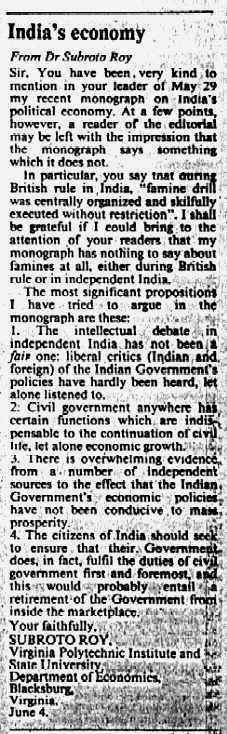
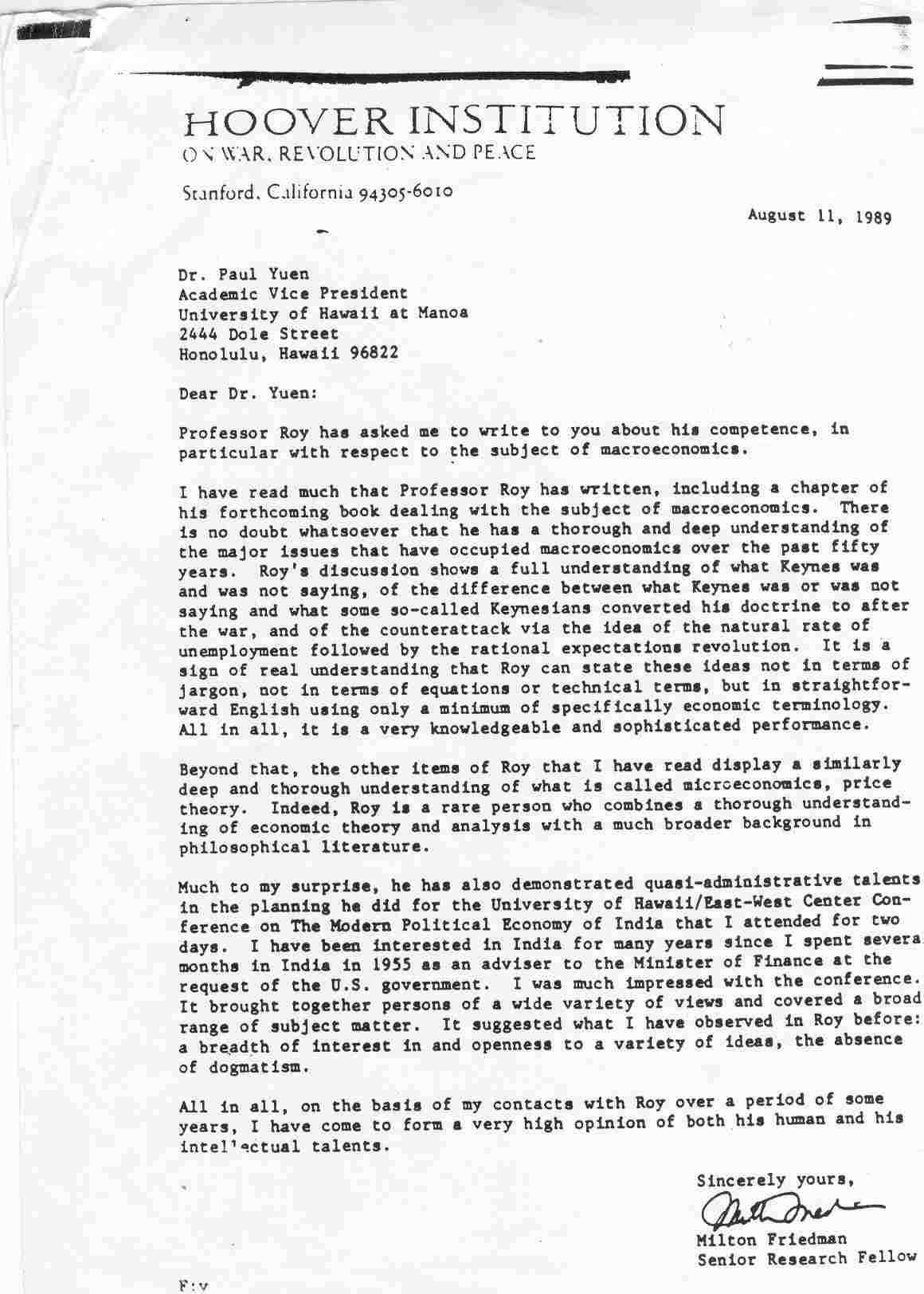
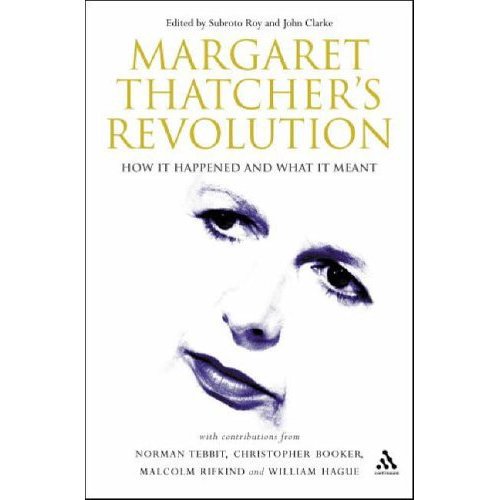
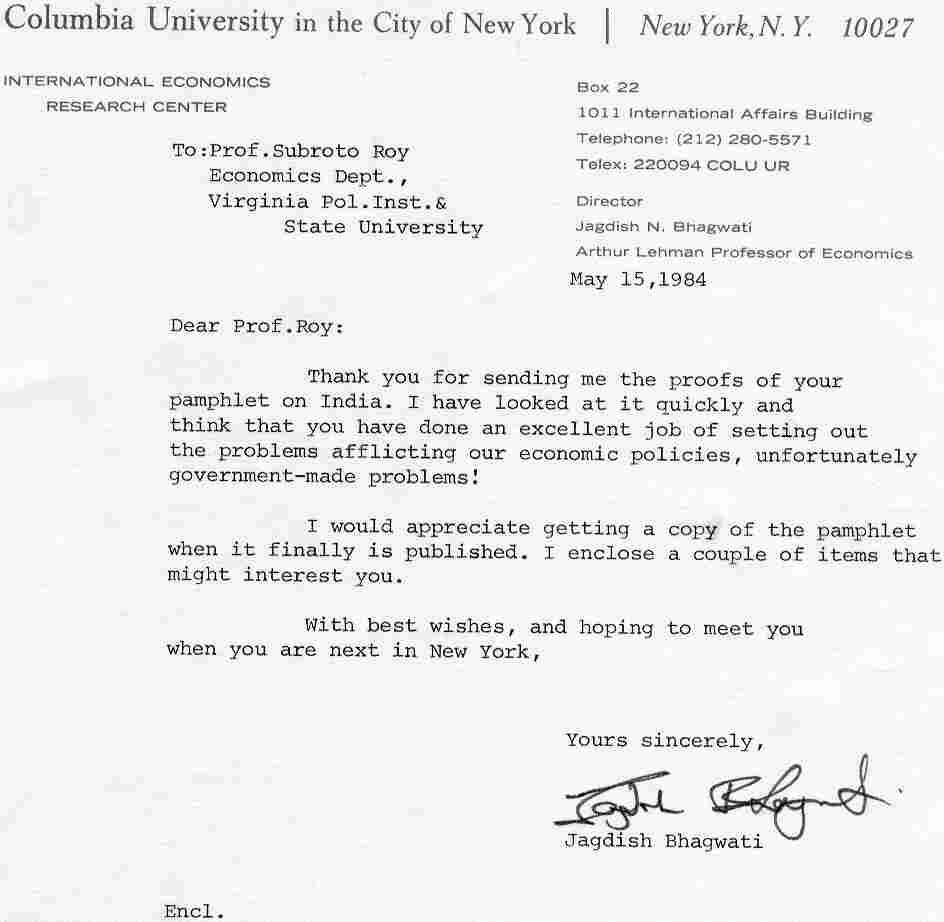
Dr Roy’s published works include Philosophy of Economics: On the Scope of Reason in Economic Inquiry (London & New York: Routledge, 1989, 1991); Pricing, Planning & Politics: A Study of Economic Distortions in India (London: Institute of Economic Affairs, 1984); and, edited with WE James, Foundations of India’s Political Economy: Towards an Agenda for the 1990s (Hawaii MS 1989, Sage 1992)  &  Foundations of Pakistan’s Political Economy: Towards an Agenda for the 1990s (Hawaii MS 1989, Sage 1992, OUP Karachi 1993); and, edited with John Clarke, Margaret Thatcher’s Revolution: How it Happened and What it Meant (London & New York: Continuum 2005).  He graduated in 1976 with a first from the London School of Economics in mathematical economics, and received the PhD in economics at Cambridge in 1982 under Professor Frank Hahn for the thesis “On liberty & economic growth: preface to a philosophy for India”. In the United States for 16 years he was privileged to count as friends Professors James Buchanan, Milton Friedman, TW Schultz, Max Black and Sidney Alexander.  From September 18 1990 he was an adviser to Rajiv Gandhi and contributed to the origins of India’s 1991 economic reform.  He blogs at www.independentindian.com.

CONTENTS

  1. Introduction
  2. Pakistan’s Point of View (or Points of View)

(a)    1930  Sir Muhammad Iqbal

(b)    1933-1948 Chaudhury Rahmat Ali

(c)    1937-1941 Sir Sikander Hayat Khan

(d)    1937-1947 Quad-i-Azam Mohammad Ali Jinnah

(e)    1940s et seq  Maulana Abul Ala Maudoodi

(f)     1947-1950 Prime Minister Liaquat Ali Khan, 1966 President Ayub Khan, 2005 Govt of Pakistan, 2007 President Musharraf, 2008 FM Qureshi, 2011 Kashmir Day

  1. India’s Point of View: British Negligence/Indifference during the Transfer of Power, A Case of Misgovernance in the Chaotic Aftermath of World War II

(a)    Rhetoric: Whose Pakistan?  Which Kashmir? 

(b)    Law: (i) Liaquat-Zafrullah-Abdullah-Nehru United in Error Over the Second Treaty of Amritsar! Dogra J&K subsists Mar 16 1846-Oct 22 1947. Aggression, Anarchy, Annexations: The LOC as De Facto Boundary by Military Decision Since Jan 1 1949.  (ii) Legal Error & Confusion Generated by 12 May 1946 Memorandum. (iii) War: Dogra J&K attacked by Pakistan, defended by India: Invasion, Mutiny, Secession of “Azad Kashmir” & Gilgit, Rape of Baramulla, Siege of Skardu.

  1. Politics: What is to be Done? Towards Truths, Normalisation, Peace in the 21st Century

The Present Situation is Abnormal & Intolerable. There May Be One (and Only One) Peacable Solution that is Feasible: Revealing Individual Choices Privately with Full Information & Security: Indian “Green Cards”/PIO-OCI status for Hurriyat et al: A Choice of Nationality (India, Pakistan, Afghanistan, Iran).  Of Flags and Consulates in Srinagar & Gilgit etc: De Jure Recognition of the Boundary, Diplomatic Normalisation,  Economic & Military Cooperation.

  1. Appendices:

(a)    History of Jammu & Kashmir until the Dogra Native State

(b)    Pakistan’s Allies (including A Brief History of Gilgit)

(c)    India’s Muslim Voices

(d)    Pakistan’s Muslim Voices: An Excerpt from the Munir Report

1.  Introduction

For a solution to Jammu & Kashmir to be universally acceptable it must be seen by all as being lawful and just. Political opinion across the subcontinent — in Pakistan, in India, among all people and parties in J&K, those loyal to India, those loyal to Pakistan, and any others — will have to agree that, all things considered, such is the right course of action for everyone today in the 21st Century, which means too that the solution must be consistent with the principal known facts of history as well as account reasonably for all moral considerations.

I claim to have found such a solution, indeed I shall even say it is the only such solution (in terms of theoretical economics, it is the unique solution) and plan with your permission to describe its main outlines at this distinguished gathering.  I have not invented it overnight but it is something  developed over a quarter century, milestones along the way being the books emerging from the University of Hawaii “perestroika” projects for India and Pakistan that I and the late WE James led 25 years ago, and a lecture I gave at Washington’s Heritage Foundation in June 1998, as well as sets of newspaper articles published between 2005 and 2008, one in Dawn of Karachi and others in The Statesman of New Delhi and Kolkata.

Before I start, allow me for a moment to remind just how complex and intractable the problem we face has been, and, therefore, quite how large my ambition is in claiming today to be able to resolve it.

“Kashmir is in the Supreme National Interest of Pakistan”, says Pakistan.

“Kashmir is an Integral Part of India”, says India.

“Kashmir is an Integral Part of Pakistan”, says Pakistan.

“Kashmir is in the Supreme National Interest of India”, says India.

And so it goes, in what over the decades has been all too often a Dialogue of the Deaf.  How may such squarely opposed positions be reconciled without draining public resources even further through wasteful weaponry and confrontation of standing armies, or, what is worse, using these weapons and armies in war, plunging the subcontinent into an abyss of chaos and destruction for generations to come?  How is it possible?

I shall suggest a road can be found only when we realize Pakistan, India and J&K each have been and are going to remain integral to one another — in their histories, their geographies, their economies and their societies.  The only place they may need to differ, where we shall want them to differ, is their politics and political systems. We should not underestimate how much mutual hatred and mutual fear has arisen naturally on all sides over the decades as a result of bloodshed and suffering all around, and the fact must also be accounted for that people simply may not be in a calm-enough emotional state to want to be part of processes seeking resolution; at the same time, it bears to be remembered that although Pakistan and India have been at war more than once and war is always a very serious and awful thing, they have never actually declared war against the other nor have they ever broken diplomatic relations – in fact in some ways it has always seemed like some very long and protracted fraternal Civil War between us where we think we know one another so well and yet come to be surprised more by one another’s virtues than by one another’s vices.

Secondly, with any seemingly intractable problem, dialogue can stall or be aborted due to normal human failings of impatience or lack of good will or lack of good humour or lack of a scientific attitude towards finding facts, or plain mutual miscomprehension of one another’s points of view through ignorance or laziness or negligence.  In case of Pakistan and India over J&K, there has been the further critical complication that we of this generation did not cause this problem — it has been something inherited by us from not even our fathers but our grandfathers!  It is two generations old.  Each side must respect the words and deeds of its forebears but also may have to frankly examine in a scientific spirit where errors of fact or judgment may have occurred back then.  The antagonistic positions have changed only slightly over two generations, and one reason dialogue stalls or gets aborted today is because positions have become frozen for more than half a century and merely get repeated endlessly.  On top of such frozen positions have been piled pile upon pile of further vast mortal complications: the 1965 War, the 1971 secession of East Pakistan, the 1999 Kargil War, the 2008 Mumbai massacres.  Only cacophony results if we talk about everything at once, leaving the status quo of a dangerous expensive confrontation to continue.

I propose instead to focus as specifically and precisely as possible on how Jammu & Kashmir became a problem at all during those crucial decades alongside the processes of Indian Independence, World War II, the Pakistan Movement and creation of Pakistan, accompanied by the traumas and bloodshed of Partition.

Having addressed that — and it is only fair to forewarn this eminent Lahore audience that such a survey of words, deeds and events between the 1930s and 1950s tends to emerge in India’s favour — I propose to “fast-forward” to current times, where certain new facts on the ground appear much more adverse to India, and finally seek to ask what can and ought to be done, all things considered, today in the circumstances of the 21st Century.   There are four central facts, let me for now call them Fact A, Fact B, Fact C and Fact D, which have to be accepted by both countries in good faith and a scientific spirit.  Facts A and B are historical in nature; Pakistan has refused to accept them. Facts C and D are contemporary in nature; official political India and much of the Indian media too often have appeared wilfully blind to them. The moment all four facts come to be accepted by all, the way forward becomes clear.  We have inherited this grave mortal problem which has so badly affected the ordinary people of J&K in the most terrible and unacceptable manner, but if we fail to understand and resolve it, our children and grandchildren will surely fail even worse — we may even leave them to cope with the waste and destruction of further needless war or confrontation, indeed with the end of the subcontinent as we have received and known it in our time.

2. Pakistan’s Point of View (Or Points of View)

1930  Sir Muhammad Iqbal

This audience will need no explanation why I start with Sir Muhammad Iqbal (1877-1938), the poetic and spiritual genius who in the 20th Century inspired the notion of a Muslim polity in NorthWestern India, whose seminal 1930 presidential speech to the Muslim League in Allahabad lay the foundation stone of the new country that was yet to be.   He did not live to see Pakistan’s creation yet what may be called the “Pakistan Principle” was captured in his words:

“I would like to see the Punjab, Northwest Frontier Province, Sind and Baluchistan amalgamated into a single state. Self-government within the British Empire or without the British Empire, the formation of a consolidated North West Indian Muslim state appears to me to be the final destiny of the Muslims at least of Northwest India… India is the greatest Muslim country in the world.  The life of Islam as a cultural force in this living country very largely depends on its centralization in a specified territory”.

He did not see such a consolidated Muslim state being theocratic and certainly not one filled with bigotry or “Hate-Hindu” campaigns:

“A community which is inspired by feelings of ill-will towards other communities is low and ignoble. I entertain the highest respect for the customs, laws, religious and social institutions of other communities… Yet I love the communal group which is the source of my life and my behaviour… Nor should the Hindus fear that the creation of autonomous Muslim states will mean the introduction of a kind of religious rule in such states…. I therefore demand the formation of a consolidated Muslim state in the best interests of India and Islam. For India it means security and peace resulting from an internal balance of power, for Islam an opportunity to rid itself of the stamp that Arabian Imperialism was forced to give it, to mobilise its law, its education, its culture, and to bring them into closer contact with its own original spirit and the spirit of modern times.”[1]

Though Kashmiri himself, in fact a founding member of the “All-India Jammu & Kashmir Muslim Conference of Lahore and Simla”, and a hero and role model for the young Sheikh Abdullah (1905-1982), Allama Iqbal was explicitly silent about J&K being part of the new political entity he had come to imagine.  I do not say he would not have wished it to be had he lived longer; what I am saying is that his original vision of the consolidated Muslim state which constitutes Pakistan today (after a Partitioned Punjab) did not include Jammu & Kashmir.  Rather, it was focused on the politics of British India and did not mention the politics of Kashmir or any other of the so-called “Princely States” or “Native States” of “Indian India” who constituted some 1/3rd of the land mass and 1/4th of the population of the subcontinent.  Twenty years ago I called this “The Paradox of Kashmir”, namely, that prior to 1947 J&K hardly seemed to appear in any discussion at all for a century, yet it has consumed almost all discussion and resources ever since.

Secondly, this audience will see better than I can the significance of Dr Iqbal’s saying the Muslim political state of his conception needed

“an opportunity to rid itself of the stamp that Arabian Imperialism was forced to give it”

and instead seek to

“mobilise its law, its education, its culture, and to bring them into closer contact with its own original spirit and the spirit of modern times”.

Dr Iqbal’s Pakistan Principle appears here the polar opposite of Pakistan’s 18th & 19th Century pre-history represented by Shah Waliullah (1703-1762)[2] saying

“We are an Arab people whose fathers have fallen in exile in the country of Hindustan, and Arabic genealogy and Arabic language are our pride”

 or Sayyid Ahmed Barelwi (1786-1831) saying

“We must repudiate all those Indian, Persian and Roman customs which are contrary to the Prophet’s teaching”.[3]  

Some 25 years after the Allahabad address, the Munir Report in 1954 echoed Dr Iqbal’s thought when it observed about medieval military conquests

“It is this brilliant achievement of the Arabian nomads …that makes the Musalman of today live in the past and yearn for the return of the glory that was Islam… Little does he understand that the forces which are pitted against him are entirely different from those against which early Islam had to fight… Nothing but a bold reorientation of Islam to separate the vital from the lifeless can preserve it as a World Idea and convert the Musalman into a citizen of the present and the future world from the archaic incongruity that he is today…” [4]


1933-1947  Chaudhury Rahmat Ali

Dr Iqbal’s young follower, the radical Cambridge pamphleteer Chaudhury Rahmat Ali (1895-1951) drew a picture not of Muslim tolerance and coexistence with Hindus in a peaceful India but of aggression towards Hindus and domination by Muslims over the subcontinent and Asia itself.  Rahmat Ali had been inspired by Dr Iqbal’s call for a Muslim state in Northwest India but found it vague and was disappointed Iqbal had not pressed it at the Third Round Table Conference.  In 1933, reportedly on the upper floor of a London omnibus, he invented for the then-imagined political entity the name “PAKSTAN”, P for his native Punjab, A for Afghania, K for Kashmir, S for Sind, and STAN for Balochistan.  He sought a meeting with Mr Jinnah in London — “Jinnah disliked Rahmat Ali’s ideas and avoided meeting him”[5] but did meet him.  There is a thesis yet to be written on how Europe’s inter-War ideologies affected political thinking on the subcontinent.  Rahmat Ali’s vituperative views about Hindus were akin to others about Jews (and Muslims too) at the time, all models or counterfoils for one another in the fringes of Nazism.  He referred to the Indian nationalist movement as a “British-Banya alliance”, declined to admit India had ever existed and personally renamed the subcontinent “Dinia” and the seas around it the “Pakian Sea”, the “Osmanian Sea” etc. He urged Sikhs to rise up in a “Sikhistan” and urged all non-Hindus to rise up in war against Hindus. Given the obscurity of his life before his arrival at Cambridge’s Emmanuel College, what experiences may have led him to such views are not known.

All this was anathema to Mr Jinnah, the secular constitutionalist embarrassed by a reactionary Muslim imperialism in that rapidly modernising era that was the middle of the 20th Century.  When Rahmat Ali pressed the ‘Pakstan’ acronym, Mr Jinnah said Bengal was not in it and Muslim minority regions were absent.  At this Chaudhury-Sahib produced a general scheme of Muslim domination all over the subcontinent: there would be “Pakstan” in the northwest including Kashmir, Delhi and Agra; “Bangistan” in Bengal; “Osmanistan” in Hyderabad; “Siddiquistan” in Bundelhand and Malwa; “Faruqistan” in Bihar and Orissa; “Haideristan” in UP; “Muinistan” in Rajasthan; “Maplistan” in Kerala; even “Safiistan” in “Western Ceylon” and “Nasaristan” in “Eastern Ceylon”, etc.  In 1934 he published and widely circulated such a diagram among Muslims in Britain at the time.  He was not invited to the Lahore Resolution which did not refer to Pakistan though came to be called the Pakistan Resolution.  When he landed in the new Pakistan, he was apparently arrested and deported back and was never granted a Pakistan passport.  From England, he turned his wrath upon the new government, condemning Mr Jinnah as treacherous and newly re-interpreting his acronym to refer to Punjab, Afghania, Kashmir, Iran, Sindh, Tukharistan (sic), Afghanistan, and Balochistan.  The word “pak” coincidentally meant pure, so he began to speak of Muslims as “the Pak” i.e. “the pure” people, and of how the national destiny of the new Pakistan was to liberate “Pak” people everywhere, including the new India, and create a “Pak Commonwealth of Nations” stretching from Arabia to the Indies.  The map he now drew placed the word “Punjab” over J&K, and saw an Asia dominated by this “Pak” empire. Shunned by officialdom of the new Pakistan, Chaudhury-Sahib was a tragic figure who died in poverty and obscurity during an influenza epidemic in 1951; the Master of Emmanuel College paid for his funeral and was apparently later reimbursed for this by the Government of Pakistan.  In recent years he has undergone a restoration, and his grave at Cambridge has become a site of pilgrimage for ideologues, while his diagrams and writings have been reprinted in Pakistan’s newspapers as recently as February 2005.

1937-1941 Sir Sikander Hayat Khan

Chaudhary Rahmat Ali’s harshest critic at the time was the eminent statesman and Premier of Punjab Sir Sikander Hayat Khan (1892-1942), partner of the 1937 Sikander-Jinnah Pact, and an author of the Lahore Resolution.  His statement of 11 March 1941 in the Punjab Legislative Assembly Debates is a classic:

“No Pakistan scheme was passed at Lahore… As for Pakistan schemes, Maulana Jamal-ud-Din’s is the earliest…Then there is the scheme which is attributed to the late Allama Iqbal of revered memory.  He, however, never formulated any definite scheme but his writings and poems have given some people ground to think that Allama Iqbal desired the establishment of  some sort of  Pakistan.  But it is not difficult to explode this theory and to prove conclusively that his conception of  Islamic solidarity and universal brotherhood is not in conflict with Indian patriotism and is in fact quite different from the ideology now sought to be attributed to him by some enthusiasts… Then there is Chaudhuri Rahmat Ali’s scheme (*laughter*)…it was widely circulated in this country and… it was also given wide publicity at the time in a section of the British press.  But there is another scheme…it was published in one of the British journals, I think Round Table, and was conceived by an Englishman…..the word Pakistan was not used at the League meeting and this term was not applied to (the League’s Lahore) resolution by anybody until the Hindu press had a brain-wave and dubbed it Pakistan…. The ignorant masses  have now adopted the slogan provided by the short-sighted bigotry of the Hindu and Sikh press…they overlooked the fact that the word Pakistan might have an appeal – a strong appeal – for the Muslim masses.  It is a catching phrase and it has caught popular imagination and has thus made confusion worse confounded…. So far as we in the Punjab are concerned, let me assure you that we will not countenance or accept any proposal that does not secure freedom for all (*cheers*).  We do not desire that Muslims should domineer here, just as we do not want the Hindus to domineer where Muslims are in a minority. Now would we allow anybody or section to thwart us because Muslims happen to be in a majority in this province.  We do not ask for freedom that there may be a Muslim Raj here and Hindu Raj elsewhere.  If that is what Pakistan means I will have nothing to do with it.   If Pakistan means unalloyed Muslim Raj in the Punjab then I will have nothing to do with it (*hear, hear*)…. If you want real freedom for the Punjab, that is to say a Punjab in which every community will have its due share in the economic and administrative fields as partners in a common concern, then that Punjab will not be Pakistan but just Punjab, land of the five rivers; Punjab is Punjab and will always remain Punjab whatever anybody may say (*cheers*).  This, then, briefly is the future which I visualize for my province and for my country under any new constitution.

Intervention (Malik Barkat Ali): The Lahore resolution says the same thing.

Premier: Exactly; then why misinterpret it and try to mislead the  masses?…”

1937-1947  Quad-i-Azam Mohammad Ali Jinnah

During the Third Round Table Conference, Dr Iqbal persuaded Mr Jinnah (1876-1948) to return to India; Mr Jinnah, from being settled again in his London law practice, did so in 1934.  But following the 1935 Govt of India Act, the Muslim League failed badly when British India held its first elections in 1937 not only in Bengal and UP but in Punjab (one seat), NWFP and Sind.

World War II, like World War I a couple of brief decades earlier, then changed the political landscape completely. Germany invaded Poland on 1 September 1939 and Britain and France declared war on Germany on 3 September.  The next day, India’s British Viceroy (Linlithgow) granted Mr Jinnah the political parity with Congress that he had sought.[6]  Professor Francis Robinson suggests that until 4 September 1939 the British

“had had little time for Jinnah and his League.  The Government’s declaration of war on Germany on 3 September, however, transformed the situation. A large part of the army was Muslim, much of the war effort was likely to rest on the two Muslim majority provinces of Punjab and Bengal. The following day, the Viceroy invited Jinnah for talks on an equal footing with Gandhi…. As the Congress began to demand immediate independence, the Viceroy took to reassuring Jinnah that Muslim interests would be safeguarded in any constitutional change. Within a few months, he was urging the League to declare a constructive policy for the future, which was of course presented in the Lahore Resolution[7]…. In their August 1940 offer, the British confirmed for the benefit of Muslims that power would not be transferred against the will of any significant element in Indian life. And much the same confirmation was given in the Cripps offer nearly two years later…. Throughout the years 1940 to 1945, the British made no attempt to tease out the contradictions between the League’s two-nation theory, which asserted that Hindus and Muslims came from two different civilisations and therefore were two different nations, and the Lahore Resolution, which demanded that ‘Independent States’ should be constituted from the Muslim majority provinces of the NE and NW, thereby suggesting that Indian Muslims formed not just one nation but two. When in 1944 the governors of Punjab and Bengal urged such a move on the Viceroy, Wavell ignored them, pressing ahead instead with his own plan for an all-India conference at Simla. The result was to confirm, as never before in the eyes of leading Muslims in the majority provinces, the standing of Jinnah and the League. Thus, because the British found it convenient to take the League seriously, everyone had to as well—Congressmen, Unionists, Bengalis, and so on…”[8]

 Mr Jinnah was himself amazed by the new British attitude towards him:

“(S)uddenly there was a change in the attitude towards me. I was treated on the same basis as Mr Gandhi. I was wonderstruck why all of a sudden I was promoted and given a place side by side with Mr Gandhi.”

Britain, threatened for its survival, faced an obdurate Indian leadership and even British socialists sympathetic to Indian aspirations grew cold (Gandhi dismissing the 1942 Cripps offer as a “post-dated cheque on a failing bank”).  Official Britain’s loyalties had been consistently with those who had been loyal to them, and it was unsurprising there would be a tilt to empower Mr Jinnah soon making credible the real possibility of Pakistan.[9]  By 1946, Britain was exhausted, pre-occupied with rationing, Berlin, refugee resettlement and countless other post-War problems — Britain had not been beaten in war but British imperialism was finished because of the War.  Muslim opinion in British India had changed decisively in the League’s favour.   But the  subcontinent’s political processes were drastically spinning out of everyone’s control towards anarchy and blood-letting.  Implementing a lofty vision of a cultured progressive consolidated Muslim state in India’s NorthWest descended into “Direct Action” with urban mobs  shouting Larke lenge Pakistan; Marke lenge Pakistan; Khun se lenge Pakistan; Dena hoga Pakistan.[10]

We shall return to Mr Jinnah’s view on the legal position of the “Native Princes” of “Indian India” during this critical time, specifically J&K; here it is essential before proceeding only to record his own vision for the new Pakistan as recorded by the profoundly judicious report of Justice Munir and Justice Kayani a mere half dozen years later:

“Before the Partition, the first public picture of Pakistan that the Quaid-i-Azam gave to the world was in the course of an interview in New Delhi with Mr. Doon Campbell, Reuter’s Correspondent. The Quaid-i-Azam said that the new State would be a modern democratic State, with sovereignty resting in the people and the members of the new nation having equal rights of citizenship regardless of their religion, caste or creed.  When Pakistan formally appeared on the map, the Quaid-i-Azam in his memorable speech of 11th August 1947 to the Constituent Assembly of Pakistan, while stating the principle on which the new State was to be founded, said:—‘All the same, in this division it was impossible to avoid the question of minorities being in one Dominion or the other. Now that was unavoidable. There is no other solution. Now what shall we do? Now, if we want to make this great State of Pakistan happy and prosperous we should wholly and solely concentrate on the well-being of the people, and specially of the masses and the poor. If you will work in co-operation, forgetting the past, burying the hatchet, you are bound to succeed. If you change your past and work together in a spirit that every one of you, no matter to what community he belongs, no matter what relations he had with you in the past, no matter what is his colour, caste or creed, is first, second and last a citizen of this State with equal rights, privileges and obligations., there will be no end to the progress you will make.  “I cannot emphasise it too much. We should begin to work in that spirit and in course of time all these angularities of the majority and minority communities—the Hindu community and the Muslim community— because even as regards Muslims you have Pathana, Punjabis, Shias, Sunnis and so on and among the Hindus you have Brahmins, Vashnavas, Khatris, also Bengalis, Madrasis and so on—will vanish. Indeed if you ask me this has been the biggest hindrance in the way of India to attain its freedom and independence and but for this we would have been free peoples long long ago. No power can hold another nation, and specially a nation of 400 million souls in subjection; nobody could have conquered you, and even if it had happened, nobody could have continued its hold on you for any length of time but for this (Applause). Therefore, we must learn a lesson from this. You are free; you are free to go to your temples, you are free to go to your mosques or to any other places of worship in this State of Pakistan. You may belong to any religion or caste or creed— that has nothing to do with the business of the State (Hear, hear). As you know, history shows that in England conditions sometime ago were much worse than those prevailing in India today. The Roman Catholics and the Protestants persecuted each other. Even now there are some States in existence where there are discriminations made and bars imposed against a particular class. Thank God we are not starting in those days. We are starting in the days when there is no discrimination, no distinction between one community and another, no discrimination between one caste or creed and another. We are starting with this fundamental principle that we are all citizens and equal citizens of one State (Loud applause). The people of England in course of time had to face the realities of the situation and had to discharge the responsibilities and burdens placed upon them by the Government of their country and they went through that fire step by step. Today you might say with justice that Roman Catholics and Protestants do not exist: what exists now is that every man is a citizen, an equal citizen, of Great Britain and they are all members of the nation. “Now, I think we should keep that in front of us as our ideal and you will find that in course of time Hindus would cease to be Hindus and Muslims would cease to be Muslims, not in the religious sense, because that is the personal faith of each individual, but in the political sense as citizens of the State’. The Quaid-i-Azam was the founder of Pakistan and the occasion on which he thus spoke was the first landmark in the history of Pakistan. The speech was intended both for his own people including non-Muslims and the world, and its object was to define as clearly as possible the ideal to the attainment of which the new State was to devote all its energies. There are repeated references in this speech to the bitterness of the past and an appeal to forget and change the past and to bury the hatchet. The future subject of the State is to be a citizen with equal rights, privileges and obligations, irrespective of colour, caste, creed or community. The word ‘nation’ is used more than once and religion is stated to have nothing to do with the business of the State and to be merely a matter of personal faith for the individual.”

1940s et seq  Maulana Abul Ala Maudoodi, Amir Jama’at-i-Islami

The eminent theologian Maulana Abul Ala Maudoodi (1903-1979), founder of the Jama’at-i-Islami, had been opposed to the Pakistan Principle but once Pakistan was created he became the most eminent votary of an Islamic State, declaring:

 “That the sovereignty in Pakistan belongs to God Almighty alone and that the Government of Pakistan shall administer the country as His agent”.

 In such a view, Islam becomes

“the very antithesis of secular Western democracy. The philosophical foundation of Western democracy is the sovereignty of the people. Lawmaking is their prerogative and legislation must correspond to the mood and temper of their opinion… Islam… altogether repudiates the philosophy of popular sovereignty and rears its polity on the foundations of the sovereignty of God and the viceregency (Khilafat) of man.”

Maulana Maudoodi was asked by Justice Munir and Justice Kayani:

 “Q.—Is a country on the border of dar-ul-Islam always qua an Islamic State in the position of dar-ul-harb ?

A.—No. In the absence of an agreement to the contrary, the Islamic State will be potentially at war with the non-Muslim neighbouring country. The non-Muslim country acquires the status of dar-ul-harb only after the Islamic State declares a formal war against it”.

“Q.—Is there a law of war in Islam?

A.—Yes.

Q.—Does it differ fundamentally from the modern International Law of war?

A.—These two systems are based on a fundamental difference.

Q.—What rights have non-Muslims who are taken prisoners of war in a jihad?

A.—The Islamic law on the point is that if the country of which these prisoners are nationals pays ransom, they will be released. An exchange of prisoners is also permitted. If neither of these alternatives is possible, the prisoners will be converted into slaves for ever. If any such person makes an offer to pay his ransom out of his own earnings, he will be permitted to collect the money necessary for the fidya (ransom).

Q.—Are you of the view that unless a Government assumes the form of an Islamic Government, any war declared by it is not a jihad?

A.—No. A war may be declared to be a jihad if it is declared by a national Government of Muslims in the legitimate interests of the State. I never expressed the opinion attributed to me in Ex. D. E. 12:— (translation)‘The question remains whether, even if the Government of Pakistan, in its present form and structure, terminates her treaties with the Indian Union and declares war against her, this war would fall under the definition of jihad? The opinion expressed by him in this behalf is quite correct. Until such time as the Government becomes Islamic by adopting the Islamic form of Government, to call any of its wars a jihad would be tantamount to describing the enlistment and fighting of a non-Muslim on the side of the Azad Kashmir forces jihad and his death martyrdom. What the Maulana means is that, in the presence of treaties, it is against Shari’at, if the Government or its people participate in such a war. If the Government terminates the treaties and declares war, even then the war started by Government would not be termed jihad unless the Government becomes Islamic’.

….

“Q.—If we have this form of Islamic Government in Pakistan, will you permit Hindus to base their Constitution on the basis of their own religion?

A—Certainly. I should have no objection even if the Muslims of India are treated in that form of Government as shudras and malishes and Manu’s laws are applied to them, depriving them of all share in the Government and the rights of a citizen. In fact such a state of affairs already exists in India.”

.…

“Q.—What will be the duty of the Muslims in India in case of war between India and Pakistan?

A.—Their duty is obvious, and that is not to fight against Pakistan or to do anything injurious to the safety of Pakistan.”

1947-1950 PM Liaquat Ali Khan, 1966 Gen Ayub Khan, 2005 Govt of Pakistan et seq

In contrast to Maulana Maudoodi saying Islam was “the very antithesis of secular Western democracy”,  Prime Minister Liaquat Ali Khan (1895-1951)[11] during his first official visit in 1950 to North America was to say the new Pakistan, because it was Muslim, held Asia’s greatest democratic potential:

“At present there is no democracy in Asia which is more free and more unified than Pakistan; none so free from moral doubts and from strains between the various sections of the people.”

He told his audiences Pakistan was created because Hindus were people wedded to caste-differences where Pakistanis as Muslims had an egalitarian and democratic disposition:

“The Hindus, for example, believe in the caste system according to which some human beings are born superior to others and cannot have any social relations with those in the lower castes or with those who are not Hindus.   They cannot marry them or eat with them or even touch them without being polluted.   The Muslims abhor the caste system, as they are a democratic people and believe in the equality of men and equal opportunities for all, do not consider a priesthood necessary, and have economic laws and institutions which recognize the right of private ownership and yet are designed to promote the distribution of wealth and to put healthy checks on vast unearned accumulations… so the Hindus and the Muslims decided to part and divide British India into two independent sovereign states… Our demand for a country of our own had, as you see, a strong democratic urge behind it.  The emergence of Pakistan itself was therefore the triumph of a democratic idea.  It enabled at one stroke a democratic nation of eighty million people to find a place of its own in Asia, where now they can worship God in freedom and pursue their own way of life uninhibited by the domination or the influence of ways and beliefs that are alien or antagonistic to their genius.” [12]

President Ayub Khan would state in similar vein on 18 November 1966 at London’s Royal Institute of International Affairs:

“the root of the problem was the conflicting ideologies of India and Pakistan. Muslim Pakistan believed in common brotherhood and giving people equal opportunity.  India and Hinduism are based on inequality and on colour and race.  Their basic concept is the caste system… Hindus and Muslims could never live under one Government, although they might live side by side.”

Regarding J&K, Liaquat Ali Khan on November 4 1947 broadcast from here in Lahore that the 1846 Treaty of Amritsar was “infamous” in having caused an  “immoral and illegal” ownership of Jammu & Kashmir.  He, along with Mr Jinnah, had called Sheikh Abdullah a “goonda” and “hoodlum” and “Quisling” of India, and on February 4 1948 Pakistan formally challenged the sovereignty of the Dogra dynasty in the world system of nations.  In 1950 during his North American visit though, the Prime Minister allowed that J&K was a “princely state” but said

“culturally, economically, geographically and strategically, Kashmir – 80 per cent of whose peoples like the majority of the people in Pakistan are Muslims – is in fact an integral part of Pakistan”;

“(the) bulk of the population (are) under Indian military occupation”. 

Pakistan’s official self-image, portrayal of India, and position on J&K may have not changed greatly since her founding Prime Minister’s statements.   For example, in June 2005 the website of the Government of Pakistan’s Permanent Mission at the UN stated:

“Q: How did Hindu Raja (sic) become the ruler of Muslim majority Kashmir?

A: Historically speaking Kashmir had been ruled by the Muslims from the 14th Century onwards.  The Muslim rule continued till early 19th Century when the ruler of Punjab conquered  Kashmir and gave Jammu to a Dogra Gulab Singh who purchased Kashmir from the British in 1846 for a sum of 7.5 million rupees.”

“India’s forcible occupation of the State of Jammu and Kashmir in 1947 is the main cause of the dispute. India claims to have ‘signed’ a controversial document, the Instrument of Accession, on 26 October 1947 with the Maharaja of Kashmir, in which the Maharaja obtained India’s military help against popular insurgency.   The people of Kashmir and Pakistan do not accept the Indian claim.   There are doubts about the very existence of the Instrument of Accession.  The United Nations also does not consider Indian claim as legally valid: it recognises Kashmir as a disputed territory.   Except India, the entire world community recognises Kashmir as a disputed territory. The fact is that all the principles on the basis of which the Indian subcontinent was partitioned by the British in 1947 justify Kashmir becoming a part of Pakistan:  the State had majority Muslim population, and it not only enjoyed geographical proximity with Pakistan but also had essential economic linkages with the territories constituting Pakistan.”

India, a country dominated by the hated-Hindus, has forcibly denied Srinagar Valley’s Muslim majority over the years the freedom to become part of Muslim Pakistan – I stand here to be corrected but, in a nutshell, such has been and remains Pakistan’s official view and projection of the Kashmir problem over more than sixty years.[13]


[1] EIJ Rosenthal, Islam in the Modern National State, 1965, pp.196-197.

[2] A contemporary of Mohammad Ibn Abdal Wahhab of Nejd.

[3] Francis Robinson in  WE James & Subroto Roy, Foundations of Pakistan’s Political Economy: Towards an Agenda for the 1990s, 1993, p. 36.  Indeed Barelwi had created a proto-Pakistan in NorthWest India one hundred years before the Pakistan Movement. “In the later 1820s the movement became militant, regarding jihad as one of the basic tenets of faith.  Possibly encouraged by the British, with whom the movement did not feel powerful enough to come to grips at the outset, it chose as the venue of jihad the NW frontier of the subcontinent, where it was directed against the Sikhs.  Barelwi temporarily succeeded in carving out a small theocratic principality which collapsed owing to the friction between his Pathan and North Indian followers; and he was finally defeated and slain by the Sikhs in 1831″ (Aziz Ahmed, in  AL Basham (ed) A Cultural History of India 1976, p. 384).   Professor Robinson answered a query of mine in an email of 8 August 2005: “the fullest description of this is in Mohiuddin Ahmad, Saiyid Ahmad Shahid (Lucknow, 1975), although practically everyone who deals with the period covers it in some way. Barelwi was the Amir al-Muminin of a jihadi community which based itself north of Peshawar and for a time controlled Peshawar.  He called his fellowship the Tariqa-yi Muhammadiya.  Barelwi corresponded with local rulers about him.  After his death at the battle of Balakot, it survived in the region, at Sittana I think, down to World War One.”

[4] Rosenthal, ibid., p 235

[5] Germans

[6] Events remote from India’s history and geography, namely, the rise of Hitler and the Second World War, had contributed between 1937 and 1947 to the change of fortunes of the Muslim League and hence of all the people of the subcontinent.  The British had long discovered that mutual antipathy between Muslims and Hindus could be utilised in fashioning their rule; specifically that organisation and mobilisation of Muslim communal opinion was a useful counterweight to any pan-Indian nationalism emerging to compete with British authority. As early as 1874, long before Allan Octavian Hume ICS conceived the Indian National Congress, John Strachey ICS observed “The existence side by side of these (Hindu and Muslim) hostile creeds is one of the strong points in our political position in India. The better classes of Mohammedans are a source of strength to us and not of weakness. They constitute a comparatively small but an energetic minority of the population whose political interests are identical with ours.” By 1906, when a deputation of Muslims headed by the Aga Khan first approached the British pleading for communal representation, Minto the Viceroy replied: “I am as firmly convinced as I believe you to be that any electoral representation in India would be doomed to mischievous failure which aimed at granting a personal enfranchisement, regardless of the beliefs and traditions of the communities composing the population of this Continent.” Minto’s wife wrote in her diary the effect was “nothing less than the pulling back of sixty two millions of (Muslims) from joining the ranks of the seditious opposition.” (The true significance of Maulana Azad may have been that he, precisely at the same time, did indeed feel within himself the nationalist’s desire for freedom strongly enough to want to join the ranks of that seditious opposition.)

[7] “That geographically contiguous units are demarcated into regions which should be so constituted, with such territorial readjustments as may be necessary, that the areas in which the Muslims are numerically in a majority, as in the North-Western and Eastern zones of India should be grouped to constitute Independent States in which the constituent units shall be autonomous and sovereign”.

[8] Robinson ibid, pp. 43-44.

[9] In the “Indian India” of the Native Princes, Hari Singh and others who sent troops to fight as part of British armies (and who were nominal members of Churchill’s War Cabinet) would have their vanities flattered, while Sheikh Abdullah’s rebellion against Dogra rule would be ignored. See seq. And in British India, Mr Jinnah the conservative Anglophile and his elitist Muslim League would be backed, while the radicalised masses of the Gandhi-Bose-Nehru Congress suppressed as a nuisance.

[10] An anthology about Lahore reports memories of a murderous mob arriving at a wealthy man’s home to be placated  with words like  “They are Parsis not Hindus, no need to kill them…”

[11] An exact contemporary of Chaudhury Rahmat Ali.

[12] Pakistan, Harvard University Press, 1950.

[13] It is not far from this to a certain body of sentiments frequently found, for example, as recently as February 5 2011: “To observe the Kashmir Solidarity Day, various programs, rallies and protests will be held on Saturday (today) across the city to support the people of Kashmir in their struggle against the Indian occupation of their land.  Various religious, political, social and other organizations have arranged different programs to highlight the atrocities of Indian occupant army in held Jammu and Kashmir where about 800,000 Indian soldiers have been committing atrocities against innocent civilians; killing, wounding and maiming tens of thousands of people; raping thousands of women and setting houses, shops and crops on fire to break the Kashmiris’ will to fight for their freedom…Jamat-ud-Dawah…leaders warned that a ‘jihad’ would be launched if Kashmir was not liberated through civil agitation…the JuD leaders said first the former President, Pervez Musharraf, and now the current dispensation were extending the olive branch to New Delhi despite the atrocities on the Kashmiri people….the Pakistani nation would (never compromise on the issue of Kashmir and) would continue to provide political, moral and diplomatic support to the Kashmiri people.”

Bengal Government Finances 2003/4 data (from my 2007 article)

Govt. of W. Bengal’s Finances 2003-2004

Rs Billion (Hundred Crore)

EXPENDITURE ACTIVITIES:

government & local government                           8.68            1.68%

judiciary                                                                            1.27            0.25%

police (including home guard etc.)                       13.47            2.61%

prisons                                                                               0.62             0.12%

bureaucracy                                                                     5.69            1.10%

collecting land revenue & taxes                                4.32            0.84%

government employee pensions                              26.11           5.05%

schools, colleges, universities, institutes            45.06            8.72%

health, nutrition & family welfare                              14.70           2.84%

water supply & sanitation                                               3.53           0.68%

roads, bridges, transport, etc.                                      8.29           1.60%

electricity (mostly loans to power sector)             31.18           6.03%

irrigation, flood control, environment, ecology 10.78           2.09%

agricultural subsidies, rural development, etc.    7.97            1.54%

industrial subsidies                                                            2.56            0.50%

capital city development                                                 7.29            1.41%

social security, SC, ST, OBC, labour welfare              9.87           1.91%

tourism                                                                                    0.09            0.02%

arts, archaeology, libraries, museums                        0.16            0.03%

miscellaneous                                                                         0.52            0.10%

debt amortization & debt servicing                          314.77          60.89%

total expenditure                                                              516.92

INCOME SOURCES:

tax revenue                                                     141.10

operational income                                          6.06

grants from Union                                            18.93

loans recovered                                                   0.91

total income                                                      167.00

GOVT. BORROWING REQUIREMENT

(total expenditure minus total income )               349.93

financed by:

new public debt issued                                                 339.48

use of Trust Funds etc                                                      10.45

349.93

http://independentindian.com/2007/02/25/bengals-finances/

From the author’s research 2007 and based on latest available data published by the Comptroller & Auditor General of India

Two Different Models for India’s Political Economy: Mine & Dr Manmohan Singh’s (Updated Feb 24 2011)


From Facebook

February 24 2011

Subroto Roy does not know if he just heard Manmohan Singh say “inflation will soon come down” — excuse me Dr Singh, but how was it you and all your acolytes uniformly said back in July 2010 that inflation would be down to 6% by Dec 2010? 6%?! 16% more likely! I said. Until he explains his previous error, we may suppose he will repeat it.

January 11 2011:

Subroto Roy can stop the Indian inflation and bring integrity to the currency over time, and Manmohan Singh and his advisers cannot (because they have the wrong economic models/theories/data etc and refuse to change), but then they would have to make me a Minister and I keep getting reminded of what Groucho Marx said about clubs that would have him.

Subroto Roy does not think Dr Manmohan Singh or his acolytes and advisers, or his Finance Minister and his acolytes and advisers, understand Indian inflation. If you do not understand something, you are not likely to change it.


March 6 2010:

Subroto Roy  says the central difference between the Subroto Roy Model for India as described in 1990-1991 to Rajiv Gandhi in his last months, and the Manmohan Singh Model for India that has developed since Rajiv’s assassination, is that by my model, India’s money and public finances would have acquired integrity enough for the Indian Rupee to have become a hard currency of the world economy by now, allowing all one billion Indians access to foreign exchange and precious metals freely, whereas by the model of Dr Singh and his countless supporters, India’s money and public finance remain subject to government misuse and abuse, and access to foreign exchange remains available principally to politicians, bureaucrats, big business and its influential lobbyists, the military, as well as perhaps ten or twenty million nomenclatura in the metropolitan cities.


April 8 2010:

Subroto Roy notes a different way of stating his cardinal difference with the economics of Dr Manmohan Singh’s Govt: in their economics, foreign exchange is “made available” by the GoI for “business and personal uses”. That is different from my economics of aiming for all one billion Indians to have a money that has some integrity, i.e., a rupee that becomes a hard currency of the world economy. (Ditto incidentally with the PRC.)


Updates:

From Facebook:

Subroto Roy  reads in *Newsweek* today  (Aug 19) Manmohan Singh “engineered the transition from stagnant socialism to a spectacular takeoff”.  This contradicts my experience with Rajiv Gandhi at 10 Janpath in 1990-91. Dr Singh had not returned to India from his years with Julius Nyerere in his final assignment before retiring from the bureaucracy when Rajiv and I first met on 18 September 1990.

“After (Rajiv Gandhi’s) assassination, the comprador business press credited Narasimha Rao and Manmohan Singh with having originated the 1991 economic reform.  In May 2002, however, the Congress Party itself passed a resolution proposed by Digvijay Singh explicitly stating Rajiv and not either of them was to be so credited… There is no evidence Dr Singh or his acolytes were committed to any economic liberalism prior to 1991 and scant evidence they have originated liberal economic ideas for India afterwards. Precisely because they represented the decrepit old intellectual order of statist ”Ma-Bap Sarkari” policy-making, they were not asked in the mid-1980s to be part of a “perestroika-for-India” project done at a foreign university ~ the results of which were received…by Rajiv Gandhi in hand at 10 Janpath on 18 September 1990 and specifically sparked the change in the direction of his economic thinking…”

Subroto Roy notes that current Indian public policy discussion has thus far failed to realise that the rise in money prices of real goods and services is the same as the fall in the real value of money.

Subroto Roy  is interested to hear Mr Jaitley say in Parliament today the credibility of Government economists is at stake. Of course it is. There has been far too much greed and mendacity all around, besides sheer ignorance. (When I taught for a year or so at the Delhi School of Economics as a 22 year old Visiting Assistant Professor in 1977-78, I was told Mr Jaitley was in the law school and a student leader of note. I though was more interested in teaching the usefulness of Roy Radner’s “information structures” in a course on “advanced economic theory”.)


July 31 2010

Subroto Roy reads in today’s pink business newspaper the GoI’s debt level at Rs 38 trillion & three large states (WB, MH, UP) is at Rs 6 trillion, add another 18 for all other large states together, another 5 for all small states & 3 for errors and omissions, making my One Minute Estimate of India’s Public Debt Stock Rs 70 trillion (70 lakh crores). Interest payments at, say, 9%, keep the banking system afloat, extracting oxygen from the public finances like a cyanide capsule.


July 28 2010

Subroto Roy observes Parliament to be discussing Indian inflation but expects a solution will not be found until the problem has been comprehended.

July 27 2010:

Subroto Roy continues to weep at New Delhi’s continual debauching of the rupee.

July 25 2010:

Subroto Roy  has no idea why Dr Manmohan Singh has himself (along with all his acolytes and flatterers in the Government and media and big business), gone about predicting Indian inflation will fall to 6% by December. 16% may be a more likely figure given a public debt at Rs 40 trillion perhaps plus money supply growth above 20%! (Of course, the higher the figure the Government admits, the more it has to pay in dearness allowance to those poor unionized unfortunates known as Government employees, so perhaps the official misunderestimation (sic) of Indian inflation is a strategy of public finance!)


July 12 2010:

Subroto Roy is amused to read Dr Manmohan Singh’s Chief Acolyte say in today’s pink business newspaper how important accounting is in project-appraisal — does the sinner repent after almost single-handedly helping to ruin project-appraisal  & government accounting & macroeconomic planning over decades?  I  rather doubt it.   For myself, I am amused to see chastity now being suddenly preached from within you-know-where.


July 4 2010:

Subroto Roy does not think the Rs 90 billion (mostly in foreign exchange) spent by the Manmohan Singh Government on New Delhi’s “Indira Gandhi International Airport Terminal 3″ is conducive to the welfare of the common man (“aam admi”) who travels, if at all, mostly within India and by rail.

Subroto Roy hears Dr Manmohan Singh say yesterday “Global economic recession did not have much impact on us as it had on other countries”. Of course it didn’t. I had said India was hardly affected but for a collapse of exports & some fall in foreign investment. Why did he & his acolytes then waste vast public resources claiming they were rescuing India using a purported Keynesian fiscal “stimulus” (aka corporate/lobbyist pork)?


May 26 2010:

Subroto Roy  would like to know how & when Dr Manmohan Singh will assess he has finished the task/assignment he thinks has been assigned to him & finally retire from his post-retirement career: when his Chief Acolyte declares on TV that 10% real GDP growth has been reached? (Excuse me, but is that per capita? And about those inequalities….?)

Important summits in the USA, Russia, Copenhagen can be attended by the Prime Minister of India as he is not a Member of the Lok Sabha

From Facebook:

Subroto Roy notes that since Dr Manmohan Singh is the first Indian Prime Minister ever to have chosen with deliberation not to be a member of the Lok Sabha, he has been free to hold important summits at the White House, Kremlin, Copenhagen etc while the Lok Sabha debates mundane matters like the Liberhan Commission report, inflation etc.

Thoughts on Indian Governance

From Facebook:

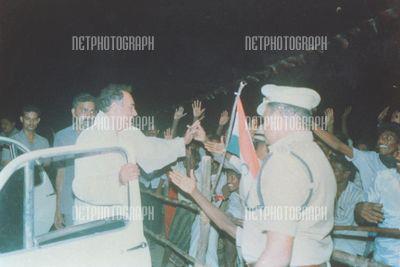
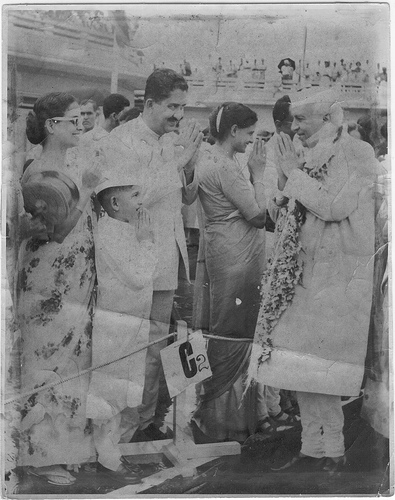
Subroto Roy believes the great optimism about the Indian Republic that he had felt as a 7-year old boy upon meeting Jawaharlal Nehru at Colombo Airport on Oct 13 1962 (the first days of the surprise Communist Chinese attack on India), has now dissipated, and apart from Nehru’s immediate successor (Lal Bahadur Shastri) all Indian Prime Ministers since then have been gravely, perhaps catastrophically, disappointing.

Subroto Roy thinks President Obama’s informed lawyerly academic approach to the Afghanistan decision, whether or not it has its intended good consequences, has a positive demonstration effect for other capital cities, e.g. New Delhi, where public policy decisions are too often made to appease special interest groups inside a cloud of meaningless rhetoric.

Subroto Roy says of India and China in summary discussion at Edward Hugh’s Wall: “Well, both have massive and energetic populations, each with relatively little capital per head; raising the capital per head with new production and exchange processes leads to growth. (But the nominal economies are weak, public finances are absymal and paper money is out of control.)”

Subroto Roy recalls again Pericles of Athens: “Here each individual is interested not only in his own affairs but in the affairs of the state as well; even those who are mostly occupied with their own business are extremely well-informed on general politics- this is a peculiarity of ours:we do not say that a man who takes no inter…est in politics is a man who minds his own business;we say that he has no business here at all.”

Memo to Mr Chidambaram: On the Existence of a Unique and Stable Solution to the Jammu & Kashmir Problem that is Lawful, Just and Economically Efficient

The Honourable P. Chidambaram
Home Minister of India

Respected Sir,

You may recall our brief interaction at the residence of the late Shri Rajiv Gandhi in September-October 1990, and also my visit to you in July 1995 when you were a member of the late Shri Narasimha Rao’s Government.

I am delighted to read in today’s paper that you believe a “unique solution” exists to the grave mortal problem of Jammu & Kashmir.   I write to say that almost four years ago, I published in The Statesman my discovery of the existence of precisely such a  unique solution in the three-part article “Solving Kashmir”.

This came to be followed by “Law, Justice and J&K”, “History of Jammu & Kashmir”, “Pakistan’s Allies”, “What to tell Musharraf” and a few others.  The purpose of this open letter is to describe that solution which provides, I believe, the only just and lawful  path available to the resolution of what has been known universally as the Kashmir problem.

Very briefly, it involves recognizing that the question of lawful territorial sovereignty in J&K is logically distinct from the question of the choice of nationality by individual inhabitants.   The solution requires

(a) acknowledging that the original legal entity in the world system  of nations known as Jammu & Kashmir arose on March 16 1846 and ceased to exist on or about October 22 1947; that the military contest that commenced on the latter date has in fact resulted, given all particular circumstances of history, in the lawful and just outcome in international law;

(b) offering all who may be Indian nationals or stateless and who presently live under Article 370, a formal choice of nationality between the Republics of India, Iran, Afghanistan and Pakistan: citizen-by-citizen, without fear or favour, under conditions of full information, individual privacy and security; any persons who voluntarily choose to renounce Indian nationality in such private individual decisions would be nevertheless granted lawful permanent residence in the Indian Republic and J&K in particular.

In other words, the dismemberment of the original J&K State and annexation of its territories by the entities known today as the Republic of Pakistan and Republic of India that occurred since October 22 1947, as represented first by the 1949 Ceasefire Line and then by the 1972 Line of Control, is indeed the just and lawful outcome prevailing in respect of the question of territorial sovereignty and jurisdiction. The remaining democratic question has to do with free individual choice of nationality by inhabitants, under conditions of full information and privacy, citizen-by-citizen, with the grant of permanent residency rights by the Indian Republic to persons under its jurisdiction in J&K who might wish to choose, for deeply personal individual reasons, not to remain Indian nationals but become Afghan, Iranian or Pakistani nationals instead (or remain stateless).  Pakistan has said frequently its sole concern has been the freedom of Muslims of J&K under Indian rule, and any such genuine concern shall have been thereby fully met by India. Indeed if Pakistan agreed to act similarly this entire complex mortal problem of decades shall have begun to be resolved most appropriately. Pakistan and India are both wracked by corruption, poverty and bad governance, and would be able to mutually draw down military forces pit against one another everywhere, so as to begin to repair the grave damage to their fiscal health caused over decades by the deleterious draining away of vast public resources.

The full reasoning underlying this, which I believe to be the only lawful, just, efficient and stable solution that exists, is thoroughly explained in the following six articles. The first five, “Solving Kashmir”, “Law, Justice & J&K”, “History of J&K”, and “Pakistan’s Allies”, “What to Tell Musharraf” were published in The Statesman in 2005-2006 and are marked ONE, TWO, THREE, FOUR and FIVE below, and are also available elsewhere here. The sixth “An Indian Reply to President Zardari”, marked SIX, was published for the first time here following the Mumbai massacres.

I believe careful reflection upon this entire body of reasoning may lead all reasonable men and women to a practically unanimous consensus about this as the appropriate course of action; if such a consensus happened to arise, the implementation of the solution shall only be a matter of (relatively) uncomplicated procedural detail.

Cordially yours

Subroto Roy, PhD (Cantab.), BScEcon (London)
Kolkata, October 15 2009

ONE
SOLVING KASHMIR: ON AN APPLICATION OF REASON by Subroto Roy First published in three parts in The Statesman, Editorial Page Special Article, December 1,2,3 2005, www.thestatesman.net

(This article has its origins in a paper “Towards an Economic Solution for Kashmir” which circulated in Washington DC in 1992-1995, including at the Indian and Pakistani embassies and the Carnegie Endowment, and was given as an invited lecture at the Heritage Foundation on June 23 1998. It should be read along with other articles also republished here, especially “History of J&K”, “Law, Justice and J&K” , “Understanding Pakistan”, “Pakistan’s Allies” and “What to Tell Musharraf”. The Washington paper and lecture itself originated from my ideas in the Introduction to Foundations of Pakistan’s Political Economy, edited by WE James and myself in the University of Hawaii project on Pakistan 1986-1992.)

I. Give Indian `Green Cards’ to the Hurriyat et al

India, being a liberal democracy in its constitutional law, cannot do in Jammu & Kashmir what Czechoslovakia did to the “Sudeten Germans” after World War II. On June 18 1945 the new Czechoslovakia announced those Germans and Magyars within their borders who could not prove they had been actively anti-fascist before or during the War would be expelled — the burden of proof was placed on the individual, not the State. Czechoslovakia “transferring” this population was approved by the Heads of the USA, UK and USSR Governments at Potsdam on August 2 1945. By the end of 1946, upto two million Sudeten Germans were forced to flee their homes; thousands may have died by massacre or otherwise; 165,000 remained who were absorbed as Czechoslovak citizens. Among those expelled were doubtless many who had supported Germany and many others who had not — the latter to this day seek justice or even an apology in vain. Czechoslovakia punished none of its nationals for atrocities, saying it had been revenge for Hitler’s evil (”badla” in Bollywood terms) and the post Cold War Czech Government too has declined to render an apology. Revenge is a wild kind of justice (while justice may be a civilised kind of revenge).

India cannot follow this savage precedent in international law. Yet we must recognise there are several hundred and up to several hundred thousand persons on our side of the boundary in the State of Jammu & Kashmir who do not wish to be Indian nationals. These people are presently our nationals ius soli, having been born in territory of the Indian Republic, and/or ius sanguinis, having been born of parents who are Indian nationals; or they may be “stateless” whom we must treat in accordance with the 1954 Convention on Stateless Persons. The fact is they may not wish to carry Indian passports or be Indian nationals.

In this respect their juridical persons resemble the few million “elite” Indians who have in the last few decades freely placed their hands on their hearts and solemnly renounced their Indian nationality, declaring instead their individual fidelity to other nation-states — becoming American, Canadian or Australian citizens, or British subjects or nationals of other countries. Such people include tens of thousands of the adult children of India’s metropolitan “elite”, who are annually visited abroad in the hot summer months by their Indian parents and relatives. They are daughters and sons of New Delhi’s Government and Opposition, of retired generals, air marshals, admirals, ambassadors, cabinet secretaries, public sector bureaucrats, private sector businessmen, university professors, journalists, doctors and many others. India’s most popular film-actress exemplified this “elite” capital-flight when, after a tireless search, she chose a foreign husband and moved to California.

The difference in Jammu & Kashmir would be that those wishing to renounce Indian nationality do not wish to move to any other place but to stay as and where they are, which is in Kashmir Valley or Jammu. Furthermore, they may wish, for whatever reason, to adopt, if they are eligible to do so, the nationality of e.g. the Islamic Republic of Afghanistan or the Islamic Republic of Iran or the Islamic Republic of Pakistan.

They may believe themselves descended from Ahmad Shah Abdali whose Afghans ruled or mis-ruled Kashmir Valley before being defeated by Ranjit Singh’s Sikhs in 1819. Or they may believe themselves of Iranian descent as, for example, are the Kashmiri cousins of the late Ayatollah Khomeini. Or they may simply have wished to be, or are descended from persons who had wished to be on October 26 1947, citizens of the then-new British Dominion of Pakistan — but who came to be prevented from properly expressing such a desire because of the war-like conditions that have prevailed ever since between India and Pakistan. There may be even a few persons in Laddakh who are today Indian nationals but who wish to be considered Tibetans instead; there is, however, no Tibetan Republic and it does not appear there is going to be one.

India, being a free and self-confident country, should allow, in a systematic lawful manner, all such persons to fulfil their desires, and furthermore, should ensure they are not penalised for having expressed such “anti-national” desires or for having acted upon them. Sir Mark Tully, the British journalist, is an example of someone who has been a foreign national who has chosen to reside permanently in the Republic of India — indeed he has been an exemplary permanent resident of our country. There are many others like him. There is no logical reason why all those persons in Jammu & Kashmir who do wish not to be Indians by nationality cannot receive the same legal status from the Indian Republic as has been granted to Sir Mark Tully. There are already thousands of Sri Lankan, Bangladeshi and Nepalese nationals who are lawful permanent residents in the Indian Republic, and who travel back and forth between India and their home countries. There is no logical reason why the same could not be extended to several hundred or numerous thousand people in Jammu & Kashmir who may wish to not accept or to renounce their Indian nationality (for whatever personal reason) and instead become nationals, if they are so eligible, of the Islamic Republics of Afghanistan, Iran or Pakistan, or, for that matter, to remain stateless. On the one hand, their renunciation of Indian nationality is logically equivalent to the renunciation of Indian nationality by the adult children of India’s “elite” settled in North America and Western Europe. On the other hand, their wish to adopt, if they are eligible, a foreign nationality, such as that of Afghanistan, Iran or Pakistan, and yet remain domiciled in Indian territory is logically equivalent to that of many foreign nationals domiciled in India already like Sir Mark Tully.

Now if you are a permanent resident of some country, you may legally have many, perhaps most, but certainly not all the rights and duties of nationals of that country. e.g., though you will have to pay all the same taxes, you may not be allowed to (or be required to) vote in national or provincial elections but you may in local municipal elections. At the same time, permanently residing foreign nationals are supposed to be equal under the law and have equal access to all processes of civil and criminal justice. (As may be expected though from human frailty, even the federal courts of the USA can be notorious in their injustice and racism towards “Green Card” holders relative to “full” American citizens.) Then again, as a permanently resident foreigner, while you will be free to work in any lawful trade or profession, you may not be allowed to work in some or perhaps any Government agencies, certainly not the armed forces or the police. Many Indians in the USA were engineering graduates, and because many engineering jobs or contracts in the USA are related to the US armed forces and require US citizens only, it is commonplace for Indian engineers to renounce their Indian nationality and become Americans because of this. Many Indian-American families have one member who is American, another Indian, a third maybe Canadian, a fourth Fijian or British etc.

The same can happen in the Indian State of Jammu & Kashmir if it evolves peacefully and correctly in the future. It is quite possible to imagine a productive family in a peaceful Kashmir Valley of the future where one brother is an officer in the Indian Armed Forces, another brother a civil servant and a sister a police officer of the J&K State Government, another sister being a Pakistani doctor, while cousins are Afghan or Iranian or “stateless” businessmen. Each family-member would have made his/her choice of nationality as an individual given the circumstances of his/her life, his/her personal comprehension of the facts of history, his/her personal political and/or religious persuasions, and similar deeply private considerations. All would have their children going to Indian schools and being Indian citizens ius soli and/or ius sanguinis. When the children grow up, they would be free to join, if they wished, the existing capital flight of other Indian adult children abroad and there renounce their Indian nationality as many have come to do.

II Revealing Choices Privately with Full Information
For India to implement such a proposal would be to provide an opportunity for all those domiciled in Kashmir Valley, Jammu and Laddakh to express freely and privately as individuals their deepest wishes about their own identities, in a confidential manner, citizen by citizen, case by case. This would thereby solve the fundamental democratic problem that has been faced ever since the Pakistani attack on the original State of Jammu & Kashmir commenced on October 22 1947, which came to be followed by the Rape of Baramulla — causing the formal accession of the State to the then-new Dominion of India on October 26 1947.

A period of, say, 30 months may be announced by the Government of India during which full information would be provided to all citizens affected by this change, i.e. all those presently governed by Article 370 of the Indian Constitution. The condition of full information may include, for example, easy access to Afghan, Iranian and Pakistani newspapers in addition to access to Indian media. Each such person wishing to either remain with Indian nationality (by explicitly requesting an Indian passport if he/she does not have one already — and such passports can be printed in Kashmiri and Urdu too), or to renounce Indian nationality and either remain stateless or adopt, if he/she is so eligible, the nationality of e.g. Afghanistan, Iran, or Pakistan, should be administratively assisted by the Government of India to make that choice.

In particular, he/she should be individually, confidentially, and without fear or favour assured and informed of his/her new rights and responsibilities. For example, a resident of Kashmir Valley who chooses to become a Pakistani citizen, such as Mr Geelani, would now enjoy the same rights and responsibilities in the Indian Republic that Mr Tully enjoys, and at the same time no longer require a visa to visit Pakistan just as Mr Tully needs no visa to enter Britain. In case individual participants in the Hurriyat choose to renounce Indian nationality and adopt some other, they would no longer be able to legally participate in Indian national elections or J&K’s State elections. That is something which they say they do not wish to do in any case. Those members of the Hurriyat who chose e.g. Pakistani nationality while still residing in Jammu & Kashmir, would be free to send postal ballots or cross the border and vote in Pakistan’s elections if and when these occur. There are many Canadians who live permanently in the USA who cross home to Canada in order to cast a ballot.

After the period of 30 months, every person presently under Article 370 of the Indian Constitution would have received a full and fair opportunity to privately and confidentially reveal his/her preference or choice under conditions of full information. “Partition”, “Plebiscite”, and “Military Decision” have been the three alternatives under discussion ever since the National Conference of Sheikh Mohammad Abdullah and his then-loyal Deputy, Bakshi Ghulam Mohammad, helped the Indian Army and Air Force in 1947-1948 fight off the savage attack against Jammu & Kashmir State that had commenced from Pakistan on October 22 1947. When, during the Pakistani attack, the Sheikh and Bakshi agreed to the Muslim Conference’s demand for a plebiscite among the people, the Pakistanis balked — the Sheikh and Bakshi then withdrew their offer and decisively and irrevocably chose to accede to the Indian Union. The people of Jammu & Kashmir, like any other, are now bound by the sovereign political commitments made by their forebears. Even so, given the painful mortal facts of the several decades since, the solution here proposed if properly implemented would be an incomparably more thorough democratic exercise than any conceivable plebiscite could ever have been.

Furthermore, regardless of the outcome, it would not entail any further “Partition” or population “transfer” which inevitably would degenerate into a savage balkanization, and has been ruled out as an unacceptable “deal-breaker” by the Indian Republic. Instead, every individual person would have been required, in a private and confidential decision-making process, to have chosen a nationality or to remain stateless — resulting in a multitude of cosmopolitan families in Jammu & Kashmir. But that is something commonplace in the modern world. Properly understood and properly implemented, we shall have resolved the great mortal problem we have faced for more than half a century, and Jammu & Kashmir can finally settle into a period of peace and prosperity. The boundary between India and Pakistan would have been settled by the third alternative mentioned at the time, namely, “Military Decision”.

III. Of Flags and Consulates in Srinagar and Gilgit
Pakistan has demanded its flag fly in Srinagar. This too can happen though not in the way Pakistan has been wishing to see it happen. A Pakistan flag might fly in the Valley just as might an Afghan and Iranian flag as well. Pakistan has wished its flag to fly as the sovereign over Jammu & Kashmir. That is not possible. The best and most just outcome is for the Pakistani flag to fly over a recognised Pakistani consular or visa office in Srinagar, Jammu and Leh. In diplomatic exchange, the Indian tricolour would have to fly over a recognised Indian consular or visa office in Muzaffarabad, Gilgit and Skardu.

Pakistan also may have to act equivalently with respect to the original inhabitants of the territory of Jammu & Kashmir that it has been controlling — allowing those people to become Indian nationals if they so chose to do in free private decisions under conditions of full information. In other words, the “Military Decision” that defines the present boundary between sovereign states must be recognised by Pakistan sincerely and permanently in a Treaty relationship with India — and all of Pakistan’s official and unofficial protégés like the Hurriyat and the “United Jehad Council” would have to do the same. Without such a sovereign commitment from the Government of Pakistan, as shown by decisive actions of lack of aggressive intent (e.g. as came to be implemented between the USA and USSR), the Government of India has no need to involve the Government of Pakistan in implementing the solution of enhancing free individual choice of nationality with regard to all persons on our side of the boundary.

The “Military Decision” regarding the sovereign boundary in Jammu & Kashmir will be so recognised by all only if it is the universally just outcome in international law. And that in fact is what it is.

The original Jammu & Kashmir State began its existence as an entity in international law long before the present Republics of India and Pakistan ever did. Pakistan commences as an entity on August 14 1947; India commences as an entity of international law with its signing of the Treaty of Versailles on June 20 1918. Jammu & Kashmir began as an entity on March 16 1846 — when the Treaty of Amritsar was signed between Gulab Singh Dogra and the British, one week after the Treaty of Lahore between the British and the defeated Sikh regency of the child Daleep Singh.

Liaquat Ali Khan and Zafrullah Khan both formally challenged on Pakistan’s behalf the legitimacy of Dogra rule in Jammu & Kashmir since the Treaty of Amritsar. The Pakistani Mission to the UN does so even today. The Pakistanis were following Sheikh Abdullah and Jawaharlal Nehru himself, who too had at one point challenged Dogra legitimacy in the past. But though the form of words of the Pakistan Government and the Nehru-Abdullah position were similar in their attacks on the Treaty of Amritsar, their underlying substantive reasons were as different as chalk from cheese. The Pakistanis attacked the Dogra dynasty for being Dogra — i.e. because they were Hindus and not Muslims governing a Muslim majority. Nehru and Abdullah denounced monarchic autocracy in favour of mass democracy, and so attacked the Dogra dynasty for being a dynasty. All were wrong to think the Treaty of Amritsar anything but a lawful treaty in international law.

Furthermore, in this sombre political game of great mortal consequence, there were also two other parties who were, or appeared to be, in favour of the dynasty: one because the dynasty was non-Muslim, the other, despite it being so. Non-Muslim minorities like many Hindus and Sikhs in the business and governmental classes, saw the Dogra dynasty as their protector against a feared communalist tyranny arising from the Sunni Muslim masses of Srinagar Valley, whom Abdullah’s rhetoric at Friday prayer-meetings had been inciting or at least awakening from slumber. At the same time, the communalists of the Muslim Conference who had broken away from Abdullah’s secular National Conference, sought political advantage over Abdullah by declaring themselves in favour of keeping the dynasty — even elevating it to become an international sovereign, thus flattering the already pretentious potentate that he would be called “His Majesty” instead of merely “His Highness”. The ancestry of today’s Hurriyat’s demands for an independent Jammu & Kashmir may be traced precisely to those May 21-22 1947 declarations of the Muslim Conference leader, Hamidullah Khan.

Into this game stumbled the British with all the mix of cunning, indifference, good will, impatience, arrogance and pomposity that marked their rule in India. At the behest of the so-called “Native Princes”, the 1929 Butler Commission had hinted that the relationship of “Indian India” to the British sovereign was conceptually different from that of “British India” to the British sovereign. This view was adopted in the Cabinet Mission’s 12 May 1946 Memorandum which in turn came to be applied by Attlee and Mountbatten in their unseemly rush to “Divide and Quit” India in the summer of 1947.

It created the pure legal illusion that there was such a thing as “Lapse of Paramountcy” at which Jammu & Kashmir or any other “Native State” of “Indian India” could conceivably, even for a moment, become a sovereign enjoying the comity of nations — contradicting Britain’s own position that only two Dominions, India and Pakistan, could ever be members of the British Commonwealth and hence members of the newly created UN. British pusillanimity towards Jammu & Kashmir’s Ruler had even extended to making him a nominal member of Churchill’s War Cabinet because he had sent troops to fight in Burma. But the legal illusion had come about because of a catastrophic misunderstanding on the part of the British of their own constitutional law.

The only legal scholar who saw this was B R Ambedkar in a lonely and brilliant technical analysis released to the press on June 17 1947. No “Lapse of Paramountcy” over the “Native Princes” of Indian India could occur in constitutional law. Paramountcy over Indian India would be automatically inherited by the successor state of British India at the Transfer of Power. That successor state was the new British Dominion of India as well as (when it came to be finalised by Partition from India) the new British Dominion of Pakistan (Postscript: the deleted words represent a mistake made in the original paper, corrected in “Law, Justice & J&K” in view of the fact the UN in 1947 deemed India alone the successor state of British India and Pakistan a new state in the world system). A former “Native Prince” could only choose to which Dominion he would go. No other alternative existed even for a single logical moment. Because the British had catastrophically failed to comprehend this aspect of their own constitutional law, they created a legal vacuum whereby between August 15 and October 22-26 1947, Jammu & Kashmir became a local and temporary sovereign recognised only by the Dominion of Pakistan (until October 22) and the Dominion of India (until October 26). But it was not a globally recognised sovereign and was never going to be such in international law. This was further proved by Attlee refusing to answer the J&K Prime Minister’s October 18 1947 telegram.

All ambiguity came to end with the Pakistani attack of October 22 1947, the Rape of Baramulla, the secession of an “Azad Kashmir”declared by Sardar Ibrahim, and the Pakistani coup détat in Gilgit on October 31 1947 followed by the massacre of Sikh soldiers of the J&K Army at Bunji. With those Pakistani actions, Gulab Singh’s Jammu & Kashmir State, founded on March 16 1846 by the Treaty of Amritsar, ceased to logically exist as an entity in international law and fell into a state of ownerless anarchy. The conflict between Ibrahim’s Muslim communalists backed by the new Dominion of Pakistan and Abdullah’s secularists backed by the new Dominion of India had become a civil war within a larger intra-Commonwealth war that itself was almost a civil war between forces of the same military.

Jammu & Kashmir territory had become ownerless. The Roman Law which is at the root of all municipal and international law in the world today would declare that in the ownership of such an ownerless entity, a “Military Decision” was indeed the just outcome. Sovereignty over the land, waters, forests and other actual and potential resources of the erstwhile State of Jammu & Kashmir has become divided by “Military Decision” between the modern Republics of India and Pakistan. By the proposal made herein, the people and their descendants shall have chosen their nationality and their domicile freely across the sovereign boundary that has come to result.

TWO
LAW, JUSTICE AND J&K
by Subroto Roy First published in two parts in The Sunday Statesman, July 2 2006 and The Statesman July 3 2006 www.thestatesman.net Editorial Page Special Article

I.
For a solution to J&K to be universally acceptable it must be seen by all as being lawful and just. Political opinion in Pakistan and India as well as all people and parties in J&K ~ those loyal to India, those loyal to Pakistan, and any others ~ will have to agree that, all things considered, such is the right course of action for everyone today in the 21st Century, which means too that the solution must be consistent with the facts of history as well as account reasonably for all moral considerations.

On August 14, 1947, the legal entity known as “British India”, as one of its final acts, and based on a sovereign British decision made only two months earlier, created out of some of its territory a new State defined in international law as the “Dominion of Pakistan”. British India extinguished itself the very next day, and the newly independent “Dominion of India” succeeded to all its rights and obligations in international law. As the legal successor of the “India” which had signed the Treaty of Versailles in 1919 and the San Francisco Declaration of 1945, the Dominion of India was already a member of the new UN as well as a signatory to many international treaties. By contrast, the Dominion of Pakistan had to apply afresh to sign treaties and become a member of international organisations. The theory put forward by Argentina that two new States, India and Pakistan, had been created ab initio, came to be rejected and was withdrawn by Argentina. Instead, Pakistan with the wholehearted backing of India was made a member of the UN, with all except Afghanistan voting in favour. (Afghanistan’s exceptional vote signalled presence of conflict over the Durand Line and idea of a Pashtunistan; Dr Khan Sahib and Abdul Ghaffar Khan were imprisoned by the Muslim League regime of NWFP which later supported the tribesmen who attacked J&K starting October 22, 1947; that conflict remains unresolved to this day, even after the American attack on the Taliban, the restart of a constitutional process in Afghanistan, and the purported mediation of US Secretary of State Condoleeza Rice.)

Zafrullah Khan, Pakistan’s distinguished first ambassador to the UN, claimed in September 1947: “Pakistan is not a new member of UNO but a successor to a member State which was one of the founders of the Organisation.” He noted that he himself had led India to the final session of the League of Nations in Geneva in 1939, and he wished to say that Pakistan had been present “as part of India… under the latter name” as a signatory to the Treaty of Versailles. This was, however, logically impossible. The Treaty of Versailles long predated (1) Mohammad Iqbal’s Allahabad Address which conceptualised for the first time in the 20th Century a Muslim State in Northwest India; (2) Rahmat Ali’s invention of the word “PAKSTAN” on the top floor of a London omnibus; (3) M. A. Jinnah and Fazlul Haq’s Lahore Resolution; and (4) the final British decision of June 3, 1947 to create by Partition out of “British India” a Dominion named Pakistan. Pakistan could not have acted in international law prior to having come into being or been created or even conceived itself. Zafrullah Khan would have been more accurate to say that the history of Pakistanis until August 14, 1947 had been one in common with that of their Indian cousins ~ or indeed their Indian brothers, since innumerable North Indian Muslim families came to be literally partitioned, with some brothers remaining Indians while other brothers became Pakistanis.

Pakistan was created at the behest of Jinnah’s Muslim League though with eventual agreement of the Indian National Congress (a distant ancestor of the political party going by the same name today). Pakistan arose not because Jinnah said Hindus and Muslims were “two nations” but because he and his League wished for a State where Muslims would find themselves ruled by fellow-Muslims and feel themselves part of a pan-Islamic culture. Yet Pakistan was intended to be a secular polity with Muslim-majority governance, not an Islamic theocracy. That Pakistan failed to become secular was exemplified most poignantly in the persecution Zafrullah himself later faced in his personal life as an Ahmadiya, even while he was Pakistan’s Foreign Minister. (The same happened later to Pakistan’s Nobel-winning physicist Abdus Salaam.) Pakistan was supposed to allow the genius of Indo-Muslim culture to flourish, transplanted from places like Lucknow and Aligarh which would never be part of it. In fact, the areas that are Pakistan today had in the 1937 provincial elections shown scant popular Muslim support for Jinnah’s League. The NWFP had a Congress Government in the 1946 elections, and its supporters boycotted the pro-Pakistan referendum in 1947. The imposition of Urdu culture as Pakistan’s dominant ethos might have come to be accepted later in West Punjab, Sindh and NWFP but it was not acceptable in East Bengal, and led inevitably to the Pakistani civil war and creation of Bangladesh by Sheikh Mujib in 1971.

In August 1947, the new Dominions of India and Pakistan were each supposed to protect their respective minority populations as their first political duty. Yet both palpably failed in this, and were reduced to making joint declarations pleading for peace and an end to communal killings and the abduction of women. The Karachi Government, lacking the wherewithal and administrative machinery of being a nation-state at all, and with only Liaquat and an ailing Jinnah as noted leaders, may have failed more conspicuously, and West Punjab, the Frontier and Sindh were soon emptied of almost all their many Sikhs and Hindus. Instead, the first act of the new Pakistan Government in the weeks after August 14, 1947 was to arrange for the speedy and safe transfer of the North Indian Muslim elite by air from Delhi using chartered British aeroplanes. The ordinary Muslim masses of UP, Delhi and East Punjab were left in danger from or were subjected to Sikh and Hindu mob attacks, especially as news and rumours spread of similar outrages against Pakistan’s departing minorities.

In this spiral of revenge attacks and counter-attacks, bloodshed inevitably spilled over from West and East Punjab into the northern Punjabi plains of Jammu, though Kashmir Valley remained conspicuously peaceful. Zafrullah and Liaquat would later claim it was this communal civil war which had caused thousands of newly decommissioned Mirpuri soldiers of the British Army, and thousands of Afridi and other Frontier tribesmen, to spontaneously act to “liberate” J&K’s Muslims from alleged tyranny under the Hindu Ruler or an allegedly illegal Indian occupation.

But the main attack on J&K State that began from Pakistan along the Manshera-Muzaffarabad road on October 22, 1947 was admittedly far too well-organised, well-armed, well-planned and well-executed to have been merely a spontaneous uprising of tribesmen and former soldiers. In all but name, it was an act of undeclared war of the new Dominion of Pakistan first upon the State of J&K and then upon the Indian Dominion. This became obvious to Field Marshall Auchinlek, who, as Supreme Commander of the armed forces of both India and Pakistan, promptly resigned and abolished the Supreme Command in face of the fact that two parts of his own forces were now at war with one another.

The invaders failed to take Srinagar solely because they lost their military purpose while indulging in the Rape of Baramula. Thousands of Kashmiri women of all communities ~ Muslim, Sikh and Hindu ~ were violated and transported back to be sold in markets in Peshawar and elsewhere. Such was standard practice in Central Asian tribal wars from long before the advent of Islam, and the invading tribesmen shared that culture. India’s Army and Air Force along with the militias of the secular democratic movement led by Sheikh Abdullah and those remaining loyal units of J&K forces, fought off the invasion, and liberated Baramula, Naushera, Uri, Poonch etc. Gilgit had a British-led coup détat against it bringing it under Pakistan’s control. Kargil was initially taken by the Pakistanis and then lost by them. Leh could have been but was not taken by Pakistani forces. But in seeking to protect Leh and to retake Kargil, the Indian Army lost the siege of Skardu ~ which ended reputedly with the infamous communication from the Pakistani commander to his HQ: “All Sikhs killed; all women raped.”

Legal theory
Now, in this grave mortal conflict, the legal theory to which both the Indian and Pakistani Governments have been wedded for sixty years is one that had been endorsed by the British Cabinet Mission in 1946 and originated with the Butler Commission of 1929. Namely, that “Lapse of Paramountcy” over the “Indian India” of the “Native States” could and did occur with the extinction of British India on August 15, 1947. By this theory, Hyderabad, J&K, Junagadh and the several other States which had not acceded to either Dominion were no longer subject to the Crown’s suzerainty as of that date. Both Dominions drew up “Instruments of Accession” for Rulers to sign upon the supposed “Lapse” of Paramountcy that was to occur with the end of British India.

Ever since, the Pakistan Government has argued that Junagadh’s Ruler acceded to Pakistan and Hyderabad’s had wished to do so but both were forcibly prevented by India. Pakistan has also argued the accession to India by J&K’s Ruler was “fraudulent” and unacceptable, and Sheikh Abdullah was a “Quisling” of India and it was not his National Conference but the Muslim Conference of Ibrahim, Abbas and the Mirwaiz (precursor of the Hurriyat) which represented J&K’s Muslims.

India argued that Junagadh’s accession to Pakistan or Hyderabad’s independence were legal and practical impossibilities contradicting the wills of their peoples, and that their integration into the Indian Dominion was carried out in an entirely legitimate manner in the circumstances prevailing.

On J&K, India has argued that not only had the Ruler requested Indian forces to fight off the Pakistani attack, and he acceded formally before Indian forces were sent, but also that democratic principles were fully adhered to in the unequivocal endorsement of the accession by Sheikh Abdullah and the National Conference and further by a duly called and elected J&K Constituent Assembly, as well as generations of Kashmiris since. In the Indian view, it is Pakistan which has been in illegal occupation of Indian territory from Mirpur, Muzaffarabad and Gilgit to Skardu all the way to the Khunjerab Pass, Siachen Glacier and K2, some of which it illegally ceded to its Communist Chinese ally, and furthermore that it has denied the peoples of these areas any democratic voice.

Roman law
In June 1947, it was uniquely and brilliantly argued by BR Ambedkar in a statement to the Press that the British had made a catastrophic error in comprehending their own constitutional law, that no such thing as “Lapse” of Paramountcy existed, and that suzerainty over the “Native States” of “Indian India” would be automatically transferred in international law to the successor State of British India. It was a legal illusion to think any Native State could be sovereign even for a single logical moment. On this theory, if the Dominion of India was the sole successor State in international law while Pakistan was a new legal entity, then a Native State which acceded to Pakistan after August 15, 1947 would have had to do so with the consent of the suzerain power, namely, India, as may be said to have happened implicitly in case of Chitral and a few others. Equally, India’s behaviour in integrating (or annexing) Junagadh and Hyderabad, would become fully explicable ~ as would the statements of Mountbatten, Nehru and Patel before October 1947 that they would accept J&K going to Pakistan if that was what the Ruler and his people desired. Pakistan unilaterally and by surprise went to war against J&K on October 22, declared the accession to India “fraudulent”, and to this day has claimed the territory of the original State of J&K is “disputed”. Certainly, even if the Ambedkar doctrine is applied that no “Lapse” was possible under British law, Pakistan did not recognise India’s jurisdiction there as the suzerain power as of August 15, 1947. Altogether, Pakistan’s sovereign actions from October 22 onwards amounted to acting to annex J&K to itself by military force ~ acts which came to be militarily resisted (with partial success) by India allied with Sheikh Abdullah’s National Conference and the remaining forces of J&K. By these military actions, Pakistan revealed that it considered J&K territory to have descended into a legal state of anarchy as of October 22, 1947, and hence open to resolution by “Military Decision” ~ as is indeed the just outcome under Roman Law, the root of all municipal and international law today, when there is a contest between claimants over an ownerless entity.

Choice of nationality
Hence, the present author concluded (“Solving Kashmir”, The Statesman December 1-3, 2005) that the dismemberment of the original J&K State and annexation of its territories by India and Pakistan that has occurred since 1947, as represented first by the 1949 Ceasefire Line and then by the 1972 Line of Control, is indeed the just and lawful outcome prevailing in respect of the question of territorial sovereignty and jurisdiction. The remaining “democratic” question described has to do with free individual choice of nationality by the inhabitants, under conditions of full information and privacy, citizen-by-citizen, with the grant of permanent residency rights by the Indian Republic to persons under its jurisdiction in J&K who may choose not to remain Indian nationals but become Afghan, Iranian or Pakistani nationals instead. Pakistan has said frequently its sole concern has been the freedom of the Muslims of J&K under Indian rule, and any such genuine concern shall have been thereby fully met by India. Indeed, if Pakistan agreed to act similarly, this entire complex mortal problem of decades shall have begun to be peacefully resolved. Both countries are wracked by corruption, poverty and bad governance, and would be able to mutually draw down military forces pit against one another everywhere, so as to begin to repair the grave damage to their fiscal health caused by the deleterious draining away of vast public resources.

THREE
HISTORY OF JAMMU & KASHMIR
by Subroto Roy First published in two parts in The Sunday Statesman, Oct 29 2006 and The Statesman Oct 30 2006, Editorial Page Special Article, www.thestatesman.net

At the advent of Islam in distant Arabia, India and Kashmir in particular were being visited by Chinese Buddhist pilgrims during Harsha’s reign. The great “Master of Law” Hiuen Tsiang visited between 629-645 and spent 631-633 in Kashmir (”Kia-chi-mi-lo”), describing it to include Punjab, Kabul and Kandahar. Over the next dozen centuries, Buddhist, Hindu, Muslim, Sikh and again Hindu monarchs came to rule the 85 mile long 40 mile wide territory on the River Jhelum’s upper course known as Srinagar Valley, as well as its adjoining Jammu in the upper plains of the Punjab and “Little Tibet” consisting of Laddakh, Baltistan and Gilgit.

In 1344, a Persian adventurer from Swat or Khorasan by name of Amir or Mirza, who had “found his way into the Valley and in time gained great influence at the Raja’s court”, proclaimed himself Sultan Shamsuddin after the death of the last Hindu monarchs of medieval Kashmir. Twelve of his descendants formed the Shamiri dynasty including the notorious Sikander and the just and tolerant Zainulabidin. Sikander who ruled 1386-1410 “submitted himself” to the Uzbek Taimur the Lame when he approached Kashmir in 1398 “and thus saved the country from invasion”. Otherwise, “Sikander was a gloomy ferocious bigot, and his zeal in destroying temples and idols was so intense that he is remembered as the Idol-Breaker. He freely used the sword to propagate Islam and succeeded in forcing the bulk of the population to conform outwardly to the Muslim religion. Most of the Brahmins refused to apostatise, and many of them paid with their lives the penalty for their steadfastness. Many others were exiled, and only a few conformed.”

Zainulabidin who ruled 1417-1467 “was a man of very different type”. “He adopted the policy of universal toleration, recalled the exiled Brahmins, repealed the jizya or poll-tax on Hindus, and even permitted new temples to be built. He abstained from eating flesh, prohibited the slaughter of kine, and was justly venerated as a saint. He encouraged literature, painting and music, and caused many translations to be made of works composed in Sanskrit, Arabic and other languages.” During his “long and prosperous reign”, he “constructed canals and built many mosques; he was just and tolerant”.

The Shamiri dynasty ended in 1541 when “some fugitive chiefs of the two local factions of the Makri and the Chakk invited Mirza Haidar Dughlat, a relation of Babar, to invade Kashmir. The country was conquered and the Mirza held it (nominally in name of Humayan) till 1551, when he was killed in a skirmish. The line… was restored for a few years, until in 1559 a Chakk leader, Ghazi Shah, usurped the throne; and in the possession of his descendants it remained for nearly thirty years.” This dynasty marks the origins of Shia Islam in Srinagar though Shia influence in Gilgit, Baltistan and Laddakh was of longer standing. Constant dissensions weakened the Chakks, and in 1586, Akbar, then at Attock on the Indus, sent an army under Raja Bhagwan Das into Srinagar Valley and easily made it part of his Empire.

Shivaism and Islam both flourished, and Hindu ascetics and Sufi saints were revered by all. Far from Muslims and Hindus forming distinct nations, here they were genetically related kinsmen living in proximity in a small isolated area for centuries. Indeed Zainulabidin may have had a vast unspoken influence on the history of all India insofar as Akbar sought to attempt in his empire what Zainulabidin achieved in the Valley. Like Zainulabidin, Akbar’s governance of India had as its “constant aim” “to conciliate the Hindus and to repress Muslim bigotry” which in modern political parlance may be seen as the principle of secular governance ~ of conciliating the powerless (whether majority or minority) and repressing the bigotry of the powerful (whether minority or majority). Akbar had made the Valley the summer residence of the Mughals, and it was Jahangir, seeing the Valley for the first time, who apparently said the words agar behest baushad, hamee in hast, hamee in hast, hamee in hast: “if Heaven exists, it is here, it is here, it is here”. Yet like other isolated paradises (such as the idyllic islands of the Pacific Ocean) an accursed mental ether can accompany the magnificent beauty of people’s surroundings. As the historian put it: “The Kashmiris remained secure in their inaccessible Valley; but they were given up to internal weakness and discord, their political importance was gone…”

After the Mughals collapsed, Iran’s Turkish ruler Nadir Shah sacked Delhi in 1739 but the Iranian court fell in disarray upon his death. In 1747 a jirga of Pashtun tribes at Kandahar “broke normal tradition” and asked an old Punjabi holy man and shrine-keeper to choose between two leaders; this man placed young wheat in the hand of the 25 year old Ahmed Shah Saddozai of the Abdali tribe, and titled him “Durrani”. Five years later, Durrani took Kashmir and for the next 67 years the Valley was under Pashtun rule, a time of “unmitigated brutality and widespread distress”. Durrani himself “was wise, prudent and simple”, never declared himself king and wore no crown, instead keeping a stick of young wheat in his turban. Leaving India, he famously recited: “The Delhi throne is beautiful indeed, but does it compare with the mountains of Kandahar?”

Kashmir’s modern history begins with Ranjit Singh of the Sikhs who became a soldier at 12, and in 1799 at age 19 was made Lahore’s Governor by Kabul’s Zaman Shah. Three years later “he made himself master of Amritsar”, and in 1806 crossed the River Sutlej and took Ludhiana. He created a fine Sikh infantry and cavalry under former officers of Napoleon, and with 80,000 trained men and 500 guns took Multan and Peshawar, defeated the Pashtuns and overran Kashmir in 1819. The “cruel rule” of the Pashtuns ended “to the great relief of Kashmir’s inhabitants”.

The British Governor-General Minto (ancestor of the later Viceroy), seeing advantage in the Sikhs staying north of the Sutlej, sent Charles Metcalfe, “a clever young civilian”, to persuade the Khalsa; in 1809, Ranjit Singh and the British in the first Treaty of Amritsar agreed to establish “perpetual amity”: the British would “have no concern” north of the Sutlej and Ranjit Singh would keep only minor personnel south of it. In 1834 and 1838 Ranjit Singh was struck by paralysis and died in 1839, leaving no competent heir. The Sikh polity collapsed, “their power exploded, disappearing in fierce but fast flames”. It was “a period of storm and anarchy in which assassination was the rule” and the legitimate line of his son and grandson, Kharak Singh and Nao Nihal Singh was quickly extinguished. In 1845 the Queen Regent, mother of the five-year old Dalip Singh, agreed to the Khalsa ending the 1809 Treaty. After bitter battles that might have gone either way, the Khalsa lost at Sobraon on 10 February 1846, and accepted terms of surrender in the 9 March 1846 Treaty of Lahore. The kingdom had not long survived its founder: “created by the military and administrative genius of one man, it crumbled into powder when the spirit which gave it life was withdrawn; and the inheritance of the Khalsa passed into the hands of the English.”

Ranjit Singh’s influence on modern J&K was even greater through his having mentored the Rajput Gulab Singh Dogra (1792-1857) and his brothers Dhyan Singh and Suchet Singh. Jammu had been ruled by Ranjit Deo until 1780 when the Sikhs made it tributary to the Lahore Court. Gulab Singh, a great grand nephew of Ranjit Deo, had left home at age 17 in search of a soldierly fortune, and ended up in 1809 in Ranjit Singh’s army, just when Ranjit Singh had acquired for himself a free hand to expand his domains north of the River Sutlej.

Gulab Singh, an intrepid soldier, by 1820 had Jammu conferred upon him by Ranjit Singh with the title of Raja, while Bhimber, Chibal, Poonch and Ramnagar went to his brothers. Gulab Singh, “often unscrupulous and cruel, was a man of considerable ability and efficiency”; he “found his small kingdom a troublesome charge but after ten years of constant struggles he and his two brothers became masters of most of the country between Kashmir and the Punjab”, though Srinagar Valley itself remained under a separate Governor appointed by the Lahore Court. Gulab Singh extended Jammu’s rule from Rawalpindi, Bhimber, Rajouri, Bhadarwah and Kishtwar, across Laddakh and into Tibet. His General Zorawar Singh led six expeditions into Laddakh between 1834 and 1841 through Kishtwar, Padar and Zanskar. In May 1841, Zorawar left Leh with an army of 5000 Dogras and Laddakhis and advanced on Tibet. Defeating the Tibetans at Rudok and Tashigong, he reached Minsar near Lake Mansarovar from where he advanced to Taklakot (Purang), 15 miles from the borders of Nepal and Kumaon, and built a fort stopping for the winter. Lhasa sent large re-inforcements to meet him. Zorawar, deciding to take the offensive, was killed in the Battle of Toyu, on 11-12 December 1841 at 16,000 feet.

A Laddakhi rebellion resulted against Jammu, aided now by the advancing Tibetans. A new army was sent under Hari Chand suppressing the rebellion and throwing back the Tibetans, leading to a peace treaty between Lhasa and Jammu signed on 17 September 1842: “We have agreed that we have no ill-feelings because of the past war. The two kings will henceforth remain friends forever. The relationship between Maharajah Gulab Singh of Kashmir and the Lama Guru of Lhasa (Dalai Lama) is now established. The Maharajah Sahib, with God (Kunchok) as his witness, promises to recognise ancient boundaries, which should be looked after by each side without resorting to warfare. When the descendants of the early kings, who fled from Laddakh to Tibet, now return they will not be stopped by Shri Maharajah. Trade between Laddakh and Tibet will continue as usual. Tibetan government traders coming into Laddakh will receive free transport and accommodations as before, and the Laddakhi envoy will, in turn, receive the same facilities in Lhasa. The Laddakhis take an oath before God (Kunchok) that they will not intrigue or create new troubles in Tibetan territory. We have agreed, with God as witness, that Shri Maharajah Sahib and the Lama Guru of Lhasa will live together as members of the same household.” The traditional boundary between Laddakh and Tibet “as recognised by both sides since olden times” was accepted by the envoys of Gulab Singh and the Dalai Lama.

An earlier 1684 treaty between Laddakh and Lhasa had said that while Laddakh would send tribute to Lhasa every three years, “the king of Laddakh reserves to himself the village of Minsar in Ngarees-khor-sum, that he may be independent there; and he sets aside its revenue for the purpose of meeting the expense involved in keeping up the sacrificial lights at Kangree (Kailas), and the Holy Lakes of Mansarovar and Rakas Tal”. The area around Minsar village near Lake Mansarovar, held by the rulers of Laddakh since 1583, was retained by Jammu in the 1842 peace-treaty, and its revenue was received by J&K State until 1948.

After Ranjit Singh’s death in 1839, Gulab Singh was alienated from the Lahore Court where the rise of his brothers and a nephew aroused enough Khalsa jealousy to see them assassinated in palace intrigues. While the Sikhs imploded, Gulab Singh had expanded his own dominion from Rawalpindi to Minsar ~ everywhere except Srinagar Valley itself. He had apparently advised the Sikhs not to attack the British in breach of the 1809 Treaty, and when they did so he had not joined them, though had he done so British power in North India might have been broken. The British were grateful for his neutrality and also his help in their first misbegotten adventure in Afghanistan. It was Gulab Singh who was now encouraged by both the British and the Sikhs to mediate between them, indeed “to take a leading part in arranging conditions of peace”, and he formally represented the Sikh regency in the negotiations. The 9 March 1846 Treaty of Lahore “set forth that the British Government having demanded in addition to a certain assignment of territory, a payment of a crore and a half of rupees, and the Sikh Government being unable to pay the whole”, Dalip Singh “should cede as equivalent to one crore the hill country belonging to the Punjab between the Beas and the Indus including Kashmir and the Hazara”.

For the British to occupy the whole of this mountainous territory was judged unwise on economic and military grounds; it was not feasible to occupy from a military standpoint and the area “with the exception of the small Valley of Kashmir” was “for the most part unproductive”. “On the other hand, the ceded tracts comprised the whole of the hereditary possessions of Gulab Singh, who, being eager to obtain an indefeasible title to them, came forward and offered to pay the war indemnity on condition that he was made the independent ruler of Jammu & Kashmir.

A separate treaty embodying this arrangement was thus concluded between the British and Gulab Singh at Amritsar on 16 March 1846.” Gulab Singh acknowledged the British Government’s supremacy, and in token of it agreed to present annually to the British Government “one horse, twelve shawl goats of approved breed and three pairs of Kashmir shawls. This arrangement was later altered; the annual presentation made by the Kashmir State was confined to two Kashmir shawls and three romals (handkerchiefs).” The Treaty of Amritsar “put Gulab Singh, as Maharaja, in possession of all the hill country between the Indus and the Ravi, including Kashmir, Jammu, Laddakh and Gilgit; but excluding Lahoul, Kulu and some areas including Chamba which for strategic purposes, it was considered advisable (by the British) to retain and for which a remission of Rs 25 lakhs was made from the crore demanded, leaving Rs 75 lakhs as the final amount to be paid by Gulab Singh.” The British retained Hazara which in 1918 was included into NWFP. Through an intrigue emanating from Prime Minister Lal Singh in Lahore, Imamuddin, the last Sikh-appointed Governor of Kashmir, sought to prevent Gulab Singh taking possession of the Valley in accordance with the Treaty’s terms. By December 1846 Gulab Singh had done so, though only with help of a British force which included 17,000 Sikh troops “who had been fighting in the campaign just concluded”. (Contemporary British opinion even predicted Sikhism like Buddhism “would become extinct in a short time if it were not kept alive by the esprit de corps of the Sikh regiments”.)

The British in 1846 may have been glad enough to allow Gulab Singh take independent charge of the new entity that came to be now known as the “State of Jammu & Kashmir”. Later, however. they and their American allies would grow keen to control or influence the region vis-à-vis their new interests against the Russian and Soviet Empires.

FOUR
PAKISTAN’S ALLIES
by Subroto Roy First published in two parts in The Sunday Statesman, June 4 2006, The Statesman June 5 2006, Editorial Page Special Article, www.thestatesman.net

From the 1846 Treaty of Amritsar creating the State of Jammu & Kashmir until the collapse of the USSR in 1991, Britain and later the USA became increasingly interested in the subcontinent’s Northwest. The British came to India by sea to trade. Barren, splendid, landlocked Afghanistan held no interest except as a home of fierce tribes; but it was the source of invasions into the Indian plains and prompted a British misadventure to install Shah Shuja in place of Dost Mohammad Khan leading to ignominious defeat. Later, Afghanistan was seen as the underbelly of the Russian and Soviet empires, and hence a location of interest to British and American strategic causes.

In November 1954, US President Dwight Eisenhower authorized 30 U-2 spy aircraft to be produced for deployment against America’s perceived enemies, especially to investigate Soviet nuclear missiles which could reach the USA. Reconnaissance balloons had been unsuccessful, and numerous Western pilots had been shot down taking photographs from ordinary military aircraft. By June 1956, U-2 were making clandestine flights over the USSR and China. But on May 1 1960, one was shot or forced down over Sverdlovsk, 1,000 miles within Soviet territory. The Americans prevaricated that it had taken off from Turkey on a weather-mission, and been lost due to oxygen problems. Nikita Kruschev then produced the pilot, Francis Gary Powers, who was convicted of spying, though was exchanged later for a Soviet spy. Powers had been headed towards Norway, his task to photograph Soviet missiles from 70,000 ft, his point of origin had been an American base 20 miles from Peshawar.

America needed clandestine “forward bases” from which to fly U-2 aircraft, and Pakistan’s ingratiating military and diplomatic establishment was more than willing to offer such cooperation, fervently wishing to be seen as a “frontline state” against the USSR. “We will help you defeat the USSR and we are hopeful you will help us defeat India” became their constant refrain. By 1986, the Americans had been permitted to build air-bases in Balochistan and also use Mauripur air-base near Karachi.

Jammu & Kashmir and especially Gilgit-Baltistan adjoins the Pashtun regions whose capital has been Peshawar. In August-November 1947, a British coup d’etat against J&K State secured Gilgit-Baltistan for the new British Dominion of Pakistan.

The Treaty of Amritsar had nowhere required Gulab Singh’s dynasty to accept British political control in J&K as came to be exercised by British “Residents” in all other Indian “Native States”. Despite this, Delhi throughout the late 19th Century relentlessly pressed Gulab Singh’s successors Ranbir Singh and Partab Singh to accept political control. The Dogras acquiesced eventually. Delhi’s desire for control had less to do with the welfare of J&K’s people than with protection of increasing British interests in the area, like European migration to Srinagar Valley and guarding against Russian or German moves in Afghanistan. “Sargin” or “Sargin Gilit”, later corrupted by the Sikhs and Dogras into “Gilgit”, had an ancient people who spoke an archaic Dardic language “intermediate between the Iranian and the Sanskritic”. “The Dards were located by Ptolemy with surprising accuracy on the West of the Upper Indus, beyond the headwaters of the Swat River (Greek: Soastus) and north of the Gandarae (i.e. Kandahar), who occupied Peshawar and the country north of it. This region was traversed by two Chinese pilgrims, Fa-Hsien, coming from the north about AD 400 and Hsuan Tsiang, ascending from Swat in AD 629, and both left records of their journeys.”

Gilgit had been historically ruled by a Hindu dynasty called Trakane; when they became extinct, Gilgit Valley “was desolated by successive invasions of neighbouring rulers, and in the 20 or 30 years ending with 1842 there had been five dynastic revolutions. The Sikhs entered Gilgit about 1842 and kept a garrison there.” When J&K came under Gulab Singh, “the Gilgit claims were transferred with it, and a boundary commission was sent” by the British. In 1852 the Dogras were driven out with 2,000 dead. In 1860 under Ranbir Singh, the Dogras “returned to Gilgit and took Yasin twice, but did not hold it. They also in 1866 invaded Darel, one of the most secluded Dard states, to the south of the Gilgit basin but withdrew again.”

The British appointed a Political Agent in Gilgit in 1877 but he was withdrawn in 1881. “In 1889, in order to guard against the advance of Russia, the British Government, acting as the suzerain power of Kashmir, established the Gilgit Agency”. The Agency was re-established under control of the British Resident in Jammu & Kashmir. “It comprised the Gilgit Wazarat; the State of Hunza and Nagar; the Punial Jagir; the Governorships of Yasin, Kuh-Ghizr and Ishkoman, and Chilas”. In 1935, the British demanded J&K lease to them for 60 years Gilgit town plus most of the Gilgit Agency and the hill-states Hunza, Nagar, Yasin and Ishkuman. Hari Singh had no choice but to acquiesce. The leased region was then treated as part of British India, administered by a Political Agent at Gilgit responsible to Delhi, first through the Resident in J& K and later a British Agent in Peshawar. J& K State no longer kept troops in Gilgit and a mercenary force, the Gilgit Scouts, was recruited with British officers and paid for by Delhi. In April 1947, Delhi decided to formally retrocede the leased areas to Hari Singh’s J& K State as of 15 August 1947. The transfer was to formally take place on 1 August.

On 31 July, Hari Singh’s Governor arrived to find “all the officers of the British Government had opted for service in Pakistan”. The Gilgit Scouts’ commander, a Major William Brown aged 25, and his adjutant, a Captain Mathieson, planned openly to engineer a coup détat against Hari Singh’s Government. Between August and October, Gilgit was in uneasy calm. At midnight on 31 October 1947, the Governor was surrounded by the Scouts and the next day he was “arrested” and a provisional government declared.

Hari Singh’s nearest forces were at Bunji, 34 miles from Gilgit, a few miles downstream from where the Indus is joined by Gilgit River. The 6th J& K Infantry Battalion there was a mixed Sikh-Muslim unit, typical of the State’s Army, commanded by a Lt Col. Majid Khan. Bunji controlled the road to Srinagar. Further upstream was Skardu, capital of Baltistan, part of Laddakh District where there was a small garrison. Following Brown’s coup in Gilgit, Muslim soldiers of the 6th Infantry massacred their Sikh brothers-at-arms at Bunji. The few Sikhs who survived escaped to the hills and from there found their way to the garrison at Skardu.

On 4 November 1947, Brown raised the new Pakistani flag in the Scouts’ lines, and by the third week of November a Political Agent from Pakistan had established himself at Gilgit. Brown had engineered Gilgit and its adjoining states to first secede from J&K, and, after some talk of being independent, had promptly acceded to Pakistan. His commander in Peshawar, a Col. Bacon, as well as Col. Iskander Mirza, Defence Secretary in the new Pakistan and later to lead the first military coup détat and become President of Pakistan, were pleased enough. In July 1948, Brown was awarded an MBE (Military) and the British Governor of the NWFP got him a civilian job with ICI~ which however sent him to Calcutta, where he came to be attacked and left for dead on the streets by Sikhs avenging the Bunji massacre. Brown survived, returned to England, started a riding school, and died in 1984. In March 1994, Pakistan awarded his widow the Sitara-I-Pakistan in recognition of his coup détat.

Gilgit’s ordinary people had not participated in Brown’s coup which carried their fortunes into the new Pakistan, and to this day appear to remain without legislative representation. It was merely assumed that since they were mostly Muslim in number they would wish to be part of Pakistan ~ which also became Liaquat Ali Khan’s assumption about J&K State as a whole in his 1950 statements in North America. What the Gilgit case demonstrates is that J&K State’s descent into a legal condition of ownerless anarchy open to “Military Decision” had begun even before the Pakistani invasion of 22 October 1947 (viz. “Solving Kashmir”, The Statesman, 1-3 December 2005). Also, whatever else the British said or did with respect to J & K, they were closely allied to the new Pakistan on the matter of Gilgit.

The peak of Pakistan’s Anglo-American alliance came with the enormous support in the 1980s to guerrilla forces created and headquartered in Peshawar, to battle the USSR and Afghan communists directly across the Durand Line. It was this guerrilla war which became a proximate cause of the collapse of the USSR as a political entity in 1991. President Ronald Reagan’s CIA chief William J. Casey sent vast sums in 1985-1988 to supply and train these guerrillas. The Washington Post and New Yorker reported the CIA training guerrillas “in the use of mortars, rocket grenades, ground-to-air missiles”. 200 hand-held Stinger missiles were supplied for the first time in 1986 and the New Yorker reported Gulbudin Hikmatyar’s “Hizbe Islami” guerrillas being trained to bring down Soviet aircraft. “Mujahideen had been promised two Stingers for every Soviet aircraft brought down. Operators who failed to aim correctly were given additional training… By 1986, the United States was so deeply involved in the Afghan war that Soviet aircraft were being brought down under the supervision of American experts”. (Raja Anwar, The Tragedy of Afghanistan, 1988, p. 234).

The budding US-China détente brokered by Pakistan came into full bloom here. NBC News on 7 January 1980 said “for the first time in history (a senior State Department official) publicly admitted the possibility of concluding a military alliance between the United States and China”. London’s Daily Telegraph reported on 5 January 1980 “China is flying large supplies of arms and ammunition to the insurgents in Afghanistan. According to diplomatic reports, supplies have arrived in Pakistan from China via the Karakoram Highway…. A major build-up of Chinese involvement is underway ~ in the past few days. Scores of Chinese instructors have arrived at the Shola-e-Javed camps.”

Afghan reports in 1983-1985 said “there were eight training camps near the Afghan border operated by the Chinese in Sinkiang province” and that China had supplied the guerrillas “with a variety of weapons including 40,000 RPG-7 and 20,000 RPG-II anti tank rocket launchers.” Like Pakistan, “China did not publicly admit its involvement in the Afghan conflict: in 1985 the Chinese Mission at the UN distributed a letter denying that China was extending any kind of help to the Afghan rebels” (Anwar, ibid. p. 234). Support extended deep and wide across the Arab world. “The Saudi and Gulf rulers … became the financial patrons of the Afghan rebels from the very start of the conflict”. Anwar Sadat, having won the Nobel Peace Prize, was “keen to claim credit for his role in Afghanistan…. by joining the Afghanistan jihad, Sadat could re-establish his Islamic credentials, or so he believed. He could thus not only please the Muslim nations but also place the USA and Israel in his debt.” Sadat’s Defence Minister said in January 1980: “Army camps have been opened for the training of Afghan rebels; they are being supplied with weapons from Egypt” and Sadat told NBC News on 22 September 1981 “that for the last twenty-one months, the USA had been buying arms from Egypt for the Afghan rebels. He said he had been approached by the USA in December 1979 and he had decided to `open my stores’. He further disclosed that these arms were being flown to Pakistan from Egypt by American aircraft. Egypt had vast supplies of SAM-7 and RPG-7 anti-aircraft and anti-tank weapons which Sadat agreed to supply to Afghanistan in exchange for new American arms. The Soviet weapons, being light, were ideally suited to guerrilla warfare. … the Mujahideen could easily claim to have captured them from Soviet and Afghan troops in battle.… Khomeini’s Iran got embroiled in war (against Iraq) otherwise Kabul would also have had to contend with the full might of the Islamic revolutionaries.” (Anwar ibid. p. 235).

Afghanistan had been occupied on 26-27 December 1979 by Soviet forces sent by the decrepit Leonid Brezhnev and Yuri Andropov to carry out a putsch replacing one communist, Hafizullah Amin, with a rival communist and Soviet protégé, Babrak Karmal. By 1985 Brezhnev and Andropov were dead and Mikhail Sergeyevich Gorbachev had begun his attempts to reform the Soviet system, usher in openness, end the Cold War and in particular withdraw from Afghanistan, which by 1986 he had termed “a bleeding wound”. Gorbachev replaced Karmal with a new protégé Najibullah Khan, who was assigned the impossible task of bringing about national reconciliation with the Pakistan-based guerrillas and form a national government. Soviet forces withdrew from Afghanistan in February 1989 having lost 14,500 dead, while more than a million Afghans had been killed since the invasion a decade earlier.

Not long after Russia’s Bolshevik Revolution, Gregory Zinoviev had said that international communism “turns today to the peoples of the East and says to them, `Brothers, we summon you to a Holy War first of all against British imperialism!’ At this there were cries of Jehad! Jehad! And much brandishing of picturesque Oriental weapons.” (Treadgold, Twentieth Century Russia, 1990, p. 213). Now instead, the Afghan misadventure had contributed to the collapse of the Soviet Empire itself, the USSR ceasing to be a political entity by 1991, and even Gorbachev being displaced by Boris Yeltsin and later Vladimir Putin in a new Russia.

What resulted for the people of the USA and Britain and the West in general was that they no longer had to live under threat of hostile Soviet tanks and missiles, while the people of Russia, Ukraine and the other erstwhile Soviet republics as well as Eastern Europe were able to throw off the yoke of communism that had oppressed them since the Bolshevik Revolution and instead to breathe the air of freedom.

What happened to the people of Afghanistan, however, was that they were plunged into further ghastly civil war for more than ten years. And what happened to the people of Pakistan was that their country was left resembling a gigantic Islamist military camp, awash with airfields, arms, ammunition and trained guerrillas, as well as a military establishment enlivened as always by perpetual hope that these supplies, provisions and personnel of war might find alternative use in attacks against India over J& K. “We helped you when you wished to see the Soviet Union defeated and withdrawing in Afghanistan”, Pakistan’s generals and diplomats pleaded with the Americans and British, “now you must help us in our wish to see India defeated and withdrawing in Kashmir”. Pakistan’s leaders even believed that just as the Soviet Union had disintegrated afterwards, the Indian Union perhaps might be made to do the same. Not only were the two cases as different as chalk from cheese, Palmerstone’s dictum there are no permanent allies in the politics of nations could not have found more apt use than in what actually came to take place next.

Pakistan’s generals and diplomats felt betrayed by the loss of Anglo-American paternalism towards them after 1989.

Modern Pakistanis had never felt they subscribed to the Indian nationalist movement culminating in independence in August 1947. The Pakistani state now finally declared its independence in the world by exploding bombs in a nuclear arsenal secretly created with help purchased from China and North Korea. Pakistan’s leaders thus came to feel in some control of Pakistan’s destiny as a nation-state for the first time, more than fifty years after Pakistan’s formal creation in 1947. If nothing else, at least they had the Bomb.

Secondly, America and its allies would not be safe for long since the civil war they had left behind in Afghanistan while trying to defeat the USSR now became a brew from which arose a new threat of violent Islamism. Osama bin Laden and the Taliban, whom Pakistan’s military and the USA had promoted, now encouraged unprecedented attacks on the American mainland on September 11 2001 ~ causing physical and psychological damage which no Soviet, Chinese or Cuban missiles ever had been allowed to do. In response, America attacked and removed the Taliban regime in Afghanistan, once again receiving the cooperative use of Pakistani manpower and real estate ~ except now there was no longer any truck with the Pakistani establishment’s wish for a quid pro quo of Anglo-American support against India on J&K. Pakistan’s generals and diplomats soon realised their Anglo-American alliance of more than a half-century ended on September 11 2001. Their new cooperation was in killing or arresting and handing over fellow-Muslims and necessarily lacked their earlier feelings of subservience and ingratiation towards the Americans and British, and came to be done instead under at least some duress. No benefit could be reaped any more in the fight against India over Jammu & Kashmir. An era had ended in the subcontinent.

FIVE

WHAT TO TELL MUSHARRAF: PEACE IS IMPOSSIBLE WITHOUT NON-AGGRESSIVE PAKISTANI INTENTIONS by Subroto Roy, First published in The Statesman December 15 2006 Editorial Page Special Article, www.thestatesman.net

In June 1989 a project at an American university involving Pakistani and other scholars, including one Indian, led to the book Foundations of Pakistan’s Political Economy: Towards an Agenda for the 1990s published in Karachi, New Delhi and elsewhere. The book reached Nawaz Sharif and the Islamabad elite, and General Musharraf’s current proposal on J&K, endorsed warmly by the US State Department last week, derives from the last paragraph of its editorial introduction: “Kashmir… must be demilitarised and unified by both countries sooner or later, and it must be done without force. There has been enough needless bloodshed on the subcontinent… Modern Pakistanis and Indians are free peoples who can voluntarily agree in their own interests to alter the terms set hurriedly by Attlee or Mountbatten in the Indian Independence Act 1947. Nobody but we ourselves keeps us prisoners of superficial definitions of who we are or might be. The subcontinent could evolve its political identity over a period of time on the pattern of Western Europe, with open borders and (common) tariffs to the outside world, with the free movement of people, capital, ideas and culture. Large armed forces could be reduced and transformed in a manner that would enhance the security of each nation. The real and peaceful economic revolution of the masses of the subcontinent would then be able to begin.”

The editors as economists decried the waste of resources involved in the Pakistan-India confrontation, saying it had “greatly impoverished the general budgets of both Pakistan and India. If it has benefited important sections of the political and military elites of  both countries, it has done so only at the expense of the general welfare of the masses.”

International law

Such words may have been bold in the early 1990s but today, a decade and a half later, they seem incomplete and rather naïve even to their author, who was myself, the only Indian in that project. Most significantly, the position in international law in the context of historical facts had been wholly neglected. So had been the manifest nature of the contemporary Pakistani state.

Jammu & Kashmir became an entity in international law when the Treaty of Amritsar was signed between Gulab Singh and the British on March 16 1846. British India itself became an entity in international law much later, possibly as late as June 1919 when it signed the Treaty of Versailles. As for Pakistan, it had no existence in world history or international law until August 14 1947, when the British created it as a new entity out of certain demarcated areas of British India and gave it the status of a Dominion. British India dissolved itself on August 15 1947 and the Dominion of India became its successor-state in international law on that date. As BR Ambedkar pointed out at the time, the new India automatically inherited British India’s suzerainty over any and all remaining “princely” states of so-called “Indian India”. In case of J&K in particular, there never was any question of it being recognised as an independent entity in global international law.

The new Pakistan, by entering a Standstill Agreement with J&K as of August 15 1947, did locally recognise J&K’s sovereignty over its decision whether to join Pakistan or India. But this Pakistani recognition lasted only until the attack on J&K that commenced from Pakistani territory as of October 22 1947, an attack in which Pakistani forces were complicit (something which, in different and mutating senses, has continued ever since). The Dominion of India had indicated it might have consented if J&K’s Ruler had decided to accede to Pakistan in the weeks following the dissolution of British India. But no such thing happened: what did happen was the descent of J&K into a condition of legal anarchy.

Beginning with the Pakistani attack on J&K as of October 22 upto and including the Rape of Baramulla and the British-led Pakistani coup détat in Gilgit on one side, and the arrival of Indian forces as well as mobilization by Sheikh Abdullah and Bakshi Ghulam Mohammad of J&K’s civilians to repel the Pakistani invaders on the other side, the State of Jammu & Kashmir became an ownerless entity in international law. In Roman Law, from which all modern international and municipal law ultimately derives, the ownership of an ownerless entity is open to be determined by “military decision”. The January 1949 Ceasefire Line that came to be renamed the Line of Control after the 1971 Bangladesh War, demarcates the respective territories that the then-Dominions and later Republics of India and Pakistan acquired by “military decision” of the erstwhile State of J&K which had come to cease to exist.

What the Republic of India means by saying today that boundaries cannot be redrawn nor any populations forcibly transferred is quite simply that the division of erstwhile J&K territory is permanent, and that sovereignty over it is indivisible. It is only sheer ignorance on the part of General Musharraf’s Indian interviewer the other day which caused it to be said that Pakistan was willing to “give up” its claim on erstwhile J&K State territory which India has held: Pakistan has never had nor even made such a  claim in international law. What Pakistan has claimed is that India has been an occupier and that there are many people inhabiting the Indian area who may not wish to be Indian nationals and who are being compelled against their will to remain so ~  forgetting to add that precisely the same could be said likewise of the Pakistani-held area.

Accordingly, the lawful solution proposed in these pages a year ago to resolve that matter, serious as it is, has been that the Republic of India invite every person covered under Article 370, citizen-by- citizen, under a condition of full information, to privately and without fear decide, if he/she has not done so already, between possible Indian, Iranian, Afghan or Pakistani nationalities ~ granting rights and obligations of permanent residents to any of those persons who may choose for whatever private reason not to remain Indian nationals. If Pakistan acted likewise, the problem of J&K would indeed come to be resolved. The Americans, as self- appointed mediators, have said they wish “the people of the region to have a voice” in a solution: there can be no better expression of such voice than allowing individuals to privately choose their own nationalities and their rights and responsibilities accordingly. The issue of territorial sovereignty is logically distinct from that of the choice of nationality by individual inhabitants.

Military de-escalation

Equally significant though in assessing whether General Musharraf’s proposal is an  anachronism, is Pakistan’s history since 1947: through Ayub’s 1965 attack, the civil war and secession of Bangladesh, the Afghan war and growth of the ISI, the Kargil incursion, the 1999 coup détat, and, once or twice removed, the 9/11 attacks against America. It is not a history that allows any confidence to arise in Indians that we are not dealing with a country misgoverned by a tiny arrogant exploitative military elite who remain hell-bent on aggression against us. Like the USA and USSR twenty years ago, what we need to negotiate about, and negotiate hard about, is an overall mutual military drawdown and de-escalation appropriate to lack of aggressive intent on both sides. Is General Musharraf willing to discuss that? It would involve reciprocal verifiable assessment of one another’s reasonable military requirements on the assumption that each was not a threatening enemy of the other. That was how the USA-USSR drawdown and de-escalation occurred successfully. If General Musharraf is unwilling to enter such a discussion, there is hardly anything to talk about with him. We should wait for democracy to return.

SIX

“AN INDIAN REPLY TO PRESIDENT ZARDARI: REWARDING PAKISTAN FOR BAD BEHAVIOUR LEADS TO SCHIZOPHRENIC RELATIONSHIPS”

by Subroto Roy, December 17 2008

Pakistan President Asif Ali Zardari’s recent argument in the New York Times resembles closely the well-known publications of his ambassador to the United States, Mr Husain Haqqani. Unfortunately, this Zardari-Haqqani thesis about Pakistan’s current predicament in the world and the world’s predicament with Pakistan is shot through with clear factual and logical errors. These need to be aired because true or useful conclusions cannot be reached from mistaken premises or faulty reasoning.

1. Origins of Pakistan, India, J&K, and their mutual problems

Mr Zardari makes the following seemingly innocuous statement:

“…. the two great nations of Pakistan and India, born together from the same revolution and mandate in 1947, must continue to move forward with the peace process.”

Now as a matter of simple historical fact, the current entities in the world system known as India and Pakistan were not “born together from the same revolution and mandate in 1947”. It is palpably false to suppose they were and Pakistanis indulge in wishful thinking and self-deception about their own political history if they suppose this.

India’s Republic arose out of the British Dominion known as “India” which was the legal successor of the entity known previously in international law as “British India”. British India had had secular governance and so has had the Indian Republic.

By contrast, the Islamic Republic of Pakistan arose out of a newly created state in international law known as the British Dominion of Pakistan, consisting of designated territory carved out of British India by a British decision and coming into existence one day before British India extinguished itself. (Another new state, Bangladesh, later seceded from Pakistan.)

The British decision to create territory designated “Pakistan” had nothing to do with any anti-British “revolution” or “mandate” supported by any Pakistani nationalism because there was none. (Rahmat Ali’s anti-Hindu pamphleteering in London could be hardly considered Pakistani nationalism against British rule. Khan Abdul Ghaffar Khan’s Pashtun patriots saw themselves as Indian, not Pakistani.)

To the contrary, the British decision had to do with a small number of elite Pakistanis — MA Jinnah foremost among them — demanding not to be part of the general Indian nationalist movement that had been demanding a British departure from power in the subcontinent. Jinnah’s separatist party, the Muslim League, was trounced in the 1937 provincial elections in all the Muslim-majority areas of British India that would eventually become Pakistan. Despite this, in September 1939, Britain, at war with Nazi Germany, chose to elevate the political power of Jinnah and his League to parity with the general Indian nationalist movement led by MK Gandhi. (See, Francis Robinson, in William James and Subroto Roy (eds), Foundations of Pakistan’s Political Economy: Towards an Agenda for the 1990s.) Britain needed India’s mostly Muslim infantry-divisions — the progenitors of the present-day Pakistan Army — and if that meant tilting towards a risky political idea of “Pakistan” in due course, so it would be. The thesis that Pakistan arose from any kind of “revolution” or “mandate” in 1947 is fantasy — the Muslim super-elite that invented and endorsed the Pakistan idea flew from Delhi to Karachi in chartered BOAC Dakotas, caring not a hoot about the vulnerability of ordinary Muslim masses to Sikh and Hindu majority wrath and retaliation on the ground.

Modern India succeeded to the rights and obligations of British India in international law, and has had a recognized existence as a state since at least the signing of the Armistice and Treaty of Versailles in 1918-1919. India was a founding member of the United Nations, being a signatory of the 1945 San Francisco Declaration, and an original member of the Bretton Woods institutions. An idea put forward by Argentina that as of 1947 India and Pakistan were both successor states of British India was rejected by the UN (Argentina withdrew its own suggestion), and it was universally acknowledged India was already a member of the UN while Pakistan would have to (and did) apply afresh for membership as a newly created state in the UN. Pakistan’s entry into the UN had the enthusiastic backing of India and was opposed by only one existing UN member, Afghanistan, due to a conflict that continues to this day over the legitimacy of the Durand Line that bifurcated the Pashtun areas.

Such a review of elementary historical facts and the position in law of Pakistan and India is far from being of merely pedantic interest today. Rather, it goes directly to the logical roots of the conflict over the erstwhile State of Jammu and Kashmir (J&K) — a state that itself originated as an entity in the world system a full century before Pakistan was to do so and more than half a century before British India did, but which would collapse into anarchy and civil war in 1947-1949.

Britain (or England) had been a major nation-state in the world system recognized since Grotius first outlined modern international law. On March 16 1846, Britain entered into a treaty, the Treaty of Amritsar, with one Gulab Singh, and the “State of Jammu & Kashmir” came to arise as a recognizable entity in international law for the first time. (See my “History of Jammu and Kashmir” published in The Statesman, Oct 29-30 2006, available elsewhere here.)

Jammu & Kashmir continued in orderly existence as a state until it crashed into legal and political anarchy and civil war a century later. The new Pakistan had entered into a “Standstill Agreement” with the State of Jammu & Kashmir as of August 15 1947. On or about October 22 1947, Pakistan unilaterally ended that Standstill Agreement and instead caused military forces from its territory to attack the State of Jammu & Kashmir along the Mansehra Road towards Baramula and Srinagar, coinciding too with an Anglo-Pakistani coup d’etat in Gilgit and Baltistan (see my “Solving Kashmir”; “Law, Justice & J&K”; “Pakistan’s Allies”, all published in The Statesman in 2005-2006 and available elsewhere here).

The new Pakistan had chosen, in all deliberation, to forswear law, politics and diplomacy and to resort to force of arms instead in trying to acquire J&K for itself via a military decision. It succeeded only partially. Its forces took and then lost both Baramula and Kargil; they may have threatened Leh but did not attempt to take it; they did take and retain Muzaffarabad and Skardu; they were never near taking the summer capital, Srinagar, though might have threatened the winter capital, Jammu.

All in all, a Ceasefire Line came to be demarcated on the military positions as of February 1 1949. After a war in 1971 that accompanied the secession of Bangladesh from Pakistan, that Ceasefire Line came to be renamed the “Line of Control” between Pakistan and India. An ownerless entity may be acquired by force of arms — the erstwhile State of Jammu & Kashmir in 1947-1949 had become an ownerless entity that had been dismembered and divided according to military decision following an armed conflict between Pakistan and India. The entity in the world system known as the “State of Jammu & Kashmir” created on March 16 1846 by Gulab Singh’s treaty with the British ceased to exist as of October 22 1947. Pakistan had started the fight over J&K but there is a general rule of conflicts that he who starts a fight does not get to finish it.

Such is the simplest and most practical statement of the history of the current problem. The British, through their own compulsions and imperial pretensions, raised all the talk about a “Lapse of Paramountcy” of the British Crown over the “Native Princes” of “Indian India”, and of how, the “Native Princes” were required to “accede” to either India or Pakistan. This ignored Britain’s own constitutional law. BR Ambedkar pointed out with unsurpassed clarity that no “Lapse of Paramountcy” was possible even for a single logical moment since “Paramountcy” over any “Native Princes” who had not joined India or Pakistan as of August 15 1947, automatically passed from British India to its legal successor, namely, the Dominion of India. It followed that India’s acquiescence was required for any subsequent accession to Pakistan – an acquiescence granted in case of Chitral and denied in case of Junagadh.

What the Republic of India means by saying today that boundaries cannot be redrawn nor any populations forcibly transferred is quite simply that the division of erstwhile J&K territory is permanent, and that sovereignty over it is indivisible. What Pakistan has claimed is that India has been an occupier and that there are many people inhabiting the Indian area who may not wish to be Indian nationals and who are being compelled against their will to remain so ~ forgetting to add that precisely the same could be said likewise of the Pakistani-held area. The lawful solution I proposed in “Solving Kashmir, “Law, Justice and J&K” and other works has been that the Republic of India invite every person covered under its Article 370, citizen-by-citizen, under a condition of full information, to privately and without fear decide, if he/she has not done so already, between possible Indian, Iranian, Afghan or Pakistani nationalities ~ granting rights and obligations of permanent residents to any of those persons who may choose for whatever private reason not to remain Indian nationals. If Pakistan acted likewise, the problem of J&K would indeed come to be resolved. The Americans, as self-appointed mediators, have said they wish “the people of the region to have a voice” in a solution: there can be no better expression of such voice than allowing individuals to privately choose their own nationalities and their rights and responsibilities accordingly. The issue of territorial sovereignty is logically distinct from that of the choice of nationality by individual inhabitants.

2. Benazir’s assassination falsely compared to the Mumbai massacres
Secondly, President Zardari draws a mistaken comparison between the assassination last year of his wife, Benazir Bhutto, and the Mumbai massacres a few weeks ago. Ms Bhutto’s assassination may resemble more closely the assassinations in India of Indira Gandhi in 1984 and Rajiv Gandhi in 1991.

Indira Gandhi died in “blowback” from the unrest she and her younger son and others in their party had opportunistically fomented among Sikh fundamentalists and sectarians since the late 1970s. Rajiv Gandhi died in “blowback” from an erroneous imperialistic foreign policy that he, as Prime Minister, had been induced to make by jingoistic Indian diplomats, a move that got India’s military needlessly involved in the then-nascent Sri Lankan civil war. Benazir Bhutto similarly may be seen to have died in “blowback” from her own political activity as prime minister and opposition leader since the late 1980s, including her own encouragement of Muslim fundamentalist forces. Certainly in all three cases, as in all assassinations, there were lapses of security too and imprudent political judgments made that contributed to the tragic outcomes.

Ms Bhutto’s assassination has next to nothing to do with the Mumbai massacres, besides the fact the perpetrators in both cases were Pakistani terrorists. President Zardari saying he himself has lost his wife to terrorism is true but not relevant to the proper diagnosis of the Mumbai massacres or to Pakistan-India relations in general. Rather, it serves to deflect criticism and condemnation of the Pakistani state’s pampered handing of Pakistan’s terrorist masterminds, as well as the gross irresponsibility of Pakistan’s military scientists (not AQ Khan) who have been recently advocating a nuclear first strike against India in the event of war.

3. Can any religious nation-state be viable in the modern world?

President Zardari’s article says:

“The world worked to exploit religion against the Soviet Union in Afghanistan by empowering the most fanatic extremists as an instrument of destruction of a superpower. The strategy worked, but its legacy was the creation of an extremist militia with its own dynamic.”

This may be overly simplistic. As pointed out in my article “Pakistan’s Allies”, Gregory Zinoviev himself after the Bolshevik Revolution had declared that international communism “turns today to the peoples of the East and says to them, ‘Brothers, we summon you to a Holy War first of all against British imperialism!’ At this there were cries of Jehad! Jehad! And much brandishing of picturesque Oriental weapons.” (Treadgold, Twentieth Century Russia, 1990, p. 213). For more than half of the 20th century, orthodox Muslims had been used by Soviet communists against British imperialism, then by the British and Americans (through Pakistan) against Soviet communism. Touché! Blowback and counter-blowback! The real question that arises from this today may be why orthodox Muslims have allowed themselves to be used either way by outside forces and have failed in developing a modern nation-state and political culture of their own. Europe and America only settled down politically after their religious wars were over. Perhaps no religious nation-state is viable in the modern world.

4. Pakistan’s behaviour leads to schizophrenia in international relations

President Zardari pleads for, or perhaps demands, resources from the world:

“the best response to the Mumbai carnage is to coordinate in counteracting the scourge of terrorism. The world must act to strengthen Pakistan’s economy and democracy, help us build civil society and provide us with the law enforcement and counterterrorism capacities that will enable us to fight the terrorists effectively.”

Six million pounds from Mr Gordon Brown, so much from here or there etc – President Zardari has apparently demanded 100 billion dollars from America and that is the price being talked about for Pakistan to dismantle its nuclear weapons and be brought under an American “nuclear umbrella” instead.

I have pointed out elsewhere that what Pakistan seems to have been doing in international relations for decades is send out “mixed messages” – i.e. contradictory signals, whether in thought, word or deed. Clinical psychologists following the work of Gregory Bateson would say this leads to confusion among Pakistan’s interlocutors (a “double bind”) and the symptoms arise of what may be found in schizophrenic relationships. (See my article “Do President-elect Obama’s Pakistan specialists believe…”; on the “double bind” theory, an article I chanced to publish in the Journal of Genetic Psychology, 1986, may be of interest).

Here are a typical set of “mixed messages” emanating from Pakistan’s government and opinion-makers:

“We have nuclear weapons
“We keep our nuclear weapons safe from any misuse or unauthorized use
“We are willing to use nuclear weapons in a first strike against India
“We do not comprehend the lessons of Hiroshima-Nagasaki
“We do not comprehend the destruction India will visit upon us if we strike them
“We are dangerous so we must not be threatened in any way
“We are peace-loving and want to live in peace with India and Afghanistan
“We love to play cricket with India and watch Bollywood movies
“We love our Pakistan Army as it is one public institution that works
“We know the Pakistan Army has backed armed militias against India in the past
“We know these militias have caused terrorist attacks
“We are not responsible for any terrorist attacks
“We do not harbour any terrorists
“We believe the world should pay us to not use or sell our nuclear weapons
“We believe the world should pay us to not encourage the terrorists in our country
“We believe the world should pay us to prevent terrorists from using our nuclear weapons
“We hate India and do not want to become like India
“We love India and want to become like India
“We are India and we are not India…”

Etc.

A mature rational responsible and self-confident Pakistan would have said instead:

“We apologise to India and other countries for the outrageous murders our nationals have committed in Mumbai and elsewhere
“We ask the world to watch how our professional army is deployed to disarm civilian and all “non-state” actors of unauthorized firearms and explosives
“We do not need and will not demand or accept a dollar in any sort of foreign aid, military or civilian, to solve our problems
“We realize our economic and political institutions are a mess and we must clean them up
“We will strive to build a society imbued with what Iqbal described as the spirit of modern times..”

As someone who created at great personal cost at an American university twenty years ago the book Foundations of Pakistan’s Political Economy: Towards an Agenda for the 1990s, I have a special interest in hoping that Pakistan shall find the path of wisdom.”

Seventy Years Today Since the British Government Politically Empowered MA Jinnah

Seventy Years Today Since the British Government Politically Empowered MA Jinnah

by

Subroto Roy

The bloated armies of Indian and Pakistani historians and pseudo-historians have failed to recognize the significance of the precise start of the Second World War upon the fortunes of the subcontinent.  Yet, twenty years ago, in the book I and WE James created at an American university, Foundations of Pakistan’s Political Economy: Towards an Agenda for the 1990s, one of our authors, Professor Francis Robinson of the University of London, had set out the principal facts most clearly as to what flowed from the September 4 1939 empowerment of MA Jinnah by the British Government.

Germany invaded Poland on September 1 1939 and Britain declared war on Germany on September 3. The next day, Linlithgow, the British Viceroy in India, started to treat MA Jinnah’s Muslim League on par with the Congress’s nationalist movement led by MK Gandhi. Until September 4 1939, the British “had had little time for Jinnah and his League. The Government’s declaration of war on Germany on 3 September, however, transformed the situation. A large part of the army was Muslim, much of the war effort was likely to rest on the two Muslim majority provinces of Punjab and Bengal. The following day, the Viceroy invited Jinnah for talks on an equal footing with Gandhi” (Robinson, in James & Roy (eds) Foundations of Pakistan’s Political Economy 1989, 1992).

Jinnah himself was amazed by the new British attitude towards him: “suddenly there was a change in the attitude towards me. I was treated on the same basis as Mr Gandhi. I was wonderstruck why all of a sudden I was promoted and given a place side by side with Mr Gandhi.”

Jinnah’s political weakness had been made obvious by the electoral defeats the Muslim League had suffered in the 1937 elections in the very provinces which more or less came to constitute West Pakistan and today constitute modern Pakistan. Britain, at war with Germany and soon Japan, was faced with the intransigence of the Congress leadership.  It was unsurprising this would contribute to the British tilt empowering Congress’s declared adversary, Jinnah and the Muslim League, and hence make credible the possibility of the Pakistan that they had demanded:

“As the Congress began to demand immediate independence, the Viceroy took to reassuring Jinnah that Muslim interests would be safeguarded in any constitutional change. Within a few months, he was urging the League to declare a constructive policy for the future, which was of course presented in the Lahore Resolution. In their August 1940 offer, the British confirmed for the benefit of Muslims that power would not be transferred against the will of any significant element in Indian life. And much the same confirmation was given in the Cripps offer nearly two years later…. Throughout the years 1940 to 1945, the British made no attempt to tease out the contradictions between the League’s two-nation theory, which asserted that Hindus and Muslims came from two different civilisations and therefore were two different nations, and the Lahore Resolution, which demanded that ‘Independent States’ should be constituted from the Muslim majority provinces of the NE and NW, thereby suggesting that Indian Muslims formed not just one nation but two. When in 1944 the governors of Punjab and Bengal urged such a move on the Viceroy, Wavell ignored them, pressing ahead instead with his own plan for an all-India conference at Simla. The result was to confirm, as never before in the eyes of leading Muslims in the majority provinces, the standing of Jinnah and the League. Thus, because the British found it convenient to take the League seriously, everyone had to as well—Congressmen, Unionists, Bengalis, and so on….(Robinson in James & Roy (eds) Foundations of Pakistan’s Political Economy,  pp. 43-44).

Even British socialists who were sympathetic to Indian aspirations, would grow cold when the Congress seemed to abjectly fail to appreciate Britain’s predicament during war with Germany and Japan (Gandhi, for example, dismissing the 1942 Cripps offer as a “post-dated cheque on a failing bank”).

By the 1946 elections, Muslim mass opinion had changed drastically to seem to be strongly in favour of the creation of a Pakistan. The intervening years were the ones when urban mobs all over India could be found shouting the League’s slogans: “Larke lenge Pakistan; Marke lenge Pakistan, Khun se lenge Pakistan; Dena hoga Pakistan; Leke rahenge Pakistan” (We will spill blood to take Pakistan, you will have to yield a Pakistan.)

Events remote from India’s history and geography, namely, the rise of Hitler and the Second World War, had contributed between 1937 and 1947 to the change of fortunes of the Muslim League and hence of all the people of the subcontinent.

The British had long discovered that the mutual antipathy between Muslims and Hindus could be utilised in fashioning their rule; specifically that the organisation and mobilisation of Muslim communal opinion in the subcontinent was a useful counterweight to any pan-Indian nationalism which might emerge to compete with British authority. As early as 1874, well before Allan Octavian Hume, ICS, had conceived the Indian National Congress, John Strachey, ICS, was to observe “The existence side by side of these (Hindu and Muslim) hostile creeds is one of the strong points in our political position in India. The better classes of Mohammedans are a source of strength to us and not of weakness. They constitute a comparatively small but an energetic minority of the population whose political interests are identical with ours.” By 1906, when a deputation of Muslims headed by the Aga Khan first approached the British pleading for communal representation, Minto the Viceroy replied: “I am as firmly convinced as I believe you to be that any electoral representation in India would be doomed to mischievous failure which aimed at granting a personal enfranchisement, regardless of the beliefs and traditions of the communities composing the population of this Continent.” Minto’s wife wrote in her diary that the effect was “nothing less than the pulling back of sixty two millions of (Muslims) from joining the ranks of the seditious opposition.” (The true significance of MAK Azad may have been that he, precisely at the same time, did indeed feel within himself the nationalist’s desire for freedom strongly enough to want to join the ranks of that seditious opposition.)

If a pattern emerges as to the nature of the behaviour of the British political state with respect to the peoples of this or similar regions, it is precisely the economic one of rewarding those loyal to them who had protected or advanced their interests, and penalising those perceived to be acting against their will. It is wishful to think  of members of the British political state as benevolent paternalists, who met with matching deeds their often philanthropic words about promoting the general welfare of their colonial wards or subordinate allies. The slogan “If you are not with us you are against us” that has come to be used by many from the Shining Path Maoists of Peru to President George W. Bush, had been widely applied already by the British in India, especially in the form “If you dare not to be with us, we will be certainly with your adversaries”. It came to be used with greatest impact on the subcontinent’s fortunes in 1939 when Britain found itself reluctantly at war with Hitler’s Germany.

British loyalties lay with those who had been loyal to them.

Hence in the “Indian India” of the puppet princes, Hari Singh and other “Native Princes” who had sent troops to fight as part of the British armies would be treated with a pusillanimity and grandeur so as to flatter their vanities, Sheikh Abdullah’s rebellion representing the Muslim masses of the Kashmir Valley would be ignored. And in British India, Jinnah the conservative Anglophile and his elitist Muslim League would be backed, while the radicalised masses of the Gandhi-Bose-Nehru Congress would have to be suppressed as a nuisance.

(Similarly, much later, Pakistan’s bemedalled army generals would be backed by the United States against Mujibur Rehman’s impoverished student-rebels, and India’s support frowned upon regardless of how just the Bangladeshi cause.)

Altruism is a limited quality in all human affairs, never more scarce than in relations between nations. In “Pakistan’s Allies”, I showed how the strategic interests of Britain, and later Britain’s American ally, came to evolve in the Northwest of the subcontinent ever since the 1846 Treaty of Amritsar as long as a Russian and later a Soviet empire had existed. A similar evolution of British domestic interests in India is distinctly observable in British support for the Pakistan Movement itself, leading on August 14 1947 to the creation of the new Dominion of Pakistan.

Sheikh Abdullah’s democratic urges or  Nehru’s Indian nationalism or the general welfare of the subcontinent’s people had no appeal as such to the small and brittle administrative machinery in charge of Britain’s Indian Empire — even though individual Britons had come to love, understand and explain India for the permanent benefit of her people. This may help to explain how Britain’s own long democratic traditions at home could often be found so wonderful by Indians yet the actions of the British state abroad so incongruent with them.

Finally, a dozen years late, the Sonia-Manmohan Congress takes a small Rajivist step: Yes Prime Minister, our Judiciary is indeed a premier public good (or example of “infrastructure” to use that dreadful bureaucratic term)

I was very harsh and did not beat about the bush in my Sep 23-24 2007 article  in The Statesman “Against Quackery” when I said in its subtitle

“Manmohan and Sonia have violated Rajiv Gandhi’s intended reforms”.

I said inter alia

“WASTE, fraud and abuse are inevitable in the use and allocation of public property and resources in India as elsewhere, but Government is supposed to fight and resist such tendencies. The Sonia-Manmohan Government have done the opposite, aiding and abetting a wasteful anti-economics ~ i.e., an economic quackery. Vajpayee-Advani and other Governments, including Narasimha-Manmohan in 1991-1996, were just as complicit in the perverse policy-making. So have been State Governments of all regional parties like the CPI-M in West Bengal, DMK/ AIADMK in Tamil Nadu, Congress/NCP/ BJP/Sena in Maharashtra, TDP /Congress in Andhra Pradesh, SP/BJP/BSP in Uttar Pradesh etc. Our dismal politics merely has the pot calling the kettle black while national self-delusion and superstition reign in the absence of reason. The general pattern is one of well-informed, moneyed, mostly city-based special interest groups (especially including organised capital and organised labour) dominating government agendas at the cost of ill-informed, diffused anonymous individual citizens ~ peasants, small businessmen, non-unionized workers, old people, housewives, medical students etc….Rajiv Gandhi had a sense of noblesse oblige out of remembrance of his father and maternal grandfather. After his assassination, the comprador business press credited Narasimha Rao and Manmohan Singh with having originated the 1991 economic reform. In May 2002, however, the Congress Party itself passed a resolution proposed by Digvijay Singh explicitly stating Rajiv and not either of them was to be so credited. The resolution was intended to flatter Sonia Gandhi but there was truth in it too. Rajiv, a pilot who knew no political economy, was a quick learner with intelligence to know a good idea when he saw one and enough grace to acknowledge it. …Rajiv was entirely convinced when the suggestion was made to him in September 1990 that an enormous infusion of public resources was needed into the judicial system for promotion and improvement of the Rule of Law in the country, a pre-requisite almost for a new market orientation. Capitalism without the Rule of Law can quickly degenerate into an illiberal hell of cronyism and anarchy which is what has tended to happen since 1991. The resources put since Independence to the proper working of our judiciary from the Supreme Court and High Courts downwards have been abysmal, while the state of prisons, borstals, mental asylums and other institutions of involuntary detention is nothing short of pathetic. Only police forces, like the military, paramilitary and bureaucracies, have bloated in size….Neither Sonia-Manmohan nor the BJP or Communists have thought promotion of the Rule of Law in India to be worth much serious thought ~ certainly less important than attending bogus international conclaves and summits to sign expensive deals for arms, aircraft, reactors etc. Yet Rajiv Gandhi, at a 10 Janpath meeting on 23 March 1991 when he received the liberalisation proposals he had authorized, explicitly avowed the importance of greater resources towards the Judiciary. Dr Singh and his acolytes were not in that loop, indeed they precisely represented the bureaucratic ancien regime intended to be changed, and hence have seemed quite uncomprehending of the roots of the intended reforms ever since 1991.”

Days after the article appeared there were press reports Dr Singh was murmuring about quitting, and then came a fierce speech in Hindi from the Congress President saying “enemies” would receive their dues or whatever – only to be retracted a few days later saying that no more had been meant than a local critique of the BJP in Haryana politics!  (Phew! I said to myself in relief…)

Today I am very happy to learn that Dr Manmohan Singh spoke on Sunday of the importance of the Rule of Law and an effective and efficient judiciary. The new Law Minister in the second Sonia-Manmohan Government has been eagerly saying the same.

All this is constructive and positive, late as it is since Sonia Gandhi and Manmohan Singh both became heavy-duty Congress Party politicians for the first time a dozen years ago.

I was privileged to advise a previous Congress President in his last months from September 1990 as has been told elsewhere. And six years before that I had  said:

“….….The most serious examples of the malfunctioning of civil government in India are probably the failure to take feasible public precautions against the monsoons and the disarray of the judicial system. …The Statesman lamented in July 1980:`The simplest matter takes an inordinate amount of time, remedies seldom being available to those without means or influence. Of the more than 16,000 cases pending in the Supreme Court, about 5,000 were introduced more than five years ago; while nearly 16,000 of the backlog of more than 600,000 cases in our high courts have been hanging fire for over a decade. Allahabad is the worst offender but there are about 75,000 uncleared cases in the Calcutta High Court in addition to well over a million in West Bengal’s lower courts.” Such a state of affairs has been caused not only by lazy and corrupt policemen, court clerks and lawyers, but also by the paucity of judges and magistrates. . . . a vast volume of laws provokes endless litigation as much because of poor drafting which leads to disputes over interpretation as because they appear to violate particular rights and privileges…. When governments determinedly do what they need not or should not do, it may be expected that they will fail to do what civil government positively should be doing.” A few months ago was the 25th anniversary of this statement… ! :)

Yes Prime Minister, having an effective and efficient judiciary is indeed a premier public good and one that has failed to be provided to India’s people from Nehru’s time and through Indira’s. I managed to persuade Rajiv about it completely. Might I next be so bold as to draw attention as well to the paragraphs of the 2007 article that followed?

“Similarly, Rajiv comprehended when it was said to him that the primary fiscal problem faced by India is the vast and uncontrolled public debt, interest payments on which suck dry all public budgets leaving no room for provision of public goods.  Government accounts: Government has been routinely “rolling over” its domestic debt in the asset-portfolios of the nationalised banks while displaying and highlighting only its new additional borrowing in a year as the “Fiscal Deficit”. More than two dozen States have been doing the same and their liabilities ultimately accrue to the Union too. The stock of public debt in India is Rs 30 trillion (Rs 30 lakh crore) at least, and portends a hyperinflation in the future. There has been no serious recognition of this since it is political and bureaucratic actions that have been causing the problem. Proper recognition would entail systematically cleaning up the budgets and accounts of every single governmental entity in the country: the Union, every State, every district and municipality, every publicly funded entity or organisation, and at the same time improving public decision-making capacity so that once budgets and accounts recover from grave sickness over decades, functioning institutions exist for their proper future management. All this would also stop corruption in its tracks, and release resources for valuable public goods and services like the Judiciary, School Education and Basic Health. Institutions for improved political and administrative decision-making are needed throughout the country if public preferences with respect to raising and allocating common resources are to be elicited and then translated into actual delivery of public goods and services. Our dysfunctional legislatures will have to do at least a little of what they are supposed to. When public budgets and accounts are healthy and we have functioning public goods and services, macroeconomic conditions would have been created for the paper-rupee to once more become a money as good as gold ~ a convertible world currency for all of India’s people, not merely the metropolitan special interest groups that have been controlling our governments and their agendas.”

Subroto Roy

Kolkata


Why did Manmohan Singh and LK Advani apologise to one another? Is Indian politics essentially collusive, not competitive, aiming only to preserve and promote the post-1947 Dilli Raj at the expense of the whole of India? We seem to have no Churchillian repartee (except perhaps from Bihar occasionally)

Yesterday the PM is reported to have been asked by someone travelling on his aeroplane from Moscow “whether he had forgiven Advani for calling him a ‘weak Prime Minister’”.

The question was absurd, almost ridiculous, typical of our docile ingratiating rather juvenile English-language press and media, as if any issue of forgiveness arises at all about what one politician says during an election campaign about another politician’s performance in office.

Dr Manmohan Singh’s answer was surprising too: “I was compelled to reply to what Advani said…On May 16 when (Advani) telephoned me, he told me that he was hurt by some of my statements. He said he was hurt and regretted his statements… I apologised to him if I have hurt him. I am looking forward to a close relationship with the Leader of the Opposition.”

So LK Advani appears to have apologised to Manmohan Singh and Manmohan Singh to LK Advani for what they said about each other during the recent general election campaign! What is going on? Were they schoolboys exchanging fisticuffs in a school playground or elderly men battling over power and policy in modern Indian politics?

What would we have done if there was a Churchill in Indian politics today – hurling sarcastic insults at domestic opponents and foreign leaders while guiding a nation on its right course during turbulent times?

Churchill once famously said his parents had not shown him “The Boneless Wonder” in PT Barnum’s circus because it was too horrible a sight but now he had finally seen such a “Boneless Wonder” in his opponent on the Treasury Benches, namely, Ramsay MacDonald. Of the same opponent he said later “He has the gift of compressing the largest number of words into the smallest amount of thought”.

When accused of being drunk by a woman MP he replied “And you are very ugly, but tomorrow I’ll be sober”. Today’s politically correct world would scream at far less. Field Marshall Montgomery told Churchill, “I neither drink nor smoke and am 100% fit,” to which Churchill replied, “I drink and smoke and I am 200% fit”. That too would be politically incorrect today.

Churchill described Prime Minister Clement Attlee as “a modest man with much to be modest about”; also about Attlee: “If any grub is fed on Royal Jelly it turns into a Queen Bee”. Yet Attlee had enough dignity and self-knowledge and self-confidence to brush it all off and instead respect and praise him. In the 1954 volume Winston Spencer Churchill Servant of Crown and Commonwealth Attlee added his own tribute to his great opponent: “I recall…the period when he was at odds with his own party and took a seat on the Bench below the Gangway on the Government side. Here he was well placed to fire on both parties. I remember describing him as a heavily armed tank cruising in No Man’s Land. Very impressive were the speeches he delivered as the international horizon grew darker. He became very unpopular with the predominant group in his own party, but he never minded fighting a lone battle.”

Stanley Baldwin, who as PM first appointed Churchill as Chancellor of the Exchequer, once said “There comes Winston with his hundred horsepower mind”. Yet Churchill was to later say harshly “I wish Stanley Baldwin no ill, but it would have been much better had he never lived.”

Of Lenin, Churchill said, he was “transported in a sealed truck like a plague bacillus from Switzerland into Russia”. Of Molotov: “I have never seen a human being who more perfectly represented the modern concept of a robot.” Of Hitler, “If [he] invaded hell I would at least make a favourable reference to the devil in the House of Commons”. Of De Gaulle, “He was a man without a country yet he acted as if he was head of state”.” Of John Foster Dulles, “[He] is the only bull who carries his china shop with him”. Of Stafford Cripps, British Ambassador to the USSR, “…a lunatic in a country of lunatics”; and also “There but for the Grace of God, goes God”.

Decades later, that great neo-Churchillian Margaret Thatcher was on the receiving end of a vast amount of sarcasm. “President Mitterrand once famously remarked that Thatcher had ‘the eyes of Caligula and the lips of Marilyn Monroe’. Rather less flatteringly, Dennis Healey described her as Attila the Hen. She probably took both descriptions as compliments.” (Malcolm Rifkind in Margaret Thatcher’s Revolution: How it Happened and What it Meant edited by Subroto Roy and John Clarke, 2005).

Politics is, and should be, grown up stuff because it deals with human lives and national destinies, and really, if you can’t take the heat please do not enter the kitchen. The slight Churchillian sarcasm that does arise within modern Indian politics comes very occasionally from Bihar but nowhere else, e.g. about the inevitability of aloo in samosas and of bhaloos in the jungle but no longer of Laloo being in the seat of power. In general, everyone seems frightfully sombre and self-important though may be in fact short of self-knowledge and hence self-confidence.

What had Manmohan Singh said about LK Advani that he felt he had to apologise for? That Advani had no substantial political achievement to his credit and did not deserve to be India’s PM. Manmohan was not alone in making the charge – Sonia Gandhi, Rahul Gandhi and numerous other spokesmen and representatives of their party said the same. Has Manmohan’s apology to Advani been one on behalf of the whole Congress Party itself?

Was Advani’s apology to Manmohan one on behalf of the whole BJP too?

What had the BJP charged Manmohan with that Advani felt he had to apologise for?  Being a “weak PM”.

Hmmm. Frankly, thinking about it, it is hard to count who has not been weak as a PM in India’s modern history.

Certainly Vallabhai Patel as a kind of co-PM was decisive and far from weak back in 1947-48.

Lal Bahadur Shastri was not weak when he told Pakistan that a Pakistani attack on Kashmir would result in an Indian attack on Pakistan.

Indira Gandhi was not weak when she resisted the Yahya Khan-Tikka Khan tyranny against Bangladesh.

Had he not been assassinated, Rajiv Gandhi in a second term would have been decisive and not weak in facing up to and tackling the powerful lobbies and special interest groups that have crippled our domestic economic policy for decades.

But the number of such examples may be counted by hand.  Perhaps VP Singh might count, riding in an open jeep to Amritsar, as might AB Vajpayee’s Pokhran II and travelling on a bus to Lahore. In general, the BJP’s charge that Manmohan was “weak” may have constructively led to serious discussion in the country about the whole nature of the Prime Ministership in modern India, which means raising a whole gamut of issues about Indian governance – about India being the softest of “soft states”, with the softest of “soft government budget constraints” (i.e., endless deficit finance and paper money creation) etc.

Instead, what we have had thus far is apologies being exchanged for no real political reason between the leaderships of the Government and the Opposition. If two or three sellers come to implicitly carve up a market between themselves they are said by economic theory to be colluding rather than being in competition. Indian politics may be revealing such implicit collusive behaviour. The goal of this political oligopoly would seem to be to preserve and promote the status quo of the post-1947 Dilli Raj with its special hereditary nomenclatura, at the expense of anonymous diffused teeming India.

Subroto Roy, Kolkata

Postscript July 15 2009: Churchill’s mature opinion of Baldwin was one of the fullest praise at the 20 May 1950 unveiling of a memorial to him.  See his In the Balance, edited by Randolph S Churchill, 1951, p. 281

Mistaken Macroeconomics: An Open Letter to Prime Minister Dr Manmohan Singh

The Hon’ble Dr Manmohan Singh, MP, Rajya Sabha

Prime Minister of India

Respected Pradhan Mantriji:

In September 1993 at the residence of the Indian Ambassador to Washington, I had the privilege of being introduced to you by our Ambassador the Hon’ble Siddhartha Shankar Ray, Bar-at-Law. Ambassador Ray was kind enough to introduce me saying the 1991 “Congress manifesto had been written on (my laptop) computer” – a reference to my work as adviser on economic and other policy to the late Rajiv Gandhi in his last months. I presented you a book Foundations of India’s Political Economy: Towards an Agenda for the 1990s created and edited by myself and WE James at the University of Hawaii since 1986 — the unpublished manuscript of that book had reached Rajivji by my hand when he and I first met on September 18 1990. Tragically, my pleadings in subsequent months to those around him that he seemed to my layman’s eyes vulnerable to the assassin went unheeded.

When you and I met in 1993, we had both forgotten another meeting twenty years earlier in Paris. My father had been a long-time friend of the late Brahma Kaul, ICS, and the late MG Kaul, ICS, who knew you in your early days in the Government of India. In the late summer of 1973, you had acceded to my father’s request to advise me about economics before I embarked for the London School of Economics as a freshman undergraduate. You visited our then-home in Paris for about 40 minutes despite your busy schedule as part of an Indian delegation to the Aid-India Consortium. We ended up having a tense debate about the merits (as you saw them) and demerits (as I saw them) of the Soviet influence on Indian economic “planning”. You had not expected such controversy from a lad of 18 but you were kindly disposed and offered when departing to write a letter of introduction to Amartya Sen, then teaching at the LSE, which you later sent me and which I was delighted to carry to Professor Sen.

I may add my father, back in 1973 in Paris, had predicted to me that you would become Prime Minister of India one day, and he, now in his 90s, is joined by myself in sending our warm congratulations at the start of your second term in that high office.

The controversy though that you and I had entered that Paris day in 1973 about scientific economics as applied to India, must be renewed afresh!

This is because of your categorical statement on June 9 2009 to the new 15th Lok Sabha:

“I am convinced, since our savings rate is as high as 35%, given the collective will, if all of us work together, we can achieve a growth-rate of 8%-9%, even if the world economy does not do well.” (Statement of Dr Manmohan Singh to the Lok Sabha, June 9 2009)

I am afraid there may be multiple reasons why such a statement is gravely and incorrigibly in error within scientific economics. From your high office as Prime Minister in a second term, faced perhaps with no significant opposition from either within or without your party, it is possible the effects of such an error may spell macroeconomic catastrophe for India.

As it happens, the British Labour Party politician Dr Meghnad Desai made an analogous statement to yours about India when he claimed in 2006 that China

now has 10.4% growth on a 44 % savings rate… ”

Indeed the idea that China and India have had extremely high economic growth-rates based on purportedly astronomical savings rates has become a commonplace in recent years, repeated endlessly in international and domestic policy circles though perhaps without adequate basis.

1.   Germany & Japan

What, at the outset, is supposed to be measured when we speak of “growth”? Indian businessmen and their media friends seem to think “growth” refers to something like nominal earnings before tax for the organised corporate sector, or any unspecified number that can be sold to visiting foreigners to induce them to park their funds in India: “You will get a 10% return if you invest in India” to which the visitor says “Oh that must mean India has 10% growth going on”. Of such nonsense are expensive international conferences in Davos and Delhi often made.

You will doubtless agree the economist at least must define economic growth properly and with care — what is referred to must be annual growth of per capita inflation-adjusted Gross Domestic Product. (Per capita National Income or Net National Product would be even better if available).

West Germany and Japan had the highest annual per capita real GDP growth-rates in the world economy starting from devastated post-World War II initial conditions. What were their measured rates?

West Germany: 6.6% in 1950-1960, falling to 3.5% by 1960-1970 falling to 2.4% by 1970-1978.

Japan: 6.8 % in 1952-1960 rising to 9.4% in 1960-1970 falling to 3.8 % in 1970-1978.

Thus in recent decades only Japan measured a spike in the 1960s of more than 9% annual growth of real per capita GDP. Now India and China are said to be achieving 8%-10 % and more year after year routinely!

Perhaps we are observing an incredible phenomenon of world economic history. Or perhaps it is just something incredible, something false and misleading, like a mirage in the desert.

You may agree that processes of measurement of real income in India both at federal and provincial levels, still remain well short of the world standards described by the UN’s System of National Accounts 1993. The actuality of our real GDP growth may be better than what is being measured or it may be worse than what is being measured – from the point of view of public decision-making we at present simply do not know which it is, and to overly rely on such numbers in national decisions may be unwise. In any event, India’s population is growing at near 2% so even if your Government’s measured number of 8% or 9% is taken at face-value, we have to subtract 2% population growth to get per capita figures.

2.  Growth of the aam admi’s consumption-basket

The late Professor Milton Friedman had been an invited adviser in 1955 to the Government of India during the Second Five Year Plan’s formulation. The Government of India suppressed what he had to say and I had to publish it 34 years later in May 1989 during the 1986-1992 perestroika-for-India project that I led at the University of Hawaii in the United States. His November 1955 Memorandum to the Government of India is a chapter in the book Foundations of India’s Political Economy: Towards an Agenda for the 1990s that I and WE James created.

At the 1989 project-conference itself, Professor Friedman made the following astute observation about all GNP, GDP etc growth-numbers that speaks for itself:

“I don’t believe the term GNP ought to be used unless it is supplemented by a different statistic: the rate of growth of the average consumption basket consumed by the ordinary individual in the country. I think GNP rates of growth can give very misleading information. For example, you have rapid rates of growth of GNP in the Soviet Union with a declining standard of life for the people. Because GNP includes monuments and includes also other things. I’m not saying that that is the case with India; I’m just saying I would like to see the two figures together.”

You may perhaps agree upon reflection that not only may our national income growth measurements be less robust than we want, it may be better to be measuring something else instead, or as well, as a measure of the economic welfare of India’s people, namely, “the rate of growth of the average consumption basket consumed by the ordinary individual in the country”, i.e., the rate of growth of the average consumption basket consumed by the aam admi.

It would be excellent indeed if you were to instruct your Government’s economists and other spokesmen to do so this as it may be something more reliable as an indicator of our economic realities than all the waffle generated by crude aggregate growth-rates.

3.  Logic of your model

Thirdly, the logic needs to be spelled out of the economic model that underlies such statements as yours or Meghnad Desai’s that seek to operationally relate savings rates to aggregate growth rates in India or China. This seems not to have been done publicly in living memory by the Planning Commission or other Government economists. I have had to refer, therefore, to pages 251-253 of my own Cambridge doctoral thesis under Professor Frank Hahn thirty years ago, titled “On liberty and economic growth: preface to a philosophy for India”, where the logic of such models as yours was spelled out briefly as follows:

Let

Kt be capital stock

Yt be national output

It be the level of real investment

St be the level of real savings

By definition

It = K t+1 – Kt

By assumption

Kt = k Yt 0 < k < 1

St = sYt 0 < s <1

In equilibrium ex ante investment equals ex ante savings

It = St

Hence in equilibrium

sYt = K t+1 – Kt

Or

s/k = g

where g is defined to be the rate of growth (Y t+1-Yt)/Yt  .

The left hand side then defines the “warranted rate of growth” which must maintain the famous “knife-edge” with the right hand side “natural rate of growth”.

Your June 9 2009 Lok Sabha statement that a 35% rate of savings in India may lead to an 8%-9% rate of economic growth in India, or Meghnad Desai’s statement that a 44% rate of savings in China led to a 10.4% growth there, can only be made meaningful in the context of a logical economic model like the one I have given above.

[In the open-economy version of the model, let Mt be imports, Et be exports, Ft net capital inflows.

Assume

Mt = aIt + bYt 0 < a, b < 1

Et = E for all t

Balance of payments is

Bt = Mt – Et – Ft

In equilibrium It = St + Bt

Or

Ft = (s+b) Yt – (1-a) It - E is a kind of “warranted” level of net capital inflow.]

You may perhaps agree upon reflection that building the entire macroeconomic policy of the Government of India merely upon a piece of economic logic as simplistic as the

s/k = g

equation above, may spell an unacceptable risk to the future economic well-being of our vast population. An alternative procedural direction for macroeconomic policy, with more obviously positive and profound consequences, may have been that which I sought to persuade Rajiv Gandhi about with some success in 1990-1991. Namely, to systematically seek to improve towards normalcy the budgets, financial positions and decision-making capacities of the Union and all state and local governments as well as all public institutions, organisations, entities, and projects in general, with the aim of making our domestic money a genuine hard currency of the world again after seven decades, so that any ordinary resident of India may hold and trade precious metals and foreign exchange at his/her local bank just like all those glamorous privileged NRIs have been permitted to do. Such an alternative path has been described in “The Indian Revolution”, “Against Quackery”, “The Dream Team: A Critique”, “India’s Macroeconomics”, “Indian Inflation”, etc.

4. Gross exaggeration of real savings rate by misreading deposit multiplication

Specifically, I am afraid you may have been misled into thinking India’s real savings rate, s, is as high as 35% just as Meghnad Desai may have misled himself into thinking China’s real savings rate is as high as 44%.

Neither of you may have wanted to make such a claim if you had referred to the fact that over the last 25 years, the average savings rate across all OECD countries has been less than 10%. Economic theory always finds claims of discontinuous behaviour to be questionable. If the average OECD citizen has been trying to save 10% of disposable income at best, it appears prima facie odd that India’s PM claims a savings rate as high as 35% for India or a British politician has claimed a savings rate as high as 44% for China. Something may be wrong in the measurement of the allegedly astronomical savings rates of India and China. The late Professor Nicholas Kaldor himself, after all, suggested it was rich people who saved and poor people who did not for the simple reason the former had something left over to save which the latter did not!

And indeed something is wrong in the measurements. What has happened, I believe, is that there has been a misreading of the vast nominal expansion of bank deposits via deposit-multiplication in the Indian banking system, an expansion that has been caused by explosive deficit finance over the last four or five decades. That vast nominal expansion of bank-deposits has been misread as indicating growth of real savings behaviour instead. I have written and spoken about and shown this quite extensively in the last half dozen years since I first discovered it in the case of India. E.g., in a lecture titled “Can India become an economic superpower or will there be a monetary meltdown?” at Cardiff University’s Institute of Applied Macroeconomics and at London’s Institute of Economic Affairs in April 2005, as well as in May 2005 at a monetary economics seminar invited at the RBI by Dr Narendra Jadav. The same may be true of China though I have looked at it much less.

How I described this phenomenon in a 2007 article in The Statesman is this:

“Savings is indeed normally measured by adding financial and non-financial savings. Financial savings include bank-deposits. But India is not a normal country in this. Nor is China. Both have seen massive exponential growth of bank-deposits in the last few decades. Does this mean Indians and Chinese are saving phenomenally high fractions of their incomes by assiduously putting money away into their shaky nationalized banks? Sadly, it does not. What has happened is government deficit-financing has grown explosively in both countries over decades. In a “fractional reserve” banking system (i.e. a system where your bank does not keep the money you deposited there but lends out almost all of it immediately), government expenditure causes bank-lending, and bank-lending causes bank-deposits to expand. Yes there has been massive expansion of bank-deposits in India but it is a nominal paper phenomenon and does not signify superhuman savings behaviour. Indians keep their assets mostly in metals, land, property, cattle, etc., and as cash, not as bank deposits.”

An article of mine in 2008 in Business Standard put it like this:

“India has followed in peacetime over six decades what the US and Britain followed during war. Our vast growth of bank deposits in recent decades has been mostly a paper (or nominal) phenomenon caused by unlimited deficit finance in a fractional reserve banking system. Policy makers have widely misinterpreted it as indicating a real phenomenon of incredibly high savings behaviour. In an inflationary environment, people save their wealth less as paper deposits than as real assets like land, cattle, buildings, machinery, food stocks, jewellery etc.”

If you asked me “What then is India’s real savings rate?” I have little answer to give except to say I know what it is not – it is not what the Government of India says it is. It is certainly unlikely to be anywhere near the 35% you stated it to be in your June 9 2009 Lok Sabha statement. If the OECD’s real savings rate has been something like 10% out of disposable income, I might accept India’s is, say, 15% at a maximum when properly measured – far from the 35% being claimed. What I believe may have been mismeasured by you and Meghnad Desai and many others as indicating high real savings is actually the nominal or paper expansion of bank-deposits in a fractional reserve banking system induced by runaway government deficit-spending in both India and China over the last several decades.

5. Technological progress and the mainsprings of real economic growth

So much for the g and s variables in the s/k = g equation in your economic model. But the assumed constant k is a big problem too!

During the 1989 perestroika-for-India project-conference, Professor Friedman referred to his 1955 experience in India and said this about the assumption of a constant k:

“I think there was an enormously important point… That was the almost universal acceptance at that time of the view that there was a sort of technologically fixed capital output ratio. That if you wanted to develop, you just had to figure out how much capital you needed, used as a statistical technological capital output ratio, and by God the next day you could immediately tell what output you were going to achieve. That was a large part of the motivation behind some of the measures that were taken then.”

The crucial problem of the sort of growth-model from which your formulation relating savings to growth arises is that, with a constant k, you have necessarily neglected the real source of economic growth, which is technological progress!

I said in the 2007 article referred to above:

“Economic growth in India as elsewhere arises not because of what politicians and bureaucrats do in capital cities, but because of spontaneous technological progress, improved productivity and learning-by-doing on part of the general population. Technological progress is a very general notion, and applies to any and every production activity or commercial transaction that now can be accomplished more easily or using fewer inputs than before.”

In “Growth and Government Delusion” published in The Statesman last year, I described the growth process more fully like this:

“The mainsprings of real growth in the wealth of the individual, and so of the nation, are greater practical learning, increases in capital resources and improvements in technology. Deeper skills and improved dexterity cause output produced with fewer inputs than before, i.e. greater productivity. Adam Smith said there is “invention of a great number of machines which facilitate and abridge labour, and enable one man to do the work of many”. Consider a real life example. A fresh engineering graduate knows dynamometers are needed in testing and performance-certification of diesel engines. He strips open a meter, finds out how it works, asks engine manufacturers what design improvements they want to see, whether they will buy from him if he can make the improvement. He finds out prices and properties of machine tools needed and wages paid currently to skilled labour, calculates expected revenues and costs, and finally tries to persuade a bank of his production plans, promising to repay loans from his returns. Overcoming restrictions of religion or caste, the secular agent is spurred by expectation of future gains to approach various others with offers of contract, and so organize their efforts into one. If all his offers ~ to creditors, labour, suppliers ~ are accepted he is, for the moment, in business. He may not be for long ~ but if he succeeds his actions will have caused an improvement in design of dynamometers and a reduction in the cost of diesel engines, as well as an increase in the economy’s produced means of production (its capital stock) and in the value of contracts made. His creditors are more confident of his ability to repay, his buyers of his product quality, he himself knows more of his workers’ skills, etc. If these people enter a second and then a third and fourth set of contracts, the increase in mutual trust in coming to agreement will quickly decline in relation to the increased output of capital goods. The first source of increasing returns to scale in production, and hence the mainspring of real economic growth, arises from the successful completion of exchange. Transforming inputs into outputs necessarily takes time, and it is for that time the innovator or entrepreneur or “capitalist” or “adventurer” must persuade his creditors to trust him, whether bankers who have lent him capital or workers who have lent him labour. The essence of the enterprise (or “firm”) he tries to get underway consists of no more than the set of contracts he has entered into with the various others, his position being unique because he is the only one to know who all the others happen to be at the same time. In terms introduced by Professor Frank Hahn, the entrepreneur transforms himself from being “anonymous” to being “named” in the eyes of others, while also finding out qualities attaching to the names of those encountered in commerce. Profits earned are partly a measure of the entrepreneur’s success in this simultaneous process of discovery and advertisement. Another potential entrepreneur, fresh from engineering college, may soon pursue the pioneer’s success and start displacing his product in the market ~ eventually chasers become pioneers and then get chased themselves, and a process of dynamic competition would be underway. As it unfolds, anonymous and obscure graduates from engineering colleges become by dint of their efforts and a little luck, named and reputable firms and perhaps founders of industrial families. Multiply this simple story many times, with a few million different entrepreneurs and hundreds of thousands of different goods and services, and we shall be witnessing India’s actual Industrial Revolution, not the fake promise of it from self-seeking politicians and bureaucrats.”

Technological progress in a myriad of ways and discovery of new resources are important factors contributing to India’s growth today. But while India’s “real” economy does well, the “nominal” paper-money economy controlled by Government does not. Continuous deficit financing for half a century has led to exponential growth of public debt and broad money, and, as noted, the vast growth of nominal bank-deposits has been misinterpreted as indicating unusually high real savings behaviour when it in fact may just signal vast amounts of government debt being held by our nationalised banks. These bank assets may be liquid domestically but are illiquid internationally since our government debt is not held by domestic households as voluntary savings nor has it been a liquid asset held worldwide in foreign portfolios.

What politicians of all parties, especially your own and the BJP and CPI-M since they are the three largest, have been presiding over is exponential growth of our paper money supply, which has even reached 22% per annum. Parliament and the Government should be taking honest responsibility for this because it may certainly portend double-digit inflation (i.e., decline in the value of paper-money) perhaps as high as 14%-15% per annum, something that is certain to affect the aam admi’s economic welfare adversely.

6. Selling Government assets to Big Business is a bad idea in a potentially hyperinflationary economy

Respected PradhanMantriji, the record would show that I, and really I alone, 25 years ago, may have been the first among Indian economists to advocate  the privatisation of the public sector. (Viz, “Silver Jubilee of Pricing, Planning and Politics: A Study of Economic Distortions in India”.) In spite of this, I have to say clearly now that in present circumstances of a potentially hyperinflationary economy created by your Government and its predecessors, I believe your Government’s present plans to sell Government assets may be an exceptionally unwise and imprudent idea. The reasoning is very simple from within monetary economics.

Government every year has produced paper rupees and bank deposits in practically unlimited amounts to pay for its practically unlimited deficit financing, and it has behaved thus over decades. Such has been the nature of the macroeconomic process that all Indian political parties have been part of, whether they are aware of it or not.

Indian Big Business has an acute sense of this long-term nominal/paper expansion of India’s economy, and acts towards converting wherever possible its own hoards of paper rupees and rupee-denominated assets into more valuable portfolios for itself of real or durable assets, most conspicuously including hard-currency denominated assets, farm-land and urban real-estate, and, now, the physical assets of the Indian public sector. Such a path of trying to transform local domestic paper assets – produced unlimitedly by Government monetary and fiscal policy and naturally destined to depreciate — into real durable assets, is a privately rational course of action to follow in an inflationary economy. It is not rocket-science to realise the long-term path of rupee-denominated assets is downwards in comparison to the hard-currencies of the world – just compare our money supply growth and inflation rates with those of the rest of the world.

The Statesman of November 16 2006 had a lead editorial titled Government’s land-fraud: Cheating peasants in a hyperinflation-prone economy which said:

“There is something fundamentally dishonourable about the way the Centre, the state of West Bengal and other state governments are treating the issue of expropriating peasants, farm-workers, petty shop-keepers etc of their small plots of land in the interests of promoters, industrialists and other businessmen. Singur may be but one example of a phenomenon being seen all over the country: Hyderabad, Karnataka, Kerala, Haryana, everywhere. So-called “Special Economic Zones” will merely exacerbate the problem many times over. India and its governments do not belong only to business and industrial lobbies, and what is good for private industrialists may or may not be good for India’s people as a whole. Economic development does not necessarily come to be defined by a few factories or high-rise housing complexes being built here or there on land that has been taken over by the Government, paying paper-money compensation to existing stakeholders, and then resold to promoters or industrialists backed by powerful political interest-groups on a promise that a few thousand new jobs will be created. One fundamental problem has to do with inadequate systems of land-description and definition, implementation and recording of property rights. An equally fundamental problem has to do with fair valuation of land owned by peasants etc. in terms of an inconvertible paper-money. Every serious economist knows that “land” is defined as that specific factor of production and real asset whose supply is fixed and does not increase in response to its price. Every serious economist also knows that paper-money is that nominal asset whose price can be made to catastrophically decline by a massive increase in its supply, i.e. by Government printing more of the paper it holds a monopoly to print. For Government to compensate people with paper-money it prints itself by valuing their land on the basis of an average of the price of the last few years, is for Government to cheat them of the fair present-value of the land. That present-value of land must be calculated in the way the present-value of any asset comes to be calculated, namely, by summing the likely discounted cash-flows of future values. And those future values should account for the likelihood of a massive future inflation causing decline in the value of paper-money in view of the fact we in India have a domestic public debt of some Rs. 30 trillion (Rs. 30 lakh crore) and counting, and money supply growth rates averaging 16-17% per annum. In fact, a responsible Government would, given the inconvertible nature of the rupee, have used foreign exchange or gold as the unit of account in calculating future-values of the land. India’s peasants are probably being cheated by their Government of real assets whose value is expected to rise, receiving nominal paper assets in compensation whose value is expected to fall.”

Shortly afterwards the Hon’ble MP for Kolkata Dakshin, Km Mamata Banerjee, started her protest fast, riveting the nation’s attention in the winter of 2006-2007. What goes for government buying land on behalf of its businessman friends also goes, mutatis mutandis, for the public sector’s real assets being bought up by the private sector using domestic paper money in a potentially hyperinflationary economy. If your new Government wishes to see real assets of the public sector being sold for paper money, let it seek to value these assets not in inconvertible rupees that Government itself has been producing in unlimited quantities but perhaps in forex or gold-units instead!

In the 2004-2005 volume Margaret Thatcher’s Revolution: How it Happened and What it Meant, edited by myself and Professor John Clarke, there is a chapter by Professor Patrick Minford on Margaret Thatcher’s fiscal and monetary policy (macroeconomics) that was placed ahead of the chapter by Professor Martin Ricketts on Margaret Thatcher’s privatisation (microeconomics). India’s fiscal and monetary or macroeconomic problems are far worse today than Britain’s were when Margaret Thatcher came to power. We need to get our macroeconomic problems sorted before we attempt the  microeconomic privatisation of public assets.

It is wonderful that your young party colleague, the Hon’ble MP from Amethi, Shri Rahul Gandhi, has declined to join the present Government and instead wishes to reflect further on the “common man” and “common woman” about whom I had described his late father talking to me on September 18 1990. Certainly the aam admi is not someone to be found among India’s lobbyists of organised Big Business or organised Big Labour who have tended to control government agendas from the big cities.

With my warmest personal regards and respect, I remain,

Cordially yours

Subroto Roy, PhD (Cantab.), BScEcon (London)

Kolkata

Posted in 15th Lok Sabha, Academic economics, Academic freedom, Academic research, Adam Smith, Banking, Bengal, Big Business and Big Labour, BJP, Cambridge Univ Economics, Capital and labour, China's macroeconomics, China's savings rate, China's Economy, Congress Party, Deposit multiplication, Economic Policy, Economic Theory, Economic Theory of Growth, Economic Theory of Value, Economics of Public Finance, Enterprise and entrepeneurship, European Community, Financial Management, Financial markets, Foreign exchange controls, General equilbrium theory, Germany, Governance, Government accounting, Government Budget Constraint, Government of India, Growth rates (economic), India's Big Business, India's Government economists, India's savings rate, India's 1991 Economic Reform, India's Banking, India's Budget, India's bureaucracy, India's Capital Markets, India's corporate governance, India's Economy, India's farmers, India's Government Budget Constraint, India's Government Expenditure, India's grassroots activists, India's inflation, India's Land, India's Lok Sabha, India's Macroeconomics, India's Monetary & Fiscal Policy, India's Parliament, India's political lobbyists, India's political parties, India's poverty, India's Public Finance, India's Reserve Bank, India's Revolution, India's State Finances, India's Union-State relations, Inflation, Inflation targeting, Interest group politics, Japan, London School of Economics, Mamata Banerjee, Manmohan Singh, Margaret Thatcher, Margaret Thatcher's Revolution, Martin Ricketts, Milton Friedman, Monetary Theory, Money and banking, Non-Resident Indians, OECD savings rates, Paper money and deposits, Parliamentary Backbenchers, Political Economy, Public Choice/Public Finance, Rahul Gandhi, Rajiv Gandhi, Rajiv Gandhi's assassination, Redeposits, Siddhartha Shankar Ray. Leave a Comment »

Note to Posterity: 79 Ministers in office but no 15th Lok Sabha until June 1 2009!

The Government of India’s 79 Ministers have taken to their offices like bees to honey yet the 15th Lok Sabha that the people of India elected a fortnight ago is still three days from being convened.

In other words, people have been taking oaths and entering offices as Ministers even before they have taken their oaths or their seats in the 15th Lok Sabha which accords the Government its political legitimacy by its confidence!

Let posterity recall that the 15th Lok Sabha was made to needlessly wait from May 16 2009 until June 1 2009 and despite this the Government formed itself and entered office during that time.  It cannot be something that helps the psychology or morale of  our elected representatives nor be something conducive to the smooth working of the House.

It is all a terrible constitutional muddle  which I doubt the PM or his party or Government, or even the Opposition, will admit to or want to clear up on their own but shall probably have to await a Constitutional Bench of the Supreme Court of India telling them  what  parliamentary law is in due course.

Subroto Roy, Kolkata

How to Design a Better Cabinet for the Government of India

Cabinet Government has become far too unwieldy and impractical in India, and the new Cabinet chosen by Sonia Gandhi and Manmohan Singh over almost a fortnight  — of some 79 Ministers, almost certainly the largest number in the world — may be destined to be so as well.   If there is going to be “fiscal prudence” as the PM and Finance Minister have declared, it really needs to start at the top with the Union Government itself.  Remember we also have more than two dozen State Governments plus Union Territories and  myriad local governments too.

Here then is an example of a better-designed Cabinet for the Government of India with Cabinet Ministers in bold-face, others not so:

Prime Minister

-         Parliamentary Affairs

-         Intra-Government Liaison

Defence

-    Army

-    Navy & Coast Guard

-    Air Force & Strategic Forces

-    Ordnance

Finance

-         Money & Banking

-         Accountant General

-         Planning

Home Affairs

-         Law & Justice

-         Internal Security

-     Disaster Management & Civil Defence

-         Archaeology, Art & Culture

Foreign

-         Commerce & Tourism

-         Overseas Indians

-         International Organisations

Transport

-         Railways

-         Roads & Highways

-         Shipping & Waterways

-         Civil Aviation

-         Urban Development

Agriculture & Food

-         Rural Development

-         Water, Flood Control & Irrigation

-         Environment

-         Forestry & Tribal Affairs

Industry

-    Competition and Monopoly-Control

-      Steel

-      Textiles

-      Power

-      Petroleum and Energy

-      Chemicals & Fertilizers

-       Coal and Mines

-      Communications and IT

Education

-    Schools

-     Higher Education

-     Vocational Education

-      Sports

-      Science and Technology

Labour & Employment

Health and Human Services

-        Housing

-         Women and Child Development

-         Social Security

There are just eleven Cabinet Ministers (in bold-face above) including the PM, so, along with the Cabinet Secretary, they could sit with ease around a normal table which should help the process of deliberation.

This document has arisen out of one during my work as an adviser to Rajiv Gandhi  in his last months in 1990-1991 though the latter never reached him; I had intended to talk to him about its contents but it was not to be.

It may be profitably read alongside my “Distribution of Government Expenditure in India”, which is part of my ongoing research and was released in the public interest last year.

Subroto Roy, Kolkata

The Indian Revolution

The Indian Revolution

by

Subroto Roy

Prefatory Note Dec 2008: This outlines what might have happened if (a) Rajiv Gandhi had not been assassinated; (b) I had known at age 36 all that I now know at age 53. Both are counterfactuals and hence this is a work of fiction. It was written long before the Mumbai massacres; the text has been left unchanged.

“India’s revolution, when it came, was indeed bloodless and non-violent but it was firm and clear-headed and inevitably upset a lot of hitherto powerful people.

The first thing the Revolutionary Government declared when it took over in Delhi was that the rupee would become a genuine hard currency of the world economy within 18 months.  This did not seem a very revolutionary thing to say and the people at first did not understand what was meant.  The Revolutionaries explained: “Paper money and the banks have been abused by all previous regimes ruling in Delhi since 1947 who learnt their tricks from British war-time techniques.  We will give you for the first time in free India a rupee as good as gold, an Indian currency as respectable as any other in the world, dollar, pound, yen, whatever.  What you earn with your hard work and resources will be measured by a sound standard of value, not continuously devalued in secret by government misuse”.

The people were intrigued but not enlightened much.  Nor did they  grasp things to come when the Revolutionary Government abolished the old Planning Commission, sending its former head as envoy to New Zealand (with a long reading-list); attached the Planning Commission as a new R&D wing to the Finance Ministry; detached the RBI from the Finance Ministry; instructed the RBI Governor to bring proper work-culture and discipline to his 75,000 staff and instructed the Monetary Policy Deputy Governor to prepare plans for becoming a constitutionally independent authority, besides a possible monetary decentralization towards the States.  India’s people did not understand all this, but  there began to be a sense that something was up in Lutyens’ Delhi faraway.

The Revolutionary Government started to seem a little revolutionary when it called in  police-chiefs of all States — the PM himself then signed an order routed via the Home Ministry that they were to state in writing, within a fortnight, how they intended to improve discipline and work-culture in the forces they commanded.  Each was also asked to name three reliable deputies, and left in no doubt what that meant.  State Chief Ministers murmured objections but rumours swirled about more to come and they shut up quickly.  The Revolutionary Government sent a terse note to all CMs asking their assistance in implementation of this and any further orders.  It also set up a “Prison Reform and Reconstruction Panel” with instructions to (a) survey all prisons in the country with a view to immediately reduce injustices within the prison-system; (b) enlarge capacity in the event fresh enforcement of the Rule of Law came to demand this.

The Revolutionary Government then asked all senior members of the judiciary to a meeting in Trivandrum.  There they declared the judiciary must remain impartial and objective, not show favoritism even to members of the Revolutionary Party itself who might be in court before them for whatever reason.  The judges were assured of carte blanche by way of resources to improve quality of all public services under them; at the same time, a new “Internal Affairs Department” was formed that would assure the public that the Bench and the Bar never forgot their noble calling.  When a former judge and a former senior counsel came to be placed in two cells of the new prison-system, the public finally felt something serious was afoot.  Late night comics on TV led the public’s mirth — “Thieves have authority when judges steal themselves”, waxed one eloquently.

The Revolutionary Government’s next step reached into all nooks and crannies of the country.  A large room in the new Finance Ministry was assigned to each State – a few days later, the Revolutionary Government announced it had taken over control under the Constitution’s financial emergency provision of all State budgets for a period of six months at the outset.

Now there was an irrepressible outcry from State Chief Ministers, loud enough for the Revolutionary Government to ask them to a national meeting, this time in Agartala.  When the Delhi CM sweetly complained she did not know how to get there, she got back two words “Get there”; and she did.

There the PM told the CMs they would get their budgets back some day but only after the Revolutionary Government had overseen their cleaning and restoration to financial health from their current rotten state.   “But Prime Minister, the States have had no physical assets”, one bright young CM found courage to blurt out.

“That is the first good question I have heard since our Revolution began,” answered the PM. “We are going to give you the Railways to start with –  Indian Railways will keep control of a few national trains and tracks but will be instructed to devolve control and ownership of all other assets to you, the States.  See that you use your new assets properly”.  There was a collective whoop of excitement.  “During the time your budgets remain with us, get your police, transport, education and hospital systems to work for the benefit of common people, confer with your oppositions about how you can get your legislatures to work at all.  Keep in mind we are committed to making the rupee a hard currency of the world and we will not stand for any waste, fraud or abuse of public moneys. We really don’t want to be tested on what we mean by that. We are doing the same with the Union Government and the whole public sector”.  The Chief Ministers went home nervous and excited.

Finally, the Revolutionary Government turned to Lutyens’ Delhi itself. Foreign ambassadors were called in one by one and politely informed a scale-back had been ordered in Indian diplomatic missions in their countries, and hence by due protocol, a scale-back in their New Delhi embassies was called for.  “We are pulling our staff, incidentally, from almost all international and UN agencies too because we need such high-quality administrators more at home than abroad”, the Revolutionary Foreign Minister told the startled ambassadors.

Palpable tension rose in the national capital when the Revolutionary Government announced that Members of Parliament would receive public housing of high quality but only in their home constituencies!  The MPs would have to vacate their Delhi bungalows and apartments! “But we are Delhi!  We must have facilities in Delhi!”, MPs cried. “Yes, rooms in nationalized hotels suffice for your legislative needs; kindly vacate the bungalows as required; we will be building national memorials, libraries and museums there”, replied the radicals in power.  Tension in the capital did not subside for weeks because the old political parties all had thrived on Delhi’s social circuit, whose epicenter swirled around a handful of such bungalows.  Now those old power-equations were all lost.  A few MPs decided to boycott Delhi and only work in their constituencies.

When the Pakistan envoy was called with a letter for her PM, outlining a process of détente on the USSR-USA pattern of mutual verification of demilitarization, both bloated militaries were upset to see their jobs and perks being cut but steps had been taken to ensure there was never any serious danger of a coup.  The Indian Revolution was in full swing and continued for a few years until coherence and integrity had been forced upon the public finances and currency of a thousand million people….”

Growth & Government Delusion

Growth & Government Delusion:

Progress Comes From Learning, Enterprise, Exchange, Not The Parasitic State

By Subroto Roy

First published in The Statesman, Editorial Page Special Article,
February 22 2008, www.thestatesman.net

P Chidambaram, Montek Ahluwalia and Manmohan Singh, like their BJP predecessors, delude themselves and the country as a whole when they claim responsibility for phenomenal economic growth taking place. “My goal is to continue to maintain growth but at the same time the government reserves the right to make rapid adjustments depending upon the evolving international situation” is a typical piece of nonsensical waffle.

Honest Finance Ministers in any country cannot take personal responsibility for rates of economic growth nor is any government in the world nimble, well-informed and intelligent enough to respond to exogenous shocks in a timely manner. The UPA and NDA blaming one another for low growth or taking credit for high growth merely reveal the crude mis-education of their pretentious TV economists. There are far too many measurement and data problems as well as lead-and-lag problems for any credibility to attach to what is said.

Per capita real GDP

Indian businessmen and their politician/ bureaucratic friends seem to think “growth” refers to nominal earnings before tax for the corporate sector, or some such number that can be sold to visiting foreigners to induce them to park their money in India: “You will get a 10 per cent return if you invest in India” to which the visitor says “Oh that must mean India has 10 per cent growth going on”. Of such nonsense are expensive Davos and Delhi conferences made.

What is supposed to be measured when we speak of economic growth? It is annual growth of per capita inflation-adjusted Gross Domestic Product (National Income or Net National Product would be better if available). West Germany and Japan had the highest annual per capita real GDP growth-rates in the world starting from devastated post-War initial conditions. What were their rates? West Germany: 6.6 per cent in 1950-1960, falling to 3.5 per cent by 1960-1970, and 2.4 per cent by 1970-1978. Japan: 6.8 per cent in 1952-1960; 9.4 per cent in 1960-1970, 3.8 per cent in 1970-1978. Thus, only Japan in the 1960s measured more than 9 per cent annual growth of real per capita GDP.

Now India and China are said to be achieving 9 per cent plus routinely. Perhaps we are observing an incredible phenomenon of world economic history. Or perhaps we are just being fed something incredible, some humbug. India’s population is growing at 2 per cent so even if the Government’s number of 9 per cent is taken at face-value, we have to subtract 2 per cent population growth to get per capita figures. Typical official fallacies include thinking clever bureaucratic use of astronomically high savings rates causes growth. For example, Meghnad Desai of Britain’s Labour Party says: “China now has 10.4 per cent growth on a 44 per cent savings rate… ” Indian savings have been alleged near 32 per cent. What has been mismeasured as high savings is actually paper expansion of bank-deposits in a fractional reserve banking system induced by runaway government deficit-spending in both countries.

Real economic growth arises from spontaneous technological progress, improved productivity and learning-by-doing of the general population. World economic history suggests growth occurs in spite of, rather than due to, behaviour of an often parasitic State. Technological progress in a myriad of ways and discovery of new resources are important factors contributing to India’s growth today. But while the “real” economy does well, the “nominal” paper-money economy controlled by Government does not.

Continuous deficit financing for half a century has led to exponential growth of public debt and broad money. The vast growth of bank-deposits has been misinterpreted as indicating unusual savings behaviour when it in fact signals vast government debt being held by nationalised banks. What Messrs Chidambaram, Ahluwalia,Manmohan Singh, the BJP et al have been presiding over is annual paper-money supply growth of 22 per cent! That is what they should be taking honest responsibility for because it certainly implies double-digit inflation (i.e. decline in the value of paper-money) perhaps as high as 14 or 15 per cent. If you believe Government numbers that inflationis near 5 per cent you may believe anything.

The mainsprings of real growth in the wealth of the individual, and so of the nation, are greater practical learning, increases in capital resources and improvements in technology. Deeper skills and improved dexterity cause output produced with fewer inputs than before, i.e. greater productivity. Adam Smith said there is “invention of a great number of machines which facilitate and abridge labour, and enable one man to do the work of many”.

Consider a real life example. A fresh engineering graduate knows dynamometers are needed in testing and performance-certification of diesel engines. He strips open a meter, finds out how it works, asks engine manufacturers what design improvements they want to see, whether they will buy from him if he can make the improvement. He finds out prices and properties of machine tools needed and wages paid currently to skilled labour, calculates expected revenues and costs, and finally tries to persuade a bank of his production plans, promising to repay loans from his returns.

Overcoming restrictions of religion or caste, the secular agent is spurred by expectation of future gains to approach various others with offers of contract, and so organize their efforts into one. If all his offers ~ to creditors, labour, suppliers ~ are accepted he is, for the moment, in business. He may not be for long ~ but if he succeeds his actions will have caused an improvement in design of dynamometers and a reduction in the cost of diesel engines, as well as an increase in the economy’s produced means of production (its capital stock) and in the value of contracts made. His creditors are more confident of his ability to repay, his buyers of his product quality, he himself knows more of his workers’ skills, etc. If these people enter a second and then a third and fourth set of contracts, the increase in mutual trust in coming to agreement will quickly decline in relation to the increased output of capital goods. The first source of increasing returns to scale in production, and hence the mainspring of real economic growth, arises from the successful completion of exchange.

Risk and enterprise

Transforming inputs into outputs necessarily takes time, and it is for that time the innovator or entrepreneur or “capitalist” or “adventurer” must persuade his creditors to trust him, whether bankers who have lent him capital or workers who have lent him labour. The essence of the enterprise (or “firm”) he tries to get underway consists of no more than the set of contracts he has entered into with the various others, his position being unique because he is the only one to know who all the others happen to be at the same time. In terms introduced by Professor Frank Hahn, the entrepreneur transforms himself from being “anonymous” to being “named” in the eyes of others, while also finding out qualities attaching to the names of those encountered in commerce.

Profits earned are partly a measure of the entrepreneur’s success in this simultaneous process of discovery and advertisement. Another potential entrepreneur, fresh from engineering college, may soon pursue the pioneer’s success and start displacing his product in the market ~ eventually chasers become pioneers and then get chased themselves, and a process of dynamic competition would be underway. As it unfolds, anonymous and obscure graduates from engineering colleges become by dint of their efforts and a little luck, named and reputable firms and perhaps founders of industrial families. Multiply this simple story many times, with a few million different entrepreneurs and hundreds of thousands of different goods and services, and we shall be witnessing India’s actual Industrial Revolution, not the fake promise of it from self-seeking politicians and bureaucrats.

Against Quackery

Against Quackery

First published in two parts in The Sunday Statesman, September 23 2007, The Statesman September 24 2007, www.thestatesman.net

By Subroto Roy

Manmohan and Sonia have violated Rajiv Gandhi’s intended reforms; the Communists have been appeased or bought; the BJP is incompetent

WASTE, fraud and abuse are inevitable in the use and allocation of public property and resources in India as elsewhere, but Government is supposed to fight and resist such tendencies. The Sonia-Manmohan Government have done the opposite, aiding and abetting a wasteful anti-economics ~ i.e., an economic quackery. Vajpayee-Advani and other Governments, including Narasimha-Manmohan in 1991-1996, were just as complicit in the perverse policy-making. So have been State Governments of all regional parties like the CPI-M in West Bengal, DMK/ AIADMK in Tamil Nadu, Congress/NCP/ BJP/Sena in Maharashtra, TDP /Congress in Andhra Pradesh, SP/BJP/BSP in Uttar Pradesh etc. Our dismal politics merely has the pot calling the kettle black while national self-delusion and superstition reign in the absence of reason.

The general pattern is one of well-informed, moneyed, mostly city-based special interest groups (especially including organised capital and organised labour) dominating government agendas at the cost of ill-informed, diffused anonymous individual citizens ~ peasants, small businessmen, non-unionized workers, old people, housewives, medical students etc. The extremely expensive “nuclear deal” with the USA is merely one example of such interest group politics.

Nuclear power is and shall always remain of tiny significance as a source of India’s electricity (compared to e.g. coal and hydro); hence the deal has practically nothing to do with the purported (and mendacious) aim of improving the country’s “energy security” in the long run. It has mostly to do with big business lobbies and senior bureaucrats and politicians making a grab, as they always have done, for India’s public purse, especially access to foreign currency assets. Some $300 million of India’s public money had to be paid to GE and Bechtel Corporation before any nuclear talks could begin in 2004-2005 ~ the reason was the Dabhol fiasco of the 1990s, a sheer waste for India’s ordinary people. Who was responsible for that loss? Pawar-Mahajan-Munde-Thackeray certainly but also India’s Finance Minister at the time, Manmohan Singh, and his top Finance Ministry bureaucrat, Montek Ahluwalia ~ who should never have let the fiasco get off the ground but instead actively promoted and approved it.

Cost-benefit analysis prior to any public project is textbook operating procedure for economists, and any half-competent economist would have accounted for the scenario of possible currency-depreciation which made Dabhol instantly unviable. Dr Singh and Mr Ahluwalia failed that test badly and it cost India dearly. The purchase of foreign nuclear reactors on a turnkey basis upon their recommendation now reflects similar financial dangers for the country on a vastly larger scale over decades.

Our Government seems to function most expeditiously in purchasing foreign arms, aircraft etc ~ not in improving the courts, prisons, police, public utilities, public debt. When the purchase of 43 Airbus aircraft surfaced, accusations of impropriety were made by Boeing ~ until the local Airbus representative said on TV that Boeing need not complain because they were going to be rewarded too and soon 68 aircraft were ordered from Boeing!

India imports all passenger and most military aircraft, besides spare parts and high-octane jet fuel. Domestic aviation generates near zero forex revenues and incurs large forex costs ~ a debit in India’s balance of payments. Domestic airline passengers act as importers subsidised by our meagre exporters of textiles, leather, handicrafts, tea, etc. What a managerially-minded PM and Aviation Minister needed to do before yielding to temptations of buying new aircraft was to get tough with the pampered managements and unions of the nationalized airlines and stand up on behalf of ordinary citizens and taxpayers, who, after all, are mostly rail or road-travellers not jet-setters.

The same pattern of negligent policy-behaviour led Finance Minister P. Chidambaram in an unprecedented step to mention in his 2007 Union Budget Speech the private American companies Blackstone and GE ~ endorsing the Ahluwalia/Deepak Parekh idea that India’s forex reserves may be made available to be lent out to favoured private businesses for purported “infrastructure” development. We may now see chunks of India’s foreign exchange reserves being “borrowed” and never returned ~ a monumental scam in front of the CBI’s noses.

The Reserve Bank’s highest echelons may have become complicit in all this, permitting and encouraging a large capital flight to take place among the few million Indians who read the English newspapers and have family-members abroad. Resident Indians have been officially permitted to open bank accounts of US $100,000 abroad, as well as transfer gifts of $50,000 per annum to their adult children already exported abroad ~ converting their largely untaxed paper rupees at an artificially favourable exchange-rate.

In particular, Mr Ratan Tata (under a misapprehension he may do whatever Lakshmi Mittal does) has been allowed to convert Indian rupees into some US$13,000,000,000 to make a cash purchase of a European steel company. The same has been allowed of the Birlas, Wipro, Dr Reddy’s and numerous other Indian corporations in the organised sector ~ three hundred million dollars here, five hundred million dollars there, etc. Western businessmen now know all they have to do is flatter the egos of Indian boxwallahs enough and they might have found a buyer for their otherwise bankrupt or sick local enterprise. Many newcomers to New York City have been sold the Brooklyn Bridge before. “There’s a sucker born every minute” is the classic saying of American capitalism.

The Sonia-Manmohan Government, instead of hobnobbing with business chambers, needed to get Indian corporations to improve their accounting, audit and governance, and reduce managerial pilfering and embezzlement, which is possible only if Government first set an example.

Why have Indian foreign currency reserves zoomed up in recent years? Not mainly because we are exporting more textiles, tea, software engineers, call centre services or new products to the world, but because Indian corporations have been allowed to borrow abroad, converting their hoards of paper rupees into foreign debt. Forex reserves are a residual in a country’s international balance of payments and are not like tax-resources available to be spent by Government; India’s reserves largely constitute foreign liabilities of Indian residents. This may bear endless repetition as the PM and his key acolytes seem impervious to normal postgraduate-level economics textbooks.

Other official fallacies include thinking India’s savings rate is near 32 per cent and that clever bureaucratic use of it can cause high growth. In fact, real growth arises not because of what politicians and bureaucrats do but because of spontaneous technological progress, improved productivity and learning-by-doing of the general population ~ mostly despite not because of an exploitative parasitic State. What has been mismeasured as high savings is actually expansion of bank-deposits in a fractional reserve banking system caused by runaway government deficit-spending.

Another fallacy has been that agriculture retards growth, leading to nationwide politically-backed attempts at land-grabbing by wily city industrialists and real estate developers. In a hyperinflation-prone economy with wild deficit-spending and runaway money-printing, cheating poor unorganised peasants of their land, when that land is an asset that is due to appreciate in value, has seemed like child’s play.

What of the Opposition? The BJP/RSS have no economists who are not quacks though opportunists were happy to say what pleased them to hear when they were in power; they also have much implicit support among organised business lobbies and the anti-Muslim senior bureaucracy. The official Communists have been appeased or bought, sometimes so cheaply as with a few airline tickets here and there. The nonsensical “Rural Employment Guarantee” is descending into the wasteland of corruption it was always going to be. The “Domestic Violence Act” as expected has started to destroy India’s families the way Western families have been destroyed. The Arjun-DMK OBC quota corrodes higher education further from its already dismal state. All these were schemes that Congress and Communist cabals created or wholeheartedly backed, and which the BJP were too scared or ignorant to resist.

And then came Singur and Nandigram ~ where the sheer greed driving the alliance between the Sonia-Manmohan-Pranab Congress and the CPI-M mask that is Buddhadeb, came to be exposed by a handful of brave women like Mamata and Medha.

A Fiscal U-Turn is Needed For India to Go in The Right Economic Direction

Rajiv Gandhi had a sense of noblesse oblige out of remembrance of his father and maternal grandfather. After his assassination, the comprador business press credited Narasimha Rao and Manmohan Singh with having originated the 1991 economic reform. In May 2002, however, the Congress Party itself passed a resolution proposed by Digvijay Singh explicitly stating Rajiv and not either of them was to be so credited. The resolution was intended to flatter Sonia Gandhi but there was truth in it too. Rajiv, a pilot who knew no political economy, was a quick learner with intelligence to know a good idea when he saw one and enough grace to acknowledge it.

Rule of Law

The first time Dr Manmohan Singh’s name arose in contemporary post-Indira politics was on 22 March 1991 when M K Rasgotra challenged the present author to answer how Dr Singh would respond to proposals being drafted for a planned economic liberalisation that had been authorised by Rajiv, as Congress President and Opposition Leader, since September 1990. It was replied that Dr Singh’s response was unknown and he had been heading the “South-South Commission” for Tanzania’s Julius Nyerere, while what needed to be done urgently was make a clear forceful statement to restore India’s credit-worthiness and the confidence of international markets, showing that the Congress at least knew its economics and was planning to take bold new steps in the direction of progress.

There is no evidence Dr Singh or his acolytes were committed to any economic liberalism prior to 1991 as that term is understood worldwide, and scant evidence they have originated liberal economic ideas for India afterwards. Precisely because they represented the decrepit old intellectual order of statist ”Ma-Bap Sarkari” policy-making, they were not asked in the mid-1980s to be part of a “perestroika-for-India” project done at a foreign university ~ the results of which were received, thanks to Siddhartha Shankar Ray, by Rajiv Gandhi in hand at 10 Janpath on 18 September 1990 and specifically sparked the change in the direction of his economic thinking.

India is a large, populous country with hundreds of millions of materially poor citizens, a weak tax-base, a vast internal and external public debt (i.e. debt owed by the Government to domestic and foreign creditors), massive annual fiscal deficits, an inconvertible currency, and runaway printing of paper-money. It is unsurprising Pakistan’s economy is similar, since it is born of the same land and people. Certainly there have been real political problems between India and Pakistan since the chaotic demobilisation and disintegration of the old British Indian Army caused the subcontinent to plunge into war-like or “cold peace” conditions for six decades beginning with a bloody Partition and civil war in J&K. High military expenditures have been necessitated due to mutual and foreign tensions, but this cannot be a permanent state if India and Pakistan wish for genuine mass economic well-being.

Even with the continuing mutual antagonism, there is vast scope for a critical review of Indian military expenditures towards greatly improving the “teeth-to-tail” ratio of its fighting forces. The abuse of public property and privilege by senior echelons of the armed forces (some of whom have been keen most of all to export their children preferably to America) is also no great secret.

On the domestic front, Rajiv was entirely convinced when the suggestion was made to him in September 1990 that an enormous infusion of public resources was needed into the judicial system for promotion and improvement of the Rule of Law in the country, a pre-requisite almost for a new market orientation. Capitalism without the Rule of Law can quickly degenerate into an illiberal hell of cronyism and anarchy which is what has tended to happen since 1991.

The Madhava Menon Committee on criminal justice policy in July proposed a Hong Kong model of “a single high-tech integrated Criminal Justice complex in every district headquarters which may be a multi-storied structure, devoting the ground floor for the police station including a video-installed interrogation room; the first floor for the police-lockups/sub-jail and the Magistrate’s Court; the second floor for the prosecutor’s office, witness rooms, crime laboratories and legal aid services; the third floor for the Sessions Court and the fourth for the administrative offices etc…. (Government of India) should take steps to evolve such an efficient model… and not only recommend it to the States but subsidize its construction…” The question arises: Why is this being proposed for the first time in 2007 after sixty years of Independence? Why was it not something designed and implemented starting in the 1950s?

The resources put since Independence to the proper working of our judiciary from the Supreme Court and High Courts downwards have been abysmal, while the state of prisons, borstals, mental asylums and other institutions of involuntary detention is nothing short of pathetic. Only police forces, like the military, paramilitary and bureaucracies, have bloated in size.

Neither Sonia-Manmohan nor the BJP or Communists have thought promotion of the Rule of Law in India to be worth much serious thought ~ certainly less important than attending bogus international conclaves and summits to sign expensive deals for arms, aircraft, reactors etc. Yet Rajiv Gandhi, at a 10 Janpath meeting on 23 March 1991 when he received the liberalisation proposals he had authorized, explicitly avowed the importance of greater resources towards the Judiciary. Dr Singh and his acolytes were not in that loop, indeed they precisely represented the bureaucratic ancien regime intended to be changed, and hence have seemed quite uncomprehending of the roots of the intended reforms ever since 1991.

Similarly, Rajiv comprehended when it was said to him that the primary fiscal problem faced by India is the vast and uncontrolled public debt, interest payments on which suck dry all public budgets leaving no room for provision of public goods.

Government accounts
Government has been routinely “rolling over” its domestic debt in the asset-portfolios of the nationalised banks while displaying and highlighting only its new additional borrowing in a year as the “Fiscal Deficit”. More than two dozen States have been doing the same and their liabilities ultimately accrue to the Union too. The stock of public debt in India is Rs 30 trillion (Rs 30 lakh crore) at least, and portends a hyperinflation in the future.

There has been no serious recognition of this since it is political and bureaucratic actions that have been causing the problem. Proper recognition would entail systematically cleaning up the budgets and accounts of every single governmental entity in the country: the Union, every State, every district and municipality, every publicly funded entity or organisation, and at the same time improving public decision-making capacity so that once budgets and accounts recover from grave sickness over decades, functioning institutions exist for their proper future management. All this would also stop corruption in its tracks, and release resources for valuable public goods and services like the Judiciary, School Education and Basic Health. Institutions for improved political and administrative decision-making are needed throughout the country if public preferences with respect to raising and allocating common resources are to be elicited and then translated into actual delivery of public goods and services. Our dysfunctional legislatures will have to do at least a little of what they are supposed to. When public budgets and accounts are healthy and we have functioning public goods and services, macroeconomic conditions would have been created for the paper-rupee to once more become a money as good as gold ~ a convertible world currency for all of India’s people, not merely the metropolitan special interest groups that have been controlling our governments and their agendas.

Posted in Accounting and audit, asymmetric information, Banking, Big Business and Big Labour, BJP, Communists, Congress Party, Deposit multiplication, DMK, Economic Policy, Economic quackery, Economics of Public Finance, Governance, Government accounting, Government Budget Constraint, Government of India, India's Big Business, India's savings rate, India's stock and debt markets, India's 1991 Economic Reform, India's aviation, India's balance of payments, India's Banking, India's Budget, India's Capital Markets, India's communists, India's corporate governance, India's corruption, India's Democracy, India's Economic History, India's Economy, India's Energy, India's Exports, India's Families, India's Foreign Exchange Reserves, India's Foreign Trade, India's Government Budget Constraint, India's Government Expenditure, India's Industry, India's inflation, India's Judiciary, India's Land, India's Macroeconomics, India's Monetary & Fiscal Policy, India's nomenclatura, India's political lobbyists, India's Politics, India's Polity, India's pork-barrel politics, India's poverty, India's Public Finance, India's Reserve Bank, India's State Finances, India's Union-State relations, India-Pakistan peace process, India-US Nuclear Deal, Indira Gandhi, Inflation, Interest group politics, Mamata Banerjee, Manmohan Singh, Mendacity in politics, Non-Resident Indians, Pakistan, Balochistan, Afghanistan, Iran, Political corruption, Political cynicism, Political Economy, Political mendacity, Political Philosophy, Politics, Pork-barrel politics, Power-elites and nomenclatura, Public Choice/Public Finance, Public property waste fraud, Rajiv Gandhi, Reason, Redeposits, Singur and Nandigram, Sonia Gandhi, Unorganised capital markets, Welfare Economics. 2 Comments »

Fallacious Finance: Congress, BJP, CPI-M et al may be leading India to hyperinflation

Fallacious Finance: Congress, BJP, CPI-M et al may be leading India to hyperinflation

by

Subroto Roy

First published in The Statesman, March 5 2007 Editorial Page Special Article www.thestatesman.net

It seems the Dream Team of the PM, Finance Minister, Mr. Montek Ahluwalia and their acolytes may take India on a magical mystery tour of economic hallucinations, fantasies and perhaps nightmares. I hasten to add the BJP and CPI-M have nothing better to say, and criticism of the Government or of Mr Chidambaram’s Budget does not at all imply any sympathy for their political adversaries. It may be best to outline a few of the main fallacies permeating the entire Governing Class in Delhi, and their media and businessman friends:

1. “India’s Savings Rate is near 32%”. This is factual nonsense. Savings is indeed normally measured by adding financial and non-financial savings. Financial savings include bank-deposits. But India is not a normal country in this. Nor is China. Both have seen massive exponential growth of bank-deposits in the last few decades. Does this mean Indians and Chinese are saving phenomenally high fractions of their incomes by assiduously putting money away into their shaky nationalized banks? Sadly, it does not. What has happened is government deficit-financing has grown explosively in both countries over decades. In a “fractional reserve” banking system (i.e. a system where your bank does not keep the money you deposited there but lends out almost all of it immediately), government expenditure causes bank-lending, and bank-lending causes bank-deposits to expand. Yes there has been massive expansion of bank-deposits in India but it is a nominal paper phenomenon and does not signify superhuman savings behaviour. Indians keep their assets mostly in metals, land, property, cattle, etc., and as cash, not as bank deposits.

2. “High economic growth in India is being caused by high savings and intelligently planned government investment”. This too is nonsense. Economic growth in India as elsewhere arises not because of what politicians and bureaucrats do in capital cities, but because of spontaneous technological progress, improved productivity and learning-by-doing on part of the general population. Technological progress is a very general notion, and applies to any and every production activity or commercial transaction that now can be accomplished more easily or using fewer inputs than before. New Delhi still believes in antiquated Soviet-era savings-investment models without technological progress, and some non-sycophant must tell our top Soviet-era bureaucrat that such growth models have been long superceded and need to be scrapped from India’s policy-making too. Can politicians and bureaucrats assist India’s progress? Indeed they can: the telecom revolution in recent years was something in which they participated. But the general presumption is against them. Progress, productivity gains and hence economic growth arise from enterprise and effort of ordinary people — mostly despite not because of an exploitative, parasitic State.

3. “Agriculture is a backward sector that has been retarding India’s recent economic growth”. This is not merely nonsense it is dangerous nonsense, because it has led to land-grabbing by India’s rulers at behest of their businessman friends in so-called “SEZ” schemes. The great farm economist Theodore W. Schultz once quoted Andre and Jean Mayer: “Few scientists think of agriculture as the chief, or the model science. Many, indeed, do not consider it a science at all. Yet it was the first science – Mother of all science; it remains the science which makes human life possible”. Centuries before Europe’s Industrial Revolution, there was an Agricultural Revolution led by monks and abbots who were the scientists of the day. Thanks partly to American help, India has witnessed a Green Revolution since the 1960s, and our agriculture has been generally a calm, mature, stable and productive industry. Our farmers are peaceful hardworking people who should be paying taxes and user-fees normally but should not be otherwise disturbed or needlessly provoked by outsiders. It is the businessmen wishing to attack our farm populations who need to look hard in the mirror – to improve their accounting, audit, corporate governance, to enforce anti-embezzlement and shareholder protection laws etc.

4. “India’s foreign exchange reserves may be used for ‘infrastructure’ financing”. Mr Ahluwalia promoted this idea and now the Budget Speech mentioned how Mr Deepak Parekh and American banks may be planning to get Indian businesses to “borrow” India’s forex reserves from the RBI so they can purchase foreign assets. It is a fallacy arising among those either innocent of all economics or who have quite forgotten the little they might have been mistaught in their youth. Forex reserves are a residual in a country’s balance of payments and are not akin to tax revenues, and thus are not available to be borrowed or spent by politicians, bureaucrats or their businessman friends — no matter how tricky and shady a way comes to be devised for doing so. If anything, the Government and RBI’s priority should have been to free the Rupee so any Indian could hold gold or forex at his/her local bank. India’s vast sterling balances after the Second World War vanished quickly within a few years, and the country plunged into decades of balance of payments crisis – that may now get repeated. The idea of “infrastructure” is in any case vague and inferior to the “public goods” Adam Smith knew to be vital. Serious economists recommend transparent cost-benefit analyses before spending any public resources on any project. E.g., analysis of airport/airline industry expansion would have found the vast bulk of domestic airline costs to be forex-denominated but revenues rupee-denominated – implying an obvious massive currency-risk to the industry and all its “infrastructure”. All the PM’s men tell us nothing of any of this.

5. “HIV-AIDS is a major Indian health problem”. Government doctors privately know the scare of an AIDS epidemic is based on false assumptions and analysis. Few if any of us have met, seen or heard of an actual incontrovertible AIDS victim in India (as opposed to someone infected by hepatitis-contaminated blood supplies). Syringe-exchange by intravenous drug users is not something widely prevalent in Indian society, while the practise that caused HIV to spread in California’s Bay Area in the 1980s is not something depicted even at Khajuraho. Numerous real diseases do afflict Indians – e.g. 11 children died from encephalitis in one UP hospital on a single day in July 2006, while thousands of children suffer from “cleft lip” deformity that can be solved surgically for 20,000 rupees, allowing the child a normal life. Without any objective survey being done of India’s real health needs, Mr Chidamabaram has promised more than Rs 9.6 Billion (Rs 960 crore) to the AIDS cottage industry.

6. “Fiscal consolidation & stabilization has been underway since 1991”. There is extremely little reason to believe this. If you or I borrow Rs. 100,000 for a year, and one year later repay the sum only to borrow the same again along with another Rs 40,000, we would be said to have today a debt of Rs. 140,000 at least. Our Government has been routinely “rolling over” its domestic debt in this manner (in the asset-portfolios of the nationalised banking system) but displaying and highlighting only its new additional borrowing in a year as the “ Fiscal Deficit” (see graph, also “Fiscal Instability”, The Sunday Statesman, 4 February 2007). More than two dozen State Governments have been doing the same though, unlike the Government of India, they have no money-creating powers and their liabilities ultimately accrue to the Union as well. The stock of public debt in India may be Rs 30 trillion (Rs 30 lakh crore) at least, and portends a hyperinflation in the future. Mr Chidambaram’s announcement of a “Debt Management Office” yet to be created is hardly going to suffice to avert macroeconomic turmoil and a possible monetary collapse. The Congress, BJP, CPI-M and all their friends shall be responsible.

Of related interest: Mistaken Macroeconomics,
“The Indian Revolution”, “Against Quackery”, “The Dream Team: A Critique”, “India’s Macroeconomics”, “Indian Inflation”

Posted in Academic research, Banking, Big Business and Big Labour, BJP, China, China's macroeconomics, China's savings rate, China's Economy, Communists, Congress Party, Deposit multiplication, Economic Policy, Economic quackery, Economic Theory of Growth, Economics of exchange controls, Economics of Public Finance, Economics of real estate valuation, Finance, Financial Management, Financial markets, Financial Repression, Foreign exchange controls, Governance, Government accounting, Government Budget Constraint, Government of India, India's Big Business, India's credit markets, India's Government economists, India's interest rates, India's savings rate, India's stock and debt markets, India's agriculture, India's Agriculture & Food, India's balance of payments, India's Banking, India's Budget, India's bureaucracy, India's Capital Markets, India's corporate finance, India's corporate governance, India's currency history, India's Democracy, India's Economic History, India's Economy, India's Exports, India's farmers, India's Finance Commission, India's Foreign Exchange Reserves, India's Foreign Trade, India's Government Budget Constraint, India's Government Expenditure, India's grassroots activists, India's Health/Medicine, India's Industry, India's inflation, India's Labour Markets, India's Land, India's Macroeconomics, India's Monetary & Fiscal Policy, India's nomenclatura, India's peasants, India's political lobbyists, India's Polity, India's pork-barrel politics, India's poverty, India's Public Finance, India's Reserve Bank, India's State Finances, India's Union-State relations, Inflation, Interest group politics, Macroeconomics, Manmohan Singh, Mendacity in politics, Monetary Theory, Money and banking, Paper money and deposits, Political cynicism, Political Economy, Political mendacity, Public Choice/Public Finance, Redeposits, Unorganised capital markets. 3 Comments »

Separation of Powers: India, the USA, Pakistan

SEPARATION OF POWERS

Montesquieu’s Spirit of the Laws outlined a doctrine that applies to India, the USA and all constitutional democracies: there is no monopoly of political wisdom.

By SUBROTO ROY
First published in The Sunday Statesman, The Statesman Editorial Page, Special Article Feb 12-13 2006, www.thestatesman.net

The Speaker’s noble office is that of the single member of the House, traditionally chosen by unanimity, whose task it is to self-effacingly maintain order in Parliamentary debate and proceedings, so that the House’s work gets done. C’est tout. Once chosen Speaker, he ipso facto retires from partisan politics for life. The Speaker neither contributes to the substance of Parliamentary debate (except in the rare case of a tie) nor has to feel personally responsible for Parliament’s conduct.

Our Parliament has tended to become so dysfunctional since Indira Gandhi and her sycophants destroyed its traditions 30 years ago, that supervising its normal work is an onerous enough task for even the finest of Speakers to handle.

The Lok Sabha’s incumbent Speaker has tended to see himself as the champion of Parliament.  He need not.  He does not command a majority in the Lok Sabha; the Government Party does. We have had the oddest peculiarity unfolding in India at present where the person who does command the Lok Sabha’s majority, and therefore who would be normally defined as Prime Minister of India, has chosen to nominate someone who is not a member of the Lok Sabha to act as Prime Minister, i.e. to command the Lok Sabha’s majority. (The Rajya Sabha was and remains irrelevant to most things important to Indian democracy, regardless of its narcissism and vanity). Someone with access to 10 Janpath should have told Sonia Gandhi in May 2004 that if she did not wish to be PM and wanted to gift the job to someone else, she should do so to someone who, like herself, had been elected to the Lok Sabha, like Pranab Mukherjee (elected for the first time) or Kamal Nath or Priya Ranjan (both veterans).

Manmohan Singh, a former Lok Sabha candidate, may as Finance Minister have been able to progress much further with economic reforms. But sycophancy has ruled the roost in the Congress’s higher echelons, and nobody had the guts to tell her that. Indeed as early as December 2001, Congress leaders knew that in the unlikely event they won the polls, Manmohan Singh would likely be PM by Sonia Gandhi’s choice (though he was not expected to last long at the top), and yet he did not contest the Lok Sabha polls in 2004.

The Government of the day, not the Speaker, is Parliament’s champion in any discussion with the Supreme Court over constitutional rights and Separation of Powers. And the Government has in fact quietly and sensibly requested the Supreme Court to set up a Constitutional Bench for this purpose. Such a Constitutional Bench shall have cause to ask itself how far Kesavananda Bharati needs to be tweaked if at all to accommodate the contention that Parliament has a right to judge its own members. The Court may well likely say that of course Parliament has a right to judge its own members but even that right is not an absolute right, (nothing is). Even Parliament’s right to judge its own members must be in accordance with natural law, with principles of justice, with due and clearly defined processes. E.g. the established Privileges Committee and not the ad hoc Bansal Committee had to do the needful.

Imagine a hypothetical case of fantastic fiction where half a dozen independent MPs are elected to a future Lok Sabha, and then take it upon themselves to expose corruption and shenanigans of all major political parties. Our fantastic super-heroes become whistleblowers within Parliament itself while remaining totally incorruptible as individuals — like Eliot Ness’s team who jailed Al Capone and other gangsters, and came to be depicted in Hollywood’s The Untouchables. These Untouchables would come to be feared and despised by everyone from Communists on one side of the political spectrum to Fascists on the other. They would upset everybody precisely because they were so clean and were not purchasable. The Government and Opposition of the day might wellgang up to expel such troublemakers and even fabricate charges to do so. (Now there’s a script for a Bollywood movie!)

What our Supreme Court’s Constitutional Bench decides now in the matter at hand will determine the fate of our super-heroes in such a future fantasia. The present case is a polar opposite — where MPs have been caught on camera with their sordid fingers in the cookie-jar, and then made to walk the plank immediately by their peers. Yet natural law applies here as it will to our fantastic future fighters, and this is what the Bench would have to speak on.

Why the present situation continues to be disconcerting is because the whole country heard all the holier-than-thou protestations, yet everyone continues to take a very dim view of what they see of politicians’ behaviour. There remain strong suspicions that only a few very tiny tips of very large icebergs were or can be caught on camera. Large-scale deals and contracts involve payments into invisible bank accounts, not petty cash into pockets or even suitcases filled with cash sloshing around Delhi.

What we have desperately needed in the situation is modern prime ministerial leadership which could intelligently and boldly guide national debate in the right direction on the whole matter of probity in public life. Why a distinguished parliamentarian like the Speaker has found himself in the limelight is because neither the de jure nor de facto Prime Ministers of India are anywhere to be seen thinking on their feet on these central issues of constitutional procedure and practice. They tend to use prepared scripts and may be temperamentally disinclined to do what has been called for by these unscripted circumstances. (Indeed the much-maligned H. D. Deve Gowda could be alone among the bevy of recent PMs who has been able to think on his feet at all.)

Collapse Before Executive Power

In the meantime, the United States is going through its own Separation of Powers’ crisis. As explained in these columns previously, the American system is distinctly different from the British, and our own system is midway between them. Yet similar principles may be discerned to apply or fail to be applied in all.

Winston Churchill once perspicaciously observed:

“The rigid Constitution of the United States, the gigantic scale and strength of its party machinery, the fixed terms for which public officers and representatives are chosen, invest the President with a greater measure of autocratic power than was possessed before (the First World War) by the Head of any great State. The vast size of the country, the diverse types, interests and environments of its enormous population, the safety-valve function of the legislatures of fifty Sovereign States, make the focussing of national public opinion difficult, and confer upon the Federal Government exceptional independence of it except at fixed election times. Few modern Governments need to concern themselves so little with the opinion of the party they have beaten at the polls; none secures to its supreme executive officer, at once the Sovereign and the Party Leader, such direct personal authority.”

America’s Legislative Branch has, on paper, strong powers of advice and consent to control errors, excesses or abuse of power by the Executive President. But (with rare and courageous exceptions like Sen. Robert C. Byrd of West Virginia) the Legislature cravenly collapsed before the father-son Bush presidencies in regard to the Middle East wars of recent years. America’s once-revered federal judiciary has also tended to lose its independence of mind with overt politicisation of judicial appointments in recent decades.

Bush the First went to war against Saddam Hussein (a former American ally against Islamic Iran) at least partly with an eye to winning re-election in 1992 (which he would have done as a result but for a random shock known as Ross Perot; Bill Clinton became the beneficiary). Bush the Second obsessively wished to follow up on the same, to the point of misjudging the real threat to America from Bin Laden and fabricating a false threat from an emasculated Saddam.

America’s Legislature palpably failed to control her Presidents. Now, late in the day, after all the horses have bolted, the Senate Judiciary Committee began tepid hearings on February 5 2006 into whether the President authorized laws to be broken with impunity in regard to wire-tapping some 5,000 citizens (doubtless mostly non-white and Muslim) without judicial warrants. Republican Senator Arlen Specter, the Committee’s Chairman, has said he believes the Foreign Intelligence Surveillance Act has been “flatly” violated, and “strained and unrealistic” justifications are now being offered. Bush’s men, from his Vice President and Attorney General to political intelligence operatives, have brazenly placed in the dustbin the traditional principle fiat justitia pereat mundus — let justice be done even if the world perishes — saying that the Sovereign can do just as he pleases to save the realm from external enemies as he might perceive and define them to be.

What this kind of collapse in current American practice reveals is a new aspect unknown at the time of Montesquieu’s Spirit of the Laws. In the modern world, Separation of Powers involves not merely constitutional institutions like Executive, Legislature and Judiciary but also the normal civil institutions of a free and open society, especially academic institutions and the press. In America, it has been not merely the Legislature and Judiciary which have tended to collapse before Executive Power in regard to the recent Middle East wars, but the media and academia as well.

“Embedded reporters” and Fox TV set the tone for America’s official thought processes about Iraq and the Muslim world — until it has become too late for America’s mainstream media or academics to recover their own credibility on the subject. On the other hand, unofficial public opinion has, in America’s best traditions, demonstrated using vast numbers of Internet websites and weblogs, a spirited Yankee Doodle individuality against the jingoism and war-mongering of the official polity.

Neither the press nor academia had collapsed the same way during America’s last major foreign wars in Vietnam and Cambodia forty years ago, and it may be fairly said that America’s self-knowledge was rather better then than it is now, except of course there were no Internet websites and weblogs.

Our Pakistani Cousins
Across the border from us, our Pakistani cousins are, from a political and constitutional point of view, cut from the same cloth as ourselves, namely the 1935 Government of India Act, and the Montague-Chelmsford and Morley-Minto reforms earlier. However, ever since Jinnah’s death, they have refused to admit this and instead embarked haplessly on what can only be called an injudicious path of trying to write a Constitution for a new Caliphate. The primary demand of the main scholars influencing this process was “That the sovereignty in Pakistan belongs to God Almighty alone and that the Government of Pakistan shall administer the country as His agent”. By such a view, in the words of Rashid Rida and Maulana Maududi, Islam becomes “the very antithesis of secular Western democracy. The philosophical foundation of Western democracy is the sovereignty of the people. Lawmaking is their prerogative and legislation must correspond to the mood and temper of their opinion… Islam… altogether repudiates the philosophy of popular sovereignty and rears its polity on the foundations of the sovereignty of God and the viceregency (Khilafat) of man.” (Rosenthal, Islam & the Modern National State, Cambridge 1965.) Pakistan’s few modern constitutionalists have been ever since battling impossibly to overcome the ontological error made here of assuming that any mundane government can be in communication with God Almighty. In the meantime, all normal branches of Pakistan’s polity, like the electorate, press, political parties, Legislature and Judiciary, have remained at best in ill-formed inchoate states of being — while the Pakistan Armed Forces stepped in with their own large economic and political interests and agendas to effectively take over the country and the society as a whole, on pretext of protecting Pakistan from India or of gaining J&K for it. Pakistan’s political problems have the ontological error at their root. Pakistan’s political parties, academics and press, have with rare exceptions remained timid in face of the militaristic State — directing their anger and frustration at an easier target instead, namely ourselves in India. The Pakistan Government’s way of silencing its few political, academic or press dissidents has been to send them into comfortable exile abroad.

Sheikh Abdullah Contrasted
Pakistan’s perpetual constitutional confusion deserves to be contrasted with the clarity of Sheikh Mohammad Abdullah’s thinking, e.g. his 5 November 1951 speech to the Constituent Assembly of J&K: “You are the sovereign authority in this State of Jammu & Kashmir; what you decide has the irrevocable force of law. The basic democratic principle of sovereignty of the nation, embodied ably in the American and French Constitutions, is once again given shape in our midst. I shall quote the famous words of Article 3 of the French Constitution of 1791:- ‘The source of all sovereignty resides fundamentally in the nation. Sovereignty is one and indivisible, inalienable and imprescriptable. It belongs to the nation.’ We should be clear about the responsibilities that this power invests us with. In front of us lie decisions of the highest national importance which we shall be called upon to take. Upon the correctness of our decisions depends not only the happiness of our land and people now, but the fate as well of generations to come.”

Contrasting the Pakistani views of constitution-making with those of Sheikh Abdullah may help to explain a great deal about where we are today on the delicate and profound subject of J&K. (See “Solving Kashmir”, The Statesman, December 1—3, 2005)

India’s current debate about Separation of Powers needs to keep at a distance the clear negative examples of our American friends, who have brought upon themselves in recent times a craven collapse of Legislature, Judiciary, press and academia to the Executive President (as Churchill had seemed to predict), as well as of our Pakistani cousins who have continued with general political and civil collapse for half a century. Because our universities are all owned by the State, India’s academics, from Communist to Fascist, have tended to be servile towards it. In respect of the press, the power of independent newspapers has been dwindling, while the new TV anchors have created their own models of obsequiousness and chummery towards New Delhi’s ruling cliques of the day. It thus becomes India’s Supreme Court which remains the ultimate guardian of our Constitution and the safest haven of our very fragile freedoms — besides of course our own minds and hearts.

Unaccountable Delhi: India’s Separation of Powers’ Doctrine

UNACCOUNTABLE DELHI

India’s Separation Of Powers’ Doctrine

First published in The Statesman Jan 13 2006 Editorial Page Special Article, www.thestatesman.net

By Subroto Roy

The Speaker does not like the fact the High Court has issued notices questioning the procedure he followed in expelling MPs from Parliament. Sonia Gandhi’s self-styled “National Advisory Council” has demanded control over disbursement of 100,000,000,000 rupees of public money. The Manmohan Singh Government plans to quietly ignore the Supreme Court’s finding that it had breached India’s Constitution in imposing President’s Rule in Bihar.  All three issues have to do with application of India’s Separation of Powers Doctrine, i.e. the appropriate delimitation of Constitutional powers between our Legislature, Executive and Judiciary.

A constitutional crime was attempted in India during the Indira-Sanjay Gandhi political “Emergency” declared on 26 June 1975. On 10 November 1975 (a time of press censorship) a 13-judge Bench of the Supreme Court met to hear the Government plead for overrule of Kesavananda Bharati (A.I.R. 1973 S.C. 1461), a landmark Nani Palkhivala once called “the greatest contribution of the Republic of India to constitutional jurisprudence”. Within two days, the Government had failed in the Court, and Kesavananda held. What was upheld? That while India’s Parliament was sovereign and could amend the Constitution, the amending power may not be used to alter or destroy “the basic structure or framework of the Constitution”. And the Supreme Court decides for itself whether Parliament has exceeded its legitimate power to amend.

Basic structure
Palkhivala’s description of what constitutes the “basic structure or framework” of India’s Constitution is excellent enough: “the rule of law, the right to personal liberty and freedom from arbitrary arrest and imprisonment, the right to dissent which implies the freedom of speech and expression and a free press are… a part of the basic structure of a free democracy, and it is these priceless human freedoms which cannot be destroyed by Parliament in exercise of its amending power. Thus Kesavananda’s case ensures that tyranny and despotism shall not masquerade as constitutionalism.”

Palkhivala argued that, if anything, the aspects of Kesavananda that needed to be set aside were those that had over-ruled Golaknath (A.I.R. 1967 S.C. 1643) which said Parliament should not be held to have the power to abridge any fundamental right, indeed any amended article which abrogates any fundamental right is invalid.

Dicey said “In the principle of the distribution of powers which determines its form, the constitution of the United States is the exact opposite of the English constitution.” Kesavananda Bharati showed the midway point between the two in constitutional jurisprudence anywhere in the world. We are like the Americans and unlike the British first in being a Republic, and secondly in having an explicit written Constitution. We are like the British and unlike the Americans in being a parliamentary democracy where the Executive Branch of Government, namely the Prime Minister and his/her Cabinet is elected from within the Legislative Branch of Government, namely, Parliament, and must at all times retain the confidence of the latter, specifically the Lok Sabha, the House of the People.

The American Executive Branch has a directly-elected President who chooses his administration, and it is commonplace for him to not have the confidence of the Upper or Lower House of the Legislature, to the point that one recent president had to undergo impeachment proceedings and barely survived. There is no constitutional crisis in America if the Legislature loathes the President and wishes him out. The American President and his Executive Branch stay in office until the last minute of his fixed term.

PM answers to Parliament
In our system, the Prime Minister answers at all times to Parliament. Parliament in India’s democracy has normally meant the House of the People — where every member has contested and won a direct vote in his/her constituency. India’s current Lok Sabha has set a constitutional precedent not seen in more than a hundred years anywhere in electing an Executive led by someone not a member. The British Upper House used to have an aristocratic hereditary component which Mr Blair’s New Labour Government has removed, making it more like what the Rajya Sabha was supposed to be — except that by now our Rajya Sabha has tended to become a place for party worthies who have lost normal elections, superannuated cinematic personalities, perpetual bureaucrats still seeking office, and others who really should be at home helping to raise the grandchildren.  Parliament may not have fully recovered its health ever since that constitutional crime committed against the Republic known as the Indira-Sanjay “Emergency” (and at least one member of Sanjay’s coterie wields much power today).

Crimes and misdemeanours
The Supreme Court’s finding that the Government breached the Constitution by imposing President’s Rule in Bihar is a finding not of a constitutional crime but of a constitutional misdemeanour. (For reasons given already in these columns on 20 October 2005, it has nothing to do with the President, who merely embodies the sovereignty of our Republic.)  For an Executive Order or Legislative Act to be found by a competent Court as being unconstitutional means merely that it does not have to be obeyed by citizens. In the Bihar case, the Supreme Court found this consequence irrelevant because new elections were already in process, the result of which would come from the most authentic democratic voice possible, namely, the same people who elect the House of the People in the first place. India’s Executive has been found to have committed a constitutional misdemeanour, for which it needed to apologise to the Court and Parliament (who are its constitutional co-equals) and then ask the latter to renew its confidence — in which event, life goes on. If confidence was not renewed, the Government would fall and a new Government would have to be formed. But we do not have yet the idea of a backbench revolt —mainly because all the front benches themselves have tended to be in such confusion and disarray with regard to parliamentary traditions, processes and functions.

The Supreme Court as the ultimate protector of the Constitution would be well within its prerogative to oversee whether a Parliamentary Speaker has acted appropriately. Consider a hypothetical case. Once elected, a Speaker is supposed to have no party-affiliation ever more for the rest of his/her life. Suppose, hypothetically, a controlled experiment found a Speaker systematically biased in favour of his/her own former party-members and against their opponents. Where but the Courts could such arbitrariness be effectively remonstrated against? Even if the incumbent Speaker impossibly imagines himself the personal embodiment of the Legislative Branch, he is not beyond the Constitution and therefore not beyond India’s Separation of Powers’ Doctrine.

The Opposition had alleged that the Speaker failed to follow procedure which required the culprits in the expulsion case be referred to the Privileges Committee. But beyond that the Opposition was too confused and guilt-ridden to pursue the matter during the dying moments of Parliament’s Winter Session. In the clear light of day, the issue has now ended up in the Courts. If the Supreme Court eventually rules the Speaker had in fact failed to follow Parliament’s own procedures (and hence breached Constitutional practices), the Speaker would need to apologise to the Courts and the House that elected him, and perhaps offer to fall on his sword.

Finally, for the “National Advisory Council”, a wholly unelected body, to demand a say for itself over spending Rs. 100 billion in State and Union Government budget-making, would be another constitutional misdemeanour — unless its members are merely on the personal staff of the Hon’ble Member representing Rae Bareili, who may of course introduce whatever legislation on money-bills that any other Lok Sabha Member may do.

The Dream Team: A Critique

The Dream Team: A Critique

by Subroto Roy

First published in The Statesman and The Sunday Statesman, Editorial Page Special Article, January 6,7,8 2006 www.thestatesman.net

(Author’s Note: Within a few weeks of this article appearing, the Dream Team’s leaders appointed the so-called Tarapore 2 committee to look into convertibility — which ended up recommending what I have since called the “false convertibility” the RBI is presently engaged in. This article may be most profitably read along with other work republished here: “Rajiv Gandhi and the Origins of India’s 1991 Economic Reform”, “Three Memoranda to Rajiv Gandhi”, “”Indian Money & Banking”, “Indian Money & Credit” , “India’s Macroeconomics”, “Fiscal Instability”, “Fallacious Finance”, “India’s Trade and Payments”, “Our Policy Process”, “Against Quackery”, “Indian Inflation”, etc)

1. New Delhi’s Consensus: Manmohantekidambaromics

Dr Manmohan Singh has spoken of how pleasantly surprised he was to be made Finance Minister in July 1991 by PV Narasimha Rao. Dr Singh was an academic before becoming a government economic official in the late 1960s, rising to the high office of Reserve Bank Governor in the 1980s. Mr Montek Singh Ahluwalia now refers to him as “my boss” and had been his Finance Secretary earlier. Mr Ahluwalia was a notable official in the MacNamara World Bank before being inducted a senior government official in 1984. Mr P Chidambaram was PVNR’s Commerce Minister, and later became Finance Minister in the Deve Gowda and Gujral Governments. Mr Chidamabaram is a Supreme Court advocate with an MBA from Harvard’s Business School. During 1998-2004, Dr Singh and Mr Chidambaram were in Opposition but Mr Ahluwalia was Member-Secretary of the Vajpayee Planning Commission. Since coming together again in Sonia Gandhi’s United Progressive Alliance, they have been flatteringly named the “Dream Team” by India’s pink business newspapers, a term originally referring to some top American basketball players.

Based on pronouncements, publications and positions held, other members or associates of the “Dream Team” include Reserve Bank Governor Dr YV Reddy; his predecessor Dr Bimal Jalan; former PMO official Mr NK Singh, IAS; Chief Economic Advisers Dr Shankar Acharya and Dr Ashok Lahiri; RBI Deputy Governor Dr Rakesh Mohan; and others like Dr Arvind Virmani, Dr Isher Ahluwalia, Dr Parthasarathi Shome, Dr Vijay Khelkar, Dr Ashok Desai, Dr Suman Bery, Dr Surjit Bhalla, Dr Amaresh Bagchi, Dr Govind Rao. Honorary members include Mr Jaswant Singh, Mr Yashwant Sinha, Mr KC Pant and Dr Arun Shourie, all economic ministers during the Vajpayee premiership. Institutional members include industry chambers like CII and FICCI representing “Big Business”, and unionised “Big Labour” represented by the CPI, CPI(M) and prominent academics of JNU. Mr Mani Shankar Aiyar joins the Dream Team with his opinion that a gas pipeline is “necessary for the eradication of poverty in India”. Mr Jairam Ramesh explicitly claimed authoring the 1991 reform with Mr Pranab Mukherjee and both must be members (indeed the latter as Finance Minister once had been Dr Singh’s boss). Dr Arjun Sengupta has claimed Indira Gandhi started the reforms, and he may be a member too. External members include Dr Jagdish Bhagwati, Dr. TN Srinivasan, Dr Meghnad Desai, Dr Vijay Joshi, Mr Ian Little, Dr Anne O. Krueger, Dr John Williamson, IMF Head Dr R Rato, and many foreign bank analysts who deal in Bombay’s markets. Harvard’s Dr Larry Summers joins with his statement while US Treasury Secretary in January 2000 that a 10% economic growth rate for India was feasible. His Harvard colleague Dr Amartya Sen — through disciples like Dr Jean Dreze (adviser to Sonia Gandhi on rural employment) — must be an ex officio member; as an old friend, the Prime Minister launched Dr Sen’s recent book while the latter has marked Dr Singh at 80% as PM. Media associates of the Dream Team include editors like Mr Aroon Purie, Mr Vinod Mehta, Dr Prannoy Roy, Mr TN Ninan, Mr Vir Sanghvi and Mr Shekhar Gupta, as well as the giddy young anchors of what passes for news and financial analysis on cable TV.

This illustrious set of politicians, government officials, economists, journalists and many others have come to define what may be called the “New Delhi Consensus” on contemporary India’s economic policy. While it is unnecessary everyone agree to the same extent on every aspect — indeed on economic policy the differences between the Sonia UPA and Vajpayee NDA have had to do with emphasis on different aspects, each side urging “consensus” upon the other — the main factual and evaluative claims and policy-prescriptions of the New Delhi Consensus may be summarised as follows:

A: “The Narasimha Rao Government in July 1991 found India facing a grave balance of payments crisis with foreign exchange reserves being very low.”

B: “A major cause was the 1990-1991 Gulf War, in its impact as an exogenous shock on Indian migrant workers and oil prices.”

C: “The Dream Team averted a macroeconomic crisis through “structural adjustment” carried out with help of the IMF and World Bank; hence too, India was unaffected by the 1997 ‘Asian crisis’”.

D: “The PVNR, Deve Gowda, Gujral and Vajpayee Governments removed the notorious license-quota-permit Raj.”

E: “India’s measurable real economic growth per capita has been raised from 3% or lower to 7% or more.”

F: “Foreign direct investment has been, relative to earlier times, flooding into India, attracted by lower wages and rents, especially in new industries using information technology.”

G: “Foreign financial investment has been flooding into India too, attracted by India’s increasingly liberalised capital markets, especially a liberalised current account of the balance of payments.”

H: “The apparent boom in Bombay’s stock market and relatively large foreign exchange reserves bear witness to the confidence foreign and domestic investors place in India’s prospects.”

I: “The critical constraint to India’s future prosperity is its “infrastructure” which is far below what foreign investors are used to in other countries elsewhere in Asia.”

J: “It follows that massive, indeed gargantuan, investments in highways, ports, airports, aircraft, city-flyovers, housing-estates, power-projects, energy exploration, gas pipelines, etc, out of government and private resources, domestic and foreign, is necessary to remove remaining “bottlenecks” to further prosperity for India’s masses, and these physical constructions will cause India’s economy to finally ‘take off’.”

K: “India’s savings rate (like China’s) is exceptionally high as is observable from vast expansion of bank-deposits, and these high (presumed) savings, along with foreign savings, will absorb the gargantuan investment in “infrastructure” without inflation.”

L: “Before the gargantuan macroeconomic investments bear the fruits of prosperity, equally large direct transfer payments also must be made from the Government to prevent mass hunger and/or raise nominal incomes across rural India, while existing input or other subsidies to producers, especially farmers, also must continue.”

M: “While private sector participants may increasingly compete via imports or as new entrants in industries where the public sector has been dominant, no bankruptcy or privatisation must be allowed to occur or be seen to occur which does not provide public sector workers and officials with golden parachutes.”

Overall, the New Delhi Consensus paints a picture of India’s economy on an immensely productive trajectory as led by Government partnered by Big Business and Big Labour, with the English-speaking intellectuals of the Dream Team in the vanguard as they fly between exotic conferences and international commercial deals. An endless flow of foreign businessmen and politicians streaming through Bangalore, Hyderabad, five-star hotels or photo-opportunities with the PM, followed by official visits abroad to sign big-ticket purchases like arms or aircraft, reinforce an impression that all is fine economically, and modern India is on the move. Previously rare foreign products have become commonplace in India’s markets, streets and television-channels, and a new materialist spirit, supposedly of capitalism, is captured by the smug slogan yeh dil mange more (this heart craves more) as well as the more plaintive cry pardesi jana nahin, mujhe chhorke (foreigner, please don’t leave me).

2. Money, Convertibility, Inflationary Deficit Financing

India’s Rupee became inconvertible in 1942 when the British imposed exchange controls over the Sterling-Area. After 1947 independent India and Pakistan, in name of “planned” economic development, greatly widened this war-time regime – despite the fact they were at war now only with one another over Jammu & Kashmir and, oddly enough, formed an economic union until 1951 with their currencies remaining freely convertible with each other.  

On May 29 1984, the present author’s Pricing, Planning and Politics: A Study of Economic Distortions in India proposed in London that the Indian Rupee become a convertible hard currency again — the first time liberal economics had been suggested for India since BR Shenoy’s critique of the Second Five Year Plan (a fact attracting an editorial of The Times). The simple litmus test whether believers in the New Delhi Consensus have or have not the courage of their stated convictions – i.e., whether what they have been saying is, in its empirical fundamentals, more signal or noise, more reality or rhetorical propaganda – would be to carry through that proposal made 21 years ago. The Dream Team have had more than enough political power to undertake this, and it remains the one measure necessary for them to demonstrate to India’s people and the world that the exuberant confidence they have been promoting in their model of India’s economy and its prospects is not spurious.

What does convertibility entail?  For a decade now, India has had limited ease of availability of foreign exchange for traders, students and tourists. Indeed some senior Government monetary economists believe there is convertibility already except forex dealers are being allowed “one-way” and not “two-way” quotes! That is wrong. The Government since 1942 has requisitioned at the border all foreign exchange earned by exporters or received as loans or investment — allocating these first to pay interest and amortisation on the country’s foreign debt, then to make its own weapons and other purchases abroad, then to release by ration what remains to private traders, students, tourists et al. Current account liberalisation has meant the last of these categories has been relaxed, especially by removal of some import quotas. What a convertible Rupee would mean is far more profound. It would allow any citizen to hold and save an Indian money that was exchangeable freely (i.e. without Government hindrance) into moneys of other countries. Full convertibility would mean all the paper money, bank deposits and rupee-denominated nominal assets held by ordinary people in India becomes, overnight, exchangeable without hindrance into dollars, yens, pounds or euros held anywhere (although not of course at the “one-way” rates quoted today).

Now money is a most peculiar human institution. Paper money is intrinsically worthless but all of India’s 1,000 million people (from street children onwards) have need to hold it temporarily to expedite their individual transactions of buying and selling real goods and services. Money also acts as a repository of value over time and unit of account or measure of economic value. While demand to hold such intrinsically worthless paper is universal, its supply is a Government monopoly. Because Government accepts obligations owed to it in terms of the fiat money it has itself issued, the otherwise worthless paper comes to possess value in exchange. Because Government controls its supply, money also can be abused easily enough as a technique of invisible taxation via inflation.

With convertibility in India, the quantity of currency and other paper assets like public debt instruments representing fiscal decisions of India’s Union and State Governments, will have to start to compete with those produced by other governments. Just as India’s long-jumpers and tennis-players must compete with the world’s best if they are to establish and sustain their athletic reputations, so India’s fiscal and monetary decisions (i.e. about government spending and revenues, interest-rates and money supply growth) will have to start competing in the world’s financial markets with those of the EU, USA, Japan, Switzerland, ASEAN etc.

The average family in rural Madhya Pradesh who may wish, for whatever personal reason, to liquidate rupee-denominated assets and buy instead Canadian, Swiss or Japanese Government debt, or mutual fund shares in New York, Frankfurt or Singapore, would not be hindered by India’s Government from doing so. They would become as free as the swankiest NRI jet-setters have been for years (like many members of the New Delhi Consensus and their grown children abroad).  Scores of millions of ordinary Indians unconnected with Big Business or Big Labour, neither among the 18 million people in government nor the 12 million in the organised private sector, would become free to hold any portfolio of assets they chose in global markets (small as any given individual portfolio may be in value). Like all those glamorous NRIs, every Indian would be able to hold dollar or Swiss Franc deposit accounts at the local neighbourhood bank. Hawala operators worldwide would become redundant. Ordinary citizens could choose to hold foreign shares, real-estate or travellers’ cheques as assets just as they now choose jewellery before a wedding. The Indian Rupee, after more than 65 years, would once again become as good as all the proverbial gold in Fort Knox.

When added up, the new demand of India’s anonymous masses to hold foreign rather than Rupee-denominated assets will certainly make the Rupee decline in price in world markets. But — if the implicit model of India’s economy promoted by the Dream Team is based on correctly ascertained empirical facts — foreign and domestic investor confidence should suffice for countervailing tendencies to keep India’s financial and banking system stable under convertibility. Not only would India’s people be able to use and save a currency of integrity, the allocation of real resources would also improve in efficiency as distortions would be reduced in the signalling function of domestic relative prices compared to world relative prices. An honest Rupee freely priced in world markets at, say, 90 per dollar, would cause very different real microeconomic decisions of Government and private producers and consumers (e.g., with respect to weapons’ purchases or domestic transportation, given petroleum and jet fuel imports) than a semi-artificial Rupee at 45 per dollar which forcibly an inconvertible asset in global markets. A fully convertible Rupee will cause economic and political decisions in the country more consistent with word realities.

Why the Rupee is not going to be made convertible in the foreseeable future – or why, in India’s present fiscal circumstances if it was, it would be imprudent to do so – is because, contrary to the immense optimism promoted by the Dream Team about their own deeds since 1991, they have in fact been causing India’s monetary economy to skate on the thinnest of thin ice. Put another way, a house of cards has been constructed whose cornerstone constitutes that most unscientific anti-economic of assumptions, the “free lunch”: that something can be had for nothing, that real growth in average consumption levels of the masses of ordinary households of rural and urban India can meaningfully come about by nominal paper-money creation accompanied by verbal exhortation, hocus-pocus or abracadabra from policy-makers and their friends in Big Business, Big Labour and the media. (Lest half-remembered inanities about “orthodox economics” come to be mouthed, Maynard Keynes’s 1936 book was about specific circumstances in Western economies during the Depression and it is unwise to extend its presumptions to unintended situations.)

3. Rajiv Gandhi and Perestroika Project

On 25 May 2002, India’s newspapers reported “PV Narasimha Rao and Manmohan Singh lost their place in Congress history as architects of economic reforms as the Congress High Command sponsored an amendment to a resolution that had laid credit at the duo’s door. The motion was moved by…. Digvijay Singh asserting that the reforms were a brainchild of the late Rajiv Gandhi and that the Rao-Singh combine had simply nudged the process forward.”

Now Rajiv Gandhi was an airline-pilot and knew no economics. But the origins of the 1991 reform did come about because of an encounter he had, as Opposition Leader and Congress President from September 1990 onwards, with a “perestroika” project for India’s political economy occurring at an American university since 1986 (viz., The Statesman Editorial Page July 31-August 2 1991, now republished here; Freedom First October 2001). In being less than candid in acknowledging the origins of the reform, the Dream Team may have failed to describe accurately the main symptoms of illness that afflicted India before 1991, and have consequently failed to diagnose and prescribe for it correctly ever since.

The Government of India, like many others, has been sorely tempted to finance its extravagant expenditures by abusing its monopoly over paper-money creation. The British taught us how to do this, and in 1941-43 caused the highest inflation rates ever seen in India as a result. Fig. 1 shows this, and also that real growth in India follows as expected the trend-rate of technological progress (having little to do with government policy). Independent India has continually financed budget- deficits by money creation in a process similar to what the British and Americans did in wartime. This became most conspicuous after Indira Gandhi’s bank and insurance nationalisations of 1969-1970. Indeed, among current policy-makers, Pranab Mukherjee, Manmohan Singh, Arjun Sengupta, Montek Singh Ahluwalia, Bimal Jalan, NK Singh, Amaresh Bagchi and Shankar Acharya, were among those governing such macroeconomic processes before 1991 — albeit in absence of the equations that illustrate their nature. Why the Rupee cannot be made an honest, internationally convertible, stable money held with confidence by all Indians today, is because the Dream Team have continued with the same macroeconomics ever since. The personal and political ambitions of the tiniest super-elite that the New Delhi Consensus represent (both personal and political) have depended precisely on gargantuan unending deficit-financing backed by unlimited printing of paper-money, and hence the continuing destruction of the integrity of India’s banking system. A convertible Rupee would allow India’s ordinary people to choose to hold other stores of value available in the world today, like gold or monies issued by foreign governments, and thus force an end to such processes.

Two recent articles in The Statesman (Perspective Page 30 October 2005, Front Page 29 November 2005) outlined India’s financial repression and negative real interest rates (which suffice to explain the present stock market boom the way athletes perform better on steroids), and also how deficits get financed by money creation accompanied by wishful projections of economic growth in an upside down imitation of how macroeconomic policy gets done in the West.

“Narrow Money” consists mostly of hand-to-hand currency. “Broad Money” consists of Narrow Money plus bank-deposits. Modern banking is built on “fractional reserves”, i.e. a system of trust where your bank does not literally hold onto deposits you place there but lends these out again – which causes further deposit expansion because no individual banker can tell whether a new deposit received by it is being caused by the depositor having himself borrowed. As a general rule, bank lending causes further deposit expansion. Why India’s (and China’s) bank deposits have been expanding is not because Indians (or Chinese) are superhuman savers of financial assets in banks but because the Government of India (and China) has for decades compelled (the mostly nationalised) banks to hold vast sums of Government debt on the asset side of their balance-sheets. Thus there has been humongous lending by the banking system to pay for Government expenditures. The Dream Team’s macroeconomics relies entirely on this kind of unending recourse to deficit finance and money creation, causing dry rot to set into banks’ balance sheets (Figs. 2,3, 4).   If the Rupee became convertible, those vast holdings of Government debt by banks would become valued at world prices. The crucial question would be how heavily New York, London and Hong Kong financial markets discounted Indian sovereign debt. If upon convertibility, the asset sides of domestic Indian banks get discounted very heavily by world financial markets, their insolvency upon being valued at international prices could trigger catastrophic repercussions throughout India’s economy. Hence the Rupee cannot be made convertible — and all our present inefficiencies and inequities will continue for ever with New Delhi’s rhetorical propaganda alongside. The capital flight of 10 out of 1000 million Indians will continue, leaving everyone else with the internal and foreign public debts to pay.

4. A Different Strategy had Rajiv Not Been Assassinated

Had Rajiv Gandhi not been assassinated and the perestroika project allowed to take its course, a different strategy would have been chosen. Honest money first demands honest Government and political leadership. It would at the outset have been recognised by Government (and through Government by all India’s people) that the asset-liability, income-expenditure and cash-flow positions of every public entity in the country without exception — of the Union Government, every State and local Government, every public undertaking and project – is abysmal.  Due to entanglement with government financial loans, labour regulations, subsidies, price controls, protection and favouritism, the same holds for the financial positions of vast numbers of firms in the organised private sector. Superimpose on this dismal scene, the bleak situation of the Rule of Law in the country today – where Courts of Justice from highest to lowest suffer terrible abuse receiving pitiable amounts of public resources despite constituting a third and independent branch of India’s Government (while police forces, despite massive expenditure, remain incompetent, high-handed and brutal). What India has needed ever since 1991 is the Rule of Law, total transparency of public information, and the fiercest enforcement of rigorous accounting and audit standards in every government entity and public institution. It is only when budgets and financial positions become sound that ambitious goals can be achieved.

The Dream Team have instead made a fetish of physical construction of “infrastructure”, in some grandiose make-believe dreamworld which says the people of India wish the country to be a superpower. The Dream Team have failed to properly redefine for India’s masses the appropriate fiscal and monetary relationship between State and citizen – i.e. to demarcate public from private domains, and so enhance citizens’ sense of individual responsibility for their own futures, as well as explain and define what government and public institutions can and cannot do to help people’s lives. Grotesque corruption and inefficiency have thus continued to corrode practically all organs, institutions and undertakings of government. Corruption is the transmutation of publicly owned things into private property, while its mirror image, pollution, is the disposal of private wastes into the public domain. Both become vastly more prevalent where property rights between private and public domains remain ill demarcated. What belongs to the individual citizen and what to sovereign India –their rights and obligations to one another – remains fuzzy. Hence corruption and pollution run amuck. The irrational obsession with “infrastructure” is based on bad economics, and has led to profoundly wrong political and financial directions. The Rupee cannot be made an honest stable money because India’s fiscal and monetary situation remains not merely out of control but beyond New Delhi’s proper comprehension and grasp. If and when the Dream Team choose to wake up to India’s macroeconomic realities, a great deal of serious work will need to be done.


Posted in Academic economics, Academic research, Accounting and audit, Amartya Sen, Atal Behari Vajpayee, Banking, Big Business and Big Labour, BJP, BR Shenoy, China, Communists, Congress Party, Deposit multiplication, Economic Policy, Economic Theory, Economic Theory of Growth, Economic Theory of Interest, Economic Theory of Value, Economics of Exchange Rates, Economics of Public Finance, Financial markets, Freedom, Governance, Government accounting, Government Budget Constraint, Government of India, India's Big Business, India's credit markets, India's Government economists, India's interest rates, India's savings rate, India's stock and debt markets, India's 1991 Economic Reform, India's agriculture, India's Agriculture & Food, India's balance of payments, India's Banking, India's Budget, India's bureaucracy, India's Capital Markets, India's corruption, India's currency history, India's Democracy, India's Economic History, India's Economy, India's Exports, India's farmers, India's Foreign Exchange Reserves, India's Foreign Trade, India's Industry, India's inflation, India's Jurisprudence, India's Labour Markets, India's Land, India's Macroeconomics, India's Monetary & Fiscal Policy, India's nomenclatura, India's political lobbyists, India's political parties, India's Politics, India's Polity, India's Public Finance, India's Reserve Bank, India's Revolution, India's Rule of Law, India's State Finances, Indira Gandhi, Inflation, John Maynard Keynes, Macroeconomics, Manmohan Singh, Mendacity in politics, Milton Friedman, Monetary Theory, Political cynicism, Political Economy, Political mendacity, Rajiv Gandhi, Redeposits, University of Hawaii, Unorganised capital markets. Leave a Comment »

My March 25 1991 memo to Rajiv (which never reached him) is something the present Government seems to have followed: all for the best of course!

The first time I met Rajiv Gandhi was on September 18 1990 and the last was on March 23 1991.    The full story of that encounter has been told here and in print. I had been asked to stay on in Delhi for a few days for a possible follow-up meeting in case questions needed to be addressed but in the rather confused circumstances at the time during an election campaign, that never happened.

Before leaving Delhi, I gave the fellow-advisers in my group the following document  authored by myself dated March 25 1991.   The group’s last meeting with Rajiv was on March 23 1991 as has been told elsewhere.   It had first met on September 25 1990 following my September 18 1990 meeting with Rajiv — so, in a sense, I was its first member.

Yet, unfortunately, in November 2007, one member of the group, who today apparently remains close to political power in New Delhi, chose to be publicly mendacious about  all this  — alleging Manmohan Singh (who himself has never made such a a claim) was part of the group while erasing, in the best traditions of Stalinist totalitarianism, my name and work in an ultimately unsuccessful attempt to write a false history.   I was compelled to expose this mendacity,  an exposure that can be found elsewhere here.

Even so, I am glad to see the Congress Party still may have learnt from what I said because there are identifiable similarities between what they have done at the start of the second Sonia-Manmohan Government a few weeks ago, and what I had said in the March 25 1991 memo which, though it did not reach Rajiv, may have remained in some recipient’s files.  Of course, if so, it is possible the mendacious have been taking undue political credit for its content:  Aristotle said the virtues tend to be found together, and so too the vices  — those who are mendacious are also likely to be, to make the point  euphemistically, disrespectful of the property rights of others in favour of themselves (or, to put it bluntly, thieving).

As I have said elsewhere,  Rajiv himself had said at our last  March 23 meeting he wished to meet me alone and would be arranging it but that was not to be.  Nor, to repeat, did he get to see this document, which I have today found again in my files and is published below unaltered.

Subroto Roy, Kolkata

July 12 2009

“ON THE ART OF GOVERNMENT: EXPERTS, PARTY, CABINET & BUREAUCRACY

There are today (March 25 1991) less than 60 days to what we should assume will be a Congress victory. When Congress is returned to power, it should be ready from Day One to start implementing the policies in its manifesto. The initial momentum of victory should not be allowed to diminish into complacency at any point during the entire life of the Government. The strategic mistake of the 1984-89 Government must be avoided. This was to get euphoric, think that everything could be done quickly, lose momentum when realities catch up, then becoming vulnerable to an attack like Bofors which brings everything else down. We have to keep continuous control of the public agenda, and not let it slip into the hands of the Press or the Opposition for any significant amount of time.

Cycle of Political Action

Policy-making and implementation should be a continuous cyclical process institutionalized throughout the life of the Government: – the Party leadership should elicit political and expert advice and make recommendations to the Council of Ministers; – the Council of Ministers should instruct the Bureaucracy to prepare legislation accordingly for Parliament; – the Council of Ministers should monitor implementation of successful legislation via correct data and intelligence, and report back to the Party leadership; – the Party leadership should assess the political impact of the legislation, and re-advise the Council of Ministers accordingly. The ultimate goal is to enable the Party leadership to call and win the next Lok Sabha election within the next 60 months. That is the sole practical criterion of success. All short-term and medium-term plans and actions of the Party and Ministers have to dovetail one into the other from Day One for the achievement of this ultimate goal.

Preparing Ministers for the Job

Precious time can be lost preparing names of the Council of Ministers over days or weeks of speculation in the press and rivalry in the Party. A general pool from which the Council of Ministers is likely to be selected must be ready well before the victory at the polls is announced. The Council of Ministers should be named definitively within 24-48 hours of the Congress being asked to form the next Government. This will be the first signal to the world of the restoration of a strong, clear-headed Government of India. This will be celebration enough of the Congress’s victory. There is too much work to be done for there to be any tamasha. The Party leadership should formulate from now an initial 90-day plan to be put into action from Day One. This plan should be ready a week before Day One at the latest. The goal should be that when each Minister turns up at his/her Ministry for the first time, he/she must already know or have been advised or instructed by the Party leadership (a) what the specific job is in that Ministry in the next 90 days (b) where the Party leadership want that Minister to take that Ministry; (c) the specific steps the Minister must take within the first few days; (d) the general reforms which the Party leadership expects to see from that Ministry within 90 days. The Minister must be prepared to take charge from Day One of the superb, senior bureaucrats waiting to welcome him/her at the Ministry. If a Minister is not capable of taking charge of his/her bureaucrats then the latter will be forced to take charge of him/her. The Minister will never regain the momentum. Expert advice will reach such a Minister, if at all, only through bureaucrats rather than through the political process. The Party can almost write off the policies entrusted to such a Minister, there will be weak political monitoring of success, and alienation and disaffection in the Party as it feels sidelined by the Bureaucracy. The democratic mandate would have been stymied by lack of proper ministerial leadership. India’s senior bureaucracy is the best in the world without exception. The Congress Party, for all its faults, is one of the great political parties of the world. One of the arts of Indian Government today is to find the way to use all the talents of the bureaucracy and to win the political elections by maintaining Party morale, involvement and feedback.

Prime Minister and his Council of Ministers

It may be assumed as a fact that Rajiv Gandhi will face no challenge to his leadership from within his own Council of Ministers. Therefore, he can be confident in his leadership by both encouraging individual ministerial competence and monitoring their individual performance. He would be well-advised to explain at the outset to the Council of Ministers their common goals over the entire period of the expected life of the Government, and the planned method of achieving these goals. As basic rules of thumb, he would be well-advised to indicate boldly to his Council at the outset – that no Minister would face sudden dismissal or demotion during the life of the Government; – that such-and-such are the standards of ministerial performance he expects; – that the Prime Minister feels himself primus inter pares or first among equals, and chooses to lead them only so long as he has their collective confidence; – that every Minister has free access to him whenever the purpose is to enable Government to implement its mandate; – that he encourages free and open discussion within the Council; – that teamwork demands total confidentiality of these discussions, and total loyalty to the mandate of the Government for the entire life of the Government; – that he would accept without penalty the resignation of any Minister unable to abide by such principles or the decisions of the Council. These principles would set out some of the rules of the game of cabinet government in a clear fashion. One of the arts of Indian Government today is to find the way to let individual ministers grow and develop at their jobs without either feeling so intimidated by the Prime Minister as to be paralysed by fear, or feeling so ambitious that they want the Prime Minister’s job for themselves. If a Minister wants the Prime Minister’s job, he/she can ask for it in a proper Party forum at an appropriate time — not while they are part of this Prime Minister’s Council of Ministers. The responsible procedure for the Minister who is in total disagreement with his/her Prime Minister is to resign quietly without fanfare or publicity. If he/she wants to criticise the Government he/she should have the opportunity to do so at a closed Party forum — not in the Press or to benefit the Opposition. The Prime Minister can even state such a policy to his Council of the manner in which he expects disagreement with him can be responsibly expressed. The spectre of extreme irresponsible Cabinet behaviour of V. P. Singh and friends in the 1987-1989 period should always be before our mind. If such a model of cabinet government is considered the right one for the Centre then guidelines of this sort should go from the Party Working Committee to all appropriate Congress Committees in the States.

The Party, the Bureaucracy and Expert Advice

As a general rule, recommendations for political action should come to the Prime Minister and Council of Ministers from the Party not from the Bureaucracy. Our bureaucracy unlike others in the world is of very high quality. But like others it is inherently conservative, slow and status-quo-preserving. The Party on the other hand is or should be made to be inherently radical, fast-moving and status-quo reforming. Expert advice should generally enter the process at two different stages. First the Party should, in view of its political interests, solicit good quality expert advice from a wide spectrum of scholars, journalists, observers, public figures and the man on the street. On this basis it should make its recommendations for reform of the status-quo as radically as possible to the Government. The Government should then solicit a second round of expert advice via the Bureaucracy. This will be expected to be conservative and resisting change, partly due to normal aversion to risk and partly due to protect vested interests. In general, conservatives in this context are those whose interests are negatively affected by a change in a positive direction for the country as a whole, while radicals in this context are those desiring to bring about such change. If a radical proposal is accepted prematurely without proper preparation of expectations or formulation of a feasible deal, then it will fail due to conservative opposition and momentum will be lost. If conservative opposition stymies every proposal, there will be no change and the objective of winning the next election will fail to be achieved. One of the arts of Indian Government today is to find the right middle ground between radical proposals of change and expected conservative resistance. In this connection, part of the Party’s plan of action for Day One should be to prepare its opinions from now about the names and availability of possible expert personnel on various subjects, and the sources of correct intelligence and key data indicators for purposes of monitoring implementation.

New Delhi March 25 1991″.

Follow

Get every new post delivered to your Inbox.

Join 34 other followers