
Each of the two sons of Feroze and Indira Gandhi died tragically in his prime, years ago, and it is unbecoming to see their family successors squabble today. Everyone may need to be constantly reminded that this handful of persons are in fact ordinary citizens in our democratic polity, deserving India’s attention principally in such a capacity.
What did, indeed, Feroze Gandhi, Jawaharlal Nehru, Sanjay Gandhi, Indira Gandhi and Rajiv Gandhi “live and die for”? It was not any one identifiable thing or any set of common things, that seems certain.
Feroze Gandhi from all accounts stood for integrity in Indian politics and journalism; it is not impossible his premature death was related to his wife’s negligence because she had returned to her father’s side instead. Jawaharlal Nehru did not do well as a father to promote his daughter so blatantly as his assistant either before 1947

or after.
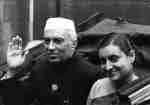
Nehru did not achieve political power until well into middle age; his catastrophic misjudgment of communist ideology and intentions, especially Chinese communist ideology and intentions, contributed to an Indian defeat at war, and led soon thereafter to his health collapsing and his death. He and Indira somewhat nonchalantly made a visit to Ceylon even as the Chinese attack was commencing; a high point of my own childhood was saying namaste on October 13 1962 at Colombo airport when they arrived.

Feroze and Indira’s younger son evidently came to die in a self-inflicted aeronautical mishap of some sort. What did Sanjay Gandhi “live for”? The book Foundations of India’s Political Economy: Towards an Agenda for the 1990s created twenty years ago in America
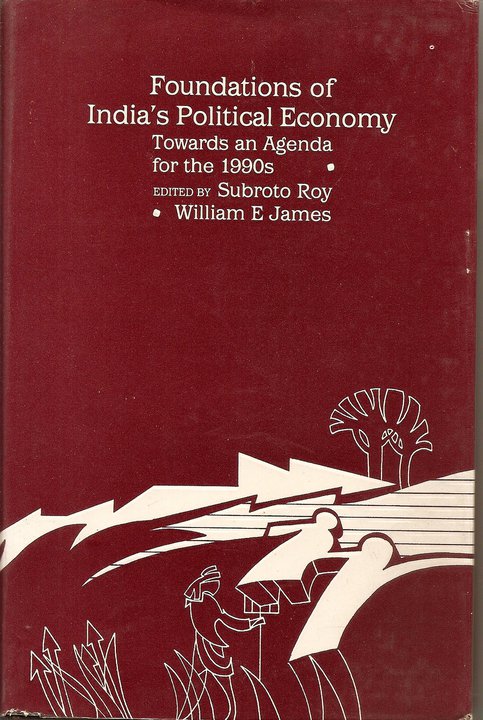
has a chapter titled “The State of Governance” by the political scientist James Manor which says:
“After 1973 or so, personal loyalty tended increasingly to become the main criterion for advancement in the Congress Party. People who appeared to be loyal often replaced skilled political managers who seemed too independent. Many of these new arrivals did not worry, as an earlier generation of Congress officials had done, that excessive private profiteering might earn the wrath of party leaders. In 1975, Sanjay Gandhi suddenly became the second most powerful figure in Indian politics. He saw that the parties of the left and right had strong organizations that could put large numbers of militants into the streets for demonstrations while Congress had no such capacity. In the belief that Congress should also have this kind of muscle, he began recruiting elements from urban centres including the criminal underworld. The problem of corruption was exacerbated by demands that State-level Congress leaders place large sums of money at the disposal not of the national party but of the persons who presided over it. Congress chief ministers realized that a fulsome response to these demands went a long way toward insulating them from interference from New Delhi, and a monumental system of fund-raising sprang up. When so many people were being drawn into semi-institutionalized malfeasance, which seemed to be condoned by higher authorities, it was inevitable many would skim off portions of the funds raised for personal benefit. Corruption soared. The problem was compounded by the tendency for people to be dismissed from public and party offices abruptly, leading many Congress politicians to fear that their time in power might be quite short.”
I do not have reason to disagree with this opinion contained in the book that I and WE James created at the University of Hawaii twenty years ago. If anything, Sanjay’s political model may have spread itself across other Indian political parties in one way or another.
What does strike me as odd in light of current political controversy is that several of Sanjay’s friends and colleagues are now part-and-parcel of the Sonia Congress – one must ask, were they such fair-weather friends that they never lent a hand or a shoulder to his young widow and her infant son especially against the cruelties Sanjay’s mother bestowed upon them? Did they offer help or guidance to Sanjay’s son, have they tried to guide him away from becoming the bigoted young politician he seems to wish to be today?
Indira’s major faults included playing favourites among her bahus and her grandchildren with as much gusto as any mother-in-law portrayed on the tackiest TV-serial today.
What were her good deeds? There was one, and it was an enormously large one, of paramount significance for the country and our subcontinent as a whole: her statesmanship before, during and to some extent after the war that created Bangladesh. My father has preserved a classic photograph over the years of Indira’s finest period as an international stateswoman, when she visited Paris and other foreign capitals including Washington in the autumn of 1971.


 Independent Indian: Work & Life of Professor Subroto Roy